We are in the middle of the Jewish holiday season, and Judaism has demanded a lot from us.
Rosh Hashanah asked us to stand in judgment. The Ten Days of Repentance asked us to examine ourselves. Yom Kippur demanded confession, fasting and repentance.
And then Judaism tells us to be happy.
Sukkot is zman simchateinu — the time of our joy.
The pivot can feel jarring. The melodies of Yom Kippur are still in our heads when we leave the synagogue, eat, begin building the sukkah and prepare for a holiday explicitly defined by happiness.
Kohelet, which Jews read on Sukkot, provides an answer: “There is a time for everything, and a season for every activity under the heavens.”
A time to weep and a time to laugh. A time to mourn and a time to dance. A time to be silent and a time to speak. A time for war and a time for peace.
Kohelet does not suggest that human beings experience only one emotion at a time. We can mourn and feel gratitude. We can love and be angry. We can be frightened and hopeful.
But Kohelet points somewhere else: that emotions and activities do not only exist in time, but time is defined by emotion and activity.
Different moments call for different responses. The emotions we might personally carry do not relieve us of the obligation to recognize what the present moment demands.
Israel offers a powerful example today.
Israel has inflicted extraordinary damage on enemies that sought its destruction. Hamas and Hezbollah have been badly degraded, and Iran has suffered devastating blows. Israelis can feel enormous relief at what Israel has survived and accomplished.
At the same time, Israel faces extraordinary international hostility and diplomatic isolation. The image at the United Nations this week captured that reality starkly: as Prime Minister Benjamin Netanyahu took the podium, dozens of delegations walked out, leaving him addressing a largely empty chamber.
So what should Israelis feel today? Relief? Alarm? Both?
Kohelet does not require one feeling to vanquish the other. The challenge is recognizing which response the present moment calls for.
Rabbi Lord Jonathan Sacks captured something similar in describing the distinctive nature of joy: “Joy lives in the moment. It asks no questions about tomorrow. It celebrates the power of now.”
That may explain why Sukkot follows Yom Kippur so quickly. Judaism does not give us weeks to transition from solemnity to celebration. We finish fasting and begin building a sukkah. We do not need to resolve every worry before experiencing joy. As Rabbi Sacks continued, joy “knows that yesterday has gone and tomorrow is unknown.”
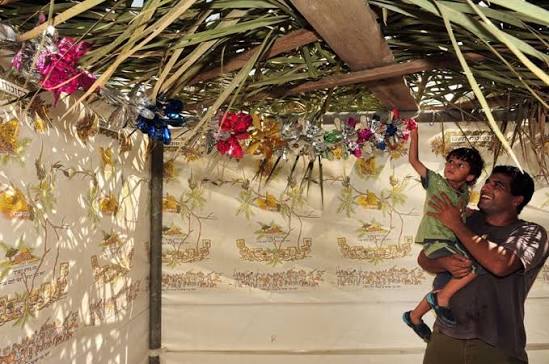
Tomorrow will bring whatever tomorrow brings. Kohelet asks us to recognize today.
Zman simchateinu. This is the time for joy.


