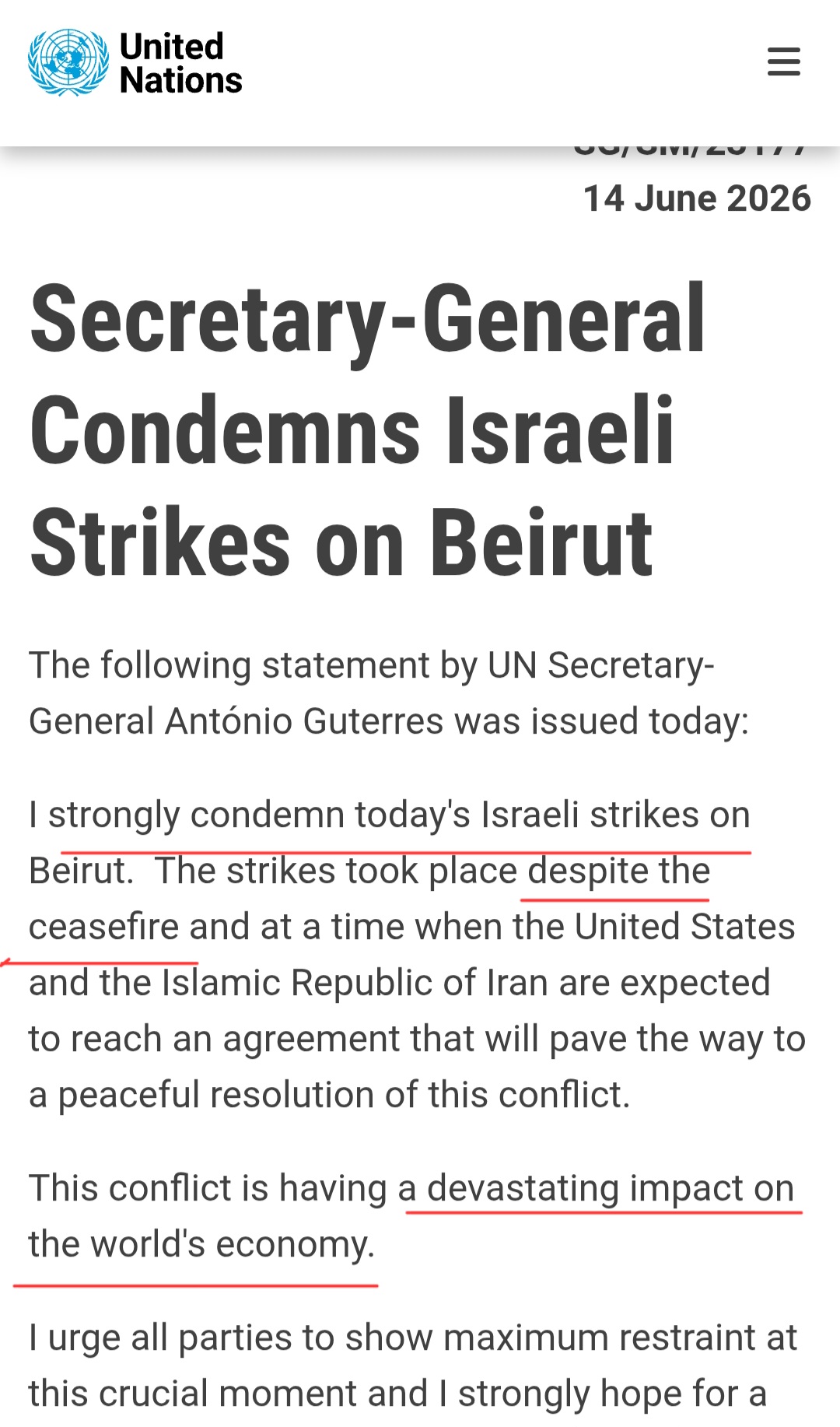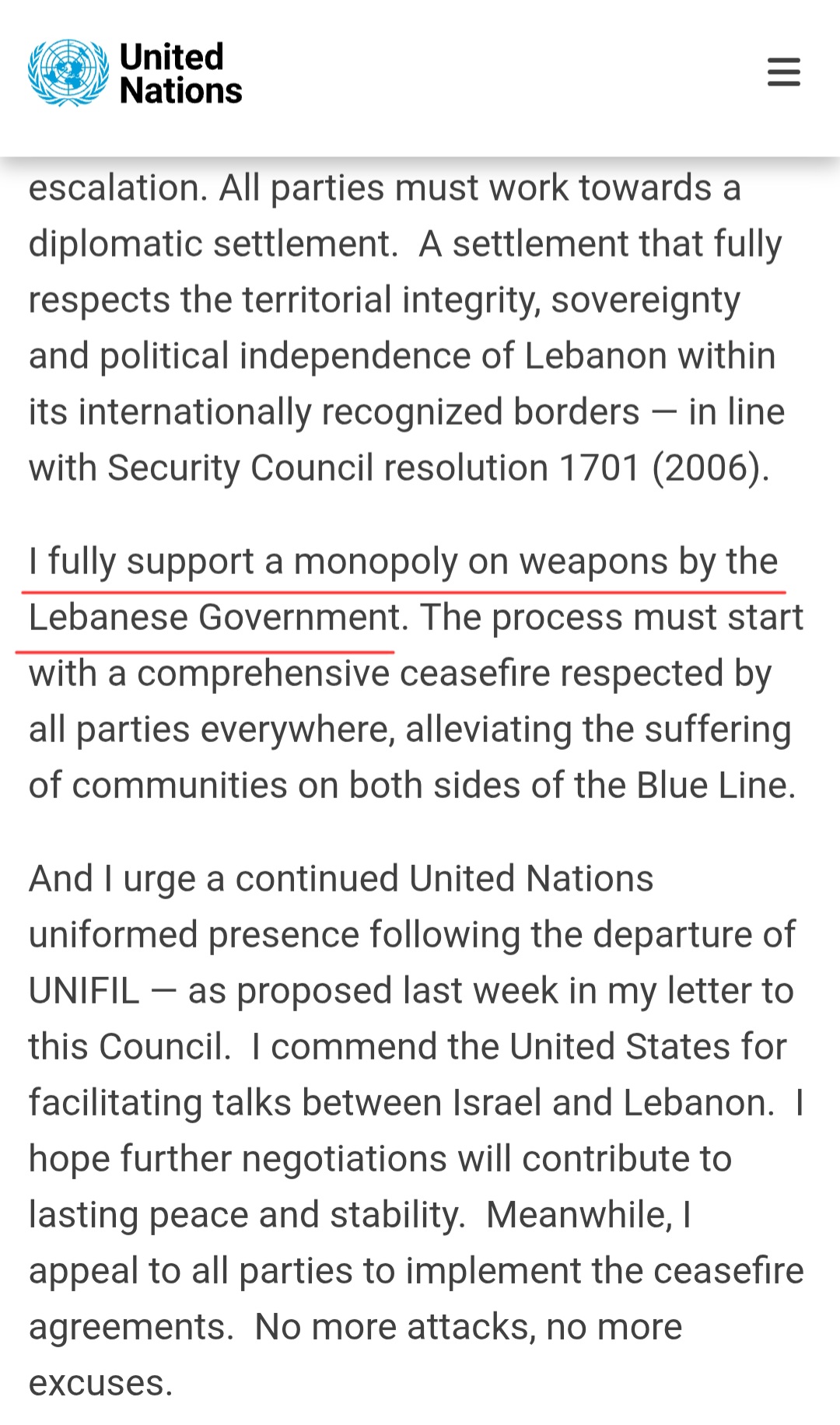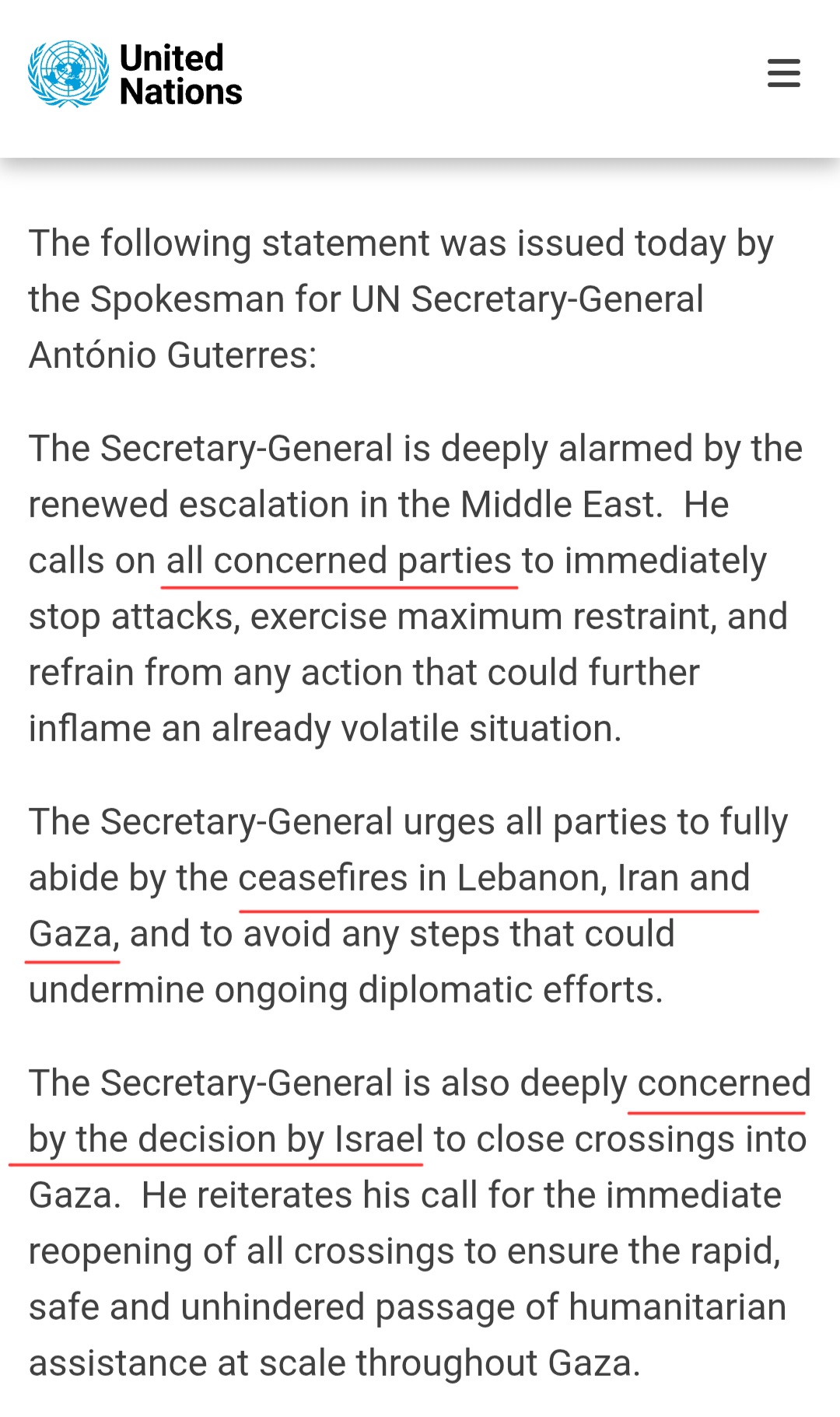
When Jews are murdered in synagogues in Europe, the United Nations speaks plainly. The attacks are labeled antisemitic. The violence is called terrorism. Solidarity with the Jewish community is explicit, and justice is demanded.
When Jews are murdered in synagogues in Jerusalem, that clarity vanishes.
The same act—killing Jews at prayer—suddenly requires “context.” Terrorism is softened into “violence.” Antisemitism dissolves into “tensions.” Victims are anonymized, motives left unexplored, ideology carefully avoided. Language that flows easily in Europe locks up entirely in Israel’s capital.
UN Secretary-General never calls killing of Jews in Jerusalem rooted in “antisemitism.”
This is not rhetorical drift. It is doctrine.
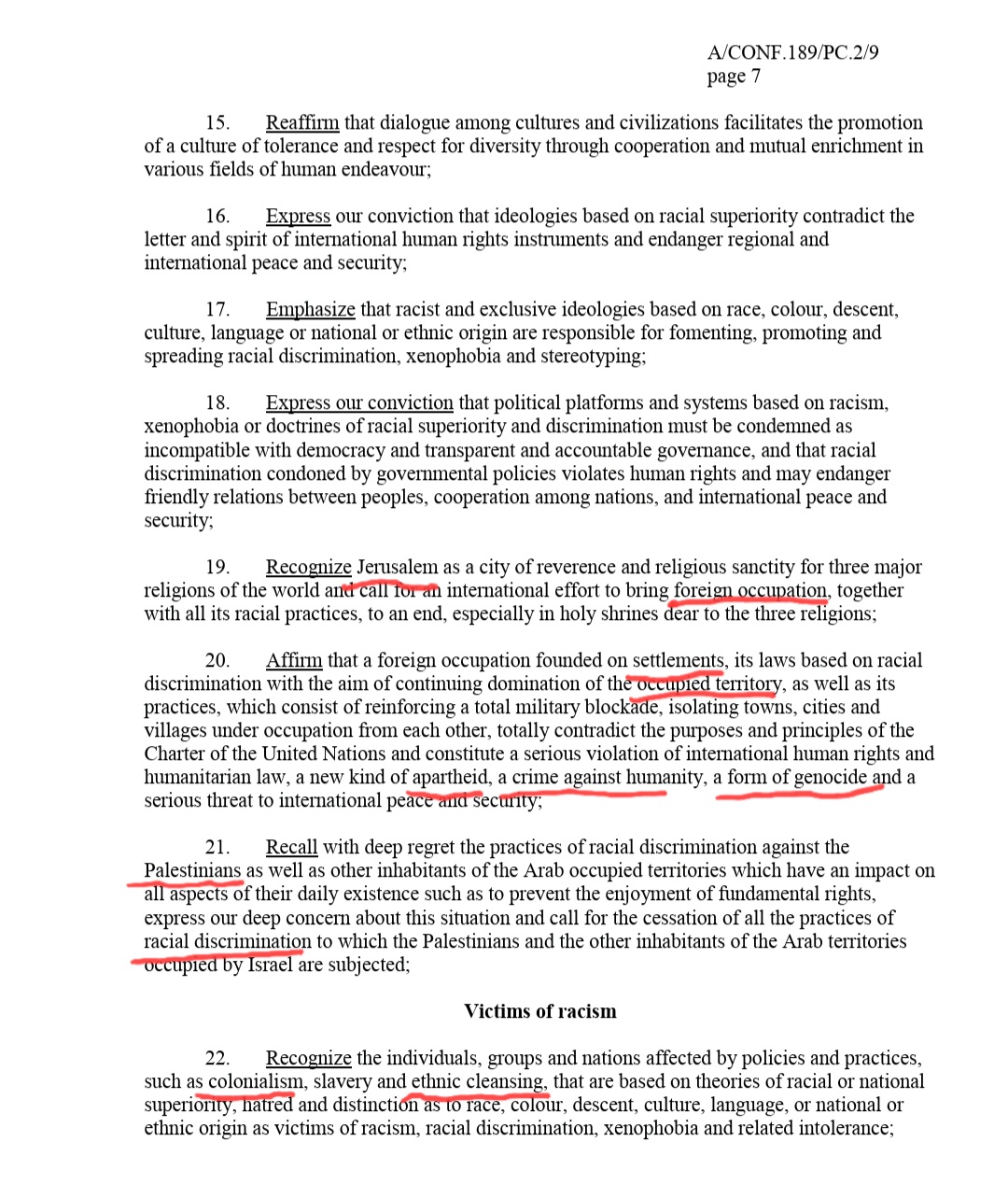
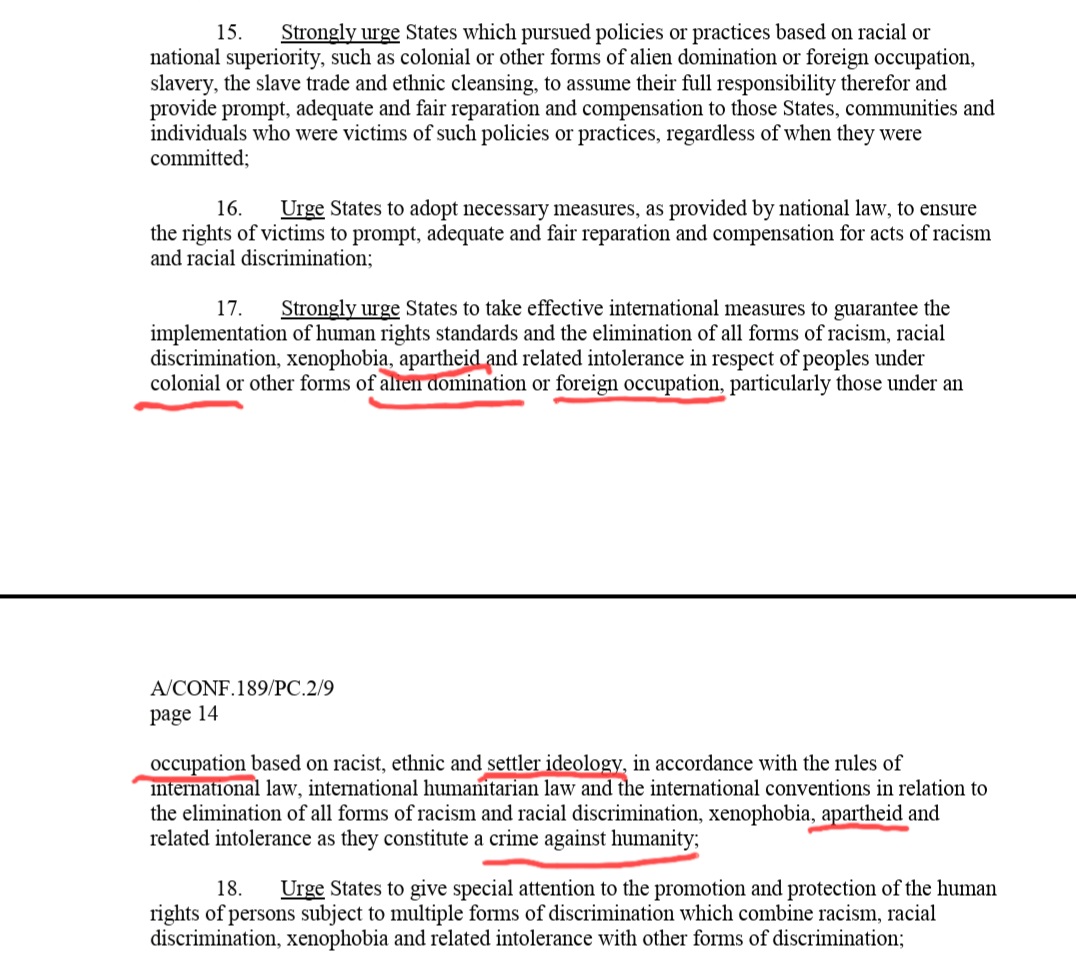
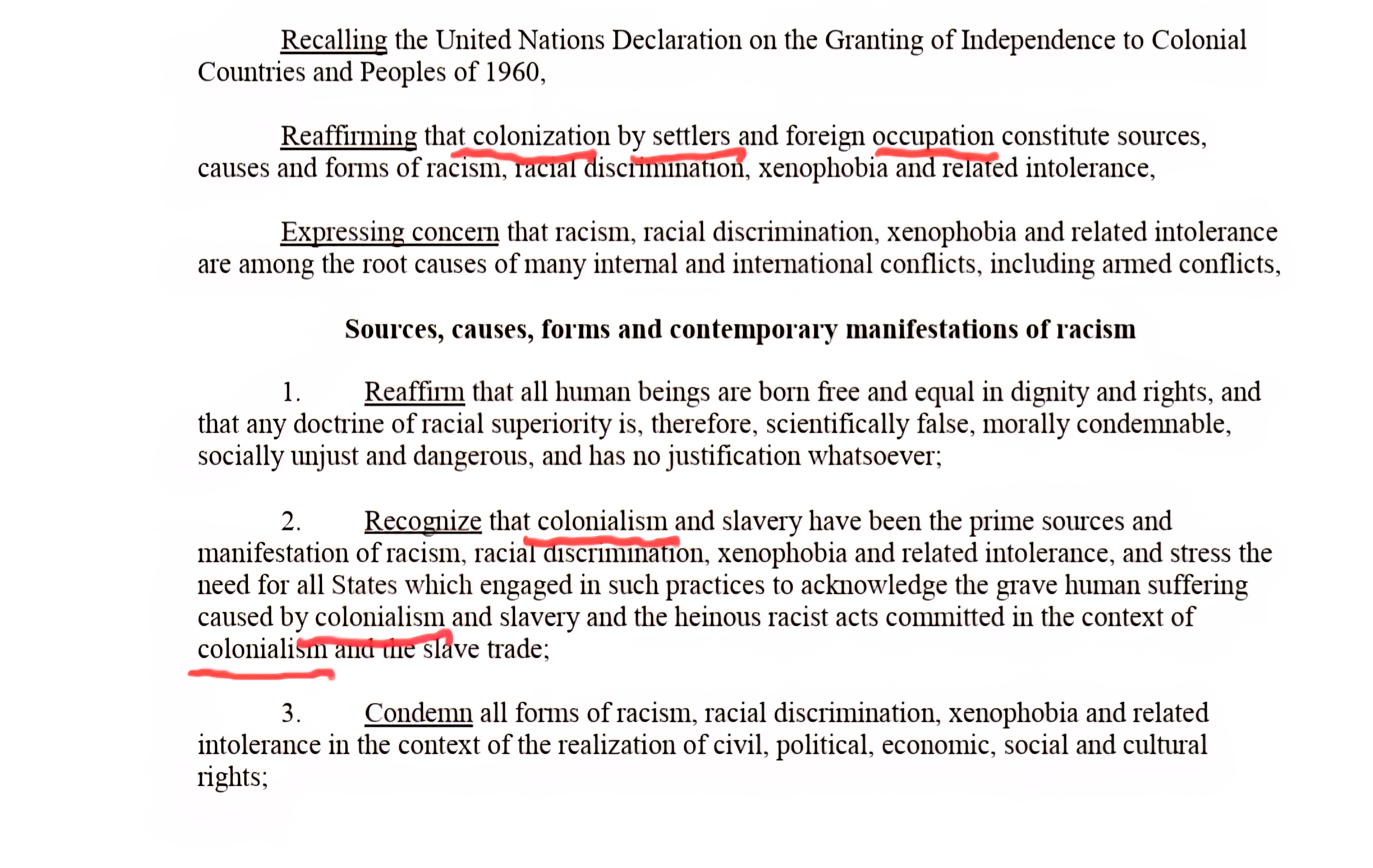
The UN has formally adopted the Palestinian demand that Jews should not live in Jerusalem. Through measures such as UN Security Council Resolution 2334, it asserts that Jews may not alter the city’s “demographic composition.” That position freezes Jerusalem at a moment immediately following the Jordanian army’s ethnic cleansing of all Jews from the eastern half of the city between 1948 and 1967. Jewish expulsion is accepted as a legitimate baseline. Jewish return is treated as a violation of international law.
This is not neutrality. It is the institutionalization of an antisemitic premise: that Jews, uniquely among peoples, have no right to live in their holiest city.
Once that premise is accepted, Jewish life in Jerusalem becomes conditional. Jewish neighborhoods are labeled illegal. Jewish prayer is framed as provocation. Jewish presence itself is cast as destabilizing. Violence against Jews no longer reads as antisemitism but as political reaction to an allegedly illegitimate reality.
Under those conditions, motive cannot be named. Calling synagogue murders in Jerusalem “antisemitic terrorism” would require acknowledging that Jews are being targeted for who they are, in a city where the UN has already ruled they should not be. It would expose the connection between UN doctrine and the moral evasions that follow.
So the motive is omitted.
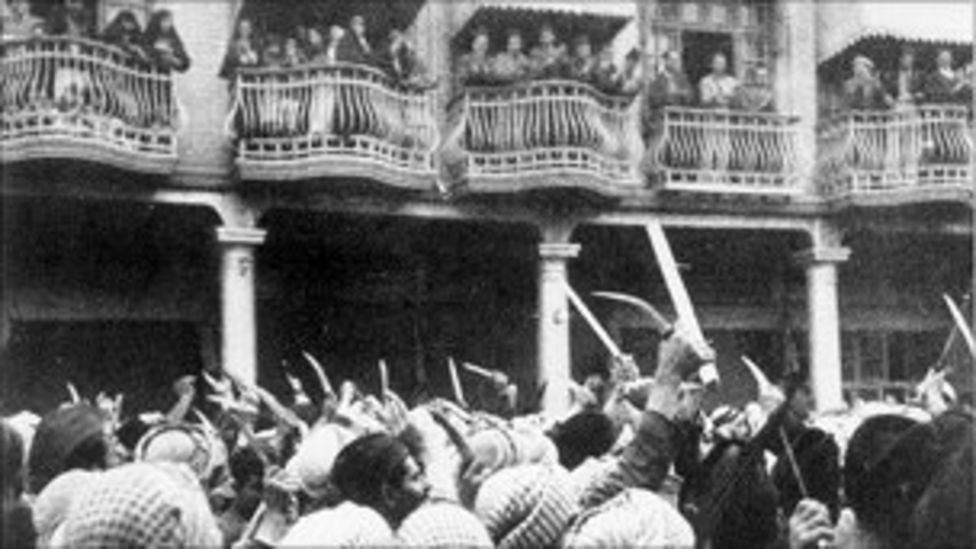
Aftermath of Jews slaughtered in synagogue
The UN does not merely tolerate the idea of Jews being removed from Jerusalem; it has encoded it. The language is bureaucratic—demographics, international law, peace—but the result is stark: a city where Jewish existence is treated as unlawful, and Jewish murder as a political complication.
The contrast with the rest of the world makes the pattern undeniable. The UN knows exactly how to speak about antisemitism. That moral vocabulary disappears only in Judaism’s holiest city, in the Jewish State’s capital, because the United Nations has endorsed the antisemitic wishes of radical jihadists.
By any ordinary moral standard, the murder of worshippers in a house of prayer should provoke the clearest possible response: name the crime, demand justice, stand with the people and the government under attack. No hedging. No balancing. No political caveats.
The United Nations does that, except when Israeli Jews are the victims.
Read the paired statements issued by António Guterres after two attacks on places of worship: one at a mosque in Pakistan, the other at a synagogue in Jerusalem. The contrast reveals a complete moral collapse at the heart of the global body.
This matters even more because the Jerusalem statement was issued before Israel responded to October 7, 2023. Before Gaza. Before counteroffensives. Before a single Israeli military action the UN would later cite as justification for its posture.
Restraint was not urged because of Israeli action. It was urged instead of justice itself.
In Pakistan, the Secretary-General “condemns in the strongest terms” the attack on worshippers. He demands that the perpetrators be “identified and brought to justice.” He affirms the “solidarity of the United Nations with the Government and people of Pakistan” and situates the crime squarely within the global fight against terrorism and violent extremism.
That is what moral clarity looks like.
Yet in Jerusalem, when Jews are murdered outside a synagogue in 2023—on International Holocaust Remembrance Day- a whisper. The Secretary-General “strongly condemns” the attack. He offers condolences. He notes that it is abhorrent to attack a place of worship. And then he pivots—not to justice, not to accountability, not to solidarity with the state charged with protecting its citizens.
The synagogue becomes a geographic detail. The murders are folded into “the current escalation in Israel and the occupied Palestinian territory.” There is no demand that the killers be found. No insistence on prosecution. No solidarity with the Government of Israel. No recognition that deterrence requires consequence.
This is not diplomatic caution. It is moral abdication.
This did not begin with Guterres
If this were merely the idiosyncrasy of one Secretary-General nearing the end of his ten year tenure, it might be dismissed as tone or temperament. It is not.
In 2014, after Arab terrorists entered a synagogue in Jerusalem wielding meat cleavers and hacked Jewish worshippers to death, Ban Ki-moon issued a statement that follows the exact same structure.
He “strongly condemns” the attack. He offers condolences. And then—almost immediately—he moves “beyond today’s reprehensible incident” to discuss “clashes between Palestinian youths and Israeli security forces.” The massacre is submerged into “the situation.” The killers disappear into context.
There is no call to bring the perpetrators to justice. No solidarity with the Israeli government. No affirmation of Israel’s duty to eradicate the threat.
Instead, Ban Ki-moon calls for leadership on “both sides”, urges all parties to avoid “provocative rhetoric,” and frames the slaughter of Jews in a synagogue as a destabilizing dimension of the conflict—not as terrorism demanding elimination.
Different Secretary-General. Same choreography.
The explanation is not mysterious because the United Nations does not conceptualize Palestinian violence as extremism.
Extremism, in UN doctrine, is something that happens elsewhere—to states battling jihadists, insurgents, or transnational terror networks. Palestinian murder, by contrast, is treated as political expression: contextualized by grievance, softened by narrative, absorbed into a permanent dispute. It is violence to be managed, not defeated.
That is why justice is demanded in Pakistan and restraint is demanded in Jerusalem. One fits the UN’s extremism framework. The other does not.
“Restraint” here is not a plea for peace. It is a veto on justice.
When Jews are murdered, the UN permits mourning but denies agency. Condolences are extended to families, while the legitimacy of Jewish self-defense and Jewish sovereignty is quietly withheld. Sympathy is offered—but solidarity with the state is conspicuously absent.
The global body created in the shadow of the Holocaust cannot bring itself to say, plainly, that Jews murdered in synagogues deserve the same moral response as anyone else. It cannot say that Jewish sovereignty is legitimate. It cannot say that justice must follow Jewish bloodshed.
And the Stateless Arabs from Palestine (SAPs), its perennial wards, must be granted absolution.
Israel should draw the only conclusion that matters: the United Nations is not a moral compass or humanitarian organization. It is purely a political instrument.
António Guterres keeps saying the United Nations is no longer the institution it was 80 years ago. Power must be rebalanced he claims. The Security Council must reflect today’s world he urges. Post–World War II structures must evolve.
Fine. But if that claim is serious, the UN’s most glaring failure to modernize is Gaza.
The system built never to end
One UN body remains frozen in 1948: UNRWA. One vision for a state is lost to contours proposed in 1947: Palestine.
UNRWA administers a refugee regime found nowhere else:
Refugee status is inherited indefinitely
It never expires through citizenship or resettlement
It is tied to a “right of return” not to Gaza or a future Palestinian state, but to Israel itself
No other refugee population is treated this way. Bosnians were not. Syrians are not. Ukrainians are not.
Every other refugee crisis is handled by UNHCR, where refugee status is temporary and meant to end. Only Palestinians are placed in a system designed to remain permanent.
Ending inherited refugee status would not end humanitarian aid. It would end the political weaponization of refugeehood.
Why Bosnia exposes the category error
After the Balkan wars, the Dayton Accords included a right of return—but it was finite, individual, and intra-state. It applied to homes lost in the same war for the same people, and aimed to undo ethnic cleansing, not undo borders.
Gaza’s claimed “right of return” is fundamentally different: intergenerational, extra-territorial, and demographic—designed to reopen 1948 and negate another UN member state.
Guterres’ contradiction
Guterres calls for reform everywhere except where reform would actually make peace possible.
As long as the UN maintains an inherited right of return into Israel and the proposed borders which have long since past their expiry:
Maximalism is rewarded
Compromise is delegitimized
Negotiations become theater
Gaza remains permanently “temporary”
This is not neutrality; it is an institutional choice to preserve claims that prevent settlement.
Reform that applies everywhere except where it matters most is not reform. It is avoidance.
The unavoidable conclusion
Until the UN ends the one system designed never to end, Gaza will not be governed toward peace—but toward the permanence of conflict.
And no amount of rhetoric about modernization can disguise that refusal.
The Exodus is often told as a single story of liberation, but Parshat B’shalach insists on a sharper distinction. The plagues and the splitting of the sea were aimed at different audiences, and they served different purposes. Confusing them obscures the Torah’s deepest lesson about real freedom.
The plagues were for Egypt. They dismantled Pharaoh’s authority, exposed the limits of imperial power, and forced the expulsion of a people the system refused to release voluntarily. Their purpose was external and coercive. Egypt had to be broken in order to let go.
But expulsion is not freedom. Being pushed out does not mean having moved on.
That is what the splitting of the sea achieved.
The splitting of the sea was for the Jews. At that moment, the message shifted inward. The people needed to see that the world they had left could no longer be reentered. When the waters closed, the route back to slavery closed with them. The drowning of the Egyptians was not vengeance; it was finality. History sealed behind them.
This distinction explains why the Exodus alone was incomplete. Egypt released the Jews, but the Jews had not yet released Egypt. As long as return remained imaginable, fear and discomfort could always make bondage sound reasonable again. Freedom cannot take root while the past remains accessible.
Only after that closure does the Song at the Sea emerge. The song is not merely celebration; it is internalization. A people sings when it understands that a threshold has been crossed and that what lies behind is no longer an option. Memory, at that moment, stabilizes rather than seduces. The song teaches that freedom requires acceptance of permanence.
That lesson extends beyond the biblical moment. Systems and institutions can serve as tools of liberation in one era and become obstacles to maturity in another. They remain attractive precisely because they feel moral, familiar, and legitimizing long after their original purpose has passed.
The United Nations increasingly functions as a structure that keeps the road backwards open. Born from catastrophe, it was meant to prevent a return to unconstrained power and mass violence. Over time, however, it has become a place where history is managed rather than concluded.
Consider the 1947 Partition Plan which would create a Jewish State and an Arab State in the region of Palestine. It was the logical vision of the moment and Jews accepted it and built a state. The Arabs rejected it for decades and to this date, many still believe that an Arab state will be the only reality in the region. They see a past as achievable, a Muslim-majority holy land.
Worse, the United Nations itself tells Arabs that descendants of people who lived in what is now Israel will get to move back to towns and homes. The UN continues to pass laws and resolutions to this effect, making the past the direction of time, not a future of two states living in coexistence.
The splitting of the sea teaches that freedom demands the courage to let certain paths disappear. Growth requires recognizing when a framework has completed its historical role and must be left behind. Without that willingness, societies drift endlessly between liberation and dependence, mistaking motion for progress.
The plagues ended Egypt’s control while the sea ended the possibility of return. That is the difference between being released and being free. Today, the United Nations is preventing the Israelis and the Stateless Arabs from Palestine (SAPs) from transitioning to the other side of the sea, moving on to freedom for all.
Every generation must choose which comforting and destructive structures it is finally prepared to leave in the past. Today, the United Nations may be the choice before us.
On the day after Holocaust Remembrance Day—after solemn vows of “Never Again”—the Secretary-General of the United Nations chose to praise a cleric who has spent years demonizing Jews and denying their right to exist in their holiest city under the framework of an “International Day of Human Fraternity.“
António Guterres elevated “His Eminence the Grand Imam of Al-Azhar Sheikh Ahmed El-Tayeb” as a global partner for peace, despite a record steeped in antisemitic incitement. Under el-Tayeb’s authority, Jews are framed as conspirators, Jewish prayer is cast as desecration, and Jewish presence in Jerusalem is portrayed as a civilizational crime. At events tied to his influence, chants calling for the killing of Jews and the eradication of Jewish sovereignty are tolerated and normalized.
“both Judaism and the Hebrew language have nothing to do with Jerusalem and Palestine.” – official statement of Al-Azhar
The ideology behind it is familiar. It rests on an Islamic superiority complex that treats Jewish sovereignty as illegitimate, Jewish history as fraudulent, and Jewish worship as contamination. In this worldview, Islam may rule Jerusalem absolutely; Jews may exist only conditionally and quietly—preferably elsewhere. Jewish presence in their ancestral capital becomes an offense demanding correction.
“”Do not think that we will ever give up on Jerusalem. We cannot abandon our rights there as a Muslim people. Allah will not enable you to erect a single stone on this land as long as Jihad persists.”” – official statement of Al-Azhar
El-Tayeb has given voice to this logic. Crowds gathered under his prestige repeat it. The demand is explicit: Jerusalem must be purged of Jewish claims, Jewish history, and Jewish life.
“In their attempt to judaize Jerusalem, the Zionists, in reliance on brutal Western imperialist powers, are risking the future of the Jews themselves by overstepping the limits of the Muslim Nation whose population is about a quarter of humanity, and who are able, one day soon, to restore their usurped rights by force.”
When the UN Secretary-General praises this man as a moral authority, he aligns with that demand. The language used by the UN confirms it. The profound antisemitism is ignored. Calls to violence dissolve into “grievance.” Incitement becomes “cultural difference.” Jewish presence is reframed as provocation.
This is how the United Nations defines peace: Jewish invalidation, submission, removal.
Guterres speaks of “a world based on equal rights for all and compassion” while elevating a cleric who denies Jews equality in the one place central to their faith and history. That contradiction is structural and vicious.
A jihadi antisemite is rebranded as a peacemaker, with ethnic cleansing repackaged as protection of holy sites.
And so, holocaust remembrance evaporates overnight.
History will read this moment clearly. When antisemitism returned cloaked in religious authority and liberation rhetoric, the United Nations offered applause, legitimacy, and a podium.
On Holocaust Remembrance Day, António Guterres reached for the safest symbol available: Nuremberg. He spoke of universal lessons, multilateralism, and the dangers of unchecked hatred. It sounded solemn, but it was evasive. By invoking Nuremberg instead of Eichmann, the UN spun a story in which institutions matter more than victims, and legality matters more than justice.
That choice is not accidental. It is institutional self-protection.
Why the UN Prefers Nuremberg
The International Military Tribunal flatters multilateral ideals. It universalizes guilt, diffuses responsibility, and allows the UN to present itself as the heir to postwar justice. It avoids a harder truth: the world did not finish the job. Genocide went unnamed. Jewish extermination was evidence, not the charge. Many perpetrators melted back into ordinary life.
The Nuremberg trials were necessary but insufficient. And on Holocaust Remembrance Day, sufficiency is the point.
“I have always understood the clear link between the horrors of the Holocaust and the spirit of multilateralism, justice and rights that founded our organization. Just over 80 years ago, the Nuremberg trials began. These trials represented the beginning of a new era in international criminal law; an era 78 which individuals, including the most powerful, are held accountable. Today, more than ever, we need to reclaim that spirit.” – UN Secretary General Antonio Guterres on Holocaust Remembrance Day
Eichmann Is the Missing Sentence—And the Turning Hinge
The trial of Adolf Eichmann in Jerusalem did what Nuremberg did not. It named genocide as genocide. It put survivor testimony at the center. It replaced bureaucratic fog with individual culpability. Eichmann was not tried as a generic war criminal; he was judged as an architect of the annihilation of Jews.
Adolf Eichmann on trial in Jerusalem, many years after the Nuremberg trials
As Hannah Arendt observed, the case exposed how extermination was operationalized by ordinary men. And it exposed a global failure: Eichmann lived freely for years after the war. Many like him were never tried at all.
That is why Eichmann is not an “example” to be mentioned in passing. He is the pivot of postwar justice—the moment when the Holocaust was finally understood, named, and judged as what it was.
Universalism That Erases the Crime
Guterres’s language collapses the Holocaust into a general warning about hatred. of course hatred matters. But flattening the crime turns extermination into general prejudice and genocide into an abstraction. The Holocaust was not simply bigotry run amok; it was a state-organized project to destroy a people everywhere it could reach them.
Universalism should follow truth—not replace it. When remembrance avoids naming genocide plainly, “Never Again” becomes a slogan that comforts institutions rather than indicts them.
The Uncomfortable Lesson the UN Avoids
The defining act of Holocaust justice did not come from the UN system. It came from a Jewish state acting unilaterally. Without Israel, Eichmann would have died untried, his crimes dissolved into postwar amnesia. That is not a political claim; it is a historical conclusion.
The UN prefers Nuremberg because Eichmann exposes its limits. Nuremberg affirms process; Eichmann exposes failure. One reviews general war crimes while the other points the finger squarely at demonic antisemitism. One is safe to cite as the other forces accountability.
Holocaust Remembrance Day is not a seminar on international law. It is a reckoning with a singular crime and a singular abandonment. The Jewish state does not exist to teach the world lessons, but we see plainly that the world failed to protect Jews—and then failed to prosecute their murderers. And it fails to recognize the clear difference to this day – on the very day designated to remember.
The Line That Cannot Be Dodged
Remembrance without judgment is theater. On Holocaust Remembrance Day, the honest citation is not Nuremberg’s promise but Eichmann’s dock. One symbolizes aspiration. The other delivered judgment.
If the UN wants this day to mean more than ritual, it must say the truth it avoids: the Holocaust was finally understood, named, and judged because Jews had a state willing to act when the world would not. That is not a complication of remembrance. It is its core.
António Guterres wants the world to believe that peace can be engineered with a spreadsheet — that inequality is the disease, redistribution the cure, and justice a matter of financial rearrangement. In his January 15 address, he warned that concentrated wealth corrupts institutions and that most low-development countries are in conflict. The implication is unmistakable: balance the books and peace will follow.
“The top 1 per cent holds 43 per cent of global financial assets. And last year alone, the richest 500 individuals added $2.2 trillion to their fortunes.
Increasingly, we see a world where the ultra-wealthiest and the companies they control are calling the shots like never before — wielding outsized influence over economies, information, and even the rules that govern us all.
When a handful of individuals can bend global narratives, sway elections, or dictate the terms of public debate, we are not just facing inequality — we are facing the corruption of institutions and our shared values.” – UNSG Antonio Guterres
But choosing the wrong enemy guarantees the wrong war.
Because evil is not an accounting problem.
The UN’s failure begins in its diagnosis. It treats terrorism as a social pathology when it is, in fact, an ideological one.
Terrorism is not born in empty wallets. It is born in minds captured by belief.
Two decades of research have demolished the claim that poverty causes terror. Terrorists are rarely the poorest of the poor. They are often educated, middle-class, and technically trained — the engineers of jihad, the lawyers of holy war. The suicide bomber is seldom starving. He is convinced.
If poverty produced terrorism, the poorest societies would be its factories. They are not. Many desperately poor states remain largely untouched by global jihad, while terror movements arise from politically radicalized societies with functioning middle classes and ideological incubators.
What correlates with terrorism is not poverty, but ideas combined with power: religious absolutism, revolutionary nationalism, grievance cultures, and failed identity — not failed GDP.
This is not an academic distinction. It is the fault line between clarity and catastrophe.
If money could defeat jihad, Gaza would be the proof. It is not — it is the refutation.
Gaza has received billions in international aid. What emerged was not prosperity, but the most elaborate terrorist war machine ever embedded in a civilian population: tunnels beneath hospitals, command bunkers under schools, rockets from playgrounds, children trained for martyrdom.
This was not a failure of funding. It was the success of ideology. And the UN instigates that very ideology claiming that Israel should have no sovereign control of who enters its country, and specifically that almost every Arab living in Gaza will move into Israel with UN support.
“We are totally committed in the cause of peace in Gaza, Ukraine, Sudan and far beyond.” – UNSG Antonio Guterres
Hamas did not build tunnels because Gazans were poor. Hamas built tunnels because its charter demands Israel’s destruction, because martyrdom is sacred, because jihad is identity. Money did not create this worldview — it merely financed its execution.
You can flood a society with aid, but if its governing ideology is annihilationist, all you finance is a more capable war machine.
Once the UN misdiagnoses ideology as economics, the next failure becomes inevitable.
For decades, it has constructed and sustained a grievance system around the Stateless Arabs from Palestine (SAPs) that functions symbiotically with jihadist aims. Through its agencies and resolutions, it has promised millions of SAPs who have never lived in Israel that they will one day “return” en masse into Israel — effectively proposing Israel’s demographic erasure through mass population transfer via international decree.
No state can survive if an external body claims authority over who may enter it and redefine its citizenship from the outside. Yet the UN has made this assault on sovereignty a central plank of its Palestine policy — while calling it “humanitarian.”
Through UNRWA’s unique multigenerational refugee status, displacement becomes inherited identity rather than a temporary humanitarian condition. Grievance becomes doctrine. Statelessness becomes culture. A territorial dispute becomes a perpetual weapon.
And then the UN asks for more money to sustain it.
Why does the UN persist in this inversion?
Because it refuses to judge belief systems.
It will not confront jihad as an ideology. It will not describe Islamic terrorism as such. It will not wade into cultural or civilizational dynamics because it sees itself as a neutral global body.
But neutrality toward ideology does not produce peace. It produces permission.
And because the UN will not fight belief systems, it substitutes economics.
It reframes terror as inequality. It reframes jihad as deprivation. It reframes mass murder as misallocated capital.
In doing so, it becomes part of a broader machinery seeking to shift wealth and power from the Global North to the Global South — not merely for development, but as moral rebalancing, regardless of whether this addresses the real drivers of violence.
Redistribution becomes its ritual response whenever violence erupts.
Which means: more authority, more money, more relevance for the UN.
This is not accidental. It is institutional self-preservation dressed as virtue.
So the world is invited to believe the problem is billionaires rather than beheaders. That terror is born from inequality rather than indoctrination. That peace will come from redistribution rather than defeating enemies.
Evil is not a pocketbook problem. It is an ideology.
And no amount of redistribution will make a death cult lay down its weapons.
Modern conflict is collapsing into a single, repeatable failure mode: when armed power replaces legitimacy, civilian life becomes expendable—and the international system normalizes the outcome rather than correcting it.
From Syria to Yemen, from the Gaza Strip to Somalia and Sudan, different wars follow the same script. Flags and slogans change; outcomes do not. Cities empty, economies collapse, millions flee, and societies become permanent humanitarian wards while armed elites persist.
The mechanics of collapse
Across all five regions, the structure repeats with grim consistency. Power flows from weapons rather than consent, with ideology serving as authority instead of constraining it. Civilians become leverage—through hunger, displacement, and terror—while the outside world manages suffering rather than ending the conditions that cause it.
These dynamics differ in context and scale. They converge in result.
Different conflicts, identical results
Syria survives by sacrificing its cities and people. Yemen turns famine into strategy in a proxy war. Gaza shows armed rule embedded among civilians, shifting the cost of war onto the population. Somalia normalizes permanent instability under jihadist entrenchment. Sudan mirrors the same logic through rival armed elites hollowing out cities and driving mass displacement.
The human outcome is uniform.
A shared demographic reality
Each of these societies is overwhelmingly Muslim-majority— above 90 percent. This matters for clarity. These disasters do not arise from religious diversity or minority rule. They unfold in largely homogeneous societies where armed authority crowds out the chance for peaceful legitimate governance. Shared faith does not restrain violence. Only accountable institutions do—and they are absent across all five.
Two warnings for 2026
First: recognition divorced from reality. The push to recognize Palestine as a sovereign state reflects a dangerous inversion. Recognition is meant to affirm effective governance, restraint of armed actors, and protection of civilians. Gaza demonstrates the opposite. Armed rule persists, civilians absorb the cost, and failure deepens. Recognition under these conditions elevates symbolism over survival and legitimizes collapse.
Second: repression without war. In Iran, an ideological regime in power since 1979 faces economic decline and eroding legitimacy. The response has been internal violence—security forces firing on civilians, mass arrests, repression replacing consent. Iran shows the same pattern without a battlefield: when legitimacy collapses, violence becomes governance.
The United Nations: institutionalizing failure
The United Nations was founded to prevent this exact depravity. Eighty years on, it increasingly fosters it.
The UN grants equal procedural authority—votes, committee chairs, agenda control—to entities regardless of whether they govern responsibly or sacrifice their populations. Collapse carries no institutional penalty. In January 2026, the UN Security Council, the highest body at the UN, handed the gavel to Somalia, a state unable to protect its citizens or control its territory. Committee chairs shape agendas, manage debate, and mute scrutiny. The signal was unmistakable: mass failure has no consequence.
Somalia assumes head of UN Security Council in January 2026
This structure protects actors who weaponize civilians, including groups like Hamas, while rewarding states that export instability. Humanitarian agencies attempt to save lives on the ground, but UN governance shields the forces that endanger them. Through regional rotation, states implicated in mass civilian harm routinely gain seats, votes, and leadership roles across UN committees—including those charged with protecting human rights—without meeting any threshold of civilian protection.
Entities that systematically sacrifice civilians should lose voting rights and committee authority until they demonstrate basic standards of governance and restraint. Without consequences, international law becomes theater and failure becomes permanent.
The verdict
Syria, Yemen, Gaza, Somalia, Sudan—and the trajectory now visible in Iran—show what follows when sovereignty outweighs civilian life and armed power is indulged as politics. By preserving authority for collapsing entities, the United Nations has become part of the problem it was created to solve.
Civilian survival and protection must be the minimum requirement for legitimacy. If the UN cannot reform to enforce that standard INTERNALLY, then eighty years after its founding, it stands as a faint shadow of its founding principles at best, and an enabler of mass atrocities at worst.
Every UN humanitarian agency coordinates with the authority that governs where it operates—except in Jerusalem. That exception is not a footnote. It is the story. And it exposes a mandate failure driven by politics, not humanitarian necessity.
UNRWA holds that humanitarian work requires coordination with governing authorities. In practice, it does so almost everywhere: with Jordan, Lebanon, Syria, the Palestinian Authority—and even with Hamas in Gaza, despite Hamas’s terrorist designation by the United States, the EU, the UK, and others.
In Jerusalem alone, UNRWA refuses to coordinate with Israel, the authority exercising full municipal, policing, and regulatory control over the city.
Call it “coordination for access” if you like. It is still coordination. And municipal coordination is not a sovereignty concession (if one believes that Israel does not have sovereignty over eastern Jerusalem despite annexing it in 1980); it is a humanitarian necessity.
How the Facilities Came to Exist
UNRWA’s Jerusalem facilities were established between 1949 and 1967, when Jordan seized and annexed the eastern half of the city in a move not recognized by the UN or the international community. UNRWA nonetheless coordinated with the Hashemite authorities to build schools, clinics, and service centers—because humanitarian work requires coordination with whoever governs in fact.
That history matters. UNRWA’s Jerusalem footprint exists specifically because it once coordinated with an unrecognized occupier.
UNRWA offices in Jerusalem (photo: First One Through)
The Reversal
In 1967, Jordan entered the war, violated the armistice, and lost control of Jerusalem. Israel assumed governance and unified the city. Palestinian Arab residents became permanent residents with access to Israeli courts, healthcare, municipal services, and the right to apply for citizenship.
At that point, UNRWA reversed its logic. Where it coordinated with Jordan despite non-recognition, it now refuses to coordinate with Israel—by labeling eastern Jerusalem “occupied Palestinian territory,” theoretically negating its obligation to work with Israel.
That label sits uneasily with the UN’s own history. The 1947 Partition Plan never intended Jerusalem—east or west—to belong to an Arab state. The city was designated a corpus separatum, an internationally administered entity. Jerusalem was never meant to be Arab sovereign territory.
The contours of “Corpus Separatum” (in pink) in the United Nations 1947 Partition Plan stretched over Greater Bethlehem and Greater Jerusalem, marking the region as an international Holy Basin to be administered by the UN
An Outlier by Design
UNRWA’s mandate emphasizes cooperation with local authorities to ensure access, security, and civilian protection. That cooperation exists everywhere except Jerusalem. UNRWA coordinates with armed groups and unrecognized authorities elsewhere, yet refuses coordination with the governing authority in the city where coordination is most essential.
Refusing to coordinate with the authority responsible for public safety is not neutrality. It is an affirmative political act—one that inverts humanitarian logic by privileging narrative over civilian protection. UN immunity exists to facilitate coordination, not to replace it.
Continuity of Care—and the Standoff
Israel has enacted laws to shutter UNRWA offices in Jerusalem. UNRWA refuses to comply, invoking immunity and operating facilities largely outside municipal oversight. The confrontation exists because UNRWA chose inconsistency in the one city where consistency matters most.
“The UNRWA Jerusalem Health Centre, which serves hundreds of Palestine refugee patients every day is, for most of them, their only possibility of having access to primary healthcare…. These [Israeli] measures are a violation of the inviolability of United Nations premises and an obstacle to the implementation of the clear mandate of the General Assembly for UNRWA’s continued operations in the Occupied Palestinian Territory, including East Jerusalem.” – UN Secretary General Antonio Guterres January 15, 2026
The closure of UNRWA offices in Jerusalem would not create a humanitarian vacuum. Education, healthcare, and social services are already provided through municipal systems, national institutions, other UN bodies, and a dense NGO network operating in the city. What would end is not care delivery, but UNRWA’sparallel governance model.
Palestinian Arabs in Jerusalem rely daily on municipal emergency services, hospitals, and courts. UNRWA’s non-coordination removes the safety mechanisms coordination is meant to provide—for civilians, staff, students, and patients alike.
The Reckoning
UNRWA coordinated with Jordan when Jordan’s rule was unrecognized. It coordinates with Hamas despite terrorist designations. Yet it refuses to coordinate with Israel while Israel governs the city, extends legal status to its Arab residents, and has a network of service providers which can easily replace UNRWA in Jerusalem.
That is not humanitarian principle. It is selective politics.
Consistency is the minimum requirement of a mandate. A mandate that works everywhere but Jerusalem is not a mandate—it is a message, and it is that UNRWA is not a humanitarian organization.
UNRWA remains a rusty tool of the 1947 Partition Plan which insists that holy sites in Jerusalem never fall under Jewish rule.
The near-term ramifications of Hamas’s war against Israel are being crystalized. Hamas’s leadership is decimated and Gaza is in ruins. The political-terrorist group’s allies in Lebanon, Syria, Iran and Yemen have been dealt severe blows, perhaps fatal for some. Hamas’s cheerleaders in the Global North are the only ones to have gathered momentum, particularly in Australia and the United States where hunting season for Jews has a seemingly open permit.
To gain insight for the next tactical steps, world leaders are looking at the current situation and polls since October 7, 2023 and have drafted proposals and taken initial actions: The United Kingdom and Canada recognized a Palestinian State. The U.S.’s Trump administration put forward a plan for Gaza which would include a new governing entity. The West hopes that the targeted assaults and murder of Jews will peter out along with the end of war. And the United Nations keeps playing the same tune about supporting UNRWA.
These are bad decisions and conclusions, made on faulty assumptions.
There is an organization that has been polling Palestinian Arabs for decades, called the Palestinian Center for POLICY and SURVEY RESEARCH (PCPSR). It conducted a poll of Arabs in Gaza and the West Bank, just before the Hamas-led war, from September 28 to October 8, 2023. Because of the war, the results did not get published until June 26, 2024, and the world was too focused on the war to pay it any attention. It is deeply unfortunate, and it is required reading to help chart a better future for the region.
To start with the poll’s conclusions:
A large percentage of Palestinian Arabs have wanted to leave Gaza and the West Bank for years, not from the current destruction
Arabs are fed up with their own government – Hamas and the Palestinian Authority – much more than Israeli “occupation”
Canada is viewed much like Qatar for Gazans, a sympathetic haven
Palestinian Arabs Wanted to Emigrate Before the War
According to PCPSR, whether in October 2023 or November 2021, roughly 33% of Gazans and 20% of West Bank Arabs wanted to leave the region.
Men below age 30 make up the vast majority of those seeking to emigrate. As opposed to Gaza where both educated and uneducated people want to leave, it is the educated West Bank population that wants to move away. Among those wishing to leave, many would not vote in Palestinian elections, or if they would, they would sooner vote for third parties over Fatah or Hamas.
Palestinian Leadership is the Curse, More than Israel
The number one reason for wanting to leave was economic conditions by a far margin. Reasons two and three were political reasons and educational opportunities. “Security reasons” came in fourth, with only 7% of Gazans focused on security; 12% overall. Corruption, religious reasons and to reunite with family rounded out the poll.
Canada as a Beacon
Turkey and Germany were the two most favorite destinations, especially for Gazans. Very few Gazans (3%) considered the United States, while West Bank Arabs put it as the number one choice (17%), likely seeking advanced degrees at left-wing universities. What is remarkable, is more of the Stateless Arabs (SAPs) would prefer going to Canada (11%) than Qatar (9%), the wealthy Muslim Arab nation that is a main sponsor of Hamas.
Honest Takeaways
These pre-war results leads to some basic and critical conclusions.
Complete Overhaul of Palestinian leadership, not just in Gaza
The desire of Arabs to leave was evident across both Gaza and the West Bank for many years. This was not a reaction to bombing or siege; it was a verdict on governance.
Hamas in Gaza rules through repression, diversion of aid, and religious militarism. The Palestinian Authority in the West Bank offers corruption, authoritarianism, and political stagnation. Together they have produced a society with no credible economic horizon, no accountable leadership, and no peaceful mechanism for change.
While a new entity is needed to administer Gaza, that role should be akin to a Chief Operating Officer overseeing construction. The Palestinian Authority itself needs to be gutted and rebuilt as it is a corrupt, unpopular and ineffective entity.
The United Nations Must Withdraw from Gaza and the West Bank
In its desire to create a Palestinian state, the U.N. has stripped the titular heads of Palestine of any responsibility. The UN protects Hamas despite its savagery. It props up the Palestinian Authority despite its rampant corruption. Palestinian leadership is a bed of paper scorpions.
The UN must withdraw from Gaza and the West Bank and allow local authorities to build a functioning leadership team.
The West Should Rescind Recognition of Palestine
There is no functioning Palestinian government and therefore no basic standard to recognize a Palestinian State. The United Kingdom, Australia and others should withdraw their recognition and make it conditional on building governing institutions that can lead and make peace with the Jewish State next door.
Reeducation in the West
The massacre did not arise from a sudden spike in pressure. It emerged from long-standing internal failure. Hamas chose atrocity because it couldn’t commit a complete genocide of Jews so exploited its own population to be fodder for Israel.
Western audiences were then handed a familiar script, complete with pictures. But the data taken just before the massacre tells a different story—one far more consequential. What is being taught in western public schools is divorced from reality and feeds global and local antisemitism.
Oh No, Canada
While the fears of antisemitism are focused on the United States and Australia because of recent attacks on Jews, Canada is in the hearts and minds of Palestinian Arabs seeking a warm diaspora community. Perhaps it started a decade ago under Justin Trudeau who followed U.S.’s President Barack Obama to embrace the Palestinian cause and Iranian regime over Israel. Perhaps it is because of the welcome mat for extremists groups like Samidoun. Or perhaps it is the perception that the heckler’s veto is fair game, and can run Jewish families off Canadian streets.
Whatever the inspiration, Canada is widely perceived as permissive, ideologically indulgent, and administratively porous—an attractive environment for “political activism” untethered from civic responsibility. It is a ticking time bomb.
The poll of Palestinian Arabs on the eve of the October 7 war reveals deeper truths than surface shots of leveled homes. The PCPSR findings point to a single truth: the Palestinian problem is fundamentally internal.
Ending Israeli control over territory without dismantling corrupt and extremist institutions will not deliver prosperity or peace. Statehood layered on top of dysfunction will harden it. And exporting populations shaped by jihadist rule into permissive Western societies without serious screening and integration, risks importing instability rather than relieving it.