The headline asked why hundreds of Gazans have been killed. The article never answered.
In its December 24 piece, The New York Times assembled an inventory of grief—names, faces, photographs, shattered families—documenting civilian death in Gaza with intimate precision. What it did not assemble was an explanation. The question at the top functioned as decoration; the answer was assumed. Israel hovered everywhere as implication, never as argument.
What the article omitted is not marginal. It is decisive.
It did not say that Hamas still holds an Israeli hostage, in violation of the ceasefire framework. As long as that person remains captive, the war has not ended and the terms of the ceasefire have not been met.
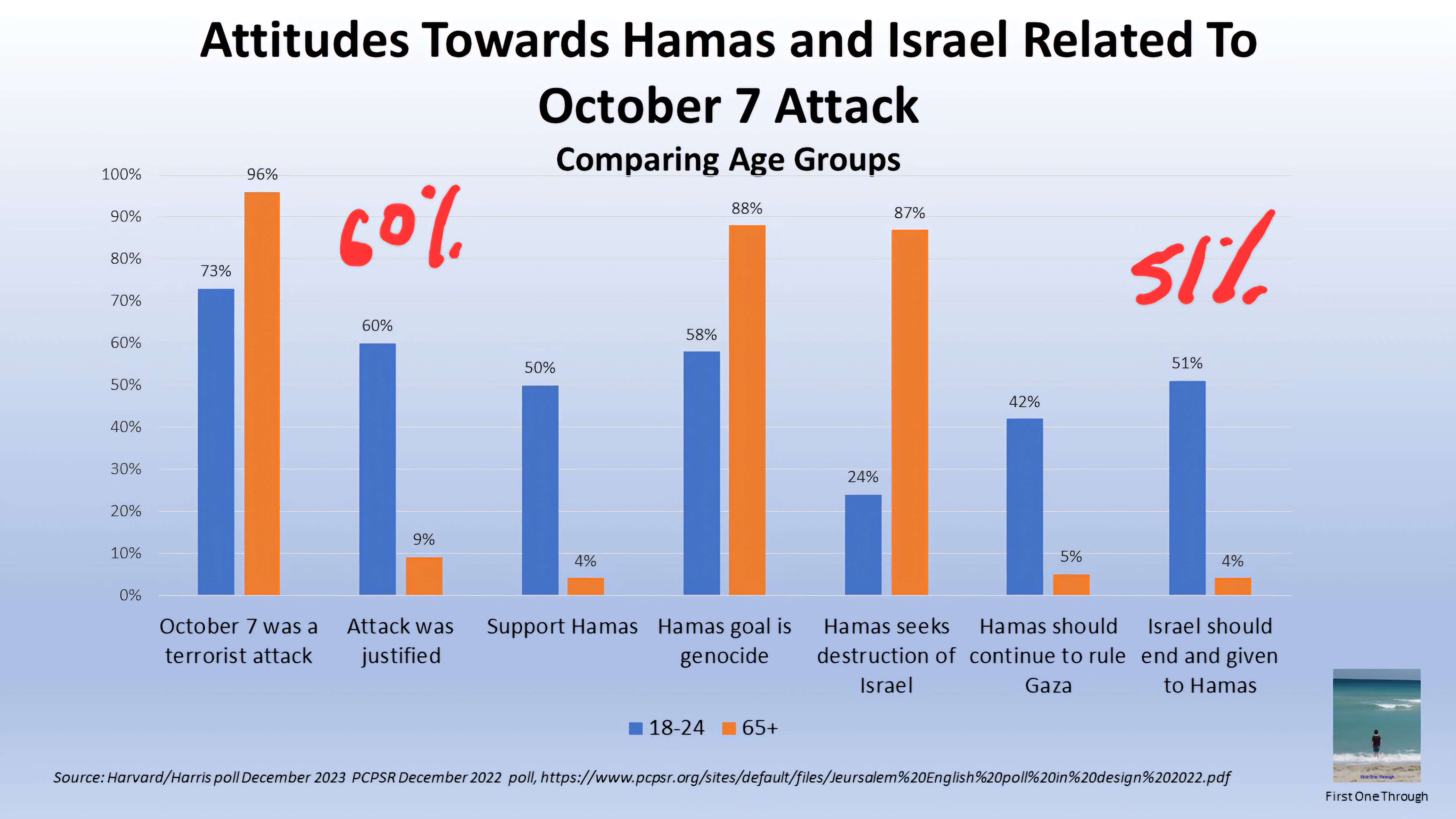
It did not say that Hamas has refused to disarm—flatly, publicly—even though disarmament is a core requirement of the multi-point plan meant to end the fighting. The vast majority of Palestinian Arabs in both Gaza and the West bank agree. This is not procedural quibbling. A movement that keeps its weapons is declaring its intention to keep killing. Leaving that fact out does not clarify the story; it inverts it.
“a core, cross-regional [Gaza and West bank] red line remains: overwhelming opposition to disarming Hamas, complicating any post-war arrangement.” – PCPSR poll of October 28, 2025
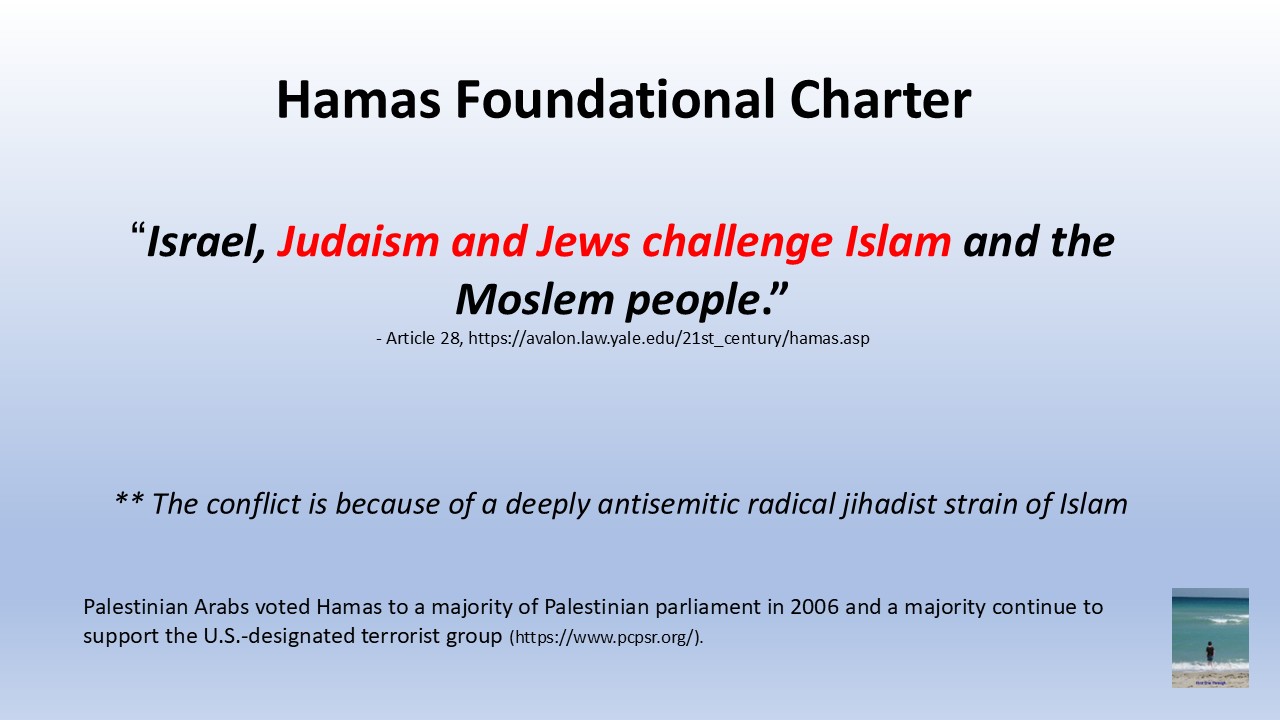
It did not say that Hamas continues to state openly that it will pursue the war until the Jewish state is destroyed. These are not coded remarks. They are repeated commitments. When a belligerent announces genocidal intent and retains its arsenal, civilian deaths are not mysterious. They are the predictable outcome of strategy.
“The resistance is capable of continuing, and I am confident that the outcome of this conflict will be the demise of this entity [Israel].” – Senior member of the Palestinian resistance movement Hamas, Osama Hamdan on December 23, 2025
Instead, The Times presented Gaza as a place acted upon—its people rendered passive, its leadership reduced to background noise. The governing reality was blurred, that the popular, armed movement that began the war – with overwhelming local support – insists on continuing it. Palestinian Arabs appeared as if history were happening to them, rather than through institutions that still mobilize society for conflict.
The photographs – eleven in all, a remarkable number for an article, mostly featuring children – did their work. They always do. Images narrow the moral aperture. They locate causality at the edge of the frame. What lies outside—tunnels, refusals, threats, the last hostage—falls away. Repetition turns absence into innocence.
This is not empathy. It is evasion.
Civilian death is tragic and deserves coverage. But tragedy without agency becomes accusation by implication. When Arab suffering is anatomized down to the last tear while their popular elected leadership’s war-making is erased, journalism is no longer news but advocacy.
The Times did not lie. It curated. It acted as the political-terrorist group’s propaganda arm.
Readers are left asking why Israel is still fighting, when the honest question is why Hamas is still waging war—still holding the last hostage, still refusing disarmament, still promising destruction.
Every picture tells a story. This one tells a story about the author.
Hamas does not rule Gaza against the will of its people. It rules because large numbers of Gazans want it to. Hamas articulates aims that many in Gaza accept: “armed struggle,” permanent war, and the eradication of Israel. This is not an imposed ideology. It is a shared one.
That reality is the reason the war has not ended.
Hamas refuses to disarm. It promises to fight again. It rejects coexistence as a moral crime. And Palestinian Arabs have not rejected Hamas. There has been no uprising, no mass refusal, no turning inward to say this has destroyed us and must stop. The tunnels remain. The rockets are rebuilt. The hostages were hidden in plain sight and with complicity.
The Arab world understands this. So does the Muslim world and international community, quietly if not publicly. No money will rebuild Gaza while Hamas governs. No state will guarantee security for a territory whose leadership is openly genocidal. Even those who chant Gaza’s cause from afar refuse to absorb the cost of dismantling its rulers. Words are cheap. Responsibility is not.
And so the world fractures.
One side insists Gaza deserves unlimited sympathy—stripped of agency, frozen as a permanent victim, absolved of all consequence. The other side sees a society that has embraced a war of annihilation and asks the world whether moral condemnation is not only justified, but necessary. This divide is not about compassion versus cruelty. It is about whether moral judgment still matters.
What cannot be sustained is the fiction that Gaza is merely trapped between Hamas and Israel. Gaza is trapped— by leaders and parents who have chosen martyrdom over future, ideology over life, and war over their own children’s survival.
That is where sympathy collapses.
Because the only people in Gaza whose moral claim is uncontested are the children—and they are being sacrificed by a society willing to place guns in schools, tunnels under bedrooms, and hostages among families. A society that teaches its children that nothing is nobler than dying for the cause of destroying the Jewish State.
Sympathy cannot be demanded for that choice. It can only be extended—narrowly, painfully—to those who never had one.
That is why the ritualized outrage of the West’s most powerful institutions now feels so hollow. Each year, The New York Times publishes its Year in Pictures, and the selection itself becomes an argument. In 2025, the year with the largest spike in antisemitism including several incidents of mass murder, there were no pictures of Jewish victims. Instead, page after page of Gaza: rubble, smoke, bloodied streets, dust-covered children. Destruction, repeated until it acquires the authority of inevitability. Israel appears only as force. Gaza appears only as suffering. Context is stripped away. Agency is erased. The camera becomes a verdict.
Two-page spread in New York Times’ 2025 year in pictures showing Gaza rubble. The only other 2-page spread was the election of Zohran Mamdani, an anti-Israel member of the DSA, as mayor of New York City
But the depravity lies not only in what is shown—it lies in what is omitted.
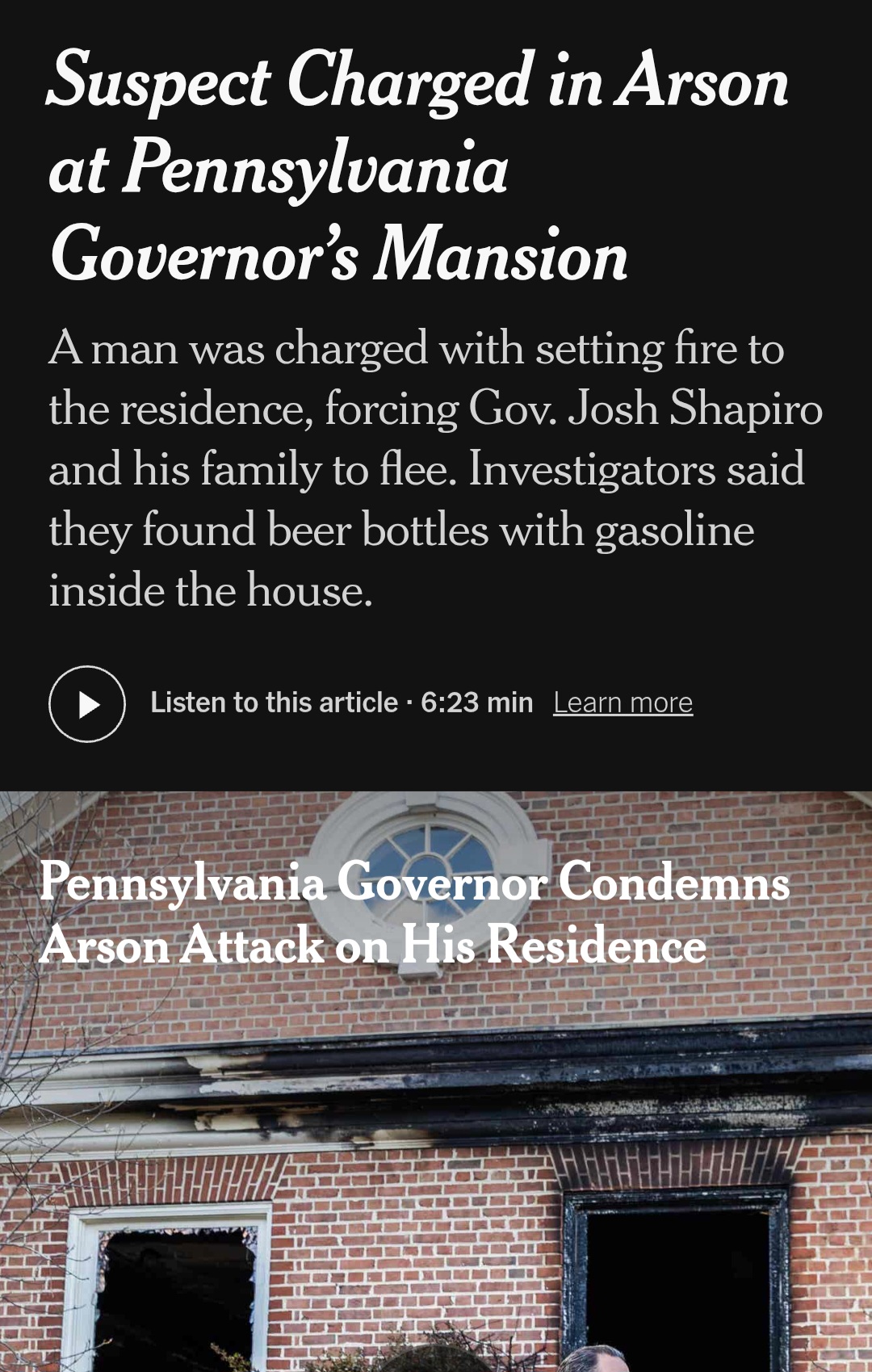
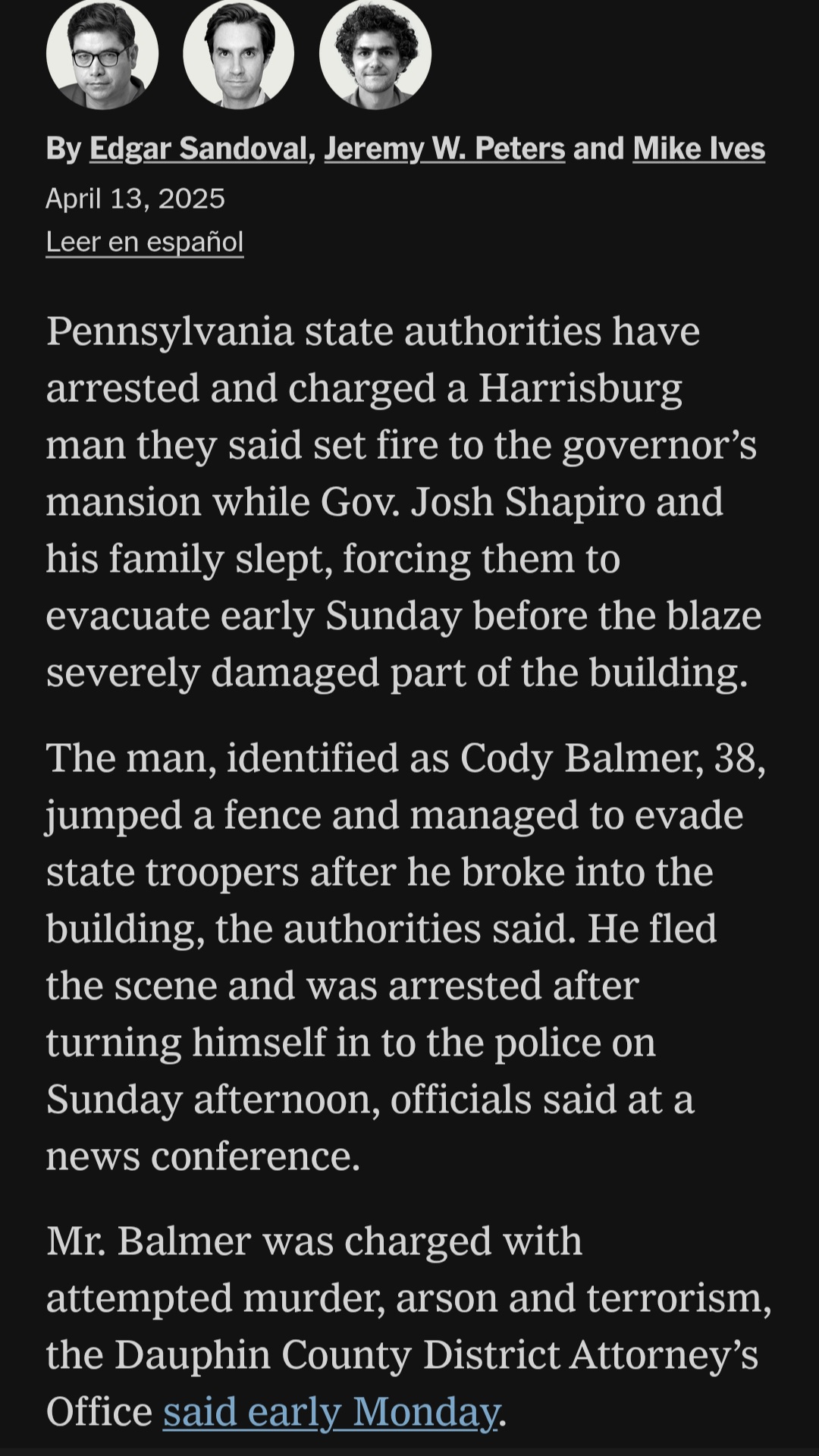
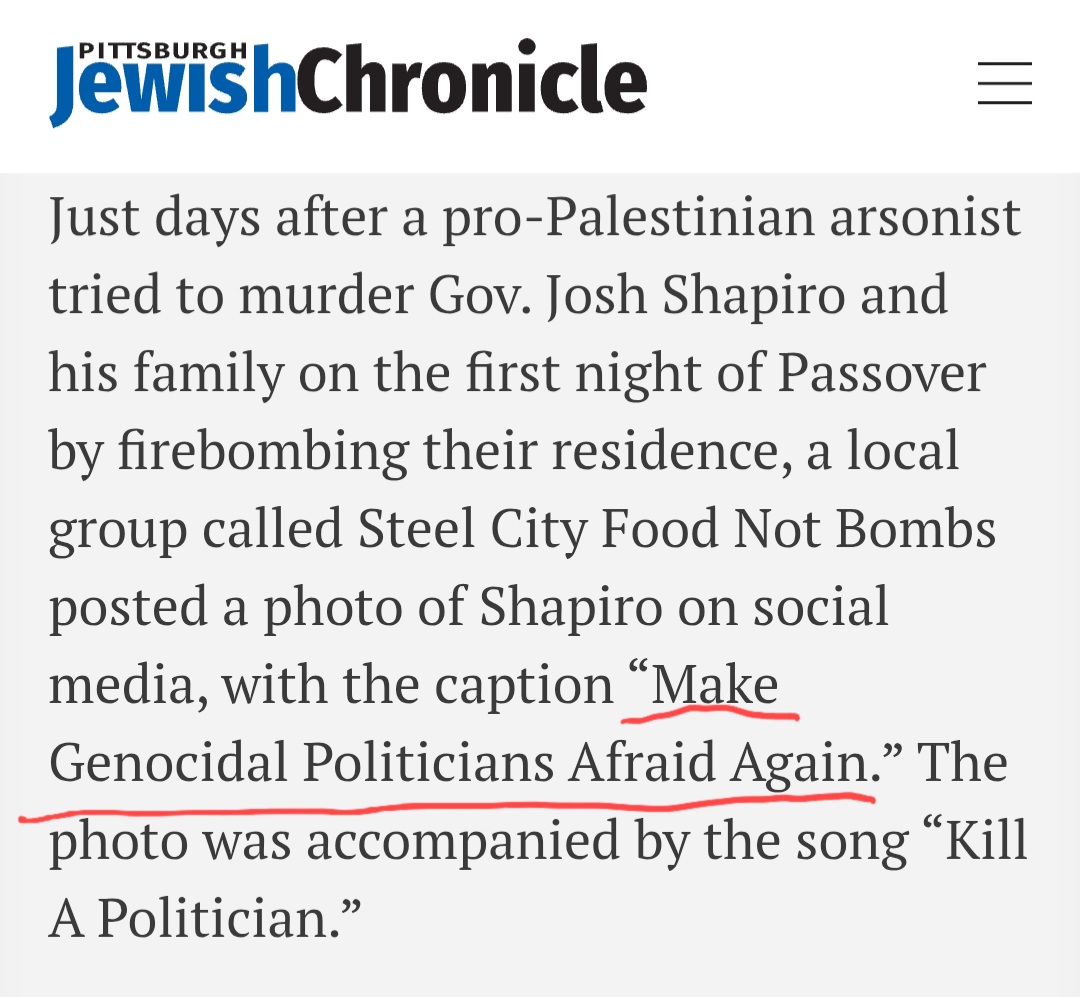
There are no photographs of Jewish life under siege: no police guards posted outside synagogues, no concrete barriers and metal fences erected around schools, no quiet images of fear normalized into daily routine. There are no frames of mourning for Jewish victims abroad, the couple shot in Washington, D.C., the arson at the home of the Jewish governor of Pennsylvania over Passover. No recognition of the global consequences of a war whose ideology has traveled far beyond Gaza. Violence against Jews outside Israel didn’t even make a footnote.
New security fence erected outside synagogue in 2025 (photo: First One Through)
When Israeli hostages appear in the Times, they are reduced to a single visual trope: a large military helicopter, as if their captivity were a logistical problem rather than a crime. Even Jewish victims of Gazan atrocities are set against a large Israeli military. The human cost of hostage-taking is laundered into abstraction.
New York Times only picture of a Jewish victim is a tiny speck in a large Israeli military helicopter
What does receive sympathetic attention are arrests—multiple images of pro-Palestinian demonstrators detained by police, framed as moral courage meeting state power. Advocacy for Israel’s destruction is softened into dissent. The pages preen about resistance while refusing to name what that “resistance” seeks to accomplish.
This is not journalism. It is moral choreography.
The pictures ask only one question—who suffered more?—while carefully avoiding the only one that matters: who chose this war? To launch it? To continue it? They do not show Hamas leaders refusing disarmament. They do not show weapons beneath nurseries. They do not show the ideological choice to sacrifice children for permanence of war.
In this telling, Israel becomes the aggressor by existing, and Gaza becomes sympathetic by persisting in annihilation. The refusal to surrender is recast as resilience. The willingness to sacrifice children is aestheticized as tragedy rather than condemned as crime. Sympathy is manufactured by amputating responsibility. The global anti-Israel advocates are embalmed in the moral light; Jewish victims disappear off the pages.
When the world’s most influential newspaper presents destruction without causation, suffering without choice, and death without ideology, it does not advance peace. It sanctifies perpetual war. It promotes a global blood libel. And it teaches readers that moral clarity is cruelty, while moral confusion is virtue.
The far-left media hopes that history will remember its curated selection of photographs and the modern moment will gather sympathy for the anti-Israel and anti-Jewish horde. Hopefully they are proved very wrong, and this time capsule will forever mark The New York Times for its profound antisemitism and moral depravity.
There are moments when a headline tells you everything by what it refuses to say.
A mass shooting took place at a Hanukkah party in Sydney, Australia. A Jewish holiday. A Jewish gathering.
Yet when major global outlets reported the story, something curious happened.
The New York Times headline did not mention Jews. Only the sub-header caught the significance of the attack, but did not say Jews were targeted.
More disturbing, follow-up articles did not focus on the horrific spike in antisemitism in Australia these past two years. Instead, the Times posted an article about… Bondi Beach, and how beautiful and popular it is.
The BBC followed a similar path. So did The Guardian. So did others like CNN. The event was flattened into abstraction: a “shooting,” a “disturbance,” a “tragedy,” untethered from identity.
By contrast, The Telegraph named Jews. The Jerusalem Post did as well. The New York Post and CNBC, too. Al Jazeera did not. Actually, Qatari-owned Al Jazeera attempted to whitewash the entire incident that there was “no information.”
This divide is not accidental. It reflects something deeper and more uncomfortable.
Because at the same moment that major Western media hesitated to name Jewish victimhood, the global Jewish community had no such confusion. WhatsApp groups lit up within minutes. Videos circulated—not to sensationalize, but to bear witness. The injured were named, not as statistics but as people. Hebrew names were shared so strangers across continents could pray for them.
No one asked whether Jews had been targeted. They knew.
The only uncertainty discussed privately was not if the attack was antisemitic, but which strain of antisemitism it represented. Neo-Nazis? Radical Islamists? A lone actor steeped in online hate? Jews have learned, painfully, to recognize the pattern even before the authorities finish their press conference.
So why the hesitation in public framing?
Why is Jewish identity often erased precisely when Jews are attacked?
Part of the answer lies in a narrative trap the modern media has built for itself. Jews, especially Israeli Jews, are increasingly cast in a single role: power holders, enforcers, aggressors. In that framework, Jews are permitted to be actors—but not victims. Agents—but not targets. Perpetrators—but not innocents.
Victimhood, in today’s moral economy, is rationed. And Jews often find themselves disqualified from it in favor of victims of preference.
Naming Jews as victims complicates the preferred storyline. It disrupts the binary of oppressor and oppressed. It forces an uncomfortable reckoning: that a people portrayed relentlessly as powerful are still being hunted in synagogues, homes, and holiday celebrations—from Pittsburgh to Poway, from Paris to Copenhagen, from Jerusalem to Sydney.
And so the language softens. The identity disappears. The motive is delayed, blurred, or left unexplored. The story becomes about the setting, not the target. About the neighborhood, not the people. About ambience, not intent.
The question is not whether Jews are under attack. That is beyond dispute.
The question is whether the world’s most influential media institutions are willing to say so plainly—or whether Jews may only appear in headlines when they are accused, never when they are wounded.
Part of the answer to the disgraceful shrug to the barbaric October 7 massacre in Israel is the systemic brainwashing that has been going on, that Jews cannot be viewed as innocent victims. Even when they plainly are, half a world away.
There are endless scams in New York City. People forge deeds, steal equity, and prey on desperation every week. Almost none of those crimes get elevated to a national morality tale.
So why did The New York Times choose a particular case and present it as it did?
A headline about home theft. A photograph of a visibly Orthodox Jew in a courtroom to lead the story. A description of victims “from minority communities.”
The message was unmistakable: A Jew stole from vulnerable minorities.
The Times could have reported the crime without turning it into a racial and religious showdown, yet it chose not to.
If his religion played no role in the scheme, then it had no business in the article. Yet the Times made sure every reader saw the kippah and beard, and read of his Orthodox clan coming to rally for the criminal: a greedy Jew stealing from the vulnerable.
The New York Times made a point of discussing the perpetrator being from the “Orthodox Jewish community“, even though the case had nothing to do with religion.
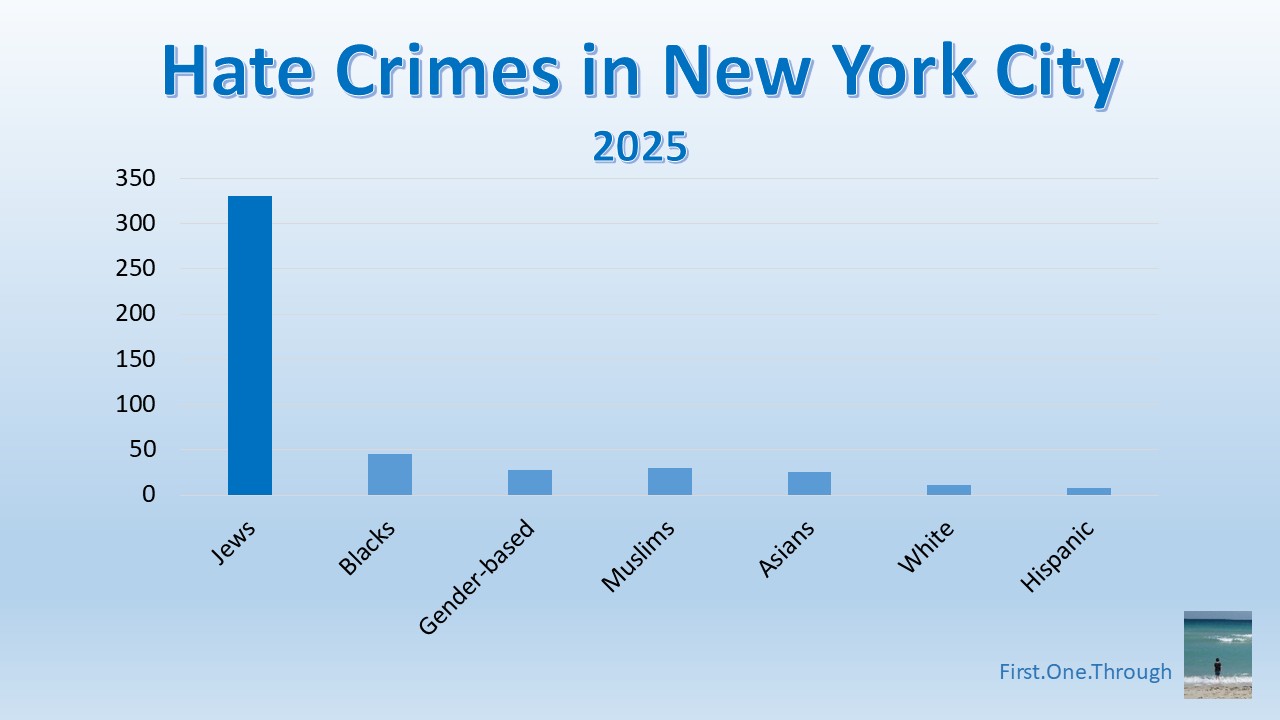
This did not land in a vacuum. Jews are being attacked in New York at rates that should horrify any decent newsroom. Anti-Jewish tropes about Jews stealing land, homes, and resources are exploding across campuses and city streets. It is standard stump propaganda by Democratic Socialist politicians.
Rep. Rashida Tlaib (D-MI) at a Democratic Socialist conference said of Jews: “they do it from Gaza to Detroit, and it’s a way to control people, to oppress people. And it’s those structures that we continue to fight against. I know you all understand the structure we’ve been living under right now is designed by those who exploit the rest of us, for their own profit.“
If the victims were Orthodox Jews and the offender was a member of another minority group – a majority-minority group like Blacks or Latinos – does anyone believe the Times would blast the offender’s ethnicity and splash a religiously identifiable photo across the top of the page?
Absolutely not. They would call that incitement.
This is a pattern. Mainstream media outlets have spent the last decade profiling Jews as:
They would never speak this way about any other minority group. But when the subject is Jews, especially Orthodox Jews, suddenly it’s acceptable to present them as predators and everyone else as their prey.
That is not journalism. It is character assassination dressed up as social justice.
And it does this in the backdrop of the election of a Ugandan immigrant, Zohran Mamdani who has trafficked in antisemitism, to be the new mayor of New York City. A man supported by the Black and Latino communities and opposed by the Orthodox Jewish one. A man who focused on the affordability crisis of living in New York City, with scaffolding provided by the Times about how corrupt Jews make it impossible for poor immigrants to live in the city.
The New York Times made a point of discussing the perpetrator being from the Orthodox Jewish community, even though the case had nothing to do with religion.
Propaganda does best when there are elements of truth. It does best when the fire has already been lit and the mob is seeking red meat to fuel the passion. The Times is feeding the beast and clearing an auto de fe for Jews to be marched through the streets.
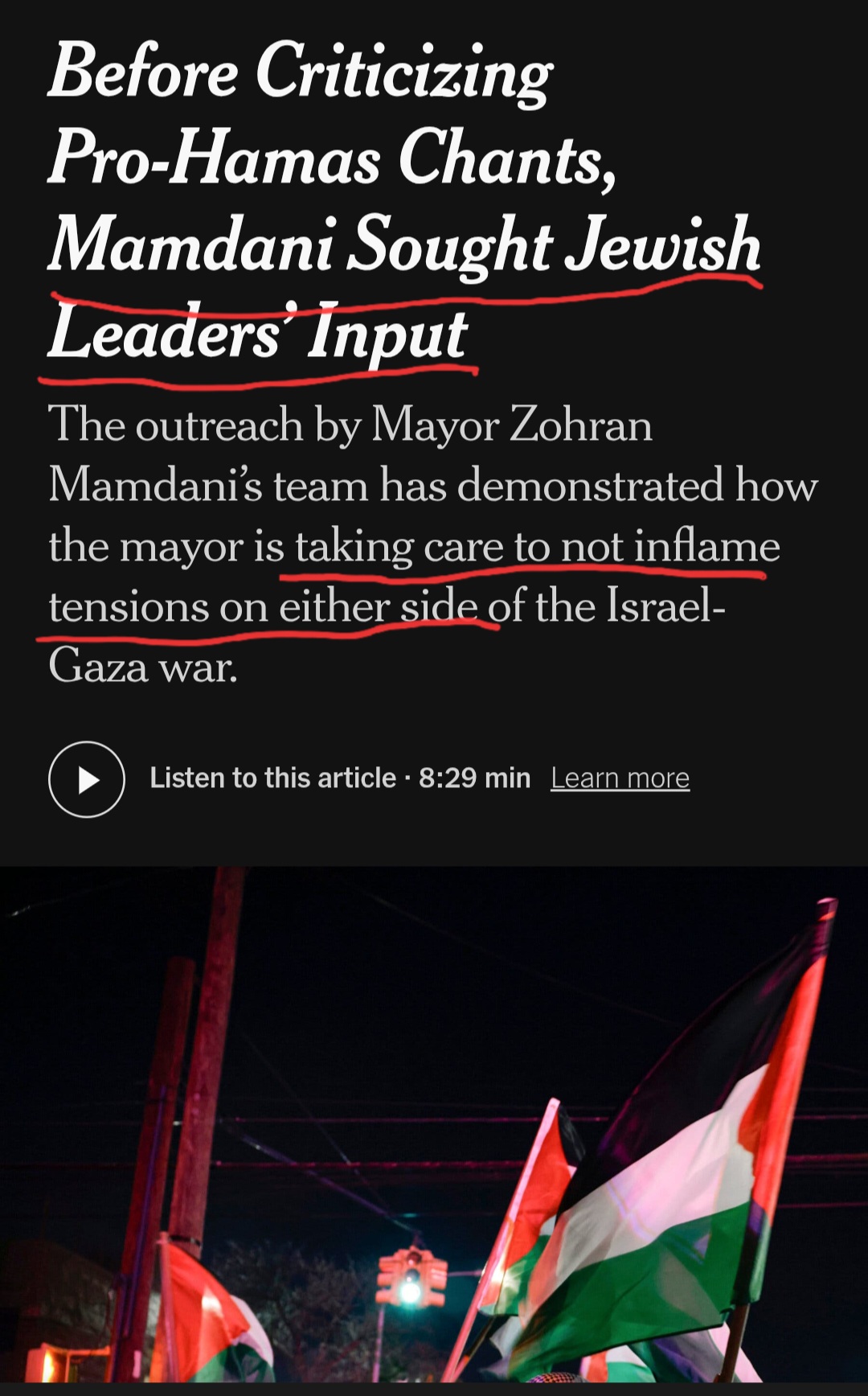
To read The New York Times or watch Saturday Night Live today is to be told that Zohran Mamdani’s critics — not Mamdani himself — are the problem. Those who dare question his rhetoric or friends are branded “Islamophobes.” The journalists and comedians who once prided themselves on “speaking truth to power” now serve as antisemitism’s defense attorneys.
The New York Times calls political criticism of Mamdani “Islamophobia”
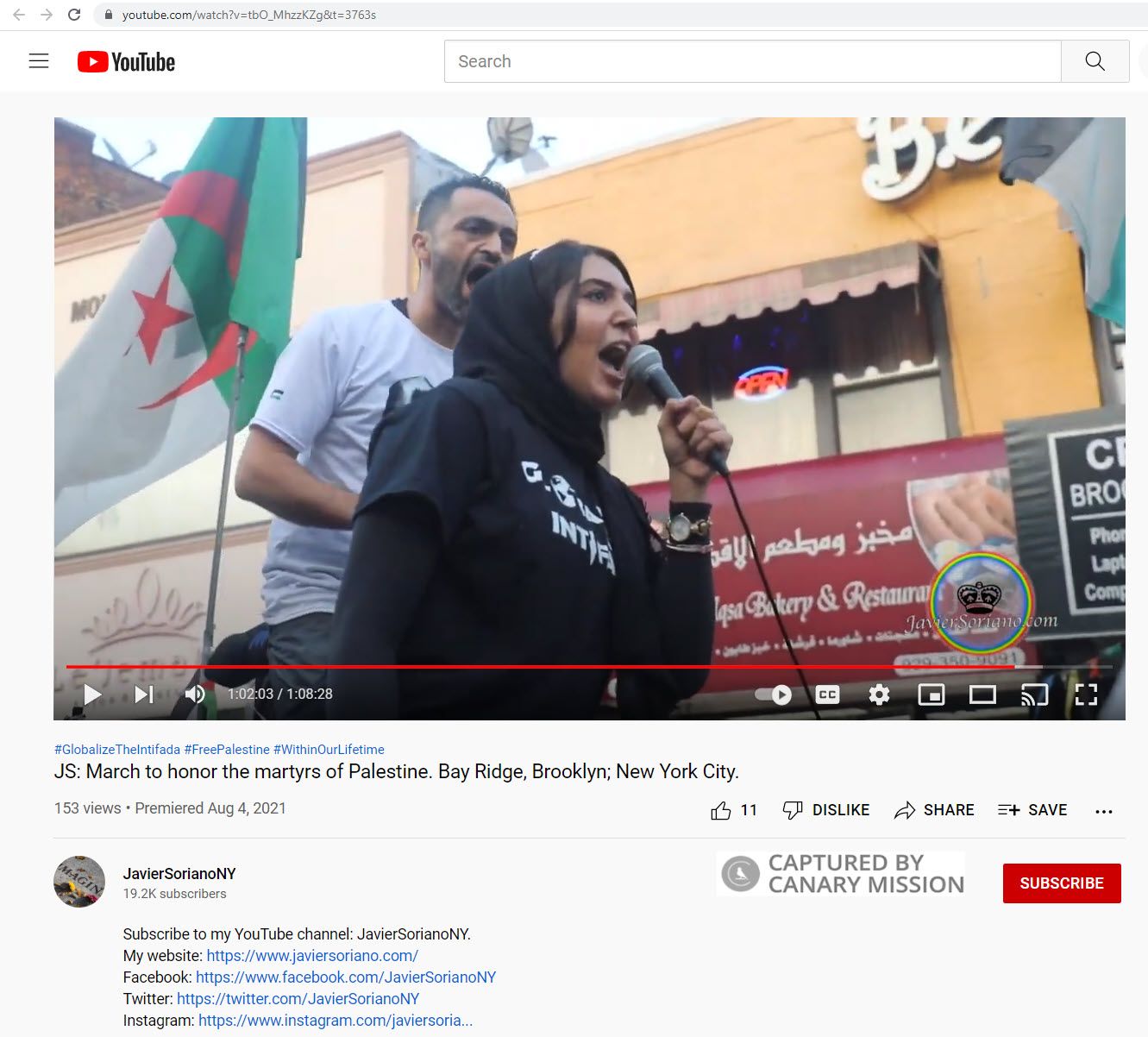
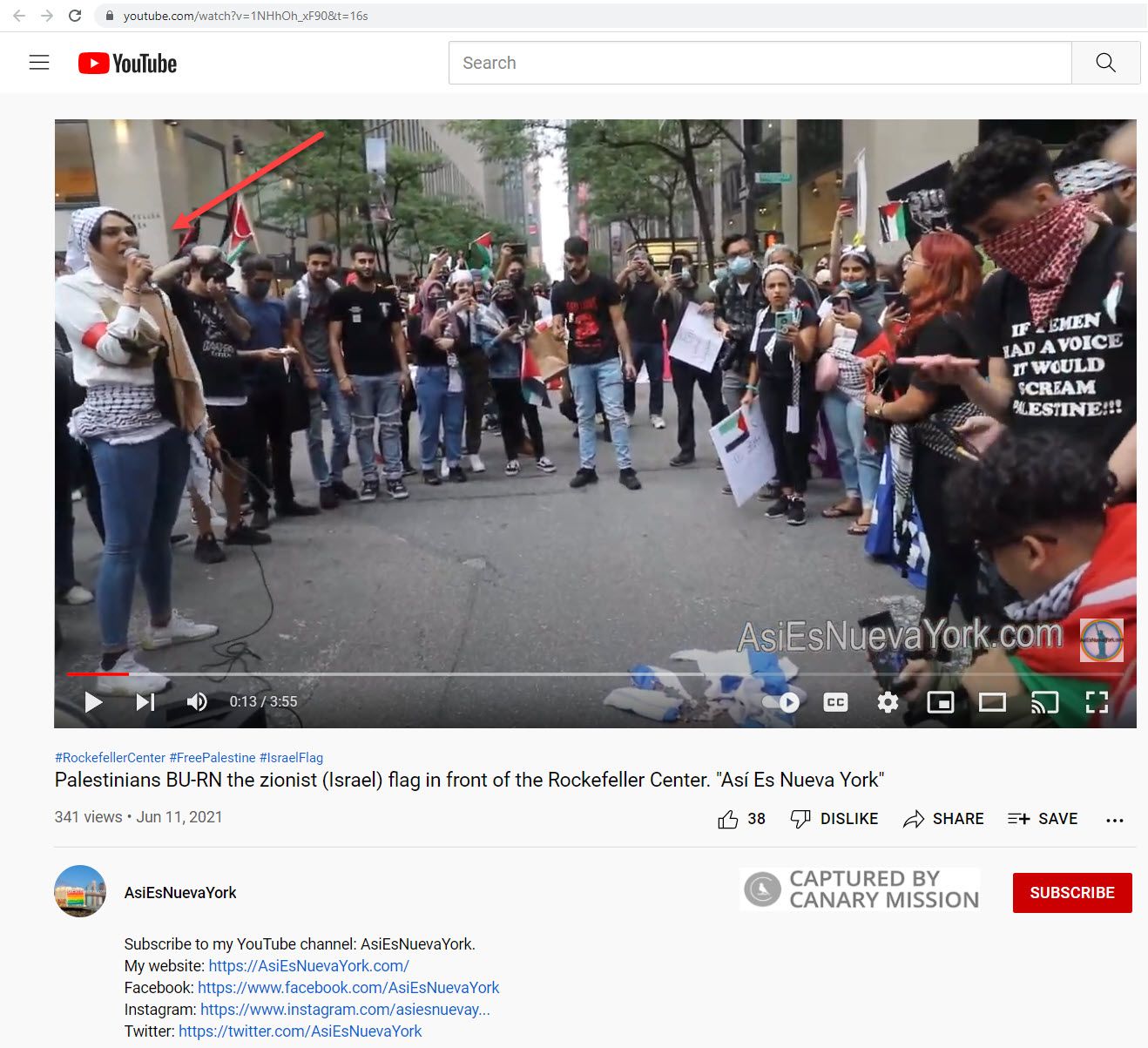
Nowhere in The Times’ coverage will you find an honest accounting of Mamdani’s behavior: his use and defense of the slogan “globalize the intifada” — a phrase that calls for expanding anti-Israel violence worldwide. No mention that he’s proudly endorsed by, and a member of, the Democratic Socialists of America, a group whose members have declared “there are no innocent Israelis” and whose leaders celebrated “the war of liberation” even as the ceasefire was announced. No mention that Congressman Jamaal Bowman, the man who said that Israeli women’s rape claims should not be believed, stands firmly behind him — or that Bowman is now rumored for the post of Schools Chancellor, a moral disaster waiting to happen.
DSA claims that every Israeli is a legitimate target for violence
Worse than silence: spin.
The paper of record tells us that those who raise these issues are targeting a Muslim lawmaker. SNL cast members – who actively lobby for Mamdani – mock Jewish fear and turn it into a punchline. The city’s progressive (read regressive) media elite has turned the word “Islamophobia” into a political disinfectant — scrubbing away scrutiny, shielding radicals, and shaming Jews for daring to be afraid.
Even liberal rabbis like Rabbis Ammiel Hirsch and Elliot Cosgrove have said openly that Mamdani’s words instill fear in the hearts of Jews. But when Jews speak that truth, the same media that weeps for “marginalized voices” sneers at theirs. The new journalism of compassion has only contempt for Jews.
This is not journalism. It is collaboration — a moral betrayal dressed up as sensitivity. The press once prided itself on exposing extremism; now it launders it. The Times and SNL are not neutral observers. They are Hamas’ willing editors, dressing hate in hashtags and calling it progress.
A civilization that excuses incitement, whitewashes vitriol and ridicules genuine fear is not enlightened. It is suicidal.
A horrific antisemitic attack happened on the holiest day of the Jewish year at a synagogue in Manchester, England. The killer was a Muslim man named “Jihad.” The parents tattooed his fate at his birth.
After the killing of Jews on Yom Kippur in Manchester, England, October 2025
Yet the press – The New York Times, BBC, Wall Street Journal – would not identify the man by his religion. Rather than state he was a Muslim, they all wrote he was “Syrian-born.”
The New York Times would not state that the antisemitic killer was a Muslim
This was clearly a hate crime based on religion – one that even former US President Obama could not excuse as a madman out to “randomly shoot a bunch of folks.” So why not identify the religion of the killer?
This seems to harken back to the British grooming gangs which sexually assaulted and traded 1,400 girls in Rotherham, 40 miles from Manchester. The police kept mum on the story for years. As for the press, they twisted themselves every which way that the gangs were “Asian” or “Pakistani,” avoiding saying they were Muslim.
Is this silencing of the media due to the influence of Qatari money? Is this the Islamic Privilege that is writ large at the United Nations where all must bend the knee? Has Islamic terrorism become so mainstreamed that it needn’t be mentioned, or are people too worried to call it out because the fear of reprisals feels so close?
Obama said that he refused to use the phrase “radical Islam” because the religion was twisted by extremists. “They are not religious leaders; they are terrorists. We are not at war with Islam. We are at war with people who have perverted Islam.” Yet members of Obama’s party use the phrase “white supremacy” liberally, and liberal colleges teach/ accuse all White people of “privilege” and racism, even though many are obviously not racist.
Everyone knows that not all 2 billion Muslims are terrorists. And many countries took a particular action on March 15, 2022, when the United Nations General Assembly passed a resolution introduced by Pakistan on the International Day to Combat Islamophobia that “terrorism and violent extremism as and when conducive to terrorism, in all its forms and manifestations, cannot and should not be associated with any religion, nationality, civilization or ethnic group.”
So perhaps that is the simple answer: the media doesn’t want to conflate extremism and religion – for Muslims. It is de rigueur for the media to do it for Jews.
The New York Times lambasting Jews
Islamic terrorism is real. Whether from ISIS, al Qaeda, Boko Haram, Hamas or the local zealot next door. Pretending it doesn’t exist will not save the West. It certainly won’t protect Jews, especially when the media miseducates the world that they are the real threat.
Words aren’t decoration. They frame a story. They tilt the field before the debate even begins.
No paper knows this better than The New York Times and no example shows it more clearly than how it writes about two of the most polarizing issues of our time—abortion and the Israeli-Palestinian conflict.
On abortion, the Times refuses the label protestors with their preferred title of “pro-life” and insists on “anti-abortion.” The paper’s label defines the movement by what it resists, not what it values. It subtly paints millions of people as opponents instead of advocates.
But when protests are aimed at Jews, the Times flips its rule. It happily uses the demonstrators’ own term: “pro-Palestinian,” even when the protestors’ behavior has nothing to do with seeking coexistence or statehood—and everything to do with targeting Jews.
The case in Teaneck, New Jersey laid the hypocrisy bare. A synagogue held a program for diaspora Jews interested in buying homes in the land of Israel—an act tied to faith and heritage, not to any government or war. Demonstrators showed up to block them. They shrieked through vuvuzelas inches from people’s ears. They set off stink bombs. They mocked their religion. They shoved and harassed them at the very doors of a house of prayer.
“Protestors” including leaders from Within Our Lifetime come to harass Jews at New Jersey synagogue, screaming “long live the intifada!”
The Justice Department sued under the Freedom of Access to Clinic Entrances (FACE) Act—a law that protects people entering both abortion clinics and houses of worship. The law exists to defend basic civil rights: to seek medical care, to pray, to gather without harassment.
Yet the Times reported the incident as a “pro-Palestinian protest,” not “anti-Jewish intimidation.”
It claimed that the law was being “repurposed” by the Trump administration which as “taking a side” in a “dispute” against “advocacy groups.”
For the far left media, one group—pro-life advocates—is defined by opposition; the other—those harassing Jews at worship—is defined by aspiration.
That is not journalism. That is narrative management.
Language molds the story before the facts are even heard. By choosing which side’s self-description to honor, the Times signals which side it wants readers to sympathize with. It is the Times that has taken sides, not the Trump administration. The U.S. is simply enforcing a law written to protect houses of worship which are increasingly under attack.
Police surround St. Patrick’s Cathedral in New York City, including a SWAT team with machine guns at the entrance, on September 29, 2025
A standard worth trusting would be consistent. Either call both movements by their chosen names, or describe both by their actions. But don’t dignify harassment with the protestors’ preferred brand while stripping advocacy of its own.
In the case of the NJ synagogue, the hypocrisy is worse and laid out as evil. Pro-life demonstrators don’t want ANYONE to have an abortion; the “pro-Palestinian” protestors only want JEWS to be banned from buying homes in the land of Israel. They would happily promote Arabs buying every apartment unit that was showcased at the event. They are clearly “anti-Jews” and should labeled as such.
Yet the Times rewrites the story as one about “pro-Palestinian speech” and “First amendment rights.” It pretends that the FACE law isn’t specifically about religious freedom.
The NY Times wrote that FACE was about exercising First Amendment rights at a place of worship – leading a reader to think it was about Free Speech – but FACE is about “right of religious freedom at a place of religious worship.” A sinister misdirection.
The power of the press lies not just in what it reports but in how it names things. A double standard in language is a double standard in truth.
The left-wing media is lying to its readers that people who harass Jews are simply “pro-Palestinian” and not “Anti-Jews.” The New York Times is complicit in antisemitism.
The word “context” has been given a lot of play since university professors made a point of using the term to answer questions at congressional testimonies as to whether they would enforce discipline on students engaged in antisemitic activities. They claimed those actions needed to be “targeted and persistent” to cross the line into Jew hatred deemed unacceptable.
One has to imagine whether a mirror needs to be held up to media operations – whose job it is top provide context to stories – when they fail to do so when writing stories. If they refuse to provide basic background to stories that could make Israel or Jews appear in a favorable light and do not do so, is that an indication of rank antisemitism?
Another Gaza “Flotilla”
In yet another attempt at seeking publicity, a ship set sail for Gaza in the middle of Hamas’s current war on Israel. The boat was picked up and brought to the Israeli port city of Ashdod for processing without incident.
To read the New York Times’ story, one would imagine that this was an aid boat desperate to bring life saving aid to the people of Gaza amid an illegal blockade of the region, and crushing war that is not popular amongst Gazans.
That’s a complete lie. So let’s unpack the story shared without background, and insert some relevant facts which were omitted.
For starters, Israel’s land-based blockade started in June 2007 after Hamas, a group whose antisemitic foundational charter is sworn to the killing of Jews and destruction of Israel, took over the Gaza Strip. The naval blockade started over a year later, in January 2009, after Hamas started a war with Israel using imported missiles.
In July 2011, the UN released the Palmer Report which attested to the legal nature of Israel’s blockade. Specifically it wrote:
“As this report has already indicated, we are satisfied that the naval blockade was based on the need to preserve Israel’s security. Stopping the importation of rockets and other weapons to Gaza by sea helps alleviate Israel’s situation as it finds itself the target of countless attacks, which at the time of writing have once again become more extensive and intensive… We have reached the view that the naval blockade was proportionate in the circumstances… The Panel therefore concludes that Israel’s naval blockade was legal… Israel faces a real threat to its security from militant groups in Gaza. The naval blockade was imposed as a legitimate security measure in order to prevent weapons from entering Gaza by sea and its implementation complied with the requirements of international law.“
This is never mentioned in the article.
The article – over-and-again – states that the boat’s mission is to bring aid to “a population in Gaza facing rising starvation.” If that was the goal, it could have easily set sail directly to Ashdod where the aid would have been processed and thereafter sent by trucks into Gaza. However, the actual aim of the ship was to break Israel’s legal blockade during a war via a publicity stunt. If the world pressured Israel to remove the blockade, more weaponry would be able to flow into the terrorist enclave to continue the genocidal war against Israel.
Maritime closure on Gaza has caught weapons bound for Hamas, this video from 2011
Yet the Times preferred to write a propaganda piece on behalf of Gaza’s supporters. It continued on “the activist group” narrative:
It was no accident that the article led with “baby formula, diapers” to make the mission appear to be about innocent babies. This was raw propaganda. The blockade isn’t about baby food but weapons used to slaughter Israelis. In 2010, a ship called the Mavi Marmara prepared weapons to kill Israelis when they boarded the boat to escort it to Ashdod. The “activists” had gas masks at the ready with iron bars and knives.
“Activists” on the Mavi Marmara in May 2010
When the article chose to give context to the “flotilla,” it only mentioned the ships which sailed over the past year, making them appear to be in reaction to Hamas’s current war. The various European “aid ships” are marketed as concerned about the situation of civilians during the current battles.
The reality is that these boats have been going on for years. Europeans have constantly tried to end Israel’s blockade of the terrorist enclave, which would open the door for Hamas and the other terrorist groups to stockpile even more weaponry to wage war against Israel.
European “Flotilla” bound for Gaza in 2015
As described above, the blockade is legal and Israel enforces it with the minimum use of force necessary under the circumstances. Still, the Times only quoted these “activists” saying that Israel was acting in an illegal manner without any background. Zero. Just a quote without explaining the history of the blockade or its legal nature.
The Hamas fluff piece went on to quote “Adalah, an Israeli human rights group,” which advocates for Israeli Arabs. It did not share that the group is funded by Europeans and George Soros’s Open Society Foundation. For years – well before the latest Hamas war – the group called Israel “an apartheid state committing genocide,” which should be boycotted. It has even held events with groups affiliated with terrorist groups like the Popular Front for the Liberation of Palestine.
But the Times didn’t write any of that. A reader is left to believe that an Israeli human rights group wanted to provide legal services to aid activists and was blocked by the Israeli army. A scripted anti-Israel narrative
With so much fluff, perhaps the editors may have wanted at least a little background for the episode, so in the ninth paragraph (out of twelve) a smidgen of color was given. Just a drop, still never adding that Israel has let in tons of non-military aid to Gaza, and forwards whatever non-military aid the ships bring.
The article states that the blockade started in 2007 which is only partially accurate. as mentioned above, the land blockade began in 2007 while the naval blockade started in 2009.
Remarkably, the most famous of these flotillas, the Mavi Marmara in May 2010, was never mentioned. The nature of the political boat stunts – in this case deadly – was never flagged.
Instead, the legal naval blockade was wrongfully portrayed as an “Israeli military” war against “rights groups.”
Europeans attempting to facilitate the flow of weaponry into the hands of Gazans during a genocidal war is appalling. That it is provided cover by the media is disgraceful.
Antisemitism in universities is punishable when it is “targeted and persistent.” Jew-hatred in the media should be punishable when the basic context of the situation is consistently omitted.
Before the Democratic primary for mayor of New York City, The New York Times editorial board wrote that Democratic Socialist Zohran Mamdani was “uniquely unsuited to the city’s challenges” due to his complete lack of experience in running organizations, negotiating contracts and impractical solutions for the largest city in the country. After Mamdani won the primary, the paper quickly churned out articles casting him in a positive light.
First the Times posted puff pieces about “Zohran Mamdani’s Winning Style,” followed a few hours later by “The Parents Who Helped Shape Zohran Mamdani’s Politics.”
Just a few hours later there was an article on “The Age-Old Question Behind the New York Mayor’s Race,” followed ten minutes later by an opinion piece “Plenty of Jews Love Zohran Mamdani.”
The next day, the paper continued its posting frenzy. First it posted about unions switching to support Mamdani and the alt-left politician’s courting Black voters. Then it posted twice about the Mamdani’s social media campaign and success with young voters.
The paper seemed to have an artificial intelligence blogger on autopilot, trying to familiarize the world with this inexperienced 33-year old extremist, and cast him in a positive light.
Why the sudden flip? Why did the Times choose to ignore the millions of New Yorkers who loathe the politics and economic plan of the far-left socialist and fear his hatred for the Jewish State fighting a multifront war? Why pretend that the paper had never recommended that voters stay away from Mamdani?
It’s a terrifying reality of today’s world where party loyalty is paramount over anything else.
And it’s not just the Times. Jewish New York politicians like Sen. Chuck Schumer and Rep. Jerry Nadler ran to support Mamdani after his win, abandoning the majority of the 1.4 million Jews in the city who think of Mamdani the way those two politicians think of Israeli Prime Minister Benjamin Netanyahu. #AnyoneButMamdani. #MadManny
In an embarassing – and more frequent – dynamic, non-Jewish New York Sen. Kirsten Gillibrand had no issue calling out Mamdani for his hateful rhetoric. While Schumer and Nadler have become the WOAT, “Worst Of All Time,” non-Jews are proving themselves better allies than fellow Jews.
While millions of New Yorkers are attempting to figure out how to keep a radical socialist out of Gracie Mansion, leaders of the Democratic party are rallying around the primary winner whom they know is unfit and dangerous, whom they had shunned. Such is politics today: an ugly circus in which loyalty is in the center ring and the ringmasters sacrifice innocent heads in the mouths of tigers.
Anti-Jewish attacks in the United States have escalated from words to actions over the past two years. While antisemitism has always been the most prevalent hatred in the United States, the alarming escalation has even caught the attention of media that helped promote the Jew hatred for years.
In June 2025 articles and opinions, the New York Times called out attacks on Jews, seemingly ignoring its past of ignoring the scourge, and encouraging attacks with smears that Jews are “powerful” and steal money from public schools and taxpayers.
Yet it rationalized the attacks, even as it condemned people for making excuses for it.
The Times – which has long attempted to argue that despising the Jewish State is not antisemitism – said that Israel’s treatment of Palestinian Arabs is the reason that American Jews are being attacked. In a June 2 article, the author noted that in three recent attacks, “In Colorado and Washington, authorities said, the suspects shouted “Free Palestine” on the scene. In Pennsylvania, the arsonist later said he had set the fire as a response to Israeli attacks on Palestinians.”
Rather than state the obvious, that the antisemitic chants to “globalize the intifada” have gathered supporters who are killing Jews, it placed the blame on the Jewish State. It therefore made Jews responsible for antisemitic hate crimes rather than condemn the globalization of Jew-hatred. It’s a form of blood libel, where Jews only have themselves to blame for the world hating them.
The Times would do no such acrobatics about anti-Muslim verbal attacks on Democratic mayoral candidate Zohran Mamdani.
New York Times article on June 27, 2025
The Times did not mention the latest US battle against the Islamic Republic of Iran which refers to America as the “Great Satan.” It did not bring up possible Iranian sleeper cells attacking Americans. It did not mention Houthi Muslims in Yemen attacking American ships. It did not mention the US-designated terrorist political jihadi group Hamas launching a war on Israel, an American ally, slaughtering 1,200 people and taking 250 people hostage.
There was no global backdrop of Muslim countries and groups attacking Americans and American interests in contextualizing “anti-Muslim attacks” as it did about attacks on Jews.
Instead, the Times sought to recast the discussion into an issue of racism from the “right” and “Republicans.” It repeats the narratives of the paper: only White Republicans are racist, and anti-Muslim attacks are real and recognizable.
The Gap In Storytelling in Anti-Jew and Anti-Muslim Attacks
In the Times’ accounts, Jews are a monolith. Every Jew is responsible for the action of any other Jew on the planet unless they actively and publicly shed such association. For example, for centuries, Jews were labeled as Christ killers – unless they converted to Christianity. Today, they need to declare themselves anti-Zionists to shed blood libel accusations.
Not so for Muslims. A Palestinian-American need not account for the barbaric crimes of Hamas. It is similarly understood that a Muslim in the U.S. should not be vilified for the antisemitic actions of Iran or any other Islamic country.
To suggest that all Muslims are accountable for the action of any Muslim around the world would be labeled racist. Yet it is rationalized for Jews. Jews are viewed as a single unit while distinctions are made for other religious groups.
The gap in the Times’ storytelling is itself telling.
Korach And Tzitzit
In this week’s Torah portion, Korach incites a mini rebellion against Moses (Numbers 16). He charged Moses of elevating himself above the rest of the Jews, even though “all the community are holy” (16:3). Korach argued that everyone should be viewed as equals, with no distinction or ranking.
Rabbi Jonathan Sachs pointed out that this story comes immediately after the law of tzitzit in the Torah. That commandment called for a unique single blue thread amongst others on the garment on one hand, but on the other, everyone had the same commandment to wear such garment. Korach argued that just like everyone wore tzitzit with the royal blue color thread, everyone had the same level of holiness.
Korach used tzitzit as a metaphor to undermine Moses’ leadership. Whether the tzitzit garment is all blue or all white, the attached threads still need to have a single thread of blue upon which to focus. Whether everyone or a single person wears the tzitzit, the matter is the same: the distinction of the blue thread is what drives the attention and direction towards God.
Korach turned the concept of uniqueness on its head: from a focus on the heavens to centering on earth. From a means to inspire prayer to a tool to encourage a rebellion.
The Jewish Distinction And Anti-Jewish Rebellion
No religious group in the world is obligated to account for the actions of co-religionists – except for Jews.
As the “Chosen people,” Jews are held apart – like the blue thread of tzitzit. While the other monotheistic religions are built upon the Jewish Bible, they see Jews as Korach saw the blue thread of tzitzit: a distinction without purpose. While it may have been ordained by God in the scriptures, the commandment is common to everyone. The supposed uniqueness becomes a subject of mockery. And leads to an uprising.
While each faith is unique, Jews are the subject of examination. Their small number – like the single blue thread in tzitzit – makes the focus more singularly intense. Until and unless Jews bleach themselves of their special color, they are considered a single unit separate from others.
There are times and certain groups who focus on Jews as a source of inspiration, such as Evangelical Christians. Yet there are others like secularists who despise Jewish particularism in favor of universalism. Still others like Rep. Rashida Tlaib (D-MI) and Hamas who simply see Jews as enemies which persecute them and therefore targets for attack.
Rationalizing Jew-hatred strips it of antisemitic intent. It morphs Jew-hatred into a “perceived antisemitism,” a problem for Jewish “Karens.” It simultaneously grants absolution to the antisemites. In contrast, anti-Muslim hatred gets no backstory, so the racism and “Islamophobia” is laid bare.
Antisemitism is so ingrained in society, that even stories meant to address the disgusting hatred are infused with the venom.