Jews More Than Understand

Stateless Arabs from Palestine (SAPs) — in Gaza and the West Bank — often cry out that they cannot go wherever they wish in Israel. They protest that they cannot move to the towns where their grandparents once lived. They label Israel as racist for preventing them from settling there, even though their Muslim Arab cousins live peacefully in those very same towns.

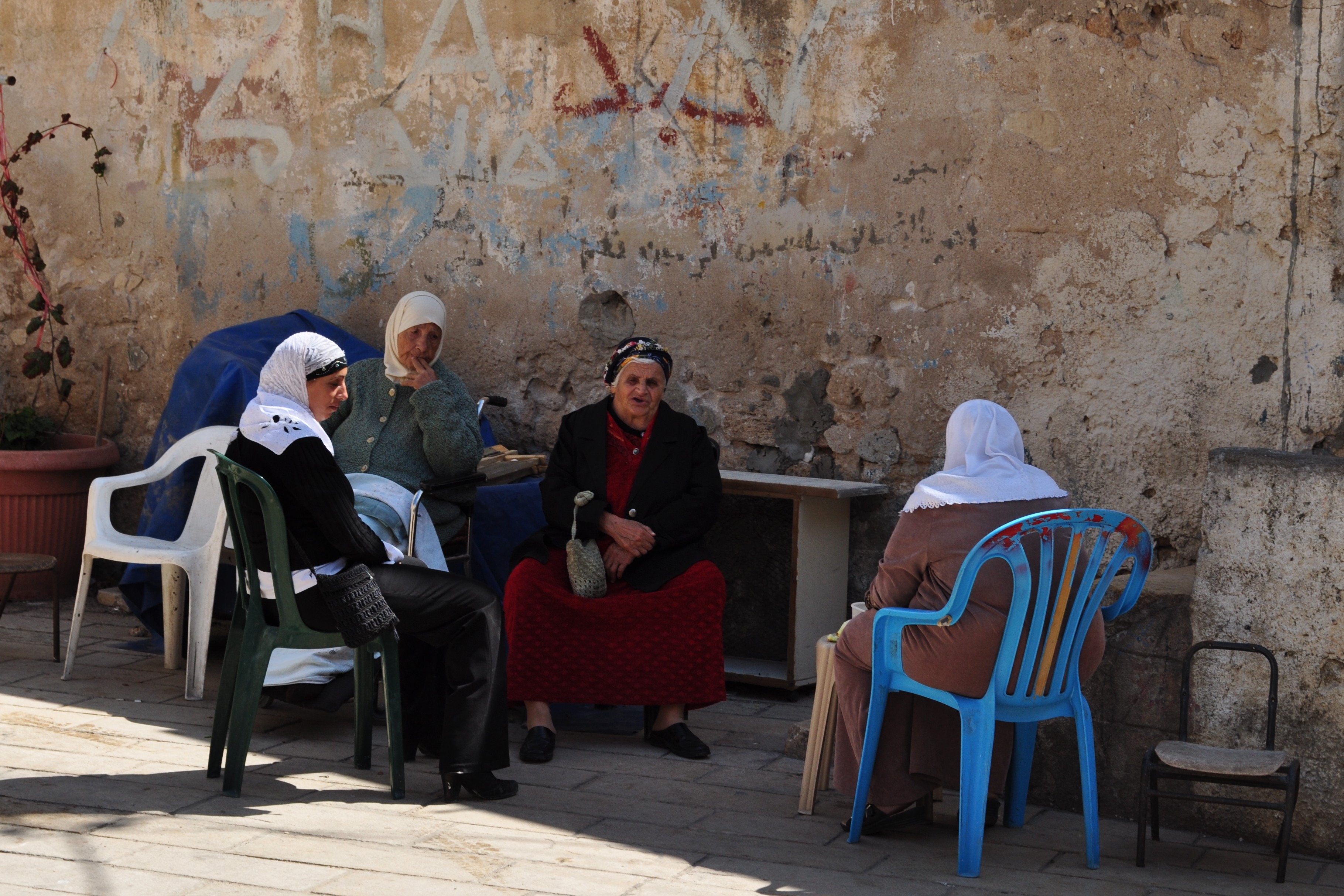
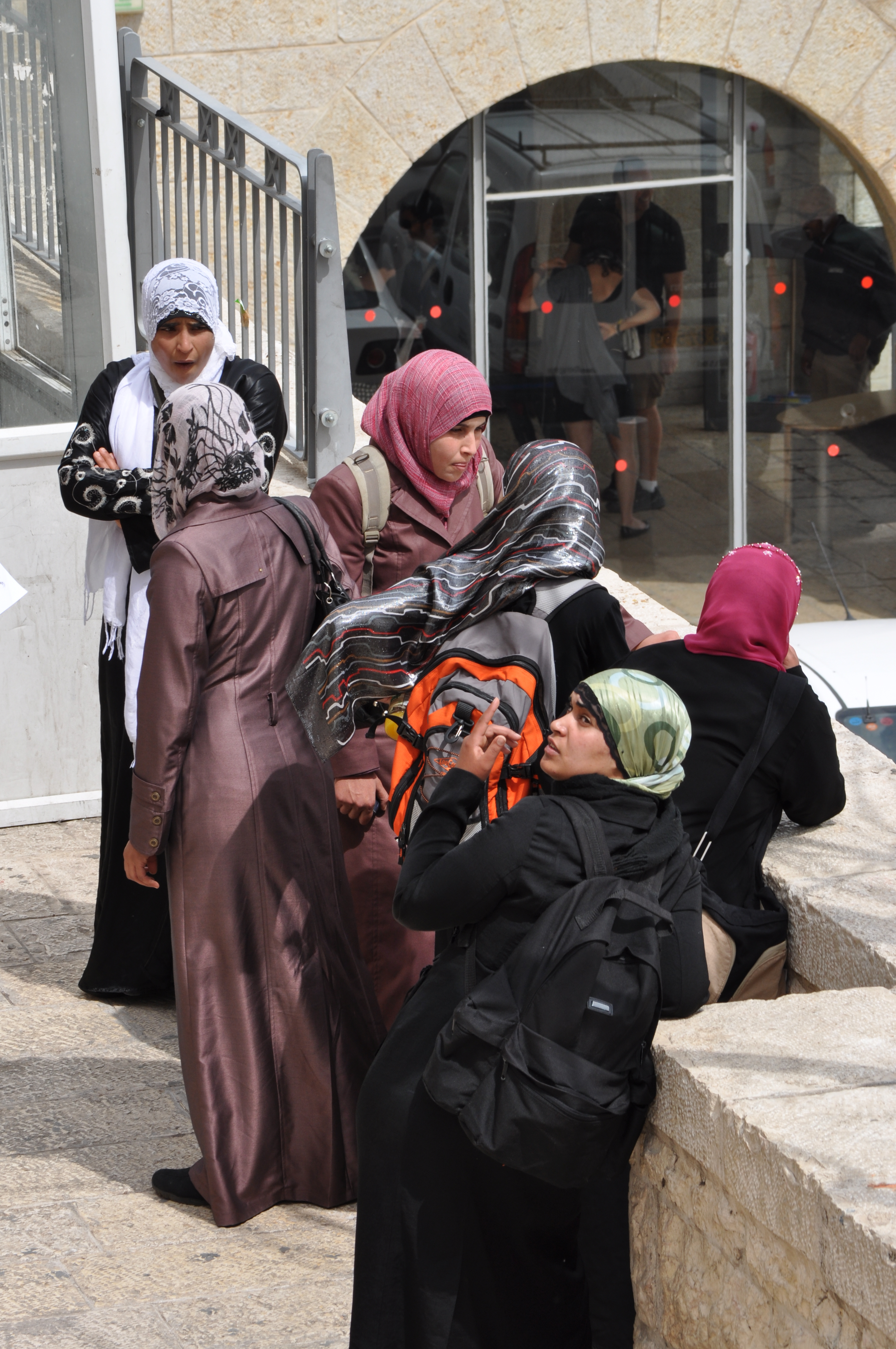
Arab women sitting in the shade in Akko, Israel (photo: First One Through)

They point to United Nations resolutions declaring they have a “right of return.” They frame their displacement as an “ongoing Nakba,” a catastrophe that Israel continues to impose.

I hear their complaint. I hear their anger. I more than understand — I live it.

Because Jews have lived that same nightmare — and worse. The very same United Nations that claims SAPs have a “right of return” decreed that Jews should be banned from living in half of their homeland. It told us we could not live in our own capital, Jerusalem. It told us we could not pray on our own holy mountain. It called it a “status quo” and the world nodded in approval.

And the Stateless Arabs from Palestine have the gall to try to deny Jews that very same right — to live freely in their homeland — while complaining that Jews are denying them theirs. They scream of injustice while vilifying “Yahoods.” The hypocrisy is obscene.

The Palestinian Arabs know it, and rather than confront it through accommodation and compromise, they wage war like Highlander, shouting “there can be only one.” They elected Hamas. They supported the October 7 barbarism. They continue to support Hamas, all in the hope of taking over the entire land from a small country.

Israeli Arabs make up 21% of the Israeli population, while Jews make up 0% of Gaza’s population and about 18% of the land east of the 1949 Armistice Lines (E49AL). The world ignores the Israeli Arabs with full citizenship rights, and obsesses and smears the Jews in the “West Bank” as illegal “settlers.” It seeks to ethnically cleanse that region of Jews while simultaneously claiming Israel has no true sovereignty to determine who to allow into its country to push the Israeli Arab population to 50%. It’s absurd.

Muslim Arabs have global support backed by 2 billion Muslims in their complaint against Israel. The small number of Israeli Jews receive global contempt for seeking the same right to live and travel freely in their homeland.

Israeli Arab women in Jerusalem (photo: First One Through)

UNRWA: The Antithesis of Its Mission

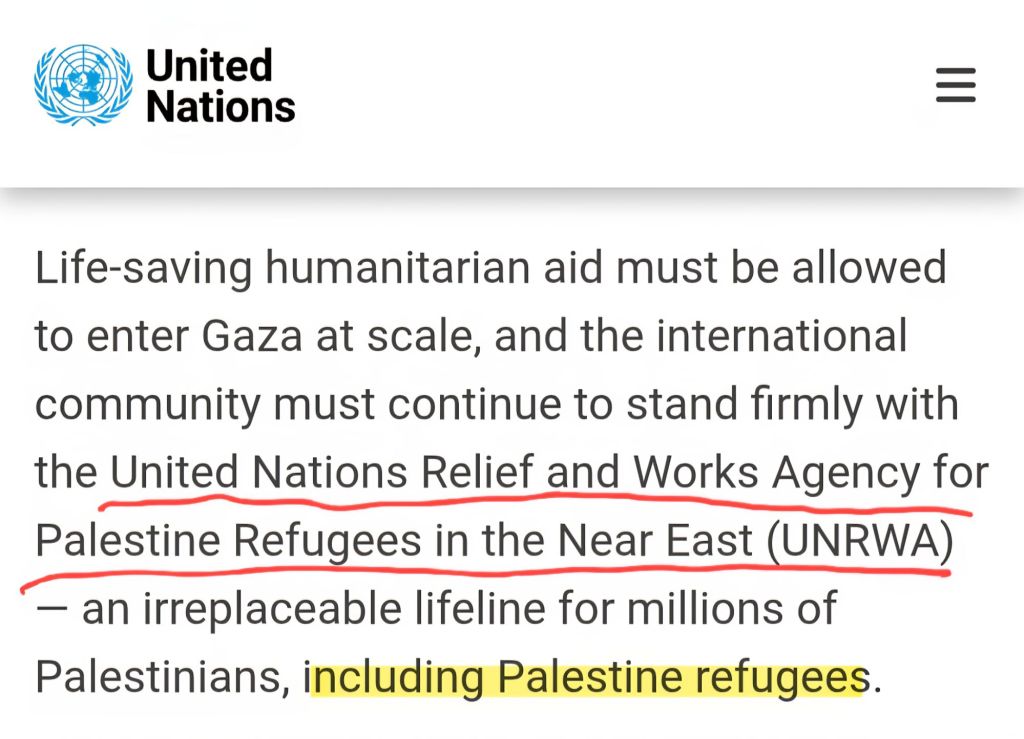
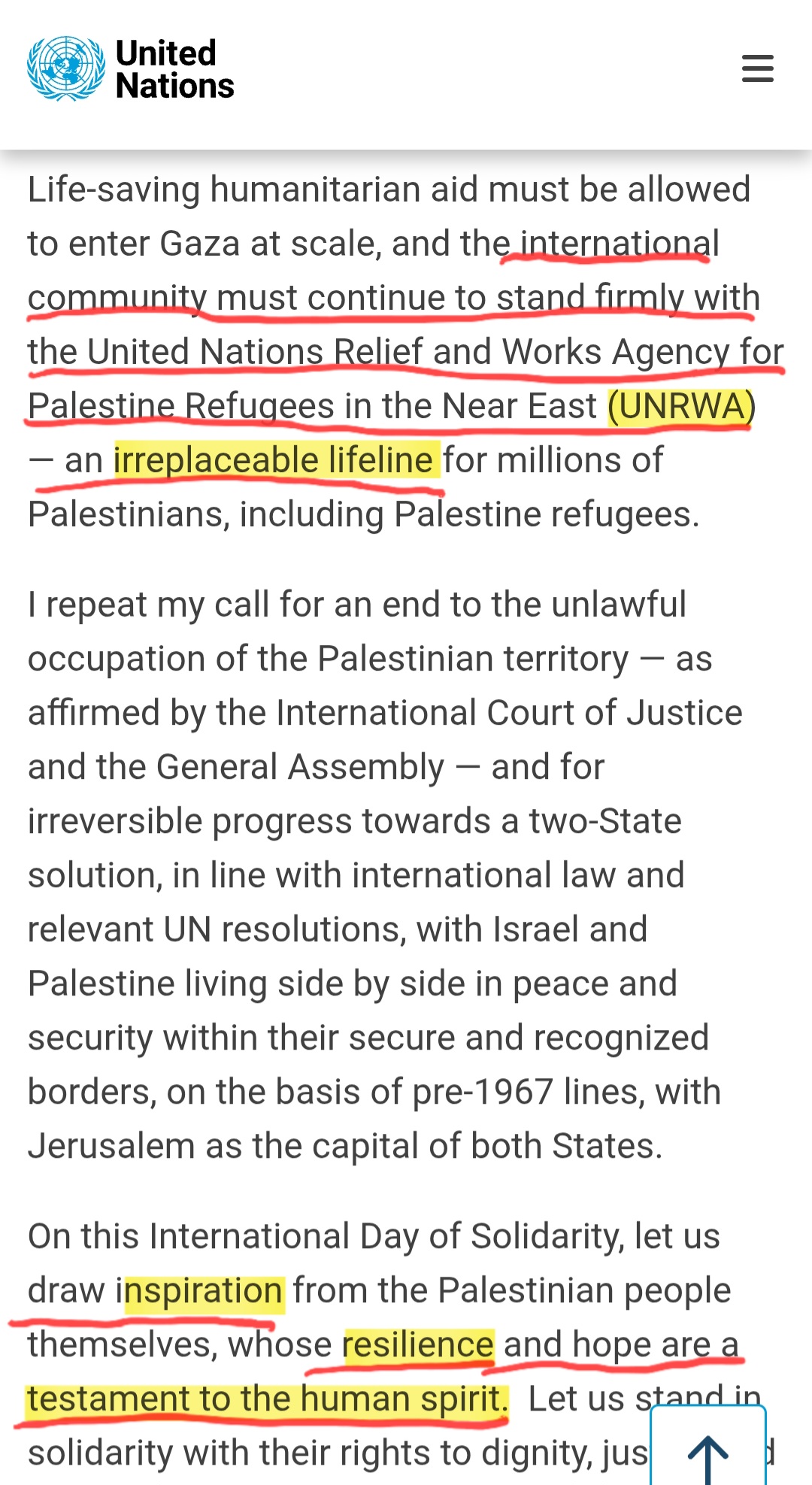
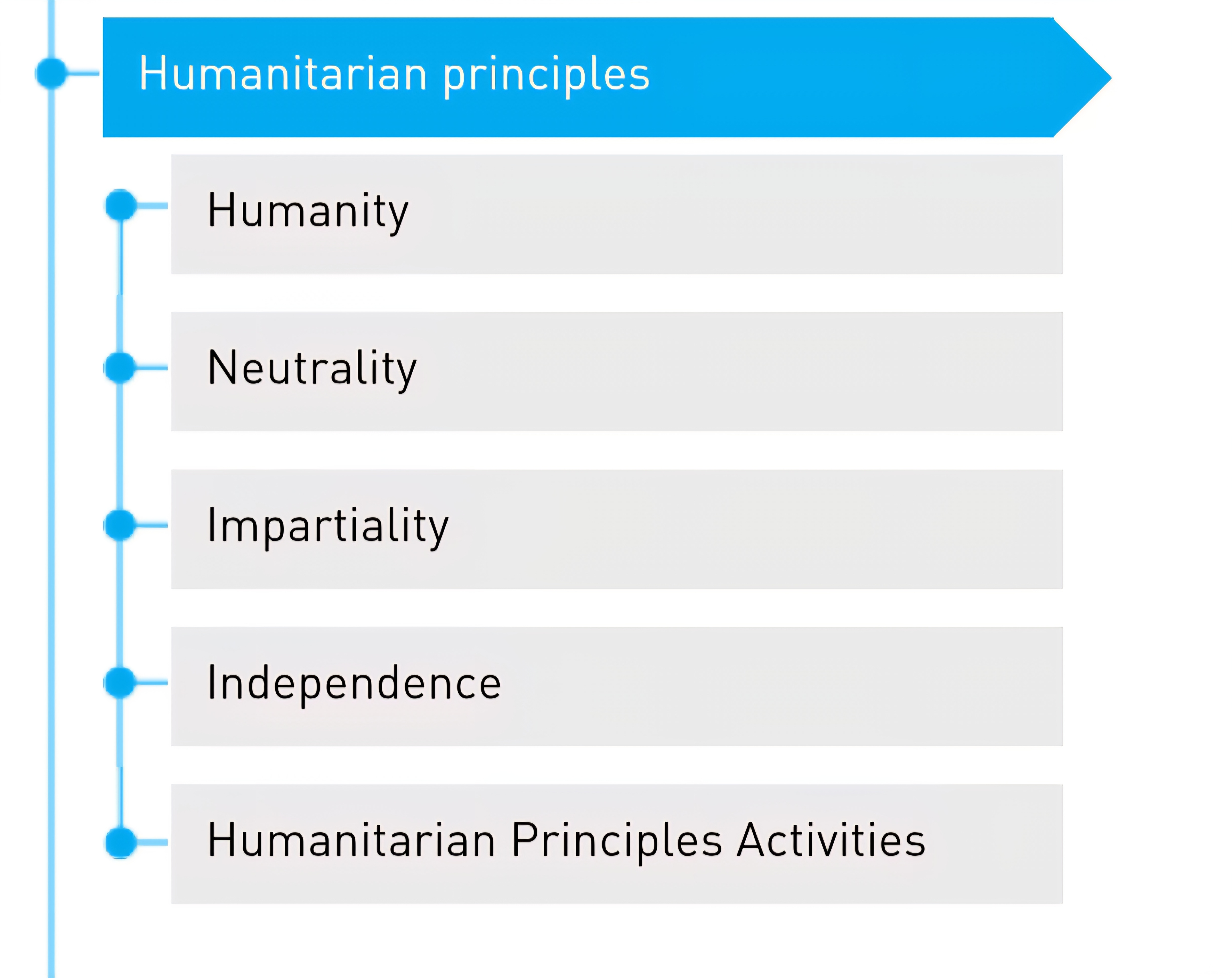
The United Nations Relief and Works Agency, UNRWA, declares that it operates on four humanitarian principles — humanity, neutrality, impartiality, and independence.
It is none of those things.

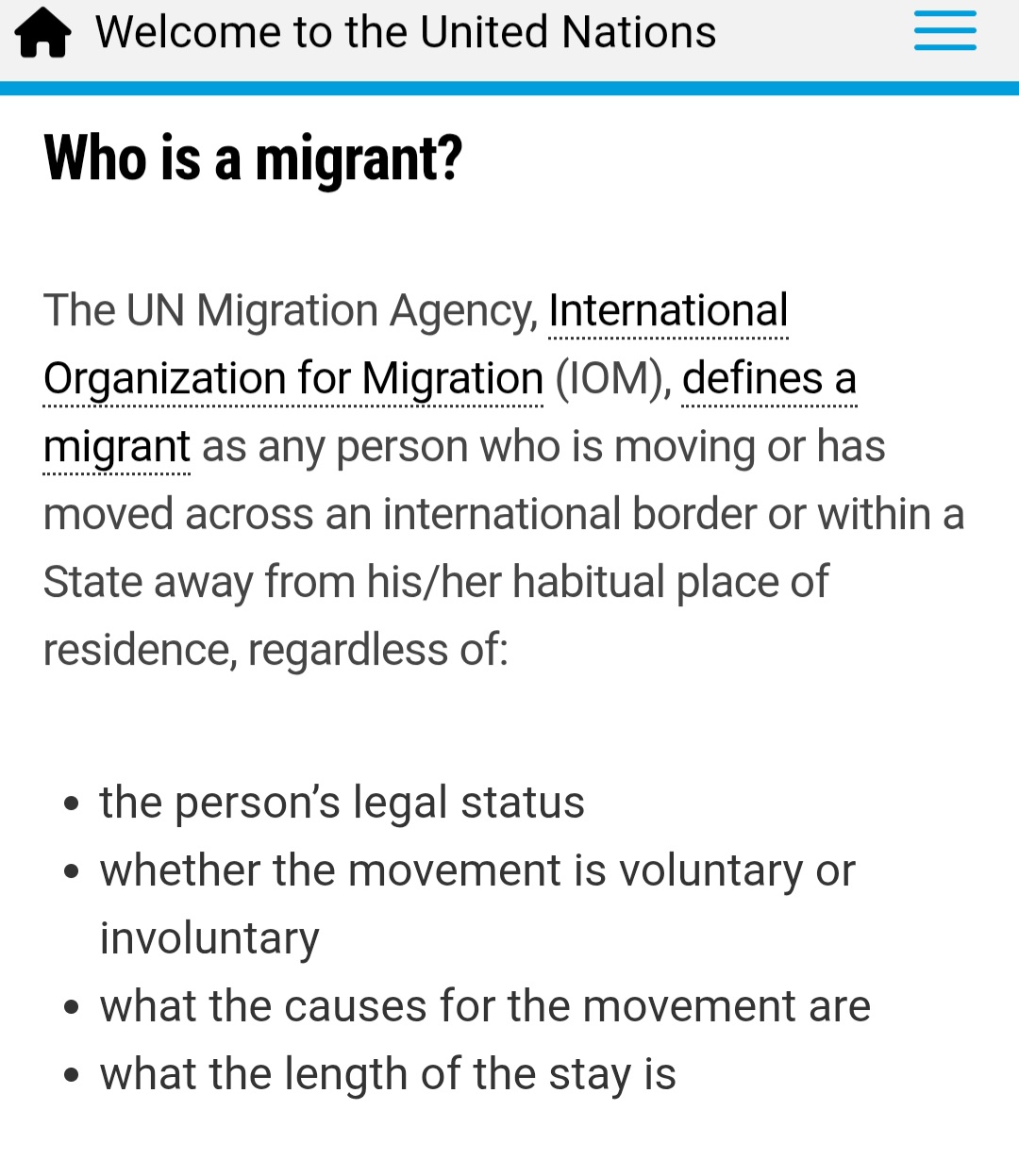
UNRWA is unlike any other UN agency. It is not the UNHCR, which manages refugees from every nation and conflict on earth. UNRWA is a creature of exception — created for a particular people, in a particular region, in a particular war.

The agency claims it was established to address the plight of refugees from Palestine following the 1948–49 Arab-Israeli War. But was that truly its purpose?
When the fighting ended, thousands of Jews were also expelled from their homes east of the 1949 Armistice Lines (E49AL) — from Jerusalem’s Old City, from Hebron, and across Transjordan’s illegally occupied territory. They, too, were refugees from Palestine. Did UNRWA help any of them? No.

Jews expelled from the Old City of Jerusalem via the Zion Gate by the army of Transjordan

From its inception, UNRWA was built to serve Arabs alone. Even when those same Arabs became full Jordanian citizens, the agency continued to provide them with housing, food, education, and medical care — benefits that by any logical standard should have ended once citizenship was granted. Instead, UNRWA preserved refugeehood as an inheritance, not a temporary condition.

Over time, UNRWA’s mission has morphed from relief to perpetuation.
It has shown itself highly partisan, politically entangled, and morally compromised. Its schools and clinics may operate under the UN flag, but the agency’s allegiance is often indistinguishable from the politics of rejectionism that dominate its host territories.

The entrance to UNRWA’s Aida “Refugee” Camp, near Bethlehem, with a key atop a keyhole, to demonstrate that the pathway to moving to Israel is via UNRWA

During the 2023 Gaza war, UNRWA boasted that only it had the infrastructure to provide food, education, and healthcare to the Gazan population.
Yet when 250 Israelis were dragged into Gaza as hostages, where was this agency of “humanity”? Did it deliver a single bandage or calorie to the kidnapped Israelis held underground? Did it condemn their abduction, or even acknowledge their suffering?
It did not.
UNRWA’s humanity proved selective, its independence nonexistent.

Its operations in Gaza function only through integration with Hamas, the political-terrorist organization that rules the territory. Schools double as weapons depots; employees have been implicated in massacres; aid is distributed by political loyalty, not human need. Leaders at the OCHA, another UN “humanitarian” group, are not shy to say they view Hamas a legitimate political representatives of Palestinians, not as a terrorist group.

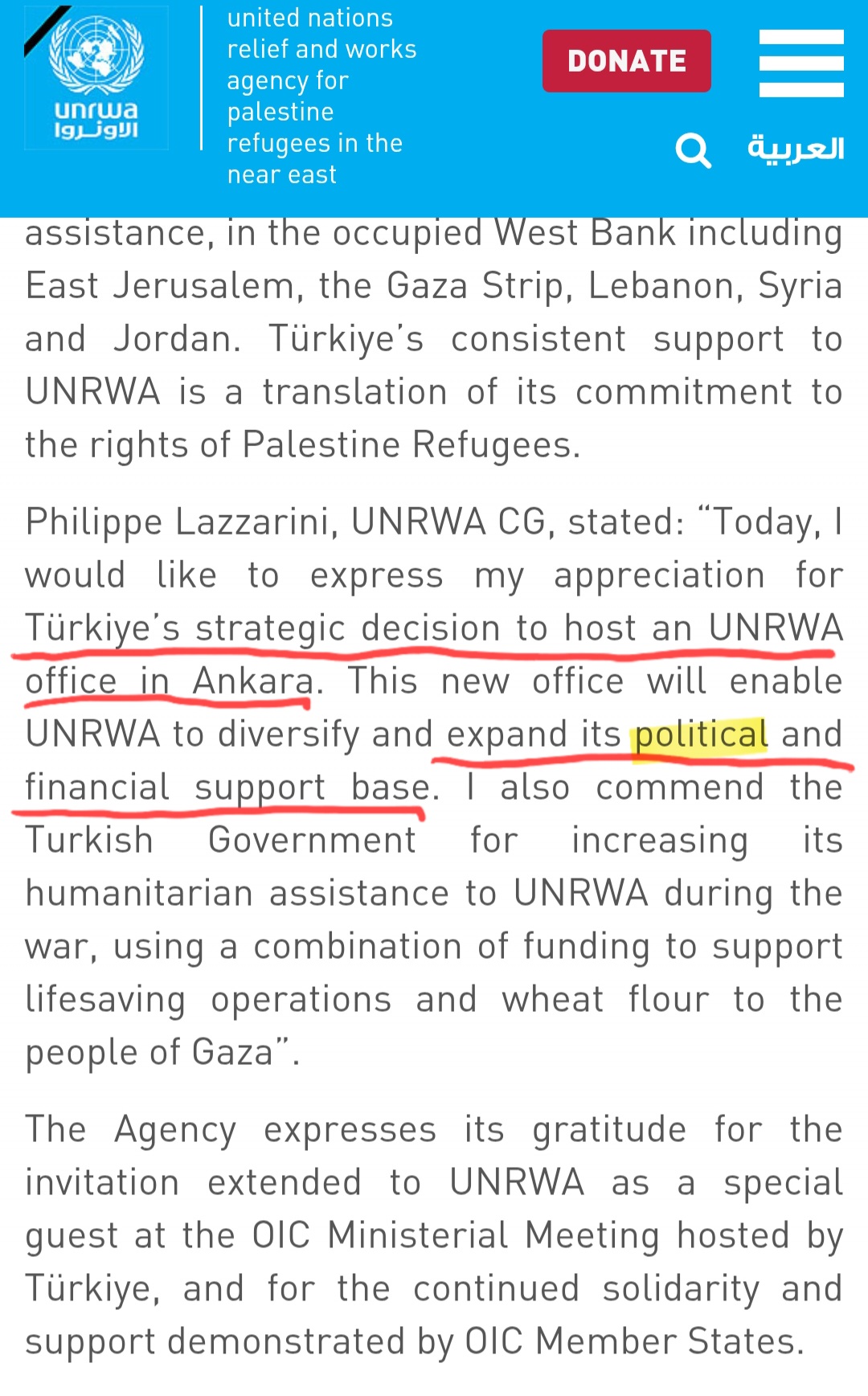
UNRWA now has additional offices outside of its field operations. It opened an office in Turkey to “expand its political and financial support base,” backed by the Organization of Islamic Cooperation (OIC), a political group. Very political. Neither independent nor neutral.

UNRWA is not a neutral humanitarian actor. It is a political instrument masquerading as one.
It fails every principle it proclaims.

It should be closed permanently.
Its essential services — food, healthcare, and education — can be absorbed either by host countries where these so-called “refugees” have lived for generations, or by the UNHCR, the global refugee agency that serves all peoples without prejudice.

So long as UNRWA exists, it will preserve resentment, dependency and hatred.
That agency founded in the shadow of war is the leading obstacle to peace.

For The UN Secretary General, Killing Jews At Synagogue Is Only Terrorism Outside of Israel

Islamic radicals came for Jews again. This time, on Yom Kippur, the holiest day on the Jewish calendar.

In Manchester, England, Jihad Al-Shamie, a 35-year-old British man of Syrian descent, rammed his car into a synagogue and then started stabbing people. Two were killed and three injured. The press would not say that the man was Muslim (his name was Jihad) nor what the motive was.

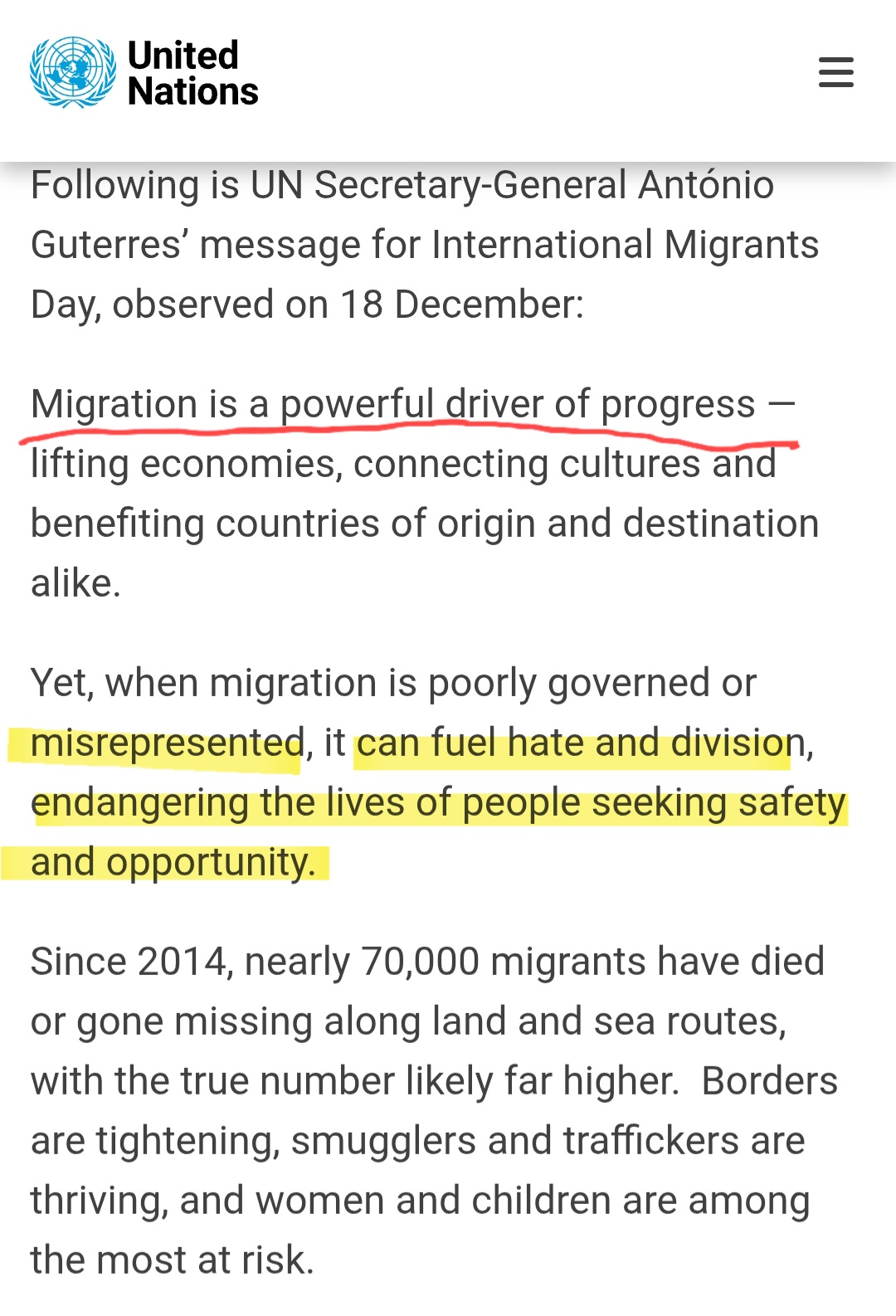
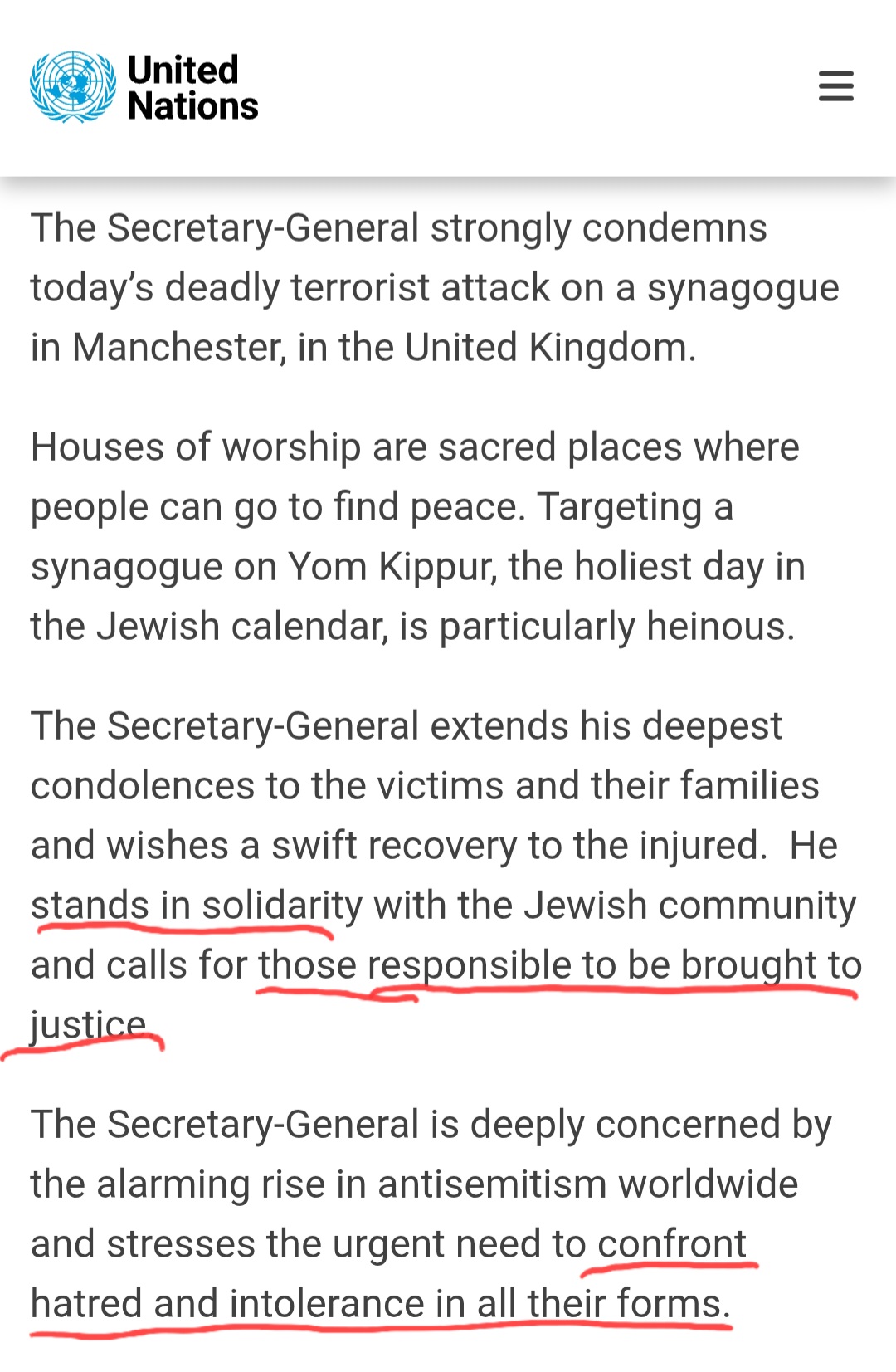
But it was clear to everyone – even the United Nations – that this was not a casual madman but a force of evil. The UN Secretary General Antonio Guterres issued a statement the same day that he “stands in solidarity with the Jewish community and calls for those responsible to be brought to justice.”

This is a completely normal and appropriate reaction.

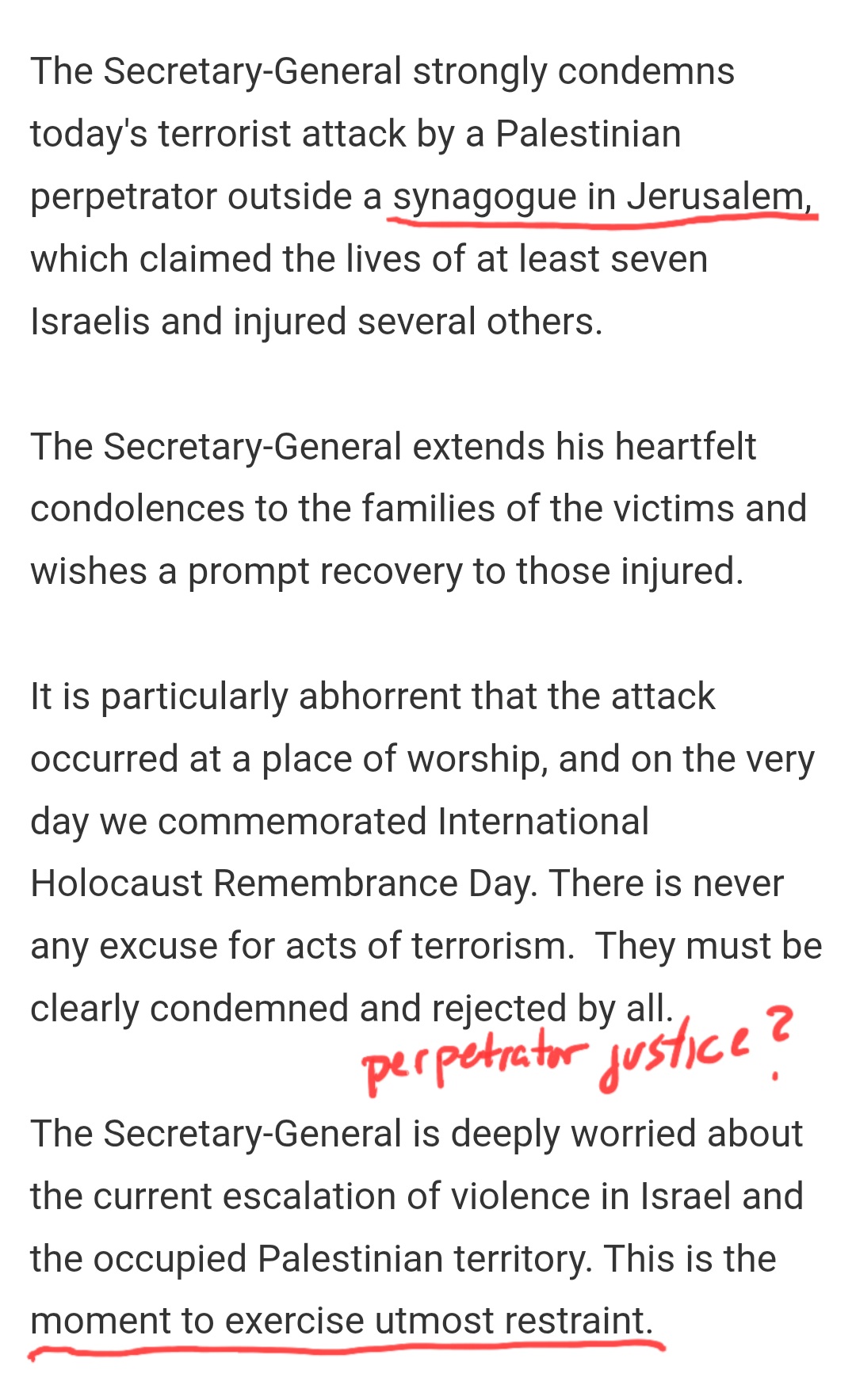
Yet compare it to Guterres’s statement when seven Jews were killed outside a synagogue in Jerusalem in January 2023: there was no statement of standing in solidarity with the Jewish community. There was no call to “confront hatred and intolerance.” There was no demand that the perpetrators be brought to justice.

Quite the contrary: he demanded that Israel “exercise utmost restraint.”

Because the United Nations has long blessed the Palestinian Arab war to kill Jews.

Children of a Lesser God, on the Temple Mount

Mark Medoff titled his play Children of a Lesser God to expose the way society infantilized the deaf, treating them as incomplete people. The phrase still burns because it names the humiliation: being allowed to exist but denied equal dignity.

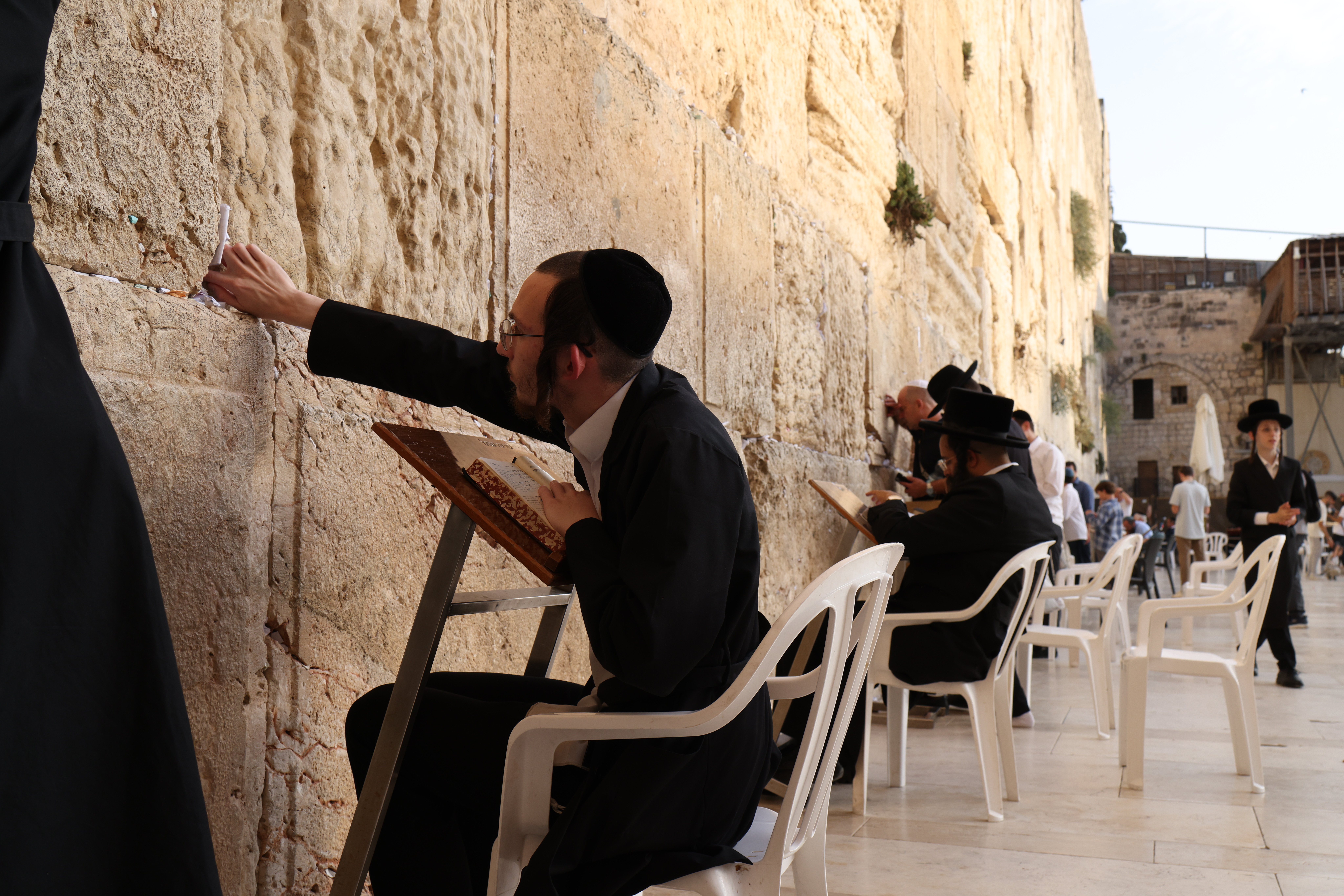
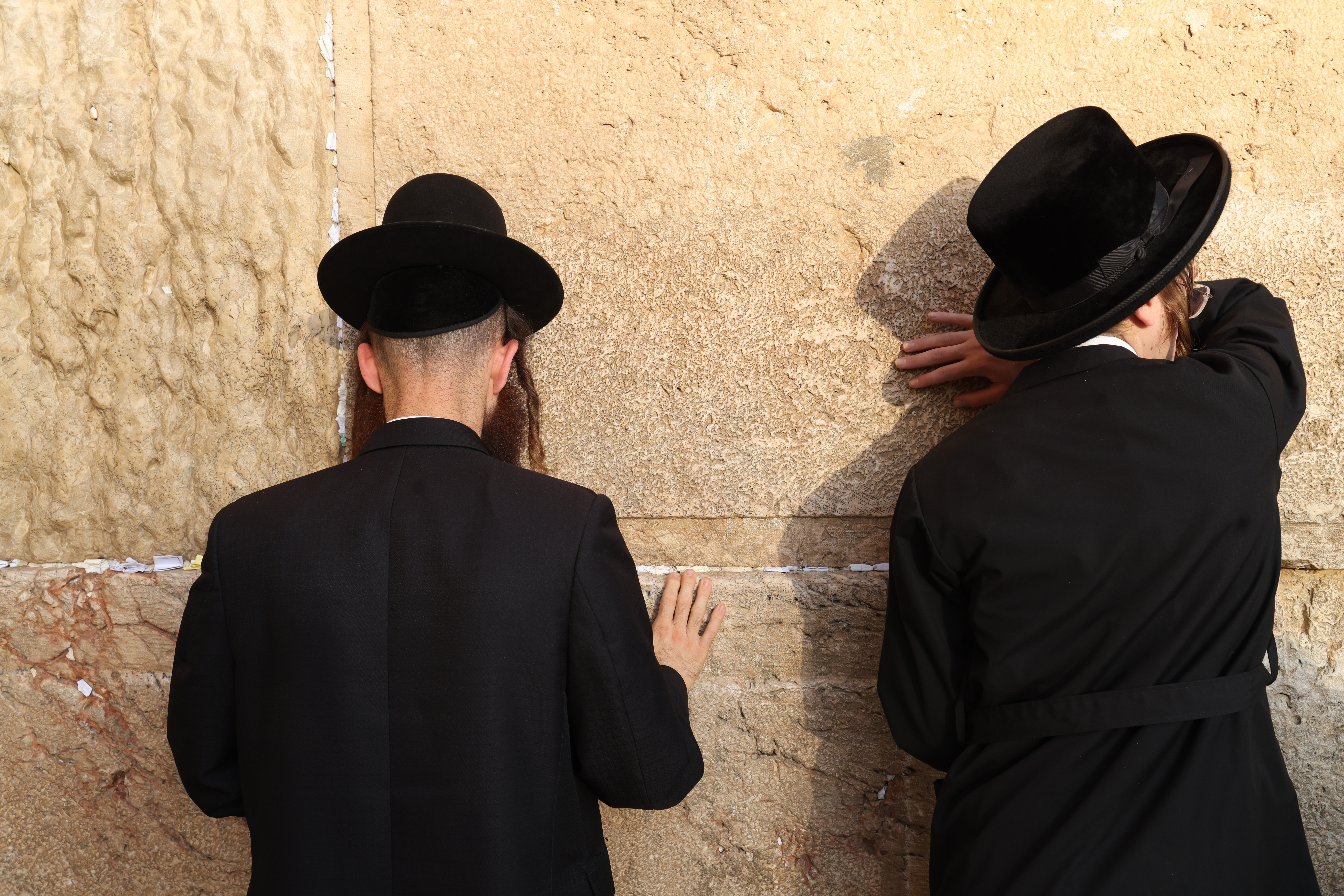
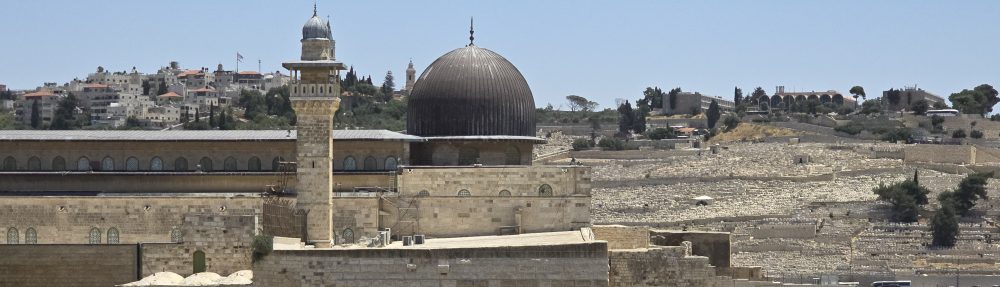
That is precisely the status of Jews on the Temple Mount. The holiest place in Judaism, the very ground of the First and Second Temples, the site of the binding of Isaac. Yet Jews are barred from uttering a prayer there. Visitors, reluctantly and barely; worshipers, never. The “status quo” enforced by the Jordanian Waqf with United Nations’ support dictates that Jews must keep their mouths shut.

It is a civic cruelty disguised as compromise. Jews are told they may stand in the place of their ancestors, but only as tourists in a museum, not as children before God. Muslims pray freely on the Mount by the millions, but Jews are gagged at their own holiest site. That is not neutrality — it is Islamic Imperialism.

The excuses are familiar: security, stability, avoiding unrest. But those words simply sanctify discrimination as pragmatism. As every Jew is expelled for moving lips in silent prayer, the world is reminded: some children are still treated as children of a “lesser” god.

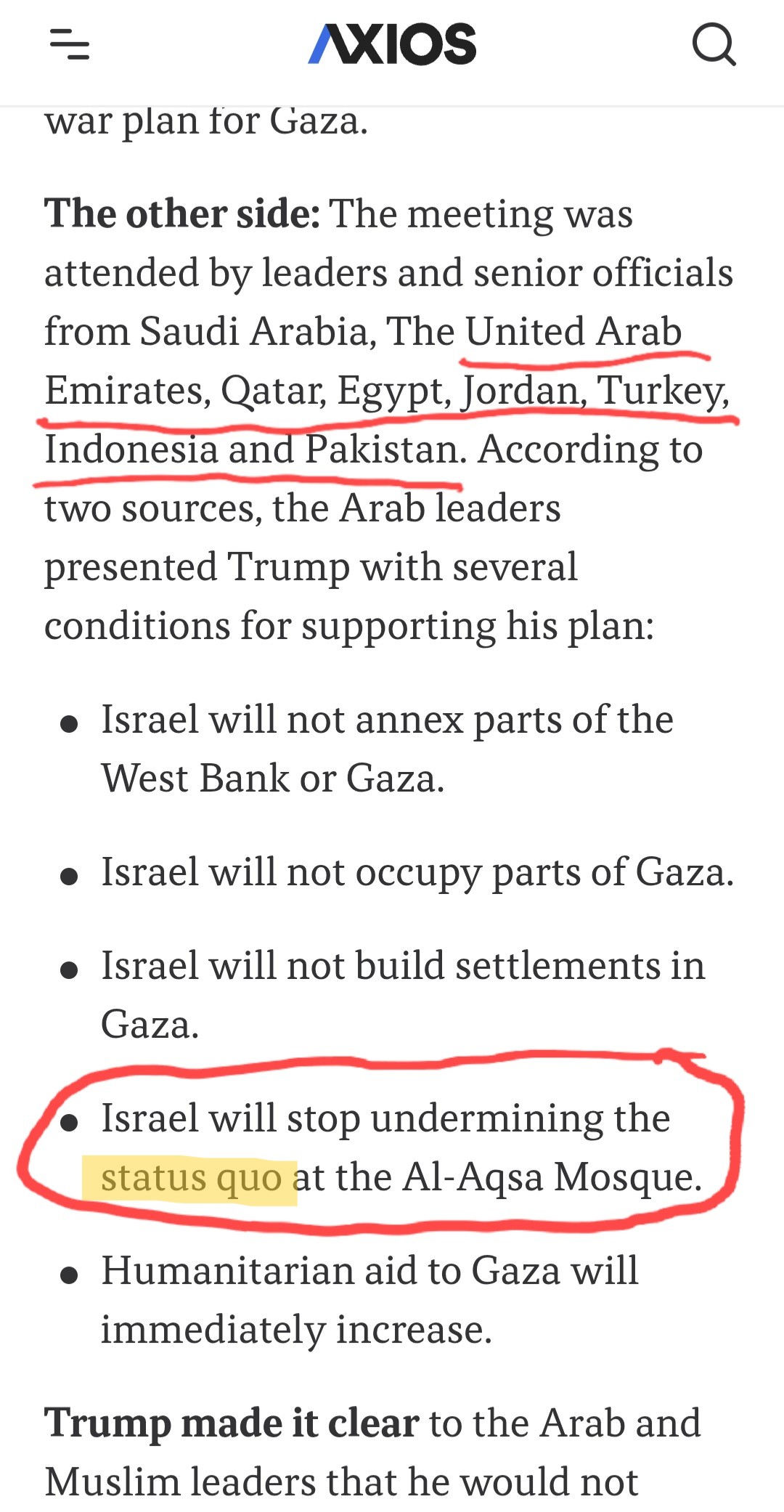
At the very moment Jews prayed in synagogues over Rosh Hashanah 5786 in September 2025, reading the story of Abraham binding Isaac on the Temple Mount and repeatedly praying for a complete Jerusalem, the Islamic world – from as far away as Pakistan and Indonesia – made demands of the United States that it would ensure that Israel maintains the “status quo” on the Mount. The despicable continued humiliation of Jews was essential for them even under the guise of stopping the Hamas war. Even above “humanitarian aid to Gaza.”

Islamic world makes demands on the United States to stop the war – and Jews attempting to pray at their holiest location

International diplomacy has institutionalized the humiliation of Jews. The so-called status quo is nothing but a permanent statement of inequality.

Medoff’s play forced audiences to confront a society that silenced the deaf. The Temple Mount forces us to confront a world that silences Jews. While both are intolerable, the latter is demanded at the anti-Jewish United Nations.

Pilgrims or Provocateurs?

A Muslim who visits Mecca is called a Hajji. It is one of the highest honors in Islam, the completion of the Hajj pilgrimage, celebrated by family and community as a sacred accomplishment.

A Catholic who travels to the Vatican is a pilgrim. For centuries, the faithful have journeyed to Rome, walking into St. Peter’s Square with reverence, greeted with blessing and legitimacy.

And a Jew who goes to the Temple Mount in Jerusalem — the very place where the First and Second Temples once stood, the holiest site in Judaism? That Jew is branded a provocateur. Not a pilgrim, not a worshiper, not a faithful soul ascending to pray — but an instigator, an agitator, an accused trespasser, a “settler” on their own sacred ground.

The disparity could not be starker. What is celebrated as devotion for others is condemned as incitement for Jews. For Muslims, the Hajj is a right; for Catholics, Vatican pilgrimage is honored; but for Jews, even quiet prayer on the Temple Mount is labeled an offense — by the United Nations, NGOs, and international bodies.

It is not only hypocrisy; it is erasure. To deny Jews the name of pilgrim is to deny Jewish history, Jewish identity, and Jewish legitimacy. It casts the holiest place in Judaism as alien to Jews themselves, a desecration of memory turned into policy.

And why? Because the world has normalized the jihad. It has allowed Islamic Supremacy to dictate permissible behavior, even in the Jewish holy land.

The truth is simple: a Jew ascending the Temple Mount is not incitement. It is the most ancient pilgrimage of them all — the echo of three millennia of devotion, commanded in Torah, rooted in covenant, and carried in every prayer whispered toward Jerusalem, before Islam was even created.

The real provocation is not the Jew who prays on the Temple Mount but a world that dares to tell Jews they don’t belong at the center of their faith.

ACTION ITEM

Come to the United Nations in New York City and demand Jewish rights and freedom of religious assembly in Jerusalem.

UN Ignores Palestinian Murderers. Again

Six Jewish civilians were killed simply for being Jews. Surely, a world leader would stand firm, demand justice, and declare solidarity with the victims. Yet UN Secretary-General António Guterres offered only a perfunctory “strong condemnation” via his spokesperson—no mention of justice, no demand for the murderers to be brought to account, no affirmation of solidarity.

Because these murdered Jews were in Israel.

That’s the moral vacuum of the UN.

In Mali, after a terror attack on 17 September 2024, Guterres said he “strongly condemns the terrorist attack,” extended his “sincere condolences” to victims and the government, and—crucially—urged the Malian transitional government “to ensure that those responsible for this despicable attack are held to account.”

Guterres statement after attack in Mali in September 2024

In Pakistan, following a deadly blast, he “strongly condemned the ‘abhorrent’ attack” and offering “solidarity” with the “Government and people of Pakistan in their efforts to address terrorism and violent extremism.

Guterres statement after attack in Pakistan in January 2023

Yet no demand for justice or expression of solidarity with the government and people of Israel. The word “Israel” didn’t even appear in the statement.

Guterres statement after attack in Jerusalem in September 2025

This is standard operating procedure for the UN Secretary General. When Muslims or Christians were killed in houses of worship, Guterres demanded justice while professing solidarity unequivocally. But not for Jews.

Why does Guterres morph into a fierce defender of victims—and demand justice—when the targets are not Israelis, but merely issue a dry statement when Jews are murdered? Perhaps he is waiting to find out if this Palestinian Arab terrorist was also a UN employee?

This is not nuance. It’s deliberate abandonment. A moral inversion because the villains have long ago been beatified, and Guterres has internalized that 2 billion Muslims are his real clients.

The UN has become a place where Jewish lives are treated as collateral, while other victims are granted full moral and political recognition. Guterres’s pattern isn’t subtle—it’s a glaring indictment of the UN’s moral bankruptcy.

Shoftim Inside the Gates vs. Judges Outside The Hague

Parshat Shoftim begins with a straightforward command:

“Judges and officers you shall appoint in all your gates … and they shall judge the people with righteous judgment.” (Devarim 16:18)

Rashi explains that every town needed both judges to rule fairly and officers to enforce those rulings. Justice could not be a distant idea — it had to be rooted locally, available to every community. That is the Torah’s formula for a moral society: equal justice, applied where people live.

Justice Where You Live

The genius of Shoftim is its insistence that justice must be accessible and equal. Not some imperial tribunal deciding cases in faraway capitals, but local courts where every person could seek fairness and truth.

It is inside the gates where justice takes hold. That’s what builds trust, stability, and morality in a society.

The ICJ’s Distant Spectacle

Contrast this with the International Court of Justice in The Hague. It claims universal authority, yet its judgments fall unevenly. Brutal regimes that slaughter their own citizens often escape its scrutiny. But Israel, a country with one of the most independent and activist judiciaries in the world, is hauled before it repeatedly.

This is an inversion of the Bible’s call for justice: a court far removed from the people, applying rules unevenly, more performance than principle.

Israel hauled before ICJ

Israel’s Local Justice vs. International Bias

Inside Israel, anyone can petition the Supreme Court — Arabs, NGOs, critics of the army. Judges regularly check government policy and military decisions. That is exactly what the Torah envisioned: justice dispensed locally, equally, and consistently.

The ICJ, by contrast, applies law selectively and from a distance. It does not strengthen justice; it hollows it out.

Conclusion

The United Nations had the opportunity for courts in its gates — with its agency UNRWA on the ground in Gaza, running schools, hospital and providing loans. It could have confronted Hamas’ crimes. Instead, it chose silence. It abandoned justice, allowed Hamas to fester, and turned Gaza into a terrorist enclave for Israel to face.

Now the same UN condemns Israel in The Hague. A body that ignored justice locally dares to preach it globally.

But the Torah is clear: a land cannot be moral when evil is allowed to sit at its gates. Hamas must be expelled. And the UN — which empowered terror and continues to undermine justice — has no rightful place in the Holy Land either.

UNESCO Protects the Hamas Charter as Endangered Cultural Artifact

A satire.

In a bold step to preserve humanity’s “most fragile treasures,” UNESCO voted to add the Hamas Charter to its list of endangered cultural artifacts. The decision came during the organization’s annual heritage summit, which initially convened to safeguard vanishing African oral traditions, disappearing tribal instruments, and lost languages. But the spotlight quickly shifted after the State of Palestine—recognized as a full UNESCO member—submitted the 1988 Hamas Charter as a candidate for protection.

Delegates debated the proposal with solemn reverence, as though they were discussing ancient scrolls or fragile clay tablets. “This is not merely a document,” intoned one UNESCO official, “it is a vibrant example of humanity’s enduring talent for mixing medieval theology, paranoid conspiracy, and genocidal intent into a single cultural artifact.”

Hamas founder, Sheik Ahmed Yassin, standing before children

Hamas, which currently holds 58% of the Palestinian parliament and continues to govern Gaza with an iron fist wrapped in a prayer shawl, celebrated the recognition. “We thank UNESCO for finally appreciating the poetic quality of our prose,” said one Hamas spokesperson, pointing to passages citing Jews as orchestrators of every global evil, from wars to stock market crashes. “It is art. Dark, sinister art, but art nonetheless.”

The Islamic Republic of Iran, a member of UNESCO with a keen eye for heritage preservation, reportedly helped prepare the submission. Delegates noted the Persian calligraphy used in the cover page of the proposal as “an exquisite touch of cultural diplomacy.”

Critics, however, were less charitable. Human rights groups asked why UNESCO would protect a text calling for the eradication of an entire people while ignoring actual endangered communities being eradicated in real time. UNESCO officials brushed off such concerns. “Our mission is not to judge,” said one diplomat. “If we can safeguard Stonehenge, we can safeguard Stone Age thinking.”

The vote passed overwhelmingly, though with several European countries abstaining in embarrassment. The document will now be digitally preserved and inscribed on UNESCO’s Memory of the World Register, alongside such treasures as the Magna Carta, Beethoven’s Ninth Symphony, and the forgery Protocols of the Elders of Zion.

As the session closed, one delegate mused: “Perhaps one day humanity will look back on this charter the way it looks at medieval torture devices—an artifact of cruelty, once revered, now displayed in a museum of shame.”

For now, however, UNESCO has declared the Hamas Charter an endangered cultural jewel which must be preserved. Its continued existence may be a threat to peace, but, as the organization reminded the world, “heritage must be protected, even when it is heritage of hate.”

The Israel Gaze

In 1975, film theorist Laura Mulvey coined the term “male gaze” to describe how women are portrayed on screen. The camera does not simply show reality — it frames women for a heterosexual male viewer. Women become visual objects, defined by how they serve the viewer’s pleasure, not by their own full humanity.

The concept applies far beyond film. A “gaze” is any dominant perspective that controls how another group is seen. The one doing the looking holds power; the one being looked at is flattened, reduced, and judged. The colonial gaze. The white gaze. The antisemitic gaze. In each, the subject is stripped of complexity and placed in a role that makes sense to the audience, not to themselves.

Israel is caught in such a gaze. Call it the “Israel Gaze.”

In the Israel Gaze, the Jewish state is the object, never the subject. It is to be observed, graded, managed — but rarely allowed to speak or act on its own terms. Its security concerns are minimized; its legitimacy treated as conditional.

Like the male gaze that zooms in on a woman’s body while ignoring the rest of her life, the Israel Gaze focuses on narrow, selective snapshots. Cameras linger on a checkpoint — but not the suicide bombings that created the need for it. They magnify airstrikes — but crop out the rockets that triggered them.

The framing serves the outside viewer, often a Western political elite, who want a morality play: powerful oppressor vs. powerless victim. Israel is assigned the role of aggressor. No matter the reality on the ground, the narrative is cast before the curtain rises.

And just as the male gaze reduces women to archetypes — seductress, mother, damsel — the Israel Gaze flattens Israel into “occupier,” “aggressor,” “settler state.” The country’s remarkable complexity — the ultimate decolonization project, a refuge for a persecuted people, a diverse democracy, a hub of innovation, a nation under constant threat — disappears from view.

This gaze is not neutral. It is a tool of power. In film, it props up patriarchy. In global politics, it reinforces the idea that Israel’s right to exist, defend itself, or define its own future depends on approval from outsiders who claim the right to judge.

Typical UN vote condemning Israel – lopsided

Mulvey noted in her analysis that “her visual presence tends to work against the development of a story line, to freeze the flow of action in moments of erotic contemplation.” So it is in global politics, with the viewer solely transfixed on Israel’s supposed evils that the actual storyline – and path to peace – is lost out of sight.

Both the male gaze and the Israel Gaze deny the subject the dignity of being whole. Both reduce identity to an image crafted for someone else’s satisfaction. And both sustain an imbalance in which the viewer’s comfort matters more than the subject’s survival.

Israel faces two battles at once: the immediate fight for security and the deeper fight to be seen truthfully. Until the gaze changes, the story will never be told honestly — and the verdict will be written before the trial even begins.

Guterres’ Dangerous Delusions

United Nations Secretary-General António Guterres has once again proven himself to be a reckless ideologue, dangerously detached from reality. In his latest remarks on July 28, 2025 regarding the Israeli-Palestinian conflict, Guterres declared that Palestinians have a “right” to a state. This is not only false, but dangerously misleading at a time when thousands of lives hang in the balance.

No group of people has an entitlement to a state. International law does not guarantee statehood to any specific ethnic or religious population. What people have is the right to self-determination, which can be fulfilled through various frameworks — including autonomy, federation, or integration with existing states. The assumption that this must culminate in Palestinian sovereignty from the river to the sea is not a legal imperative; it is a political preference, and a deadly one at that.

Guterres framed the issue as a false binary: either Palestinians get a state, or they will be condemned to expulsion or second-class status. This is a silly strawman, ignoring the obvious alternatives. Palestinians could become citizens of Jordan or Egypt — both of which administered the West Bank and Gaza, respectively, before 1967. Or they could establish a state in Gaza and in Area A of the West Bank, which is already under Palestinian control under the Oslo Accords. But they have no right to demand Israeli land, nor a capital in Jerusalem.

His reference to “East Jerusalem” as if it were a legitimate, independent entity is equally misleading. “East Jerusalem” was never a recognized capital or separate city — it was a temporary result of Transjordan’s illegal occupation between 1949 and 1967. The 1947 UN Partition Plan, which Arabs rejected with violence, never designated it for an Arab state. There is no legal basis to call Israel’s presence there “occupation.”

The most disturbing part of Guterres’ statement is his call for Hamas to be included in a unity government with fantasy notions of “we must support Palestinian unity around a peaceful, democratic and inclusive vision for statehood.” Let’s be clear: these are the same Hamas terrorists who committed mass rape, torture, and murder on October 7. This is a group with the most antisemitic and genocidal foundational charter ever written. To reward their atrocities with political power is not peacebuilding — it is moral depravity. It is the very definition of appeasement, sanitizing evil and encouraging further violence.

What kind of values is Guterres promoting when he elevates genocidal psychopaths into prospective leaders of a future state? It is not peace. It is not justice. It is not coexistence.

UNSG Antonio Guterres

Time and again, Palestinian leadership — whether Fatah or Hamas — has made its goals clear: no Israel, and no Jews. From school curricula to charters to chants in the streets, the obsession is not with borders, but with obliteration. The Secretary-General’s repeated attempts to whitewash this reality reveal either staggering ignorance or something much more nefarious.

Guterres is not a neutral peacemaker. He is actively endangering Israeli lives by proposing that Israel close its eyes to reality and pretend Hamas is a peace partner. He is fueling conflict under the guise of diplomacy and exposing the rot at the heart of the UN system.