French Riviera Crawl

The French Riviera has much to offer in addition to beautiful beaches and towns, including numerous kosher restaurants and museums. Alas, the quality varies which I share honestly here. Note that this review is ground covered over nine days, so many locations are not reviewed. Below I recap the food, museums and towns.

FOOD

There are three main centers for kosher bakeries, stores and restaurants between Saint Tropez and Menton, on the border of Italy. Those are Cannes, Juan-les-Pins and Nice. Overall, Cannes has the best food of the three.

Cannes

It may only have half the size Jewish population of Nice but the food is better and the attitude of the people running the restaurants is much friendlier.

Moye. Moye is the finest of the restaurants in the region. Located on the eastern end of the main beach street of La Croisette, one can eat either outside (which can be a little noisy) or inside in a finely decorated establishment. The food is very good with a wide selection of meat main dishes, sides, wines and desserts. Try the nougat for dessert; it originated in the region and Moye makes an excellent version which doesn’t have the sticky, taffy-like consistency found in packaged varieties, but softer and more cake like. Nougat somewhat resembles macaroons in taste as it is made of egg whites, honey, sugar and almonds. The staff here is very friendly and accommodating.

Nougat dessert at Moye, Cannes, France

Le Tovel. On a quiet side street not a far walk from La Croisette is a small meat kosher restaurant. While not fancy, it had a decent menu. The steak and risotto were ready in minutes and pretty good, while the fries were oily.

Dr. Sandwich. A relatively new locale, the meat sandwich shop does not have seating. The street food is very tasty, with the sandwiches essentially made from a giant piece of challah with a slit instead of a pita pouch. Like a traditional shwarma place, you pick the salads and fillings to accompany the protein.

Bekef 26. The restaurant is attached to a makolet where one can buy a range of items including cold cuts, wine and candles. One can eat inside as we did for lunch, and the salmon dish was pretty good. Take-away cold cut sandwiches for a day trip. The staff is very friendly.

OKLM. A meat restaurant just a block from Dr. Sandwich with seating indoors and out. While not as quiet as the street with Le Tovel, it is pleasant enough outside and the food was good with large portions.

[Bakery]. There’s a small kosher bakery right next to Rouvi on Rue Louis Nouveau which has a very modest selection of items. They are fine but a far cry from the taste and appearance one finds in Paris.

Juan-les-Pins

Further east from Cannes is Juan-les-Pins, a community mostly made up of Tunisian Jews who fled in the 1960s and 1970s. There are many kosher establishments located very close to each other. Knowledge of English here is not as good as the major tourist towns of Nice and Cannes.

Kozy. A dairy café and bakery. The food is fine with a small selection of brunch food such as pancakes, eggs and sandwiches. The pastries and sweet rolls were OK.

Le Carmel. Next to Kozy is a kosher bakery that has long hours for a bakery with many locales hanging outside. Alas, the baked goods are very dry and not tasty.

Tunisian kosher bakery in Juan-les-Pins

Besbeche Azur. Just a street away from many of the kosher places is a fairly nice-looking meat restaurant called Berbeche. The meat is not very good, either lacking taste or very spicy/ salty. Foie gras was in many of the dishes, a locale favorite but not for me.

Nice

Nice is the major city in the region with a sizable Jewish community, so the kosher restaurants are a bit more spread out than in the other towns. Most are located on Rue Georges Clemenceau, and some further away. Most of the stores have the Lubavitcher Rebbe on the wall and have ties to Chabad.

Meat Bar. Near the major cluster of kosher restaurants is a small meat restaurant called Meat Bar. The menu is very limited but the dishes like lamb chops and shnitzel are very tasty. The servers are very friendly, and one is inclined to return, especially in light of the weak competition.

Falafel Sahara. Away from the cluster is a clean store selling shwarma, schnitzel and falafel. Ordering is done on a screen and eat either inside or out. Food was very fresh and tasty. Note: “green peppers” in France means jalapeno, not bell peppers.

Falafel Sahara in Nice, France

Keter. Among the cluster of restaurants is Keter, a dairy restaurant serving fish, pasta and gratin. The food is not very tasty and the staff is cold. While there is seating inside, there is no air conditioning and felt dirty.

Le Kineret. The meat restaurant has take-away options which one should consider as the store is not very clean, had no air conditioning and the staff was unfriendly. The tuna and salmon sandwiches are fine as are the baked good like meringue and biscotti. The chocolate cookies seemed weeks old. While a link to the website is included here, it is as deceiving as a dating app photo. Generally, an unremarkable B- which beats being hungry but you wouldn’t regularly visit.

Le Leviathan. While a much friendlier place than Keter and Kineret, and much cleaner, it is located on a seedy street. Don’t go there at night. The dairy food is fine (also B-) with good selection of pizza, pasta and fish.

Chabad. The shul hosts dozens of people on Friday night and has a small restaurant which we didn’t visit. While the Americans seem to reserve and pay in advance, many stragglers fill the outdoor courtyard in a classic Chabad way. Definitely enough food, with most filling up on the challah.

Try the 123cacher app to find the various restaurants.

MUSEUMS

While the region has many museums, I was advised to skip several including Renoir, Leger and the archeological museums. Outside of the first three listed below, all could be skipped. Note that the current wave of protestors throwing liquids on famous works of art sometimes produces a very long waiting line as security pours through each visitor’s bag.

Picasso. Museo Picasso in Antibes is right on the water in a bright, beautiful old building where the artist worked after World War II for about 18 months. He left most of the art he produced over this period to the location, so a great place to see unique paintings, pottery and sculpture.

Chagall. Chagall is a favorite in Nice. His museum is up the hill but very worth the visit. His enormous works about biblical scenes can be seen up close with great commentary from audio guides accessed via QR codes on your phone. There are gardens on the premises as well. Surprisingly few visitors were there when we visited.

Prince of Monaco Auto Collection. The prince of Monaco donated his car collection which includes antiques from the 1920s all the way up to cars from 2000, as well as a number of Formula 1 race cars. Located at the Monaco port on two floors, the description of the cars is a bit light but the air conditioning is very welcome after the intense Monaco sun.

Palais Lecaris. In the middle of Old Town Nice is an old mansion that now houses an amazing collection of antique musical instruments. Harps, harpsicords and lutes from hundreds of years ago are arranged in cases in the non-air conditioned building.

Matisse. Do not come here if you want to see the artist’s famous works. The best things here are a series of sketches which show how Matisse conceived of a subject before getting to the final painting, and some cut outs that were assembled to be used in future artworks. Regrettably, the museum is mostly obsessed about the building itself and how great it is (and it’s not). Further, it is far away from most other interesting destinations in Nice.

Photography. Near the flower market in Old Town Nice is a small photography museum which rotates its exhibits. Fortunately the current ones are good. Both locations (next to each other) can be viewed in 15 minutes.

MAMAC. The modern art museum of Nice is pretty large but the best art work is the white space between the installations. The museum features contemporary works of “art” which are mostly physical manifestations meant to educate the viewer about the evils of global warming and colonization.

CITIES

The French Riviera is known as Cote d’Azur because of the beautiful blue water that wraps the various coves. The beaches are mostly pebbles and rocks, collateral from the soaring cliffs above the sea. The towns on the coast are basically sized against the length of the beach, with Nice having the largest beach, promenade and city.

Going around the region by car to each town offers three main options: a single lane road along the coast, wrapping the mountains with hairpin turns, or driving inland to the highway (A8) to zoom east/west and then descending to the towns. In other words, don’t look at a map to see how close the towns are but use a driving app like Waze.

Going from most western to eastern:

Saint Tropez. The town has a big flashy name and the tourists to prove it. It features a large marina with enormous yachts, a cute old town for walking around and small boutique hotels. Parking is difficult as tourists dwarf the number of spots on the beach and things to see. Many high end clothing brands are here, and Dior has a beautiful building with courtyard for drinks and food.

Gassin. Up in the mountains above St. Tropez is a very small mountain town called Gassin. There’s not much to do but the drive through the vineyard to get there and views from the mountaintop are very nice. It claims to have the narrowest street in the world, about 15 inches across.

The vineyards near Gassin

St. Raphael. A charming beach town. While it doesn’t have the big name shopping brands like Cannes and St. Tropez, the beach and marina are inviting and very manageable as tourists seem to ignore this hidden gem.

St. Maxime. A very small town with a modest beach and a quaint old town with just a few streets with shopping for clothing, bags and home items. There is a decent sized antiques/ bric a brac market near the beach as well.

Cannes. This is the big money town. Every fancy car one could imagine dot the roads including Lambourginis, Mclarens, Aston Martins, Ferraris, Bentleys, Maserattis, antique Rolls Royces and Porsches, and many more. The botox and “enhancement” surgery is ubiquitous, with old and young women trying to compete with the curves of the cars. The old town is nice and shopping streets have a fun liveliness beyond the stores. The promenade of La Croisette is lined with palm trees and beautiful hotels like The Carlton Hotel. Hotel Martinez recaptures the Art Deco feel found in Miami hotels but with fantastic service. Stop by Palais des Festivals where people like to have their pictures taken on the red carpet where the Cannes Film Festival takes place. Bring a mat to the public beach as the rocks are hard. Renting a chair – even if you are staying at a hotel – can costs hundreds of dollars for the day. If you’re lucky, crash a wedding at the beach.

Juan-les-Pins. The town has a nice beach, cute stores and some boutique hotels and parks. Overall, it feels much poorer than Cannes, with many store fronts vacant once leaving the main beach street.

Cap d’Antibes. Between Juan-les-Pins and Antibes, a small peninsula juts out into the Mediterraean Sea. The area is mostly reserved for the wealthy homeowners behind high walls but there is a pathway towards a public beach with pretty sunsets and a place to swim.

Antibes. Not far from Juan-les-Pins is the major marina of Antibes with hundreds of boats, a charming old town which includes Museo Picasso and a beach tucked behind some breakers.

St. Paul de Vence. Driving inland is a small town on a hill. The site is basically a single street dotted with art galleries and many tourists. Chagall is buried in the cemetery.

Tourettes-sur-Loup. While St. Paul de Vence is teeming with visitors, no one comes to Touretts-sur-Loup. It is also an old city built on a hill but with many more streets but very few shops. The town offers half hour of free parking to lure visitors, seemingly unsuccessfully.

Nice. The major city which houses the airport, there is a huge old town with frequent markets which change daily – sometimes flowers, food or antiques. There are many shuls including the Grand Synagogue, mostly Sephardi, and restaurants and museums mentioned above. Also grab drinks at the Le Negresco hotel at the main promenade.

Villefranche-sur-Mer. A charming beach front town with marina, beach and places to grab a drink. It has a nice balance between the size of the town and quantity of visitors.

St. Jean Cap Ferrat. Between Villefranche and Beauleiu, Cap Ferrat juts out into the sea much like Cap d’Antibes. The water somehow seems more blue and visitors more mature than the younger Cap d’Antibes beaches. The walk around the tip from the forest to Paloma Beach is beautiful. At the beach, models of all sizes are in bikinis for professional photo shoots. Try to grab a free shuttle at the end of the day to take you to your car parked far away!

St. Jean Cap Ferrat

Beaulieu. A small marina and beach seemingly for the very wealthy and few tourists. The main draw is the beautiful La Reserve hotel. The outdoor market with high end furniture and eclectic art was empty.

Eze Village. Better than St. Paul de Vence and Tourettes-sur-Loup, Eze is an extensive town-on-a-hill with grand views of the coast. Large perfumeries like Galimard and Fragonard have tours of how perfume is made and the restaurants allow you to buy a drink and soak in the incredible views. Go to the Exquisite Jardins at the very top to see amazing succulent plants and appreciate the dramatic views of Cap Ferrat.

Views of Cap Ferrat from Eze Village

Monaco. Like Cannes, a major focus is on money, including cars, fancy hotels and shopping. The Grimaldi Forum rotates its shows (I got to see Monet) and the Prince’s Antique Car collection is worth a stop along with the grand hotels such as Hermitage. The grand Casino de Monte Carlo is beautiful and opens at 2pm for gambling but one can see the entry at any time.

Menton. Right before the Italian border is another beach town called Menton. It has a long stretch of beach and a small old town. Few tourists relative to the size of the beach.

Hopefully a useful guide for people planning a trip to the French Riviera.


Related articles:

Brooklyn Chanukah Donut Crawl 2022

Jerusalem Donut Crawl 2021

The New York Times Highlights Jews’ Frustration With French Media Minimizing Anti-Semitic Attacks

Antisemitism, already the most common form of racism, is sadly becoming more commonplace. France, the third most populous Jewish country, is turning into a killing ground for Jews, and the media and government have been slow to take action.

The New York Times has noticed. To a degree.

On April 6, 2022, the paper wrote about a Jewish man killed when he was hit by a train, now being investigated as a hate crime, as video emerged of him fleeing a beating by a mob. His white kippah was found at the scene.

New York Times article on April 6, 2022 noted that French society is fed up with media and politicians inaction regarding anti-Semitic attacks.

The Times wrote about the anger in the French Jewish community about the media and police not properly identifying, investigating and prosecuting hate crimes against Jews such as this.

"But the case also echoed long-standing frustration in the French Jewish community that antisemitism and attacks against Jews are often minimized or mishandled by France's media and authorities."

It’s an amazing statement – not for being true (sometimes an oddity for the Times) – but that the Times did the exact thing which angered French Jewry, in minimizing antisemitism in the same article!

Six paragraphs after calling out French media, the Times wrote about the 2017 murder of an elderly French Jew, Sarah Halimi. It wrote that she “was thrown out of her window by a man who had smoked cannabis. But it took until 2021 for France’s highest court to rule that the man couldn’t stand trial for her death because it determined he was in a state of acute mental delirium brought by his consumption, prompting widespread outrage.” Such a retelling of the story is a travesty on many fronts as it portrays the Jewish community as frustrated by the slow wheels of justice. The Times opted to not share some very important facts about the murder in an article about antisemitism and attacks against Jews:

  • The killer, Kobili Traore, was a 27-old Muslim of Mali descent
  • Traore crushed Halimi’s skull with repeated blows – likely with a telephone – and then dragged her blood-soaked unconscious body to the balcony where he flung her to the street
  • He then yelled from the balcony “I killed the sheitan! (devil in Arabic)”
  • The neighbors also heard him repeated yell “Allahu Akbar!”
  • This was the eleventh murder of a Jew by a Muslim man in France since 2006

None of this was covered – not the antisemitic chant, not that the murderer was Muslim and part of a terrible trend of radical Islamists attacking Jews.

Attacks against Jews are often minimized and mishandled by France’s media

The New York Times pot-calling-the-kettle-black

The Times similarly minimized antisemitism in Jersey City, NJ where Black residents were angered by Orthodox Jews moving into the neighborhood. In August 2017, the Times wrote that the Jews were receiving an “uneasy welcome” because – as the Times would characterize the story – the Jews were “pushy.” The paper omitted writing about the vile online petition in the town of Mahwah, NJ going on at the time as well as the police investigation about the destruction of the Jewish eruv, in a series of New Jersey antisemitic activities. Just two years later, Blacks in Jersey City killed Jews in a kosher supermarket, not because they were anti-Semites but because they didn’t want pushy people moving into the neighborhood. See the difference?

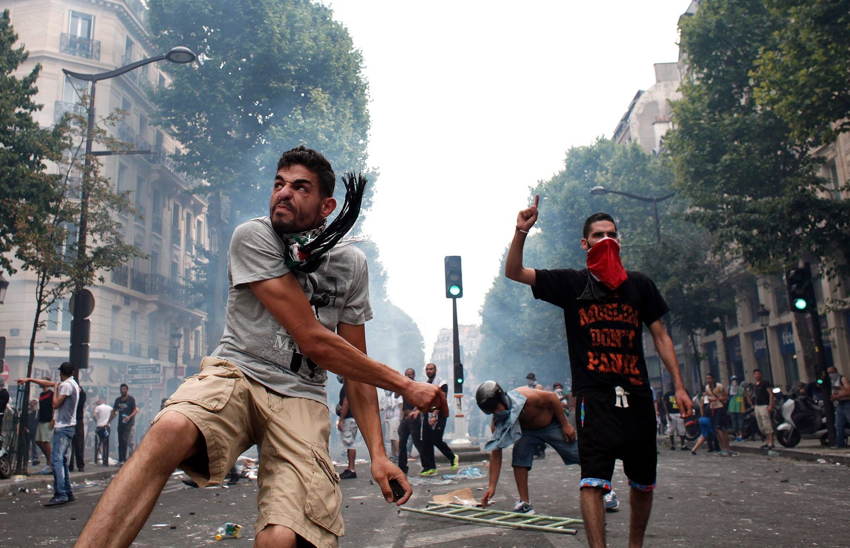
When multiple antisemitic riots were raging across Europe in the summer of 2014, three articles by different Times writers described the mayhem as having an “anti-Semitic tinge,” in a disgusting attempt to minimize the blatant Jew-hatred.

The New York Times is the disgusting standard bearer of media minimizing and mishandling attacks against Jews. Perhaps that makes it well qualified to discuss the French media engaging in their favorite activity.

Related articles:

For The NY Times, Antisemitism Exists Because the Alt-Right is Racist and Israel is Racist

New York Times Mum on Muslim Anti-Semitism

France’s Hypocrisy Expelling Radical Extremist Non-Citizens

The people of France suffered two terrible attacks in a short period of time. On October 16, 2020, a French schoolteacher was beheaded by an 18-year old Muslim refugee from Russia who was offended by the teacher’s display of a cartoon of the Islamic Prophet Mohammed. Then on October 29th, another Muslim man stabbed three people to death in a church in Nice.

These were not the first attacks on French soil by Islamic radicals. On July 26, 2016 two Muslim men who affiliated with ISIS attacked people in a church in Normandy, slitting the throat of the priest. Two weeks earlier, during Bastille Day celebrations, a truck driven by a Tunisian Muslim man killed 86 people and injured hundreds.

In response to the attacks, French President Emmanuel Macron announced a decision to expel 231 foreigners who are believed to hold extremist religious beliefs. According to Reuters, France defines extremists as “people who, engaged in a process of radicalisation, are likely to want to go abroad to join terrorist groups or take part in terrorist activities.”

While several Muslim countries condemned the stated intentions and related comments by Macron, most of the world remained silent. UAE’s Minister of Foreign Affairs actually said he agreed with him.

The hypocrisy is a bit rich as France had just protested the planned expulsion by Israel of a French-Palestinian who is an active member a terrorist group.

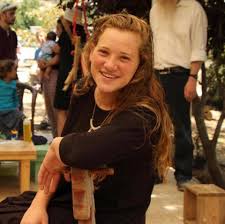
Salah Hamouri is an active member of the Popular Front for the Liberation of Palestine, a designated terrorist group by Israel, the United States and the European Union. The group has killed scores of people through the decades, including 17-year old Rina Shnerb who was on a peaceful hike with her family in August 2019.

Rina Shnerb, 17, killed while hiking with her family by members of the terrorist group, PFLP

Hamouri had already served time in prison for trying to kill the Chief Rabbi of Israel, Ovadyah Yosef some years before. After being released from prison as part of the prisoner exchange for Israeli soldier Gilad Schalit, Hamouri continued his involvement with the PFLP terrorist group. In light of those activities, in early September 2020, Anna Azari, Israel’s Foreign Ministry Deputy Director-General for Europe, told French Ambassador to Israel Eric Danon that Hamuri’s residency was being revoked, adding “Israel is committed to fighting terror[sic] and is acting against the terrorists among us.“

The stench of French hypocrisy now evicting 231 foreigners it views as radicals while simultaneously protesting Israel’s expulsion of a single active member of a terrorist group cannot be masked by fancy perfumes. The true intention must be made clear: France isn’t standing in solidarity with Palestinian Arabs; it doesn’t want to take in another radical Muslim, even a French-Palestinian from Jerusalem.


Related First One Through articles:

Israel’s Peers and Neighbors

Grading Evil and Evil Doers

Germans have “Schadenfreude” Jews have “Alemtzev”

Israel and the US Collaborate on Emergency Response

What’s “Left” for The New York Times?

There’s Nothing Worse Than Terrorism in France

The New Salman Abedi High School for Boys in England and the Mohamed Lahouaiej Bouhlel Soccer Tournament in France

Active and Reactive Provocations: Charlie Hebdo and the Temple Mount

Je Suis Redux

I’m Offended, You’re Dead

Subscribe YouTube channel: FirstOneThrough

Join Facebook group: FirstOne Through Israel Analysis

The New Salman Abedi High School for Boys in England and the Mohamed Lahouaiej Bouhlel Soccer Tournament in France

Summary: The western world will really have to worry about home-grown terrorism when the local community proudly honors the terrorists.

The Terrorists

On May 22, 2017, Salman Abedi detonated a bomb that killed 22 people attending an Ariana Grande concert in Machester England. The dead included children who went out for a fun evening to enjoy some live music.

On July 14, 2016, Mohamed Lahouaiej Bouhlel drove a truck through a crowd in Nice, France, killing 84 people. The dead included children and families out enjoying fireworks on Bastille Day.

On March 27, 2002, Abdel-Basset Odeh detonated a bomb in the middle of a Passover seder in Netanya, Israel, killing 30 people. The victims included Holocaust survivors enjoying a festive Passover dinner.

On March 11, 1978, Dalal Mughrabi shot and killed an American photographer taking nature pictures on a beach; then fired on a taxi killing all of the passengers; and then ultimately blew up a school bus full of kids on the way to school along a coastal road in Israel.

The Celebrants

The Islamic State claimed credit for the Manchester England bombing saying that “a soldier of the caliphate planted bombs in the middle of Crusaders gatherings.” ISIS made a clear reference to “Crusaders,” non-Muslims who came to the Middle East to block the establishment of a Muslim “caliphate.”

ISIS also claimed credit for the attack in Nice, stating that “one of the soldiers of the Islamic State,” carried out the attack.

The 2002 Passover seder massacre was celebrated by Palestinian Arabs broadly. “Everyone’s proud of him,” said his older brother, Issam Odeh. Palestinians later named a soccer tournament after him in his hometown of Tulkarem.

Dalal Mughrabi led a squad of Fatah fighters in her attack, the same political party as Yasser Arafat (fungus be upon him) and Mahmoud Abbas. She was celebrated at the time by Palestinian leadership and continues to be venerated by Palestinian Arab society today which names public squares and schools in her memory.

Palestinian students honoring Dalal Mughrabi
(Photo:
Rina Castelnuovo for The New York Times)

One would imagine that ISIS is naming public squares and buildings after Salman Abedi and Mohamed Lahouaiej Bouhlel in Syria and Iraq in a similar fashion.

The Reaction to the Attacks and Backers

The Prime Minister of England, Theresa May said “the spirit of Britain is far mightier than the sick plots of terrorists — and that is why the terrorist will never prevail.” She is pushing NATO to join the fight against ISIS that backed the terrorist attack. The United Nations Security Council held a moment of silence for the victims of the attack.

The UN Security Council also held a moment of silence for the victims in France a year earlier.

Many countries are fighting against ISIS, the backers of global terrorism. It is quite a different story for the backers of terrorists against Israel.

The UN did not hold moments of silence for Israeli victims. The global community did not seek to isolate Fatah or condemn its celebration of terrorists. Quite to the contrary. The UN Secretary General said that it stood with the Palestinians and not with Israel.

In 2002, the UN launched an investigation into BOTH sides of the conflict. That’s quite a process considering it is an active protector of the Palestinians and therefore has inherent bias. Consider that the UN does not investigate how France and the UK fight against terrorists at all.

Foreign or Domestic

The UK, France and other western countries look at terrorism as a foreign transplant. It emerges from the Middle East as a distorted form of Islam that lands on their shores.

Investigators of attacks quickly delve into whether the terrorist was an immigrant or native. Something foreign may seem distant. The chance of another attack is remote. However, a locally born radical might portend a future full of terrorism.

It is an understandable fear, but one still in the distant future.

When the local Muslim community of Manchester creates the Salman Abedi High School for Boys, or the city of Marseille, France names a large public square or soccer tournament after Mohamed Lahouaiej Bouhlel, the period of daily terrorism will be at hand. That is the present day in Israel that deals with an anti-Semitic Arab population that seeks a land free of Jews.

Will the UN and global community stand in solidarity with the innocent victims of terrorism then?


Related First.One.Through articles:

The Media Splits on Showing “Islamic Terrorism” and its Presence in Israel

The UN Fails on its Own Measures to address the Conditions Conducive to the Spread of Terrorism

Car Ramming from Islamic Terrorism Explodes as it Approaches its Second Anniversary

The US State Department Does Not Want Israel to Fight Terrorism

The Big, Bad Lone Wolves of Terrorism

Select Support in Fighting Terrorism from the US State Department

Double Standards: Assassinations

Eyal Gilad Naftali Klinghoffer. The new Blood Libel.

Subscribe YouTube channel: FirstOneThrough

Join Facebook group: FirstOne Through  Israel Analysis


The Selfishness, Morality and Effectiveness of Defending Others

There is a well known quote from a Protestant minister named Martin Niemoller (1892-1984) who argued for the defense of others:

First they came for the Socialists, and I did not speak out—
Because I was not a Socialist.

Then they came for the Trade Unionists, and I did not speak out—
Because I was not a Trade Unionist.

Then they came for the Jews, and I did not speak out—
Because I was not a Jew.

Then they came for me—and there was no one left to speak for me.

The argument is by all accounts a practical one, not a moral one. The quote suggests that people should stand up against prejudice because hatred is a slippery slope. The selfish reasoning has different aspects: fight for others before the evil comes for you; and fight for others, and hopefully they will fight for you as well due to the same logic.

Do world leaders actually use such self-motivating arguments in practice?  Are the arguments effective in curbing hate and attacks driven by hatred?

Rallying for the Victims

Consider the situation of Jews in France over the past few years.

The Anti Defamation League did a study of anti-Semitism in 2014 which it updated in 2015.  The study found that while most countries in the world witnessed very small changes in the level of hatred against Jews, France saw a dramatic drop.

  • Christians: In 2014, 40% of French Christians held anti-Semitic views. That number dropped to 17% in 2015.
  • Business: In 2014, 51% of France believed that Jews had too much control of the financial markets. One year later, only 33% held such views – mostly Muslims (63%)
  • Global Affairs: In 2014, 46% of France believed that Jews had too much control over world affairs, a number that dropped to 22% in 2015 (again, predominantly French Muslims, 54% compared to Christians at 21%)
  • Pompous: In 2014, 33% of France thought that Jews thought themselves superior to others, dropping almost in half to 17% in 2015 (Muslims were more than twice as likely as Christians to hold this view)
  • Media: In 2014, 44% of France thought that Jews had too much control of the media, which dropped to only 21% in 2015 (Muslims were almost 3 times more likely to hold that view).
  • World Wars: In 2014, 18% of the French considered the Jews behind major world wars. In 2015, that number was one-third, 6% (with Muslims FOUR times as likely as Christians to hold such view).

What happened between the two polls in France to cause such a dramatic shift in the perception of Jews? ADL commented that various terrorist attacks and violence against Jews over 2014 brought a sense of solidarity for the Jews in France, as well as in Germany and Belgium where other attacks occurred:

“The poll found a marked increase in concern about violence against Jews in all three countries.  The results indicate that heightened awareness of violence against Jews fosters a sense of solidarity with the Jewish community and that strong condemnation by political and civic leaders makes expressing anti-Semitism less acceptable.”

Such statement from the ADL would seem to confirm that speaking up in defense of a persecuted group improves their situation, and indeed that may have been a contributor to the dramatic improvement of the French perception of Jews.

Rallying for the Perpetrator

In June 2015, the Pew Research Center did a survey of the French in their attitudes towards Muslims in the aftermath of deadly attacks committed by Islamic terrorists.  In a surprising finding, the French viewed the group that perpetrated the violence MORE favorably than before, going from a 72% favorability rating to 76%.  The improvement in opinions went across all political ideologies, including the far right which saw a movement of 60% to 63%, including a strong favorability rating doubling from 8% to 16%.

This dynamic happened in the United States after the 9/11/2001 terrorist attacks as well. Overall, Americans’ positive impressions of Muslims jumped from 45% to 59%, with the far right jumping the most, from 35% favorable feelings to 64%.

Pew reached a similar conclusion as the ADL, and attributed the increased positive feelings towards Muslims stemming from the call for unity among leaders such as President George W Bush who said: “These acts of violence against innocents violate the fundamental tenets of the Islamic faith.  And it’s important for my fellow Americans to understand that.”

The famous Niemoller quote considered people’s selfish motivations to defend others, while world leaders appealed to people to turn away from hatred in pursuit of unity. Whether in France or the USA, those calls seemed effective in changing attitudes, but did they lower the number of attacks?

Effectiveness

In the United States, the number of attacks inspired by radical Islam has accelerated since the middle of 2015, with roughly 30 incidents over the past year (compared to 62 in the prior 14 years). Have the number of attacks increased because of the calls by President-elect Donald Trump to perform “extreme vetting” of Muslims interested in coming to the United States from countries at war with the US? Possibly. It is certainly an extreme jump in jihadist attacks.

However France has also seen a dramatic increase in the number of Islamic attacks, which began to spike in December 2014.  There have been roughly 20 attacks over the past two years, which roughly equals the prior 25-years’ of attacks. Various pundits speculate a number of causes including the French colonialist past and the marginalization of Muslim immigrants in French society. But those excuses must be dismissed, as those dynamics have been at play for dozens of years.

Others point out to the rise in the number of Muslim immigrants from the war-torn Middle East.  These immigrants arrived into France, Belgium and other countries, bringing their anger with them. The stories they tell of the destruction of their homes fuels the anger of the resident Muslims that were already in the country.  Rather than be grateful for their safety, they attack the liberal society which replaced their Muslim world. While the attacks by Muslims has led to the growth of far-right nationalist parties that argue to stem the flow of Muslim refugees, the far-right has overall been more positive towards the Islamic community.

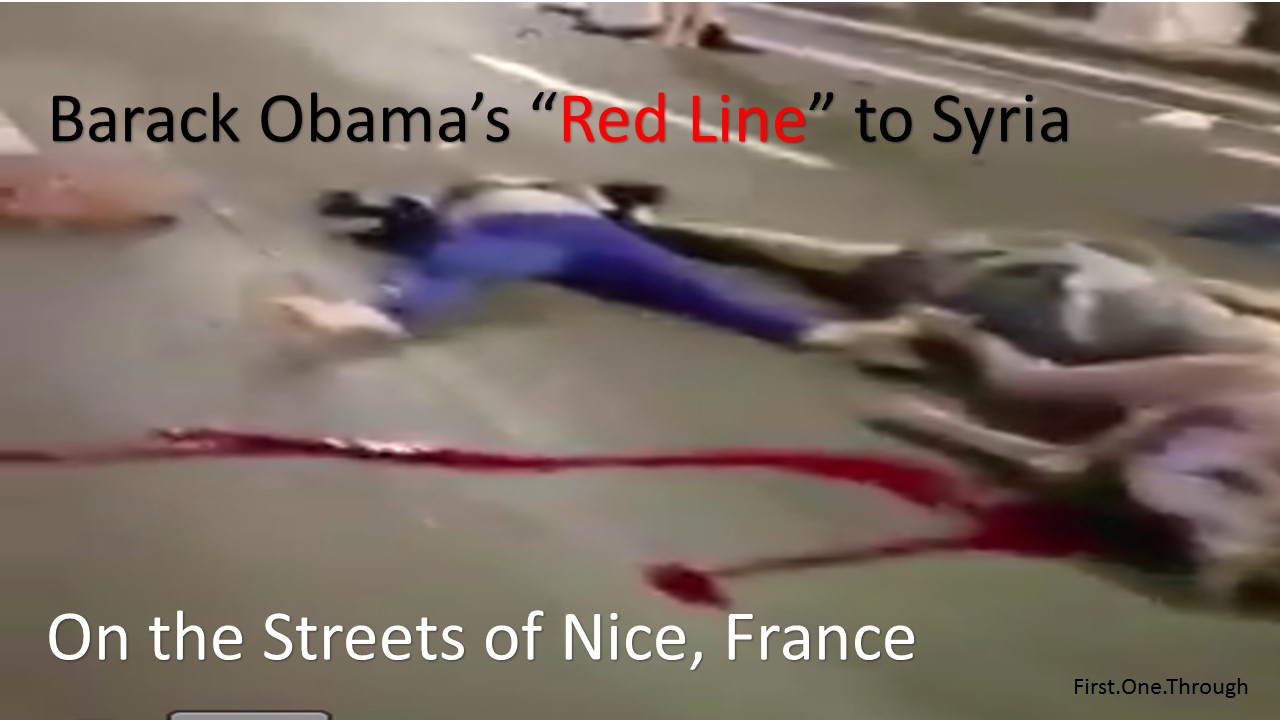
obama-red-line


It would appear that calls for calm and unity by government leaders is effective in reducing hatred, but does little to curtail terrorism.  To reduce terrorism, the most effective course may be to end the wars in the Middle East, including Iraq, Somalia, Syria and Yemen. Peace at home is achieved with peace abroad.


Related First.One.Through articles:

The Dangerous Red Herring Linking Poverty and Terrorism

The UN Fails on its Own Measures to address the Conditions Conducive to the Spread of Terrorism

The Presidential Candidates on Islamic Terrorism: The Bumblebee, the Crocodile and the Pitbull

The Big, Bad Lone Wolves of Terrorism

Subscribe YouTube channel: FirstOneThrough

Join Facebook group: FirstOne Through  Israel Analysis

Germans have “Schadenfreude” Jews have “Alemtzev”

Schadenfreude.  It’s a fascinating word.  It means “a feeling of enjoyment that comes from seeing or hearing about the troubles of other people.”  If that sounds quite mean, consider an example.

Imagine a person treats you poorly, perhaps cutting your car off on the road.  Should that person subsequently run over a nail and get a flat, perhaps you would experience some joy as you drive past them, witnessing their misfortune.  That’s schadenfreude.

The word derives from the German “Schaden” (harm) and “Freude” (joy).  Many people think that it is no surprise that the Germans would coin such an expression.

Jews on the other hand, have a related – but inverted – feeling that they experience: a sense of sorrow when they witness sympathy or kindness for others, when they receive none of those sentiments in the same situation.  That’s alemtzev.

Consider the murder of a priest in a church in France on July 26, 2016.  The United Nations released a powerful statement condemning the murder:

“The High Representative for the United Nations Alliance of Civilizations, Mr. Nassir Abdulaziz Al-Nasser strongly condemns the barbarous murder of Rev. Jacques Hamel during a Mass today at the Eglise Saint-Etienne in the city of Rouen in France.

The brutal crime which also involved taking hostages is shocking by all means taking place within a church, a sacred place of worship where people of faith seek peace and comfort and share the values of compassion and tolerance. These are the core values that all faiths embrace.

These barbaric and criminal acts perpetrated by terrorists aim to spread fear and rejection, subsequently leading to fueling hatred and further igniting the cycle of violence and hate crimes. The High Representative extends his deepest sympathies to the family and loved one of Rev. Jacques Hamel and to the people and Government of France.”

A normal, strong and appropriate statement issued by the world body when a single elderly priest had his throat slit in a church.

Hamel
Reverend Jacques Hamel killed by Islamic terrorists

But how did the UN react when FOUR rabbis were hacked to death with an axe in a synagogue in Israel in November 2014?  Read the statement:

“The Secretary-General strongly condemns today’s attack on a synagogue in West Jerusalem which claimed four lives and injured several persons. He extends his condolences to the families of the victims and wishes the injured a speedy recovery.

Beyond today’s reprehensible incident, clashes between Palestinian youths and Israeli security forces continue on a near daily basis in many parts of East Jerusalem and the West Bank. The Secretary-General condemns all acts of violence against civilians. Attacks against religious sites in Jerusalem and the West Bank point to an additional dangerous dimension to the conflict which reverberates far beyond the region.

The Secretary-General calls for political leadership and courage on both sides to take actions to address the very tense situation in Jerusalem. All sides must avoid using provocative rhetoric which only encourages extremist elements. In this regard, the Secretary-General welcomes President Abbas’ condemnation of today’s attack.

The steadily worsening situation on the ground only reinforces the imperative for leaders on both sides to make the difficult decisions that will promote stability and ensure long-term security for both Israelis and Palestinians.”

The UN couldn’t spare more than two sentences on the murders of rabbis before turning to blame Israel for the underlying situation.  What’s more consider:

  • The murder happened in Jerusalem, not “West Jerusalem”
  • It was called an “attack,” not a “barbarous murder” or “brutal crime” as labeled in France
  • It occurred in a “synagogue,” but not “a sacred place of worship” with “values of compassion and tolerance”
  • The four rabbis were not mentioned by name, nor was the name of the synagogue as it was for the priest in France.  Were these people or just part of the faceless “occupying power” according to the UN?
  • The murderers were not called “terrorists” as they were in France.  Somehow, the entire brutal attack on innocent civilians was turned by the UN into a battle between “Palestinian youths and Israeli security forces”

Jews around the world were appalled by the killing of the priest.  Hearing the story reminded them of daily terror Israelis face by fanatical Palestinian Arabs.  Listening to how the priest had to kneel before his throat was slit, recalled the incident of the Wall Street Journalist reporter Daniel Pearl who was told to describe his Jewish faith before Islamic terrorists beheaded him in 2002.

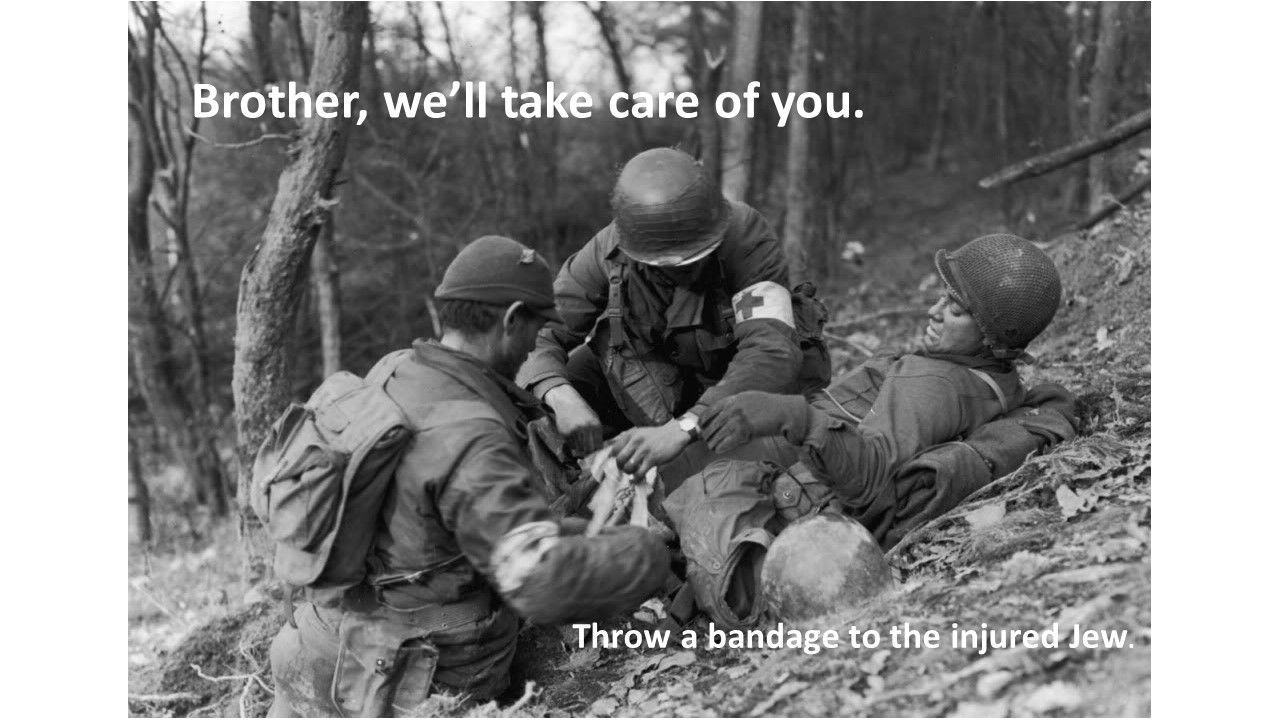
The tragedies leave lasting wounds and ongoing sadness beyond the heinous act.  Jews not only see a world where the innocents are slaughtered; they repeatedly receive a fraction of the compassion and care that their companions in the foxhole receive.

medics

Alemtzev is a concoction of two Hebrew words: “heet’alem” which means “ignored/ passed over”, and “e’tzev” which means “sadness.”  Such is the situation for world Jewry today.  A profound sadness for the suffering of innocents. A profound loneliness that the world barely cares.


Related First.One.Through articles:

The United Nations’ Remorse for “Creating” Israel

The UN Can’t Support Israel’s Fight on Terrorism since it Considers Israel the Terrorists

Ban Ki Moon Stands with Gaza

The Only Religious Extremists for the United Nations are “Jewish Extremists”

UN Press Corps Expunges Israel

The Hollowness of the United Nations’ “All”

UN Media Centre Ignores Murdered Israelis

My Terrorism

Subscribe YouTube channel: FirstOneThrough

Join Facebook group: FirstOne Through  Israel Analysis


A Flower in Terra Barbarus

Summary: The “Western World” rallies within its own borders when terrorism strikes, but ignores Jihadist radicals operating in the “Old World.” As it does so, it risks forgetting that neither values nor barbarism has borders.

Terra Incognita

The “cradle of civilization” is generally described as the location from where human beings emerged. Archeological evidence pins earliest humanoids in the region around Ethiopia, while biblical scholars point to modern day Iraq. The crescent between those regions is viewed as the birthplace of humankind.

Mankind slowly spread from its cradle to populate Europe, Asia and the rest of Africa. This held true (with few exceptions) until the late 1400s. Mapmakers of the 1470s and 1480s portrayed the known world in just those few continents, kept in check by various “winds.” It was the Columbus journey of 1492 that began the next expansion of civilization into North and South Americas, and then Australia in the early 1600s.

It took many decades to map out and settle these new lands as the voyagers from Western Europe slowly charted these new territories. Maps that initially referred to uncharted areas as “Terra Incognita,” eventually established the “New World.”

Claudius_Ptolemy-_The_World
Claudius Ptolemy’s view of the World
(Johannes Schnitzer, engraver, 1482)

Western Europe’s New World

The New Worlds of North America, South America and Australia still feel closely aligned with Western Europe hundreds of years after the explorers from Spain, Portugal, France, Italy, Netherlands and Great Britain established themselves on those shores.  US President Obama stated on November 24, 2015 “Americans have recalled their own visits to Paris — visiting the Eiffel Tower, or walking along the Seine.  We know these places.  They’re part of our memories, woven into the fabric of our lives and our culture.”

And so it is with much of the New World and Western Europe.  While the Europeans established the Americas and Australia/ New Zealand centuries ago, those new lands still feel a unique warmth and connection to the European continent separated by oceans and thousands of miles.

Over the centuries, the New World took in new immigrants from around the “Old World.”  Africans were shipped against their will as slaves for the former Western European colonies, while people from Eastern Europe and Asia came on their own more recently.

The New World still prefers the close connections to their old motherlands in Western Europe.

Terra Barbarus

Western Europe was hit with several terrorist attacks after the United States was attacked on September 11, 2001.  Those attacks included: Madrid (2004); London (2005); Belgium (2014); an two attacks in France in 2015.  The reactions to attacks in Europe were noticeably different than reactions to terrorism in the MENA (Middle East and North Africa) region over this time period.

Regarding the second attack on Paris in November 2015, as well as another Islamic extremist attack in Turkey just days before, US President Obama said: “it’s an attack not just of France, not just on Turkey, but it’s an attack on the civilized world…. This is an attack not just on Paris, it’s an attack not just on the people of France, but this is an attack on all of humanity and the universal values that we share.””

There were no such broad declarations about “an attack on all of humanity… and universal values” when it came to terrorism in MENA.

The leader of the New World looked back to the Old World and saw terrorism divided into two: attacks on the “civilized world” which held “universal values that we share,” and other attacks from beyond the civilized world, in what can best be characterized by various American politicians as “Terra Barbarus.”

Politicians were not alone in this world view.

The world uniquely lit up Facebook with the flag of France after terrorist attacks.  The terrorist slaughters in Nigeria, Kenya and Israel by jihadists over the same weeks barely passed people’s minds or hurt their hearts. The New World looked back on the Old with disgust and disdain: those are uncivilized barbaric lands.  Terrorism emerges from there.  Terrorism is expected there.

So Obama, himself the son of a man from Kenya, drew borders around the civilized world.  It’s physical limit seemed to take him to Turkey, a member of NATO that sits on the edge of wars in Syria and Iraq.  The edge of “civilization” touched the cradle of civilization.

Borders or Values

There is a country that sits in that Terra Barbarus that shares western values, and calls out to be recognized as part of “civilization.”

Israeli Prime Minister Benjamin Netanyahu repeatedly stated that the various jihadist forces that continue to kill in the Middle East, whether Islamic State, Hamas or Al Qaeda, are all “branches of the same poisonous tree.”  While his country sat in a dangerous neighborhood, the values of Israeli society were the same as western values.  He sought to remind western leaders of that point right after the Paris attacks in November 2015:

“Terrorism is the deliberate and systematic targeting of civilians. It can never be justified. Terrorism must always be condemned. It must always be fought. Innocent people in Paris, like those in London, Madrid, Mumbai, Buenos Aires and Jerusalem, are the victims of militant Islamic terrorism, not its cause. As I’ve said for many years, militant Islamic terrorism attacks our societies because it wants to destroy our civilization and our values.

“All terrorism must be condemned and fought equally with unwavering determination. It’s only with this moral clarity that the forces of civilization will defeat the savagery of terrorism.“

Indeed, Israel is the most liberal country in the entire Middle East and Africa.  It’s values are closely aligned with Western Values.  Yet despite Obama’s address on values, the West could not look beyond its contours of civilization.  Unwilling to reframe its own narrative, the western world has opted to ignore the Israeli liberal society, and cast it as part of that dark side of humanity.

The Future

Should the West continue to ignore the liberal society in the Middle East, it can never expect to realize a different future for the entire region.  The warring parties in Terra Barbarus will continue to battle each other, and occasionally reach out and damage the New World like a solar flare.  So far, the New World reacts by alternatively bombing and ignoring the barbarians.

To realize a future world with universal values, the world must recognize the blue-and-white flower that has re-emerged in the arid soil in the cradle of civilization.  Just as the West promises to fight barbarism that appears on its shores, it  must nurture the “humanity” that exists everywhere.

Condemning terrorism was just part of Obama’s speech. Elevating those people that share western values must be part of the battle.

DSC_0210
Flower in the hills around Jerusalem
(photo: First.One.Through)


Related First.One.Through articles:

Obama’s “Values” Red Herring

Obama’s Friendly Pass to Turkey’s Erdogan

International-Domestic Abuse: Obama and Netanyahu

Double Standards: Assassinations

Israel and Wars

Subscribe YouTube channel: FirstOneThrough

Join Facebook group: FirstOne Through  Israel Analysis

Jews in the Midst

Summary: Jews are vulnerable members of society. They are not on the fringe on the one hand, nor are they just a regular part of the broader community, on the other. As such, they must be actively protected by governments and citizens alike.

copenhagen jews
Jews in Copenhagen laying flowers where a Jewish man was gunned down,
February 2015 

No Canary in the Mine

Well-meaning people have referred to Jews as the “canary in the mine” when it comes to terrorism. They argue that various attacks on Jews in Europe, Israel and Asia by Islamic radicals over the past years should be seen in the context of an oncoming onslaught on the broader civilized world.

Canaries are treated as disposal life forms that coal miners bring into mines to detect poisonous gases. They assume that if the canary is alive, the air is breathable; however, should the canary die, they should evacuate immediately. The sole role of the canary is to detect danger and benefit the people in the mine.

Jews were not brought to Europe or Asia to serve as warning signs for non-Jews. They are not inferior life forms meant to live solely for the benefit of the broader society. They are proud citizens of their home countries.

 hyperkosher
Paris kosher supermarket where four Jews were killed,
January 2015

Not a Fringe Group

Jews are integrated into society in each country where the live. They have homes in the hearts of the country; they have jobs at corporations, in the government and military. They speak the language and have employment rates that are comparable to their fellow countrymen.

Jews are not a fringe group that fails to assimilate, that doesn’t speak the language or has high unemployment. They are not financial drains on society and do not have incarceration rates above the community averages.

Jews are a fabric of society. They are “everymen,” with particular beliefs and customs.

mumbai chabad
Chabad House in Mumbai where six people were murdered,
November 2008 

No “Random” Attack

While Jews are a basic part of the fabric of society, they are uniquely targeted by Islamic radicals. Terrorist attackers who assaulted major cities including Mumbai (2008), Paris (2015) and Copenhagen (2015), took time to specifically attack this small minority.

While US President Obama and his administration initially called the attack on a kosher supermarket in Paris a “random” attack, he back-tracked to corroborate the statement of the French government which clearly stated that the attack stemmed from antisemitism.

Even while embedded in society, Jews are picked out for attack for the simple reason that they are Jewish.

 bruseels museum
Attack on Jewish Museum in Brussels killed four,
May 2014

Jews in the Midst

There was a movie made in 1988 about a woman, Dian Fossey, who fought to protect gorillas in Uganda. These special creatures were a unique part of the Ugandan landscape that were singled out for slaughter. Dian fought both the government and locals to protect those “Gorillas in the Mist”.  It was a brave action on the part of an individual to take on so many to save the group from butchery.

It is the obligation of governments to protect their citizens.  The leaders in Germany and France have correctly stated that they will take action to ensure that their Jewish communities are safe.

It is time for all governments and citizens to speak loudly and act defiantly in protecting their vulnerable neighbors and countrymen, the Jews in their midst.

 scariest-riots-anti-semitism-men
Riots against Israel and Jews in France,
July 2014

Israel in Europe

The governments of Europe must do more than just assign police officers to synagogues and Jewish centers. They must also declare that Jews everywhere – including in Israel – cannot be targets of jihad.  As part of that effort, they should confront the biases in their governments that are uniquely against the Jewish State, such as:

  • delisting Hamas as a terrorist organization despite its calls to kill Jews and eradicate Israel
  • European Union blaming Israel for the failure of the peace talks without acknowledging the various actions the Palestinians took to sabotage the talks

The list of European actions against the Jewish State over the past year was long, and to an absurd level when compared to EU actions and comments towards murderous regimes such as Iran and Syria. The people in the streets noted, and held anti-Israel rallies which became anti-Semitic riots.

It was against that backdrop of both murders by homegrown terrorists and the anti-Israel actions of the governments that made Israeli Prime Minister Benjamin Netanyahu invite the Jews of Europe to come to Israel.

The governments of Europe must declare their strong commitment to a safe and secure Israel.  Such actions should include declaring Hamas a terrorist organization and not recognizing a Palestinian state until it prohibits the promotion of antisemitism and Holocaust denial.  The governments should not pass any BDS (boycott, divestment, sanction) actions against Israel any more than they do for other disputed territories such as Kashmir and Cyprus.

The leaders of several European countries acknowledge that there is a problem of anti-Semitism spreading in the continent.  They must be aggressive in confronting it in every manner possible.

Jews in the Midst

Summary: Jews are vulnerable members of society. They are not on the fringe on the one hand, nor are they just a regular part of the broader community, on the other. As such, they must be actively protected by governments and citizens alike.


No Canary in the Mine

Well-meaning people have referred to Jews as the “canary in the mine” when it comes to terrorism. They argue that various attacks on Jews in Europe, Israel and Asia by Islamic radicals over the past years should be seen in the context of an oncoming onslaught on the broader civilized world.

Canaries are treated as disposal life forms that coal miners bring into mines to detect poisonous gases. They assume that if the canary is alive, the air is breathable; however, should the canary die, they should evacuate immediately. The sole role of the canary is to detect danger and benefit the people in the mine.

Jews were not brought to Europe or Asia to serve as warning signs for non-Jews. They are not inferior life forms meant to live solely for the benefit of the broader society. They are proud citizens of their home countries.


Not a Fringe Group

Jews are integrated into society in each country where the live. They have homes in the hearts of the country; they have jobs at corporations, in the government and military. They speak the language and have employment rates that are comparable to their fellow countrymen.

Jews are not a fringe group that fails to assimilate, that doesn’t speak the language or has high unemployment. They are not financial drains on society and do not have incarceration rates above the community averages.

Jews are a fabric of society. They are “everymen,” with particular beliefs and customs.


No “Random” Attack

While Jews are a basic part of the fabric of society, they are uniquely targeted by Islamic radicals. Terrorist attackers who assaulted major cities including Mumbai (2008), Paris (2015) and Copenhagen (2015), took time to specifically attack this small minority.

While US President Obama and his administration initially called the attack on a kosher supermarket in Paris a “random” attack, he back-tracked to corroborate the statement of the French government which clearly stated that the attack stemmed from antisemitism.

Even while embedded in society, Jews are picked out for attack for the simple reason that they are Jewish.


Jews in the Midst

There was a movie made in 1988 about a woman, Dian Fossey, who fought to protect gorillas in Uganda. These special creatures were a unique part of the Ugandan landscape that were singled out for slaughter. Dian fought both the government and locals to protect those “Gorillas in the Mist”.  It was a brave action on the part of an individual to take on so many to save the group from butchery.

It is the obligation of governments to protect their citizens.  The leaders in Germany and France have correctly stated that they will take action to ensure that their Jewish communities are safe.

It is time for all governments and citizens to speak loudly and act defiantly in protecting their vulnerable neighbors and countrymen, the Jews in their midst.


Israel in Europe

The governments of Europe must do more than just assign police officers to synagogues and Jewish centers. They must also declare that Jews everywhere – including in Israel – cannot be targets of jihad.  As part of that effort, they should confront the biases in their governments that are uniquely against the Jewish State, such as:

  • delisting Hamas as a terrorist organization despite its calls to kill Jews and eradicate Israel
  • European Union blaming Israel for the failure of the peace talks without acknowledging the various actions the Palestinians took to sabotage the talks

The list of European actions against the Jewish State over the past year was long, and to an absurd level when compared to EU actions and comments towards murderous regimes such as Iran and Syria. The people in the streets noted, and held anti-Israel rallies which became anti-Semitic riots.

It was against that backdrop of both murders by homegrown terrorists and the anti-Israel actions of the governments that made Israeli Prime Minister Benjamin Netanyahu invite the Jews of Europe to come to Israel.

The governments of Europe must declare their strong commitment to a safe and secure Israel.  Such actions should include declaring Hamas a terrorist organization and not recognizing a Palestinian state until it prohibits the promotion of antisemitism and Holocaust denial.  The governments should not pass any BDS (boycott, divestment, sanction) actions against Israel any more than they do for other disputed territories such as Kashmir and Cyprus.

The leaders of several European countries acknowledge that there is a problem of anti-Semitism spreading in the continent.  They must be aggressive in confronting it in every manner possible.

Bibi’s Paris Speech in Context

Israeli Prime Minister Benjamin (Bibi) Netanyahu came to Paris, France in January 2015 to show his support for free speech and to confront anti-Semitism in the wake of terror attacks at the Charlie Hebdo magazine and a kosher supermarket. He addressed a large Jewish audience at the Grand Synagogue where he invited the Jews to make aliyah – to move to Israel.netanyahu paris shul

“Any Jew who chooses to come to Israel will be greeted with open arms and an open heart, it is not a foreign nation, and hopefully they and you will one day come to Israel.”

Many people criticized his statement including, not surprisingly, his Israeli political opponents during an election season.  The French were also unhappy with the call to move to Israel. French Prime Minister Manuel Valls said that “if 100,000 Jews leave, France will no longer be France. The French Republic will be judged a failure.”
French President Francois Hollande made a similar statement a few days later: “French people of the Jewish faith, your place is here, in your home. France is your country.“

It is right and proper that the leaders of France seek to assure the country’s Jewish citizens that France is their home and they should not flee the country from fear.  But to berate Netanyahu for his remarks does not take into account the climate in which the invitation to move to the Jewish State was made.

Consider that Netanyahu did not come to France and invite the French Jews after attacks targeting their community in 2012 or 2006. But he felt that the situation for Jews in Europe had deteriorated significantly throughout 2014 which compelled him to invite the largest Jewish population in Europe, with an estimated 500,000 people, to move to Israel:

In summary, the year before the Paris shootings was a cascade of anti-Israel and anti-Jewish activities in Europe.  The year 2014 began with Netanyahu releasing terrorists to push forward a peace initiative (of which he was very skeptical) at the urging of the USA and Europe.  It proved meaningless to the peace process and world opinion; Israel and Jews in Europe were attacked throughout the year, first by Palestinians and then by Europeans.

For Netanyahu, the prior twelve months had:

  1. Israel release prisoners, including Palestinian murderers of Israeli civilians, at the direct urging of allies
  2. Their Palestinian counter-party break peace talks by joining with Hamas and international organizations
  3. A summer in which: three teenagers were abducted and murdered; Israel located an extensive Hamas tunnel network from Gaza into Israel to launch attacks; Israel combated thousands of incoming missiles from Gaza. Yet Israel was still criticized by Europe and the global community for defensive actions
  4. European cities launch multiple riots against Jews
  5. European countries reward the Palestinians with admission to more world bodies and votes of endorsement
  6. The European Union remove Hamas from its terrorist list

For Netanyahu – and many Jews – the year in Europe echoed back 75 years to a period in which the continent nearly annihilated its Jewish citizens.  It was bad enough that Israelis contend with Palestinian Arabs that are more extreme than the Nazis of the 1930s.  But that Europeans embraced this ideaology was truly frightening, particularly as it stood in contrast to values they claimed to support.

In 1939, at the early stages of the Holocaust, Britain drafted the White Paper at the behest of Arabs in the Middle East, which limited Jewish immigration to Palestine at the outset of the Holocaust – a move which likely killed over 100,000 Jews – despite the specific mandate to facilitate the immigration of Jews to their homeland.

In 2015, the Prime Minister of Israel heard the calls to kill Jews, and made clear that a world with an established Jewish State will not allow a repeat of the European Holocaust.


Related First One Through articles:

Europe hurting the peace process: https://firstonethrough.wordpress.com/2015/01/02/failing-negotiation-102-europe/

Europe penalizing Israel even though Palestinians are the reluctant peace partner: https://firstonethrough.wordpress.com/2014/10/15/european-narrative-over-facts/

Jews continue to move out of Europe to Israel and the US music video (Diana Ross): https://firstonethrough.wordpress.com/2014/06/01/the-loss-of-jews-in-europe-continues/

Ignoring Jihad only when it comes to Israel: https://firstonethrough.wordpress.com/2015/01/26/radical-jihadists-in-europe-and-dislocated-and-alienated-palestinians-in-Israel/