The story of the 1936 Summer Olympics is usually told as a duel between tyranny and talent.
Adolf Hitler builds a showcase for Aryan supremacy.
Jesse Owens wins four gold medals.
The German hateful ideology collapses.
But Berlin was more complicated. The Games revealed two prejudices at once: Nazi racial doctrine and American racism and antisemitism. While very different in scale and intensity, both were present on both sides of the Atlantic.
Two Jewish-American sprinters – Marty Glickman and Sam Stoller – were expected to run the 4×100 relay. Yet hours before the race, they were removed from the lineup and replaced by Owens and Ralph Metcalfe.
The official explanation was tactical: field the fastest possible team. The United States won gold in world-record time.
Yet the context was unavoidable. Glickman and Stoller were the only two Jewish runners on the U.S. track squad. Nazi Germany had already stripped Jewish athletes of meaningful participation. Their removal ensured that no Jewish athlete would stand on the Berlin track podium.
Glickman later said:
“I’ve always believed that we were taken off the relay team because we were Jews.”
Stoller observed:
“The only two Jews on the team were replaced.”
No archival proof confirms American coordination with Nazi officials. But antisemitism did not need a written agreement to operate. In the 1930s, American universities maintained Jewish quotas. Elite institutions limited Jewish membership. Prejudice was structural, even if unofficial.
Berlin exposed it.
Owens and Segregated America
Owens’ victories shattered Nazi racial mythology in the stadium but did not dissolve racial barriers in America.
The popular tale claims Hitler snubbed Owens. Owens himself redirected the accusation:
“Hitler didn’t snub me—it was our president [Franklin D. Roosevelt] who snubbed me. The president didn’t even send me a telegram.”
Owens continued:
“I wasn’t invited to shake hands with Hitler, but I wasn’t invited to the White House to shake hands with the President either.”
And when he returned home:
“After those stories about Hitler snubbing me, I had to live under segregation.”
In Berlin, Owens stayed in the same hotel as white teammates. In parts of the United States, he entered through separate doors.
Two Systems, One Lesson
Nazi Germany codified antisemitism and racism into law and would soon escalate that hatred into genocide. While the United States did not operate extermination camps, it did operate segregated schools, restricted neighborhoods, Jewish quotas, and closed clubs.
The differences in scale and brutality were enormous. The presence of prejudice in both societies was real.
One of those hatreds remains embedded in American history, while the other has been buried.
The common narrative that Owens and Team America gave a big middle finger to Hitler’s Germany in the 1936 Olympics by showcasing Black talent is incomplete. In many ways, the real lasting insult and pain was to Jews, not Nazis.
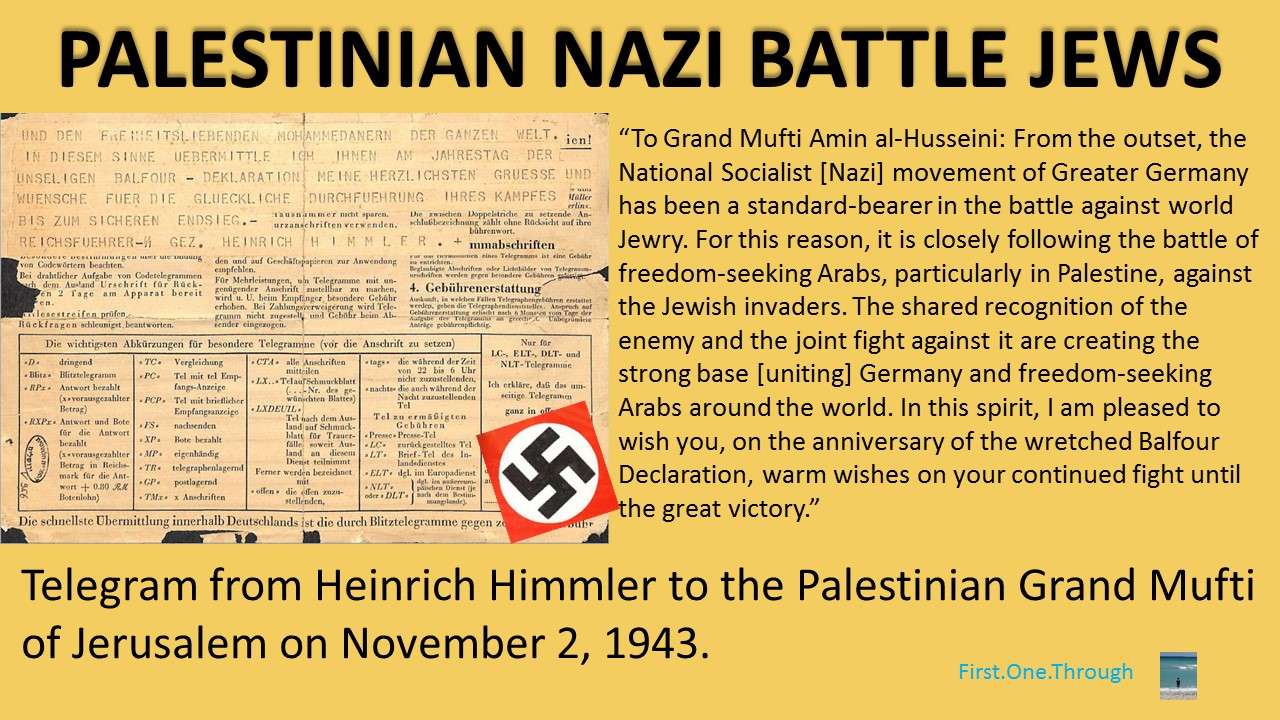
In November 1943, Heinrich Himmler sent a telegram to Haj Amin al-Husseini on the anniversary of the Balfour Declaration.
He wrote of a “shared recognition of the enemy” and “the joint fight against it.”
“The enemy” meant world Jewry.
That phrasing did real work. It turned a people into a threat. Once Jews were cast as a civilizational danger – “Jewish invaders” – their removal became a duty. Vocabulary cleared the ground and policy followed. Then came the machinery.
This is how collective persecution begins: define a group as the problem.
Eighty years later, the same grammar keeps resurfacing.
In Doha, Francesca Albanese, the United Nations Special Rapporteur on the occupied Palestinian territories, used the phrase “common enemy” to describe Israel. The target was the world’s only Jewish state. The effect was to cast Jewish sovereignty itself as something humanity must oppose.
That language strips legitimacy and treats existence as offense. It moves from argument to exclusion with the implied goal of eradication.
The pattern appears in American activism as well. Speaking at a conference hosted by American Muslims for Palestine, Zahra Billoo of the Council on American-Islamic Relations urged audiences to “oppose the polite Zionists too,” grouping mainstream Jewish institutions — synagogues, federations, Hillel chapters, civil-rights groups — into the camp of adversaries, “they are your enemies.”
The construction never changes.
Nazi Himmler: Jews are the common enemy. CAIR Billoo: Zionists are the enemy. UN Albanese: Israel is the common enemy.
Different decades. Different accents. Identical structure.
Demonization targets identity. Once identity becomes the indictment, anything feels justified and the line between debate and dehumanization disappears.
After World War II, the human-rights system was built to prevent precisely this logic — the idea that an entire people could be pushed outside the moral community. Yet the vocabulary has returned, polished and respectable, spoken from podiums that claim the language of justice.
When the Nazis called Jews “the enemy,” the world should have drawn the line right there. No conferences. No nuance. No excuses. Anyone who speaks that way disqualifies themselves.
That same rule applies now.
Human-rights officials who talk like antisemitic propagandists should lose their mandates. Activists who label Jews the enemy lose the claim to civil-rights leadership positions. Institutions that tolerate this language lose credibility.
The mob put a yellow Jewish Star on Jews 80 years ago and told everyone that they are the enemy. The mob is labelling Jews as Zionists today and doing the same. We shouldn’t pause to take action, if “never again” means anything.
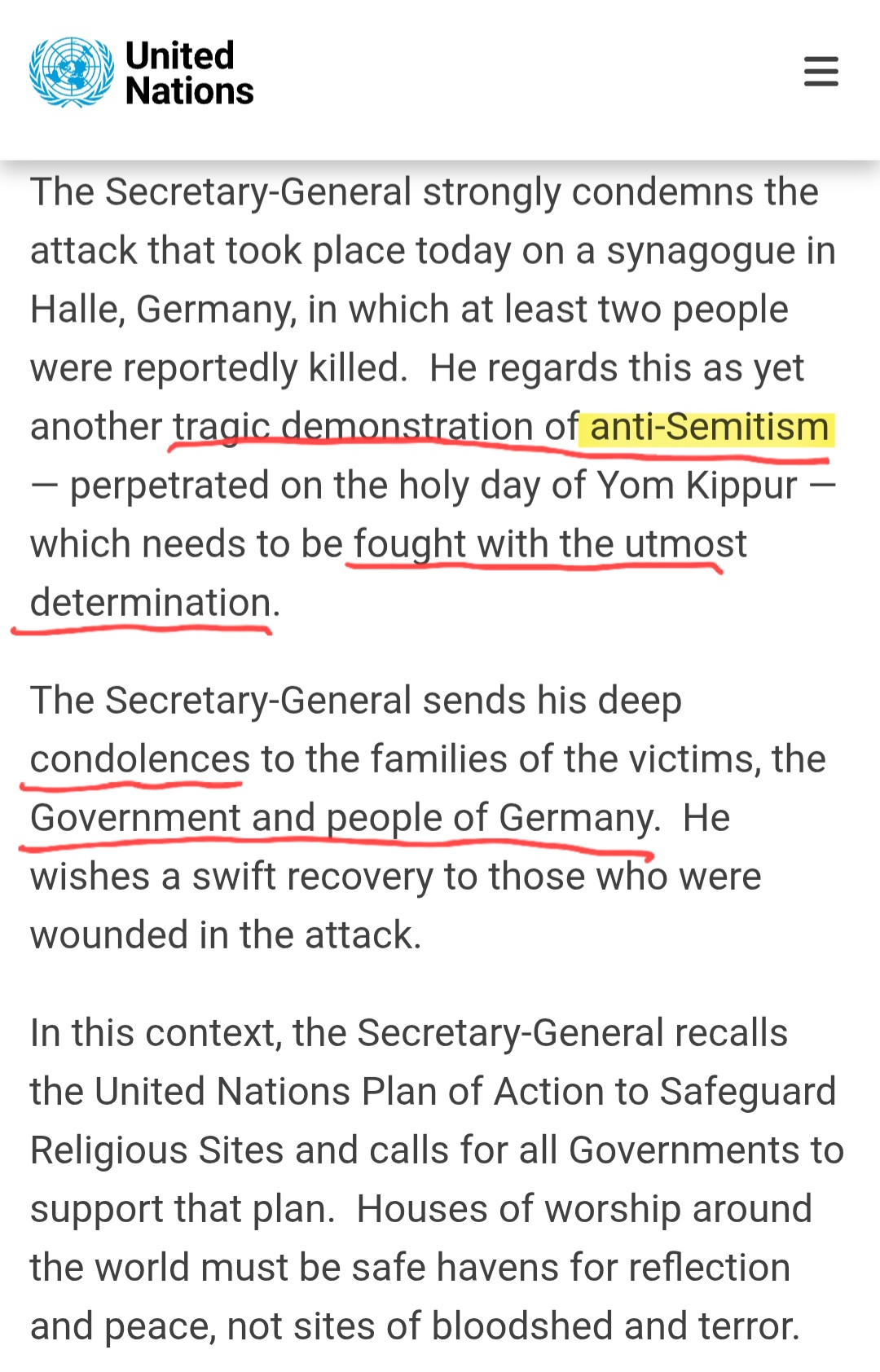
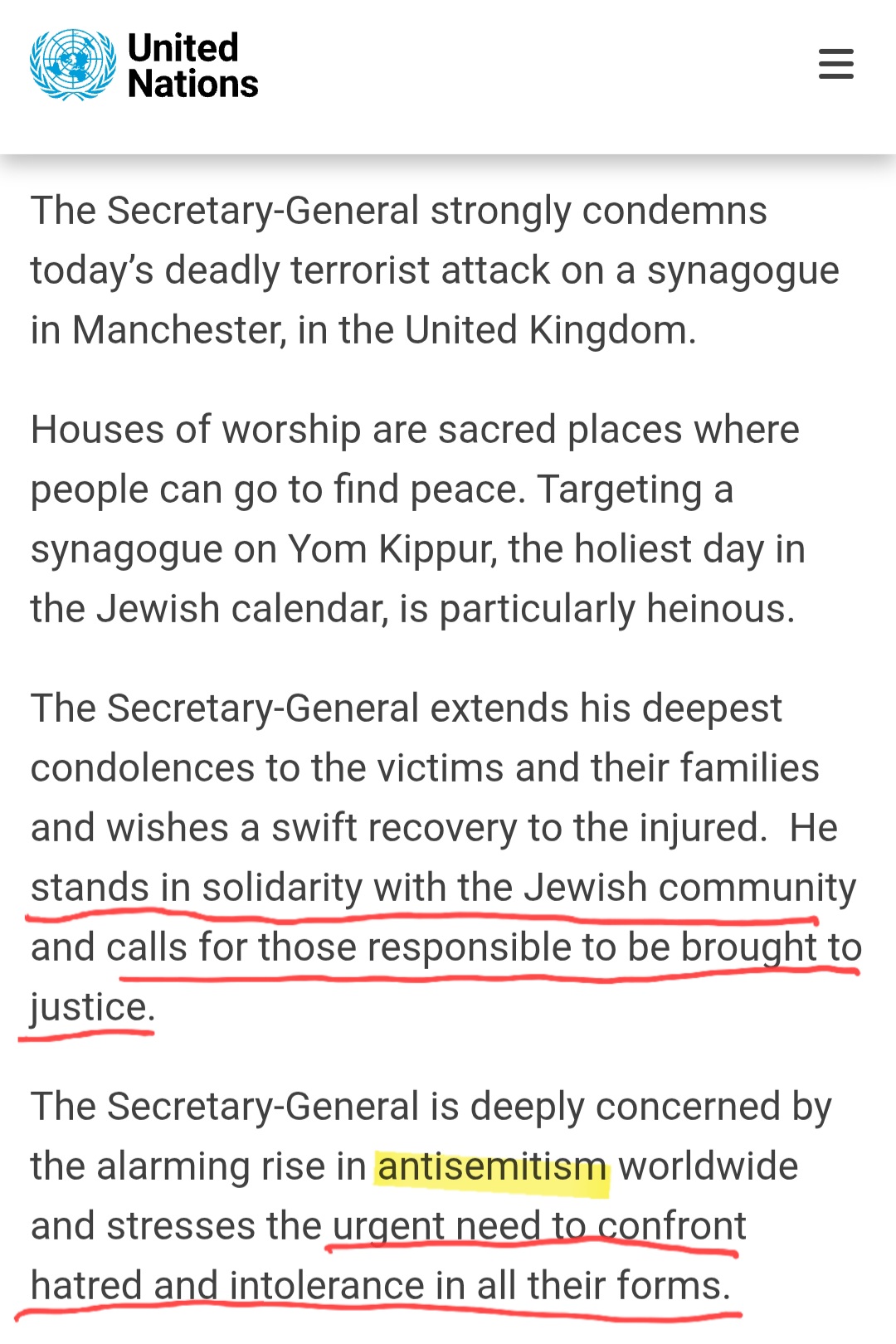
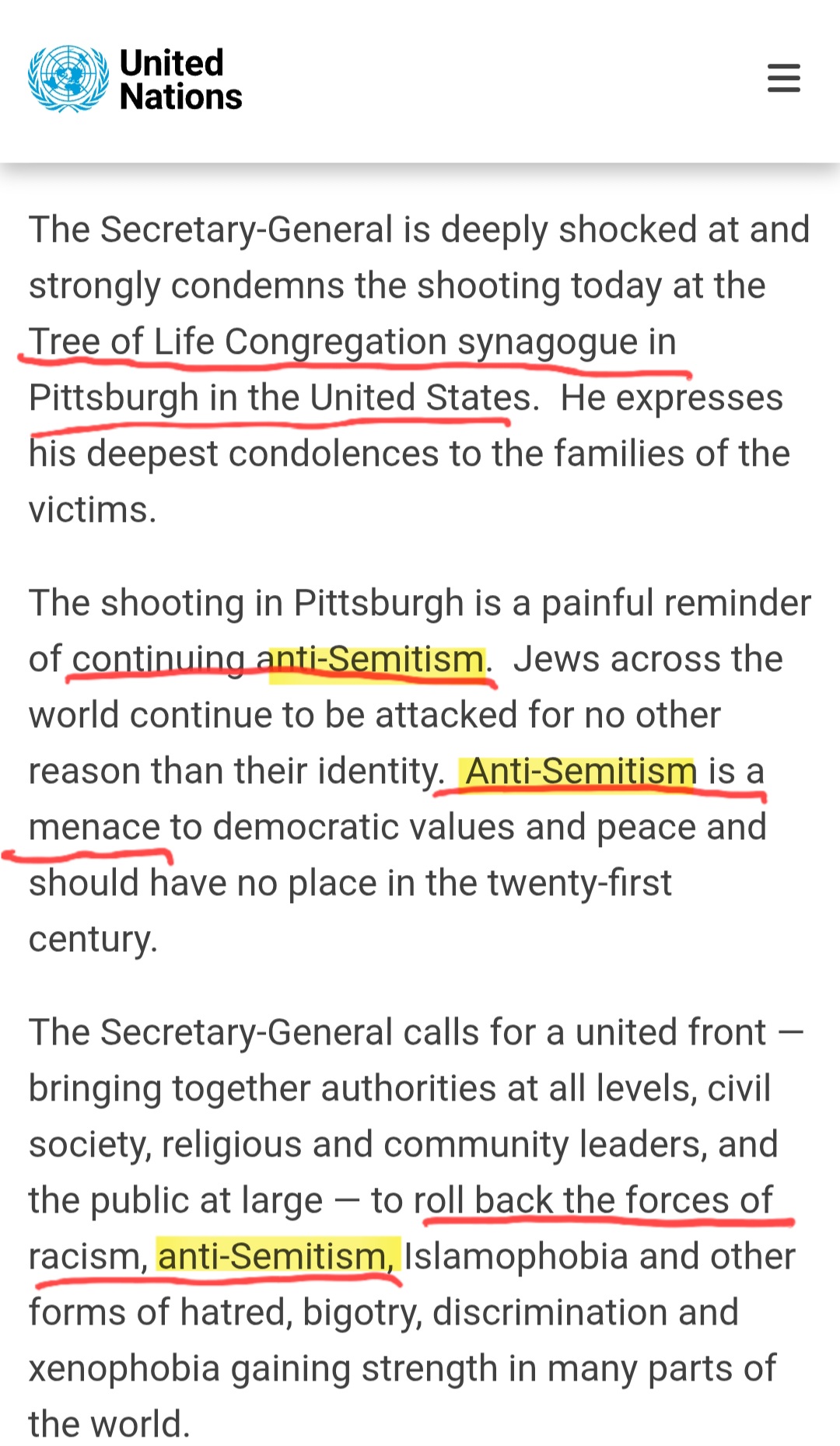
When Jews are murdered in synagogues in Europe, the United Nations speaks plainly. The attacks are labeled antisemitic. The violence is called terrorism. Solidarity with the Jewish community is explicit, and justice is demanded.
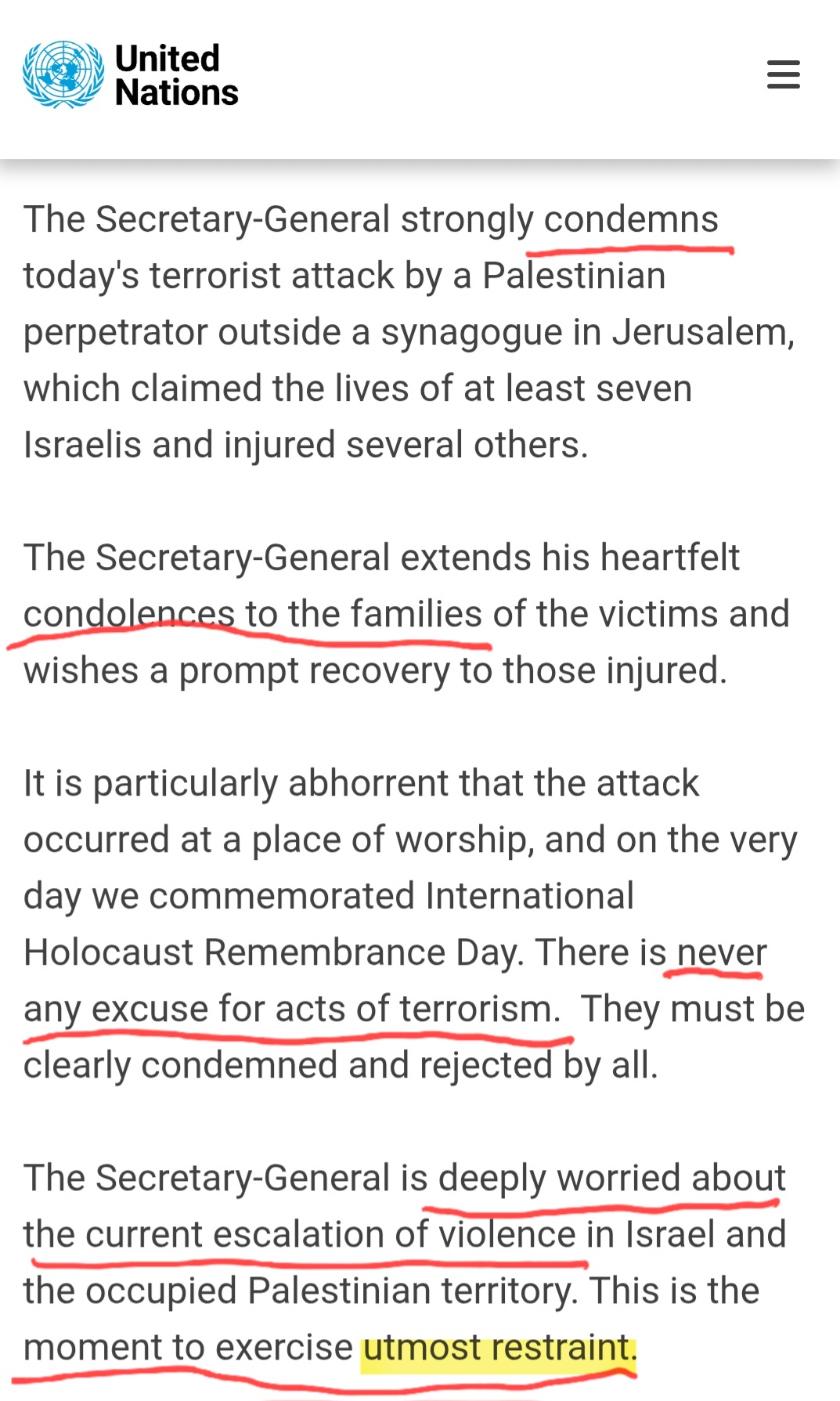
When Jews are murdered in synagogues in Jerusalem, that clarity vanishes.
The same act—killing Jews at prayer—suddenly requires “context.” Terrorism is softened into “violence.” Antisemitism dissolves into “tensions.” Victims are anonymized, motives left unexplored, ideology carefully avoided. Language that flows easily in Europe locks up entirely in Israel’s capital.
UN Secretary-General never calls killing of Jews in Jerusalem rooted in “antisemitism.”
This is not rhetorical drift. It is doctrine.
The UN has formally adopted the Palestinian demand that Jews should not live in Jerusalem. Through measures such as UN Security Council Resolution 2334, it asserts that Jews may not alter the city’s “demographic composition.” That position freezes Jerusalem at a moment immediately following the Jordanian army’s ethnic cleansing of all Jews from the eastern half of the city between 1948 and 1967. Jewish expulsion is accepted as a legitimate baseline. Jewish return is treated as a violation of international law.
This is not neutrality. It is the institutionalization of an antisemitic premise: that Jews, uniquely among peoples, have no right to live in their holiest city.
Once that premise is accepted, Jewish life in Jerusalem becomes conditional. Jewish neighborhoods are labeled illegal. Jewish prayer is framed as provocation. Jewish presence itself is cast as destabilizing. Violence against Jews no longer reads as antisemitism but as political reaction to an allegedly illegitimate reality.
Under those conditions, motive cannot be named. Calling synagogue murders in Jerusalem “antisemitic terrorism” would require acknowledging that Jews are being targeted for who they are, in a city where the UN has already ruled they should not be. It would expose the connection between UN doctrine and the moral evasions that follow.
So the motive is omitted.
Aftermath of Jews slaughtered in synagogue
The UN does not merely tolerate the idea of Jews being removed from Jerusalem; it has encoded it. The language is bureaucratic—demographics, international law, peace—but the result is stark: a city where Jewish existence is treated as unlawful, and Jewish murder as a political complication.
The contrast with the rest of the world makes the pattern undeniable. The UN knows exactly how to speak about antisemitism. That moral vocabulary disappears only in Judaism’s holiest city, in the Jewish State’s capital, because the United Nations has endorsed the antisemitic wishes of radical jihadists.
Years ago in Australia, I rented a car and learned what every American driver eventually does overseas: instinct is not universal.
About 45 minutes into my first drive, I took a left turn too wide and drifted into the wrong lane. No crash. No damage. Just a slow, awkward mistake at a four-way stop.
An older driver exploded at me. Shouting. Cursing. A full theatrical performance of outrage.
I apologized immediately. I explained I was American and adjusting to the other side of the road. That only intensified things. Now the insults expanded — not just me, but my country and people like me. He wasn’t correcting a traffic error. He was indicting a type.
I didn’t engage. I blew him a kiss and wished him a good day. His fury was his burden, not my identity.
Then I drove away and forgot him.
I could afford to. He had no power. No platform. No mechanism to convert temper into consequence. He was just a man yelling at an intersection.
But imagine if he did.
Imagine if he persuaded Australian officials that Americans are inherently unsafe drivers. Rental cars should require warning stickers: CAUTION — AMERICAN DRIVER and charge them higher insurance premiums. Restricted roads. Special licensing. Even banning them from the road. Imagine it caught on and other countries adopted the same “precautions.”
Now the incident isn’t about a bad turn. It’s an inditement of an entire people, with irritation morphing to governance.
Apply this to western antisemitism.
The Mechanism
Western antisemitism rarely begins as doctrine. It begins as emotion: resentment, humiliation, envy. A story forms around the feeling. Jews are clannish, privileged, manipulative, alien.
From there, the sequence is almost mechanical:
Anecdote becomes stereotype. Stereotype becomes narrative. Narrative becomes moral permission. Permission becomes policy.
By the time formal discrimination appears, the ethical resistance has already been dissolved. People do not feel they are doing wrong. They feel they are being sensible.
The danger is not the man screaming at the intersection; every society has loud fools.
The danger is when the fool’s story becomes civic common sense.
Why Pride Isn’t Enough
One response to the current wave of western antisemitism is to ignore the screamers and turn inward: strengthen Jewish identity, deepen learning, fortify community. There is wisdom there. Cultural confidence is stabilizing.
But pride is psychological armor. It is not structural protection.
You can build a stronger community life. That does not prevent surrounding institutions from teaching your neighbors to see you as a problem to be managed. Parallel vitality does not neutralize hostile narratives embedded in the systems that shape public belief.
Resilience helps you endure hostility. It does not stop hostility from becoming rule.
Where the Real Battle Is: Public Schools
Street hate is episodic. Institutional formation is durable.
Public schools are the key civic storytelling monopolies. For more than a decade, nearly every American child passes through them, and is taught and tested by them. That is where moral categories are formed, historical legitimacy is assigned, and group identities are framed as native or suspect.
If students absorb a picture of Jews as recent interlopers, racial outsiders, uniquely powerful, or structurally oppressive by nature, then the Melbourne intersection has already found its legislature.
Western antisemitism does not need crude slurs. It adapts. It speaks the language of equity, power, decolonization, and social justice — while recycling ancient claims of Jewish illegitimacy and hidden control.
A new syllabus needs to be established.
Students should be taught that Judaism is the ancient Israelite civilization of the Hebrew Bible; that Jewish peoplehood originates in the land of Israel long before Christianity and Islam; that both later faiths arise in dialogue with — and departure from — that earlier tradition. That millions of Hispanics today are descendants of conversos – Jews who were forced to convert by the Inquisition hundreds of years ago, and that the majority of Jews in Israel today are descended from Muslim-majority countries that forced them to flee.
Today, the opposite is taught at the most antisemitic public schools – like those in California and Massachusetts – where Jews are cast as “oppressors,” “racists” and only care about themselves.
The public schools are setting the environment, and while I respect Bret Stephens, Jewish pride is ill equipped to address the current curriculum.
Yes, Jews should spend more time focused on their Judaism, but that will not insulate them from a hostile society. Jews and all decent Americans should take back K-12 education from the socialist-jihadi alliance that has assumed control of many school boards and unions.
An immediate effort should be to advance more charter schools and enable funding of non-public schools. Breaking the monopoly of school unions is a must to save the future.
Another remedy would be to pass a law that any school union that does not take immediate action to report, investigate and discipline (as appropriate) incidents of racism and antisemitism, will lose its right to collect dues out of paychecks and to negotiate contracts with the relevant municipality.
Public schools should also be prohibited from using materials provided by another government, such as Qatar which has been funding K-12 textbooks and trips to Qatar. This initiative is being advance under the “Transparency in Reporting of Adversarial Contributions to Education Act,” the TRACE Act.
As opposed to the COVID-19 pandemic which mostly impacted older people, the western antisemitism pandemic has consumed the youth, courtesy of a deeply broken and plagued public school system.
We cannot pretend it doesn’t matter and there’s nothing to be done. Not just for ourselves, but to save the West from the furious fools in the intersections who have gained real power.
On the day after Holocaust Remembrance Day—after solemn vows of “Never Again”—the Secretary-General of the United Nations chose to praise a cleric who has spent years demonizing Jews and denying their right to exist in their holiest city under the framework of an “International Day of Human Fraternity.“
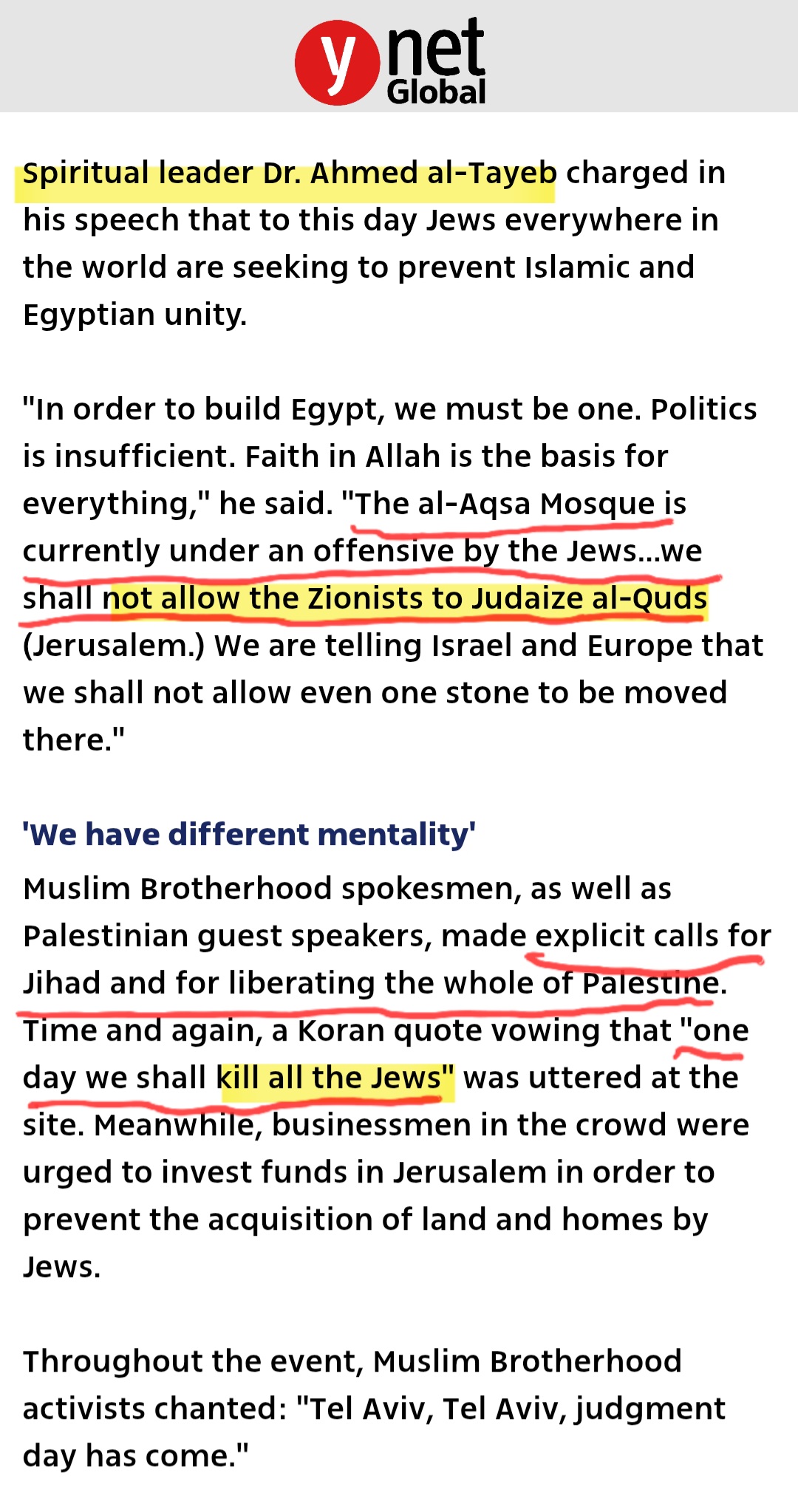
António Guterres elevated “His Eminence the Grand Imam of Al-Azhar Sheikh Ahmed El-Tayeb” as a global partner for peace, despite a record steeped in antisemitic incitement. Under el-Tayeb’s authority, Jews are framed as conspirators, Jewish prayer is cast as desecration, and Jewish presence in Jerusalem is portrayed as a civilizational crime. At events tied to his influence, chants calling for the killing of Jews and the eradication of Jewish sovereignty are tolerated and normalized.
“both Judaism and the Hebrew language have nothing to do with Jerusalem and Palestine.” – official statement of Al-Azhar
The ideology behind it is familiar. It rests on an Islamic superiority complex that treats Jewish sovereignty as illegitimate, Jewish history as fraudulent, and Jewish worship as contamination. In this worldview, Islam may rule Jerusalem absolutely; Jews may exist only conditionally and quietly—preferably elsewhere. Jewish presence in their ancestral capital becomes an offense demanding correction.
“”Do not think that we will ever give up on Jerusalem. We cannot abandon our rights there as a Muslim people. Allah will not enable you to erect a single stone on this land as long as Jihad persists.”” – official statement of Al-Azhar
El-Tayeb has given voice to this logic. Crowds gathered under his prestige repeat it. The demand is explicit: Jerusalem must be purged of Jewish claims, Jewish history, and Jewish life.
“In their attempt to judaize Jerusalem, the Zionists, in reliance on brutal Western imperialist powers, are risking the future of the Jews themselves by overstepping the limits of the Muslim Nation whose population is about a quarter of humanity, and who are able, one day soon, to restore their usurped rights by force.”
When the UN Secretary-General praises this man as a moral authority, he aligns with that demand. The language used by the UN confirms it. The profound antisemitism is ignored. Calls to violence dissolve into “grievance.” Incitement becomes “cultural difference.” Jewish presence is reframed as provocation.
This is how the United Nations defines peace: Jewish invalidation, submission, removal.
Guterres speaks of “a world based on equal rights for all and compassion” while elevating a cleric who denies Jews equality in the one place central to their faith and history. That contradiction is structural and vicious.
A jihadi antisemite is rebranded as a peacemaker, with ethnic cleansing repackaged as protection of holy sites.
And so, holocaust remembrance evaporates overnight.
History will read this moment clearly. When antisemitism returned cloaked in religious authority and liberation rhetoric, the United Nations offered applause, legitimacy, and a podium.
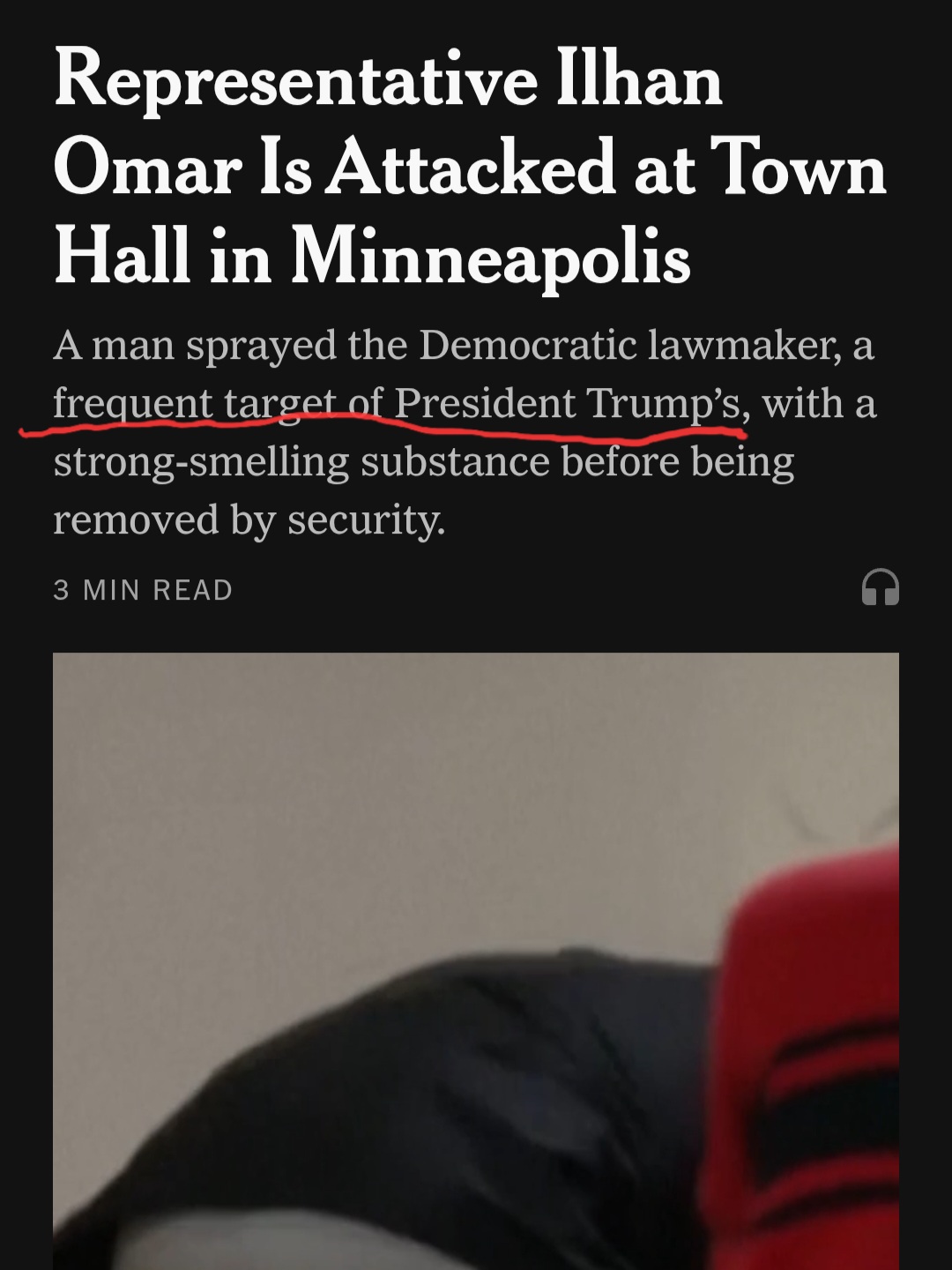
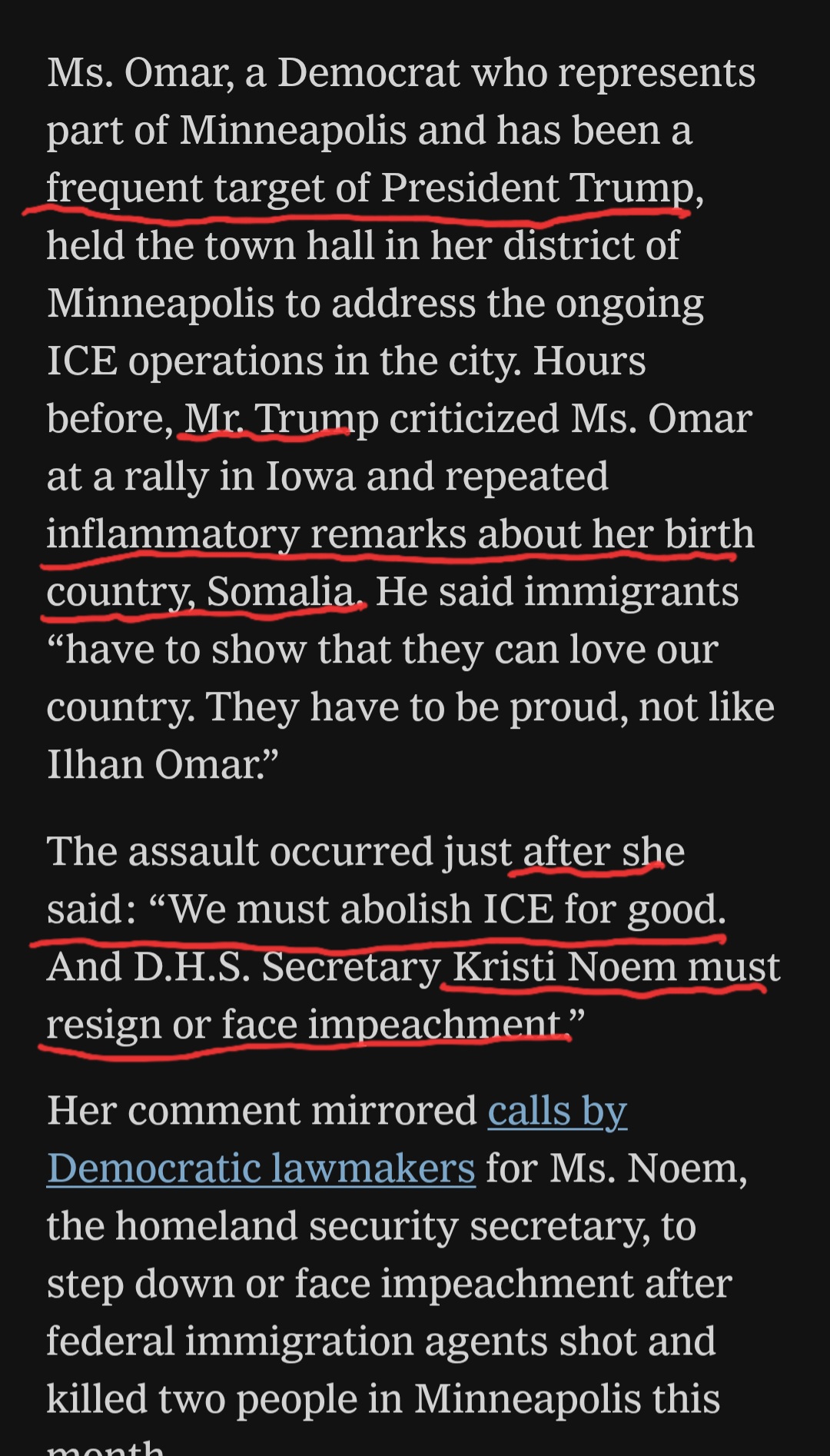
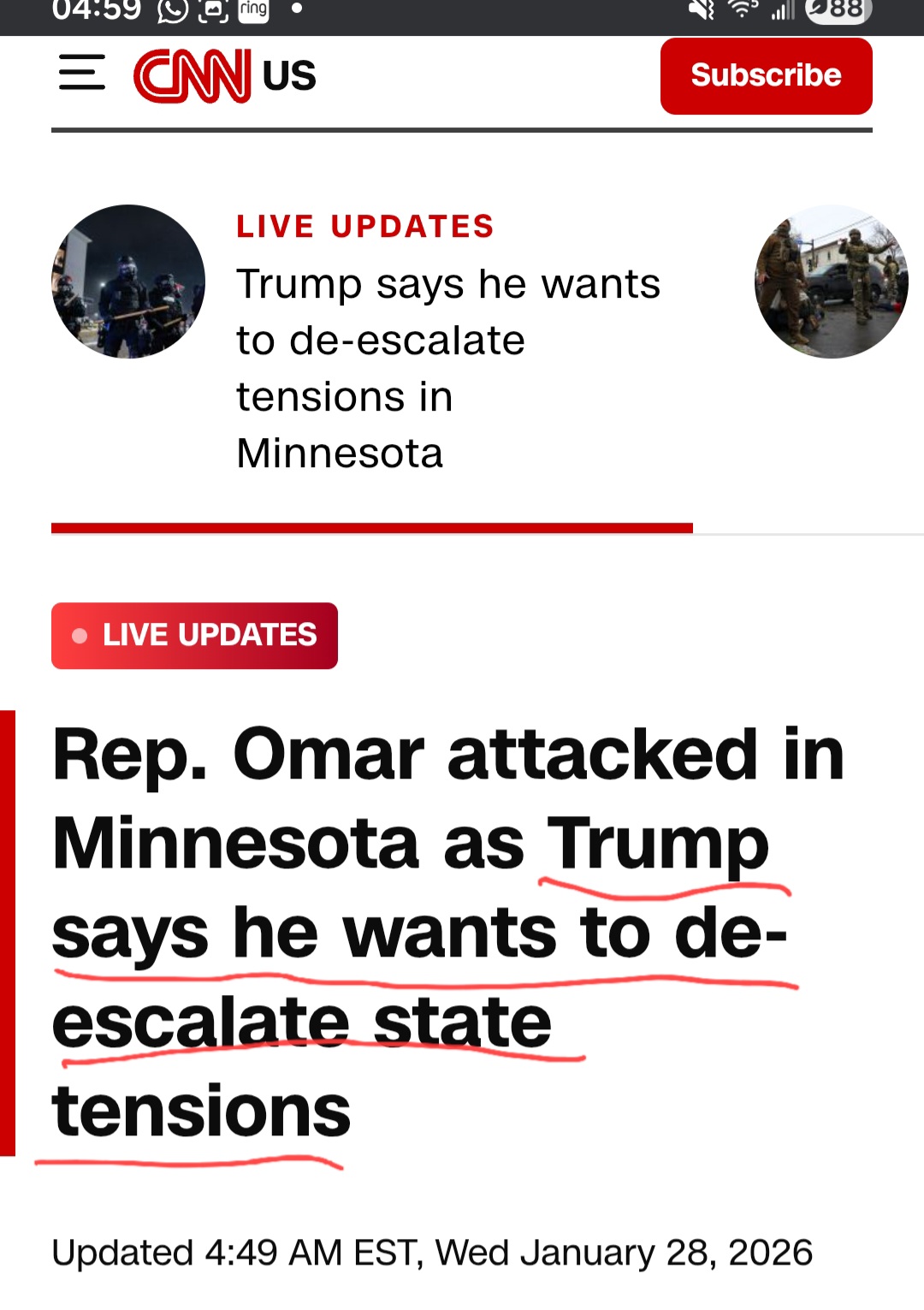
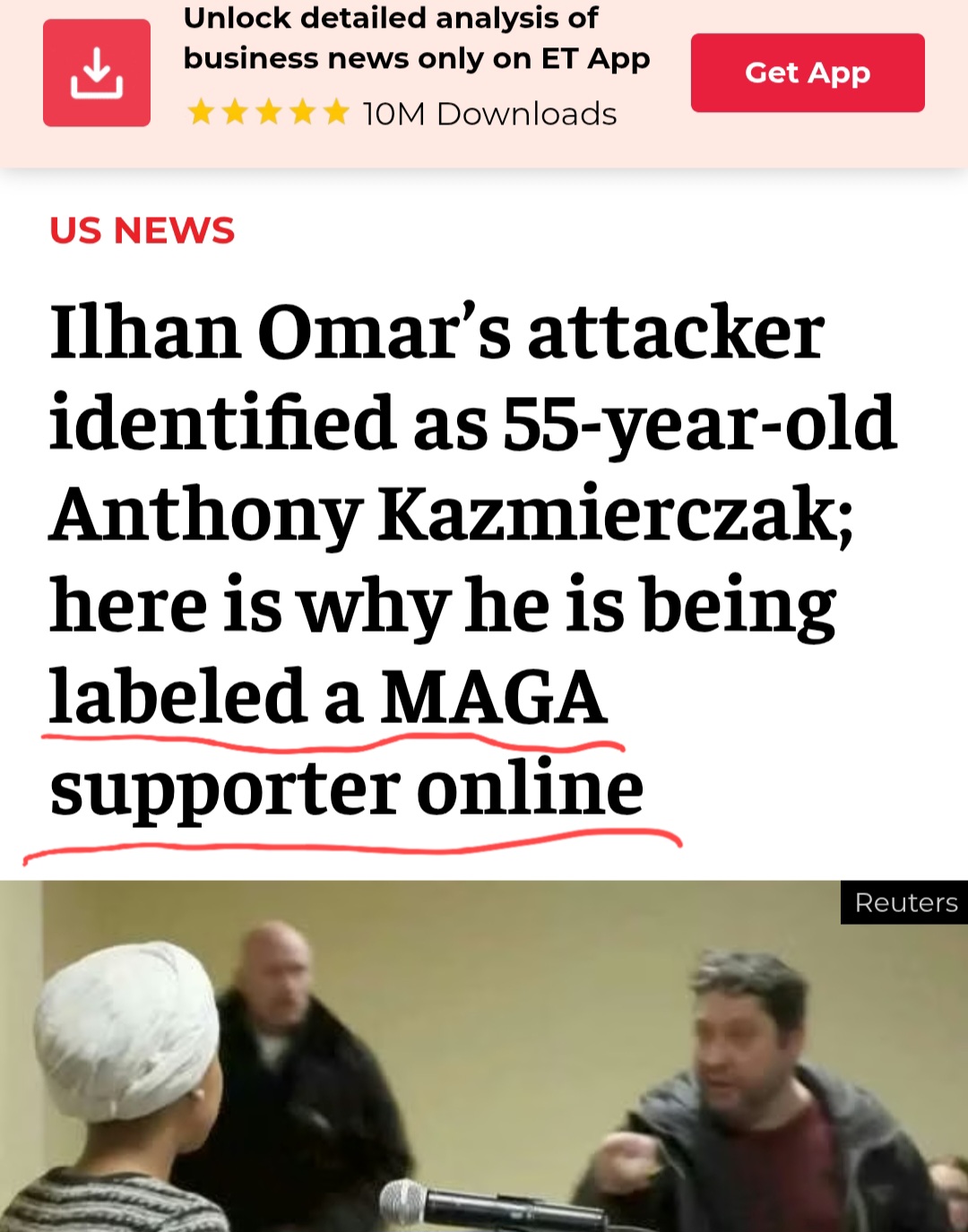
When Rep. Ilhan Omar was squirted with a liquid by an assailant, the story was not the act itself. The story was the atmosphere. Readers were immediately given Minnesota ICE protests, Trump’s rhetoric, the temperature of MAGA politics, and speculative motive pathways pointing firmly rightward. Political attribution preceded investigative certainty. Context did the work and assigned blame.
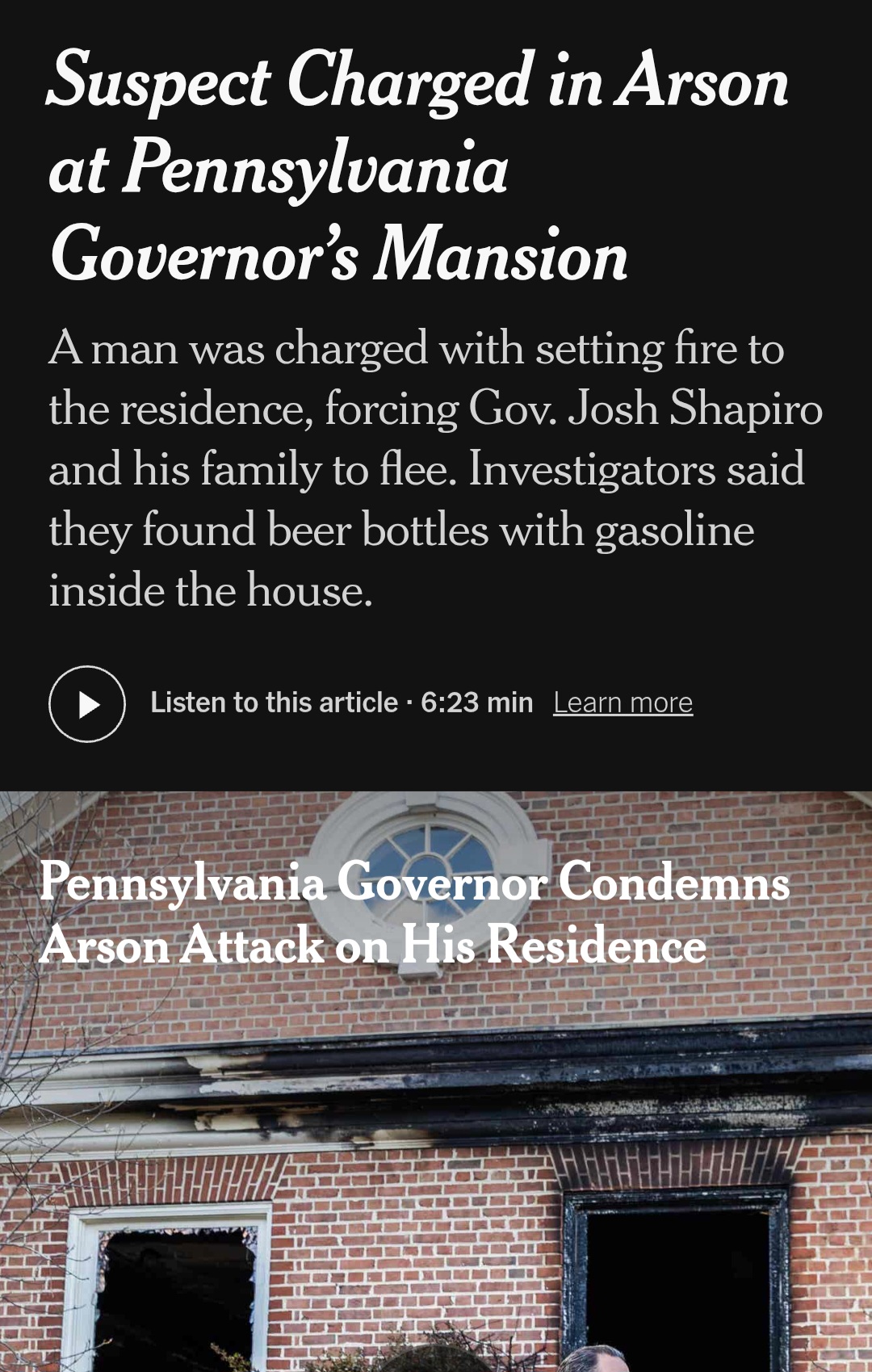
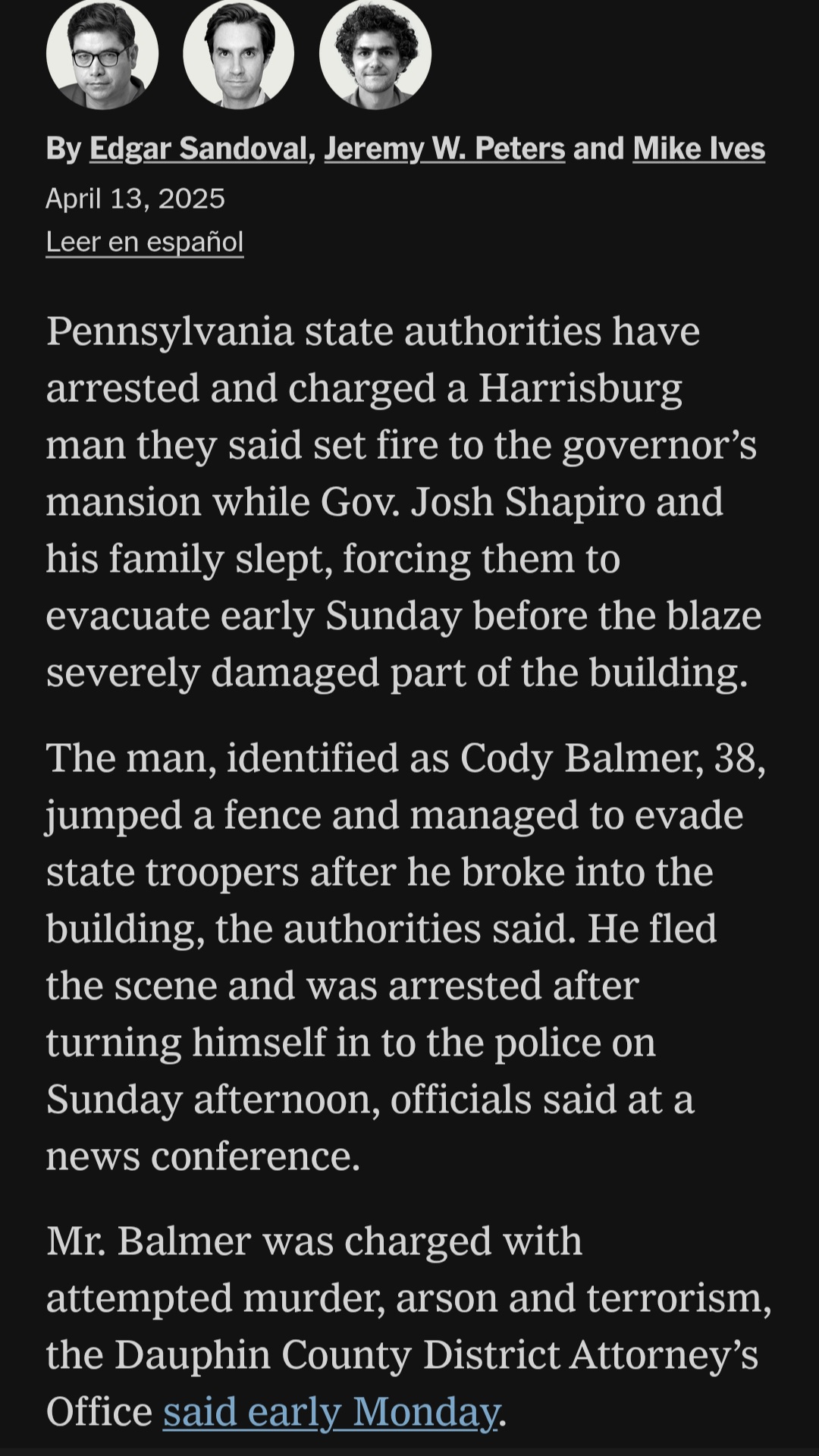
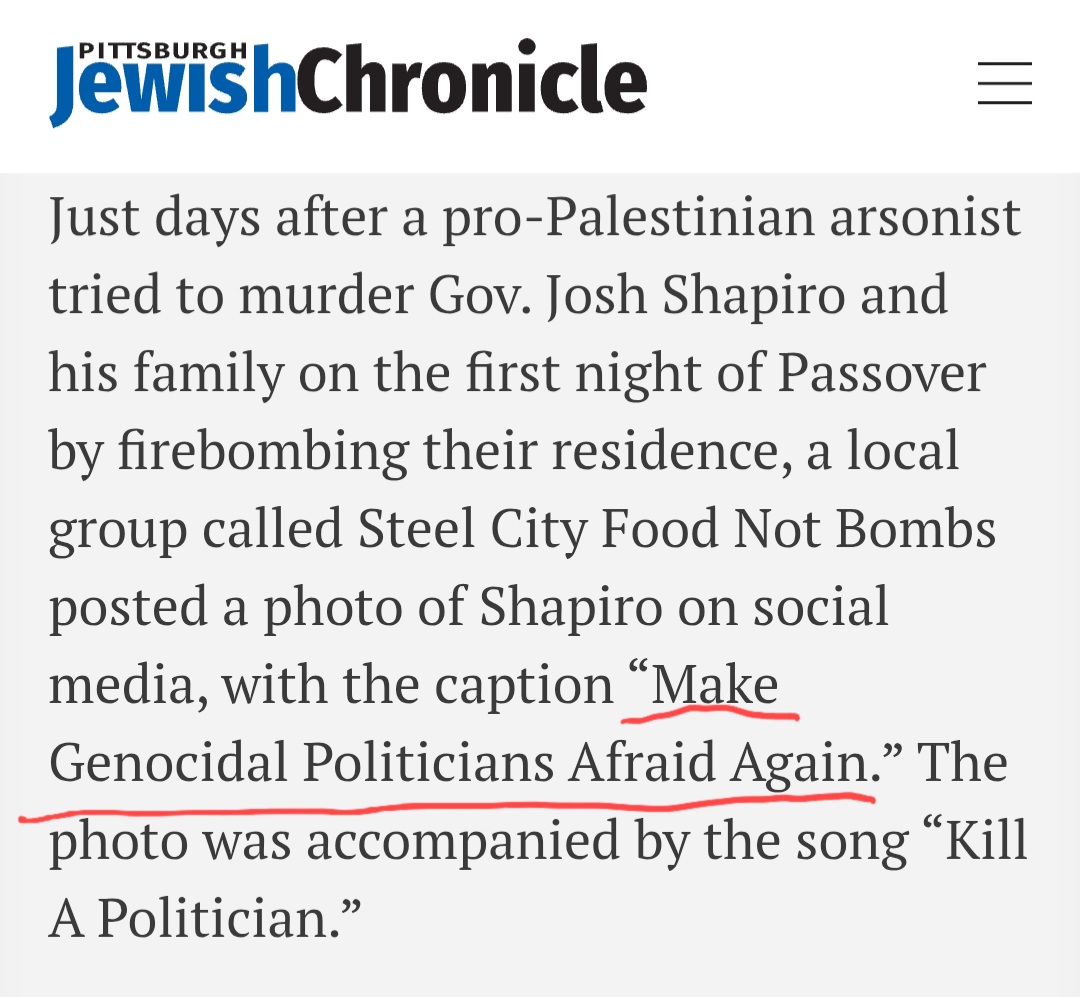
Yet when Pennsylvania Governor Josh Shapiro’s home was attacked by arson in April, context vanished.
There was no mention of the documented surge in antisemitic incidents. No reference to months of anti-Israel rhetoric saturating elite politics. No discussion of the “No Genocide Josh” campaign. No acknowledgment that the attack occurred during Passover—a fact ordinarily noted when violence intersects with religious or communal significance, but here omitted entirely. No exploration of whether sustained accusations of genocide, ethnic-cleansing chants, or the casual demonization of Jews in power might have contributed to a permissive climate. Investigative caution preceded any discussion of political backdrop.
This was not restraint. It was a choice.
The same media institutions that insist “words have consequences” suddenly treat words as irrelevant when the victim is Jewish and the potential inciters sit on the progressive side of the aisle. Context, once treated as morally essential, becomes editorially radioactive.
The pattern is no longer subtle. When violence – staining a shirt – touches a left-wing Muslim lawmaker, identity and ideology are framed as explanatory forces. When violence – arson and attempted murder of an entire family – touches a Jewish, pro-Israel official, identity is scrubbed clean and politics are declared off-limits. One story expands outward into meaning. The other … nothing.
The issue is not what motivated the attacker. The issue is why certain motivations are never even permitted to be discussed.
To contextualize the attack on Shapiro would require acknowledging uncomfortable truths: that anti-Israel rhetoric frequently curdles into antisemitism; that political incitement is not confined to one end of the spectrum; that portraying Jews as uniquely malevolent actors has consequences beyond protest slogans and campus chants. Easier, then, to say nothing.
The Pittsburgh Jewish Chronicle had no issue clearly identifying the “Pro-Palestinian arsonist” and the support for targeting the Jewish governor, something liberal media scrubbed clean. The Steel City Food Not Bombs group is associated with the Socialist Rifle Associationwhich seeks “to combat the toxic, right-wing, and exclusionary firearm culture in place today.”
But silence is not passive. It is editorial.
For Ilhan Omar, context was everything. For Josh Shapiro, context was invisible.
If context is essential when violence can be plausibly traced to the right, it must be highlighted when violence engulfs Jews as well. Anything else is antisemitic choreography.
Antisemitism came bursting onto the American scene these last years. Jews were murdered. Synagogues were attacked. Jewish students were stalked, doxxed, and targeted by name. Schools and workplaces became hostile terrain.
And at that moment—when antisemitism crossed unmistakably from speech into violence—Jewish New York Congressman Jerry Nadler responded with the Antisemitism Response and Prevention Act.
ARPA was framed as action. In reality, it was an exercise in evasion. While Jews were being assaulted and killed, Nadler urged Congress to study, track, and administratively manage antisemitism—while carefully avoiding the standards already designed to confront it.
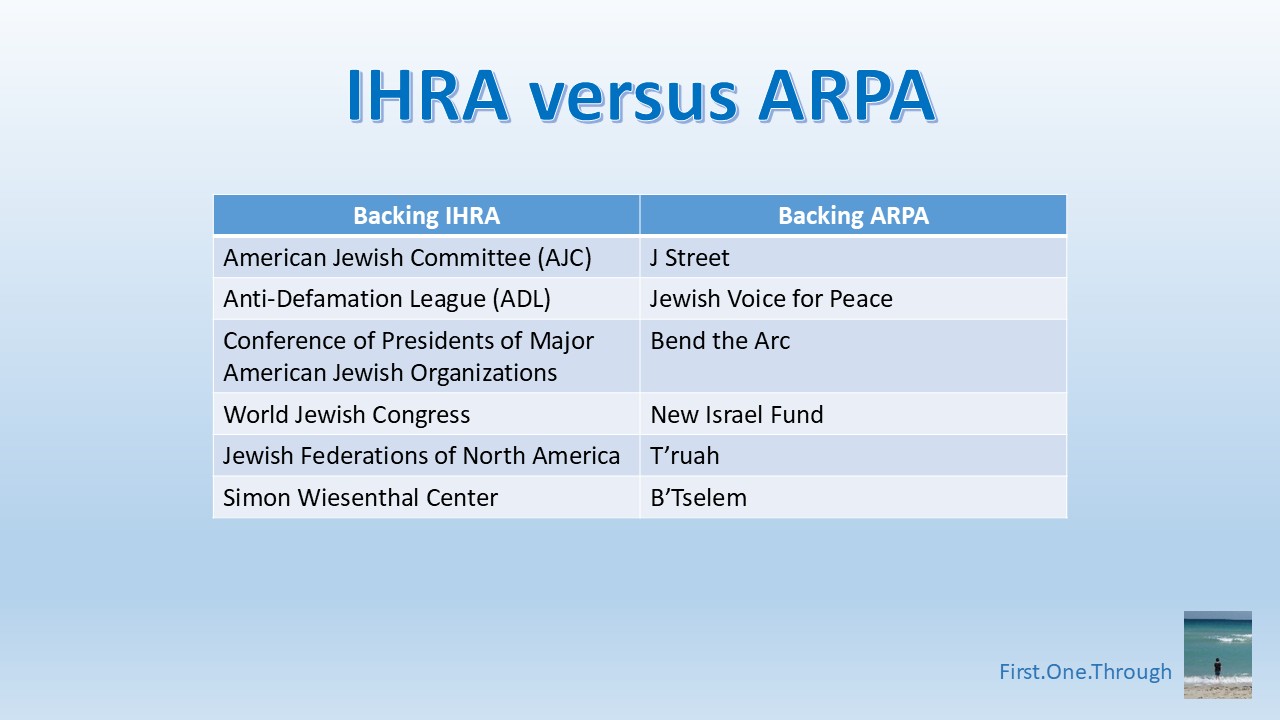
The United States already had a playbook, the International Holocaust Remembrance Alliance (IHRA) working definition, adopted precisely because it reflects how antisemitism functions in the modern world. IHRA recognizes what recent victims already knew: antisemitism today often arrives wrapped in ideological language—through demonization of Israel, denial of Jewish self-determination, and collective punishment of Jews for the actions of the Jewish state.
That clarity made IHRA inconvenient to some. It required institutions to draw lines. ARPA was drafted to move in the opposite direction.
“this bill [H.Res 1449 to use IHRA definition of antisemitism] threatens to chill constitutionally protected speech.” – Rep. Jerry Nadler (D-NY)
Instead of reinforcing enforcement under existing civil-rights law and a recognized definition, ARPA handed discretion to federal agencies. Antisemitism would be assessed holistically. Guidance would follow. Coordination would improve. Standards would remain flexible.
But flexibility is a luxury for bystanders, not for targets.
“the IHRA definition is plainly unconstitutionally vague.” – Rep. Jamie Raskin (D-MD)
Mainstream Jewish organizations understood the consequence immediately. Ambiguity does not restrain institutions that already fail to act. Universities that tolerated harassment would gain new procedural defenses. Administrators could claim compliance while Jewish students were chased from quads and classrooms. The more antisemitism intensified, the slower the response would become.
That is why opposition to ARPA came from the center of Jewish communal life, groups like Jewish Federations and the AJC. Their message was blunt and grounded in reality: Jews were being attacked under existing law. The failure was enforcement, not definition. Weakening standards while violence increased was not caution—it was retreat.
Support for ARPA came largely from groups more concerned with preserving far-left wing ideological space around anti-Israel activism than with confronting antisemitism as it actually manifested. In their calculus, the risk of over-enforcement mattered more than the fact that Jews were being targeted, assaulted, and killed. The alt-left preferred to cast their lot with CAIR in falsely labeling the IHRA definition as a gag order.
Congress eventually pivoted—toward strengthening Title VI enforcement and reaffirming IHRA—quietly conceding the obvious. When antisemitism turns violent, clarity protects lives. Process protects institutions.
“I share the concerns of groups like Jewish Voice for Peace, Bend the Arc, B’Tselem, Amnesty International, and the ACLU that the IHRA definition of antisemitism will be used to stifle dissent and chill free speech, especially Palestinian human rights advocacy. The resolution also does not recognize that the fight against antisemitism is connected to our fight against Islamophobia, racism, white nationalism, and all other forms of hate.” – Rep. Rashida Tlaib (D-MI)
ARPA will stand as a reminder of a grim truth: at a moment when antisemitism demanded resolve, left-wing Jews chose ambiguity and cozying to antisemites, rather than defense.
The blood libel begins with how the Book of Exodus is misremembered. Exodus is a story of Jewish liberation, yet antisemites preserve it as a story of punishment. That inversion is not confusion but tradition. Every generation dresses the libel in new language, while the structure never changes.
The plagues were directed at dismantling Egyptian authority with precision. The opening strike hit the Nile—Egypt’s god, economy, and source of life—and exposed a crime already committed there. Egypt had drowned Israelite infants in that river to erase a future it feared. The first plague named that bloodshed and stripped Egypt of moral order.
What followed was escalation with restraint. Egypt lost land, productivity, and cosmic claims. Darkness collapsed Pharaoh’s divine authority. What remained was the empire’s final refuge: the belief that continuity would return, that tomorrow would repair what today exposed.
The final plague took it. The death of the firstborn judged a state that had already made children expendable. It revoked Egypt’s claim on the future. Regimes that destroy children forfeit moral legitimacy. Measure followed measure.
The Israelites did not celebrate death. They marked their doors, stayed inside, and departed at dawn. Their defining act was escape from bloodlust, not indulgence in it. Freedom—not punishment—was the center of the story.
Antisemitism begins by erasing that fact.
Across centuries, Jews were remembered not as a people who fled violence but as a people who embodied it. Divine judgment on a tyrannical state was detached from context and reassigned as a permanent Jewish trait. Victims became perpetrators. Liberation became threat. From this inversion, the blood libel followed naturally, and not surprisingly, during Jewish celebrations of Passover when they left Egypt.
The charge did more than justify violence; it recoded Jews as a permanent danger. If society believes Jews possess bloodlust, then Jews must be watched, monitored, restricted, and scrutinized. They become an unwanted risk. Suspicion overwhelms citizenship. Surveillance replaces equality. In this logic, it is only a matter of time before Jews are assumed to act—and preemptive punishment becomes rationalized as self-defense.
This is how the libel works. It marks Jews forever as dangerous rather than as people who long for freedom. It recasts victims as villains and turns survival itself into evidence of guilt. The blood libel means that Jews are never trusted as equals, and never accepted as free.
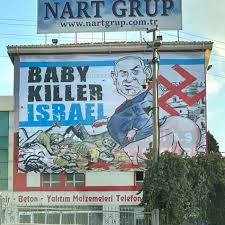
That inheritance governs today’s rhetoric. Calling Jews “baby killers” is not a factual claim; it is the inherited reflex of a culture that never accepted Jewish freedom. The accusation is identity-based, not evidence-based. It exists to keep Jews outside the circle of legitimate humanity and to deny the moral standing of Jewish self-defense before it is even asserted.
Turkey fans the blood libel in Hamas’s latest war to destroy Israel
This mindset survives because it is passed down, laundered through new vocabulary, and presented as moral concern. But it is the same lie. It refuses to see Jews as a people who escaped societies that murdered their children and insists instead on seeing Jews as the source of murder itself.
The story that antisemitism started when Pharoah forgot Joseph and became worried about the growing number and power of Jews was the fear of a monarch. Antisemitism was instilled in the masses when the Exodus story was flipped that Jews had a bloodlust and didn’t deserve equality. Every society that accepted the libel eventually convinced itself that Jewish freedom was intolerable—and acted accordingly.
Capitalism disciplines hatred only where it can still touch it. Where contracts exist, behavior can be checked. Where they don’t, mobs rule.
Kanye West (Ye) didn’t begin by attacking Jews. He began by denigrating Black people—calling slavery a “choice,” sneering at collective memory, mocking historical suffering. The reaction was outrage softened by indulgence. He was criticized, contextualized, excused. His Black identity functioned as camouflage. The lesson was clear: you could insult your own people and still be protected.
So Ye escalated. Antisemitism offered a bigger payoff—more visibility, more fear, more leverage. It worked until money intervened.
When Adidas cut him loose, the spell broke. Capitalism finally touched him and apologies followed—not from moral awakening, but because the incentive structure flipped.
This is often cited as proof that “the system works.” It doesn’t—at least not anymore.
Ye performing
Capitalism disciplines behavior only where value is concentrated. Ye had a centralized choke point: Adidas. Today’s antisemitism largely does not. It thrives where contracts don’t exist, boards don’t answer, and outrage itself is the reward.
That vacuum has produced a new Ye-like template: antizionist Jews who denigrate Jews. They celebrate October 7. They call Israelis “Nazis.” They launder moral inversion through identity—and are absolved because of it. Jewishness becomes armor, converting bigotry into “bravery,” hatred into “critique,” massacre into “context.” The uglier the claim, the louder the ovation.
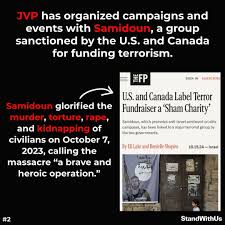
Poorly named “Jewish Voice for Peace” partners with terrorist-supporting group Samidoun
The center of gravity is social media—especially TikTok—where attention replaces contracts, outrage outperforms restraint, and individuals have nothing material to lose. There is no Adidas-scale counterparty. Condemnation becomes fuel. Challenge confirms righteousness.
This is where the political story locks in and takes flight.
For years, the far left has discredited institutions under the banner of “corporate Democrats.” At the Democratic Socialists of America’s 2025 convention, a delegate said it plainly: the movement should organize people “that the corporate Democrats and Republicans have abandoned for dead.” In this frame, institutions aren’t imperfect—they’re illegitimate. Friction isn’t restraint—it’s oppression.
On the ground, the rhetoric sharpens. New York councilmember Alexa Avilés urged activists to “root out ‘corporate Democrats’ backed by AIPAC,” recasting pro-Israel Democrats as bought and disposable. Structural critique becomes moral license. Identity becomes proof. Mobs become “the people.”
DSA’s Alexa Aviles
Far-left media and politicians amplify the message—outlets like The Young Turks and figures such as Jamaal Bowman. They know that institutions impose friction > Friction slows mobs > Mobs hate friction. So the institutions must be delegitimized—and the most extreme voices elevated.
The Young Turks coin a term and come for “Corporate Democrats”
This is sold as empowerment. In reality, it is power to the algorithm. Algorithms reward the loudest, angriest, least accountable claims. In that environment, antisemitism doesn’t just survive; it thrives. Jews are too small a minority to outvote a mob optimized for rage.
The reality is that capitalism was never the moral engine here, but it was sometimes a brake. Contracts could snap shut and money could impose limits. When those limits vanish—when speech floats free of consequence and identity shields cruelty—nothing restrains the mob.
Ye was stopped because capitalism still touched him when he crossed from trashing Blacks to bashing Jews.
The antizionist Jewish influencers celebrating October 7 are not stopped because nothing touches them. In People Capitalism, attention is the asset, outrage is the yield, and antisemitism is rewarded, and boosted on a litter—especially when Jews attack Jews.
Every such system needs a moral absolver.
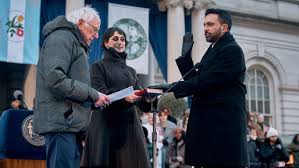
That role is played by Bernie Sanders—the mob’s messiah. He doesn’t organize the mob; he legitimizes it by claiming it isn’t radical, reframing rage as righteousness by declaring institutions corrupt, restraint oppressive, and “corporate Democrats” illegitimate. His function isn’t governance. It’s permission to come for mainstream Democrats and other Jews.
Sen. Bernie Sanders swears in DSA’s Zohran Mamdani as mayor of New York City
This is the final logic of People Capitalism:
markets once imposed limits; crowds impose none.
institutions once punished bigotry; mobs reward it.
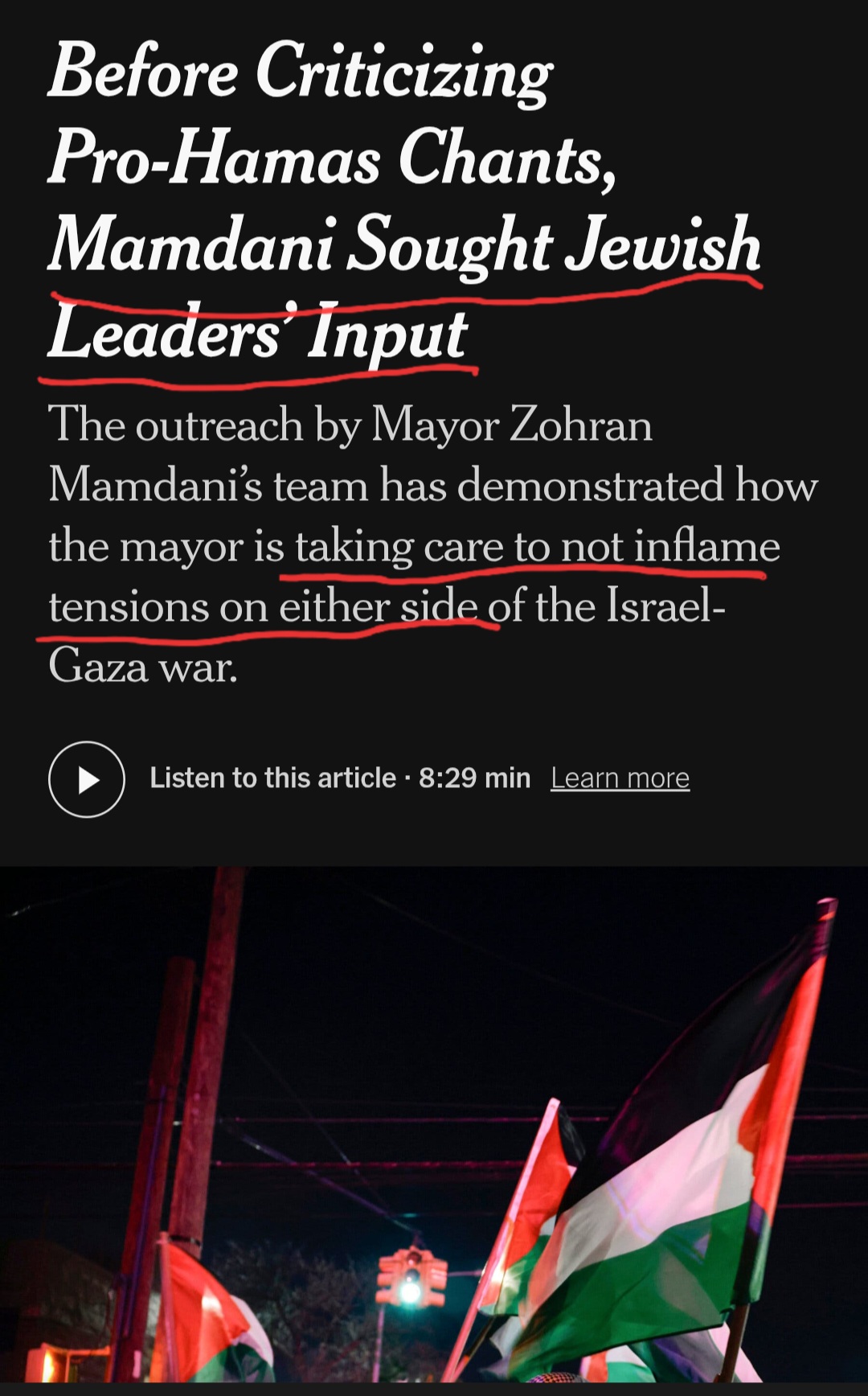
The most consequential move in the New York Times coverage was quiet. It described Mayor Zohran Mamdani’s response to pro-Hamas chants as an effort to avoid inflaming “tensions on either side of the Israel–Gaza war.” The language sounded responsible. It also erased the central reality.
The New York Times is attempting to allay fears of Jewish New Yorkers but softening image of extremist mayor Zohran Mamdani on January 17, 2026
There were no equivalent sides involved. One group openly chanted support for Hamas, a U.S.-designated terrorist organization responsible for mass murder, rape, kidnapping, and calls for genocide. The other side was a Jewish community standing outside its own synagogue, defending it from terrorist sympathizers.
That location matters. This did not unfold at City Hall or on a random street corner. It took place in front of a synagogue. For Jews, synagogues are communal sanctuaries, not neutral backdrops for geopolitical theater. Geography conveys intent. Bringing terror slogans to a Jewish house of worship transforms speech into targeting.
The New York Times chose to smooth this away. By framing the episode as “tension on either side,” it recast explicit support for Hamas as a legitimate pole of community expression. The chant was softened. The targeting dissolved into abstraction. Readers were reassured that calm was being preserved with statements such as “Mr. Mamdani’s team repeatedly debated the wording and fairness of the language,” as if a group chanting for the genocide of Jews required “fairness.”
This is how extremism gets normalized. When terror advocacy demands careful calibration rather than moral clarity, the boundary quietly shifts. Such framing would collapse instantly if crowds praised ISIS outside a mosque or neo-Nazis gathered at a Black church.
Protesters understand what editors seem determined to whitewash: location is the message. No amount of “Palestine-washing” can absolve the antisemitism in the Times coverage.
Reassurance purchased at the cost of truth carries consequences. It teaches extremists that intimidation can be reframed as passion and that targeted terror speech will be treated as just another civic grievance. That does not cool tensions. It redraws the line of what is acceptable.















 First One Through