The new play Giant has revived the scandal of Roald Dahl, the beloved children’s author whose antisemitism became inseparable from his legacy. Dahl’s hatred had its roots in an obsession with Israel, especially after the 1982 Lebanon War, which hardened into something older and darker: Jews as a collective object of blame. Political fury dissolved the line between a state and a people.
Matt Chun shows where that road now leads.
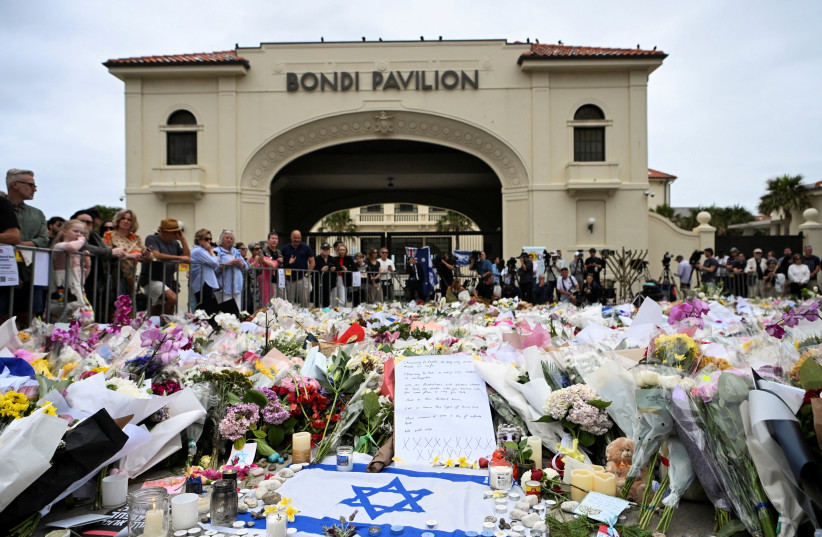
Chun is an Australian children’s book illustrator, part of a profession entrusted with shaping how children understand innocence, cruelty, and empathy. But when Jews were murdered at a Jewish Hanukkah celebration in Bondi, his response in an article title “Never mourn a fascist,” exposed something far beyond political critique: raw antisemitism. The victims were neither Israelis nor soldiers. They were Australian Jews gathered in communal celebration, among them a ten-year-old girl. Chun denied their innocence and treated their deaths as politically qualified, as though Jewish identity itself diminished the claim to grief.
People stand near flowers laid as a tribute at Bondi Beach to honour the victims of a mass shooting that targeted a Hanukkah celebration at Bondi Beach on Sunday, in Sydney, Australia, December 16, 2025. (credit: REUTERS/Flavio Brancaleone)
That marks the evolution. Dahl saw war and blamed Jews. Chun sees Jews and explains away their murder.
That is why the cancellation of Chun’s forthcoming children’s book Bila by University of Queensland Press was fitting. Children’s books are an act of trust. Parents place them in their children’s hands believing that the people behind them understand something fundamental about innocence and human worth. A creator who cannot recognize the innocence of a murdered Jewish child at a Hanukkah celebration has forfeited any claim to shape the moral imagination of children.
Dahl’s antisemitism traveled through Israel before landing on Jews. Chun begins with Jews.
Chun wrote that “lands have been pillaged, poisoned, desecrated, and set ablaze by colonisers,” as he celebrates the slaughter of people at a holiday party. Alas, he is only the latest author instilling venom in the ink of books being marketed to children.
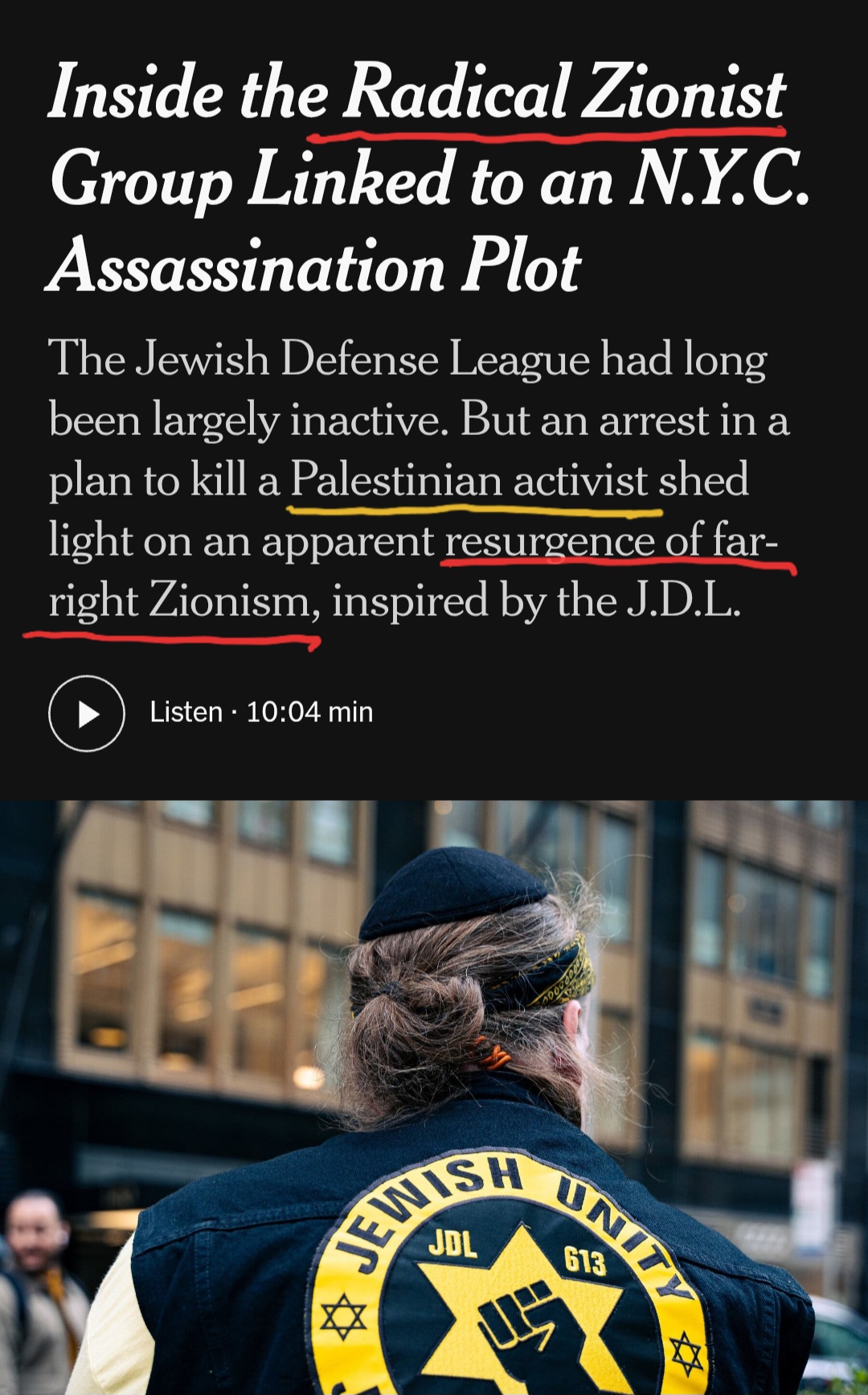
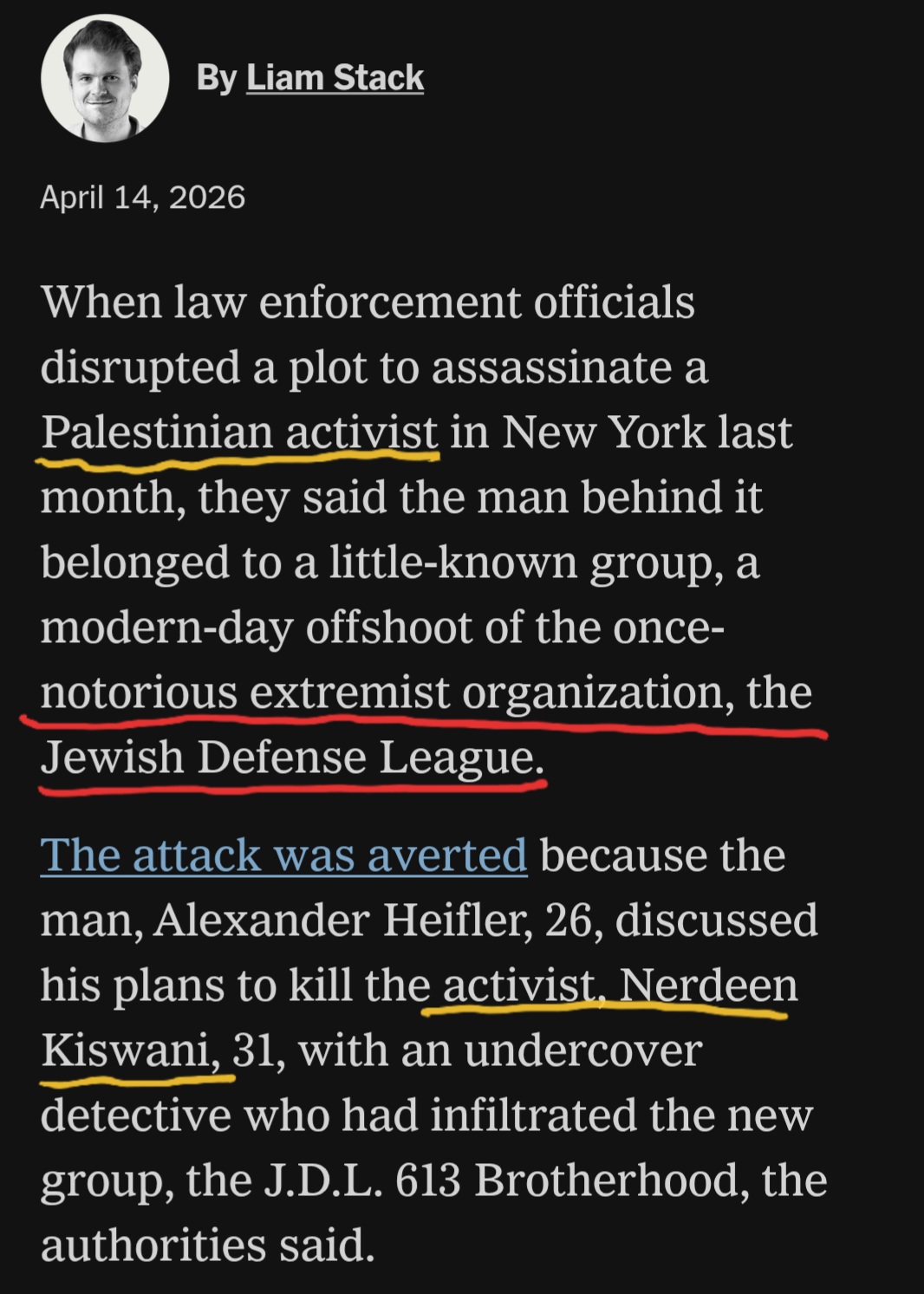
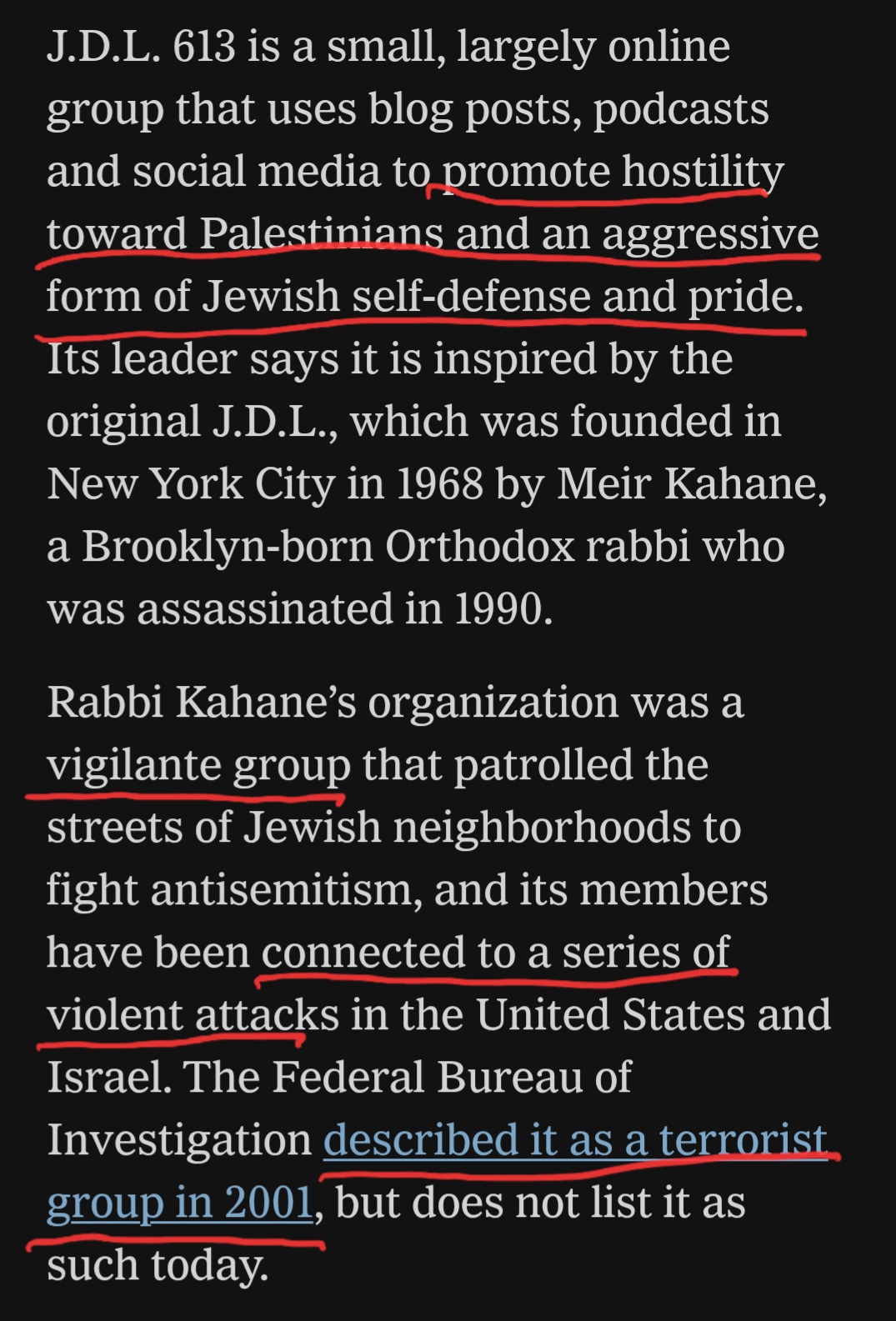
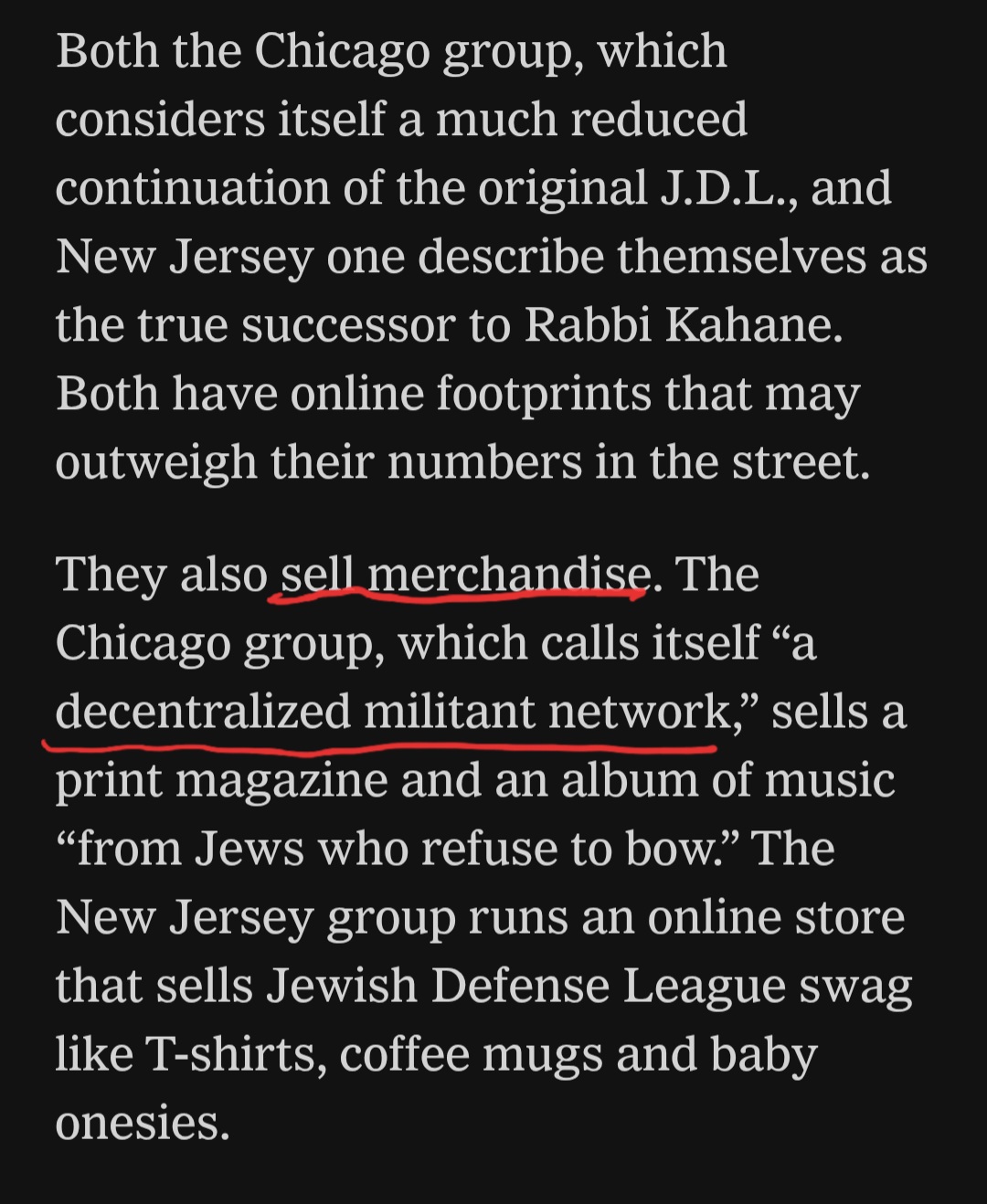
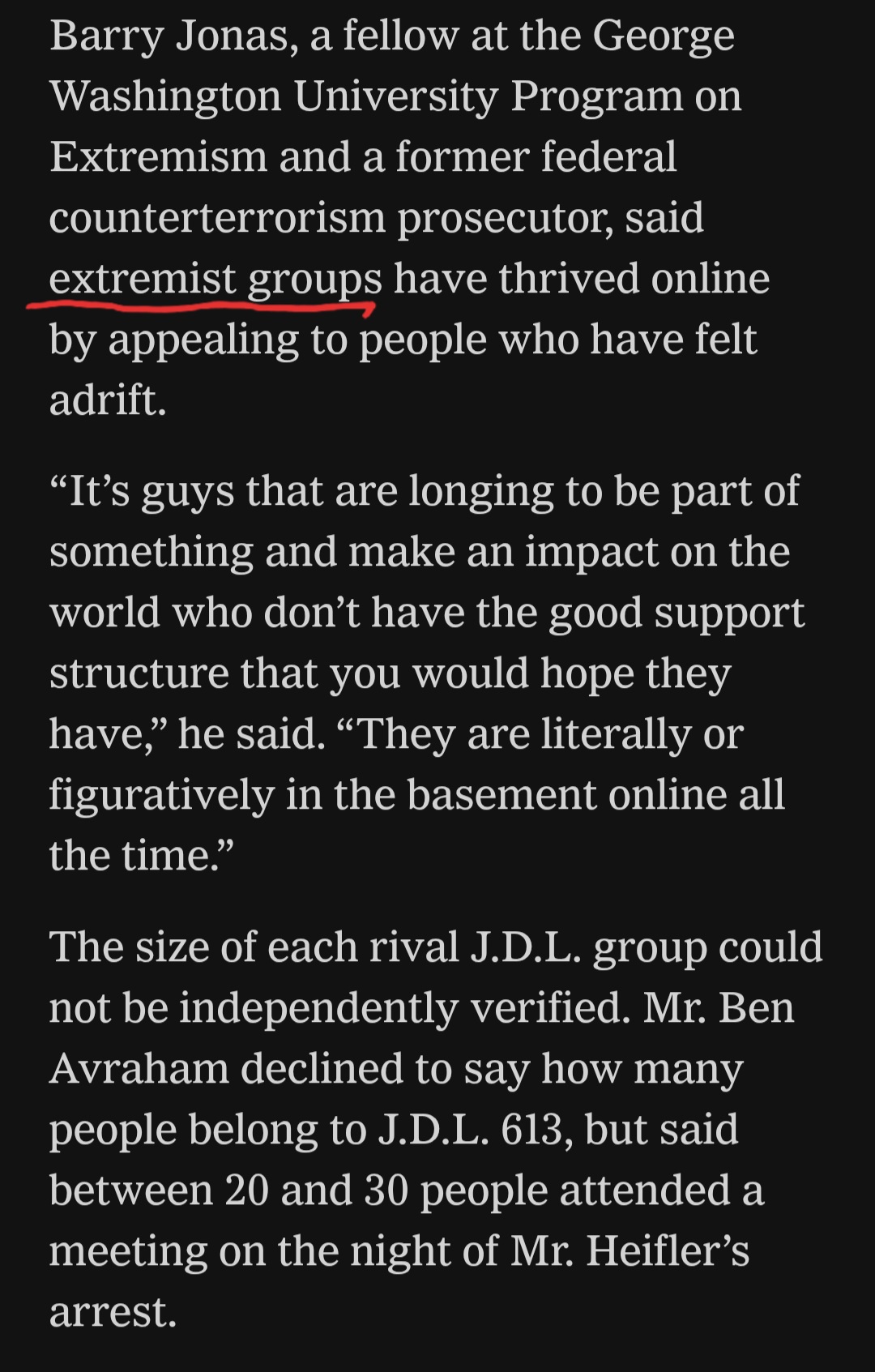
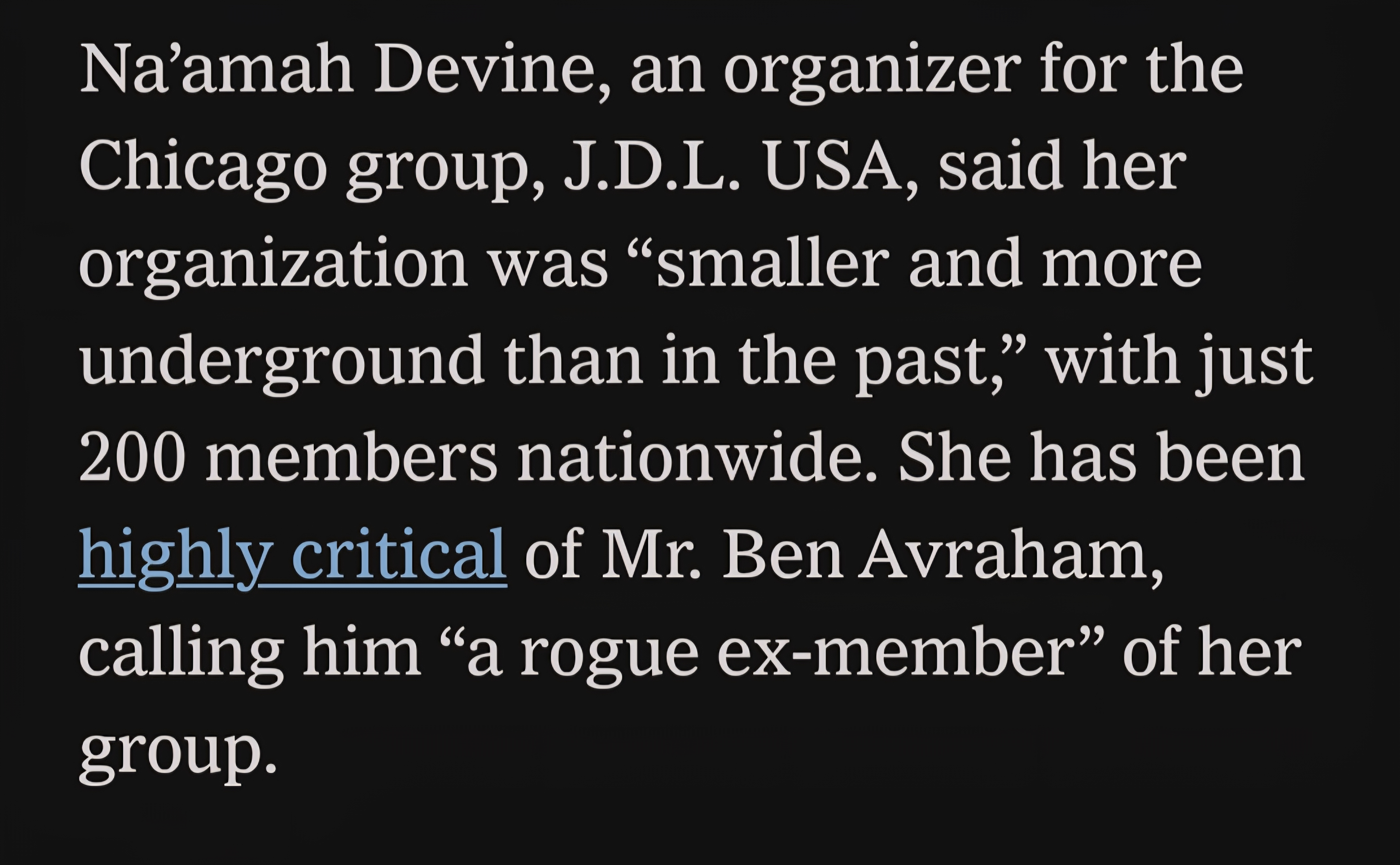
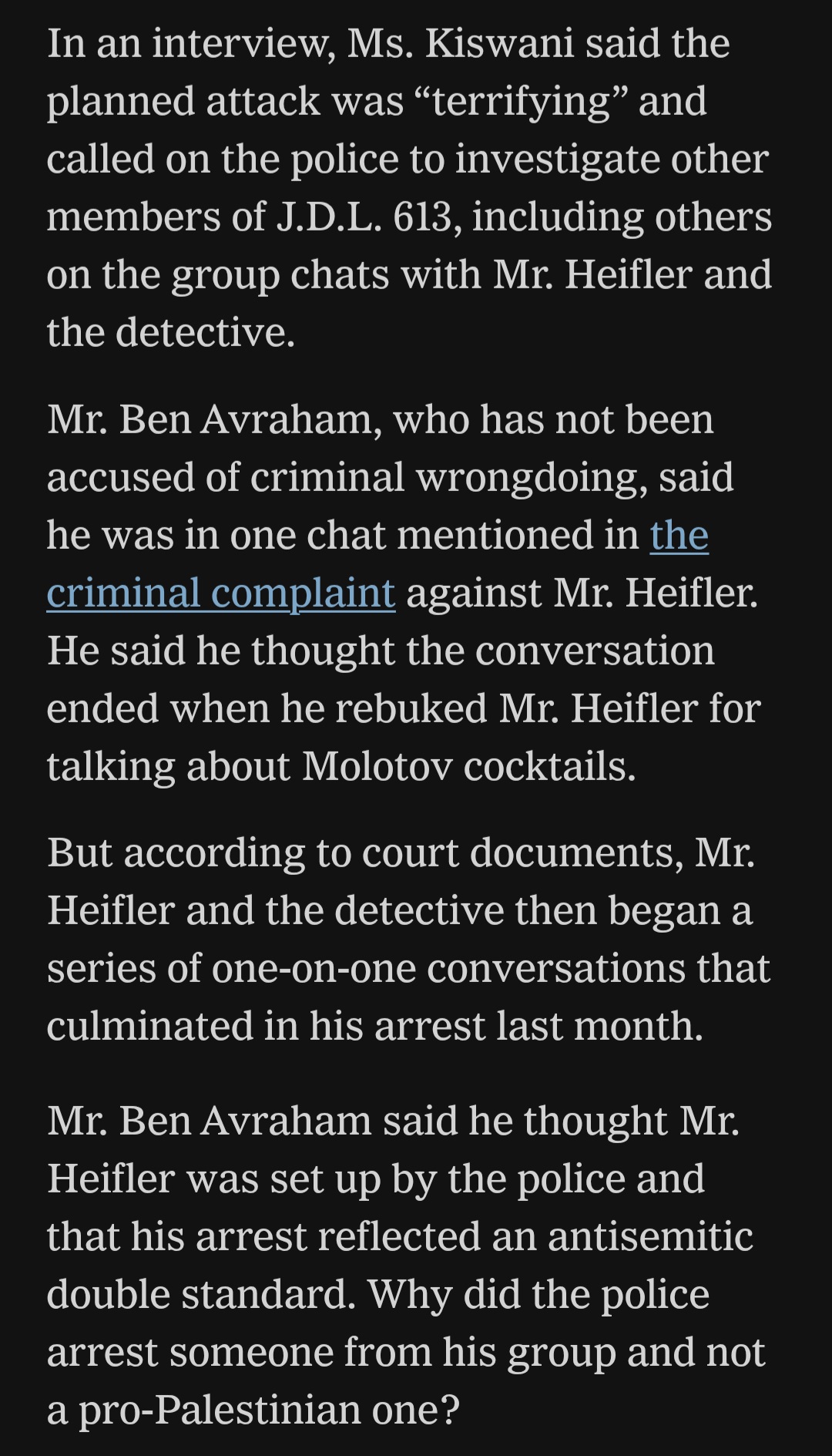
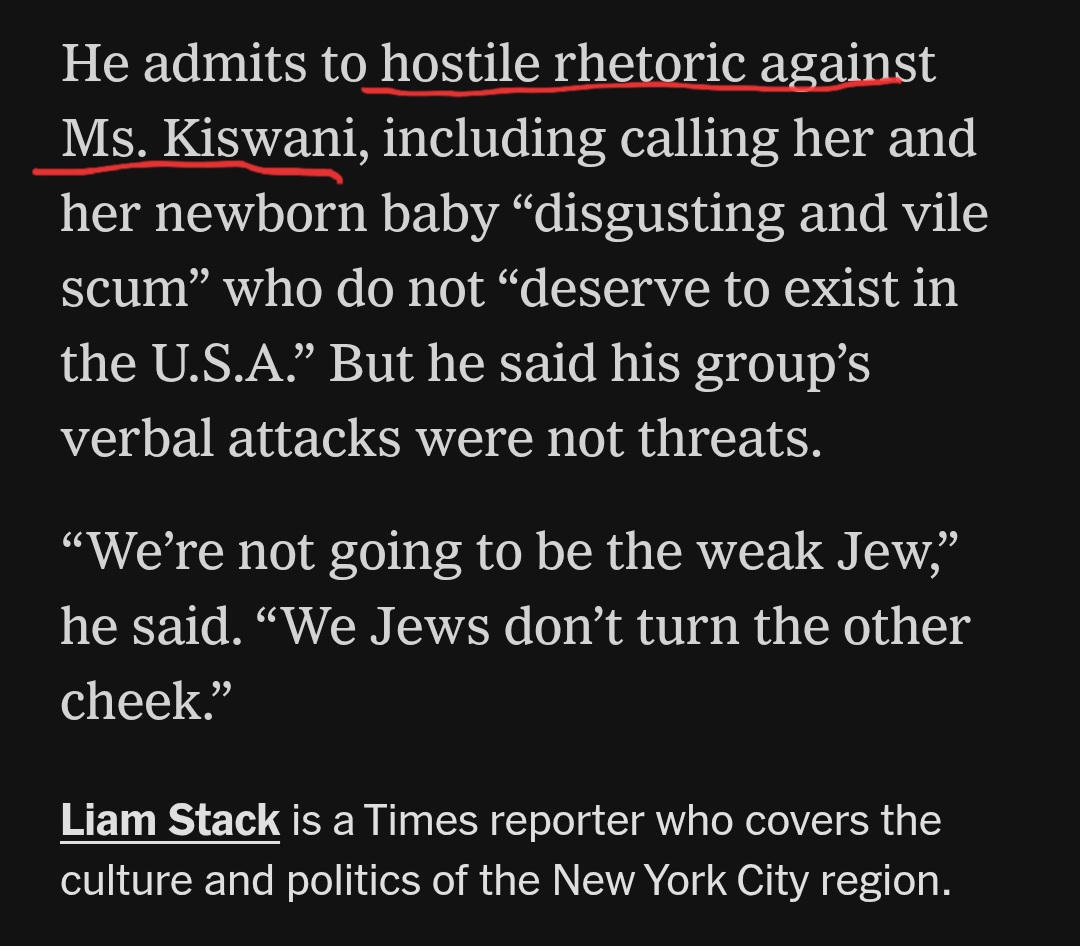
The latest The New York Times piece on a JDL-linked murder plot tells a very specific story—and then stretches it into something much larger than it is.
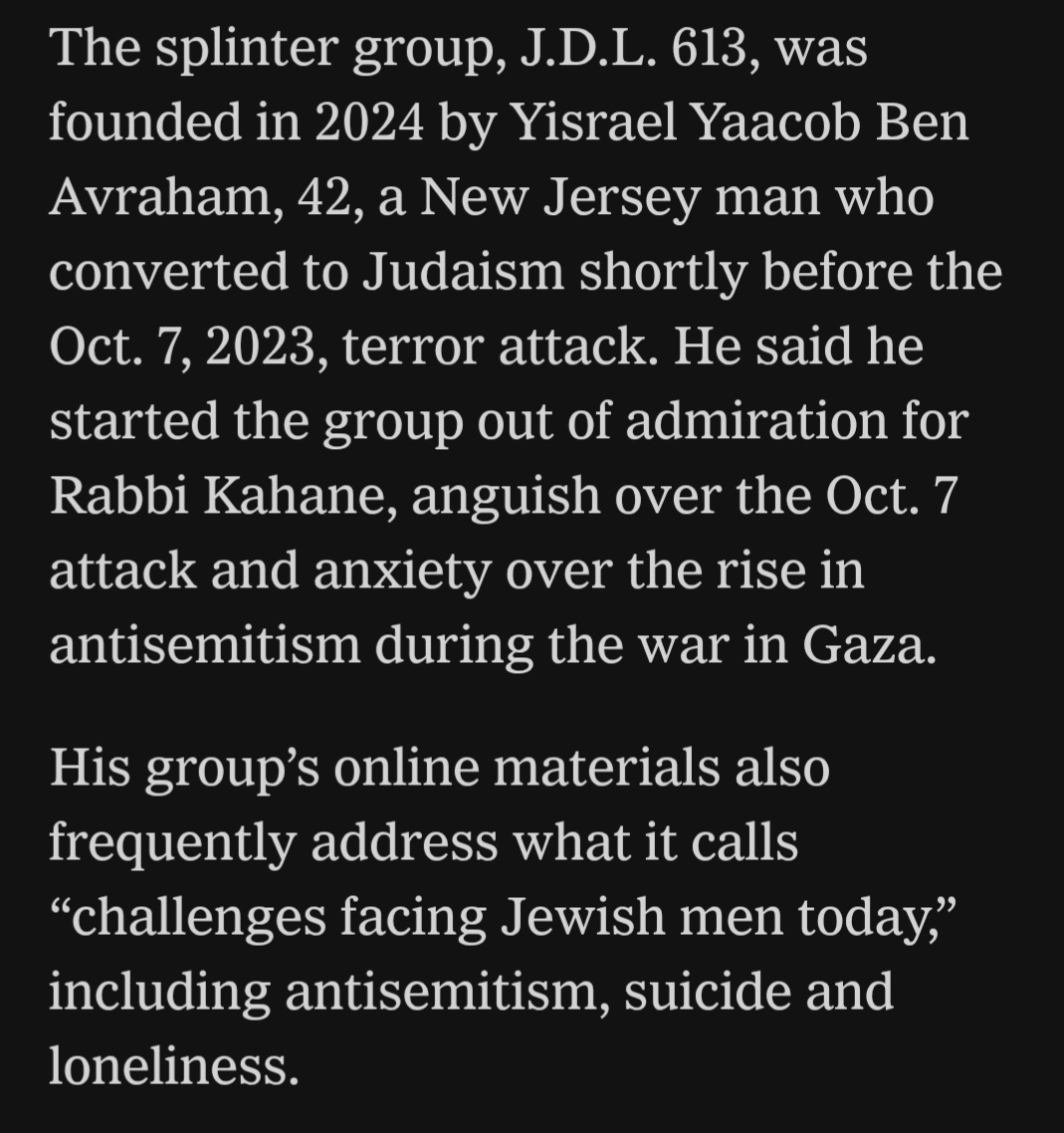
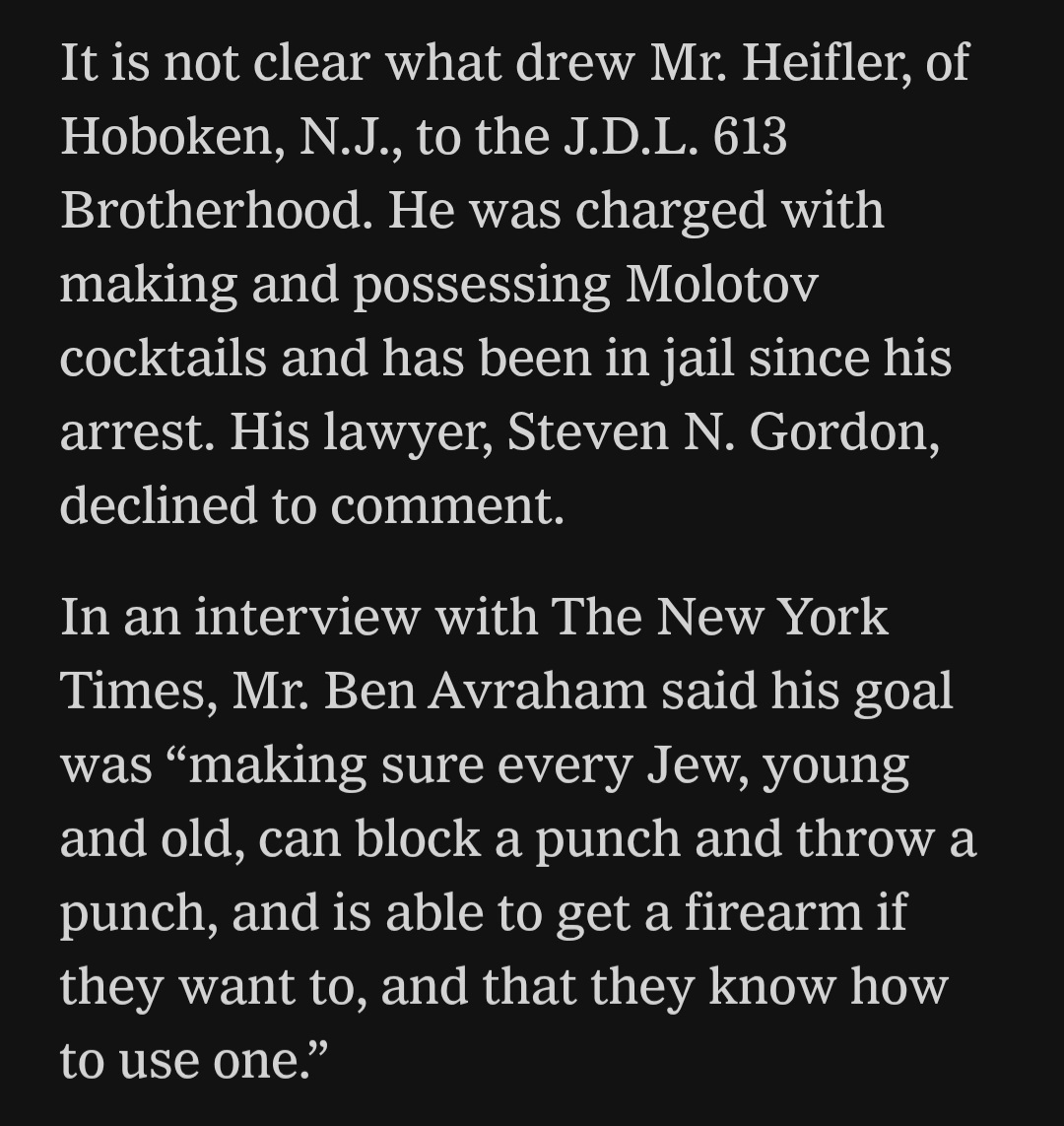
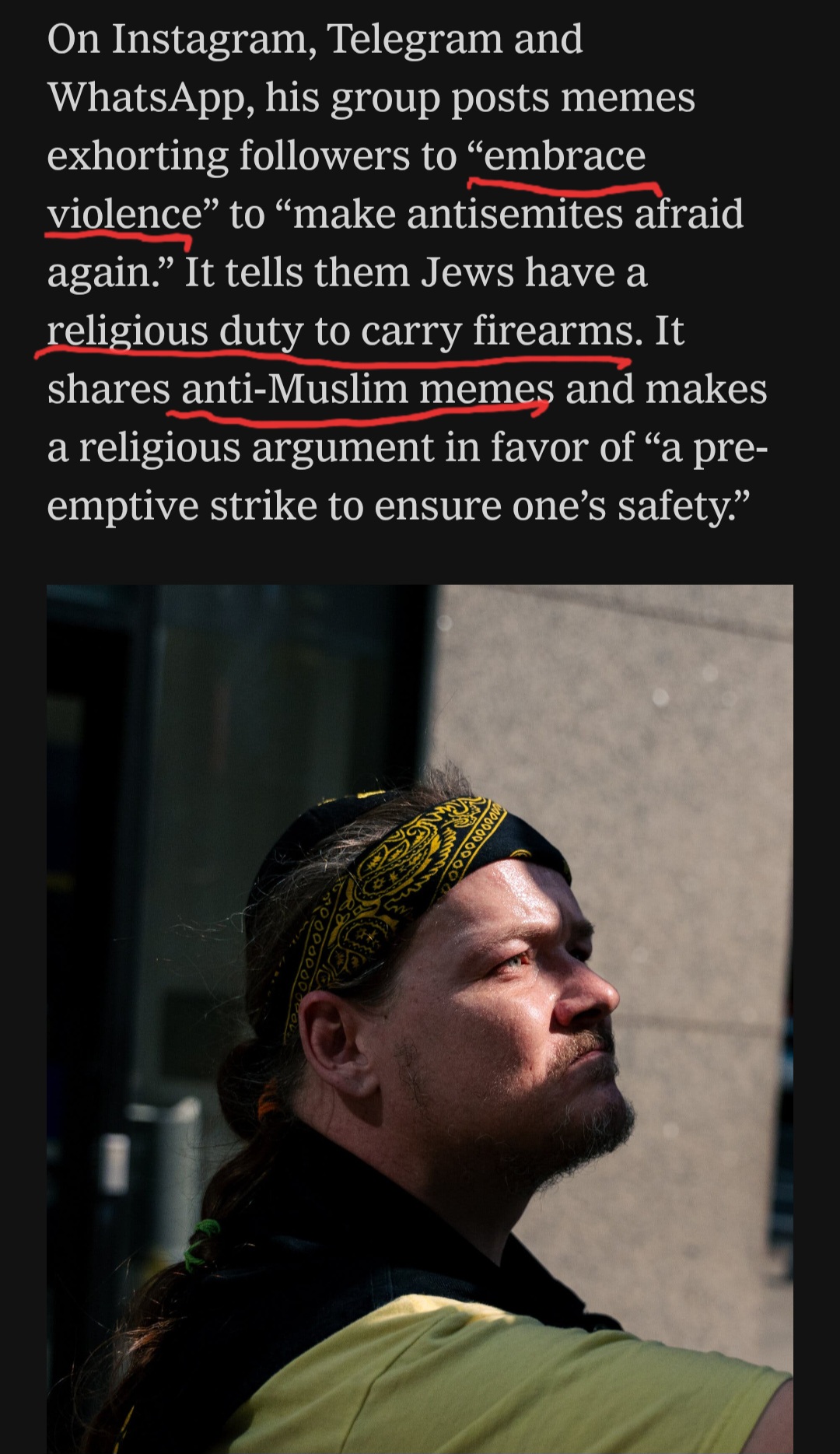
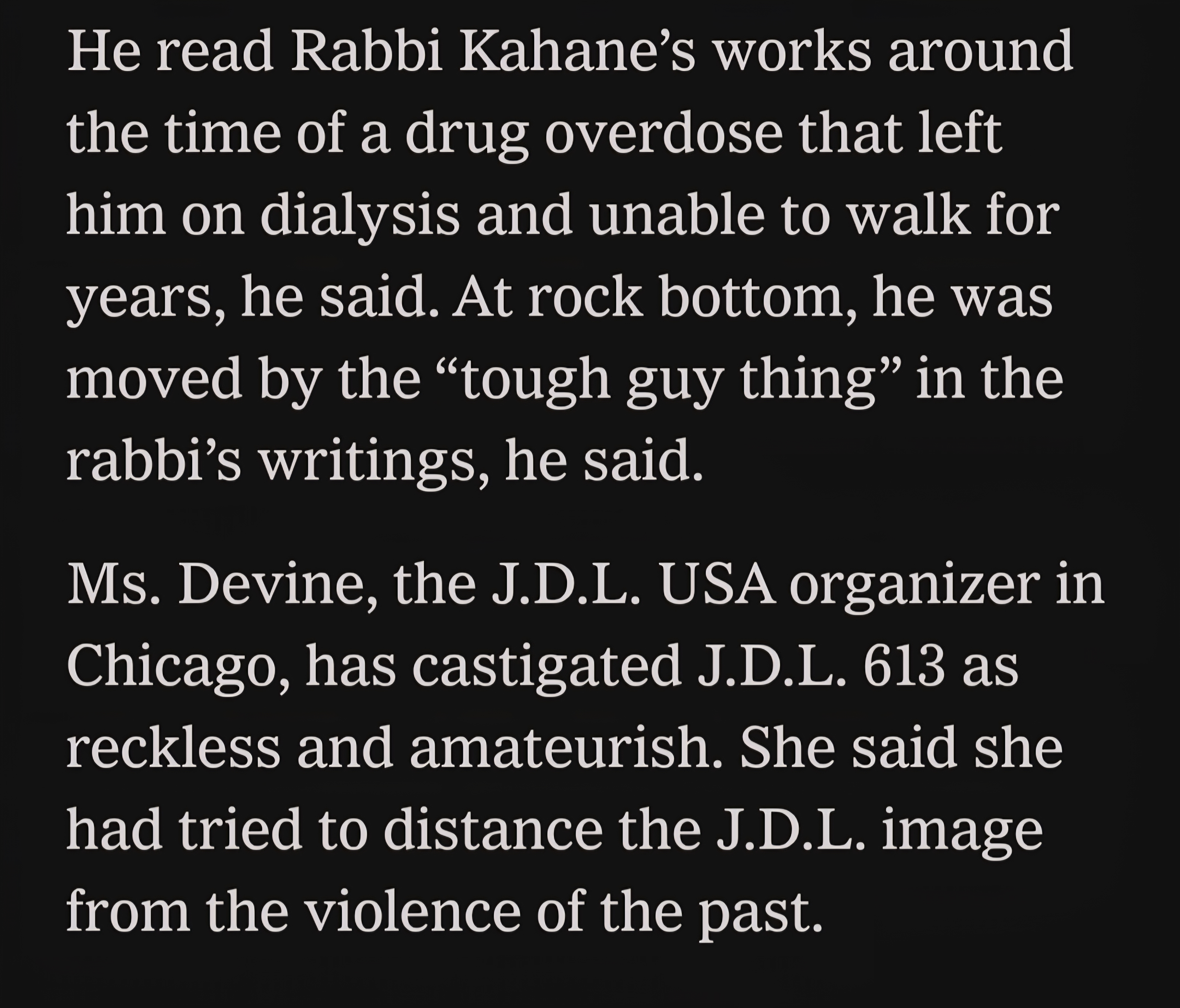
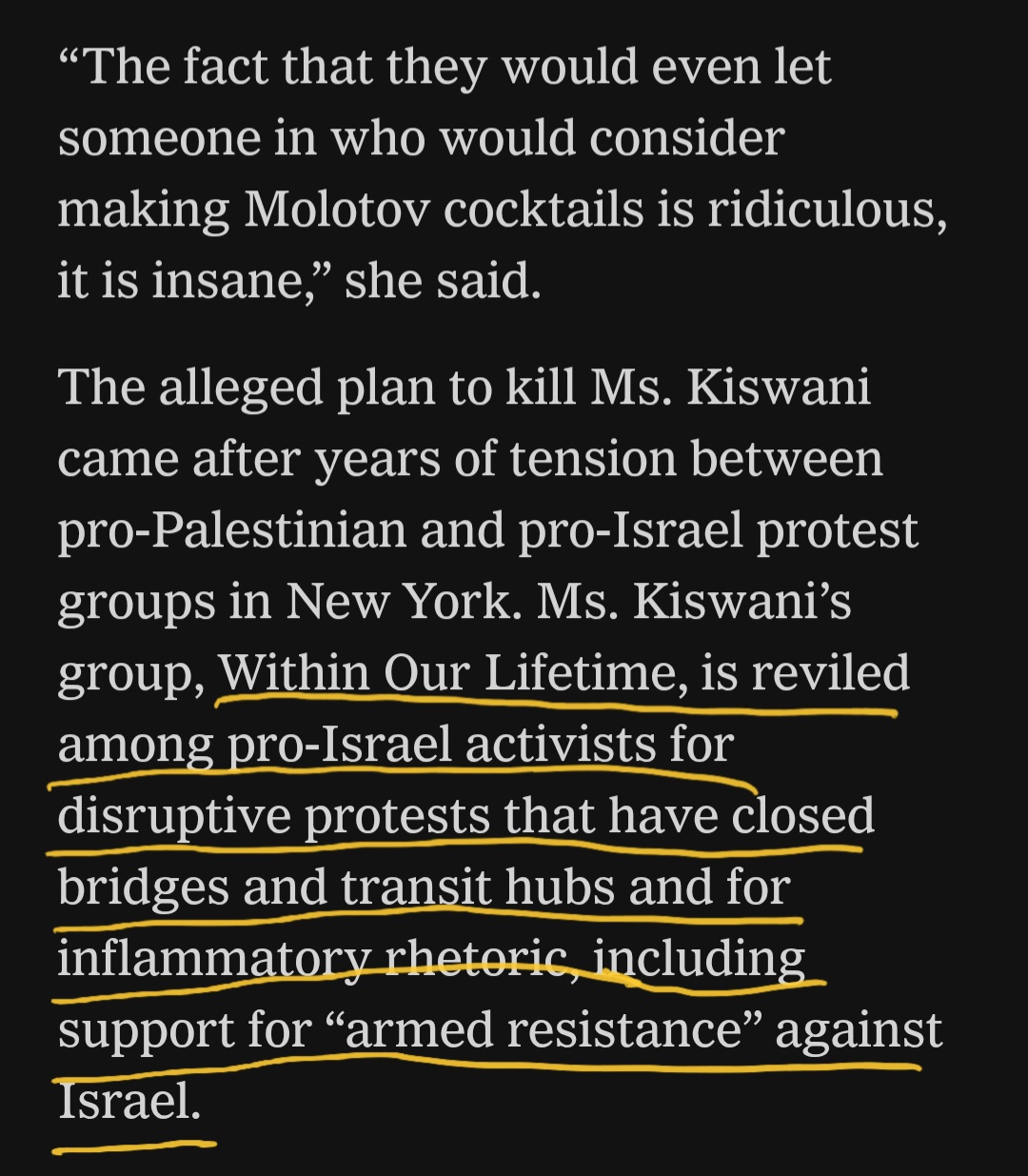
Start with the facts. One individual in a fringe offshoot movement, often described as a ghost of the old Jewish Defense League, allegedly plotted a murder that never happened because law enforcement stopped it. That is the entire event. Not a movement. Not a wave. Not a trend. A single actor orbiting a marginal group.
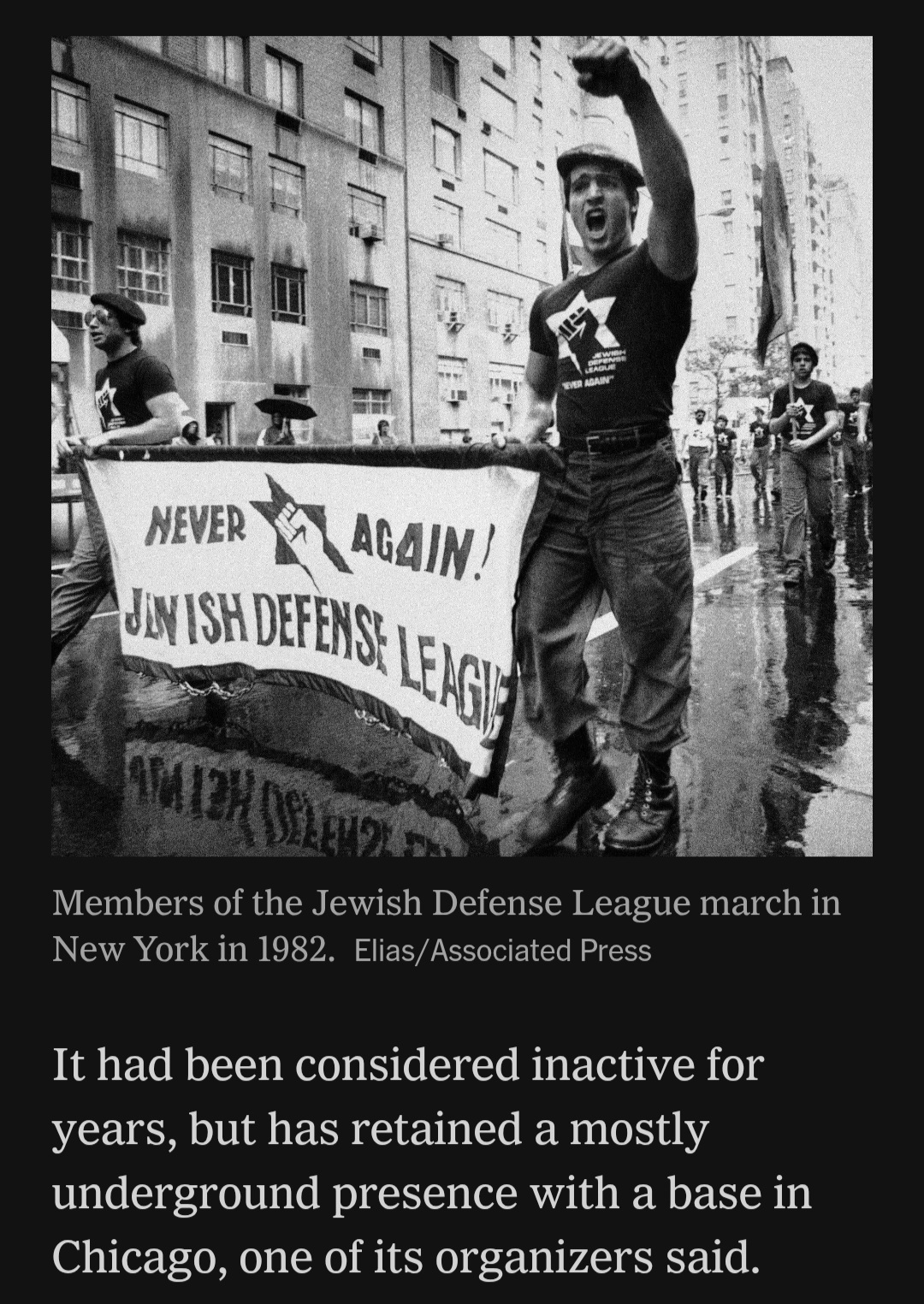
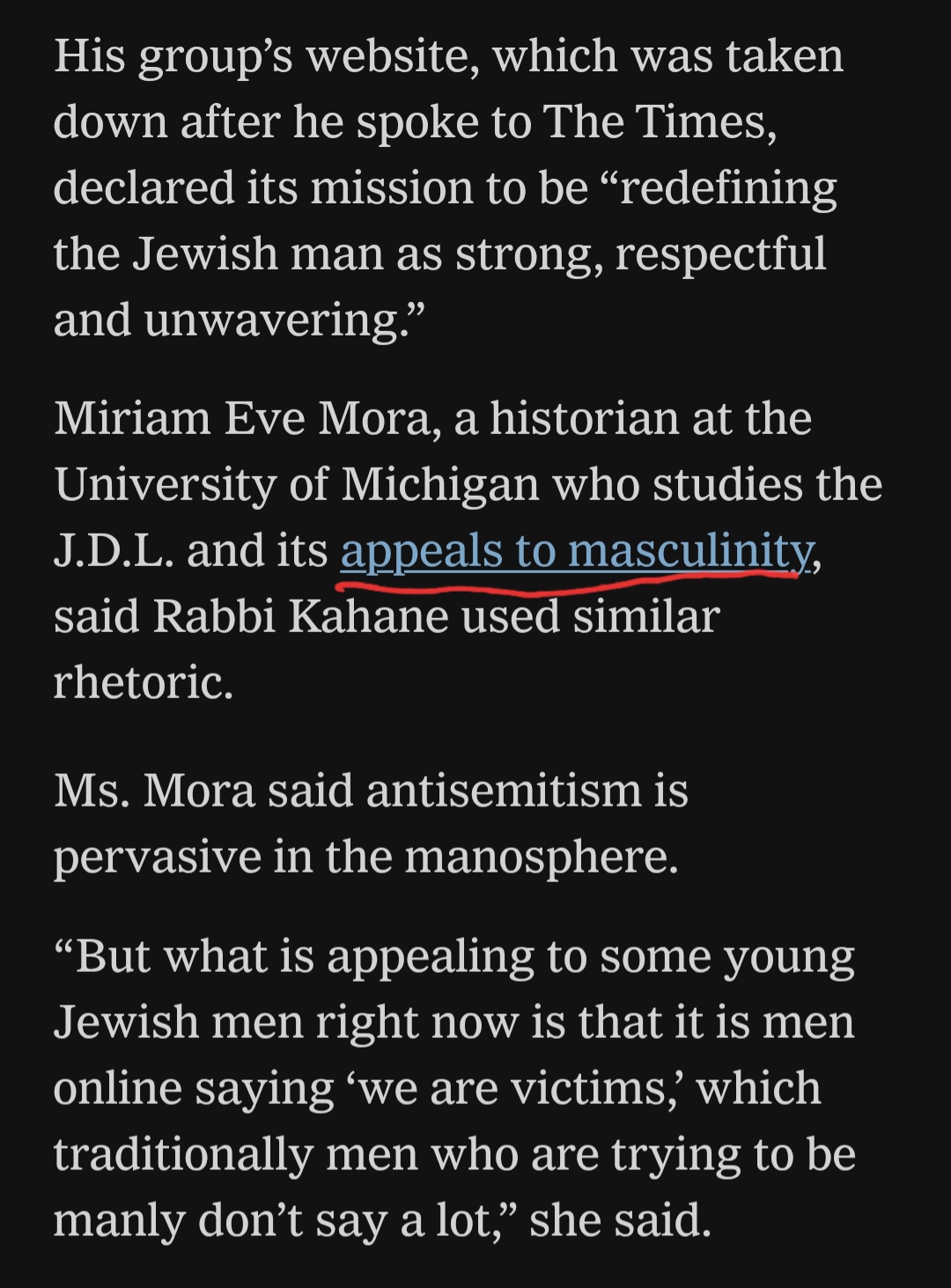
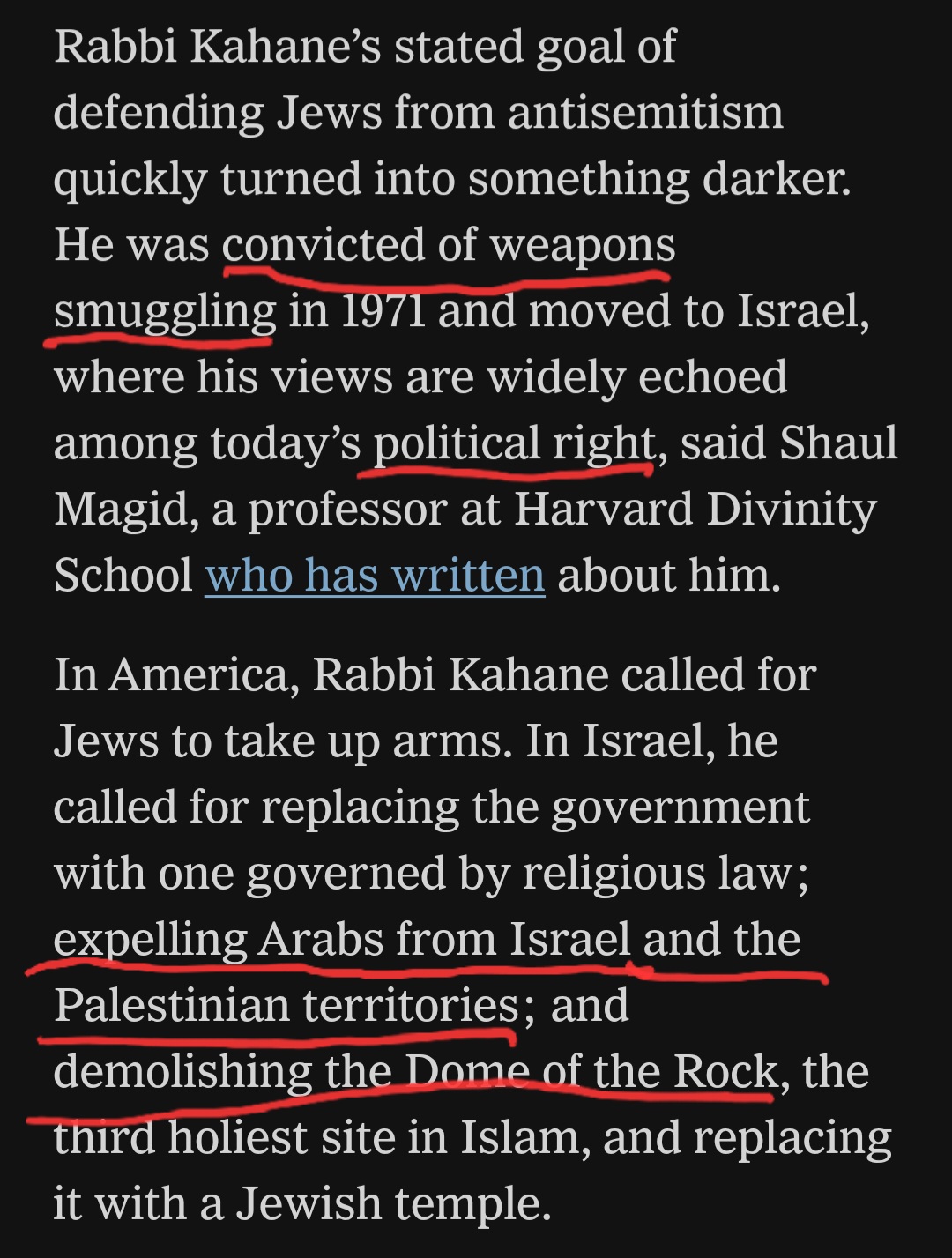
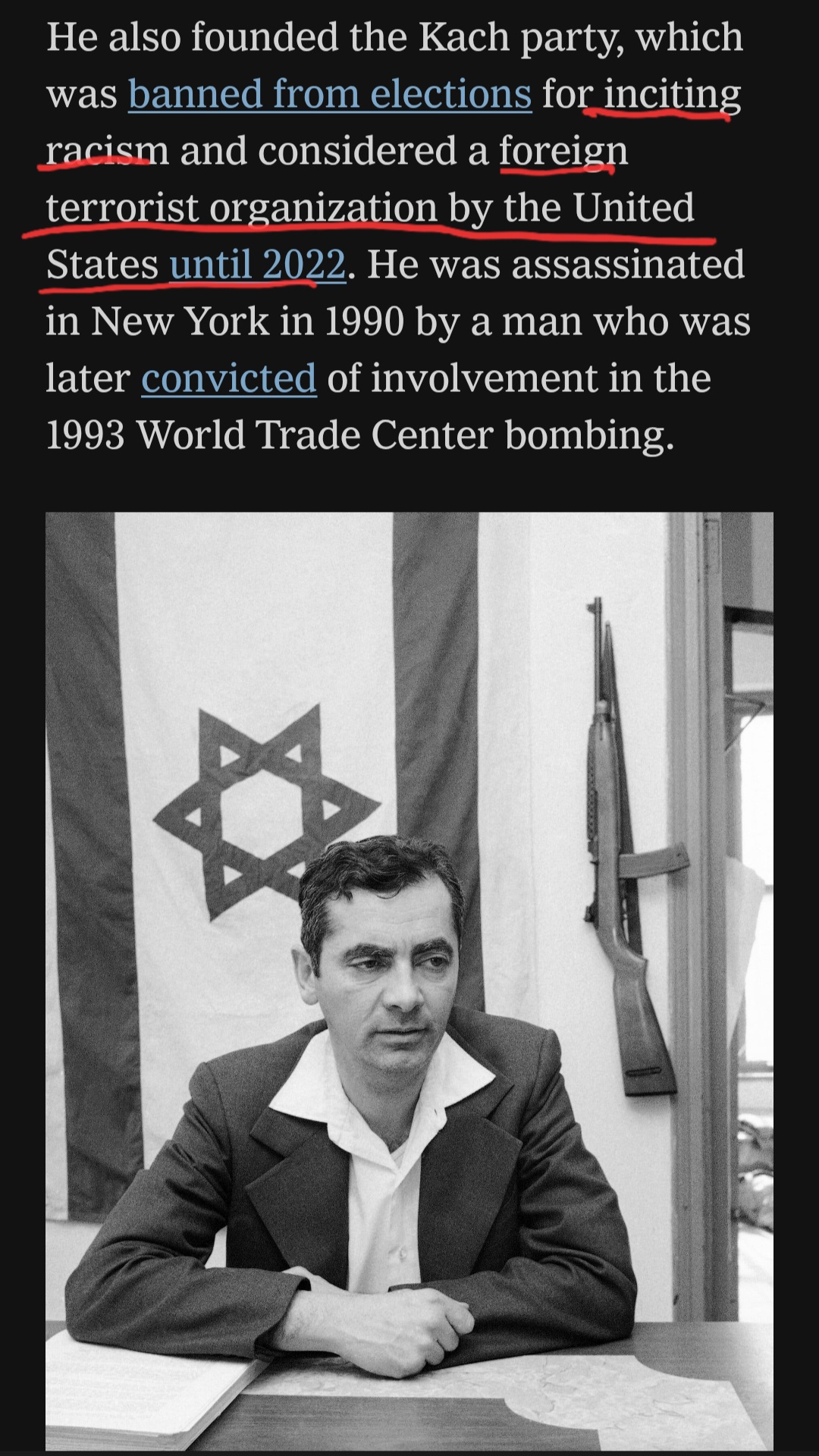
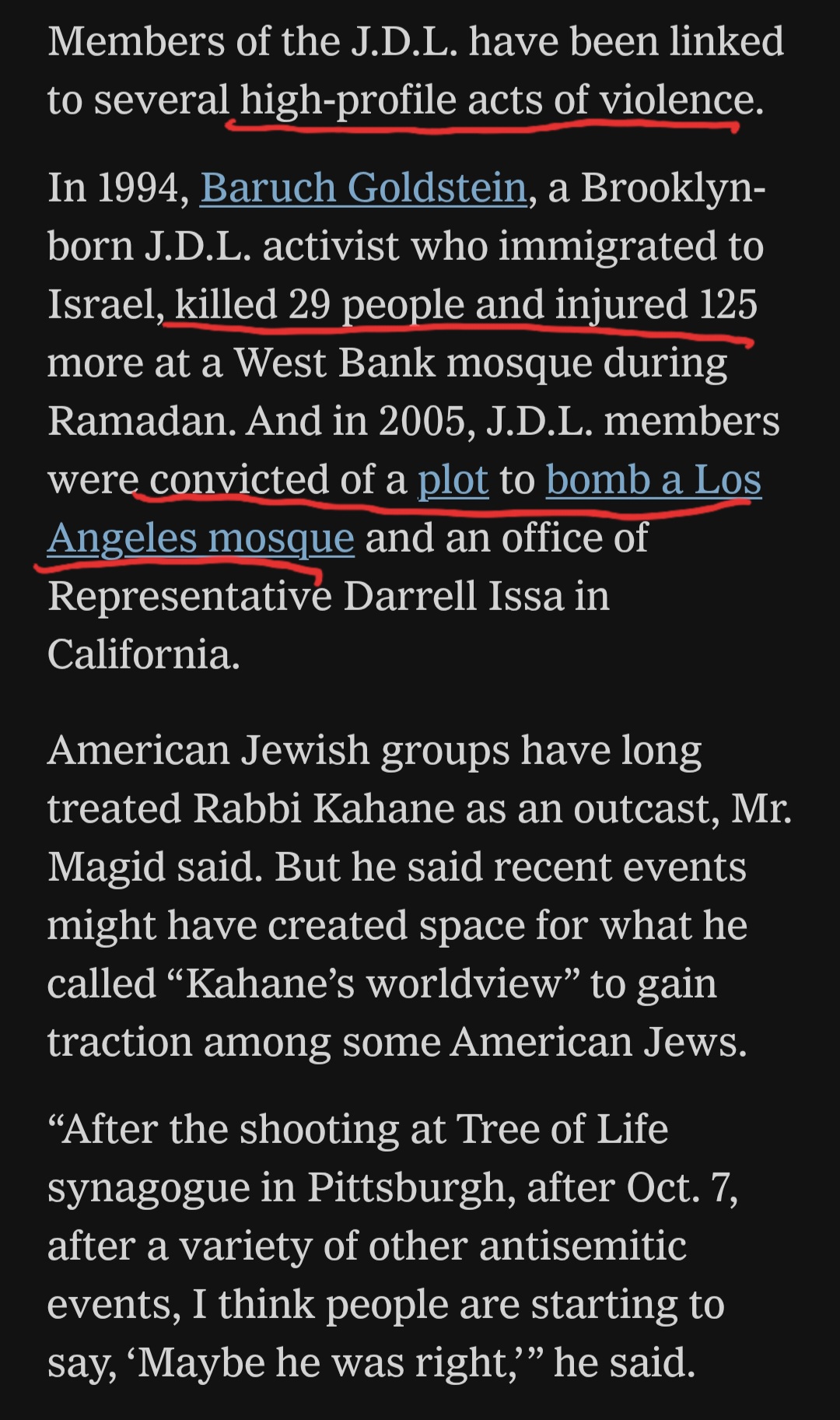
Yet from this narrow incident, the long article pulls a wide arc—Meir Kahane, Baruch Goldstein, decades-old ideology, insinuations about modern Israel. The reader is led to see not one unstable actor, but a resurfacing Jewish extremism problem.
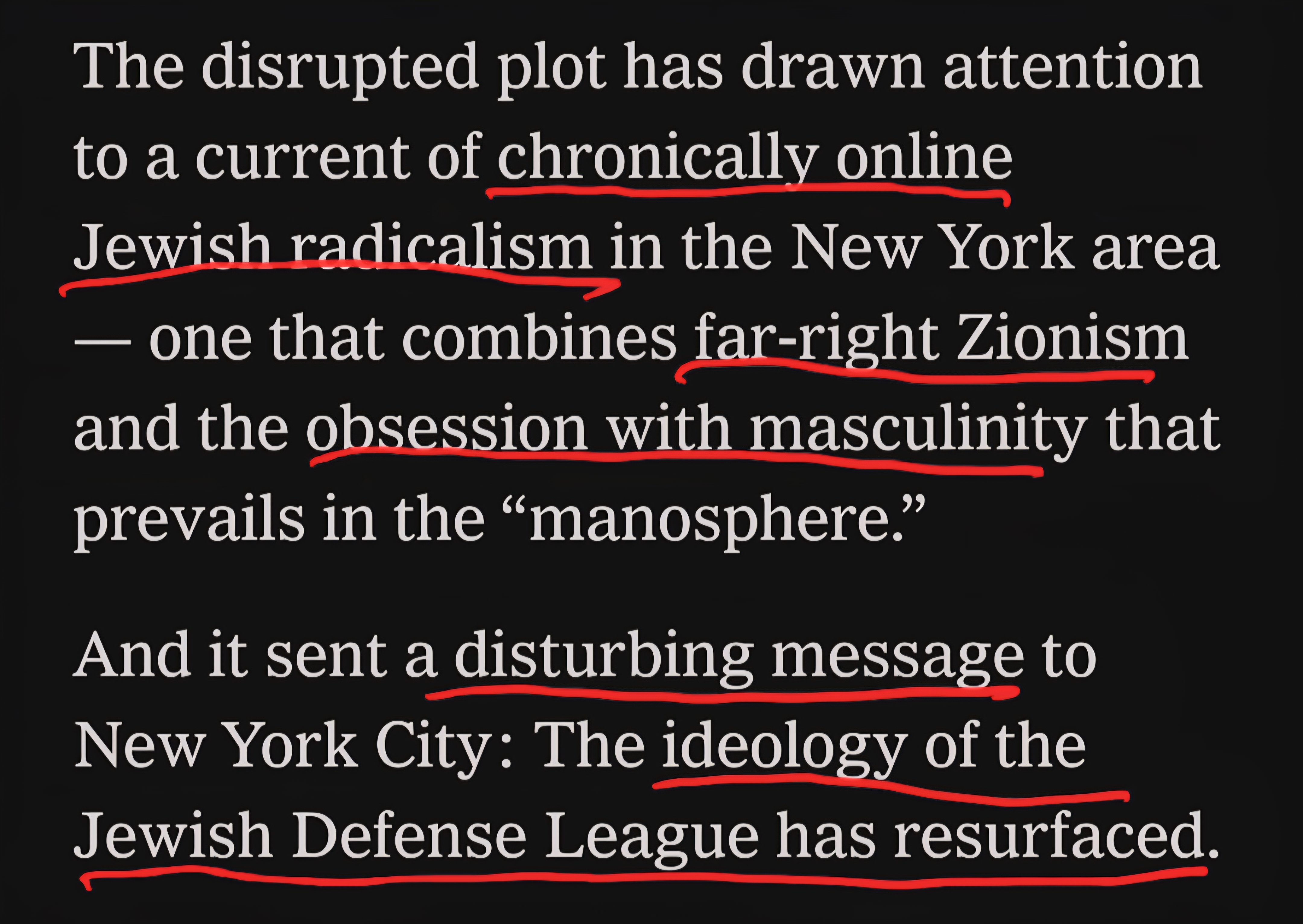
“apparent resurgence of far-right Zionism” – The New York Times
That framing collapses under the weight of what is actually happening.
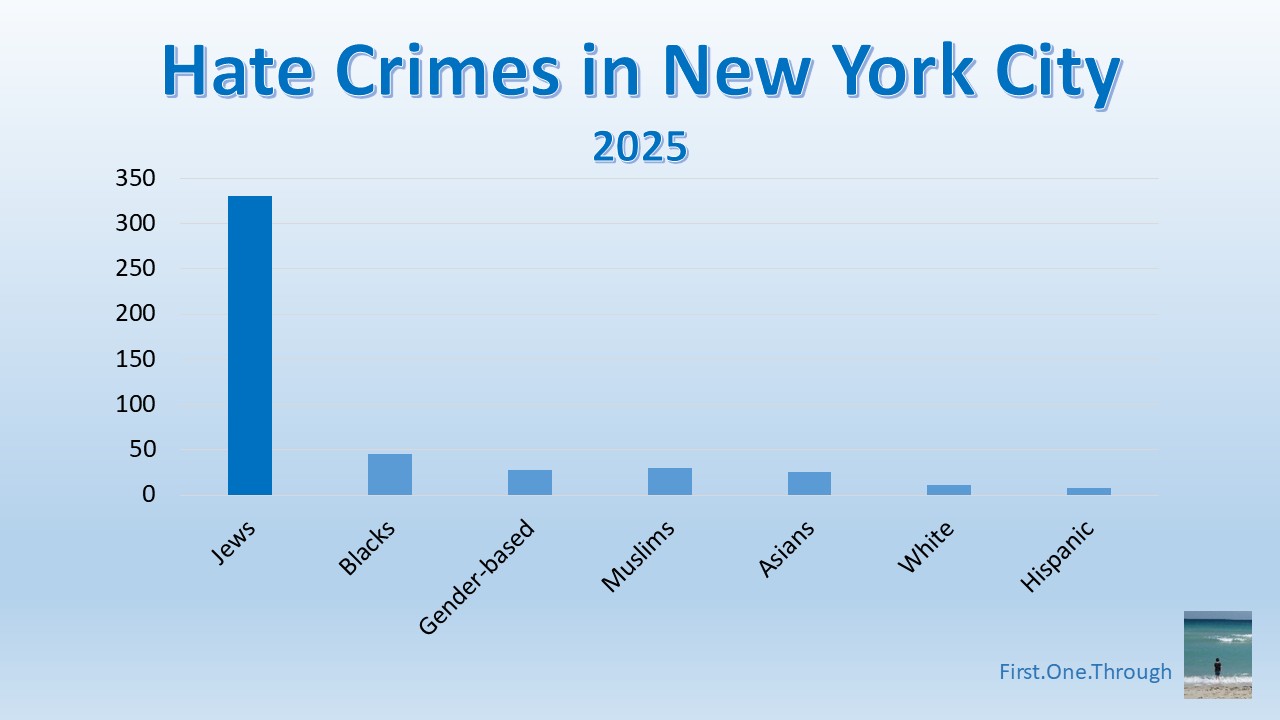
2025 saw the highest number of Jews murdered in antisemitic attacks in over thirty years. Not plots—killings, specifically because they are Jews. Across cities and continents. In New York, Jews remain the primary target of hate crimes by a wide margin. Assaults are not hypothetical. They are routine. Visible Jews are attacked on the street, not in theory but in daylight.
So the inversion becomes obvious.
A stopped act by one fringe Jewish extremist becomes a sweeping narrative. A global surge in antisemitic violence becomes less than background noise.
“a disturbing message to New York City: the ideology of the Jewish Defense League has resurfaced.” – The New York Times
This is not balance. It is misdirection.
Every society has extremists at its edges. Jewish communities are no exception. They should be confronted early and without hesitation. But scale matters. Sequence matters. When coverage elevates a single fringe actor into a defining story while minimizing the sustained targeting of Jews, it sends a clear signal about whose fear counts and whose does not.
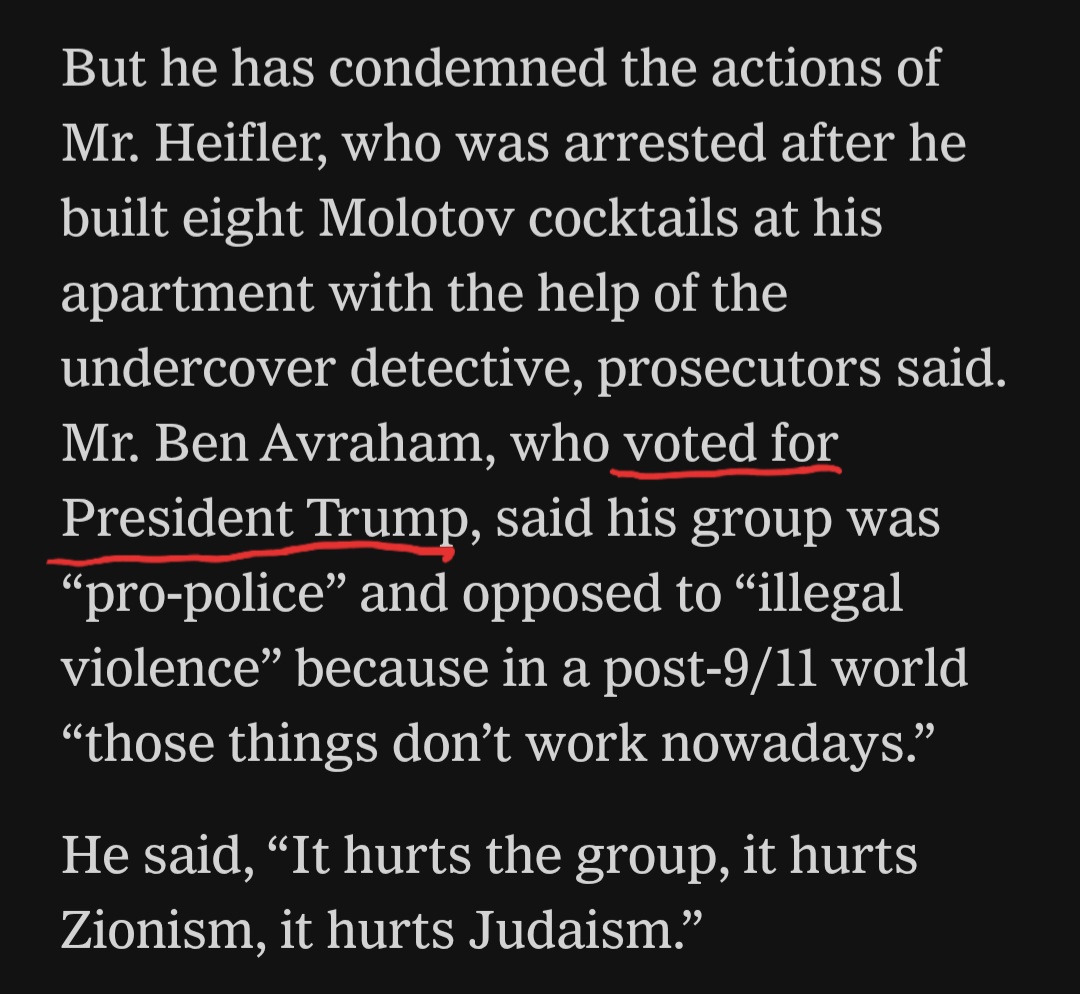
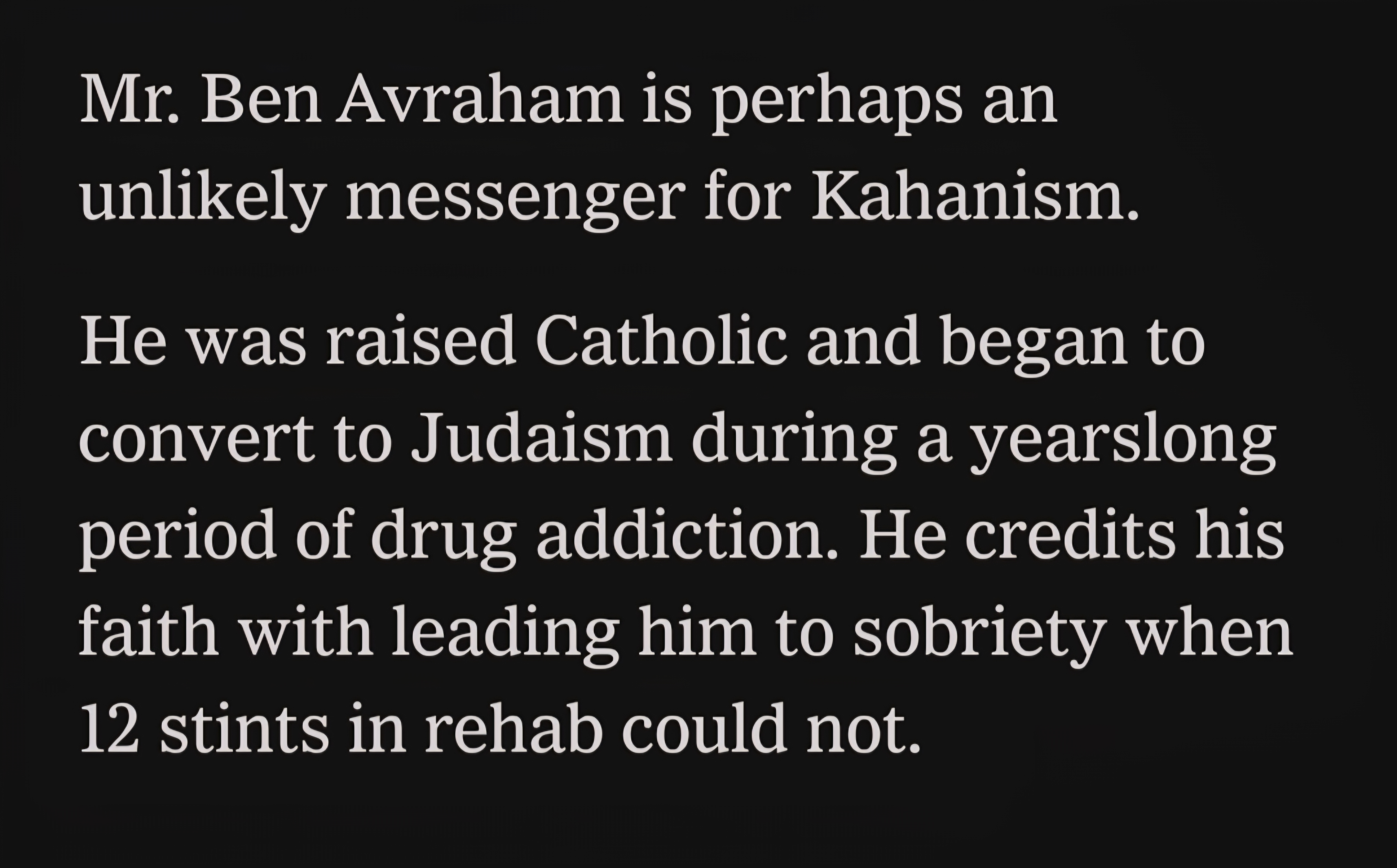
“voted for President Trump,” – The New York Times non-sequitur about member of the JDL, seemingly painting all Jews who voted for Trump as a potential extremists
And it feeds something deeper: the growing belief among Jews that institutions—from media to politics—are more comfortable scrutinizing Jewish reaction than confronting antisemitic aggression.
The real story is not that somewhere on the margins there are Jews capable of violence. Every people has that margin.
The real story is that Jews, in New York and across the diaspora, are once again living with a level of threat that is measurable, visible, and rising—and that too many prefer to mock the real security fear of Jews and cast Jews as the crux of the problem.
Six Million Jews were slaughtered in Europe by Nazi Germany and its enablers in the 1930s and 1940s. One-third of European Jewry was wiped from the earth for the sick reason that people detested them and wanted them gone “by any means necessary.” The scale and the barbarity of the genocide was revolting and a permanent stain on humankind.
The Nazi Party did not rise alone. It was carried by a culture that softened language and normalized hatred. The machinery of murder arrived last. The permission came first.
People often comment that the Palestinian Arab massacre of Israeli Jews on October 7, 2023 was the worst killing of Jews since the Holocaust. It is true, in terms of scale, a statistical fact. But the underlying reason is not discussed enough: a systemic hatred became embedded in a society that elected a government to carry out a genocide.
October 7 was not a rogue event by a gang. It was a popular movement by a sitting ruling authority that had years of preparation to carry out a genocide of local Jews.
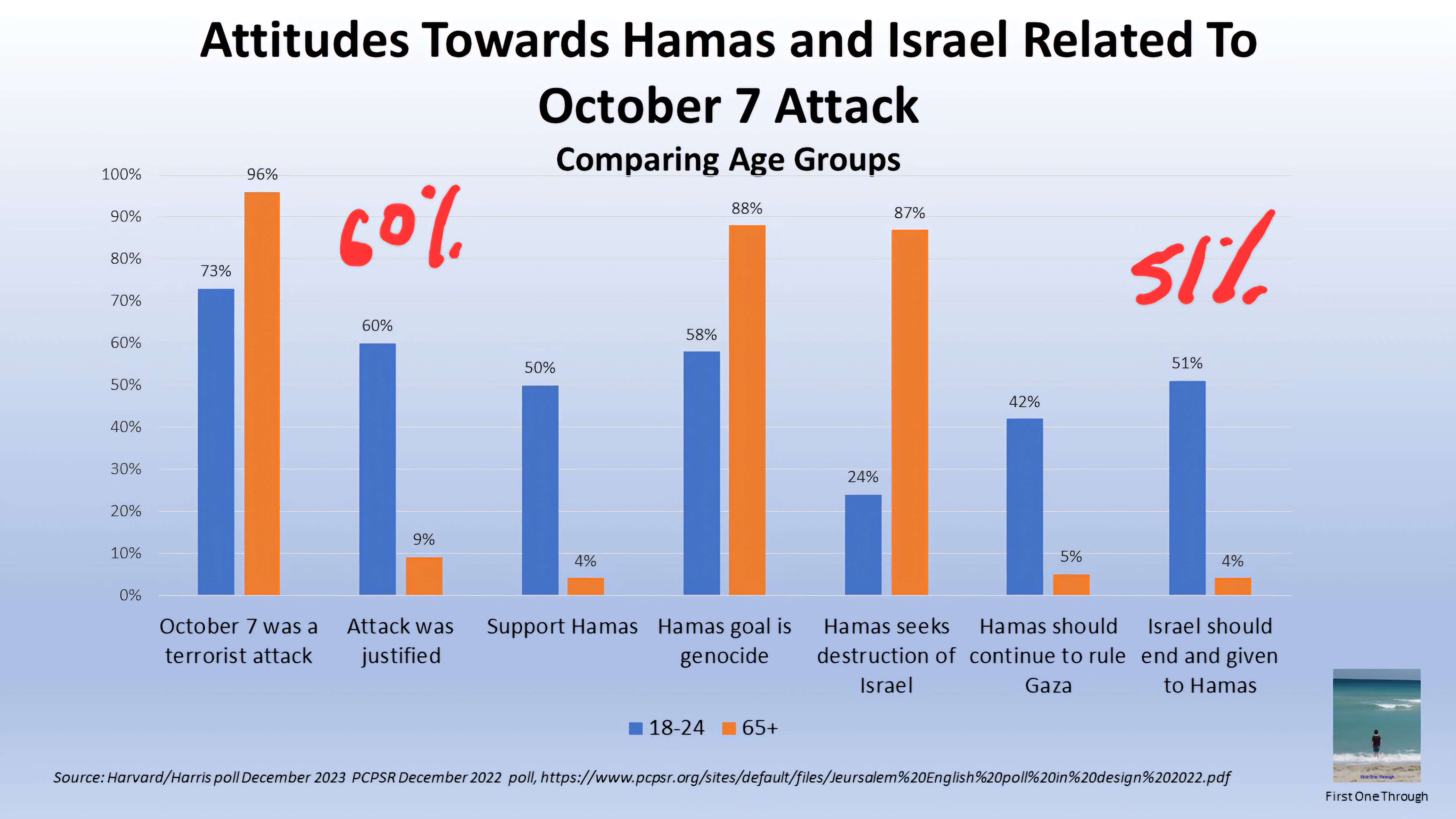
Hamas’ 1988 foundational charter is the single most antisemitic political document ever written. The Stateless Arabs from Palestine (SAPs) voted Hamas to 56% of parliament with full knowledge of the group’s position and mission. When Hamas took control of Gaza in 2007, the area became a terrorist enclave, building an infrastructure and culture dedicated to the annihilation of Jews.
And when it acted out its plans in full on October 7, the people celebrated.
A “Holocaust Remembrance Day” that confines memory to ceremonies and candles misses the point. Remembrance without recognition of the present is ritual without responsibility. The lesson was never only about what was done. It was about how quickly societies create the conditions that allow it to be done again.
So what does responsibility look like now?
It begins with clarity. A group that openly declares and executes the mass killing of Jews is genocidal. That word should not be negotiated away, let alone flipped onto the victims.
It continues with institutions. Universities, media and cultural organizations must stop laundering advocacy for such groups through euphemism. Speech has consequences; platforms are choices.
It requires enforcement. Governments must treat material support, incitement, and coordination for designated terrorist organizations as what they are: threats to public safety, not protected abstractions.
It demands civic courage. Communities, leaders, and peers must refuse the social comfort of silence when celebration of violence surfaces in their midst.
And it insists on moral consistency. If the targeting of civilians is intolerable anywhere, it is intolerable everywhere—without qualifiers, without footnotes.
Democratic Socialist of America believe that violence against Jewish civilians is appropriate
It is important to remember the past: the millions of Jewish victims and the culture that touched Europe from Vienna to Vilna. It is also important to remember the environment that allowed it to happen, and actively confront the antisemitic infrastructure that enables the genocide of Jews.
Rep. Rashida Tlaib (D-MI) openly traffics in antisemitism – and gets reelected
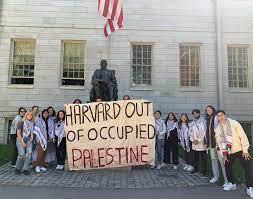
On elite campuses, something more consequential than protest is unfolding. Jewish life is being redefined by extremists.
Groups like Jewish Voice for Peace and “Jews for Liberation” present themselves as the authentic moral voice of Jewish students. They speak in the language of justice, liberation, and equality that resonates with their peers. But strip away the branding and the position is blunt: the Jewish state is illegitimate and cast as a project of racial supremacy, apartheid, even genocide.
That is not critique. That is an argument for erasure.
The danger is not only that these claims are false. It is that they are being laundered into the mainstream through the fig leaf of Jewish identity. When anti-Israel activism is voiced by non-Jews, it is political. When it is voiced by Jews, it is marketed as moral truth. Then the fringe becomes credible and slogans become scholarship. Eliminationist ideas acquire the authority of internal dissent.
That shift matters.
Once Israel is no longer seen as a flawed state – much like others – but as an illegitimate one, every boundary collapses. If the state itself is the crime, dismantling it becomes justice, and whatever follows can be rationalized as liberation.
This is how language is turned into a weapon.
Mainstream Jewish campus institutions have not met this moment with equal clarity. Groups like Hillel are focused, rightly, on building Jewish life: community, ritual, continuity. They create space. They avoid litmus tests. They keep doors open. But when the central attack is not on Jewish practice but on Jewish legitimacy, generality reads as hesitation.
When others define Zionism as racism, it is not enough to respond with programming and belonging. The argument has moved to first principles. It demands an answer at that level.
And so a vacuum has opened.
Into that vacuum have stepped the loudest voices, not the most representative ones. The result is a distorted picture of Jewish opinion, one in which the extremes are visible and the center is absent.
That center needs a voice of its own.
Not a mirror image of the anti-Zionist fringe. Not a reaction that turns legitimate security concerns into collective hostility toward all Arabs. But a clear, unapologetic articulation of what most Jews actually believe, and what a sustainable future requires.
That position is not complicated.
The Jewish people have a right to sovereignty in their historic homeland. Israel must remain secure and capable of defending itself against those who seek its destruction. Terrorism and the glorification of violence are disqualifying, not contextual. No serious political future can be built on a culture that celebrates October 7 or teaches that murder is resistance.
The “two-state solution” is treated as moral doctrine, as if repeating it resolves the conflict. It does not. Self-determination is not a slogan tied to a single map. It can take different forms across different political arrangements. Millions of Palestinian Arabs have held Jordanian citizenship. Others live under varying structures of autonomy. The real question is not whether self-determination exists in theory, but whether any proposed structure can produce stability rather than violence.
A future Palestinian state, if it is ever to emerge, must come after a profound transformation: demilitarization, institutional reform, and an educational shift away from incitement and toward coexistence. Statehood is not an entitlement. It is a responsibility.
This is baseline reality, yet it is rarely stated plainly on campus.
A new kind of Jewish student group is needed, one that is explicit where others are cautious and disciplined where others are reckless. A group that centers Israel not as an abstraction but as a living, embattled state. One that can say, without hedging, that Jewish self-determination is legitimate, that its delegitimization is dangerous, and that moral seriousness requires both strength and restraint.
Such a group would do three things differently.
It would reject the language trap. Words like apartheid and genocide would be treated not as serious analysis but as distortions that inflame rather than illuminate.
It would refuse the false binary. Supporting Israel does not require abandoning moral judgment. Rejecting terror does not require rejecting an entire people.
It would re-anchor the conversation in reality. Israel exists. Threats are real. Peace requires conditions, not just intentions.
The goal is not to win an argument in a seminar room. It is to prevent a generation from being taught that the existence of the world’s only Jewish state is a moral error to be undone.
Campus Jewish life needs a mainstream voice that is willing to speak clearly – and be heard.
There are moments when language has to carry more than meaning. It has to carry memory. It has to carry consequence. When the subject is the death of Jesus and the role of Jewish leadership in that story, every word is loaded with two thousand years of fallout.
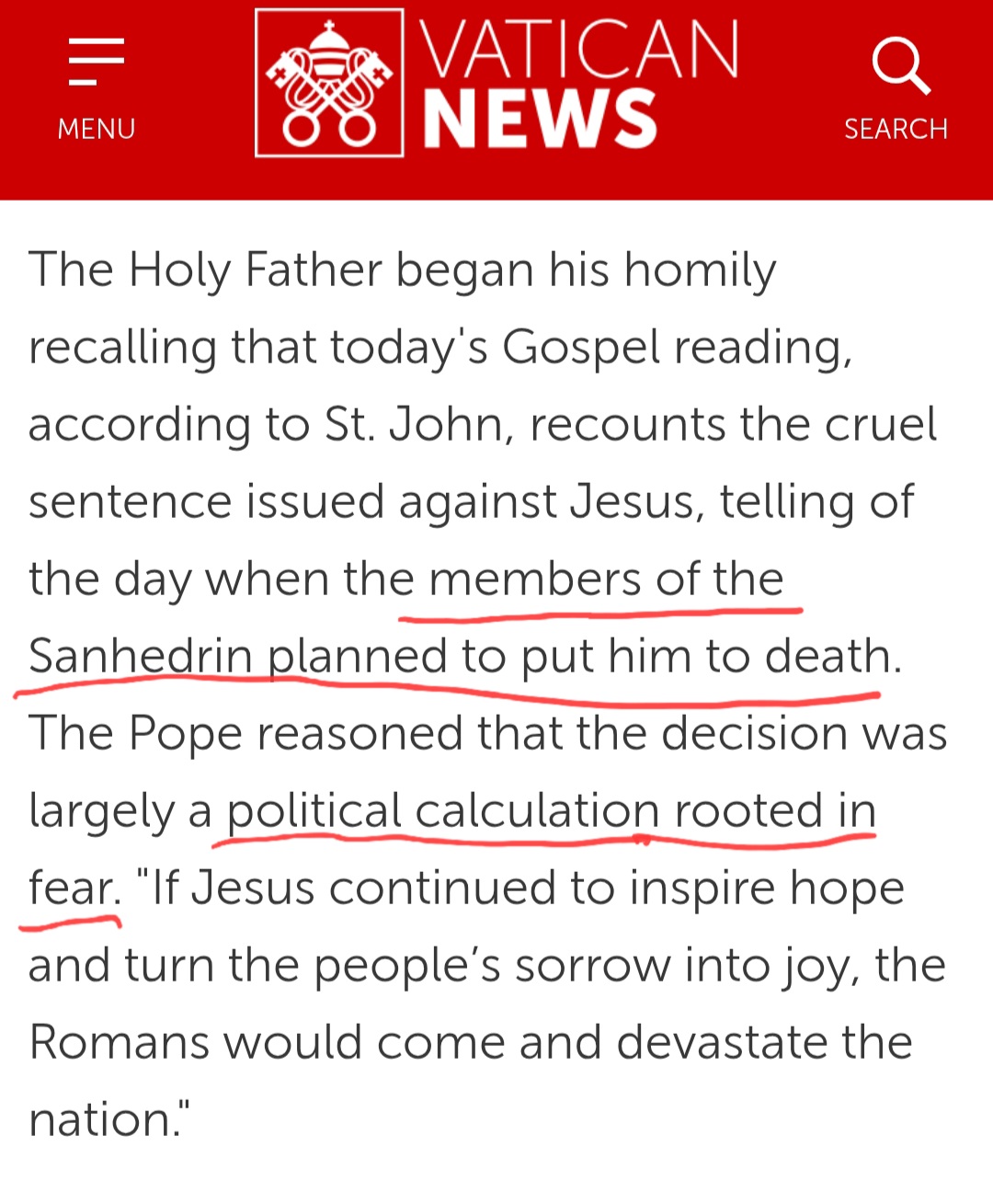
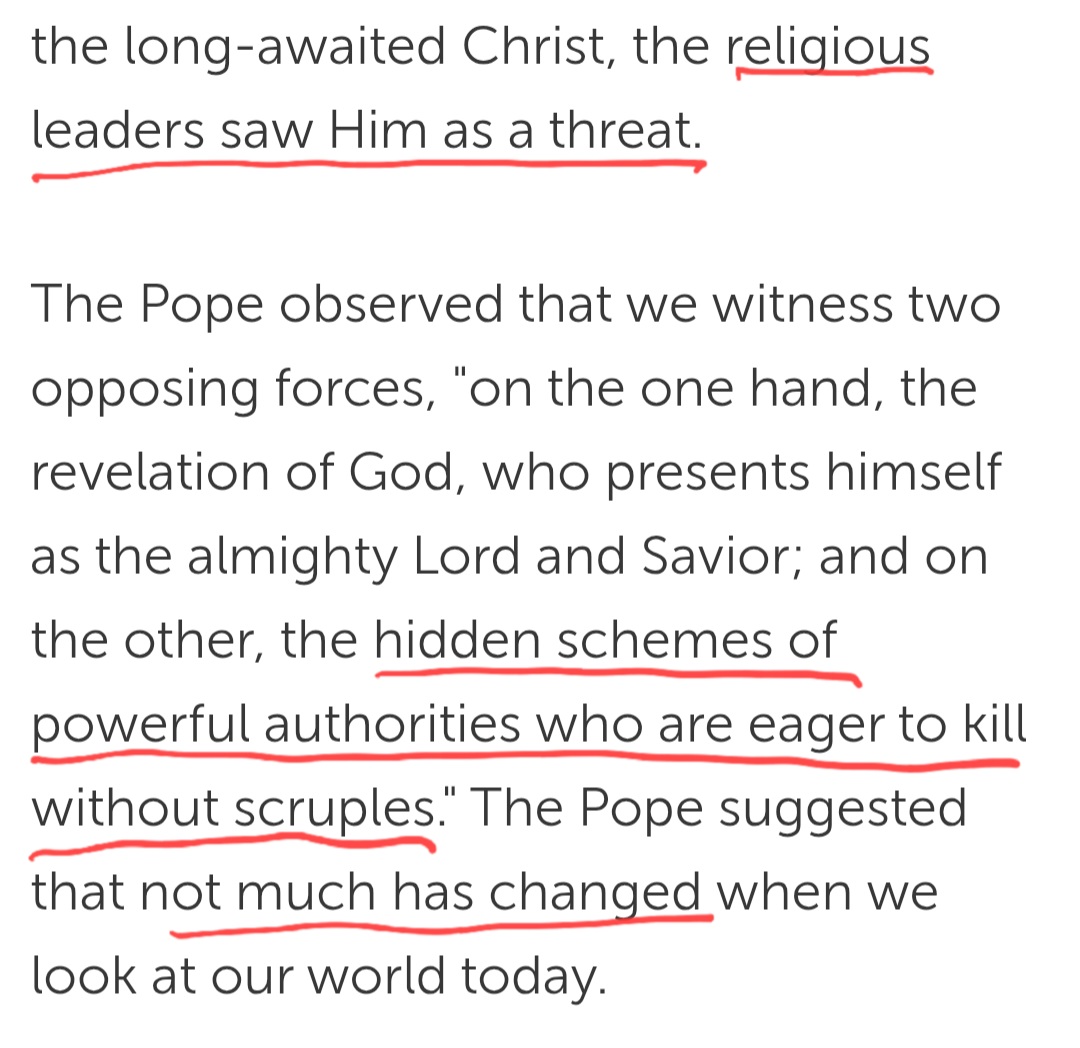
That is the backdrop to a recent homily reported by Vatican News, where the Pope recounts how members of the Sanhedrin planned to put Jesus to death and frames the decision as a political calculation rooted in fear.
On its face, this is familiar terrain. The Gospel of John tells that story. The Pope emphasizes fear, power, and the instinct of leadership to preserve order when threatened. He broadens the lesson, warning about “hidden schemes of powerful authorities” and concluding that not much has changed when we look at the world today. It is a universal moral frame, the kind clergy have used for centuries to draw a line from ancient texts to modern behavior.
But this is not a normal moment, and that is not neutral language.
We are living through a surge in antisemitism that is not subtle, not isolated, and not theoretical. Jews are being targeted in cities, on campuses, and online. The State of Israel is being recast in mainstream discourse as uniquely illegitimate, even genocidal. The old accusations have not disappeared. They have been updated, rebranded, and redeployed. In that environment, the space between what is said and what is heard narrows dangerously.
The Catholic Church knows this better than anyone. For centuries, Christian teaching around the Passion narrative fed the idea that Jews, as a people, bore responsibility for the death of Jesus. That charge—deicide—did not stay in theology. It moved into law, into mobs, into expulsions and massacres. It became part of the architecture of antisemitism in Europe.
The Church confronted that history in Nostra Aetate, a landmark statement of the Second Vatican Council. The declaration made clear that Jews as a whole, then or now, cannot be blamed for the death of Christ. That was not a minor clarification. It was a doctrinal line drawn after catastrophe, an effort to shut down a pattern of interpretation that had proven lethal.
Successive Popes understood what that required in practice. Pope John Paul II did not rely on implication. He spoke directly, repeatedly, calling Jews “our elder brothers” and making visible gestures that reinforced the message. Pope Benedict XVI went further in precision, arguing explicitly that references to “the Jews” in the Gospel of John describe a specific leadership group, not a people across time. They closed interpretive doors because history showed what happens when those doors are left ajar.
That is why the current language matters. “Religious leaders saw Him as a threat.” “Hidden schemes of powerful authorities.” “Not much has changed.” None of these phrases, standing alone, violates Church teaching. None explicitly assigns blame to Jews today or draws a line to the modern State of Israel. But they operate in a space that has been misused for centuries, and they leave enough room for that misuse to return.
In a different era, that looseness might pass without consequence. Today, it does not. The categories are too easily mapped by those already inclined to do so. “Religious leaders” becomes “rabbis and synagogues.” “Powerful authorities” becomes a stand-in for Jewish power, whether the government of Israel or leaders in the Jewish diaspora. “Not much has changed” becomes an argument for continuity from the first century to the present. And in a climate where Israel is already being portrayed as a moral outlier among nations, the slide from scripture to contemporary politics is not a leap. It is a small step.
This is not about intent. The Pope is speaking in a long Christian tradition of drawing moral lessons from the Passion. The emphasis on fear and political calculation is, in fact, a move away from older, more dangerous framings. But intent does not control reception, especially when the subject has such a charged history.
The standard here cannot be whether the words are technically defensible. It has to be whether they are tight enough to prevent foreseeable distortion.
Because the distortion is not hypothetical. It is already happening in the broader culture. Jews are being pushed out of public spaces, treated by default as representatives of a state and a government they may or may not support, whether they live there or not. Israel is singled out in ways that strip context and complexity, recast as uniquely evil in a world that has no shortage of brutality. In that environment, any rhetoric that can be bent toward those narratives will be bent.
The Church has done the hard work of confronting its past. It has the doctrine. It has the precedent. What it needs, in moments like this, is the discipline to match.
Her 84 year old mother was taken from her home, with signs of violence left behind, a masked man on camera. And then nothing. A void where a mother used to be. She spoke about sleepless nights, about imagining fear she cannot reach, about a word she kept returning to: unbearable.
That word should end the conversation. It should strip away everything else.
Because everyone understands what it means when someone you love is taken.
Now Multiply That by 250
What Guthrie is living through is devastating.
In Israel, it happened at scale.
Over 250 people were abducted violently—children, parents, grandparents—dragged from homes, shoved into vehicles, disappeared into tunnels by jihadi terrorists. The same questions Guthrie now asks became a national condition: Are they alive? Are they suffering? What are they thinking?
The same agony. Multiplied. Multiplied. Multiplied.
Where the World Breaks
Here is the dividing line.
When Guthrie speaks, there is no debate. No one justifies it. No one says her mother deserved it. No one rallies in defense of the abductor.
The reaction is immediate and human: bring her home.
But when Israeli families faced the same horror, the reaction in too many places—especially on college campuses—was not sympathy.
It was celebration.
Not confusion. Not distance. Celebration of the very act Guthrie calls unbearable.
The Only Question That Matters
Her interview removes every excuse. No politics, no slogans—just a daughter describing what it feels like to have a mother taken.
If you can feel that—and then justify or cheer when it happens to someone else—you are not misinformed. You are choosing evil.
And that is the part that is unbearable to civilized people.
The fighters of antisemitism are rushing to the front with silly catchphrases. Perhaps even toxic.
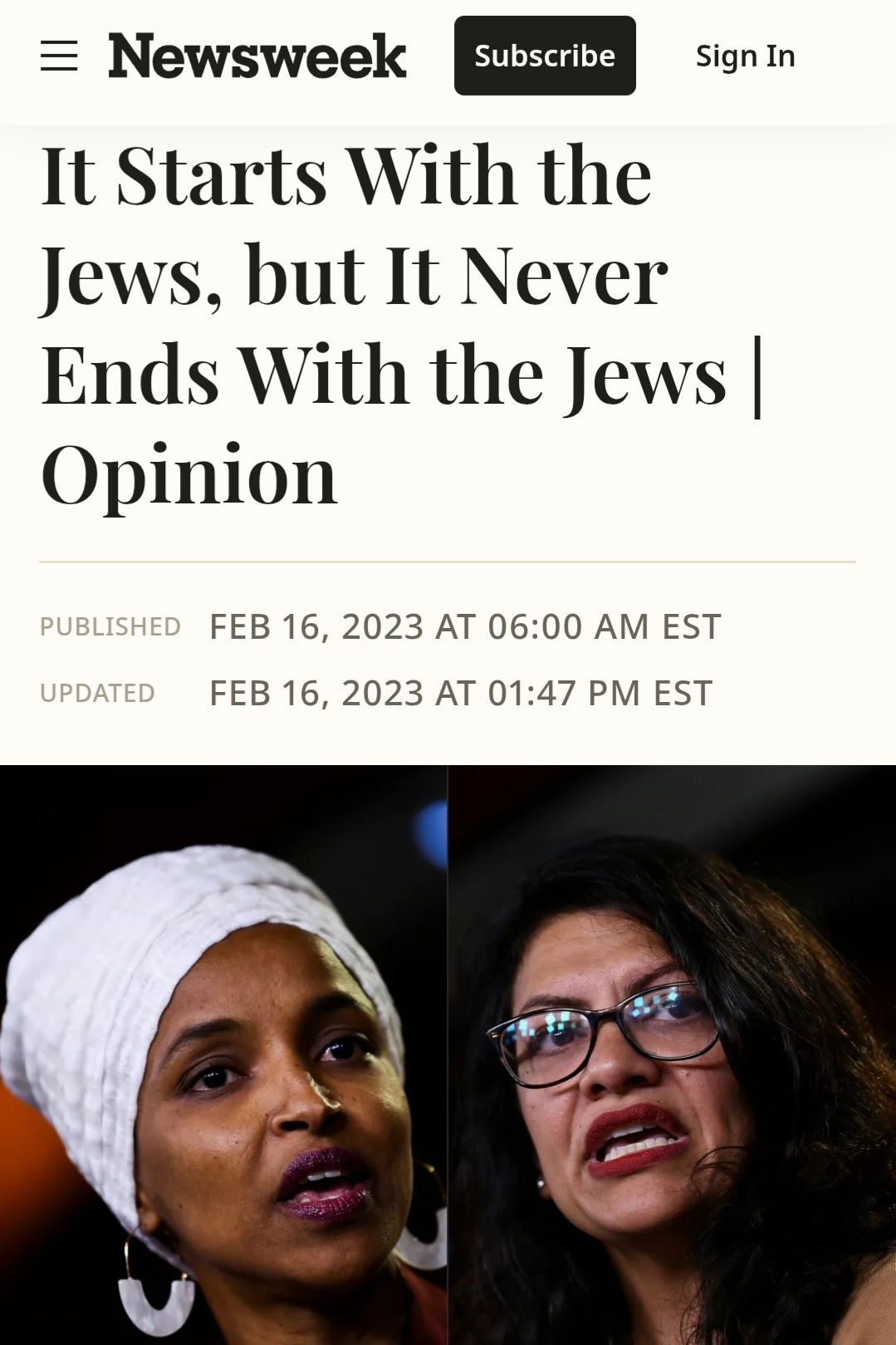
Take the line: “What starts with the Jews doesn’t end with the Jews.”
It is meant to elevate the issue. To make antisemitism feel urgent to those who might otherwise ignore it. But it carries an uncomfortable implication: that what happens to Jews matters most because it might eventually happen to someone else.
Why?
Why is the attack on Jews not sufficient on its own? Why must Jewish suffering be reframed as a warning signal for others before it earns attention?
It is already evil when Jews are targeted and that should be enough. Jews are not canaries in a coal mine for the protection of others. They are millions of innocent people living with threats, violence, and fear. That reality does not need to be universalized to be taken seriously.
Then there is the fallback line: “I condemn antisemitism, but…”
The sentence always breaks in the same place. Everything before the “but” is obligation. Everything after it is the real message.
No one says, “I condemn racism, but…” without immediately undermining themselves. Only with antisemitism does the moral clarity feel negotiable, conditional, open to context. The phrase signals that antisemitism is wrong in theory, but explainable – even understandable.
Or consider the most common defense of Israel: “Israel has a right to exist.”
It sounds firm, but it collapses under even a moment’s scrutiny.
No country has a “right to exist.” Not Singapore. Not Spain. Not South Sudan. Countries exist because history, peoplehood, and political will bring them into being and sustain them.
The real point is that the phrase is uttered because people want to destroy it. Not Montenegro or Guyana. The sole Jewish State.
This isn’t a hundred year old debate about political Zionism and the reestablishment of a Jewish state in their ancestral homeland but a discussion about the genocide of millions of Jews. Why is such phrase ever used? The defenders of Israel should condemn the premise that forced the urge to utter the words.
The more careful phrase “Criticism of Israel is not antisemitism” often lands the same way.
It is true, of course. But it is almost always deployed at the exact moment when the line is being approached, if not crossed. It functions less as clarification and more as insulation, a way to reassure the speaker that whatever comes next cannot be antisemitic, because it has already been declared not to be.
It pre-clears the argument.
All of these phrases share something in common. They take a situation that demands moral clarity and replace it with moral positioning. They allow people to sound serious and defensive while adopting the framework of the accuser.
Attacking Jews is evil. Threatening Jews is evil. Justifying targeted harm against Jews—whether through politics, ideology, or euphemism—is evil.
It is time for anti-antisemites to stop using catchphrases that feel emotionally empowering but are soaked in the lexicon of antisemitism.
Broadway has always returned, in one form or another, to Jewish life. For decades, those stories were carried by memory, infused with struggle, displacement, and loss, yet grounded in continuity, humor, and the stubborn persistence of a people that refused to disappear. What has changed is not the subject matter, but the center of gravity. The stage has shifted from portraying how Jews lived to confronting how Jews are targeted.
The Past: Life in the Foreground
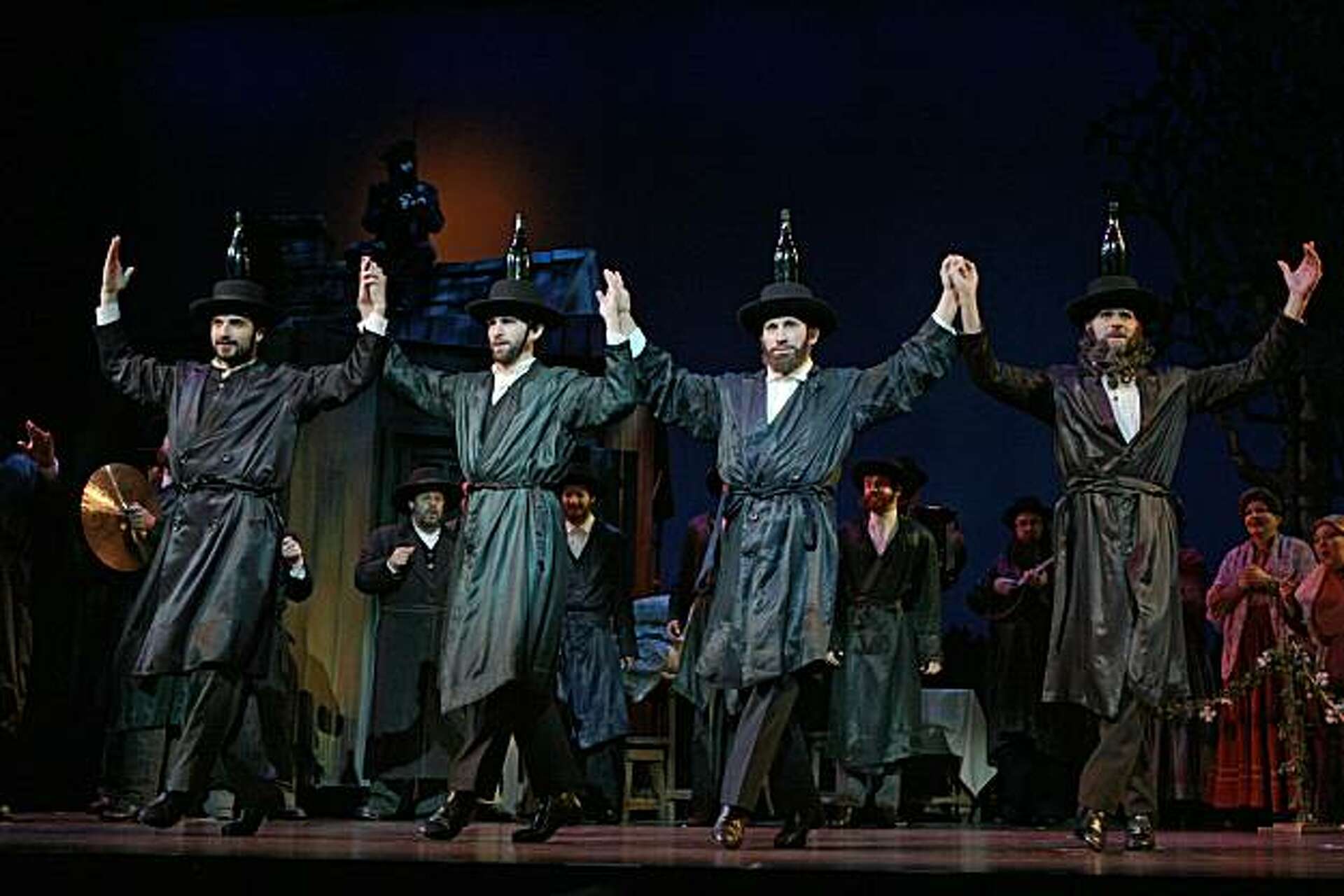
Fiddler on the Roof (2018 in Yiddish) remains the defining example of how Jewish life was once presented. The audience is drawn into a village that feels intimate and alive, filled with arguments between generations, negotiations between tradition and change, and the quiet dignity of ordinary people trying to hold their world together as it begins to shift beneath them.
The violence arrives but it does not dominate the story. It lingers at the edges, a reminder of fragility rather than the force that defines the narrative. What stays with the audience is the humanity that precedes it: the sense that Jewish life contains richness and meaning even as it is repeatedly uprooted, and that something essential survives the disruption.
The Present: History Without Distance
Vienna, and the Illusion of Safety
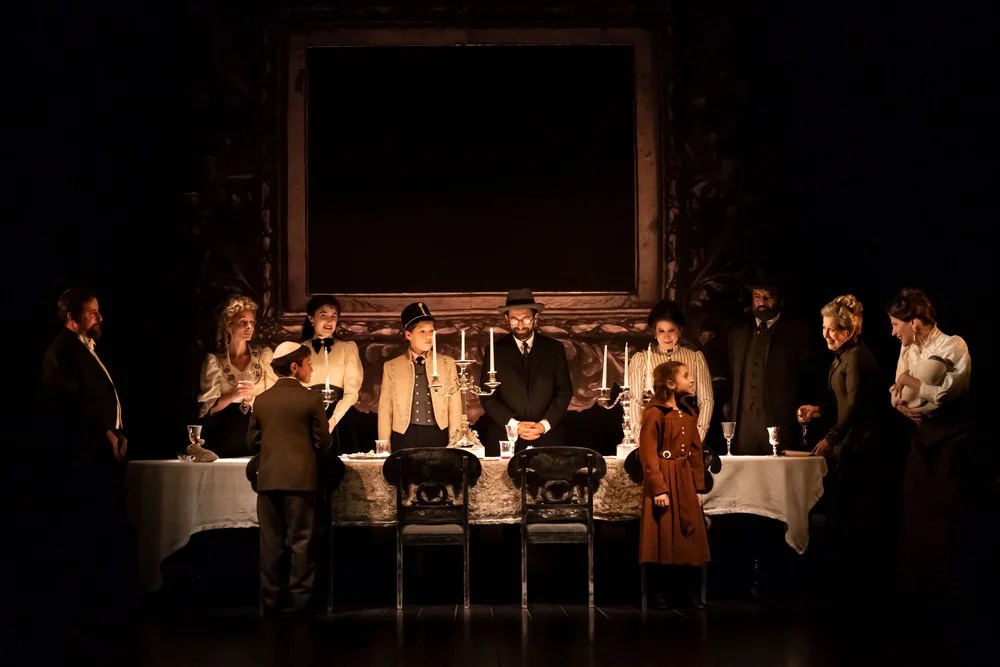
Leopoldstadt (2022-3) opens in a world that feels secure, even enviable in contrast to the humbler scenes from the Pale of Settlement in Fiddler – assimilated Jews in Vienna who have embraced culture, intellect, and national identity with the confidence of people who believe they belong. The early scenes are filled with warmth and the easy assumptions of permanence.
As the story unfolds, those assumptions dissolve with unsettling speed. Families thin, names disappear, and what began as a portrait of belonging becomes a study in erasure. The audience is left confronting how completely a thriving world can vanish and how little warning the people inside it seemed to have.
America’s Own Reflection
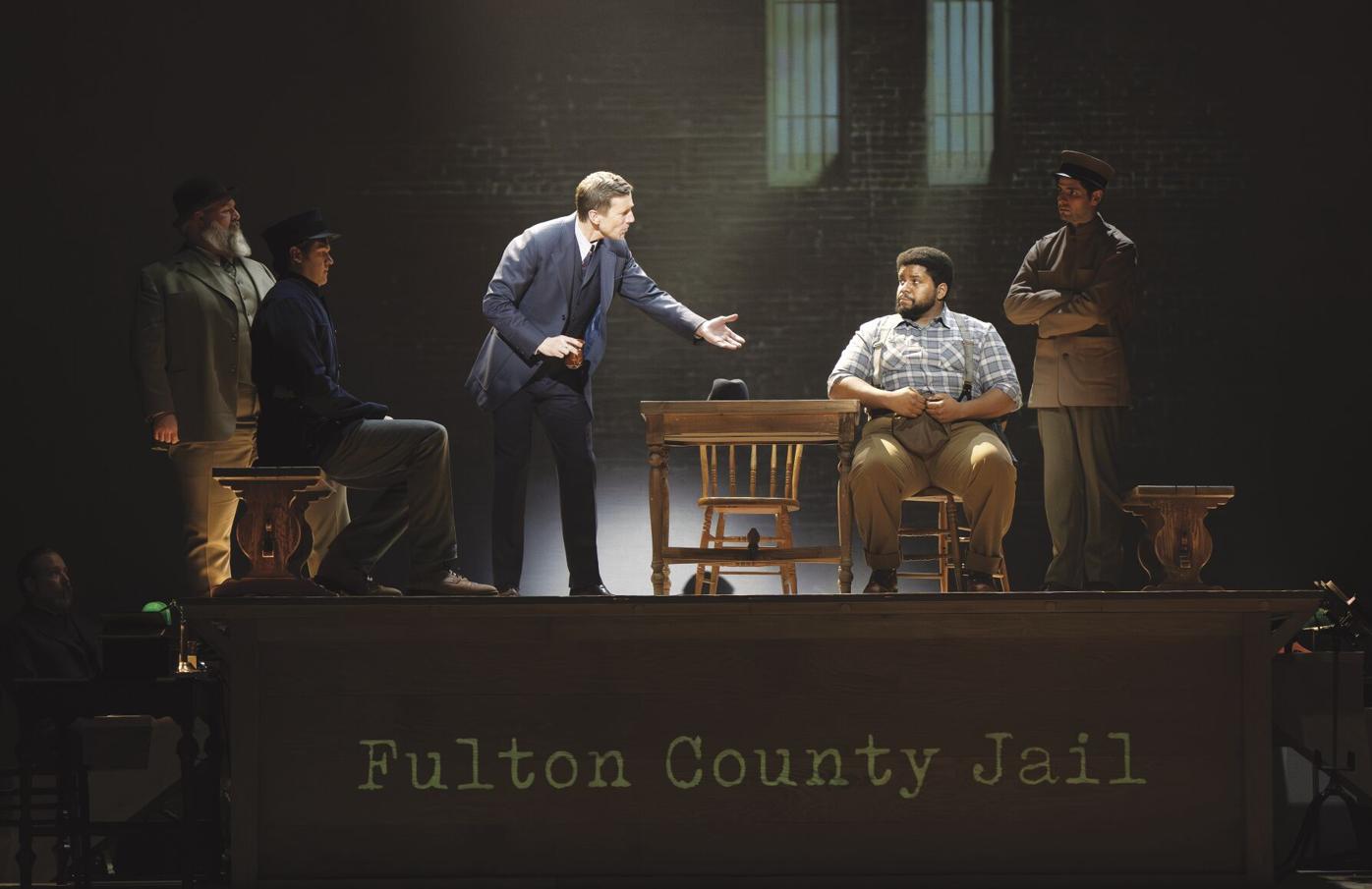
Parade (2022-3) brings that realization into the American setting through the story of Leo Frank. His life in early twentieth-century Atlanta ends in a spectacle shaped by rumor, media amplification, and a public willing to accept accusation as truth.
The discomfort of the story lies in its familiarity. The mechanisms feel recognizable, the escalation disturbingly plausible. The setting removes any remaining sense that antisemitism belongs elsewhere or to another time, placing it squarely within the American experience.
A Present That Refuses to Stay Quiet
Prayer for the French Republic (2024) unfolds in unmistakably contemporary terms, following a French Jewish family as they debate whether their future still lies in the country they call home. The conversation revolves around schools, neighborhoods, and the quiet calculations that shape daily life.
What emerges is not a single defining incident, but an accumulation, a steady normalization of hostility that makes departure feel less like a rupture and more like an eventual step. The question is no longer abstract. It is logistical, immediate, and deeply personal.
Hatred with a Familiar Face
Giant (2026) centered on Roald Dahl, shifts the focus from overt violence to something quieter and, in many ways, more unsettling. Here, antisemitism resides within a figure celebrated for imagination and storytelling, revealing how prejudice can coexist with cultural admiration.
The discomfort lies in how easily such views can be absorbed into environments that otherwise pride themselves on sophistication. Hatred does not require a uniform or a slogan when it is permitted to live comfortably within admired voices. It persists not despite acceptance, but often because of it.
A Pattern Taking Shape
Seen together, these productions trace a continuum across time and place – Vienna, Atlanta, Paris, and the cultural circles of modern Britain – linked by a recurring dynamic. Each begins with a sense of stability, moves through unease, and arrives at rupture. The details differ, but the trajectory remains strikingly consistent.
This repetition carries its own message. It suggests that the issue is not confined to a specific moment or geography, but reflects a pattern capable of reappearing in new forms, shaped by local conditions yet driven by familiar forces.
The Audience and the Mirror
The audiences filling these theaters are often educated, affluent, and deeply engaged with cultural life. They watch these stories unfold, absorb their lessons, and respond with admiration for the craft and the performances.
Yet there is a tension that lingers beyond the applause. The same cultural spaces that elevate these narratives often struggle to confront their contemporary parallels with equal clarity. The distance between stage and reality narrows, but the response to each is not always aligned.
The result is a kind of dissonance: an ability to recognize antisemitism when framed as art, while hesitating to address it with the same urgency when it appears in present-day discourse.
Why This Moment Feels Different
This shift on Broadway reflects a broader change in perception. The conditions once associated with distant history no longer feel entirely removed. The sense of safety that allowed earlier generations to treat persecution as context has given way to a more immediate awareness, one that resists easy separation between past and present.
Recent events have reinforced that awareness. The resurgence of openly hostile rhetoric, the normalization of extreme positions in public discourse, and the willingness in some circles to rationalize or reframe acts of violence have all contributed to a climate in which these stories resonate with a new intensity.
Art does not create that reality, but it reveals how widely it is being felt.
The contrast with earlier eras becomes difficult to ignore. Where once the stage offered a portrait of Jewish life shaped by external pressures, it now presents environments in which those pressures define the experience itself. The richness of daily life is increasingly overshadowed by a sense of vulnerability that cannot be pushed to the margins.
This evolution reads less like a natural progression and more like a recalibration, one that places the question of security at the center. The stories no longer unfold at a comfortable distance. They press closer, asking the audience to consider what they mean beyond the confines of the theater.
Broadway continues to tell Jewish stories, but the tone has shifted in a way that carries unmistakable weight. The warmth that once framed these stories has given way to something sharper, more immediate, and more raw.
The audience is no longer only staring ahead at actors; the Jews attending Broadway turn to the right and left to consider their own lives as living theater.
In 2022, the United Nations created the International Day to Combat Islamophobia, observed each year on March 15.
The date commemorates the victims of the Christchurch mosque shootings in New Zealand, where worshippers were murdered during a terrorist attack in 2019.
Hatred directed at any religious community deserves condemnation. But the decision raises an uncomfortable question: why is Islam the only religion granted a dedicated global day to combat hatred?
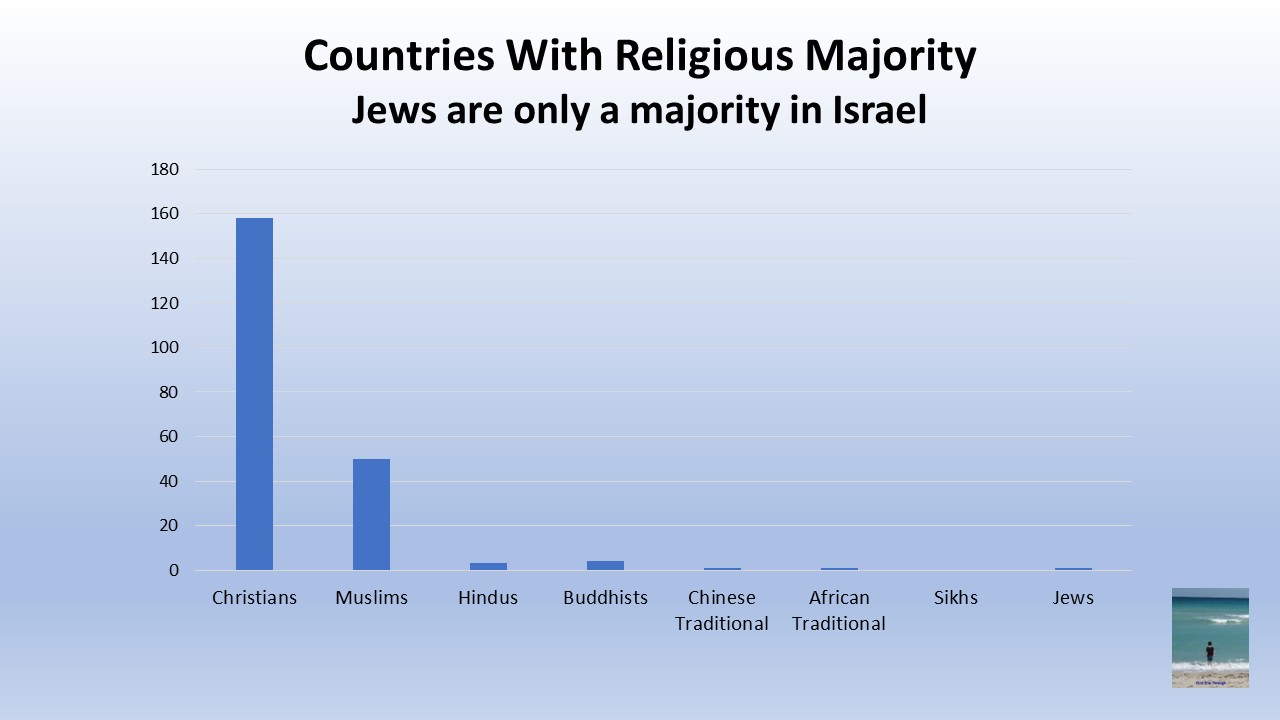
Islam is hardly a marginal faith. With roughly two billion followers, it is one of the largest and fastest-growing religions in the world and the majority religion across dozens of countries stretching from North Africa through the Middle East and into Asia. Within the UN itself it is represented by a powerful diplomatic coalition, the Organization of Islamic Cooperation, a bloc of 57 states that frequently coordinates its positions inside the General Assembly.
Yet Islam is the only religion singled out for a specific UN observance addressing prejudice against its followers.
Other religious communities facing persistent hatred receive no comparable recognition.
There is no UN day dedicated specifically to combating antisemitism today, despite the fact that Jews are the most frequently targeted religious minorities per capita in many countries. While the UN does observe International Holocaust Remembrance Day each January to commemorate the genocide of Jews during The Holocaust, that observance focuses on crimes committed eighty years ago. There is no equivalent UN day focused on antisemitism in the present.
Nor is there an observance addressing anti-Christian persecution, even though research by organizations such as Open Doors and studies by Pew Research Center consistently show that Christians face some of the largest levels of religious persecution globally in absolute numbers.
The UN does maintain a broader commemoration—the International Day Commemorating Victims of Acts of Violence Based on Religion or Belief—but that observance focuses on victims after violence occurs, not on confronting the ideologies that fuel it.
Except in one case: Islam.
The religion which dominates the countries where Christians are most persecuted, including: Somalia, Libya, Eritrea, Yemen, Nigeria, Pakistan, Sudan and Iran.
Violence the UN Does Not Mark
The choice of March 15 highlights another inconsistency.
Deadly attacks on synagogues have occurred repeatedly in recent years.
In 2018, eleven Jews were murdered in the Pittsburgh synagogue shooting at the Tree of Life synagogue, the deadliest antisemitic attack in American history. In Germany, a terrorist attempted to massacre Jews during Yom Kippur in the Halle synagogue shooting.
And in October 2025, a Jewish man was fatally stabbed outside a synagogue in Manchester, England, in an attack carried out on Yom Kippur, the holiest day in Judaism, when Jews gather in synagogues around the world for prayer and reflection.
Synagogues across Europe and North America have repeatedly been targets of shootings, stabbings, and attempted massacres.
Yet no comparable United Nations observance exists dedicated specifically to combating antisemitism tied to those attacks.
If the UN can create a global day tied to violence against mosques, why has it never created one tied to attacks on synagogues?
Politics Behind the Principle
The explanation lies less in theology than in politics.
For decades the powerful Organization of Islamic Cooperation has used its diplomatic weight to advance religious protection initiatives inside the UN system. Beginning in the late 1990s, the bloc pushed resolutions condemning what it called the “defamation of religions,” efforts widely understood as attempts to restrict criticism of Islam.
Western democracies resisted those proposals on free-speech grounds, and by around 2010 the campaign stalled.
So the strategy evolved.
Instead of defending religion from criticism, the focus shifted toward defending believers from discrimination under the banner of Islamophobia.
Opposing the initiative could now be portrayed as defending prejudice against Muslims, even if the broader debate still involved questions of speech, ideology, and religious critique.
In 2022 the effort succeeded with the creation of the UN’s International Day to Combat Islamophobia.
When Institutions Reflect Power
The episode reveals something fundamental about how the modern UN operates.
The organization does not function as a neutral body weighing global injustices. It functions as a political arena shaped by large voting blocs.
In the General Assembly—where every state has one vote regardless of size or political system—coordinated coalitions wield enormous influence. The 57 countries of the Organization of Islamic Cooperation represent a significant force in that system, often aligned with broader coalitions such as the Non-Aligned Movement.
Together these alliances can shape the symbolic agenda of the institution. They determine what the United Nations chooses to highlight and what it chooses not to see.
A Test of Moral Consistency
The United Nations was founded after World War II to defend universal human rights. But institutions derive legitimacy not only from their ideals, but from their consistency.
When some hatreds receive global recognition, others historical remembrance, and still others little acknowledgement at all, the institution begins to reflect political influence more than universal principle.
Combating religious hatred is a noble goal. But when that effort becomes selective, it reveals the farce and the forces controlling the United Nations.
A man attempted to massacre Jews at a synagogue and preschool in Michigan.
He drove a truck into the building, fired a rifle, and carried explosives and gasoline. Inside were more than a hundred children and staff. Only the quick response of security guards prevented what could have been a mass slaughter of Jewish children.
That should have been the story.
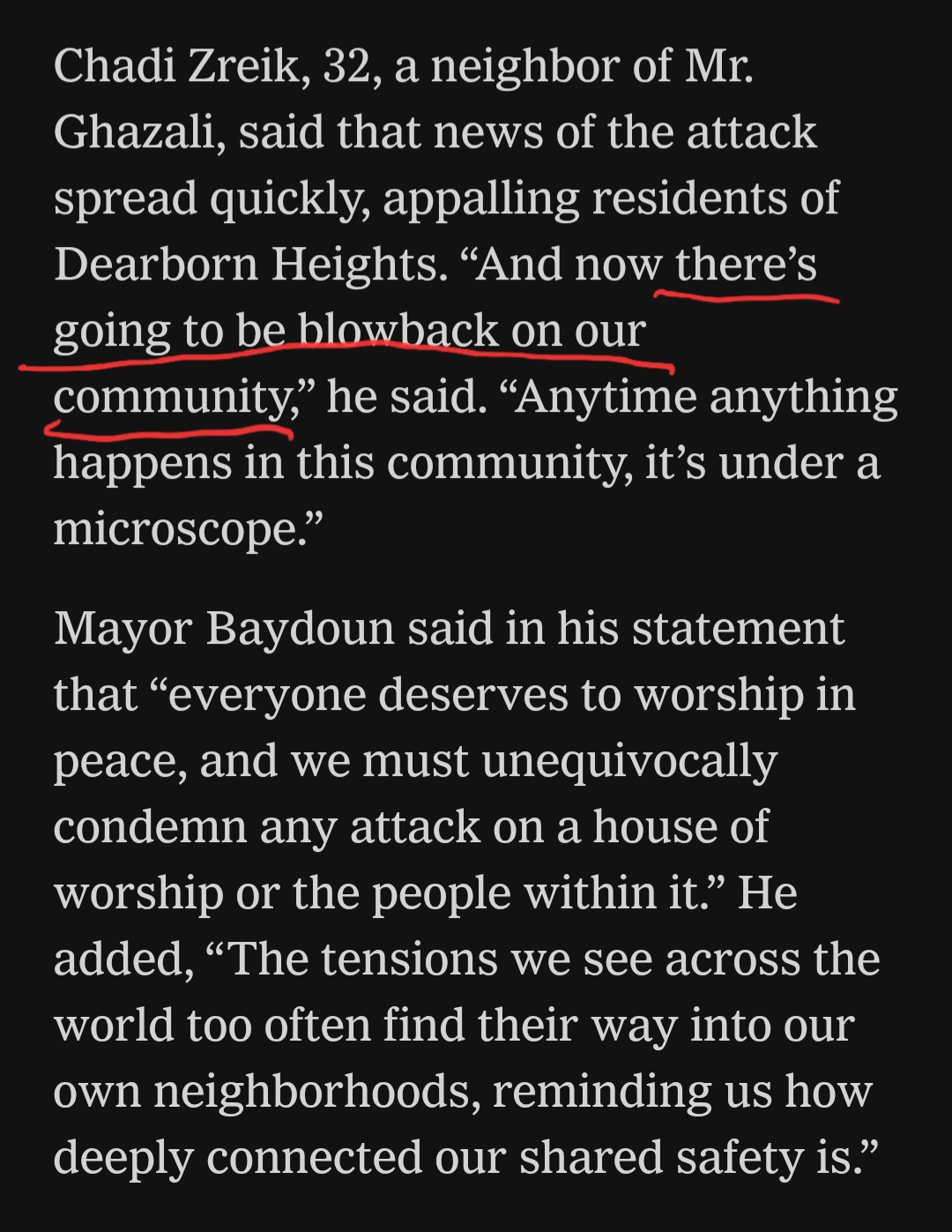
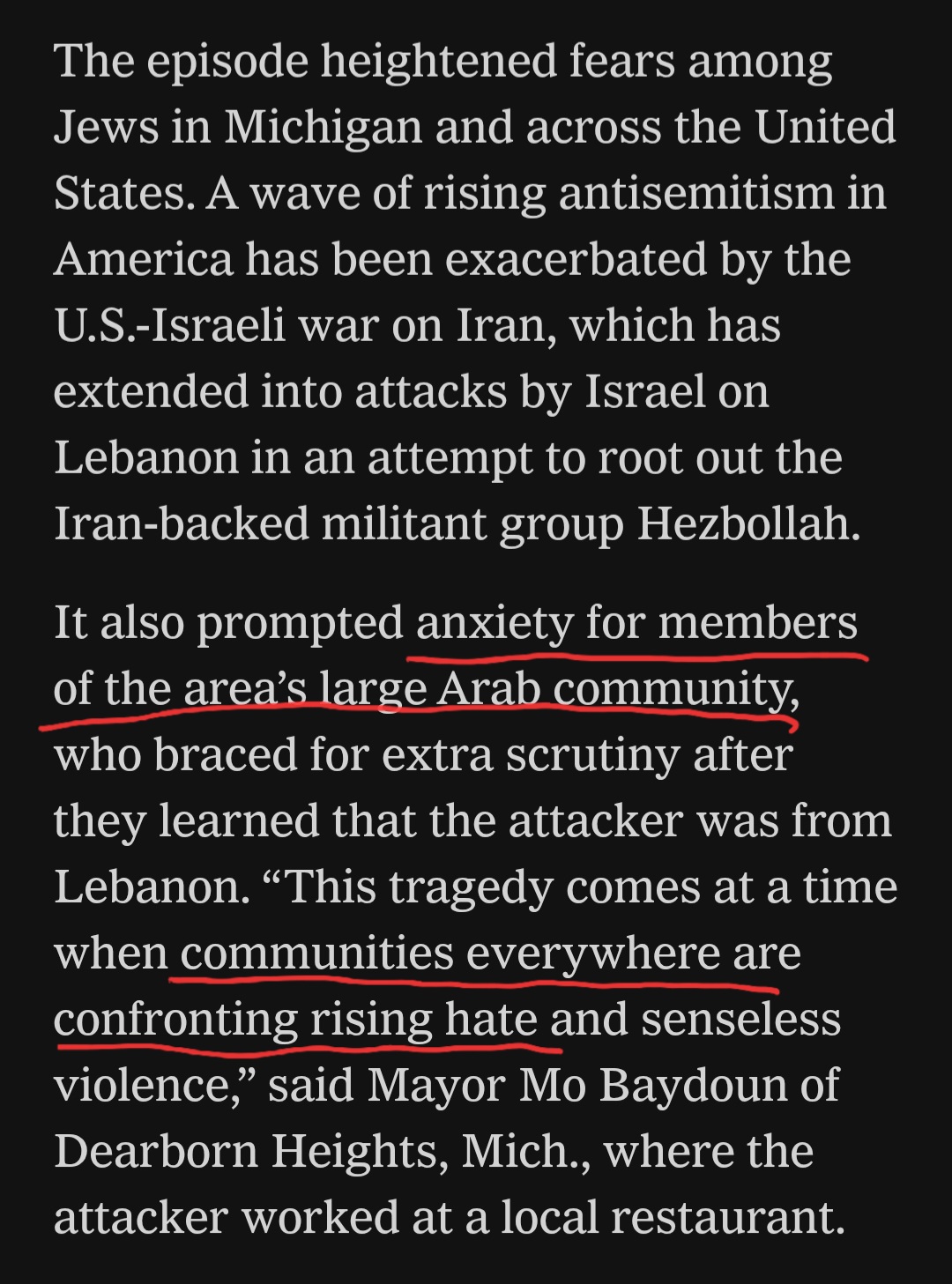
Instead, in its coverage of the attack, The New York Times quickly shifted the emotional center somewhere else. The paper highlighted concern that Muslims or members of the local Arab community had “anxiety,” worried they might face might face “blowback” after the attack.
Pause for a moment and consider the moral inversion.
A man tries to murder Jewish children in a synagogue, and the newspaper of record worries about the social consequences for people who share the attacker’s background, and “communities everywhere.. confronting rising hate.”
Would this framing appear in any other circumstance?
If a white nationalist attempted to burn down a Black church, would the central concern in the article be whether white Americans might face uncomfortable scrutiny?
If a neo-Nazi attacked a mosque, would journalists pivot immediately to the anxiety of Christians worried about backlash?
Of course not.
The victims would be the story. The ideology behind the violence would be examined directly and without hesitation.
But when Jews are attacked – especially by jihadists – the narrative too often drifts away from them.
The Reality the Coverage Avoids
There is another uncomfortable fact that often disappears in these discussions.
In the United States, Jewish institutions have repeatedly been targets of ideological violence.
Synagogues, kosher markets, Jewish schools, and community centers have been attacked by extremists motivated by antisemitism and/or jihadist ideology.
The list is tragically familiar:
the Tree of Life synagogue massacre in Pittsburgh
the Poway synagogue shooting
the Jersey City kosher market attack
the Colleyville synagogue hostage crisis
Across Europe the pattern is even clearer: the Toulouse Jewish school massacre, the Hyper Cacher supermarket attack in Paris, and numerous synagogue shootings and plots across the continent have been by jihadists.
Yet the reverse pattern is almost nonexistent.
There is no recurring history in the United States of Jews entering mosques to massacre Muslims, no wave of Jewish attackers targeting Muslim schools or grocery stores.
The asymmetry matters.
Jewish institutions build security fences, hire armed guards, and train for active shooters not because of paranoia, but because experience has taught them they are frequent targets.
The Michigan synagogue had security for exactly this reason.
Without it, the story might have been hundreds of funerals.
A Pattern of Moral Softening
The New York Times’ framing of the Michigan attack fits a broader pattern that has become increasingly visible in recent years.
When jihadist-inspired violence occurs, the language often softens. Motives become vague. Ideology dissolves into references to “grievances,” “tensions,” or the emotional distress of communities associated with the attacker.
Select context is provided for the perpetrator that make him appear a victim, such as mourning the loss of family members in the Middle East, without sharing that those family members were members of jihadi terrorist groups.
This is no longer news but distortion.
Journalism is supposed to clarify reality, not obscure it. When coverage instinctively protects the social sensitivities of the attacker’s community while barely dwelling on the intended victims, it creates a moral fog.
No serious observer believes entire communities are responsible for the crimes of individuals. That principle should remain unquestioned.
But shifting sympathy away from the Jewish victims of an attack to the jihadi attacker is a failure to report the truth clearly for the purpose of a twisted narrative. One that continues to put the most attacked minority-minority in the crosshairs while falsely painting their most frequent attackers as the ones needing sympathy.