The Ghosts of Genocide

To visit Poland is to walk among ghosts.
The thriving Jewish civilization that once filled its towns and marketplaces was almost completely erased. Three million Jews were targeted for extermination — a number too vast to grasp by walking through silent cemeteries. The absence alone cannot speak the full horror.

To stand where synagogues were razed, where schools once taught Torah and arithmetic, where playgrounds once rang with Yiddish laughter, is to feel the emptiness press against your chest. It forces the imagination to repopulate the void — to summon the Jewish ghosts who linger, waiting for conscience to remember them.

It is easier to look at the living.
Many Poles today are the grandchildren of those who watched as their Jewish neighbors were rounded up — and sometimes finished the work themselves when survivors returned seeking their homes. They became stand-ins for the killers of yesteryear, heirs to silence, envy, and complicity.

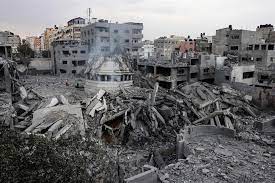
Now another people walks amid ruins.
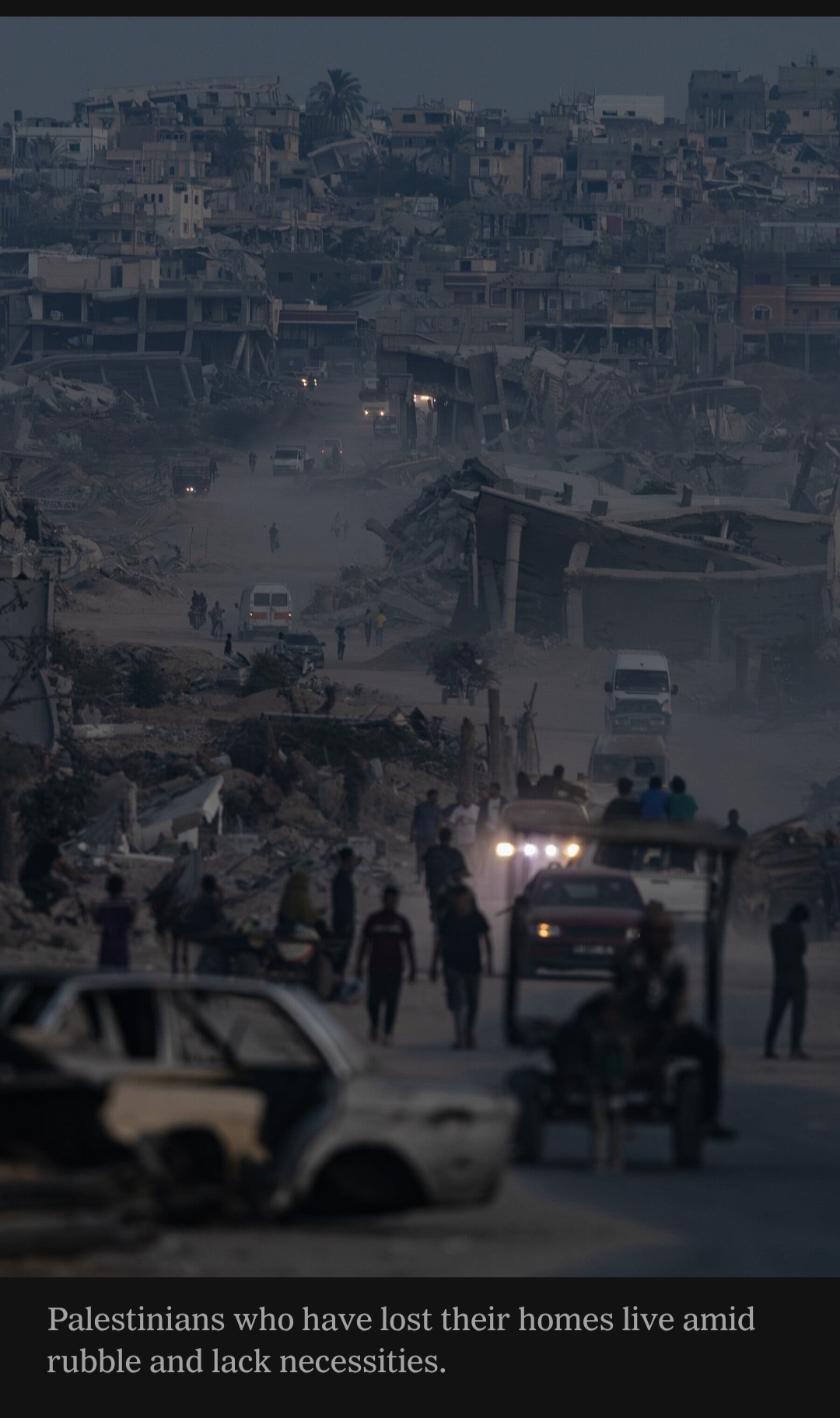
In Gaza, millions return to their shattered neighborhoods under a ceasefire, and we are told they have survived a “genocide” at the hands of Jews. Yet the number of Palestinian Arabs has grown, not diminished — a population larger than before the war they themselves began. They tread among the skeletons of broken buildings built atop their army’s tunnels, while ghosts — Israeli civilians burned alive in their kibbutzim and those taken hostage and murdered in Gaza — cry out from the ashes.

The Bibas family from Israel was taken hostage by Gazans on October 7, 2023. The mother and two children were murdered in captivity

I ponder the ghosts of genocide:
the murdered and the murderers;
the societies that spawned the slaughter;
the peaceful towns that became infernos.

Infrastructure shelters ghosts. Societies are haunted by the ones they create, both killer and killed. The unseen dead can no longer showcase their dancing on the one hand, or lust to murder, on the other.

There are scarcely any Jews left in Poland; their ghosts appear only to those who seek them.
In Gaza, the ghosts are not gone. They walk the streets, armed and unrepentant — not spirits of victims, but kinsmen of murderers, now turning on one another.

Poland’s haunting is one of silence — an absence so total it chills the air. The ghosts there do not cry out; they wait to be remembered. Gaza’s haunting is the opposite: a cacophony of rage that refuses reflection. Its ghosts are not silent but screaming — not victims unburied, but hatreds unrepented.

Poland’s soil holds the murdered; Gaza’s streets still host the spirit of the murderers.
One ghost asks to be mourned; the other demands to be judged.

The haunting does not end with time.
It lingers wherever truth is buried,
and it deepens each time the living deny the past that shaped them.

Only when a people can face its ghosts —
naming both the murdered and the murderers —
can it begin to live freely again.

The Second Israeli Victory in Gaza and the War on Diaspora Jews

For decades, Palestinians have believed there were three paths to statehood—and they pursued them simultaneously.

1. Violence.
Hamas, Islamic Jihad, Fatah’s militias and several Palestinian Arab terrorist groups waged terror wars, convinced that bloodshed brought gains: the First Intifada led to the Oslo Accords; the Second Intifada drove Israel from Gaza and parts of the West Bank; the 2021 riots were hailed for halting evictions in Sheikh Jarrah.
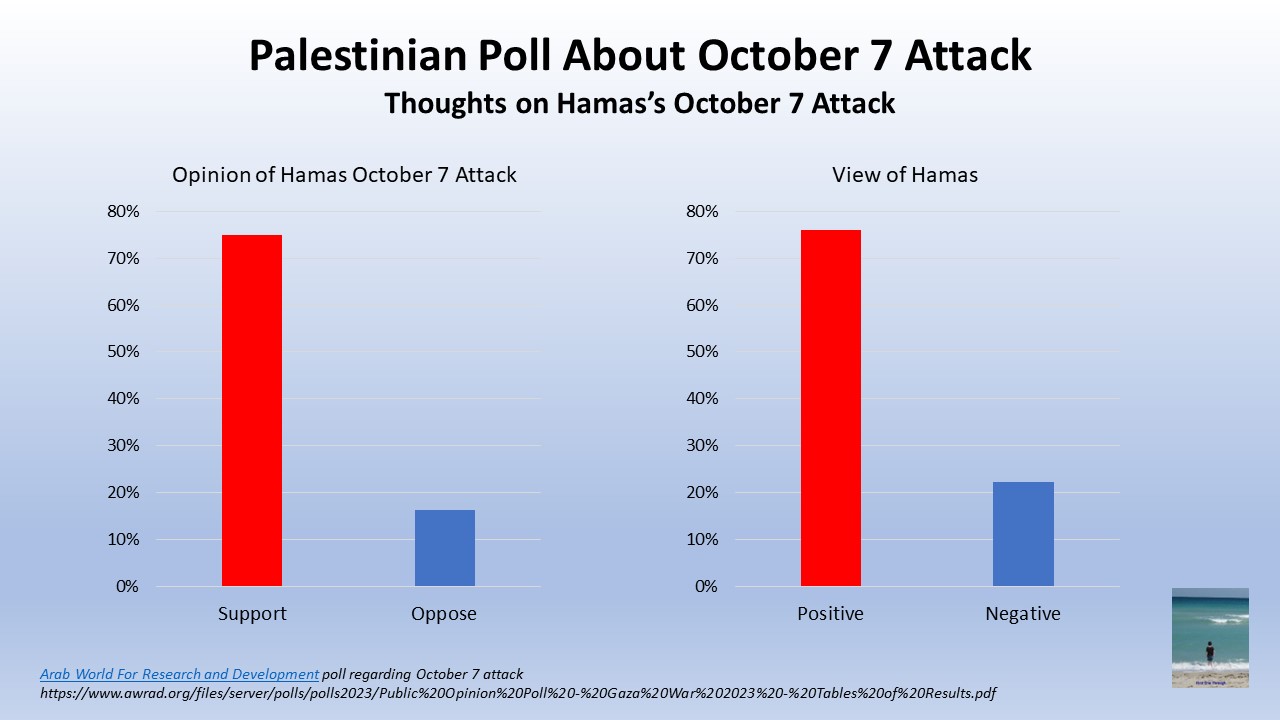
The October 7 massacre, backed by roughly 75% of Palestinians, was the latest in that grim pattern.

2. International Pressure.
Even as rockets fell, Palestinian allies abroad pressed boycotts, divestment, sanctions, and United Nations resolutions, seeking to isolate Israel diplomatically and economically until it yielded territory.

3. Negotiations.
The Palestinian Authority claimed to prefer talks to gain legitimacy and foreign aid—but insisted on maximalist demands: all the West Bank, all of eastern Jerusalem, a Jew-free Palestine, and a mass “right of return.”
Yasser Arafat walked away from a state in 2000 and launched the Second Intifada instead.
His successor, Mahmoud Abbas, also spoke of peace while undermining it—keeping the notorious “pay-to-slay” stipends for terrorists’ families and, in a January 2018 speech, blessing those who chose violence even as he professed support for diplomacy.

Polling has consistently shown the order of Palestinian preference: violence first, global pressure second, negotiations last.

The Cost of Failed Strategies

Both violence and sanctions have brought suffering to Palestinians themselves.
Suicide bombings and rocket wars prompted Israel to build the security fence, which restricted movement and economic activity. The October 7 attack provoked a massive war in which Gaza was devastated and Hamas decimated.
Attempts to use international pressure backfired as well, leading Israel to withhold funds from the PA and tighten restrictions.

Israel fights like a cornered raccoon—fiercely, without backing down when attacked.
Every round of violence has left Palestinians weaker and poorer.

In the recent war, Israel scored a double victory:
It destroyed Hamas’s military capability, killing an estimated 25,000 fighters, and it refused to bow to global pressure, pressing on despite UN condemnations, ICC threats, and warnings of diplomatic isolation.

This shattered the long-held belief that if terror failed, the world could still coerce Israel into retreat.

A New Reality — and a Call to the Arab World

The old strategies of terror and economic warfare have failed and only deepened Palestinian misery. The third path—real negotiations—remains the only way forward.

Israel and the United States now hope the Arab world will engage Israel constructively, encouraging Palestinian leaders to abandon impossible UN demands and accept the reality of Israel’s permanence. Clinging to maximalist positions will only bring more rounds of bloodshed and despair.

And an Alternative Reality — Coming for Diaspora Jews

While Israel feels that it may have finally fought a war that could lead to long-term peace, there are those who still cling to eradicating the Jewish State. The international “Free Palestine” fighters do not want to see Israel holding onto the Old City of Jerusalem nor limiting the entry of millions of Arabs who claim UN’s mantle of “refugees.” The light at the end of the tunnel for them is not coexistence but a continued “Nakba,” a disaster.

So they are revamping the second front of international pressure, from targeting Israel to the soft targets of diaspora Jews.

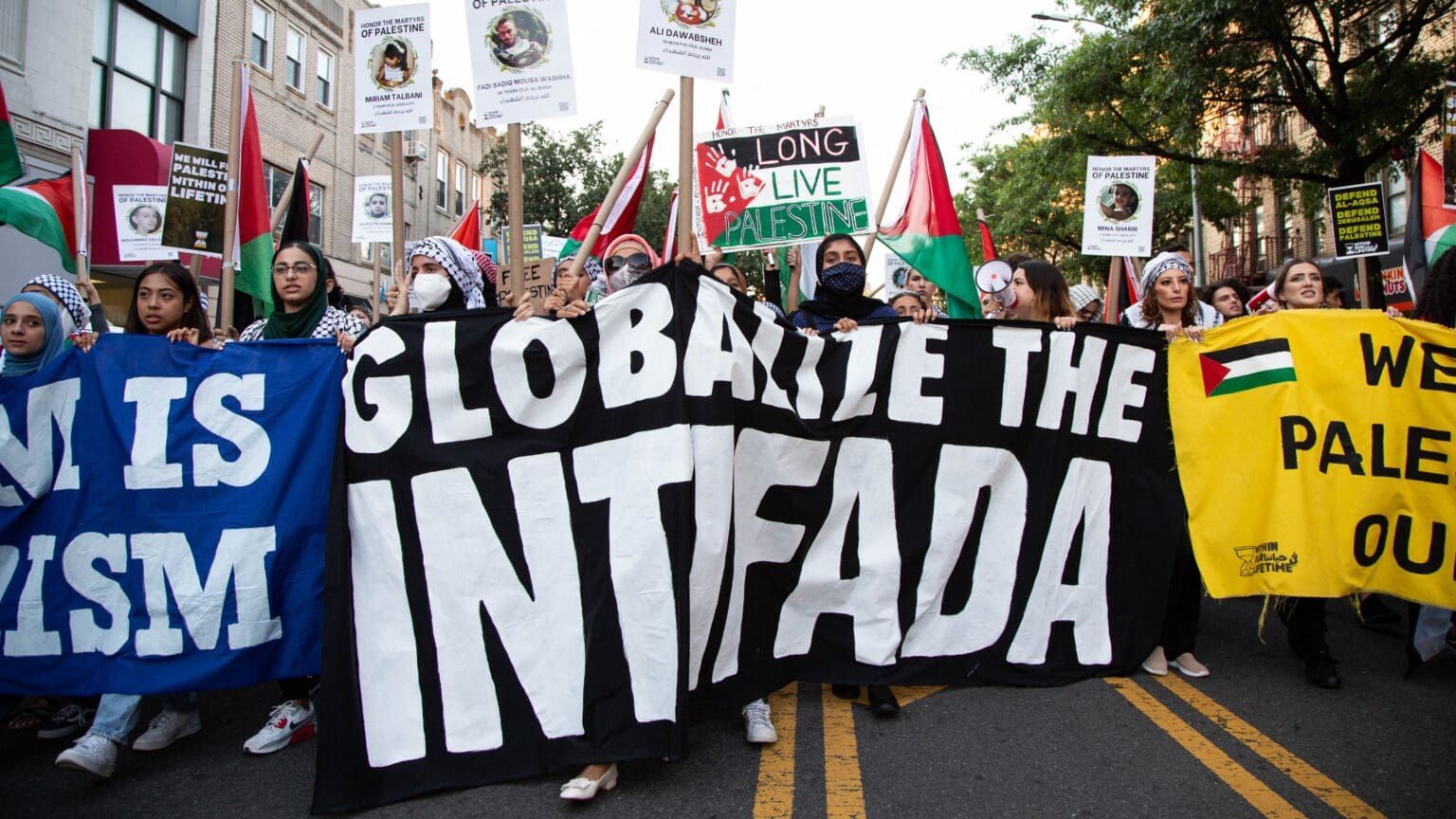
They are chanting to “globalize the Intifada” to bring the war to every Jew and pro-Israel person and organization. The incineration of the kibbutzim in Israel on the Jewish holiday of Simchat Torah was echoed in the burning of the Jewish governor of Pennsylvania’s home on the holiday of Passover. Burning Jews alive in Kibbutz Be’eri was mirrored in burning Jews in Boulder, Colorado.

While Israel sees that it is in a strongest position in the region since its reestablishment which may finally enable an enduring peace, the anti-Israel horde has opened a new front on the global diaspora.

The international pressure of the BDS camp has not been defeated but inflamed. They are ratcheting up their smears of “apartheid” to “genocide,” and marking local Jews as co-conspirators.

While Israel won the Iranian proxies war, the Free Palestine camp is taking millions of new hostages – diaspora Jewry. Who will fight for them?

The Weight of Nations

“Why do the nations rage, and the peoples plot in vain?” — Psalm 2:1

Saudi Arabia – the kingdom which Israel hoped would next join the Abraham Accords – sought to pressure Israel into ending its defensive war in Gaza by rallying nations of the Global North to recognize a State of Palestine. It found a partner in France, which successfully pulled the United Kingdom, Canada, and Australia into the orbit of recognition. In September 2025 at the United Nations, the group jointly declared their acknowledgment of a Palestinian state—with caveats—but the symbolism was unmistakable.

Israel did not budge. It viewed the coordinated announcement as an alarming reward for the genocidal Hamas regime that had unleashed war on October 7 two years earlier.

Enter the United States. President Donald Trump had tasked developer and confidant Steve Witkoff to lead a back-channel negotiation with Hamas for the release of Israeli hostages and an end to hostilities. Jared Kushner joined the effort more forcefully in September, unveiling a “20-point plan” aimed at ending the two-year war and reshaping the region’s political future.

To counter the Saudi-French gambit, Trump built his own coalition. The U.S. secured the backing of several Arab and Muslim nations from the Global South—including Qatar, Jordan, the United Arab Emirates, Indonesia, Pakistan, Türkiye, Saudi Arabia, and Egypt —for its peace framework. By October, the administration succeeded in gathering the leaders of 27 countries from across the North and South, including some that had just recognized Palestine, to fly to Egypt to sign what was billed as a ceasefire agreement.

A summit to support ending the more than two-year Israel-Hamas war in Gaza after a breakthrough ceasefire deal, Monday, Oct. 13, 2025, in Sharm El Sheikh, Egypt labeled “Peace 2025”

It was a mirage. Neither of the warring parties—Israel or Hamas—attended. The event was instead diplomatic theater, meant to transform a ceasefire proposal into a movement for regional peace. Trump designed the event to flip the script.

Where Saudi Arabia and France tried to impose the weight of the Global North on Israel, the United States sought to use the combined weight of both hemispheres on Hamas. The former demanded an immediate path to a two-state solution; the latter demanded the end of Hamas rule.

The Moral Gravity

The story of this moment is not only about geopolitics, but about moral gravity. The nations of the world have grown accustomed to weighing Israel’s every move while ignoring the crimes of its enemies. They call for “balance” in a war that began with mass murder, rape, and hostage-taking. They lecture the victim to compromise while the aggressor reloads. The UN Security Council could have easily passed resolutions to push for an end to the war if they had just condemned Hamas, but repeatedly refused to do so.

The weight of nations once meant the defense of justice and the pursuit of peace. Today, it is too often the ballast of perfidy—dragging down the innocent under the pretense of even-handedness.

Israel, standing increasingly alone, may yet prove that the true measure of a nation is not in the number of its allies, but in the steadiness of its conscience. It is fortunate to have President Trump in the White House as it shoulders this weight once again.

The tight bond between Israel and the United States has continued, despite Americans starting to sour on Israel since 2015.

The Next Part of the “20-Point Plan”: Drop Charges At The ICJ

The headline deal which everyone pretends is a simple human-rights triumph — hostages home in exchange for prisoners and a ceasefire — is, on its face, a moral imperative. Families and politicians, of course want the war to end and hostages back home. But if we treat this swap as merely a humanitarian ledger without thinking about incentives, strategy and deterrence, we invite a replay of October 7 — not because anyone wants it, but because the arithmetic of the deal makes another mass-carnage payoff seem rational to those who plan such crimes.

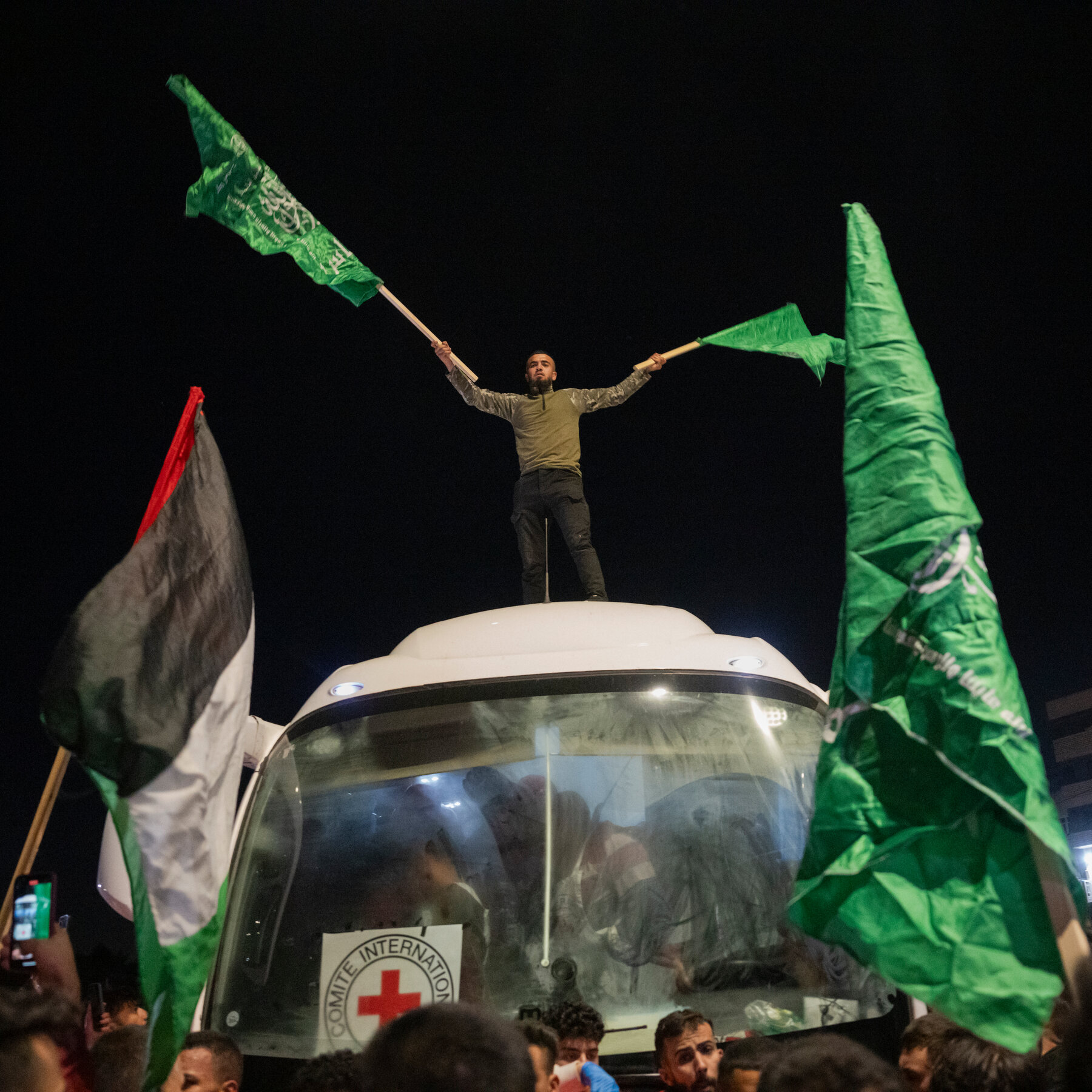
Palestinian Arabs wave Hamas flags atop the Red Cross truck bringing releases terrorists to the West Bank in November 2024

Here’s the cold calculus the bland statements miss.

Hostages for prisoners. Civilians for killers. A handful for hundreds. These trades have an immediate human relief value. The cost, however, is structural: they reset the reward function for terrorism. If a violent raid can reliably purchase the release of leadership, fighters, and political capital — and if the international response includes legal actions that delegitimize the responding state — then the net effect is to make mass atrocity an instrument of statecraft.

Celebrations for released Palestinian Arab terrorists in 2014

But the mathematics isn’t just – and must not be viewed as – the prisoner-to-hostage ratio. It includes the defensive response: the likely military, political, and territorial consequences of the assault. Hamas should be forced to accept that math too. If it contemplates another October 7-style operation as it has promised to do repeatedly, it must understand that the outcome will not be a tidy prisoner exchange and a televised victory lap. It will be the destruction of leadership and the decimation of military infrastructure, with broad international support for the defensive measures taken to prevent a repeat.

Which brings us to the international legal theater now playing out: the ICJ’s “genocide” accusations, the vociferous statements from states threatening arrest of Israeli officials, and the diplomatic embrace of Palestinian statehood in some quarters. These actions, however well intended by their proponents, have immediate strategic effects. They amplify Hamas’s narrative of global validation and, crucially, complicate the deterrent effect of defensive operations. If a state in self-defense risks being publicly criminalized or its leaders subject to arrest, the calculus of deterrence is altered – for the entire world.

So, what should sensible governments do if they insist on both protecting Palestinian rights and preventing another October 7? Two practical propositions:

  1. If regional governments want backing for Palestinian statehood and avoid terrorism in their own countries, they should drop the ICJ case. the Arab and Muslim countries which backed the U.S. ceasefire plan should pressure South Africa and other countries which brought the case to drop the charges and let diplomacy take center stage. Law and diplomacy should be tools of stability, not absolution for terror strategies.
  2. If the desired outcome is that populations on both sides live within range of cross-border terror and reprisals, then investing in defensive infrastructure as a bridge to a political solution is a rational step. The United Nations and donor states should be pressed to fund a replacement barrier between Gaza and Israel — walls and surveillance that reduce the risk of mass infiltrations, so that the question of where futures lie for Palestinians becomes a matter of state-building and safety inside Gaza, not a perpetual recruitment slogan for militancy.
Hamas breaks through security fence between Gaza and Israel on October 7, 2023, on way for mass murder and abductions

This is not a call to abandon human rights oversight or to whitewash abuses. Accountability and adherence to international law matter. But timing and incentives matter too. Legal actions taken in the heat of war — unmoored from a strategy to prevent recurrence — can harden positions and diminish the tools of deterrence. If the objective is to keep people alive and build a durable peace that allows Stateless Arabs from Palestine (SAPs) self-determination without repeated massacres, then international actors must think like engineers of stability, not moral prosecutors on a press release timetable.

If we are serious about both ending the war and preventing future acts of mass terrorism and barbarity, we must stop evaluating deals by immediate feel-good optics alone. The right measure of a deal includes whether it reduces the incentive to perpetrate mass atrocities, strengthens deterrence against their planners, and clears a path toward political arrangements that give civilians on all sides a future. Anything less is not a solution — it is an invitation.

“Free Palestine” Means Dead Jews

Words earn their meaning in how they are used. When a slogan is repeatedly screamed as an incitement to burn, stab, gun down, and terrorize people because of who they are or whom they support, it ceases to be mere rhetoric. It becomes a battle cry — and its meaning is what the battle cry does.

We have painful, recent proof of the sickness. In several separate, well-documented attacks in the United States, suspects shouted “Free Palestine” while carrying out murderous attacks. Investigations and prosecutions have treated these shouts not as abstract political slogans but as part of a violent intent to harm people identified as Jewish, Zionist, or supporters of Israel.

Man shoots people, killing one in New Hampshire yelling “Free Palestine”

When the slogan is used repeatedly for arson, firebombs, knives and bullets, its practical meaning is indisputable: it is a call for violence against Jews and Israel supporters. Institutions that track antisemitic violence warn that normalizing chants tied to violence contributes directly to more attacks. We see that “Free Palestine” is a call to murder.

Man burns people alive, killing one in Boulder, CO, shouting “Free Palestine”

That ugly truth cannot be dressed up in euphemisms or by pleading free-speech. “Free Palestine” is the current moment’s “Allahu Akbar,” the chant of radical jihadists intent on killing “infidels.” For the assailants, today’s infidels are Jews and Israel supporters.

Couple killed in Washington, DC by man yelling “Free Palestine”

It begs the question of what a “Free Palestine” means when used so frequently in murderous rampages. Are there zealots killing because they want a peaceful Palestine, or is it more likely that they seek a Palestine that is free to kill Jews the way thousands of Gazans did on October 7, 2023?

Man tries to kill Pennsylvania Governor Josh Shapiro and his family on Passover over “Palestine”

The one area that became a “Free Palestine” was Gaza when Israel left the region in 2005. Within a year, the political-terrorist group Hamas won 58% of the Palestinian parliament election and a year later took over Gaza. In the aftermath of the October 7 massacre in Israel, 72% of Palestinian Arabs supported the attack and the majority still want Hamas to rule according to Palestinian polls.

“Free Palestine” means death to Israel supporters outside of Israel, and death to Jews inside of Israel. Knowing this, are western countries recognizing a Palestinian State to both get a more proportionate death toll in the war and to kill more Jews in their own countries?

Palestinian terrorism has gone global. The question is whether the Palestinian Authority’s “Martyr’s Fund” start to pay killers of Israel supporters globally (as predicted on these pages in August 2023).

Overwinning

There are contests in which people do not simply want to beat their opponents but to so thoroughly dominate them that the opponent never dares to rise again. In sports, the knockout punch sends a boxer down and the victor up the rankings and into bigger purses. In war, nations aim not just to win but to deter future attacks.

But there is such a thing as “overwinning” — appearing so dominant that it does a disservice to the victor’s own long-term cause.

The Historical Lesson: Versailles

Many historians argue that France and its allies so humiliated Germany at the end of World War I that they guaranteed the next war. The Versailles Treaty stripped Germany of territory, imposed crushing reparations, and forbade them from rebuilding their military. Rather than simply deterring aggression, it created a nation humiliated and seething for revenge.

Instead of permanent peace, Versailles delivered two decades of festering resentment and, ultimately, World War II.

The Modern Parallel: Politics

Overwinning plays out in politics as well. Consider the Democratic primary in New York’s 16th District in 2024. Jamaal Bowman was a polarizing, unpopular incumbent facing a strong challenger, Westchester County Executive George Latimer, who had deep local support. Latimer was likely to win on his own — but AIPAC decided to spend a reported $20 million to ensure Bowman’s defeat.

The message was not just about removing Bowman; it was a flex. It told every other member of Congress: oppose us and we will spend you into political oblivion. It told donors: your money buys results.

But in doing so, AIPAC risked looking like a bludgeon rather than a scalpel. It gave critics a perfect narrative — that elections can be bought — and turned a local race into a national referendum on outside influence. Instead of simply retiring an unpopular incumbent, AIPAC risked martyring him.

The race became a rallying cry for left-wing radicals to claim that “AIPAC and their right-wing billionaires” were buying elections, and not about the disgraceful track record of Bowman

Netanyahu and the World’s Judgment

Israel faces a similar dilemma. After Hamas’s barbaric October 7 massacre, Prime Minister Benjamin Netanyahu vowed “total victory” to “destroy Hamas.” The Israeli Defense Forces have pounded Gaza, killing thousands of Hamas fighters and dismantling its command structure. Militarily, the campaign has been successful.

But “overwinning” here carries a different risk — alienating allies. Every bombed-out building and civilian casualty is broadcast globally. Allies that initially backed Israel’s right to self-defense have begun to call for restraint. What began as a just war risks being reframed as collective punishment.

Gaza in 2025

There is no reason to worry about making the next generation of Gazan antisemites – two-thirds of Gazans have favored killing Jewish civilians in Israel for twenty-five years; it is instilled in their education. The anti-Israel countries will always condemn the Jewish State; Israel needn’t change its actions to placate the haters. Haters gonna hate.

Israel’s goal is security, not global isolation, especially amongst key allies. Overwinning could leave the country victorious on the battlefield but embattled diplomatically — pressured by allies, condemned in international forums, and stripped of the legitimacy it needs to deter future threats.

The Lesson: Win, But Don’t Become the Villain

Overwinning can turn clean victories into Pyrrhic ones. When the punishment becomes the story, the victor risks losing the moral high ground — and with it, the support of allies, donors, and history itself.

The job is to win, not to look like a bully. Versailles turned victors into jailers and fueled the next world war. AIPAC’s $20 million victory made a single congressional seat a national controversy. And if Israel destroys Hamas but is seen as destroying Gaza itself, it may win the war and lose the world.

True victory must be measured beyond the battlefield, especially when that war is basically won.


On Trust

Trust is a curious thing. It can be so natural when it comes in small, unassuming packages. A neighbor offering a hand with the groceries. A stranger holding open a door. The innocent gaze of a child. These gestures, light as feathers, weigh more than they seem because they carry no hidden agenda.

Reading Sarah Tuttle-Singer on trust is like reading poetry. She writes with the hope that trust can bridge divides, that shared humanity can soothe ancient wounds. It’s tempting. It’s comforting. It makes us want to exhale and believe that the world really can turn softer, kinder, lighter.

But trust, in the realm of politics and war, is a word misused. Bus drivers and merchants may indeed know the art of coexistence, but their goodwill cannot stand against the fury of those consumed by hatred. History has shown this cruelly and clearly.

On October 7, Israel’s dreamers were shown what happens when trust meets rage. Peace-loving families along the Gaza envelope, who had spent years helping Gazans reach Israeli hospitals, were burned alive. Young people who came only for music and joy at the Nova festival were hunted, raped, and gunned down. Trust did not save them.

Leaders at war do not have the luxury of extending trust to enemies sworn to their destruction. Their duty is to protect their people, not to tell their adversaries where the defenses are weak or where to buy stronger weapons. In war, misplaced trust is not a virtue—it is a death sentence.

I like dreams. I enjoy Tuttle-Singer’s writings. But her kind of pre–October 7 dreaming feels like a dangerous nostalgia while Hamas still rules Gaza, while Israelis are still captives in tunnels, while so many Palestinian Arabs still celebrate the massacre and fantasize about taking over Israel itself.

Even more, I understand that I might have the luxury of fantasy, but the people in charge of keeping people safe do not.

Dreams belong in the safety of bed, not while driving a highway. Trust has a time and a place. For now, in the waking hours of the Middle East, those in charge with ensuring survival must act with clarity with dollops of charity.

It is better to trust in wartime leaders who are wide awake to reality than to believe in poets dreaming on the frontlines.

And to thank them for their service.

Gazans “are like locusts”

In April 2004, U.S. President George W. Bush sent a letter to Israeli Prime Minister Ariel Sharon essentially blessing Sharon’s proposed withdrawal from the Gaza Strip in exchange for the US backing Israel’s positions that the future contours of Israel would account for “new realities on the ground” and not follow “the armistice lines of 1949,” as well as ending the Palestinian so-called right-of-return by “settling of Palestinian refugees there [in a new Palestinian State], rather than in Israel.” In response to the letter, Israel withdrew all Jewish civilians from Gaza and its military in September 2005.

Gaza has ravaged itself since then.

As a charitable generous gesture, several Jewish and Israeli businessmen purchased Israeli greenhouses and related equipment, and gifted them to the Palestinian Authority (PA) which had elected Mahmoud Abbas as president in January 2005. The PA never was able to secure any of it. Palestinian security officials were overrun, saying that the Gazans looted it completely, leaving nothing behind “like locusts,” as soon as Israel pulled out.
News reports at the time were prescient regarding “concerns about Gaza’s future.”

Abbas made grand and empty proclamations. The PA did not have the respect of Gazans and the region would not be controlled by its leader from the Fatah party.

A few months later, Palestinians elected Hamas to 58% of parliament. Then, in 2007, a mini civil war broke out it Gaza which routed the PA and gave Hamas exclusive control of the strip. Amid the public failure of Abbas, United Nations Secretary General Ban Ki Moon stressed his full support for Abbas and the PA, while he worried about food and aid getting to Gaza’s civilian population.

Does any of this ring familiar? Gazans overrun the Palestinian Authority; PA makes grand and empty declarations; Gazans saddle up with Hamas; UN worries about food and aid.

In 2025, twenty years after Israel left the Gaza Strip, the situation repeats. Gazans loot food and aid trucks; the UN decries the situation; Abbas reads statements as though anyone respects and listens to him; and Hamas – or whatever is left of it – still has the support of the local population.

Gazans looting aid trucks

The underlying reality in Gaza is that the western-backed Palestinian Authority has never had a presence in the strip. The region has never truly been part of “Palestine” as envisaged by the many conferences over the last decades. How can there be a “two state solution” of Israel and Palestine, when the dreamed up “Palestine” is two distinct entities itself? What are countries “recognizing” when they cannot see reality?

The Greenhouses Swarm of 2005. The Fatah Swarm of 2007. The Israel Swarm of 2023. The Aid Swarm of 2025.

Gaza devours charity, donors, neighbors and itself so completely, that the request for ever more attention and aid is either completely nonsensical or understandable. Or both.

No Context For NY Times’ Gaza Flotilla

The word “context” has been given a lot of play since university professors made a point of using the term to answer questions at congressional testimonies as to whether they would enforce discipline on students engaged in antisemitic activities. They claimed those actions needed to be “targeted and persistent” to cross the line into Jew hatred deemed unacceptable.

One has to imagine whether a mirror needs to be held up to media operations – whose job it is top provide context to stories – when they fail to do so when writing stories. If they refuse to provide basic background to stories that could make Israel or Jews appear in a favorable light and do not do so, is that an indication of rank antisemitism?

Another Gaza “Flotilla”

In yet another attempt at seeking publicity, a ship set sail for Gaza in the middle of Hamas’s current war on Israel. The boat was picked up and brought to the Israeli port city of Ashdod for processing without incident.

To read the New York Times’ story, one would imagine that this was an aid boat desperate to bring life saving aid to the people of Gaza amid an illegal blockade of the region, and crushing war that is not popular amongst Gazans.

That’s a complete lie. So let’s unpack the story shared without background, and insert some relevant facts which were omitted.

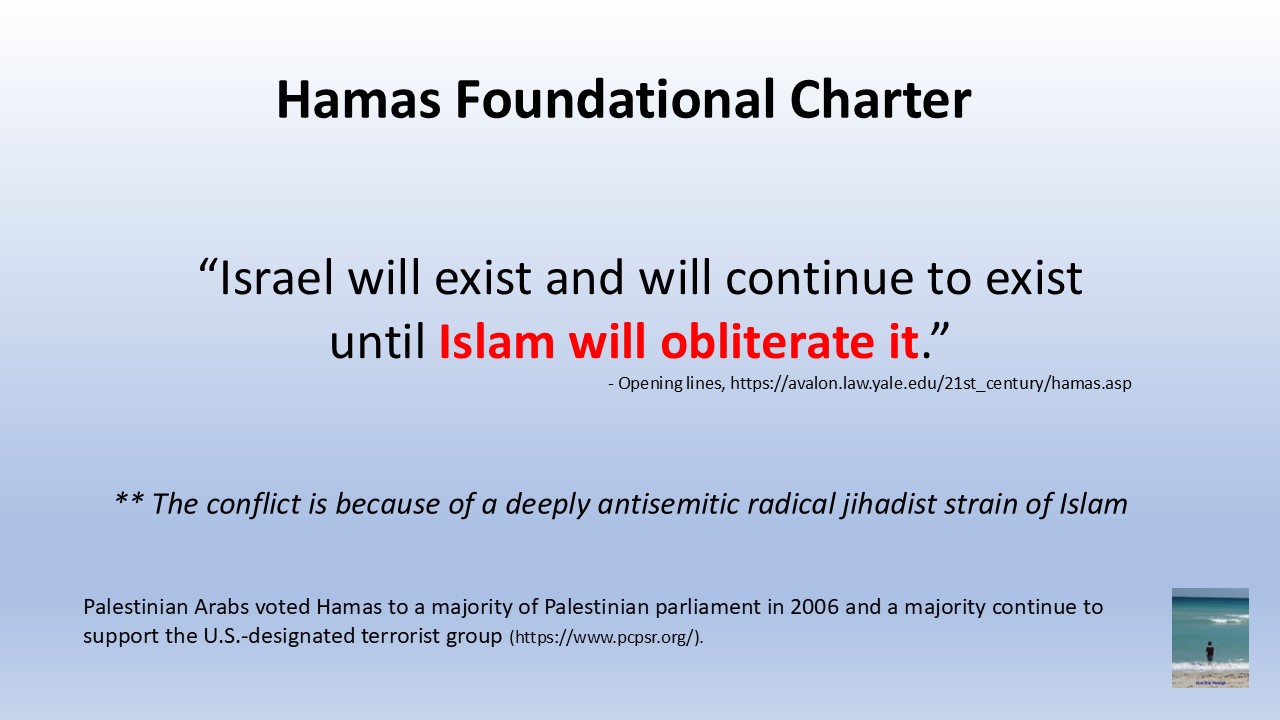
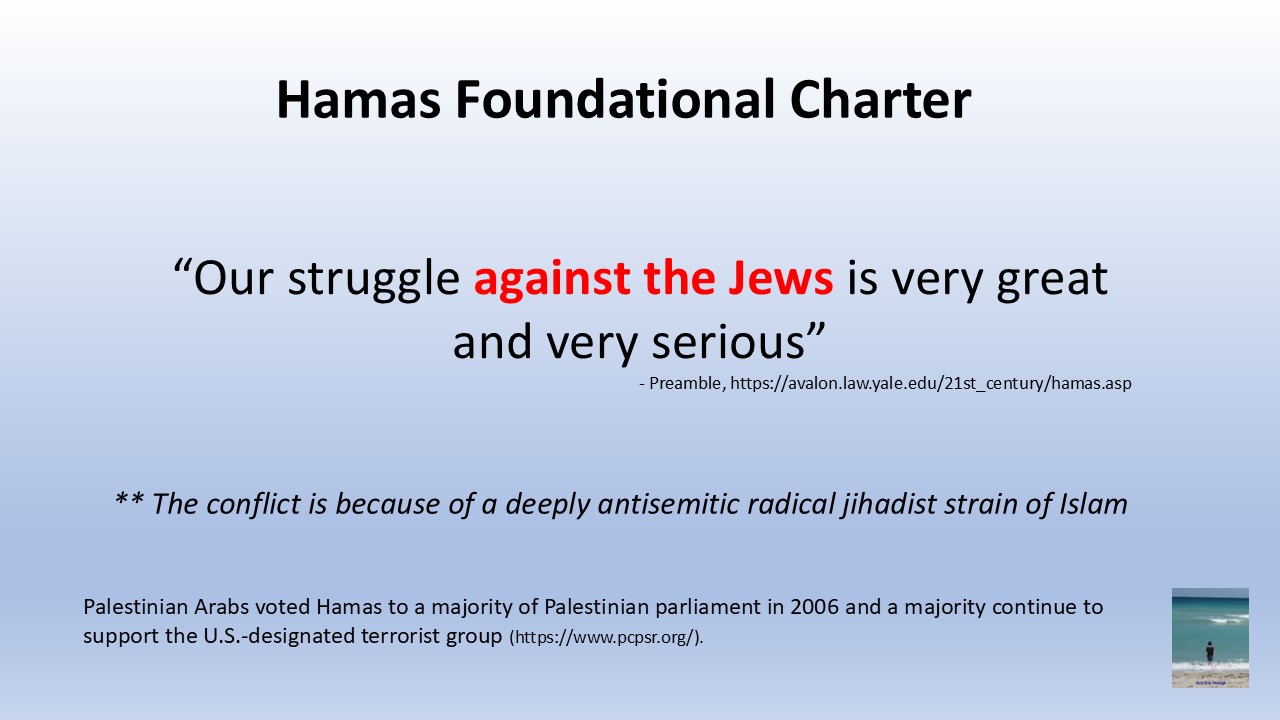
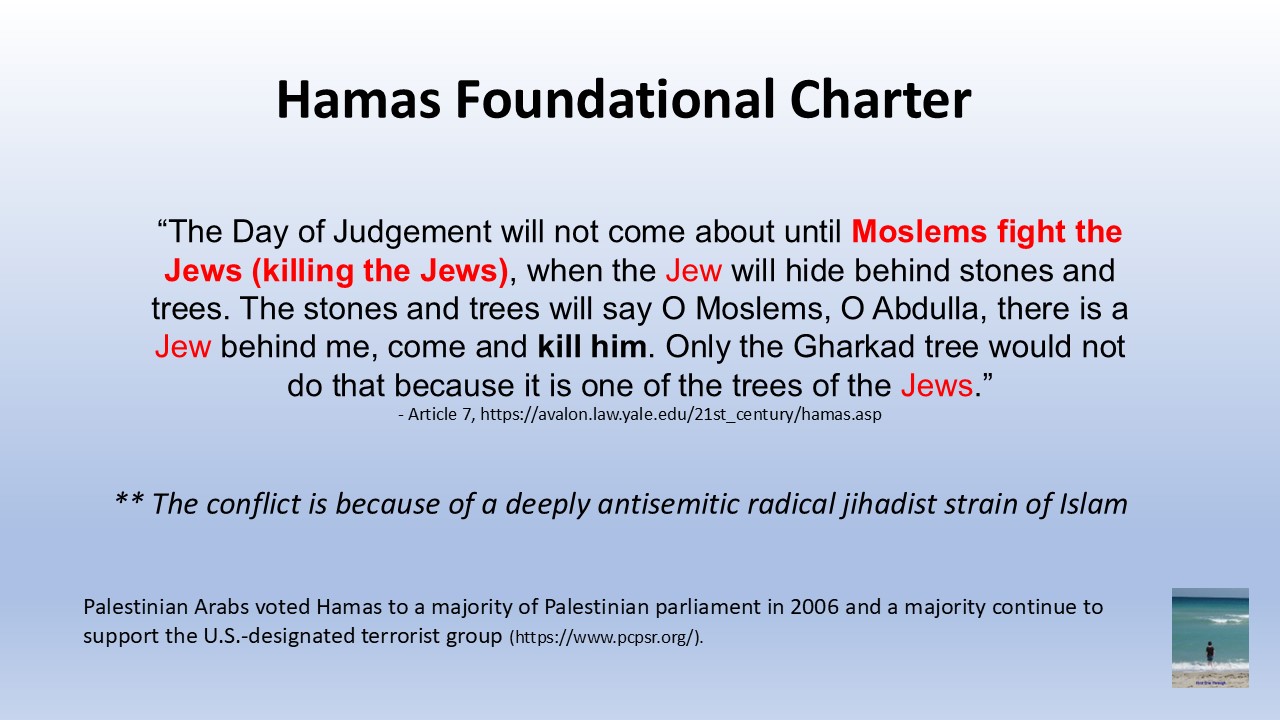
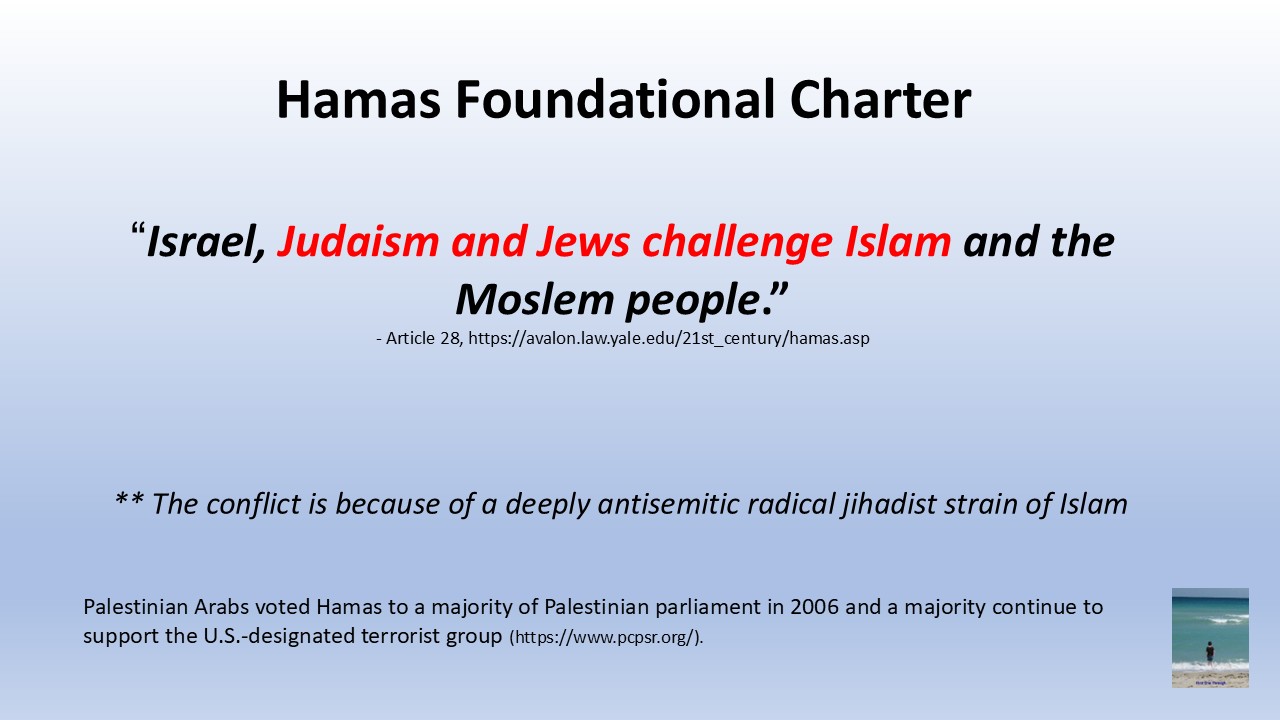
For starters, Israel’s land-based blockade started in June 2007 after Hamas, a group whose antisemitic foundational charter is sworn to the killing of Jews and destruction of Israel, took over the Gaza Strip. The naval blockade started over a year later, in January 2009, after Hamas started a war with Israel using imported missiles.

In July 2011, the UN released the Palmer Report which attested to the legal nature of Israel’s blockade. Specifically it wrote:

As this report has already indicated, we are satisfied that the naval blockade was based on the need to preserve Israel’s security.  Stopping the importation of rockets and other weapons to Gaza by sea helps alleviate Israel’s situation as it finds itself the target of countless attacks, which at the time of writing have once again become more extensive and intensive…  We have reached the view that the naval blockade was proportionate in the circumstances… The Panel therefore concludes that Israel’s naval blockade was legal… Israel faces a real threat to its security from militant groups in Gaza.  The naval blockade was imposed as a legitimate security measure in order to prevent weapons from entering Gaza by sea and its implementation complied with the requirements of international law.

This is never mentioned in the article.

The article – over-and-again – states that the boat’s mission is to bring aid to “a population in Gaza facing rising starvation.” If that was the goal, it could have easily set sail directly to Ashdod where the aid would have been processed and thereafter sent by trucks into Gaza. However, the actual aim of the ship was to break Israel’s legal blockade during a war via a publicity stunt. If the world pressured Israel to remove the blockade, more weaponry would be able to flow into the terrorist enclave to continue the genocidal war against Israel.

Maritime closure on Gaza has caught weapons bound for Hamas, this video from 2011

Yet the Times preferred to write a propaganda piece on behalf of Gaza’s supporters. It continued on “the activist group” narrative:

It was no accident that the article led with “baby formula, diapers” to make the mission appear to be about innocent babies. This was raw propaganda. The blockade isn’t about baby food but weapons used to slaughter Israelis. In 2010, a ship called the Mavi Marmara prepared weapons to kill Israelis when they boarded the boat to escort it to Ashdod. The “activists” had gas masks at the ready with iron bars and knives.

“Activists” on the Mavi Marmara in May 2010

When the article chose to give context to the “flotilla,” it only mentioned the ships which sailed over the past year, making them appear to be in reaction to Hamas’s current war. The various European “aid ships” are marketed as concerned about the situation of civilians during the current battles.

The reality is that these boats have been going on for years. Europeans have constantly tried to end Israel’s blockade of the terrorist enclave, which would open the door for Hamas and the other terrorist groups to stockpile even more weaponry to wage war against Israel.

European “Flotilla” bound for Gaza in 2015

As described above, the blockade is legal and Israel enforces it with the minimum use of force necessary under the circumstances. Still, the Times only quoted these “activists” saying that Israel was acting in an illegal manner without any background. Zero. Just a quote without explaining the history of the blockade or its legal nature.

The Hamas fluff piece went on to quote “Adalah, an Israeli human rights group,” which advocates for Israeli Arabs. It did not share that the group is funded by Europeans and George Soros’s Open Society Foundation. For years – well before the latest Hamas war – the group called Israel “an apartheid state committing genocide,” which should be boycotted. It has even held events with groups affiliated with terrorist groups like the Popular Front for the Liberation of Palestine.

But the Times didn’t write any of that. A reader is left to believe that an Israeli human rights group wanted to provide legal services to aid activists and was blocked by the Israeli army. A scripted anti-Israel narrative

With so much fluff, perhaps the editors may have wanted at least a little background for the episode, so in the ninth paragraph (out of twelve) a smidgen of color was given. Just a drop, still never adding that Israel has let in tons of non-military aid to Gaza, and forwards whatever non-military aid the ships bring.

The article states that the blockade started in 2007 which is only partially accurate. as mentioned above, the land blockade began in 2007 while the naval blockade started in 2009.

Remarkably, the most famous of these flotillas, the Mavi Marmara in May 2010, was never mentioned. The nature of the political boat stunts – in this case deadly – was never flagged.

Instead, the legal naval blockade was wrongfully portrayed as an “Israeli military” war against “rights groups.”

Europeans attempting to facilitate the flow of weaponry into the hands of Gazans during a genocidal war is appalling. That it is provided cover by the media is disgraceful.

Antisemitism in universities is punishable when it is “targeted and persistent.” Jew-hatred in the media should be punishable when the basic context of the situation is consistently omitted.

France’s Old Habit Of Vilifying Jews For Being Victorious

In 1967, just days after Israel’s miraculous victory in the Six-Day War — a war it neither started nor wanted — French President Charles de Gaulle publicly rebuked Jews:

  • the Jewish State was “war-like state bent on expansion”
  • impugned the Jewish people “throughout the ages” as “an elite people, sure of themselves and domineering,” who had “created ill will in various countries at various times.”

The accusation wasn’t merely tone-deaf — it was malicious in intent. Israel had just repelled a coordinated Arab onslaught aimed at its annihilation. In response, rather than offering admiration or even neutrality, de Gaulle reached for the language of old European antisemitism: that Jews are too proud, too successful, too capable — and therefore must be cut down to size.

Historian Bernard Lewis noted how this framing, after 1967, became a tool not just of European elites but of Arab leaders humiliated by defeat. The Jews had survived — worse, they had won — and for that, they were to be condemned as arrogant victors. He quoted one writer who said “It was bad enough to be conquered and occupied by the mighty empires of the West, the British Empire, the French Empire, but to suffer this fate at the hands of a few hundred thousand Jews was intolerable.”

Fast forward to today.

French President Emmanuel Macron repeats the posture of his predecessor, albeit with 21st-century polish. After Hamas butchered Israeli civilians in their homes on October 7, 2023, Macron offered sympathies — but quickly shifted blame back to Israel.

In the first weeks after Israel struck back at Hamas, Macron accused Israel of collective punishment, while never applying the same outrage to Hamas’s use of civilians as human shields, or to its decades-long charter of antisemitic terror.

And now, Macron leads calls for France to unilaterally recognize a Palestinian state — not as a reward for peace, but as a diplomatic slap to the Jewish state for defending itself too well.

French President Emmanuel Macron and Israeli Prime Minister Benjamin Netanyahu

Like de Gaulle, Macron cloaks condescension in the language of law and balance. But the message is unchanged:

When Jews are victims, they earn pity.
When Jews resist, they invite suspicion.
When Jews win — they must be reprimanded.

To call Jews “domineering” after a war of self-defense is to rewrite the story of Jewish survival into one of guilt. France did it in 1967. It is doing it again today.