The Personalisation of War

There was a time that wars were fought between countries. Whether military or economic, a country or a group of countries would battle other countries. In extreme cases, the wars would ensnare much of the world.

But in modern times, battles have moved to a personal level.

Non-State Actors

Non-state actors like Islamic Jihad and the Palestinian Liberation Organization have been waging political terrorism for a long time. However in modern times (since 2011), terrorist groups like ISIS and Boko Haram moved the goalposts considerably, by using social media as an active part of their war efforts. The groups used Facebook and Twitter to share videos of brutal murders to both instill fear in their enemies and to enlist new troops. Such efforts were so successful, that politicians made combating these groups online one of their priorities in defeating the terrorists.

While social media became a new fertile area for the recruitment of civilians, the war efforts were still overseen and directed by the leadership of the terrorist groups. The leaders either deployed the new recruits in active fields of battle such as Iraq and Syria, or instructed them to conduct terrorist attacks in western countries that were supporting the battle against the jihadist groups.

That formula began to evolve in 2014.

Armies of One

For most of mankind’s history, an individual was a local being without a voice. In dictatorships, people’s opinions were irrelevant. A person’s existence was to pay taxes and serve in the army to further the goals of the leader. Even in democracies in which an individual’s opinion mattered in shaping a government’s makeup and therefore its policies, the individual’s impact would be relegated to the voting booth. If people wanted to achieve a more direct impact on government foreign policy, the choices were being part of a massive protest or joining the army or government. However, in each of those cases, the ultimate arbiter of foreign policy remained at the government level.

Social media has started to change that dynamic. Not only could non-state actors reach civilians around the world as described above, civilians could share their opinions and express their anger and actually impact foreign policy in a number of ways.

Defamation: In the third Hamas war from Gaza against Israel in 2014, Palestinian Arabs took to Facebook and Twitter to describe their personal situation. As described in the new book “War in 140 Characters: How Social Media is Reshaping Conflict in the Twenty-First Century,”  a teenage girl from Gaza posted live about her fear and suffering in the war, reaching hundreds of thousands of people around the world, punishing Israel’s image on a global level. According to the author of the book, “Israel lost the global information war because it did not ‘bleed’ enough, and as long as it maintains its military advantage, it never will.

Violence: By the 2014 war’s end, the Palestinian Arabs in the West Bank felt that they had also not ‘bled’ enough, and began a car ramming and stabbing intifada against Israelis, both civilians and soldiers. The attacks were inspired – but not orchestrated – by Arab leadership from the West Bank Fatah party as well as the Gaza-based Hamas party.


Cartoon from Fatah website directing people to use cars to run over Jews
November 6, 2014


Palestinian girl discussing stabbing Jews
November 12, 2015

The deadly “lone wolf” attacks in the United States from 2015 to 2017 were similarly inspired by ISIS, but were not planned by the terrorist group’s leadership.

Economic: The personal war is not just being waged with violence and libel. It is economic as well.

In the past countries-war model, countries would use economic pressure against one another, such as after Egypt lost the Yom Kippur War to Israel in 1973, it engaged in an economic war against all of the countries that supported Israel including the US via an oil embargo. In today’s individual-war model, people engage in a boycott, divestment and sanctions (BDS) campaign against Israel. The BDS movement targets the government of Israel, professors at Israeli universities, Israeli companies and even individuals looking to perform in Israel. The latest victim was the pop singer Lorde, who cancelled her Israel concert in December 2017 after being barraged by threats from individuals.

This is a new phenomenon. Individuals are now attackers and individuals are now victims. The ties that bind both attacker and victim are no longer based on nationality and borders, but by identity. Jihadists fight anti-jihadists around the world, and anti-Zionists fight Zionists everywhere. The global economy and pervasiveness of social media have enabled the protagonists to organize.

In such a new format, is Israel worse off or better? The one Jewish State is outnumbered 57-to-1 by the number of Muslim countries, but by 100-to-1 in terms of Muslim-to-Jewish population (twice as small). In general, Israel is just a single country out of 193 countries at the United Nations, but is dwarfed by 900-to-1 in terms of the global population (five times as small).

In a new personalized-war model, the small country looks even smaller.

But the personalization of war also leads invariably to a personalization of defense, and therein lies an amazing opportunity.

There is only one Jewish State and only a limited number of Jews, so Israel will always be outnumbered on the world stage. But there are millions of pro-Zionists in the world. These people must be educated and prepared to counter the scourge of demonization that is being touted on social media. They should be marketed to as consumers of Israeli products to repel the efforts of BDS minions. And they should be called upon to defend Israel when individuals, groups and countries shout “from the River to the Sea, Palestine will be free,” in efforts to destroy the one Jewish State.

Sign up to FirstOneThrough and other pro-Israel sites and share the articles and videos broadly on social media. The personalization of war has made everyone an active participant in the fight.


Related First.One.Through articles:

Car Ramming from Islamic Terrorism Explodes as it Approaches its Second Anniversary

The Big, Bad Lone Wolves of Terrorism

Stabbing the Palestinian “Right of Return”

The Current Intifada against Everyone

The New Salman Abedi High School for Boys in England and the Mohamed Lahouaiej Bouhlel Soccer Tournament in France

“Won’t you be my Neighbor?”

Israel’s Peers and Neighbors

Subscribe YouTube channel: FirstOneThrough

Join Facebook group: FirstOne Through  Israel Analysis

The Non-Orthodox Jewish Denominations Fight Israel

The tensions between the non-Orthodox Jewish denominations and Israel seemingly became tense over the Israeli government’s decision to postpone plans for an egalitarian prayer space at the Kotel, the Western Wall. In truth, the relationship between the Reconstructionist, Jewish Renewal and Reform branches of Judaism (the 3R’s) and the Jewish State have been terrible for a long time.

There are a number of Jewish organizations that actively seek to harm Israel in public fora. As detailed in “Unity – not Uniformity – in the Pro-Israel Tent,” the largest and most noxious of the left-wing organizations are: the Jewish Voice for Peace that advocates for a global boycott of Israel; J Street that advocates for sanctions against Israel at the United Nations; and the New Israel Fund, that supports organizations that go on global tours bad-mouthing Israel and groups that seek to destroy the Jewish character of Israel.

What that article did not convey and will be discussed and explored here, was that these anti-Zionist groups are uniquely backed by non-Orthodox rabbis.

Jewish Voice for Peace

Arguably the most proudly vocal anti-Zionist group is the Jewish Voice for Peace, JVP. The rabbis of JVP have supported the Gaza flotilla; written books demonizing Israel as a modern day blood libel; and arguably promoted the murder of Israelis.


JVP post supporting convicted terrorist Rasmeah Odeh

JVP’s rabbinic leadership almost exclusively comes from the Reconstructionist and Jewish Renewal branches of Judaism. At their core, they seek a Judaism that has nothing to do with Zionism. Many are proudly anti-Zionist.

Rabbi Joseph Berman (Non-Denominational)
Rabbi Linda Holtzman (Reconstructionist)
Rabbi Buzz Bogage, Denver, CO
Rabbi Brant Rosen, Evanston, IL (Reconstructionist)
Student Rabbi Leora Abelson
Rabbi Rebecca Alpert (Reconstructionist)
Rabbi Lev Baesh (Reform)
Rabbi David Basior (Reconstructionist)
Rabbi Haim Beliak (Jewish Renewal)
Rabbi Joseph Berman (Unaffiliated)
Rabbi Andrea Cohen-Kiener (Jewish Renewal)
Rabbi Meryl Crean (Reconstructionist)
Rabbi Michael Davis (also backed by the Students for Justice in Palestine which has supported terrorist groups)
Rabbi Art Donsky (Non-denominational)
Rabbi Michael Feinberg
Rabbi Ari Lev Fornari (Reconstructionist)
Rabbi Sarah Bracha Gershuny (Egalitarian)
Rabbi Shai Gluskin (Reconstructionist)
Rabbi Borukh Goldberg
Rabbi Lynn Gottlieb (Jewish Renewal)
Rabbi Julie Greenberg
Rabbi Edward Klein
Rabbi Alan LaPayover (Reconstructionist)
Rabbi Eyal Levinson (Jewish Renewal)
Rabbi Jeremy Milgrom (Conservative)
Rabbi David Mivasair (Progressive)
Rabbi Dev Noily (Progressive)
Rabbi Alexis Pearce (Reconstructionist)
Rabbi Michael Ramberg (Progressive)
Rabbi Ken Rosenstein (Jewish Renewal)
Rabbi Shifrah Tobacman (Jewish Renewal)
Rabbi Brian Walt
Rabbi Lew Weiss (Reform)
Rabbi Alissa Wise (Reconstructionist)
Rabbi Joey Wolf (Reconstructionist)
Rabbi Laurie Zimmerman (Reconstructionist)
Rabbi Rain Zohav (Jewish Renewal)

The Anti-Defamation has essentially labeled JVP a hate group stating:

“JVP has consistently co-sponsored demonstrations to oppose Israeli military policy that have been marked by signs comparing Israel to Nazi Germany and slogans that voice support for groups like Hamas and Hezbollah. JVP has not condemned or sought to distance itself from these messages.”

The rabbis of these communities put politics front-and-center of their religion. And their politics are anti-Zionism.

J Street

J Street officially states that it is not in favor of the BDS movement, but has supported many speakers who do call for the boycott of Israel. More, J Street actively lobbied the Obama Administration to allow the censure of Israel at the United Nations and enabling the resolution labeling Israeli territory east of the Green Line to be deemed illegal.

The rabbinic core of J Street is slightly more “traditional” than the rabbis from JVP, counting many Reform rabbis. The list of hundreds of rabbis is too long to review here, but a sample highlights the trend:

Rabbi Ellen Lippmann, Brooklyn, NY (Reform)
Rabbi Lauren Henderson, Chicago, IL (Conservative)
Rabbi Alexander Kress, Abington, PA (Reform)
Rabbi Marisa Elana James, New York, NY (Reconstructionist)
Rabbi Amichai Lau-Lavie, New York, NY (Conservative)
Rabbi Amanda Schwartz, New York, NY (Conservative)
Rabbi Scott Aaron, Pittsburgh, PA (Reform)
Rabbi Alison Abrams, Deerfield, IL (Reform)
Rabbi Ruth Adar, Oakland, CA (Reform)
Rabbi David Adelson, New York, NY (Reform)
Rabbi Katy Z. Allen, Wayland, MA (Independent)
Rabbi Rebecca Alpert, Philadelphia, PA (Reconstructionist)
Rabbi Thomas Alpert, Needham, MA (Reform)
Rabbi Steven Altarescu, Bronx, NY (Reform)
Rabbi Camille Shira Angel, San Francisco, CA (Reform)
Rabbi David Ariel-Joel, Louisville, KY (Reform)
Susan J Averbach, San Francisco, CA (Humanistic Judaism)
Rabbi Benjamin Arnold, Evergreen, CO (Reconstructionist)
Rabbi Melanie Aron, Los Gatos, CA (Reform)
Rabbi Arik W. Ascherman, Jerusalem, Israel (Reform)
Rabbi Aura Ahuvia, Woodstock, NY (Reconstructionist)
Rabbi Larry Bach, Durham, NC (Reform)
Rabbi Lev Baesh, Lexington, MA (Reform)
Rabbi Chava Bahle, Suttons Bay, MI (Jewish Renewal)
Rabbi Justus Baird, Princeton, NJ (Reform)
Rabbi Rachel Evelyne Barenblat, Williamstown, MA (Jewish Renewal)
Rabbi Benjamin H. Barnett, Corvallis, OR (Pluralistic)
Rabbi Bernard Barsky, Dayton, OH
Rabbi Lewis M. Barth, Encino, CA (Reform)
Rabbi Geoffrey Basik, Baltimore, MD (Reconstructionist)
Rabbi David Dunn Bauer, San Francisco, CA (Reconstructionist)
Rabbi Renee H. Bauer, Madison, WI
Rabbi David Baylinson, Atlanta, GA (Reform)
Rabbi Micah Becker-Klein, Hockessin, DE
Rabbi Martin Beifeld, Richmond, VA (Reform)
Rabbi Anne Belford, Houston, TX (Reform)
Rabbi Marc J. Belgrad, Buffalo Grove, IL (Reform)
Rabbi Arnold Mark Belzer, Savannah, GA (Reform)
Rabbi Jordan Bendat-Appel, Highland Park, IL (post-denominational)
Rabbi Karen Bender, Tarzana, CA (Reform)
Rabbi Olivier BenHaim, Seattle, WA (Reform)
Rabbi Allen Bennett, San Francisco, CA (Reform)
Rabbi James Bennett, St. Louis, MO (Reform)
Rabbi Philip J. Bentley, Hendersonville, NC (Reform)

The Reform movement isn’t explicitly anti-Israel the way that much of the Reconstructionist and Jewish Renewal movements are currently. However, the current head of the Reform movement, Rabbi Rick Jacobs is particularly political and claims that the official stance of Reform Judaism is anti-settlements. How he declared that his personal anti-Jews living in Judea and Samaria politics should frame the entire movement is something that members of Reform Judaism need to address.

New Israel Fund

The New Israel Fund gives money to groups like Adalah that have a stated purpose of ending any Jewishness in Israel. It lures people to donate money stating that it is about equality in Israel – and by that it means ending the Jewish Law of Return; the Hatikvah; Jewish star on the national flag, et cetera.

The international council of NIF features a number of non-Orthodox rabbis:

Rabbi Rachel Mikva (Reform)
Rabbi Bernard Mehlman (Reform)
Rabbi Anson Laytner (Reform)
Rabbi Daniel Weiner (Reform)
Rabbi David Levin (Reform)
Rabbi Morris Allen (Conservative)
Rabbi Norman Cohen (Reform)
Rabbi Alexander Davis (Conservative)
Rabbi Shosh Dworsky (Conservative)
Rabbi David Freedman
Rabbi Yosi Gordon (Conservative)
Rabbi Michael Adam Latz (Reform)
Rabbi Cathy Nemiroff (Reform)
Rabbi Debra Rappaport (Reform)
Rabbi Alan Shavit-Lonstein (Conservative)
Rabbi Adam Stock Spilker (Reform)
Rabbi Sharon Stiefel (Reconstructionist)
Rabbi Aaron Weininger (Conservative)
Rabbi Marcia Zimmerman (Reform)
Rabbi Sharon Brous (Conservative)
Rabbi Rachel B. Cowan (Reform)
Rabbi Jerome K. Davidson (Reform)
Rabbi Marion Lev-Cohen (Reform)
Rabbi J. Rolando Matalon (non-denominational)
Rabbi Aaron Panken (Reform)
Rabbi Gordon Tucker, White Plains (Conservative)

Relative to JVP and J Street, the New Israel Fund has many more Conservative rabbis joining its leadership ranks. But still, none of these anti-Zionist organizations that have thousands of rabbis in leadership positions have a single Orthodox rabbi.

Why?

Beyond Liberal Politics

There is no question that some of these forms of Judaism revolve around liberal politics more than religion. Many of the synagogues state clearly on their websites that they are focused on tikkun olam (repairing the world), and they do this not through Torah-inspired commandments like helping the widow and orphan, but in new imagined ways like raising the minimum wage and saving the planet.

But there are many liberal rabbis in the Orthodox community too, and they support the Jewish State. They are proud to point out that Israel is one of the most liberal countries in the world, and certainly within the xenophobic, antisemitic and misogynistic Middle East. When liberal Orthodox rabbis find a need to criticize the Israeli government, they do it directly with the government in a constructive manner, not through antagonistic actions on the global stage.

Therefore, the issue cannot be simply attributed to the politics of many rabbis in the non-Orthodox world. There must be something systemic in the religious philosophy of those denominations that make them embrace Israel-bashing.

Who Is a Jew

The key Jewish prayer Shemoneh Esrei recited several times every day begins with the blessing of “our God and the God of our fathers.” It encapsulates the notion that Judaism is both a religion of being, passed down physically from our ancestors, as well as one of choice – “our God” – in which each person takes ownership of his faith.

In regards to being a Jew, Orthodox Judaism (and Conservative Judaism, at this point in time) have held the line on using traditional halacha in critical life events that define “who is a Jew.” Two of those are birth and marriage.

Both the Orthodox and Conservative movements believe that the child of a Jewish mother is a Jew, regardless of the religion of the father. The other denominations believe in patrilineal descent, that religion can be passed down via the father’s religion. This is a fundamental breakdown between the religious denominations regarding “who is a Jew.”

Similarly, Orthodox and Conservative rabbis do not perform interfaith weddings. The rabbis in the other movements are very proud to perform such ceremonies and openly advertise their services.

These two life events are obviously interconnected. An interfaith couple will have a non-Jewish parent, and about half of the time, produce a non-Jewish child according to the traditions of matrilineal descent practiced by Orthodox and Conservative Judaism. Sanctioning interfaith marriages has produced a chasm between the Reform/Reconstructionist/Jewish Renewal (3R) movements with other Jewish denominations, AND with Israel itself.

Israel created a Law of Return in 1950 that allowed any Jew to move to Israel. In 1970, the law was amended to clarify that a Jew “means a person who was born of a Jewish mother or has become converted to Judaism and who is not a member of another religion.” While the 1970 amendment made provisions for the non-Jewish spouse and children of a Jew to move to Israel, the Law of Return used a definition of matrilineal descent that only Conservative and Orthodox used, upsetting other denominations that support patrlineal descent. However, the law’s clause on conversion did accept non-Orthodox conversions performed outside of Israel, as decided by the Israeli Supreme Court in March 2016.

Universalism versus Particularism

Being a Jew is simply part one. The actions and demands of the religion, the mitzvot, are part two, and the breakdown between Orthodox Judaism and the branches that seek to harm Israel are profound.

Orthodox Judaism believes that the Torah has 613 commandments for a Jew to live by. Some are clear-cut, like “Do not kill,” while others are subject to broader interpretation like “keep the Sabbath holy,” as there may be many different methods of keeping the Sabbath holy. Conservative Judaism basically follows the concept of the 613 mitzvot, but interprets them differently (for example, Orthodox Jews will not use electricity on Sabbath to “keep it holy,” while Conservative Jews will often use electricity.)

In contrast, the 3R branches of Judaism have revamped the mitzvot in a way that fits a “new age” rewriting of the laws. They have made the commandments about human-centered spirituality that spreads out to God and all mankind, rather than commandments that are passed down from God to man.

The Jewish Renewal site makes its mantra clear, stating it’s “a transdenominational approach to revitalizing Judaism.” Its reach is to everyone: “Renewal is an attitude, not a denomination,” with “an emphasis on accessible spiritual experience.” In other words, this is a movement without demands, such as only eating kosher foods. It is more akin to a yoga retreat. Not only is there no need to be Jewish, a person needn’t perform ancient rote rituals. Just engage in new age meditation.

Reconstructionist Judaism is more traditional than Jewish Renewal, but far from “traditional.” Its emphasis is on “Jewish Identity,” as its website states: “what primarily gives Jews our identity is not belief but rather the feeling of belonging to the Jewish civilization itself. We observe Jewish holidays, rituals and customs, not because a divine being commanded us to, but because it is our primary method of reinforcing Jewish identity.” In other words, God’s commandments are not really commandments (or God doesn’t exist) for Reconstructionist Jews. The basis for observing any tradition is simply a matter of keeping the “Jewish identity” around, not because of any higher authority.

These days, the Reform movement has put the world front and center. It’s mission is to build “communities that transform the way people connect to Jewish life, building a more whole, just, and compassionate world.” It does this through tikkum olam, “repairing the world.” The movement’s leader, Rabbi Rick Jacobs, speaks of Reform Judaism as operating in concert with the global community: “the heart of a tikkun olam that embraces always both the universal and the particular.

These three branches of Judaism approach religious practice very differently than Orthodox Judaism. Their Judaism is centered on global mankind’s yearning to connect – to the planet and the people around the world – to achieve a personal fulfillment of serenity. Jewish rituals are props to achieve that state of zen. Similarly, non-Jews bring their own props to their encounters with God and mankind. Universalism and particularism (of props) coexist in a human-centered meditative state of bliss.

This 3R approach towards religion is an inversion of Orthodox Judaism that is premised on a top-down philosophy. The Bible and Ten Commandments began with God, not man. The 613 commandments given to Jews were just that – commandments – not guides to validate one’s own sense of social justice. These commandments were uniquely given to Jews, as Orthodoxy believes that non-Jews were given only seven commandments which relate to universal morality.

The orientation of particularism of Orthodox rabbis extends broadly: to Jewish people (they do not perform interfaith weddings); the Bible (with unique commandments only for Jews); and to the holy land itself, which they believe was given to the Jewish people. According to a Pew poll in 2013, 84% of Orthodox Jews believe that God gave Israel to the Jews. That compares to only 54%, 35% and 24% of Conservative, Reform, and non-denominational Jews, respectively. By way of comparison, 55% of Christians believe that God gave Israel to the Jews. How remarkable is that? Christians are more Zionistic than non-Orthodox Jews.

This dichotomy between Orthodox and non-Orthodox denominations is at the core of different approaches to the Jewish State and the holy land. For Orthodox Jews, the Jewish State is particular, just like the bible and Jewish people. In contrast, the non-Orthodox denominations focus on universalism, and shun particularism as a form of tribalism and nationalism, with more than a whiff of racism.

It is therefore not a surprise that Jewish denominations that shun particularism in favor of universalism also denounce Zionism.

But why would universalists attack Israel on the global stage?

The fundamental approaches to Judaism, Jews and the holy land do not just lead to a difference of opinions; it destroys the baseline of communication, making discussion virtually impossible. In mathematical terms, the universalists are speaking in base 10 and the particularists are speaking in base 7. They can both understand each other in simple matters, like single digit numbers or that Abraham is the father of monotheism. But on complicated matters like a democratic Jewish State living in peace and security in the heart of the Arab Muslim Middle East, the interaction falls apart like discussing the number 242 (equal to 242 in base 10, but just 170 when converting base 7 to base 10). They are just not talking about the same thing. So rather than talk to each other, they talk to people with a similar language. The 3R rabbis take their version of tikkun olam to the global stage, like the United Nations.

Whereas Orthodox liberal Jews can call out for rights for Israeli Arabs and Palestinian Arabs without vilifying Israel, non-Orthodox rabbis seemingly cannot. Orthodoxy can approach equality within the rubric that the holy land as special and unique for Jews, while the non-Orthodox only see tribalism and primitive thinking. The 3R rabbis burnish their bona fides by burning ties that could reek of particularism as they engage with the global community.

The Current Dynamic

The universalism / “anti-tribalism” movement within the 3R denominations often attacks both Orthodox Jews and the Jewish state. It has sometimes provoked a backlash.

In September 2015, the Reconstructionist movement announced a new policy to allow rabbis to marry non-Jews as a reaction to the movement’s conclusion that “many younger progressive Jews, including many rabbis and rabbinical students, now perceive restrictions placed on those who are intermarried as reinforcing a tribalism that feels personally alienating and morally troubling in the 21st century.” With such declaration, several Reconstructionist rabbis became fed up.

In April 2016, twenty Reconstructionist rabbis left the denomination to form Beit Kaplan, as they felt that the Reconstructionist movement had lost its way. They said that “the decision to form the association was sparked, in part, by the recent RRC policy shift that muddled the definition of what it means for a rabbi to have a Jewish family. Other contributing factors include a desire to return the focus of liberal Judaism to Rabbi Mordecai Kaplan’s vision of Jewish peoplehood and a desire to affirm connections to the Jewish people globally, including in Israel.”

Several Reconstructionist rabbis became infuriated with the official positions of Reconstructionist’s universalism. Their new assembly felt compelled to clarify that not only did it think that sanctioning rabbis intermarrying was a destructive force on the Jewish family, it said that it “unequivocally reject[s] any movement to delegitimize Israel in the community of nations,” because the Reconstructionist movement had become a haven for demonizing the Jewish State.

In short, Beit Kaplan felt that the Reconstructionist movement had lost the basic concept of the definition of being a Jew and the special nature of the Jewish State.

The 3R rabbis’ Israel-bashing had started to gain momentum during the 2014 Gaza War, when many non-Orthodox rabbis actively vilified the Jewish State. The lunatic rabbinic fringe even held fasts for the people of Gaza, but not for anyone in Israel.

Consider Rabbi Sharon Kleinbaum, the leader of an enormous gay Reconstructionist congregation, member of J Street and listed in Newsweek’s list of 50 Influential Rabbis. Her radical left-wing politics were mostly blessed by her members, but her tirades against Israel became too much for many to bear. In 2014, one of the board members of her congregation resigned, publicly stating the “recent [2014 Gaza War] events have demonstrated that CBST [the gay synagogue] is far more committed to a progressive political agenda than to the Jewish people….  I don’t want to raise my kids in a synagogue that’s praying for people firing rockets.

The attitude was pervasive. Leading rabbis of JVP and J Street – all non-Orthodox – called for a divorce between Judaism and the Jewish State, and between the holy land and Jews.

Consider Rabbi Brian Walt, a member of JVP and coordinator of the Jewish Fast for Gaza, who gave a talk entitled “Affirming a Judaism and Jewish identity without Zionism,” in which he declared: “political Zionism violates everything I believe about Judaism.” Or Rabbi Ellen Lippmann, on the board of J Street and signatory to the fast for Gaza who penned a letter for Code Pink to support the BDS movement, stating she “saw the destruction that is wrought by too many Israeli settlers,” making her change “my mind about the purchase of products made in the Jewish West Bank.

Non-Orthodox rabbis comfortably argued that there are too many Jews in the holy land because they segmented the religion, the people, the land and their identity. As they believe that religion is defined solely by identity, there is no need for a particular land, and no narrow definition of the Jewish people, as identity is self-selected.


Non-Orthodox rabbis wrap themselves in a tallit as a mere Jewish prop in a universalistic and humanistic approach towards meditation, while they shudder at the particularism of the God of Orthodox Judaism and the Jewish State.

Supporting Israel is not a battle of political orientation between liberal and conservative Jews. It is a philosophical break in the Jewish community with a fault line regarding the uniqueness of Jews and the Jewish State. The non-Orthodox denominations’ religious philosophy will only let it embrace an Israel that is: about people, not God; about rights not rituals; more secular than religious; more democratic than Jewish; and more universal than particular.


Related First.One.Through articles:

Students for Justice in Palestine’s Dick Pics

The Left-Wing’s Two State Solution: 1.5 States for Arabs, 0.5 for Jews

The Reform Movement’s Rick Jacobs Has no Understanding of Tolerance

A Seder in Jerusalem with Liberal Friends

There are Standards for Unity

The Three Camps of Ethnic Cleansing in the BDS Movement

The Anger from the Zionist Center

Tolerance at the Temple Mount

The Impossible Liberal Standard

Subscribe YouTube channel: FirstOneThrough

Join Facebook group: FirstOne Through  Israel Analysis

The War Preferred

Summary: When a country prefers to use military force over financial pressure, what does that tell you about the party’s temperament and goals?

USA’s Financial Pressure First

Over the past decades, the United States of America has made efforts to contain the nuclear ambitions of rogue states like the Islamic Republic of Iran and North Korea. The USA viewed those state sponsors of terrorism as too dangerous to be the guardians of weapons of mass destruction. But in each case, the USA used economic means of combating Iran and North Korea as a preferred course to launching into a military war.

These were not unique situations.

The US has engaged in economic warfare several times. In situations like Cuba, the US never opted to attack the country militarily. However, in other situations like Libya, the US imposed economic warfare initially in February 2011, before deciding to use its military force some weeks later.

For the United States, the preferred course of engagement was to use economic means of achieving it’s aims, whether it was for a country to reverse course on a nuclear program, or to stop a war. The USA wanted to save lives – both of its own soldiers as well as in the country it attacked – so it delayed the use of force as long as possible.

Arabs’ Attack First

The Arabs in the Middle East have used the exact opposite approach.

When Israel announced its new state in 1948, five Arab countries invaded with an enormous military. Death was not only a means to an end but a goal: the destruction of the Jewish State.

In 1973, on the holiest day of the Jewish calendar, Arab armies attacked Israel again. The Israeli army eventually repelled the invading forces of Egypt, Syria and Iraq, after incurring significant loss of life. In response to their loss, the Arab countries imposed an oil embargo on those countries that assisted Israel militarily during the battle. As summarized by the US State Department:

“During the 1973 Arab-Israeli War, Arab members of the Organization of Petroleum Exporting Countries (OPEC) imposed an embargo against the United States in retaliation for the U.S. decision to re-supply the Israeli military and to gain leverage in the post-war peace negotiations. Arab OPEC members also extended the embargo to other countries that supported Israel including the Netherlands, Portugal, and South Africa. The embargo both banned petroleum exports to the targeted nations and introduced cuts in oil production.”

The Arab countries were not concerned about the loss of life and rushed into battle to both destroy Israel having lost wars and land to Israel in 1948, 1956 and 1967. The Egyptian President Anwar Sadat said the following as it launched its attack on Israel on October 6, 1973:

“We have always felt the sympathy of the world but we would prefer the respect of the world to sympathy without respect.”

By 1973, the Arab goals’ had expanded to not only destroying Israel, but establishing a modicum of honor. As he conceded the war to the Israelis, Sadat said:

“We have been fighting Israel for the fifteenth day running. Israel fought us on its own in the first four days and its real position was exposed on the Egyptian and Syrian fronts; it [Israel] lost by its own admission, 800 tanks and more than 200 aircraft on both fronts. For the last 10 days, however, I have been fighting the United States on the Egyptian front, armed as she is with the most sophisticated weapons in her possession. I simply cannot fight the United States or bear the historical responsibility for having our armed forces destroyed once again.”

In launching the war, Egypt made clear that its honor was at stake, and in calling for a ceasefire, it opted to claim victory over Israel, but capitulation to the US. As the Arab state could not beat the United States militarily, it pivoted to an economic war, the Oil Embargo.

Palestinians’ Also Attack First

Like the other Arab countries, the Palestinian Arabs have opted to fight militarily as a first effort. However, lacking a standing army, the Palestinian Arabs have used terrorism against Israeli civilians and army alike.

After the formation of the Palestinian Authority in 1995 as a result of the Oslo Accords, Palestinians attacked Israelis throughout the 1990s. When the head of the PA, Yasser Arafat (fungus be upon him) failed to deliver a peace in September 2000, the PA launched a Second Intifada which claimed the lives of thousands of additional civilians. The end of the Intifada was brought about with the help of Israel’s establishing a security barrier which stemmed the flow of Palestinian terrorists into Israel, which propelled the Palestinians into a new war. The launch of the boycott, divestment and sanction (BDS) effort in 2005 was designed to economically strangle Israel.

A Palestinian demonstrator raises a knife, during clashes with Israeli police, in Shuafat refugee camp in Jerusalem, Friday, Oct. 9, 2015. (AP Photo/Mahmoud Illean)

The Palestinian Arabs – like the Arabs of the neighboring states – opted to use military force to try to destroy Israel. Only upon the failure of such efforts, did they switch to economic warfare.

  • Goals: The US took action to prevent the tremendous loss of life (rogue states with nuclear weapons), while the Arab goal was to kill and destroy.
  • Tactics. The US pursued economic pressure first to prevent the loss of life, whereas the Arab states immediately went to war.

The consistency of the goals and tactics of the United States and Arab world is a fabric of their world view: the US has a goal of preserving peace, so uses military force as a last resort. The Arab states have a goal of destroying Israel, so attack it first and only resort to a BDS campaign once they conclude that they cannot win militarily.


Related First.One.Through articles:

Israel and Wars

The Palestinians aren’t “Resorting to Violence”; They are Murdering and Waging War

Paying to Murder Jews: From Iraq, Saudi Arabia and Iran to the Palestinian Authority

What do you Recognize in the Palestinians?

I’m Offended, You’re Dead

Subscribe YouTube channel: FirstOneThrough

Join Facebook group: FirstOne Through  Israel Analysis

Is Israel Reforming the Muslim Middle East? Impossible According to The NY Times

The New York Times has been advancing the notion that liberal values are popping up in the Middle East. Despite the actual murder and mayhem brought by the “Arab Spring,” the Times published articles about the advancement of women’s rights in Iran and Saudi Arabia, as well as the acceptance of the gay and lesbian communities in Lebanon.

These recent phenomena may be true, but it is interesting that Israel is never mentioned in the articles – the one country that has equality for women and the LGBT community.

LGBT Rights

Consider the December 31, 2017 article “Coming Out in Lebanon, and Helping it to be More Tolerant.” The article detailed that most of the countries in the Middle East have laws punishing homosexual activity, naming several Arab countries before highlighting the unique position of Lebanon:

Throughout the Middle East, gay, lesbian and transgender people face formidable obstacles to living a life of openness and acceptance in conservative societies.

Although Jordan decriminalized same-sex behavior in 1951, the gay community remains marginalized. Qatar, Sudan, the United Arab Emirates and Yemen all outlaw same-sex relations. In Saudi Arabia, homosexuality can be punished by flogging or death.

In Egypt, at least 76 people have been arrested in a crackdown since September, when a fan waved a rainbow flag during a concert by Masrou’ Leila, a Lebanese band with an openly gay singer.

If there is one exception, it has been Lebanon. While the law can still penalize homosexual acts, the society has slowly grown more tolerant as activists have worked for more rights and visibility.”

This is preposterous. The “one exception” of tolerance “throughout the Middle East” is Israel, not Lebanon.

The International Lesbian, Gay, Bisexual, Trans and Intersex Association (ILGA) produced detailed reports about the countries of the world that  protect or criminalize LGBT relationships. In every year, Israel stands out as an island of acceptance for the LGBT community for thousands of miles.

From Morocco to Taiwan and from South Africa to Russia, there is a single country that has laws protecting the LGBT community. And it is not Lebanon, but Israel.


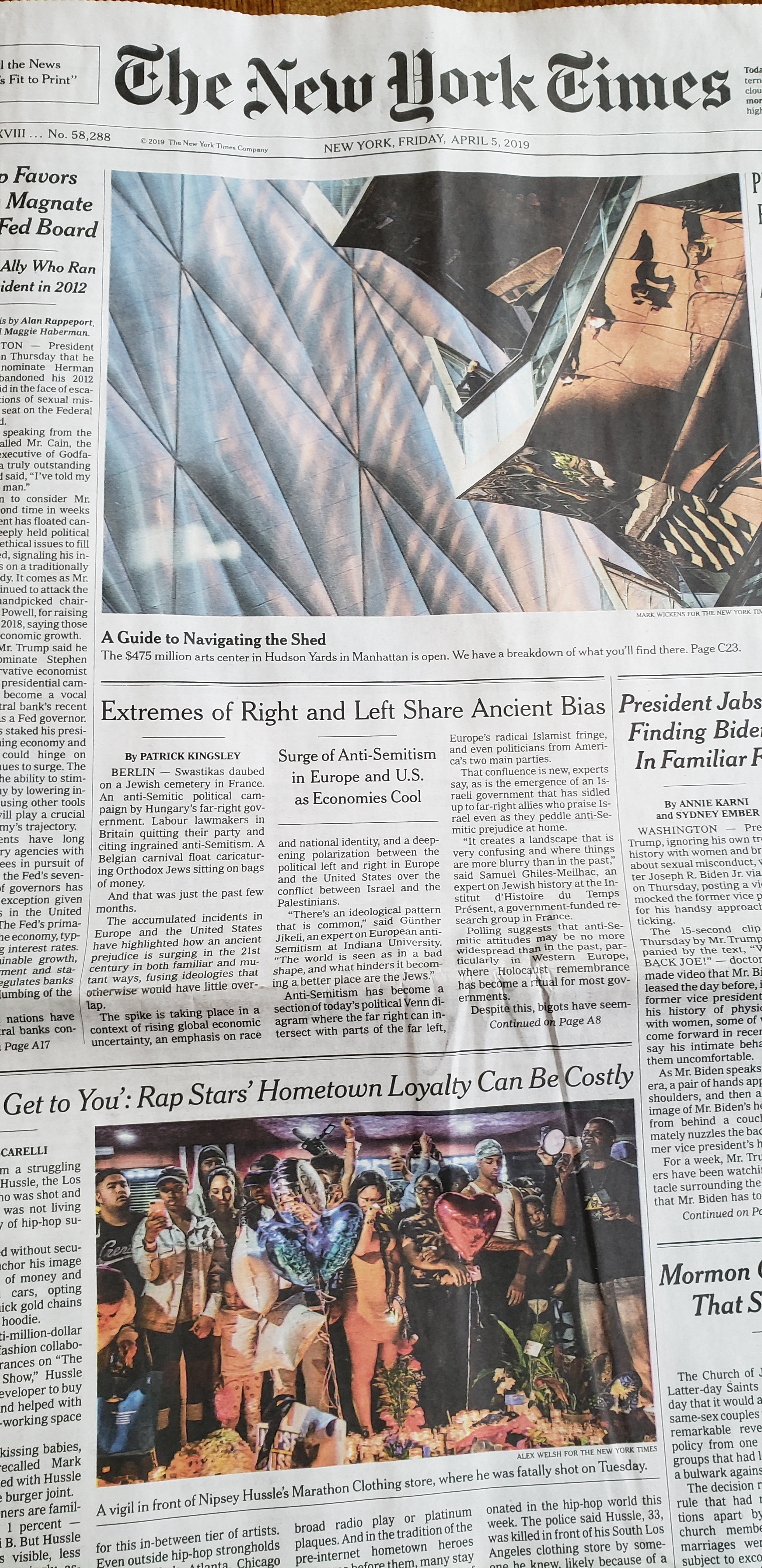
The New York Times December 31, 2017 article on page 10 claiming that Lebanon is the only country in the Middle East with gay rights.

Women’s Rights

On December 29, 2017, the New York Times published an article on its cover page called “Unlikely Iranian-Saudi Race: Easing Restrictions on Women.” The article advanced the notion that Iran and Saudi Arabia are both slowly easing restrictions on women in their countries in a competitive environment of liberalization. Saudi Arabia changed laws allowing women to drive, so Iran eased the law regarding women wearing a hijab.

The article quoted “Suad Abu-Dayyeh, a Palestinian who is the Middle East and North Africa (MENA) consultant for Equality Now, a global women’s advocacy group.” The article noted that “she was cautious about concluding that the changes in Iran were related to the Saudi relaxation,” but she did state that “any advancement in any country will really affect the situation in the neighboring countries.

And still, the New York Times did not mention Israel which leads the MENA region in women’s rights.

If the Times really believed in the concept that it opted to cite, that the activity in one country could influence the actions in neighboring countries, why not mention the country that leads the entire region in human rights, especially for women and the LGBT communities? Is it too remarkable to assume that the countries in the region are trying to catch up with Israel, whether in technology, the economy or human rights? Saudi Arabia announced its Vision 2030 plans just a few months ago, as noted by the NY Times on October 25, 2017, that the country needed to move beyond oil into technology. Are all of these events regarding the economy and human rights simply coincidences with no relationship to the marvel of Israel next door?

In the closing days of 2017, the Times sought to educate its readership that the Muslim and Arab countries are in the process of liberal reformation – on their own. The paper did so while deliberately excluding the factual presence of Israel in the Middle East and its possible positive influence of reforming the Muslim nations in the region.

The New York Times has moved beyond the “pinkwashing” of Israel into new levels of #AlternativeFacts.


Related First.One.Through articles:

Gay Rights in the Middle East

The Color Coded Lexicon of Israel’s Bigotry: It’s not Just PinkWashing

I’m Offended, You’re Dead

Politicians React to Vile and Vulgar Palestinian Hatred

Honor Killings in Gaza

Subscribe YouTube channel: FirstOneThrough

Join Facebook group: FirstOne Through  Israel Analysis


Time to Dissolve Key Principles of the “Inalienable Rights of Palestinians”

During the Palestinian hijacking heydays of the 1970’s, the United Nations passed an infamous resolution equating Zionism as a form of racism. While particularly odious during the years until its repeal in 1991, the underlying anti-Zionism has remained a plague at the global forum. Part of the disease lies in timeless antisemitism, while part is a fault of the flawed approach to settling the “Question of Palestine” that the UN endorsed and has continued to exacerbate.

On November 22, 1974 the UN General Assembly passed A/RES/3236 (XXIX). That resolution became the baseline of the “inalienable rights of the Palestinian people” that expanded and evolved until the present day. The text is distorted at its core, with declarations without equivalents nor precedent. The rights enumerated are gross exaggerations that cannot – and should not – ever be met.

While the resolution had a kernel of truth, it was overwhelmed with fatal flaws:

“no just solution to the problem of Palestine has yet been achieved and recognizing that the problem of Palestine continues to endanger international peace and security,”

If the Middle East has taught the world anything since the resolution was passed in 1974, it is that the Arab and Muslim nations do not need the “question of Palestine” to endanger the global community. Whether it was a war between Iran and Iraq or Iraq and Kuwait, civil wars in Lebanon, Syria, Yemen or Libya, or the terrorism in Niger, Chad, Egypt and Ethiopia, the Arab violence is seeded from and breeds its own hatreds.

“the Palestinian people is entitled to self-determination in accordance with the Charter of the United Nations”

This is probably the only true statement in the resolution of which anyone concerned with peace in the Middle East would like to see achieved. The Stateless Arabs from Palestine (SAPs) should have citizenship somewhere. When this resolution was drafted, they had Jordanian citizenship, which was given to them in 1954 but repealed by Jordan in 1988. The Israelis also offered the Palestinian Arabs in Jerusalem citizenship, but only a few thousand Arabs have taken it. A broader solution should be found.

“Expressing its grave concern that the Palestinian people has been prevented from enjoying its inalienable rights, in particular its right to self-determination,”

As noted above, the Palestinian Arabs in the West Bank had Jordanian citizenship and Israel offered Jerusalem Arabs citizenship, but it must be noted that the Arabs in Gaza were not afforded Egyptian citizenship. Was this resolution language only related to Gazans? Did it also cover the Arabs in the West Bank, since Yasser Arafat (fungus be upon him) failed to overthrow the Jordanian monarchy in 1970?

“1. Reaffirms the inalienable rights of the Palestinian people in Palestine, including:
(a) The right to self-determination without external interference;”

What does the phrase “without external interference” mean? That they will not be a puppet state like Lebanon is to Syria? That they won’t become a terrorist group like Hezbollah with the backing of Iran? That Palestinian Arabs are entitled to have a full-standing army that could attack Israel? When Turkey and Qatar backed Hamas in Gaza, was that considered “external interference?”

“(b) The right to national independence and sovereignty;”

This is a key fatal flaw of the 1974 resolution, which has regrettably been elaborated upon over the decades: There is no such inalienable right to independence and sovereignty. For anyone.

The Universal Declaration of Human Rights established in 1948 enumerated dozens of rights that every human on the planet must have. Article 15 of the UDHR stated that “everyone has a right to a nationality.” That is it. A nationality, not a new specialized new one. Are the Kurds getting a unique UN resolution for their “independence and sovereignty?” Is Tibet? What about Western Sahara? The SAPs should have a nationality, but they have absolutely no inalienable right to national independence and sovereignty.

“2. Reaffirms also the inalienable right of the Palestinians to return to their homes and property from which they have been displaced and uprooted, and calls for their return;”

There is no basis in the rights of mankind to afford the grandchildren and great-grandchildren of people who left homes many decades ago to return to such homes. Especially homes that no longer exist.

Article 13 of the UDHR stated that “everyone has a right to leave any country, including his own, and return to his country.” A COUNTRY. Not a town. Not a house. Only to the country of which they were a citizen. The grandparents of today’s SAPs were not Israeli citizens when they left, and the SAPs today most certainly are not Israelis.

If this is a real issue, are the 1 million Jews that were displaced from Muslim Arab countries getting the right to return to their homes and to recover all of their property? Not only did the Jews leave homes and property, but they actually left A COUNTRY. I have yet to see any UN General Assembly resolution drafted asking for such “inalienable right” for the Jews from Arab lands. Maybe Yemen is working on a draft resolution now.

“3. Emphasizes that full respect for and the realization of these inalienable rights of the Palestinian people are indispensable for the solution of the question of Palestine;

The question of Palestine revolves around giving the SAPs citizenship – either in a new country of Palestine or Israel or Jordan or somewhere. Returning to homes and property is neither a right nor part of “the solution.”

“6. Appeals to all States and international organizations to extend their support to the Palestinian people in its struggle to restore its rights, in accordance with the Charter;”

This UN resolution called for the countries of the world to “support the Palestinian people in its struggle.” Such a statement is not just a flawed call for rights that do not exist as detailed above, but a call to take sides in the conflict. It declared that “all States” should work against Israel. How could the UN possibly imagine that Israel would ever take any UNGA resolution seriously, after declaring openly that it is a biased party in the dispute?


Palestinian flag at the United Nations in New York


The Israelis and Palestinian Authority were last able to reach mutual agreements when they signed the Oslo Accords in 1993 and 1995. Those agreements NEVER mentioned a “two state solution” anywhere. They also do not mention any rights to “homes and property,” just the generic issue of “refugees.” And the accords do not ask the world to advocate on behalf of fake “inalienable rights.”

On December 17, 1991, the UNGA finally rescinded the Zionsim is racism resolution after intensive lobbying and threats by the United States under President George Bush. At that time, US Deputy Secretary of State Lawrence Eagleburger said that rescinding the resolution improved the “reputation for fairness and impartiality” of the UN. It arguably helped create the environment for the Oslo Accords.

It is similarly time to rescind UNGA Resolution 3236 and to put the parties on a course for an enduring peace that is actually achievable, with a fair and responsible United Nations as a facilitator as oppose to a perpetual hindrance.


Related First.One.Through articles:

The United Nations’ Adoption of Palestinians, Enables It to Only Find Fault With Israel

The United Nations’ Remorse for “Creating” Israel

Losing Rights

Ban Ki Moon Defecates on the Universal Declaration of Human Rights

The UN’s Disinterest in Jewish Rights at Jewish Holy Places

Delivery of the Fictional Palestinian Keys

A “Viable” Palestinian State

The UN’s #Alternative Facts about the 1967 Six Day War

Subscribe YouTube channel: FirstOneThrough

Join Facebook group: FirstOne Through  Israel Analysis

Religious Countries Respond to Israel’s Jerusalem

The media has focused on US President Trump’s threats to withhold funds from countries that condemned the US for recognizing Jerusalem as Israel’s capital and the announcement that it will move its embassy from Tel Aviv to the capital city, as an impetus for some countries to fund in a particular manner. Perhaps it is worth at least discussing – on Christmas Day – the vote on the basis of religion.

There were nine countries that voted against the United Nations General Assembly resolution of condemnation (in other words, supportive of the United States and Israel). They were Christian and Jewish countries:

  • Guatemala: Roman Catholic, Protestant, indigenous Mayan beliefs
  • Honduras: Roman Catholic, Protestant, indigenous Mayan beliefs
  • Israel: Jewish 75.5%, Muslim 16.8%, Christian 2.1%, Druze 1.7%, other 3.9%
  • Marshall Islands: Protestant 54.8%, Assembly of God 25.8%, Roman Catholic 8.4%, Bukot nan Jesus 2.8%, Mormon 2.1%, other Christian 3.6%, other 1%, none 1.5%
  • Micronesia: Roman Catholic 50%, Protestant 47%, other 3%
    Nauru: Nauru Congregational 35.4%, Roman Catholic 33.2%, Nauru Independent Church 10.4%, other 14.1%, none 4.5%, unspecified 2.4%
  • Palau: Roman Catholic 41.6%, Protestant 23.3%, Modekngei 8.8% (indigenous to Palau), Seventh-Day Adventist 5.3%, Jehovah’s Witness 0.9%, Latter-Day Saints 0.6%, other 3.1%, unspecified or none 16.4%
  • Togo: Christian 29%, Muslim 20%, indigenous beliefs 51%
  • United States: Protestant 51.3%, Roman Catholic 23.9%, Mormon 1.7%, other Christian 1.6%, Jewish 1.7%, Buddhist 0.7%, Muslim 0.6%, other or unspecified 2.5%, unaffiliated 12.1%, none 4%

There were also thirty-five countries that abstained from the UN vote.

  • Antigua and Barbuda: Anglican 25.7%, Seventh Day Adventist 12.3%, Pentecostal 10.6%, Moravian 10.5%, Roman Catholic 10.4%, Methodist 7.9%, Baptist 4.9%, Church of God 4.5%, other Christian 5.4%, other 2%, none or unspecified 5.8%
  • Argentina: Roman Catholic 92% (less than 20% practicing), Protestant 2%, Jewish 2%, other 4%
  • Australia: Catholic 26.4%, Anglican 20.5%, other Christian 20.5%, Buddhist 1.9%, Muslim 1.5%, other 1.2%, unspecified 12.7%, none 15.3% (2001 Census)
  • Bahamas:
  • Benin: Christian 42.8% (Catholic 27.1%, Celestial 5%, Methodist 3.2%, other Protestant 2.2%, other 5.3%), Muslim 24.4%, Vodoun 17.3%, other 15.5%
  • Bhutan: Lamaistic Buddhist 75%, Indian- and Nepalese-influenced Hinduism 25%
  • Bosnia and Herzegovina: Muslim 40%, Orthodox 31%, Roman Catholic 15%, other 14%
  • Cameroon: indigenous beliefs 40%, Christian 40%, Muslim 20%
  • Canada: Roman Catholic 42.6%, Protestant 23.3% (including United Church 9.5%, Anglican 6.8%, Baptist 2.4%, Lutheran 2%), other Christian 4.4%, Muslim 1.9%, other and unspecified 11.8%, none 16%
  • Colombia: Roman Catholic 90%, other 10%
  • Croatia: Roman Catholic 87.8%, Orthodox 4.4%, Muslim 1.3%, Protestant 0.3%, others and unknown 6.2%
  • Czech Republic: Roman Catholic 26.8%, Protestant 2.1%, other 3.3%, unspecified 8.8%, unaffiliated 59%
  • Dominican Republic: Roman Catholic 95%, other 5%
  • Equatorial Guinea: nominally Christian and predominantly Roman Catholic, pagan practices
  • Fiji: Christian 64.5% (Methodist 34.6%, Roman Catholic 9.1%, Assembly of God 5.7%, Seventh Day Adventist 3.9%, Anglican 0.8%, other 10.4%), Hindu 27.9%, Muslim 6.3%, Sikh 0.3%
  • Haiti: Roman Catholic 80%, Protestant 16% (Baptist 10%, Pentecostal 4%, Adventist 1%, other 1%), none 1%, other 3%
  • Hungary: Roman Catholic 51.9%, Calvinist 15.9%, Lutheran 3%, Greek Catholic 2.6%, other Christian 1%, other or unspecified 11.1%, unaffiliated 14.5%
  • Jamaica: Protestant 62.5% (Seventh-Day Adventist 10.8%, Pentecostal 9.5%, Other Church of God 8.3%, Baptist 7.2%, New Testament Church of God 6.3%, Church of God in Jamaica 4.8%, Church of God of Prophecy 4.3%, Anglican 3.6%, other Christian 7.7%), Roman Catholic 2.6%, other or unspecified 14.2%, none 20.9%
  • Kiribati: Roman Catholic 55%, Protestant 36%, Mormon 3.1%, Bahai 2.2%, Seventh-Day Adventist 1.9%, other 1.8%
  • Latvia: Lutheran 19.6%, Orthodox 15.3%, other Christian 1%, other 0.4%, unspecified 63.7%
  • Lesotho: Christian 80%, indigenous beliefs 20%
  • Malawi: Christian 79.9%, Muslim 12.8%, other 3%, none 4.3%
  • Mexico: Roman Catholic 76.5%, Protestant 6.3% (Pentecostal 1.4%, Jehovah’s Witnesses 1.1%, other 3.8%), other 0.3%, unspecified 13.8%, none 3.1%
  • Panama: Roman Catholic 85%, Protestant 15%
  • Paraguay: Roman Catholic 89.6%, Protestant 6.2%, other Christian 1.1%, other or unspecified 1.9%, none 1.1%
  • Philippines: Roman Catholic 80.9%, Muslim 5%, Evangelical 2.8%, Iglesiani Kristo 2.3%, Aglipayan 2%, other Christian 4.5%, other 1.8%, unspecified 0.6%, none 0.1%
  • Poland: Roman Catholic 89.8% (about 75% practicing), Eastern Orthodox 1.3%, Protestant 0.3%, other 0.3%, unspecified 8.3%
  • Romania: Eastern Orthodox (including all sub-denominations) 86.8%, Protestant (various denominations including Reformate and Pentecostal) 7.5%, Roman Catholic 4.7%, other (mostly Muslim) and unspecified 0.9%
  • Rwanda: Roman Catholic 56.5%, Protestant 26%, Adventist 11.1%, Muslim 4.6%, indigenous beliefs 0.1%, none 1.7%
  • Solomon Islands: Church of Melanesia 32.8%, Roman Catholic 19%, South Seas Evangelical 17%, Seventh-Day Adventist 11.2%, United Church 10.3%, Christian Fellowship Church 2.4%, other Christian 4.4%, other 2.4%, unspecified 0.3%
  • South Sudan: Christianity 60.5%, traditional African religions 32.9%, Muslim 6.2%
  • Trinidad and Tobago: Roman Catholic 26%, Hindu 22.5%, Anglican 7.8%, Baptist 7.2%, Pentecostal 6.8%, Muslim 5.8%, Seventh Day Adventist 4%, other Christian 5.8%, other 10.8%, unspecified 1.4%, none 1.9%
  • Tuvalu: Church of Tuvalu (Congregationalist) 97%, Seventh-Day Adventist 1.4%, Baha’i 1%, other 0.6%
  • Uganda: Roman Catholic 41.9%, Protestant 42% (Anglican 35.9%, Pentecostal 4.6%, Seventh Day Adventist 1.5%), Muslim 12.1%, other 3.1%, none 0.9%
  • Vanuatu: Presbyterian 31.4%, Anglican 13.4%, Roman Catholic 13.1%, Seventh-Day Adventist 10.8%, other Christian 13.8%, indigenous beliefs 5.6% (including Jon Frum cargo cult), other 9.6%, none 1%, unspecified 1.3% (1999 Census)

The countries that abstained from the vote were all majority Christian countries. A handful of countries had populations with more than 5% Muslims, including Benin, Bosnia and Herzegovina, Cameroon, Malawi, Philippines, South Sudan, Trinidad and Tobago, and Uganda. Only Bosnia and Herzegovina had a Muslim population of over 25%.

Meanwhile, there were 128 countries that voted against the United States and Israel (for the UNGA resolution). Almost all of the 57 member states of the Organization of Islamic Cooperation (OIC) voted against the US, with the exceptions of Benin, Cameroon and Togo. Four of the five countries with OIC Observer status also voted against the US.

Why did Muslim countries vote against the United States and Israel, while Christian countries were much more likely to vote for Jerusalem? Some possibilities:

  • Muslim antisemitism: The Arab and Muslim world is much more antisemitic  (74%) than the Christian world according to various polls by the Anti Defamation League. It found that almost every Palestinian Arab was an anti-Semite, and that antisemitism was much less prevalent in the Americas (19%) and among Christians in western Europe (Muslims were 3-5 times more anti-Semitic). Voting against the Jewish state is basically de rigueur in Islamic societies.
  • Jewish and Christian history in Jerusalem: Muslim nations have been lobbying the United Nations for the past several years that Jews are recent colonialist with no history in the holy land and that the Jewish Temples never existed in Jerusalem. Palestinian Arabs have further inflamed Christian ire by claiming that Jesus was not a Jew but a Palestinian Arab. This is a direct affront to billions of Christians that believe in both the Old and New Testaments.
  • Israel’s Freedom of religion. Christians appreciate the freedom of religion afforded by Israel. They note that the Israeli government helped the Mormons build their church in Jerusalem, allow the Baha’i church to thrive in Haifa, and welcome pilgrims from around the world. They note that the surrounding Arab and Muslim countries have no such freedoms and tolerance. Where Muslim fanatics behead non-believers, and Arab and Muslim governments have laws against converting from Islam, Israel is an island of religious pluralism and freedom.
  • Christians in Jerusalem under Arabs and Jews: Christians note that when the Arabs ruled Jerusalem from 1949 to 1967, the Christian population dropped in half, but has seen a modest growth since Israel reunified the city in 1967. That is quite a comparison to Bethlehem, where the Christian population which stood at roughly 40% in December 1995 when Israel handed control to the Palestinian Authority, is now almost completely gone.
  • Access and Maintenance of Holy Sites: Christian pilgrims wander the streets of Jerusalem, Nazareth and the entirety of Israel every day of the year, and witness Jews and Muslims similarly accessing their holy places. But they remember clearly how Palestinian Arabs ransacked the Jewish holy site of Joseph’s Tomb in Nablus (Shechem) in October 2000 and attempted to convert it into a mosque, and how the Arabs forbade Jews from visiting the Cave of the Jewish Patriarchs in Hebron and the Temple Mount in Jerusalem when they held control from 1949 to 1967.

The situation in Israel is not unique. Christians have witnessed the horror that has befallen minorities like the Yazidis who have been hunted by Islamic jihadists. They see the turmoil and terror in the Islamic countries of Syria and Yemen. And they note the Christian persecution in the world is almost exclusively in Muslim majority countries.


ADL’s map of antisemitism

The Christians appreciate Israel’s control of Jerusalem. Whether it is because of their faith, understanding of history, appreciation of tolerance, desire for the freedom of religious practice, or the availability to live and access holy sites, Christians see holy sites and cities flourish under Israeli sovereignty and control. Unfortunately, the opposite is found in Arab and Muslim countries.

The Muslim nations seek complete authority and control. The notion of Jewish or Christians rights in their holy city of Jerusalem is irrelevant, and undermines the supremacy of Islam.


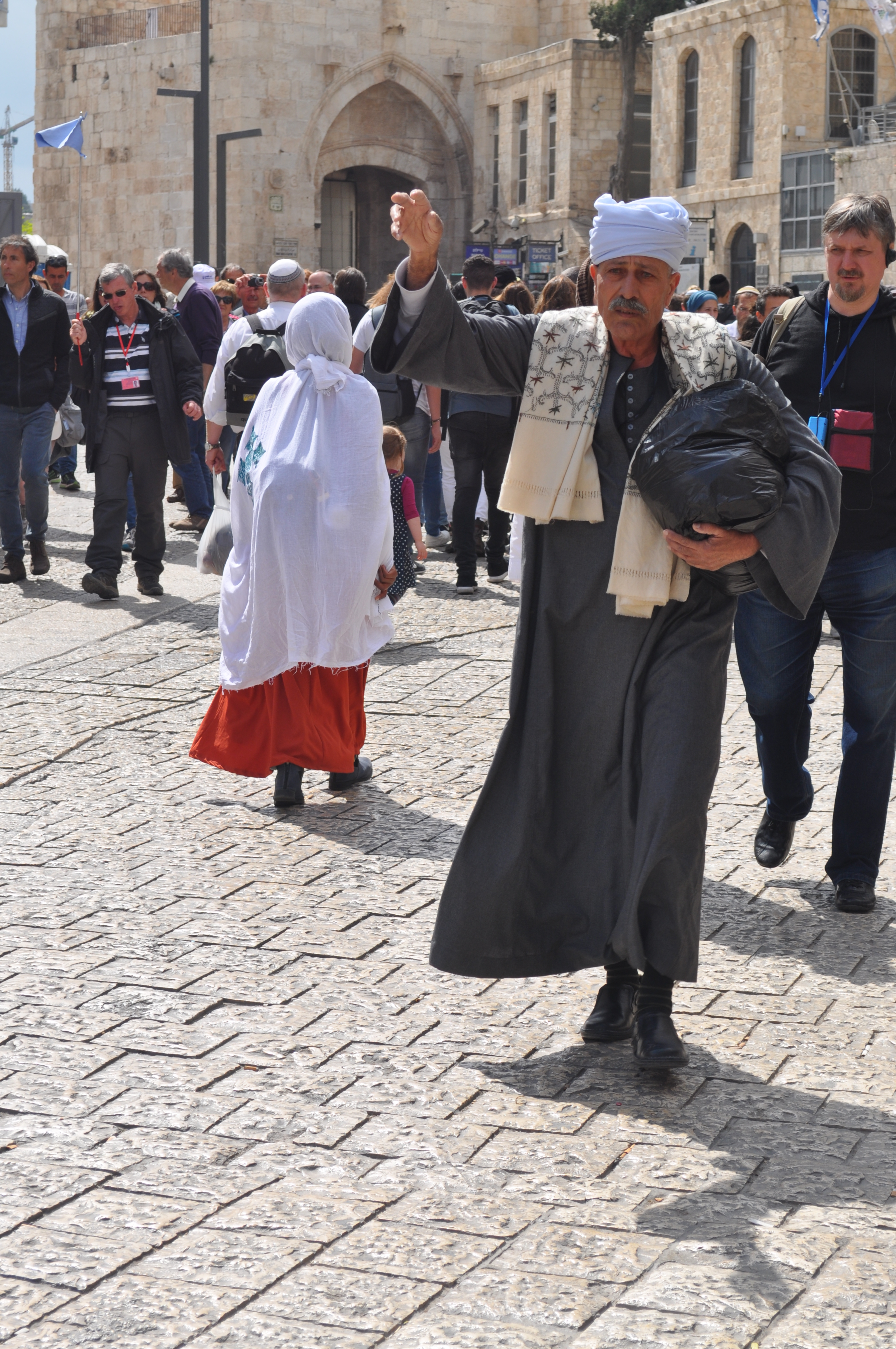
Various Pilgrims in the Old City of Jerusalem
(photos: First.One.Through)

As the world becomes less reliant on oil from the Arab world, one can expect more Christian countries to actively support Israel’s Jerusalem on the world stage.


Related First.One.Through articles:

Christian Persecution in the Middle East, not in Israel

Israel, the Liberal Country of the Middle East

Murderous Governments of the Middle East

Every Picture Tells a Story: No Christians Targeted

The United Nations and Holy Sites in the Holy Land

The Arguments over Jerusalem

First.One.through videos:

BDS Movement and Christian Persecution (Hovhaness)

I hate Israel – Christian Persecution

Subscribe YouTube channel: FirstOneThrough

Join Facebook group: FirstOne Through  Israel Analysis

Iran’s New Favorite Jewish Scholars

It is no secret that Iran despises the Jewish State, with calls to annihilate the “cancer” that is Israel. Iran’s leadership also enjoys provoking the ire of Jews generally, as it puts on exhibitions of Holocaust cartoons. To add to the insults, the Iranian media loves to showcase Jews that bash the Jewish State. It’s a spectacle for the Coliseum.

Press TV is a 24-hour English language news organization of the Islamic Republic of Iran Broadcasting, with headquarters in Tehran. The Iranian news organization’s favorite Jewish group for many stories is the Neturei Karta, an extremist anti-Zionist religious group that can be counted as featured speakers in stories about the Iranian nuclear deal, Palestinian rights and Holocaust revisionist history. What better way to convince people that Jews are evil, colonialist, parasitic liars than having Jews make such statements themselves?

In December 2017, Press TV found a new group of Jewish scholars to feature in its Israel bashing stories. In an article entitled “100 Jewish studies scholars sign petition condemning Trump’s declaration,” Press TV reviewed a petition signed by over 100 Jewish university scholars that denounced US President Trump’s recognition of Jerusalem as the capital of Israel, and his decision to relocate the US embassy to the city. The news site quoted the petition almost in its entirety, it was that rich for the Iranian government.  Below is the scholars’ statement (not the Iranian government’s) with fact-checking inserted after each paragraph.

“We write as Jewish Studies scholars to express our dismay at the Trump administration’s decision to reverse decades of bipartisan U.S. policy by declaring Jerusalem the capital of Israel, and authorizing the relocation of the U.S. embassy from Tel Aviv, outside of a negotiated political framework that ends the legal state of occupation and ensures respect for the rights of all Israelis and Palestinians to Jerusalem.”

  • reverse decades of bipartisan U.S. policy.” The Jerusalem Embassy Act of 1995 was passed with bipartisan Congressional support and specifically made clear that: 1) Jerusalem should be an undivided city; 2) it should be the capital of Israel; and 3) the US should move its embassy to Jerusalem. The Act’s presidential waiver allowing for a deferral every six months only related to moving the embassy to Jerusalem and providing such funding. The recognition of Jerusalem as the united capital of Israel passed with bipartisan support in 1995 – the opposite of what the statement claimed.
  • outside of a negotiated political framework that ends the legal state of occupation” The “political framework “is to arrive at a peaceful resolution to the disputed land by mutual agreement. The statement’s language about occupation and rights makes it appear that 1) there are no rights currently; 2) the entire peace process is just about those issues; and 3) that recognizing Israel’s capital undermines any of those discussions. All false.

“Jerusalem is of immense religious and thus emotional significance to Jews, Muslims, and Christians alike. It is the focus of national aspirations for both Israelis and Palestinians. We hope one day to see a world in which all inhabitants of the land enjoy equal access to the city’s cultural and material resources. Today, unfortunately, that is not the case.”

  • immense religious and thus emotional significance to Jews, Muslims, and Christians alike.One would imagine that Jewish scholars would have a basic understanding that Jews, Muslims and Christians are not “alike” in their attachment to Jerusalem. Only Judaism reveres the city as its holiest location. That Jewish scholars could write such a statement – happily repeated by Israel’s enemies – is outrageous and dangerous.
  • We hope one day to see a world in which all inhabitants of the land enjoy equal access” It has only been under Israel that people have had equal access to Jerusalem. When the Arabs ruled the eastern part of the city from 1949-1967, they evicted and banned all Jews. When Israel reunited the city, it offered Israeli citizenship to any Arab that wanted it – and continues to extend such offer to this day. Quite different that Jordanians that denied citizenship to any Jews in the city. Further, the growth of the Arab population in Jerusalem surpasses the growth of Jews in the city. The “hope” of the scholars is the reality today- under Israeli rule.

“As the Israeli human rights organization B’Tselem* has documented, Palestinian residents of Jerusalem endure systematic inequalities, including an inequitable distribution of the city’s budget and municipal services, routine denial of building permits that are granted to Jewish residents, home demolitions, and legal confiscation of property for Jewish settlement. In addition, Palestinians in the West Bank, unlike Jewish Israelis resident in that territory, require a special permit to visit Jerusalem’s holy sites.”

  • inequitable distribution of the city’s budget and municipal services, routine denial of building permits that are granted to Jewish residents” All Israelis – both Jewish and not Jewish – have their building permits go through the same approval processes. Some permits are approved and some are not. Under-investment in some predominantly Arab neighborhoods of Jerusalem is a function of many factors, and something that the current mayor of Jerusalem Nir Barkat has been trying to address, but he faces constant opposition from the United Nations to make such investments. How do Israel’s critics not feel the least bit of hypocrisy as they both demand that Israel invest in Arab neighborhoods in eastern Jerusalem, while also demanding that Israel abandon eastern Jerusalem altogether?
  • Palestinians in the West Bank, unlike Jewish Israelis resident in that territory, require a special permit to visit Jerusalem’s holy sites.” All citizens of Israel go through the same process of entering Jerusalem. Non-citizens must go through border control to enter anywhere in Israel, whether holy sites in Jerusalem or elsewhere. But they do have access and travel to Jerusalem’s holy sites every day – something that Jews were unable to do when Jordanian and Palestinian Arabs ruled the Old City illegally.

“In this context, a declaration from the United States government that appears to endorse sole Jewish proprietorship over Jerusalem adds insult to ongoing injury and is practically guaranteed to fan the flames of violence. We therefore call on the U.S. government to take immediate steps to deescalate the tensions resulting from the President’s declaration and to clarify Palestinians’ legitimate stake in the future of Jerusalem.

  • sole Jewish proprietorship over Jerusalem”  Are these scholars deliberately trying to be provocative? Israel has sovereignty over Jerusalem. It is a country that has a mix of Jews (75%) and non-Jews (25%), one of the most ethnically diverse countries in the entire Middle East. Israel has allowed the Jordanian Waqf to administer the Jewish Temple Mount since the country reunited the city in 1967. How do the scholars write “sole Jewish propriertorship” for an ethnically diverse country having sovereignty over a city in which it has allowed a Muslim Waqf to administer the Temple Mount, which denies the rights of Jews to pray at the site?
  • Palestinians’ legitimate stake in the future of Jerusalem.” What makes the Palestinian claim on Jerusalem legitimate? Do they have a legitimate claim on Jaffa? On Nazareth? The Israelis and Palestinian Authority will decide between themselves what kind of settlement makes sense. Do these scholars think that the US should not recognize any city in Israel or the State of Israel itself until it recognizes a State of Palestine?

The Iranian government has found new Jewish friends willing to publicly undermine Israel. And for Iran, these Jews have the added value of looking like hippy college professors as opposed to the black hat Neturei Karta rabbis.

Rabbi Jonathan Brumberg-Kraus (left), one of the petition’s signatories, member of Jews for Justice for Palestinians, which supports BDS and the dismantling
of any Jewish privileges in Israel (like a Jewish star on the Israeli flag); and


Terri Ginsberg (right), who currently teaches at the American University of Cairo (she signed the petition as x-Dartmouth) who also blogs for the vi
rulently anti-Israel sites Mondoweiss and Electronic Intifada

Just because the scholars don’t dress in a radical fashion, does not necessarily mean that their actions and statements aren’t extreme.

The petition ends with a request for comments to be sent to jewishstudiesstatement@gmail.com for rabbis that may or may not be on the list accidentally. Perhaps they would be interested in general comments as well.


Related First.One.Through articles:

The Custodianship of a Child and Jerusalem

Arabs in Jerusalem

Today’s Inverted Chanukah: The Holiday of Rights in Jerusalem and Judea and Samaria

The Arguments over Jerusalem

The Battle for Jerusalem

Jerusalem, and a review of the sad state of divided capitals in the world

Is Your Capital Central to Your Country?

Corpus Separatum Ended Forever in 1995

The US Recognizes Israel’s Reality

A Response to Rashid Khalidi’s Distortions on the Balfour Declaration

Liberals’ Biggest Enemies of 2015

Subscribe YouTube channel: FirstOneThrough

Join Facebook group: FirstOne Through  Israel Analysis

Is Your Capital Central to Your Country?

The United Nations Security Council pushed forward a vote that the United States could not recognize Jerusalem as the capital of Israel nor move its embassy there. The vote failed, as the United States exercised its veto power as one of the five permanent members of the UNSC. In response, the UN General Assembly is set to take a non-binding vote about the same issue on December 21, 2017.

It is beyond question that every country has the right to name its own capital, even a country despised by the United Nations like Israel.

What is particularly galling about this effort launched by the leader of Turkey, is that Israel is the only country that considers its capital city to be central to its identity. So much so, that its national anthem is all about Jerusalem.

So it is worth posing a question to the members of the UN Security Council:

  • United States: is your anthem about Washington, D.C.?
  • China: is your anthem about Beijing?
  • Russia: is your anthem about Moscow?
  • France: is your anthem about Paris?
  • United Kingdom: is your anthem about London?
  • Bolivia: is your anthem about Sucre?
  • Egypt: is your anthem about Cairo?
  • Ethiopia: is your anthem about Addis Ababa?
  • Italy: Is your anthem about Rome?
  • Japan: is your anthem about Tokyo?
  • Kazakhstan: is your anthem about Astana?
  • Senegal: is your anthem about Dakar?
  • Sweden: is your anthem about Stockholm?
  • Ukraine: is your anthem about Kiev?
  • Uruguay: is your anthem about Montevideo?

The answer to all of the above is no. Their capital cities are simply where the seats of government resides. For some countries like Egypt and Italy, the capitals have been there for many centuries.

But there is only one country in the entire United Nations, whose capital is so integral to the essence of the nation, that it’s national anthem is completely about its capital.

“As long as in our hearts within

The Jewish soul yearns,

And towards the eastern edges, onward,

An eye gazes towards Zion.

Our hope is not yet lost,

The hope that is two thousand years old,

To be a free nation in our land

The land of Zion: Jerusalem.


#JerusalemIsIsraelsCapital


Related First.One.Through music video:

The anthems of the Middle East (Enya)

The 1967 “Borders” (The Kinks)

Ethiopian Jews come Home (Phillip Phillips)

Judea and Samaria (Foo Fighters)

Subscribe YouTube channel: FirstOneThrough

Join Facebook group: FirstOne Through  Israel Analysis


The United Nations Can Hear the Songs of Gazans, but Cannot See Their Rockets

In the ongoing farce that is the United Nations regarding its treatment of Israel, the UN News Center published a report about the use of force that the Israeli army was using against the people of Gaza. In providing background to the story, the UN wrote:

“Since President Donald Trump’s 6 December statement concerning the status of Jerusalem, protests have been held throughout the occupied West Bank, including East Jerusalem, and in occupied Gaza. The response by the Israeli security forces has resulted in five people being killed, hundreds injured and large-scale arrests of Palestinians, noted OHCHR.

The biggest flashpoint has been in Gaza, where three people have been killed as protesters burned tires, threw stones, sang songs and waved flags along the fence. Israeli security forces have responded with firearms, including live-ammunition, to disperse the protesters.”

This is propaganda at its finest. The Israeli forces “responded with firearms” against people who “sang songs and waved flags.” Why was this put in here? Did it mention that some of the people were drinking water? Maybe someone was talking on their cellphone when the Israelis used “live ammunition to disperse the protesters.” We all know how much the Israelis hate it when people talk on their mobile phones.

The language was meant to underscore that the Gazans are peaceful people that are under siege. The story was crafted to show that the Israelis are monsters.

UN High Commissioner for Human Rights Zeid Ra’ad Al Hussein

Did the story mention the rockets that Palestinian militants launched into Israeli civilian territory a few days before? No.

Did it mention the rockets that were launched just the day before that landed in front of someone’s house? No.

Did the United Nations mention any of the 18 rockets that the Gazans fired into Israel since President Trump’s speech on December 6? Nope.

For the UN, the Palestinian Arabs are engaged in peaceful protests and the Israelis are the aggressive power using unnecessary force. The more passive the Palestinian Arabs and violent the Israelis can be portrayed, the greater the David-versus-Goliath narrative to rally people to the Palestinian cause.

The United Nations are not united in honesty, truth or fairness. Just in wild distortions to be ignored.


Related First.One.Through articles:

The United Nations’ Adoption of Palestinians, Enables It to Only Find Fault With Israel

The United Nations’ Remorse for “Creating” Israel

The United Nations’ Incitement to Violence

The Only Religious Extremists for the United Nations are “Jewish Extremists”

UN Media Centre Ignores Murdered Israelis

UN Press Corps Expunges Israel

The Hollowness of the United Nations’ “All”

The United Nations Applauds Abbas’ Narrative

UNRWA’s Ongoing War against Israel and Jews

The UN Declares that Palestinian Arabs Should Not Show “Restraint”

Reviewing the Rhetoric of Palestinian Arabs and Israelis

Subscribe YouTube channel: FirstOneThrough

Join Facebook group: FirstOne Through  Israel Analysis

Comparing Nikki Haley’s and Samantha Power’s Speeches after UN Votes on Israel

On December 18, 2017, the US Ambassador to the United Nations Nikki Haley gave a strong defense about the US position regarding its veto of a UN Security Council resolution condemning the United States for its recognition of Jerusalem as Israel’s capital and announcing its intention to move its embassy to the city. The remarks following the vote stand in sharp contrast to the speech delivered by her predecessor Samantha Power after the US’s abstention from the UN Security Council vote that labeled Israeli settlements – including those in eastern Jerusalem – as illegal.

U.S. Ambassador to the U.N. Nikki Haley casts the lone ‘no’ vote to veto a U.N. Security Council resolution attempting to annul President Trump’s recognition of Jerusalem as Israel’s capital, in New York on Monday, December 18, 2017.
(UN Photo/Eskinder Debebe)

Not surprisingly, only Haley spoke at length about American sovereignty as it was the United States, not Israel, that was the focus of the December 2017 resolution. However, the overall approaches were radically different:

  • On Israel: Haley was clear that Israel was correct while Power argued that Israel was wrong
  • On Palestinians: Haley reminded the Palestinian Arabs how much support they receive from the USA (she therefore had no interest in being lectured to and also delivered an implied threat) while Power made no mention of US support of Palestinians, only of Israel which it had just undermined
  • On the Security Council: Haley lambasted the council, while Power simply noted the US’s disappointment with the council
  • On the Peace Process: Haley made clear the US’s support for a mutually-agreed to resolution, while Power stated her position over-and-again about her preferred conclusion (two states) and Israel’s actions that she believed hurt such conclusion (settlements harm two states)
  • On the centrality of the US President: Haley made no mention of President Trump while Power mentioned President Obama over-and-again

In short, Nikki Haley took a strong leadership position in defense of the United States sovereignty and Israeli rights and had no reservations of strongly rebuking the United Nations. It was quite a contrast to Samantha Power who couched her criticism of the UN in much softer language while agreeing with its conclusions, and essentially asserted that as a strong backer of Israel’s security, she could undermine Israel’s sovereignty.

Haley stood tall and asserted American and Israeli rights while standing for a mutually-agreed upon peace. Power stood above Israel and rebuked it on the world stage since she did not agree with its actions and approach towards co-existence in the holy land.

A Side-by-Side Comparison

Factor Nikki Haley Samantha Power
Words 1102 2180
Action Veto Abstention
Bi-Partisan Republican administration quoted Democrats Democratic administration quoted Republicans
On the Security Council 1.      “it should be an embarrassment to the remainder of the Security Council”

2.      “When the American people see a group of countries whose total contributions to the Palestinian people is less than one percent of UNRWA’s budget – when they see these countries accuse the United States of being insufficiently committed to peace – the American people lose their patience

3.      “What we witnessed here today in the Security Council is an insult. It won’t be forgotten”

4.      United Nations doing more harm than good

1.      Israel has been treated differently from other nations at the United Nations”

2.      “in 2016 Israel continues to be treated differently from other Member States”

3.      “pressing this Council to break its indefensible silence in response to terrorist attacks on Israelis”

4.      “such unequal treatment not only hurts Israel, it undermines the legitimacy of the United Nations itself”

5.      “The practice of treating Israel differently at the UN matters for votes like this one”

6.      “what steps will you take to stop treating Israel differently?”

7.      what will you do to end the double-standard that undermines the legitimacy of this institution?”

8.      “when a resolution on Israel comes before this Council, members suddenly summon the will to act.”

9.      “this forum too often continues to be biased against Israel

Regarding America 1.      “in defense of American sovereignty and in defense of America’s role in the Middle East peace process”

2.      “The United States’ has a sovereign right to determine where and whether we establish an embassy”

3.      “The United States will not be told by any country where we can put our embassy.”

4.      “the United States was forced to defend its sovereignty

 N/A
The president N/A 1.      the Obama Administration has worked tirelessly to fight for Israel’s right simply to be treated just like any other country”

2.      President Obama and Secretary Kerry have repeatedly warned [Israel]”

3.      President Obama and this administration have shown an unprecedented commitment to Israel’s security”

4.      Obama administration signed a Memorandum of Understanding to provide $38 billion in security assistance to Israel over the next 10 years”

On the Peace Process 1.      “A “peace process” that is damaged by the simple recognition that Jerusalem is the capital of Israel is not a peace process

2.      “The United States has never been more committed to peace in the Middle East”

1.      United States’ deep and long-standing commitment to achieving a comprehensive and lasting peace between the Israelis and Palestinians”
On prejudging negotiations 1.      “great care not to prejudge final status negotiations in any way”

2.      “we support a two-state solution if that’s what the parties agree to

1.      United States’ long-standing position that Israeli settlement activity in territories occupied in 1967 undermines Israel’s security, harms the viability of a negotiated two-state outcome, and erodes prospects for peace and stability in the region”

2.      “reaffirming the long-standing U.S. position on settlements, condemning violence and incitement,”

3.      “we do not believe that outside parties can impose a solution that has not been negotiated by the two parties”

4.      long-standing objective: two states living side-by-side in peace and security”

5.      “One cannot simultaneously champion expanding Israeli settlements and champion a viable two-state solution that would end the conflict”

6.      “the absence of progress toward peace and continued settlement expansion was going to put the two-state solution at risk, and threaten Israel’s stated objective to remain both a Jewish State and a democracy”

7.      None of us can give up on a two-state solution

8.      “it is ultimately up to the parties to choose this path [two states]”

On legality of Israeli action N/A 1.      the Security Council reaffirmed its established consensus that settlements have no legal validity. The United States has been sending the message that the settlements must stop – privately and publicly – for nearly five decades”

2.      the resolution proposed today is justified – or, even more, necessitated – by events on the ground”

3.      “rather than dismantling these and other settler outposts, which are illegal even under Israeli law, now there is new legislation advancing in the Israeli Knesset that would legalize most of the outposts”

On Jerusalem / settlements 1.      “Jerusalem has been the political, cultural, and spiritual homeland of the Jewish people for thousands of years. They have had no other capital city”

2.      Jerusalem is the capital and seat of the modern Israeli government”

3.      “acknowledging a basic truth about the capital city of Israel

1.      The settlement problem has gotten so much worse

2.      continued settlement building seriously undermines Israel’s security.”

On Israeli security  N/A 1.      the United States’ steadfast and unparalleled commitment to the security of Israel,”

2.      “President Obama and this administration have shown an unprecedented commitment to Israel’s security

On the Palestinian Authority 1.      “some have threatened violence on the street, as if violence would somehow improve the prospects of peace”

2.      “What does it gain the Palestinian people for their leaders to throw up roadblocks to negotiations?”

3.      “What does it gain the Palestinian people for some of their leaders to accuse the United States of being hostile to the cause of peace? It gains them nothing, but it risks costing them a great deal

4.      their leaders do them no favors by being more open to abandoning peace negotiations than to doing the hard work of seeing them to completion”

1.      addressed counterproductive actions by the Palestinians such as terrorism and incitement to violence”

2.      “the incitement to violence, the glorification of terrorists, and the growth of violent extremism erodes prospects for peace”

3.      “rather than condemn these attacks, Hamas, other radical factions, and even certain members of Fatah have held up the terrorists as heroes, and used social media to incite others to follow in their murderous footsteps”

4.      “addressed counterproductive actions by Palestinians”

On the Palestinians 1.      “The United States has done more than any other country to assist the Palestinian people. By far. Since 1994, we have given over $5 billion to the Palestinians in bilateral economic assistance, security assistance, and humanitarian assistance”

2.      “Last year, the United States voluntarily funded almost 30 percent of UNRWA’s budget. That’s more than the next two largest donors combined.”

Nikki Haley’s remarks:

Thank you, Mr. President.

I have been the proud Representative of the United States at the United Nations for nearly a year now. This is the first time I have exercised the American right to veto a resolution in the Security Council. The exercise of the veto is not something the United States does often. We have not done it in more than six years. We do it with no joy, but we do it with no reluctance.

The fact that this veto is being done in defense of American sovereignty and in defense of America’s role in the Middle East peace process is not a source of embarrassment for us; it should be an embarrassment to the remainder of the Security Council.

As I pointed out when we discussed this topic 10 days ago, I will once again note the features of the President’s announcement on Jerusalem that are most relevant here. The President took great care not to prejudge final status negotiations in any way, including the specific boundaries of Israeli sovereignty in Jerusalem. That remains a subject to be negotiated only by the parties. That position is fully in line with the previous Security Council resolutions.

The President was also careful to state that we support the status quo regarding Jerusalem’s holy sites, and we support a two-state solution if that’s what the parties agree to. Again, these positions are fully consistent with the previous Security Council resolutions.

It is highly regrettable that some are trying to distort the President’s position to serve their own agendas.

What is troublesome to some people is not that the United States has harmed the peace process – we have, in fact, done no such thing. Rather, what is troublesome to some people is that the United States had the courage and honesty to recognize a fundamental reality. Jerusalem has been the political, cultural, and spiritual homeland of the Jewish people for thousands of years. They have had no other capital city. But the United States’ recognition of the obvious – that Jerusalem is the capital and seat of the modern Israeli government – is too much for some.

First, some have threatened violence on the street, as if violence would somehow improve the prospects of peace.

Now today, buried in diplomatic jargon, some presume to tell America where to put our embassy. The United States’ has a sovereign right to determine where and whether we establish an embassy. I suspect very few Member States would welcome Security Council pronouncements about their sovereign decisions. And I think of some who should fear it.

It’s worth noting that this is not a new American position. Back in 1980, when Jimmy Carter was the American President, the Security Council voted on Resolution 478, which called upon diplomatic missions to relocate from Jerusalem. The United States did not support Resolution 478.

In his remarks, then-Secretary of State Ed Muskie said the following: “The draft resolution before us today is illustrative of a preoccupation which has produced this series of unbalanced and unrealistic texts on Middle East issues.”

Specifically, regarding the provision on diplomatic missions in Jerusalem, Secretary Muskie said this: “In our judgment, this provision is not binding. It is without force. And we reject it as a disruptive attempt to dictate to other nations. It does nothing to promote a resolution of the difficult problems facing Israel and its neighbors. It does nothing to advance the cause of peace.”

That was in 1980. It is equally true today. The United States will not be told by any country where we can put our embassy.

Buried even deeper in the jargon of this resolution is the accusation that the United States is setting back the prospects of peace in the Middle East. That is a scandalous charge. Those who are making it should consider that it only harms the very Palestinian people they claim to speak for. What does it gain the Palestinian people for their leaders to throw up roadblocks to negotiations?

A “peace process” that is damaged by the simple recognition that Jerusalem is the capital of Israel is not a peace process; it is a justification for an endless stalemate. What does it gain the Palestinian people for some of their leaders to accuse the United States of being hostile to the cause of peace? It gains them nothing, but it risks costing them a great deal.

The United States has done more than any other country to assist the Palestinian people. By far. Since 1994, we have given over $5 billion to the Palestinians in bilateral economic assistance, security assistance, and humanitarian assistance.

The United Nations Relief and Works Agency for Palestinian Refugees operates schools and medical facilities throughout the region. It is funded almost entirely by voluntary contributions. Last year, the United States voluntarily funded almost 30 percent of UNRWA’s budget. That’s more than the next two largest donors combined. And it’s vastly more than some of the members of this Council that have considerable financial resources of their own.

I’ll be blunt: When the American people see a group of countries whose total contributions to the Palestinian people is less than one percent of UNRWA’s budget – when they see these countries accuse the United States of being insufficiently committed to peace – the American people lose their patience.

I have been to the Palestinian refugee camps the United States supports with their contributions. I have met with men, women, and children. I have advocated on their behalf. I can tell you that their leaders do them no favors by being more open to abandoning peace negotiations than to doing the hard work of seeing them to completion.

The United States has never been more committed to peace in the Middle East. We were committed to it before the President announced our recognition of Jerusalem as the capital of Israel, and we’re committed to it today.

What we witnessed here today in the Security Council is an insult. It won’t be forgotten. It’s one more example of the United Nations doing more harm than good in addressing the Israeli-Palestinian conflict.

Today, for the simple act of deciding where to put our embassy, the United States was forced to defend its sovereignty. The record will reflect that we did so proudly. Today, for acknowledging a basic truth about the capital city of Israel, we are accused of harming peace. The record will reflect that we reject that outrageous claim.

For these reasons, and with the best interests of both the Israeli and the Palestinian people firmly in mind, the United States votes no on this resolution.

Thank you.


Samantha Power’s remarks:

Thank you, Mr. President.

Let me begin with a quote: “The United States will not support the use of any additional land for the purpose of settlements during the transitional period. Indeed, the immediate adoption of a settlement freeze by Israel, more than any other action, could create the confidence needed for wider participation in these talks. Further settlement activity is in no way necessary for the security of Israel and only diminishes the confidence of the Arabs that a final outcome can be freely and fairly negotiated.”

This was said in 1982 by President Ronald Reagan. He was speaking about a new proposal that he was launching to end the Israeli-Palestinian conflict. While ultimately, of course, President Reagan’s proposal was not realized, his words are still illuminating in at least two respects.

First, because they underscore the United States’ deep and long-standing commitment to achieving a comprehensive and lasting peace between the Israelis and Palestinians. That has been the policy of every administration, Republican and Democrat, since before President Reagan and all the way through to the present day.

Second, because President Reagan’s words highlight the United States’ long-standing position that Israeli settlement activity in territories occupied in 1967 undermines Israel’s security, harms the viability of a negotiated two-state outcome, and erodes prospects for peace and stability in the region. Today, the Security Council reaffirmed its established consensus that settlements have no legal validity. The United States has been sending the message that the settlements must stop – privately and publicly – for nearly five decades, through the administrations of Presidents Lyndon B. Johnson, Richard Nixon, Gerald Ford, Jimmy Carter, Ronald Reagan, George H.W. Bush, Bill Clinton, George W. Bush, and now Barack Obama. Indeed, since 1967, the only president who had not had at least one Israeli-Palestinian-related Security Council resolution pass during his tenure is Barack Obama. So our vote today is fully in line with the bipartisan history of how American Presidents have approached both the issue – and the role of this body.

Given the consistency of this position across U.S. administrations, one would think that it would be a routine vote for the U.S. to allow the passage of a resolution with the elements in this one, reaffirming the long-standing U.S. position on settlements, condemning violence and incitement, and calling for the parties to start taking constructive steps to reverse current trends on the ground. These are familiar, well-articulated components of U.S. policy.

But in reality this vote for us was not straightforward, because of where it is taking place – at the United Nations. For the simple truth is that for as long as Israel has been a member of this institution, Israel has been treated differently from other nations at the United Nations. And not only in decades past – such as in the infamous resolution that the General Assembly adopted in 1975, with the support of the majority of Member States, officially determining that, “Zionism is a form of racism” – but also in 2016, this year. One need only look at the 18 resolutions against Israel adopted during the UN General Assembly in September; or the 12 Israel-specific resolutions adopted this year in the Human Rights Council – more than those focused on Syria, North Korea, Iran, and South Sudan put together – to see that in 2016 Israel continues to be treated differently from other Member States.

Like U.S. administrations before it, the Obama Administration has worked tirelessly to fight for Israel’s right simply to be treated just like any other country – from advocating for Israel to finally be granted membership to a UN regional body, something no other UN Member State had been denied; to fighting to ensure that Israeli NGOs are not denied UN accreditation, simply because they are Israeli, to getting Yom Kippur finally recognized as a UN holiday; to pressing this Council to break its indefensible silence in response to terrorist attacks on Israelis. As the United States has said repeatedly, such unequal treatment not only hurts Israel, it undermines the legitimacy of the United Nations itself.

The practice of treating Israel differently at the UN matters for votes like this one. For even if one believes that the resolution proposed today is justified – or, even more, necessitated – by events on the ground, one cannot completely separate the vote from the venue.

And Member States that say they are for the two-state solution must ask themselves some difficult questions. For those states that are quick to promote resolutions condemning Israel, but refuse to recognize when innocent Israelis are the victims of terrorism – what steps will you take to stop treating Israel differently? For those states that passionately denounce the closures of crossings in Gaza as exacerbating the humanitarian situation, but saying nothing of the resources diverted from helping Gaza’s residents to dig tunnels into Israeli territory so that terrorists can attack Israelis in their homes – what will you do to end the double-standard that undermines the legitimacy of this institution?

Member States should also ask themselves about the double standards when it comes to this Council taking action. Just this morning we came together, as a Council, and we were unable to muster the will to act to stop the flow of weapons going to killers in South Sudan, who are perpetrating mass atrocities that the UN has said could lead to genocide. We couldn’t come together just to stem the flow of arms. Earlier this month, this Council could not muster the will to adopt the simplest of resolutions calling for a seven-day pause in the savage bombardment of innocent civilians, hospitals, and schools in Aleppo. Yet when a resolution on Israel comes before this Council, members suddenly summon the will to act.

It is because this forum too often continues to be biased against Israel; because there are important issues that are not sufficiently addressed in this resolution; and because the United States does not agree with every word in this text, that the United States did not vote in favor of the resolution. But it is because this resolution reflects the facts on the ground – and is consistent with U.S. policy across Republican and Democratic administration throughout the history of the State of Israel – that the United States did not veto it.

The United States has consistently said we would block any resolution that we thought would undermine Israel’s security or seek to impose a resolution to the conflict. We would not have let this resolution pass had it not also addressed counterproductive actions by the Palestinians such as terrorism and incitement to violence, which we’ve repeatedly condemned and repeatedly raised with the Palestinian leadership, and which, of course, must be stopped.

Unlike some on the UN Security Council, we do not believe that outside parties can impose a solution that has not been negotiated by the two parties. Nor can we unilaterally recognize a future Palestinian state. But it is precisely our commitment to Israel’s security that makes the United States believe that we cannot stand in the way of this resolution as we seek to preserve a chance of attaining our long-standing objective: two states living side-by-side in peace and security. Let me briefly explain why.

The settlement problem has gotten so much worse that it is now putting at risk the very viability of that two-state solution. The number of settlers in the roughly 150 authorized Israeli settlements east of the 1967 lines has increased dramatically. Since the 1993 signing of the Oslo Accords – which launched efforts that made a comprehensive and lasting peace possible – the number of settlers has increased by 355,000. The total settler population in the West Bank and East Jerusalem now exceeds 590,000. Nearly 90,000 settlers are living east of the separation barrier that was created by Israel itself. And just since July 2016 – when the Middle East Quartet issued a report highlighting international concern about a systematic process of land seizures, settlement expansions, and legalizations – Israel has advanced plans for more than 2,600 new settlement units. Yet rather than dismantling these and other settler outposts, which are illegal even under Israeli law, now there is new legislation advancing in the Israeli Knesset that would legalize most of the outposts – a factor that propelled the decision by this resolution’s sponsors to bring it before the Council.

The Israeli Prime Minister recently described his government as “more committed to settlements than any in Israel’s history,” and one of his leading coalition partners recently declared that “the era of the two-state solution is over.” At the same time, the Prime Minister has said that he is still committed to pursuing a two-state solution. But these statements are irreconcilable. One cannot simultaneously champion expanding Israeli settlements and champion a viable two-state solution that would end the conflict. One has to make a choice between settlements and separation.

In 2011, the United States vetoed a resolution that focused exclusively on settlements, as if settlements were they only factor harming the prospects of a two-state solution. The circumstances have changed dramatically. Since 2011, settlement growth has only accelerated. Since 2011, multiple efforts to pursue peace through negotiations have failed. And since 2011, President Obama and Secretary Kerry have repeatedly warned – publically and privately – that the absence of progress toward peace and continued settlement expansion was going to put the two-state solution at risk, and threaten Israel’s stated objective to remain both a Jewish State and a democracy. Moreover, unlike in 2011, this resolution condemns violence, terrorism and incitement, which also poses an extremely grave risk to the two-state solution. This resolution reflects trends that will permanently destroy the hope of a two-state solution if they continue on their current course.

The United States has not taken the step of voting in support of this resolution because the resolution is too narrowly focused on settlements, when we all know – or we all should know – that many other factors contribute significantly to the tensions that perpetuate this conflict. Let us be clear: even if every single settlement were to be dismantled tomorrow, peace still would not be attainable without both sides acknowledging uncomfortable truths and making difficult choices. That is an indisputable fact. Yet it is one that is too often overlooked by members of the United Nations and by members of this Council.

For Palestinian leaders, that means recognizing the obvious: that in addition to taking innocent lives – the incitement to violence, the glorification of terrorists, and the growth of violent extremism erodes prospects for peace, as this resolution makes crystal clear. The most recent wave of Palestinian violence has seen terrorists commit hundreds of attacks – including driving cars into crowds of innocent civilians and stabbing mothers in front of their children. Yet rather than condemn these attacks, Hamas, other radical factions, and even certain members of Fatah have held up the terrorists as heroes, and used social media to incite others to follow in their murderous footsteps. And while President Abbas and his party’s leaders have made clear their opposition to violence, terrorism, and extremism, they have too often failed to condemn specific attacks or condemn the praised heaped upon the perpetrators.

Our vote today does not in any way diminish the United States’ steadfast and unparalleled commitment to the security of Israel, the only democracy in the Middle East. We would not have let this resolution pass had it not also addressed counterproductive actions by Palestinians. We have to recognize that Israel faces very serious threats in a very tough neighborhood. Israelis are rightfully concerned about making sure there is not a new terrorist haven next door. President Obama and this administration have shown an unprecedented commitment to Israel’s security because that is what we believe in.

Our commitment to that security has never wavered, and it never will. Even with a financial crisis and budget deficits, we’ve repeatedly increased funding to support Israel’s military. And in September, the Obama administration signed a Memorandum of Understanding to provide $38 billion in security assistance to Israel over the next 10 years – the largest single pledge of military assistance in U.S. history to any country. And as the Israeli Prime Minister himself has noted, our military and intelligence cooperation is unprecedented. We believe, though, that continued settlement building seriously undermines Israel’s security.

Some may cast the U.S. vote as a sign that we have finally given up on a two-state solution. Nothing could be further from the truth. None of us can give up on a two-state solution. We continue to believe that that solution is the only viable path to provide peace and security for the state of Israel, and freedom and dignity for the Palestinian people. And we continue to believe that the parties can still pursue this path, if both sides are honest about the choices, and have the courage to take steps that will be politically difficult. While we can encourage them, it is ultimately up to the parties to choose this path, as it always has been. We sincerely hope that they will begin making these choices before it is too late.

I thank you.


Related First.One.Through articles:

The US Recognizes Israel’s Reality

In Defense of Foundation Principles

Samantha Power Breakthrough: Violence Erodes the Prospects for Peace

Nikki Haley Will Not Equivocate on the Ecosystem of Violence

The Many Lies of Jimmy Carter

Subscribe YouTube channel: FirstOneThrough

Join Facebook group: FirstOne Through  Israel Analysis