For twenty years, Israel relied on a security barrier to prevent the suicide bombings and shootings of the Second Intifada. It worked. While ninety percent of that barrier was not a concrete wall, but a high-tech fence—cameras, sensors, patrol roads, and layered detection system – it still reduced terror attacks from the West Bank by over 90 percent. Israelis and the Stateless Arabs from Palestine (SAPs) rebuilt their lives believing that a fence, not a fortress, was enough.
Then came October 7.
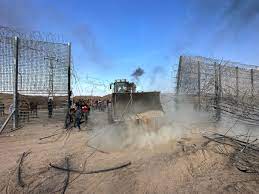
SAPs crashing through the fence between Gaza and Israel on October 7, 2023
Hamas gunmen bulldozed, exploded, and burned their way through what was—on paper—one of the most advanced border fences in the world. They murdered, raped, tortured, and kidnapped civilians in a genocidal assault that shattered the central premise of Israel’s security doctrine: that a fence and technology could stop an army of terrorists long enough for the IDF to respond.
That assumption is gone.
If a similar surprise assault were launched from the West Bank near the country’s major population centers—Tel Aviv, Jerusalem, the coastal cities—the casualties could be catastrophic. Israel is nine miles wide at its narrowest point. One breach is not a tactical event. It is an existential one.
The Barrier Must Change Because the Threat Has Changed
A fence can be cut, rammed, or climbed. A reinforced, multi-layered wall—physical, electronic, aerial, and subterranean—is a different proposition. The lesson of Gaza is not to abandon the idea of separation, but to upgrade it to match the enemy’s capabilities and intentions.
Israel does not have the luxury of guessing whether future attackers will try to slaughter dozens or thousands. The security architecture must assume the worst case—because the worst case already happened.
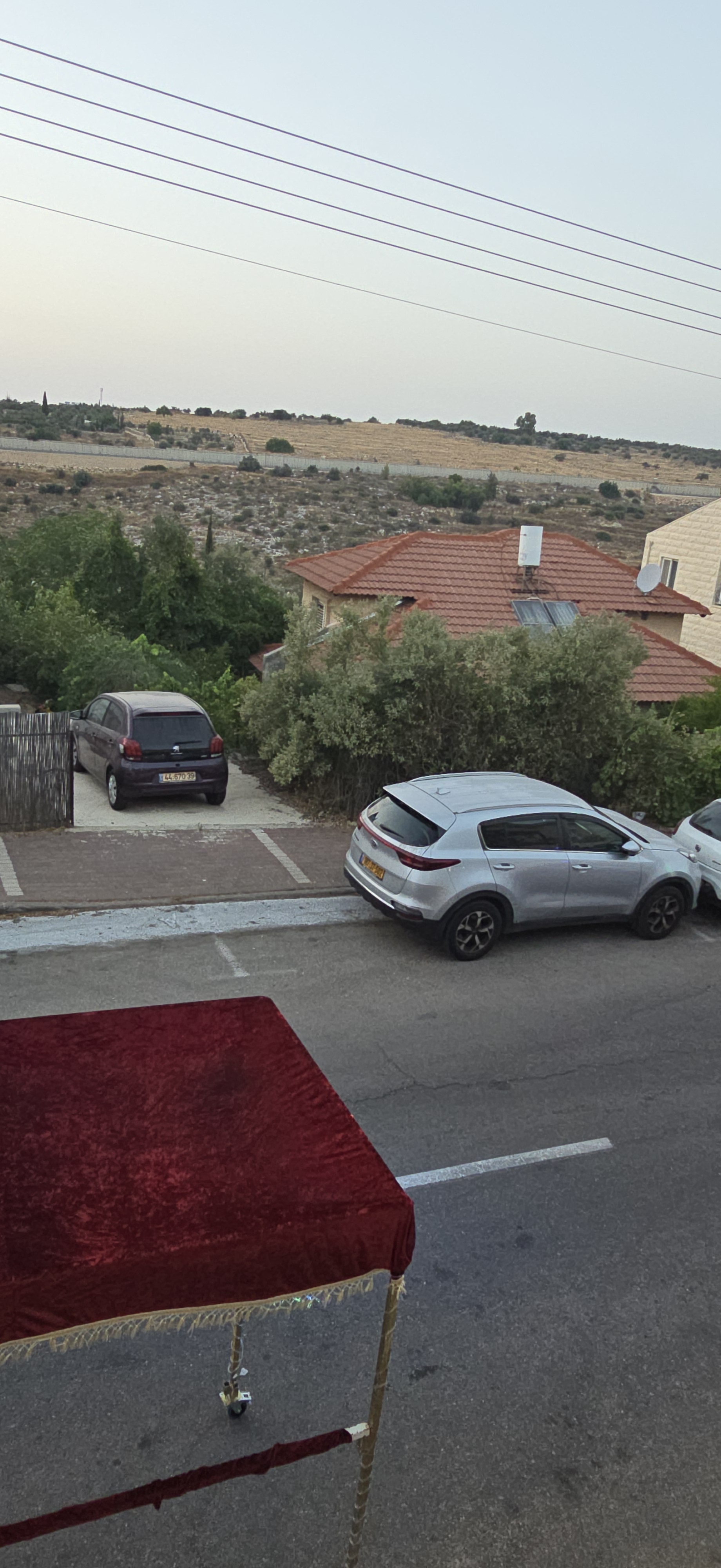
In Hashmonaim, Israeli backyards are a stone’s through away from the Security Barrier (photo: First One Through)
Disarming Militias Is Not Just for Gaza
The world is focused on disarming Hamas in Gaza. It must also confront a parallel obligation: militant groups in the West Bank cannot remain armed if there is to be any political horizon, for Palestinian Arabs or Israelis.
If Gaza is demilitarized but the West Bank is not, the threat simply shifts geography. The barrier is not a substitute for disarmament. It is a second line of defense, not the first.
Lasting security requires:
1️⃣ Complete disarmament of organized militant groups seeking Israel’s destruction. 2️⃣ Security control capable of preventing re-armament. 3️⃣ A barrier strong enough to make a surprise attack militarily unachievable.
Without those three components, diplomatic talk of a “future Palestinian state” is not a peace process—it is a gamble with tens of thousands of civilian lives.
A wall is not a symbol of failure. It is the price of survival when the alternative is the erasure of towns near the 1949 Armistice Lines with Jordan.
A move towards coexistence between Israelis and Palestinian Arabs cannot be limited to the threat from Gazans but from West Bank Arabs as well. Disarmament of West Bank Arabs and an upgrade of the security fence must happen now as well.
Peace requires trust. Trust requires time. Time requires security that cannot be breached in seven minutes by men with bulldozers and grenades and genocidal jihadi rage.
Until a day comes when coexistence is real—not chanted, not theorized, not negotiated—Israel must ensure that no armed faction can cross its border. The time to implement that plan is now.
The world keeps pretending we’re about to build something new when we talk about a “future Palestinian state.” As if Palestine 1.0 never happened. As if the first real test of Palestinian self-rule didn’t already give us a precise answer.
Because when Palestinians were first allowed to govern themselves, they told us exactly who they were politically:
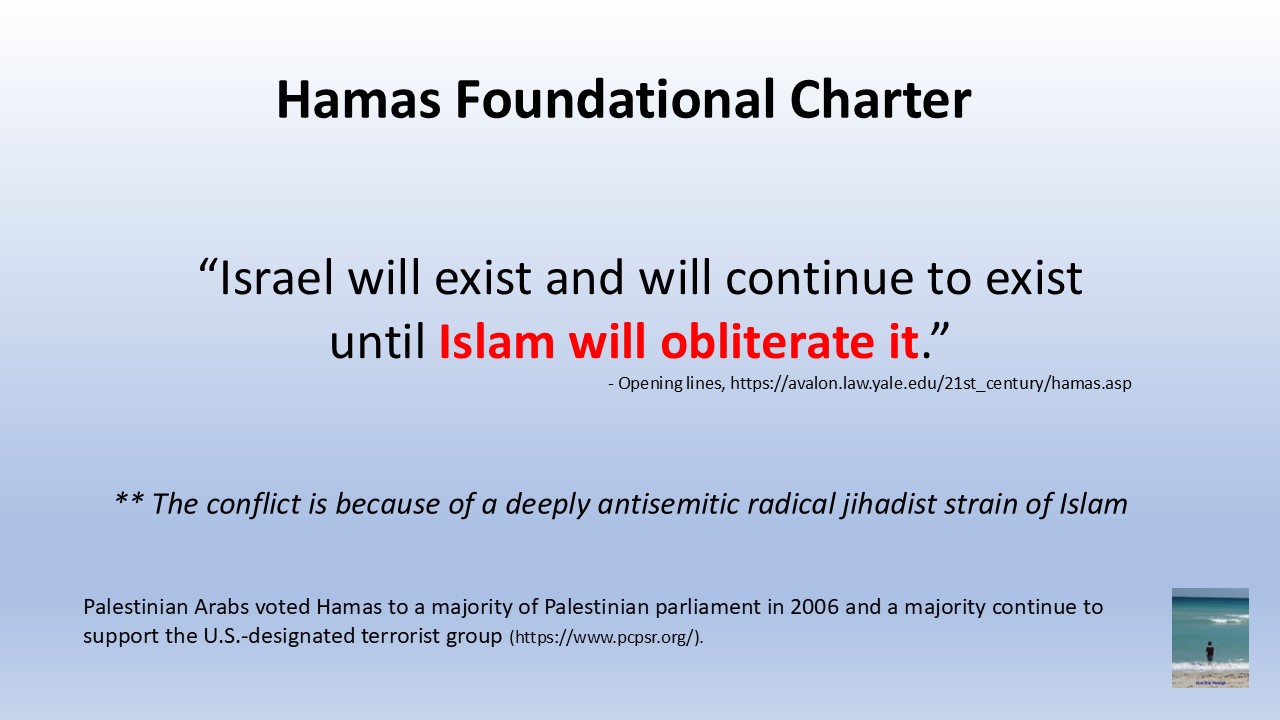
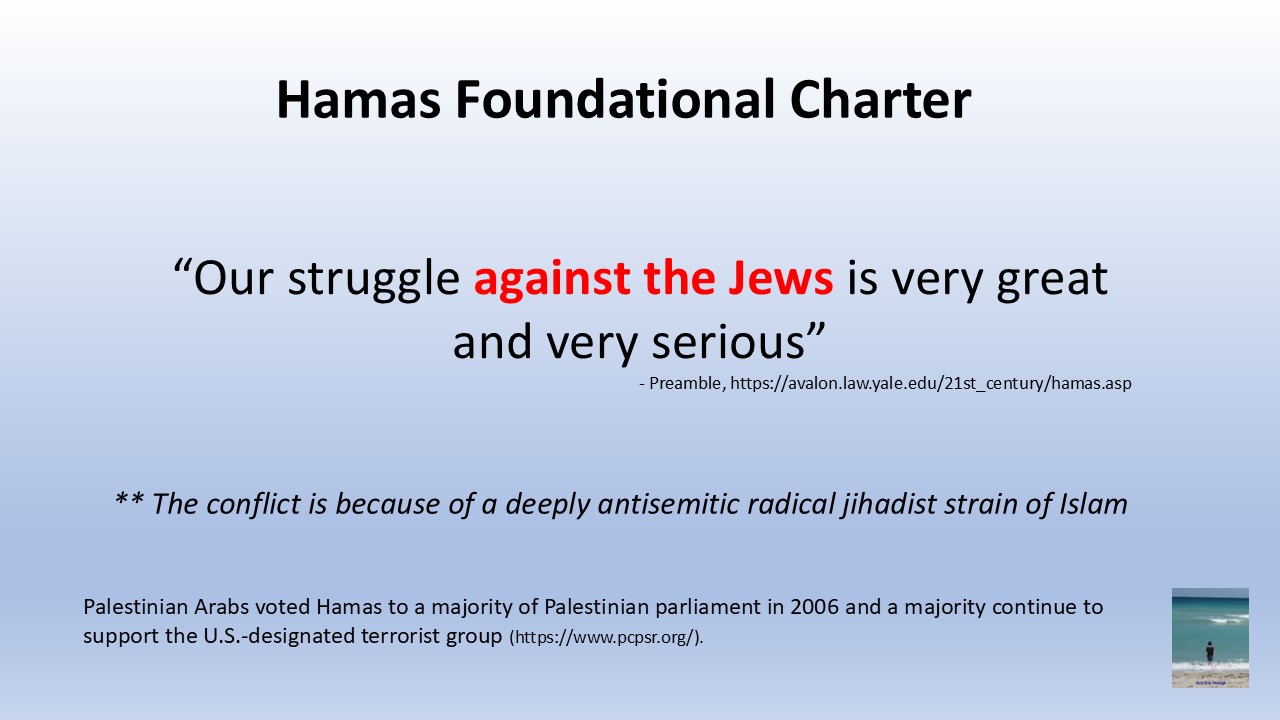
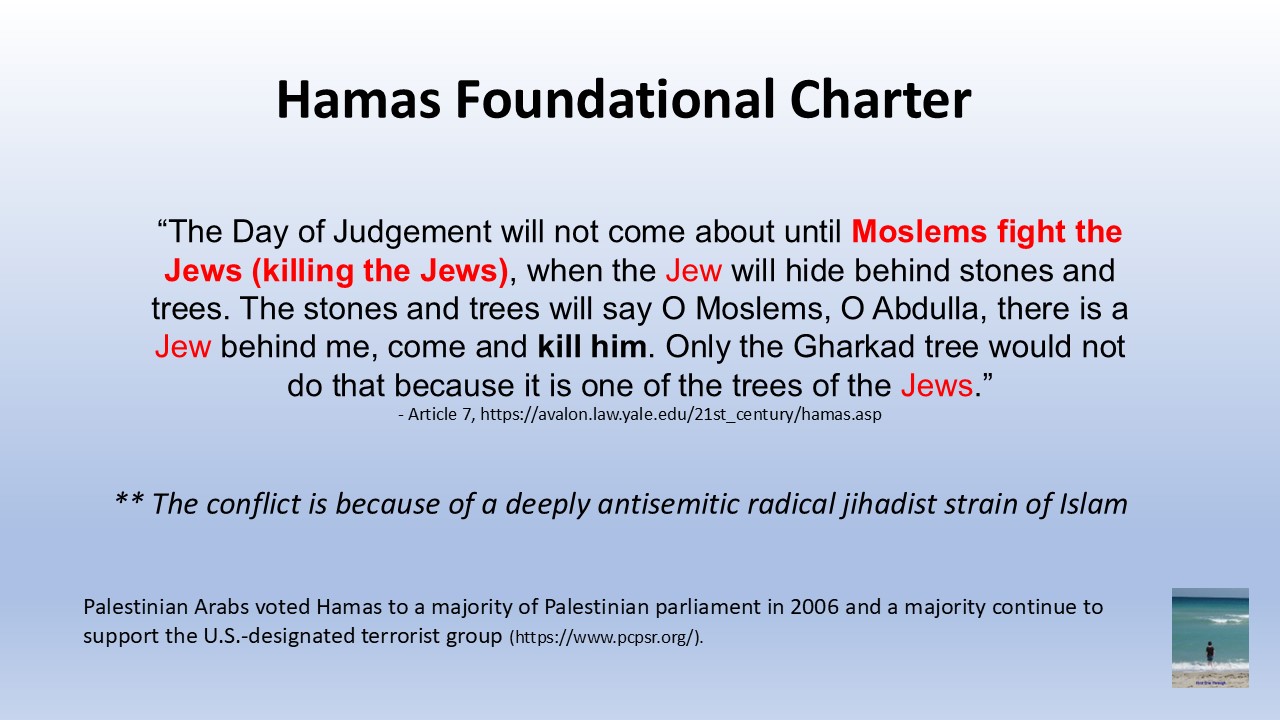
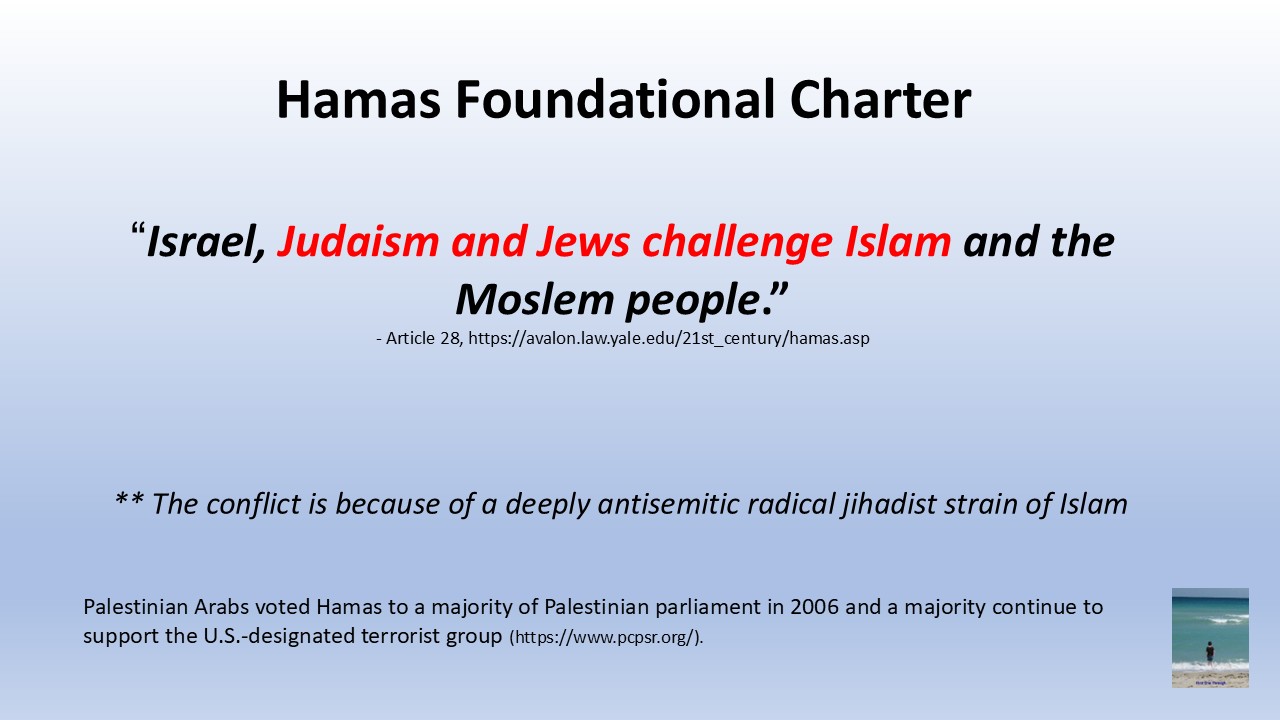
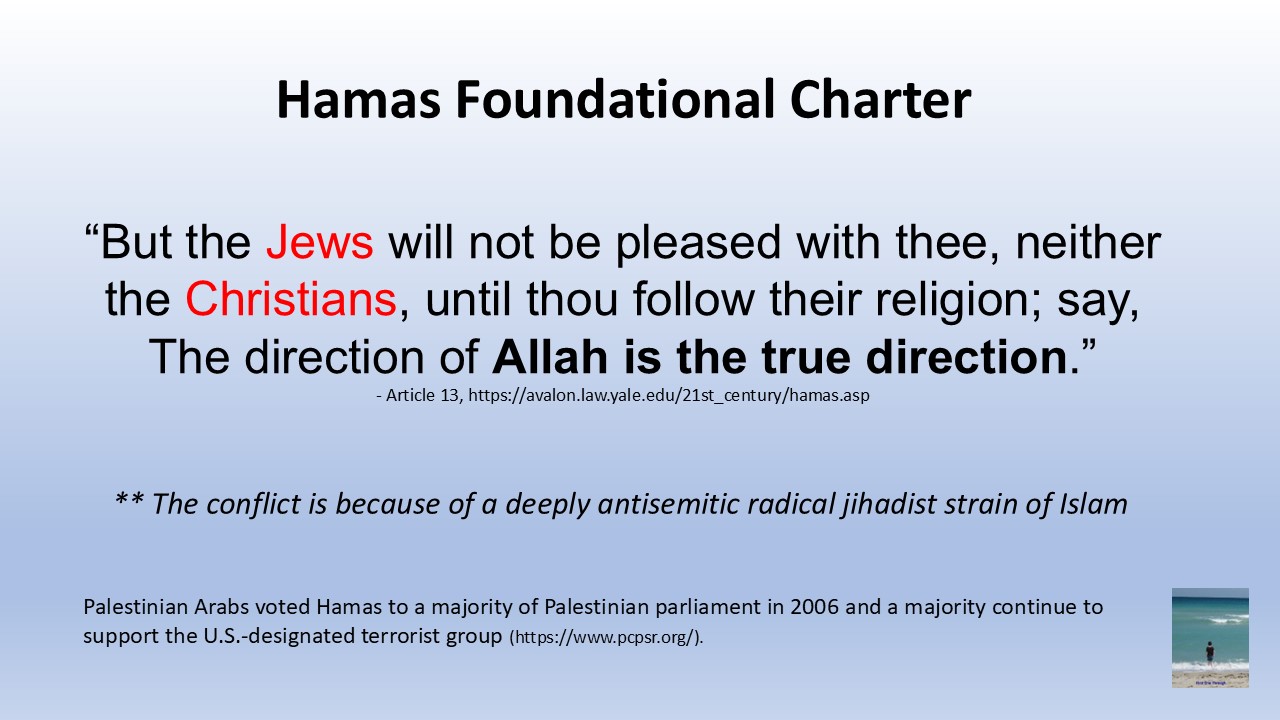
They handed 58% of their parliament to Hamas — a terror group that doesn’t hide behind euphemisms. Hamas says openly that its mission is killing Jews and destroying the Jewish state, and Palestinians rewarded that platform with victory.
Then Hamas seized Gaza, and the public celebrated.
Then they launched war after war — 2008, 2012, 2014, 2021 — and Palestinians cheered again.
They spent their time and energy building a terrorist infrastructure under homes, mosques, schools and hospitals.
And then came the last two years, the worst carnage of all, and PCPSR polls showed overwhelming support in both Gaza and the West Bank.
Gazans celebrate the parade of dead Israeli Jews through the streets
This was Palestine 1.0. It wasn’t Israel running the show. It wasn’t occupation controlling the ballot box. This was Palestinian society expressing its political will.
And the result was catastrophic: a corrupt leadership, a terror government, zero investment in coexistence, zero preparation for statehood, and a culture built not on governance but on grievance.
Palestine 1.0 didn’t collapse because of logistics. It collapsed because of values.
Yet the world now wants to release Palestine 2.0 — a supposedly “upgraded” version where terrorists are kept out, Hamas is disarmed, and nicer leaders are installed. As if changing the packaging changes the product.
So the question becomes unavoidable: Was Palestine 1.0 a failure of government or a failure of the people?
If it was the government’s failure, then why did Europe rush to recognize it as a state? How do you crown a political project as a nation when its first attempt at self-rule ended in a terror dictatorship?
And if the failure was the people — if majorities truly wanted leaders who promised Israel’s destruction — then what confidence should anyone have that Palestine 2.0 will be any different?
You can replace leaders. You can write new constitutions. You can disarm militias. But you cannot create a peaceful state when the foundational political culture rejects the existence of the neighbor it must live beside, one that even Palestinian advocates acknowledge is a profound “deformity.“
The majority of Gazans have always supported killing Jewish civilians inside of Israel
Palestine 2.0 is being sold like a software update: “Bug fixes. Improved performance. No terrorism this time.” But the core virus — the ideology that Jewish sovereignty is unacceptable — has never been removed.
And until it is, every version will crash.
The world can fantasize about Palestine 2.0, but if the Stateless Arabs from Palestine (SAPs) still believe the destruction of Israel is their national purpose, then all we’re doing is reinstalling the same system and acting surprised when the outcome doesn’t change.
You don’t upgrade a failure by renaming it. You upgrade a failure by changing the values that made it fail.
And until that happens, no one should pretend Palestine 2.0 is a new future. It’s the same code with the same flaws — and the same predictable ending.
To read the Western press, one might believe that the Stateless Arabs from Palestine (SAPs) in Gaza and the West Bank are reluctantly resigned to the idea that Hamas must go. Headlines routinely imply a growing consensus that Hamas is the past and some renewed Palestinian Authority is the future.
It could not be further from the truth.
The October 2025 PCPSR poll shows — unambiguously — that the Palestinian public has not turned away from Hamas. The majority would elect Hamas. The majority still supports the October 7 massacre. The majority wants Hamas to never disarm. This isn’t a fringe view or a warped reading of the data; it is the mainstream sentiment of Palestinian society two years after the massacre. Western analysts may avert their eyes, but the numbers do not.
And the Palestinian Authority knows this. That is why it continues to shield Hamas — not confront it.
A perfect illustration can be found in WAFA, the PA’s official news agency. In reporting on a session held by Canada and the European Union calling for a renewed diplomatic push, WAFA framed the story as a call for a “two-state solution,” “Gaza reconstruction,” and vague Western support for Palestinian aspirations and condemnation of Israeli actions.
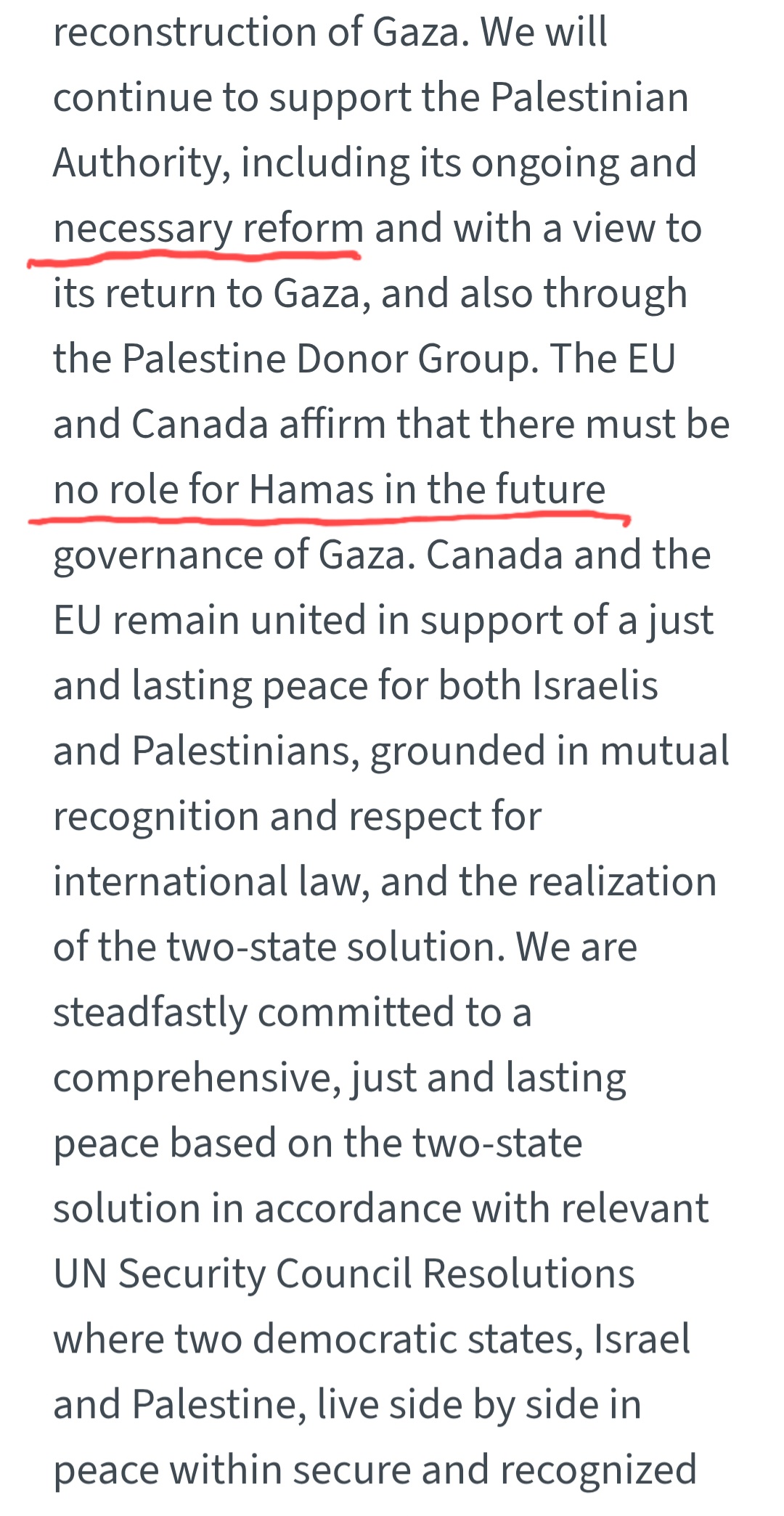
What it didn’t report is the crucial part: those same governments insisted that the Palestinian Authority must undergo significant “necessary reform” and that Hamas must have absolutely “no role” in the future of Gaza. This was not an afterthought in the meeting; it was a headline demand. Yet WAFA hid it from the Palestinian public.
Joint declaration from EU- Canada on November 12, 2025
Why? Because telling the truth would expose the central problem: Palestinian society is not being prepared for peace. It is being insulated from accountability.
A healthy political culture would confront the society’s own extremism. It would publish the poll numbers honestly and begin the painful process of restructuring education, media, and institutions. The PA instead chooses the opposite — suppressing outside criticism of Hamas and pretending that international actors want a Palestinian state under current conditions.
Deradicalization and re-education are not optional. They are essential. And it is unmistakably clear that Palestinian society is incapable of doing so on its own.
For decades the PA has relied on a strategy of deflection — blaming Israel, minimizing internal dysfunction, and shielding extremist factions to avoid backlash from the street. That strategy has produced a generation that celebrates massacre, rejects coexistence, and sees disarmament as betrayal.
The Western world may cling to the comforting fiction that Hamas is isolated and universally rejected by Palestinians. The data say otherwise. The PA’s deliberate omissions say otherwise. The very architecture of Palestinian political life says otherwise.
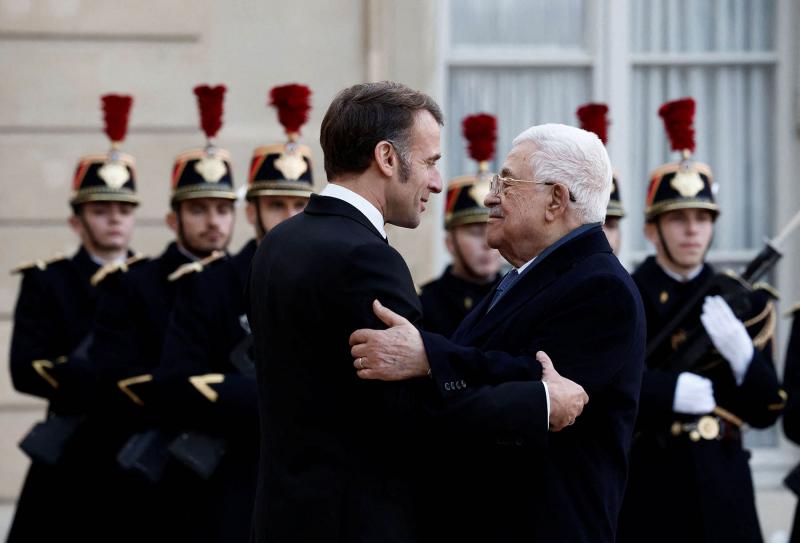
France may assuage the Muslim street when its Prime Minister has meetings and posts photos with PA President Mahmoud Abbas, but those actions make it complicit in promoting not only a fiction, but affirmatively dressing the wolf in sheep’s clothing.
French President Emmanuel Macron welcomes Palestinian President Mahmoud Abbas at the Elysée Palace in Paris, France November 11, 2025. Abbas told the west “We are committed to a culture of dialogue and peace, and we want a democratic, unarmed state committed to the rule of law, transparency, justice, pluralism and the rotation of power.” No such statement appeared about the meeting in Wafa.
Until the international community confronts this reality — and insists on genuine deradicalization rather than polite diplomatic euphemisms — there will be no meaningful change in Gaza, the West Bank, or the prospects for peace.
Stateless Arabs from Palestine (SAPs) — in Gaza and the West Bank — often cry out that they cannot go wherever they wish in Israel. They protest that they cannot move to the towns where their grandparents once lived. They label Israel as racist for preventing them from settling there, even though their Muslim Arab cousins live peacefully in those very same towns.
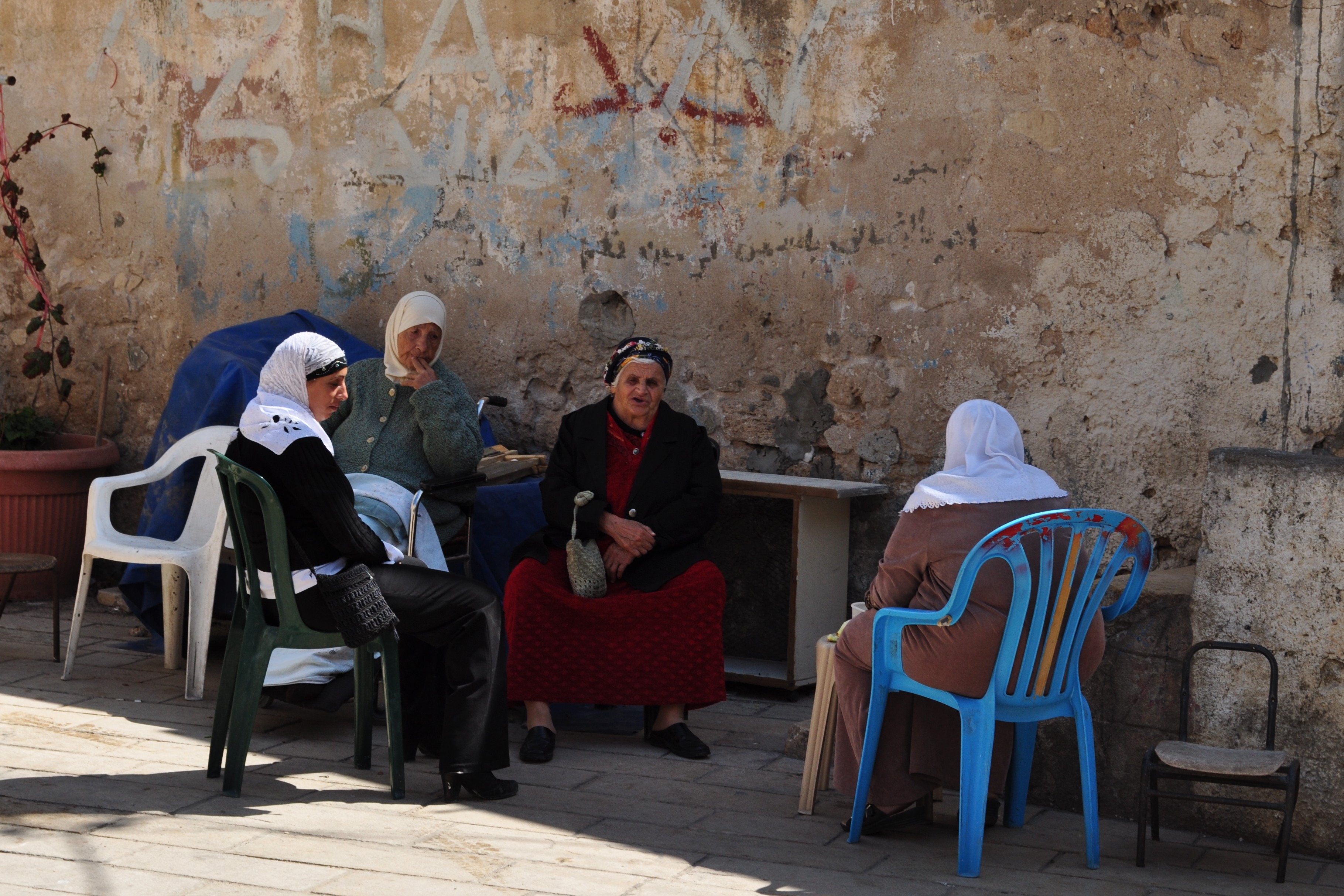
Arab women sitting in the shade in Akko, Israel (photo: First One Through)
They point to United Nations resolutions declaring they have a “right of return.” They frame their displacement as an “ongoing Nakba,” a catastrophe that Israel continues to impose.
I hear their complaint. I hear their anger. I more than understand — I live it.
Because Jews have lived that same nightmare — and worse. The very same United Nations that claims SAPs have a “right of return” decreed that Jews should be banned from living in half of their homeland. It told us we could not live in our own capital, Jerusalem. It told us we could not pray on our own holy mountain. It called it a “status quo” and the world nodded in approval.
And the Stateless Arabs from Palestine have the gall to try to deny Jews that very same right — to live freely in their homeland — while complaining that Jews are denying them theirs. They scream of injustice while vilifying “Yahoods.” The hypocrisy is obscene.
The Palestinian Arabs know it, and rather than confront it through accommodation and compromise, they wage war like Highlander, shouting “there can be only one.” They elected Hamas. They supported the October 7 barbarism. They continue to support Hamas, all in the hope of taking over the entire land from a small country.
Israeli Arabs make up 21% of the Israeli population, while Jews make up 0% of Gaza’s population and about 18% of the land east of the 1949 Armistice Lines (E49AL). The world ignores the Israeli Arabs with full citizenship rights, and obsesses and smears the Jews in the “West Bank” as illegal “settlers.” It seeks to ethnically cleanse that region of Jews while simultaneously claiming Israel has no true sovereignty to determine who to allow into its country to push the Israeli Arab population to 50%. It’s absurd.
Muslim Arabs have global support backed by 2 billion Muslims in their complaint against Israel. The small number of Israeli Jews receive global contempt for seeking the same right to live and travel freely in their homeland.
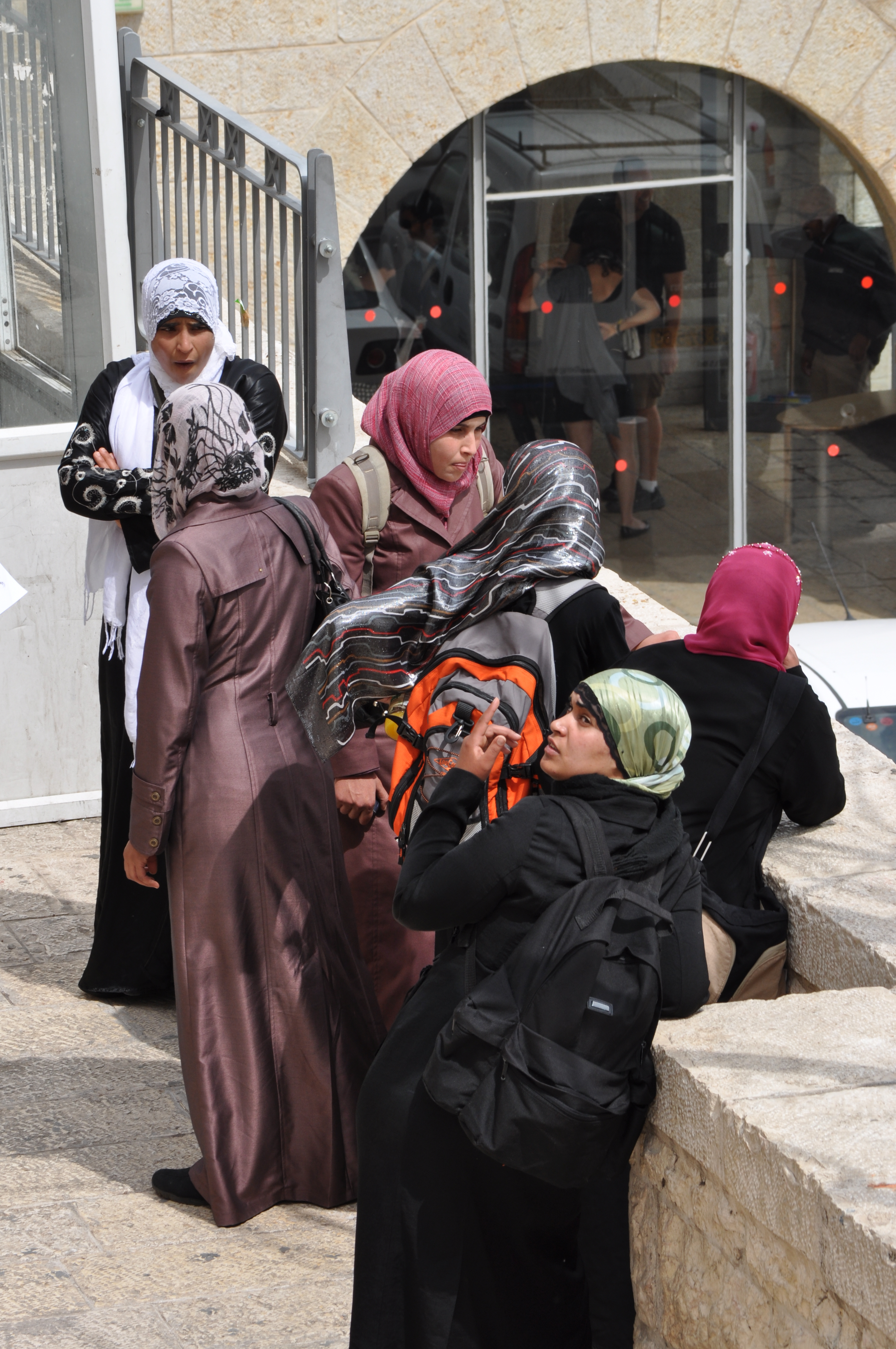
Israeli Arab women in Jerusalem (photo: First One Through)
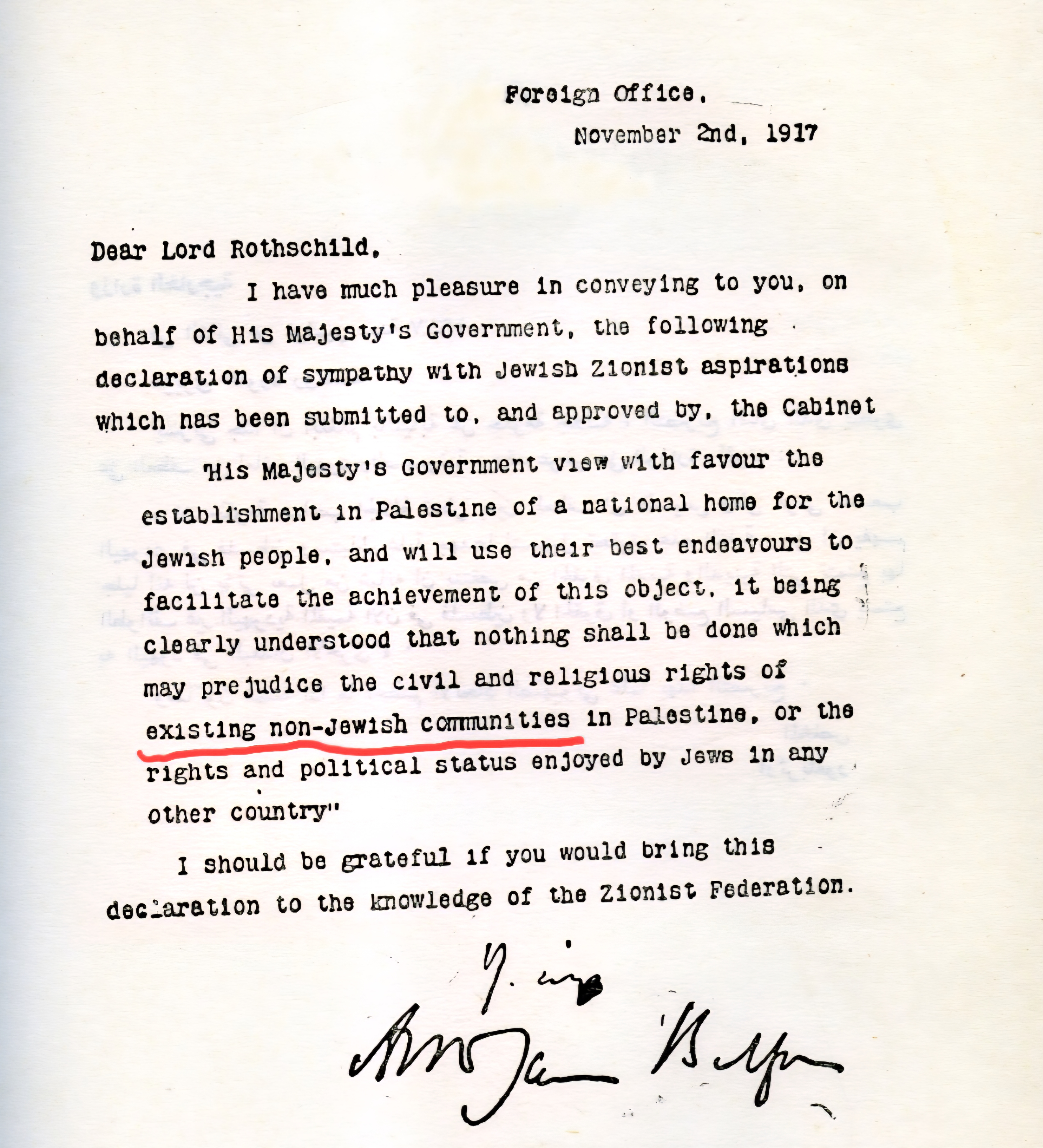
Much of the attention on the Balfour Declaration—issued on November 2, 1917—focuses on the United Kingdom’s pledge to “facilitate” “the establishment in Palestine of a national home for the Jewish people.” Israel-haters rage at this clause, claiming that Jews had no historical connection to their ancestral homeland and that Britain had no right to “hand over” immigration rights from local Arabs to Jews.
Balfour Declaration
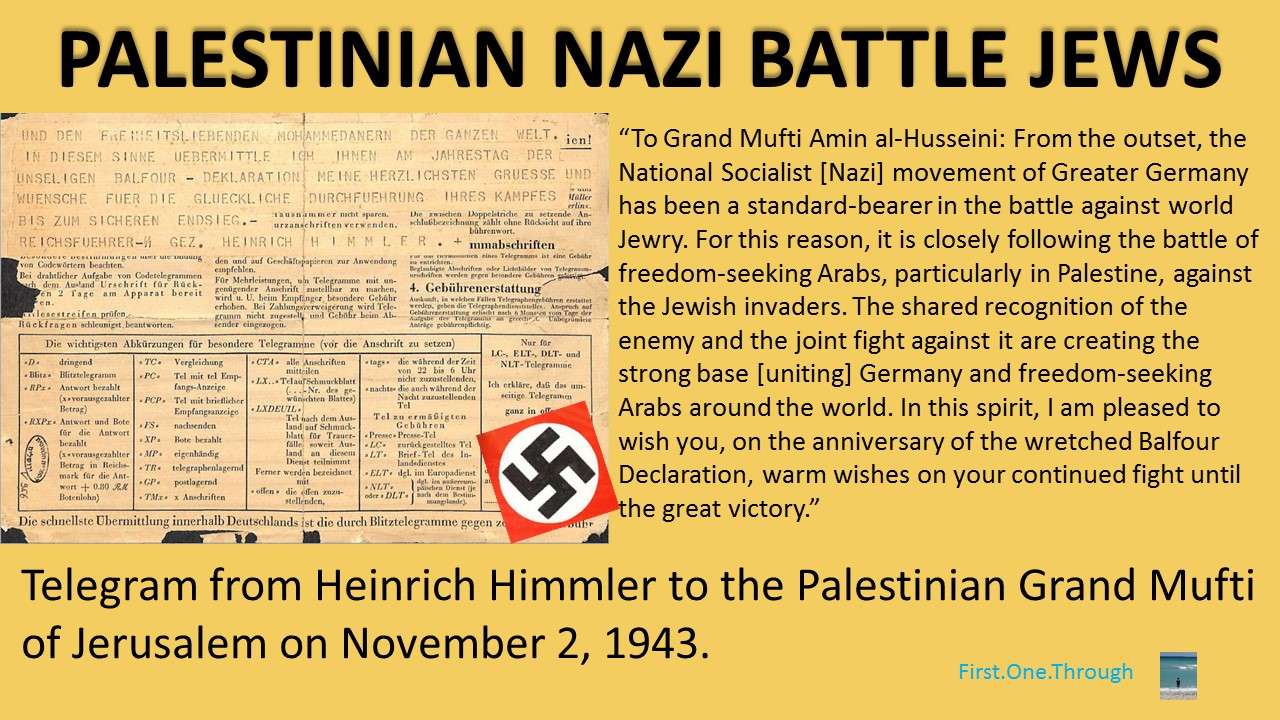
On the anniversary of the Declaration in 1943, Heinrich Himmler of Nazi Germany sent a telegram to the “Grand Mufti” of Jerusalem that Nazis and Arabs had the same enemies – Jewish invaders. In 2016, the President of the Palestinian Authority, Mahmoud Abbas demanded an apology and reparations from Britain for issuing the Balfour Declaration, having repeatedly failed to destroy the Jewish State.
Telegram from Heinrich Himmler to Amin al-Husseini on November 2, 1943
But there’s another part of that same document that antisemites also detest. The closing line reads:
“…nothing shall be done which may prejudice the civil and religious rights of existing non-Jewish communities in Palestine, or the rights and political status enjoyed by Jews in any other country.”
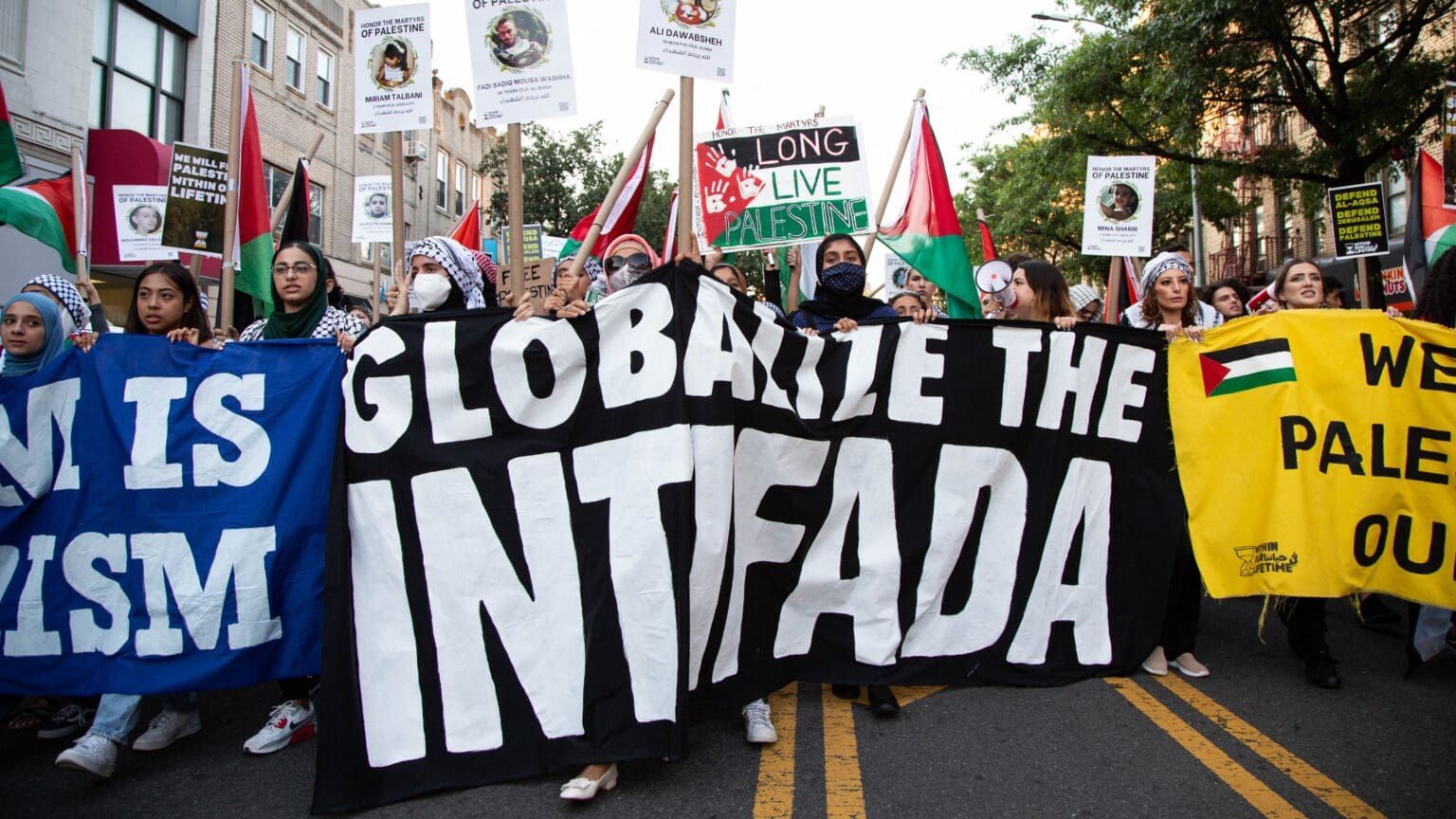
That final clause—protecting Jews’ rights around the world—is precisely what modern antisemitic movements are trying to undermine. Groups like Within Our Lifetime, CAIR, and the Democratic Socialists of America openly campaign to dismantle what they deride as “Jewish power” in America.
They smear Jews as self-serving “capitalists,” accuse them of exploiting “Black and Brown bodies” for profit (as Rep. Rashida Tlaib has said), and seek to push Jews to the margins of public life—all because Jews affirm that the land of Israel is their homeland.
A century after the Balfour Declaration, its promise remains under attack—not only in the Jewish homeland but wherever Jews dare to live proud and free.
The United Nations Relief and Works Agency, UNRWA, declares that it operates on four humanitarian principles — humanity, neutrality, impartiality, and independence. It is none of those things.
UNRWA is unlike any other UN agency. It is not the UNHCR, which manages refugees from every nation and conflict on earth. UNRWA is a creature of exception — created for a particular people, in a particular region, in a particular war.
The agency claims it was established to address the plight of refugees from Palestine following the 1948–49 Arab-Israeli War. But was that truly its purpose? When the fighting ended, thousands of Jews were also expelled from their homes east of the 1949 Armistice Lines (E49AL) — from Jerusalem’s Old City, from Hebron, and across Transjordan’s illegally occupied territory. They, too, were refugees from Palestine. Did UNRWA help any of them? No.
Jews expelled from the Old City of Jerusalem via the Zion Gate by the army of Transjordan
From its inception, UNRWA was built to serve Arabs alone. Even when those same Arabs became full Jordanian citizens, the agency continued to provide them with housing, food, education, and medical care — benefits that by any logical standard should have ended once citizenship was granted. Instead, UNRWA preserved refugeehood as an inheritance, not a temporary condition.
Over time, UNRWA’s mission has morphed from relief to perpetuation. It has shown itself highly partisan, politically entangled, and morally compromised. Its schools and clinics may operate under the UN flag, but the agency’s allegiance is often indistinguishable from the politics of rejectionism that dominate its host territories.
During the 2023 Gaza war, UNRWA boasted that only it had the infrastructure to provide food, education, and healthcare to the Gazan population. Yet when 250 Israelis were dragged into Gaza as hostages, where was this agency of “humanity”? Did it deliver a single bandage or calorie to the kidnapped Israelis held underground? Did it condemn their abduction, or even acknowledge their suffering? It did not. UNRWA’s humanity proved selective, its independence nonexistent.
Its operations in Gaza function only through integration with Hamas, the political-terrorist organization that rules the territory. Schools double as weapons depots; employees have been implicated in massacres; aid is distributed by political loyalty, not human need. Leaders at the OCHA, another UN “humanitarian” group, are not shy to say they view Hamas a legitimate political representatives of Palestinians, not as a terrorist group.
UNRWA now has additional offices outside of its field operations. It opened an office in Turkey to “expand its political and financial support base,” backed by the Organization of Islamic Cooperation (OIC), a political group. Very political. Neither independent nor neutral.
UNRWA is not a neutral humanitarian actor. It is a political instrument masquerading as one. It fails every principle it proclaims.
So long as UNRWA exists, it will preserve resentment, dependency and hatred. That agency founded in the shadow of war is the leading obstacle to peace.
If one were to build a museum chronicling how a people educated generations toward hatred and eradication, the Palestinian Arabs would tragically merit their own institution. The Museum of Genocidal Intent would not showcase armies, the tools of genocide. It would display ideas, laws, sermons, and schoolbooks that made destruction a virtue and coexistence a sin.
Entrance Hall – The Charter of Death
Visitors first encounter the founding documents: the Hamas Charter (1988) and early Fatah Constitution passages promising Israel’s annihilation. There are ballots underneath from the 2006 parliamentary elections with articles alongside showing the Stateless Arabs from Palestine (SAPs) electing Hamas to 58% of parliament as a first action of breathing self-determination. As one leaves the room, leaders—from Arafat to Abbas to Haniyeh—chant “From the River to the Sea” and “We love death more than you love life.“
Gallery I – Educating for Erasure
School desks and children’s cartoons line the room. In cases, textbooks from the Palestinian Authority show lessons which erase Israel from maps. UNRWA teachers like Afaf Talab have Facebook posts featuring wishes that God kills the Jews. A 9th grade lesson calls the firebombing of an Israeli bus a “barbeque party.” There is a coloring book hanging on the wall used in a fifth grade class in an UNRWA school which has a flag dripping in blood in front of the al Aqsa Mosque in Jerusalem, with a map of Israel alongside, erased into “Palestine.”
Coloring book from an UNRWA fifth grade class tying religion, prayer, death and destruction of the Jewish State
A television plays cartoons from Hamas TV shows, showing ultra-Orthodox Jews and Israeli soldiers digging under al Aqsa mocking Arabs and Muslims who are “asleep” as the crooked nosed-Jews threaten the mosque.
Interactive displays allow visitors to click on various videos from summer camps in Gaza and east of the 1949 Armistice Lines (E49AL/ “West Bank”). Young girls sing about “igniting an intifada,” encouraged “to shoot all the Jews” and taught if the Jews don’t leave Palestine, all of them should be “slaughtered.”
And the music. Popular Arabic songs play throughout the museum. They call for Jews to leave the land or be killed or kidnapped.
Gallery II – Icons of Murder
Here hang portraits of those celebrated for killing Jews: Dalal Mughrabi, Yahya Ayyash, and others. Under each image scroll the names of their victims—families, schoolchildren, passengers. Nearby, official “martyrs’ fund” ledgers show stipends paid to convicted attackers from the Palestinian government. In the center of the room are mock ups of the various schools, public squares and soccer tournaments named for the “martyrs.”
Gallery III – International Complicity
Painted UN blue, this hall traces how global institutions enabled indoctrination. Pictures of leaders of various European countries including Belgium and Norway that fund the schools and squares named after terrorists. Copies of numerous United Nations resolutions cover the walls, which condemn Israel but not Hamas, which make it illegal for Jews to live in the Old City of Jerusalem, and illegal to pray at their holiest site on the Temple Mount.
A large picture of the entrance to the UN-run “refugee” camp in Bethlehem with a key on top of a keyhole portal emphasizes that the international community is the vehicle for Arabs to eradicate the Jewish State.
Gallery IV – Blood Narratives
Walls of newspapers and posters accuse Jews of medieval crimes: poisoning wells, harvesting organs. Animated panels compare Nazi caricatures to modern Palestinian cartoons—the imagery identical. Loudspeakers replay sermons calling Jews “descendants of apes and pigs.”
Interactive charts present PCPSR and other surveys over time:
December 2023 – about three-quarters of Palestinians called the October 7 attack “correct.”
Majorities favored continued “armed struggle.”
Roughly two-thirds support killing Jewish civilians in Israel in every poll since 2000
Gallery VI – Jerusalem: The Theater of Denial
A model of the Al-Aqsa plaza plays footage of Murabitat women harassing Jewish visitors to the Temple Mount.
PA President Mahmoud Abbas and other PA officials can be seen on videos claiming “Jews have no history in Jerusalem.” Audio of chants—“With blood and soul we will redeem you O Aqsa”—fills the room. Hamas leaders promise to repeat the October 7 “al Aqsa flood” massacre “again and again.”
PA president Mahmoud Abbas glorifying death on behalf of Jerusalem
Gallery VII – The Forgotten Ethnic Cleansing of Jews
Artifacts from before 1967 tell the story before the story:
The massacre and expulsion of Jews from Hebron in 1929
Synagogues Destroyed: photos of Jerusalem’s Old City after Jordan’s takeover—58 synagogues razed.
Expulsion: maps marking every Jewish family removed from the Old City.
Jordan’s illegal annexation of part of Israel in 1950.
Gallery VIII – Lynching: Public Violence as Spectacle
The public spectacle of the killing for the crowds is highlighted in the last room of the permanent collection.
Hebron 1929 – photos and testimonies of the massacre where 67 Jews were murdered
Ramallah 2000 – two Israeli reservists beaten to death by a mob; a photograph of a man showing blood-stained hands became an icon of the Second Intifada. The crowd cheers.
Gaza, 2023 – pictures of Gazans cheering as dead Israeli women are paraded through the streets.
The bloody hands of a Palestinian man after lynching an Israeli in Ramallah has become a symbol of the genocidal intent
Special Exhibit – The Sbarro Massacre: Innocence Targeted
At the museum’s center stands a quiet, glass-walled room marking August 9, 2001, the bombing of the Sbarro pizzeria in Jerusalem.
Bombing at Sbarro restaurant in the Palestinian terrorist war on Israeli Jews
Artifacts include: fragments of the restaurant sign and surviving menu board; the broken guitar of 15-year-old victim Malki Roth; children’s shoes and schoolbooks retrieved from the site.
Chronology Panel: maps trace the attacker’s route and later trials of the planners.
Testimony Wall: written reflections from victims’ families—the Roths, Greenbaums, Schijveschuurders—describe loss and their ongoing quest for justice.
Media Archive: displays neutral summaries of press interviews and court transcripts noting the convicted organizer’s open lack of remorse, contrasted with international outrage and U.S. extradition efforts.
A video concludes with the terrorist Ahlam al-Tamimi stating how proud she was to have killed “religious Jews” and eight children.
Her words hang over the door as one leaves the building: “the philosophy of death is very difficult to understand.” She lives as a free woman walking the streets of Jordan today, a hero to millions.
Interview with terrorist Ahlam al Tamimi who has no regrets for killing women and children at a pizzeria
Epilogue
The Museum of Genocidal Intent does not exist, yet its exhibits do—scattered through classrooms, speeches, and monuments. Each artifact documents a choice: to teach vengeance or to teach life. Only when the real-world versions of these exhibits are dismantled will the possibility of peace move from behind glass into the open air.
In Lebanon and Syria, senior terror leaders keep disappearing. Israel’s intelligence services have shown that even far from home, their reach is absolute. Hezbollah commanders vanish without warning. Iranian coordinators meet “accidents” in Damascus. Israel’s eyes are everywhere — east of the 1949 Armistice Lines (E49AL / “West Bank”) and far beyond.
Inside Israel and the territories under its vigilance, that network of informants has kept the Stateless Arabs from Palestine (SAPs) from unleashing the kind of barbarism seen under Hamas. The true security barrier is not made of concrete or wire — it is people: HUMINT, human intelligence, the whispers that prevent slaughter.
But Gaza became a black hole the moment Israel withdrew in 2005. Every soldier, every Jew, every Israeli presence was uprooted — and with them went the eyes and ears that had kept the region stable. Hamas seized power through blood, executing its rivals and every suspected collaborator. What followed since 2007 was not liberation but suffocation. Gaza became a fortress of fanaticism, sealed off and armed to the teeth.
Hamas interrogates suspected informants in 2014
The legal Israeli blockade was not enough. While Israel and Egypt controlled the borders, Hamas tunneled beneath them — smuggling Iranian rockets, explosives, and even the raw materials to build new weapons. Gaza transformed from a strip of land into a terrorist enclave. By 2023, it was not just armed — it was indoctrinated, radicalized, and ready for mass murder.
Israel will not make that mistake again.
Among the newly released SAP prisoners, there are almost certainly Israeli plants — men and women turned during interrogations or cultivated long before. They will slip back into Gaza’s shattered neighborhoods, listening, watching, feeding intelligence. Every conversation, every weapons cache, every hint of reorganization could be the thread that prevents the next October 7.
Hamas knows this. Its paranoia will turn inward. Accusations will fly, confessions will be forced, and public executions will become commonplace to the shouts of “Allahu Akhbar.” The group will again devour its own, because it cannot rule without fear.
Hamas executes suspected informants in front of crowd of children
Any new ruling authority that replaces Hamas will need to coordinate with Israel. There can be no “independent Gaza” left to rot in secrecy. Deradicalization cannot be trusted to glossy NGOs or “neutral” foreign agencies alone. It must be verified — by intelligence, by informants, by those who know the difference between reform and camouflage.
[As for the Arab propaganda outlets, none of the public executions are discussed on Qatari-owned Al Jazeera. It is busy selling Gaza and Hamas as peace-loving.]
The intelligence war has already begun. The question is not whether Israel has plants among the returnees — it is how many will live long enough to stop Gaza from sinking back into the darkness it dug for itself.
Even as the Israel-Gaza ceasefire struggles to take hold, the Palestinian Authority fuels the flames of Jew hatred with public smears that Israel is harvesting organs of Palestinian Arabs.
On October 18, 2025, Wafa, the official media of the Palestinian Authority penned an article that “Israel hands over remains of 15 slain Palestinians from Gaza.” In it, the PA claimed that the bodies of Arab prisoners handed over “appeared mutilated or missing organs.”
Article in Wafa, October 18, 2025
The only way forward for coexistence is to end the demonization and antisemitic attacks. The Palestinian Authority has repeatedly shown it is not up to the task.
“Well, thank you for asking that. To make sure I answer you fully, let’s first be clear on what a Zionist is. It’s someone who believes in two facts and one principle.
The first fact is that Jews are a people. The second fact is that the Jewish people originate in the Land of Israel.
The principle is that Jews should have self-determination in their homeland, the Land of Israel.
Yes, I believe in both of those facts and that principle. You can plainly see that nothing about Zionism has anything to do with any particular government, leader, or policy.”
That’s it. Calm, factual, and impossible to refute without revealing one’s true bias.
Now, it can very well be that some people simply believe Israel shouldn’t exist — and therefore call themselves anti-Zionists. But as Israel is a living, breathing reality today, to oppose its existence is not a theoretical stance about 1948; it’s a desire to dismantle a sovereign Jewish nation. That’s not political criticism — that’s eliminationism. That’s the desire of many groups including the People’s Forum, Within Our Lifetime and the Democratic Socialists of America.
In today’s world, anti-Zionism isn’t just a philosophical disagreement. It’s an active hostility toward Jewish self-determination, an echo of the same hate that fueled the October 7 massacre. It’s far more lethal and toxic than opposing the idea of creating another Arab state in the Middle East to be called “Palestine,” especially one that has opposed coexistence with the indigenous Jews for over a century.
To deny Jewish peoplehood, heritage, and rights in their homeland is not progressivism — it’s prejudice wrapped in the language of activism.
So, the next time someone smugly demands you “renounce Zionism,” repeat the verses above. Because once you strip away the slogans and hashtags, all that’s left of anti-Zionism is anti-Jewish animus.