The Veil on Antisemitism is Gone

For years, defense lawyers tried to blur the lines in terrorism cases. When police uncovered jihadist plots, attorneys floated the well-worn argument of entrapment — that officers merely nudged vulnerable young men into thinking about violence. If not entrapped, then “mentally ill.” “Impressionable.” “Confused.” A haze of excuses meant to rehabilitate the indefensible.

But look at the landscape now.

The people calling for violence against Jews aren’t hiding behind whispers in back rooms or being lured by undercover officers. They’re shouting it from megaphones under the banner of “free speech.” They’re organizing through groups like CAIR, Within Our Lifetime, and the Palestine Youth Movement. They openly describe Jews as “enemies” who must be “confronted by any means necessary.” They praise “resistance” in every form, stripping the word of euphemism and revealing precisely what they endorse.

Unlike past defendants, they haven’t yet been charged with providing weapons, scheming attacks, or casing synagogues. Not yet. But they are building the moral scaffolding for others to do so — a permission structure wrapped in slogans about “justice,” “liberation,” and “decolonization.” It is ideological, deliberate, and public.

This is not entrapment.
This is not mental instability.
This is not marginal, confused fury.

This is ideology. Hardened, intentional, and proud of itself.

For decades, antisemitism coming from “majority minorities” — segments of the Black community and the Muslim community — was treated differently. Explained away. Softened. Excused as an understandable reaction to oppression, poverty, policing, or trauma. Jews were asked to tolerate it, contextualize it, empathize with it. The burden of understanding was always placed on the victim. So much so, that when Jews were killed by Black people in Jersey City, Jews asked the Black community for forgiveness.

But the past few years have blown apart the pretense.

Anti-Israel activists outside a Jewish day school in Westchester calling for “liberation by any means necessary” in 2024

The hatred is no longer whispered. It is validated in academic departments, amplified on social media, and wrapped in moral language to disguise its ugliness. The same voices that once insisted they were merely “pro-human rights” now chant openly for the erasure of the Jewish people and state. They’ve dropped the mask because they believe the cultural winds are at their backs.

The veil is gone.

What remains is the raw reality: A movement that celebrates violence, justifies terror, and cloaks explicit antisemitism in the robes of social justice — and an America increasingly unwilling, or unable, to call it what it is.

Because the scaffolding of antisemitism for the alt-left is that Jews are a threat. They are powerful. They steal what is not theirs. And Jews then have the temerity to complain of “antisemitism” as if they aren’t privileged, their veil of protection to rip the victim card from the truly marginalized communities of color. For the alt-right, the rightful owners of this land are White Christians, and Jews are undermining them too.

This is FOLO, Fear Of Losing Out. The trepidation that what should rightly be yours is being snatched away by nefarious forces. The Jews. Perhaps alone, perhaps with other allies, whether they be minority groups, PACs or a foreign country.

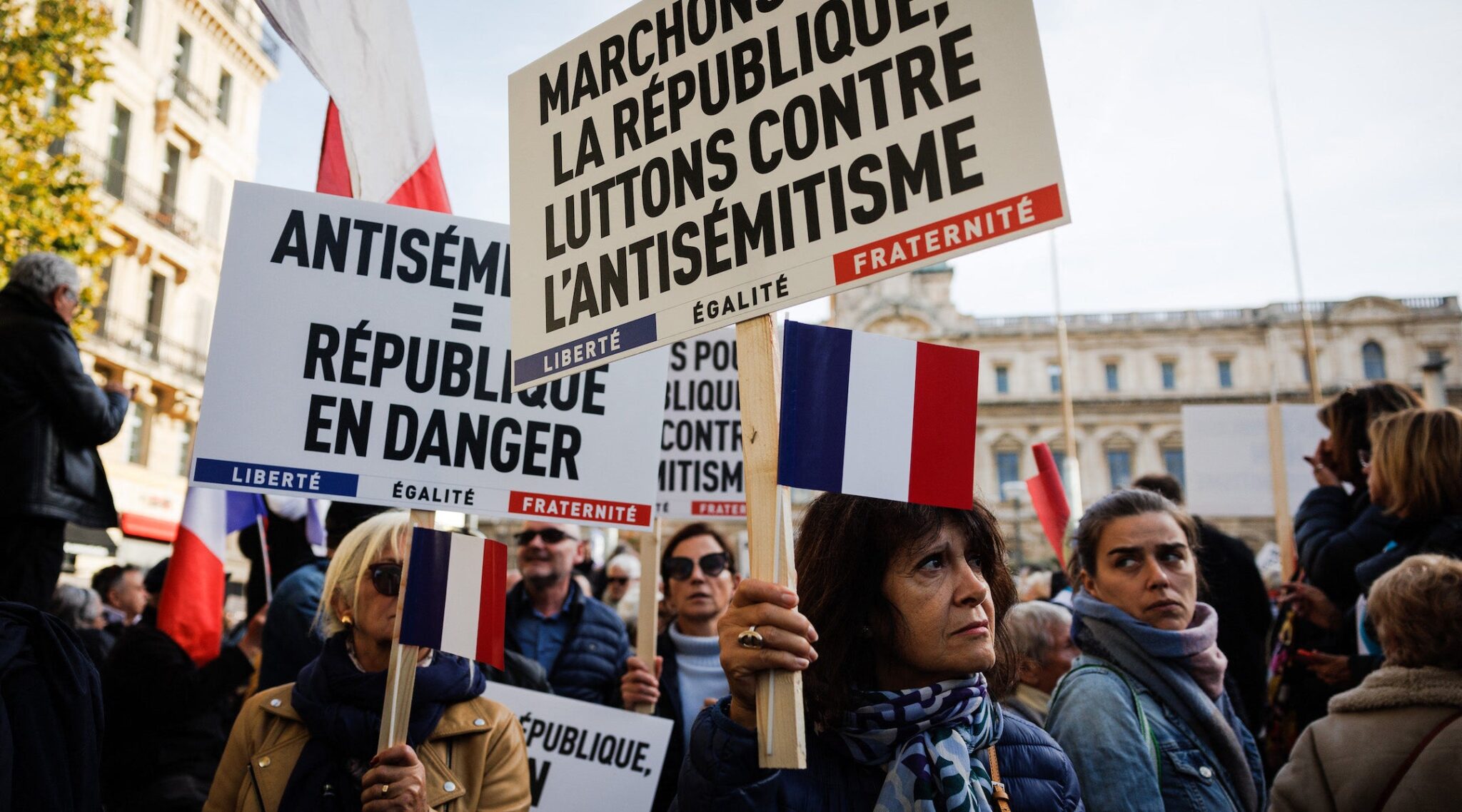
It’s old antisemitism, magnified by social media and chat groups to instigate and mobilize the masses against the most persecuted people of the past centuries. The media veil can no longer conceal the barbarians at the gates of synagogues.

Roughly 200 protestors outside of New York City’s Park East Synagogue shouting “There is only one solution! Intifada revolution!” on November 19, 2025

Palestine 2.0

The world keeps pretending we’re about to build something new when we talk about a “future Palestinian state.” As if Palestine 1.0 never happened. As if the first real test of Palestinian self-rule didn’t already give us a precise answer.

Because when Palestinians were first allowed to govern themselves, they told us exactly who they were politically:

  • They elected a Holocaust denier, Mahmoud Abbas, to be president.
  • They handed 58% of their parliament to Hamas — a terror group that doesn’t hide behind euphemisms. Hamas says openly that its mission is killing Jews and destroying the Jewish state, and Palestinians rewarded that platform with victory.
  • Then Hamas seized Gaza, and the public celebrated.
  • Then they launched war after war — 2008, 2012, 2014, 2021 — and Palestinians cheered again.
  • They spent their time and energy building a terrorist infrastructure under homes, mosques, schools and hospitals.
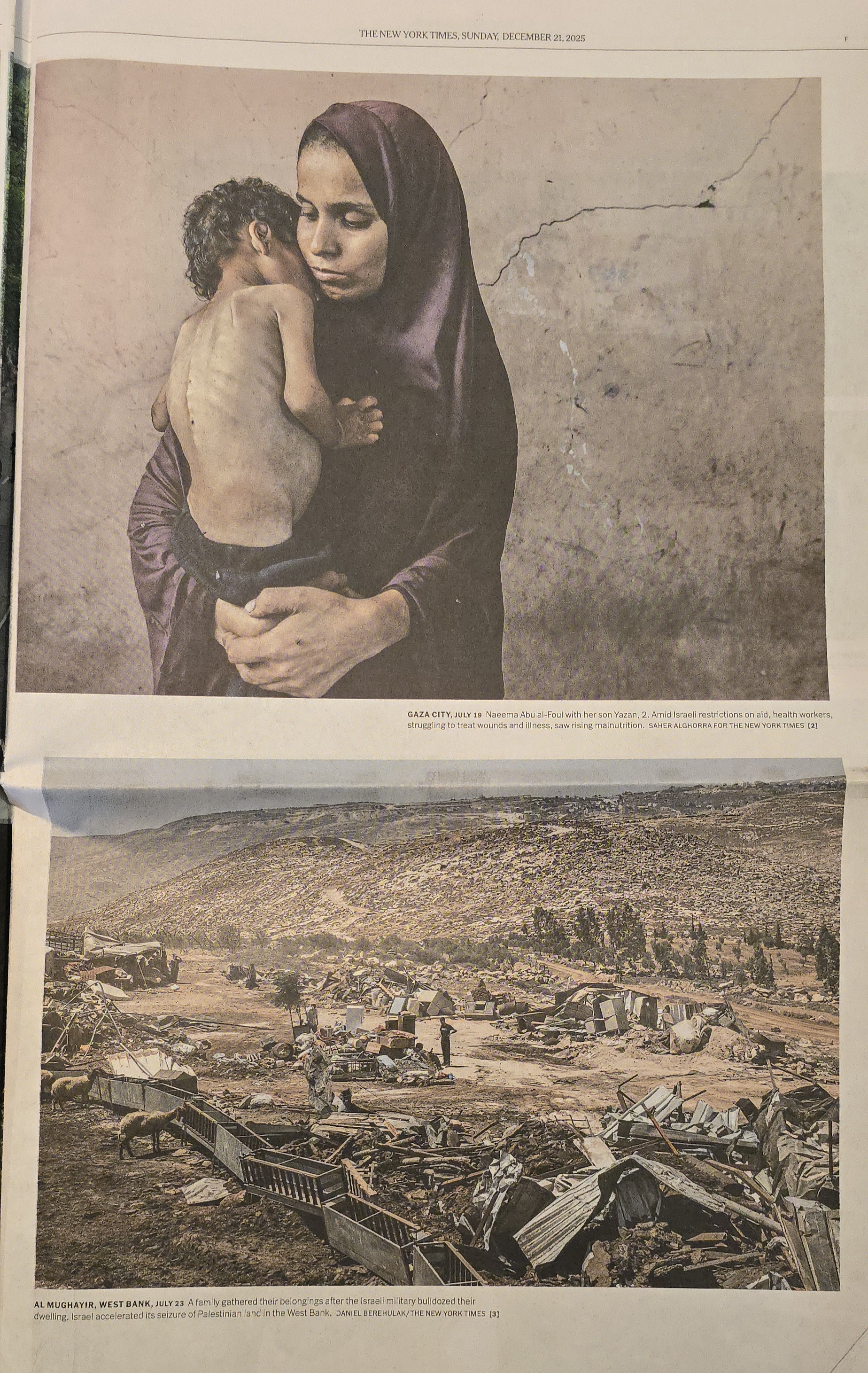
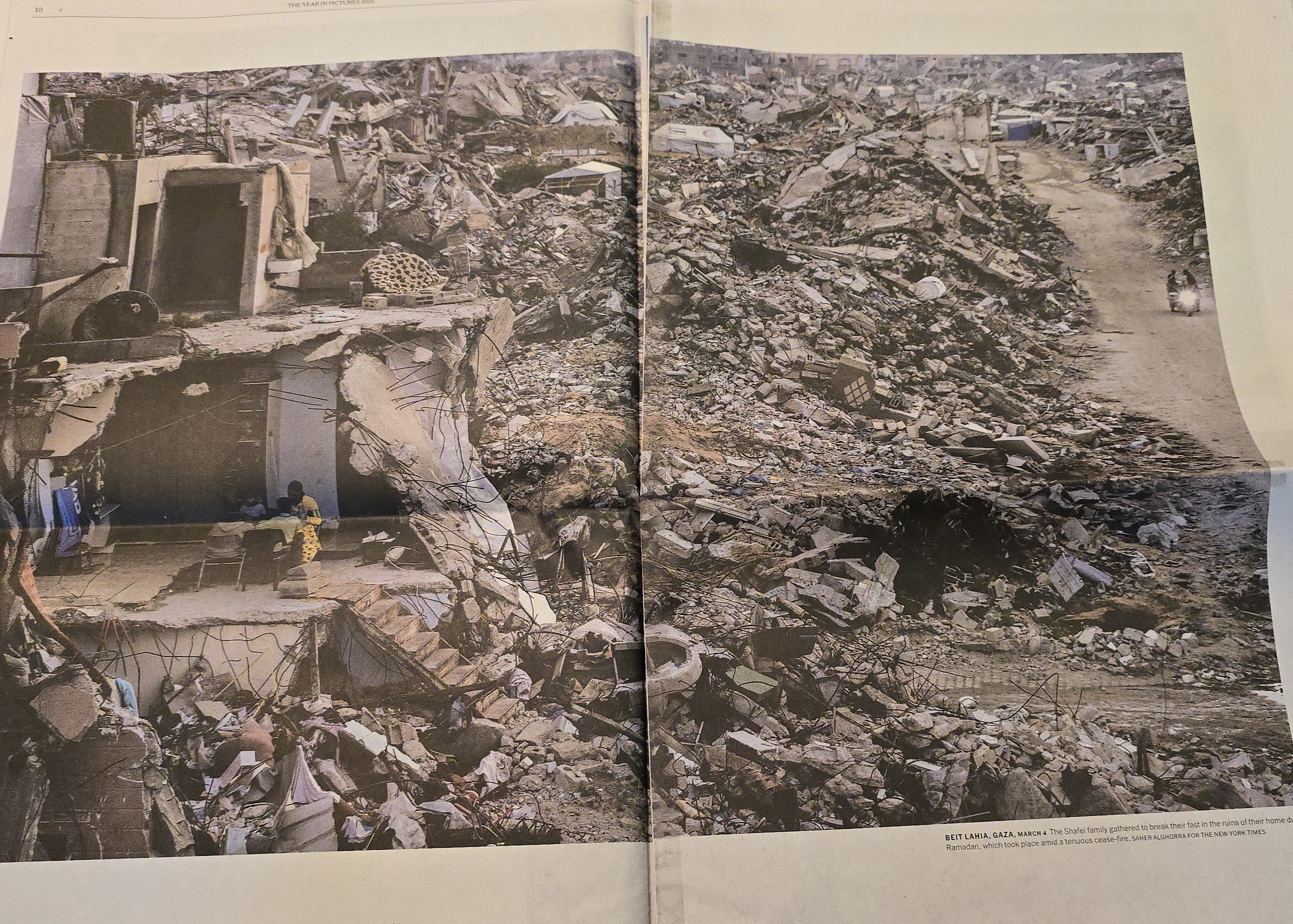
  • And then came the last two years, the worst carnage of all, and PCPSR polls showed overwhelming support in both Gaza and the West Bank.
Gazans celebrate the parade of dead Israeli Jews through the streets

This was Palestine 1.0. It wasn’t Israel running the show. It wasn’t occupation controlling the ballot box. This was Palestinian society expressing its political will.

And the result was catastrophic: a corrupt leadership, a terror government, zero investment in coexistence, zero preparation for statehood, and a culture built not on governance but on grievance.

Palestine 1.0 didn’t collapse because of logistics. It collapsed because of values.

Yet the world now wants to release Palestine 2.0 — a supposedly “upgraded” version where terrorists are kept out, Hamas is disarmed, and nicer leaders are installed. As if changing the packaging changes the product.

So the question becomes unavoidable: Was Palestine 1.0 a failure of government or a failure of the people?

If it was the government’s failure, then why did Europe rush to recognize it as a state? How do you crown a political project as a nation when its first attempt at self-rule ended in a terror dictatorship?

And if the failure was the people — if majorities truly wanted leaders who promised Israel’s destruction — then what confidence should anyone have that Palestine 2.0 will be any different?

You can replace leaders.
You can write new constitutions.
You can disarm militias.
But you cannot create a peaceful state when the foundational political culture rejects the existence of the neighbor it must live beside, one that even Palestinian advocates acknowledge is a profound “deformity.

The majority of Gazans have always supported killing Jewish civilians inside of Israel

Palestine 2.0 is being sold like a software update: “Bug fixes. Improved performance. No terrorism this time.” But the core virus — the ideology that Jewish sovereignty is unacceptable — has never been removed.

And until it is, every version will crash.

The world can fantasize about Palestine 2.0, but if the Stateless Arabs from Palestine (SAPs) still believe the destruction of Israel is their national purpose, then all we’re doing is reinstalling the same system and acting surprised when the outcome doesn’t change.

You don’t upgrade a failure by renaming it. You upgrade a failure by changing the values that made it fail.

And until that happens, no one should pretend Palestine 2.0 is a new future.
It’s the same code with the same flaws — and the same predictable ending.

How Jews Should Manage The Bad Apples

Every political movement faces the same question: what do you do with the bad people in your camp?

Ezra Klein, writing in The New York Times, argues that Democrats should welcome everyone under their banner — no matter how extreme — because inclusion wins elections. He calls it the big tent: forget purity, just make sure they call themselves Democrats. It’s politics over principle, and power over conscience.

Republicans, by contrast, still try to draw a line. When groups like the Heritage Foundation flirt with extremists such as Tucker Carlson or Nick Fuentes — men who traffic in grievance and racism — many conservatives recoil. To them, the party label still carries moral weight. You can lose elections, but you shouldn’t lose your soul.

And then there’s Hamas — the third model. When Hamas decides someone in its own ranks isn’t loyal enough, it doesn’t debate inclusion or expulsion. It breaks their legs in the street. It executes them in public. For Hamas, politics is not persuasion or debate; it is terror enforced by fear. That’s how it keeps power — absolute, unchallenged, and bloodstained.

The Temptation of the Big Tent

Ezra Klein’s “big tent” philosophy played out in real time with Zohran Mamdani’s win in New York City. The Democratic Party opened its doors to a wholly different ideology and welcomed it inside to secure a victory. But at what cost?

The party platform now stretches so far that it’s unrecognizable — and to many, repulsive. In its desperation to confront unified Republican power in Washington, the Democrats chose to absorb the fringe rather than confront it. The price of inclusion was coherence.

For illustration, imagine a Jewish newspaper facing a business dilemma:

A group like Jews for Jesus wants to buy an ad. The editor must decide:
Do we take the money? Do we run it in the name of inclusion and open debate? Or do we reject it as off-brand, offensive, and disloyal to our readership?

Most would choose the last. They’d rather forgo the check than cheapen their identity.

But the Democrats have made a different calculation. The party tasted the fringe, saw no backlash, and convinced itself there’s no downside. It’s as though that Jewish paper ran the Jews for Jesus ad — and the subscribers applauded.
So what’s next?
An ad from the KKK?
Pork recipes for Passover?
How far can inclusion stretch before it becomes desecration?

Power, Principle, and the Price of Brand

Republicans have power so can afford to maintain their brand by shedding radicals. Hamas maintains power by shedding blood. Democrats, desperate to gain power, are willing to shed consistency.

Three models emerge to rule:

  • The Democrat: inclusion for victory
  • The Republican: exclusion for integrity
  • The Islamist: execution for control

Each reveals a truth about how institutions face the corrupting pull of power.

Politics, like publishing, isn’t just about what you include — it’s defined by what you refuse to print. A brand without boundaries isn’t brave. It’s broken.

Of course the masses would like consistency and inclusion and integrity and peace on the streets. But they have come to realize that politics is power, and they want power. When Congress was a bell curve with little difference between Democrat and Republican, there was general ambivalence about elections and the impact on people’s daily lives regarding who was in power. Not so in today’s barbell society with extremists dominating politics.

The Jewish Community

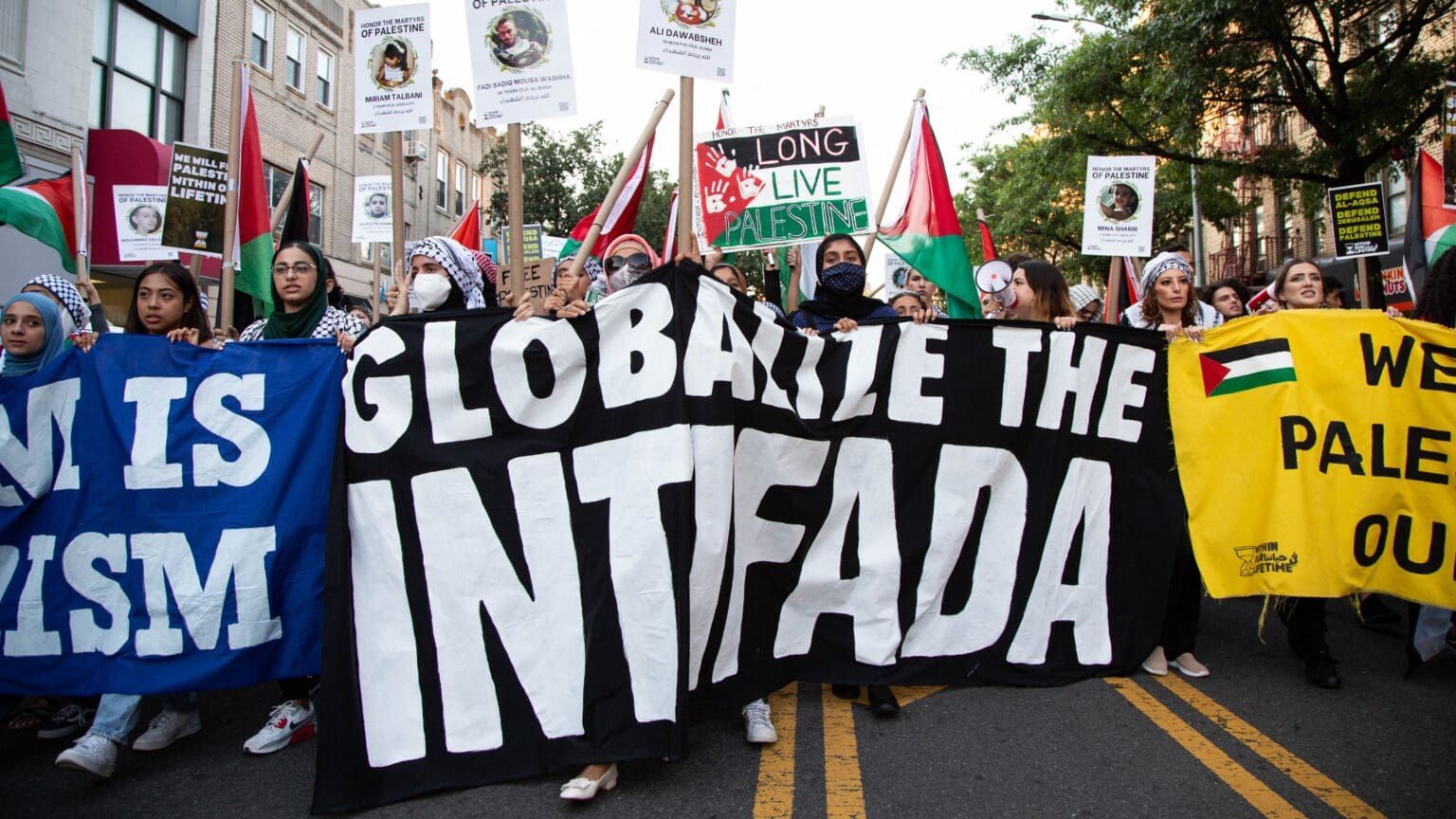
What does the Jewish community do with groups like Neturei Karta that join the worst of the anti-Israel protests and fly to Iran for Holocaust denial conferences? With Jews who voted for a mayor who supports “globalize the Intifada”?

Neturei Karta protesting a march against antisemitism in New York City, January 2020 (photo: First One Through)

Neturei Karta is a small fringe group that mostly keeps themselves isolated, so in practice, there needn’t be an active response. But there were an estimated one-third of Jews in New York City that voted for Zohran Mamdani, including public officials and celebrities. There was a big turnout in younger Jews voting for Mamdani, estimated at two-thirds of those under 44 years old.

How does the Jewish community react when a majority of young Jews are viewed as putting the broader community at risk? Which model does it follow, or is the question more complicated as one’s Jewishness cannot be shed like political affiliation, and being a Jew is not about attaining power.

And is the conclusion in the observation? Politics is about power and people take actions depending on the environment to obtain or maintain power. However, Judaism shuns power, and seeks to live a religious life of one’s choosing without external influence.

Jews have never been a monolithic group, and include capitalists and socialists, conservatives and progressives. Some have power and influence, many are poor, and others seek to shed any power and influence and hand it to majority-minority groups.

Mandy Patinkin endorsing Zohran Mamdani for mayor, president and emperor

Jews, while always small in number, have always had a very large and wide tent because they don’t get to decide who to include and exclude for their numbers. They only decide who should be included in their associations – in their shuls, schools, umbrella groups.

In May 2021, young anti-Israel Jews were calling Israeli engagement with Palestinian Arabs “apartheid” and “genocide’ (well before Hamas’s 2023 War on Israel), and some were thereby fired from teaching positions at Jewish schools. At Upper East Side Yeshivat Ramaz, alumni pressured the Principal Emeritus Haskel Lookstein to not speak at Donald Trump’s 2017 inauguration. Jews shut down other Jews for their comments and associations.

I do not believe that there is a single answer for what Jews should do with kinsmen who are regarded as beyond the pale. Historically, in a bell curve political dynamic with moderate antisemitism, the radical could be ignored as noise. However, in today’s barbell political reality, with heightened antisemitism, active measures need to be considered regarding the bad apples.

What will those actions be? Who has the power to enforce them? That is the critical question before the diaspora community today. The first step is to comprehend that the paradigm has shifted, and we can no longer ignore nor absolve the problematic actions of fellow Jews.

Look Right

There are signs on the streets of London that read “LOOK RIGHT.” They are painted boldly on the pavement to protect visitors—especially Americans—who are used to glancing left before stepping into the street. In the U.K., traffic comes from the opposite direction, and those who rely on old instincts can find themselves in sudden danger.

So it is now with American Jews.

For generations, they have turned instinctively to the Democratic Party—to the left—out of habit, heritage, and a deep belief that liberal ideals best protected minorities. But the political landscape has shifted beneath their feet. The party that once championed freedom, tolerance, and support for Israel has been co-opted by radicals: anti-Israel voices, socialists, and anarchists who now wield growing influence in its ranks.

These are not the Democrats of old. They are activists who view capitalism as oppression, who denounce Israel as colonial, and who see Jews not as a vulnerable minority but as part of a power structure to be dismantled. They are coming for capitalism—and for the Jews who helped build and sustain it.

This election, American Jews must recognize that the public square is not what it used to be. The political traffic now comes from the right direction—but the danger comes from the left.

Times have changed. Look right.

Westchester’s Forgotten Minority: Jews

When Government Champions Some, and Leaves Jews to Defend Themselves

Westchester County, NY, like much of America, has learned the vocabulary of inclusion. It now boasts a tapestry of advisory boards, task forces, and community liaisons — each designed to protect and empower those who have known prejudice.

There is a Westchester County Asian American Advisory Board, formed after a surge of anti-Asian hate crimes during COVID. It partners with the District Attorney’s office on the #SpeakUpWestchester campaign, translating safety materials into Korean, Mandarin, and Japanese so that no one’s fear goes unheard.

There is also an LGBTQ+ Advisory Board, formally empowered to advise the County Executive, coordinate events, and oversee inclusivity training. The county even facilitated an LGBTQ+-affirming senior housing complex in downtown White Plains with The LOFT Community Center at its core — an unprecedented public-private partnership to create safe spaces for queer residents.

But there is one group that still has to do it all on its own: Jews.

There is no County Jewish Advisory Board.
No county liaison for antisemitism.
No government program translating “Never Again” into action.

While Asian and LGBTQ+ residents have been given official seats inside government, Jews have been told — quietly, politely — to use their own.

Even the collection of antisemitic incident data — which rose 22 percent in Westchester in 2024 — is largely managed by private watchdogs, not public offices.

The disparity is not just institutional; it is measurable.

Westchester County has 1 million residents, including about 137,000 Jews (14% of the population) and about 65,000 Asian Americans (7%).

According to state hate-crime data and ADL monitoring, there were about 40 antisemitic incidents and 8 anti-Asian incidents reported in Westchester in 2024. That translates to an estimated 29 antisemitic incidents per 100,000 Jewish residents versus roughly 12 per 100,000 Asian residents — a per-capita rate more than twice as high.

Rather than address the antisemitism squarely, Westchester District Attorney Susan Cacace made an inclusive Hate Crimes Advisory Board which had its inaugural meeting on September 29. Cacace was proud of the giant tent and said “the communities represented on this board are broad and diverse, and board members will be able to provide me with direct input from their constituents so that my office may more readily address their concerns.”

The Westchester County District Attorney’s Office’s new Hate Crimes Advisory Board

The all-Democratic Westchester establishment seemed to echo the Democratically-led House of Representatives which refused to condemn antisemitism without adding language about Islamophobia in 2019. Jew protection cannot exist in isolation for some reason for the Blue Team. It seemingly repulses them so much, that when Republicans target antisemitism, they argue that President Trump is “weaponizing antisemitism” and not really concerned about Jews at all.

No one begrudges others their protection. Jews, more than anyone, know the cost of silence. But the imbalance is glaring.

When the Asian community faced hate during COVID, Westchester created a formal board within months. When LGBTQ+ residents sought recognition, government became a partner in building physical spaces of affirmation. But when antisemitic assaults, harassment, and vandalism spiked across campuses, streets, and synagogues, the government offered sympathy — not structure.

Graffiti on Jewish stores in Scarsdale, NY, January 2024

The Jewish paradox

Jews are trapped in a paradox. Their success is cited as proof they don’t need help; their vulnerability dismissed as self-inflicted.
They are “white” enough to be privileged, but “Jewish” enough to be blamed.

And so, when antisemitism surges, the reflex of government is not to protect but to delegate — to community partners, to philanthropists, to the victims themselves. Or to give the general feeling of blanket protection alongside others, masking the fact that they are persecuted more frequently than every other minority group.

Dozens of anti-Israel protestors outside a Jewish day school in Westchester with banners “Palestinian liberation by any means necessary” had virtually no police presence

For centuries, Jews have thrived where societies upheld justice and faltered where governments outsourced their duty.

Antisemites have no issue singling out Jews for attack, yet government officials are loathe to single out Jews for protection which they do so for every other group. It begs the question as to why: are current government leaders antisemitic, or are Jewish leaders telling the government that Jews don’t want special treatment, just to be like everybody else.

If so, what does that mean when “everybody else” gets special treatment?

Why can California, with its Democratic super-majority, advance a mandatory ethnic studies curriculum which empowers Black, Brown, Latin, Asian and Native American communities but disparages Jews?

While Democrats are correct, that Jews would rather be treated the same as everyone else, they cannot sit on the side when special privileges and protections are afforded to every group except Jews, especially while they are under attack. To exclude Jews in favor of victims of preference – or just constituents of preference – is deeply antisemitic.

#DemocraticConstituentsOfPreference

New Yorkers Must Register Democrat and Vote Republican

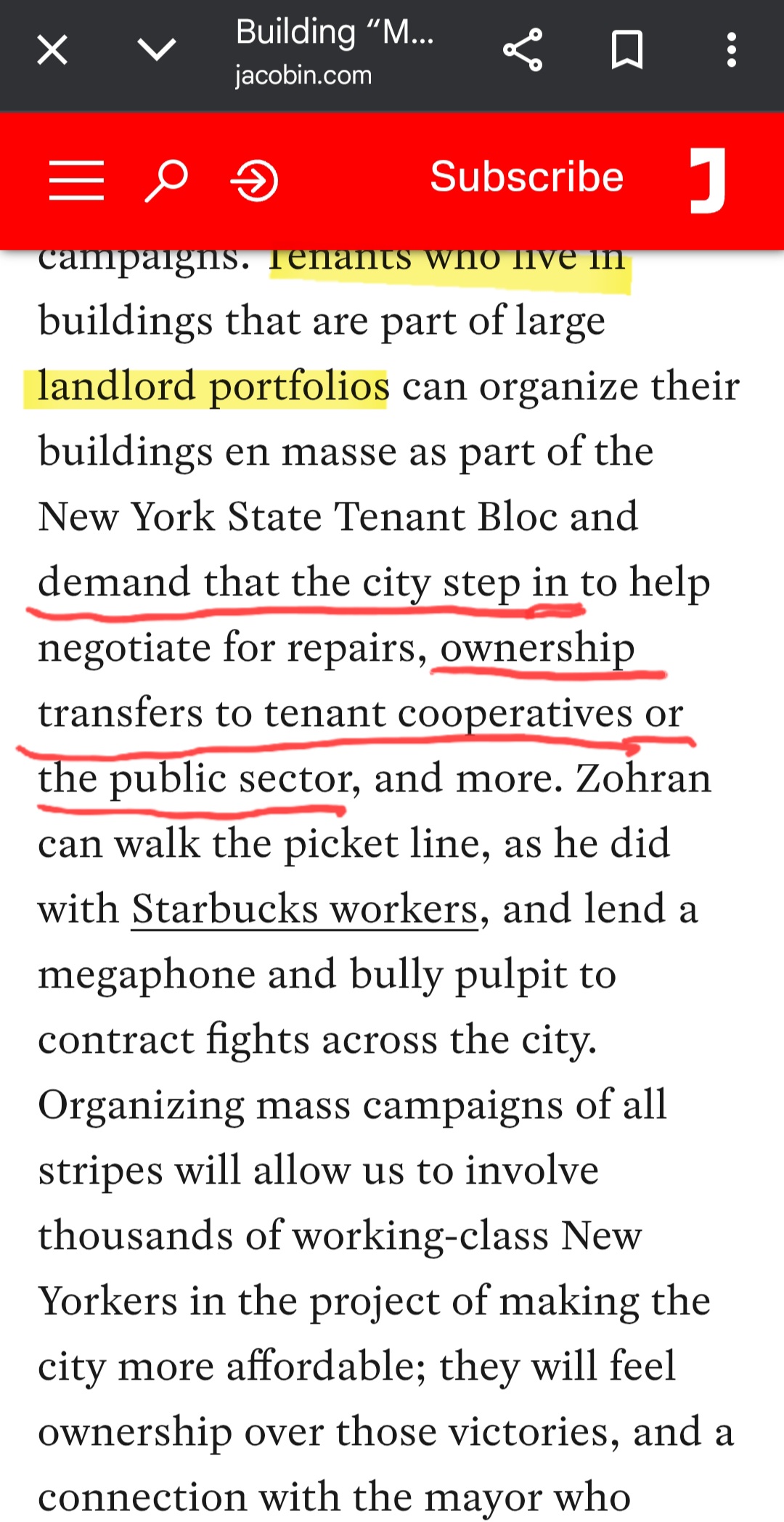
To watch a political novice backed by a far-left extremist group rise to the brink of becoming mayor of the largest city in America is frightening enough. To realize that he will have the full backing of a Democratic governor and a compliant state legislature to enact his radical agenda is terrifying. Zohran Mamdani, a darling of the antisemitic Democratic Socialists of America, has weaponized a friendly smile and promises of “free” everything into a populist movement ready to capture real power.

The race is effectively over. The weakness and fragmentation of his opponents make his November 4 election almost certain. But that does not mean New Yorkers are powerless. Far from it.

1. Register Democratic — and block the radicals.
While national elections generate headlines, your single vote barely registers on a national scale. Local elections, however, can be swung by a few hundred ballots. In a deep-blue state like New York, the real election is the Democratic primary. That’s where the socialists gain power — because moderates stay home or remain registered as independents. If you want to stop extremists from running your city, county and state, you must register as a Democrat and vote against the zealots in the primaries.

2. Vote Republican in the general election — everywhere.
Even outside New York City, every voter can help slow the DSA’s march. New York State operates under a blue-wall trifecta: a Democratic governor and supermajorities in both the State Senate and Assembly. Republicans have no effective voice. Governor Kathy Hochul’s open endorsement of Mamdani means his far-left policies will move through Albany unchecked unless the state’s Republican vote share grows.

Far-left media Jacobin advances “to govern, the Left needs many Zohrans.”

So yes — in this strange political moment — the smart play for moderates and centrists is tactical: register Democratic to stop radicals in primaries, and vote Republican to blunt their power in office.

If New Yorkers don’t act now, the most radical city government in America won’t just run New York — it will set the agenda for the entire country.

Hamas’s Willing Editors

To read The New York Times or watch Saturday Night Live today is to be told that Zohran Mamdani’s critics — not Mamdani himself — are the problem. Those who dare question his  rhetoric or friends are branded “Islamophobes.” The journalists and comedians who once prided themselves on “speaking truth to power” now serve as antisemitism’s defense attorneys.

The New York Times calls political criticism of Mamdani “Islamophobia”

Nowhere in The Times’ coverage will you find an honest accounting of Mamdani’s behavior: his use and defense of the slogan “globalize the intifada” — a phrase that calls for expanding anti-Israel violence worldwide. No mention that he’s proudly endorsed by, and a member of, the Democratic Socialists of America, a group whose members have declared “there are no innocent Israelis” and whose leaders celebrated “the war of liberation” even as the ceasefire was announced. No mention that Congressman Jamaal Bowman, the man who said that Israeli women’s rape claims should not be believed, stands firmly behind him — or that Bowman is now rumored for the post of Schools Chancellor, a moral disaster waiting to happen.

DSA claims that every Israeli is a legitimate target for violence

Worse than silence: spin.

The paper of record tells us that those who raise these issues are targeting a Muslim lawmaker. SNL cast members – who actively lobby for Mamdani – mock Jewish fear and turn it into a punchline. The city’s progressive (read regressive) media elite has turned the word “Islamophobia” into a political disinfectant — scrubbing away scrutiny, shielding radicals, and shaming Jews for daring to be afraid.

Even liberal rabbis like Rabbis Ammiel Hirsch and Elliot Cosgrove have said openly that Mamdani’s words instill fear in the hearts of Jews. But when Jews speak that truth, the same media that weeps for “marginalized voices” sneers at theirs. The new journalism of compassion has only contempt for Jews.

This is not journalism. It is collaboration — a moral betrayal dressed up as sensitivity. The press once prided itself on exposing extremism; now it launders it. The Times and SNL are not neutral observers. They are Hamas’ willing editors, dressing hate in hashtags and calling it progress.

A civilization that excuses incitement, whitewashes vitriol and ridicules genuine fear is not enlightened. It is suicidal.

The Next Part of the “20-Point Plan”: Drop Charges At The ICJ

The headline deal which everyone pretends is a simple human-rights triumph — hostages home in exchange for prisoners and a ceasefire — is, on its face, a moral imperative. Families and politicians, of course want the war to end and hostages back home. But if we treat this swap as merely a humanitarian ledger without thinking about incentives, strategy and deterrence, we invite a replay of October 7 — not because anyone wants it, but because the arithmetic of the deal makes another mass-carnage payoff seem rational to those who plan such crimes.

Palestinian Arabs wave Hamas flags atop the Red Cross truck bringing releases terrorists to the West Bank in November 2024

Here’s the cold calculus the bland statements miss.

Hostages for prisoners. Civilians for killers. A handful for hundreds. These trades have an immediate human relief value. The cost, however, is structural: they reset the reward function for terrorism. If a violent raid can reliably purchase the release of leadership, fighters, and political capital — and if the international response includes legal actions that delegitimize the responding state — then the net effect is to make mass atrocity an instrument of statecraft.

Celebrations for released Palestinian Arab terrorists in 2014

But the mathematics isn’t just – and must not be viewed as – the prisoner-to-hostage ratio. It includes the defensive response: the likely military, political, and territorial consequences of the assault. Hamas should be forced to accept that math too. If it contemplates another October 7-style operation as it has promised to do repeatedly, it must understand that the outcome will not be a tidy prisoner exchange and a televised victory lap. It will be the destruction of leadership and the decimation of military infrastructure, with broad international support for the defensive measures taken to prevent a repeat.

Which brings us to the international legal theater now playing out: the ICJ’s “genocide” accusations, the vociferous statements from states threatening arrest of Israeli officials, and the diplomatic embrace of Palestinian statehood in some quarters. These actions, however well intended by their proponents, have immediate strategic effects. They amplify Hamas’s narrative of global validation and, crucially, complicate the deterrent effect of defensive operations. If a state in self-defense risks being publicly criminalized or its leaders subject to arrest, the calculus of deterrence is altered – for the entire world.

So, what should sensible governments do if they insist on both protecting Palestinian rights and preventing another October 7? Two practical propositions:

  1. If regional governments want backing for Palestinian statehood and avoid terrorism in their own countries, they should drop the ICJ case. the Arab and Muslim countries which backed the U.S. ceasefire plan should pressure South Africa and other countries which brought the case to drop the charges and let diplomacy take center stage. Law and diplomacy should be tools of stability, not absolution for terror strategies.
  2. If the desired outcome is that populations on both sides live within range of cross-border terror and reprisals, then investing in defensive infrastructure as a bridge to a political solution is a rational step. The United Nations and donor states should be pressed to fund a replacement barrier between Gaza and Israel — walls and surveillance that reduce the risk of mass infiltrations, so that the question of where futures lie for Palestinians becomes a matter of state-building and safety inside Gaza, not a perpetual recruitment slogan for militancy.
Hamas breaks through security fence between Gaza and Israel on October 7, 2023, on way for mass murder and abductions

This is not a call to abandon human rights oversight or to whitewash abuses. Accountability and adherence to international law matter. But timing and incentives matter too. Legal actions taken in the heat of war — unmoored from a strategy to prevent recurrence — can harden positions and diminish the tools of deterrence. If the objective is to keep people alive and build a durable peace that allows Stateless Arabs from Palestine (SAPs) self-determination without repeated massacres, then international actors must think like engineers of stability, not moral prosecutors on a press release timetable.

If we are serious about both ending the war and preventing future acts of mass terrorism and barbarity, we must stop evaluating deals by immediate feel-good optics alone. The right measure of a deal includes whether it reduces the incentive to perpetrate mass atrocities, strengthens deterrence against their planners, and clears a path toward political arrangements that give civilians on all sides a future. Anything less is not a solution — it is an invitation.

The Wisdom of Waiting

The ability to delay gratification has long been seen as a mark of intelligence. The famous “marshmallow test” placed children in front of a single treat and offered a simple bargain: eat it now, or wait and get two. Those who resisted often went on to succeed academically, socially, even financially. Patience was not just a virtue; it was predictive.

Yet it turns out this trait is not uniquely human. In a Cambridge experiment, cuttlefish were given a similar choice — a mediocre meal immediately or a shrimp, their favorite, if they waited. They waited. In fact, they sometimes endured two full minutes of temptation, holding out for the better prize. Even more remarkable: those same cuttlefish who delayed showed sharper learning in other tests. Intelligence, it seems, wears many disguises.

This was the first time this kind of patience was found in an invertebrate. Chimpanzees, crows and parrots have long been known to delay satisfaction in order to save food for later.

What makes this discovery all the more striking is that cuttlefish are solitary creatures. They do not form schools, build social bonds, or raise their young. Their patience evolved for the hunt — the advantage of waiting for the better prey, of holding still in camouflage until the perfect strike. Their foresight is purely individual, a strategy of survival.

Humans, by contrast, require patience not just for survival but for flourishing. Patience is what allows us to build together — to trust one another, to undertake projects that span generations, to cultivate communities and civilizations. Our ancestors planted trees whose shade they would never sit under and built cathedrals that took centuries to complete, as an extension of delayed satisfaction – a commitment towards a future society they would never enjoy.

But in our age of instant messages, instant news, and instant outrage, society no longer prizes waiting. Why suffer a moment of discomfort when a thousand distractions beckon from a glowing screen? Why wrestle with the silence of patience when clicks deliver dopamine now? Where our forebears saw wisdom in restraint, we see boredom. Where they saw the dignity of discipline, we see inconvenience.

Patience as a virtue is not just about self-control; it is the very condition that allows for deep thought and deep bonds. To abandon patience is to abdicate our gifts of reflection, to trade away the ability to imagine futures greater than the present moment. In our hurry, we become more animalistic, lunging at whatever stimulus flashes before us. And unlike the cuttlefish, whose patience serves survival, we squander patience’s higher purpose — the power to build not only buildings that endure, but bonds that sustain.

Are we in the process of losing our basic survival skills – in both the present and future? Are we burying our ability to ponder to be led like dolts to an unsuspecting danger?

The irony is sharp: solitary cuttlefish wait with foresight, while humans — the only creature who truly needs patience to hold communities together — are in danger of forgetting how. Delayed gratification once built civilizations. Instant gratification now tears at their foundations.

The cuttlefish reminds us that intelligence is not about speed but foresight. A creature with no interest in faith, family, or future still knows the wisdom of waiting. The question that remains is whether we do.

America’s Intifada

The mob is impatient.

The activists have long been screaming and yelling. They’ve been heckling in person and posting online. Yet nothing changes. The mob is impatient.

They’ve held conferences in Detroit, banged drums in the street, organized sit-ins and campus walkouts. Yet few of the policies they demand have been enacted. The mob is impatient.

The crowds find succor online. They read the manifestos of both killers and their favorite radical group. The hashtags keep trending, the slogans keep coming — yet the news cycle feels the same. The mob is impatient.

They interact with their heroes on social media. It feels like they have a direct connection in their hands and ears. They know the message. They know the orders. Doesn’t everyone? Where is the revolution? The mob is impatient.

It is easier to complain than to enact. It is quicker to destroy than to build. It is more satisfying to heckle than to speak clearly. To tweet and reteweet than to contemplate and deliberate. The mob is impatient.

The last ten years have proven that anyone can gain fame — or infamy. The louder and more outrageous, the greater the clicks. The calls to fellow travelers echo louder and the ranks grow. Not over years, but instantly. The mob is impatient.

Democratic Socialists for America stating that there are no innocent civilians

Political violence is not new. Presidents and senators have been assassinated before. But today, an army of lone soldiers is running toward their neighbors — convinced by the pandemic that everyone is a threat and trained by the Twitterstorm that outrage works.

The mob is impatient.

And, as it grows larger and closer, more people are turning to guns for self-defense. They see a government that appears weak, unable or unwilling to confront the rage.

The next step has arrived. The broken healthcare system was not addressed via advocacy but a bullet into the back of the CEO. To cheers. A splinter group from Jewish Voice for Peace has birthed a new violent Antizionist Jewish Student Front. When debate failed, when they could not best Charlie Kirk on the stage, they decided to silence him permanently. The People’s Conference for Palestine and the DSA have given them the language, the chants, the charge: Escalation.

THE MOB IS IMPATIENT.

And the mob now has blood. And it is chum for the devotees.

The Reckoning

A polite society is a beautiful thing when at peace. But politeness collapses when mobs take power. When debate is replaced by doxxing, when protest becomes arson, when manifestos become murder plans — the social contract frays. If the state cannot protect citizens from ideological violence, people will arm themselves and take matters into their own hands.

The question is no longer whether our institutions can withstand the mob — but whether they will act before the mob makes the next move, or allow a societal “resistance” movement to rise to replace dormant laws to revive trampled norms.

Introducing America’s Intifada.

The Holocaust Will Not Be Colorized. The Holocaust Will Be Live.(May 2019)