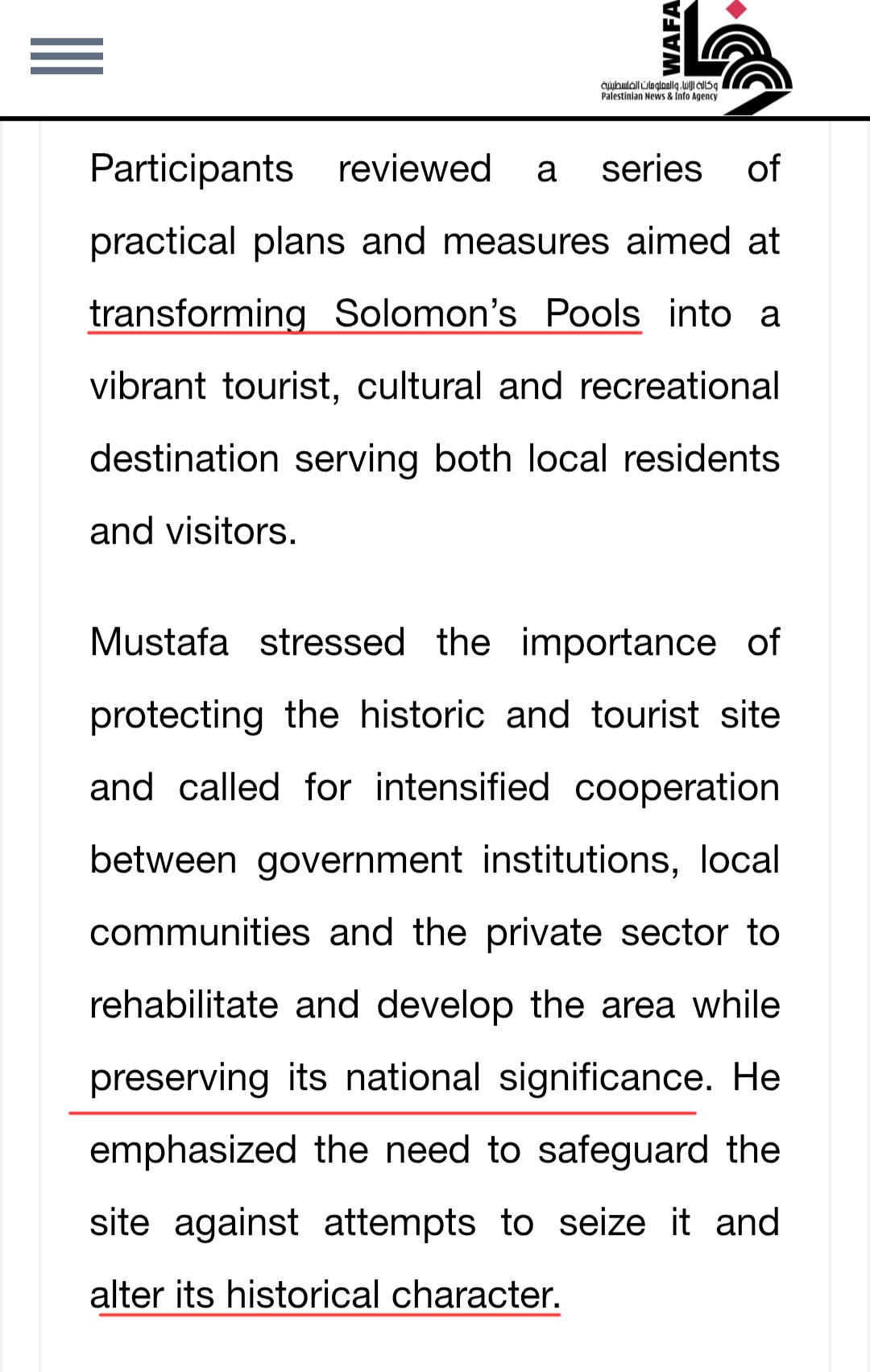
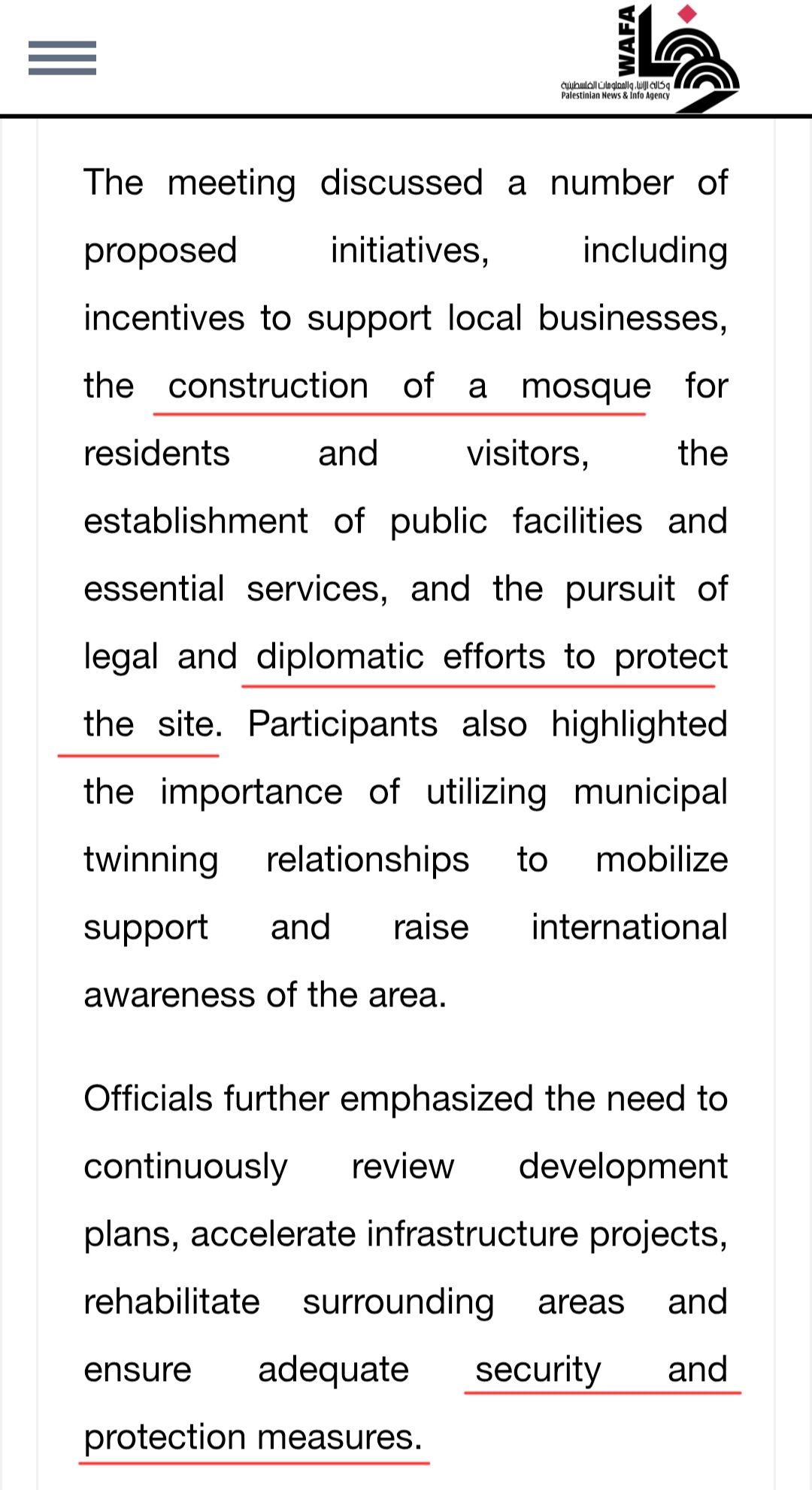
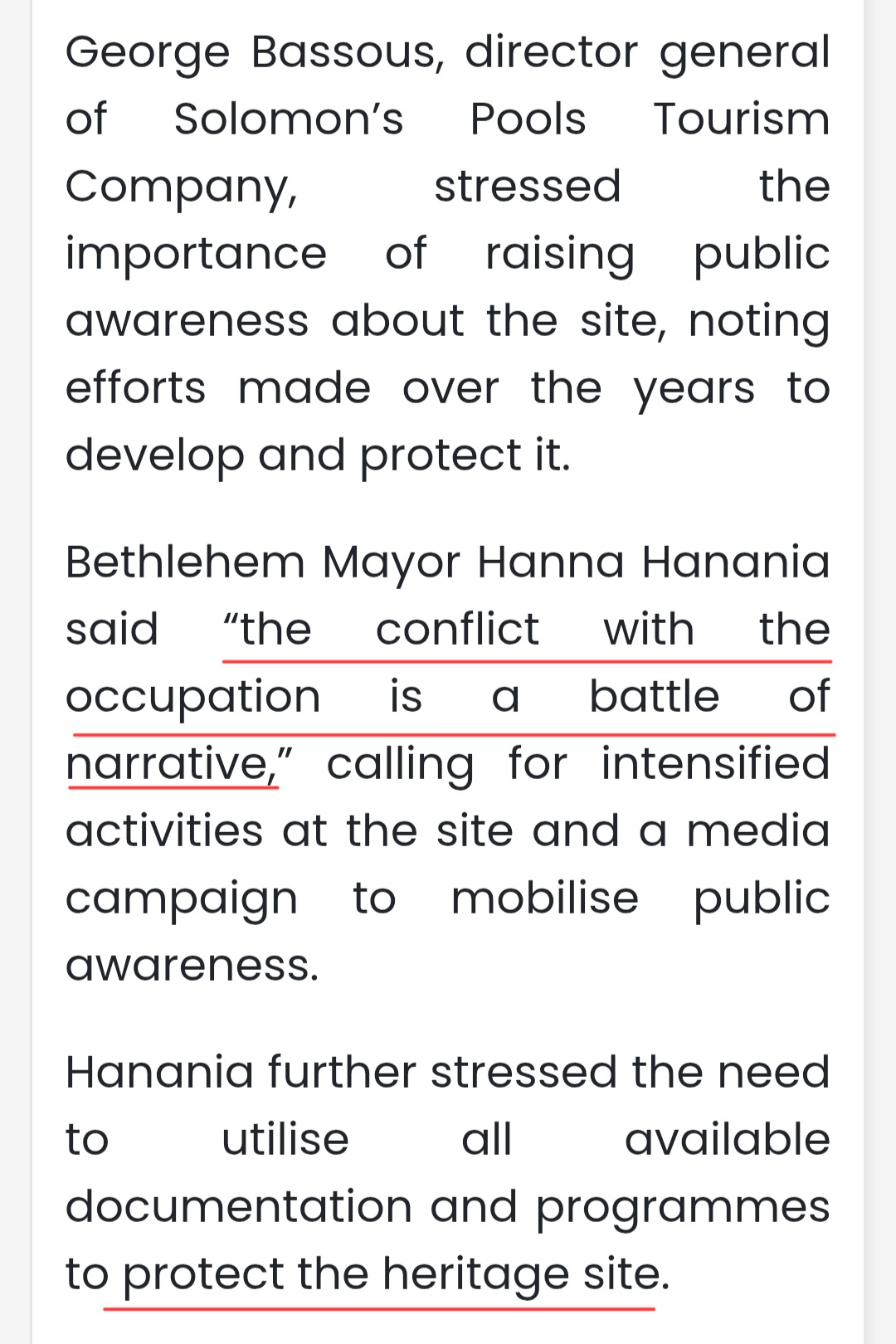
The Palestinian Authority has announced plans to transform Solomon’s Pools, between Bethlehem and Efrat, into a major Palestinian tourist, cultural, and religious destination. The project includes a mosque, tourism infrastructure, educational programs, international advocacy campaigns, and efforts to preserve what officials describe as the site’s historical and demographic character.
The irony is hard to miss.
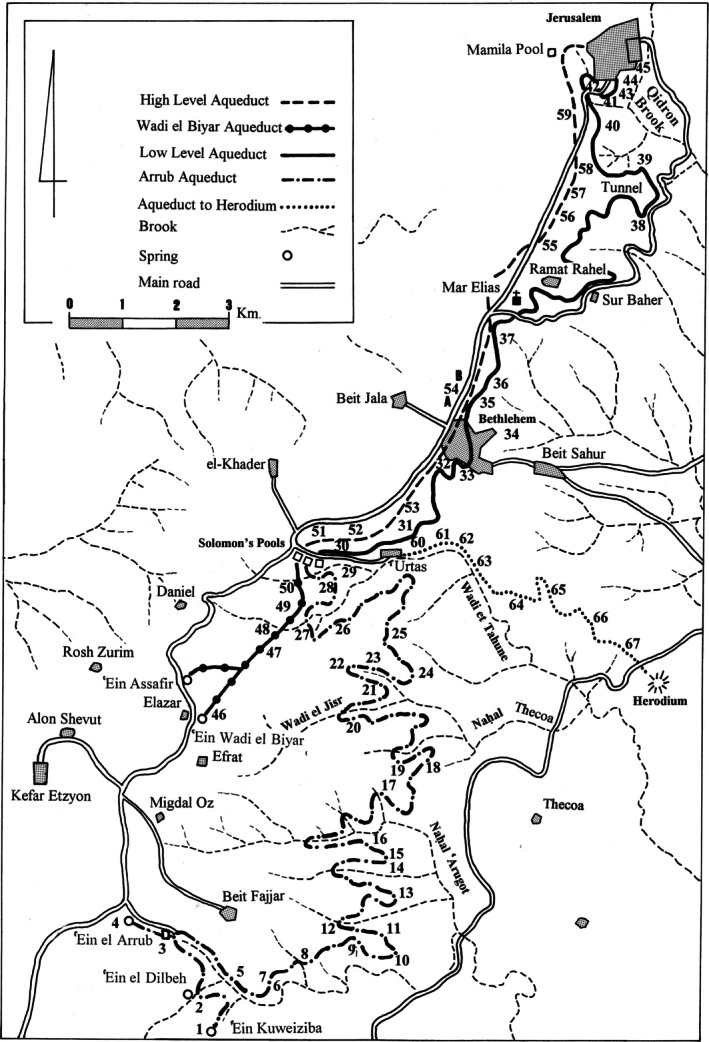
Solomon’s Pools are among the most important surviving engineering works of ancient Judea. Built during the Second Temple period, the reservoirs and aqueducts supplied water to Jerusalem and the Jewish Temple. Their existence is evidence of the Jewish civilization that built and governed Jerusalem over two thousand years ago, that grew the city towards the end of the Second Temple period to approximately 50,0000 people.
Mazar, A.A. 2002. Survey of the aqueducts to Israel. In The Aqueducts of Israel, ed. Amit D., Patrich J., and Hirschfeld Y., 212–244.
Without Jewish Jerusalem, there would be no Solomon’s Pools.
Yet Palestinian officials speak of preserving the site’s historical character while proposing changes that have no connection to the history that made the site significant.
If the goal is to preserve the site’s historical character, why alter it?
If the goal is to protect its demographic character, what demographic character existed when the reservoirs were built?
The people who built Solomon’s Pools were Jews. The reservoirs were built to serve a Jewish capital. The aqueducts carried water to the Jewish Temple. The site’s significance is inseparable from ancient Jewish Jerusalem.
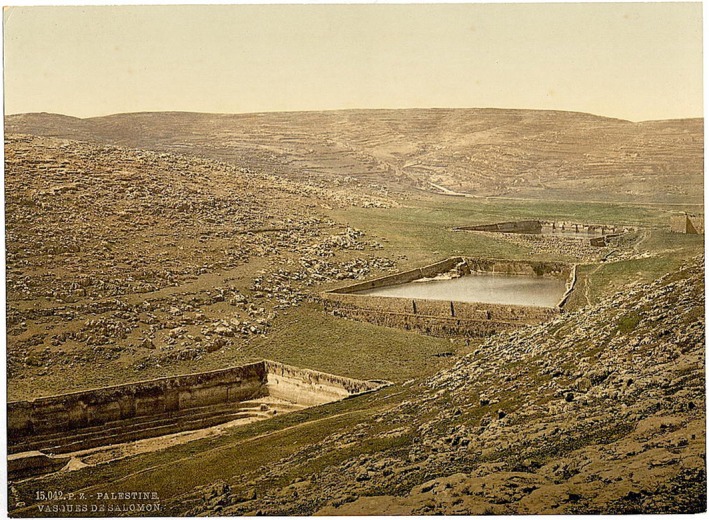
Solomon’s Pools c. 1890
So why place a mosque at a reservoir built by Jews to serve Jewish Jerusalem while claiming to preserve its historical character?
The answer appears in the language of the project itself. Officials speak of strengthening Palestinian presence, reinforcing Palestinian identity, and mobilizing international support for Palestinian claims.
This is not preservation. This is a battle of historical replacement.
A generation from now, visitors may encounter a mosque, Palestinian tourism facilities, and Palestinian historical narratives. What may become increasingly distant is the reason the site exists at all: it was built by Jews to serve Jerusalem, the capital of the Jewish people.
“We know that the prime Zionist goal is emptying this land of its Christians and Muslims. They [the Jews] don’t want anyone here other than themselves. The Christians before the Muslims, because the Christians were here on this land before the Muslims… the Christian is the brother of the Muslim. They celebrate together, suffer together, live together, work together, and fight together against their enemy, because we have been the owners of this land since this land’s existence… We will remain in this land forever, while the attackers [the Jews] have no place in Jerusalem and no place here.” – Palestinian Authority President Mahmoud Abbas March 2023
That is how historical replacement works. The monument is not destroyed. The identity of its builders is replaced.
Solomon’s Pools stand as evidence of Jewish statehood, Jewish engineering, and Jewish life in the land of Israel long before the rise of Christianity, Islam, or modern Palestinian nationalism.
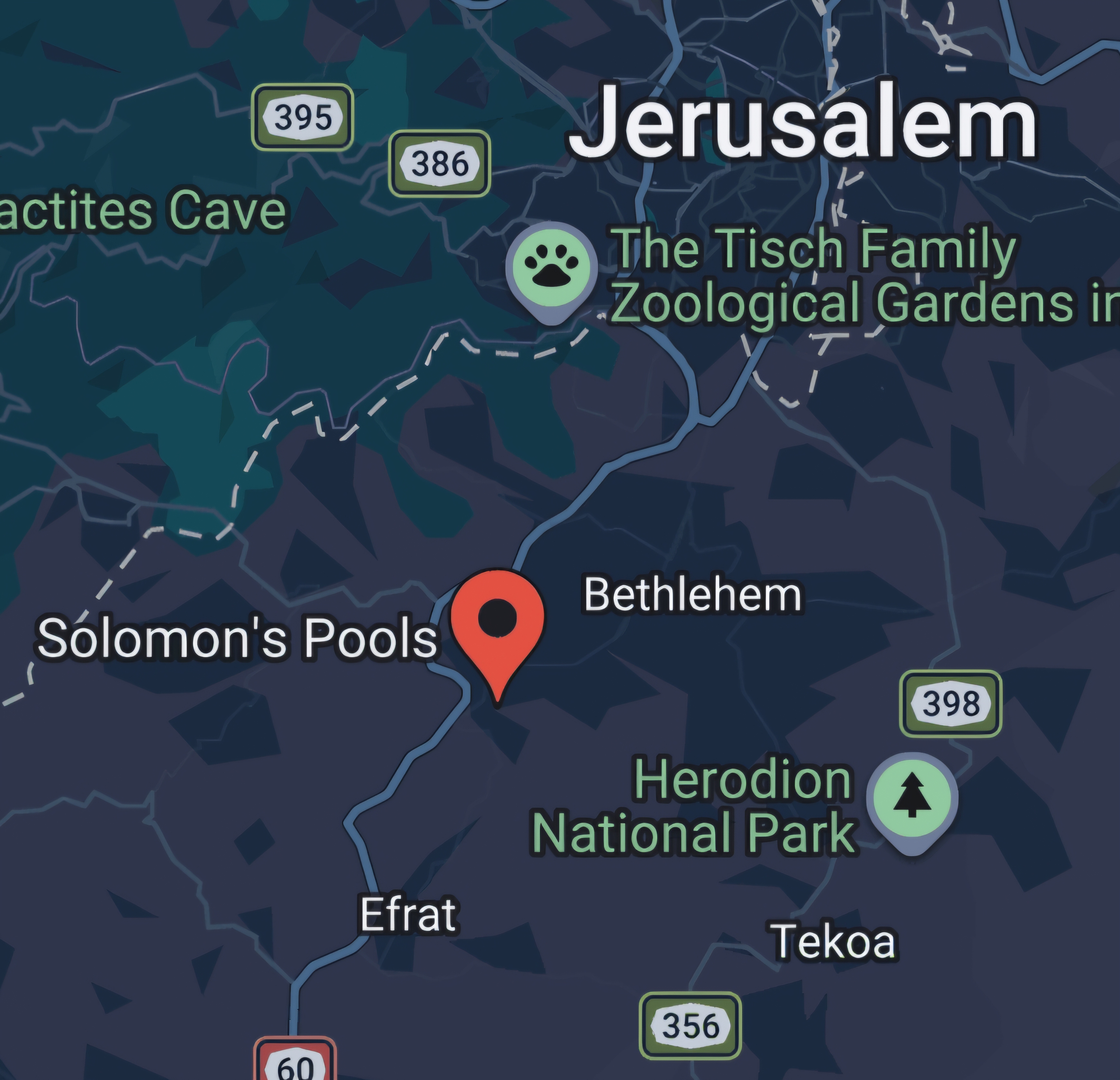
Solomon’s Pools is located off Road 60, between Efrat and Bethlehem
Palestinians’ nationalism is being built on erasing Jewish history and heritage. Today, it is clearly evident at Solomon’s Pools.
One of the most common claims in the Arab-Israeli conflict is that Jews took the land from Palestinian Arabs and denied them self-government.
History tells a different story.
For four hundred years, the Holy Land was ruled by the Ottoman Empire. There was no Palestinian Arab state.
After World War I, Britain took control under the Mandate for Palestine. Again, there was no Palestinian Arab state.
In 1947, the United Nations proposed creating both a Jewish state and an Arab state. The Jewish leadership accepted the plan. Arab leaders rejected it and chose war.
When the fighting ended, Jordan occupied the West Bank and East Jerusalem while Egypt controlled Gaza. For the next nineteen years, neither country established a Palestinian state. Neither granted sovereignty to the local Arab population. Neither created independent Palestinian governing institutions.
The first meaningful Palestinian self-government did not emerge under Ottoman rule, British rule, Jordanian rule, or Egyptian rule.
It emerged through agreements with Israel.
The Oslo Accords created the Palestinian Authority and transferred governing responsibilities in Palestinian cities to Palestinian leaders. For the first time in modern history, Palestinian Arabs exercised substantial self-rule in the territory where they lived.
Signing of Oslo II Accords
Then in 2005, Israel withdrew every soldier and civilian from Gaza, leaving the territory entirely under Palestinian administration.
Israel is often accused by Israel haters of having stolen a Palestinian state. Yet no Palestinian state existed under Ottoman rule, British rule, Jordanian rule, or Egyptian rule. The first meaningful Palestinian self-government emerged only through agreements negotiated with Israel.
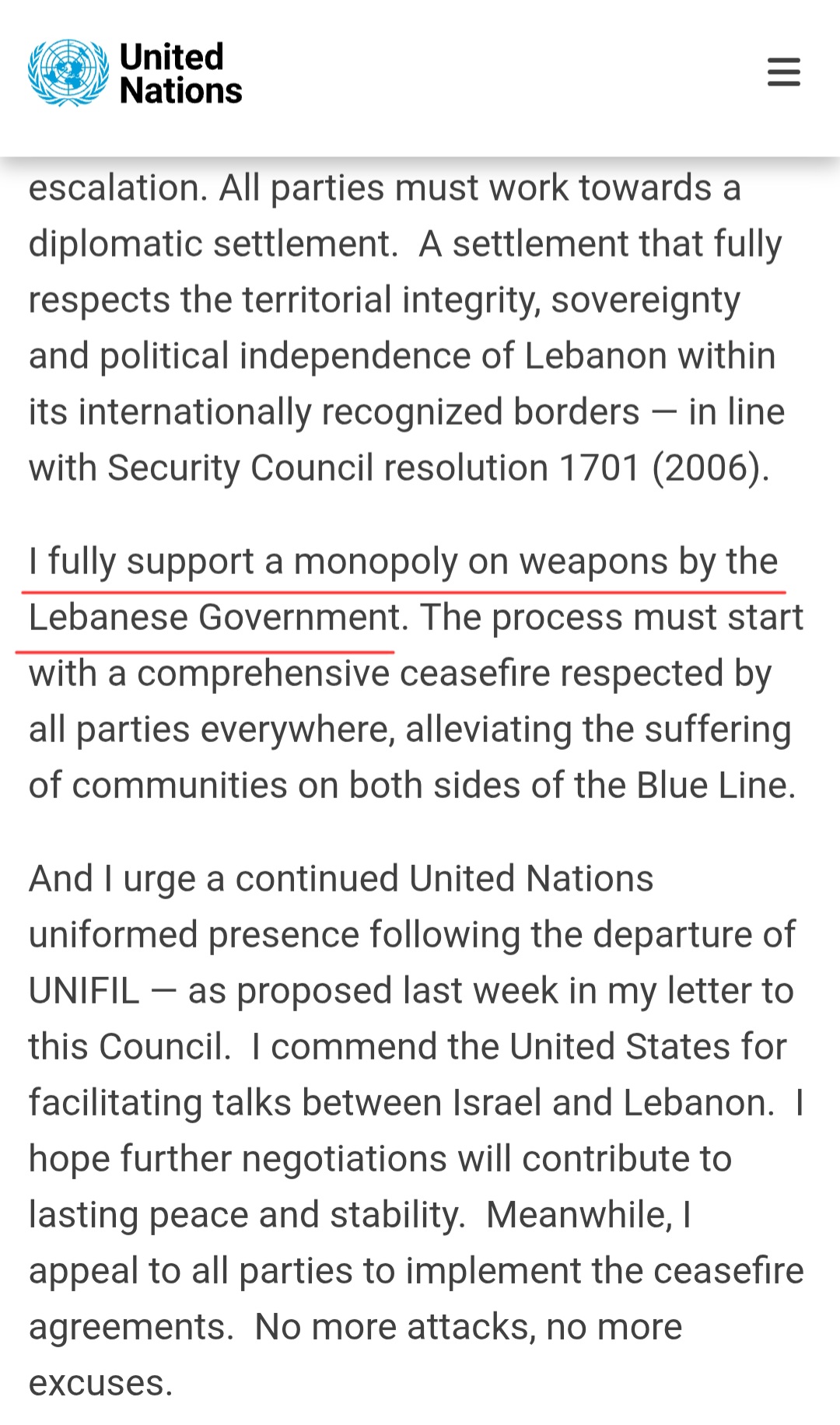
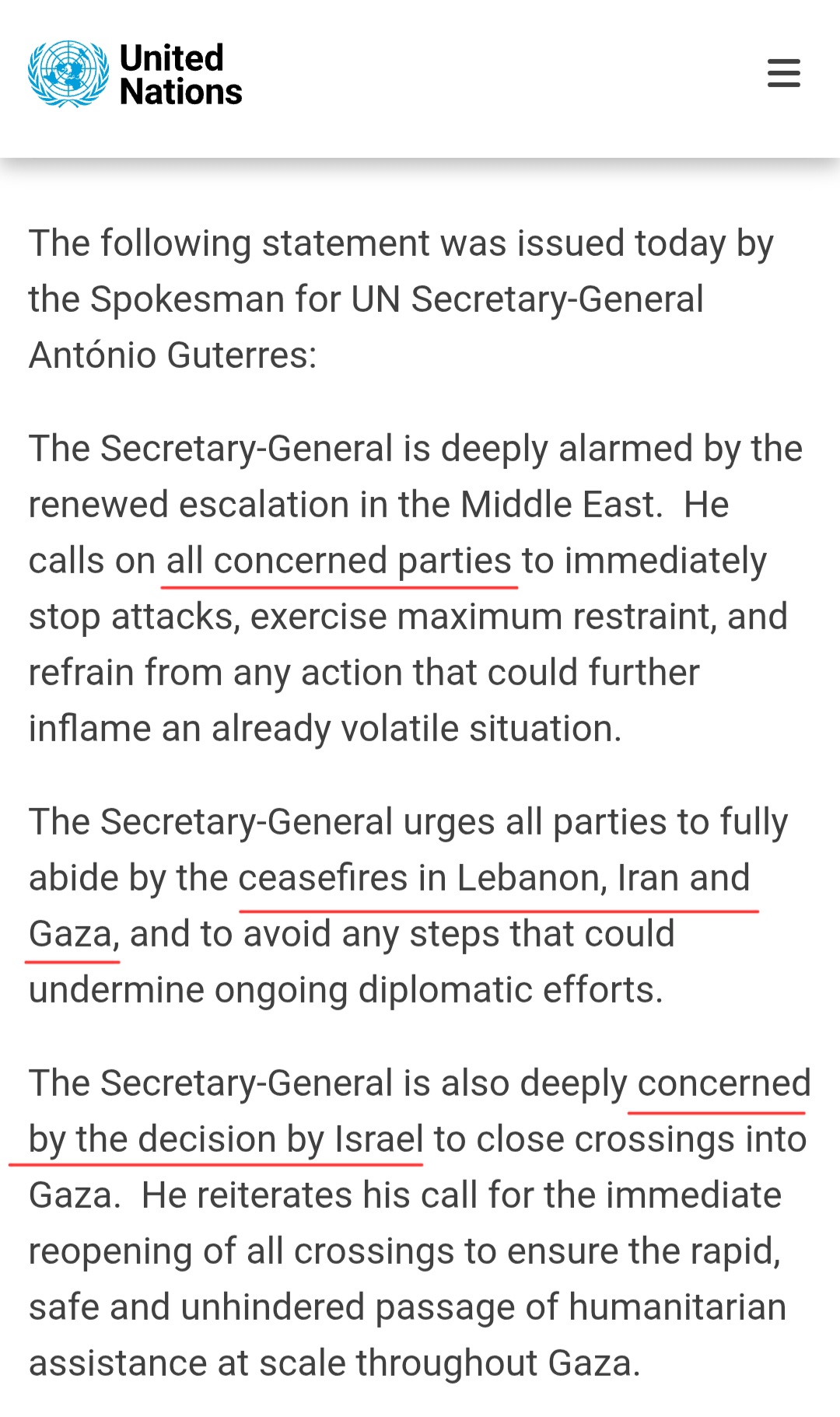
United Nations Secretary-General António Guterres recently declared that he supports “a monopoly on weapons by the Lebanese Government.”
He is right.
No sovereign state can exist when an organization maintains its own army outside central government control. Hezbollah may hold seats in parliament and participate in Lebanese politics, but that does not give it the right to possess an independent military force and wage war outside the direction of the government.
The obvious question is why the Secretary-General does not apply the same principle to Gaza.
If Lebanon requires a state monopoly on force, then so does any future Palestinian state. Hamas must be disarmed. There is no path to peace while an independent army remains outside governmental authority.
Yet the United Nations does not say so. Instead, it issues endless calls for ceasefires, negotiations, and diplomacy while avoiding the central reality that an armed movement dedicated to Israel’s destruction cannot simultaneously be the foundation for coexistence.
That double standard helps sustain the current conflict. Israelis and Gazans continue to suffer while international institutions refuse to confront the most basic requirement for ending the war.
But today’s war is not the real danger.
The real danger is what comes next.
Every major Palestinian poll points in the same direction. Palestinians are increasingly likely to hand control of the Palestinian Authority itself to Hamas or leaders who share Hamas’s objectives.
The result will not be a Palestinian Authority that replaces Hamas but Hamas becoming the Palestinian Authority.
At that point, Hamas will no longer be an armed movement operating from Gaza. It will be the internationally recognized government of Palestinian Arabs in Gaza and the West Bank. Its army will no longer be described as a militia but the armed forces of Palestine, internationally recognized, and still committed to the destruction of the Jewish state.
If so, the suffering of Israelis and Gazans today will pale in comparison to the conflict that follows.
Difficult situations are sometimes referred to as being between a rock and a hard place. The popular Palestinian terrorist group places the Middle East between a double standard and a destructive standard.
When Turkish President Recep Tayyip Erdoğan attacked Israel this week, most English-language reports focused on his accusations of genocide, his attacks on Israeli Prime Minister Benjamin Netanyahu, and his warnings about regional instability.
But Arabic and Turkish media focused on a different line.
According to Turkey’s own state-run Anadolu Agency, Erdoğan declared:
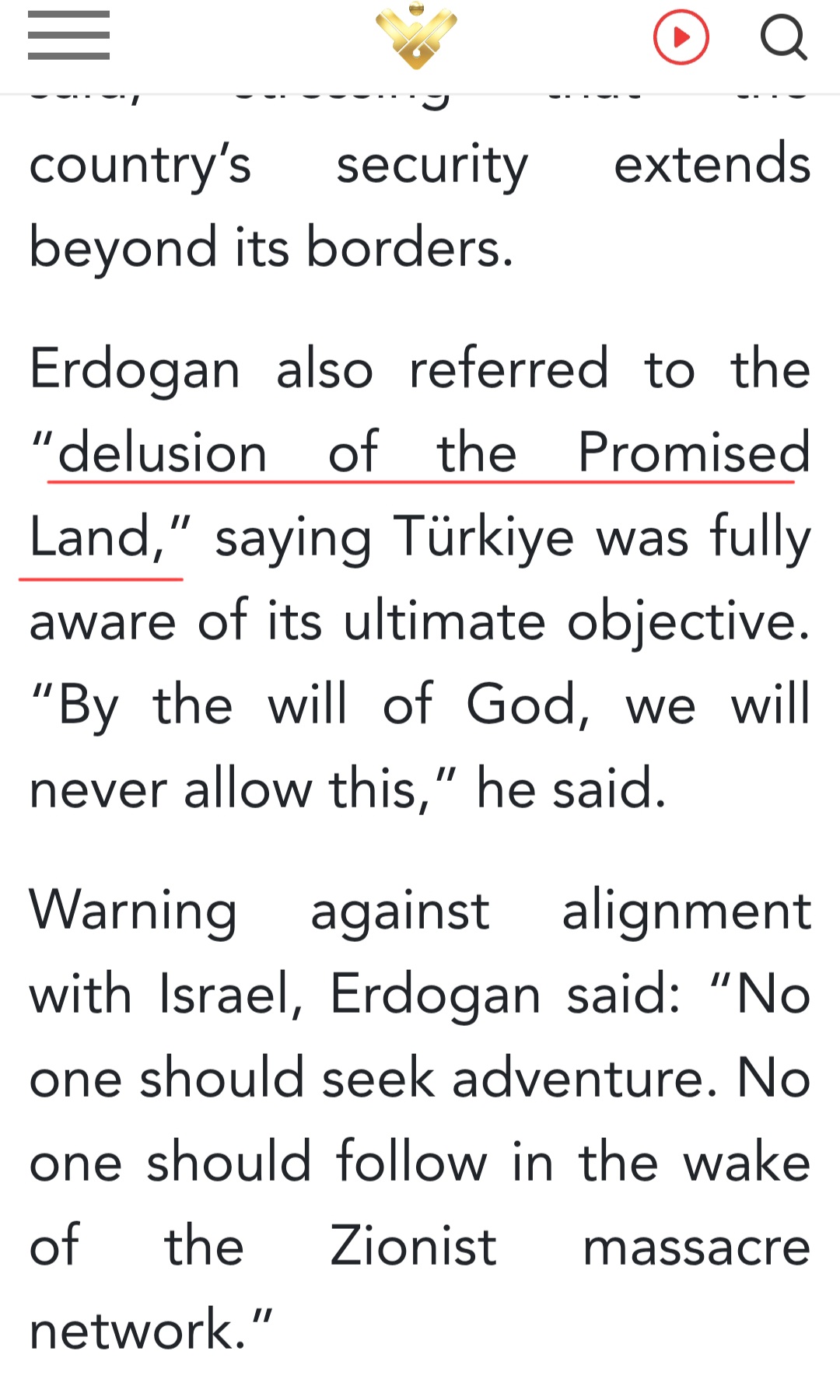
“We know very well what the ultimate objective of the delusions of the Promised Land is, and God willing, we will never allow it.”
It is a line he has used for years. It’s a headline phrase across the Arab world. Al Jazeera highlighted it. Egypt’s Al-Ahram highlighted it. Al-Quds Al-Arabi highlighted it. He uses it as a charge that Israel is coming for Turkey itself.
Yet the English-language media ignored it.
That omission matters because Erdoğan was no longer criticizing Israeli policy. He was ridiculing a foundational Jewish belief.
The Promised Land is not a policy of Benjamin Netanyahu. It is not a platform of the Israeli government. It is a central element of Jewish faith, history, and identity dating back more than three thousand years. It appears throughout the Hebrew Bible and has been part of Jewish religious life through centuries of exile.
Calling that belief a “delusion” is no different than mocking Christian belief in the Resurrection or Muslim belief in the divine revelation of the Quran.
There is a word for dismissing the core religious beliefs of Jews as uniquely illegitimate: antisemitism.
Yet English-language audiences were shielded from that reality. Readers were told Erdoğan was criticizing Israel. They were not told he was deriding one of Judaism’s foundational beliefs. That this is a Muslim war against the Jews.
For years, Western audiences have been told that criticism of Israel must be distinguished from hostility toward Jews. But when a foreign leader publicly mocks a core tenet of Judaism and the press translates it into a story solely about Israeli policy, the distinction is being used in reverse. Anti-Jewish rhetoric is sanitized and repackaged as ordinary criticism of Israel.
Arabic readers saw what Erdoğan actually chose to emphasize. English readers did not, guided on a narrow path to direct the public.
The UN Secretary-General’s latest statement on June 8 warns about conflict in Lebanon, Iran, and Gaza.
Yet Israel appears only as the actor, never as the target.
Iranian missiles are fired at Israel. Hezbollah drones cross into Israel. Houthi missiles target Israeli cities. Millions of Israelis live under the threat of attack.
But in much of the international conversation, the war is always somewhere else.
The fighting is “in Lebanon.” It is “in Iran.” It is “in Gaza.”
The reality is that Israel enters the story primarily when it responds.
This framing matters. It transforms Israel from a country under attack into a country that simply attacks. The missiles disappear. The drones disappear. The civilians running to shelters disappear.
A missile launched from Iran toward Haifa is not a conflict “in Iran.”
A drone launched from Lebanon toward Kiryat Shmona is not a conflict “in Lebanon.”
They are attacks on Israel.
Yet too often Israel appears in international statements only after it fires back.
That does not merely distort the geography of the war. It distorts who started it.
The UN Secretary General once again showed its victims of preference and that the global body is not concerned about the fate of Israelis.
On May 28, 1964, the Palestinian National Charter was adopted in Jordanian-controlled Jerusalem. At that time, the West Bank was under Jordanian rule and Gaza was under Egyptian rule.
The Charter explicitly excluded both territories from its claims. It focused on Israel.
“This Organization does not exercise any regional sovereignty over the West Bank in the Hashemite Kingdom of Jordan, on the Gaza Strip or in the Himmah Area.”
The Charter did not challenge Arab sovereignty. It only challenged Jewish sovereignty.
Palestinian leaders supplied the national cause; Arab governments supplied the armies.
The Charter left little doubt about its objective. It declared:
“The partition of Palestine in 1947 and the establishment of the State of Israel are entirely illegal.” – Article 17
And that “liberation” of the land is the common cause of all Arabs:
“Arab unity leads to the liberation of Palestine, and the liberation of Palestine leads to Arab unity.” – Article 12
The Palestinian movement was therefore born not as a campaign against an Israeli occupation of the West Bank and Gaza, but as a movement that denied the legitimacy of Israel itself, and one in which the entire Arab world must unite.
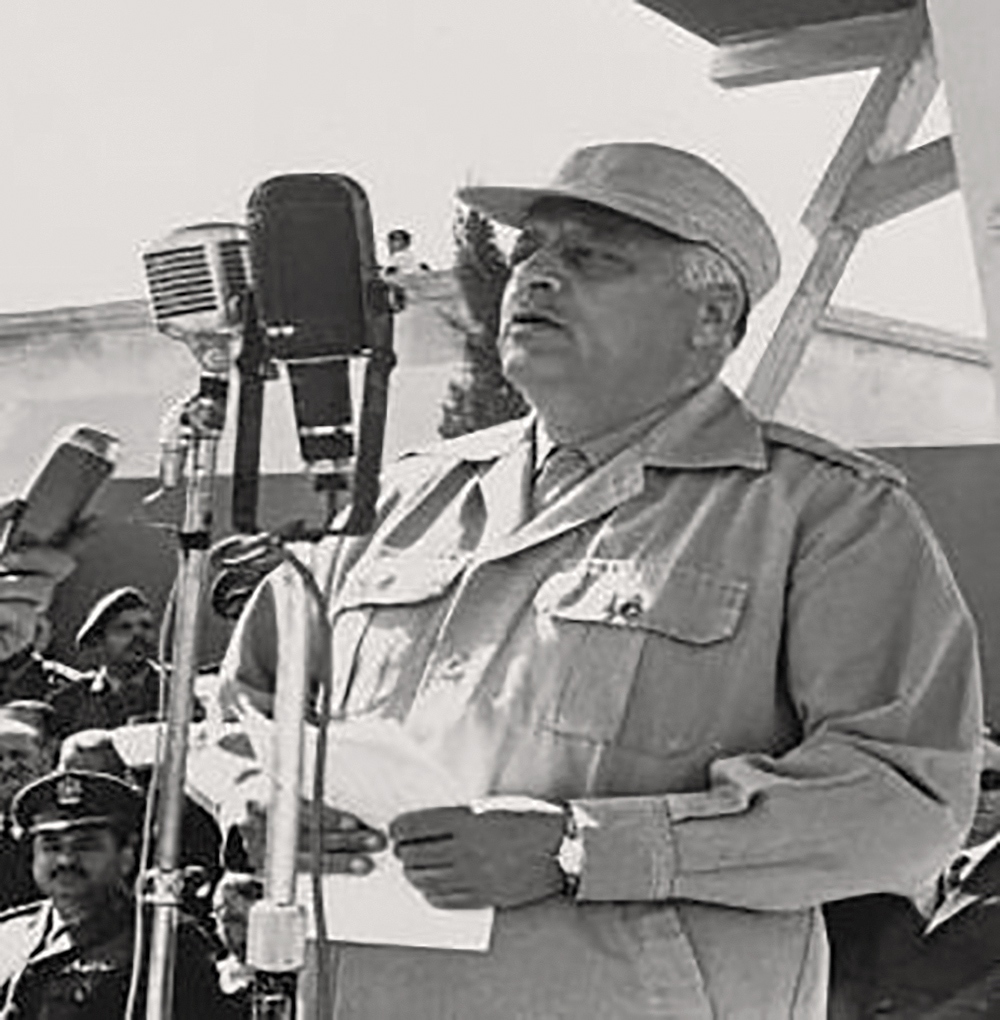
The Charter’s author, Ahmad Shukeiri, was born in Lebanon and was Saudi Arabia’s ambassador to the United Nations from 1957 to 1962. His pan-Arab worldview called for Arab armies to destroy Israel:
“Those who survive will remain in Palestine, but I estimate that none of them will survive.” – Ahmad Shukeiri June 1, 1967
Another widely reported statement attributed to him declared:
“The Jews of Palestine will have to leave…We shall destroy Israel and its inhabitants and as for the survivors – if there are any – the boats are ready to deport them.“
Ahmad Shukeiri, circa 1965
Shukeiri’s brothers-in-arms said much the same.
In October 1964, Syrian leader Salah Jadid declared:
“Our army will be satisfied with nothing less than the disappearance of Israel.”
“The Arab national aim is the elimination of Israel.”
That same year, Egyptian President Gamal Abdel Nasser proclaimed:
“We shall not enter Palestine with its soil covered in sand; we shall enter it with its soil saturated in blood.”
Iraqi President Abdul Rahman Arif described Israel as:
“an error which must be rectified.”
In June 1967, the Palestinian movement and the surrounding Arab states were speaking a common language. The PLO and Arab leaders denied Israel’s legitimacy and spoke openly of its disappearance, elimination, and destruction.
The rhetoric was matched by action. Egypt expelled the United Nations Emergency Force from Sinai, followed by Egyptian troops pouring into the peninsula. The Straits of Tiran were closed to Israeli shipping. Military alliances linked Egypt, Syria, Jordan, and Iraq. Arab armies massed on Israel’s borders.
Against that backdrop, Nasser announced on May 26, 1967:
“The battle will be a general one and our basic objective will be to destroy Israel.“
Nine days later, war began.
Today, one of the most recognizable slogans associated with the Palestinian movement is “From the River to the Sea.” People often pretend that it is a call to free the West Bank and Gaza from “occupation” but the Arabic phrase speaks to the deeper truth as outlined by history.
“Min al-nahr ila al-bahr, Filastin ‘arabiyyah” meaning “from the river to the sea, Palestine will be Arab.”
Whether controlled by Jordan or Egypt or a hoped for Palestine, the Palestinian movement at its core has always been an anti-Israel movement to destroy the presence of Jews in “any part of Palestine.”
The June 1967 Six-Day War did not create the current dynamic in the Israel-Arab conflict. It was the conclusion of the first chapter of the Palestinian-led pan-Arab rejection of Jews living in and having sovereignty in land they view as purely Arab.
For nearly two thousand years, Jews have ended prayers with the hope of returning to Jerusalem and rebuilding what once stood there. It is the location of the First and Second Temples. Jewish longing for Jerusalem is woven into daily prayers, holidays, weddings, and mourning rituals.
Yet major international bodies have passed resolutions referring to the site primarily through its Muslim names while minimizing or omitting its central place in Jewish history. Imagine a resolution discussing the Vatican without mentioning Christianity, or Mecca without mentioning Islam. The absurdity would be obvious.
The issue extends beyond language.
Official United Nations map labeling the Temple Mount as holy only to Muslims
The international community supports a protocol under which Muslims may pray freely on the Temple Mount while Jews are restricted from praying at Judaism’s holiest site. The result is extraordinary: the world’s only Jewish state is expected to enforce a policy under which Jews do not support a basic human right at their holiest location in favor of members of another faith.
The Temple Mount is not merely a religious site. It sits at the heart of a larger question: whether the Jewish people are entitled to the same rights afforded to every other people.
Around the world, international institutions celebrate indigenous peoples reconnecting with ancestral lands, reviving ancient languages, protecting sacred sites, and preserving cultural traditions. Yet only in the case of the Jewish people does a return to the place where their civilization, language, religion, and national identity were born become a form of “colonialism.“
International institutions routinely describe the Temple Mount and the Jewish Quarter as part of “occupied Palestinian territory.” Yet these are the very places where Jewish civilization was born, where the ancient Temples stood, and where Jewish communities lived for centuries.
Jordan’s capture of eastern Jerusalem in 1948 resulted in the expulsion of its Jewish population and the denial of Jewish access to the Western Wall, the Temple Mount, and the Jewish Quarter for nineteen years. It granted citizenship to residents as long as they weren’t Jewish. The UN seemingly liked this. International discussion of the Old City of Jerusalem begins after the expulsion of Jews, as though their absence were the natural condition and their return the disruption.
The same pattern appears in discussions of territory.
The Green Line was never intended to be a permanent border. The 1949 Armistice Agreements explicitly stated that the line was not a political boundary and would not prejudice future negotiations. It was a military ceasefire line drawn after a war.
Yet decades later, much of international law treats that armistice line as though it were a sacred border whose crossing transforms ordinary Jews into international criminals.
A Jew who moves across that line becomes a “settler.” An Arab who moves into the same building does not. The geography is identical. The identity of the resident is what changes.
International institutions frequently oppose changes to the “demographic character” of eastern Jerusalem. But demographic character relative to what date?
The answer is effectively 1949, the year after Jordan captured eastern Jerusalem and expelled every Jew from the Jewish Quarter and surrounding areas. Why should the demographic baseline for justice be the moment immediately following the ethnic cleansing of Jews?
Why not 1980? Why not 2000? Why not today?
Human beings move. Cities evolve. Neighborhoods change.
The only way to preserve a specific demographic snapshot forever is to decide that one particular population must be prevented from returning.
In Jerusalem, that population happens to be Jews.
Then there is the question of refugees.
The same international system that opposes Jews moving into neighborhoods beyond the Green Line frequently endorses claims that millions of Palestinian refugees and descendants should be allowed to settle inside Israel.
Movement in one direction is described as a right. Movement in the other direction is described as a violation of international law.
The asymmetry is impossible to miss.
Every era develops its own vocabulary for antisemitism. In medieval Europe it often spoke the language of theology. In the nineteenth century it spoke the language of race. Today it increasingly speaks the language of international law.
Around the world, international institutions celebrate indigenous peoples reclaiming ancestral lands, reviving ancient languages, protecting sacred sites, and restoring cultural traditions.
Jews have done all of those things.
They returned to the land where their civilization was born. They revived Hebrew from a language of prayer into a language of everyday life. They restored Jewish sovereignty to the city that has stood at the center of Jewish life for three millennia. They reestablished communities at many of their most ancient holy sites.
Yet only in the case of the Jewish people does this story become one of colonialism rather than return.
Europe spent twenty years explaining that Hamas had a “political wing.” Hezbollah too. The bomb throwers were one thing, the parliamentarians another. The rocket launchers belonged in one legal bucket, the social service offices reserved for a different one. Western diplomats performed intellectual yoga worthy of Cirque du Soleil to preserve the distinction. The “military wing” was terrorist while the “political wing” was complicated. Nuanced. An unavoidable interlocutor for peace.
Britain finally gave up the act in 2019 with Hezbollah. The distinction, it concluded, was largely fictional. Same leadership, same financing, same ideology, same organization. Europe still technically preserves some of these distinctions in various legal frameworks, but fewer people pretend anymore that the “armed wing” and “political branch” emerge from separate planets.
Which makes the growing sanctions campaign against Jewish housing rights groups so fascinating.
Because now the question flips. Suddenly Europe is no longer carefully distinguishing between ideology and violence. Advocacy for controversial positions – not for violence – can suddenly become complicity in terrorism. Entire categories of speech are treated as unlawful conduct even absent anything remotely resembling the classic terrorism that justified Hamas and Hezbollah designations in the first place.
Take Nachala. It is not Hamas. It does not have brigades. It does not launch rockets. It does not run suicide bombing cells. It is an ideological movement advocating Jewish settlement in disputed territory. One may agree with it or despise it. One may view Jews living in land the Stateless Arabs from Palestine (SAPs) want as a future Palestinian state as historic justice or catastrophic policy. But that is precisely the point. The dispute is fundamentally political and ideological.
For decades Europe insisted ideology alone was not terrorism. Supporting Palestinian “resistance” rhetorically was not enough. Calling for the destruction of Israel was grotesque but still politics. The line was violence. Actual violence. Material support for violence. Operational involvement in violence.
That was the principle.
Until suddenly the principle became inconvenient.
Now the standard appears to be evolving into something far murkier: movements may be sanctioned not necessarily for carrying out terrorism, but for contributing to environments viewed as extremist or against government foreign policy. Perhaps that standard is morally justified. Perhaps some Israeli activists have crossed legal and moral lines. But if this is the new doctrine, then the West should at least admit the doctrine changed.
Nachala’s Daniella Weiss
If ideology itself is now sanctionable, Western governments cannot apply the principle selectively.
For years crowds across London, Paris, Barcelona and university campuses have openly chanted for the elimination of the Jewish state “from the river to the sea.” Activists routinely declare that Israeli Jews should “go back to Poland,” despite the fact that millions of Israeli Jews descend from families expelled from Arab countries, Ethiopia, Iran and elsewhere. Imagine any other minority in Europe being told to leave the country and “go back” to lands where many never lived, or to where their families were annihilated. Authorities would instantly recognize the ethnic character of the demand.
If Israelis arguing that Jews should again live in Gaza constitutes sanctionable extremism, then what exactly should Britain call organizations openly advocating a “right of return” designed to flood Israel demographically out of existence? If the standard is advocacy for the removal or replacement of another national group, then the principle cannot stop with some Jewish activists in the West Bank.
London protest against Israel in 2021, including rap song
If the line is now ideological support for demographic elimination, then governments must police the radicalism inside their own societies with equal vigor.
That means groups explicitly advocating the destruction of Israel should face the same scrutiny directed at Jewish expansionist movements. Organizations and individuals promoting the forced removal of Jews from the Middle East “from the river to the sea” should not receive a special exemption dressed up as mere “anti-Zionism,” as if Israel is a concept and not a reality. Calls for the end of the Jewish State are not sophisticated geopolitical critiques. They are ethnic slogans calling for violence. And if governments now believe rhetoric itself creates dangerous ecosystems, they cannot pretend those ecosystems exist only on one side of the conflict.
Anti-Israel protesters in Rome, Oct. 28, 2023, shortly after the October 7 massacre and abduction of Israelis by thousands of Gazans. (AP Photo/Andrew Medichini)
The irony is extraordinary. Europe once bent over backwards to separate terrorism from politics when the movements in question were Palestinian or Islamist. Now governments increasingly collapse politics into extremism to be sanctioned only when the movements are Jewish nationalist.
Europe spent decades insisting that ideas were not terrorism. If it now believes otherwise, it should say so openly and explain where the line will be drawn for everyone else.
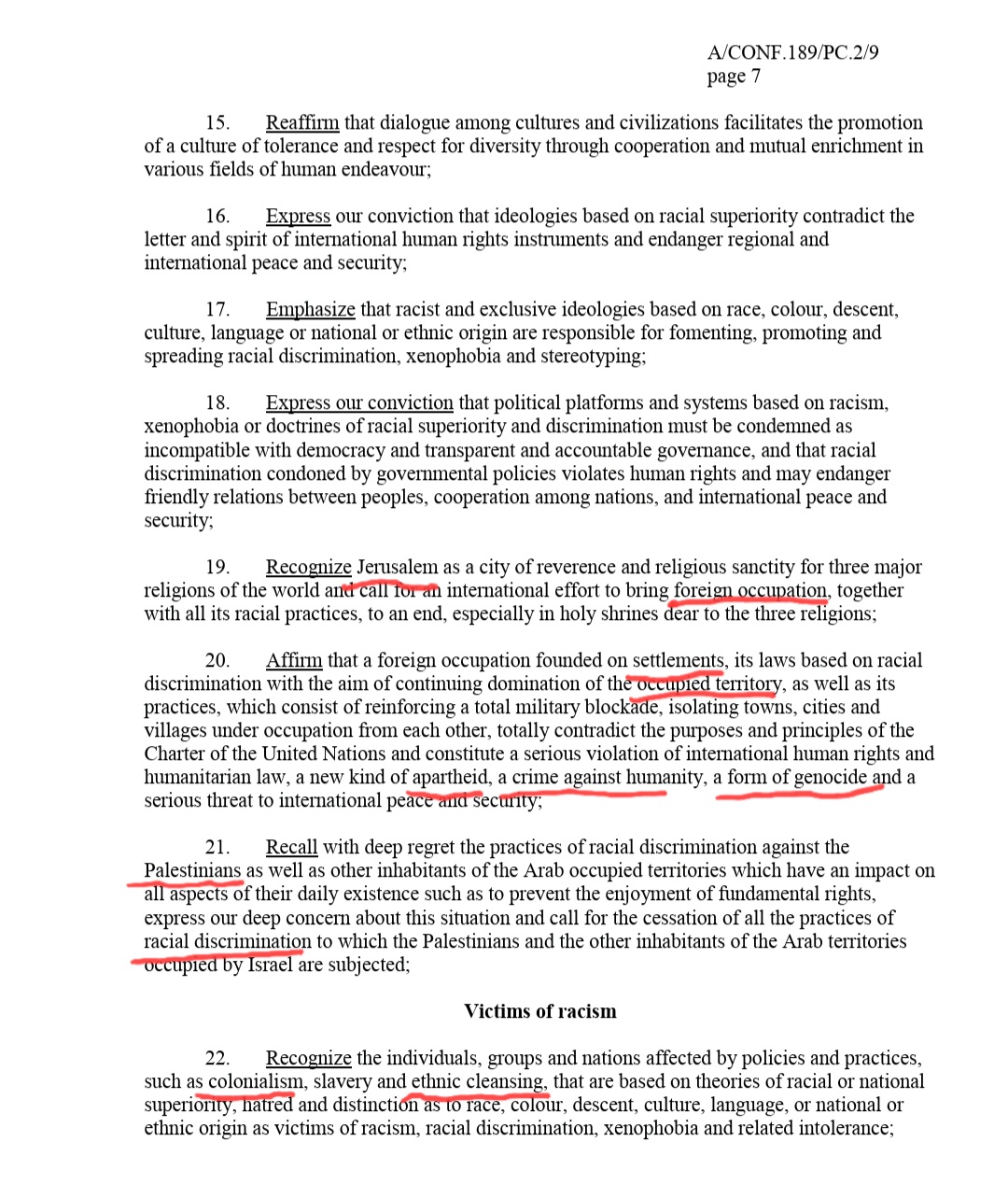
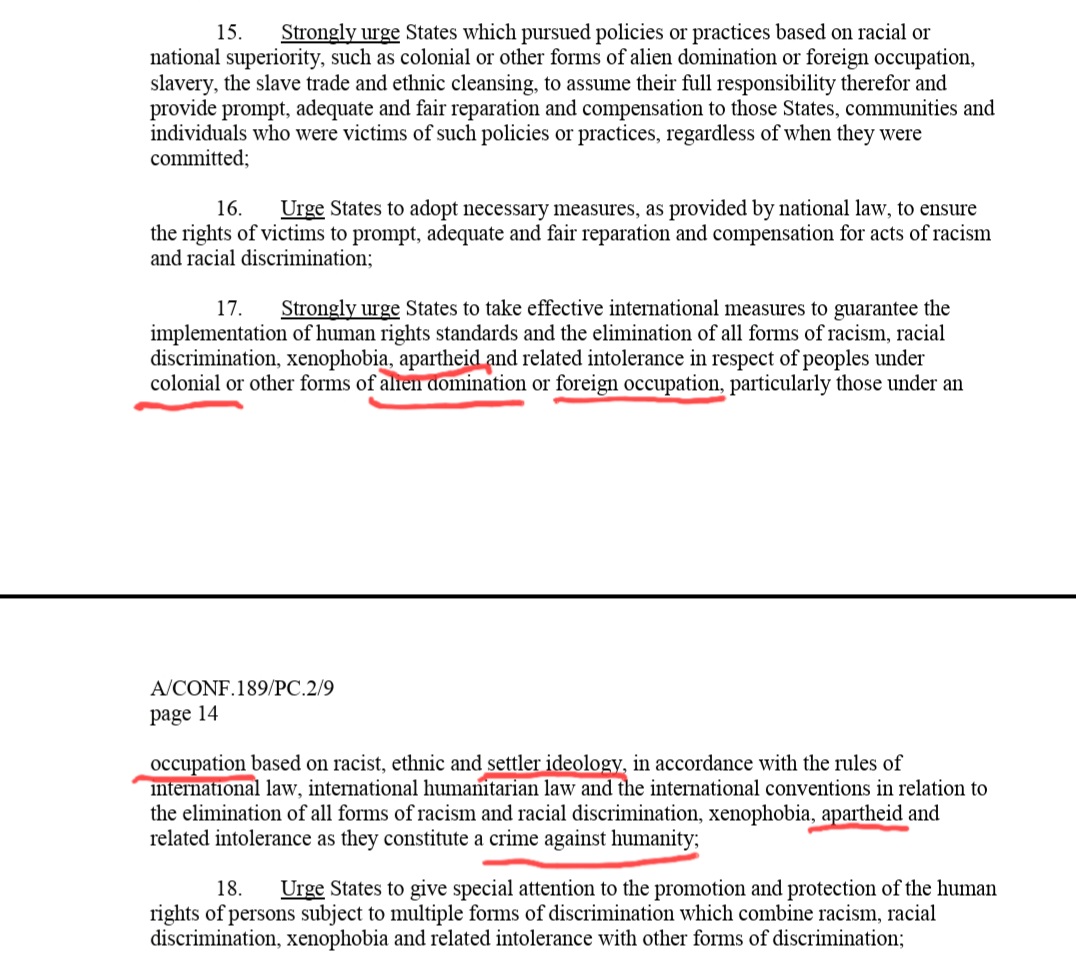
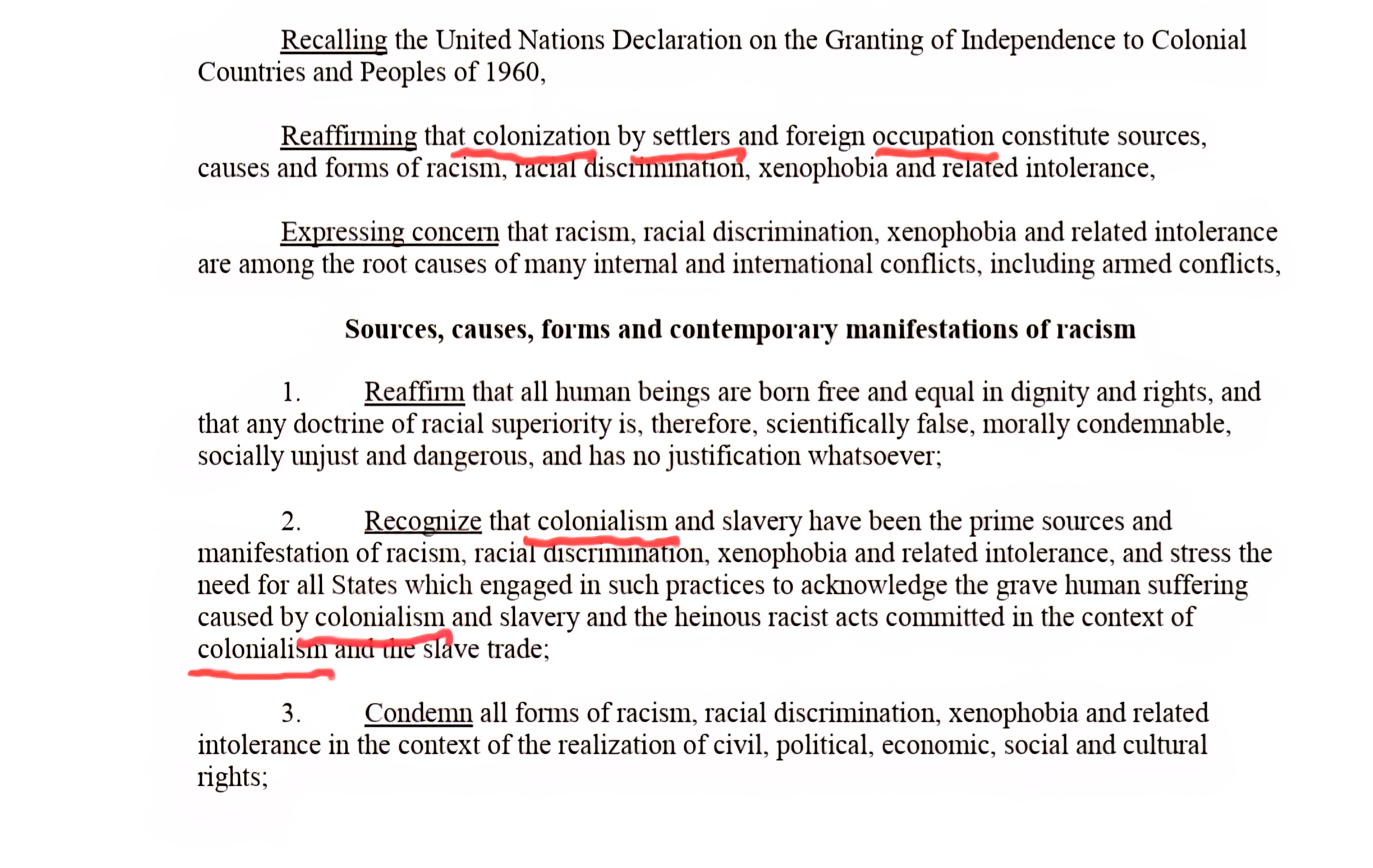
In February 2001, long before Hamas ruled Gaza, long before Israel withdrew from Gaza, long before the security barrier, and long before the phrase “genocide in Gaza” became a campus chant, a United Nations “anti-racism” conference in Tehran was already accusing Israel of being a racist apartheid state guilty of crimes against humanity and “a form of genocide.”
The language was not improvised after October 7. It was drafted decades earlier.
Buried in the archives of the UN World Conference Against Racism sits a document that now reads like the prototype for today’s anti-Israel activism. Hosted by the Islamic Republic of Iran as the Asian preparatory meeting for the infamous Durban Conference, the 2001 declaration accused Israel of “racial discrimination,” “settler ideology,” “apartheid,” and genocide years before the events now routinely cited to justify those accusations.
The Tehran declaration described Israeli policy as “a new kind of apartheid,” “a crime against humanity,” and “a form of genocide.” It condemned “foreign occupation founded on settlements” and portrayed Israel as a uniquely racist state. It attacked Israel’s Law of Return as “racially based” while endorsing a Palestinian “right of return,” and framed the conflict almost exclusively through the language of colonialism and racial supremacy.
This was February 2001. Hamas would not seize Gaza for another six years. Israel had not yet disengaged from Gaza. The major Gaza wars had not occurred. There was no October 7 massacre. There were no TikTok videos, no encampments, no “Globalize the Intifada” marches winding through Western capitals.
Yet the ideological framework already existed in complete form.
The core vocabulary was already there:
apartheid
settler colonialism
genocide
racial supremacy
alien domination
decolonization
The slogans were set. The distribution system under the framework of “anti-racism” needed time to become global.
Iran understood this battlefield earlier than much of the West did.
The Islamic Republic did not wage war against Israel on only one front. It developed a multi-front strategy: terror proxies, missile programs, regional encirclement, propaganda networks, diplomatic campaigns, university activism, NGO penetration and information warfare. The battlefield extended from southern Lebanon to UN conference halls.
Iran understood something many Western governments failed to grasp: narratives can outlive battlefields. Terror attacks shock people temporarily. Moral frameworks reshape generations.
The achievement of the campaign was not inventing new hatred. It was laundering their own very old anti-Jew hatred through the moral vocabulary of human rights.
The regime in Tehran openly sought the destruction of the Jewish state while simultaneously helping construct an international framework portraying the Jewish state itself as the great racist evil of the modern world. The inversion was deliberate. A regime animated by antisemitism and eliminationist rhetoric repositioned itself as an anti-racist moral authority while recasting Israel as a global pariah.
Reality itself had to be inverted for the framework to function:
The Jewish people had to be stripped of indigenous identity despite Judaism being born in the Land of Israel and the core of the Hebrew Bible.
Jerusalem had to be detached from Jewish history despite being the holiest city in Judaism for three thousand years, and the direction of daily Jewish prayer.
Hebrew had to become the language of “colonizers” despite originating in the same soil activists insist Jews have no connection to.
The objective was to transform the Jewish state from a country that could be criticized into a moral obscenity that could not legitimately exist.
The Tehran document placed Israel into the moral category occupied by apartheid South Africa, colonial domination and crimes against humanity. Once a country is assigned that status, compromise becomes collaboration and coexistence becomes moral surrender.
Iran supplied the ideological fuel. Large parts of the Western activist ecosystem supplied the distribution network. The result was one of the most successful political rebranding campaigns of the modern era.
NGOs, academics, journalists, activist groups and eventually corporate and educational institutions absorbed the vocabulary and repackaged it as the language of progressive morality. Traditional antisemitism had become morally discredited after the Holocaust, so hostility toward the Jewish state was translated into the vocabulary of anti-racism, anti-colonialism and social justice.
The old image of the malevolent Jew became the malevolent Zionist.
Ancient hatreds were repackaged as the language of anti-racism and liberation.
The old demand that Jews disappear became “decolonization.”
And because the rhetoric arrived wrapped in the language of human rights, millions of educated Westerners could participate while imagining themselves enlightened rather than radicalized.
The asymmetry inside the Tehran declaration is particularly revealing. The document devoted extraordinary attention to portraying Israel as the embodiment of racism while saying nothing about antisemitism in the Arab world, terrorism against Israeli civilians, the expulsion of Jews from Arab countries, or the openly eliminationist ideologies as the bedrock of Hamas and Hezbollah.
The imbalance was not accidental.
The conference was not constructing a universal anti-racism framework. It was constructing a hierarchy of permissible outrage in which Jewish sovereignty itself could increasingly be reframed as a moral offense.
The Durban process that followed later became notorious for antisemitic incidents, anti-Israel propaganda and efforts to revive the old “Zionism is racism” framework using newer terminology. Western democracies eventually began boycotting later Durban conferences because they viewed them as platforms for anti-Israel demonization masquerading as anti-racism initiatives.
But by then the political grammar had already escaped containment.
Over time, phrases first drafted in Iran migrated into university syllabi, NGO reports, newsroom style guides, faculty petitions, diversity trainings and street protests. Students who have never heard of the Tehran conference now repeat its vocabulary almost word for word, unaware they are echoing a political script written decades earlier by regimes that openly sought Israel’s destruction.
Long before October 7, the architecture had been built, the slogans drafted, and the moral categories assigned. More powerful than even the 1975 UN resolution equating Zionism with racism, the new format for the 21st century is anti-Zionism is anti-racism.
For twenty years the distribution system slowly penetrated the world, and reframed Jew-hatred as morally acceptable under willing and unwilling eyes.
October 7 did not write the script. It activated one that had been waiting since 2001.
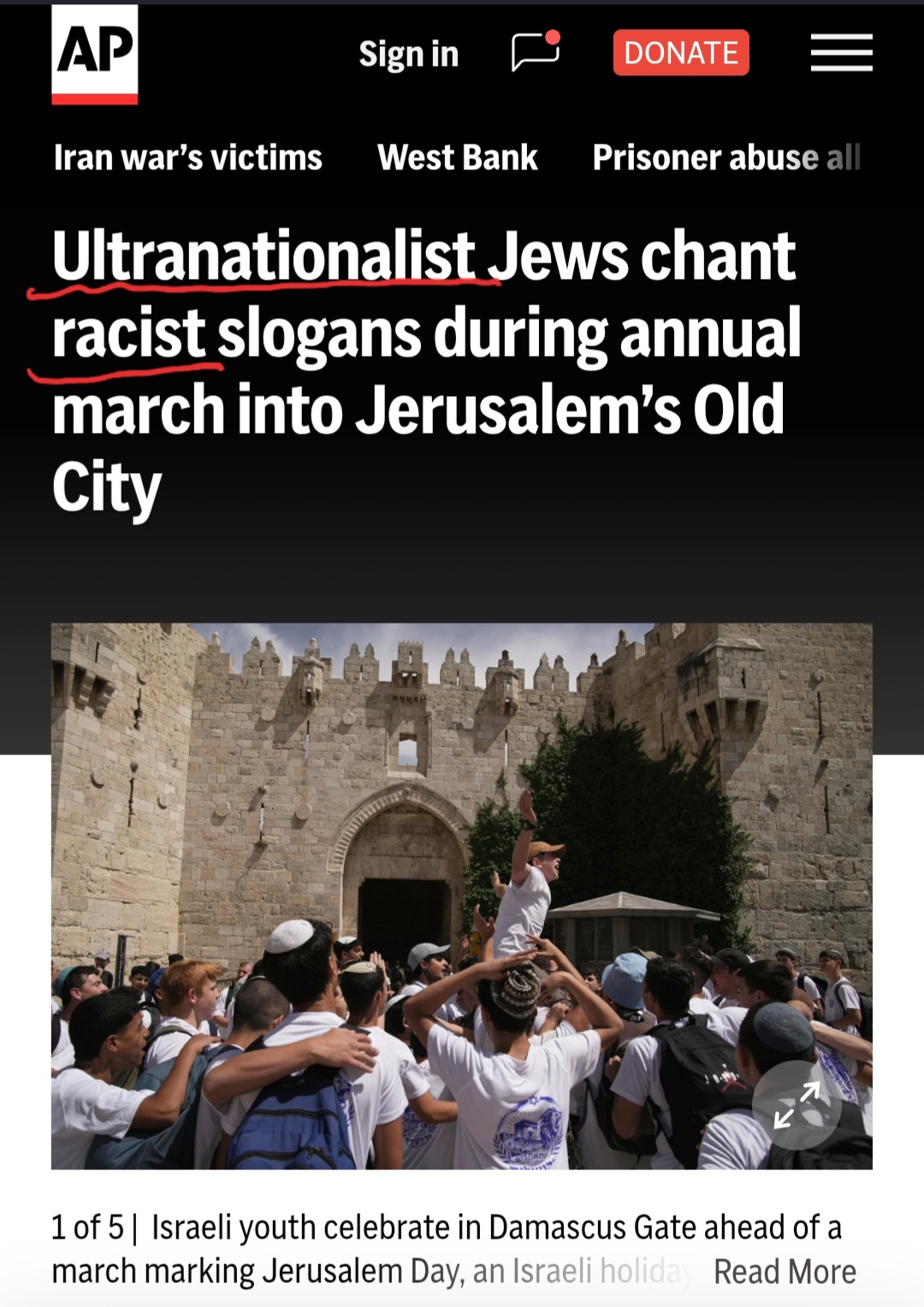
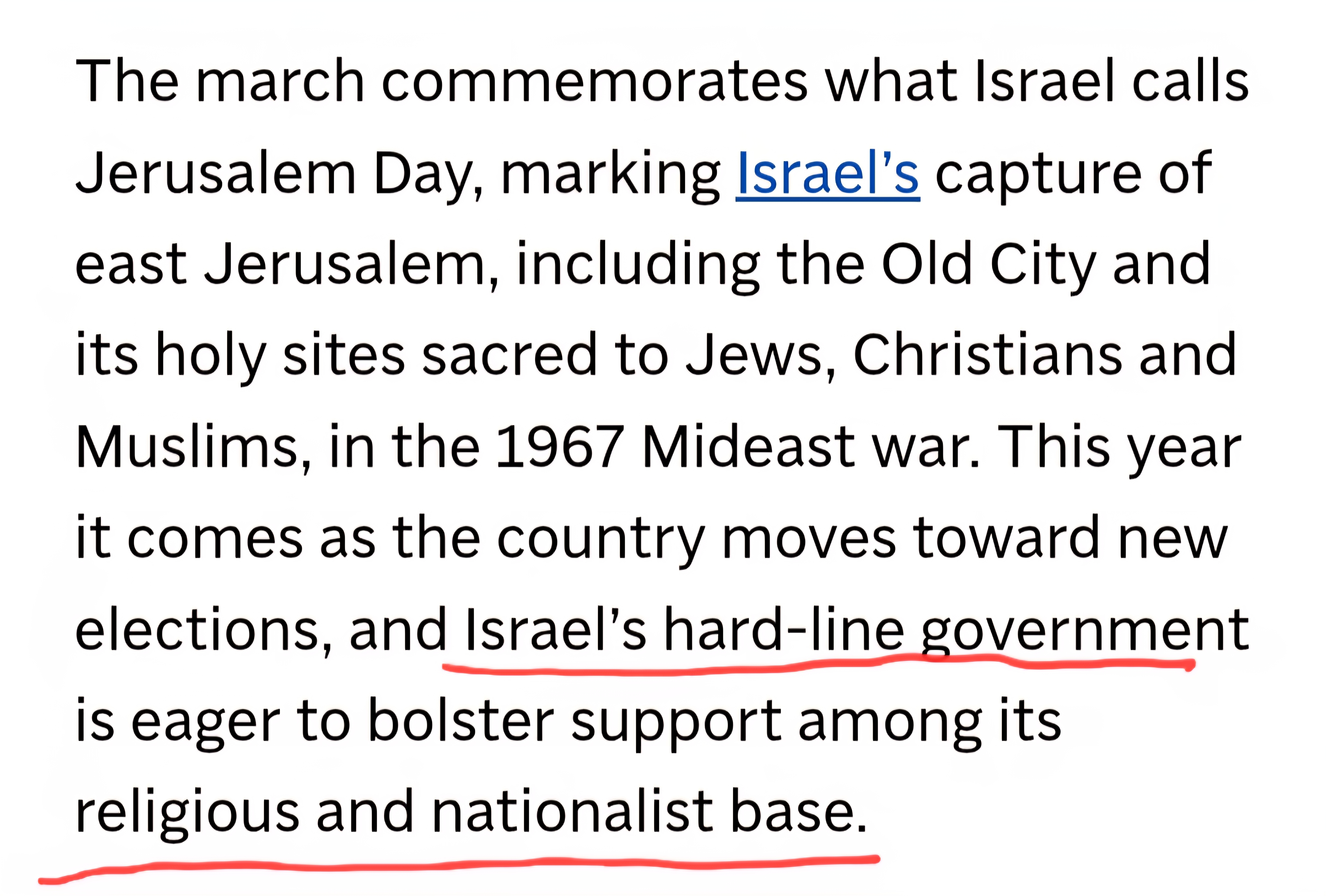
The Associated Press did not cover Jerusalem Day as a story about Jews returning joyfully to the holiest city in Judaism after nineteen years of exclusion under illegal Jordanian occupation. It covered it as a story about Jewish menace.
That framing decision is visible before readers even reach the second sentence.
“Ultranationalist Jews chant racist slogans during annual march into Jerusalem’s Old City.”
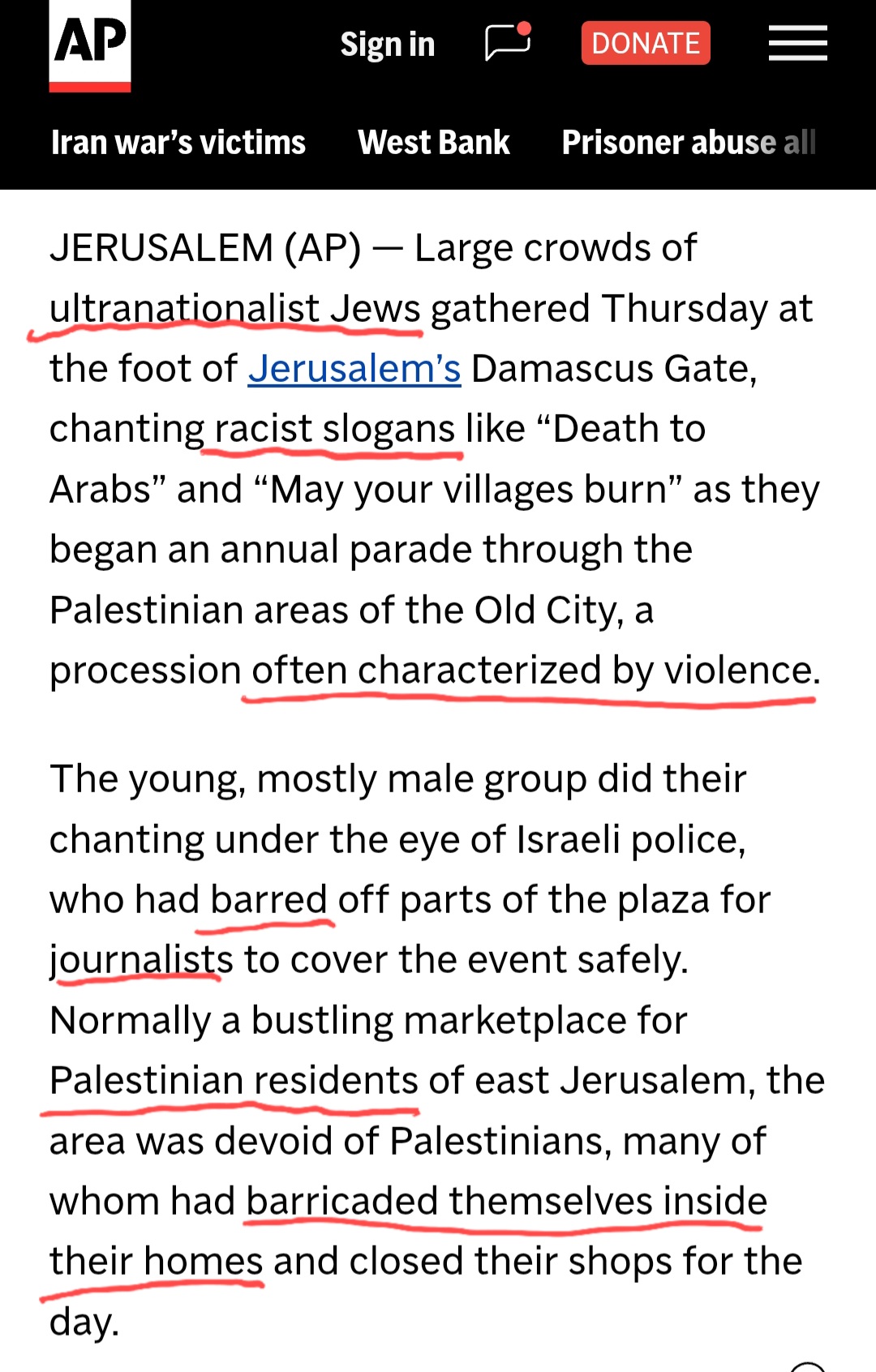
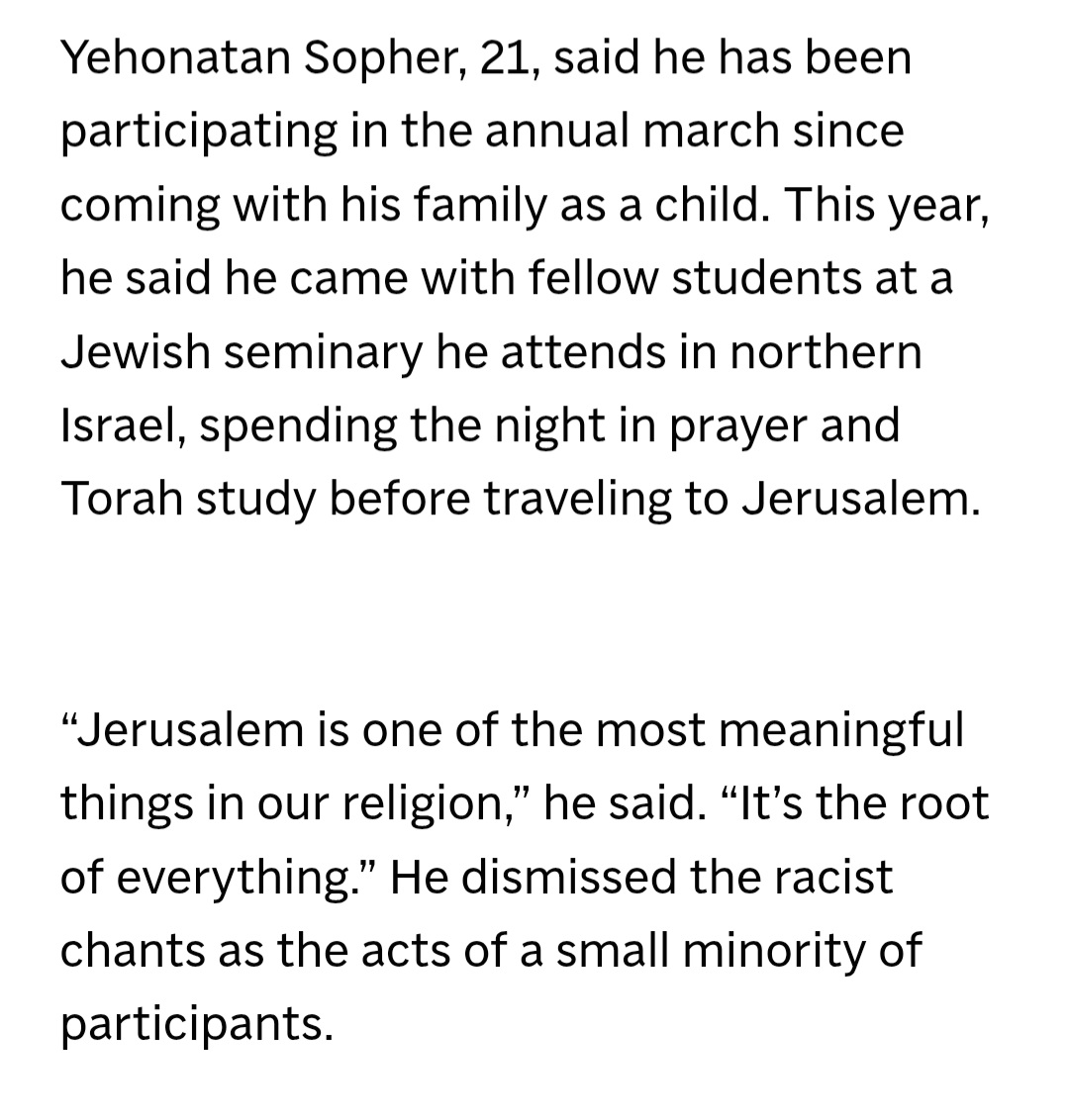
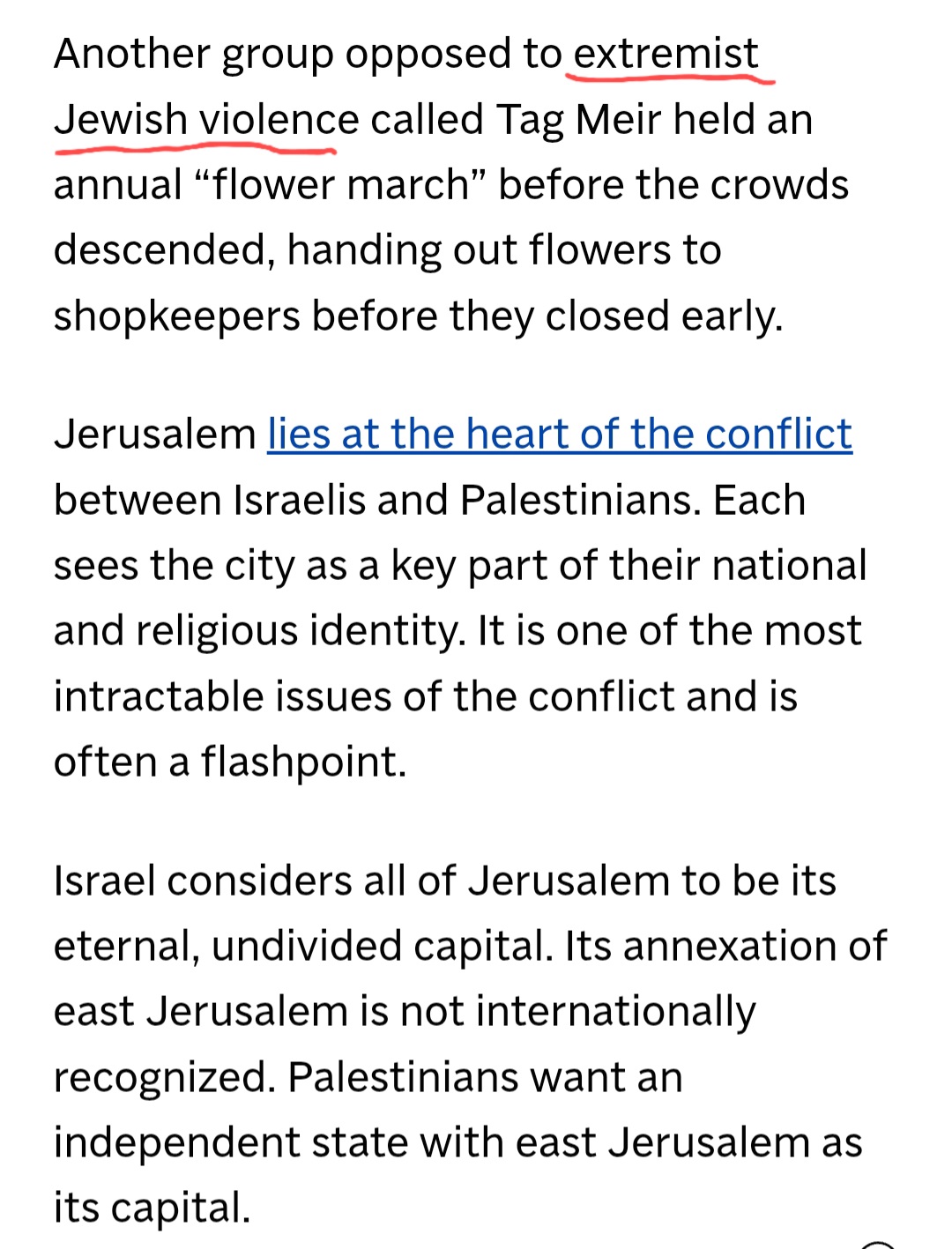
The rare racist chants reported at the march were ugly and deserve condemnation. But AP transformed the fringe into the essence of the event itself. Tens of thousands of Jews marched peacefully, sang, danced and celebrated Jerusalem Day. Yet readers encountering the article for the first time would assume the defining feature of the event was racist hooliganism when in fact it was joyous celebration.
Every descriptor pushes readers toward the same emotional conclusion: Jewish sovereignty in Jerusalem is dangerous, aggressive and destabilizing. Palestinians are the natural residents and Jews are interlopers who threaten violence.
The false narrative erases the actual historical meaning of the day.
Jerusalem Day marks the reunification of Jerusalem in 1967 after Jordan’s nineteen-year occupation of the eastern part of the city. During those years Jews were expelled from the Jewish Quarter, synagogues were destroyed, Jewish cemeteries were desecrated and Jews were barred from praying at the Western Wall despite explicit guarantees of access under the armistice agreements.
Without that context, Jewish celebration is transformed into something alien and sinister. Readers are shown Jews marching through Jerusalem, but never fully told why entering the Old City carries such emotional and historical weight in the first place.
Erased from the narrative is the uncomfortable fact that Jews were once the excluded population in the very places now described almost exclusively through Palestinian identity.
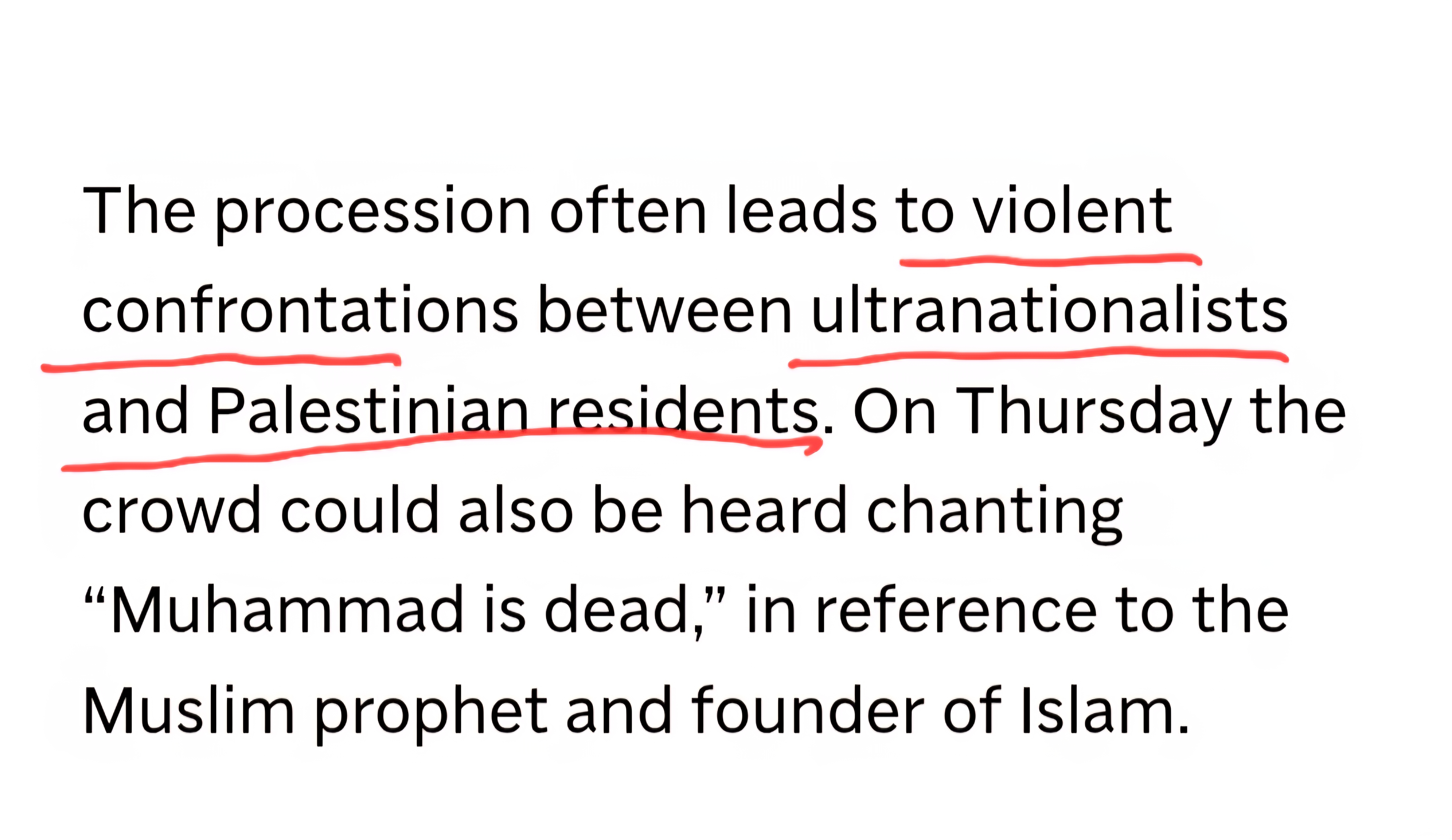
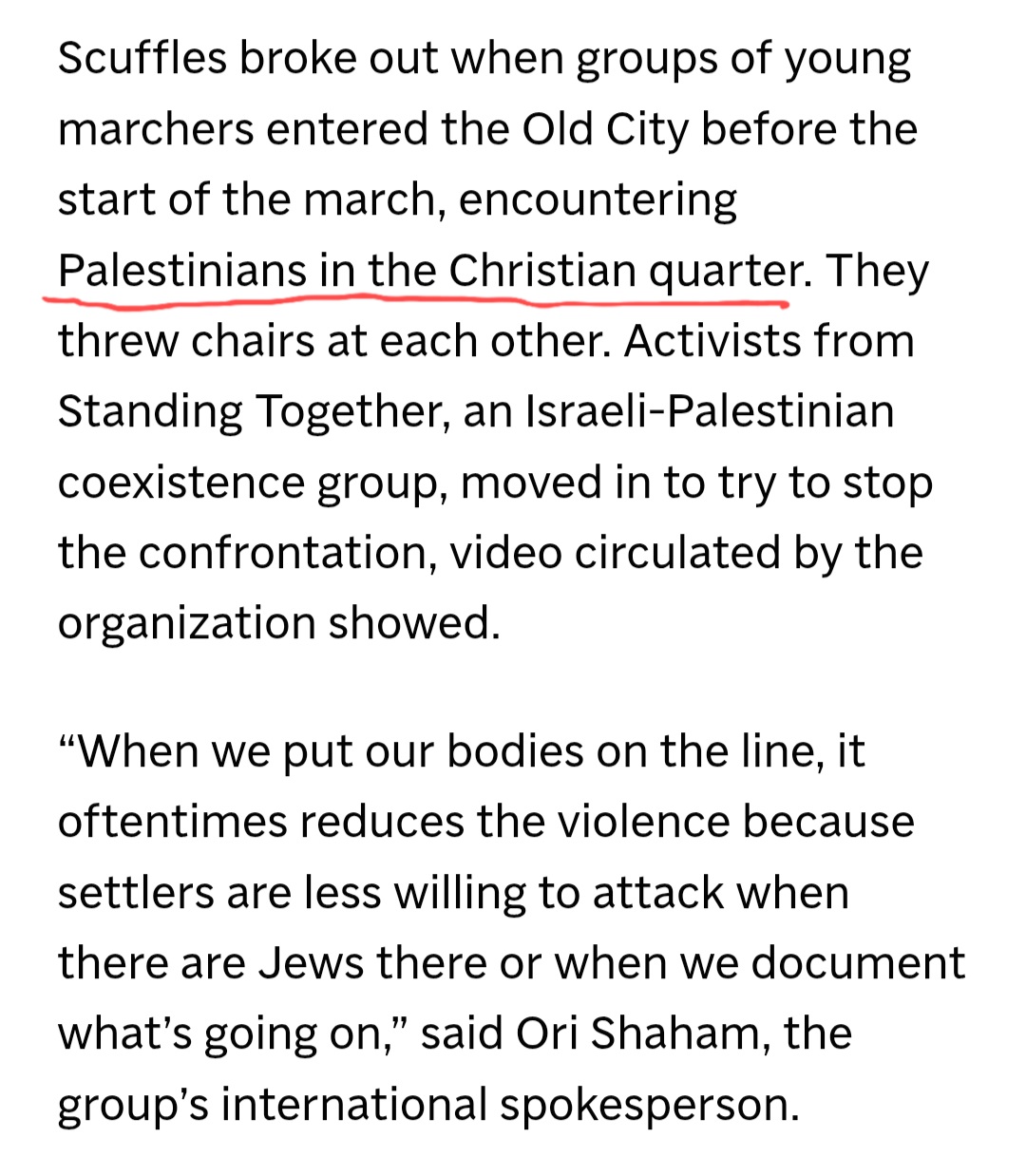
The asymmetry in labeling is impossible to miss. Arabs in Jerusalem are described as “Palestinians” or “Palestinian residents,” language that subtly implies an already-existing Palestinian sovereignty over the city. Jews, meanwhile, are repeatedly subdivided into ideological categories: “ultranationalists,” “hard-line,” “settlers.”
One side receives an organic national identity. The other receives political suspicion.
AP even refers to “Palestinian areas” of Jerusalem while never acknowledging the basic legal and political reality that these residents are primarily Israeli citizens or permanent residents under Israeli administration. There is no Palestinian state governing Jerusalem. Yet the article’s language continuously nudges readers toward imagining Jews as intruding into someone else’s sovereign national space.
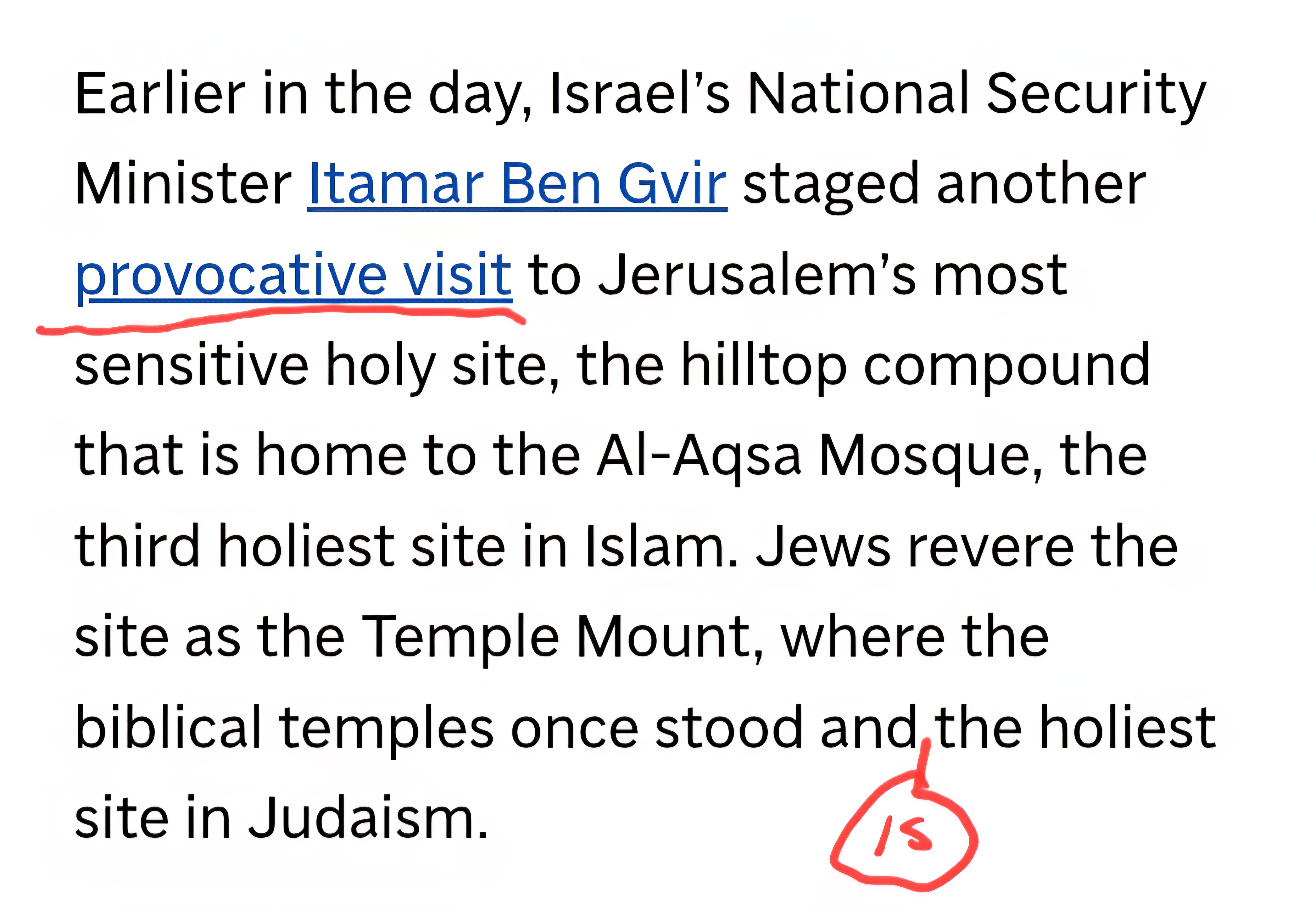
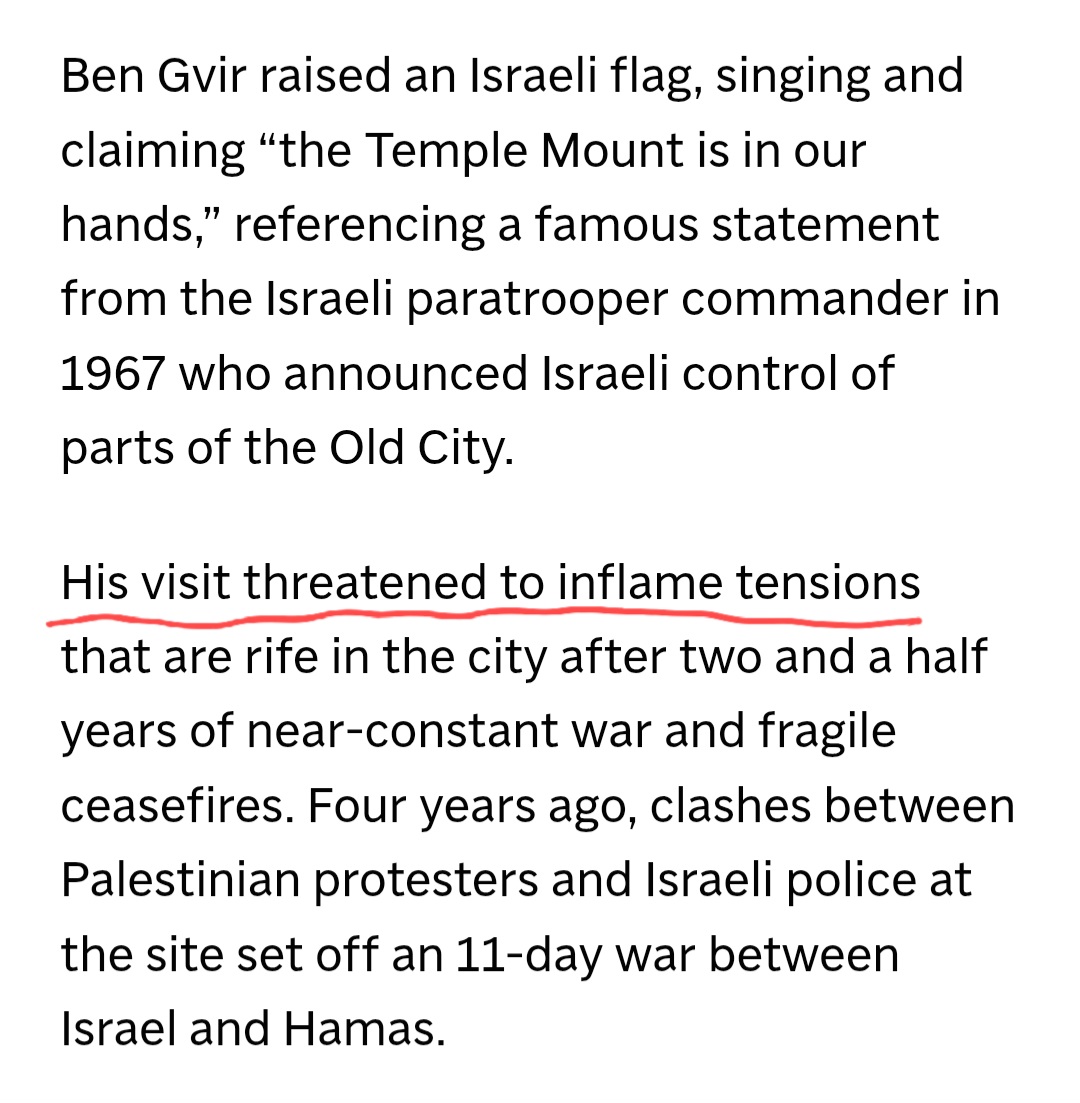
Even the treatment of the Temple Mount follows the same pattern. AP describes MK Itamar Ben Gvir’s visit as “provocative” before readers are even reminded that the site is the holiest place in Judaism, where the biblical temples once stood.
Imagine covering Muslims praying in Mecca or Catholics gathering in the Vatican first through the lens of how upsetting their presence might be to others.
Buried later in the article is a participant explaining that the racist chants came from “a small minority” of marchers. But by then the framing work is complete. The reader has already absorbed the article’s core emotional message: Jewish nationalism itself is the problem.
There is a profound difference between reporting that some participants at a massive public gathering behaved disgracefully and presenting those fringe elements as representative of the gathering’s essential character.
One reports misconduct. The other assigns collective identity.
And the asymmetry becomes impossible to ignore when comparing coverage standards. When participants at a pro-Palestinian rally praised terrorism or chanted genocidal slogans, major international outlets avoid headlines assigning those slogans to Palestinians collectively. Readers would receive sociological context, political nuance and careful distinctions between extremists and the broader movement.
Jewish events rarely receive the same interpretive charity.
The deeper issue exposed by the article is not merely media bias. It is discomfort with Jewish sovereignty itself.
Jewish attachment to Jerusalem is welcomed when it is passive and distant. The moment it expresses sovereignty, history or power, the vocabulary changes. Then Jews become “ultranationalists.”
The article unintentionally reveals a larger truth about modern international discourse surrounding Israel. Jewish history is acceptable. Jewish prayer is acceptable. Jewish suffering is acceptable. What remains difficult for much of the international press is Jewish power: Jews governing Jerusalem, policing Jerusalem, marching through Jerusalem and refusing to behave like temporary guests in their own civilizational center.













 First One Through