The international community keeps reaching for the same tool and calling it a solution.
It wasn’t in southern Lebanon. It won’t be in Gaza.
After the 2006 Lebanon War, the United Nations Security Council passed Resolution 1701 with clarity: no armed groups south of the Litani River except the Lebanese state and United Nations Interim Force in Lebanon. Hezbollah would withdraw. The area would be demilitarized.
It never happened.
Hezbollah didn’t disarm. It adapted. Fighters disappeared into civilian life. Weapons moved into homes and tunnels. Infrastructure embedded deeper. Over time, Hezbollah became stronger in the very zone it was supposed to vacate.
UNIFIL patrolled. It reported. It de-escalated when it could.
It did not enforce.
It could not.
That is not a tactical failure. It is the model.
A peacekeeping force without the authority or backing to impose outcomes becomes a bystander to violations it is tasked to prevent.
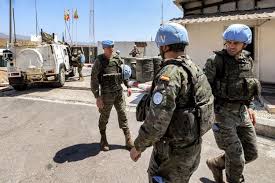
UNIFIL soldiers
Now the same model is being proposed for Gaza.
Disarm Hamas. Install a new authority. Deploy a multinational force to secure the peace.
It sounds familiar because it is.
Hamas, like Hezbollah, is not just a militia. It is a political and social organism backed by the Islamic Republic of Iran that is embedded in the population, sustained by ideology, and built to survive pressure. It will not voluntarily disarm into irrelevance.
And no external force—operating with limited mandate, constrained rules, and no appetite for sustained combat—will disarm it for them.
This is where the illusion breaks.
Peacekeeping works when peace already exists. It locks in outcomes. It does not create them. When deployed in the absence of resolution, it manages conflict. It does not end it.
That is what happened under 1701.
The “demilitarized zone” became a monitored one. Violations became routine. The temporary became permanent.
Hezbollah didn’t defy the system. It learned how to live inside it.
There is every reason to expect Hamas would do the same.
The problem is not execution. It is the belief that presence equals control. Blue helmets, patrols, liaison offices—they project order. They do not establish it.
Without a force willing and able to dismantle armed infrastructure and impose monopoly on violence, disarmament is not policy. It is aspiration.
Lebanon already ran this experiment. It didn’t produce peace.
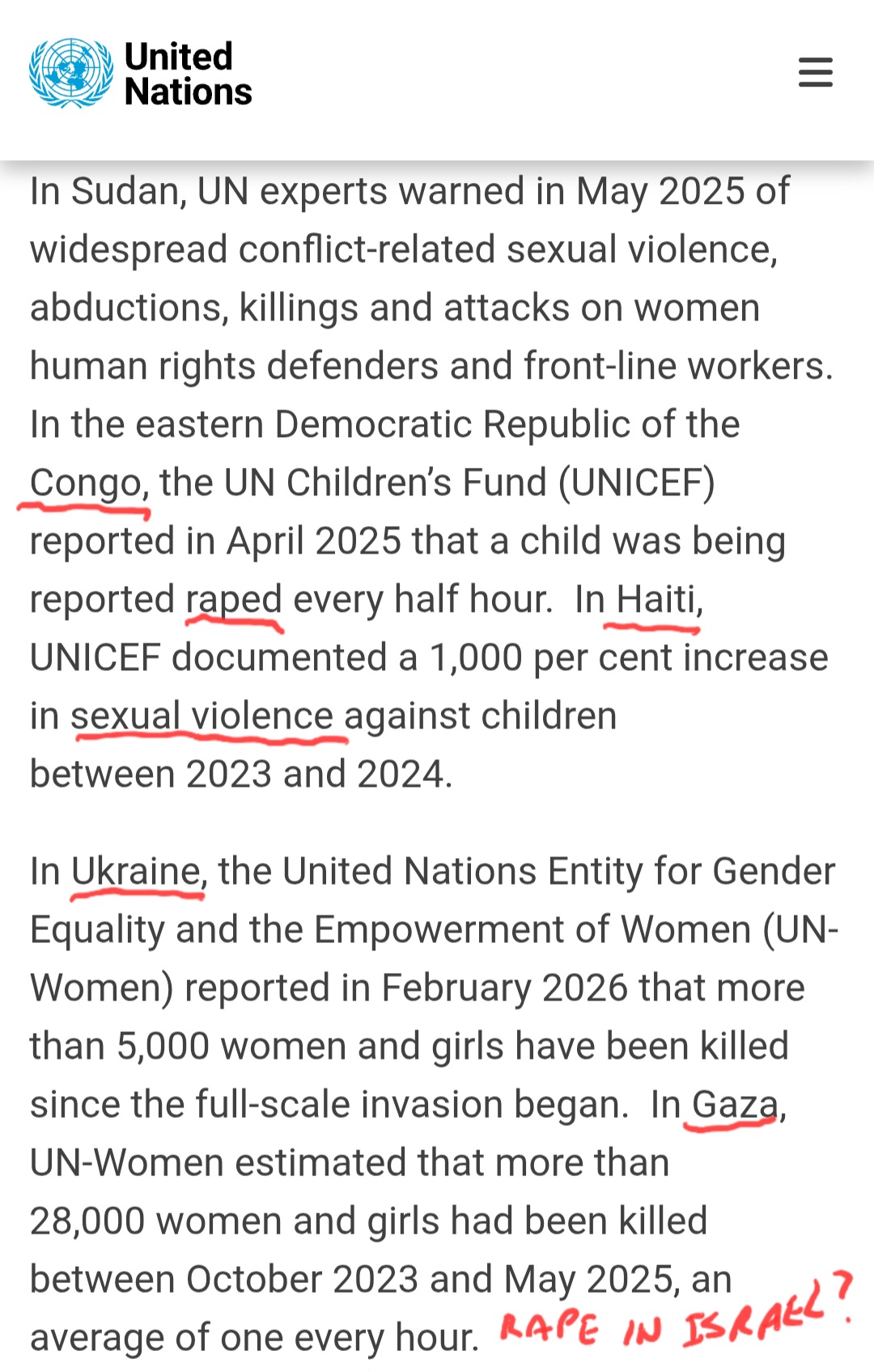
The United Nations has released yet another report on violence against women. It reads like a catalogue of human depravity – Sudan, Congo, Haiti, Ukraine, Gaza – each documented, each calibrated to shock the conscience.
And it does but not for the reason the authors intend.
Because one of the most documented episodes of mass sexual violence in recent history is missing. Not debated. Not contextualized.
Absent.
On October 7, an estimated 6,000 Gazans invaded Israel and carried out atrocities that included the systematic rape and mutilation of women. This is not a matter of competing narratives. It has been documented by eyewitnesses, first responders, forensic teams, and subsequent investigations.
And yet, in a sweeping global report about violence against women, these victims disappear.
The report finds space for a child raped every half hour in the Democratic Republic of the Congo, for the explosion of abuse in Haiti, for war deaths in Ukraine, and for casualty figures in Gaza. Horrific and worthy of attention.
But the omission is not accidental. It is instructive.
Because what the United Nations is quietly establishing is a hierarchy of victims. Some suffering is elevated. Some is ignored. And some – when it disrupts a preferred political narrative – is erased altogether.
Jewish women fall into that last category.
That is not human rights reporting. It is narrative management.
And that distortion does not stay confined to UN documents. It bleeds outward. When the international system refuses to clearly name and center atrocities committed against Jews, it creates a form of moral cover. The record itself becomes a kind of absolution.
So when figures in the West – like the wife of New York City Mayor Zohran Mamdani, Rama Duwaji – publicly express approval for the October 7 massacre, the reaction is muted, rationalized, or ignored. The most grotesque elements of that day, including the sexual violence, have already been softened, blurred, or omitted by institutions that claim to stand for universal rights.
If the crime is not fully acknowledged, then the celebration of it can be more easily excused.
That is the downstream consequence of selective memory and outrage.
The United Nations is not failing to see. It is choosing not to look and remind the world about violent antisemitism. And in doing so, it transforms a report about protecting women into something far more revealing: a document that tells us which victims matter and which ones are inconvenient.
In that calculus, the rape and murder of Jewish women is not denied. It is deemed unworthy of inclusion. Perhaps even harmful, lest it paint its forever wards, the Stateless Arabs from Palestine (SAPs) in an unfavorable light.
CAIR (Council on American-Islamic Relations) recently accused Israel of “waging war on Islam” after security restrictions limited Muslim access to the Al-Aqsa compound during Ramadan.
According to CAIR, preventing Muslim worship at one of Islam’s holy sites is proof of hostility toward Islam itself.
If that is the standard, then a simple question follows:
Will CAIR support Jewish prayer on the Temple Mount during Passover?
Because if restricting prayer equals religious persecution, then Muslims have been denying Jews the right to pray at their holiest site for generations.
The Holiest Site in Judaism
The compound Muslims call Haram al-Sharif is the Jewish Temple Mount, the holiest site in Judaism.
It is where the First Temple of King Solomon stood. It is where the Second Temple stood until the Romans destroyed it in 70 CE.
For nearly two thousand years Jews have prayed toward this location.
Yet today Jews are largely forbidden from praying there.
Under the “status quo” arrangement Israel maintained after capturing Jerusalem in the Six-Day War, Jews may visit the Temple Mount during narrow windows of time via a single entry portal, but are generally prohibited from praying, even silently.
The reason is simple: Muslim authorities insist Jewish prayer there is unacceptable.
A Short History of the Ban
The prohibition on Jewish worship at the site did not begin recently.
Under Ottoman rule, Jewish prayer on the Temple Mount was restricted.
From 1948 to 1967, when Jordan controlled eastern Jerusalem, Jews were banned entirely from visiting the Old City, even the Western Wall, Judaism’s most sacred accessible prayer site.
After 1967, Israel regained control of the Old City but maintained Muslim administrative authority over the mount to prevent unrest.
The result is an unusual reality: The holiest site in Judaism is effectively the only major religious site in the world where adherents of that religion are largely barred from praying.
A One-Way Principle
CAIR’s accusation therefore reveals a remarkable double standard.
When Muslim access is restricted temporarily during wartime security conditions, it is framed as an attack on Islam. But when Jews are prevented from praying at their holiest site at all times, it is treated as normal.
Religious freedom, apparently, runs in only one direction.
The Passover Test
If CAIR genuinely believes preventing prayer at a holy site is an attack on religion, the principle should apply equally. Which leads to a straightforward test:
Will CAIR support Jewish prayer on the Temple Mount during Passover?
Not silent whispers quickly stopped by police. Actual prayer at Judaism’s holiest location.
If religious liberty is universal, that should be an easy position to endorse.
The Irony
Israel remains one of the few countries in the Middle East where Muslims freely maintain and worship at major holy sites. Yet Israel is accused of “waging war on Islam” for imposing security restrictions during a war.
The claim collapses the moment the broader reality is considered.
So instead of outrage, perhaps the most useful response to CAIR’s statement is curiosity: Will CAIR support Jewish prayer on the Temple Mount this Passover?
Or is religious freedom a principle that applies only when the worshippers are Muslim?
When Iran attacks neighboring countries, many observers react with confusion.
How could the Islamic Republic of Iran strike Muslim countries, they ask?
The question reflects a misunderstanding. Throughout modern Middle Eastern history, many of the region’s bloodiest conflicts have been Muslims fighting other Muslims. The idea of a unified “Muslim world” standing together against outsiders is largely a Western illusion.
Reality has always been far messier.
Muslims Fighting Muslims
One of the deadliest wars in the modern Middle East was the Iran–Iraq War. From 1980 to 1988, two Muslim-majority states fought a brutal conflict that killed hundreds of thousands and wounded millions. Both sides invoked Islam. It did nothing to prevent the slaughter.
More recently, the Syrian civil war has killed roughly 500,000 people, most of them Muslims, as factions divided along sectarian and political lines tore the country apart.
But these are far from isolated examples. Modern history is filled with wars in which Muslims killed other Muslims on a massive scale.
Major Muslim-vs-Muslim Conflicts
Iran–Iraq War (1980–1988) ~500,000–1,000,000 killed Shia Iran vs Sunni-led Iraq in one of the deadliest wars in modern Middle Eastern history.
Syrian Civil War (2011–present) ~500,000+ killed Assad regime, Sunni rebel groups, ISIS, and other militias fighting largely Muslim populations.
Yemen Civil War (2014–present) ~350,000+ killed (including famine and disease tied to the war) Iranian-backed Houthis vs Saudi-backed Yemeni government.
Sudan / Darfur conflicts (2003–present phases) ~300,000+ killed Fighting largely between Muslim militias and factions within Sudan.
ISIS war in Iraq and Syria (2013–2019) ~200,000+ killed ISIS fighting governments and populations that were overwhelmingly Muslim.
Algerian Civil War (1991–2002) ~150,000–200,000 killed Islamist insurgents vs Algerian government.
Iraq sectarian civil war (2006–2008 peak) ~100,000–200,000 killed Sunni and Shia militias fighting for control after the fall of Saddam Hussein.
Black September in Jordan (1970–1971) ~3,000–10,000 killed Jordanian army crushing Palestinian militant groups operating inside Jordan.
Hamas–Fatah conflict (2006–2007) ~600–1,000 killed Palestinian factions fighting for control of Gaza.
Together, these conflicts account for millions of deaths, overwhelmingly among Muslims themselves.
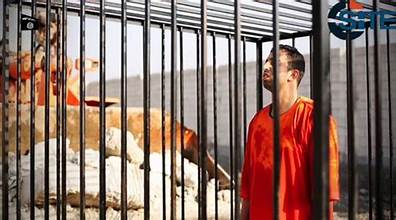
Members of ISIS about to burn Jordanian to death in a cage
Palestinians Killing Palestinians; Israel Arabs Killing Israeli Arabs
Even movements that claim to represent a single people often turn their guns inward.
In 2007, Hamas violently seized Gaza from Fatah, executing rivals and throwing some from rooftops in a bloody Palestinian power struggle.
The same pattern appears inside Israel.
Most Israeli Arabs who die from violence are killed by other Israeli Arabs, usually in criminal or clan disputes rather than in conflict with Jews.
Internal violence, not confrontation with Israel, accounts for the majority of these deaths.
Power Over Solidarity
Western observers often assume shared religion should produce political unity.
But the Middle East repeatedly shows otherwise.
Persians compete with Arabs. Arabs compete with Turks. Sunni compete with Shia.
Power, rivalry, and survival drive politics far more than religious solidarity.
A Familiar Pattern
Seen in this context, Iran attacking Muslim countries is not surprising.
It follows a long-standing regional pattern: Muslim states and factions frequently fight one another.
The Middle East’s wars are not unique. They follow the same rule that has governed politics everywhere:
Nations and movements fight for power and dominance—even when they share the same faith.
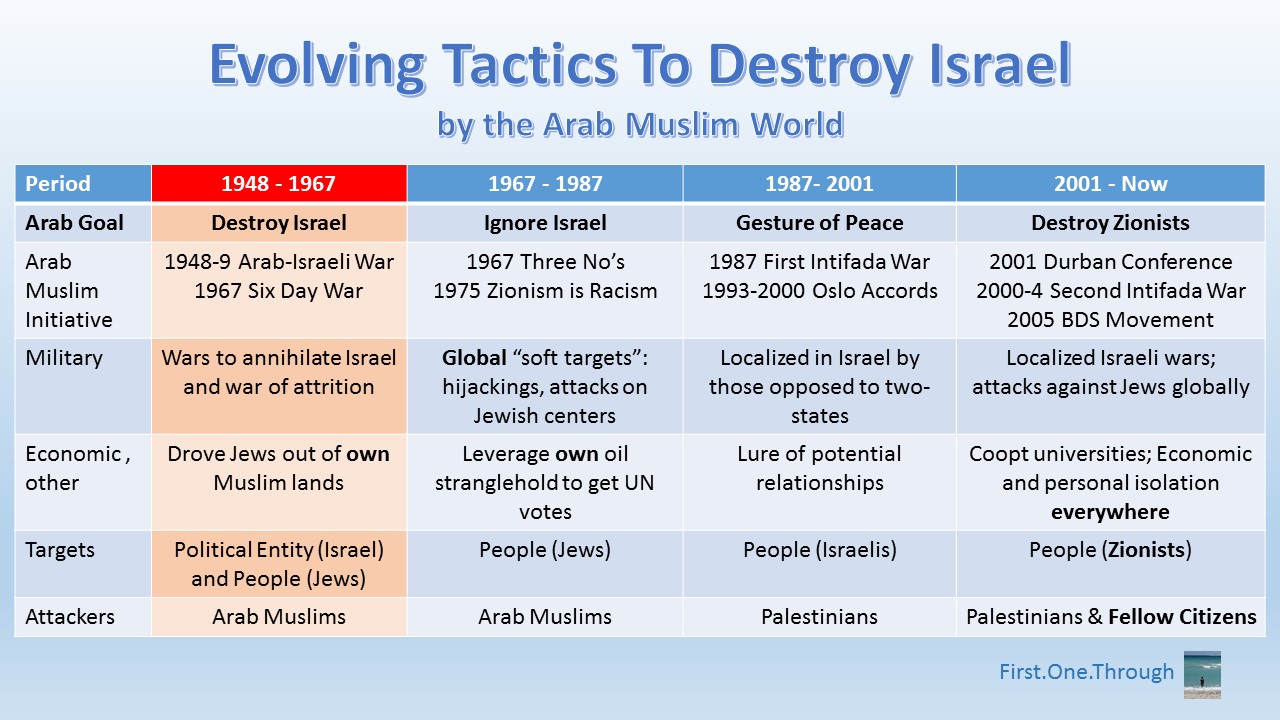
When armies lose wars, the battlefield does not always disappear. It often moves to softer targets.
That is what happened after the Six-Day War, when Israel delivered a devastating defeat to the combined armies of Egypt, Jordan, and Syria. In six days, territories changed hands, military reputations collapsed, and the promise that Israel would soon be destroyed evaporated.
The defeat reverberated far beyond the battlefield. It humiliated governments across the Arab world and shattered the image of inevitable victory that had surrounded the campaign against Israel.
But the war did not end. It simply changed form.
In the years that followed, militant organizations such as the Popular Front for the Liberation of Palestine and the Black September Organization exported the conflict around the world.
The targets were no longer Israeli armies; they were civilians.
Airplanes became battlegrounds. Diplomats became targets. Jewish institutions across the diaspora suddenly found themselves on the front lines of a war being fought thousands of miles away.
The Munich massacre shocked the world when Israeli athletes were murdered at the Olympic Games by Palestinian Arab terrorists. It demonstrated that the battlefield could be moved to the most international stage imaginable.
Another defining moment came with the Entebbe hijacking, when Palestinian terrorists seized an Air France flight and diverted it to Uganda. There, Jewish and Israeli passengers were separated from the others and held hostage in an old airport terminal. The episode ended with a daring Israeli rescue, but the hijacking revealed something chilling: Jews anywhere could be turned into targets for a war militants could not win against Israel itself.
Synagogues and Jewish community centers were attacked in cities far removed from the Middle East battlefield. Rome. Athens. Istanbul. Hezbollah and Iran were often behind the atrocities.
These were not military targets. They were chosen precisely because they were vulnerable.
The message was unmistakable: if Israel could not be defeated in the Middle East, Jews everywhere would become targets.
Today there are worrying signs that the same pattern may be returning.
Iran and its regional network of militias face mounting military pressure from Israel and the United States. When regimes and movements cannot confront stronger armies directly, history shows they often search for targets they can reach more easily.
Recent intelligence chatter has suggested that Iran may have issued signals intended to activate sleeper operatives abroad. Western security services have increased monitoring of potential networks across North America, Europe, and Australia. Whether these warnings prove accurate or not, the concern reflects a familiar strategic logic: when the battlefield is lost in one region, pressure is applied elsewhere.
As the United States becomes the central military opponent of Iran, American Jews may face the threat most acutely.
Extremist movements have repeatedly treated Jewish communities abroad as symbolic stand ins for Israel and its allies. When Israel gains the upper hand militarily, Jews in distant cities have often become the targets that terrorists believe they can reach.
This time the danger may be compounded by a new environment.
Terror no longer requires direct command structures. Groups such as Islamic State pioneered a model of “inspiration terrorism,” where individuals absorb propaganda online and act independently without formal membership or training, such as happened this week in New York City.
At the same time, a troubling ideological convergence has taken shape in parts of Western society. Radical Islamist movements and segments of the revolutionary left increasingly share a political vocabulary built around anti-imperialism, anti-colonialism, and the demonization of Israel. In that narrative, Israel becomes the embodiment of oppression. Jews are portrayed as agents of imperial power rather than a people with a three thousand year connection to their homeland.
When those ideas spread through social media, activist networks, and even parts of the educational system, hostility toward Israel can easily spill over into hostility toward Jews themselves.
The result is combustible.
A generation is growing up hearing that violence against Israel is “resistance,” that Jews represent colonial domination, and that the conflict is part of a global struggle against oppression.
History shows where that logic can lead.
If history is echoing once again, the streets of Western cities may soon remind us of a grim truth: the losers of wars do not always accept defeat.
We are witnessing the next phase of the War on Zionists.
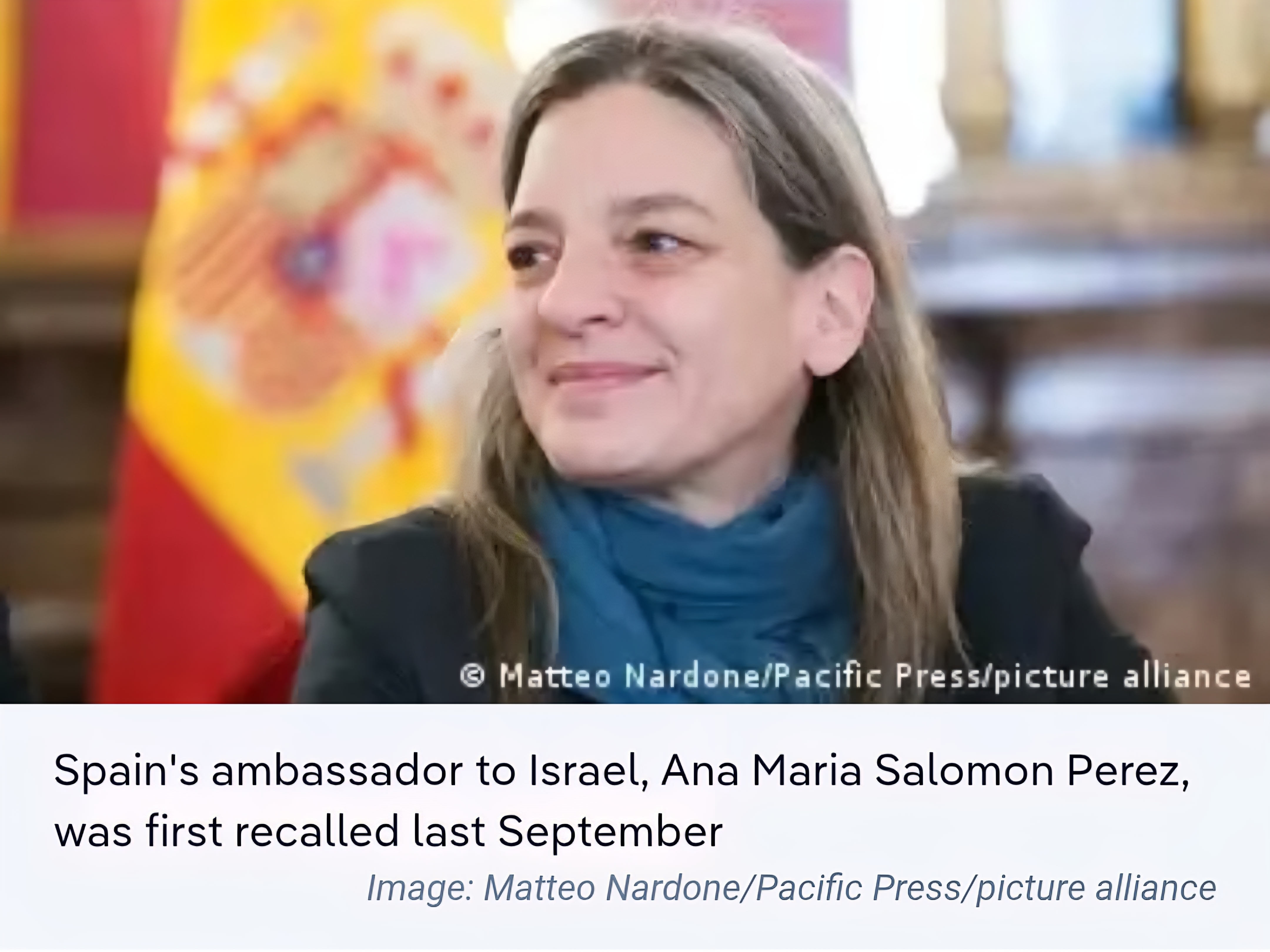
In a sharp escalation of transatlantic tension, Donald Trump threatened to cut off trade with Spain, accusing Madrid of refusing to support operations against Iran and failing to meet its defense obligations within NATO.
Spain rejected the criticism, citing sovereignty and international law and refusing to allow U.S. forces to use Spanish bases in operations tied to the Iran conflict.
The military campaign against Iran has been led by the United States, with Israel acting alongside it. If participation in that conflict justified downgrading diplomatic relations, the same logic would apply first to Washington, yet Spain withdrew no ambassador from the United States.
Even after Trump threatened sweeping trade retaliation, Madrid left its diplomatic posture toward Washington unchanged.
Instead, the rupture fell on Israel alone.
The reason is not difficult to see. Confronting the United States carries consequences. The American economy dwarfs Spain’s, and Washington anchors the NATO security system protecting Europe. Spain benefits from that umbrella while contributing among the lowest shares of national income to defense within the alliance.
Angering Washington carries risk. Angering Israel carries almost none.
Spain frames its decision as moral protest. But if war with Iran is the offense, the United States leads it. If regional escalation is the concern, Spain still maintains diplomatic relations with Iran itself, the leading state sponsor of terrorism.
If Spain were to look in the mirror, what would it see? A principled stand against war? That is the language Madrid uses.
But the reflection suggests something else. Spain keeps its ambassador in Washington, maintains relations with Tehran, and breaks with Jerusalem — the smallest actor in the conflict.
Spain is a nation of nearly fifty million compared to Israel, a country of ten million, a small state surrounded by hundreds of millions of Muslims where hostility toward Israel goes back to the Jewish State’s reestablishment.
That asymmetry will not go unnoticed in Washington or among Israel’s allies. Spain already faces pressure to increase its NATO defense spending. If Madrid is willing to rupture relations with Israel over the Iran war while maintaining relations with Iran itself, the contradiction may soon move from rhetoric to diplomacy.
The question could become blunt: restore normal relations with Israel, end trade with Iran, and meet NATO defense commitments — or risk losing the security umbrella Spain depends on.
A nation looking honestly in the mirror might call that geopolitics. Or antisemitism.
For decades the international community has insisted it already knew what a two-state solution should look like. The United Nations drew the parameters. Diplomats repeated the formula. Conferences were held. Resolutions were passed.
And tens of thousands of people died.
The problem may not be the idea of two states. The problem may be that the plan was written without the participation of the country expected to live beside that second state, after countless wars waged to eliminate it.
Israel accepted the concept of two states repeatedly. The Arab world rejected it outright in 1947 and chose war instead. For decades the objective was not coexistence but the elimination of the Jewish state “in any part of Palestine.“
Only much later did some Palestinian leaders begin to speak about accepting two states. Even then the proposal contained a remarkable asymmetry: Arabs could potentially live in both Israel and a future Palestinian state while Jews would be barred from living in Palestine. Even under these terms, acceptance amongst the stateless Arabs from Palestine (SAPs) remained partial and fragile. Large segments of Palestinian society continued to reject the legitimacy of Israel itself.
War therefore continued.
The deeper flaw lay in the diplomatic architecture. The UN framework repeatedly demanded territorial concessions from Israel while simultaneously challenging the basic elements of Israeli sovereignty. The proposed Palestinian state would claim rights that no other neighboring state claims over another country, including constraints on Israel’s control over borders and immigration.
The Oslo Accords attempted to move the process forward through gradual autonomy. Palestinians gained control of Gaza, Area A of the West Bank, and some control in Area B. These territories were meant to become the early foundations of Palestinian self-governance and peaceful coexistence.
Instead they became platforms for continued war. Rockets came from Gaza. Terror networks operated openly in areas under Palestinian control. October 7 was simply the most brutal expression of a reality that had been building for years.
After October 7 it is difficult to imagine any Israeli government accepting the same international blueprint that guided diplomacy for the past thirty years.
Which raises a simple question that has never been asked: What would a two state solution designed by Israel actually look like?
For decades the world has demanded that Israel accept a state designed by others. When Israel raised concerns about security, sovereignty, or enforcement, those concerns were treated as obstacles to peace rather than as conditions necessary to achieve it.
Perhaps the time has come to reverse the process.
Instead of repeating a diplomatic formula that has failed repeatedly, the international community could ask Israel to define the conditions under which it could realistically accept a Palestinian state. Security arrangements, borders, governance standards, demilitarization, and phased recognition could all become part of a framework designed around coexistence rather than wishful thinking.
Whether the SAPs are willing to accept such conditions is a separate matter. Neither side ever fully accepted the UN blueprint. But continuing to impose a model that both parties reject has already produced decades of bloodshed.
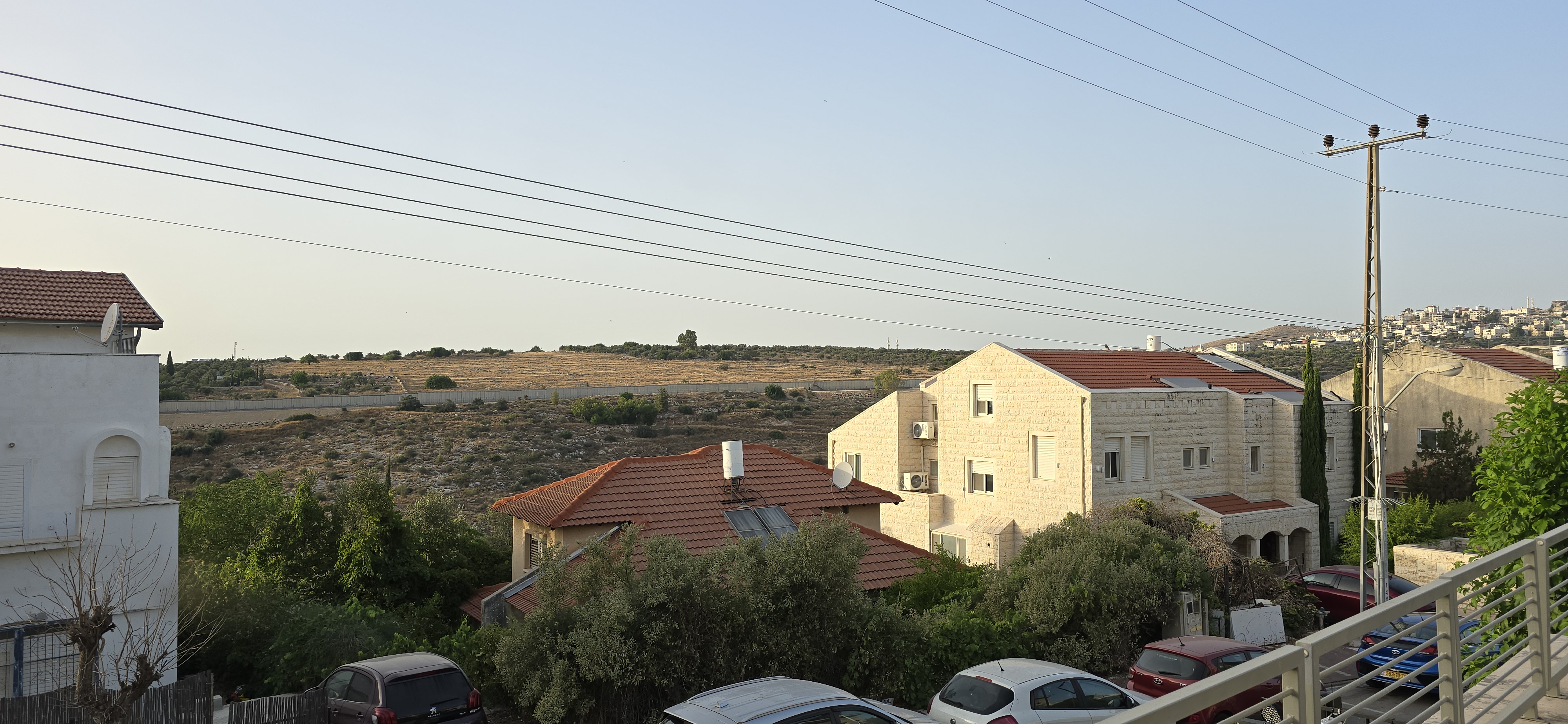
Hashmonaim and separation barrier
The first fruits of Oslo were rotten. Continuing to plant the same tree will not produce a different harvest.
If the world truly wants two states living in peace, it may finally be time to ask the state expected to survive beside that new second state what peace actually requires.
Every year, critics ask the same question about the roughly $3 billion in American military assistance to Israel. What does the United States get for it?
This week provided a reminder.
For decades that funding has supported joint missile defense systems, intelligence sharing, aircraft integration, cyber capabilities, and deep operational coordination between the two countries. American and Israeli militaries train together, build systems together, and prepare for the same threats.
The result is something unique in the Middle East.
The United States maintains major bases across the Gulf. American ships patrol the region. American aircraft fly from Qatar, Bahrain, and Kuwait. But the United States has no bases in Israel.
It does not need them.
Israel itself functions as one of America’s most capable strategic partners in the region. Its fighters, intelligence networks, cyber units, and missile defenses are deeply integrated with American systems and strategy.
When Washington faces a threat like Iran, Israel is already positioned on the front line. Already armed. Already aligned.
That alignment was built over decades. American assistance helped develop some of the most advanced missile defense systems in the world. Israeli intelligence cooperation has repeatedly protected American lives and interests. Joint technology programs have shaped modern air defense, battlefield awareness, and cyber security.
There are many countries that receive American aid. None return value like this.
Israel is the only country in the Middle East whose military doctrine, intelligence culture, and technological infrastructure are so closely integrated with that of the United States that they can effectively act as a unit to dismantle the military capabilities of the leading state sponsor of terrorism which has sworn to destroy both countries.
It is one of the most effective strategic investments the United States has ever made.
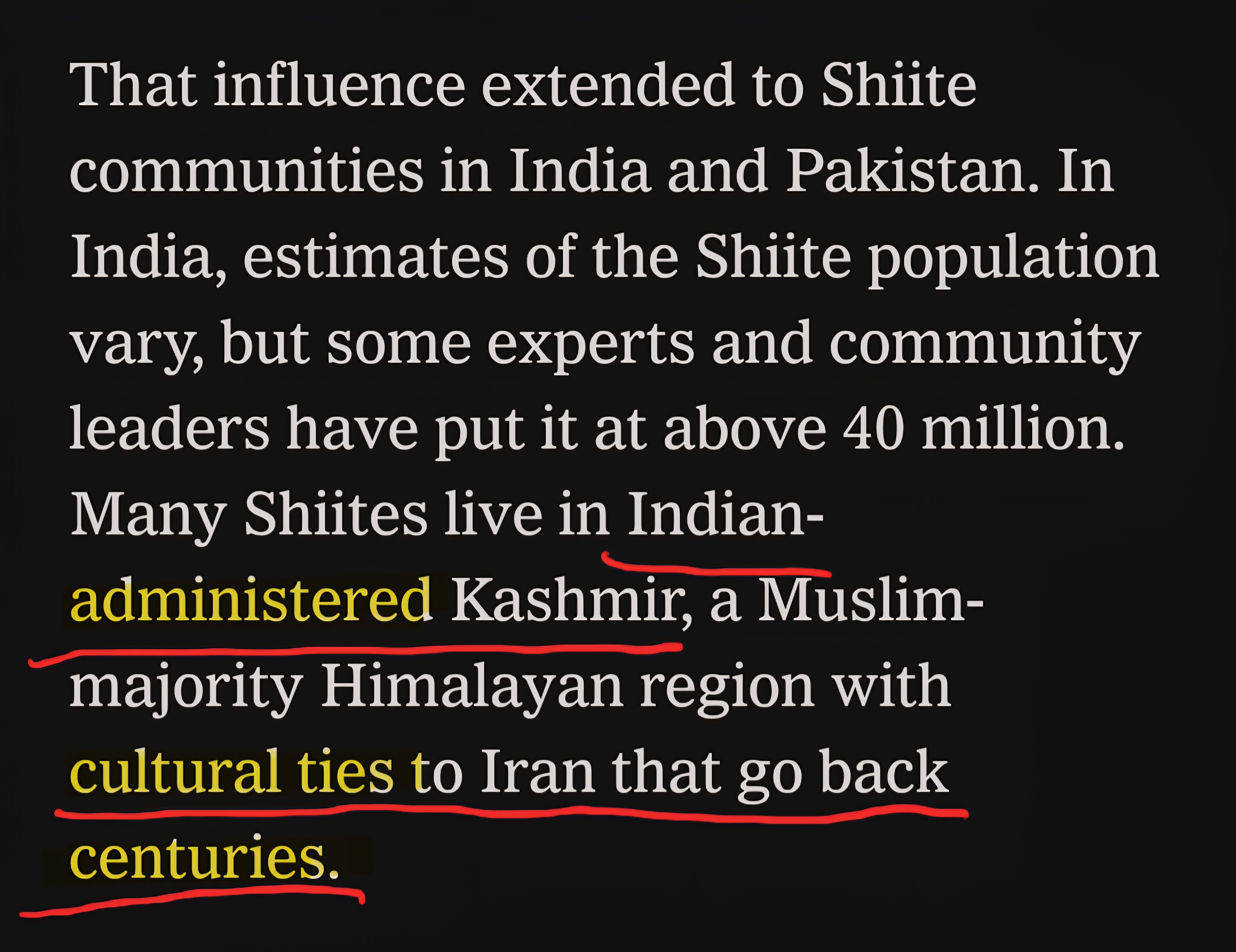
In a recent article about Iranian influence among Shiite communities, The New York Times described Kashmir this way:
“Many Shiites live in Indian-administered Kashmir, a Muslim-majority Himalayan region with cultural ties to Iran that go back centuries.”
Pause for a moment and consider what is happening in that sentence.
The New York Times wrote about Kashmir in a manner totally different than how it writes about the West Bank
Kashmir is not a settled territory. It is one of the longest running territorial disputes in the world. Since 1947, the region has been fought over by India and Pakistan, with both claiming sovereignty and both controlling different portions of the territory.
Yet the phrasing chosen by the Times is calm and almost pastoral. Kashmir is “administered.” The Shiite population is described as having “cultural ties to Iran that go back centuries.” The wording conveys history, continuity, and legitimacy. It sounds organic, even inevitable.
Now compare that language with how the same newspaper routinely describes the territory known historically as Judea and Samaria, today commonly referred to as the West Bank.
There the language changes dramatically.
Israel does not “administer.” Israel “occupies.”
Jewish communities are rarely described as having ancient ties. Instead readers are told that settlements are new and “considered illegal by most countries.”
Notice what disappears in that framing. The region called the “West Bank” only since 1967, contains places that formed the very center of Jewish civilization for more than a millennium. Hebron, Bethlehem, and Shiloh appear throughout the Hebrew Bible and in continuous Jewish historical memory. The kingdoms of ancient Israel and Judah rose and fell in these hills long before modern states existed.
Before Islam existed.
In other words, if the standard applied to Kashmir were applied consistently, readers might encounter sentences like this:
“Many Jews live in Israeli-administered Area C in Judea and Samaria, a region with cultural and historical ties to the Jewish people that go back more than three thousand years.”
But that sentence never appears.
Instead, the history is compressed into the language of illegality and occupation, as if the Jewish connection to the land began in 1967 rather than in antiquity.
This is not merely semantic. Language frames legitimacy. When one disputed territory is described through the lens of administration and centuries-old cultural ties, while another is defined primarily through the vocabulary of occupation and illegality, readers absorb very different impressions of the conflict.
The facts on the ground may be complicated in both cases. Kashmir is disputed. So is the West Bank.
But journalism that claims neutrality should apply the same descriptive standards to both.
Otherwise the language itself becomes the argument.
The outrage over the U.S. offering passport services in Efrat, in Area C east of the 1949 Armistice Lines (E49AL) as “normalizing annexation” is manufactured.
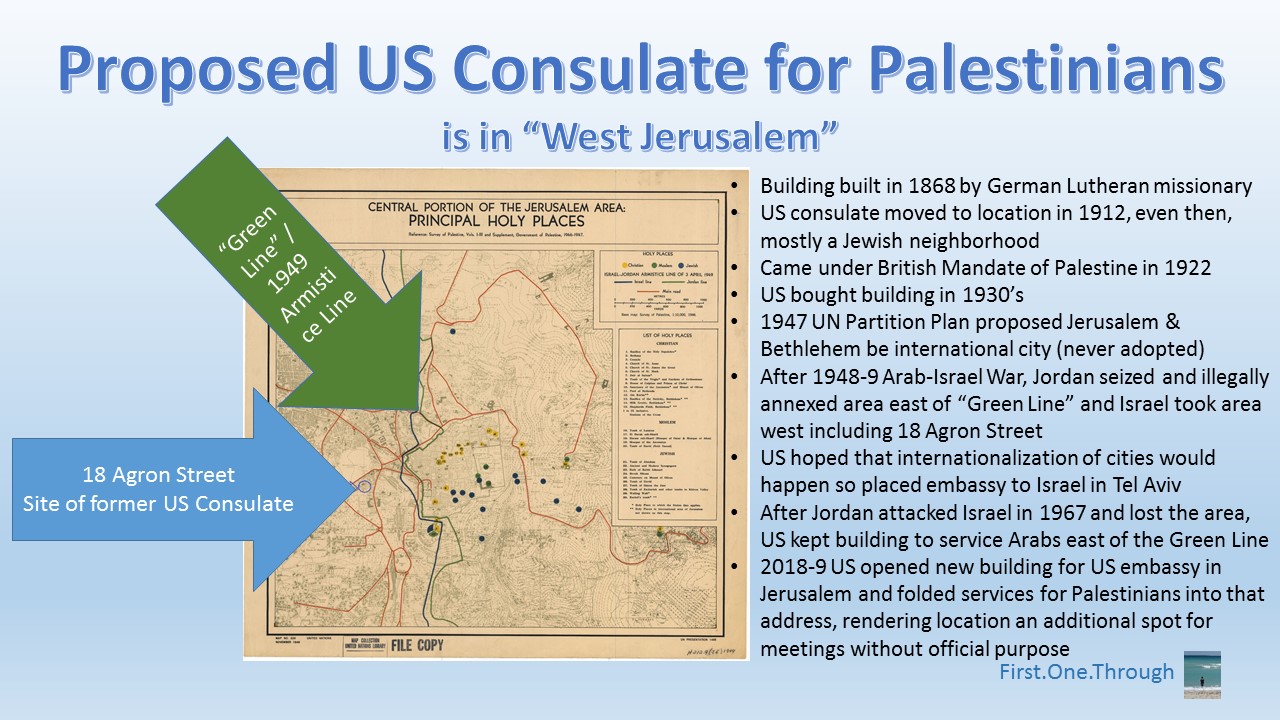
For many decades, the United States operated a consular office in the western part of Jerusalem on 18 Agron Street, providing passport and visa services to Palestinian Arabs. It was situated in the area that Israel assumed control of in 1949, not 1967 when the “West Bank”/E49AL came under Israeli authority in the country’s defensive war against Transjordan. Still, some countries considered western Jerusalem “disputed” and subject to future negotiations.
Yet when the U.S. ran consular services there, it was treated as routine diplomacy.
Former U.S. office for Palestinian Arabs located in “Western Jerusalem” which has been part of Israel since the end of the 1948-9 War
Now the U.S. offers passport services in Efrat and suddenly it’s a diplomatic crisis.
Why? Because the issue is not passports. It is Jews living beyond the 1967 lines.
The U.S. action is “a dangerous precedent and a blatant alignment with the enemy’s Judaization plans… a practical recognition of the legitimacy of settlements and the enemy’s control over the West Bank.” – HAMAS, a U.S. designated foreign terrorist organization regarding the passport office in Efrat
Disputed means disputed. It cannot mean “routine” when Palestinians receive services in western Jerusalem but “provocation” when Jews receive services in Area C.
Efrat sits in Area C under the Oslo Accords, territory left for final-status negotiations. It was not designated sovereign Palestinian land, and was a Jewish community before the regional Arabs launched a war to destroy Israel at its founding in 1948. In multiple Israeli peace offers, the Gush Etzion bloc – including Efrat – was to be incorporated fully into Israel through land swaps.
Passport services mean nothing about recognizing sovereignty. The hysteria reveals a double standard: Jewish civilian life in contested areas must remain politically radioactive, even when identical administrative acts for Arabs elsewhere pass without comment.
The U.S. decision is “a clear violation of international law” and “participation in the crime of silent annexation.” – Palestinian Islamic Jihad, a U.S. designated foreign terrorist organization
The controversy is not about diplomacy. It is about delegitimizing the presence of Jews.
And demanding that Jews be barred from living somewhere – anywhere, let alone in their holy land – is plainly antisemitic.












 First One Through