Every Picture Tells a Story: The War Gazans Didn’t Start—and Aren’t Ending

The headline asked why hundreds of Gazans have been killed. The article never answered.

In its December 24 piece, The New York Times assembled an inventory of grief—names, faces, photographs, shattered families—documenting civilian death in Gaza with intimate precision. What it did not assemble was an explanation. The question at the top functioned as decoration; the answer was assumed. Israel hovered everywhere as implication, never as argument.

What the article omitted is not marginal. It is decisive.

It did not say that Hamas still holds an Israeli hostage, in violation of the ceasefire framework. As long as that person remains captive, the war has not ended and the terms of the ceasefire have not been met.

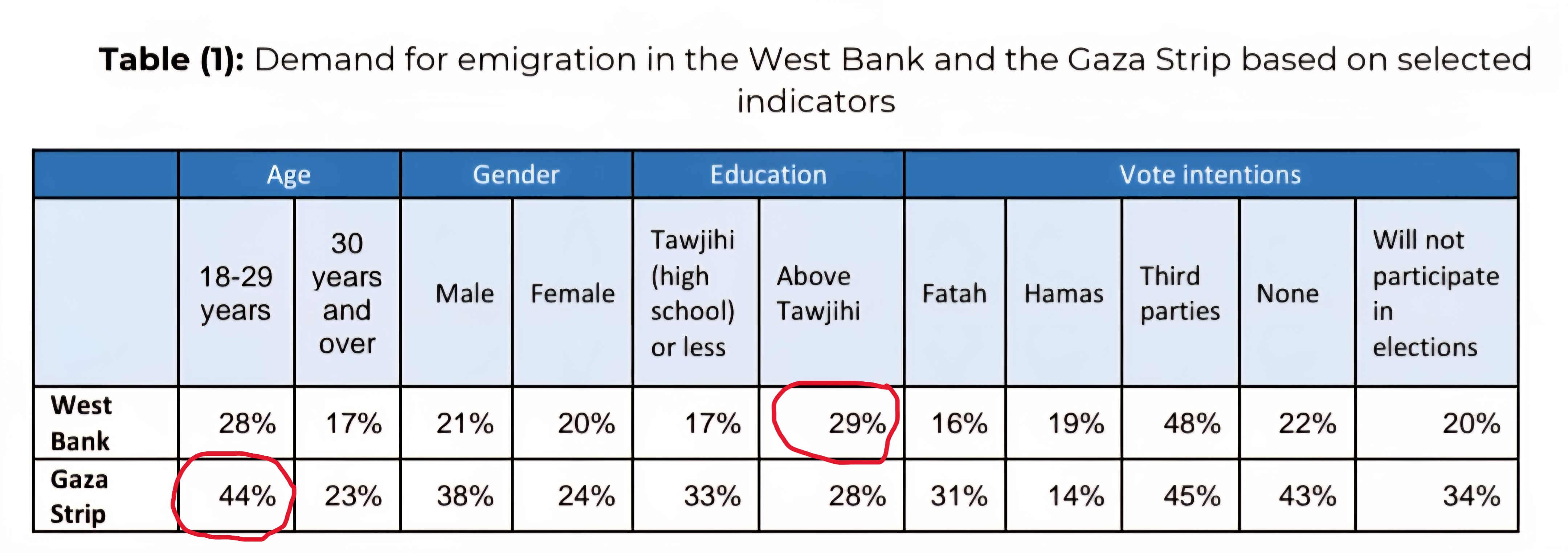
It did not say that Hamas has refused to disarm—flatly, publicly—even though disarmament is a core requirement of the multi-point plan meant to end the fighting. The vast majority of Palestinian Arabs in both Gaza and the West bank agree. This is not procedural quibbling. A movement that keeps its weapons is declaring its intention to keep killing. Leaving that fact out does not clarify the story; it inverts it.

“a core, cross-regional [Gaza and West bank] red line remains: overwhelming opposition to disarming Hamas, complicating any post-war arrangement.” – PCPSR poll of October 28, 2025

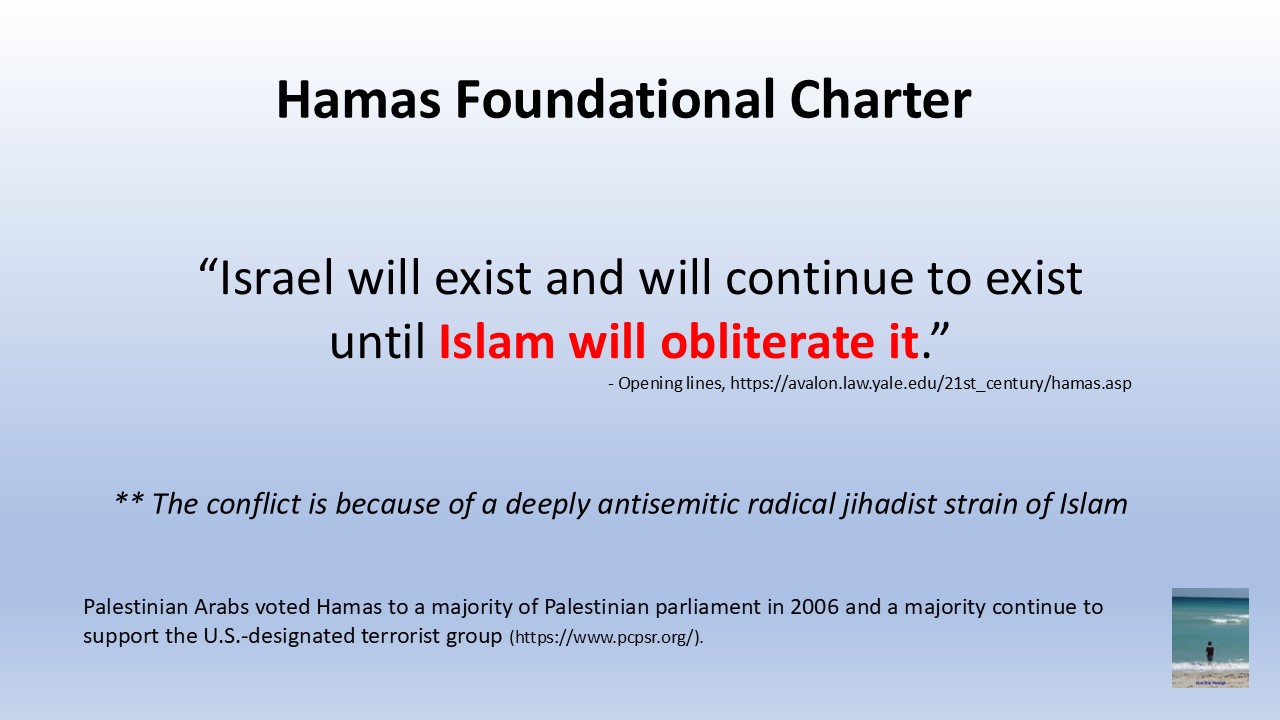
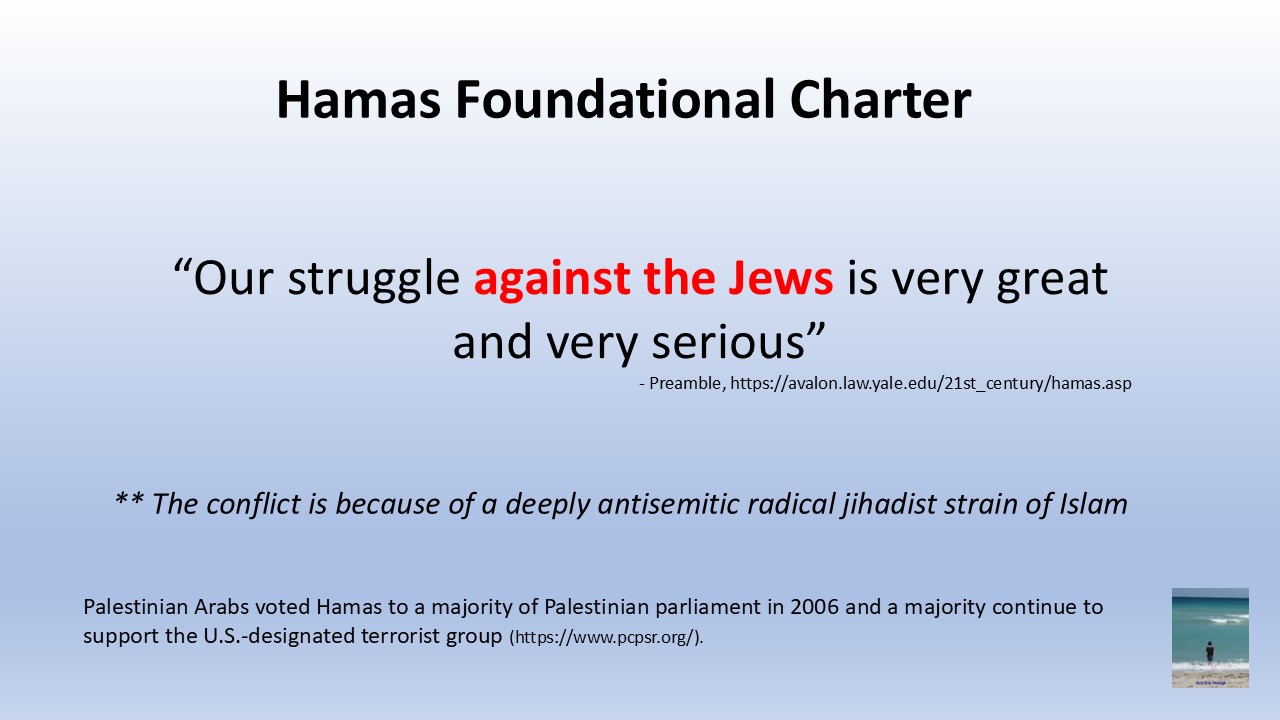
It did not say that Hamas continues to state openly that it will pursue the war until the Jewish state is destroyed. These are not coded remarks. They are repeated commitments. When a belligerent announces genocidal intent and retains its arsenal, civilian deaths are not mysterious. They are the predictable outcome of strategy.

“The resistance is capable of continuing, and I am confident that the outcome of this conflict will be the demise of this entity [Israel].” – Senior member of the Palestinian resistance movement Hamas, Osama Hamdan on December 23, 2025

Instead, The Times presented Gaza as a place acted upon—its people rendered passive, its leadership reduced to background noise. The governing reality was blurred, that the popular, armed movement that began the war – with overwhelming local support – insists on continuing it. Palestinian Arabs appeared as if history were happening to them, rather than through institutions that still mobilize society for conflict.

The photographs – eleven in all, a remarkable number for an article, mostly featuring children – did their work. They always do. Images narrow the moral aperture. They locate causality at the edge of the frame. What lies outside—tunnels, refusals, threats, the last hostage—falls away. Repetition turns absence into innocence.

This is not empathy. It is evasion.

Civilian death is tragic and deserves coverage. But tragedy without agency becomes accusation by implication. When Arab suffering is anatomized down to the last tear while their popular elected leadership’s war-making is erased, journalism is no longer news but advocacy.

The Times did not lie. It curated. It acted as the political-terrorist group’s propaganda arm.

Readers are left asking why Israel is still fighting, when the honest question is why Hamas is still waging war—still holding the last hostage, still refusing disarmament, still promising destruction.

Every picture tells a story. This one tells a story about the author.

The New York Times’ Year in Pictures and the Architecture of Moral Inversion

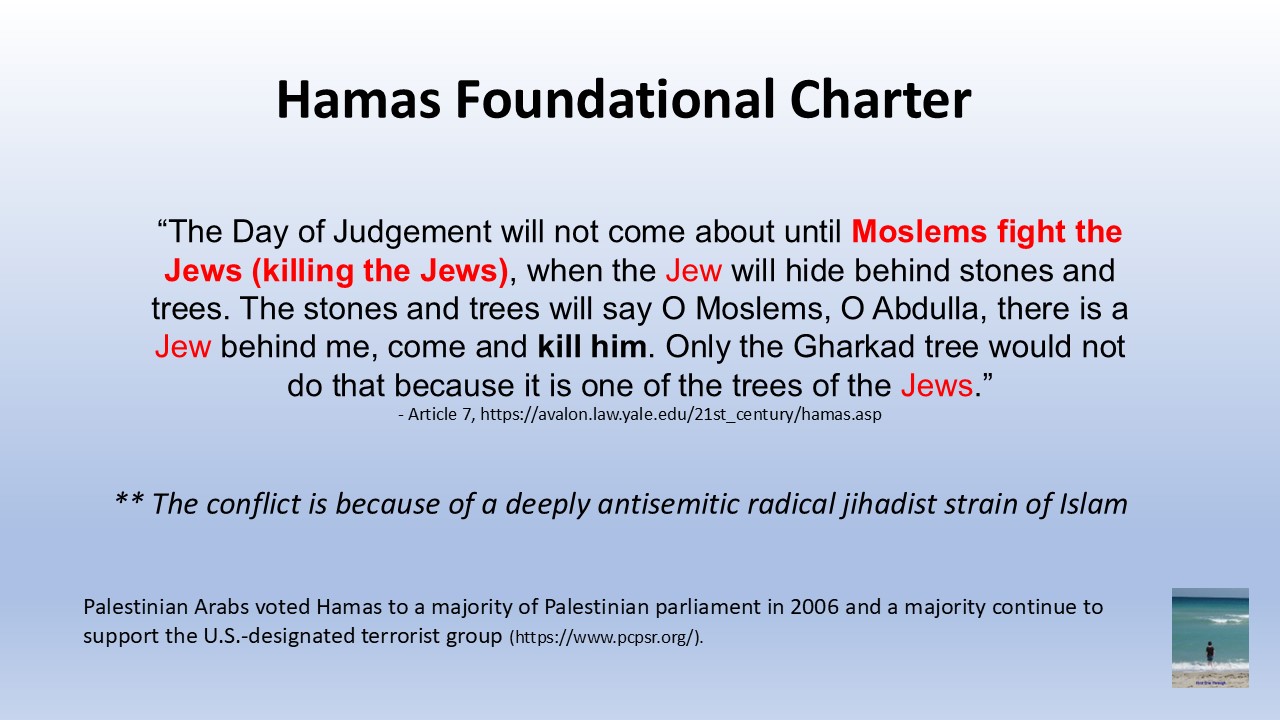
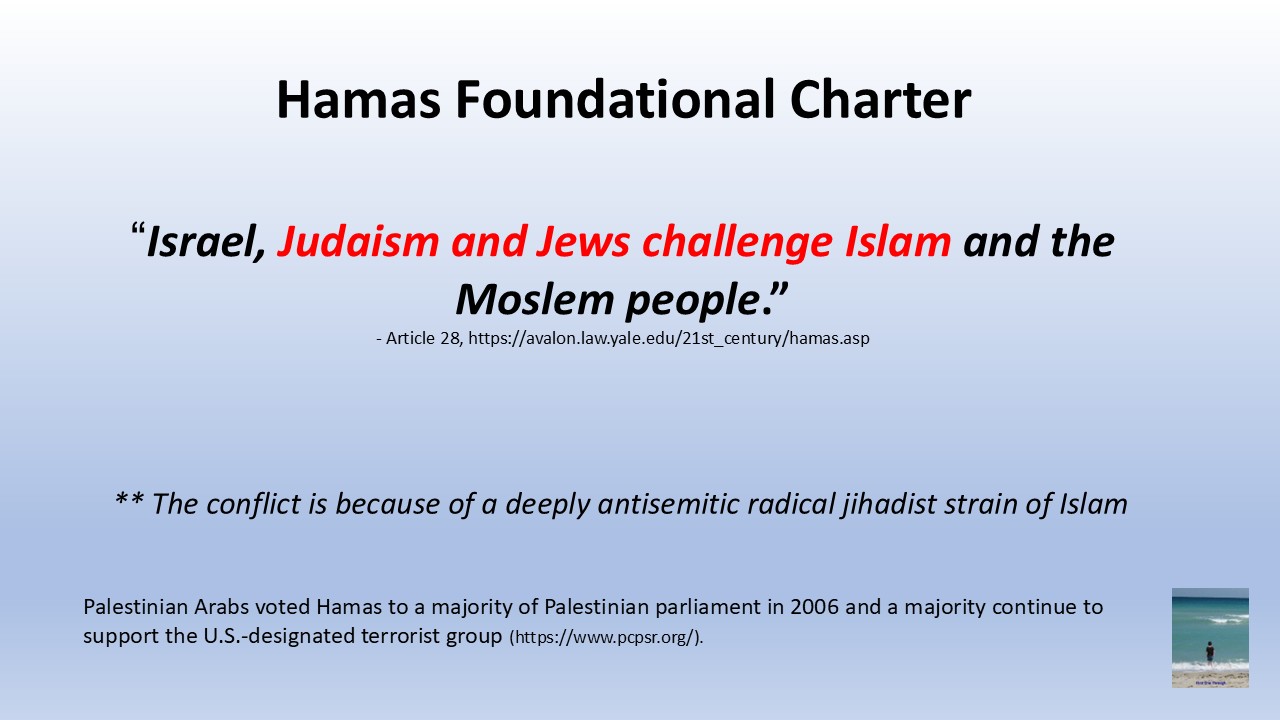
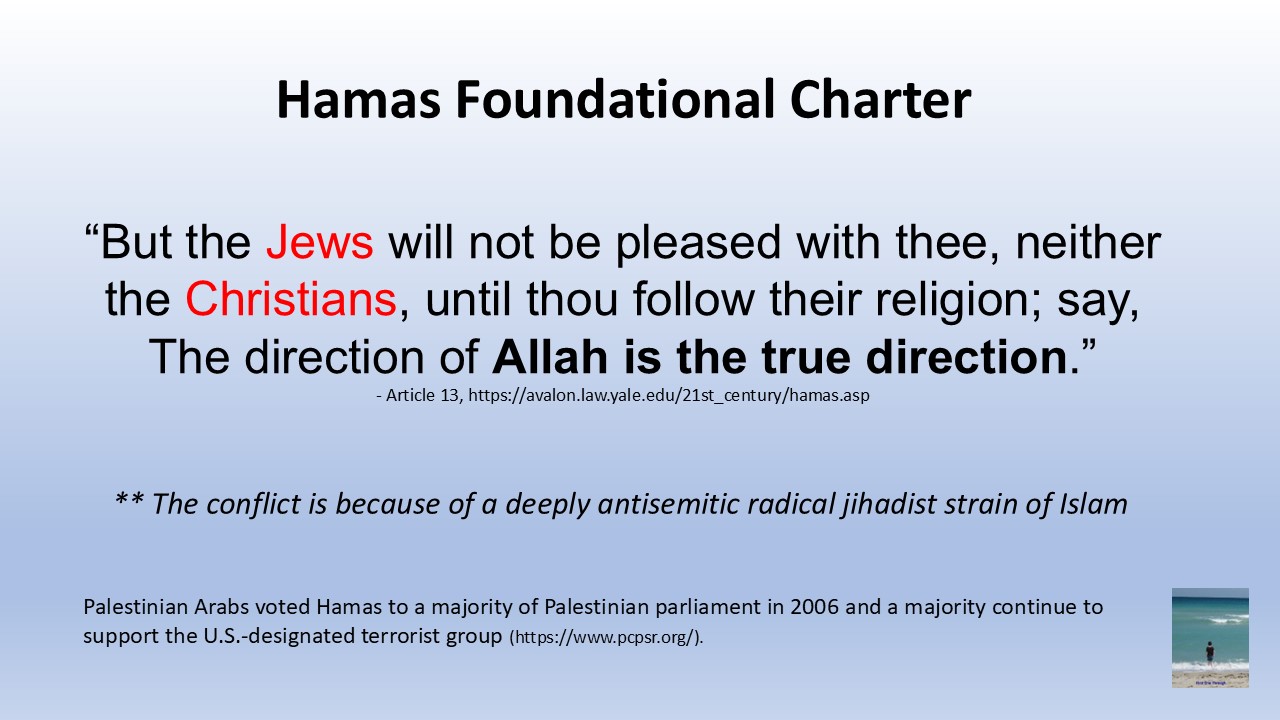
Hamas does not rule Gaza against the will of its people. It rules because large numbers of Gazans want it to. Hamas articulates aims that many in Gaza accept: “armed struggle,” permanent war, and the eradication of Israel. This is not an imposed ideology. It is a shared one.

That reality is the reason the war has not ended.

Hamas refuses to disarm. It promises to fight again. It rejects coexistence as a moral crime. And Palestinian Arabs have not rejected Hamas. There has been no uprising, no mass refusal, no turning inward to say this has destroyed us and must stop. The tunnels remain. The rockets are rebuilt. The hostages were hidden in plain sight and with complicity.

The Arab world understands this. So does the Muslim world and international community, quietly if not publicly. No money will rebuild Gaza while Hamas governs. No state will guarantee security for a territory whose leadership is openly genocidal. Even those who chant Gaza’s cause from afar refuse to absorb the cost of dismantling its rulers. Words are cheap. Responsibility is not.

And so the world fractures.

One side insists Gaza deserves unlimited sympathy—stripped of agency, frozen as a permanent victim, absolved of all consequence. The other side sees a society that has embraced a war of annihilation and asks the world whether moral condemnation is not only justified, but necessary. This divide is not about compassion versus cruelty. It is about whether moral judgment still matters.

What cannot be sustained is the fiction that Gaza is merely trapped between Hamas and Israel. Gaza is trapped— by leaders and parents who have chosen martyrdom over future, ideology over life, and war over their own children’s survival.

That is where sympathy collapses.

Because the only people in Gaza whose moral claim is uncontested are the children—and they are being sacrificed by a society willing to place guns in schools, tunnels under bedrooms, and hostages among families. A society that teaches its children that nothing is nobler than dying for the cause of destroying the Jewish State.

Sympathy cannot be demanded for that choice. It can only be extended—narrowly, painfully—to those who never had one.

That is why the ritualized outrage of the West’s most powerful institutions now feels so hollow. Each year, The New York Times publishes its Year in Pictures, and the selection itself becomes an argument. In 2025, the year with the largest spike in antisemitism including several incidents of mass murder, there were no pictures of Jewish victims. Instead, page after page of Gaza: rubble, smoke, bloodied streets, dust-covered children. Destruction, repeated until it acquires the authority of inevitability. Israel appears only as force. Gaza appears only as suffering. Context is stripped away. Agency is erased. The camera becomes a verdict.

Two-page spread in New York Times’ 2025 year in pictures showing Gaza rubble. The only other 2-page spread was the election of Zohran Mamdani, an anti-Israel member of the DSA, as mayor of New York City

But the depravity lies not only in what is shown—it lies in what is omitted.

There are no photographs of Jewish life under siege: no police guards posted outside synagogues, no concrete barriers and metal fences erected around schools, no quiet images of fear normalized into daily routine. There are no frames of mourning for Jewish victims abroad, the couple shot in Washington, D.C., the arson at the home of the Jewish governor of Pennsylvania over Passover. No recognition of the global consequences of a war whose ideology has traveled far beyond Gaza. Violence against Jews outside Israel didn’t even make a footnote.

New security fence erected outside synagogue in 2025 (photo: First One Through)

When Israeli hostages appear in the Times, they are reduced to a single visual trope: a large military helicopter, as if their captivity were a logistical problem rather than a crime. Even Jewish victims of Gazan atrocities are set against a large Israeli military. The human cost of hostage-taking is laundered into abstraction.

New York Times only picture of a Jewish victim is a tiny speck in a large Israeli military helicopter

What does receive sympathetic attention are arrests—multiple images of pro-Palestinian demonstrators detained by police, framed as moral courage meeting state power. Advocacy for Israel’s destruction is softened into dissent. The pages preen about resistance while refusing to name what that “resistance” seeks to accomplish.

This is not journalism. It is moral choreography.

The pictures ask only one question—who suffered more?—while carefully avoiding the only one that matters: who chose this war? To launch it? To continue it? They do not show Hamas leaders refusing disarmament. They do not show weapons beneath nurseries. They do not show the ideological choice to sacrifice children for permanence of war.

In this telling, Israel becomes the aggressor by existing, and Gaza becomes sympathetic by persisting in annihilation. The refusal to surrender is recast as resilience. The willingness to sacrifice children is aestheticized as tragedy rather than condemned as crime. Sympathy is manufactured by amputating responsibility. The global anti-Israel advocates are embalmed in the moral light; Jewish victims disappear off the pages.

When the world’s most influential newspaper presents destruction without causation, suffering without choice, and death without ideology, it does not advance peace. It sanctifies perpetual war. It promotes a global blood libel. And it teaches readers that moral clarity is cruelty, while moral confusion is virtue.

The far-left media hopes that history will remember its curated selection of photographs and the modern moment will gather sympathy for the anti-Israel and anti-Jewish horde. Hopefully they are proved very wrong, and this time capsule will forever mark The New York Times for its profound antisemitism and moral depravity.

Related:

Every Picture Tells A Story: There Are No Genocidal Leaders In Iran, Just Fancy Women (November 2024)

Every Picture And Headline Tells A Story: Columbia’s Pro-Palestinian Students Are NOT Antisemitic (April 2024)

Every Picture Tells A Story: No Brutal Slaughter Of Israeli Civilians (October 2023)

Every Picture Tells A Story: Palestinian Terrorists are Victims (November 2020)

Every Picture Tells a Story: Anti-Semitism (February 2017)

The Gates of the Temple Mount

Jerusalem is a city of gates. Stone thresholds worn smooth by centuries of feet. Arches that promise passage, and others that deny it.

Nowhere is this more literal—and more symbolic—than at the gates to the Temple Mount.

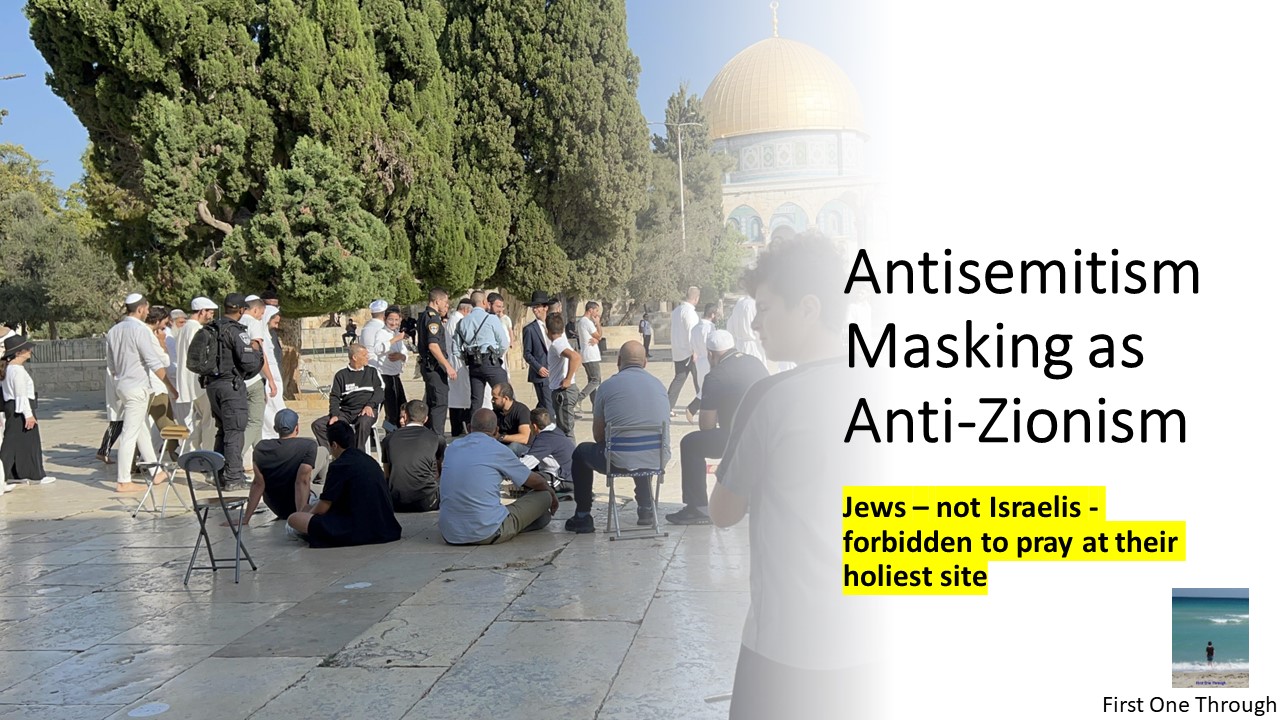
There are many gates along its walls. Some are sealed, some are ceremonial, and some are active. But in practice, Muslims ascend and descend freely through multiple entrances, while non-Muslims are funneled through a single ramp, tightly controlled, time-limited, and revocable at will.

Group of Muslim women come down from the Jewish Temple Mount at the Cotton Merchants’ Gate (photo: First One Through)

This is not accidental. It is policy.

Muslims enter through gates embedded naturally in the Old City’s fabric—the Cotton Merchants’ Gate among them. There, the walls are alive. Candy shops spill color onto the stones. Children’s clothing hangs in soft defiance of gravity. The scent of sweets mixes with dust and history. Life flows in and out, up and down, as it has for generations.

Jews, by contrast, are stopped.

They are turned away from nearly every gate. Not questioned. Not debated. Simply blocked.

Despite the Temple Mount being the holiest site in Judaism, Jews are told—by police, by signs, by precedent—that they may not enter as worshippers.

A solitary Jew is blocked from ascending the steps to the Jewish Temple Mount, the holiest location in Judaism, because he is a Jew. (photo: First One Through)

They are redirected instead to a single entrance ramp, detached from the Old City’s living arteries. The ramp rises from the edge of the Western Wall plaza, a vast open expanse that functions less like a neighborhood and more like a giant stone parking lot. From there, Jews may ascend only during narrow windows, under escort, forbidden to pray, forbidden to whisper, forbidden even to move their lips in devotion.

Jews are limited to prayer at the Western Wall, a supporting wall to the Temple Mount. The ramp to the Mughrabi Gate (top right) is the only gate of the ten operating gates where Jews can pass onto the Temple Mount, in limited numbers, at limited times. (photo: First One Through)

Jews are told to make do.

Make do with praying to a retaining wall of the Temple Mount.
Make do with history filtered through permission.
Make do with holiness at a distance.

This arrangement is often called the “status quo,” as if it were ancient, neutral, or inevitable. It is none of those things. It is modern. It is enforced. And it rests on a single premise: Islamic supremacy over the site requires Jewish silence at Judaism’s holiest place.

Muslims may ascend and descend at will. Jews may only look up.

The irony is almost unbearable. Judaism sanctified this mountain long before Islam existed. The Temples stood here before the Qur’an was written, before the Dome of the Rock was imagined, before the word “status quo” could be used to freeze injustice in place.

And yet today, Jewish presence itself is treated as a provocation.

Not violence. Not disruption. Presence.

The gates tell the story more honestly than any diplomatic statement ever could. Gates that welcome. Gates that redirect. Gates that close.

It’s a caste system familiar to Black Americans. “For Whites Only” is now “For Muslims Only” for 90% of the gates to the Temple Mount. “Negro Entrance” read “Non-Muslim Entrance” is plastered atop a ramp in the far corner of the Temple Mount. While racial Jim Crow laws ended in the U.S. decades ago, Jews remain subject to open religious discrimination at their holiest location. At the insistence of the United Nations.

In Jerusalem, everyone speaks of coexistence. But coexistence cannot survive when one faith ascends freely and another is barred from its own summit.

The Jewish Golden Years, 1991-2016

People tend to both forget and exaggerate. Today, many Americans speak as if antisemitism vanished for decades and only resurfaced after the October 7, 2023 massacre of Israelis by the Arabs of Gaza. The narrative goes: everything was fine, and then suddenly the world turned against Jews.

That is simply false.

Jews have always been the most targeted group for hate crimes in the United States on a per-capita basis. Jews were assaulted, synagogues were attacked, and Jewish centers were bombed long before social media existed to broadcast the hate. The 1970s alone saw a litany of terror: Jewish places targeted, flights to Israel hijacked, hostages separated by religion, and Jewish children born into a world where the UN itself declared Zionism—a core component of Jewish identity—to be racism. That infamous 1975 UN General Assembly Resolution 3379 did not merely insult Jews; it institutionalized antisemitism on a global stage.

But something remarkable happened in 1991. U.S. Ambassador Daniel Patrick Moynihan’s crusade finally came to fruition, and the UN revoked its poisonous declaration. For the first time in modern history, the Jewish story—people, land, and identity—was not officially stigmatized by the world’s central diplomatic body. Israel was no longer framed as a racist project; Zionism was permitted to exist as a normal national movement. With that reversal, Jews in the diaspora experienced something astonishing: a geopolitical tailwind.

Begin Center hosts event in Jerusalem about 50th anniversary of UNGA Resolution 3379, in December 2025a condemnation of the United Nations

The Jewish Golden Years had begun.

From 1991 through 2016, Jewish life flourished across the West. Israel integrated into global markets, made peace with former enemies, and became a hub of innovation admired even by countries without diplomatic ties. Antisemitic incidents did not disappear, but they lost their ideological legitimacy. The world’s leading institutions were no longer branding Jewish self-determination as a crime. Jews could breathe—never fully secure, but broadly accepted.

That period ended with a vote.

In December 2016, the Obama administration allowed UN Security Council Resolution 2334 to pass—a measure far more extreme than the 1975 resolution it resembled. The 1975 General Assembly resolution slandered Zionism; UNSC 2334 criminalized Jewish presence. It declared that Jews living anywhere east of the 1949 Armistice Lines—including the Jewish Quarter of Jerusalem’s Old City, the holiest ground in Judaism—are in violation of international law. Jewish prayer at the Western Wall was, according to the world’s most powerful diplomatic forum, an offense.

Hasidic Jews at the Kotel in Jerusalem’s Old City, learning, praying, and inserting wishes into cracks in the wall (photo: First One Through)

It was not merely a political resolution. It was the legalization of antisemitism.

Once the UN stamped Jewish presence in Judaism’s holiest places as illicit, the global tide shifted quickly. The Jewish Golden Years began to collapse.

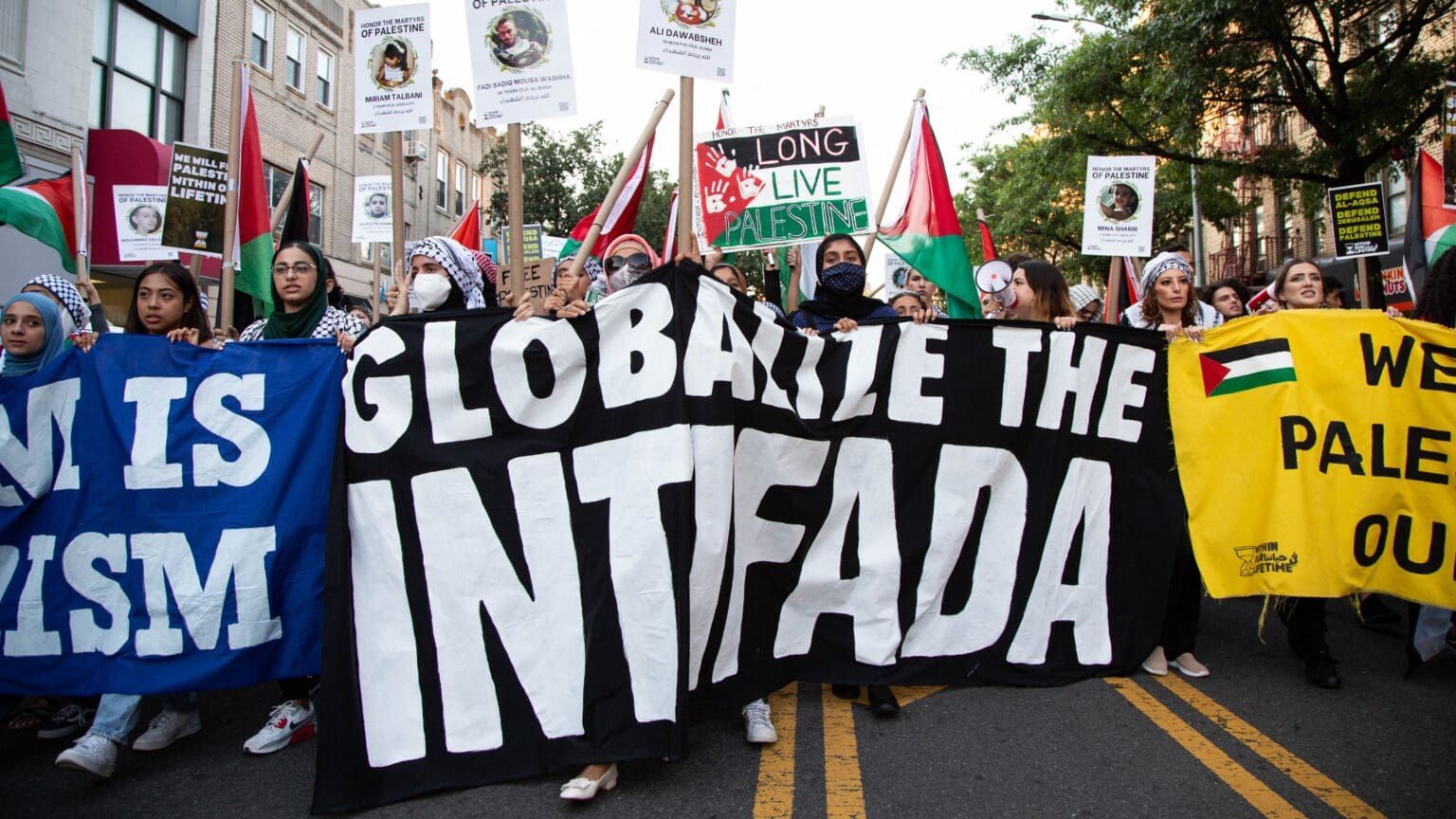
By 2018, Jews were being murdered in Pittsburgh and Poway. On college campuses, BDS campaigns metastasized into doctrinal dogma. In public schools, students were taught that Jews are not indigenous to the Land of Israel but “white Europeans” with no ancestral claim—a complete inversion of historical fact. Jews were physically beaten in the streets of New York and Los Angeles during the May 2021 Gaza conflict, years before the post–October 7 mobs marched with chants to “globalize the intifada.”

By the time American cities filled with crowds celebrating Hamas’s massacre, the unraveling was already underway.

The Golden Years—the 25 years of relative acceptance—were gone.

For generations, Jews believed that Israel’s existence itself guaranteed Jewish safety. The 1970s proved that was untrue. The present moment proves it again. A Jewish state cannot protect its people if the world delegitimizes it, demonizes it, or criminalizes Jewish presence in Judaism’s holiest places.

The real guarantor of Jewish safety is not Israel’s strength, but the world’s willingness to accept the basic history and human rights of Jews. That legitimacy existed only in a narrow window: from the UN’s repudiation of its Zionism-is-racism libel in 1991 to Obama’s decision to let UNSC Resolution 2334 pass in final days of 2016.

Those twenty-five years were an intermission in a much longer historical pattern. A rare pause in which Jews were not told by the world that their existence—national, historical, spiritual—was a crime.

Since 2016, the message has returned with force: Jews may live, but not there. Jews may pray, but not here. Jews may exist, but only on someone else’s terms.

The Golden Years did not end because Israel faltered, but because the world revoked its permission. Without it, the old hatreds rushed back as if they had never left.

Jews are not witnessing a sudden outbreak of antisemitism. They are living through the collapse of the only era in modern history when the world briefly pretended to accept the Jewish story.

The Little Drummer Boys of Terror

President Obama once derided those who warned of Iran’s nuclear ambitions as promoting a “drumbeat of war.” It was a curious charge, especially as his negotiated JCPOA deal paved Iran’s legal pathway to nuclear weapons within a decade—despite Tehran’s unabashed calls to utterly destroy an American ally, and referred to the United States as “Satan.”

The phrase “drumbeat of war” is worth pausing over, because its imagery is meant to point a damning finger at generals and war profiteers, when in fact it refers to a beating passion that comes from a variety of sources.

Music itself teaches us the power of the drumbeat. Maurice Ravel’s “Bolero” begins as a whisper—a single snare tapping a faint rhythm—but its relentless pattern swells, layer by layer, into a rapturous explosion. Nothing changes except the intensity. It is a master class in how a simple beat, repeated without interruption, can inflame emotion, tighten resolve, and propel an entire orchestra toward an inevitable climax. Passion grows not from complexity but from persistence.

Cinema took that lesson to the battlefield. Ennio Morricone’s “L’Arena,” born from spaghetti-western duels and later carried into modern war films, shows how percussion can elevate tension into confrontation. Its pounding drums accompanied by trumpets push characters toward conflict; the beat does not merely accompany battle—it summons it. Morricone understood that rhythm can be a weapon, a psychological drumroll that makes violence feel fated long before the first shot is fired.

In American history, drummers were not symbolic ornaments—they were battlefield communicators. The famous “Spirit of ’76” painting captures a young boy and an old man beating time through the fog of revolution. In both the Revolutionary War and the Civil War, the drummer corps relayed commands, kept formation, and lifted morale. Soldiers needed to be adults to enlist, but drummer boys could be barely in their teens. They were not the policymakers of war; they were the ones whose youthful energy pushed men forward into battle.

“The Spirit of ’76” (1875) by Archibald Willard (1836-1918)

It is an uncomfortable truth: the drumbeat of war is often carried not by governments or generals but by the young.

We like to imagine youth as the innocent bystanders of conflict—swept up, exploited, or victimized by forces beyond their control. That is often tragically correct. But not always. In the Middle East, teenage Palestinian Arabs have repeatedly been at the center of anti-Jewish violence. During the knife intifada of 2015–2016, most of the attackers were adolescents. Arabic media even gave them a romanticized nickname: Ashbāl al-Quds—the lion cubs of Jerusalem.

On October 12, 2015, two Palestinian boys, 15-year-old Hassan Khalid Manasra and his cousin 13-year-old Ahmad Manasra, stabbed two Israeli civilians in Jerusalem

They were not pawns in someone else’s narrative. They were active participants in it.

While they were stabbing Israelis in the streets, new legions of drummer boys was forming. The Lions’ Den was inaugurated in the West Bank to unleash dozens of attacks. The United Arab Emirates named a school for children for these young murderers. In the United States, a group calling itself the Palestinian Youth Movement openly glorifies the murderers of October 7 and calls for an intifada on American soil. They harass Jews at universities, shut down bridges, disrupt traffic, and chant for “uprisings”—all under the pretext of activism, and often shielded by tax-exempt organizations like WESPAC.

In the immediate aftermath of the October 7, 2023 massacre by Gazans of Israelis, Cornel West marches with PYM calling for an “Intifada revolution”. West has taught at Princeton, Harvard and Yale, indoctrinating the next generation of American leaders on intifada.

The drumbeat is steady. It is disciplined. And it is aimed squarely at Jews.

Where does this beat begin? It is not in the Israeli cabinet rooms the media delights in blaming. It begins at UNRWA schools, where generations of children are taught that Jews are colonial invaders with no history in their homeland. It echoes through activist teacher unions in the United States, where “decolonization” rhetoric is repackaged into lesson plans that erase Jewish indigeneity. It thunders at the United Nations, where Muslim-majority blocs and their allies advance resolutions asserting that Jews must be removed from Judea, Samaria, and even parts of Jerusalem “by any means necessary.” The young Palestinian Arab terrorist are then shielded from blame and prosecution by the poorly named “UN Coordinator for Middle East Peace.” Laughable if not such a tragedy.

The young listen. And they march.

At Christmastime, the world hears “The Little Drummer Boy”—a melody of humility. A child with nothing to give but a simple rhythm of devotion for a newborn Jewish baby in Bethlehem. A beat based on innocence and purity.

But the modern Middle East and its Western echo chambers have perverted that image.

Today’s little drummer boys are not offering gentle hymns. They are being raised, trained, and celebrated for a beat of hatred—an indoctrinated cadence that valorizes “martyrs,” delegitimizes Jews, romanticizes violence, and promises glory for those who shed blood.

The world should hear the drumbeat. And it should finally ask: Who handed these children the drums? Who taught them that murder is heroism, that Jews are prey, that violence is virtue?

These teenagers did not invent the rhythm—they are marching to a score composed by UN agencies, radicalized teachers, political opportunists, and ideological arsonists who hide behind the language of “justice” while grooming minors for war.

UN Watch’s Hillel Neuer presents new report, “Schools in the Grip of Terror: How UNRWA Allowed Hamas Chiefs to Control its Education System,” to the Italian Senate in September 2025

At Christmas, we think of a young drummer offering a humble gift to a Jewish child in Bethlehem. Alas, today too many young drummers are taught to offer not devotion, but destruction—and the world nods along as if the rhythm were unavoidable. It isn’t.

The beat continues only because we refuse to silence the conductors who train the next generation of drummers to hate.

Thailand, and Israel’s Pull On the Global South

When the last Thai hostage’s body was returned from Gaza, it barely made headlines outside of Israel and Thailand. His name — Sudthisak Rinthalak — was recited in both countries and memorials were held. But soon the world reverted into the endless ledger of loss and statistics.

The story of this single Thai agricultural worker is not a footnote. It is a reminder that the emerging bridge between Israel and Thailand is not diplomatic, not ideological, and certainly not written into UN resolutions.

It is a bridge made of people.

Sudthisak had come to Israel to pick fruit, send money home, and build a future for his family. Like tens of thousands of other Thais, he believed Israel offered something the Thai countryside could not: a ladder out of poverty. He became part of the massive human engine that powers Israeli agriculture — an engine so essential that nearly 40,000 Thais now work in Israel’s fields, orchards, farms, and increasingly, construction sites.

If you want to understand the future of the non-Muslim Global South, start with his story.

Thailand Votes One Way at the UN — But Lives Another Way in Israel

Look at Thailand from the perspective of international politics, and one picture emerges:

  • Thailand consistently votes with the pro-Palestinian bloc at the UN.
  • It has supported resolutions pushing for Palestinian statehood.
  • It aligns with the moral vocabulary of the Global South — anti-colonial solidarity, sympathy for the oppressed, skepticism of Western-aligned states.

This makes Thailand look like part of the same coalition as Malaysia, Indonesia, Pakistan, and other Muslim-majority defenders of the Palestinian cause. And in the formal, air-conditioned world of the UN General Assembly, that is true.

But look at Thailand from the ground level and a completely different picture emerges. There, Thailand looks more like India, not Indonesia.

The Monolithic Old Global South – the Muslim Global South – is where identity politics and Islamic solidarity define votes. The New Non-Muslim Global South is where development, technology, and people-to-people ties define futures.

Thailand still sits in both worlds — but one of them is getting stronger.

Thailand Is Quietly Becoming a “New India” in Israel’s Orbit

India once voted against Israel at the UN almost reflexively. Its elite identified with the Non-Aligned Movement, its public embraced the Palestinian Arab narrative, and its diplomats guarded that orthodoxy. But on the ground, something different was happening:

  • Indian engineers worked with Israeli tech.
  • Indian farmers adopted Israeli irrigation.
  • Indian tourists filled Israeli markets.
  • Defense ties deepened.
  • Human capital flowed both ways.

By the time India’s voting patterns began to soften, the relationship had already become irreversible. Reality had outrun rhetoric.

Thailand is following the same trajectory — but starting from a place even closer to Israel.

Consider the facts:

  • Tens of thousands of Thais live and work in Israel, forming one of the most intimate foreign labor communities in the country.
  • Israel is exploring Thai labor not just for agriculture but also construction, infrastructure, and caregiving.
  • Thai workers return home with Israeli skills in greenhouse technology and agri-tech, reshaping villages thousands of miles away.
  • Israeli tourism to Thailand is exploding — over a quarter million Israelis per year, with forecasts surpassing 350,000.
  • Thai cuisine, Thai workers, Thai–Israeli families, and Thai cultural presence are now woven into Israeli life.
“Little Thailand” emerging in the Carmel Market in Tel Aviv (photo: First One Through)

This is the Global South as a development engine, not an ideological bloc.

And Thailand is starting to discover what India and Malawi discovered earlier: countries that connect themselves to Israel’s people and know-how grow stronger for it.

Two Global Souths Are Emerging — and Thailand Is Crossing the Bridge

The term “Global South” used to describe one political posture. It no longer does. There is now a Muslim-majority Global South, loyal to the Stateless Arabs from Palestine (SAPs) and anchored in religious, cultural, and historical solidarity. And there is a development-driven non-Muslim Global South that sees its future in innovation, mobility, technology, worker migration, and agricultural modernization — where Israel is not a pariah but a partner.

Thailand is starting the migration between these worlds. For the moment, it votes with its Muslim neighbors at the UN but it increasingly lives with Israel. Works with Israel. Eats with Israel. Builds families with Israel.

In this sense, Thailand is part of the Global South’s next chapter: a world where alliances are formed through direct human interactions, not speeches.

Dozens of Thai food options in Tel Aviv (photo: First One Through)

And So the Hostages Return — to Two Countries Bound by People

When Sudthisak’s body finally left Gaza, diplomats issued statements and reporters filed their stories. But the people who understood the meaning of his return were not governments. They were Thai parents who send their sons to Israel to build a future. Israeli farmers who rely on Thai workers not as strangers but as partners. And both Thai and Israeli families stitched together by marriage, food, labor, and shared vulnerability.

Sudthisak’s journey — though tragic — tells the story of two countries whose relationship cannot be measured by UN votes. It is told by a deep human bond.

If the Global South is dividing into two futures, Thailand is already stepping across the bridge into the one defined by partnership, opportunity, and human connection.

The UN Celebrates Migrants Except Jewish Ones

Every December, the United Nations devotes a day to praising migrants.
It insists no human is illegal, that borders shouldn’t limit dignity, that newcomers must be protected regardless of how they arrived. It speaks in sweeping universalism: every migrant deserves acceptance, integration, and respect.

Every migrant — except the Jewish ones.

Because when a Jew moves to Jerusalem’s eastern neighborhoods or the hills of Judea, the UN suddenly abandons its sermon. The same institution that blesses migration everywhere else snaps into punitive mode: label, restrict, sanction, boycott.

The world’s great defender of human mobility becomes the world’s loudest opponent of Jewish mobility.

Migrants crossing seas and borders are embraced. Their stories honored. Their identities protected. But Jewish migrants returning to the land that shaped their peoplehood are told they are criminals. The UN proclaims them a threat, inventing a special category — “illegal settlers” — that exists for no other people on earth.

This is not inconsistency. It is intentional. A universal rule with a single carve-out: Jews.

United Nations says that migrants – even illegal one’s – deserve respect and safety

The UN Doesn’t Just Oppose Policy — It Delegitimizes Jewish Presence Itself

Despite the UN protesting the importance of protecting migrants, it passes resolutions specifically delegitimizing Jewish ones. It routinely asserts that Jews must not live in the very heartland of Jewish history. It passes resolutions declaring Jewish homes illegitimate, Jewish neighborhoods unacceptable, Jewish movement intolerable.

Every other people is encouraged to preserve identity and build community. Only Jews are told their presence in their ancestral homeland is an international crime. That their businesses should be labeled in specific lists, targeted for boycott and sanction.

This Isn’t Hypocrisy. It’s Anti-Jewish Discrimination.


Hypocrisy would imply the UN is failing its principles. But the UN applies its principles perfectly — just not to Jews.

It welcomes migrants when they are African, Asian, Latin American, European. It defends them when they are persecuted or undocumented.

But when they are Jewish, the vocabulary changes instantly and the moral umbrella snaps shut.

The world’s most ancient migrant people — the “wandering Jew” expelled, dispersed, and wandering for centuries — is the only group the UN insists may not migrate back home.

That is not flawed idealism. That is targeted exclusion.

Jews praying at the Western Wall, an act considered “illegal” by the United Nations, trespassing on lands it considers “occupied Palestine.” (photo: First One Through)


Passings

To arrive in Israel is never just a landing. For millennia, Jews faced this land in hope and longing, turning toward Jerusalem even when the path was blocked by oceans, armies, or fate itself. Countless generations passed on without ever setting foot on the stones their ancestors walked.

The architects of Ben Gurion Airport understood this ache.

Between the terminal and passport control, travelers move through parallel glass corridors — one for those entering the land, one for those departing. You can watch them the entire way: people going home, people leaving home. From above, the scene resembles Jacob’s Ladder, angels ascending and descending, a ceaseless movement connecting heaven and earth. Biblical commentators taught that the angels Jacob saw were the guardians of the Land of Israel — one set departing when he left, and a new set arriving to accompany him in the diaspora. So too here: those making aliyah rising in spirit; those heading abroad descending from holiness for a time, yet still tethered by an invisible thread.

In the last two years, this modern ladder of the Land of Israel took on a painful weight. Along the railing, as every arriving passenger stepped into the corridor, 251 photos lined the wall — the faces of each hostage seized by Hamas on October 7. Every person entering the land confronted them. No one could step onto the soil of the Jewish homeland without understanding the national wound, the unfinished promise that Israel would bring every soul – living and dead – home.

Photos of the hostages hung from railings meeting every person arriving in Israel at Ben Gurion Airport in 2024 (photo: First One Through)

On my most recent trip, the first picture I met was that of Dror Or. I did not pass. I lingered. For two years, his body was held in Gaza — a grotesque bargaining chip in a war the captors refused to end. Israel kept searching, praying, fighting, refusing to abandon its dead. A week after my arrival, his body was finally returned to his family and to the state. When I walked back through the airport corridor to depart, his photo was gone. His picture had been removed, but his passing — and his dignity — stayed with me.

In Israel, passings are never casual. In this small land, every encounter feels like a reunion: bumping into someone you have not seen in years; meeting friends to celebrate a simcha; honoring the memory of someone who has passed on; meeting a stranger and then talking intimately for twenty minutes. Moments here are not ordinary. The land itself seems to insist that they matter.

To pass by someone, to pass through a hallway, to pass from life — in the Jewish homeland, is not trivial. This is a country stitched together by arrivals and departures, by longing and fulfillment, by angels ascending and descending in steady and deliberate devotion.

The Age of Rocks and the Arrogance of History

To walk the land of Israel is to feel stitched into the fabric of time. Every trail from Beersheva to the Galilee whispers of footsteps that appear in the Bible—not legends, but people who actually lived, planted, quarreled, dreamed, and prayed on this soil. The stones beneath one’s feet carry the gravity of memory. They seem fused to the foundation of the earth itself, like the Even haShtiyah—the legendary rock at the center of the Temple Mount from which creation is said to have sprung.

Rocks in Judean Hills

But that connection is not geological. It is human.

The rocks of Eilat, the oldest in the region, date to around 800 million years. They feel unimaginably ancient to us—far older than Abraham’s tents, King David’s psalms, or the Hasmonean rebellions that command our sense of deep history. Yet even those craggy cliffs and mineral seams are infants compared to the rocks of Canada. In the Canadian Shield lie formations over 4 billion years old—some of the earliest surviving pieces of Earth’s crust. Five times older. A geologic eternity older.

And yet no one reveres those rocks. No pilgrim circles them. No faith assigns them cosmic origin stories. They are “pretty,” not primordial. They are scenery, not scripture.

Why?

Because we measure age in lifetimes. We crown the stones of the Holy Land as ancient not because they are old, but because we are old here—because human meaning saturated this place for millennia. The rocks become vessels for our significance.

It is, in a sense, a subtle arrogance: the centering of human experience as the measure of the world. We treat Earth’s deep past as a backdrop to our stories rather than a reality that dwarfs them. We act as if history begins with us, as if time itself depends on our noticing it.

When we walk these trails—past the ruins of synagogues, the outlines of Israelite cities, the remnants of Crusader walls—we feel connected because these places speak to human time. They anchor us. They dignify us. But the rocks beneath those ruins hum a different message: we are temporary here. Our religions, nations, languages, and conflicts occupy a blink of the planet’s eye.

A dose of humility would serve us well. To appreciate the holiness of our stories without mistaking them for the age of the world.

We walk ancient paths, and the ground reminds us we are all newcomers.

Where the Eagles Still Land

At Sinai, God tells the Israelites: “I carried you on eagles’ wings and brought you to Me” (Exodus 19:4). It is the Torah’s softest reassurance — that when the world turns crushingly heavy, something stronger will lift the Jewish people before they disappear beneath its weight.

Every generation reads the verse and wonders how such a thing could ever happen again.

The Yemenite Wings

In 1949–50, it did.

Yemenite Jews — who had kept Hebrew alive for centuries through chants in dim courtyards — found themselves suddenly gathered into airplanes they had never seen before. Operation Kanfei Nesharim lifted nearly 50,000 people from danger to home, a moment so surreal that many believed prophecy had slipped back into the world.

They came to Tel Aviv’s Kerem HaTeimanim, where the streets still hold their memory: Rechov Kanfei Nesharim, Rechov HaAliyah HaTeimanit, and alleys named after the poets and dreamers who carried Yemen’s Jewish soul through generations of exile. The neighborhood became a landing place for people who had lived so close to the dust of history that being lifted into the sky felt like God reaching down again.

A New Kind of Arrival

Today those same streets are welcoming new immigrants — Jewish artists from Paris, Berlin, Amsterdam, and London. They are not fleeing famine or forced conversion. They leave behind apartments, galleries, and studios, places where they once felt at home but now feel the room shifting beneath their feet.

They speak quietly of exhibitions canceled with careful wording, of colleagues who grow uncomfortable when they identify openly as Jews, of a cultural world that prides itself on openness yet signals, in subtle ways, that Jewish presence complicates the picture.

Or they just concluded it was time to move on.

Their departure is not dramatic. No riots, no decrees. Just a slow tightening — a sense that Europe’s warm lights are dimming for them. And so they come here, carrying sketchbooks, guitars, half-finished manuscripts, their beautiful voices, and the hope that Israel will give them what their former homes no longer can: the ability to be fully themselves.

They settle into Kerem HaTeimanim because it feels familiar: small homes, open doors, neighbors who still greet each other, a neighborhood built by people who also crossed deserts — literal or emotional — to find peace.

Actress and singer from London makes a new home in the “Yemenite Vineyard” section of Tel Aviv (photo: First One Through)

The Meeting of Journeys

In these narrow lanes, two different exoduses breathe the same air. Children run past synagogues founded by Yemenite families and new galleries opened by European artists. Hebrew floats from balconies in melodies that sound ancient and brand new at once.

The Yemenite grandparents who arrived barefoot on metal wings once prayed simply to reach Zion. The young European immigrants arriving today pray to belong — to a people, to a place, to their own identity without contortion.

Here, on Kanfei Nesharim Street, the verse from Sinai feels alive again. Not as a metaphor of miraculous rescue, but as a quiet truth: every Jew who finds their way home is carried by something — hope, fear, memory, longing — that lifts them just high enough to begin again.

In this little corner of Tel Aviv, you can almost feel the wings settling gently on the houses, as if history itself decided to rest for a moment before taking flight again.

Over three thousand years ago, God took the Jews of Egypt out from slavery and established the Jewish people. Nearly eighty years ago, just after the reestablishment of the Jewish State, the government of Israel rescued the Jews of Yemen from persecution and brought them to the holy land. Today, Jews from the West come on their own to the Jewish Promised Land.

We marvel at the notion of being taken to safety on “eagles’ wings.” Perhaps we should also marvel at the place to which we arrived.