In April 2004, U.S. President George W. Bush sent a letter to Israeli Prime Minister Ariel Sharon essentially blessing Sharon’s proposed withdrawal from the Gaza Strip in exchange for the US backing Israel’s positions that the future contours of Israel would account for “new realities on the ground” and not follow “the armistice lines of 1949,” as well as ending the Palestinian so-called right-of-return by “settling of Palestinian refugees there [in a new Palestinian State], rather than in Israel.” In response to the letter, Israel withdrew all Jewish civilians from Gaza and its military in September 2005.
Gaza has ravaged itself since then.
As a charitable generous gesture, several Jewish and Israeli businessmen purchased Israeli greenhouses and related equipment, and gifted them to the Palestinian Authority (PA) which had elected Mahmoud Abbas as president in January 2005. The PA never was able to secure any of it. Palestinian security officials were overrun, saying that the Gazans looted it completely, leaving nothing behind “like locusts,” as soon as Israel pulled out.
News reports at the time were prescient regarding “concerns about Gaza’s future.”
Abbas made grand and empty proclamations. The PA did not have the respect of Gazans and the region would not be controlled by its leader from the Fatah party.
A few months later, Palestinians elected Hamas to 58% of parliament. Then, in 2007, a mini civil war broke out it Gaza which routed the PA and gave Hamas exclusive control of the strip. Amid the public failure of Abbas, United Nations Secretary General Ban Ki Moon stressed his full support for Abbas and the PA, while he worried about food and aid getting to Gaza’s civilian population.
Does any of this ring familiar? Gazans overrun the Palestinian Authority; PA makes grand and empty declarations; Gazans saddle up with Hamas; UN worries about food and aid.
The underlying reality in Gaza is that the western-backed Palestinian Authority has never had a presence in the strip. The region has never truly been part of “Palestine” as envisaged by the many conferences over the last decades. How can there be a “two state solution” of Israel and Palestine, when the dreamed up “Palestine” is two distinct entities itself? What are countries “recognizing” when they cannot see reality?
The Greenhouses Swarm of 2005. The Fatah Swarm of 2007. The Israel Swarm of 2023. The Aid Swarm of 2025.
Gaza devours charity, donors, neighbors and itself so completely, that the request for ever more attention and aid is either completely nonsensical or understandable. Or both.
In many societies around the world, the concepts of honor and dignity are considered sacred. They are meant to reflect integrity, courage, and the moral fabric of individuals and communities. But in some cultures, the language of honor has been twisted into a tool of control, oppression, and even justification for murder—particularly against women.
“Honor killings” represent one of the most brutal manifestations of this warped morality. These acts of violence—often carried out by family members—are meant to “restore” honor allegedly tarnished by a relative’s behavior. In this framework, dignity is no longer something inherent in the individual, but something projected onto them by a society steeped in twisted religious patriarchy and fear of shame.
Honor killing by West Bank Muslim man
Across the world, honor killings persist, especially in parts of Southeast Asia, the Middle East, and North Africa. Pakistan, Afghanistan, and Gaza regularly report killings tied to perceived slights like refusing an arranged marriage, or even being a victim of rape. In such societies, a woman’s body and choices are not her own. They are just tools in a selfish calculus.
It is especially revolting to note that some societies legally protect these “honor killings.” The Palestinian Authority still has the Jordanian Penal Code No. (16) of 1960, and the Palestinian Penal Code No. (74) of 1936 in the Gaza Strip which provide reduced sentences for such family murders of girls.
Unsurprisingly, societies that bless the murder of women and girls for “honor,” have no compunction about sacrificing them for the dignity of everyone. Gaza’s leaders send women and children into harm’s way while they hide underground. They have even less regard for female enemies: Gazan soldiers and civilians marched into Israel on October 7, 2023 and raped women in front of their families and burned girls alive.
The radical jihadists in Gaza have a vastly different definition about honor than people in the Global North. Insisting that a solution to the Arab-Israeli conflict meet Gazan’s measure of dignity is a death sentence for women, girls and Jews in the Middle East.
They came for the Yazidis. They came for the Druze. They came for the Kurds. We came for the Jews.
Across the Middle East, ethnic and religious minorities have been hunted, uprooted, and erased. Yazidi women were rounded up and sold like cattle. The Druze were betrayed by neighbors and hunted in the streets. The Kurds—called terrorists for seeking sovereignty—were chased by Turkey with Western silence as a shield.
Thousands of Yazidi women sold as sex slaves in Iraq
We watched. We said nothing. We let them disappear, acknowledging—without saying it—that the Islamic Middle East had no place for ethnic and religious minorities. In our United Nations chairs, we shook hands with their butchers and waited for the news cycle to move on.
But not for the Jews.
The one minority whose return to sovereignty we supported—however begrudgingly many decades ago—was the Jews. We recognized their state, and in doing so, we made demands. MAKE demands. Demands no other people are burdened with.
We demand that Israel allow its citizens to be slaughtered and call for restraint. That it accept that others dictate its borders and immigration policy. That Jews be barred from praying at their holiest site. That any territory not clearly within historic armistice lines be judenrein, Jew-free.
And when Israel resists these demands – no, conditions we now apply for its existence – we condemn it. Not just at the UN, but in our schools, in our media, and on our streets—training citizens to treat diaspora Jews the same way: that they are alive only due to our grace. We are not equals; they owe us for everything.
We did not protect the Kurds. We abandoned the Yazidis. The Druze are being rounded up and killed. But we took action to help the Jews defy their extinction after the Holocaust. And for that, we believe they owe us—debtors with no right to complain. We pretend that Israel is a peer at the UN but we know the reality: it’s a vassal state and will be commanded by the order of the day.
Druze hunted in Syria
We don’t ask anything of the Gazans. Their genocidal rage toward Jews is seen as instinct, not ideology. Understandable. Natural. That’s why global protests erupt only when Jews defend themselves—not when they’re killed. Dog bites man, not the other way round.
To help Jews survive, we crafted Israel as a dam. It may shield its people inside from the massive jihadi flood—but only within walls we design.
However, once built, we insist that the floodwaters be let in. Millions of Muslim “refugees” must be allowed to “return” to the spring. The saltwater ocean that surrounds and crashes against the well’s walls, will mix with the spring water inside to become undrinkable.
We know it makes no sense. But we know we can’t contain the ocean, so we poison the well. It will happen eventually anyway, we reason.
The entrance to the United Nations’ Aida Refugee Camp, near Bethlehem, with a key on top showing that the doorway to get into homes inside Israel is via the UN
The world is watching—and learning. There is no future for Druze, Yazidis and Kurds. We silently move our lips, and our streets at home are silent. Yet when Jews retaliate when massacred, we rage and our people echo the screams.
Collectively we wonder whether maintaining the Jewish State is too hard.
Whether under dictatorship or democracy, religious zealotry or secular law, the story repeats: minorities are tolerated in the Global South only as long as they are passive, picturesque, and dying. The moment they survive and carve out self-determination, they are a threat to those with seats in the august UN chambers. Will these little tribes demand rights and sequester land too?
Yet another vote against Israel at the UN General Assembly
“Globalize the intifada” is not just a slogan; it is already in motion. Those floodwaters have breached the shores. The jihad is mowing down non-Muslims in the Middle East. It is teaching the Global North the chorus courtesy of Qatar, and dance moves via TikTok from China.
Marchers in the Global North demand an end to the Jewish State and persecution of Jews everywhere
The Global South – 42% Muslim outside of China and Latin America – will soon control the UN and is preparing to erase the exception of the Jewish state. Once America is convinced to step aside, the protective walls will surely collapse and the Jews will be slaughtered like other minority groups.
Druze mowed down outside hospital in Syria
Jews wonder why the streets are empty of protestors when various nations of the Middle East slaughter ethnic minorities, but are packed when Israel fights terrorists. It’s because Jews have still not internalized that the world views them as a minority which will ultimately be erased by the tide of the Islamic jihad, and it regrets making an exception for the most persecuted people on earth.
The word “context” has been given a lot of play since university professors made a point of using the term to answer questions at congressional testimonies as to whether they would enforce discipline on students engaged in antisemitic activities. They claimed those actions needed to be “targeted and persistent” to cross the line into Jew hatred deemed unacceptable.
One has to imagine whether a mirror needs to be held up to media operations – whose job it is top provide context to stories – when they fail to do so when writing stories. If they refuse to provide basic background to stories that could make Israel or Jews appear in a favorable light and do not do so, is that an indication of rank antisemitism?
Another Gaza “Flotilla”
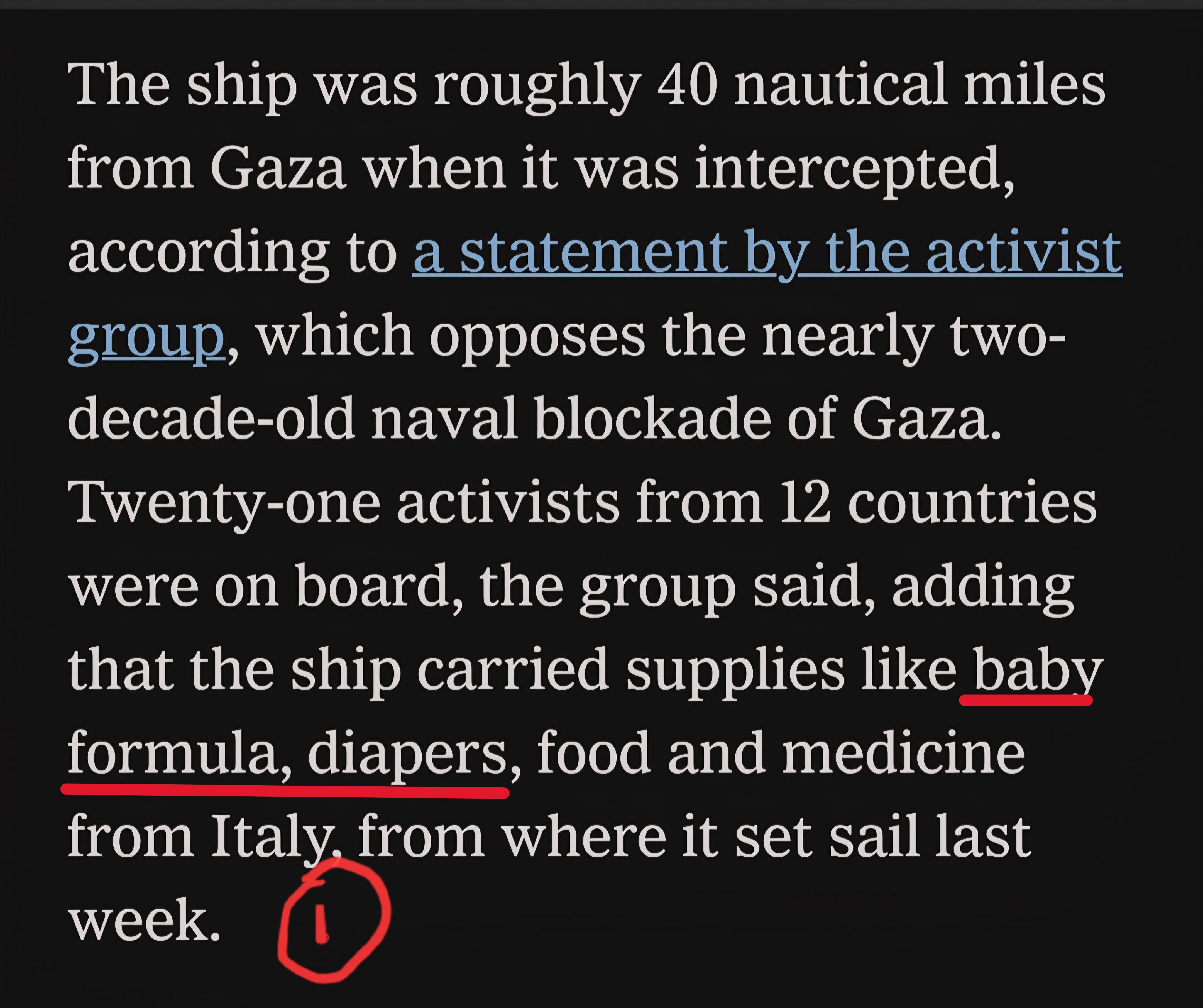
In yet another attempt at seeking publicity, a ship set sail for Gaza in the middle of Hamas’s current war on Israel. The boat was picked up and brought to the Israeli port city of Ashdod for processing without incident.
To read the New York Times’ story, one would imagine that this was an aid boat desperate to bring life saving aid to the people of Gaza amid an illegal blockade of the region, and crushing war that is not popular amongst Gazans.
That’s a complete lie. So let’s unpack the story shared without background, and insert some relevant facts which were omitted.
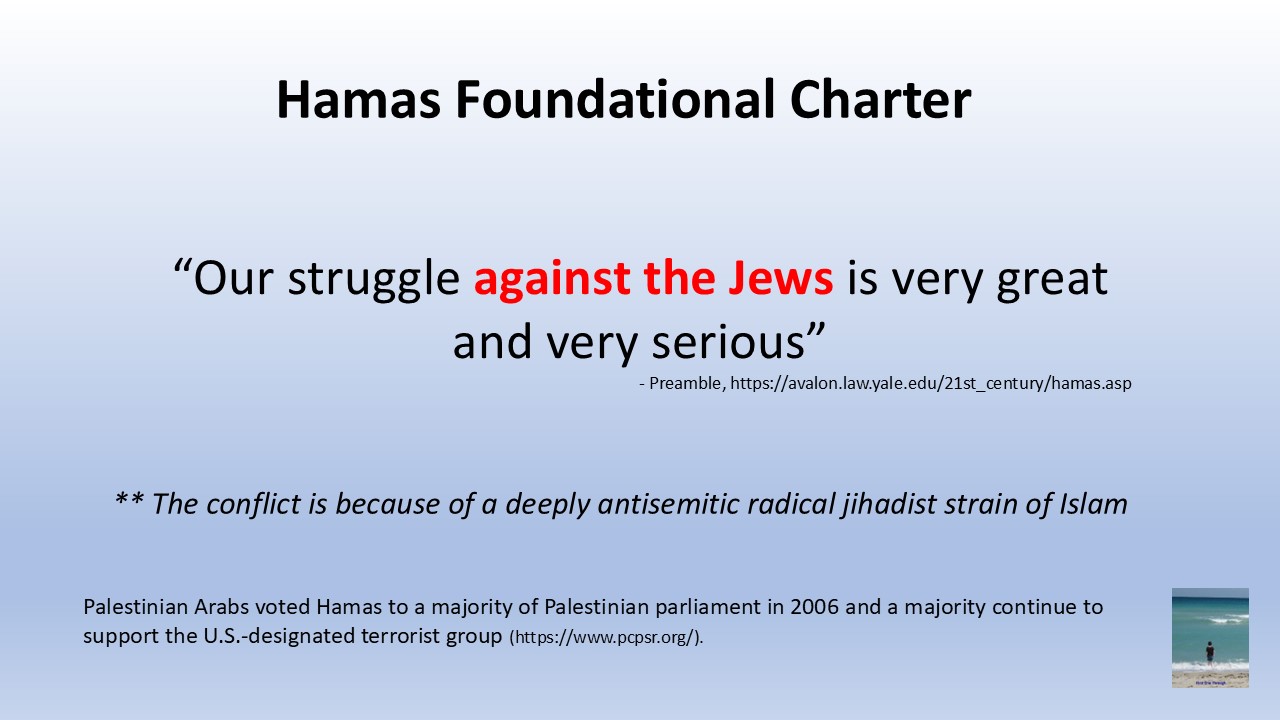
For starters, Israel’s land-based blockade started in June 2007 after Hamas, a group whose antisemitic foundational charter is sworn to the killing of Jews and destruction of Israel, took over the Gaza Strip. The naval blockade started over a year later, in January 2009, after Hamas started a war with Israel using imported missiles.
In July 2011, the UN released the Palmer Report which attested to the legal nature of Israel’s blockade. Specifically it wrote:
“As this report has already indicated, we are satisfied that the naval blockade was based on the need to preserve Israel’s security. Stopping the importation of rockets and other weapons to Gaza by sea helps alleviate Israel’s situation as it finds itself the target of countless attacks, which at the time of writing have once again become more extensive and intensive… We have reached the view that the naval blockade was proportionate in the circumstances… The Panel therefore concludes that Israel’s naval blockade was legal… Israel faces a real threat to its security from militant groups in Gaza. The naval blockade was imposed as a legitimate security measure in order to prevent weapons from entering Gaza by sea and its implementation complied with the requirements of international law.“
This is never mentioned in the article.
The article – over-and-again – states that the boat’s mission is to bring aid to “a population in Gaza facing rising starvation.” If that was the goal, it could have easily set sail directly to Ashdod where the aid would have been processed and thereafter sent by trucks into Gaza. However, the actual aim of the ship was to break Israel’s legal blockade during a war via a publicity stunt. If the world pressured Israel to remove the blockade, more weaponry would be able to flow into the terrorist enclave to continue the genocidal war against Israel.
Maritime closure on Gaza has caught weapons bound for Hamas, this video from 2011
Yet the Times preferred to write a propaganda piece on behalf of Gaza’s supporters. It continued on “the activist group” narrative:
It was no accident that the article led with “baby formula, diapers” to make the mission appear to be about innocent babies. This was raw propaganda. The blockade isn’t about baby food but weapons used to slaughter Israelis. In 2010, a ship called the Mavi Marmara prepared weapons to kill Israelis when they boarded the boat to escort it to Ashdod. The “activists” had gas masks at the ready with iron bars and knives.
“Activists” on the Mavi Marmara in May 2010
When the article chose to give context to the “flotilla,” it only mentioned the ships which sailed over the past year, making them appear to be in reaction to Hamas’s current war. The various European “aid ships” are marketed as concerned about the situation of civilians during the current battles.
The reality is that these boats have been going on for years. Europeans have constantly tried to end Israel’s blockade of the terrorist enclave, which would open the door for Hamas and the other terrorist groups to stockpile even more weaponry to wage war against Israel.
European “Flotilla” bound for Gaza in 2015
As described above, the blockade is legal and Israel enforces it with the minimum use of force necessary under the circumstances. Still, the Times only quoted these “activists” saying that Israel was acting in an illegal manner without any background. Zero. Just a quote without explaining the history of the blockade or its legal nature.
The Hamas fluff piece went on to quote “Adalah, an Israeli human rights group,” which advocates for Israeli Arabs. It did not share that the group is funded by Europeans and George Soros’s Open Society Foundation. For years – well before the latest Hamas war – the group called Israel “an apartheid state committing genocide,” which should be boycotted. It has even held events with groups affiliated with terrorist groups like the Popular Front for the Liberation of Palestine.
But the Times didn’t write any of that. A reader is left to believe that an Israeli human rights group wanted to provide legal services to aid activists and was blocked by the Israeli army. A scripted anti-Israel narrative
With so much fluff, perhaps the editors may have wanted at least a little background for the episode, so in the ninth paragraph (out of twelve) a smidgen of color was given. Just a drop, still never adding that Israel has let in tons of non-military aid to Gaza, and forwards whatever non-military aid the ships bring.
The article states that the blockade started in 2007 which is only partially accurate. as mentioned above, the land blockade began in 2007 while the naval blockade started in 2009.
Remarkably, the most famous of these flotillas, the Mavi Marmara in May 2010, was never mentioned. The nature of the political boat stunts – in this case deadly – was never flagged.
Instead, the legal naval blockade was wrongfully portrayed as an “Israeli military” war against “rights groups.”
Europeans attempting to facilitate the flow of weaponry into the hands of Gazans during a genocidal war is appalling. That it is provided cover by the media is disgraceful.
Antisemitism in universities is punishable when it is “targeted and persistent.” Jew-hatred in the media should be punishable when the basic context of the situation is consistently omitted.
The tragic farce of modern human rights discourse reached a grotesque milestone. According to the defenders of Palestinian “human rights,” Israel should not be allowed to defend itself—even when civilians are under direct rocket fire from foes eager to destroy the Jewish State.
Francesca Albanese, the UN’s so-called “Special Rapporteur on Palestine,” brazenly declared that Israel, as an “occupying power,” has no right to self-defense. In Albanese’s warped worldview, a Jew in Israel has no right to life.
Albanese claims that Israel cannot defend itself from Hamas, the popular and dominant Palestinian political party and ruling power in Gaza.
This is policy for many. When the U.S. House of Representatives recently voted to fund Iron Dome, a purely defensive missile shield that intercepts rockets aimed at Israeli civilians, a coalition of radicals opposed it. Reps. Rashida Tlaib, Ilhan Omar, and Marjorie Taylor Greene— antisemitic-bedfellows —voted against the funding.
When Rep. Alexandria Ocasio-Cortez voted for the funding, the backlash from anti-Israel radicals was immediate. Vandals defaced her headquarters. They threatened her life. “How dare she support saving Jewish lives?” was the clear message, sprayed in graffiti.
Alexandria Ocasio-Cortez office vandalized after voting to fund Israel’s missile defense system
At Rutgers University, Noura Erakat, a Palestinian professor decried Iron Dome, essentially arguing that protecting Israeli civilians is an act of war. The Democratic Socialists of America demanded that Israel be isolated while defending itself in a multifront war. And many echoed the ridiculous claim that it is unjust for Israelis to have bomb shelters when Gazans do not—ignoring that Hamas has built hundreds of kilometers of military tunnels, used exclusively to shield terrorists and smuggle weapons, while civilians are left to die on purpose, to feed propaganda.
The global double standard is grotesque: Israel must accept rocket fire, massacres, and kidnappings—and not respond. Not defend. If it does, it is called an aggressor hell-bent on genocide. No country on Earth is asked to withhold defending its citizens.
The latest iteration of perverse Palestinian “human rights” demands that Jews die quietly, with neither fight nor protest. Palestinian “dignity” demands that Arabs stand atop Jewish graves, personal and physical manifestations mirroring the Islamic mosques sitting atop the Jewish Temples. Just as the world believes Jews should be silent at their holiest site, Jews must die quietly in their holy land.
When “human rights” for a particular group demands the sacrifice of another, basic moral math needs to be applied. When the perversion infects United Nations and U.S. government officials calling to strip and bind Jews in the Middle East, the terrifying equation yields a final solution.
That has been the rallying cry of Hamas since its inception. It was not a metaphor or rhetorical flourish. It was a strategic doctrine and a religious creed. Victory would mean the destruction of Israel and the establishment of a devout Islamic state “from the river to the sea.” Martyrdom meant dying in pursuit of that cause — not just willingly, but eagerly.
On October 7, 2023, Hamas made its major play for victory. Thousands of militants and civilians from Gaza poured into Israel, raping, torturing, and slaughtering Jews in a pogrom of medieval barbarism. They hoped the spectacle would provoke a regional war — Hezbollah from the north, Iran from afar, Arab street uprisings across the Middle East. They imagined a domino collapse of the Jewish State.
It did not play out according to the preferred plan.
Hezbollah has been badly bruised. Iran has been humiliated. The IDF shattered Hamas leadership and destroyed its terror tunnels. The remaining Hamas fighters are mostly hiding — or dead or captured. Gaza’s infrastructure, above and below ground, is rubble.
Which leaves plan B: martyrdom.
Not just for themselves — many of whom will choose death over surrender — but for the people of Gaza whom they have indoctrinated for two decades. From kindergartens to mosques, from textbooks to television, they taught Palestinians that death for Allah is better than life without “liberation.” That there is nobility in dying while killing Jews.
Over 20,000 Hamas fighters are dead. There are almost twice that number of dead civilians. Entire neighborhoods in Gaza are leveled. Tunnels, schools, hospitals are gone.
That’s not failure for Hamas. That’s evidence that the campaign for martyrdom worked. Every dead Gazan is a stepping stone to paradise. Every civilian loss is a propaganda weapon. Hamas always calculated that if they couldn’t beat Israel in battle, they could win in death.
And it’s working.
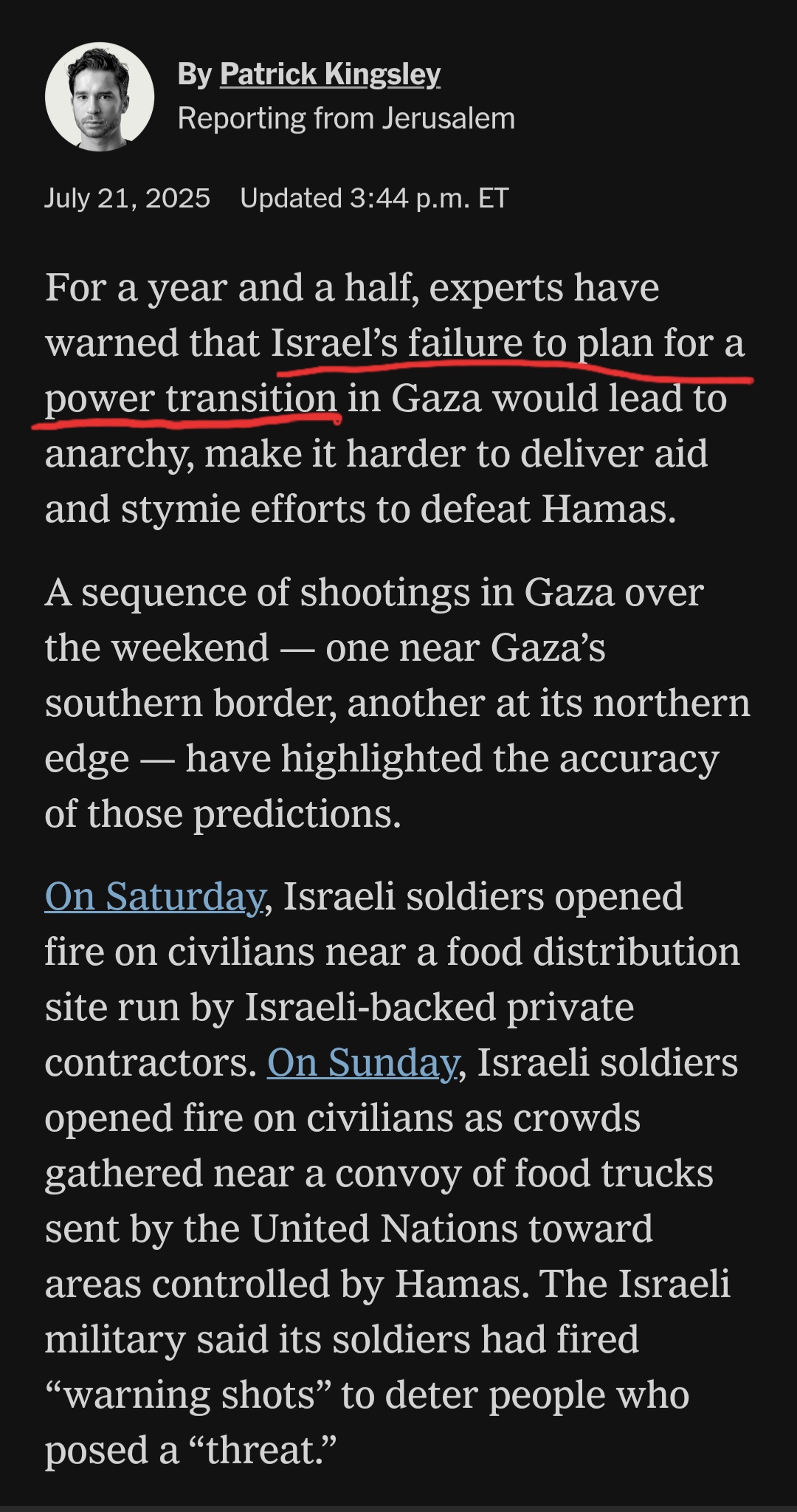
Around the world, nations are blaming Israel for a “power vacuum” in Gaza — as if Hamas’s evil leadership was a success story over seventeen years. They demand “reconstruction” — as if Gaza was a victim of a natural disaster and not a self-inflicted holy war launched atop a powder keg. The idea that Gazans were brainwashed into seeking martyrdom is dismissed as Islamophobic. The western mind cannot comprehend that death is an accepted goal, not a consequence.
New York Times article blaming Israel for Hamas’s refusal to surrender
In the West, every death is a tragedy. But in Gaza under Hamas, it is currency. Suicide bombers once strapped explosives to their chests. Now, the entire Strip has been strapped into a suicide vest, and the detonator pressed.
This isn’t suicide-by-cop. It’s martyrdom-by-genocide — a warped campaign in which Hamas initiated all-out war against a vastly superior enemy, knowing full well the toll. And the more people die, the more it fuels the narrative they’ve crafted: that they are eternal victims, even while firing rockets from hospitals and launching ambushes from schools.
It is cruel. It is evil. And it is successful.
Because the more Gazans die, the more the world turns on Israel. The more Israel defends itself and fights to return its hostages, the more it is blamed for the destruction of Gaza. The West is so allergic to the idea of mass death as a chosen outcome that it must assign blame elsewhere.
So Hamas continues to fight, not to win, but to die. And in death, they declare success because the narrative of the Global South has been successfully instilled into consciousness of the Global North for the past decade. The insidious jihad has now reached peak toxicity.
“Victory or Martyrdom.”
A true defeat of Hamas – in which it gets neither victory nor martyrdom – would be for it to surrender. To hand over its weapons. To leave the Strip and be stripped of mention on any building, square or monument. To be vacated from government, military and textbooks.
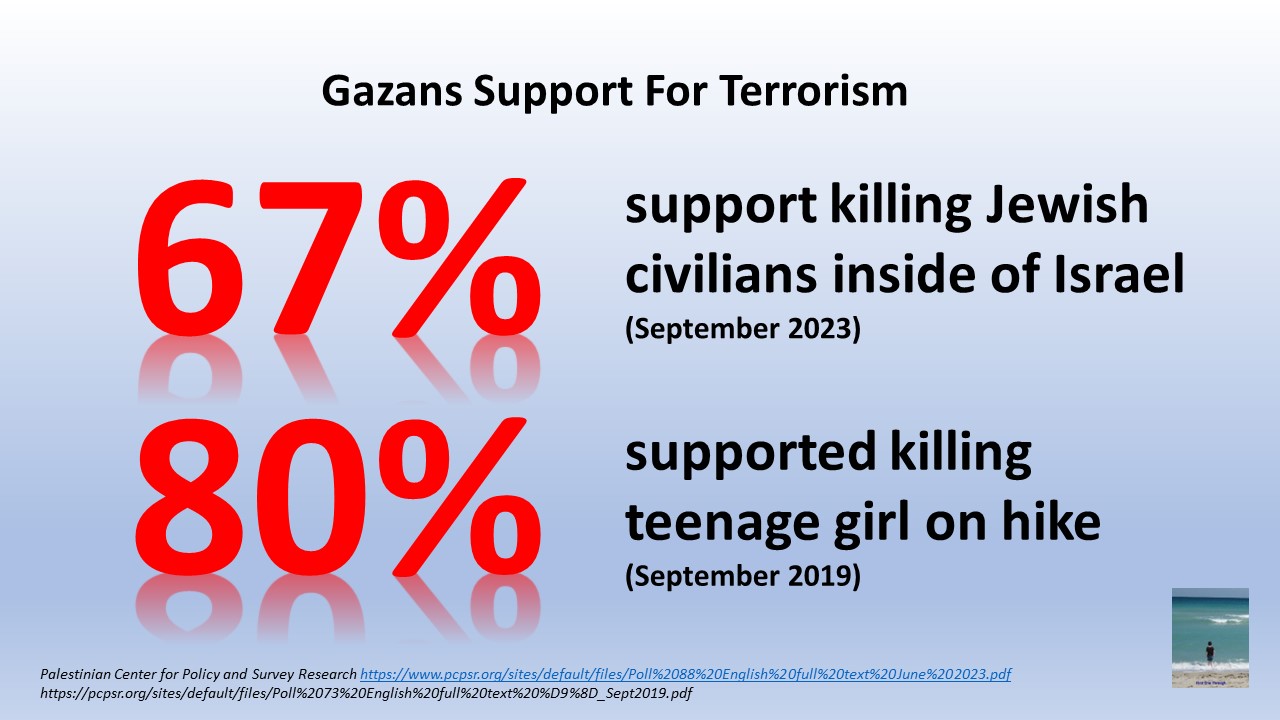
That is precisely what Hamas is avoiding at all cost. It will not hand over the hostages and lay down its weapons. It will fight until every child in Gaza is dead rather than concede defeat. And the majority of Gazans continue to back that plan, even as recently as a May 2025 PCPSR poll.
The world refuses to admit the reality and prefers to blame Israel for the continued deaths rather than pressure Gazans to stand down. Without a Hamas concession, there is really no “day after.” The war will continue. Deaths will fill the pages of the next chapter.
Israel has denied Gazans the victory of victory and the world is enabling the victory of martyrdom.
All because the West cannot comprehend the mindset of psychopaths and remains blind to the mainstreamed antisemitism in their midst.
ACTION ITEM
Post on social media that the Gazan dead are not only victims of Hamas’s war but Hamas’s education. No such society is deserving of sovereignty.
There are two wars taking place in Gaza: one is a textbook definition of a genocidal war while the other is a reluctant war of ethnic cleansing.
While critics of the Jewish State hurl the term “genocide” as a weapon, a blood libel designed to strip Israel of its legitimacy, it is an inversion: it is Hamas and only Hamas that is engaged in a genocide.
Hamas’s 1988 foundational charter is not a vague political platform. It is an open call to murder Jews. Article 7 quotes an Islamic hadith that urges Muslims to kill Jews wherever they find them. Article 13 states that “initiatives and so-called peaceful solutions and international conferences are in contradiction to the principles of the Islamic Resistance Movement.” Peace is forbidden. Coexistence is a crime.
And the Palestinian people did not reject this vision; they embraced it. In 2005, they elected Mahmoud Abbas as president — a man who wrote his doctoral thesis denying the Holocaust. In 2006, they voted Hamas into power, giving the genocidal group 58% of the parliament. These were not fringe votes. These were popular, democratic choices made in full view of Hamas’s open ideology.
Then came October 7, 2023.
In the worst massacre of Jews since the Holocaust, Hamas — the ruling government of Gaza — unleashed its long-promised war of annihilation. They murdered 1,200 people, from babies in cribs to elderly women in wheelchairs. They burned families alive, filmed their atrocities, and broadcast their bloodlust to the world. The Palestinian street erupted in celebration. Polls showed 75% of Palestinian Arabs supporting the massacre of Jews.
This was not a surprise. This was fulfillment. A generation raised on genocidal propaganda in schools, mosques, and television carried out what they had been taught. They were not rebelling against Hamas — they were Hamas. Thousands of Gazans participated in the October 7 slaughter.
Israel, faced with an existential threat, responded. It had tried the diplomatic route. It had withdrawn from Gaza in 2005. It had allowed billions of dollars in humanitarian aid to flow into the Strip. It had mostly tolerated rocket fire and bus bombings and flaming kites with modest responses. But after October 7, there was no possibility of a tepid response with a group with an increasing capacity to carry out its genocidal intent.
Israel launched a war of necessity — a war to end the Hamas threat once and for all. The goal was not genocide, but defense. Not extermination, but eradication of a terrorist force.
But the nature of this war is highly complex. Hamas does not engage Israel’s army on an open battlefield but underneath hospitals, mosques and homes. It warehouses missiles in schools and launches them from playgrounds. There is no ability to eliminate the terrorists without severe destruction to dual-use civilian-military infrastructure and significant collateral damage.
And that looks a lot like ethnic cleansing.
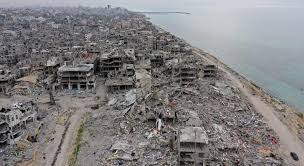
Gaza ruins
Ethnic cleansing refers to the forced removal of an ethnic or religious group from a territory. And yes, it is possible that the outcome of Israel’s war will be a Gaza without many Palestinian Arabs. Gaza cannot be rebuilt atop terrorist tunnels and booby traps. The terrorist enclave that Gazans built since 2007 cannot remain nor be replicated.
It has long been a sign of instilled antisemitism that the United Nations has accused Israel of genocide, at least as far back as 2013, as a mask for Palestinian Arabs genocidal intentions. It is a classic form of the adage “the best defense is a good offense,” accusing Israel of the crimes of Palestinian Arabs, forcing Israel into a defensive posture, both militarily and politically.
But it is another level of tragic irony that in this defensive war, Israel is open to the accusation of ethnic cleansing.
No nation on earth has faced the choices Israel faces. No other country is expected to coexist with a neighbor whose elected leaders seek its annihilation. No one wants to see civilian suffering but Israel has tried every alternative — and the price has always been paid in Jewish blood.
The world is watching a premeditated war of genocide – which it enabled and encouraged through the United Nations’ statements and actions – be defeated by a small, determined country. The contours of that victory may appear to the casual viewer as ethnic cleansing, and will certainly be marketed as such by Israel haters, as a cruel collective punishment against civilians and so-called “refugees.”
The Global North will consider “ethnic cleansing” as the lesser charge relative to the smear of “genocide” long advanced by the Global South. Will the resulting actions encourage and enable the next genocidal war against the Jewish State remains to be seen.
The United Nations Security Council is comprised of five permanent members (P5) and ten elected members (E10) who try to pass resolutions to promote global and regional peace and cooperation. It fails repeatedly regarding the Arab-Israeli conflict as it prioritizes protecting the political-terrorist group Hamas above all else.
On June 4, 2025, E10 put forward a draft resolution which “demand[ed] an immediate, unconditional, and permanent ceasefire in Gaza; the immediate, dignified, and unconditional release of all hostages held by Hamas and other groups; and the immediate and unconditional lifting of all restrictions on the entry of humanitarian aid into the territory.”
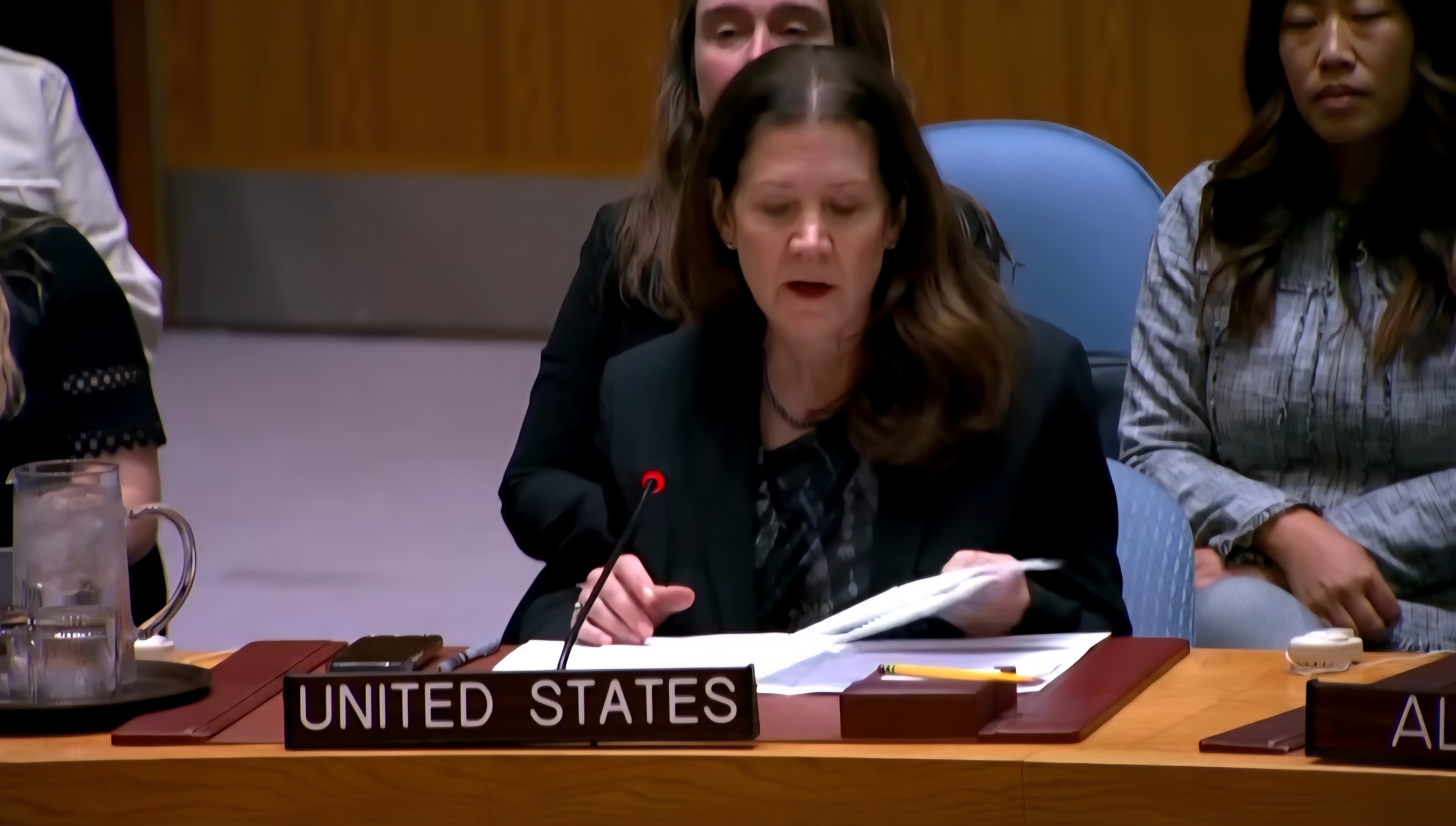
The acting US Representative Dorothy Shea vetoed the draft resolution saying “US opposition to this resolution should come as no surprise – it is unacceptable for what it does say, it is unacceptable for what it does not say, and it is unacceptable for the manner in which it has been advanced. The United States has been clear: we would not support any measure that fails to condemn Hamas and does not call for Hamas to disarm and leave Gaza.” She added “We cannot allow the Security Council to award Hamas’ intransigence. Hamas and other terrorists must have no future in Gaza. As Secretary [Marco] Rubio has said: ‘If an ember survives, it will spark again into a fire’.”
Knowing that the United States would use its veto right to reject the resolution, one is left with two conclusions: the rest of the Security Council wanted the US to veto the resolution, or they care more about protecting Hamas than civilians in Gaza.
Perhaps the fourteen UNSC countries want Israel to continue the war but want to placate their pro-Palestinian constituents, appearing to support Gazans while knowing that no relief would happen until Hamas is defeated. Maybe the countries want Israel and the United States to both look isolated – the “little Satan” and “Big Satan” as the Islamic Republic of Iran calls them – hoping to curry favor among the Global South, with 80% of the world’s population.
Either way, the world cannot really believe there is a genocide happening in Gaza, if the path to a ceasefire was simply adding two lines calling for Hamas to surrender.
As the war from Gaza continues to take its devastating toll on everyone involved, the road to peace remains blocked by a singular, stubborn obstacle: Hamas. The group’s leadership refuses to accept ceasefires not out of strength, but from the conviction that they can endure, rearm, and fight again. The violence will not end as long as Hamas is allowed to believe it has a future.
It is time for the international community – particularly Western democracies – to take an unambiguous stand. Hamas must be permanently banned—not just its military wing, but its entire structure. There can be no meaningful peace, no rebuilding of Gaza, and no credible peaceful future while Hamas continues to hold power and wield influence.
Despite the mounting civilian cost, Hamas has shown no intention of disarming. The group openly positions itself as a perpetual “resistance force” rather than a governing body accountable to and respecting the people of Gaza. Its survival strategy is predicated on suffering—banking on civilian casualties to inflame global opinion while preserving its own arsenal in tunnels and bunkers. This is not governance. This is terrorism dressed in political clothing.
Hamas official boasts of sacrificing his own civilian population to slaughter Jewish civilians, shortly after the October 7, 2023 massacre in Israel (source: MEMRI)
Yet in Europe, the designation of Hamas as a terrorist organization remains inconsistent. Some countries distinguish between its so-called “military” and “political” wings, an artificial and dangerous separation. This division gives cover to operatives, fundraising networks, and propaganda arms that prolong the conflict and contribute to ongoing suffering.
Now, there is growing concern in the United Kingdom, where a legal effort is underway to challenge Hamas’s terrorist designation. This must not be allowed to succeed. On the contrary, the UK should lead Europe in reaffirming that Hamas is a terrorist entity in its entirety. Such a stance must be echoed by Germany, France, the Netherlands, and the rest of the EU. It must happen in Canada and Australia and throughout the Global North.
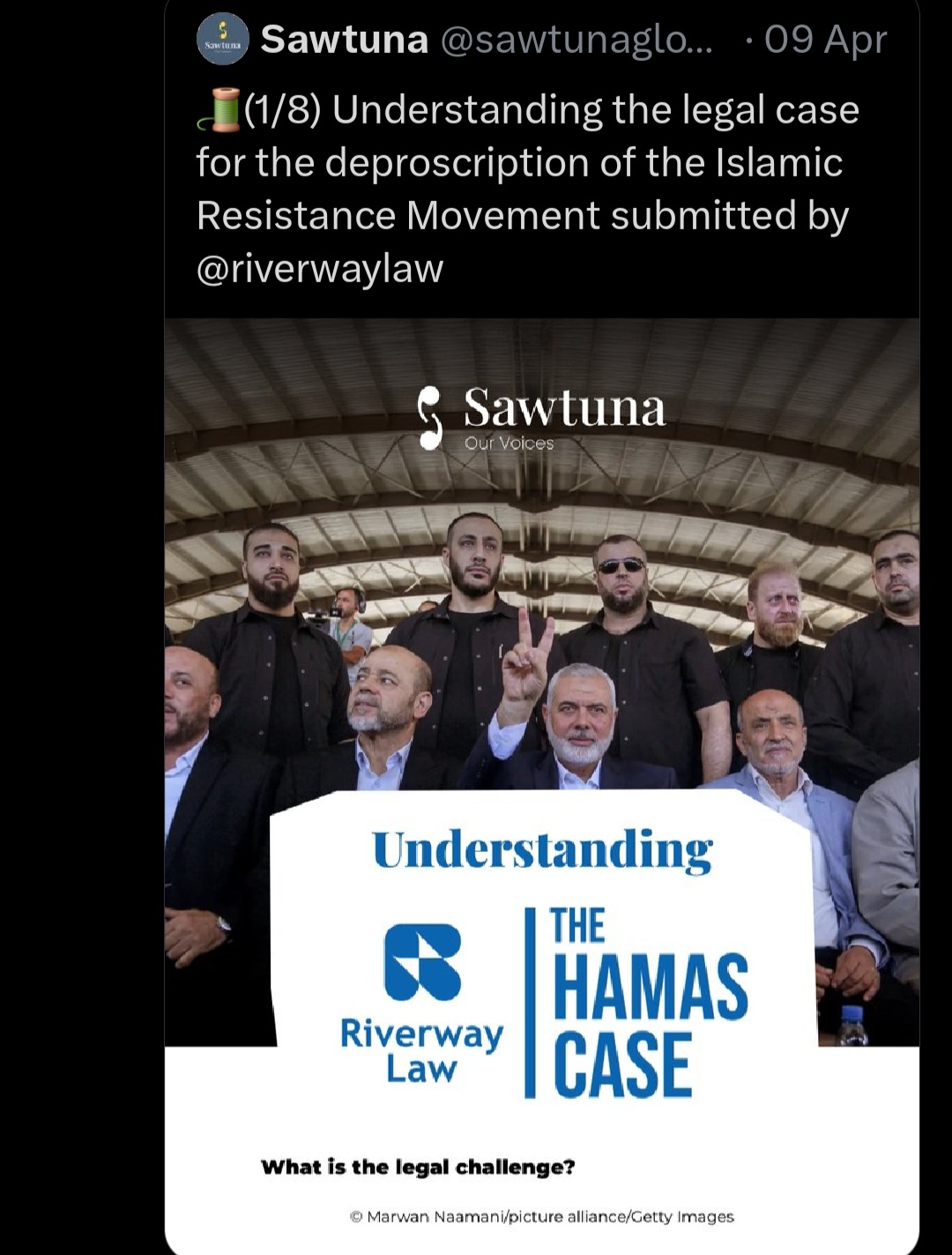
UK lawyers are fighting to get Hamas removed from the list of terrorist groups
Riverway Law submitted a 106-page filing in the UK which argued that Hamas is a local “resistance movement… which has won the only free and fair election in the occupied Palestinian territories” and it “poses no threat to the UK people.” The submission argued that “the legitimacy of the struggle of the Palestinian people for independence, territorial integrity, national unity and liberation from colonial and alien domination and foreign occupation by all available means, including armed struggle, is moral [and] legitimate.”
Lost in this filing is that the legal definition of terrorism is about targeting civilians for political aims. That is the core mission of Hamas. Its stated purpose and actions on, before and after October 7, 2023 is to attack Jewish civilians inside Israel and around the world.
To wit, in April 2022, Yahya Sinwar, the Hamas leader who would later spearhead the October 2023 massacre in Israel said “Whoever makes the decision to repeat this desecration of the Al-Aqsa Mosque will be making a decision to desecrate thousands of synagogues and Jewish temples all over the world,” explicitly saying that actions done by the Israeli government would be reason to take actions against Jews around the world, including in the UK.
The invective is a grisly echo of the 1988 foundational Hamas Charter which explicitly cites the antisemitic forgery Protocols of the Elder of Zion about the supposed vile nature of Jews everywhere. It claims that Jews conspire to control the world and “Islamic groupings all over the Arab world should… fight with the warmongering Jews (Article 32).” The Hamas charter uses the word “world” twenty-five times. “Globe” is used twice. “Jew” – not “Zionist” – is used twelve times, including stating “Israel, Judaism and Jews challenge Islam and the Moslem people, (Article 28)” targeting Jews everywhere and the religion itself as a permanent offense to 1.9 billion Muslims.
It was with this antisemitic genocidal charter that Palestinians voted Hamas to the majority of parliament in 2006. That this vile party won elections – like the Nazi party in Germany – is not a defense of its legitimacy but a condemnation of the “deformity in Palestinian culture,” to quote James Zogby, President of the Arab American Institute comment at the United Nations Security Council on June 27, 2023.
Banning Hamas is not only a matter of principle, but of practical necessity. No group that openly glorifies violence and opposes basic coexistence can have any legitimate role in governance.
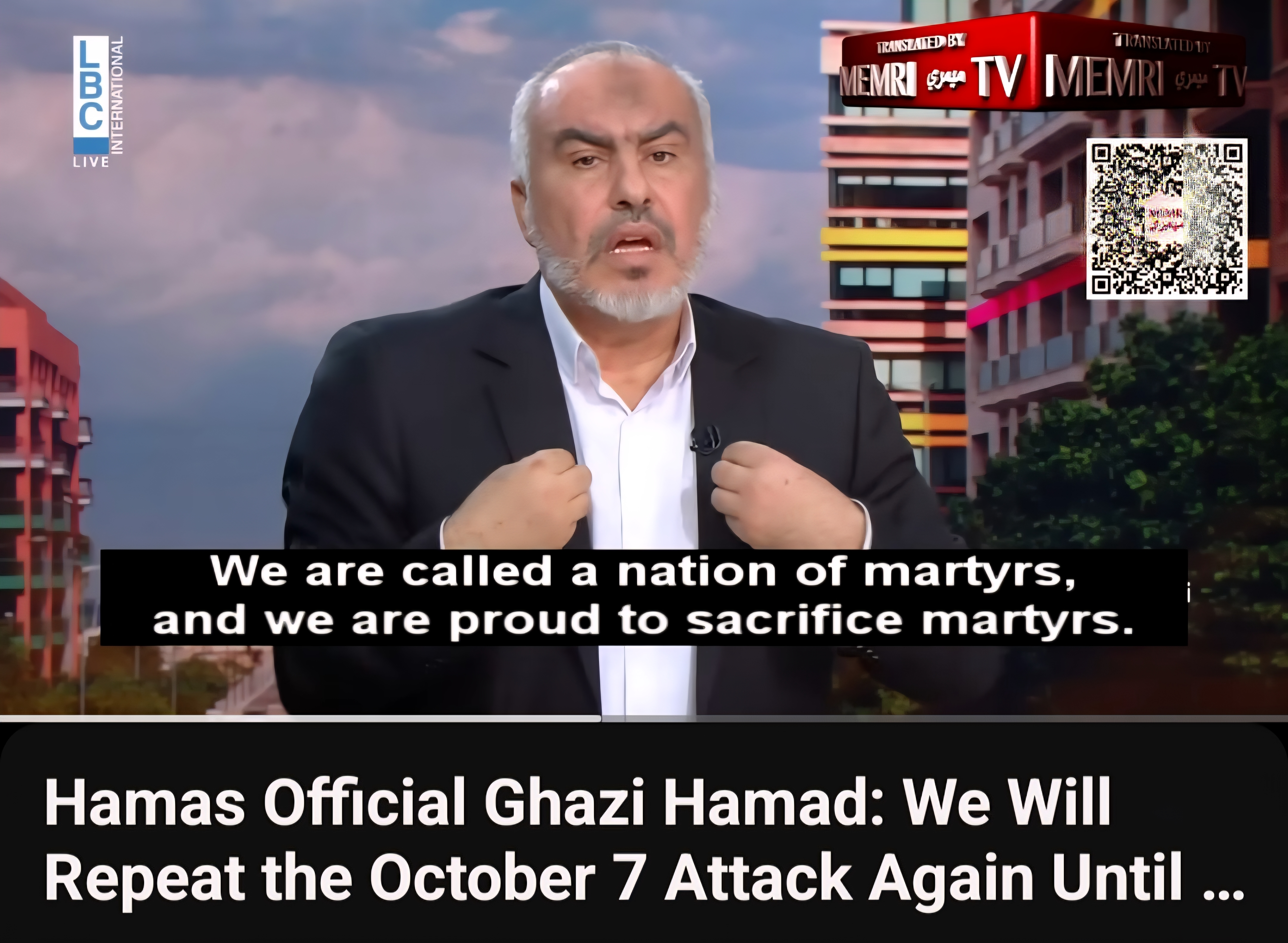
Ghazi Hamad of the Hamas political bureau said in an October 24, 2023 show on LBC TV (Lebanon) that Hamas is prepared to repeat the October 7 “Al-Aqsa Flood” Operation time and again until Israel is annihilated. (source: MEMRI)
A political party that glorifies the death of its own population with public declarations “we are called a nation of martyrs, and we are proud to sacrifice martyrs,” shows no value for the lives of its own civilians, let alone of others. The Global North must lead with moral clarity and urge the Arab League to follow suit.
When people on the streets and campuses in the Global North yell “Free Palestine,” they are doing so under the banner of Hamas in a call to eradicate the only Jewish State and to attack Jews globally. If people want to make the argument that the statement is for coexistence, then fight to end Hamas, argue for a Free Israel and to Create Palestine, and condemn the heinous attacks on Jews happening all over the world.
To end this war, we must end Hamas. Ban them—politically, financially, and globally. Only then can people talk about “the day after,” and the longer future.
How many generations should someone be called a “refugee?” Two? Ten? My parents were refugees and I consider myself the son of refugees. But not a refugee. To do so would be a mockery of millions of people fleeing homes to faraway lands where they have no family, infrastructure or knowledge of the local language.
Alas, while every year the world adds and removes refugees from the global tally, there is a permanent exception.
There are roughly 122 million displaced people worldwide (68 million internally displaced, 38 million refugees and millions of others seeking protection), and the United Nations High Commissioner for Refugees (UNHCR) is tasked with helping them. Its mission is clear: assist people fleeing conflict or persecution to either return home when it’s safe, or resettle in a new country where they can rebuild their lives and become citizens. Refugee status, according to UNHCR, is meant to be temporary. A tragic but manageable step toward normalcy.
But for one group of people, the rules were rewritten.
In 1949, the United Nations created a separate agency: the United Nations Relief and Works Agency (UNRWA). Its job was not to help all refugees, but a specific set—Arabs who left or were displaced from what became the State of Israel during the 1948 war.
Unlike the UNHCR, UNRWA never intended to help these refugees resettle or gain citizenship elsewhere. In fact, when Jordan annexed the to be named “West Bank” in 1950 and granted full Jordanian citizenship to the Arabs living there in 1954 (Jews were specifically excluded from Jordanian citizenship) —including the so-called refugees—UNRWA still kept them on its refugee rolls. Why? They were no longer stateless, no longer displaced from their community, and in most cases, were living just miles from where they or their families once resided.
No other refugee population in the world is treated this way.
The Palestinians under UNRWA are not counted based on where they live or whether they’ve rebuilt their lives. They’re counted based on ancestry—any descendant of someone who lived in Mandatory Palestine in 1946 and left during the war is considered a “refugee.” That includes people who are now citizens of Jordan who have never set foot in Israel, and those who live under Palestinian rule in the West Bank and Gaza.
This isn’t about resettlement. It isn’t about a “two-state solution.” It’s about return. Not return to a country they fled—but to homes where their grandparents once lived, in a country that has since fought multiple wars for its survival and established itself as a sovereign nation.
This has locked the Middle East into a perpetual state of conflict. UNRWA doesn’t just preserve the status of Palestinian refugees—it amplifies it, funds it, and builds an international bureaucracy around it. It has denied Israel’s right to control its own immigration, and basic principle of sovereignty.
Worse, the UN’s actions have turned a situation normally considered a humanitarian issue into a real estate dispute. By insisting that people return to a house—not a country, as outlined in international human rights law—the global political body has exceeded its own mandate. This isn’t a question of national self-determination, but one of personal property claims. UNRWA isn’t so much a champion of the creation of a state beside Israel; it champions individual return to specific homes, decades abandoned or destroyed, now occupied by others in a sovereign country.
Meanwhile, the descendants of every other refugee group in the world—from Sudan to Ukraine—are helped by the UN to find a path forward. Only the Palestinians are encouraged to walk backward, into the houses of their grandparents.
UNHCR helps refugees stop being refugees. UNRWA helps them stay that way.
Every year, new wars create new displaced people. But only one group stays on the list year after year, generation after generation.
For Palestinian Arabs, the 1948 war is still being fought. Generations of people haven’t been birthed into refugee status as much as the region is in a 100 years war. While the world may use political terminology of an UNRWA ward who has never been to Israel as a descendant of a “refugee,” Palestinians simply see a permanent property right which will never be forfeited. The UN simply provides cover under the “refugee” monicker.