Overwinning

There are contests in which people do not simply want to beat their opponents but to so thoroughly dominate them that the opponent never dares to rise again. In sports, the knockout punch sends a boxer down and the victor up the rankings and into bigger purses. In war, nations aim not just to win but to deter future attacks.

But there is such a thing as “overwinning” — appearing so dominant that it does a disservice to the victor’s own long-term cause.

The Historical Lesson: Versailles

Many historians argue that France and its allies so humiliated Germany at the end of World War I that they guaranteed the next war. The Versailles Treaty stripped Germany of territory, imposed crushing reparations, and forbade them from rebuilding their military. Rather than simply deterring aggression, it created a nation humiliated and seething for revenge.

Instead of permanent peace, Versailles delivered two decades of festering resentment and, ultimately, World War II.

The Modern Parallel: Politics

Overwinning plays out in politics as well. Consider the Democratic primary in New York’s 16th District in 2024. Jamaal Bowman was a polarizing, unpopular incumbent facing a strong challenger, Westchester County Executive George Latimer, who had deep local support. Latimer was likely to win on his own — but AIPAC decided to spend a reported $20 million to ensure Bowman’s defeat.

The message was not just about removing Bowman; it was a flex. It told every other member of Congress: oppose us and we will spend you into political oblivion. It told donors: your money buys results.

But in doing so, AIPAC risked looking like a bludgeon rather than a scalpel. It gave critics a perfect narrative — that elections can be bought — and turned a local race into a national referendum on outside influence. Instead of simply retiring an unpopular incumbent, AIPAC risked martyring him.

The race became a rallying cry for left-wing radicals to claim that “AIPAC and their right-wing billionaires” were buying elections, and not about the disgraceful track record of Bowman

Netanyahu and the World’s Judgment

Israel faces a similar dilemma. After Hamas’s barbaric October 7 massacre, Prime Minister Benjamin Netanyahu vowed “total victory” to “destroy Hamas.” The Israeli Defense Forces have pounded Gaza, killing thousands of Hamas fighters and dismantling its command structure. Militarily, the campaign has been successful.

But “overwinning” here carries a different risk — alienating allies. Every bombed-out building and civilian casualty is broadcast globally. Allies that initially backed Israel’s right to self-defense have begun to call for restraint. What began as a just war risks being reframed as collective punishment.

Gaza in 2025

There is no reason to worry about making the next generation of Gazan antisemites – two-thirds of Gazans have favored killing Jewish civilians in Israel for twenty-five years; it is instilled in their education. The anti-Israel countries will always condemn the Jewish State; Israel needn’t change its actions to placate the haters. Haters gonna hate.

Israel’s goal is security, not global isolation, especially amongst key allies. Overwinning could leave the country victorious on the battlefield but embattled diplomatically — pressured by allies, condemned in international forums, and stripped of the legitimacy it needs to deter future threats.

The Lesson: Win, But Don’t Become the Villain

Overwinning can turn clean victories into Pyrrhic ones. When the punishment becomes the story, the victor risks losing the moral high ground — and with it, the support of allies, donors, and history itself.

The job is to win, not to look like a bully. Versailles turned victors into jailers and fueled the next world war. AIPAC’s $20 million victory made a single congressional seat a national controversy. And if Israel destroys Hamas but is seen as destroying Gaza itself, it may win the war and lose the world.

True victory must be measured beyond the battlefield, especially when that war is basically won.


Bury the Dead — or Bury Civilization

Ki Teitzei’s Call for Dignity vs. Hamas’ Celebration of Desecration

Parshat Ki Teitzei commands something extraordinary:

“If any party is guilty of a capital offense and is put to death, and you impale the body on a stake, you must not let the corpse remain on the stake overnight, but must bury it the same day. For an impaled body is an affront to G-d: you shall not defile the land that your G-d is giving you to possess.” – Deuteronomy 21:22-23

Even the guilty must not be left hanging overnight. The Torah demands swiftness in burial, even for one who deserved execution.

The biblical commentator Rashi (1040-1105) spells out the reason: “a degradation of the Divine King, for man is made in His image.” Since man is made in the image of G-d, it would be an insult to G-d to continue to embarrass the dead, even one who deserved capital punishment. The focus should be about restoring public order and nothing more.

Hamas: Desecration as Policy

Contrast that to Palestinian political-terrorist group Hamas. On October 7, terrorists not only murdered, but dragged Jewish bodies through the streets of Gaza, spat on them, and beat them before crowds cheering “Allahu Akhbar” – G-d is Great. Their deaths became props for Hamas’ theatre of hate.

Hamas took the dead and mutilated body of German-Israeli Shani Louk to Gaza, where the crowds spat on her body and beat her. Her head was later chopped off.

To this day, Hamas holds the bodies of Israeli hostages, denying their families the ability to bury them, to say Kaddish, to mourn. It is deliberate, drawn-out torture.

The Law of Nations Agrees

This is not only a biblical imperative — it is a universal one. Article 17 of the Geneva Convention states plainly “Parties to the conflict shall ensure that the dead are honorably interred… and that their graves respected and properly maintained.”

Even in war, even between enemies, the dead are to be treated with dignity.

Hamas has made clear it recognizes no such obligation. It does not simply kill — it advertises cruelty, turning murder into propaganda and humiliation into spectacle.

The Moral Divide

Ki Teitzei calls us to a higher standard. To quickly bury even the criminal, to shield the image of G-d from public shame. The radical Islamist group calls its people to something else entirely: to spit, to drag, to desecrate. To turn death into a carnival. Jews believe sanctifying G-d means sanctifying the human body, even a murderer. Fanatical jihadists believe that Gd wants the community to mock the dead, even a female dancer.

This is not just a fight over land. It is a war between those who sanctify life — even those they must punish — and those who have turned death into a brand identity.

The choice before the world could not be clearer: stand with those who respect the divine image, even in death — or with those who trample it.

Palestinian Pride in Death

Imagine someone telling the Jews of Europe in 1935: accept the butchering and burning of six million of your people, and in exchange, you will once more gain sovereignty in your promised land. Would world Jewry have accepted such a bargain? Unlikely. In Judaism, the value of life as supreme trumps all—perhaps even over the divine inheritance of the Land of Israel itself.

That is why Jews do not take pride in the defenseless millions murdered in the Holocaust. They mourn them, honor their memory, and vow “never again.” The lesson is not that Jewish blood must be spilled for redemption, but that Jewish life is sacred and must be protected at all costs.

This moral foundation has been a hallmark of Jewish thought for millennia. The Talmud (Sanhedrin 4:5) teaches that “whoever saves a life saves the world.” Zionism, too, was never about blood sacrifice but about safeguarding Jewish existence and ensuring dignity, freedom, and self-determination. The rebirth of Israel is framed as a triumph of survival, not of slaughter.

Yet for Palestinian Arabs, the moral calculus is inverted. Martyrdom is not mourned but celebrated. “Glory to the martyrs,” they shout, glorifying not only the dead but the genocidal jihadists of Hamas who carried out the October 7 massacre of unarmed Jews. Streets, schools, and summer camps are named for suicide bombers and killers. Death in the service of destroying Jews is not a tragedy but an achievement.

Columbia University placard of “Glory to the Martyrs”

This glorification of death is not limited to fringe radicals. The majority of Gazans have always supported slaughtering Jewish civilians in Israel. Yasser Arafat, the father of the Palestinian national movement, repeatedly praised the “martyrs” who died attacking Israelis, insisting that “our blood is cheap compared to the goal [Jerusalem].” His successor, Mahmoud Abbas, continues the same practice. He honors terrorists killed while attacking Israelis, declaring that “we bless every drop of blood that has been spilled for Jerusalem.” The Palestinian Authority, under Abbas, even pays stipends to the families of those who die murdering Jews—the so-called “martyrs’ fund.”

Palestinian Authority President Mahmoud Abbas blesses blood “spilled for Jerusalem”

The same ethos echoed recently in the United States. At the People’s Conference for Palestine in Detroit, Michigan in August 2025, the crowd erupted in cheers for Gaza. Lameess Mahanna, sporting a shirt of the Palestine Youth Movement—employed at Columbia University—declared that the end of Israel would be “justice.” (1:35:00) She closed her remarks by leading the audience in a chant: “Say it clear and say it loud: Gaza, you make us proud!

If Gaza, in her telling, is suffering a “genocide,” how can its dead make her and the thousands who echoed her cry, “proud?” The answer is chilling: because human life is secondary. For her, for Hamas, for the Palestinian leadership stretching from Arafat to Abbas, and from Gaza to Detroit, “justice” is not measured in lives saved, but in Israel’s disappearance. Every dead body is not a tragedy but a step toward their perverted form of “justice:” erasing the Jewish state and replacing it with Arab Muslim rule.

This is the precise inverse of the Jewish ideal. Jews mourn their murdered; Palestinians exalt theirs. Jews sanctify life; Hamas sanctifies death. Jews seek peace with dignity; Palestinian leaders glorify death as the path to victory. The Jewish lesson of the Holocaust is the necessity of Jewish strength to prevent further massacres. The Palestinian lesson of their own history is that more massacres are required for them to have “dignity.”

Which brings us to the central question: can two peoples animated by such irreconcilable values ever truly coexist? One side views life as sacred above all else. The other views life as expendable, even desirable, when spent in the service of destroying its cohabitants.

Coexistence demands a shared commitment to life. Without that, “peace” is a dangerous mirage—a prelude to slaughter, the ultimate source of perverted pride.

Racism or Antisemitism: Sudan Burns While The World Screams at Israel

“The recent fighting and grave risk of further aggravation in an already brutal and deadly conflict raise severe protection concerns, amid a pervasive culture of impunity for human rights violations.” – Volker Türk, UN High Commissioner for Human Rights, June 2024

“The RSF and its allied militias have also committed other war crimes and crimes against humanity. These include widespread sexual and gender-based violence, rape, sexual slavery, abduction, and recruitment and use of children in hostilities. The RSF and its allied militias have also systematically engaged in pillage and looting. They have further committed large-scale attacks based on intersecting ethnicity and gender grounds, especially against the Masalit community in El Geneina, including killings, torture, rape, and other forms of sexual violence, amounting to persecution.” – Independent International Fact-Finding Mission for the Sudan, October 2024

Famine is present in Darfur. Conflict is increasing. Children are targeted. Girls and women are subject to rape. And the whole landscape is one of destruction, and, we say, criminality. ” – ICC Prosecutor Karim A.A. Khan, January 2025

” I have now concluded that members of the RSF and allied militias have committed genocide in Sudan.” – US Secretary of State, Antony Blinken, January 2025

With an estimated 150,000 people dead and some 12 million displaced, the conflict has paralysed Africa’s third-largest country. A catastrophic famine is ravaging the more remote areas, while a nightmare of sexual violence persists for women and girls across the country. – OCHA, April 2025

The numbers are staggering: as many as 150,000 people killed, millions displaced, thousands of women and children raped, villages in Darfur wiped off the map. It has been called “ethnic cleansing,” “genocide” in a land beset with “rape and sexual slavery” and “famine.” Children are dying daily, with half of El Fasher’s trapped population under five.

And yet — the streets of London, Paris, New York are quiet. No bridges are blocked. No university campuses are occupied. No faculty letters demand boycotts of Sudanese products.

Destruction in Sudan, captured by Giles Clarke for OCHA

The UN and Campus Activists Save Their Fury for Israel

When the UN convenes emergency sessions, it is rarely for Sudan. In 2024, the UN General Assembly passed 15 resolutions against Israel — and only seven against all other countries combined. The Human Rights Council maintains a permanent agenda item (Item 7) targeting only Israel.

On campus, Students for Justice in Palestine (SJP) calls for “globalizing the intifada” and promotes BDS campaigns to cut economic, cultural, and academic ties with Israel. Faculty petitions accuse Israel of “genocide” while ignoring the UN’s own genocide determinations in Sudan.

The fake narrative is fixed: Israel is a “settler-colonial outpost,” a European implant, a Western beachhead in the Middle East. This is not merely bad history — it is a deliberate attempt to erase Jewish indigeneity and delegitimize Israel’s right to exist.

Limited travel and lack of burial space has led to burials expanding from existing graveyard perimeters to the city roads. (photo: Giles Clarke for OCHA)

Erasing History as Antisemitic Strategy

“Israel’s pattern of practice of dispossession and expansion of settlements dating back to its establishment as a settler colonial state in 1948 has been found to be illegal under international law.” – NY CUNY vote on BDS Divestment, June 2024 (Passed)

This framing is an antisemitic dog whistle: it rebrands Jews as foreign European invaders in their ancestral homeland, turning their self-defense into imperial conquest. It ignores that more than half of Israeli Jews are Mizrahi expelled from Arab and Muslim lands. It recasts Israel’s rebirth — championed by the same UN that voted for partition in 1947 — as a sin that must be repented by dismantling the Jewish state.

The Institute for the Critical Study of Zionism is attempting to move Israel Studies in universities out of the Jewish Studies department and into Colonial Studies, both attempting to sever Jews from the land of Israel, as well as mark Zionism as a point of European imperialism.

This helps explain why so many are silent about Sudan or Syria. Those wars do not serve the European imperialism narrative, a war between the Global South and Global North. They do not produce graffiti that says “globalize the intifada” or “river to the sea.”

Israel is Vulnerable

“They can crush the flowers, but they cannot delay the springtime.” MIT vote on BDS, September 2024 (passed)

Israel is a small democracy, one that can be pressured and condemned without risk. Many seem to feel the UN’s vote to create Israel in 1947 was a mistake that must be corrected. The endless parade of UN resolutions, the obsessive focus of NGOs, and the boycotts pushed by activists reveal a not-so-hidden goal: not to protect Gazans, but to destroy Israel.

When Hamas butchered 1,200 Israelis on October 7 — burning families alive, gang-raping women, kidnapping children — the global street roared. Not in sympathy, but in accusation. The protests called Israel “the real terrorist” and demanded its isolation. When Israel finally defended itself, the outrage multiplied.

Meanwhile, Sudan burns — and the world yawns.

Mohamed Maysara, 2, cries at the Al-Buluk Hospital in Omdurman. He was there to receive treatment for malnourishment (photo: Giles Clarke)

A Moral Compass Pointed the Wrong Way

The world has turned its outrage into a weapon, aimed squarely at the one Jewish state. Genocide in Sudan, mustard gas in Syria, mass killings in Yemen — they elicit murmurs. But Israel’s attempt to dismantle a terror army that openly calls for its annihilation provokes riots, boycotts, and international tribunals.

This is not human rights activism but a global campaign to strip Jews of sovereignty. And it is why the contrast between Sudan’s silence and Gaza’s deafening clamor is not just hypocrisy — it is proof of a deeper animus that cannot be explained by compassion. It is the validation and desired implementation of Hamas’s genocidal charter.


Wells, Pits, And Thoughts on Peace

In Biblical times, wells were beacons of life. To dig and find water was to unlock the possibility of home and permanence. Water fed crops and cattle; it drew families and trade; it birthed cities. Wells were light in the desert.

But not every hole in the ground was a well. Some were empty pits, barren of water and purpose. They became places of danger—sites where wanderers fell or where enemies cast prisoners to languish. Wells meant sustenance, while pits meant despair.

Well in the Judean city of Lachish

Today, the search for peace in the Middle East feels much the same. Those who find the right spring, like the signatories of the Abraham Accords, discover flourishing opportunities for coexistence. New ties of trade, technology, and tourism have watered once-barren fields.

But failed efforts—like the Oslo Accords—are pits. They began with hope, but quickly turned treacherous. The optimism of 1993 was buried under the violence of the Second Intifada (2000–2004) and has been further extinguished by the ongoing Gazan War since 2023. What was meant to be a well has become a hazard, a pit in the sand that swallows the unsuspecting. Like any abandoned well, it should be filled in and covered, not revisited.

The digging was not in vain; the effort was noble. But it is time to recognize Oslo for what it became—a failed blueprint. A peace process crafted with antisemitic design that insisted Jews may not live in a Palestinian state or pray at their holiest site in Jerusalem, while promising a false faith that millions of Arabs would be welcomed into Israel, is not a formula for life. It is an unbalanced design destined for collapse.

And the Philistines stopped up all the wells which his father’s servants had dug in the days of his father Abraham, filling them with earth. (Genesis 26:15)

A new well must be dug with clear foundations:

  • A State of Palestine where millions of Arab “refugees” can live—but not in Israel.
  • A Palestine that allows Jews to live there, just as Arabs live in Israel.
  • A Jerusalem under Israeli sovereignty, open to all religions for access and worship.

Only once these parameters are accepted can the finer details of peace be discussed. Until then, the Oslo pit must be buried beneath the sand, its lessons remembered but its structure abandoned. The new effort can be called the Isaac Accords, to reflect the promise of wells of peace and abundance for everyone.

Isaac dug anew the wells which had been dug in the days of his father Abraham and which the Philistines had stopped up after Abraham’s death; and he gave them the same names that his father had given them. (Genesis 26:18)

Wells give life. Pits destroy. The task before us is to dig with the knowledge of past failures and not let ignorant hope set our shovels.

Time to Boycott the Boycotters of Zionists

I believe in free speech. You don’t have to love me or respect me, and you can say whatever you like. You don’t have to do business with me or hire me. If you deny me an opportunity because of my beliefs rather than my qualifications, that may be discriminatory and unlawful, but you may decide your principles are worth the penalty. That’s your choice.

What I cannot accept is the next step—when you not only refuse to do business with me, but also try to punish those who do. That isn’t free expression. That’s coercion. That’s a form of fascism.

I’m talking about you, Norway.

If you don’t want to invest in Israeli companies, fine—sell your positions. That’s your right. But when you divest from an American company like Caterpillar, which doesn’t even have offices in Israel, simply because it sells equipment to Israel—that’s not just misguided, it’s disgraceful. Will you now go further? Will you ban Israelis from entering your country? Will you ban those who merely visited Israel? Will you blacklist any company that dares do business with Israel? How far will you carry this extremist posture? Carry this on to the next American businesses – Microsoft, Intel, Oracle, Apple, Google, Cisco, HP and IBM – all American companies with significant actual presence in Israel. They don’t have offices east of the 1949 Armistice Lines, but neither does Caterpillar.

You are jumping the BDS bandwagon. Extending your boycott to punish those who refuse to join your boycott—that crosses the line. That reveals an animus so perverse that it undermines your own perception of moral standing. Divest from any company that uses products and services from Apple and Google and there’s no one left. Light your economy on a bonfire of hate, under the guise that you’re morally pure.

If Israel decided to ban Toyota because it’s the vehicle of choice for genocidal terrorists, the world would laugh at it. But you shroud yourself in the cloak of Pontius Pilate, punishing the Jews and bask in the cheers of the jihadi mob.

Perhaps it’s time the world held up a mirror to Norway. Maybe ExxonMobil, ConocoPhillips, Schlumberger, and Baker Hughes should reconsider doing business in your country. Maybe the U.S. should impose a surcharge on any Norwegian investments in other U.S. companies, with a portion of such proceeds used to buy Caterpillar stock. Maybe consumers should not only stop buying Norwegian salmon but also boycott any store that sells it. Maybe the United States should impose tariffs on Norwegian goods for penalizing an American company, and consider an entry fee for Norwegians—or anyone who visited Norway in the past year—who wants to enter the U.S.

Norway funnels money to the Palestinian Authority, where the majority supported the October 7 massacre, all while boycotting companies loosely connected to Israel. That is moral rot, plain and simple.

If Norway insists on boycotting Israel and those who do business with it, then perhaps it is time for the civilized world to boycott Norway in its entirety.

Judging the Judges of Psychopaths

A suicidal antisemite walked into a church school in Minnesota and opened fire. He left behind rants of depression and hate. He idolized the mass murderers who came before him — Hitler, Columbine, Christchurch, Pittsburgh — and fantasized about joining their ranks in death.

It is a sad story. Sad for the victims, whose lives were cut short. Sad for the shooter’s family, who must live with the legacy of his murders. Sad for society, which must add another notch to the ledger of preventable carnage.

But I pause on the judges. Not the judges in robes who preside over courts of law — this menace took his own life and will only face a real judge in the afterlife, if you believe in one. The judges I mean are the self-appointed arbiters of truth on social media, the pundits with millions of followers who rush to craft a narrative before the blood on the church floor has dried.

Narratives Over Facts

Cenk Uygur, founder of The Young Turks, quickly posted on X that the killer “hates Israel and Muslims.” Two deliberate misdirections.

First misdirection: He didn’t hate Israel in the abstract. He hated Jews — which is precisely why he hated Israel. On his weapon magazine he scrawled, “6 million wasn’t enough.” That wasn’t about Israel. That was about Jews. In his journal he wrote “If I carry out a racially motivated attack, it would be most likely against filthy Zionist jews,” before calling Jewish people “entitled” and “penny-sniffing” and adding “FREE PALESTINE!”

writings on the Minneapolis killer’s weaponry

He even called for destroying HIAS, the Hebrew Immigrant Aid Society that helps resettle refugees in the U.S. His antisemitism and anti-Israel animus were inseparable. He loved Nazis and he loved Palestinian Arabs who killed Jews. Cenk only loves the latter, because it allows him to hang his “anti-Zionist, not antisemitic” credentials where he cannot with the former.

Second misdirection: The shooter never expressed hatred of Muslims. He praised mass murderers — including some who targeted mosques — but not because he despised Islam. His adoration was for the act of mass killing as a pathway to glory. He wanted to die a martyr in the suicide-mass murder cult, to etch his name in the pantheon of psychopaths and inspire the next one, just as he inscribed their names on his gun, as well as “mashallah,” meaning “Gd has willed it” in Arabic.

The Sanitizers

So why did Cenk say what he said? To refit the crime into his own comfortable narrative. To launder the reality that this shooter’s rants — about Jews, Israel, HIAS — were fueled by the same demonization that Cenk himself mainstreams daily.

Cenk published this rant about Israel controlling the US government around the same time as misdirecting people about the Minnesota killer

This is how today’s judges operate. They aren’t rendering justice to take the wicked off the streets. They are sanitizing their own crimes by placing their incitement onto a scapegoat and pushing it off a cliff. They hope you will move on, and not notice their bloody handprints on the crime scene of young children dead on a church floor.

But be clear, Cenk and others like him are inciting the next mass shooter. They just hope the murderers come for Israel supporters.

Conclusion

There are no winners in these tragedies. The dead are buried, the families are broken, the shooter is gone.

But the lies linger. The venom feels less poisonous once imbibed and cleansed by the antisemitic judges.

When influencers and media stars twist a killer’s words into their preferred stories, they are not exposing truth — they are covering their own complicity.

The Minneapolis shooter’s manifesto was clear enough. It will likely be on the DSA (Democratic Socialists of America) book-of-the-month club reading. The world is sad and unjust and we must burn it down. Ideally, start with the Jews. If you can’t, make sure your manifesto reads like a modern day Mein Kampf that would make Rep. Rashida Tlaib (D-MI) proud.

The killer’s sphere of desecration was relatively small. Tragic, but limited. But the shrill antisemitic rants atop social media and infiltrating politics grossly widen the diameter of the damage.

The lingering tragedy is that the loudest voices have become the judges, and that will mark our entire society for collapse.

Van Hollen’s Mainstreaming War on Israel

Senator Chris Van Hollen (D-MD) has become one of Israel’s fiercest critics in the U.S. Senate. Since Hamas’s October 7 massacre, he has pursued a campaign that reframes Israel not as a besieged ally but as a war criminal state, worthy of sanction and censure. His playbook has five coordinated elements: a starvation narrative, a focus on Christian persecution, a drive to restrict U.S. arms, an effort to criminalize Israeli “settlers,” and to demonize the Israeli government while legitimizing the Palestinian Authority.

What began as fringe rhetoric has steadily migrated into the Democratic mainstream. In Washington’s political war over Israel, Van Hollen has positioned himself as the lead general, and he is increasingly turning to enact laws to enforce his worldview.

The Starvation Narrative

The turning point came in February 2024, when Van Hollen escalated from criticism to criminalization.

On February 13, 2024, he declared on the Senate floor:

“Kids in Gaza are now dying from the deliberate withholding of food. That is a war crime. It is a textbook war crime. And that makes those who orchestrate it war criminals.”

Just two weeks later, his office issued a statement reinforcing the charge:

“People are starving in Gaza. And civilians are dying every day. There is no excuse for this situation.”

At the time – just weeks into Gaza’s war on Israel – few international observers had made such claims. By labeling Israel’s blockade as “deliberate starvation,” Van Hollen provided the framework for others to follow. Within months, humanitarian agencies, U.N. officials, and fellow senators adopted the same language.

Christian Persecution: Expanding the Field of Victims

On trips to the region in June 2024 and August 2025, Van Hollen, joined by Senator Jeff Merkley (D-OR) made highly publicized visits with Christian patriarchs in Jerusalem. They highlighted declining Christian communities and implied Israeli responsibility for their plight.

The narrative was selective: minimizing Hamas’s role and Palestinian Authority corruption while amplifying claims that Israel’s policies drove Christians from the Holy Land. Slowly, this angle began echoing in European diplomacy and American church politics. Van Hollen helped mainstream it.

Restricting U.S. Arms

Beyond rhetoric, Van Hollen has worked to curtail U.S. arms transfers to Israel. He joined resolutions to block certain sales, pushed for GAO investigations into Israel’s use of U.S. weapons, and demanded conditioning assistance on humanitarian compliance.

By mid-2025, other Democrats had joined him, showing his success in normalizing the once-fringe notion that America should starve Israel of weapons in the midst of its war for survival.

Criminalizing Settlers: From Rhetoric to Sanctions

Van Hollen has also targeted Israeli settlers, pressing for visa bans, sanctions, and financial restrictions.

In November 2024, nearly 90 Democrats, led by Van Hollen, urged Biden to impose sanctions on Israeli ministers tied to settler violence. In August 2025, he worked with Senator Peter Welch on a sanctions bill, declaring:

“The Netanyahu Government – driven by racist extremists like Smotrich and Ben-Gvir – continues to fuel settler violence and support the expansion of illegal settlements in the West Bank. The United States must not turn a blind eye to these acts.”

The progression from criticisms to sanctions is becoming a hallmark of his activities.

Boycotting Netanyahu, Embracing Abbas

The hypocrisy of Van Hollen’s diplomacy was laid bare in July 2024, when Prime Minister Netanyahu addressed a joint session of Congress. Van Hollen loudly boycotted the speech, denouncing Netanyahu’s government as extremist and refusing to “be a rubber stamp” for what he called a “political prop.”

Yet, just weeks earlier in Ramallah, Van Hollen had gladly sat down with Palestinian Authority President Mahmoud Abbas—a man who: wrote his doctoral thesis on Holocaust denial; maintains laws banning the sale of land to Jews, punishable by imprisonment or death; and funds stipends to terrorists’ families under the “Pay for Slay” program.

This willingness to shun Israel’s elected leader while legitimizing Abbas exposes Van Hollen’s double standard. The boycott was staged as a moral stand, yet his embrace of Abbas—authoritarian, corrupt, and antisemitic—revealed a deeper hostility directed not at extremism but at Israel itself.

Sen. Chris Van Hollen meets Palestinian Authority President Mahmoud Abbas in Ramallah on a August 2025 trip to the region in which he does not meet any Israeli officials (photo from WAFA)

The Legal Framework: Turning Criticism into Punishment

Van Hollen’s strategy is deeper than speeches. He has worked to institutionalize anti-Israel positions into binding U.S. law:

  • Leahy Laws & Foreign Assistance Act: He invoked these statutes in May 2025 to argue that Israel’s restrictions on aid are a “commission of gross violations of human rights” which would trigger U.S. legal violations.
  • GAO Investigations: He formally requested audits to prove U.S. complicity, aiming to tie Israel’s actions to American liability.
  • Codifying Executive Orders: By reintroducing sanctions legislation in 2025, Van Hollen sought to ensure that settler bans would not depend on a future president’s discretion but become permanent U.S. law.

This layering of legal levers shows the depth of his campaign. Van Hollen is not merely criticizing Israel. He is trying to build the legal scaffolding that forces America to punish it.

Summary

Van Hollen as a multi-front war on Israel:

  1. Starvation narrative → turned humanitarian debates into accusations of Israeli war crimes.
  2. Christian persecution → expanded moral indictments beyond Palestinian Arabs.
  3. Arms restrictions → reframed U.S. support as conditional.
  4. Settler criminalization → sought to enshrine punitive measures into U.S. law.
  5. Boycott of Netanyahu, embrace of Abbas → pivot America’s ally from Israel to the Palestinians.

Each step has nudged Democrats further away from the historic bipartisan consensus supporting Israel, tarring the Jewish State as racist and criminal, and unworthy of support.

Mark Mellman of Democratic Majority for Israel – a longtime Van Hollen fan – bemoaned and warned about the “deleterious consequences of his [Van Hollen’s] actions,” as he watched the Democratic party follow Van Hollen’s lead. It has not slowed the senator down.

Chris Van Hollen has become the lead general in mainstreaming anti-Israel narratives and a Democratic political war against Israel—a campaign whose consequences extend from Washington to Jerusalem, and into the very legitimacy of Jewish life in the Holy Land.

Names and Narrative: “Settlers” and “Colonists”

For decades, the pro-Palestinian narrative labeled any Jew living east of the 1949 Jordanian Armistice Lines a “settler.” The term was never about accuracy but about framing. “Settler” implied that Jews were foreign interlopers, distinct from Arab residents who were cast as the indigenous population. So when Jewish and Arab families from Jaffa moved to Jerusalem’s Old City, only the Jews were called settlers. The transplanted Arab was considered at home, while the transplanted Jew was branded an intruder.

Even more strangely, the label of “settler” wasn’t tied to the founding of a new community. A Jew moving into an existing neighborhood—or even just a single apartment—could suddenly transform the entire edifice into a “settlement.” Words bent reality; the label carried the weight of illegitimacy.

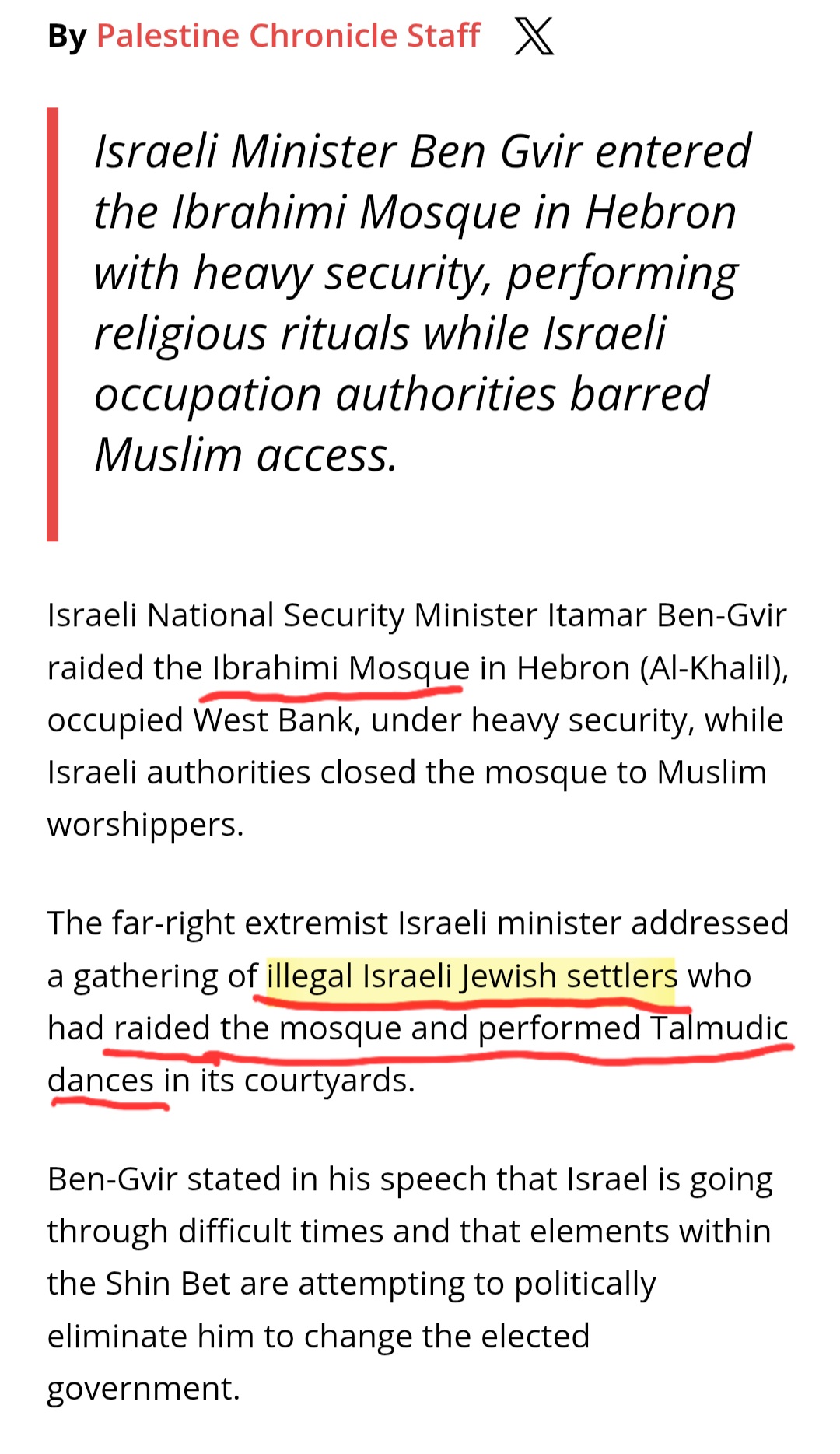
But the terminology seems to be shifting. Wafa, the Palestinian Authority’s official media arm, now increasingly calls Jews in these areas not “settlers,” but “colonists.” The updated lingo seems to fit better with the intellectual currents flowing through Western universities, where post-colonial studies cast Jews as Europeans imposing themselves on native lands. Never mind that Jews are the indigenous people of Judea, Samaria, and Jerusalem, and that there are more Mizrachi Israeli Jews than Ashkenazi—the narrative works if repeated often enough.

Wafa website on August 19, 2025

If the key to eroding U.S. support for Israel lies in framing Jews as oppressors and colonizers, then the Palestinian Authority is adapting accordingly. By embracing this academic jargon, it aligns itself with progressive activists abroad.

Expect the United Nations, NGOs, and sympathetic media outlets to follow suit. Language is a weapon, and the word “colonist” sharpens the blade. The campaign is not just to vilify Jews east of an arbitrary line—it is to recast Jewish presence anywhere in the land as alien, invasive, and illegitimate.

Further, “settlers” is deeply embedded with an anti-Jewish narrative. A pivot to a generic smear appears less antisemitic as well as more universal in condemning the entire Western world’s imperialism and colonialism. Take on Jews everywhere in “Palestine.” Take on Americans throughout “Turtle Island.”

“Colonists” are the new cudgel in the effort to purge Jews from their homeland. It’s a deliberate term and effort, crafted so as to be easily next replicated against Americans by radicals as the new school year begins.

The Israel Gaze

In 1975, film theorist Laura Mulvey coined the term “male gaze” to describe how women are portrayed on screen. The camera does not simply show reality — it frames women for a heterosexual male viewer. Women become visual objects, defined by how they serve the viewer’s pleasure, not by their own full humanity.

The concept applies far beyond film. A “gaze” is any dominant perspective that controls how another group is seen. The one doing the looking holds power; the one being looked at is flattened, reduced, and judged. The colonial gaze. The white gaze. The antisemitic gaze. In each, the subject is stripped of complexity and placed in a role that makes sense to the audience, not to themselves.

Israel is caught in such a gaze. Call it the “Israel Gaze.”

In the Israel Gaze, the Jewish state is the object, never the subject. It is to be observed, graded, managed — but rarely allowed to speak or act on its own terms. Its security concerns are minimized; its legitimacy treated as conditional.

Like the male gaze that zooms in on a woman’s body while ignoring the rest of her life, the Israel Gaze focuses on narrow, selective snapshots. Cameras linger on a checkpoint — but not the suicide bombings that created the need for it. They magnify airstrikes — but crop out the rockets that triggered them.

The framing serves the outside viewer, often a Western political elite, who want a morality play: powerful oppressor vs. powerless victim. Israel is assigned the role of aggressor. No matter the reality on the ground, the narrative is cast before the curtain rises.

And just as the male gaze reduces women to archetypes — seductress, mother, damsel — the Israel Gaze flattens Israel into “occupier,” “aggressor,” “settler state.” The country’s remarkable complexity — the ultimate decolonization project, a refuge for a persecuted people, a diverse democracy, a hub of innovation, a nation under constant threat — disappears from view.

This gaze is not neutral. It is a tool of power. In film, it props up patriarchy. In global politics, it reinforces the idea that Israel’s right to exist, defend itself, or define its own future depends on approval from outsiders who claim the right to judge.

Typical UN vote condemning Israel – lopsided

Mulvey noted in her analysis that “her visual presence tends to work against the development of a story line, to freeze the flow of action in moments of erotic contemplation.” So it is in global politics, with the viewer solely transfixed on Israel’s supposed evils that the actual storyline – and path to peace – is lost out of sight.

Both the male gaze and the Israel Gaze deny the subject the dignity of being whole. Both reduce identity to an image crafted for someone else’s satisfaction. And both sustain an imbalance in which the viewer’s comfort matters more than the subject’s survival.

Israel faces two battles at once: the immediate fight for security and the deeper fight to be seen truthfully. Until the gaze changes, the story will never be told honestly — and the verdict will be written before the trial even begins.