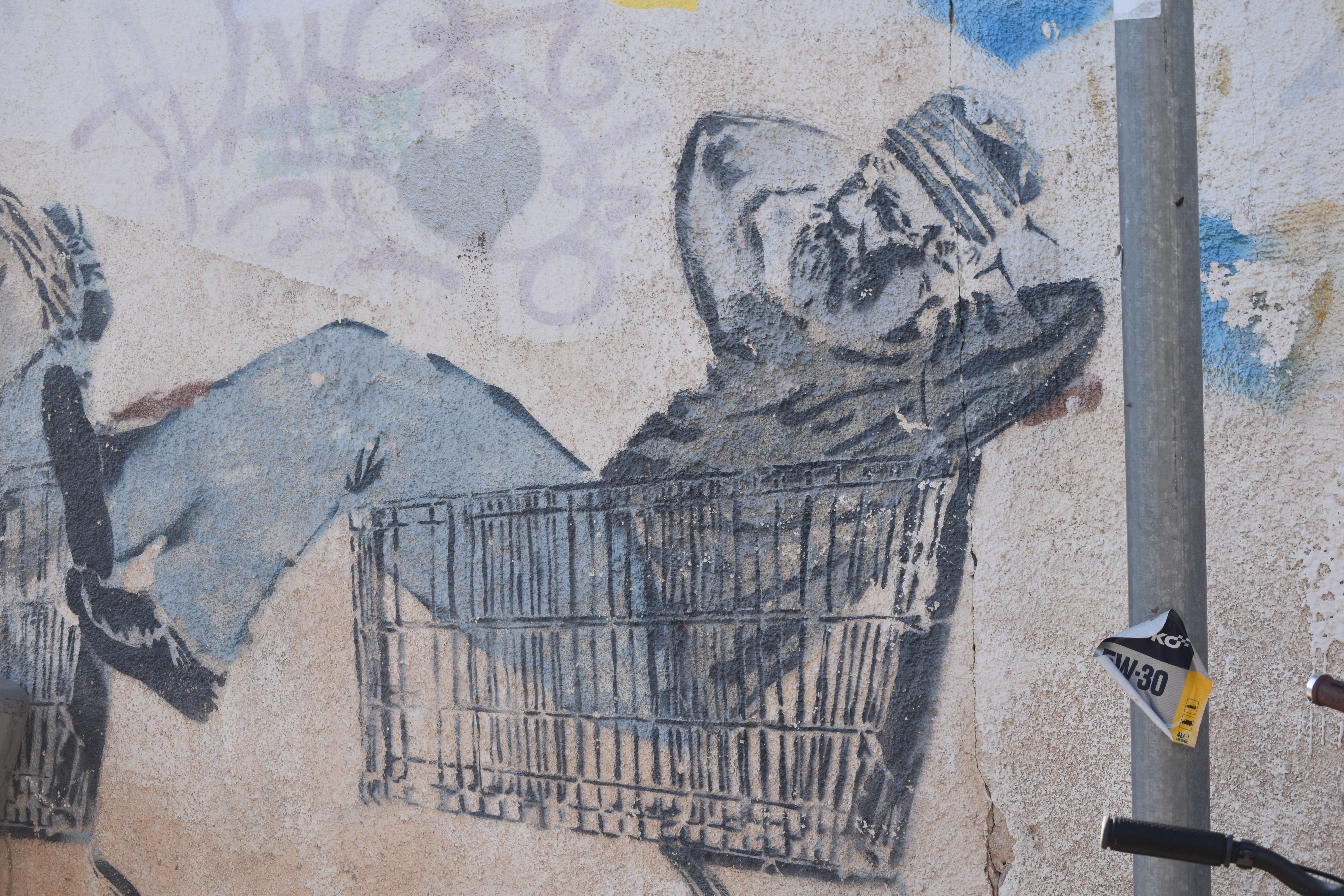
The train rolled quietly toward Tel Aviv, its rhythm broken only by the soft buzz of conversations and the glow of phone screens. Across from me sat two young soldiers. Their rifles rested casually against their legs while their attention was fixed on their cellphones – one scrolling through messages, the other smiling at a photo someone had sent. It was a striking image of modern Israel: a generation carrying both the tools of war and the ordinary routines of youth.

After two years of war, the sight no longer seemed unusual. Uniforms had become part of daily life. The soldiers were not isolated behind military bases; they were students, siblings and neighbors riding the same commuter trains as everyone else.
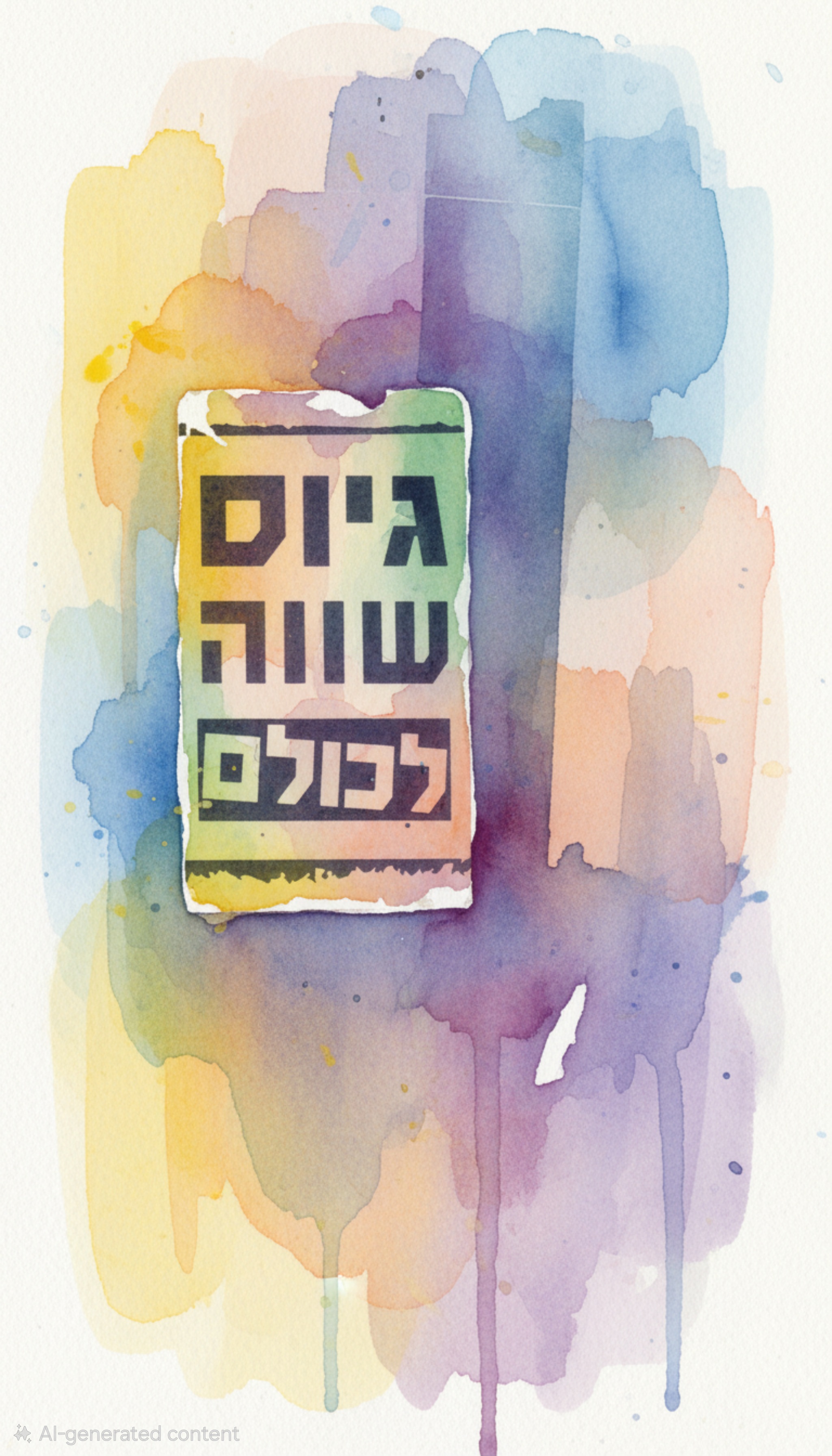
Stepping off at Tel Aviv’s HaShalom – “the Peace” – station, another reminder of the country’s debate awaited. Stickers were plastered on walls and signposts declaring, “גיוס שווה לכולם” – “The draft should be equal for everyone.” The slogan was impossible to miss. It reflected the growing frustration of many Israelis who believe military service should be shared by all citizens, particularly as the controversy over exemptions for many ultra-Orthodox men has intensified during a prolonged war.
From the station I walked up the street toward Sarona.
The mood shifted almost instantly. The urgency of the train gave way to quiet streets lined with restored nineteenth-century stone buildings, their green shutters and warm walls carefully preserved. Families strolled through the park, office workers carried coffee between meetings, and children played on the lawns.
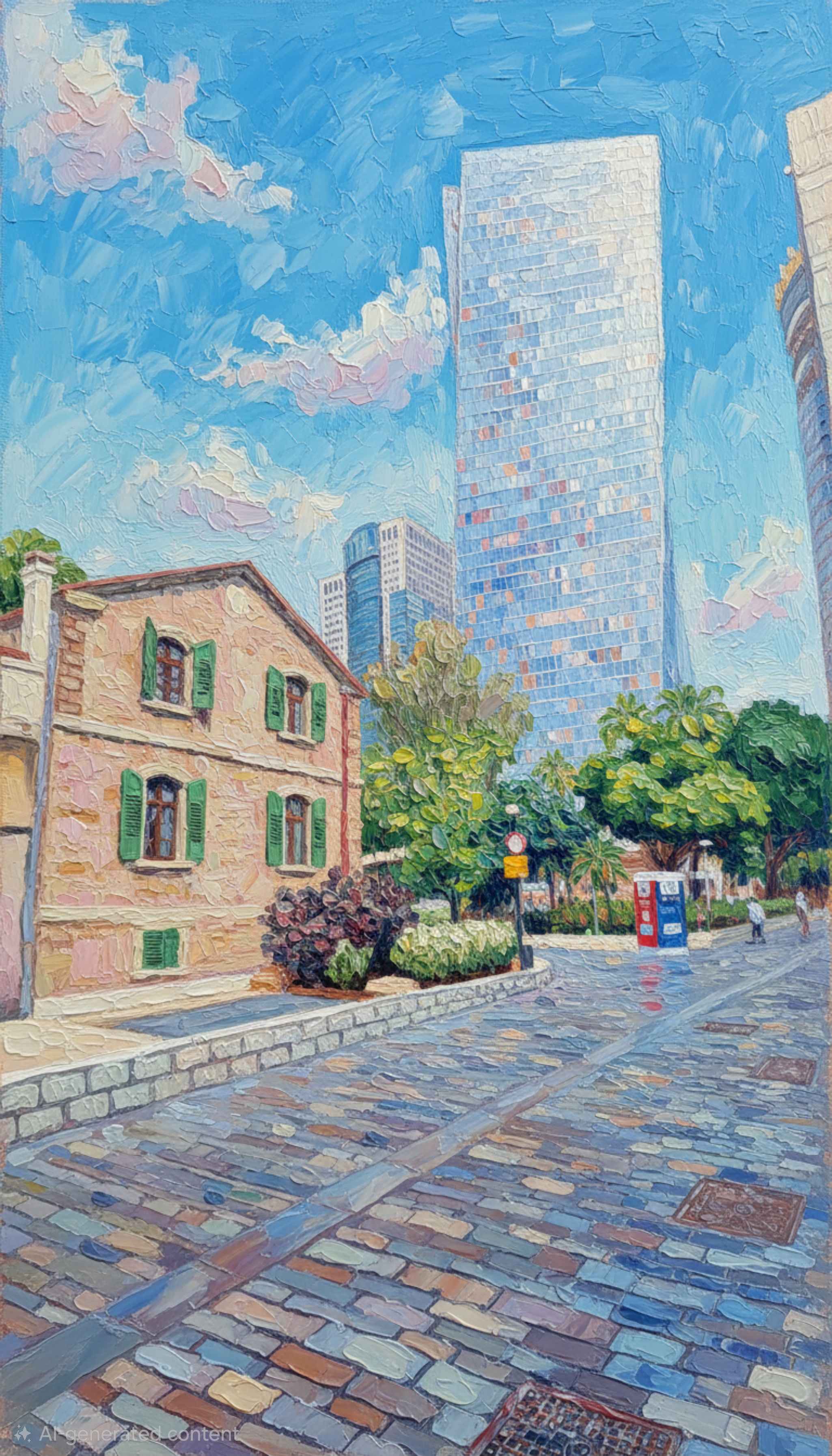
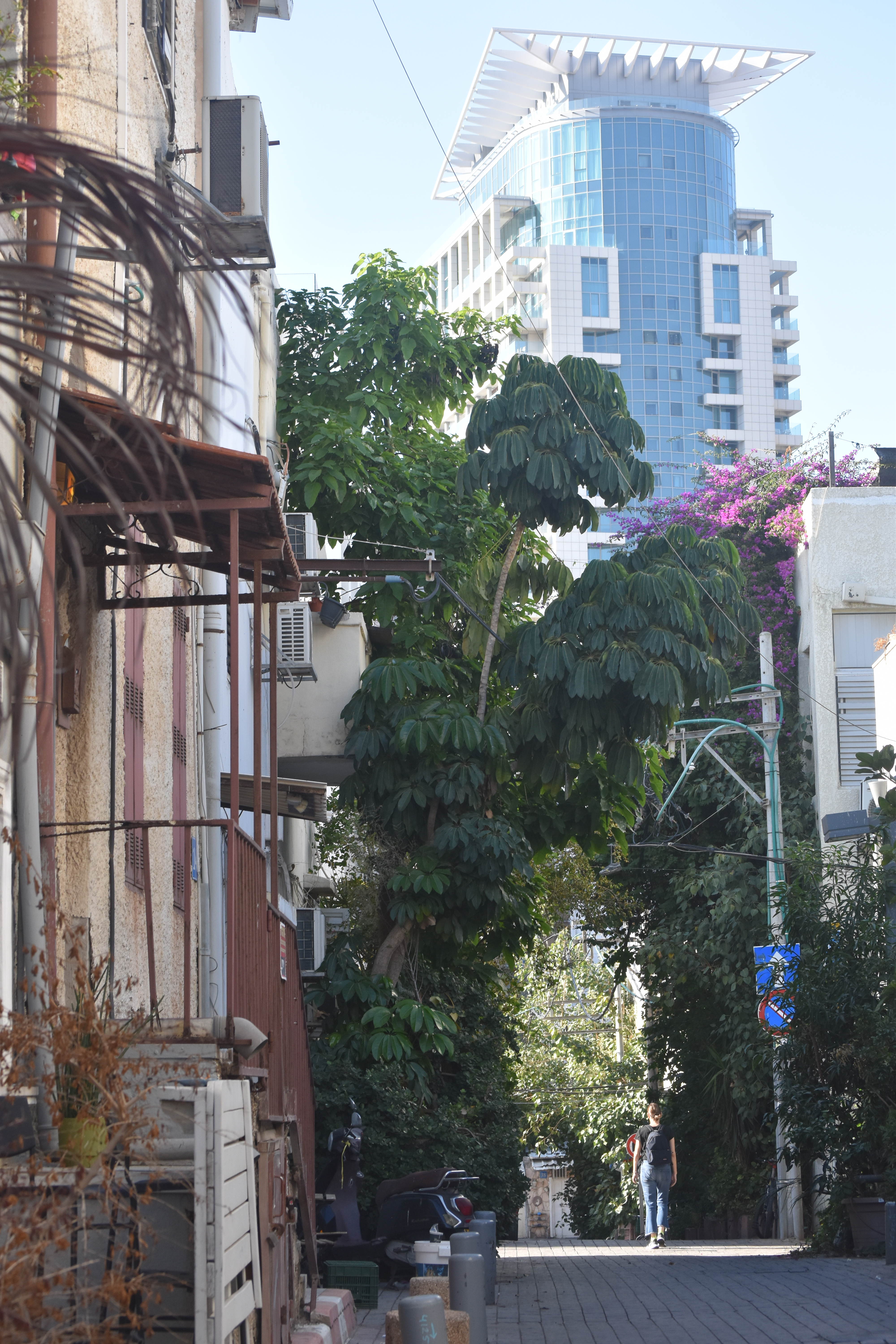
Rising above this tranquil scene were gleaming glass towers – headquarters of technology companies, investment firms and startups reaching into the Mediterranean sky. The contrast was remarkable. The old Templar colony had not been erased by progress; it had been woven into it. History remained at street level while the future climbed overhead.
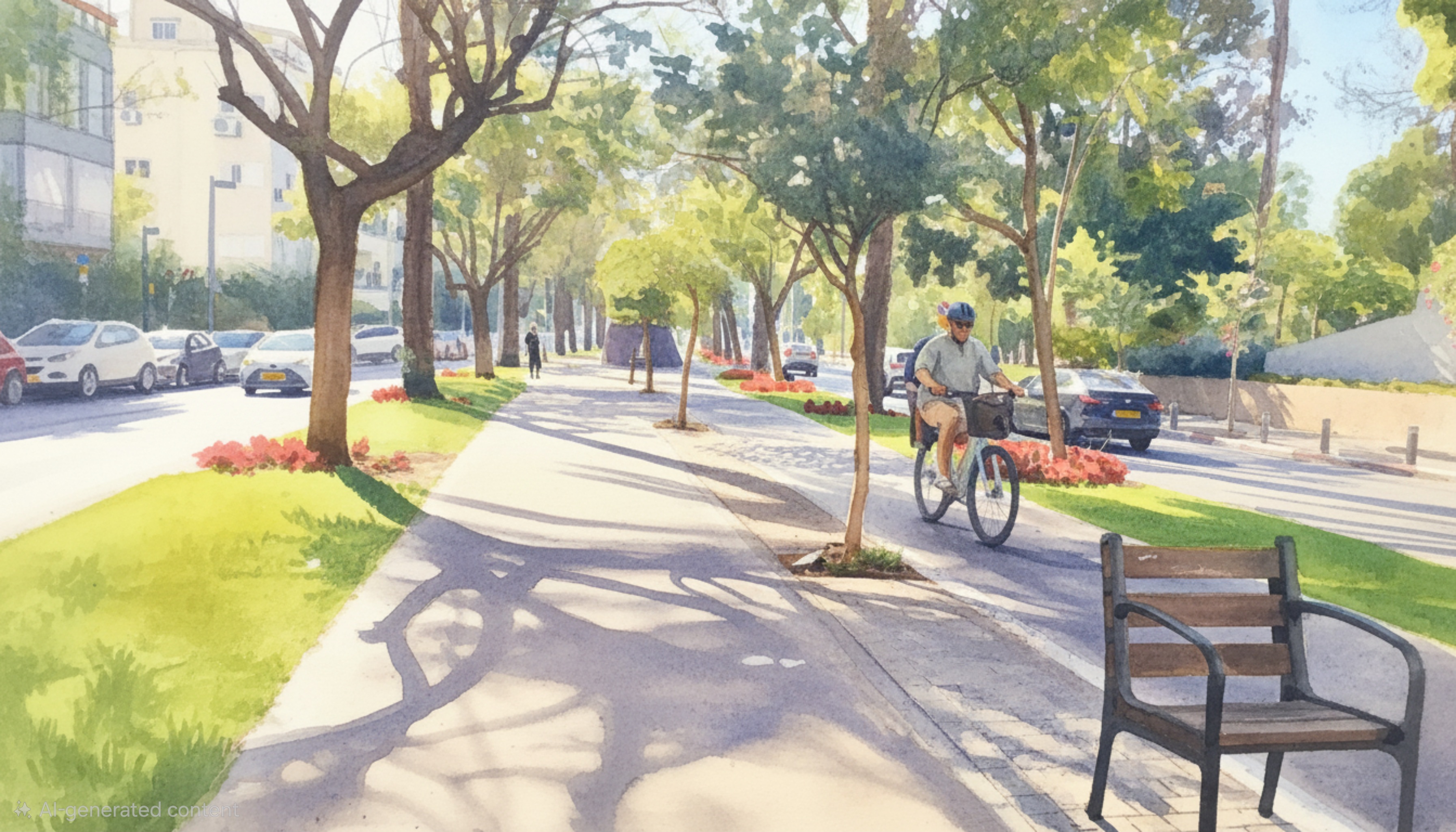
From Sarona I continued west beneath long rows of jacaranda trees. The sidewalks were broad and shaded despite the afternoon heat. Cyclists glided silently along dedicated bike paths while dog walkers stopped to exchange greetings in Hebrew, English, French and Russian. The city moved at an easy rhythm, confident and unhurried.
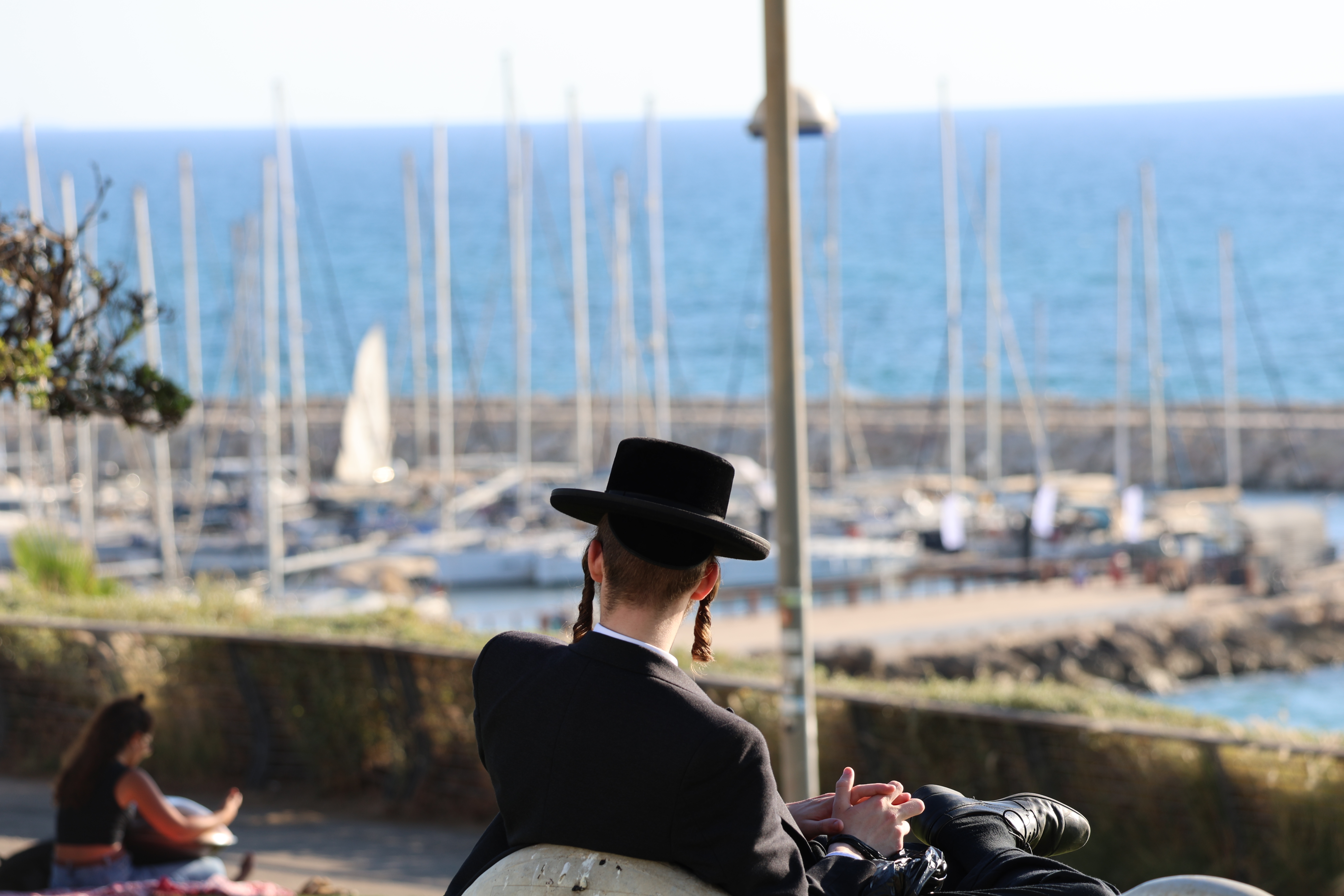
By the time I reached the Mediterranean, the sky had begun to soften into cooler shades of blue. A young woman played a steel drum near the promenade, the Caribbean melody drifting above the soft crash of the waves. Just up the gentle hill, an ultra-Orthodox man sat quietly, listening. His eyes wandered beyond the music toward the sailboats slowly crossing the horizon, their sails turning black against the fading sun.

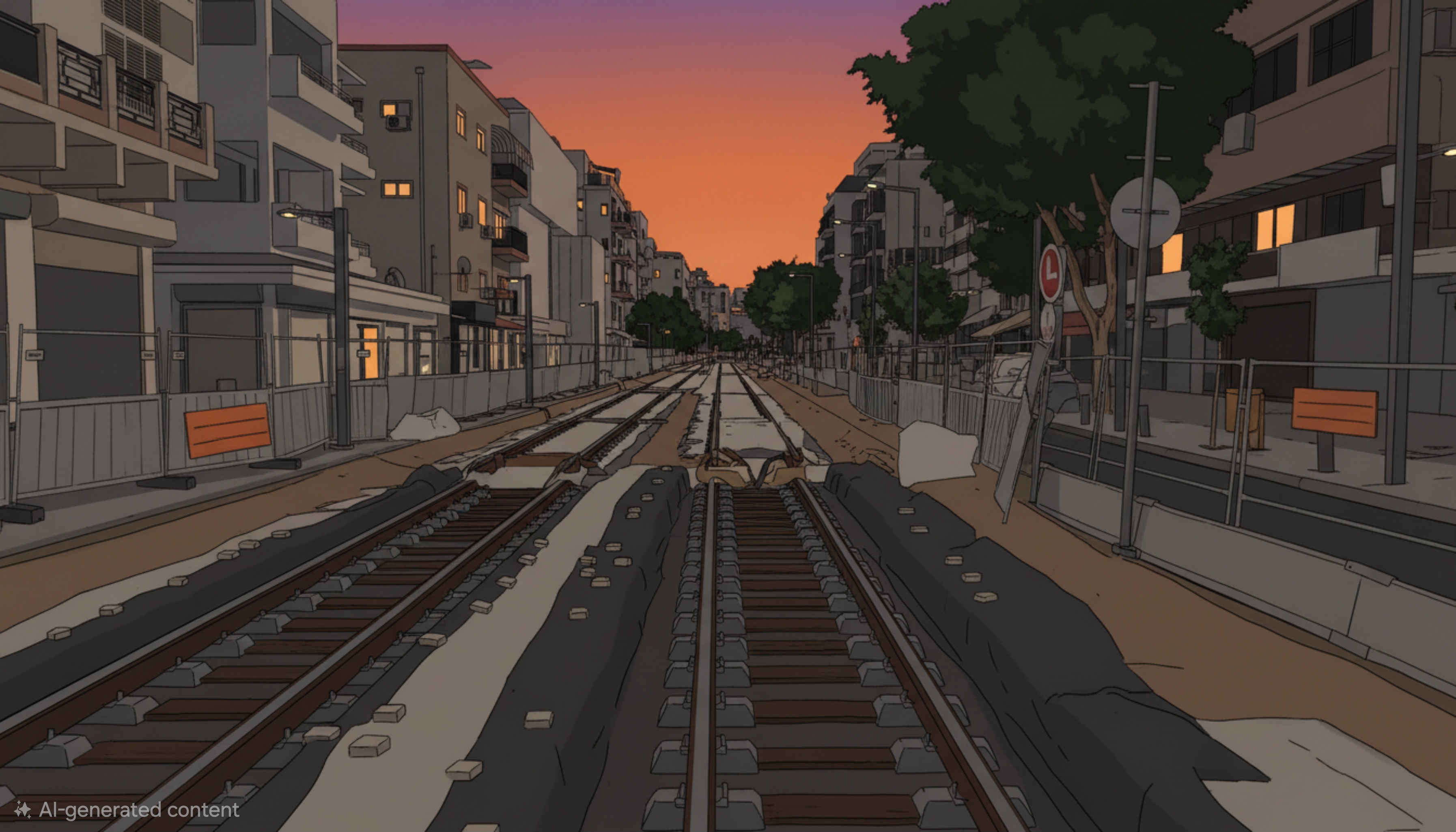
As darkness approached, I turned back toward my hotel. Along the route, fresh rails stretched down the center of the boulevard. Fences, construction equipment and unfinished stations marked the slow progress of Tel Aviv’s expanding light rail. The war had left its mark here, as many Israeli construction workers had been called into reserve duty, while restrictions on Palestinian Arab workers entering Israel had reduced another important source of labor. Even in a city racing toward the future, history and security continued to shape the speed of ordinary life.
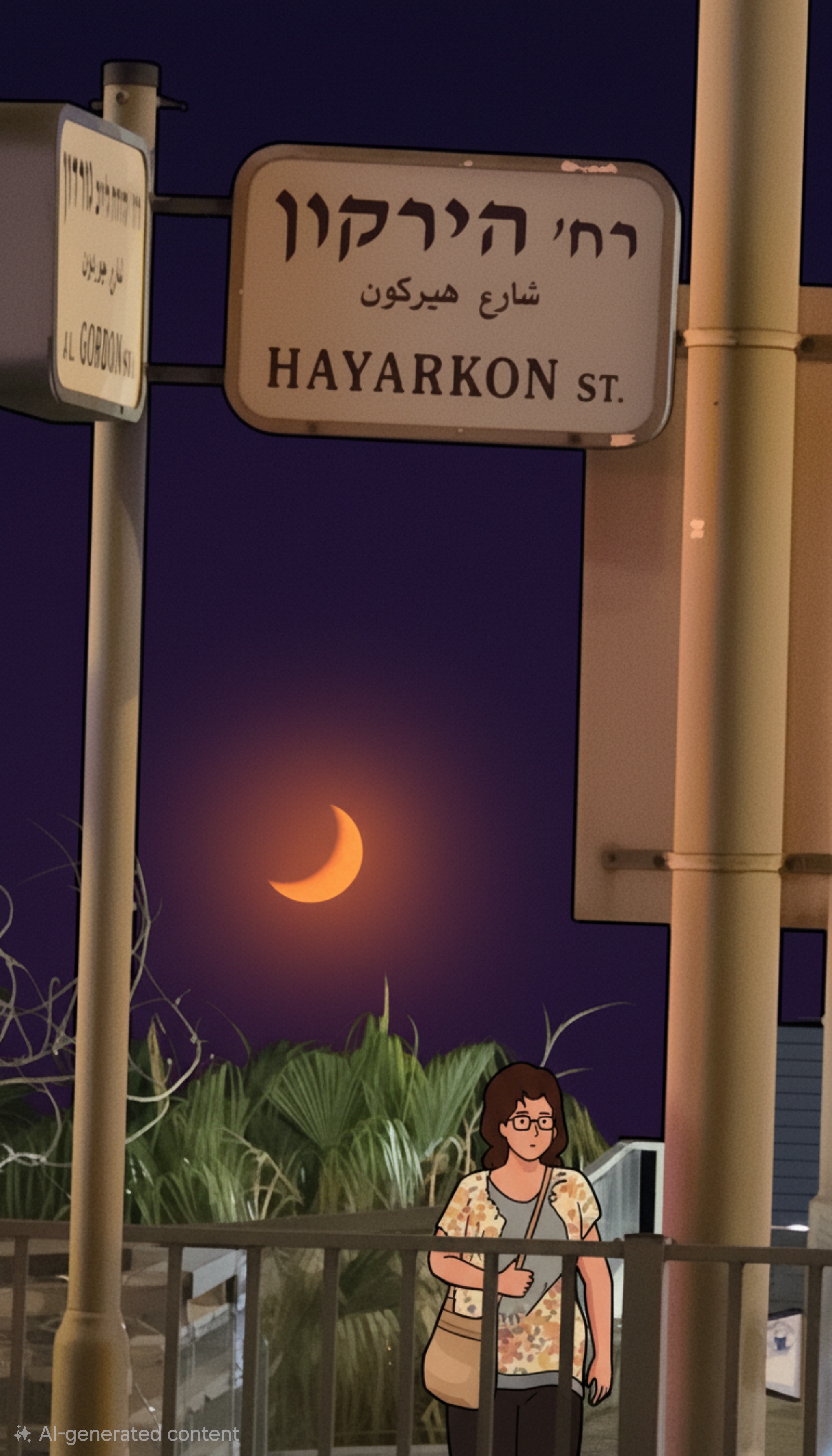
Night settled over the White City. Above the Bauhaus facades and surprisingly green parks, a deep red crescent moon hung low before slipping toward the Mediterranean. It seemed a fitting end to the day. Tel Aviv is often celebrated for its beaches, cafés and nightlife, yet what lingered most was something less obvious: a city where soldiers and software engineers share commuter trains, where old stone houses stand beside glass towers, where debates over duty appear on stickers at the station, and where, despite the burdens of war, people still ride bicycles beneath leafy boulevards toward the sea as both sun and moon set over Israel.
The next morning I woke before dawn, courtesy of jet lag. It was barely five o’clock, and rather than fight the early hour, I headed outside and walked toward the beach, turning south in the direction of Jaffa.
The city was just beginning to stir.
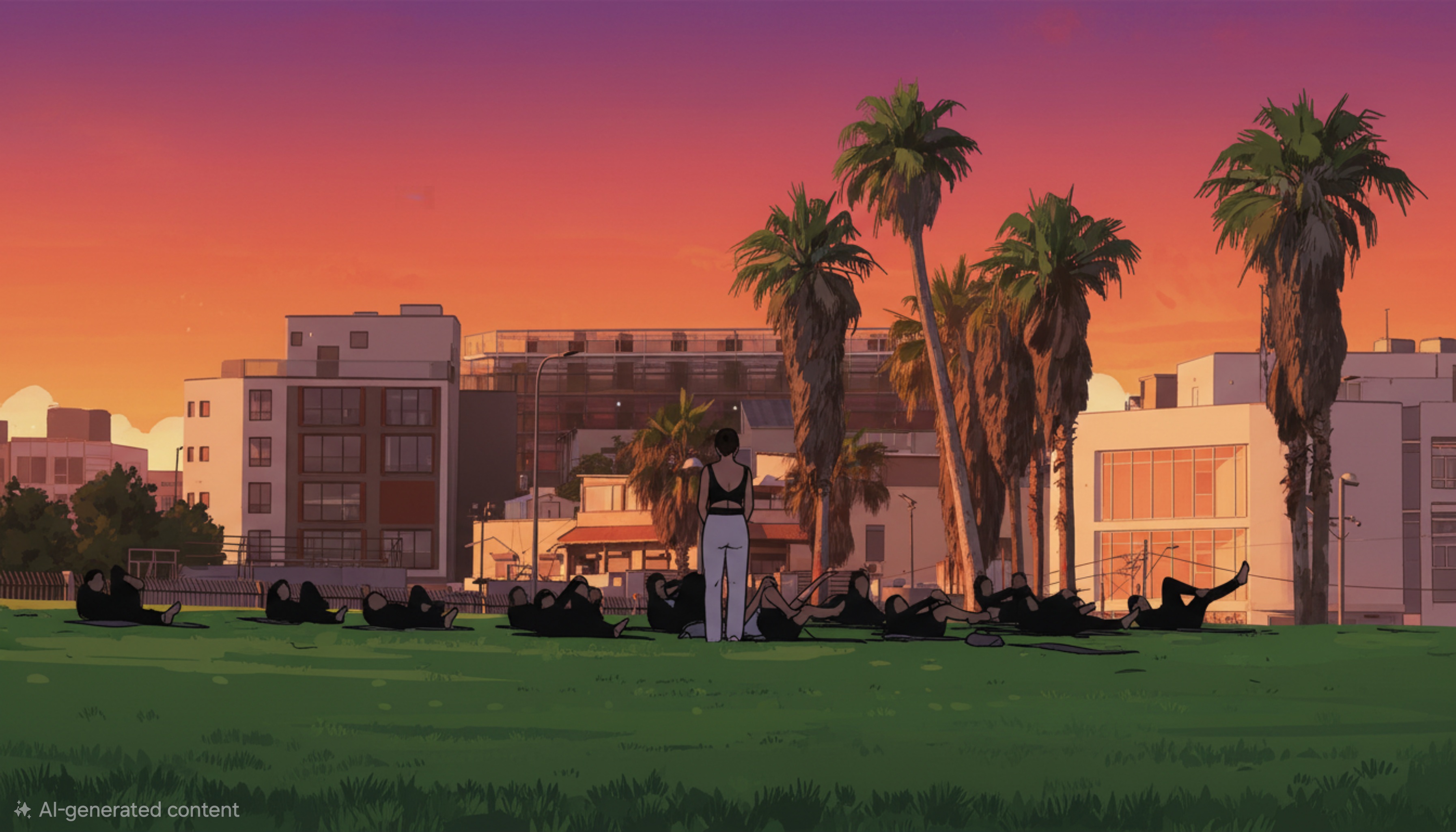
On a grassy stretch above the promenade, a group of women had gathered for morning exercise. Jews and Arabs stretched side by side as the first rays of sunlight crept across the lawn. No one seemed interested in the differences that so often dominate headlines. At that hour, they were simply neighbors greeting another day.
The rising sun appeared between the towers, casting long golden reflections across the sea. As I continued south, I crossed the invisible boundary where Tel Aviv gradually becomes Jaffa. There is no wall, no gate, no sign announcing the transition. Modern boulevards slowly yield to older stone buildings until, ahead, the ancient hill of Jaffa emerged from the morning haze.
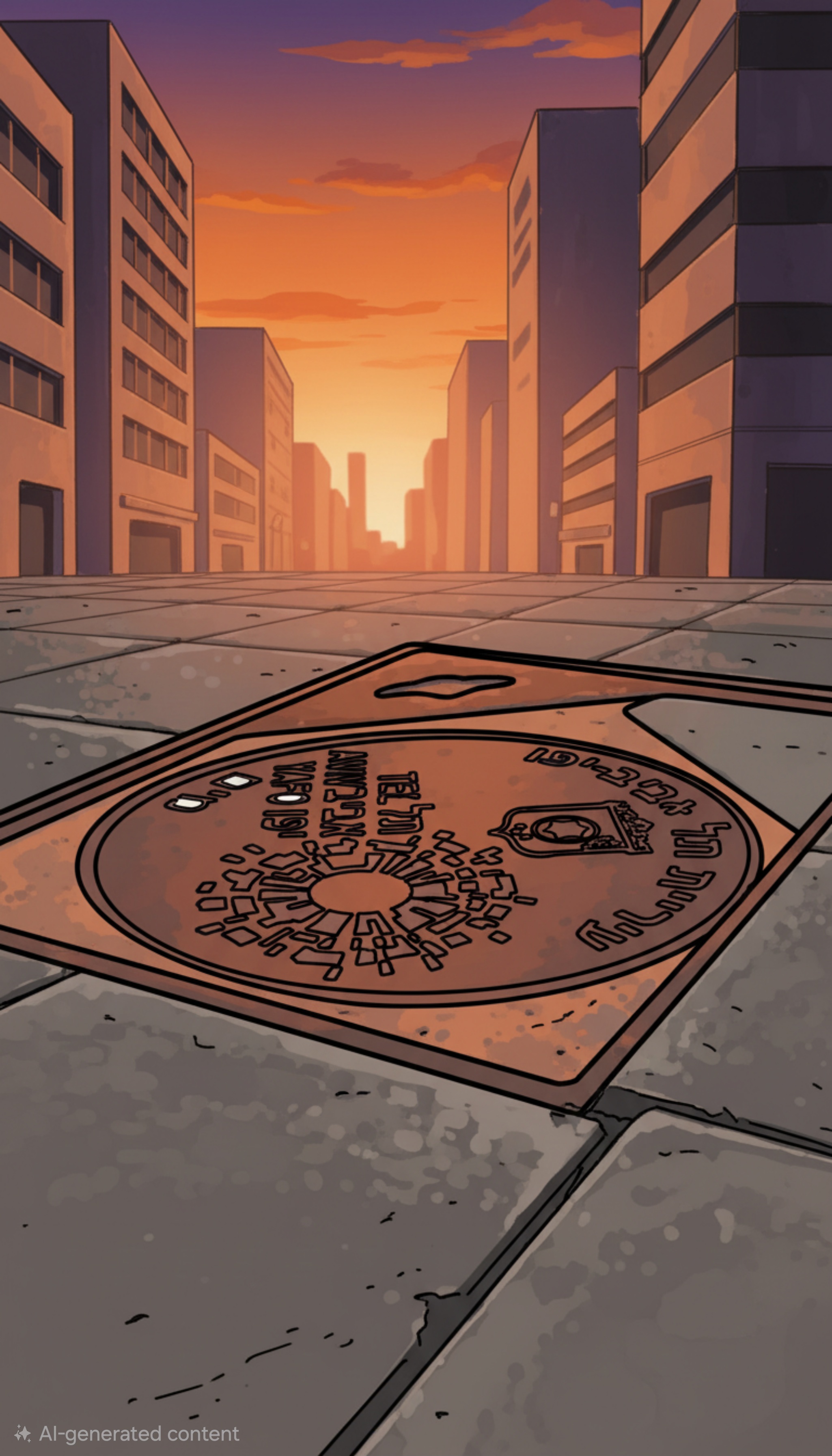
The old city looked timeless. Its limestone walls glowed honey-gold beneath the rising sun, church towers rising above clusters of palms that have watched merchants, pilgrims and conquerors arrive for centuries. Behind me stretched one of the world’s youngest major cities; before me stood one of its oldest. Few places compress four thousand years into a morning walk.
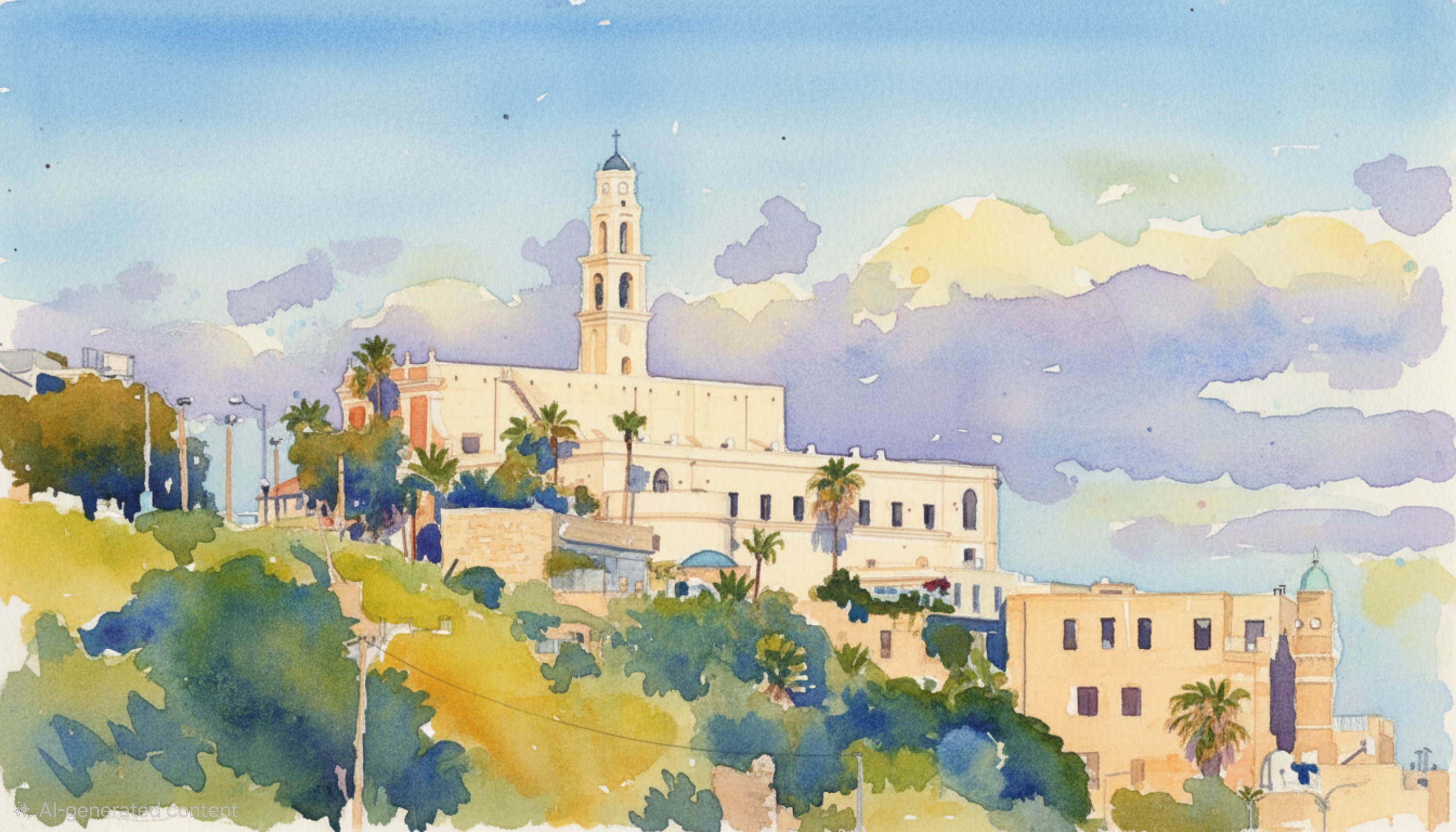
Yet the promenade is also a walk through painful memory.
Every few hundred yards another monument interrupts the rhythm of the sea. A simple memorial recalls the Altalena, the tragic 1948 confrontation in which the fledgling Jewish state nearly fractured before it had fully been born. Farther along stands the memorial to the Dolphinarium bombing, where a Palestinian Arab suicide attack murdered young people waiting to enter a beachfront nightclub, freezing forever what should have been an ordinary summer evening.

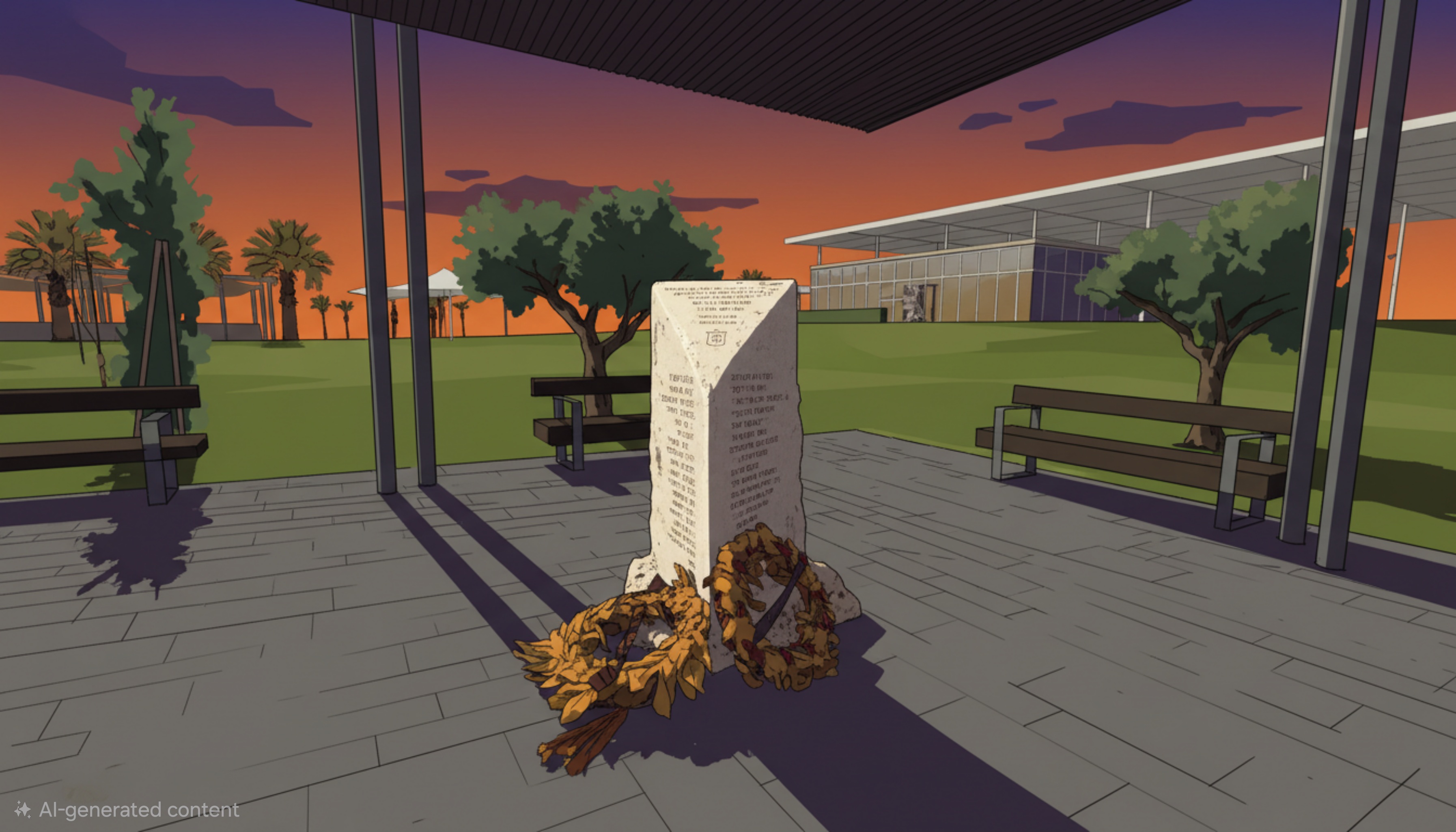
The newest memorials are not carved in stone. They are printed on paper.
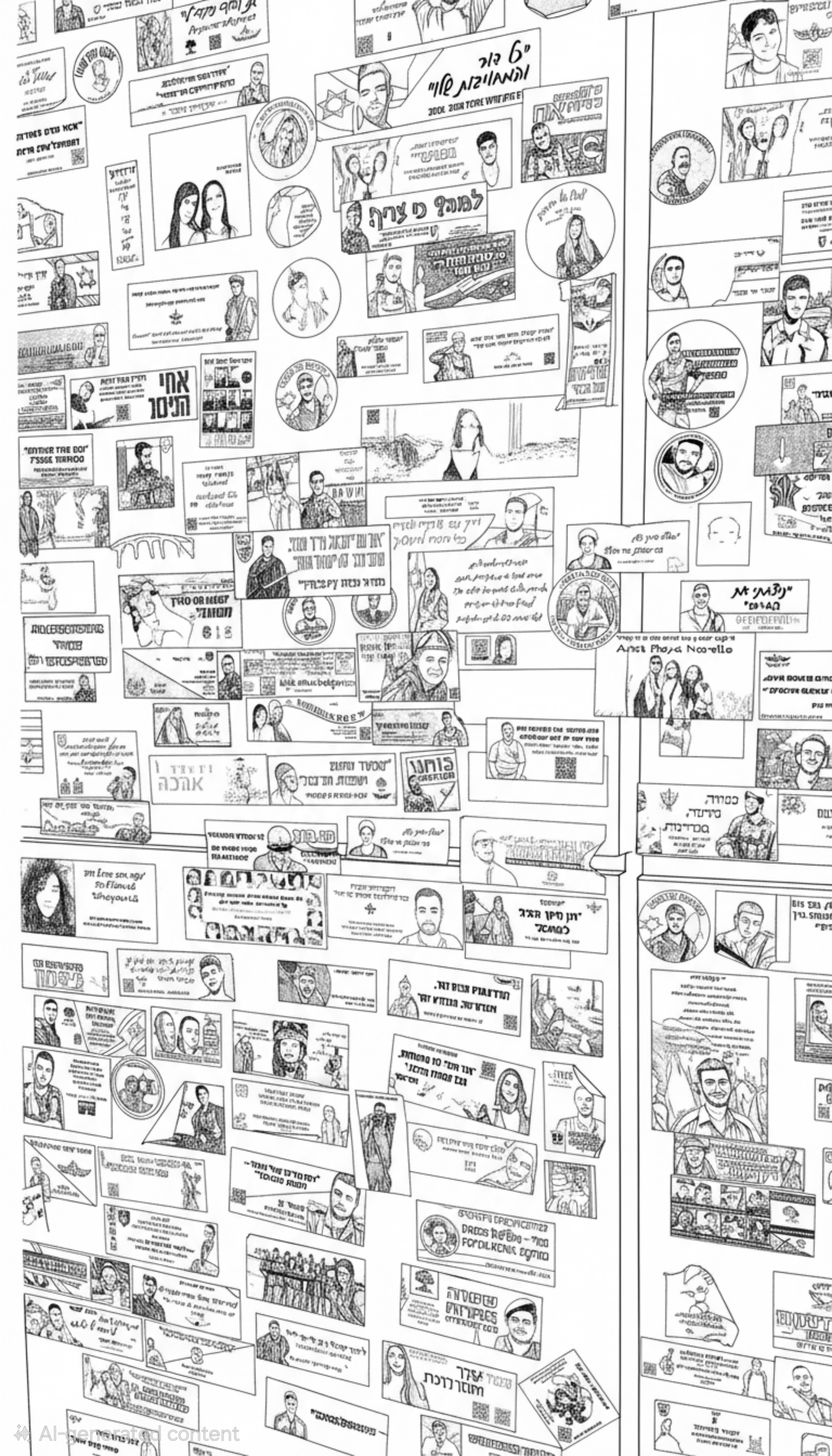
Walls, bus stops and utility boxes are covered with hundreds of stickers bearing the faces of young men and women killed since the October 7 massacre and the war that followed. Some are soldiers, others are civilians. Each bears a photograph, a name and often a brief message from family or friends. Individually they are easy to pass without notice. Together they form an unofficial memorial stretching across the city, reminding everyone that the smiling faces should still be walking these same streets.
Turning back toward my hotel, I watched the city awaken.
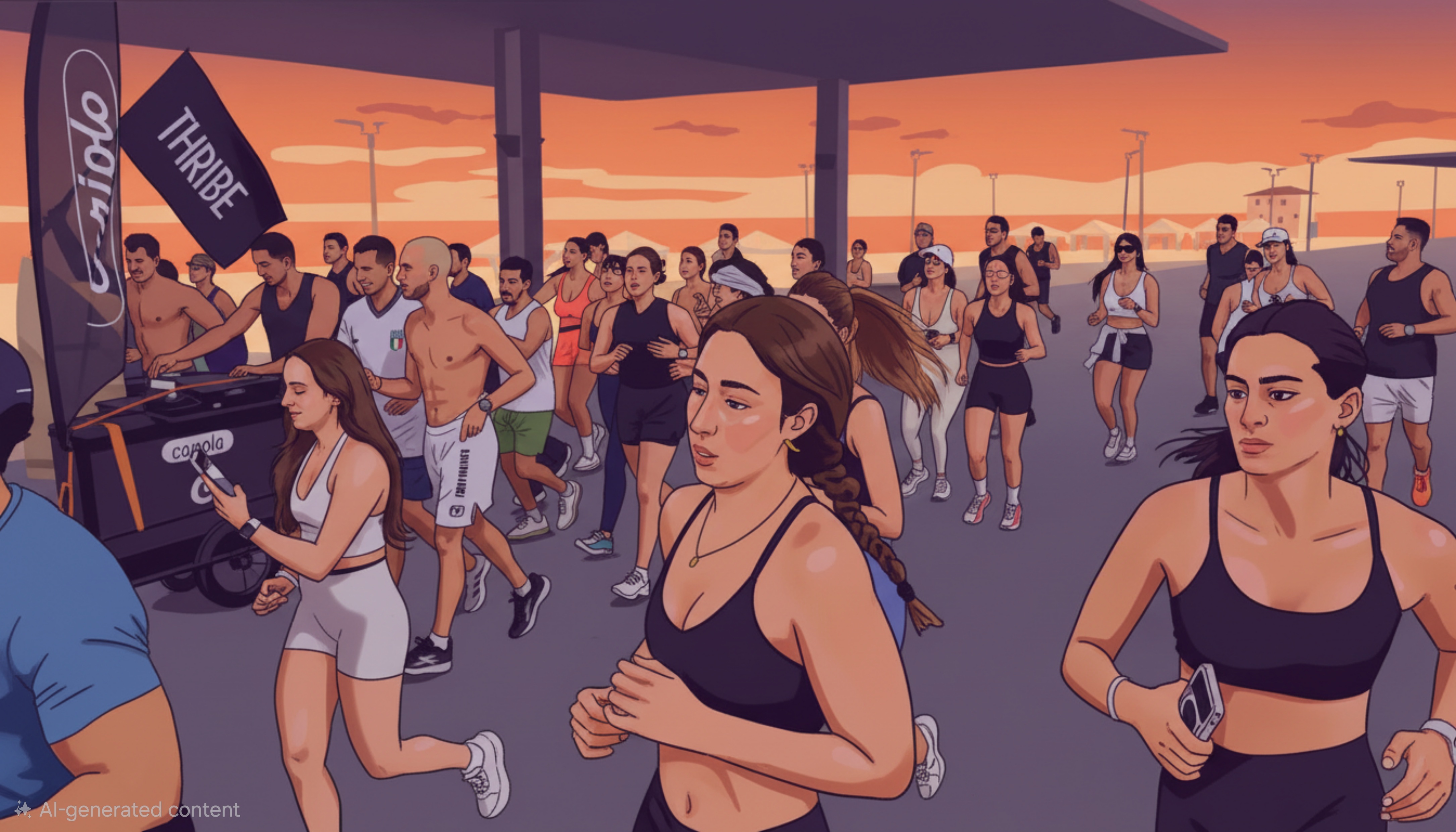
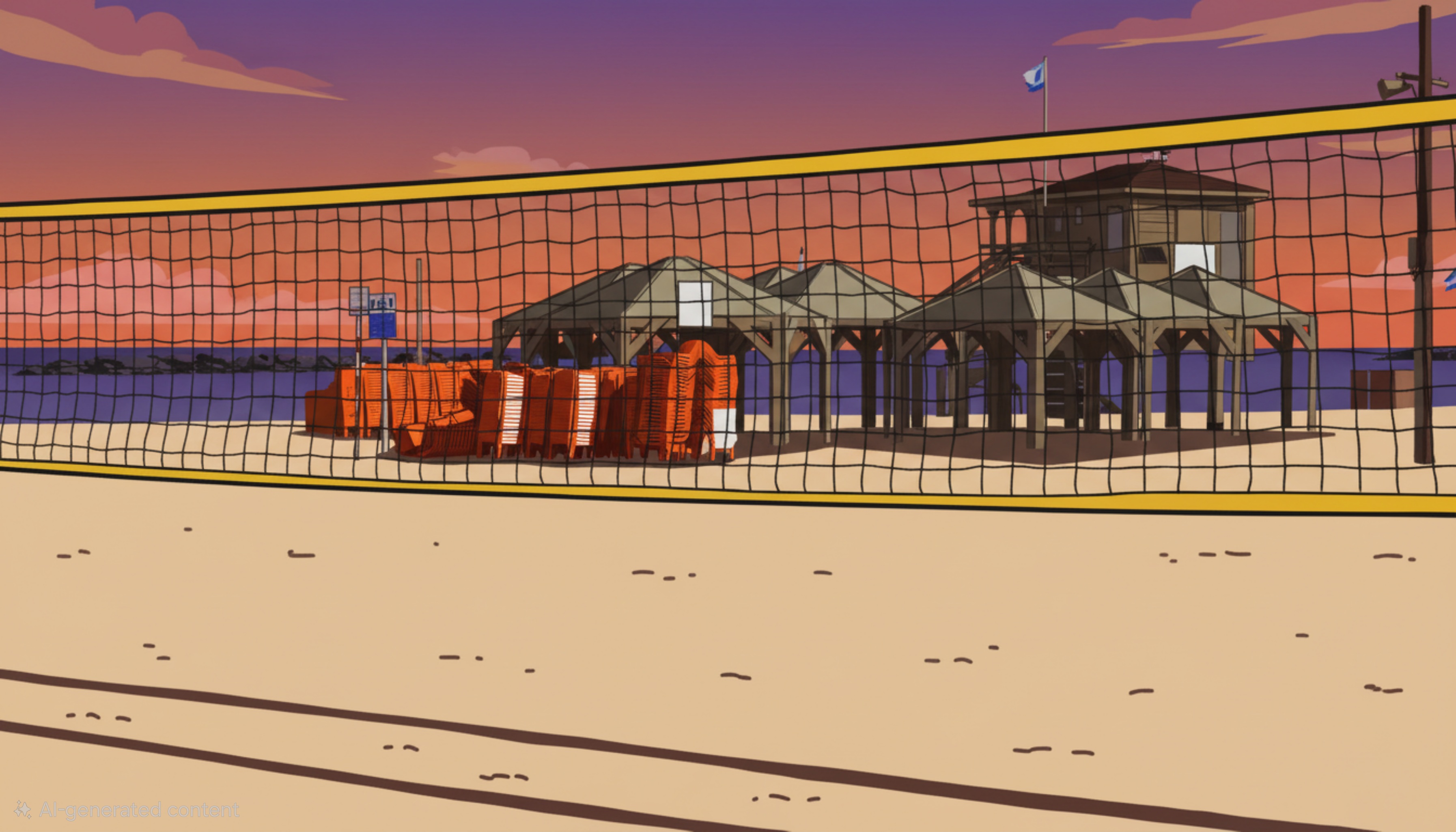
At first there were only a handful of runners. Then another dozen. Within minutes the promenade had become a river of joggers moving north and south along the shoreline. Cyclists moved passed them in dedicated lanes while the Mediterranean rolled steadily against the seawall. The volleyball courts still stood empty, their nets waiting for the first matches of the day.
Despite the hundreds of people already enjoying the morning, security remained almost invisible. The only uniformed officers I encountered were two young policewomen sitting beside their patrol car, laughing as they leaned together to take a selfie. It was another reminder that life here is lived in layers. A country still at war. A city that had known rockets and sirens. Yet on this morning, two officers paused, like young people anywhere else, to capture a moment with a cellphone.

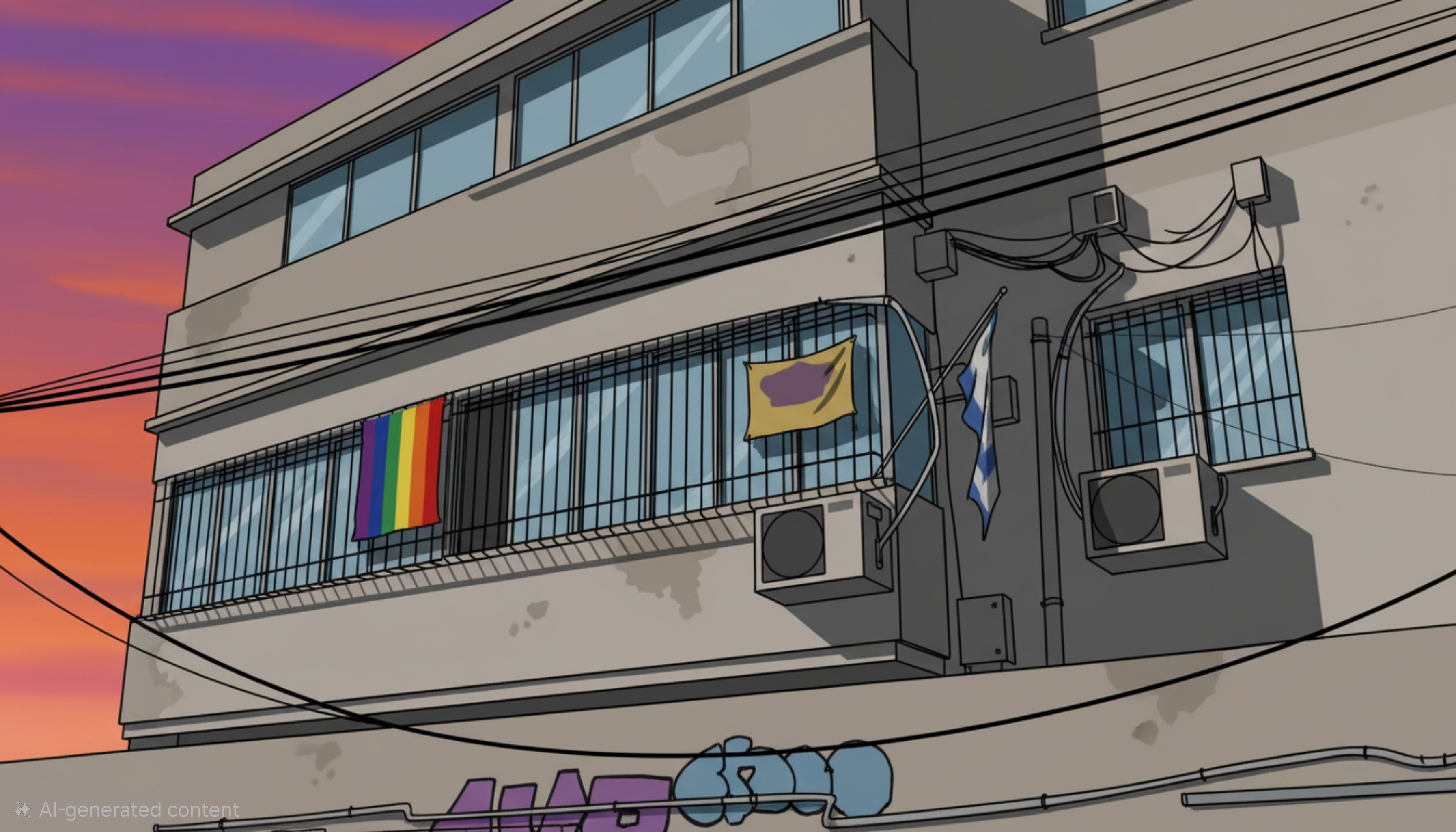
As I approached my hotel, another juxtaposition caught my eye. Apartment balconies facing the street served as tiny windows into the lives of their occupants. On one balcony hung a rainbow Pride flag. Just a window away fluttered a yellow Chabad Moshiach flag, proclaiming hope for the coming of the Messiah. In many places, those symbols might be seem irreconcilable. The flags did not suggest agreement but coexistence. The residents likely disagreed about politics, religion and the future of Israeli society. Yet neither had torn down the other’s banner. The building itself had become a quiet lesson in democratic life.
Back at the hotel, breakfast was every bit as impressive as the Mediterranean outside the windows. Fresh salads, nuts, cheeses, shakshuka, breads still warm from the oven, amazing fruit, squares of halva and strong Israeli coffee made lingering far too tempting.
Eventually, I pushed away from the table and traded dawn’s leisurely pace for another walk, this time inland.
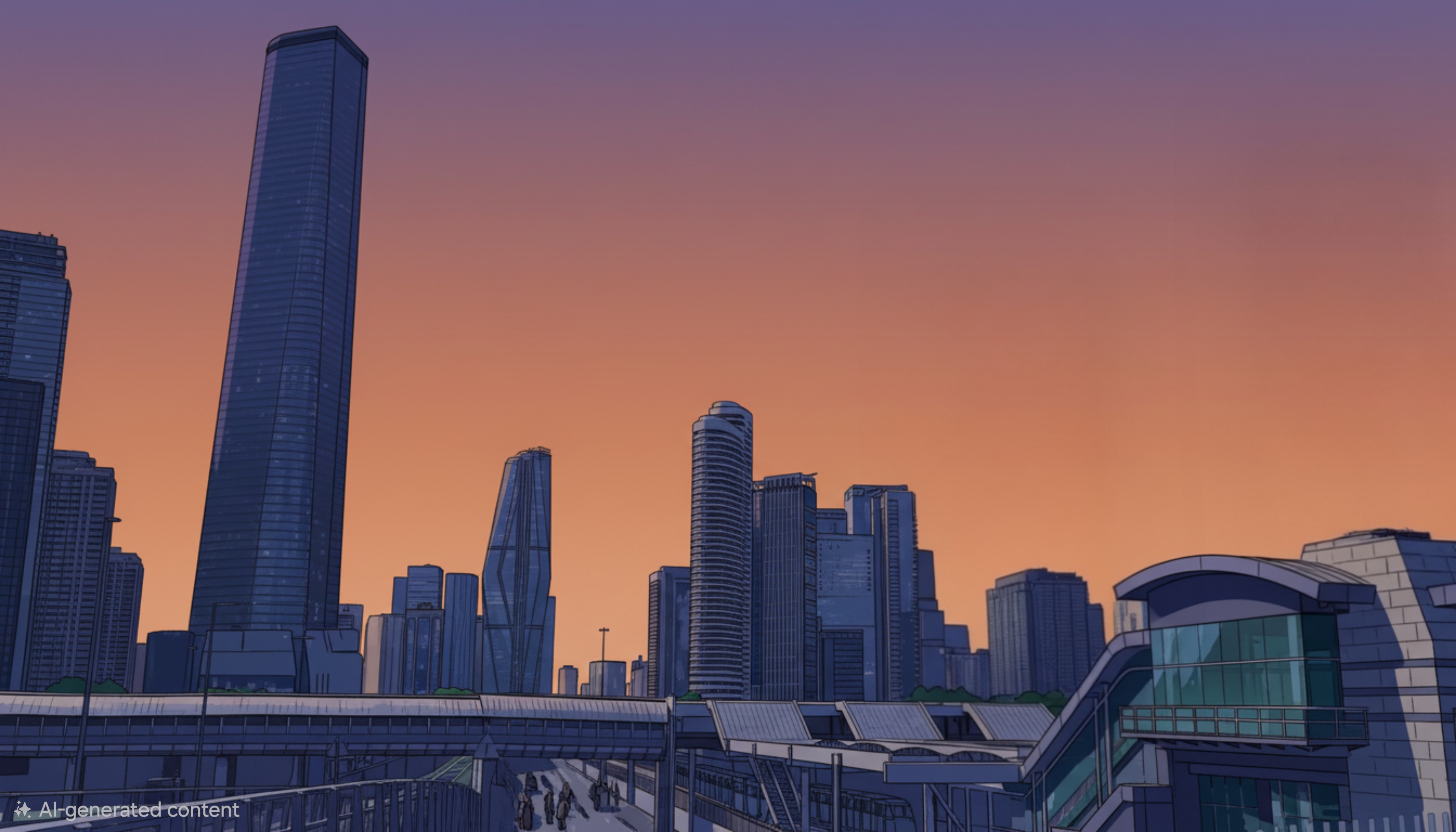
In barely forty minutes, the sea breeze gave way to glass towers, venture capital offices and the headquarters of companies whose software, artificial intelligence, cybersecurity and communications products are used around the world. The transformation was remarkable. One moment I was watching paddleboarders on the Mediterranean; the next I was surrounded by one of the world’s great technology hubs. Tel Aviv’s reputation as the “Startup Nation” is not an abstract slogan. It is a city where people can begin the morning watching the sunrise by the sea and arrive at meetings shaping the future before most cities have finished their commute.
After the day’s meetings, I made the walk back toward the coast. The beach had transformed once again.
The jogging dawn promenade had given way to the rhythm of a summer afternoon. The surf clubs were busy, rows of brightly colored boards stacked outside while paddleboards waited for the next calm outing. A sign pointing toward the nearest bomb shelter hung beside the entrance, blending almost unnoticed into the scene.
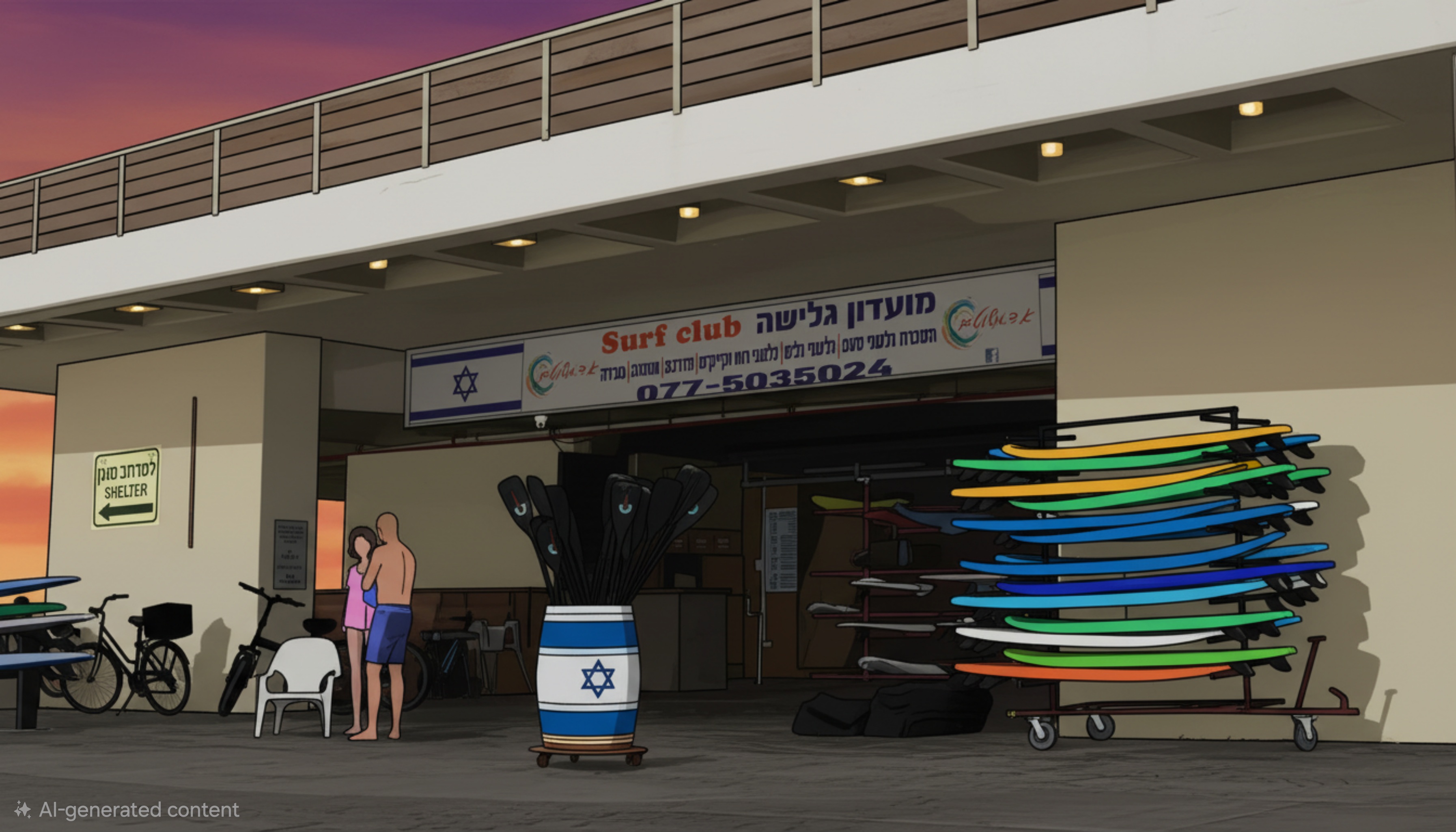
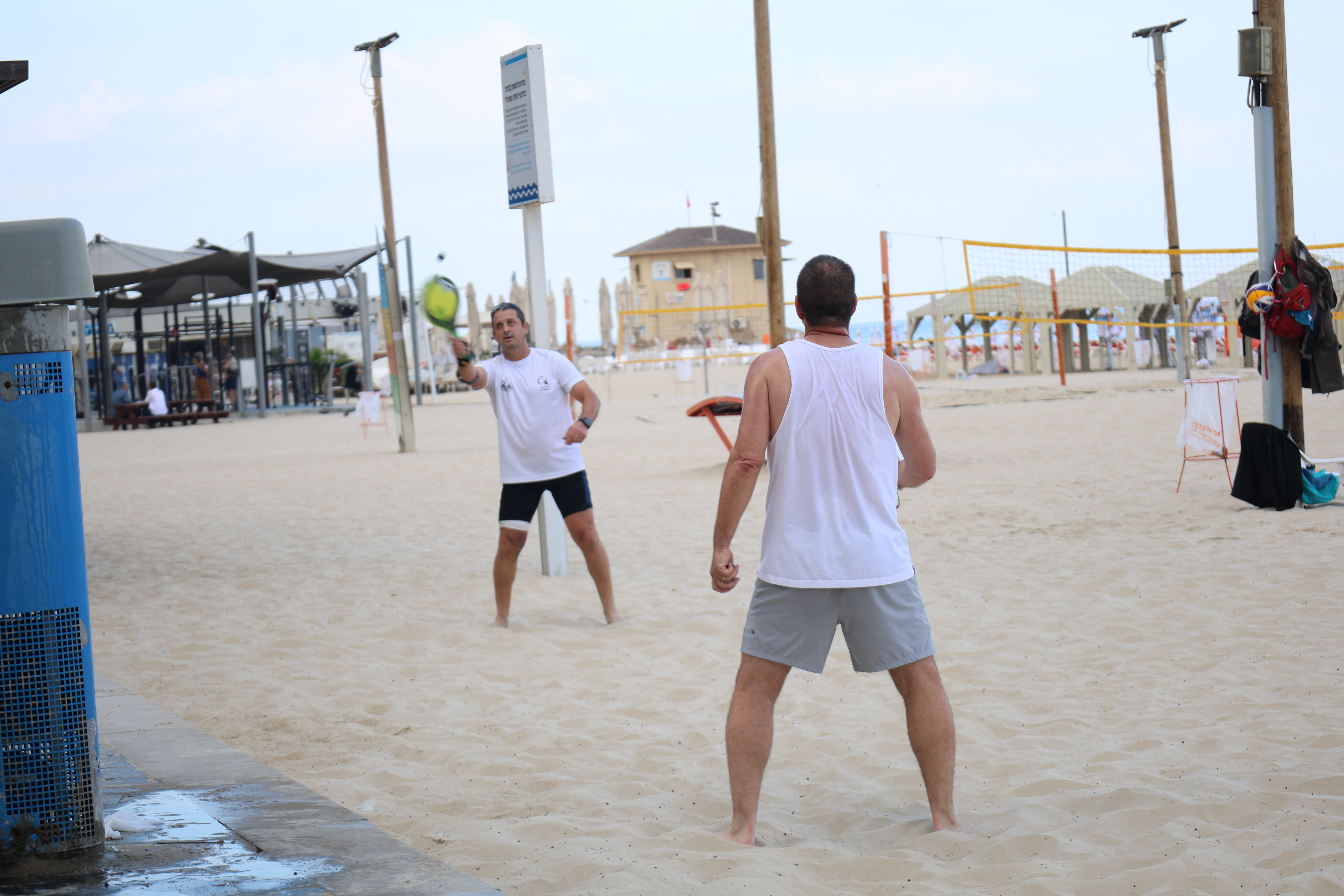
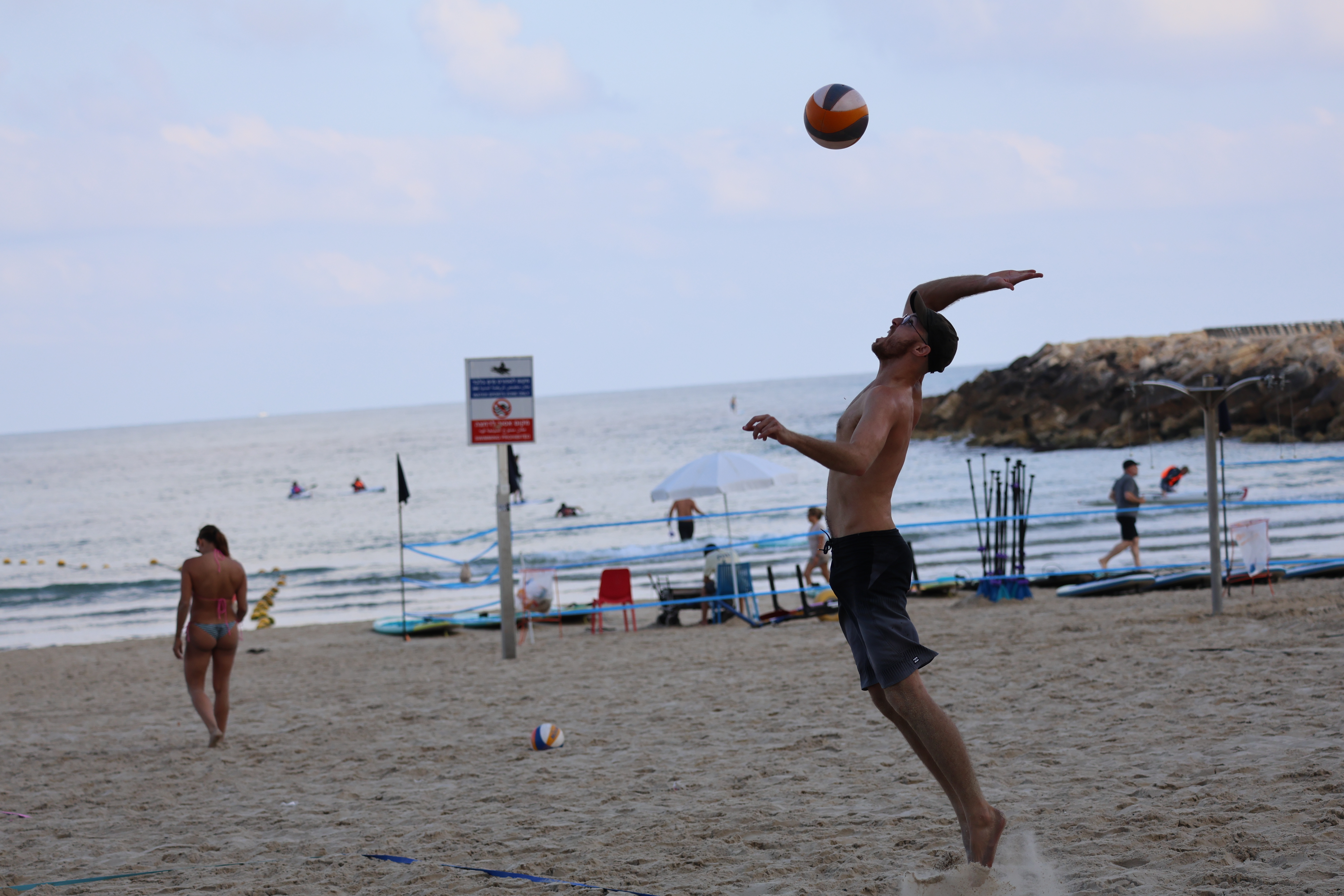
The unmistakable crack of matkot echoed across the sand – the sharp wooden sound of paddle meeting ball, as much a part of an Israeli beach as the waves themselves. Surfers searched for the best breaks while others stood atop paddleboards gliding across the calm Mediterranean. Families spread towels across the sand. Friends settled into circles, talking for hours, absentmindedly cracking open sunflower seeds and dropping the shells into cups which had been drained of beer, as the afternoon slowly slipped toward evening.
After showering off the salt, I headed back into the city for dinner.
Tel Aviv has quietly become one of the world’s great food cities.
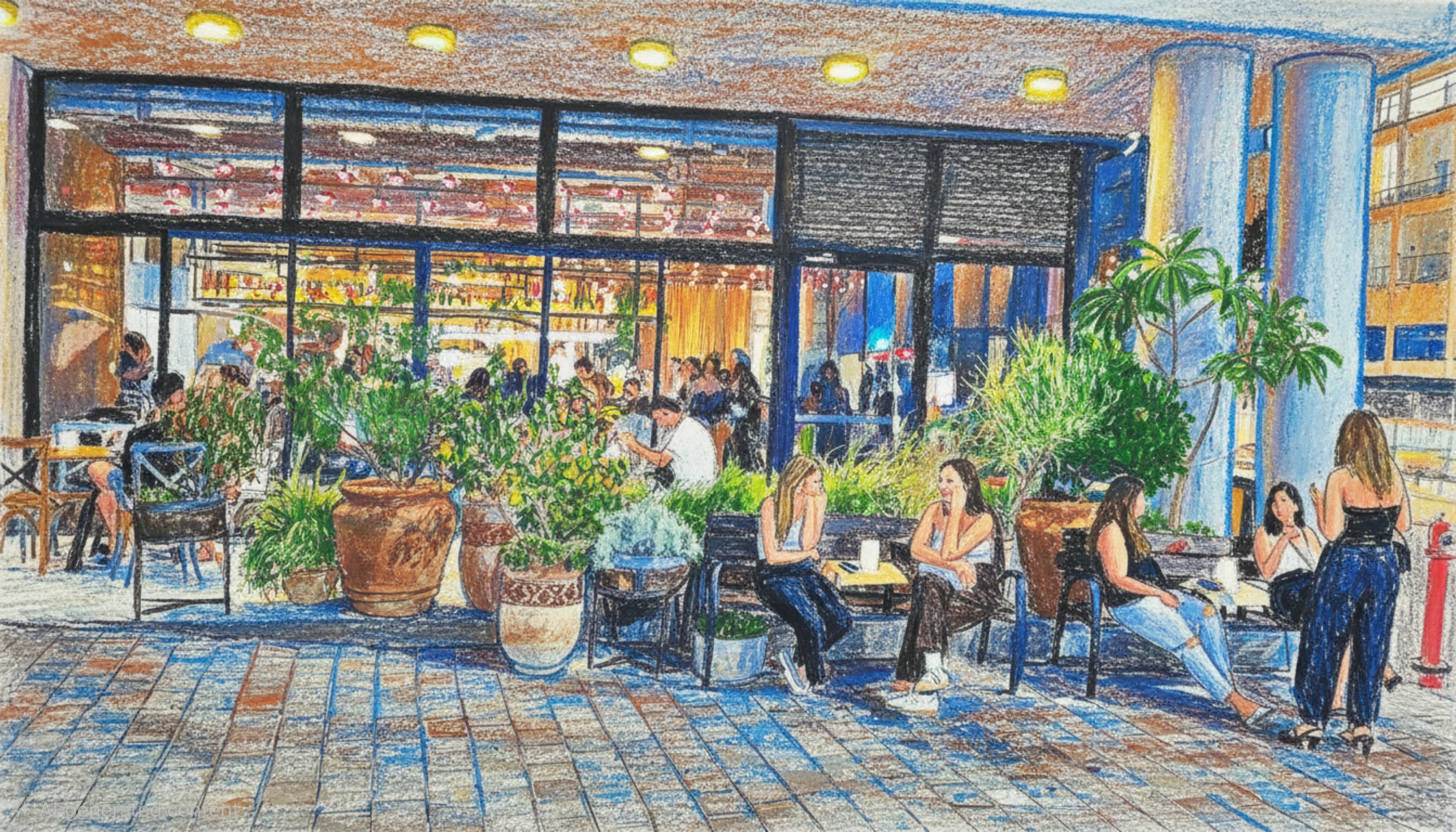
Its chefs draw inspiration from every corner of Jewish history and the Mediterranean – Galilean vegetables, Persian spices, North African traditions, Yemenite breads and European techniques – all combined with remarkable creativity. Restaurants that would command attention in New York, London or Paris line streets that only a generation ago were known more for falafel than fine dining.
One change particularly fascinated me.
Not long ago, many ambitious chefs viewed kosher certification as a limitation. Today, more and more of the city’s finest restaurants proudly operate under kosher supervision. The change has been driven as much by economics as religion. As Israel’s high-tech economy expanded, so too did a generation of young Modern Orthodox professionals – engineers, entrepreneurs, venture capitalists and lawyers – who wanted exceptional dining without compromising Jewish dietary law. Restaurants discovered that serving remarkable food and remaining kosher were no longer competing ideas. In many neighborhoods, they had become a winning combination.
Leaving Tel Aviv, I found myself thinking less about any single building or beach than about the extraordinary coexistence of opposites. Here, memory lives beside innovation. Faith shares walls with secular life. War intrudes, but never fully defines the city. Every morning begins with people running toward the sea rather than away from fear.
Perhaps that is Tel Aviv’s greatest contradiction. It has not escaped history’s burdens. It simply refuses to allow them to define the city. Despite carrying them every day, Tel Aviv has become one of the world’s most vibrant, creative and optimistic places to live.