Has the “Left-Wing” Joined the UN in Protecting Iran and the Palestinians from a “Right-Wing” Israel?

The left-wing Israeli newspaper Haaretz published an article in May 2015 questioning Israel’s nervousness over a possible deal regarding Iranian nuclear weapons. It pointed out that another Muslim country, Pakistan, already possessed nuclear weapons and Israel did not object.  However, the paper noted that “though Pakistan is the first Muslim state with a nuclear weapons program, it does not call for Israel’s destruction or sponsor terror attacks against Israel. A nuclear Iran, by contrast, would receive cover to step up its hegemonic ambitions in the region and intensify its support for terrorism against the Jewish state.”  A significant difference.

The parameters of the final Iran deal made many people question whether Iran would be able to advance a nuclear weapons program immediately, as the verification program ultimately was very far from the “anywhere, anytime” stated goal that would have better ensured Iranian compliance.  The plan left wide open the possibility that Iran could “break-out” with nuclear weapons in a decade.

Putting aside the question of if-and-when Iran obtains nuclear weapons for a moment, the following deal points are clear:

Unlike the core issue of Iran potentially having nuclear weapons, these dangerous deal points are not in question.

Ramifications – More Money and Weapons

The US State Department considers Iran a state-sponsor of terrorism.  Specifically, it stated: “Iran has historically provided weapons, training, and funding to Hamas and other Palestinian terrorist groups, including the Palestine Islamic Jihad (PIJ) and the Popular Front for the Liberation of Palestine-General Command (PFLP-GC), although Hamas’s ties to Tehran have been strained due to the Syrian civil war.  Since the end of the 2006 Israeli-Hizballah conflict, Iran has also assisted in rearming Hizballah, in direct violation of UNSCR 1701.  Iran has provided hundreds of millions of dollars in support of Hizballah in Lebanon and has trained thousands of its fighters at camps in Iran.  These trained fighters often use these skills in support of the Assad regime in Syria.”

With the execution of this Iranian deal, $150 billion will flow to Iran, some of which, the Obama administration noted, will most likely go towards terrorism.  The deal will also provide a fresh flow of missiles to Iran and likely to Iranian friends on the borders of Israel.

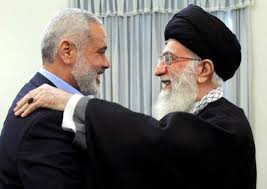
Iran Hamas
Hamas leader Haniyeh and Iranian spiritual head Khamenei

Ramifications – Tighter Border Controls

While Israel’s main fear is a nuclear-armed Iran, the flow of money and missiles to Hamas and other terrorists on Israeli borders are also significant concerns.  The likely Israeli actions to counter these threats will be:

  • Tighter Gaza blockade
  • Permanent security positions along the Jordan Valley
  • Fewer permits with longer delays in allowing Palestinian Arabs to travel to Israel and between territories

The significantly enhanced threats on Israel’s borders – even before factoring in a nuclear Iran – will force Israel to take additional security measures which will harm daily life for ordinary Israelis and Palestinian Arabs.

World Preemptive Action – Stop Israeli Defenses

The global powers voted to approve the Iranian deal and lift the sanctions against Iran, knowing of Israel’s security concerns.  The world has now begun to take additional steps to prevent Israel from protecting itself:

As Israel prepares to protect its citizens from the immediate threats from the Iranian nuclear deal that the United Nations approved, the world prepares to challenge those very defenses that Israel needs to implement, such as the land and sea border controls..

 What is the Goal of all the Negotiations?

These actions beg questions that contradicts the narrative used in the west:

      • was the real goal of the Iranian nuclear deal to protect Iran from a nuclear Israel? The deal includes language that the P5+1 group will “protect against, and respond to nuclear security threats, including sabotage [against the Iranian nuclear program].” Seriously?
      • Has Obama deliberately handed over authority and control of the region to Iran, as he has no desire to put US troops back into the Middle East?

Is the world now taking steps to protect Palestinian Arabs from their perception of a Mr. Right Wing Benjamin Netanyahu of Israel?

The Obama narrative is that the world is safer with the Iranian deal.  In actuality, is the world safer, or is Iran safer? 

President Obama faces an American public that is more wary of Iran and sympathetic to Israel than much of the world, so he is spinning the deal in verbiage that is more accepting to Americans.  Thus far, Americans are buying the pitch, even while they strongly question whether it will work.

Who’s goals are these anyway?

  • The Arab and Muslim world celebrated the advancement of its goals to destroy the west and Israel.  They did not attempt to hide their mission.
  • The left-wing American parties, papers and groups like J-Street have endorsed the Iranian deal, and are pushing Israel to further dismantle its defenses. They are either lying to themselves or the American people about their goals. Perhaps both.

As Jeffrey Goldberg wrote in the Atlantic, “The Iran deal represents one of those rare issues that has unified Israelis of most political parties… [including] the left, center, and right.”  In the United States, it has only unified the left-wing with the Iranian dream.


Related First One Through articles:

The New Endorsed Parameters of Peaceful Nuclear Power

The Gap between Fairness and Safety: WMDs in Iraq and Iran

Hidden Reactor, Silent Reaction

Netanyahu’s View of Obama: Trust and Consequences

UN’s Confusion on the Legality of Israel’s Blockade of Gaza

A “Viable” Palestinian State

Considering a Failed Palestinian State

Failed Countries
On July 9, 2011, the world welcomed a new country, South Sudan, which separated from Sudan. South Sudan rapidly became a failed state, one in which the central government lost the ability to control the security and economy of the country.
Failed states suffer from many terrible and unstable features: lack of governmental control; factional militias and armies; lack of border integrity and gross poverty. These societies often see rampant human rights abuses as various parties assert control over parts of the country and seek vengeance and control over minorities and local populations.
Consider some reports from South Sudan over the past year:
Ten thousand people have been killed and more than 1.6 million have been internally displaced since civil war broke out in South Sudan in December 2013.
June 2015: South Sudanese army may have caused widespread human rights abuses according to the UN
May 2015: At least 129 children killed, boys castrated and girls raped
July 2014: Food crisis declared worst in the world by UN Security Council
According to Business Insider, the worst failed states include: South Sudan; Sudan; Somalia; Congo; Chad and Yemen. The populations of these countries are forced to flee, suffer or die.


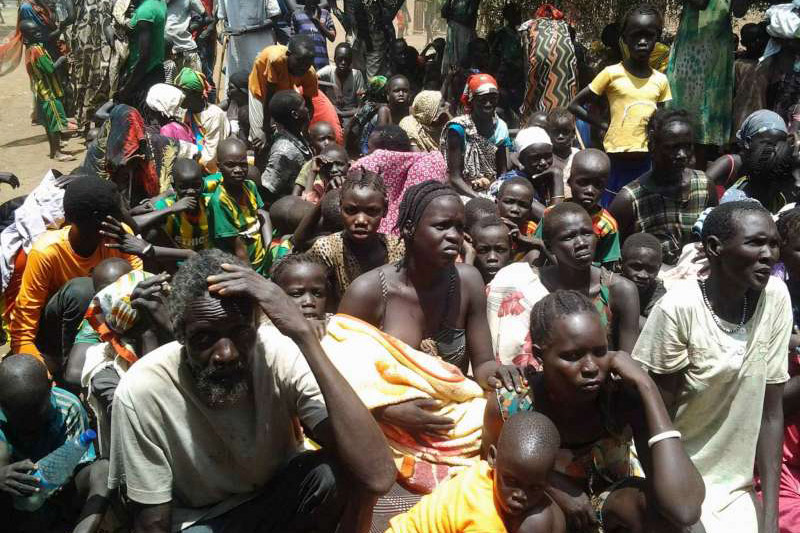
South Sudanese refugees wait to be registered at a crossing into Ethiopia earlier in 2015. (Photo: UNHCR/R. Riek)
Considering a Palestinian State
Many countries in the United Nations would like to see the Palestinian Arabs gain self-determination and have their own country. However, many of the ingredients for a failed state currently reside in the political structure of the Palestinian Authority:
The Palestinian territories have various stand-alone armies and militias including Hamas and Islamic Jihad
No central government, as the west bank of the Jordan River and Gaza strip are administered independently
Internal fighting as witnessed in the 2007 rout of Fatah by Hamas forces in Gaza, and various extrajudicial killings between those parties that continued since then
No border integrity as bedlam prevails in Gaza, Sinai and Israeli towns near the border of Gaza
Lack of functioning economy and widespread unemployment due: to the extremely high percentage of people under 25 years old; and constant war to destroy Israel
No presidential or legislative elections, as they were suspended due to the splits mentioned above. The presidential election was last held in 2005 and the president’s term expired a long time ago.
A country built on this framework would likely deteriorate. Factional fighting to dictate the future of the country would exacerbate. Unemployment would further skyrocket. Cross-border battles with Israel would escalate and also include the area east of the Green Line, EGL/ west bank of the Jordan River. This region, which already leads the world in the “honor killings” of women, would likely continue to see such murders increase.
It would be a country built in chaos, with people’s dreams dying alongside their lives.
Concrete Steps to Avoid a Failed Palestinian State
Should the Palestinian Arabs hope to achieve a functioning state after self-determination, important steps need to be instituted before the state is formed:
Remove all weaponry from Hamas and other groups. A functioning government must only have a single army. There cannot be a society in which various entities wage internal and external wars.
Ban Hamas. No entity which advocates for murder of minorities should be allowed to sit in any elected office, and no country should have any dealings with any country that seeks destruction of another country. As Hamas advocates for the killing of Jews and calls for the complete destruction of Israel, the party should be banned in its entirety until it renounces both positions completely.
Form new Political Parties and Hold Elections. The Palestinian Arabs have not held presidential elections since 2005 and legislative elections since 2006. As Hamas won legislative elections in 2006 and have polled to win future elections, new parties should be organized that can compete in new elections.
These are the basic steps that must occur for the Palestinian Authority to have a functioning government. Once the central authority rests in a representative body, that entity can negotiate a final status agreement with Israel to create a new state. To minimize the chances that it slip into a failed state, the Palestinian government should further consider the following:
Peace Agreement with Israel. A viable government should have a strong economy, including a flow of people and goods. Due to the separation of the Palestinian territories, it would be most efficient for the government to have a good working relationship with Israel to facilitate commerce.
Minimize Incoming Youth. A Palestinian state would likely want to welcome Arabs whose families once lived in the region. As a large population below age 25 often leads to rampant unemployment and instability, the emphasis on incoming people should be on professionally-trained adults.
Transitional control from UNRWA. UNRWA has kept infant mortality, immunizations, life expectancy and literacy of Palestinian Arabs at among the best rates in the world. Over a period of years, the UN should cede control of the schools and hospitals to Palestinian control.
While the world celebrated the founding of a new country four years ago in South Sudan, the declaration proved a hollow victory for the people. It would be a mistake to push forward another declaration for Palestinian Arabs at this time which would ultimately lead to further suffering. Mayhem with a flag benefits no one.

Related First.One.Through article:
A “Viable” Palestinian State

The Arguments over Jerusalem

Summary: In considering the arguments that Palestinian Arabs and Israeli Jews each make for Jerusalem as their capital, only one party makes a truly compelling case.

Jerusalem has long been considered the thorniest issue in the Israeli-Palestinians Question. In 1947, when the United Nations put forward a plan to partition the land into two states, it proposed placing Greater Jerusalem and Greater Bethlehem into an international zone called the “Holy Basin.” This Holy Basin would be neither part of Israel nor Palestine, to remove the sensitive region from the conflict.
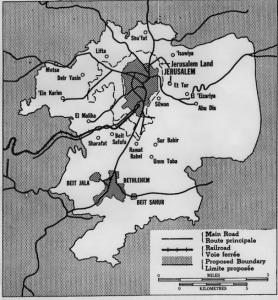
1947plan jerusalem
UN 1947 Partition Plan for the “Holy Basin”
of Greater Jerusalem and Greater Bethlehem

However, as fate would have it, the partition plan was rejected by the Palestinians who then launched a war to destroy Israel in May 1948, together with armies from Transjordan, Lebanon, Syria, Egypt and Iraq. At war’s end, the Holy Basin was divided with the western half of Greater Jerusalem and Hebrew University falling under Israeli control, and Greater Bethlehem and the eastern half of Jerusalem falling under Arab control (Jordan annexed the area and granted the Palestinian Arabs there citizenship).

The Holy Basin remains an outstanding issue.  In a two-state resolution, the Israelis propose to split the Holy Basin whereby they control all of Greater Jerusalem and the Palestinians would have Greater Bethlehem; the Palestinians seek to have all of Greater Bethlehem AND the eastern half of Jerusalem as its capital, while Israel would only have the western half of Jerusalem. Which side has a better claim?


The Arguments over Jerusalem

THE HOLY BASIN

RELIGION: The sensitivity over the Holy Basin is due to the fact that it holds many holy sites for the three monotheistic religions. A short list includes:

  • The Temple Mount/ The Noble Sanctuary (Jerusalem). Jewish and Muslim
  • Al Aqsa Mosque (Jerusalem). Muslim
  • Dome of the Rock (Jerusalem). Jewish and Muslim
  • The Wailing Wall / Kotel (Jerusalem). Jewish
  • Church of the Holy Sepulchre (Jerusalem). Christian
  • Dormition Abbey (Jerusalem). Christian
  • The Old City (Jerusalem). Jewish
  • Church of the Nativity (Bethlehem). Christian
  • The Tomb of Rachel (Bethlehem). Jewish

There are many other churches, synagogues and mosques in the Holy Basin, however, these sites are considered sacred as various events are believed to have occurred at these locations. For Christians, the churches were built on the various spots where Jesus and Mary are thought to have had significant life events. For Muslims, the Al Aqsa Mosque is considered to be the place where Mohammed ascended to heaven. For Jews, the Temple Mount is not only considered to be the place of two Temples, but also the spot where Abraham brought Isaac for a sacrifice.  Of this entire list, only the Jewish Temple has any archeological evidence supporting the beliefs.

Among the three religions, Jerusalem is considered the holiest spot only for Jews. Muslims consider the Al Aqsa Mosque to be its third holiest spot (after Mecca and Medina), and the Roman Catholic Church considers the Vatican in Rome, Italy to be the holiest location.

Judaism is also unique in considering the entire Old City to be holy. While Christianity and Islam consider certain specific spots to be sacred, only Judaism considers the city as a whole.

Jerusalem: Advantage Israel
Bethlehem: Advantage None

10857261_10153336968548706_7334281522188334026_o
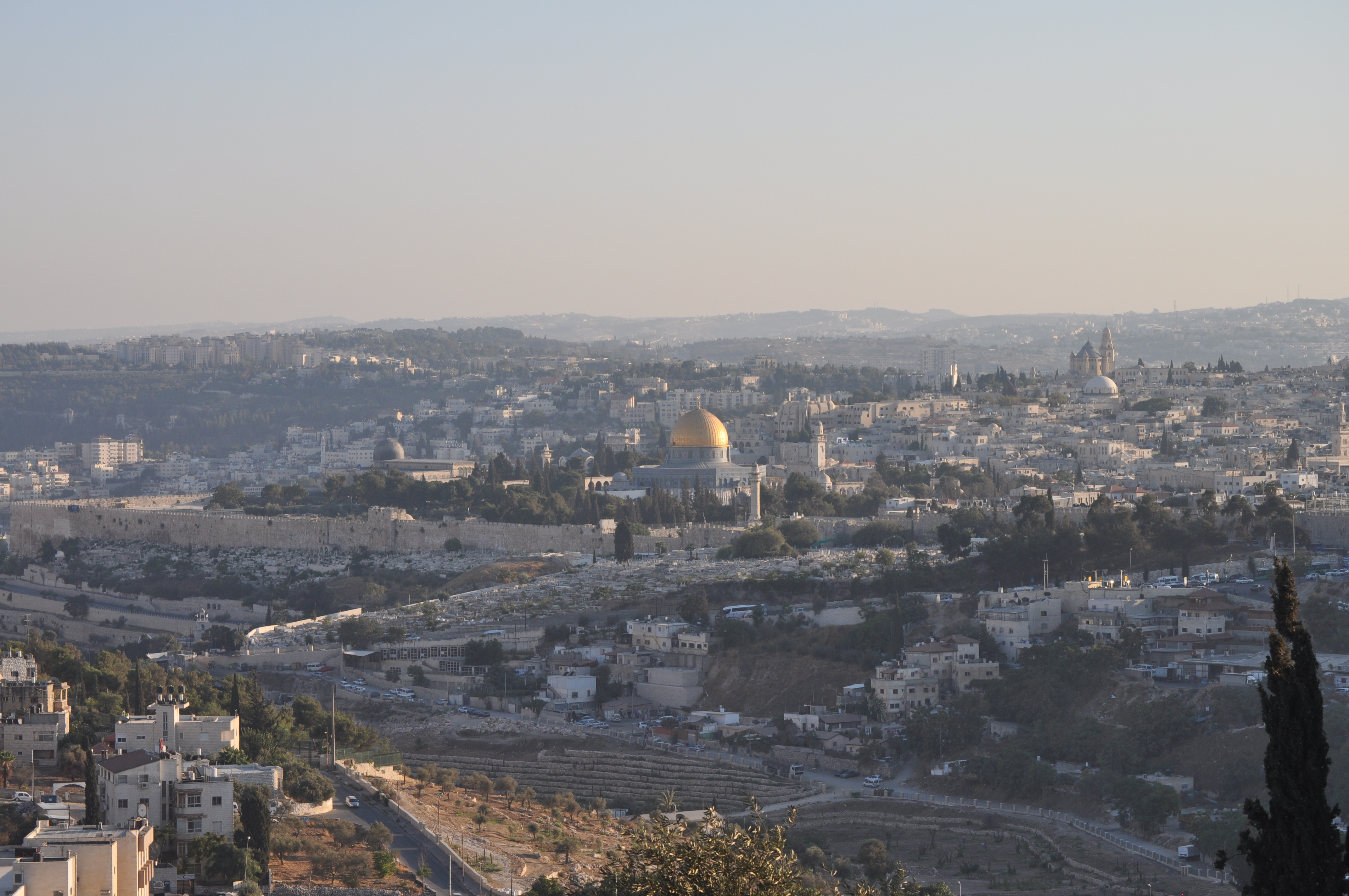
Aerial view of Old City of Jerusalem from the south

ACCESS TO HOLY PLACES: A key concern for the United Nations (UN) is that access is provided to each religion’s holy places. In this regard, the divide between the Palestinian Arabs and Israel is stark.

The Arabs only controlled Bethlehem and the eastern half of Jerusalem from 1949 to 1967, as the cities and entire region were governed by the British and Ottoman Turks (who were NOT Arabs) for hundreds of years before then. During their brief period of control, the Jordanian and Palestinian Arabs evicted all of the Jews from Jerusalem and forbade their reentry, even during religious holidays.

While Israel has controlled all of the Holy Basin since 1967, all religions have had access to all of the holy places. Not only does Israel ensure that people of all religions have access, but the country created laws ensuring their safe keeping and open access, and put their religious organizations in charge of those places – even the Islamic Waqf over the Temple Mount which Jews consider their holiest spot.  This same Islamic Waqf prohibits Jews from praying at their holiest location today.

Further, Israel has allowed other denominations to establish themselves in Jerusalem.  The government of Israel helped the Mormons build their church overlooking the Old City.  This compares to Jordan, which doesn’t even recognize the Baha’i faith today (Israel has a huge Baha’i temple in Haifa).

Advantage Israel

MAINTAINING HOLY PLACES: While access is the primary concern for the UN, maintenance of the holy spaces is important as well. When the Palestinian Arabs controlled areas such as Nablus (Shechem), they almost destroyed the Tomb of Joseph. Archaeological digs occurred on the Temple Mount unsupervised resulting in the destruction of important and sacred sites.

Conversely, Israel has made extensive efforts to maintain all of the religious sites under its control. It performs archeological digs mindful of scientific rigor while balancing religious sensitivities.

Advantage Israel

 DSC03240
The Hurva Synagogue in the Old City was destroyed by the Jordanian Arabs in 1949
(photo: FirstOneThrough)

THE CITIES AND THE PEOPLE

HISTORY: The history of the Jewish people in Jerusalem extends back 3700 years when Abraham offered Isaac as a sacrifice. It became the unified capital of Jews under King David 3000 years ago and site of two temples (954BCE-587BCE and 516BCE-70CE). Jews have always continued to live there and move there over the centuries except when they were banned during the Crusades (early 1200s) and under Arab rule (1949-1967).

Arab history in Jerusalem is more recent than for Jews. Arabs came to the region and city of Jerusalem as part of the Muslim invasion in the seventh century, roughly 2300 years after Jews.

Advantage Israel

CAPITAL: Only one people ever made and considered Jerusalem to be its capital: the Jews. Whether in ancient times or modern, Jerusalem is the capital of the Jewish people.

When Muslims ruled the region and controlled Jerusalem, they never made Jerusalem the capital. Whether under the initial Arab invasion of the seventh century, under the Mamelukes or the Ottoman Turks, or even under Jordanian Arab rule 1949-1967, Jerusalem was never the central seat of government.

Jerusalem: Advantage Israel
Bethlehem: None

CENTRALITY: There is only one country in the UN that has a national anthem that is completely about its capital: Israel.

“As long as in the heart within a Jewish soul still yearns And onward, towards the ends of the east, an eye still gazes towards Zion.

Our hope is not lost, the hope of two thousand years, To be a free people in our land, the land of Zion and Jerusalem.”

Jerusalem: Advantage Israel
Bethlehem: None

 IMG_3691
Beta Israel, Jews from Ethiopia, return to Jerusalem
(photo: FirstOneThrough)

THE PEOPLE

In considering the future of the residents of the Holy Basin, it is important to consider how the people have been treated.

CITIZENSHIP: When Israel declared statehood in 1948, it granted citizenship to 160,000 non-Jews. When it took control of the entire Holy Basin in 1967, it offered citizenship to those who requested it.

This was in stark contrast to the Jordanian and Palestinian Arabs who evicted the Jews in 1949. Today, Palestinian leadership has insisted on a new Palestinian state devoid of Jews, which is why the Palestinian Authority objects so strongly to Jews buying homes in Jerusalem.

Advantage Israel

POPULATION GROWTH: Population growth can be used as a proxy for the freedom for Arabs and Jews in the Holy Basin under the different administrations.

From 1949 to 1967, the Jewish population under Jordanian and Palestinian Arab control went from zero to zero. The Jews were evicted from eastern Jerusalem and were not allowed to return. However, the Jewish population in the western part of Jerusalem nearly doubled (+98%). Over the same time period, the Arab population under both Israeli (the Israelis gave Arabs citizenship in their half of Jerusalem) and Jordanian control grew by 72%. Jewish growth outpaced Arab growth, even though Jews were only able to live in half of the city.

After reunification of the city in 1967 until 2005, the population trends changed. Jewish growth throughout the city grew by 196%, while Arab growth grew by 315%. Overall, the city grew at a compounded growth rate of 3.1% compared to the divided city which only grew at 2.4%.

  • Under Arab control, Jews were expunged from the area; but under Israeli control, Arab growth rate surpassed Jews’. Arabs performed ethnic cleansing while Jews encouraged diversity.
  • Under a constrained Jewish situation from 1946-1967 while there was no access to eastern Jerusalem, Jewish growth outpaced an unconstrained Arab dynamic. Jewish demand to live in Jerusalem outpaced Arab interest.
  • Under Israeli sovereignty, the city grew faster than under Arab control.

Under Israel, the city did better, the Arabs did better and the Jews did better.

Advantage Israel

POPULATION: Jews have been the dominant religious group in Jerusalem since the 1860s. Even at the start of World War I, when Jews accounted for only 8% of Palestine, they accounted for 64% of the population of Jerusalem.

Today, Jews continue to be a majority of Jerusalem, despite the Arab growth accelerating in Jerusalem under Israeli control (up to 3.8% CAGR from 2.6%). Jews account for roughly 69% of the city’s population overall, and 39% in the eastern part of the city.  The eastern part contains some of the largest Jewish neighborhoods (Pisgat Ze’ev) and is home to Hebrew University (established in 1925).

Advantage Israel
DSC_1067
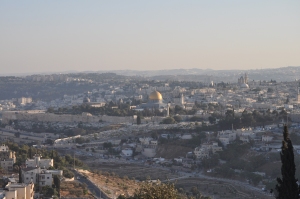
View from Hebrew University
(photo: FirstOneThrough)

LONG TERM VIABILITY

Any final agreement between the Israelis and Palestinian Arabs must not simply focus on being fair, but be sustainable.

SECURITY: No capital city sits on the border of another country. To have the seat of government sit adjacent to a foreign country risks the viability of the state. In the case of Israel, the situation is even more sensitive than for other countries:

  • The countries adjacent to Israel have repeatedly attacked it
  • Those same countries continue to challenge the basic right of Israel to even exist
  • The main political party (Hamas) of the proposed country has a charter repeatedly calling for Israel’s complete destruction
  • Jerusalem sits on hills, making it even more vulnerable if the city would be divided, but significantly safer, if all of the hills and access roads remained within Israel

Jerusalem: Advantage Israel
Bethlehem: None

HISTORY OF DIVIDED CITIES: Fewer than 1/1000th of 1% of cities and towns in the world are divided. Those handful of towns that are split between two countries are typically very small and have a natural geological separator like a river dividing the city.  None of those factors apply to Jerusalem.

Divided capitals are even more rare, and history shows that they are unsustainable.  Recent examples include: Beirut, Lebanon; Berlin, Germany; Jerusalem and Nicosia, Cyprus.

Beirut and Berlin were divided by war for a few decades, and both have been reunified in peace.  Nicosia has continued to be split along with the rest of Cyprus, and ongoing peace talks since 1974 have attempted to reunite the city – not divide it.

Advantage Israel

OFFENSIVE-DEFENSIVE PARTIES: In the San Remo Resolution of 1920, the League of Nations (precursor to the UN) recognized the right of Jews to return to their homeland in the holy land. However, the Palestinian Arabs launched major riots against the Jews, most notably in 1929 and 1936-9 which made the British start to move Jews out of their homes in certain cities (such as Hebron).

When the UN developed various proposals over the years 1937-1947 to divide the land, the Israeli Jews said yes while the Arabs consistently said no. The Arab position was to control all of the land including Jerusalem with no land for Jewish control.

As part of their efforts, the Arabs launched a war to destroy all of Israel in 1948, and then again in 1967. The Arabs lost both wars, and the incremental land Israel acquired in each of those wars were from defensive actions.

In total, Israel’s land was acquired initially from the world’s recognition of the historic rights of Jews to the holy land, together with defensive wars.

Conversely, all of the Arab land was acquired through fighting the UN mandate and launching wars.

In regard to the Holy Basin specifically, both Israel and the Jordanian and Palestinian Arabs took sections of the city during the Arab war against Israel in 1948-9, that the UN had proposed to keep under international control. As such, the UN did not recognize either country’s seizure of parts of the city. When Israel took the eastern half of Jerusalem along with Bethlehem in 1967, the UN continued to withhold recognition.

Countries around the world did not recognize Israel’s western Jerusalem in 1949 nor the capture of eastern Jerusalem in 1967, so they have never moved their embassies to the city. Their refusal to recognize Jerusalem as Israel’s capital (or Jordan’s) is from 1949, NOT because of Israel’s reunification of the city in 1967.

Advantage Neither
Slight preference for Israel due to defensive nature of acquisitions

CONCLUSION

By almost every measure, Israel should maintain control of all of Jerusalem as well as additional territory to the east to control the hills and access roads to the capital.  The Palestinians could have control of half of the Holy Basin – Bethlehem – which was handed to Palestinian Authority control in 1996 by Israeli Prime Minister Benjamin Netanyahu.

There is one last reason which underscores the complete logic of Israel maintaining complete sovereignty of all of Jerusalem: it is the heart of the home of the Jewish people.  While there are 57 Islamic countries and dozens of Arab countries, there is only one Jewish State, and it has always had one capital: Jerusalem.

 IMG_1263
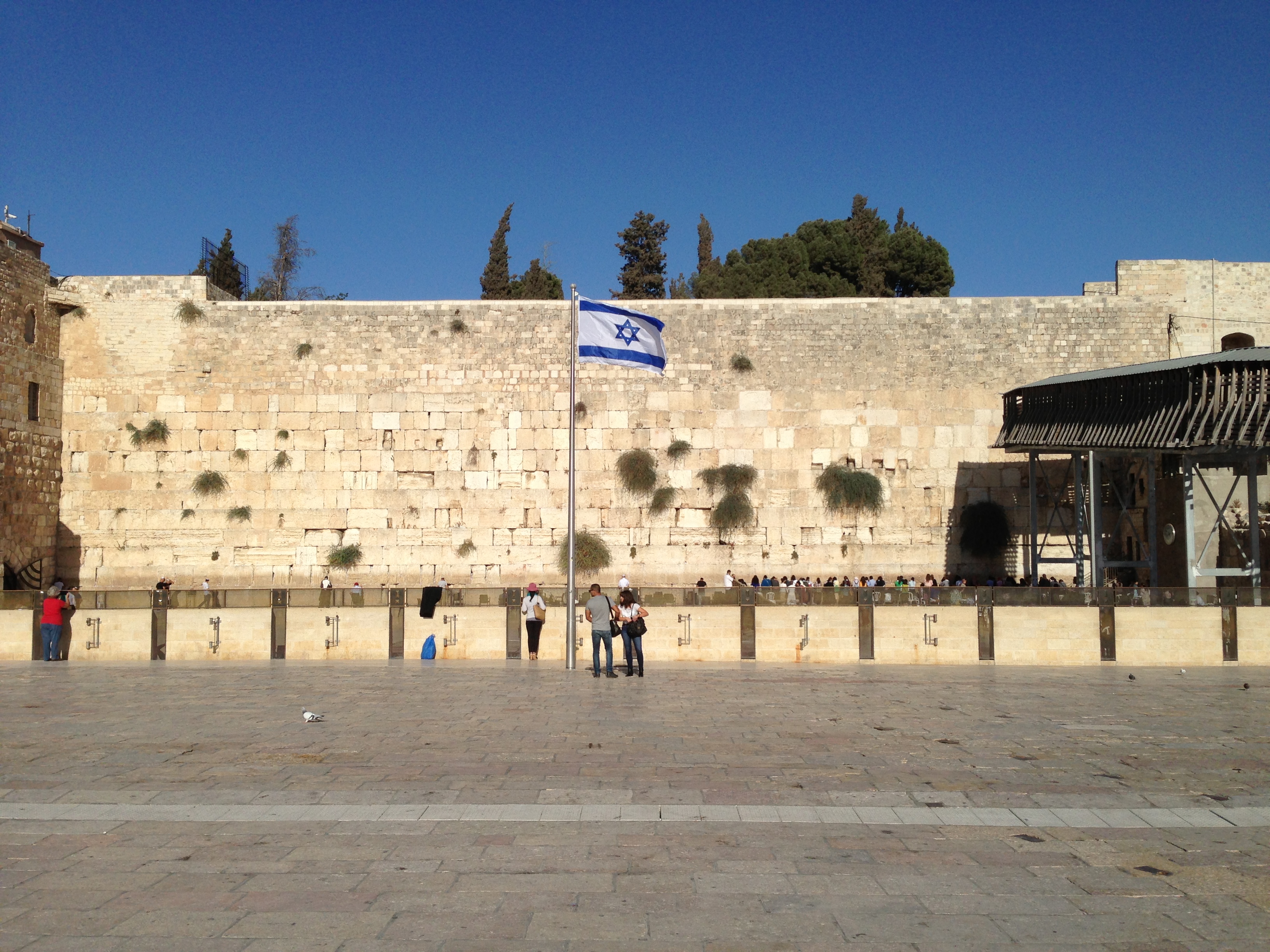
The Israeli flag at the Kotel
(photo: FirstOneThrough)

 Text from first half of Israel’s Basic Law declaring Jerusalem as it’s capital:

1. Jerusalem, complete and united, is the capital of Israel.
2. Jerusalem is the seat of the President of the State, the Knesset, the Government and the Supreme Court.
3. The Holy Places shall be protected from desecration and any other violation and from anything likely to violate the freedom of access of the members of the different religions to the places sacred to them or their feelings towards those places.

Related First One Through articles:

The United Nations and Holy Sites in the Holy Land

The Waqf and the Temple Mount

The anthem of Israel is JERUSALEM

A Review of Divided Capitals

“East Jerusalem” – the 0.5% Molehill

Israel: Security in a Small Country

A “Viable” Palestinian State

Israel, the Liberal Country of the Middle East

The “Unclean” Jew in the Crosshairs

Summary: Antisemites calling Jews “unclean” is their first step towards calling for purifying them from the world. How should the world respond?

There have been a number of political leaders who have called Jews “unclean”:

  • Adolf Hitler’s Mein Kampf (1925): “The moral and physical cleanliness of this race [Jews] was a point in itself. It was externally apparent that these were not water-loving people, and unfortunately one could frequently tell that even with eyes closed. Later the smell of these caftan wearers often made me ill. Added to this were their dirty clothes and their none too heroic appearance.” 
  • Hamas Charter (1988): “The basic structure of the Islamic Resistance Movement consists of Moslems who have given their allegiance to Allah whom they truly worship, – “I have created the jinn and humans only for the purpose of worshipping” – who know their duty towards themselves, their families and country. In all that, they fear Allah and raise the banner of Jihad in the face of the oppressors, so that they would rid the land and the people [Jews] of their uncleanliness, vileness and evils.”
  • Iran’s Supreme Leader Ayatollah Ali Khamenei (2013): “Israeli regime, this sinister, unclean rabid dog of the region”
  • Acting Palestinian Authority President Mahmoud Abbas (2014): “Keep the settlers and the extremists away from Al-Aqsa and our holy places. We will not allow our holy places to be contaminated.”

iran-khamenei-adl-israel-rabid-dog

It did not take long for these leaders and parties to move from their initial anti-Semitic positions, to calls to eradicate the Jews:

  • Hitler’s Nazi party gradually stripped Jews of their citizenship in the early and mid-1930’s once the gained power, pushed them into ghettoes and work camps by late 1930’s and began their annihilation by the early 1940’s.
  • Hamas called for the murder of Jews and destruction of Israel in the very same 1988 charter: “rid the land and the people [Jews]“, “there is a Jew behind me, come and kill him” and “Israel, Judaism and Jews challenge Islam and the Moslem people.”  The Palestinian people voted for Hamas into 58% of the Parliament in 2006.
  • Iran’s leader was quite clear in 2014: “This barbaric, wolflike & infanticidal regime of which spares no crime has no cure but to be annihilated“
  • The Fatah party of the Palestinians was led by Yasser Arafat who said: “We will not bend or fail until the blood of every last Jew from the youngest child to the oldest elder is spilt to redeem our land!”” His successor, Mahmoud Abbas declared “In a final resolution, we would not see the presence of a single Israeli – civilian or soldier – on our lands.“

One can call Abbas a “moderate” in comparison to those around him in that he has not openly called for killing Israelis (he prefers the indirect method of honoring and celebrating those that do kill Israelis).

President Obama commented about ISIS (2014) that “the world must never cease in seeking to defeat their evil ideology.” Such evil ideology is the open platform in the Iranian and Palestinian leadership.

As Obama is actively engaged in dialogue and negotiations with both of those parties, does he think

  • that the Iranian and Palestinian platforms are not “evil ideologies“
  • that they are exceptions that do not need to be defeated, or
  • his process of negotiation and placating them is a method of “defeating” them?

Related FirstOneThrough articles:

The Palestinians War Against the Jews

Palestinian anti-Semitism surpasses Nazi Germany

Before recognizing a Palestinian State, Recognize what the Palestinians are saying

The Waqf and the Temple Mount

Summary: According to Muslims, the Temple Mount is held in “trusteeship” by the Islamic Waqf, which assures its use and access as a mosque. The role of the Waqf has nothing to do with sovereignty of the land on which it resides.

The most sensitive issue of the Israel-Arab conflict is considered to be the Temple Mount in Jerusalem.

TEMPLE MOUNT

The Temple Mount is a 35 acre platform that held the second Jewish Temple from around 515CE to 70CE. Herod extended the platform on which the Temple sat southward to enable the greater flow of the thousands of Jews that came to the Temple to perform their rituals. The platform extension project ran from 19BCE to 63CE and Jews enjoyed the benefit of his work until the Romans destroyed the Temple in 70CE.

10857261_10153336968548706_7334281522188334026_o
The Old City of Jerusalem, including Jewish Quarter and Temple Mount

The area is considered sacred to Muslims as they believe Mohammed had a night journey from Saudi Arabia on a flying horse to that location before ascending to heaven. When Arabs invaded Jerusalem in 627CE, they built the al Aqsa Mosque on the southern edge of Temple Mount (completed in 705CE and rebuilt in 1033) to commemorate the importance of the location. The other structures on the Temple Mount include the Dome of the Rock, the Dome of the Chain, the Dome of the Prophet and various other structures which are NOT mosques, but shrines.

Jews had access and were able to pray on the Temple Mount until around the year 1550, when Suleiman I began a series of “improvements” to Jerusalem. He ordered the rebuilding of the city walls and moved the Jews off of the mount to an area now referred to as the “Kotel” or “Wailing Wall” or “Western Wall”, a sliver of the western retaining wall built by Herod. Since that time, prayer on the Mount has been restricted only for Muslim use.

MODERN HISTORY

Five Arab armies attacked Israel at its founding in 1948. At the end of the war in 1949, Jerusalem became divided with the western half (almost all completely established since the 1850s) under Israeli sovereignty, and the eastern half (including the Old City dating back 4000 years) under Jordanian sovereignty (which was not recognized by the United Nations). The Jordanians evicted all of the Jews and barred their reentry, even to visit their holy sites, counter to the Fourth Geneva Convention.

In 1967, the Jordanians again attacked Israel. They lost the eastern half of Jerusalem and all of Judea and Samaria, which they had annexed in 1950. Israel reunified the city and made clear that people of all religions – not just Jews – would have access and rights to their holy places.  Non-Muslims were once again allowed onto the platform, and Israel gave administrative oversight of the Temple Mount compound to the Jordanian Waqf. Israel annexed the area and the rest of eastern Jerusalem in a move not recognized globally.

In 1988, Jordan gave up all claims to lands it lost to Israel in the 1967 war, and signed a peace treaty with Israel in 1994. In that peace agreement, several key clauses were added to address Jerusalem, Article 9:

  • Each Party will provide freedom of access to places of religious and historical significance.
  • In this regard, in accordance with the Washington Declaration, Israel respects the present special role of the Hashemite Kingdom of Jordan in Muslim Holy shrines in Jerusalem. When negotiations on the permanent status will take place, Israel will give high priority to the Jordanian historic role in these shrines.
  • The Parties will act together to promote interfaith relations among the three monotheistic religions, with the aim of working towards religious understanding, moral commitment, freedom of religious worship, and tolerance and peace.

10383720_10153336970463706_7100356438545362102_o
Jews Praying at the Kotel, 2015

WAQF

Islam allows Muslims to place property (land or any object) into a “Waqf”. By doing so, the item comes under the trusteeship of the party specified in the declaration. In the case of the al Aqsa Mosque, the building is considered to be for the public use of all Muslims under the administration of the Jordanian Waqf.

When the al Aqsa mosque was taken over by Crusaders in the 12th century, the place did not lose its special status for Muslims. As stated in Issue 2697: ““If the Waqfed property is ruined, its position as Waqf is not affected, except when the Waqf is of a special nature, and that special feature ceases to exist. For example, if a person endows a garden and the garden is ruined, the Waqf becomes void and the garden reverts to the heirs of the person.”

Properties or entities like the Old City of Jerusalem or the Temple Mount itself can be subdivided according to Islam. As written in Issue 2698: “If one part of a property has been waqfed and the other part is not, and the property is undivided, the Mujtahid, or the trustee of the Waqf, or the beneficiaries can divide the property and separate the Waqf part in consultation with the experts.”

As described above, the Jordanian Waqf took control of the Temple Mount in 1949 and Israel has continued to let the Waqf administer the site. The Jordanian Waqf now employs 500 people to run the mosque. It does this, while Israel maintains all security controls and runs it as part and parcel of Israel.

It would appear that the actions of 1967, 1988 and 1994 laid the groundwork for a sharing of the Temple Mount between Jews and Muslims again. However, it has continued to be a struggle.

 POLITICS and PROPAGANDA

Over the last few years, the Waqf has become more politicized, anti-Jewish and anti-Israel, as it was decades ago. Public statements from the Waqf:

  • Deny Jewish history at the Temple Mount
  • Attempt to deny Jewish rights of access
  • Deny Jewish rights to prayer (agreed to by the Israeli government)
  • Deny sovereignty of the Jewish State and Jerusalem municipality (agreed by many countries in the United Nations)

Consider a recent discovery of ancient Judaica near the Temple Mount. The Waqf issued a statement that the findings were “an attempt to support Israeli claims about Jewish rights in the holy city and to impose Israeli sovereignty on the occupied holy compound through the use of fake evidence….An immediate Arab and Muslim campaign is needed to stop the Israeli attempts to Judaise the holy city of Jerusalem,”

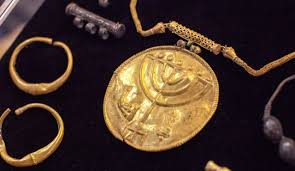
temple mt find
Discovery of Jewish artifacts at base of Temple Mount
dating to period before creation of Islam

It is interesting that the Waqf would make a claim of “Judaising” the city of Jerusalem which has had a Jewish majority for 150 years. It was also this same Jordanian Waqf that participated in expelling Jews from the Old City of Jerusalem and barring their entry from 1949-1967.

PEACE ON THE TEMPLE MOUNT

Israel’s perspective: Israel has sought a peaceful situation on the Temple Mount from the very beginning of reunifying Jerusalem. In 1967, Moshe Dayan announced: “To our Arab neighbors we extend, especially at this hour, the hand of peace. To members of the other religions, Christians and Muslims, I hereby promise faithfully that their full freedom and all their religious rights will be preserved. We did not come to Jerusalem to conquer the Holy Places of others.”

The declaration was followed by the establishment of the Protection of Holy Places Law which ensured the rights of all religions to pray at their holy sites.

Today, in an effort to appease the extremist views of the Waqf, radical Palestinians and the Jordanian government itself which threated to break its peace treaty with Israel, the Israeli government has continued to enforce a ban on Jewish prayer on the Mount.

Muslims’ Perspective: Suleiman pushed the Jews off of the Temple Mount in 1550 and Jordanian Arabs expelled the Jews from the entire Old City in 1949. Muslims and Arabs would clearly prefer that there be no Jews in Jerusalem.

However, according to Islam, there is no conflict with the Temple Mount being completely under Israeli sovereignty as detailed above.

According to the Peace Treaty between Israel and Jordan, the Temple Mount (outside of al Aqsa Mosque) should permit non-Mulsim prayer, despite Jordan’s recent protests.

Israel has continued to extend its full hand to share the Temple Mount.  Meanwhile, the Arab world took initial steps some decades ago to recognize Jewish history and rights which do not conflict with Islamic law.  Regrettably, recent history has witnessed a more hostile Arab approach.

Perhaps the future will witness peace on the Temple Mount with full access and rights for Jews at their holiest location.


Sources:

Waqf rules: http://www.al-islam.org/islamic-laws-ayatullah-ali-al-husayni-al-sistani/rules-regarding-waqf

Noble Sanctuary: http://www.noblesanctuary.com/AQSAMosque.html

Palestinian women fight Jews on Temple Mount: http://www.nytimes.com/2015/04/17/world/middleeast/palestinian-women-join-effort-to-keep-jews-from-contested-holy-site.html

Related First One Through articles:

Tolerance at the Temple Mount

Sharing the Temple Mount like the Cave of Patriarchs

Five holy sites in the holy land

Palestinians are “desperate”… but for what?

Palestinian Arabs control of Jerusalem for 0.5% of its history 

Divided Cities and Capitals

The Noose and the Nipple

I am confused about society’s and social media’s decisions on censorship. In particular, why do forums like Facebook and YouTube permit showing brutal murders while they block nudity?

On Facebook today, I had a video pop up of a mob killing a woman in Afghanistan because she supposedly burned a Quran. Over the past weeks, YouTube has shown videos of the Islamic State beheading people and setting others on fire. Boko Haram is shown executing people and throwing them off bridges.

Yet a nipple is considered nasty.

According to Facebook: ““We restrict the display of nudity because some audiences within our global community may be sensitive to this type of content – particularly because of their cultural background or age.” Excuse me? At what age is viewing a beheading OK?

Facebook continues on its community standards page: “We also restrict some images of female breasts if they include the nipple, but we always allow photos of women actively engaged in breastfeeding or showing breasts with post-mastectomy scarring.” Oh, Thank goodness Facebook- I guess breastfeeding is somehow more natural than an unaccompanied breast. And I’m sure youngsters will be less traumatized seeing a breast with post-mastectomy scarring than pre-mastectomy.

Our laws prohibit a woman in Utah from showing her tatas, but permit enormous billboards with guns and violence for all to see.

What censorship calculation shows a gay man hanging in a noose in Tehran, but won’t show a woman’s nipple in Times Square?

Red Herrings on the Red Line

Summary: Obama’s anger at Israel’s Netanyahu was about Netanyahu’s anger at White House policy on Iran. All of the other excuses that Obama threw out proved inaccurate. However, Obama’s actions have introduced a partisan split over Israel into DC politics.

 obama netanyahu
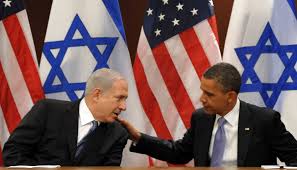
Netanyahu and Obama

US President Obama took umbrage with Republican House Speaker John Boehner’s invitation to Israeli Prime Minister Benjamin Netanyahu to speak to a joint session of Congress. Obama aired a number of reasons, which all proved to be red herrings:

  1. Break in Protocol: Obama initially criticized the break in protocol of Israeli Prime Minister Benjamin Netanyahu accepting an invitation without consulting the White House. A report later came out that the White House was informed about the invitation before Netanyahu accepted. The White House anger should have been directed at Boehner, not Netanyahu, even if this reason held any truth.
  2. Israeli elections: Obama offered another excuse to skip Netanyahu’s address: Obama said that it was US policy to not invite a foreign leader to address Congress in an election season as it would be seen as influencing the elections of another country. In fact, US President Bill Clinton invited then Israeli Prime Minister Shimon Peres to speak to Congress one month before the Israeli election. Further, the timing was a function of Secretary of State John Kerry’s announced Iranian deal deadline on March 24, not the timing of Israeli elections.
  3. Bi-partisan Support: The Obama administration then offered another reason why he and members of his cabinet would leave town during Netanyahu’s visit to D.C.: that Netanyahu was playing partisan politics. The reality is detailed below.

clinton peres
President Clinton and Israeli PM Shimon Peres,
Before Israeli elections in 1996

Israel and the United States have been strong allies regardless of the party in the White House. Israel’s relationship with Bill Clinton (D) was much better than with George HW Bush (R); and better with George W Bush (R) than with Barack Obama (D). There is no benefit or desire for an Israeli leader to choose one party over the other as Netanyahu reiterated in his remarks in the US in March 2015. The dynamics of particular leadership personalities play a role in the tone, but not the substance of the overall relationship between all of the elected US parties in government and the Jewish State.  Netanyahu and Obama have dealt with each other for six years where at times they’ve agreed or disagreed on a variety of issues; in each case, the parties in Congress maintained their support of Israel.

At this moment, Netanyahu strongly disagrees with Obama’s position in the Iranian nuclear negotiations.  It happens to be that Republican leadership also disagrees with the Obama administration. It was solely on that topic that Netanyahu spoke to a joint session of Congress – a major “existential” issue of direct significant impact on Israel.

The difference in opinion about a particular policy does not mean that Netanyahu or Israel now prefer Republicans to Democrats, nor should it mean that elected Democrats or Republicans should treat Netanyahu or Israel any differently. However, the Obama administration made the claim that this was partisan politics, and kept members of the administration from meeting with Netanyahu and asked Democratic party members to stay away from the address, thereby creating a partisan issue.

That may very well have been the goal of Boehner. But the Democrats seemed all too willing to take the bait and insult Israel and Netanyahu by snubbing him. Democrats decided that a distorted idea of party loyalty was more important than hearing the concerns of an ally that has been threatened with annihilation by the very country with which the administration is creating a pathway for nuclear weapons.

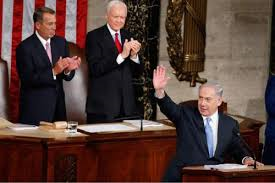
Bibi Boehner
Netanyahu addressing Congress about Iranian nuclear weapons,
March 2015

The gulf in the support of Israel between the right and left of the American public is not new. Republicans support Israel by almost a 2-to-1 ratio compared to liberals around the country. Liberals support opening warmer relations with Muslim countries by over a 2-to-1 ratio over conservatives. But those statistics are in the general population of the United States. Obama has now brought that partisanship into the legislative branch of government in D.C. itself. At the administration’s urging, 58 Democrats boycotted Netanyahu’s speech to Congress. No Republicans missed the address.

Perhaps Obama used Netanyahu’s speech to pivot the party into a closer position with his loyal base of liberal Americans. If so, the implications for Israel will be very negative.

The only silver lining to the shattered red lines of Iran’s nuclear program will likely be that the Palestinian Arabs might return for peace talks with Israel as they will never have such an advocate in the White House as President Obama. What price will Obama make Israel pay? How much will it matter in the coming nuclear tinderbox of the Middle East?


Related First.One.Through articles:

On accepting invitations: https://firstonethrough.wordpress.com/2015/02/09/on-accepting-invitations/

Liberal preference for fairness and conservatives preference for safety: https://firstonethrough.wordpress.com/2015/03/01/the-gap-between-fairness-and-ramifications-wmds-in-iraq-and-iran/

Obama’s Iranian red line: https://firstonethrough.wordpress.com/2014/11/24/obamas-iranian-red-line/

The Gap between Fairness and Safety: WMDs in Iraq and Iran

Summary: There can be a large gap between perceived fairness and ultimate safety. Liberals seem to prefer the moral value of the former, while conservatives value the comfort in the latter.

Liberals on Iraq

Many liberals in the United States love to attack former President George W. Bush for his decision to go to war in Iraq. The president acted on bad information that Iraq was involved in the attacks on the US on 9/11/01, and then doubled-down on flawed intelligence which claimed that Iraq was building weapons of mass destruction (WMDs). America engaged in a very costly war in terms of lives, cost and credibility based on that bad information.

As a presidential candidate, Barack Obama campaigned to pull American troops out of Iraq because he thought the war was wrong, and when he became president, he fulfilled that pledge. Not long after the last US troops left Iraqi soil, the terrorist group Islamic State/ISIS filled the vacuum left by America’s absence. In the wake of several thousands of murdered people, Obama is now weighing how deeply to reengage in Iraq to combat the demons his actions helped create.

Liberals on Iran

In a related policy, the liberal-minded Obama is in the process of enabling the Islamic State of Iran to become a threshold nuclear power. In Obama’s worldview, it is difficult to validate why the US, Pakistan and seven other countries should have nuclear weapons and Iran shouldn’t.

Obama obsesses over “inequality” and fairness in society and also believes that all countries consider themselves to be exceptional.  In a “fair” world of complete equality, the liberal position of equal entitlement prevents Obama from negotiating forcefully against the Iranian regime that desires to enter the pantheon of nuclear states.

obama iran negotiations
Obama on Iran Negotiations

As such, Obama concluded that he will allow Iran to develop nuclear weapons and use the negotiations as an opportunity repair ties with Iran that have been combative since the 1979 Iranian revolution.

Conservatives on Ramifications

While most conservatives will agree that the war in Iraq was a mistake, they argue that the decision to completely high-tail out of Iraq was a more tragic mistake. Abandoning the country left a power-vacuum which was filled by the Islamic State. Iraq became lawless and is now a foundation state for jihadists. Obama’s decision further destabilized the country, which has produced terrible security outcomes in the Middle East, the US and the world.

mccain iraq
Senator McCain speaking against Iraq pullout

Conservatives believe that Obama’s “soft” negotiations with Iran will similarly have terrible ramifications for global security.

The ramifications of enabling Iran to get nuclear weapons will likely either lead to Israel attacking Iran, or initiating an arms race in the volatile Middle East. So much for Obama’s desire to have a world with fewer nuclear weapons. The only party to have fewer nukes will be the US while human rights-abusing countries such as Iran and Saudi Arabia would be on their way to being able to cause global destruction as one considers a world of nuclear terrorism.

Conservatives are less worried about the double-standards of who gets nuclear power today if it leads to greater stability tomorrow. Liberals, on the other hand, focus on being fair today and are less fixated on the ramifications tomorrow.

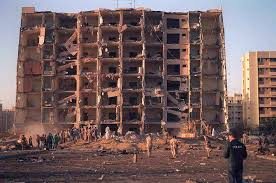
khobar towers
Iranian bombing of Khobar Towers killing 19 Americans,
June 1996

Lessons in Safety from Experience

It would be worthwhile for Obama to consider “unfair” laws in the US. Many laws and policies are deliberately biased to counter-balance experience related to safety.

These laws and accepted biased corporate policies are in place because of experience. People under 25 get in more car accidents than older people, so the car rental companies charge them a bundle because of the perceived risks, even if the renter is a great driver. Similarly insurance companies charge all drivers of Mercedes convertibles more, which has led to police charging those drivers four times as many traffic tickets.

Seat belt laws and helmet laws are in place because they save lives. Many studies have shown the drop-off in fatalities due to these laws, which (literally) restrict a person’s freedom.  State laws prevent under-age (sometimes 20 or 19) people from consuming alcohol because it helps save lives.

These are just a few examples of where society assesses risks based on historic outcomes.  They exist everywhere including health insurance companies charging more to smokers than non-smokers.  While a particular smoker may live much longer than a non-smoker, society draws certain conclusions based on past behavior and history.

History serves as the basis for making policies that improve safety.

Iran is not just another country

There are Islamic countries such as Pakistan that have nuclear weapons.  There are repressive regimes such as China with nuclear weapons.  However, the world has not seen a state sponsor of terrorism (such as Qatar) obtain a weapon of mass destruction.

The history of Iran and current statements from the government make it a dangerous player on the world stage.  Endorsing Iran’s building the most powerful weapons in the world puts the entire planet at risk..


There were no WMDs in Iraq and America should not have gone to war. But Obama’s abandoning Iraq to reverse a bad decision ignored the reality of the existing paradigm. His decision to be fair had terrible ramifications for regional peace.

Enabling Iran to get WMDs ignores the actions of that government. Obama’s deep belief in equality cannot be allowed to jeopardize global safety.


Related First.One.Through articles:

Obama’s Iranian Red Line: https://firstonethrough.wordpress.com/2014/11/24/obamas-iranian-red-line/

Obama’s foreign policy: https://firstonethrough.wordpress.com/2015/01/27/obamas-foreign-policy/

Obama dancing with the asteroids: https://firstonethrough.wordpress.com/2014/11/14/dancing-with-the-asteroids/

Nicholas Kristof’s “Arab Land”

On February 26, 2015, Nicholas Kristof wrote an op-ed in the New York Times called “The Human Stain” that was more than flawed- it was wrong; it was more than anti-Israel, it was anti-Semitic.

Among the many incorrect and racist statements were his claims that the “West Bank” and “East Jerusalem” were Arab. Here are some quick thoughts about his statement that “nibbling of Arab land is just plain wrong.”

IMG_2118
Judean Desert down to the Jordan Valley

Geography

The west bank of the Jordan and eastern Jerusalem are not part of the Arabian Peninsula. That landmass is located east of Israel. The borders of the region are surrounded by water on three sides (the peninsula) and the northwestern edge of Saudi Arabia is the land border.

The countries that constitute the Arab land in addition to Saudi Arabia are: Oman; Kuwait; UAE; Bahrain; Qatar; and Yemen. The Arabian Plate on which the peninsula rests includes parts of southern Jordan and southern Iraq.

Neither the Arabian Peninsula nor the Arabian plate cross the Jordan River, hence there is no geographical basis for referring to any land west of the Jordan as “Arab Land.”

Population

The “Arab Nation” spread beyond the Arabian Peninsula in the 7th and 8th centuries when Muslim invasion of neighboring lands brought Islam and Arabs to those areas. Those Muslim conquests brought Arabs to southern Spain called Andalusia. No one refers to Spain as Arab land today.

Politics

The Arab countries formed a “League of Arab States” which includes 22 countries. That group is political in nature and does not speak to the actual people and culture of the countries. For example, Syria was suspended from the League in 2011 due to its civil war. Palestine was admitted as a member in 1945 (the entire British Mandate of Palestine which includes Israel today) even though it was not an independent country.

To refer to the west bank of the Jordan as “Arab” because Palestine is a member state would also mean that Israel is an Arab state. Is that part of Kristof’s real message? Does he feel that Israel is not a valid entity and is occupying “Arab land”?

Ruby all Israel  29 (1)
Binyamin Region

Government Sovereignty

A “Land” is distinguishable from lowercase “land” in that one conveys sovereignty and ownership. The land on the west bank of the Jordan River is disputed land without independent sovereignty. Israel administers the land after Jordan attacked Israel in 1967 and subsequently lost the territory. Jordan gave up all claims to the land in 1988, including “East Jerusalem”. “Arab East Jerusalem” in capital letters makes no sense in any interpretation as sovereignty and administration belongs to Israel (albeit not recognized in much of the world) but the eastern part of the city is also not recognized, nor under sovereignty of Arabs, nor part of the Arab peninsula, and is 40% Jewish.

While many Palestinian Arabs claim the west bank of the Jordan as part of a future state and “East Jerusalem” as such state’s capital, the rule of the land is still in negotiations. As of this date, the land is much more Israeli than it is Palestinian.

Exclusivity

Liberals and progressives typically argue that no land should be the exclusive right of a single racial or religious group. No one refers to “White Selma” where only whites can live or “Black Harlem” where only blacks should be permitted to live.

While people refer to the Islamic State of Iran, Iran claims that it welcomes people of all faiths. Israel, the Jewish State, is 25% non-Jewish. Turkey, which is a secular Islamic state, is mostly non-Arab but has many Arabs living in the country.

Not only is the west bank of the Jordan not “Arab”, but the suggestion that it should be limited only to Arabs is racist and anti-Semitic. That policy was put into place under the Jordanian Arabs that attacked Israel in 1948 and expelled all of the Jews from the area including the eastern part of Jerusalem, counter the Fourth Geneva Convention.

IMG_4963
South of Bethlehem

Private Property

Land ultimately falls into two categories: private land and public land. Private land changes hands with the owner and is not considered to belong forever to a particular religion or people. One day it may be owned by an Arab, the next day by a Jew and the next by a WASP.

Public lands are administered by the government. As discussed above, the west bank of the Jordan is administered by Israel. The eastern part of Jerusalem was annexed by Israel decades ago.

Therefore neither the west bank of the Jordan River nor “East Jerusalem” can be considered “Arab land.”

History

For 400 years the Ottomans ruled Palestine and allowed Jews to live everywhere without restriction. They lived in Jericho and Jerusalem and throughout the region. The Ottomans welcomed the Yemenite Jews who founded Silwan in the eastern part of Jerusalem just outside the city walls in 1881 – in what Kristof terms “Arab East Jerusalem.”

The international community gave the British the Mandate to govern Palestine in 1922, in which it specifically stated that the entire mandate – including Kristof’s “Arab West Bank” – “shall facilitate Jewish immigration under suitable conditions and shall encourage, in co-operation with the Jewish agency referred to in Article 4, close settlement by Jews on the land, including State lands and waste lands not required for public purposes” (Article 6). The mandate further stated in Article 15 “No discrimination of any kind shall be made between the inhabitants of Palestine on the ground of race, religion or language. No person shall be excluded from Palestine on the sole ground of his religious belief”.

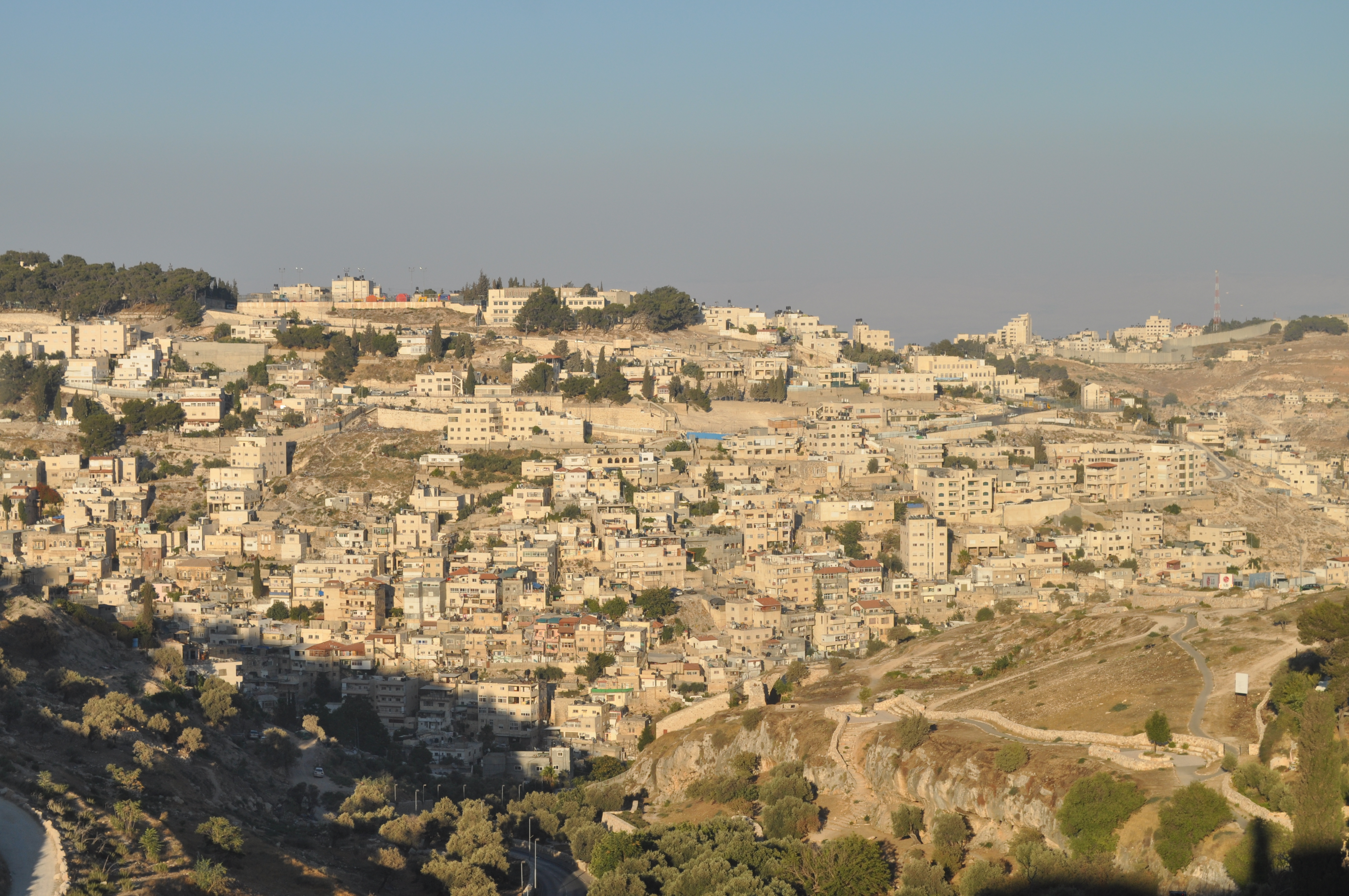
 DSC_1020
Silwan, in the eastern part of Jerusalem, founded by Yemenite Jews in 1881

Countering the Bible

As detailed above, there is no basis for naming places “Arab West Bank” or “Arab East Jerusalem”.   To claim that any land inherently belongs to a single group is a direct lift from the Old Testament in which God gives the land of Canaan to the Jews. Jews have always considered the entire land holy for that reason. Modern claims that part of that land is inherently Arab (and not Jewish) is done to specifically counter the Bible and any Jewish claim to the land.

Of course, the Jewish faith that asserts that the land is holy has nothing to do with sovereignty or private ownership. Jews have always considered the land holy, even in 1400 when they had no sovereignty, and Jews today who do not own land in Israel. The land is holy to Jews, which motivates many Jews to move there.

Kristof’s claim that this specific land (the “West Bank” which didn’t even exist as an entity or term until recently) is Arab is meant to directly confront the Jewish belief that the land was given to Jews by God. Just as the Times never uses the Jewish terminology of “Judea and Samaria” to remove Jewish connection to this land, Kristof attempts to sever the Jewish connection by stating it is inherently “Arab”. It is wrong in fact and intention.

Jews have always and will always consider Judea and Samaria/ the west Bank of the Jordan as holy regardless of its sovereignty, or the religion and ethnicity of a person living in a house on the land. Such sentiments do not preclude any type of peace deal.

Kristof wrote that “The 350,000 Israeli settlers in the West Bank — not even counting those in Arab East Jerusalem — impede any Middle East peace and stain Israel’s image,” can only be viewed as an obstacle to peace for racists that want a Jew-free state.

Attacking the Jewish faith is not a path to peace. Antisemitic calls for banning Jews from anywhere – let alone places they consider holy and lived in for thousands of years – is disgraceful.  The “Human Stain” is Kristof’s and those that share such sentiments.

Je Suis Redux

The famous French mathematician and philosopher Rene Descartes (1596-1650) once famously said: “Je pense, donc je suis,” or in English “I think, therefore I am.” That statement as well as his other works earned him the title of the father of western philosophy.

The concept Descartes put forth of the centrality of “thinking” and “being” is profound on several levels and had a significant impact on western society.  The expression has an interesting sequel today.

thinker
French Sculptor Auguste Rodin’s The Thinker

Descartes did not call out overt action verbs like eating, running or talking to prove his existence. He argued that something as fundamental as brain activity proved that he was alive. Such an approach has led to interesting debates about brain death and the status of life today.

On a philosophical level, Descartes was plagued with doubt about everything: not just about ethereal matters such as the existence of a supreme being, but whether the world as he saw it existed at all. He considered whether it was all just his imagination, just a dream. He concluded that the actual process of considering whether anything at all existed, proved that he indeed did exist.

Je Suis 2015

The world was given a brief tutorial of French in 2015. In response to the horrible killings at the offices of Parisian magazine Charlie Hebdo and a kosher supermarket, people around the world held signs and banners that read “Je Suis Charlie,” “Je Suis Juif (Jew),” “Je Suis Policier (Police)”. A few weeks later, when another terrorist shot people in Copenhagen, the signs “Je Suis Danois (Danish)” showed support for the people of Denmark.

jesuisjuif
“Je Suis” rally in Paris,
January 2015

The expression “Je Suis…”, “I am…” in those contexts expressed people’s solidarity with the cause for which people died (freedom of press, speech or religion), essentially reaffirming that those liberties live on. While individuals may have been killed, there are others that cherish those same beliefs who remain alive. While the victims are dead, the freedoms are not vanquished.

“Je Suis…” attested to the strength of people’s convictions.  While the terrorists were killed by police in both Paris and Copenhagen, people did not deceive themselves that there were many other would-be-terrorists who might commit similar acts. Yet they stood defiantly with placards held high and passions held firm.


Consider that hundreds of years ago the father of western philosophy made a statement that was born from his complete doubt in anything and everything. He imagined that nothing was real, even his own existence. Doubt Affirmed Life.

In 2015, people rallied because of the murder of people who shared a similar western philosophy. In mourning the deaths, people realized the depth of their own convictions. Death Affirmed Belief.

The sequel of Je Suis in France may be a perfect mirror image of the original. But the central theme remains the freedom and ability to question and believe.


Other First.one.Through article:

Dancing with the Asteroids: https://firstonethrough.wordpress.com/2014/11/14/dancing-with-the-asteroids/