The international community keeps reaching for the same tool and calling it a solution.
It wasn’t in southern Lebanon. It won’t be in Gaza.
After the 2006 Lebanon War, the United Nations Security Council passed Resolution 1701 with clarity: no armed groups south of the Litani River except the Lebanese state and United Nations Interim Force in Lebanon. Hezbollah would withdraw. The area would be demilitarized.
It never happened.
Hezbollah didn’t disarm. It adapted. Fighters disappeared into civilian life. Weapons moved into homes and tunnels. Infrastructure embedded deeper. Over time, Hezbollah became stronger in the very zone it was supposed to vacate.
UNIFIL patrolled. It reported. It de-escalated when it could.
It did not enforce.
It could not.
That is not a tactical failure. It is the model.
A peacekeeping force without the authority or backing to impose outcomes becomes a bystander to violations it is tasked to prevent.
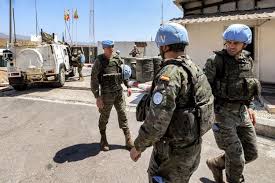
UNIFIL soldiers
Now the same model is being proposed for Gaza.
Disarm Hamas. Install a new authority. Deploy a multinational force to secure the peace.
It sounds familiar because it is.
Hamas, like Hezbollah, is not just a militia. It is a political and social organism backed by the Islamic Republic of Iran that is embedded in the population, sustained by ideology, and built to survive pressure. It will not voluntarily disarm into irrelevance.
And no external force—operating with limited mandate, constrained rules, and no appetite for sustained combat—will disarm it for them.
This is where the illusion breaks.
Peacekeeping works when peace already exists. It locks in outcomes. It does not create them. When deployed in the absence of resolution, it manages conflict. It does not end it.
That is what happened under 1701.
The “demilitarized zone” became a monitored one. Violations became routine. The temporary became permanent.
Hezbollah didn’t defy the system. It learned how to live inside it.
There is every reason to expect Hamas would do the same.
The problem is not execution. It is the belief that presence equals control. Blue helmets, patrols, liaison offices—they project order. They do not establish it.
Without a force willing and able to dismantle armed infrastructure and impose monopoly on violence, disarmament is not policy. It is aspiration.
Lebanon already ran this experiment. It didn’t produce peace.
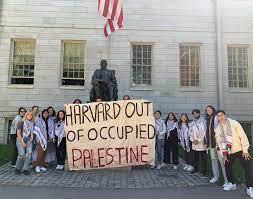
On elite campuses, something more consequential than protest is unfolding. Jewish life is being redefined by extremists.
Groups like Jewish Voice for Peace and “Jews for Liberation” present themselves as the authentic moral voice of Jewish students. They speak in the language of justice, liberation, and equality that resonates with their peers. But strip away the branding and the position is blunt: the Jewish state is illegitimate and cast as a project of racial supremacy, apartheid, even genocide.
That is not critique. That is an argument for erasure.
The danger is not only that these claims are false. It is that they are being laundered into the mainstream through the fig leaf of Jewish identity. When anti-Israel activism is voiced by non-Jews, it is political. When it is voiced by Jews, it is marketed as moral truth. Then the fringe becomes credible and slogans become scholarship. Eliminationist ideas acquire the authority of internal dissent.
That shift matters.
Once Israel is no longer seen as a flawed state – much like others – but as an illegitimate one, every boundary collapses. If the state itself is the crime, dismantling it becomes justice, and whatever follows can be rationalized as liberation.
This is how language is turned into a weapon.
Mainstream Jewish campus institutions have not met this moment with equal clarity. Groups like Hillel are focused, rightly, on building Jewish life: community, ritual, continuity. They create space. They avoid litmus tests. They keep doors open. But when the central attack is not on Jewish practice but on Jewish legitimacy, generality reads as hesitation.
When others define Zionism as racism, it is not enough to respond with programming and belonging. The argument has moved to first principles. It demands an answer at that level.
And so a vacuum has opened.
Into that vacuum have stepped the loudest voices, not the most representative ones. The result is a distorted picture of Jewish opinion, one in which the extremes are visible and the center is absent.
That center needs a voice of its own.
Not a mirror image of the anti-Zionist fringe. Not a reaction that turns legitimate security concerns into collective hostility toward all Arabs. But a clear, unapologetic articulation of what most Jews actually believe, and what a sustainable future requires.
That position is not complicated.
The Jewish people have a right to sovereignty in their historic homeland. Israel must remain secure and capable of defending itself against those who seek its destruction. Terrorism and the glorification of violence are disqualifying, not contextual. No serious political future can be built on a culture that celebrates October 7 or teaches that murder is resistance.
The “two-state solution” is treated as moral doctrine, as if repeating it resolves the conflict. It does not. Self-determination is not a slogan tied to a single map. It can take different forms across different political arrangements. Millions of Palestinian Arabs have held Jordanian citizenship. Others live under varying structures of autonomy. The real question is not whether self-determination exists in theory, but whether any proposed structure can produce stability rather than violence.
A future Palestinian state, if it is ever to emerge, must come after a profound transformation: demilitarization, institutional reform, and an educational shift away from incitement and toward coexistence. Statehood is not an entitlement. It is a responsibility.
This is baseline reality, yet it is rarely stated plainly on campus.
A new kind of Jewish student group is needed, one that is explicit where others are cautious and disciplined where others are reckless. A group that centers Israel not as an abstraction but as a living, embattled state. One that can say, without hedging, that Jewish self-determination is legitimate, that its delegitimization is dangerous, and that moral seriousness requires both strength and restraint.
Such a group would do three things differently.
It would reject the language trap. Words like apartheid and genocide would be treated not as serious analysis but as distortions that inflame rather than illuminate.
It would refuse the false binary. Supporting Israel does not require abandoning moral judgment. Rejecting terror does not require rejecting an entire people.
It would re-anchor the conversation in reality. Israel exists. Threats are real. Peace requires conditions, not just intentions.
The goal is not to win an argument in a seminar room. It is to prevent a generation from being taught that the existence of the world’s only Jewish state is a moral error to be undone.
Campus Jewish life needs a mainstream voice that is willing to speak clearly – and be heard.
There are moments when language has to carry more than meaning. It has to carry memory. It has to carry consequence. When the subject is the death of Jesus and the role of Jewish leadership in that story, every word is loaded with two thousand years of fallout.
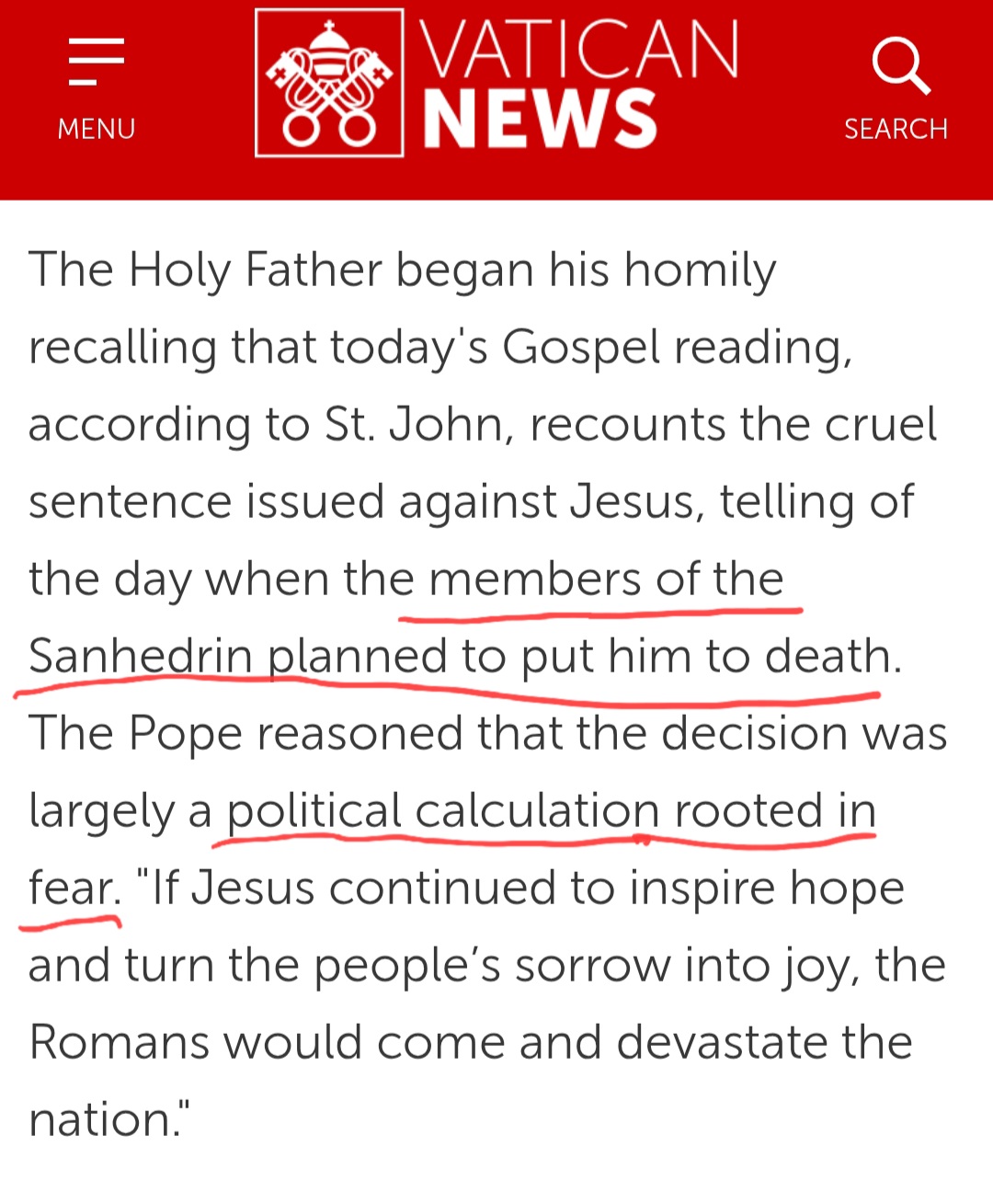
That is the backdrop to a recent homily reported by Vatican News, where the Pope recounts how members of the Sanhedrin planned to put Jesus to death and frames the decision as a political calculation rooted in fear.
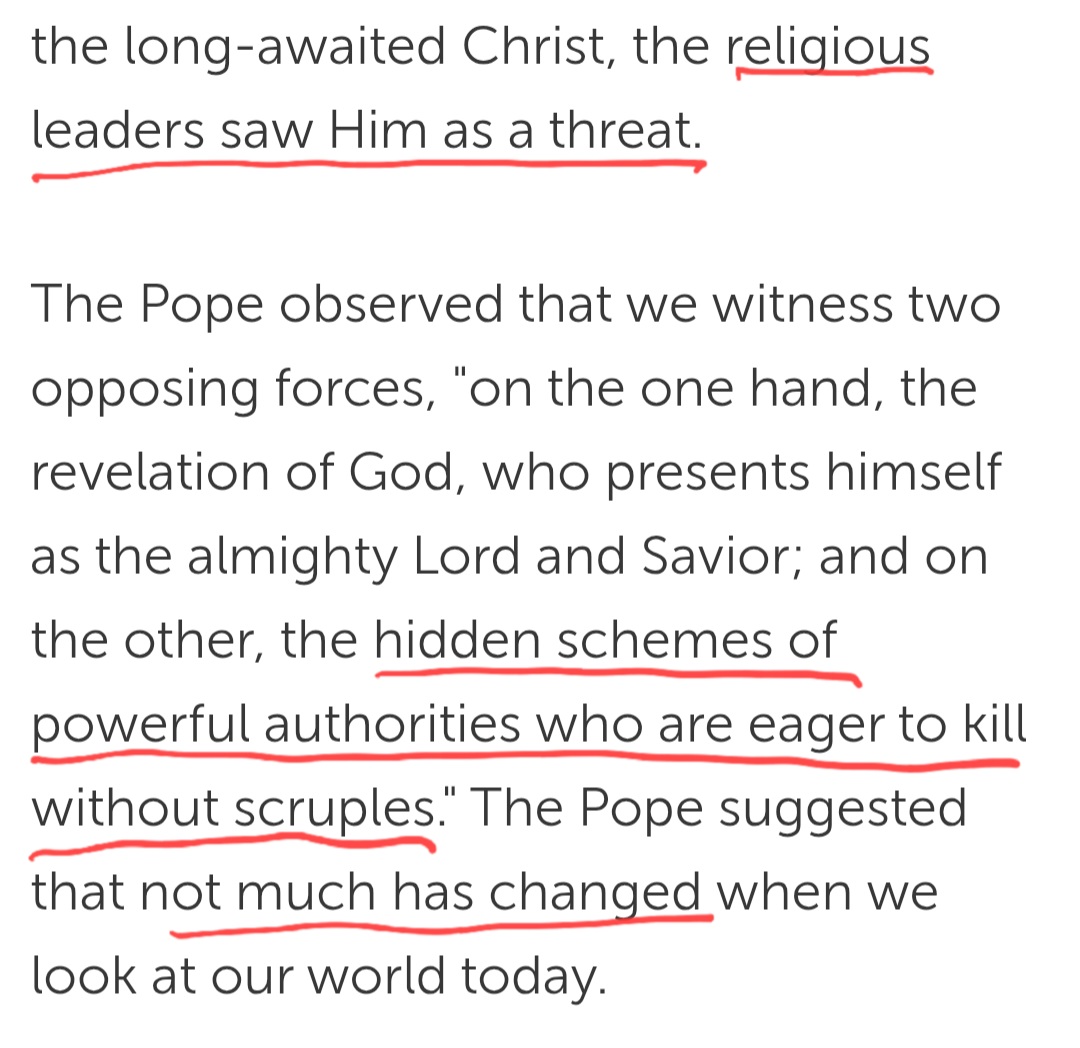
On its face, this is familiar terrain. The Gospel of John tells that story. The Pope emphasizes fear, power, and the instinct of leadership to preserve order when threatened. He broadens the lesson, warning about “hidden schemes of powerful authorities” and concluding that not much has changed when we look at the world today. It is a universal moral frame, the kind clergy have used for centuries to draw a line from ancient texts to modern behavior.
But this is not a normal moment, and that is not neutral language.
We are living through a surge in antisemitism that is not subtle, not isolated, and not theoretical. Jews are being targeted in cities, on campuses, and online. The State of Israel is being recast in mainstream discourse as uniquely illegitimate, even genocidal. The old accusations have not disappeared. They have been updated, rebranded, and redeployed. In that environment, the space between what is said and what is heard narrows dangerously.
The Catholic Church knows this better than anyone. For centuries, Christian teaching around the Passion narrative fed the idea that Jews, as a people, bore responsibility for the death of Jesus. That charge—deicide—did not stay in theology. It moved into law, into mobs, into expulsions and massacres. It became part of the architecture of antisemitism in Europe.
The Church confronted that history in Nostra Aetate, a landmark statement of the Second Vatican Council. The declaration made clear that Jews as a whole, then or now, cannot be blamed for the death of Christ. That was not a minor clarification. It was a doctrinal line drawn after catastrophe, an effort to shut down a pattern of interpretation that had proven lethal.
Successive Popes understood what that required in practice. Pope John Paul II did not rely on implication. He spoke directly, repeatedly, calling Jews “our elder brothers” and making visible gestures that reinforced the message. Pope Benedict XVI went further in precision, arguing explicitly that references to “the Jews” in the Gospel of John describe a specific leadership group, not a people across time. They closed interpretive doors because history showed what happens when those doors are left ajar.
That is why the current language matters. “Religious leaders saw Him as a threat.” “Hidden schemes of powerful authorities.” “Not much has changed.” None of these phrases, standing alone, violates Church teaching. None explicitly assigns blame to Jews today or draws a line to the modern State of Israel. But they operate in a space that has been misused for centuries, and they leave enough room for that misuse to return.
In a different era, that looseness might pass without consequence. Today, it does not. The categories are too easily mapped by those already inclined to do so. “Religious leaders” becomes “rabbis and synagogues.” “Powerful authorities” becomes a stand-in for Jewish power, whether the government of Israel or leaders in the Jewish diaspora. “Not much has changed” becomes an argument for continuity from the first century to the present. And in a climate where Israel is already being portrayed as a moral outlier among nations, the slide from scripture to contemporary politics is not a leap. It is a small step.
This is not about intent. The Pope is speaking in a long Christian tradition of drawing moral lessons from the Passion. The emphasis on fear and political calculation is, in fact, a move away from older, more dangerous framings. But intent does not control reception, especially when the subject has such a charged history.
The standard here cannot be whether the words are technically defensible. It has to be whether they are tight enough to prevent foreseeable distortion.
Because the distortion is not hypothetical. It is already happening in the broader culture. Jews are being pushed out of public spaces, treated by default as representatives of a state and a government they may or may not support, whether they live there or not. Israel is singled out in ways that strip context and complexity, recast as uniquely evil in a world that has no shortage of brutality. In that environment, any rhetoric that can be bent toward those narratives will be bent.
The Church has done the hard work of confronting its past. It has the doctrine. It has the precedent. What it needs, in moments like this, is the discipline to match.
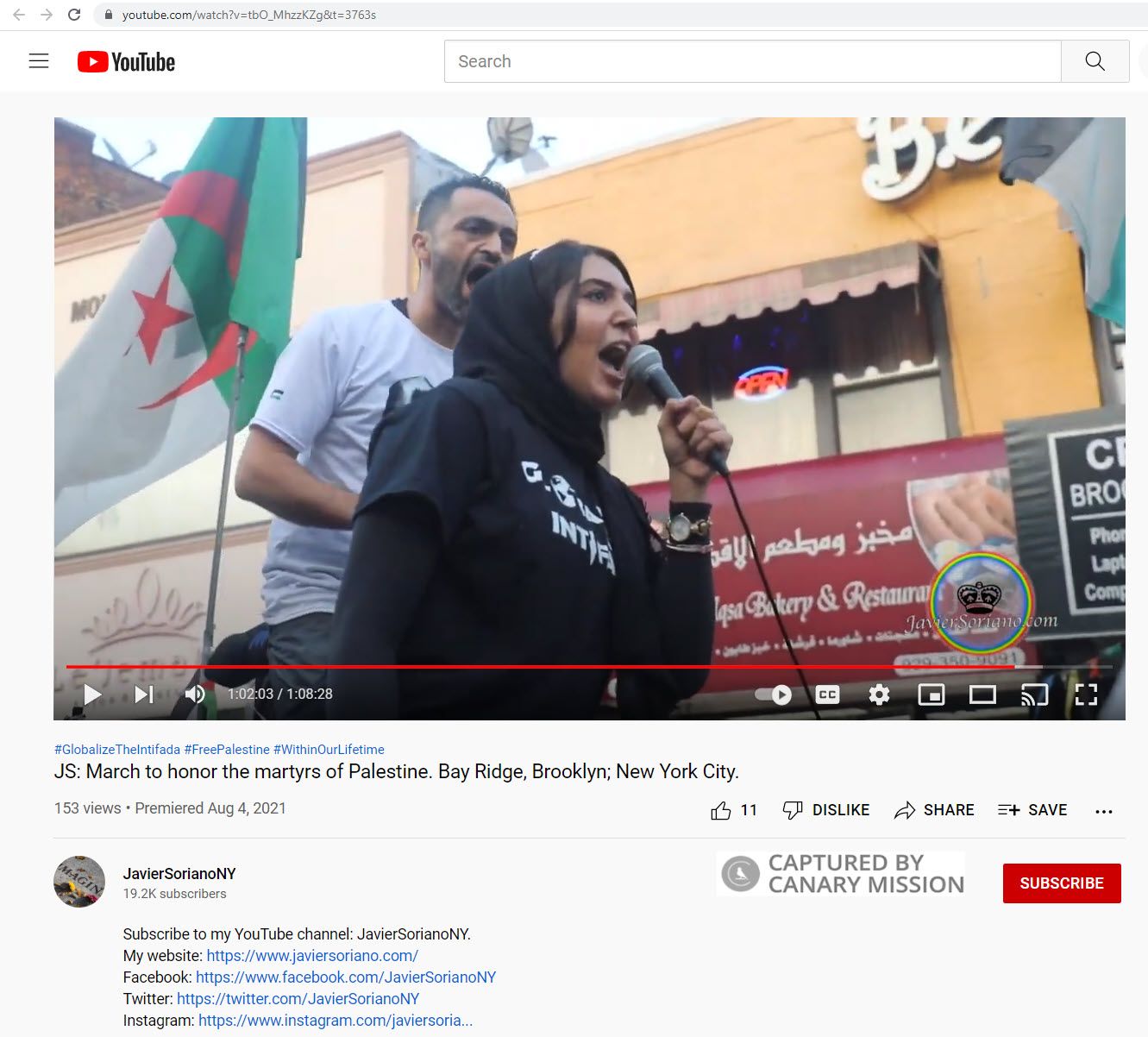
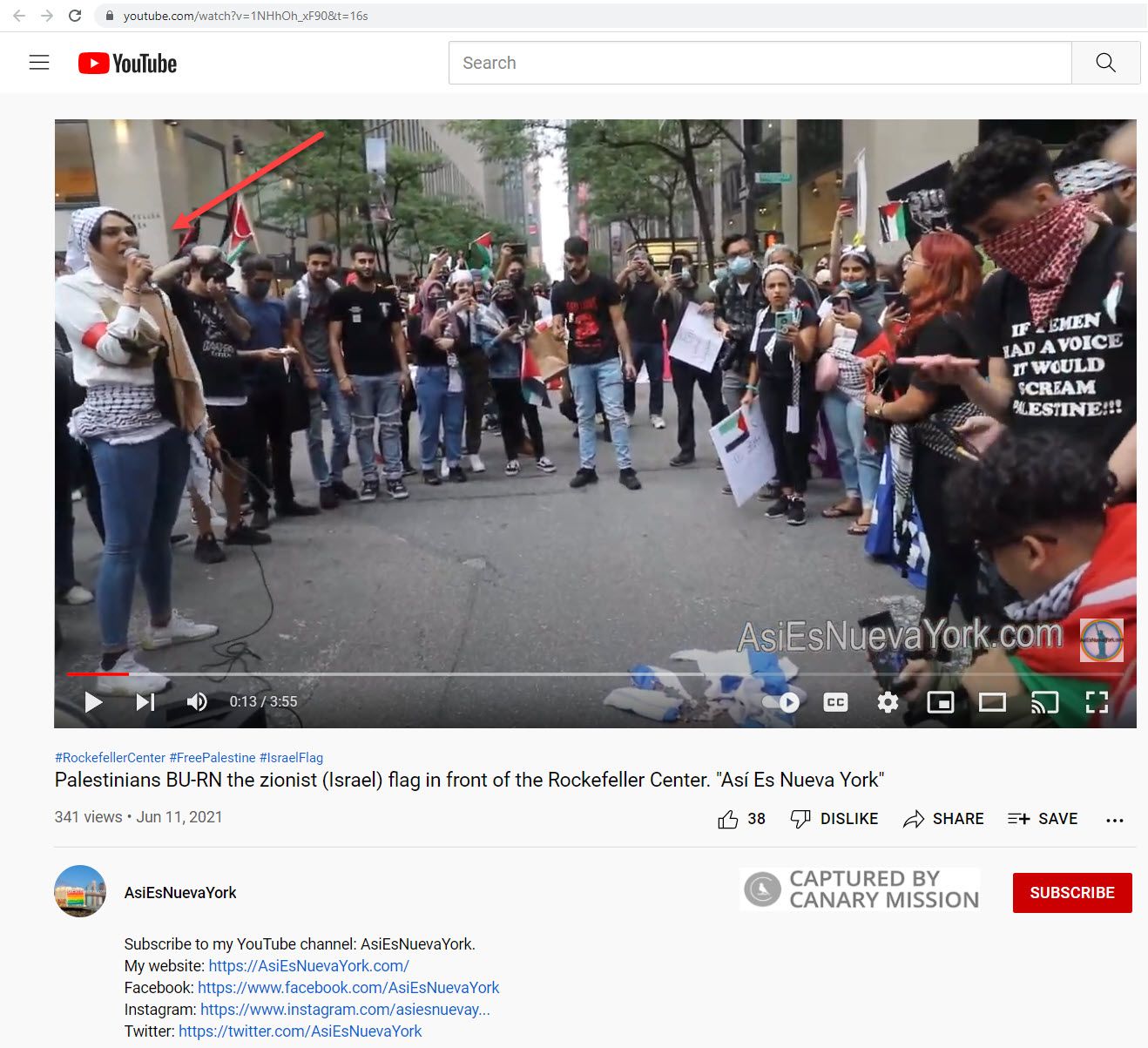
Nerdeen Kiswani is not quiet about her views. She wants the Jewish State obliterated and Zionists killed. She says it openly and proudly in front of loud cheering crowds.
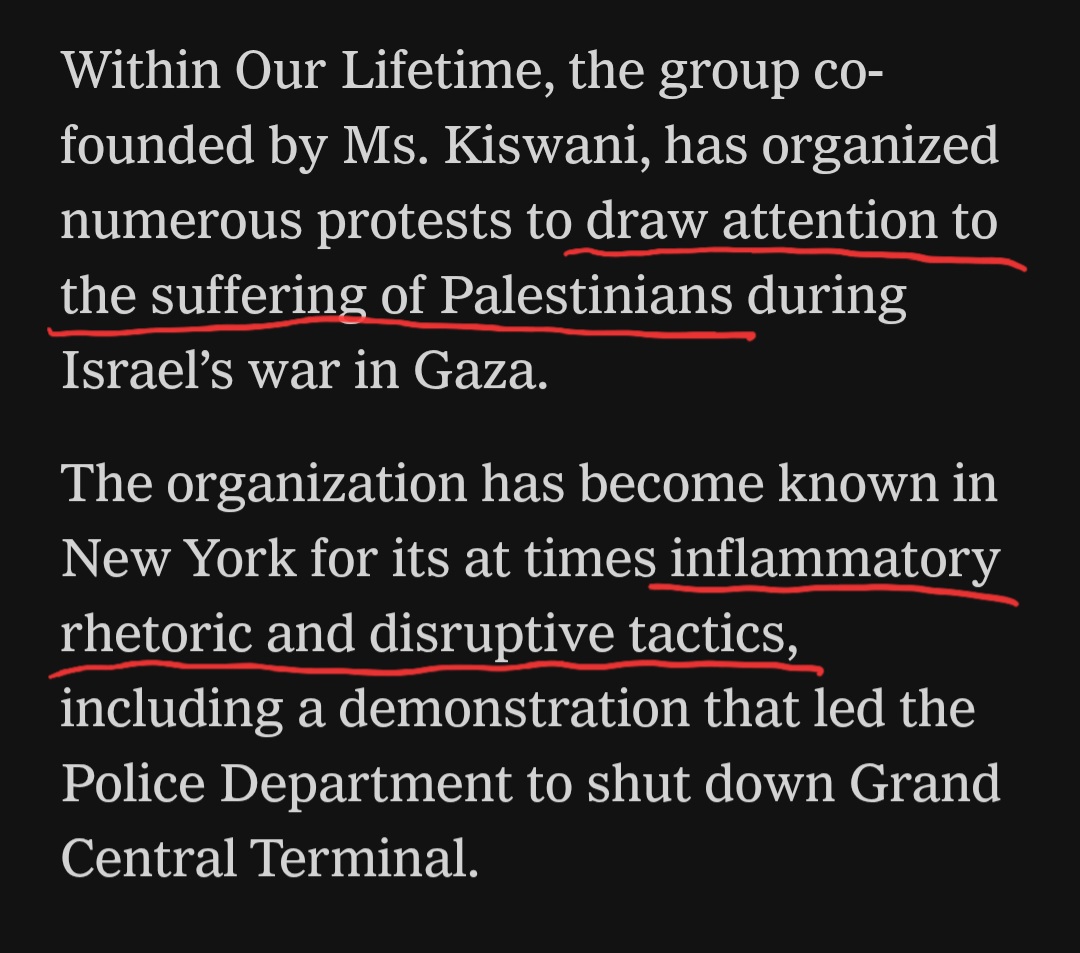
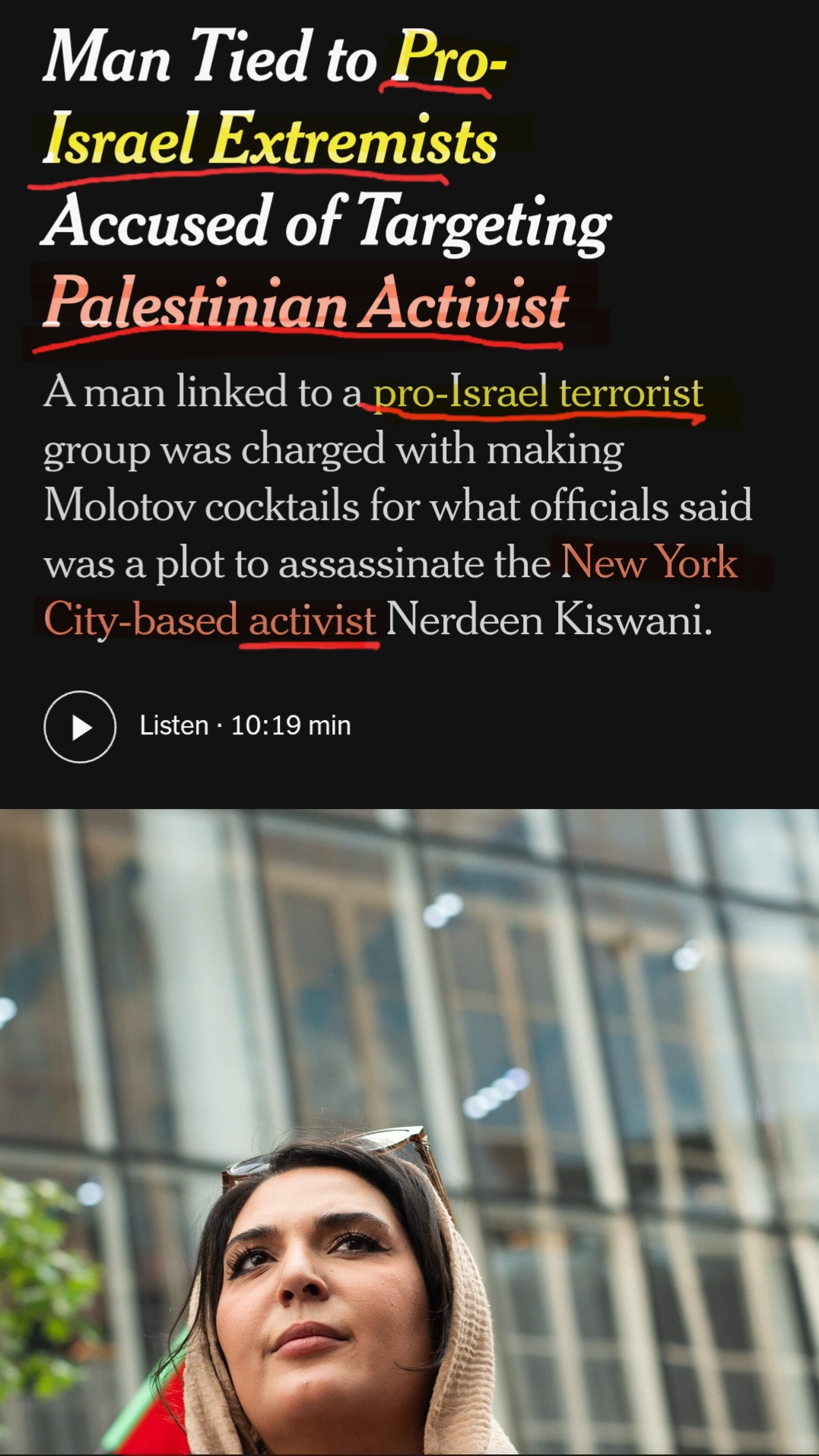
So why did The New York Times soften her stance? Why did it say that she was simply assembling “protests to draw attention to the suffering of Palestinians,” when her entire movement is about the destruction of Israel?
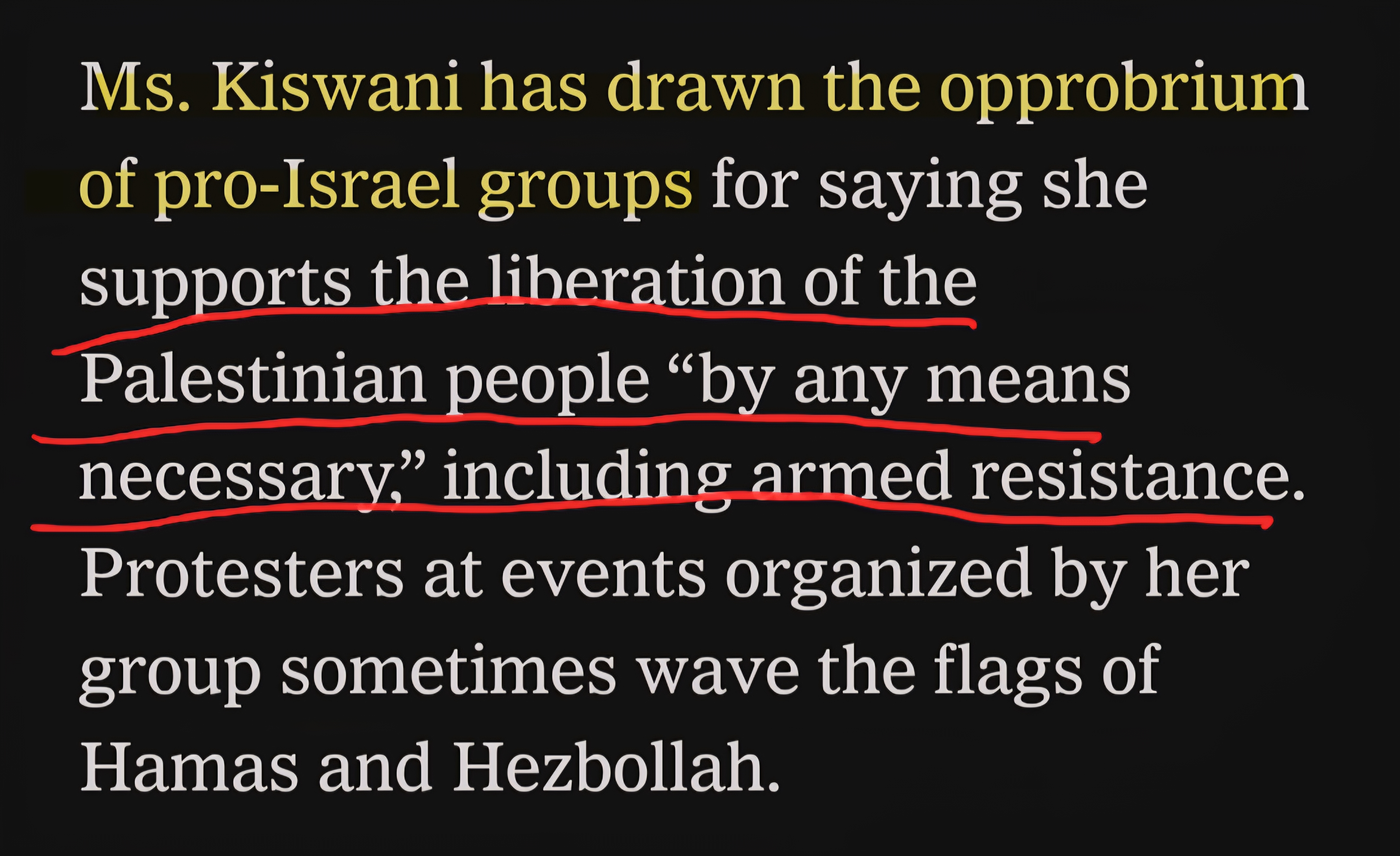
Why did the Times make it sound like pro-Israel groups were uniquely offended that “she supports the liberation of the Palestinian people “by any means necessary,” including armed resistance.”?
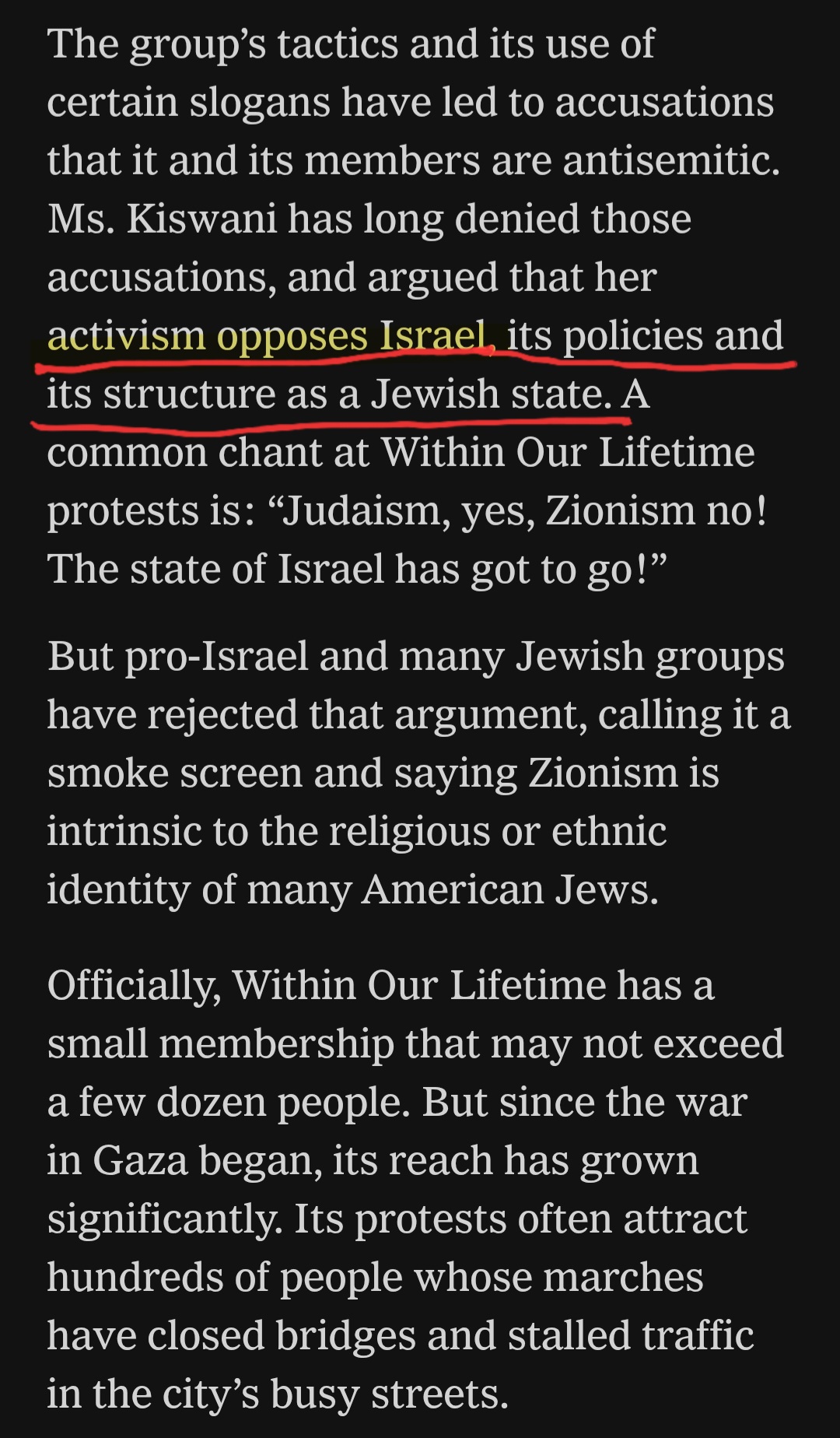
Why did the Times use so much energy and so many words to say “that her activism opposes Israel, its policies and its structure as a Jewish State,” without saying that she supports targeting Jewish organizations and the annihilation of the only Jewish State?
“We marched today, we took over the streets and we visited multiple Zionist settler foundations. Multiple. We let them know we know where they’re at. We know where they work. We’re gonna find out more about where they’re at too. And we’re gonna go after them.” – Nerdeen Kiswani, YouTube, Jun 11 2021
Why didn’t the Times explicitly state that Kiswani endorses US designated terrorist groups and individuals?
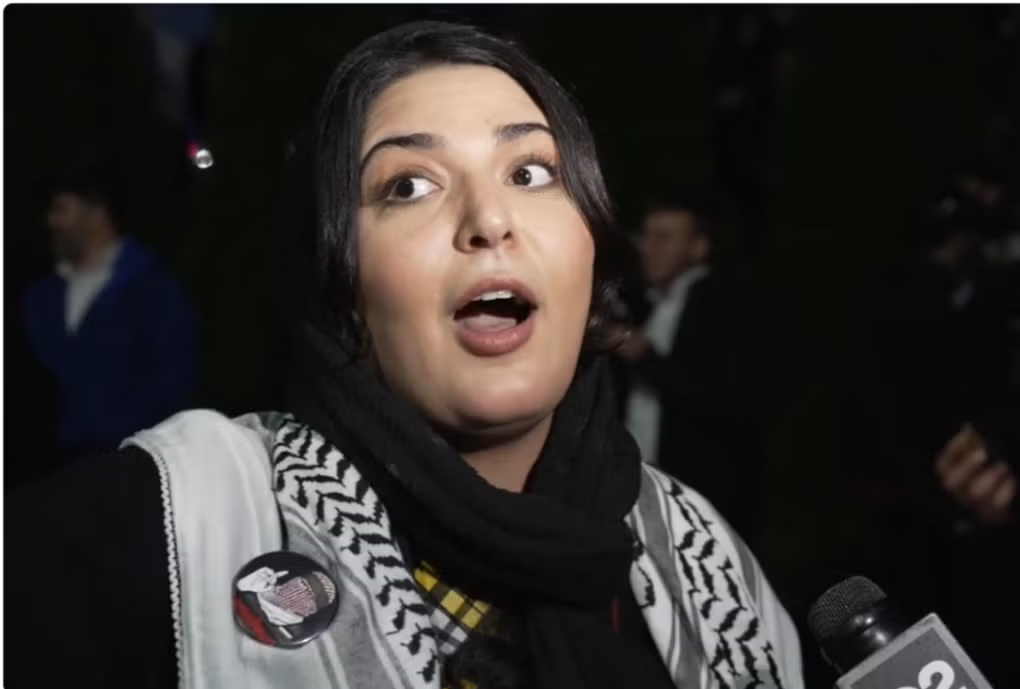
Picture on left is Kiswani with pin of Abu Obaida, a spokesman for Hamas, while protesting in front of a synagogue in Teaneck, NJ on April 1, 2024 (from ADL website)
On June 10, 2024, Kiswani led a protest outside a memorial exhibit in downtown New York City about the Nova Music Festival where she said that young partygoers enjoying music was “like having a rave right next to the gas chambers during the Holocaust,” mocking not only the hundreds of murdered youth but millions of Jews slaughtered in the Holocaust.
Kiswani post of a child kissing an armed Hamas terrorist, like those that burned Jewish families alive
In short, Kiswani is a proud supporter of terrorism against Jews and American allies. Yet The New York Times made it appear that her stances were simply pro-Palestinian, which some members of the pro-Israel community found offensive.
The reality is that a pro-Israel “extremist” allegedly planned an attack on a pro-Palestinian “extremist.” But the Times editorialized by showing the smiling face of an “activist” worried about the “suffering” of her people. Such is the alt-left embrace of the toxic “deformity in Palestinian culture.”
Abraham had two sons. That is not only history; it is the underlying structure of the Middle East.
From Isaac came Jacob (Israel) and the Jews. From Ishmael came peoples that would become much of the Arab world. One father. Two lines. A separation that began in a household and expanded into history.
“And the thing was very grievous in Abraham’s sight… and he sent her [Hagar and Ishamael] away” (Genesis 21:11–14)
A rupture in youth. Ishmael into the wilderness. Isaac remaining with the covenant, inheritance, and land. Two trajectories set before either became a nation.
They meet again only once.
“And his sons Isaac and Ishmael buried him in the cave of Machpelah” (Genesis 25:9)
The text records a moment that refuses to disappear: the separated sons standing together over their father.
History widened the gap.
The descendants of Ishmael became many: spread across vast geographies, largely Muslim, with enduring Christian communities. The region became overwhelmingly Arab.
The descendants of Isaac became few. Driven out, dispersed, conquered repeatedly, yet carrying something that would not yield: memory, covenant, and a fixed orientation toward their promised land.
Eventually, they returned. A small people, back in a narrow strip of that land, surrounded by a region that traced itself, at least in part, to the other son.
That imbalance defines the present.
Then something shifted.
The Abraham Accords – named for their common forefather – introduced a different possibility. Arab states choosing open relationship with Israel, shaped by economics, technology, security, and a recognition that the region was already changing beneath older narratives.
A shared pressure point sharpened that shift: Iran.
A Muslim non-Arab power, Persian in identity and imperial in ambition, projecting influence across Arab capitals and against Israel alike, forcing alignments that would have seemed implausible only years ago.
The Accords opened a door for a new future. Now widen it.
Bring the Abraham Accords to Hebron.
Bring them to the Cave of Machpelah, the burial place of Abraham, Isaac, and Jacob, and the Jewish matriarchs as well. The place where the text records Isaac and Ishmael standing together.
Let the leaders of Israel and the Arab world stand there.
Let it be an invitation – especially to Saudi Arabia – to step fully into this framework, not only as a strategic actor but as a central inheritor of the Abrahamic story.
Let it also be a reminder closer to the ground.
To Jews and Arabs living in the disputed lands east of the 1949 armistice lines (E49AL) that includes Hebron, that their conflict sits inside a much older relationship. They are not strangers placed side by side by accident. They are descendants of a shared origin, living out a divergence that began long before modernity created borders.
Ishmael did not return to neutral ground. He came back to the land understood to be Isaac’s inheritance. He stood with his brother there and buried their father.
That moment carries a clarity that history has often obscured: the land of Israel is the Jewish home.
The Arab world does not disappear in recognizing that. It becomes something stronger—anchored in reality, aligned with its own long-term interests, and reconnected to a shared origin that was never erased.
The Abraham Accords can move from alignment to acceptance.
Hebron is where that truth can be stated without abstraction.
The region has spent centuries replaying the separation.
Saudi Arabia and the Gulf States can choose, now, during their common battle against Iran, to stand again at the place where Isaac and Ishmael met thousands of years ago, and acknowledge what each brought with them when they arrived: a common bond and their own roots in the region.
Her 84 year old mother was taken from her home, with signs of violence left behind, a masked man on camera. And then nothing. A void where a mother used to be. She spoke about sleepless nights, about imagining fear she cannot reach, about a word she kept returning to: unbearable.
That word should end the conversation. It should strip away everything else.
Because everyone understands what it means when someone you love is taken.
Now Multiply That by 250
What Guthrie is living through is devastating.
In Israel, it happened at scale.
Over 250 people were abducted violently—children, parents, grandparents—dragged from homes, shoved into vehicles, disappeared into tunnels by jihadi terrorists. The same questions Guthrie now asks became a national condition: Are they alive? Are they suffering? What are they thinking?
The same agony. Multiplied. Multiplied. Multiplied.
Where the World Breaks
Here is the dividing line.
When Guthrie speaks, there is no debate. No one justifies it. No one says her mother deserved it. No one rallies in defense of the abductor.
The reaction is immediate and human: bring her home.
But when Israeli families faced the same horror, the reaction in too many places—especially on college campuses—was not sympathy.
It was celebration.
Not confusion. Not distance. Celebration of the very act Guthrie calls unbearable.
The Only Question That Matters
Her interview removes every excuse. No politics, no slogans—just a daughter describing what it feels like to have a mother taken.
If you can feel that—and then justify or cheer when it happens to someone else—you are not misinformed. You are choosing evil.
And that is the part that is unbearable to civilized people.
The fighters of antisemitism are rushing to the front with silly catchphrases. Perhaps even toxic.
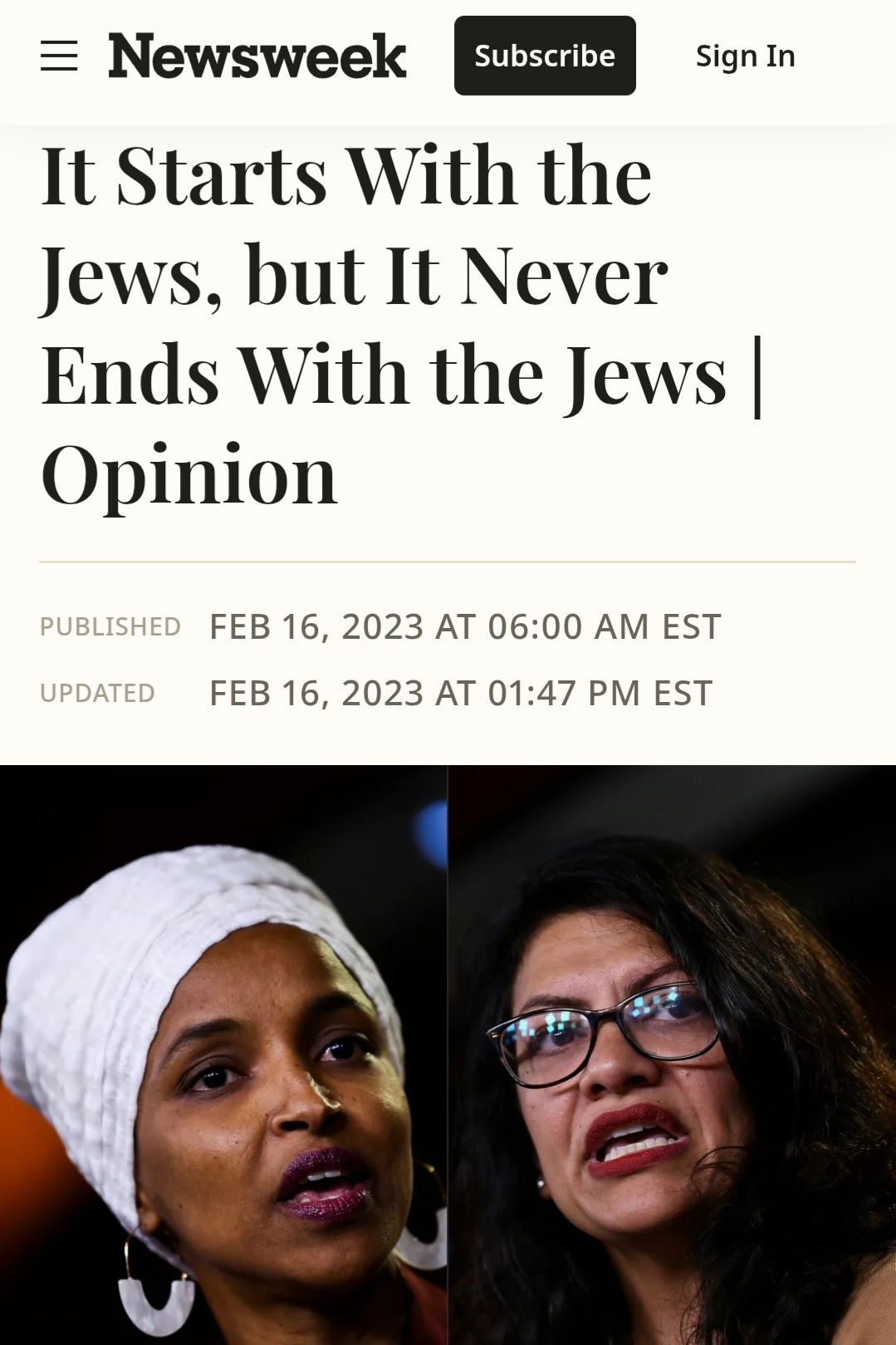
Take the line: “What starts with the Jews doesn’t end with the Jews.”
It is meant to elevate the issue. To make antisemitism feel urgent to those who might otherwise ignore it. But it carries an uncomfortable implication: that what happens to Jews matters most because it might eventually happen to someone else.
Why?
Why is the attack on Jews not sufficient on its own? Why must Jewish suffering be reframed as a warning signal for others before it earns attention?
It is already evil when Jews are targeted and that should be enough. Jews are not canaries in a coal mine for the protection of others. They are millions of innocent people living with threats, violence, and fear. That reality does not need to be universalized to be taken seriously.
Then there is the fallback line: “I condemn antisemitism, but…”
The sentence always breaks in the same place. Everything before the “but” is obligation. Everything after it is the real message.
No one says, “I condemn racism, but…” without immediately undermining themselves. Only with antisemitism does the moral clarity feel negotiable, conditional, open to context. The phrase signals that antisemitism is wrong in theory, but explainable – even understandable.
Or consider the most common defense of Israel: “Israel has a right to exist.”
It sounds firm, but it collapses under even a moment’s scrutiny.
No country has a “right to exist.” Not Singapore. Not Spain. Not South Sudan. Countries exist because history, peoplehood, and political will bring them into being and sustain them.
The real point is that the phrase is uttered because people want to destroy it. Not Montenegro or Guyana. The sole Jewish State.
This isn’t a hundred year old debate about political Zionism and the reestablishment of a Jewish state in their ancestral homeland but a discussion about the genocide of millions of Jews. Why is such phrase ever used? The defenders of Israel should condemn the premise that forced the urge to utter the words.
The more careful phrase “Criticism of Israel is not antisemitism” often lands the same way.
It is true, of course. But it is almost always deployed at the exact moment when the line is being approached, if not crossed. It functions less as clarification and more as insulation, a way to reassure the speaker that whatever comes next cannot be antisemitic, because it has already been declared not to be.
It pre-clears the argument.
All of these phrases share something in common. They take a situation that demands moral clarity and replace it with moral positioning. They allow people to sound serious and defensive while adopting the framework of the accuser.
Attacking Jews is evil. Threatening Jews is evil. Justifying targeted harm against Jews—whether through politics, ideology, or euphemism—is evil.
It is time for anti-antisemites to stop using catchphrases that feel emotionally empowering but are soaked in the lexicon of antisemitism.
What disappears in all three cases is the simplest word: invasion.
We prefer a softer story that cultures blended, languages spread, religions were adopted. But that story falls apart on contact with reality. Spain did not grow into the Americas. France did not organically merge with Africa. Arab armies did not quietly diffuse ideas across continents. They came from the outside, took control by force, and reshaped the societies they conquered—imposing language, religion, and identity.
That is not exchange. It is replacement.
Over time, something happens to memory. The longer the outcome lasts, the more natural it feels. A forced language becomes simply the language. An imposed religion becomes tradition. Conquest becomes history and eventually, heritage.
But modern outrage does not follow history evenly. It clusters around the United States as if European expansion began and ended there. The rest of the Americas, reshaped just as profoundly – perhaps more – by Spanish and Portuguese conquest, rarely draw the same sustained scrutiny.
Part of this is power. The United States is the dominant global actor today, and criticism follows visibility. Part of it is recency. But another part—rarely stated outright—lies in how colonialism is now framed.
In today’s discourse, colonialism is implicitly coded as a “white” phenomenon. The category is no longer just historical but visual.
Where power is perceived as Western and white, the language of colonialism sharpens. Where societies are seen as non-Western or part of the Global South, even when shaped by earlier conquests, the language softens into history or identity. Entire regions transformed by Spanish and Portuguese expansion or Islamic invasions are broadly framed as “indigenous,” while the United States becomes the central exhibit.
That same lens is applied even more aggressively to Israel.
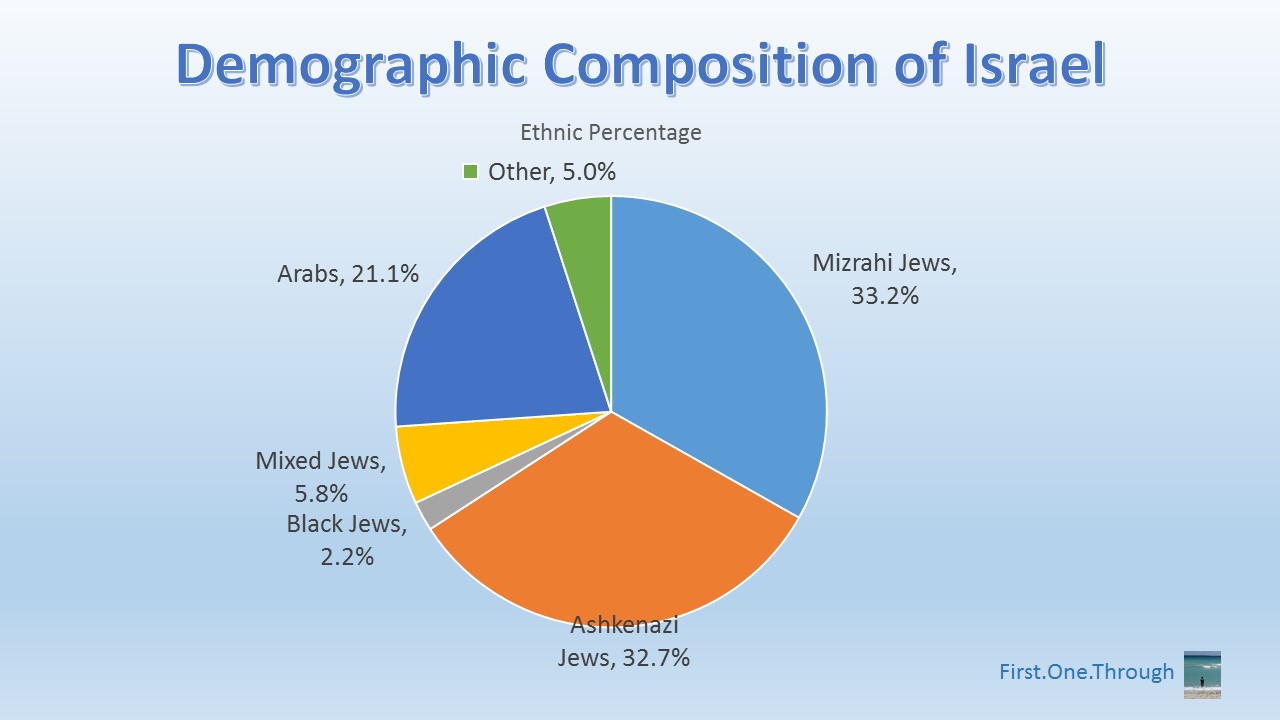
Israel is often cast as a project of Western, even “white,” power. But that framing collapses under even modest scrutiny. The largest share of Israel’s population descends from Jewish communities across the Middle East and North Africa, whose skin is as dark as their neighbors.
More fundamentally, the Jewish return to the land of Israel is a decolonization movement. It is not an external power projecting control into a foreign land. It is dispersed communities reconnecting to a shared origin and reviving their language and restoring their cultural framework in the place it began.
And yet it is falsely framed as colonial.
While the clearer cases fade into history, the exception is forced to fit the rule.
That contrast reveals something deeper. Colonialism is no longer a historical description. It has become a moral label which is applied unevenly, shaped by contemporary perceptions of identity, power, and alignment.
Histories that fit a “white West imposing on others” framework are foregrounded and moralized. Histories that do not fit as neatly are softened, reframed, or absorbed into the past.
European and Islamic invasions took over the Americas and Africa, but universities and progressive media only showcase the interlopers with whiter skin. The blind rage infects reason to such a degree, that even anti-colonial movements such as the Jewish State, cannot be addressed by fact and reason.
The colonial-imperial lens at work today is shaped by an anti-White racist Global South. Its mission is portable colonialism – to extract wealth and power from White societies and redistribute them to non-White communities.
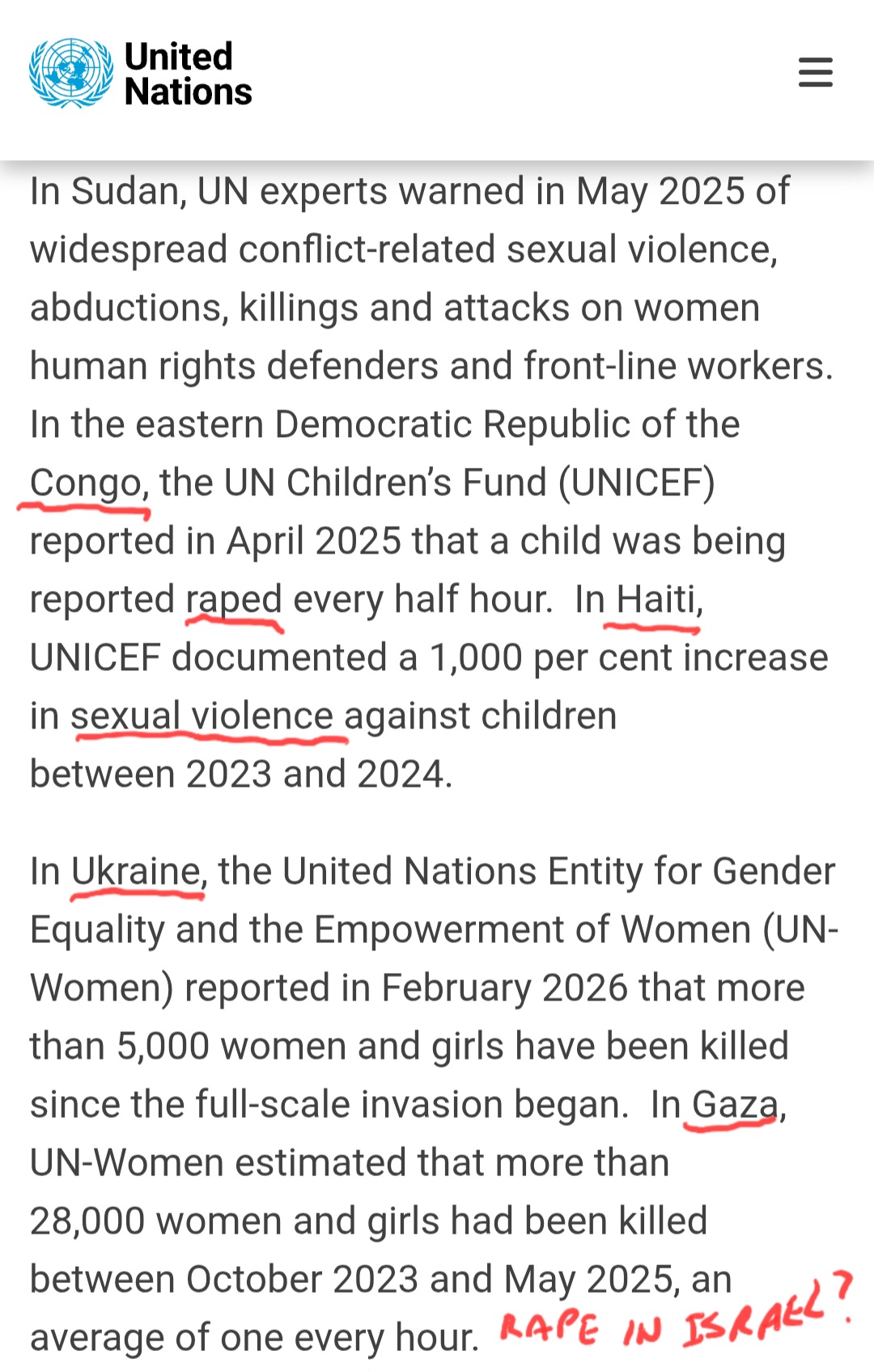
The United Nations has released yet another report on violence against women. It reads like a catalogue of human depravity – Sudan, Congo, Haiti, Ukraine, Gaza – each documented, each calibrated to shock the conscience.
And it does but not for the reason the authors intend.
Because one of the most documented episodes of mass sexual violence in recent history is missing. Not debated. Not contextualized.
Absent.
On October 7, an estimated 6,000 Gazans invaded Israel and carried out atrocities that included the systematic rape and mutilation of women. This is not a matter of competing narratives. It has been documented by eyewitnesses, first responders, forensic teams, and subsequent investigations.
And yet, in a sweeping global report about violence against women, these victims disappear.
The report finds space for a child raped every half hour in the Democratic Republic of the Congo, for the explosion of abuse in Haiti, for war deaths in Ukraine, and for casualty figures in Gaza. Horrific and worthy of attention.
But the omission is not accidental. It is instructive.
Because what the United Nations is quietly establishing is a hierarchy of victims. Some suffering is elevated. Some is ignored. And some – when it disrupts a preferred political narrative – is erased altogether.
Jewish women fall into that last category.
That is not human rights reporting. It is narrative management.
And that distortion does not stay confined to UN documents. It bleeds outward. When the international system refuses to clearly name and center atrocities committed against Jews, it creates a form of moral cover. The record itself becomes a kind of absolution.
So when figures in the West – like the wife of New York City Mayor Zohran Mamdani, Rama Duwaji – publicly express approval for the October 7 massacre, the reaction is muted, rationalized, or ignored. The most grotesque elements of that day, including the sexual violence, have already been softened, blurred, or omitted by institutions that claim to stand for universal rights.
If the crime is not fully acknowledged, then the celebration of it can be more easily excused.
That is the downstream consequence of selective memory and outrage.
The United Nations is not failing to see. It is choosing not to look and remind the world about violent antisemitism. And in doing so, it transforms a report about protecting women into something far more revealing: a document that tells us which victims matter and which ones are inconvenient.
In that calculus, the rape and murder of Jewish women is not denied. It is deemed unworthy of inclusion. Perhaps even harmful, lest it paint its forever wards, the Stateless Arabs from Palestine (SAPs) in an unfavorable light.
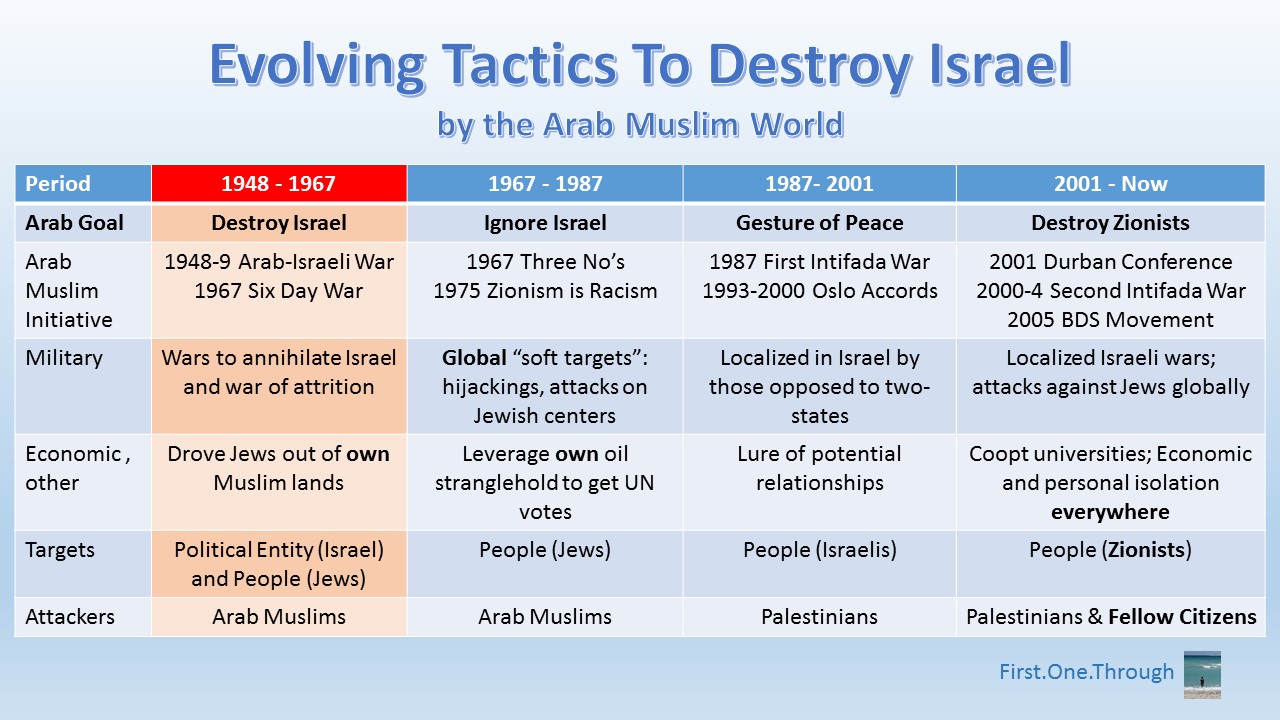
When armies lose wars, the battlefield does not always disappear. It often moves to softer targets.
That is what happened after the Six-Day War, when Israel delivered a devastating defeat to the combined armies of Egypt, Jordan, and Syria. In six days, territories changed hands, military reputations collapsed, and the promise that Israel would soon be destroyed evaporated.
The defeat reverberated far beyond the battlefield. It humiliated governments across the Arab world and shattered the image of inevitable victory that had surrounded the campaign against Israel.
But the war did not end. It simply changed form.
In the years that followed, militant organizations such as the Popular Front for the Liberation of Palestine and the Black September Organization exported the conflict around the world.
The targets were no longer Israeli armies; they were civilians.
Airplanes became battlegrounds. Diplomats became targets. Jewish institutions across the diaspora suddenly found themselves on the front lines of a war being fought thousands of miles away.
The Munich massacre shocked the world when Israeli athletes were murdered at the Olympic Games by Palestinian Arab terrorists. It demonstrated that the battlefield could be moved to the most international stage imaginable.
Another defining moment came with the Entebbe hijacking, when Palestinian terrorists seized an Air France flight and diverted it to Uganda. There, Jewish and Israeli passengers were separated from the others and held hostage in an old airport terminal. The episode ended with a daring Israeli rescue, but the hijacking revealed something chilling: Jews anywhere could be turned into targets for a war militants could not win against Israel itself.
Synagogues and Jewish community centers were attacked in cities far removed from the Middle East battlefield. Rome. Athens. Istanbul. Hezbollah and Iran were often behind the atrocities.
These were not military targets. They were chosen precisely because they were vulnerable.
The message was unmistakable: if Israel could not be defeated in the Middle East, Jews everywhere would become targets.
Today there are worrying signs that the same pattern may be returning.
Iran and its regional network of militias face mounting military pressure from Israel and the United States. When regimes and movements cannot confront stronger armies directly, history shows they often search for targets they can reach more easily.
Recent intelligence chatter has suggested that Iran may have issued signals intended to activate sleeper operatives abroad. Western security services have increased monitoring of potential networks across North America, Europe, and Australia. Whether these warnings prove accurate or not, the concern reflects a familiar strategic logic: when the battlefield is lost in one region, pressure is applied elsewhere.
As the United States becomes the central military opponent of Iran, American Jews may face the threat most acutely.
Extremist movements have repeatedly treated Jewish communities abroad as symbolic stand ins for Israel and its allies. When Israel gains the upper hand militarily, Jews in distant cities have often become the targets that terrorists believe they can reach.
This time the danger may be compounded by a new environment.
Terror no longer requires direct command structures. Groups such as Islamic State pioneered a model of “inspiration terrorism,” where individuals absorb propaganda online and act independently without formal membership or training, such as happened this week in New York City.
At the same time, a troubling ideological convergence has taken shape in parts of Western society. Radical Islamist movements and segments of the revolutionary left increasingly share a political vocabulary built around anti-imperialism, anti-colonialism, and the demonization of Israel. In that narrative, Israel becomes the embodiment of oppression. Jews are portrayed as agents of imperial power rather than a people with a three thousand year connection to their homeland.
When those ideas spread through social media, activist networks, and even parts of the educational system, hostility toward Israel can easily spill over into hostility toward Jews themselves.
The result is combustible.
A generation is growing up hearing that violence against Israel is “resistance,” that Jews represent colonial domination, and that the conflict is part of a global struggle against oppression.
History shows where that logic can lead.
If history is echoing once again, the streets of Western cities may soon remind us of a grim truth: the losers of wars do not always accept defeat.
We are witnessing the next phase of the War on Zionists.













 First One Through