Joseph, Yusuf and the Stories We Tell

The story of Joseph is the longest sustained personal narrative in the Bible. It is a life told end-to-end—youth and jealousy, betrayal and exile, moral clarity under pressure, reversal of fortune, and reconciliation. Jews have lived inside this story for millennia and drawn from it lessons about love misdirected, loyalty earned, leadership forged, and fate revealed only in retrospect.

It begins, uncomfortably, at home.

Jacob’s overemphasis on Joseph—his public favoritism, symbolized by the coat of many colors—fractured the family. It was not Joseph’s dreams alone that enraged his brothers, but the hierarchy their father imposed. Love, unevenly expressed, curdled into resentment. That resentment escalated to violence. The brothers nearly killed Joseph, then sold him into slavery, persuading themselves that exile was mercy.

And yet, the terror of the pit became the opening move in a larger design. Joseph’s descent—into slavery, into prison, into obscurity—ultimately saved thousands from starvation, including the very brothers who betrayed him. The Torah insists on an uncomfortable truth: human cruelty can coexist with divine purpose, without being excused by it.

Over time, the transformation that matters most occurs not in Joseph, but in Judah. The brother who once proposed selling Joseph later rises to moral leadership. Faced with the potential loss of Benjamin, Judah offers himself instead. Ultimatelty, kingship does not emerge from brilliance or dreams, but from responsibility and loyalty. Judah learns what Jacob failed to teach early: leadership is love with a wide visual field.

But this is not the only Joseph story in the world.

Yusuf and Zulaykha: A Different Emphasis

In Islamic tradition, Joseph is Yusuf, and his story unfolds with different texture and purpose. The Qur’an (Surah Yusuf) adds layers absent from the biblical text. Where the Bible does not even name Potiphar’s wife, Islamic tradition gives her a name—Zulaykha—and an entire inner life.

Her attraction to Yusuf begins as physical longing, but in later tradition becomes a spiritual ascent. Love itself is refined—from desire for beauty to yearning for the divine. This is not biography alone; it is allegory.

Persian culture preserved these layers visually, through extraordinary manuscript art that does not merely illustrate scripture but interprets it.

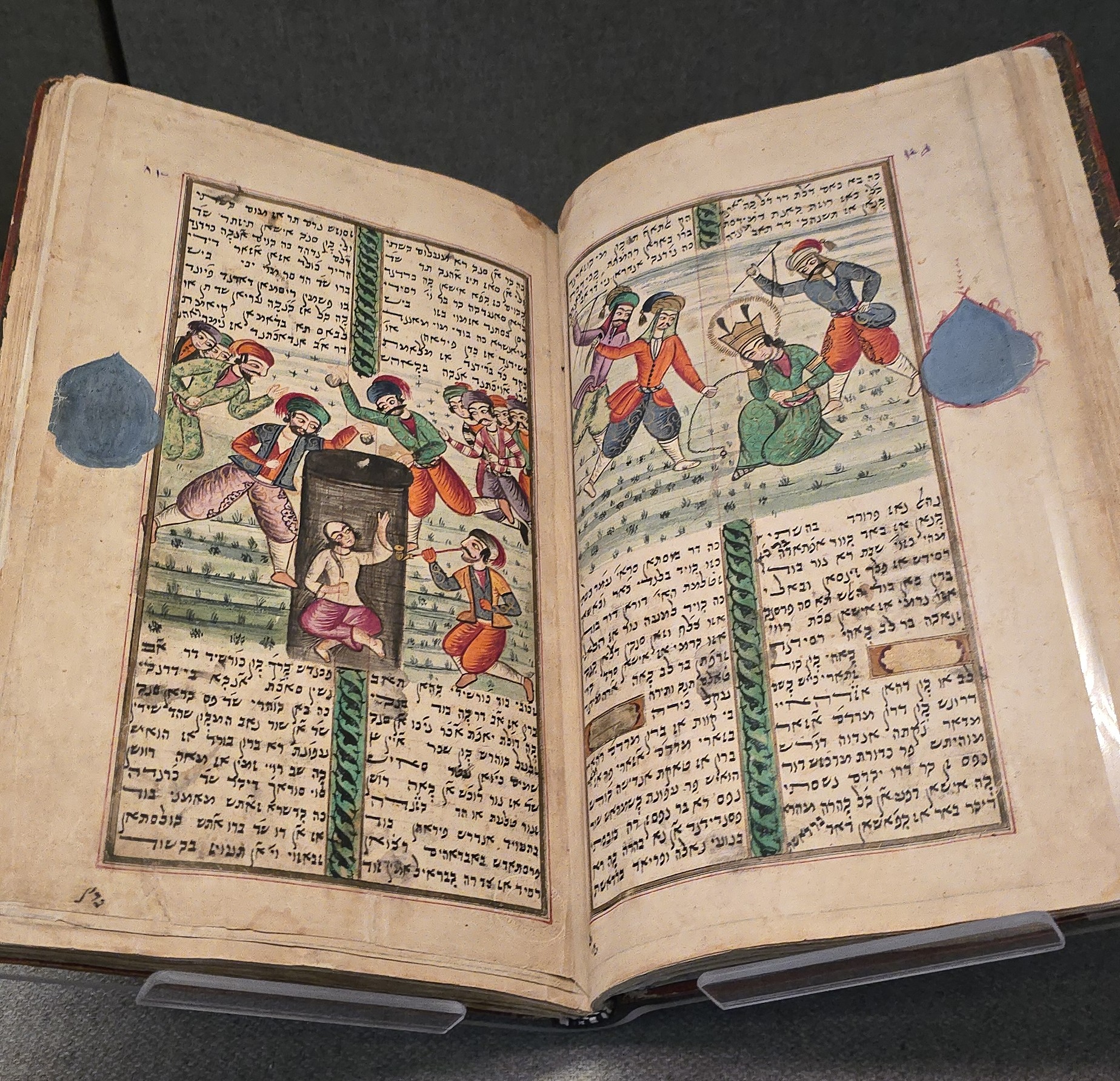
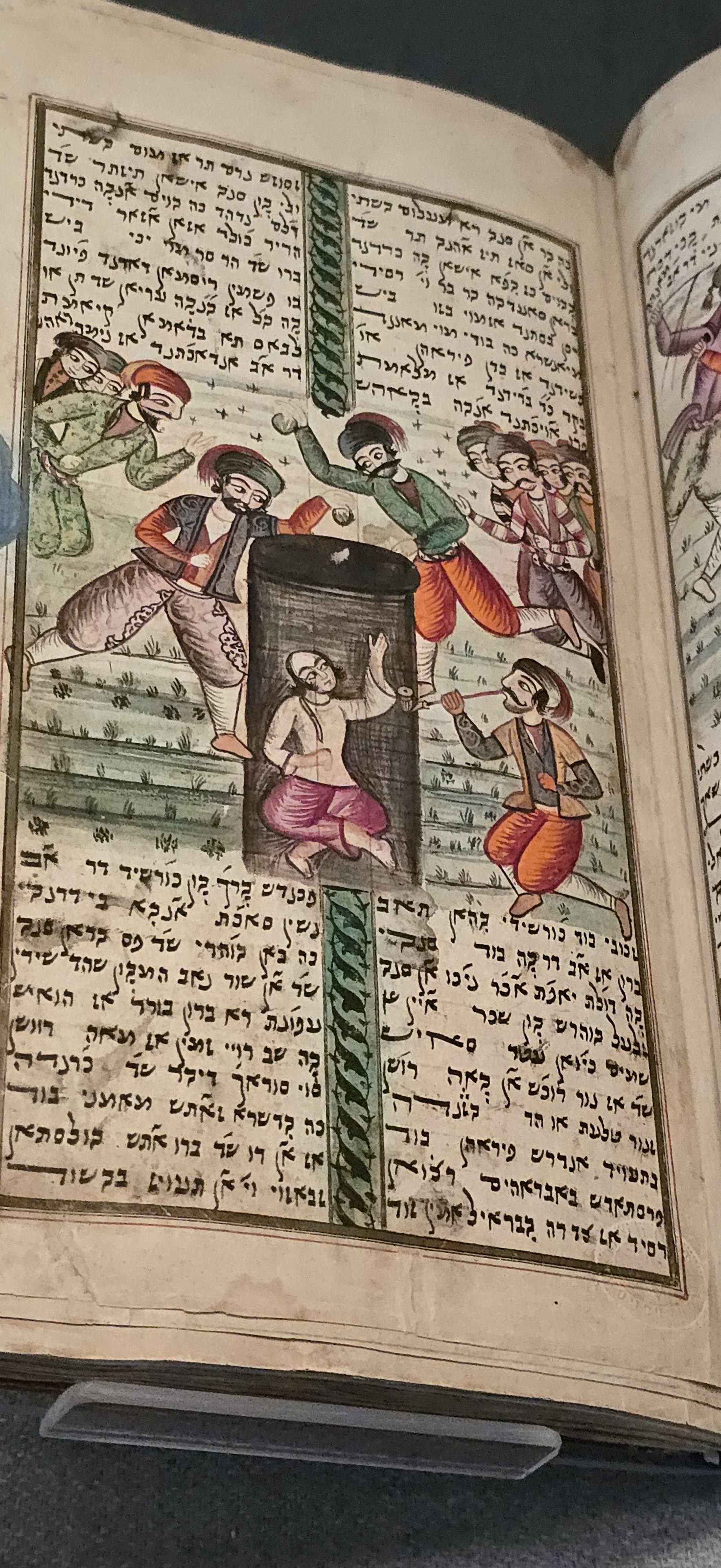
One remarkable manuscript—now on display at the Grolier Club from the collection of the Jewish Theological Seminary (until December 27, 2025)—shows Joseph cast into a well. The details are arresting. Joseph has lost not only his coat of many colors, but his hat and shoes as well—status stripped away piece by piece. The brothers even drop rocks down on him.

Story of Yusuf and Zulaykha from Mashhad, Iran in 1853 by the Jewish scribe Eliyahu ben Nisan ben Eliyahu Gorgi. Digitized entire manuscript can be viewed here

One figure stands apart in the drawing. At the bottom of the scene, a brother sits almost contemplatively. His hands alone are painted with henna, marking higher status. He smokes a long çubuk (copoq)—a dry-tobacco pipe, not the classic Persian water-based hookah—an unsettling detail as Joseph languishes in a dry well below. The image quietly foreshadows hierarchy, survival, and reversal. Even in betrayal, the future is being seeded. This must be Judah, on the side of the well with his five brothers from mother Leah, who is destined to help Joseph out of the pit and rise to fame himself.

One brother seems to connect at the same level of Joseph – at a low point in this story but will rise to fame later in life: Judah

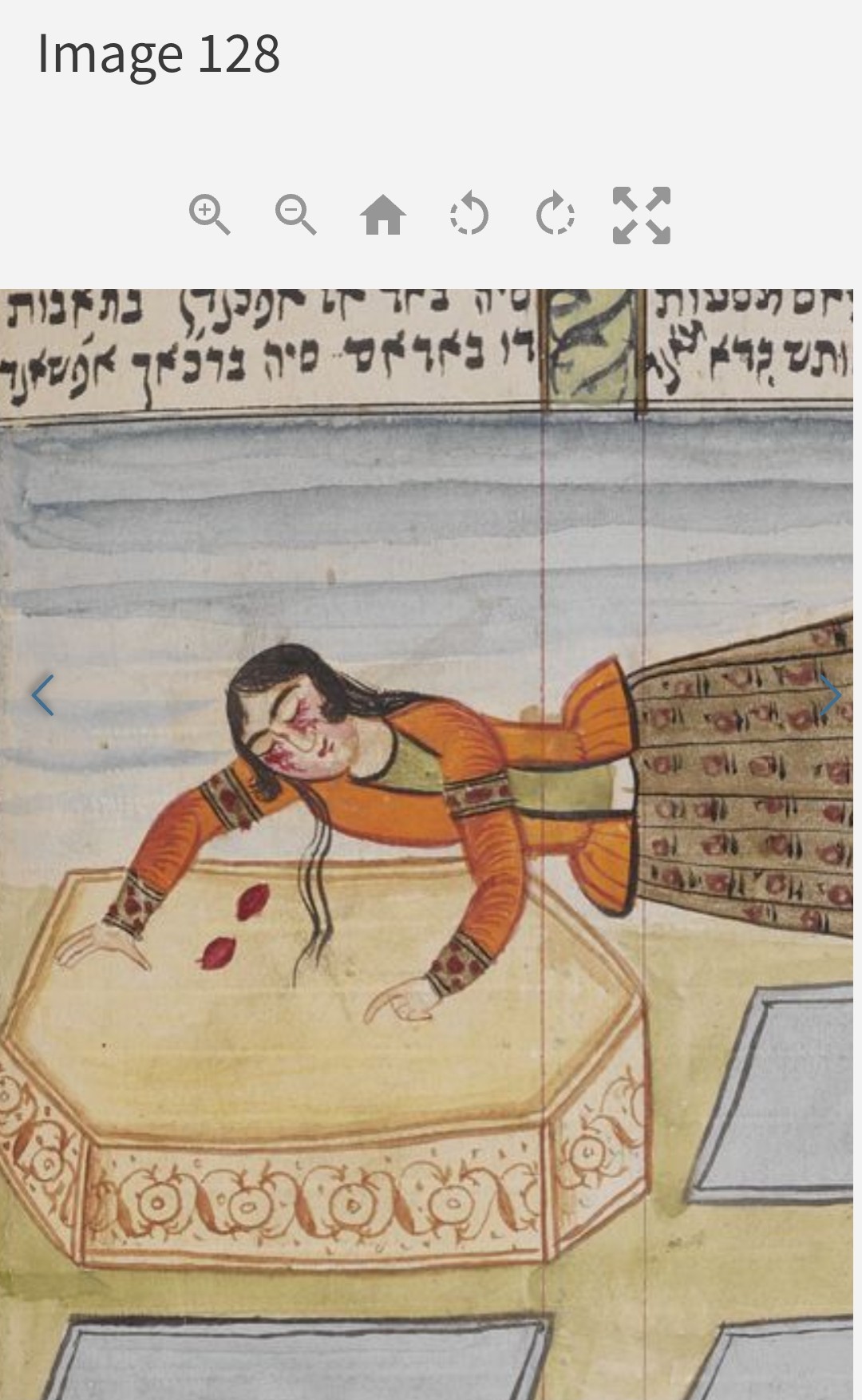
Other images in the Yusuf cycle go further still in the manuscript. Women cut themselves upon seeing Joseph’s beauty (image 70 from Surah Yusuf 12:31). Zulaykha is said to lose her sight from longing for him (image 128). Beauty becomes dangerous, overwhelming, transformative. The Islamic tradition does not deny desire; it seeks to discipline and redirect it.

Zulaykha losing her sight at the end of the story is one of the versions transmitted through the ages

Two Traditions, One Origin

For Jews, Joseph’s story is about dreams and reversals, exile and return, family rupture and national survival. For Muslims, Yusuf’s story adds a meditation on beauty, temptation, and love’s ascent toward God. The Islamic telling emerged nearly two thousand years after the Jewish forefather lived. It is not wrong; it is different.

What matters for us today is that these differences did not need to fight. The stories coexist without trampling on the other.

The same characters—Jacob, Joseph, the brothers—carried distinct lessons without cancelling one another. No one is frozen forever as a villain. Jacob loved poorly but learned. The brothers failed catastrophically but changed. Judah rose. Sacred storytelling, at its best, refuses to eternalize blame.

That restraint is precisely what feels absent today.

Stories, Power, and the Present

The Holy Land, sacred to both Jews and Muslims, is no longer widely treated as a shared inheritance, but as a zero-sum possession. Hamas openly declares that Jews will be wiped out. Clerics in parts of the Islamic world speak in timelines of Jewish disappearance due to their being “enemies of world peace.” This is not interpretation; it is incitement. It rejects the Joseph model, in which history bends—slowly and painfully—toward survival, accountability, and reconciliation rather than annihilation.

And yet, Islamic civilization itself offers another precedent. Islam historically made room for Jewish continuity—absorbing biblical figures, preserving Jewish prophets, and allowing traditions to dovetail rather than collide. Yusuf did not replace Joseph; he walked alongside him. Zulaykha did not negate Potiphar’s wife; she deepened the moral inquiry. Reverence did not require negation.

That capacity still exists.

If Joseph teaches anything durable, it is that sovereignty, survival, and holiness are not insults to one another. Jews returning to and governing their homeland need not be read as a theological defeat for Islam. They can be understood, instead, as another chapter in a long, shared story—one that does not deny difference, but refuses extermination as destiny.

The question is whether we choose that inheritance again.

The Polite Jihadist

Zahra Billoo of CAIR once warned American Muslims to beware of “polite Zionists.” People who show up at interfaith events, bake challah with their neighbors, and fight for civil rights—but who, she insists, cannot be trusted because they believe Jews have a right to live and pray in their ancestral homeland. That was her definition of danger: Jews who smile, volunteer, and advocate for coexistence, but who also believe Israel has a right to exist. They are your “enemies.”

It was an extraordinary moment of inversion. The Jewish community—disproportionately involved in interfaith coalitions, civil-rights causes, racial-justice marches, refugee aid, and social-service work—was cast as a threat not for what it does, but for what it believes: that Jews, like any people, have the right to be sovereign in their own homeland. Billoo called that racism. And too many institutions nodded politely.

So it is fair to ask: Do Jews have to be wary of “polite jihadists”?

Smiling Zohran Mamdani

We are told by Muslim groups to fear polite Zionists, yet tiptoe around the reality of polite jihadists—individuals who wrap hard supremacist doctrines in soft rhetoric and a smile. People who reject violence in press releases but openly support ideologies that cast non-Muslims as infidels; who promote frameworks in which Jews and Christians may live only as tolerated second-class subjects (dhimmis) under Islamic rule; who embrace the idea that Islam should dominate the world, politically and spiritually; who speak of “justice,” but envision a future in which non-Muslims are either subordinate or erased.

These are not fringe concepts. They are hardwired into the foundational texts and invoked by extremists to justify their worldview. And while many American Muslims reject them entirely, groups like CAIR have repeatedly platformed leaders who traffic in these supremacist ideas—even while presenting themselves as civil-rights organizations.

If believing that Jews should be allowed to pray at their holiest site is “racist,” what is believing that Jews must never pray there at all?
If supporting Jewish sovereignty is “extremism,” what is supporting an ideology that grants Jews survival only as second-class subjects?

America has a long-standing standard for hate groups: organizations that demonize entire populations, promote supremacist ideologies, or justify violence or domination over others. The KKK fell into that category because it portrayed African Americans, Jews, and Catholics as existential threats who must be controlled, excluded, or eliminated.

What, then, do we do with organizations whose leaders insist that Jews who support Israel are untrustworthy; who describe the world in terms of Muslim purity versus Zionist contamination; who excuse jihadist violence as “resistance”; who call Jewish self-determination a racist ideology; who propagate doctrines in which non-Muslims must accept inferiority or die?

Is that not the definition of a hate ideology?

The United States is finally on the cusp of declaring the Muslim Brotherhood a terrorist group. It is long overdue, an action which many Muslim-majority countries have taken.

But what about CAIR?

CAIR is invited into coalitions, corporate trainings, universities, government initiatives, and interfaith events—despite leadership that routinely defames Jews and normalizes Islamist supremacy. If the KKK wrapped itself in the language of “civil rights,” it would still be disqualified. Supremacy does not become acceptable because it quotes scripture or wears a suit.

The polite jihadist is far more dangerous than the polite Zionist—because one seeks coexistence, while the other seeks dominance.

America needs to stop pretending it cannot tell the difference.

Western Zealots for ISIS and Palestine

A decade ago, hundreds of Westerners streamed out of London, Birmingham, Manchester, Minneapolis, and Columbus to join the Islamic State. They weren’t merely curious spectators of a dark movement; they were converts to a brutal faith of fire. They thrilled at ISIS videos of men burned alive in cages, heads severed on sand, and ancient cities razed under the banner of the Caliphate. Entire families—women and children included—picked up and moved to Syria and Iraq to participate in the dream of a world purged of infidels. Many never returned.

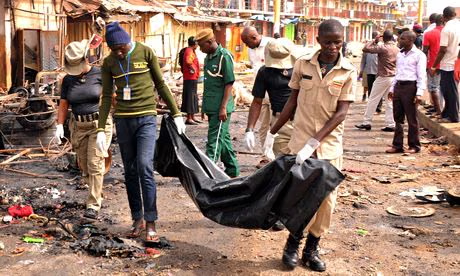
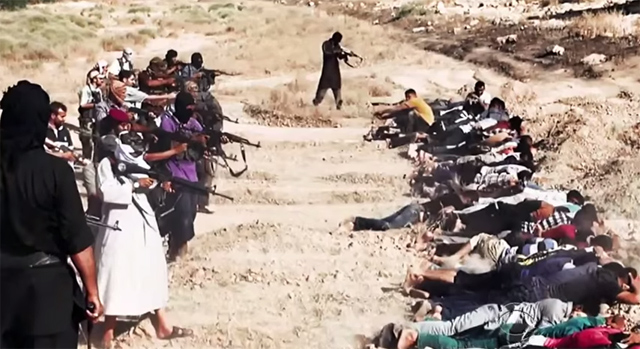
Islamic radicals of ISIS slaughtering people

Today they don’t need to leave home.

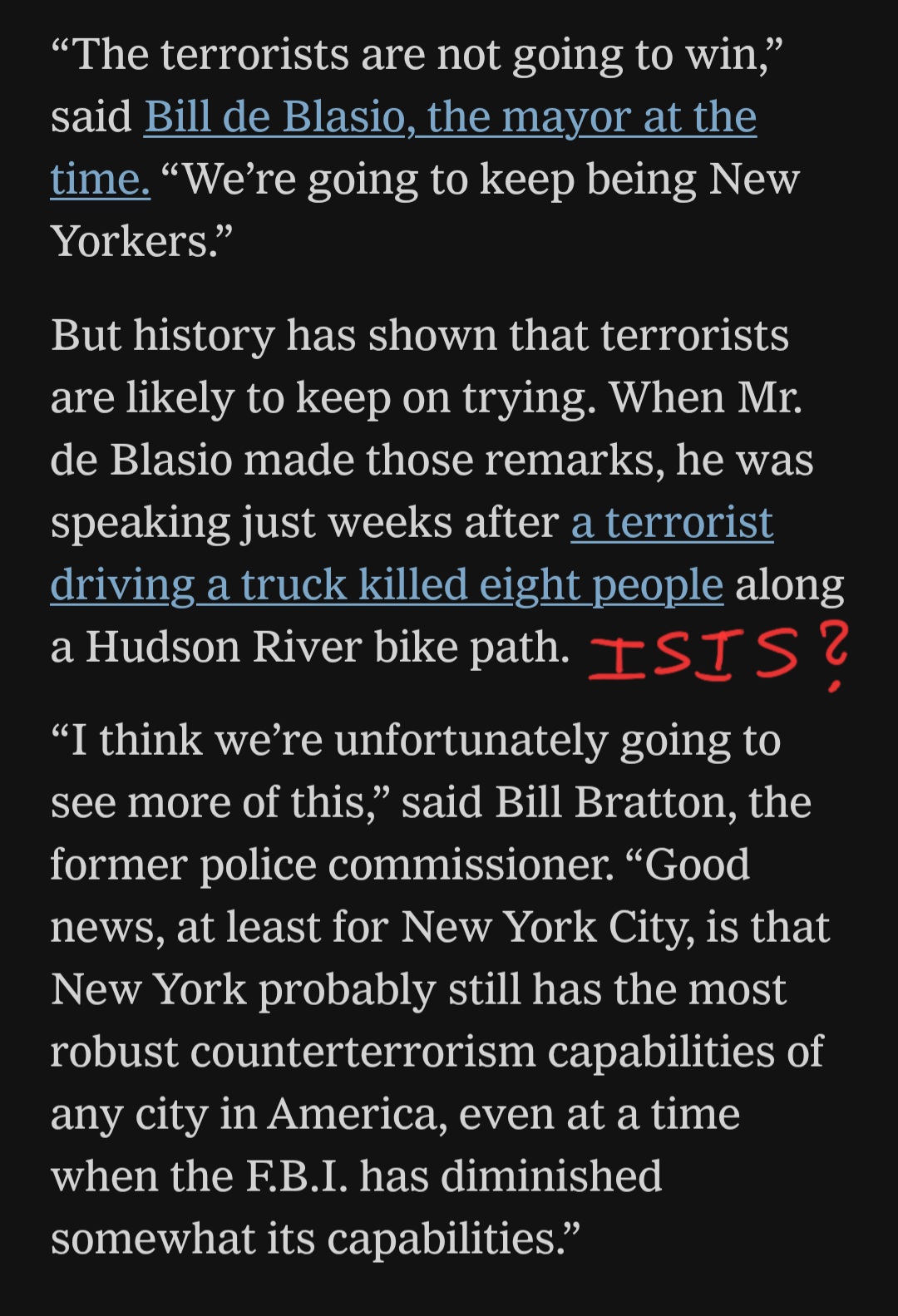
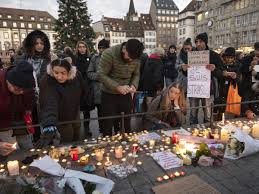
The same ideological impulse that carried them to Raqqa now drives attacks on local Jews down the street—in schools, synagogues, coffee shops, and commuter trains. Radical jihadism has simply switched labels: from “ISIS” to “Palestine,” from “Caliphate” to “Resistance,” from overt barbarism to the socially-acceptable pose of “solidarity.” The mission is unchanged. Only the hashtags are new.

And while Western governments once scrambled to stop teenagers from boarding flights to Turkey, today they barely raise an eyebrow as mobs chant for Jewish death on college campuses and in city plazas. Police departments treat the threat as “protected speech” until someone lights the match or pulls the trigger. Surveillance of Jews hems closer, but nothing stops the expanding radical ranks of those who have found a new, easier battlefield: Western cities themselves.

The goal remains constant—burn down the old society and replace it with the black-green flag of radical Islam. In the Middle East, ISIS tried to seize territory. In the West, its ideological descendants aim to seize the streets, the discourse, and the public square.

The West fought—haltingly—to slow ISIS’s spread in Iraq and Syria. But it is utterly unprepared to confront the same doctrine as it metastasizes in Africa, online, and now in its own neighborhoods. European governments write reports; American politicians hold hearings; academics write tortured essays parsing the “legitimate grievances” of those calling for slaughter.

Only one country behaves as if the threat is real. Israel fights it directly, understanding the battle as existential rather than theoretical. Israelis have seen what happens when radical jihadists gather strength: they massacre civilians, rape women, burn communities, and boast about it online.

But the West still imagines that it can appease the ideology, contain it, or reinterpret it as a civil-rights movement. In certain cities, it is preparing to forfeit its Jews first—sacrificing them to buy temporary calm—while missing the larger reality that the same forces aiming at Jews today aim at the entire Western democratic structure tomorrow.

Societies do not collapse in a single moment. They erode from below, from the foundations. And those foundations—rule of law, minority protection, civic trust, freedom of worship, the very idea of objective truth—are already cracking as the zealots find new targets and new excuses.

The West destroyed the physical caliphate. It never touched the ideological one, the one which drew warriors from its own streets.

Now the jihad is local.

The OIC’s Deathly Hypocrisy

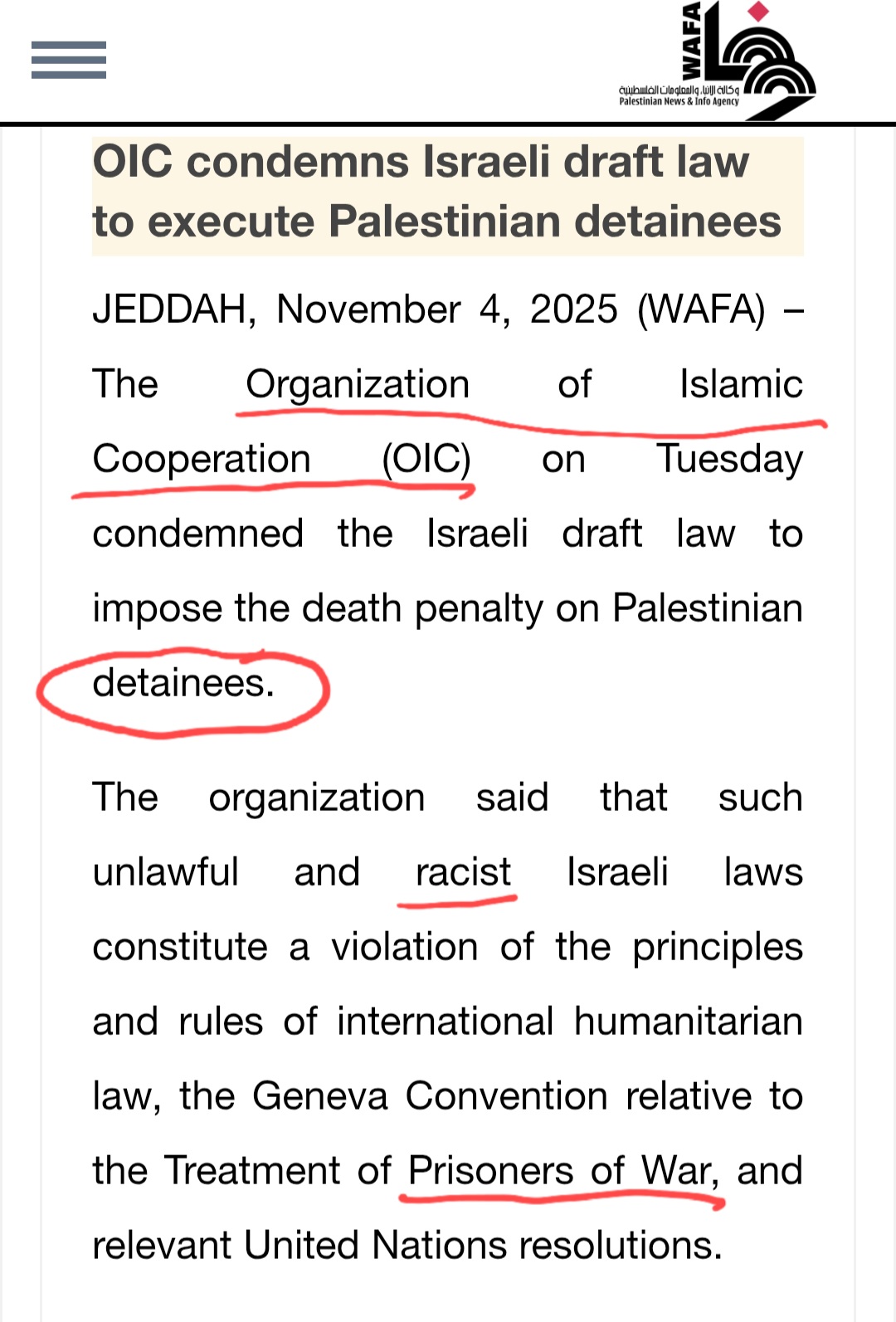
The Organisation of Islamic Cooperation (OIC) recently issued yet another condemnation of Israel — this time for considering the death penalty for terrorists who murder Israelis. The outrage was immediate and performative. For one, it claimed that the proposed law was “racist” and being solely for “Palestinian detainees,” as opposed to people who murder. It further argued that Arabs who slaughter Jews should simply be treated as “Prisoners of War,” erasing any and all lines between soldiers and civilians and thereby condemning coexistence.

Wafa report on OIC condemning Israel for considering death penalty for Palestinian “detainees”

Here’s another uncomfortable truth: more than half of the OIC’s 57 member states have the death penalty — and not just for murder.

In Saudi Arabia, people are executed for drug trafficking, sorcery, and “crimes against God.” In Iran, the gallows await not only murderers, but those guilty of “corruption on earth” — a charge so elastic it includes political dissent, homosexuality, and apostasy. In Pakistan, blasphemy can mean death. In Mauritania and Sudan, apostasy itself is a capital crime. In Nigeria, men have been sentenced to death under Sharia courts for same-sex relations.

Yet these same governments now gather in moral indignation because Israel — a democracy under relentless terrorist attack — dares to debate capital punishment for those who slit the throats of families in their beds.

The hypocrisy is staggering.

The OIC has nothing to say when Hamas executes Palestinians in Gaza’s public squares for “collaboration.” It looks away when Iran hangs protesters from cranes, or when Afghanistan’s Taliban conduct public stonings. But when Jews, after burying their children, consider the ultimate penalty for their killers, suddenly the OIC finds its moral voice.

If morality were truly the concern, the OIC would start at home. It would demand an end to hangings for prayer and firing squads for love. But this is theater. Raw antisemitism redressed in sanctimony.

Israel’s debate over the death penalty is about justice for the innocent. The OIC’s silence over its members’ executions is about control of the obedient.

And that’s the dividing line between civilizations: one values life enough to punish those who destroy it; the other kills in the name of piety and calls it peace.

Children of a Lesser God, on the Temple Mount

Mark Medoff titled his play Children of a Lesser God to expose the way society infantilized the deaf, treating them as incomplete people. The phrase still burns because it names the humiliation: being allowed to exist but denied equal dignity.

That is precisely the status of Jews on the Temple Mount. The holiest place in Judaism, the very ground of the First and Second Temples, the site of the binding of Isaac. Yet Jews are barred from uttering a prayer there. Visitors, reluctantly and barely; worshipers, never. The “status quo” enforced by the Jordanian Waqf with United Nations’ support dictates that Jews must keep their mouths shut.

It is a civic cruelty disguised as compromise. Jews are told they may stand in the place of their ancestors, but only as tourists in a museum, not as children before God. Muslims pray freely on the Mount by the millions, but Jews are gagged at their own holiest site. That is not neutrality — it is Islamic Imperialism.

The excuses are familiar: security, stability, avoiding unrest. But those words simply sanctify discrimination as pragmatism. As every Jew is expelled for moving lips in silent prayer, the world is reminded: some children are still treated as children of a “lesser” god.

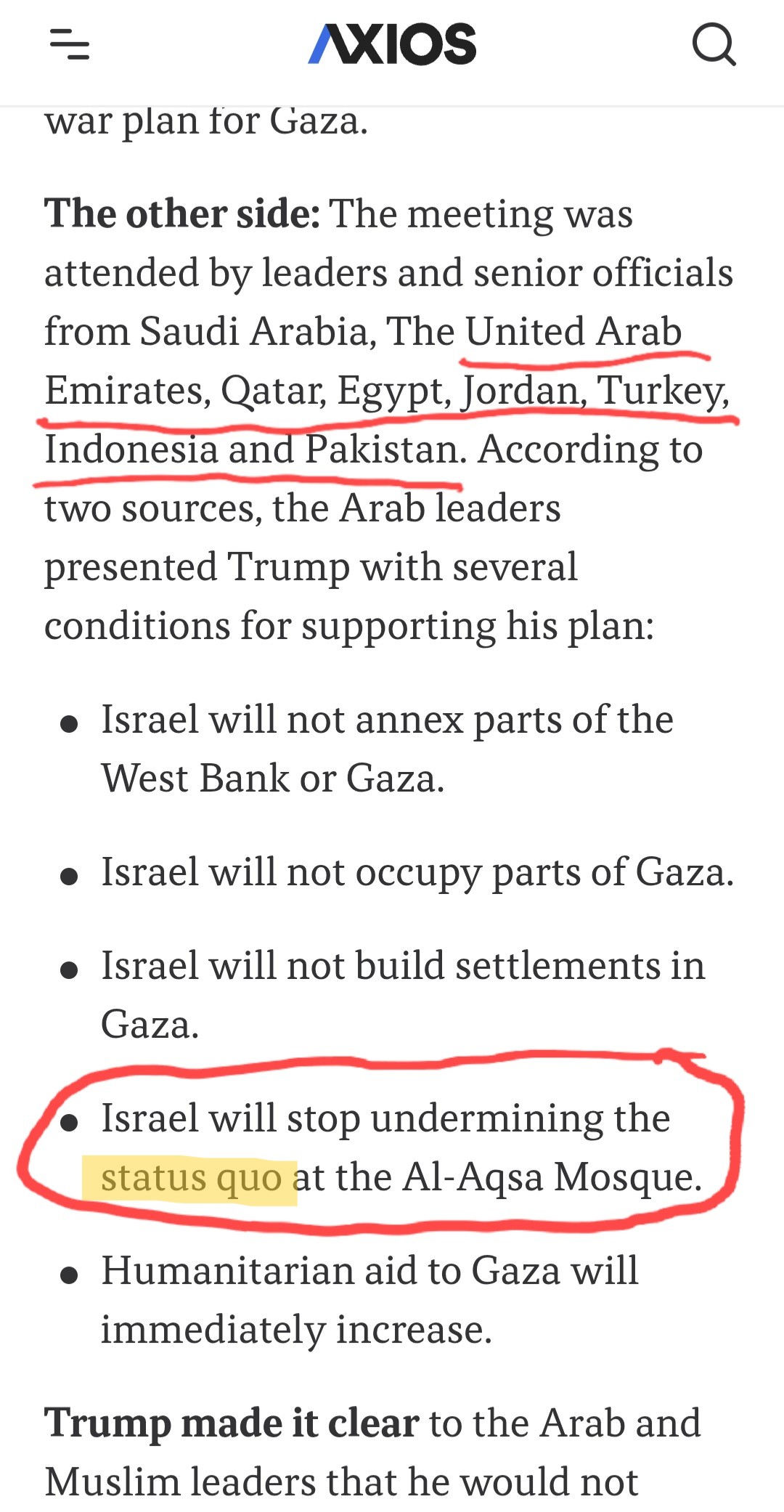
At the very moment Jews prayed in synagogues over Rosh Hashanah 5786 in September 2025, reading the story of Abraham binding Isaac on the Temple Mount and repeatedly praying for a complete Jerusalem, the Islamic world – from as far away as Pakistan and Indonesia – made demands of the United States that it would ensure that Israel maintains the “status quo” on the Mount. The despicable continued humiliation of Jews was essential for them even under the guise of stopping the Hamas war. Even above “humanitarian aid to Gaza.”

Islamic world makes demands on the United States to stop the war – and Jews attempting to pray at their holiest location

International diplomacy has institutionalized the humiliation of Jews. The so-called status quo is nothing but a permanent statement of inequality.

Medoff’s play forced audiences to confront a society that silenced the deaf. The Temple Mount forces us to confront a world that silences Jews. While both are intolerable, the latter is demanded at the anti-Jewish United Nations.

De-Islamification, The Twin of Decolonization

“Decolonization” has become one of the most fashionable buzzwords of the modern age. It is taught in schools, shouted in protests, and deployed at the United Nations as a moral bludgeon against the West. European imperialists, we are told, robbed indigenous peoples of their land, stripped them of their culture, and erected foreign regimes on stolen soil. The work of decolonization — dismantling those legacies and restoring dignity — has been cast as the great ethical project of our time.

But what of the other colonial power that swept across continents, subjugating peoples and erasing their sacred spaces? What of Islamic imperialism, which invaded the Jewish promised land centuries ago, laying claim to sites that predated Muhammad’s birth by millennia?

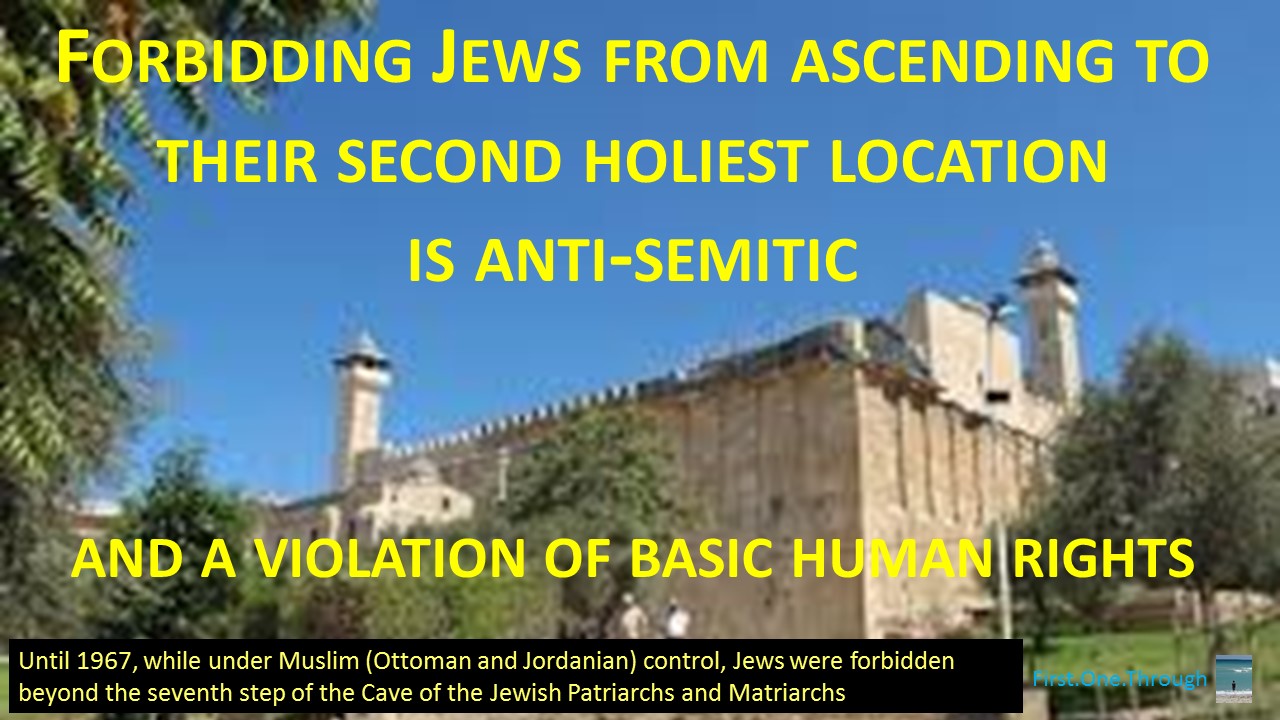
Consider Hebron, the resting place of Abraham, Isaac, Jacob, Sarah, Rebecca, and Leah. For Jews, it is the Ma’arat HaMachpelah, the Cave of the Jewish Matriarchs and Patriarchs — a holy site woven into the very text of Genesis. When Muslim conquerors took over, they renamed it the “Ibrahimi Mosque,” transformed it into a shrine for their own creed, and barred Jews from entering. For seven hundred years, Jews were not even allowed to set foot past the seventh step of the building.

This was not preservation; it was expropriation. A classic colonial tactic: erase the indigenous name, overwrite the meaning, and forbid the natives from practicing their own faith.

But unlike the narratives drilled into young students about European settlers in Africa or Asia, the Jewish story is not told.

In 1967, Israel liberated Hebron, and Jews once again could pray at the burial site of their patriarchs and matriarchs. Slowly, painstakingly, the work of de-Islamification has begun — not by erasing the Muslim presence, but by restoring Jewish rights. Jews may now pray, Jews may now enter, Jews may now sanctify their ancestral home.

And in June 2025, a historic step was taken: the Israeli government transferred administration of the second holiest site in Judaism to Jewish leaders in Kiryat Arba, removing it from the sole control of the Islamic waqf. This was neither vengeance nor displacement. It was simple justice — the recognition that all of those buried at the site are the founders of Judaism (while only one is revered by Muslims), and Jews are the indigenous people in the land as proven by that fact.

Decolonization movements have received global endorsement. Universities run entire programs on “postcolonial studies.” Yet when Jews engage in the parallel project of reclaiming their holy spaces from centuries of Islamic imperial rule, the world looks away — or worse, condemns.

Why should “decolonization” be celebrated while “de-Islamification” is scorned? Both are projects of justice. Both undo centuries of cultural theft. Both restore indigenous peoples to their rightful heritage.

If the United Nations were consistent, it would champion de-Islamification alongside decolonization. It would recognize Jewish efforts as authentic acts of restoration, not “provocations.” Schools should teach children that just as Africans reclaimed their lands from European empires, Jews are reclaiming their sacred spaces from Islamic erasure.

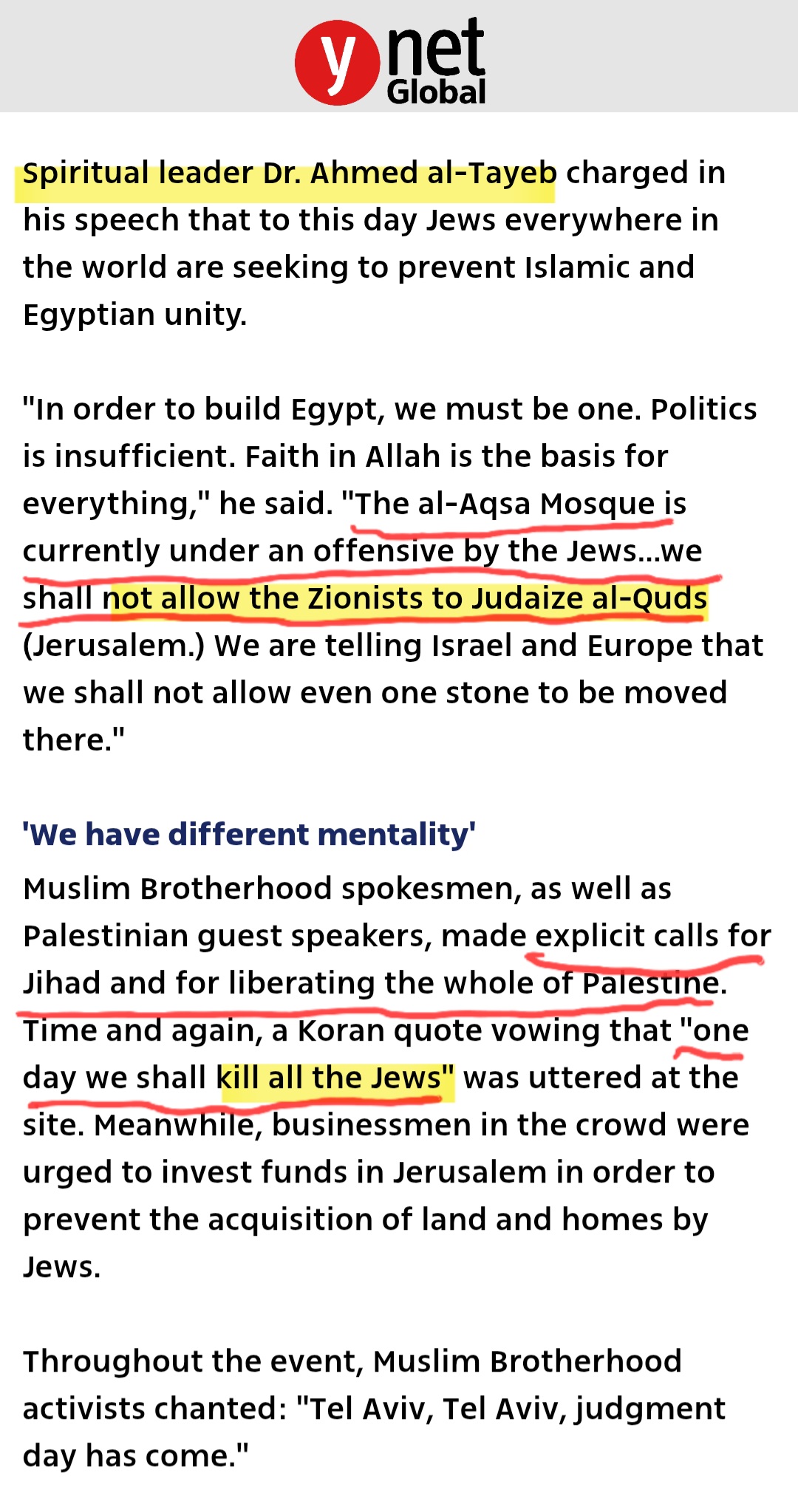
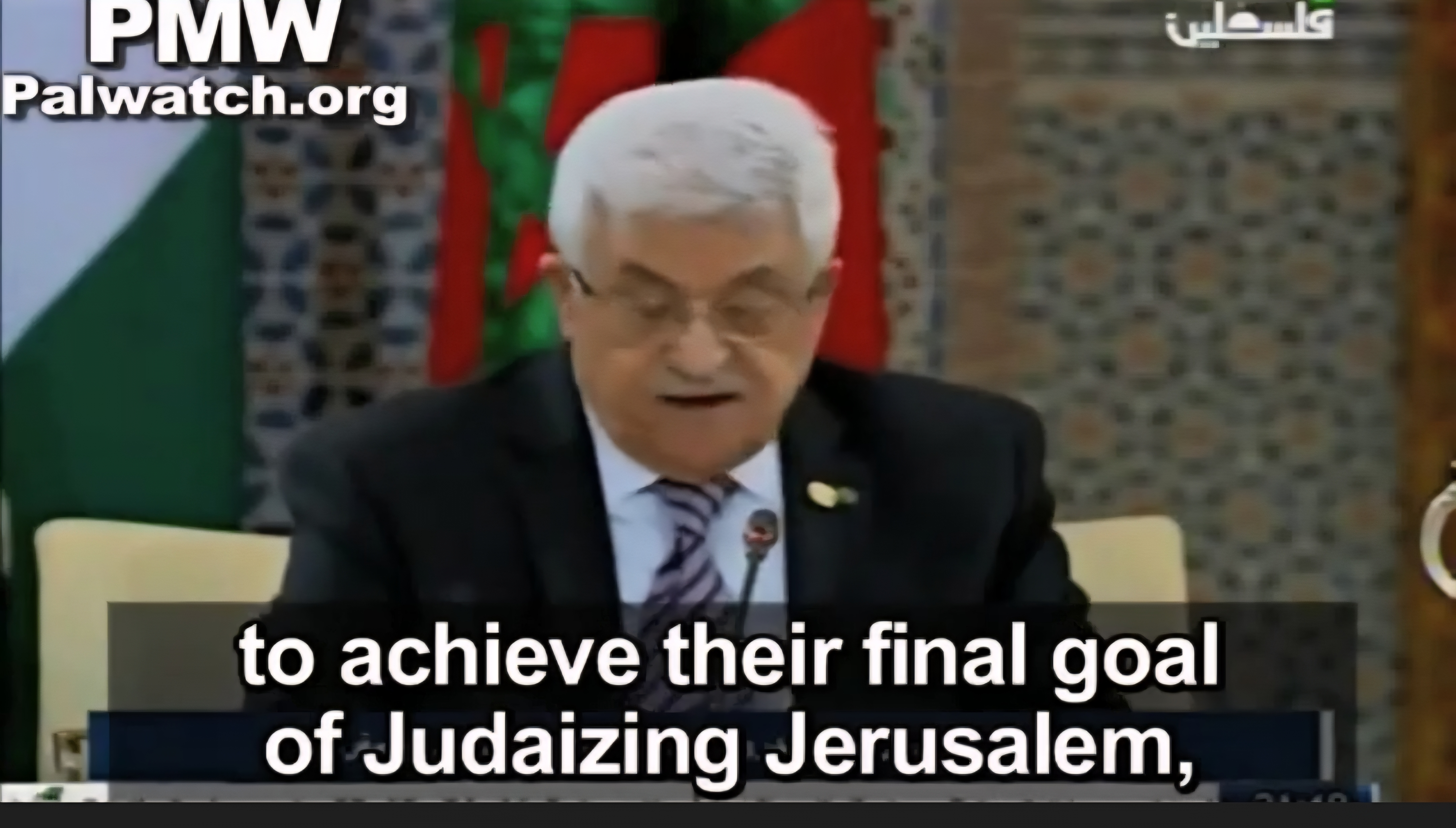
Instead, the UN gives its platform to radical jihadists who claim that Israel is trying to “Judaize” the Jewish holy sites in Jerusalem and Hebron. It’s an offensive smear deliberately made to try to erase the reality of their Islamic imperialism, colonization, ethic cleansing and cultural appropriation.

Palestinian Authority President Mahmoud Abbas talking about the “Judaization” of Jerusalem to conceal that Islamic cultural appropriation.

The jihadists fear that after Hebron, the Jews will come for the site they know is really Jewish – Jerusalem. They are calling the transfer of the Cave of the Jewish Matriarchs and Patriarchs from the Hebron Waqf to Jewish authorities a “rehearsal for al Aqsa” in Jerusalem. They know the Jewish Temple Mount is the holiest site for Jews and Muslims invaded and took the site. They are proud of the feat and fear a reversal would legitimize a people they consider “sons of apes and pigs.

There is no “Judaization” of Jerusalem and Hebron. There is de-Islamification.

Decolonization may be decades old, but de-Islamification is still in its early chapters. It deserves not only legitimacy, but applause.

Pilgrims or Provocateurs?

A Muslim who visits Mecca is called a Hajji. It is one of the highest honors in Islam, the completion of the Hajj pilgrimage, celebrated by family and community as a sacred accomplishment.

A Catholic who travels to the Vatican is a pilgrim. For centuries, the faithful have journeyed to Rome, walking into St. Peter’s Square with reverence, greeted with blessing and legitimacy.

And a Jew who goes to the Temple Mount in Jerusalem — the very place where the First and Second Temples once stood, the holiest site in Judaism? That Jew is branded a provocateur. Not a pilgrim, not a worshiper, not a faithful soul ascending to pray — but an instigator, an agitator, an accused trespasser, a “settler” on their own sacred ground.

The disparity could not be starker. What is celebrated as devotion for others is condemned as incitement for Jews. For Muslims, the Hajj is a right; for Catholics, Vatican pilgrimage is honored; but for Jews, even quiet prayer on the Temple Mount is labeled an offense — by the United Nations, NGOs, and international bodies.

It is not only hypocrisy; it is erasure. To deny Jews the name of pilgrim is to deny Jewish history, Jewish identity, and Jewish legitimacy. It casts the holiest place in Judaism as alien to Jews themselves, a desecration of memory turned into policy.

And why? Because the world has normalized the jihad. It has allowed Islamic Supremacy to dictate permissible behavior, even in the Jewish holy land.

The truth is simple: a Jew ascending the Temple Mount is not incitement. It is the most ancient pilgrimage of them all — the echo of three millennia of devotion, commanded in Torah, rooted in covenant, and carried in every prayer whispered toward Jerusalem, before Islam was even created.

The real provocation is not the Jew who prays on the Temple Mount but a world that dares to tell Jews they don’t belong at the center of their faith.

ACTION ITEM

Come to the United Nations in New York City and demand Jewish rights and freedom of religious assembly in Jerusalem.

We Let Minorities Die In The Middle East

They came for the Yazidis. They came for the Druze. They came for the Kurds.
We came for the Jews.

Across the Middle East, ethnic and religious minorities have been hunted, uprooted, and erased. Yazidi women were rounded up and sold like cattle. The Druze were betrayed by neighbors and hunted in the streets. The Kurds—called terrorists for seeking sovereignty—were chased by Turkey with Western silence as a shield.

Thousands of Yazidi women sold as sex slaves in Iraq

We watched. We said nothing. We let them disappear, acknowledging—without saying it—that the Islamic Middle East had no place for ethnic and religious minorities. In our United Nations chairs, we shook hands with their butchers and waited for the news cycle to move on.

But not for the Jews.

The one minority whose return to sovereignty we supported—however begrudgingly many decades ago—was the Jews. We recognized their state, and in doing so, we made demands. MAKE demands. Demands no other people are burdened with.

We demand that Israel allow its citizens to be slaughtered and call for restraint. That it accept that others dictate its borders and immigration policy. That Jews be barred from praying at their holiest site. That any territory not clearly within historic armistice lines be judenrein, Jew-free.

And when Israel resists these demands – no, conditions we now apply for its existence – we condemn it. Not just at the UN, but in our schools, in our media, and on our streets—training citizens to treat diaspora Jews the same way: that they are alive only due to our grace. We are not equals; they owe us for everything.

We did not protect the Kurds. We abandoned the Yazidis. The Druze are being rounded up and killed. But we took action to help the Jews defy their extinction after the Holocaust. And for that, we believe they owe us—debtors with no right to complain. We pretend that Israel is a peer at the UN but we know the reality: it’s a vassal state and will be commanded by the order of the day.

Druze hunted in Syria

We don’t ask anything of the Gazans. Their genocidal rage toward Jews is seen as instinct, not ideology. Understandable. Natural. That’s why global protests erupt only when Jews defend themselves—not when they’re killed. Dog bites man, not the other way round.

To help Jews survive, we crafted Israel as a dam. It may shield its people inside from the massive jihadi flood—but only within walls we design.

However, once built, we insist that the floodwaters be let in. Millions of Muslim “refugees” must be allowed to “return” to the spring. The saltwater ocean that surrounds and crashes against the well’s walls, will mix with the spring water inside to become undrinkable.

We know it makes no sense. But we know we can’t contain the ocean, so we poison the well. It will happen eventually anyway, we reason.

The entrance to the United Nations’ Aida Refugee Camp, near Bethlehem, with a key on top showing that the doorway to get into homes inside Israel is via the UN

The world is watching—and learning. There is no future for Druze, Yazidis and Kurds. We silently move our lips, and our streets at home are silent. Yet when Jews retaliate when massacred, we rage and our people echo the screams.

Collectively we wonder whether maintaining the Jewish State is too hard.

Whether under dictatorship or democracy, religious zealotry or secular law, the story repeats: minorities are tolerated in the Global South only as long as they are passive, picturesque, and dying. The moment they survive and carve out self-determination, they are a threat to those with seats in the august UN chambers. Will these little tribes demand rights and sequester land too?

Yet another vote against Israel at the UN General Assembly

“Globalize the intifada” is not just a slogan; it is already in motion. Those floodwaters have breached the shores. The jihad is mowing down non-Muslims in the Middle East. It is teaching the Global North the chorus courtesy of Qatar, and dance moves via TikTok from China.

Marchers in the Global North demand an end to the Jewish State and persecution of Jews everywhere

The Global South – 42% Muslim outside of China and Latin America – will soon control the UN and is preparing to erase the exception of the Jewish state. Once America is convinced to step aside, the protective walls will surely collapse and the Jews will be slaughtered like other minority groups.

Druze mowed down outside hospital in Syria

Jews wonder why the streets are empty of protestors when various nations of the Middle East slaughter ethnic minorities, but are packed when Israel fights terrorists. It’s because Jews have still not internalized that the world views them as a minority which will ultimately be erased by the tide of the Islamic jihad, and it regrets making an exception for the most persecuted people on earth.

Related:

Jews “In Any Part Of Palestine”

On February 18, 1947, senior members of the British Kingdom’s government assembled to discuss the Palestine Mandate. By this point, the British had already separated the area east of the Jordan River and handed it to the small Hashemite tribe who created the Kingdom of Trans-Jordan. The people assembled at this meeting were at an impasse of how to handle the remaining portion of Palestine in regards to the roughly 1,200,000 Arabs and 600,000 Jews.

It is worth reading the discussion in full, but I will only highlight a few points here.

By way of background, the British had assumed the Palestine Mandate as well as for Iraq in 1922, while France had mandates for Syria and Lebanon. Due to Arab revolts in Palestine which started in 1936, the British – contrary to their mandate – limited Jewish immigration to Palestine to only 75,000 during the European Holocaust; they placed no limits on Arab migration into Palestine, allowing the Arab population to grow rapidly (more than doubling from 1918, whereas Syria only grew by 50% over the period).

An interesting observation is that the word “Palestinian” appears nowhere in the discussion, as the current notion that it only means Arabs would not be concocted for decades. At this point in time, the idea of a possible “Palestinian State” would incorporate both Palestinian Arabs and Palestinian Jews, a term without meaning today.

Secretary of State for Foreign Affairs, Ernest Bevin (1881-1951) led the discussion about the difficulty squaring the demands of both the Arabs and Jews. He was against the establishment of a Jewish State and even sent the Jewish refugee ship Exodus back to Germany. He had mocked the United States proposal to allow 100,000 Jews into Palestine immediately “because they do not want too many of them [Jews] in New York.” As a member of Winston Churchill’s war cabinet, he had prioritized friendly relations with the Arab world and with Muslims worldwide, as the UK still controlled India.

In discussing the desire of the local Arab population in Palestine, Bevin said that the Arabs were “unwilling to contemplate further Jewish immigration into Palestine,” even when survivors of the European Holocaust were desperate to come to the Jewish homeland. He added that the Arabs “are equally opposed to the creation of a Jewish State in any part of Palestine.

Bevin would go on to state the position of Zionists who wanted an independent state, in line with the mandate which called for Jews “reconstituting their national home in that country.”

Again, he made the position clear that “for the Arabs, the essential point of principle is to resist to the last the establishment of Jewish sovereignty in any part of Palestine.” He saw “no prospect of resolving this conflict by [negotiated] settlement,” consequentially leading to persistent violence. The competing demands of the Arabs and Jews made the situation “irreconcilable.”

Remarks by FM Ernest Bevin on February 18, 1947 about the Palestine Mandate

Willie Gallacher (1881-1965), a communist who had opposed Britain’s involvement in WWII asked during the back-and-forth whether the UK’s “Balfour Declaration is recognised to be utterly unrealistic,” giving priority to Arab claims. He failed to comprehend that the declaration served as the very basis for which Britain had been handed the mandate for Palestine. The members therefore concluded that the matter should go to the United Nations General Assembly to decide how to reconcile the irreconcilable.

The discussion proved prophetic. Even today (“to the last”), the majority of the Stateless Arabs from Palestine (SAPs) refuse to accept a Jewish State “in any part of Palestine.” They continue to fight it by any means at their disposal, including war, terrorism and boycotts. Their actions do not only make life difficult for Jews in Israel but for Americans. The US embassy in Israel issued “travel advisories” suggesting people reconsider travel to Israel and the West Bank and to not go to Gaza because of the activities of various Palestinian Arab terrorist groups.

The SAPs are fighting Jews on two fronts, via the Palestinian Authority (PA) and Hamas. The PA is fighting for a Palestinian State without a single Jew living in it. It has the United Nations endorsement, with the passing of UN Security Council Resolution 2334 in December 2016. Hamas and other terrorist groups are fighting to ensure no Jewish State exists “in any part of Palestine.”

Other jihadists – countries and groups – also rallied to fight a Jewish State “in any part of Palestine.” From 1948 to the 1970s, the Arab world routed 850,000 Jews from their nations. Most still refuse to recognize Israel. Many boycott Israel and do not allow Israelis to enter their country. Islamic countries which are not Arab – foremost Iran and Turkey – actively support Hamas. Turkish President Recep Erdogan said right after the October 7 massacre that “Hamas is not a terrorist organization, it is a liberation group, ‘mujahideen’ waging a battle to protect its lands and people.”

Jihadi groups like al Qaeda rally radical Muslims to attack “Americans and Jews” around the world because of Israel, and attack tourists and fellow Muslims in Egypt and Jordan because those countries struck peace agreements with the Jewish State. The presence of Jewish sovereignty in Palestine has generated a call to history of 1,000 years ago, with the “World Islamic Front for the Jihad Against Jews and Crusaders.

The conflict is cast in western circles as a local conflict over land between Jews and Arabs which can find compromise, but radical Islamists see it as a global religious matter between Muslims and Jews. The violent extremists cannot accept Jewish sovereignty “in any part of Palestine” as an “essential point of principle.” Current efforts to “Globalize the Intifada” is their rallying call to end the Jewish State in its entirety, with Jews and Christians (“Crusaders”) fair marks for attack.

Related:

Globalize The Intifada With Socialists (May 2024)

The Normalization Deformity: No To Zionism and Peace; Yes To Massacres and Terrorism In a Global Intifada (January 2024)

Hamas’s Willing Executioners (July 2021)

Losing Rights (October 2017)

The Original Nakba: The Division of “TransJordan” (August 2017)

October 7s of 2001 and 2023: Global Jihad Against Infidels

On October 7, 2001, Osama bin Laden released a speech just hours after the United States began airstrikes in Afghanistan against the Taliban and al-Qaeda, in response to the September 11 terrorist attacks. The message wasn’t veiled nor political. It was explicitly religious: a jihad.

Bin Laden declared, “America struck by God Almighty in one of its vital organs, so that its greatest buildings are destroyed. Grace and gratitude to God,” praising Allah for the 9/11 attacks. He wasn’t waging war over oil, sanctions, or American foreign policy. He was answering what he believed was a divine command to wage jihad—to rid Muslim lands of infidels.

God has blessed a group of vanguard Muslims, the forefront of Islam, to destroy America. May God bless them and allot them a supreme place in heaven.”

Osama Bin Laden on October 7, 2001, praying for the Islamic terrorists who committed the 9/11 attacks on the United States

This was a war incumbent upon “every Muslim,” not Afghanis or Iraqis. It was a battle against “infidels,” not just Americans. Bin Laden cast western values as “paganism,” stoking a religious war. He was incensed about American troops in the “Peninsula of Muhammad” (Saudi Arabia) and Jews living in “Palestine.”

Osama Bin Laden speech on October 7, 2001, just after America began to respond to the terrorist attacks of September 11, 2001

Exactly 22 years later, on October 7, 2023, the radical Islamist group Hamas unleashed an unprovoked massacre against Israeli civilians, murdering babies, burning families alive, raping women, and taking hundreds hostage. The attack was ideological, theological, and genocidal. And the date was no coincidence. It marked a continuation of the same jihad that bin Laden declared in 2001—a war against Jews and the West, justified not by grievances, but by scripture.

The Global Jihad Doctrine

The doctrine of jihad—holy war in the path of Allah—is foundational to groups like al-Qaeda, Hamas, Hezbollah, and the Islamic State. It is not merely an internal spiritual struggle, as modern apologists in the West often portray it. For these groups, jihad is a call to arms against unbelievers, to expand the domain of Islam and purify it of non-Muslim presence.

Bin Laden was clear in 2001: the “world [is divided] into two camps, the camp of the faithful and the camp of infidels… Every Muslim must rise to defend his religion. The wind of faith is blowing and the wind of change is blowing to remove evil from the Peninsula of Muhammad, peace be upon him.”

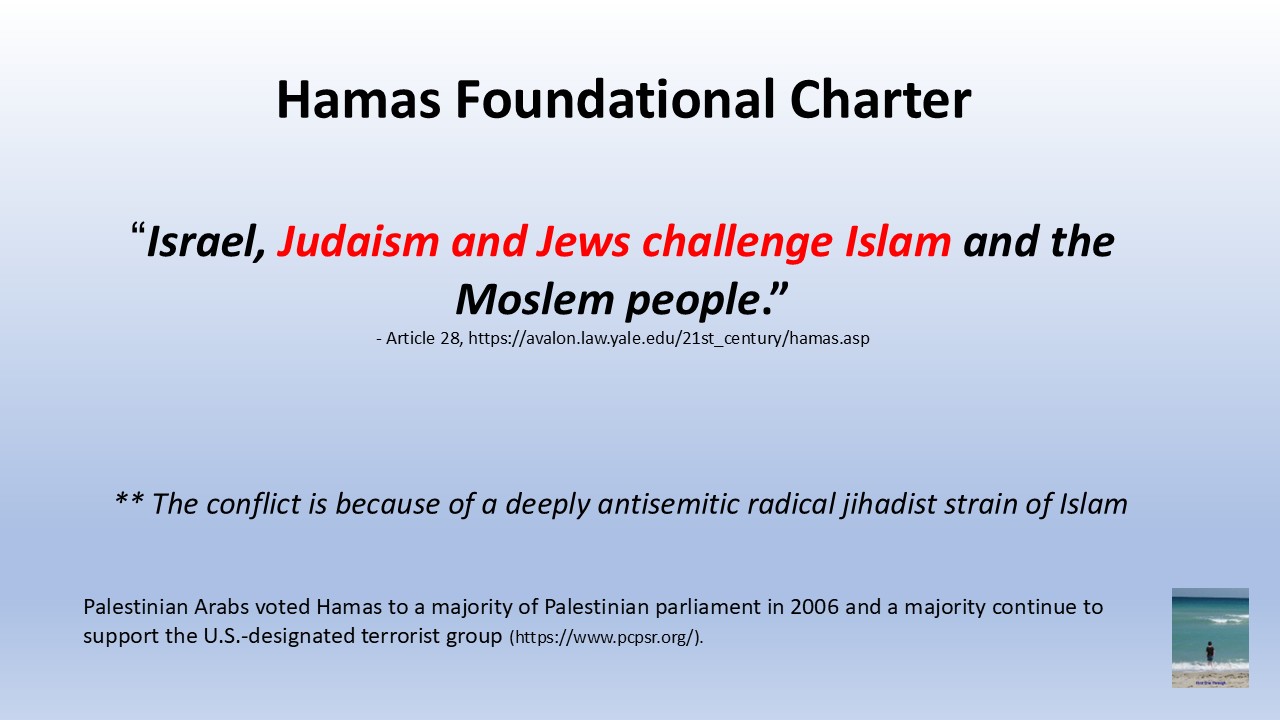
It was an echo of Hamas’s foundational charter: “Israel, Judaism and Jews challenge Islam and the Moslem people (Article 28) and “the spread of vice on earth and the destruction of religious values… fight with the warmongering Jews.” (Article 32) Their twisted view of Islam is that a religious jihad is a clash of good Muslims versus evil non-Muslims that can only be resolved through violence: “There is no solution for the Palestinian question except through Jihad. Initiatives, proposals and international conferences are all a waste of time.” (Article 13)

On the anniversary of America’s war on terror, Hamas launched what it called the “Al-Aqsa Flood”, naming the massacre after an Islamic mosque in Jerusalem. The Arabs slaughtered civilians in their homes and at a music festival as an offering to Allah. Dead women were paraded through Gaza to the cheers of the crowd, a spectacle with no military purpose other than to rile up Gazans to scream “Allahu Akhbar” God is greater – than you.

Murdered Young woman paraded through streets of Gaza to cheering crowds which spat on her body on October 7, 2023.

The enemy, in their eyes, is not just Israeli or US policy—it is the very existence of Jews, Christians, and secularism in lands they define as Islamic.

The War the West Refuses to Recognize

Despite the clear intent, the West continues to deny the religious nature of this war. Politicians, academics, and media pundits try to cast Hamas as a localized “resistance movement,” or claim it’s a response to the Israeli government. But Hamas’s founding documents and speeches speak for themselves. Their goal is not statehood. It is the total eradication of the Jewish people from what they view as purely Islamic land, or as Bin Laden calls it, “dar al-Islam.”

Radical Islamists believe that Israel is a temporary entity, just as Russian and American presence in Afghanistan was short-lived. American troops fleeing Kabul in 2021 was a confirmation of their beliefs, much like Israel’s abandoning Gaza in 2005. Allah rewards perseverance. Time is on their side.

Jihadists in the Islamic Republic of Iran call America the “Big Satan” and Israel the “Little Satan.” Perhaps it is time to state the obvious inverse: Al Qaeda and the Taliban are the “Big Satans” and Hamas and Hezbollah are the “Little Satans.”

Until the West acknowledges that jihad is not a grievance but a theology, it will continue to lose the war it refuses to name. October 7 was not an aberration; it was a declaration. It is being repeated on western streets under the banner “globalize the Intifada,” and excused by radical politicians to secure power to defeat capitalism and Judeo-Christian values.

Unless the west answers with moral clarity, military resolve, and promotes moderate Muslims, the tidal wave of jihadists will drown us before long.

Related:

For The Love Of Jihad (June 2025)

Globalize The Intifada With Socialists (May 2024)

The Normalization Deformity: No To Zionism and Peace; Yes To Massacres and Terrorism In a Global Intifada (January 2024)

The DSA Is Systematically Coming For Zionist Jews (August 2023)

The Epicenters, Diameter and Echoes of 9/11 (September 2021)

I’m Offended, You’re Dead (February 2015)

Pick Your Jihad; Choose Your Infidel (September 2014)