Every Picture Tells a Story: The War Gazans Didn’t Start—and Aren’t Ending

The headline asked why hundreds of Gazans have been killed. The article never answered.

In its December 24 piece, The New York Times assembled an inventory of grief—names, faces, photographs, shattered families—documenting civilian death in Gaza with intimate precision. What it did not assemble was an explanation. The question at the top functioned as decoration; the answer was assumed. Israel hovered everywhere as implication, never as argument.

What the article omitted is not marginal. It is decisive.

It did not say that Hamas still holds an Israeli hostage, in violation of the ceasefire framework. As long as that person remains captive, the war has not ended and the terms of the ceasefire have not been met.

It did not say that Hamas has refused to disarm—flatly, publicly—even though disarmament is a core requirement of the multi-point plan meant to end the fighting. The vast majority of Palestinian Arabs in both Gaza and the West bank agree. This is not procedural quibbling. A movement that keeps its weapons is declaring its intention to keep killing. Leaving that fact out does not clarify the story; it inverts it.

“a core, cross-regional [Gaza and West bank] red line remains: overwhelming opposition to disarming Hamas, complicating any post-war arrangement.” – PCPSR poll of October 28, 2025

It did not say that Hamas continues to state openly that it will pursue the war until the Jewish state is destroyed. These are not coded remarks. They are repeated commitments. When a belligerent announces genocidal intent and retains its arsenal, civilian deaths are not mysterious. They are the predictable outcome of strategy.

“The resistance is capable of continuing, and I am confident that the outcome of this conflict will be the demise of this entity [Israel].” – Senior member of the Palestinian resistance movement Hamas, Osama Hamdan on December 23, 2025

Instead, The Times presented Gaza as a place acted upon—its people rendered passive, its leadership reduced to background noise. The governing reality was blurred, that the popular, armed movement that began the war – with overwhelming local support – insists on continuing it. Palestinian Arabs appeared as if history were happening to them, rather than through institutions that still mobilize society for conflict.

The photographs – eleven in all, a remarkable number for an article, mostly featuring children – did their work. They always do. Images narrow the moral aperture. They locate causality at the edge of the frame. What lies outside—tunnels, refusals, threats, the last hostage—falls away. Repetition turns absence into innocence.

This is not empathy. It is evasion.

Civilian death is tragic and deserves coverage. But tragedy without agency becomes accusation by implication. When Arab suffering is anatomized down to the last tear while their popular elected leadership’s war-making is erased, journalism is no longer news but advocacy.

The Times did not lie. It curated. It acted as the political-terrorist group’s propaganda arm.

Readers are left asking why Israel is still fighting, when the honest question is why Hamas is still waging war—still holding the last hostage, still refusing disarmament, still promising destruction.

Every picture tells a story. This one tells a story about the author.

The New York Times’ Year in Pictures and the Architecture of Moral Inversion

Hamas does not rule Gaza against the will of its people. It rules because large numbers of Gazans want it to. Hamas articulates aims that many in Gaza accept: “armed struggle,” permanent war, and the eradication of Israel. This is not an imposed ideology. It is a shared one.

That reality is the reason the war has not ended.

Hamas refuses to disarm. It promises to fight again. It rejects coexistence as a moral crime. And Palestinian Arabs have not rejected Hamas. There has been no uprising, no mass refusal, no turning inward to say this has destroyed us and must stop. The tunnels remain. The rockets are rebuilt. The hostages were hidden in plain sight and with complicity.

The Arab world understands this. So does the Muslim world and international community, quietly if not publicly. No money will rebuild Gaza while Hamas governs. No state will guarantee security for a territory whose leadership is openly genocidal. Even those who chant Gaza’s cause from afar refuse to absorb the cost of dismantling its rulers. Words are cheap. Responsibility is not.

And so the world fractures.

One side insists Gaza deserves unlimited sympathy—stripped of agency, frozen as a permanent victim, absolved of all consequence. The other side sees a society that has embraced a war of annihilation and asks the world whether moral condemnation is not only justified, but necessary. This divide is not about compassion versus cruelty. It is about whether moral judgment still matters.

What cannot be sustained is the fiction that Gaza is merely trapped between Hamas and Israel. Gaza is trapped— by leaders and parents who have chosen martyrdom over future, ideology over life, and war over their own children’s survival.

That is where sympathy collapses.

Because the only people in Gaza whose moral claim is uncontested are the children—and they are being sacrificed by a society willing to place guns in schools, tunnels under bedrooms, and hostages among families. A society that teaches its children that nothing is nobler than dying for the cause of destroying the Jewish State.

Sympathy cannot be demanded for that choice. It can only be extended—narrowly, painfully—to those who never had one.

That is why the ritualized outrage of the West’s most powerful institutions now feels so hollow. Each year, The New York Times publishes its Year in Pictures, and the selection itself becomes an argument. In 2025, the year with the largest spike in antisemitism including several incidents of mass murder, there were no pictures of Jewish victims. Instead, page after page of Gaza: rubble, smoke, bloodied streets, dust-covered children. Destruction, repeated until it acquires the authority of inevitability. Israel appears only as force. Gaza appears only as suffering. Context is stripped away. Agency is erased. The camera becomes a verdict.

Two-page spread in New York Times’ 2025 year in pictures showing Gaza rubble. The only other 2-page spread was the election of Zohran Mamdani, an anti-Israel member of the DSA, as mayor of New York City

But the depravity lies not only in what is shown—it lies in what is omitted.

There are no photographs of Jewish life under siege: no police guards posted outside synagogues, no concrete barriers and metal fences erected around schools, no quiet images of fear normalized into daily routine. There are no frames of mourning for Jewish victims abroad, the couple shot in Washington, D.C., the arson at the home of the Jewish governor of Pennsylvania over Passover. No recognition of the global consequences of a war whose ideology has traveled far beyond Gaza. Violence against Jews outside Israel didn’t even make a footnote.

New security fence erected outside synagogue in 2025 (photo: First One Through)

When Israeli hostages appear in the Times, they are reduced to a single visual trope: a large military helicopter, as if their captivity were a logistical problem rather than a crime. Even Jewish victims of Gazan atrocities are set against a large Israeli military. The human cost of hostage-taking is laundered into abstraction.

New York Times only picture of a Jewish victim is a tiny speck in a large Israeli military helicopter

What does receive sympathetic attention are arrests—multiple images of pro-Palestinian demonstrators detained by police, framed as moral courage meeting state power. Advocacy for Israel’s destruction is softened into dissent. The pages preen about resistance while refusing to name what that “resistance” seeks to accomplish.

This is not journalism. It is moral choreography.

The pictures ask only one question—who suffered more?—while carefully avoiding the only one that matters: who chose this war? To launch it? To continue it? They do not show Hamas leaders refusing disarmament. They do not show weapons beneath nurseries. They do not show the ideological choice to sacrifice children for permanence of war.

In this telling, Israel becomes the aggressor by existing, and Gaza becomes sympathetic by persisting in annihilation. The refusal to surrender is recast as resilience. The willingness to sacrifice children is aestheticized as tragedy rather than condemned as crime. Sympathy is manufactured by amputating responsibility. The global anti-Israel advocates are embalmed in the moral light; Jewish victims disappear off the pages.

When the world’s most influential newspaper presents destruction without causation, suffering without choice, and death without ideology, it does not advance peace. It sanctifies perpetual war. It promotes a global blood libel. And it teaches readers that moral clarity is cruelty, while moral confusion is virtue.

The far-left media hopes that history will remember its curated selection of photographs and the modern moment will gather sympathy for the anti-Israel and anti-Jewish horde. Hopefully they are proved very wrong, and this time capsule will forever mark The New York Times for its profound antisemitism and moral depravity.

Related:

Every Picture Tells A Story: There Are No Genocidal Leaders In Iran, Just Fancy Women (November 2024)

Every Picture And Headline Tells A Story: Columbia’s Pro-Palestinian Students Are NOT Antisemitic (April 2024)

Every Picture Tells A Story: No Brutal Slaughter Of Israeli Civilians (October 2023)

Every Picture Tells A Story: Palestinian Terrorists are Victims (November 2020)

Every Picture Tells a Story: Anti-Semitism (February 2017)

Collective Responsibility From Dinah in Shechem to the Hostages in Gaza

When Shechem raped Dinah in Genesis 34, the Torah condemns not only the man who violated her but the entire city that allowed her to remain captive. Dinah was held openly in Shechem’s home, and no one objected. Not one elder confronted the crime. Not one resident demanded her release. Their silence became their guilt.

This is the Torah’s principle: A society that tolerates the humiliation of the innocent becomes responsible for it.

October 7 Made That Principle Contemporary

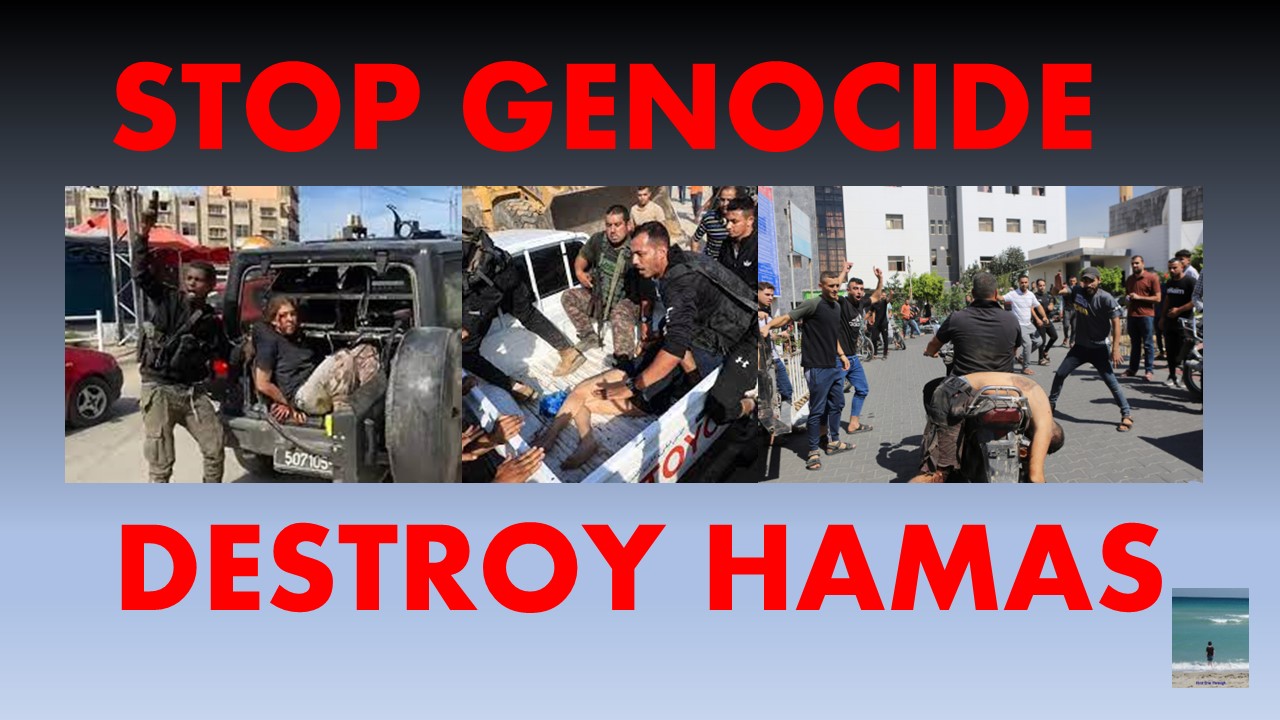
The political-terrorist group Hamas did not merely murder and rape on October 7, 2023. They dragged 251 human beings—children, women, men, elderly—into Gaza. For months, those hostages were kept in houses, apartments, tunnels beneath family homes, mosques, and clinics. People fed their captors. People guarded entrances. Crowds celebrated the kidnappings. The captivity was not hidden from the population; it was woven into daily life.

Crowds of Gazans celebrate the taking of captives – alive and dead – on October 7, 2023

And just as in Shechem, no one in Gaza intervened. Not one hostage was smuggled out. Not one family risked itself to free a stranger. Not one community leader demanded their return.

The Torah would not call this ignorance. It would call it complicity.

Dinah’s City and Gaza: A Shared Moral Failure

Shechem’s offense was personal; the city’s offense was communal. The same moral structure applies today: the crime begins with Hamas, but it enlarges to those who shelter, celebrate, or simply accept the captivity of innocents. The vast majority of Gazans supported Hamas’s actions.

Jacob criticized Shimon and Levi for endangering the family, but the Torah never suggests that the men of Shechem were innocent. Their passivity was enough to implicate them. When God protects Jacob’s family afterward, it signals that defending dignity—even forcefully—was morally justified.

The Torah’s Message for Our Generation

The world tries to draw a sharp line between Hamas and “the people of Gaza,” as though collective moral responsibility vanished in modern times, and the celebrated terrorism is not inherently a collective attack on an entire society. Dinah’s story rejects these illusions. It teaches that a society that houses kidnapped people is not neutral, and a population that normalizes and endorses cruelty shares responsibility for it.

Jacob scolded his sons Shimon and Levi for carrying out the revenge attack against Shechem’s people, and said that it would make their family a pariah. That too is repeating today, as many countries condemn and isolate the State of Israel for its actions in Gaza.

Dinah’s captivity was a test of Shechem’s moral fabric, and it failed. The captivity of Israeli hostages – for years – was a test of Gaza’s, and it also failed. The anger over the slaughter of the guilty has also left a deep mark then and today.

The lesson is simple and ancient: When a people accepts atrocity in its midst, the stain becomes communal. But that contamination will also not easily wash off from those who punish the evil in the days and years ahead.


Two Things To Do Now To Prevent October 7 From the West Bank

For twenty years, Israel relied on a security barrier to prevent the suicide bombings and shootings of the Second Intifada. It worked. While ninety percent of that barrier was not a concrete wall, but a high-tech fence—cameras, sensors, patrol roads, and layered detection system – it still reduced terror attacks from the West Bank by over 90 percent. Israelis and the Stateless Arabs from Palestine (SAPs) rebuilt their lives believing that a fence, not a fortress, was enough.

Then came October 7.

SAPs crashing through the fence between Gaza and Israel on October 7, 2023

Hamas gunmen bulldozed, exploded, and burned their way through what was—on paper—one of the most advanced border fences in the world. They murdered, raped, tortured, and kidnapped civilians in a genocidal assault that shattered the central premise of Israel’s security doctrine: that a fence and technology could stop an army of terrorists long enough for the IDF to respond.

That assumption is gone.

If a similar surprise assault were launched from the West Bank near the country’s major population centers—Tel Aviv, Jerusalem, the coastal cities—the casualties could be catastrophic. Israel is nine miles wide at its narrowest point. One breach is not a tactical event. It is an existential one.

The Barrier Must Change Because the Threat Has Changed

A fence can be cut, rammed, or climbed. A reinforced, multi-layered wall—physical, electronic, aerial, and subterranean—is a different proposition. The lesson of Gaza is not to abandon the idea of separation, but to upgrade it to match the enemy’s capabilities and intentions.

Israel does not have the luxury of guessing whether future attackers will try to slaughter dozens or thousands. The security architecture must assume the worst case—because the worst case already happened.

In Hashmonaim, Israeli backyards are a stone’s through away from the Security Barrier (photo: First One Through)

Disarming Militias Is Not Just for Gaza

The world is focused on disarming Hamas in Gaza. It must also confront a parallel obligation: militant groups in the West Bank cannot remain armed if there is to be any political horizon, for Palestinian Arabs or Israelis.

If Gaza is demilitarized but the West Bank is not, the threat simply shifts geography. The barrier is not a substitute for disarmament. It is a second line of defense, not the first.

Lasting security requires:

1️⃣ Complete disarmament of organized militant groups seeking Israel’s destruction.
2️⃣ Security control capable of preventing re-armament.
3️⃣ A barrier strong enough to make a surprise attack militarily unachievable.

Without those three components, diplomatic talk of a “future Palestinian state” is not a peace process—it is a gamble with tens of thousands of civilian lives.

A wall is not a symbol of failure. It is the price of survival when the alternative is the erasure of towns near the 1949 Armistice Lines with Jordan.

A move towards coexistence between Israelis and Palestinian Arabs cannot be limited to the threat from Gazans but from West Bank Arabs as well. Disarmament of West Bank Arabs and an upgrade of the security fence must happen now as well.

Peace requires trust. Trust requires time. Time requires security that cannot be breached in seven minutes by men with bulldozers and grenades and genocidal jihadi rage.

Until a day comes when coexistence is real—not chanted, not theorized, not negotiated—Israel must ensure that no armed faction can cross its border. The time to implement that plan is now.

Who Will Shoot Hamas?

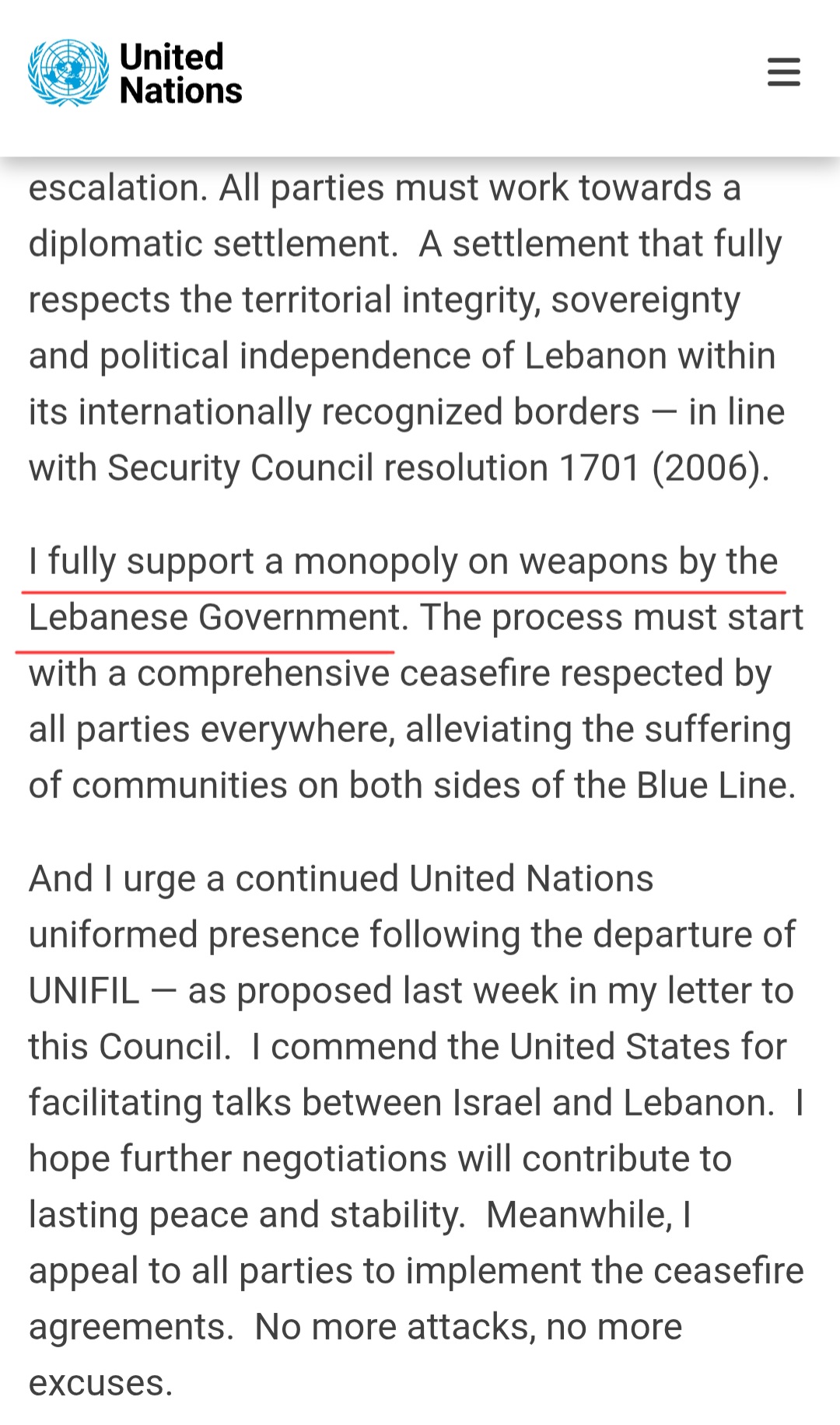
The western world keeps repeating the same slogan: Gaza must be demilitarized. Every peace plan, every UN speech, every press conference insists that Hamas cannot continue to rule Gaza with guns in its hands. Billions of dollars for reconstruction are on hold until someone ensures those weapons are taken away.

There is only one problem: Hamas says it will never disarm. Not yesterday, not tomorrow, not for a state, not for the UN, not for Europe, not for the Americans, and certainly not for Israel. Hamas did not slaughter and rape Israelis on October 7 to abandon its quest to vanquish the Jewish State.

So a question hangs over every diplomat and every cabinet meeting from Cairo to Paris, a question no one wants to speak out loud: If Hamas refuses to disarm, who is going to shoot Hamas?

The West calls Hamas a terrorist organization responsible for massacres, rape, torture, kidnapping, and the deliberate targeting of civilians. But to many Palestinians, Hamas is not a rogue gang. It is the leadership they voted for, winning 58% of parliament in the last elections, and polling suggests they would win again today. To disarm Hamas is not to disarm a fringe—it is to confront their popular governmental leaders and legitimate military.

So who will go into Gaza, walk into the war tunnels, into the apartments, into the mosques used for rocket storage, and take those weapons away? Who will drag commanders from basements and seize the launchers hidden under family homes?

Hamas in Gaza war tunnels

Israel? The world says no. Israel may have destroyed Hamas battalions, but the same leaders who demand demilitarization say Israel must not stay in Gaza to enforce it.

The Palestinian Authority? Hamas threw them off rooftops in 2007. The PA’s authority barely extends through parts of the West Bank. They are not disarming anyone in Gaza without outside troops and a graveyard’s worth of casualties.

Members of Hamas drag the body of a “collaborator” through the streets of Gaza

Arab and Muslim states? This is the newest fantasy. An “International Security Force” of Egyptian, Jordanian, Saudi, Emirati, Moroccan or other troops is supposed to enter Gaza, secure the borders, keep the peace, and—if necessary—shoot Hamas fighters to take their weapons. Will Egyptian soldiers do that? Jordanians? Saudis? The UAE? And what of Qatar, which housed Hamas leaders in luxury hotels for years? Will Qatar now arrest the men it financed?

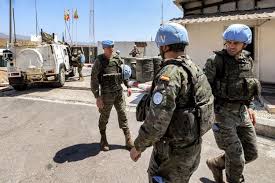
The UN? NATO? Peacekeepers do not storm bunkers or raid arms factories. It has never happened in the Middle East, and it will not start in Gaza.

Which leaves one final option, the one everyone pretends not to see: No one will disarm Hamas. The world will congratulate itself on a “post-war framework,” aid will pour in, cement will be shipped, tunnels will be rebuilt, rockets will reappear—and we will repeat this in two years, five years, ten years, with more dead children on both sides.

This is the part no diplomat wants quoted back to them: You cannot demand a demilitarized Gaza, forbid Israel from disarming Hamas, refuse to disarm Hamas yourself, and still pretend you are building peace. Those positions cannot coexist. Either someone will use force against Hamas, or Hamas remains armed, and Gaza remains a terrorist enclave.

Ask the diplomats, ask the presidents and prime ministers, ask the foreign ministers drafting communiqués they will never enforce: Who will shoot Hamas?

Peace is not built on Security Council resolutions. It is built on the willingness to confront those who would destroy it.

UN Rot Festers In Noxious Framing of Social Justice

The latest United Nations conference on “social justice” met in Qatar – that same Qatar that supports the antisemitic genocidal terrorists of Hamas and instills their narrative into the United States and the world.

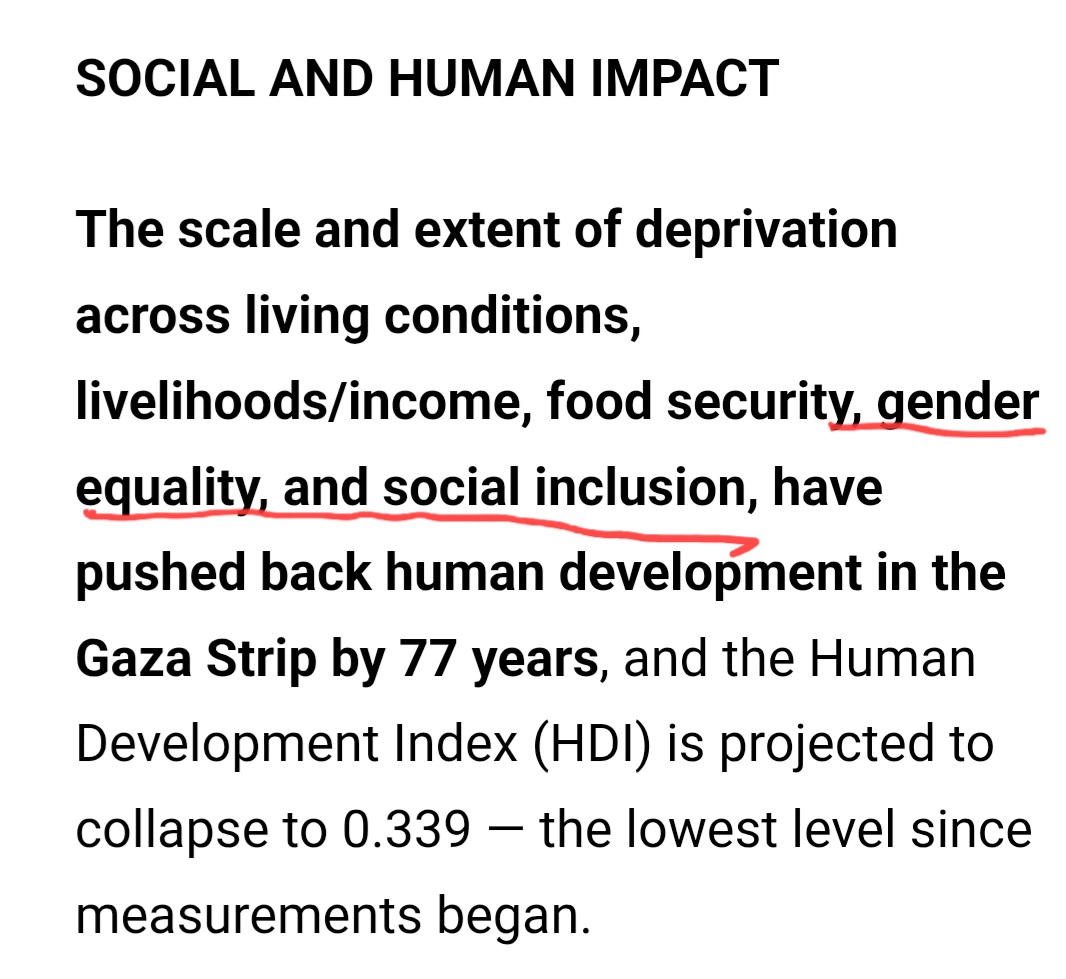
UN Deputy Secretary-General Amina Mohammed pretended to reach for the moral high ground, invoking the Copenhagen Declaration and the Doha Development Agenda as the guiding stars of global fairness. She spoke of social justice, inclusion, development, and the duty to “leave no one behind.”  And then, inevitably, she cited Gaza – and only Gaza – not as a lesson in hypocrisy, but as a tragedy of war that, in her telling, derailed those noble promises.

But the fact is that Gaza did not collapse because the UN’s social programs failed to reach it or from war. Gaza was the UN’s social program. For decades, the UN built and funded the schools, administered the food aid, managed the clinics, and drafted the talking points. Generations were raised under their flag of humanitarian idealism. Yet what was taught was not coexistence, tolerance, or equality. It was grievance, entitlement, and the dream of a land without Israel.

If Copenhagen promised inclusion, Gaza delivered indoctrination. If Doha promised shared prosperity, Gaza institutionalized dependency. The UN’s own agencies became the state’s scaffolding—without the accountability of a state or the moral compass of true social justice.  There was never any “leaving no one behind”; there was only teaching millions that history owed them everything and responsibility was optional.

The United Nations Deputy Secretary-General mourns Gaza as proof that war has undone the UN’s human-development vision. Alas, Gaza is proof that the vision itself was hollow, or at least deeply corrupted when it came to the Stateless Arabs from Palestine (SAPs). The declarations were printed on fine paper, but the values were never applied where it mattered most. No education for coexistence. No curriculum of compromise. No inclusion for those outside the narrative.

The Copenhagen and Doha declarations were supposed to represent the conscience of human values. In Gaza, they became the cover for a project that replaced human rights with perpetual resentment. That is not social justice. That is social decay, dressed up in UN language and called compassion.

The Ghosts of Genocide

To visit Poland is to walk among ghosts.
The thriving Jewish civilization that once filled its towns and marketplaces was almost completely erased. Three million Jews were targeted for extermination — a number too vast to grasp by walking through silent cemeteries. The absence alone cannot speak the full horror.

To stand where synagogues were razed, where schools once taught Torah and arithmetic, where playgrounds once rang with Yiddish laughter, is to feel the emptiness press against your chest. It forces the imagination to repopulate the void — to summon the Jewish ghosts who linger, waiting for conscience to remember them.

It is easier to look at the living.
Many Poles today are the grandchildren of those who watched as their Jewish neighbors were rounded up — and sometimes finished the work themselves when survivors returned seeking their homes. They became stand-ins for the killers of yesteryear, heirs to silence, envy, and complicity.

Now another people walks amid ruins.
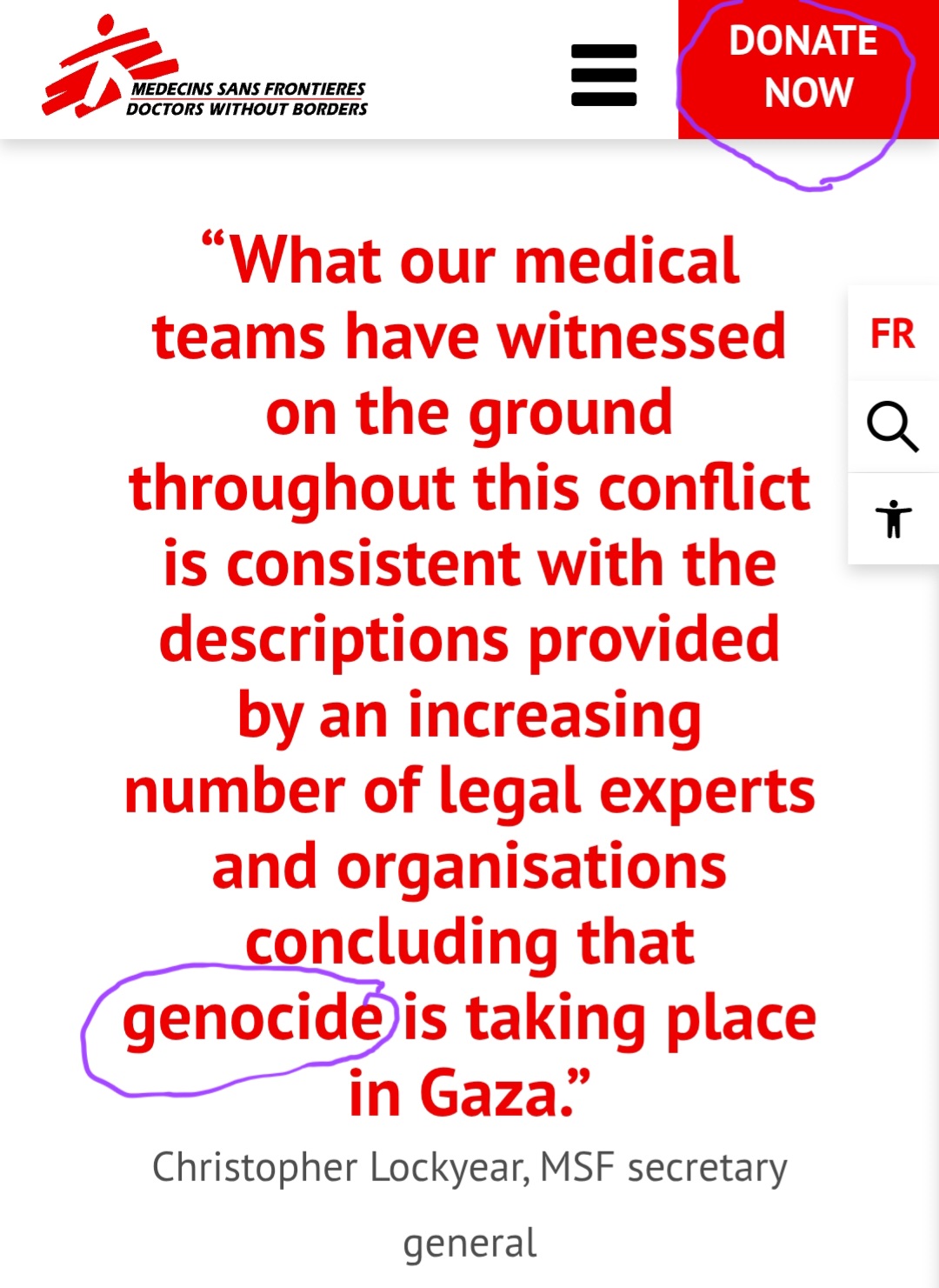
In Gaza, millions return to their shattered neighborhoods under a ceasefire, and we are told they have survived a “genocide” at the hands of Jews. Yet the number of Palestinian Arabs has grown, not diminished — a population larger than before the war they themselves began. They tread among the skeletons of broken buildings built atop their army’s tunnels, while ghosts — Israeli civilians burned alive in their kibbutzim and those taken hostage and murdered in Gaza — cry out from the ashes.

The Bibas family from Israel was taken hostage by Gazans on October 7, 2023. The mother and two children were murdered in captivity

I ponder the ghosts of genocide:
the murdered and the murderers;
the societies that spawned the slaughter;
the peaceful towns that became infernos.

Infrastructure shelters ghosts. Societies are haunted by the ones they create, both killer and killed. The unseen dead can no longer showcase their dancing on the one hand, or lust to murder, on the other.

There are scarcely any Jews left in Poland; their ghosts appear only to those who seek them.
In Gaza, the ghosts are not gone. They walk the streets, armed and unrepentant — not spirits of victims, but kinsmen of murderers, now turning on one another.

Poland’s haunting is one of silence — an absence so total it chills the air. The ghosts there do not cry out; they wait to be remembered. Gaza’s haunting is the opposite: a cacophony of rage that refuses reflection. Its ghosts are not silent but screaming — not victims unburied, but hatreds unrepented.

Poland’s soil holds the murdered; Gaza’s streets still host the spirit of the murderers.
One ghost asks to be mourned; the other demands to be judged.

The haunting does not end with time.
It lingers wherever truth is buried,
and it deepens each time the living deny the past that shaped them.

Only when a people can face its ghosts —
naming both the murdered and the murderers —
can it begin to live freely again.

How Many Palestinian Prisoners Returned Are Israeli Plants?

In Lebanon and Syria, senior terror leaders keep disappearing. Israel’s intelligence services have shown that even far from home, their reach is absolute. Hezbollah commanders vanish without warning. Iranian coordinators meet “accidents” in Damascus. Israel’s eyes are everywhere — east of the 1949 Armistice Lines (E49AL / “West Bank”) and far beyond.

Inside Israel and the territories under its vigilance, that network of informants has kept the Stateless Arabs from Palestine (SAPs) from unleashing the kind of barbarism seen under Hamas. The true security barrier is not made of concrete or wire — it is people: HUMINT, human intelligence, the whispers that prevent slaughter.

But Gaza became a black hole the moment Israel withdrew in 2005. Every soldier, every Jew, every Israeli presence was uprooted — and with them went the eyes and ears that had kept the region stable. Hamas seized power through blood, executing its rivals and every suspected collaborator. What followed since 2007 was not liberation but suffocation. Gaza became a fortress of fanaticism, sealed off and armed to the teeth.

Hamas interrogates suspected informants in 2014

The legal Israeli blockade was not enough. While Israel and Egypt controlled the borders, Hamas tunneled beneath them — smuggling Iranian rockets, explosives, and even the raw materials to build new weapons. Gaza transformed from a strip of land into a terrorist enclave. By 2023, it was not just armed — it was indoctrinated, radicalized, and ready for mass murder.

Israel will not make that mistake again.

Among the newly released SAP prisoners, there are almost certainly Israeli plants — men and women turned during interrogations or cultivated long before. They will slip back into Gaza’s shattered neighborhoods, listening, watching, feeding intelligence. Every conversation, every weapons cache, every hint of reorganization could be the thread that prevents the next October 7.

Hamas knows this. Its paranoia will turn inward. Accusations will fly, confessions will be forced, and public executions will become commonplace to the shouts of “Allahu Akhbar.” The group will again devour its own, because it cannot rule without fear.

Hamas executes suspected informants in front of crowd of children

Any new ruling authority that replaces Hamas will need to coordinate with Israel. There can be no “independent Gaza” left to rot in secrecy. Deradicalization cannot be trusted to glossy NGOs or “neutral” foreign agencies alone. It must be verified — by intelligence, by informants, by those who know the difference between reform and camouflage.

[As for the Arab propaganda outlets, none of the public executions are discussed on Qatari-owned Al Jazeera. It is busy selling Gaza and Hamas as peace-loving.]

The intelligence war has already begun. The question is not whether Israel has plants among the returnees — it is how many will live long enough to stop Gaza from sinking back into the darkness it dug for itself.

Palestinian Authority Continues Blood Libel of Organ Heist

Even as the Israel-Gaza ceasefire struggles to take hold, the Palestinian Authority fuels the flames of Jew hatred with public smears that Israel is harvesting organs of Palestinian Arabs.

On October 18, 2025, Wafa, the official media of the Palestinian Authority penned an article that “Israel hands over remains of 15 slain Palestinians from Gaza.” In it, the PA claimed that the bodies of Arab prisoners handed over “appeared mutilated or missing organs.”

Article in Wafa, October 18, 2025

The only way forward for coexistence is to end the demonization and antisemitic attacks. The Palestinian Authority has repeatedly shown it is not up to the task.

The Weight of Nations

“Why do the nations rage, and the peoples plot in vain?” — Psalm 2:1

Saudi Arabia – the kingdom which Israel hoped would next join the Abraham Accords – sought to pressure Israel into ending its defensive war in Gaza by rallying nations of the Global North to recognize a State of Palestine. It found a partner in France, which successfully pulled the United Kingdom, Canada, and Australia into the orbit of recognition. In September 2025 at the United Nations, the group jointly declared their acknowledgment of a Palestinian state—with caveats—but the symbolism was unmistakable.

Israel did not budge. It viewed the coordinated announcement as an alarming reward for the genocidal Hamas regime that had unleashed war on October 7 two years earlier.

Enter the United States. President Donald Trump had tasked developer and confidant Steve Witkoff to lead a back-channel negotiation with Hamas for the release of Israeli hostages and an end to hostilities. Jared Kushner joined the effort more forcefully in September, unveiling a “20-point plan” aimed at ending the two-year war and reshaping the region’s political future.

To counter the Saudi-French gambit, Trump built his own coalition. The U.S. secured the backing of several Arab and Muslim nations from the Global South—including Qatar, Jordan, the United Arab Emirates, Indonesia, Pakistan, Türkiye, Saudi Arabia, and Egypt —for its peace framework. By October, the administration succeeded in gathering the leaders of 27 countries from across the North and South, including some that had just recognized Palestine, to fly to Egypt to sign what was billed as a ceasefire agreement.

A summit to support ending the more than two-year Israel-Hamas war in Gaza after a breakthrough ceasefire deal, Monday, Oct. 13, 2025, in Sharm El Sheikh, Egypt labeled “Peace 2025”

It was a mirage. Neither of the warring parties—Israel or Hamas—attended. The event was instead diplomatic theater, meant to transform a ceasefire proposal into a movement for regional peace. Trump designed the event to flip the script.

Where Saudi Arabia and France tried to impose the weight of the Global North on Israel, the United States sought to use the combined weight of both hemispheres on Hamas. The former demanded an immediate path to a two-state solution; the latter demanded the end of Hamas rule.

The Moral Gravity

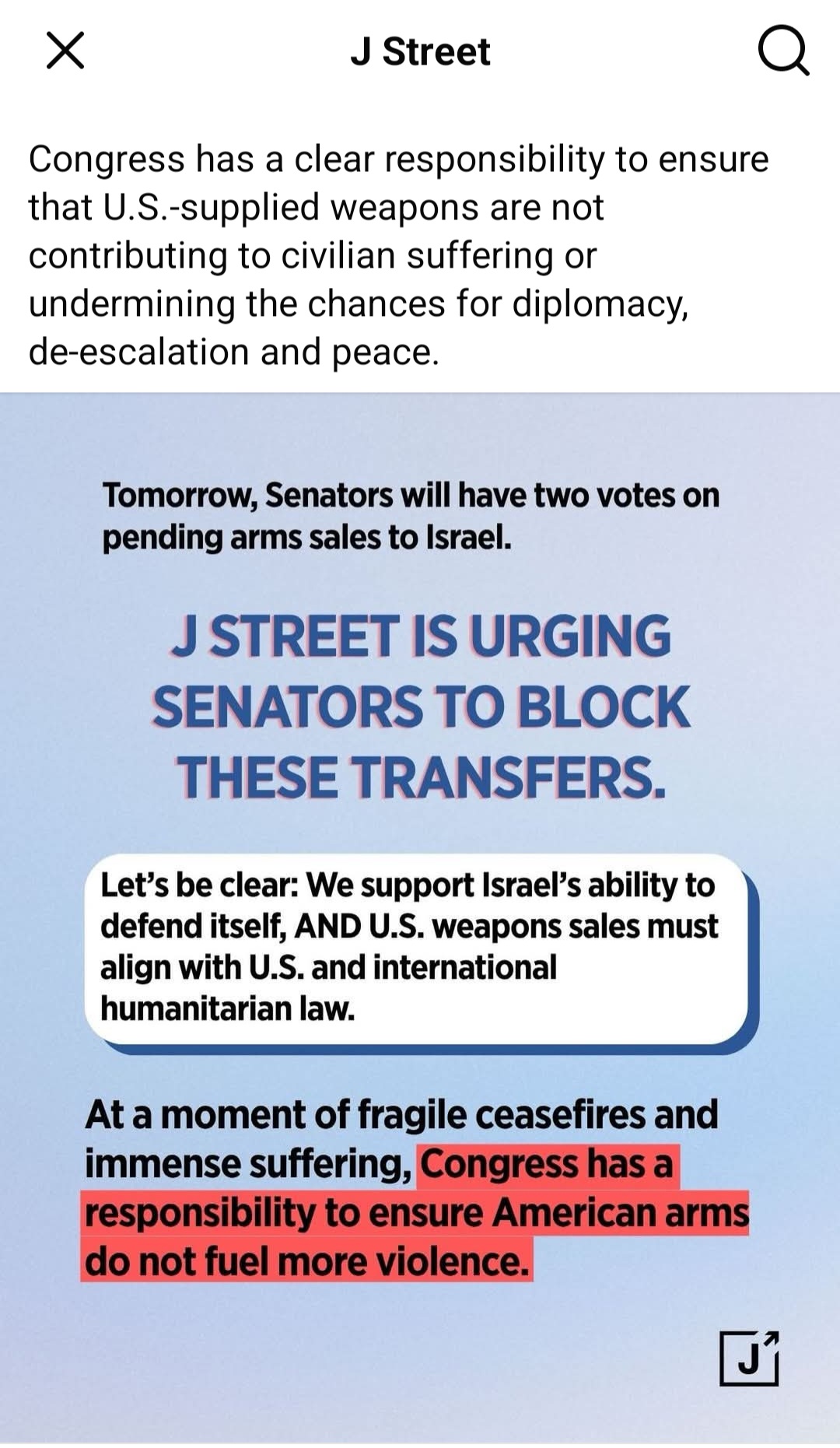
The story of this moment is not only about geopolitics, but about moral gravity. The nations of the world have grown accustomed to weighing Israel’s every move while ignoring the crimes of its enemies. They call for “balance” in a war that began with mass murder, rape, and hostage-taking. They lecture the victim to compromise while the aggressor reloads. The UN Security Council could have easily passed resolutions to push for an end to the war if they had just condemned Hamas, but repeatedly refused to do so.

The weight of nations once meant the defense of justice and the pursuit of peace. Today, it is too often the ballast of perfidy—dragging down the innocent under the pretense of even-handedness.

Israel, standing increasingly alone, may yet prove that the true measure of a nation is not in the number of its allies, but in the steadiness of its conscience. It is fortunate to have President Trump in the White House as it shoulders this weight once again.

The tight bond between Israel and the United States has continued, despite Americans starting to sour on Israel since 2015.