Coming This Fall: “ICE” — From the Network That Brought You Cops, Firefighters, and Suddenly… Deportations

A satire.

Television executives are simple people. Show them a uniform that polls well, give it a badge or a helmet, add flashing lights and a gravel-voiced commander, and they will green-light twelve seasons before the pilot airs.

Police dramas? A civic religion. Firefighters? Basically saints with abs. Doctors? Gods in scrubs.

So it was only a matter of time.

This fall, after decades of training America to reflexively trust anyone wearing navy blue with a shoulder radio, Fox Broadcasting Company proudly unveils its boldest procedural yet:

ICE.


Hollywood already cracked the code.

Law & Order taught us crime is endless but solvable in exactly 44 minutes.
Chicago Fire proved every blaze requires both heroism and unresolved childhood trauma.
NCIS confirmed that investigations are best handled by quirky geniuses with unlimited jurisdiction.

The lesson was clear:
If America will emotionally invest in fictional cops chasing fictional criminals, surely it’s ready to fall in love with fictional immigration enforcement agents chasing fictional paperwork.


Meet the Heroes

ICE follows a ragtag team of elite agents who don’t just enforce the law — they wrestle with it.

  • Agent Jack Pitt — By-the-book, square jaw, conflicted soul. His father immigrated legally in 1983 and he mentions it in every episode.
  • Agent Angela Reyes — Fluent in four languages, morally complicated, always reminding Jack that “it’s not black and white.”
  • Deputy Director Hank Robinson — A grizzled veteran who growls, “We don’t make the laws — we just dramatically stare at them.”

Every episode opens with a breathless reminder: “These stories are fictional… but the feelings are real.”


The Cases

The crimes are designed to pull at heartstrings.

  • A man with an expired visa… who volunteers at a soup kitchen.
  • A family missing a single document… somewhere.
  • A tense raid interrupted by a heartfelt monologue about the American Dream.

Sirens blare. Agents run. Someone yells “NOW!” even though no one explains why now is different from the last commercial break.


The Emotional Arc

Like all great procedurals, ICE isn’t really about enforcement.

It’s about family.

Every season features:

  • A wedding postponed due to a border emergency
  • A custody battle mirroring a deportation case
  • At least one episode where an agent asks, “Are we the bad guys?” before being reassured by swelling music that, no, they are not

By episode nine, viewers are crying over Form I-130 like it’s a fallen firefighter.


The Crossover Event

Mid-season, Fox delivers the event television America didn’t ask for but will absolutely watch:

Chicago Fire × ICE

A warehouse blaze. Undocumented workers trapped inside. Firefighters rescue everyone. ICE shows up. Everyone exchanges tense but respectful nods.

No one mentions politics.
Everyone agrees the real villain is bureaucracy.
Ratings explode.


Merchandising Opportunities

Fox executives are already salivating:

  • ICE hoodies (“Protecting the Dream”)
  • Limited-edition badges (plastic, for children)
  • A companion podcast hosted by a former agent turned consultant turned influencer

There’s even talk of a spinoff: ICE: Special Paperwork Unit


The Moral of the Story

Television has always been America’s civics class — just with better lighting and fewer consequences.

For decades, cops were heroes.
Firefighters were angels.
Federal agents were misunderstood geniuses.

Now, immigration enforcement gets the same glow-up: dramatic music, noble intentions, and just enough personal doubt to make everyone feel good by the closing credits.

Because if you put it on TV long enough, in prime time, with the right soundtrack…

Eventually, it’s not controversial or even politics.
It’s just another show you binge on a Sunday night.

And somewhere in a Fox boardroom, someone is already pitching an ‘R’ rated version for direct to streaming.

Venezuela in NYC, Twice

Venezuela has arrived in New York City in two forms.

One arrives carrying the wreckage of a socialist system that hollowed out a country by redefining private property as moral corruption and state control as virtue. That experiment ended in scarcity, corruption, and mass flight. Its leaders now face judgment far from home, a coda to a long collapse.

The other arrival is quieter, bureaucratic, and far more consequential. It moves through City Hall.


Words That Become Policy

Private property — especially homeownership — is a weapon of white supremacy masquerading as wealth-building public policy.

Those words were written by Cea Weaver, who now holds authority inside New York City government over housing regulation, landlord enforcement, and real estate policy.

This is a moral judgment about ownership itself. Homeownership is framed as harm. Property is recast as a moral hazard. The implication is straightforward: what has long been treated as legitimate must be dismantled.

Knowing full well her position about private real estate and home ownership, Weaver was elevated into a role designed to shape housing outcomes by Democratic Socialist Mayor Zohran Mamdani.


Real Estate as the Lever

Because housing is where ideology becomes operational.

Weaver’s portfolio centers on real estate because real estate concentrates independence, savings, and permanence. It is immobile, heavily regulated, and politically sensitive. Those traits make housing the easiest sector in which to normalize forced redistribution through regulation rather than spectacle.

Within Democratic Socialist thought, housing functions as the primary front for structural change. The stated objective is “decommodification” — removing housing from private markets through eminent domain and insulating it permanently from profit. Achieving that objective requires stripping ownership of legitimacy and transferring control to the state or state-backed collectives.


Jacobin Makes the Case Explicit

That program is reinforced repeatedly in Jacobin, the flagship publication of democratic socialism. Its housing coverage goes well beyond expanding public housing or strengthening tenant protections. It openly endorses removing homes from private ownership.

Jacobin has praised campaigns such as Berlin’s Deutsche Wohnen & Co Enteignen, which was approved by voters in 2021, calling for the expropriation of privately owned residential housing and its transfer to public control. It regularly argues that landlord property rights must yield to collective ownership if housing justice is to be achieved.

The logic is consistent: justice requires taking housing out of private hands.


Venezuela’s Sequence Is Familiar

Venezuela followed this same sequence.

Ownership was recast as exploitation.
Returns were constrained.
Controls expanded.
Maintenance collapsed.
Scarcity spread.

By the time property was openly seized, the groundwork had already been laid. Confiscation felt justified because ownership had already been condemned. Language prepared the public long before policy completed the transfer.

History records this pattern with grim consistency.


Ideological Alignment at City Hall

Zohran Mamdani placed Weaver precisely where her beliefs carry consequence.

“Impoverish the “white” middle class. Homeownership is racist/failed public policy.” – Cea Weaver

Democratic Socialists today debate pace and scope more than premise. Housing is the testing ground because it touches wealth, stability, and autonomy simultaneously. Alter the rules of ownership there, and broader economic control becomes easier to assert.


Donald Trump Begins to Align with Democratic Socialists on housing

And it seems that President Donald Trump is getting on board.

Trump just announced that he will ban institutional investors from buying single family homes. The goal is to keep the housing market acting rationally based on normal individual demand, rather than bowing to the force of massive realtors controlling rent prices.

It is not stripping individuals of their homes the way Weaver desires, but a first step in meeting the mission part way.


Naming the Mechanism

When government redefines private assets as illegitimate and reallocates them through enforcement, penalties, and regulatory attrition, the economic effect remains consistent regardless of branding.

Control shifts away from owners.
Value erodes.
Decision-making migrates to the state.

“As landlords exit the market, using state action to acquire properties and leverage divestment to convert thousands of homes into publicly and democratically controlled land/housing.” – Cea Weaver

“The president and his team are discussing a range of options to pursue this important foreign policy goal [of seizing Greenland], and of course, utilizing the U.S. military is always an option at the commander-in-chief’s disposal.” – Trump’s White House

Language about equity or justice does not change outcomes for families whose homes become conditional assets rather than protected property. Redistribution through regulation or seizure is theft.

People think of Donald Trump as a true Conservative; he is not. He spent years as a Democratic real estate developer in New York City. Owning, controlling and licensing property is in his bloodstream.

We are entering a dangerous moment when government leaders of the right and left are converging on the thesis that the state is the arbiter of private property, including your house.


The Question That Matters

A society either treats private property as legitimate or places it at the discretion of the state.

Once ownership depends on ideological approval, it no longer functions as a right. Capital withdraws. Investment slows. Stability erodes. Liberty disappears.

Venezuela already supplied the answer.

History rarely announces itself as collapse. It usually arrives disguised as compassion, long before the consequences become unavoidable.

Radical Arab “Settlers”

Palestinian terrorism has names when it is organized. Hamas. Palestinian Islamic Jihad. There is a long list of U.S.-designated foreign terrorist groups under the Palestinian banner. Yet the most persistent form of Palestinian terrorism over the last two decades carries no collective name at all.

More than a thousand Stateless Arabs from Palestine (SAPs) have carried out individual fatal terrorist attacks—stabbings, shootings, vehicle rammings, ambushes at bus stops and junctions. The numbers recur year after year. The pattern holds. The vast majority originate in the land east of the 1949 Armistice Lines (E49AL) / “West Bank”.

Monthly tally of attacks by SAPs and Jews in the first four months of 2022, according to the biased United Nations

Calling these attackers “Palestinian lone wolves” obscures reality. Calling them Palestinian residents either creates a country of Palestine or integrates them into a historic landscape. The term “lone wolves” suggests isolation, desperation, a last act. The record shows the opposite. These young attackers are recognized, rewarded, and revered. Their names and faces appear on posters. Schools and streets carry their memory. Their families receive honor and money. The murderers are beatified as “martyrs.”

Civil societies do not ritualize acts they consider shameful or marginal.

Now consider how language works in parallel. Jewish civilians beyond the Green Line are routinely grouped under a single brand: “settlers.” The word does not describe residence; it passes judgment. It frames their presence as inherently illegitimate before any act occurs. When they are attacked, their civilian identity is eclipsed by a political label.

Branding does the moral work in advance.

The empirical comparison is stark. Jewish extremist violence exists and must be prosecuted. Its character is overwhelmingly vandalism and property damage—graffiti, burned fields, slashed tires. Criminal acts that generate repairs, arrests, and charges.

By contrast, the murders committed by individual SAPs, dwarf Jewish extremist killings by orders of magnitude. Funerals versus invoices. Deaths versus damage. Yet language reverses scale: property crimes are collectivized and politicized, while a long ledger of killings is broken into nameless “incidents.”

People killed in West Bank according to United Nations report, over end of 2022 and start of 2023 in which Tor Wennesland vilified Israel and the “settlements”

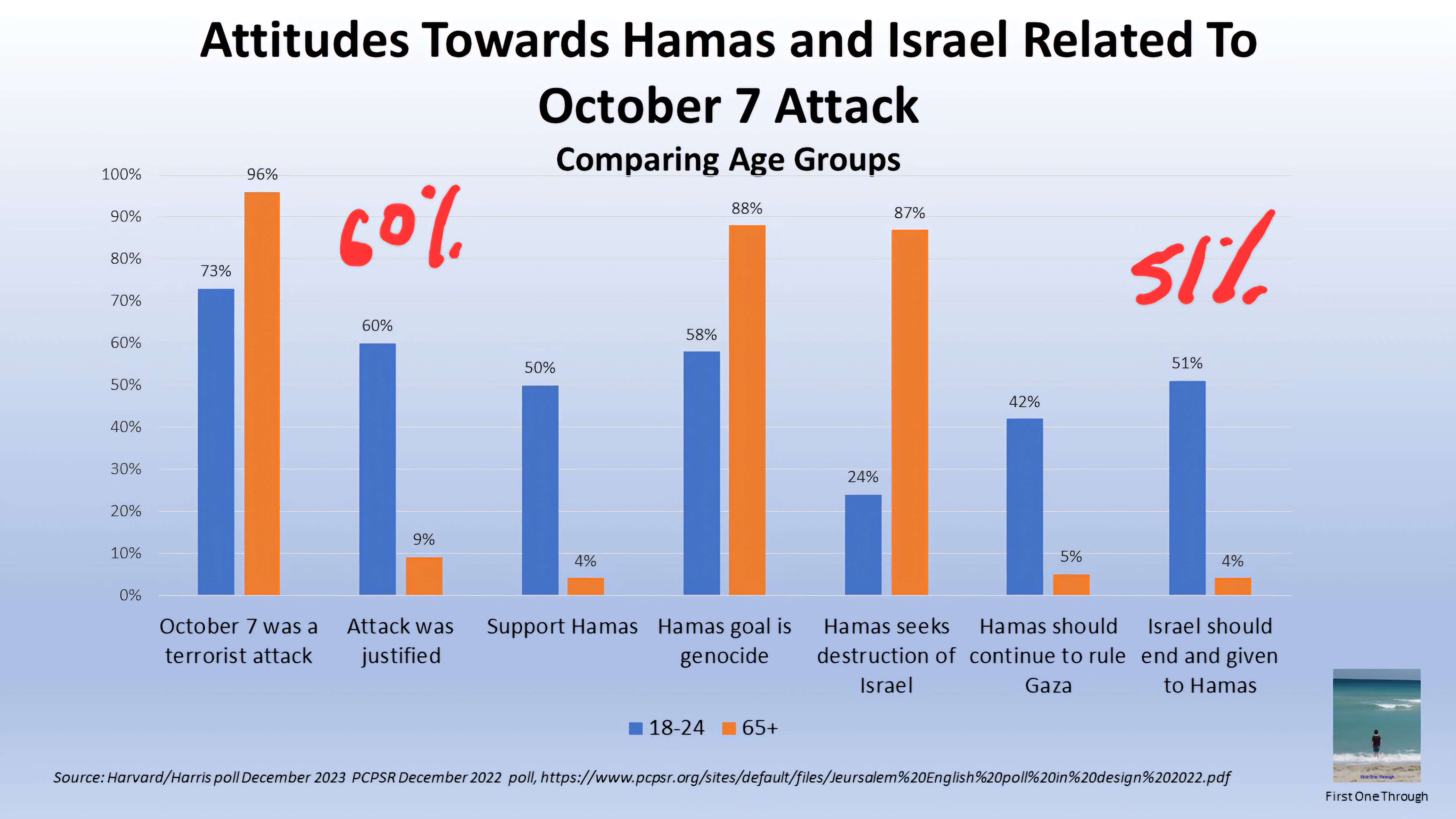
The cultural backdrop makes this impossible to dismiss as fringe behavior. Polling by Palestinian Center for Policy and Survey Research (PCPSR) consistently shows that SAPs in the West Bank express higher levels of support for violent attacks—including October 7—than Arabs in Gaza.

Polls by PCPSR show West Bank Arabs more in favor than Gazans of killing Jews, the October 7 massacre, and destroying the Jewish State

Repetition is evidence.
Veneration is evidence.
Polling is evidence.
Together they point to a culture of violent jihad in the West Bank, sustained socially even when it is executed individually.

Terror does not require a logo to qualify. It requires intent, repetition, and outcome. What persists in the West Bank is a durable campaign of individual terrorism, encouraged by culture and rewarded by society, while its victims are linguistically transformed into abstractions called “settlers,” not innocent Jewish civilians.

This is absolution via euphemism. Turning Jewish civilians into perpetrators for existing, while shielding Arab murderers under a cloak of topography.

It is plainly wrong. It is evil. It persists.

A Divide in Aid and Perception Between Ukraine and Israel

Since 2022, the United States has funded two wars at historic scale.

  • ~$65–70 billion in direct U.S. military aid to Ukraine
  • ~$21–22 billion in U.S. wartime military aid to Israel since October 7, 2023

Ukraine’s funding is more than three times larger, delivered faster and sustained longer.
Israel’s is smaller, largely defensive, and focused on interception and resupply.

Yet only one of these aid streams has been treated as morally illegitimate.


The Moral Divergence

Aid to Ukraine is framed as defending democracy.
Aid to Israel is framed as complicity.

Both wars involve urban combat.
Both involve civilian casualties.
Both rely on U.S. weapons.

But only Israel’s aid is placed under moral indictment.


The Political Record

Progressive politicians aligned with the Democratic Socialists of America have been consistent in drawing this distinction.

Bernie Sanders voted for massive Ukraine aid packages while introducing resolutions to block or condition arms transfers to Israel.

Alexandria Ocasio-Cortez supported Ukraine military assistance as solidarity, while opposing emergency funding for Israel as morally disqualifying.

Ilhan Omar and Rashida Tlaib made opposition to U.S. military aid to Israel a defining cause—calling for halts and embargoes—without mounting a comparable campaign against the much larger Ukraine funding stream.

“This is not only the Israeli government’s genocide, Mr. Speaker. this is our government’s genocide.” – Rep. Rashida Tlaib

No similar moral test was applied to Ukraine.


The erosion of support in long wars

As the wars in Ukraine and Israel dragged on, Americans began to tire of spending so much money abroad in both wars. In September 2025, a Pew Research poll found that one-third of Americans thought that the US was providing too much military aid to Israel, while 23% thought the figure was about right and only 8% said it was not enough.

The figures were about the same for Ukraine in a February 2025 poll – 30% said too much aid, 23% about the right amount, but a significantly different figure – 22% (versus 8%) said there was not enough aid going to Ukraine. The gap is likely due to the visuals of a totally devasted Gaza and the elimination of most of the Hamas leadership.

A deeper dive shows a significant divide between Republicans and Democrats, especially over time. Republicans moved from 9% feeling there was too much aid and 49% not enough aid in 2022, to 47% feeling there was too much aid and 10% not enough aid in 2025. While Democrats did change their views over time, it was not as dramatic as the Republican shift.

At least for Ukraine.


The Ideology Behind the Distinction

This asymmetry between Ukraine and Israel is not about budgets or battlefield conduct. It is ideological.

Within DSA thinking, Israel is not merely a state that acts wrongly; it is framed as an illegal colonial project. The claim rests on a core assertion: that Jews are not indigenous to the land of Israel and therefore have no legitimate sovereign claim to it.

That assertion is historically false — and morally bankrupt.

It denies Jewish history, identity, and continuity in their ancestral homeland. It treats Jewish self-determination as uniquely illegitimate. And it transforms Israeli self-defense from a security question into a moral offense.

Ukraine, by contrast, is granted full legitimacy. Its sovereignty is assumed. Its right to fight is unquestioned.

Further, the far left is trapped in an empathy swamp, with the destroyed pictures of Gaza trumping the immorality of the Hamas death cult.


The Conclusion

A war funded at $70 billion is treated as a cause.
A war funded at $22 billion is treated as a crime.

That gap has nothing to do with the weapons. It has everything to do with an ideology that denies Jewish indigeneity — and therefore Jewish legitimacy, and a perverted view of right and wrong seen through the lens of empathy rather than morality.

This is not a debate about military aid. Ukraine gets much more than Israel. As does NATO. This about the Jewish State overwinning and the depravity of antisemites who want to end the Jewish State.

When the UN Handed the Gavel to Failure

A funny thing happened as Somalia assumed the rotating presidency of the United Nations Security Council in January 2026: Israel recognized a breakaway republic, Somaliland. The timing was rich.

Somalia’s presidency of the most powerful UN body exposed rank hypocrisy: formal recognition divorced from reality. Somalia is treated as a sovereign authority – one given prestige – while it has spent nearly twenty years losing a war to Al-Shabab, an Al-Qaeda–aligned movement that taxes civilians, runs courts, controls territory, and carries out mass-casualty attacks with impunity. International troops prop the state up while Somalia’s sovereignty is tenuous.

The failure is not abstract. Somalia’s collapse has repeatedly spilled beyond its borders—most visibly through maritime piracy in the Gulf of Aden, which for years threatened global shipping lanes, energy supply chains, and food security. Still, a state unable to police its own coastline now presides over the world’s security council. That alone tells you how hollow the United Nations has become.

Somaliland, by contrast, has done the unglamorous work of statehood since 1991: defined borders, elections, peaceful transfers of power, its own currency, police, and a monopoly on force. It meets the Montevideo criteria in substance, not just in name. Yet it remains unrecognized—because recognition at the UN is political, not factual.

Now layer “Palestine” onto this picture—and the farce deepens.

Somalia is a failed state struggling against jihadists. Gaza is a jihadist state in its own right. Since 2007, Hamas has governed Gaza fully and openly. Hamas controls schools, mosques, courts, welfare, media, police, and an army fused into one ideological machine. International aid does not shore up weakness; it subsidizes jihadist rule—tunnels instead of homes, rockets instead of infrastructure, civilians embedded into military doctrine.

Here is the moral inversion the UN refuses to confront:

  • Somalia fails to defeat Al-Shabab and is pitied. Gaza chooses Hamas and is excused.
  • Somaliland governs itself responsibly and is ignored. Israel defends itself against a jihadist regime and is condemned.

The recognition asymmetry makes this starker still. In September 2025, the United Kingdom, Canada, and Australia moved decisively toward recognizing “Palestine”—despite the absence of defined borders, unified governance, or a monopoly on violence, and despite Gaza being ruled by a designated terrorist organization. Meanwhile, Somaliland—stable, democratic, and self-policing for more than three decades—remains outside the diplomatic club. The message is unmistakable: symbolism is rewarded; governance is not.

When that contradiction became too visible to ignore, the talking points shift. Accusations – by Somalia, amplified by Qatar (Hamas’s principle sponsor) – are being made that Israel intends to “relocate Gazans to Somaliland.” The claim is complete fabrication, an attempt at damage control—a smear designed to redirect attention away from the exposed hypocrisy. By turning Somaliland into a prop in an imaginary Israeli scheme, critics attempt to avoid the harder question: why a functioning African democracy is denied recognition while jihadist-run entities are indulged.

That reality was never lost on U.S. President Donald Trump. His view of Somalia is blunt: a failed state exporting instability, relevant to the United States only as a counter-terrorism battlefield. His administration treats Somalia as territory unable to govern itself or suppress Al-Shabab. In that sense, Trump is more honest than the UN: he acknowledges failure, while the UN performs credibility rituals by handing Somalia the gavel of global security.

No one claims Al-Shabab represents Somali aspirations. Yet Hamas—whose antisemitic charter sanctifies genocide and whose strategy relies on civilian death—is routinely separated from the consequences of its rule and reframed as “resistance.” Somalia’s inability to secure a monopoly on violence is acknowledged as a defect. Gaza’s total jihadist capture is rebranded as national self-determination.

This is why Israel’s recognition of Somaliland at this time matters. It is not merely diplomatic; it is diagnostic. It forces a comparison the UN would rather avoid:

  • What actually constitutes a state?
  • Who governs responsibly?
  • Who controls violence—and who glorifies it?

The Security Council gavel in Somalia’s hand reveals the emptiness of UN moral authority. Gaza’s treatment—shielded from accountability despite being run by a designated terrorist organization—exposes complicity. Somaliland’s exclusion, despite three decades of stability, exposes cowardice.

Israel’s move did not break international norms. It exposed the rot.

Recognition, the episode made clear, is not about peace, governance, or security. It is about politics—and the willingness to look away when jihadist rule is useful to the narrative.

Free Speech Is Not on Trial. Antisemitism Is.

Every time antisemitism is called out on the left, the same dodge appears on cue:
“It’s just free speech.”

That response is not a defense. It is a red herring.

No one is arguing that anti-Israel speech is illegal. Under American law, almost nothing is. You can shout racist slogans. You can be misogynistic. You can mock religions. You can hold a Draw Muhammad contest outside a mosque. You can call for the destruction of a country. You can deny a people’s history.

All of that is protected speech. That has never been the question.

The question is what that speech is.

And much of what now passes as “anti-Israel discourse” is not political critique at all. It is hate speech, clearly, historically, and deliberately so.

Calling for the destruction of the Jewish State is not foreign policy analysis.
Denying Jewish history in the Land of Israel is not academic debate.
Declaring that Jews alone have no right to national self-determination is not progressive politics.
Passing a law that Jews cannot live somewhere and cannot pray at their holiest location is not a free exchange of ideas.

It is the application of a single moral standard to one people — and only one people — that says: you do not belong anywhere.

It is naked antisemitism.

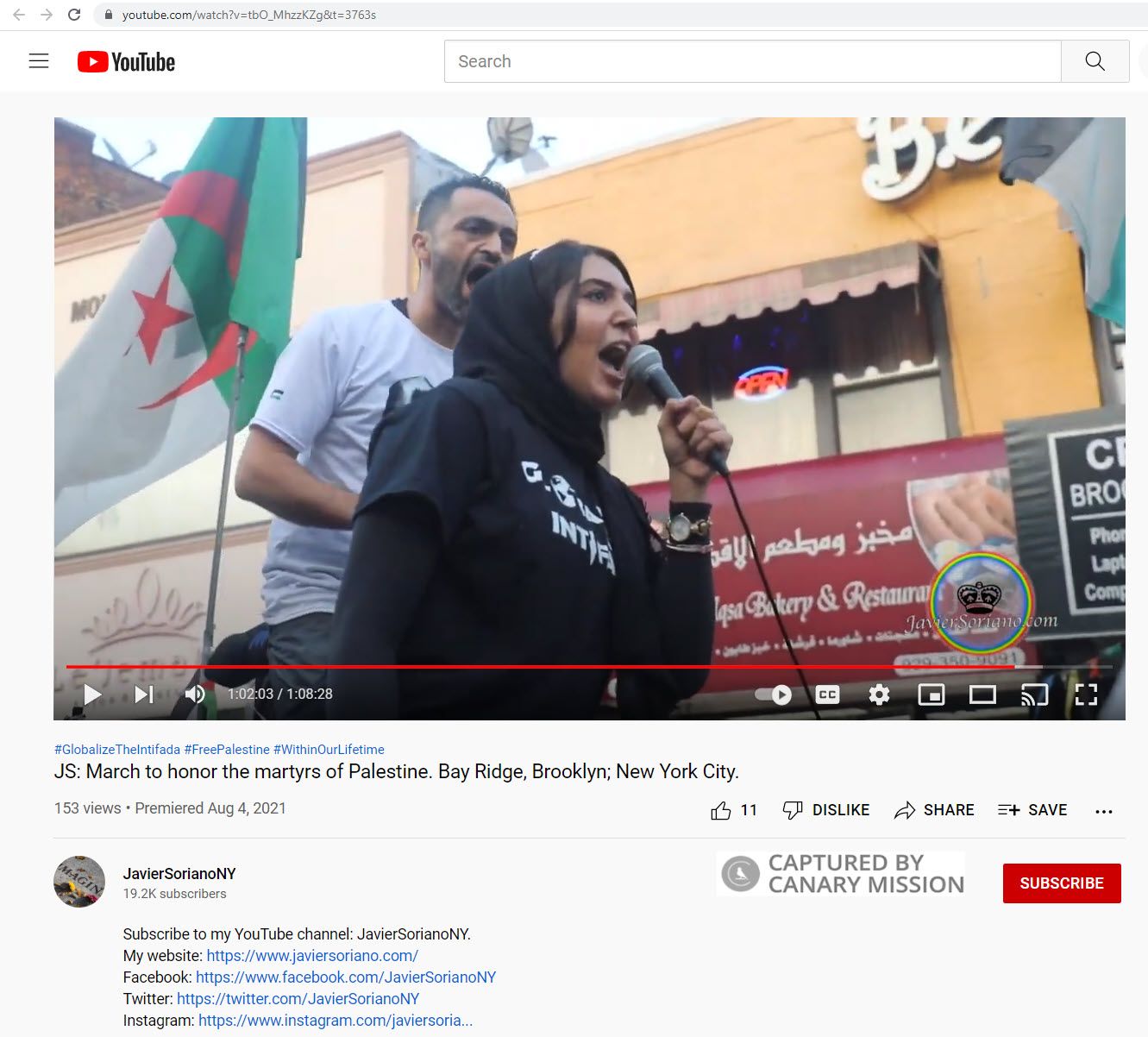
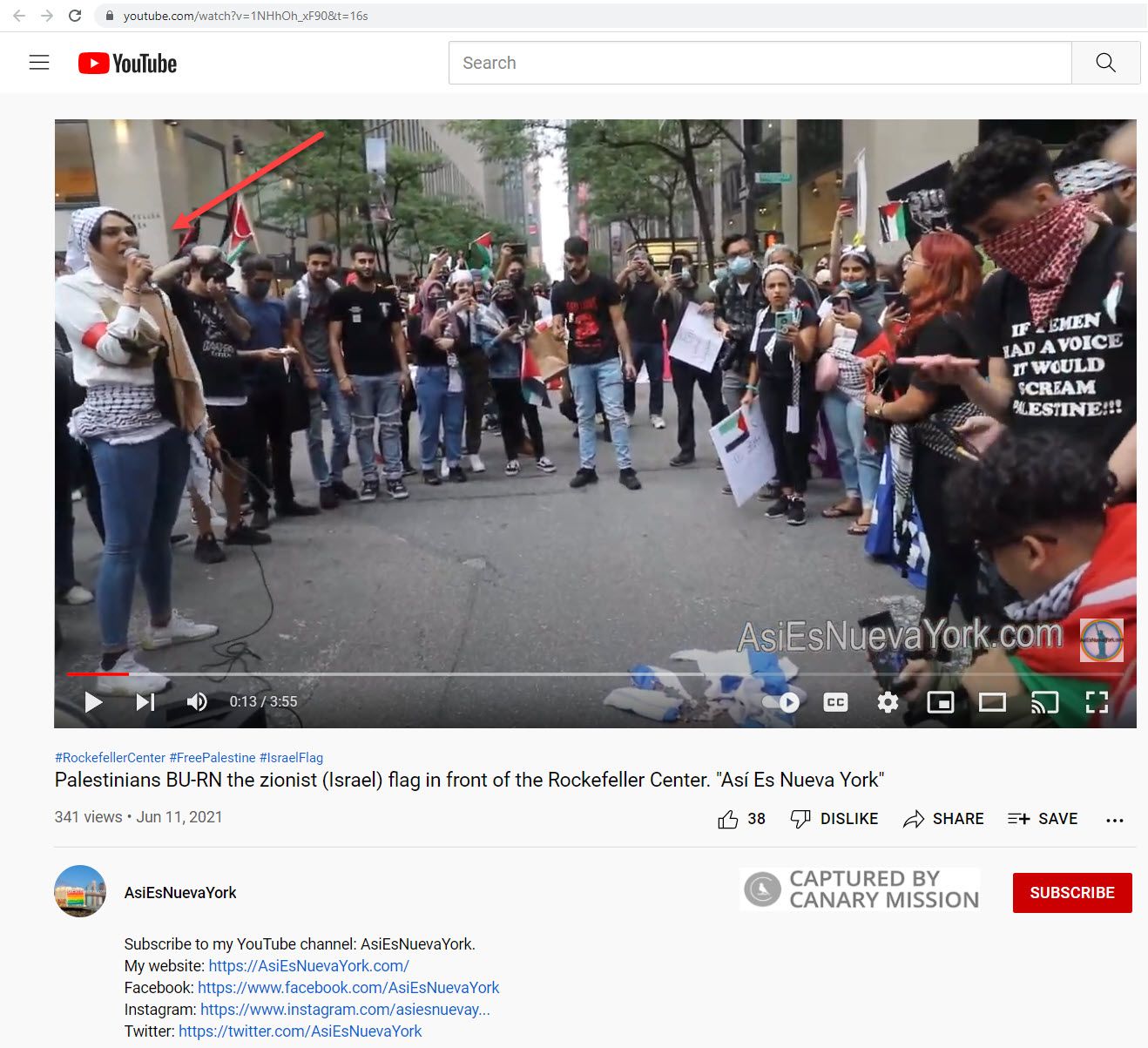
Organizations like Democratic Socialists of America, Students for Justice in Palestine, Within Our Lifetime and Palestine Youth Movement are not tolerating this rhetoric. They are chanting it, platforming it, amplifying it, and treating it as virtuous. They deny Jewish peoplehood, erase Jewish indigeneity, excuse violence against Jewish civilians, and then insist this is nothing more than robust debate.

It is not.

It is hate speech — even if the Constitution protects the right to utter it.

And then there is Zohran Mamdani, who embodies the selective blindness at the heart of this moment. No serious person believes he would tolerate a mass of protesters outside mosques depicting Muhammad as a terrorist, screaming at Muslims as they enter prayer. That would be — correctly — labeled Islamophobia, regardless of whether it was technically legal.

Yet Mamdani casually removed buffer zones around entrances to synagogues, insuring his excited comrades can yell epithets at Jews.

When Jewish institutions are targeted, when synagogues are surrounded, when Jewish national identity is declared illegitimate, the alt-left response suddenly becomes procedural: free speech.

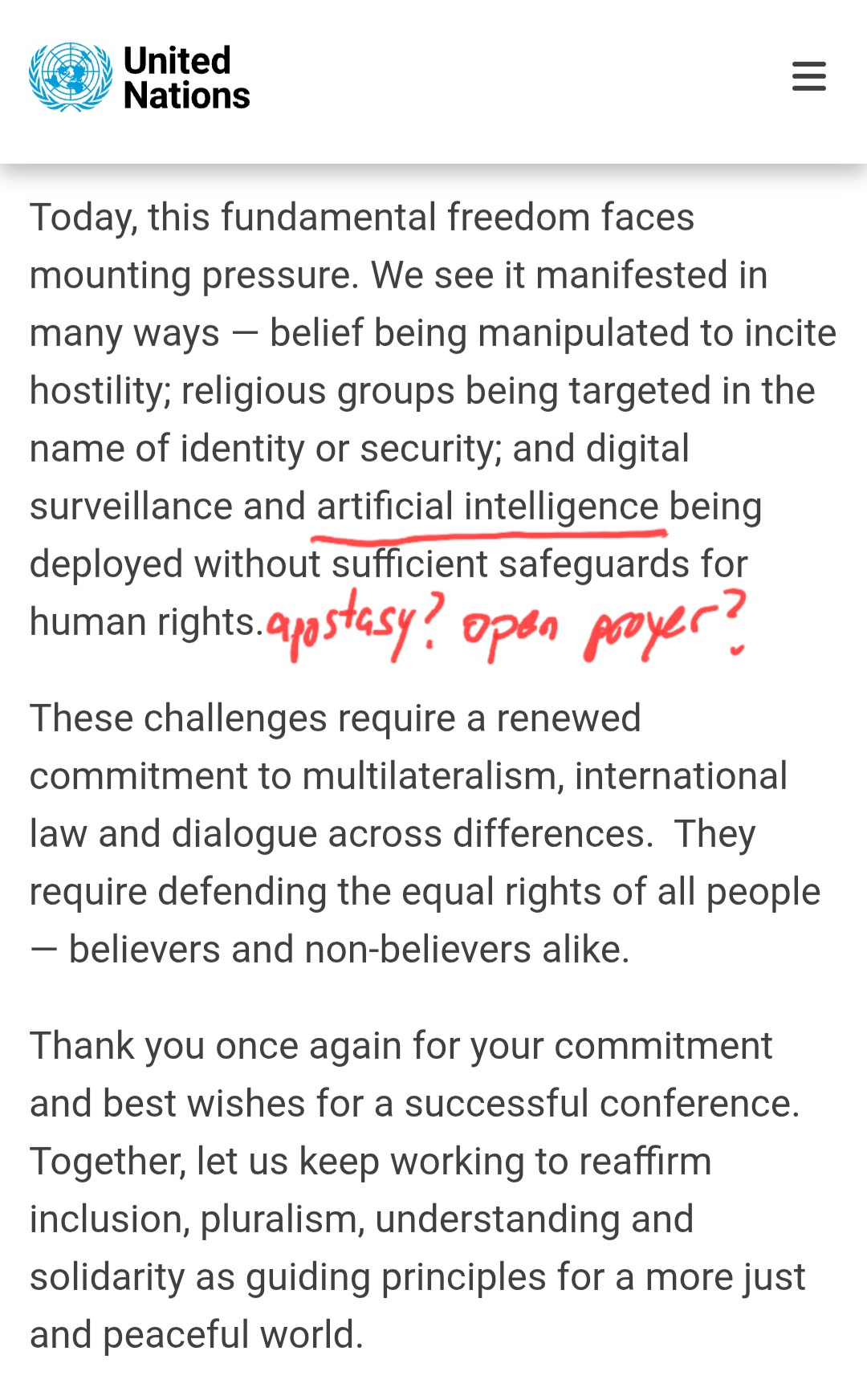
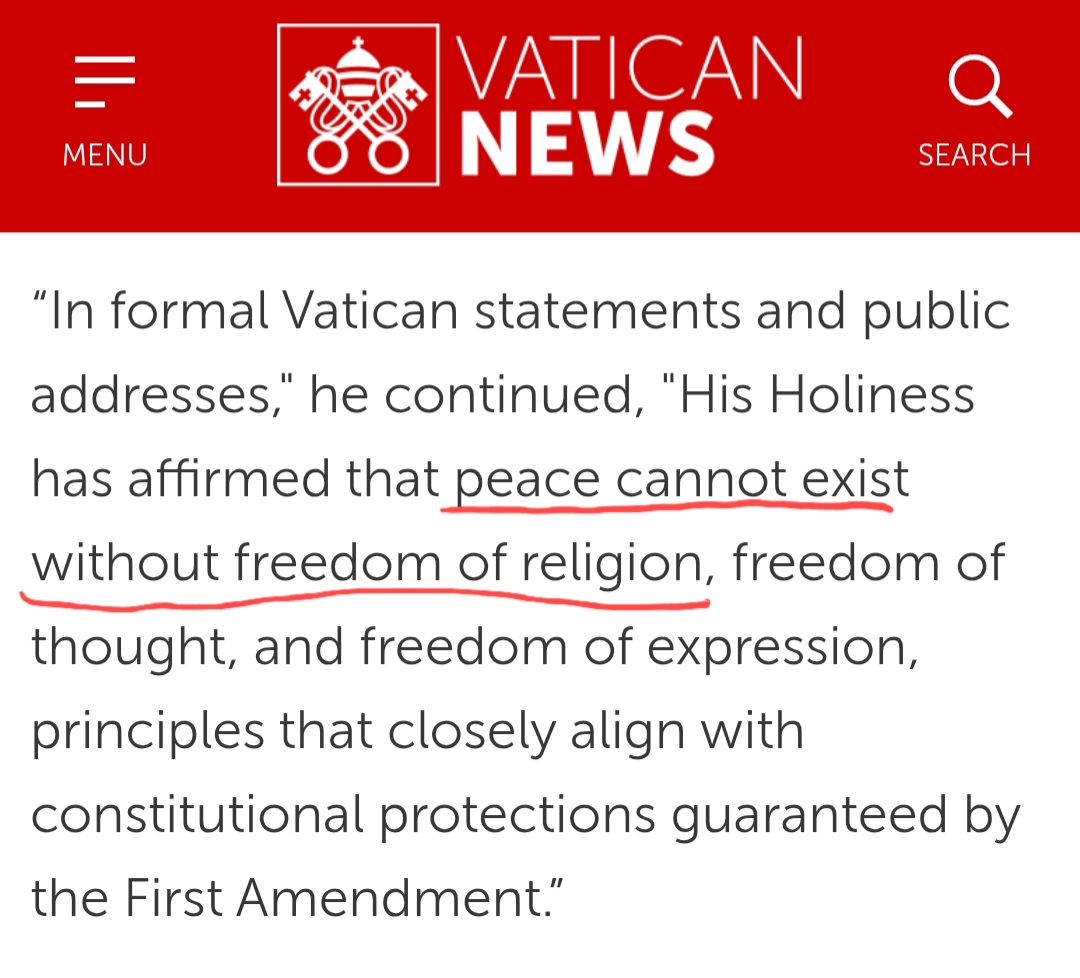
Free speech does not launder bigotry. The First Amendment protects the right to speak; it does not cleanse the moral content of what is said. When people accuse Mamdani and the DSA of promoting Jew-hatred, they are not confused about constitutional law. They are describing the reality of ingrained Jew hatred.

“Most Americans are familiar with the classic Western flavors of anti-Semitism: the Christian, European, white-supremacist and Communist types. But little attention has been paid to the special case of Muslim anti-Semitism. That is a pity because today it is anti-Semitism’s most zealous, most potent and most underestimated form.” – Ayaan Hirsi Ali, July 2019

Invoking free speech is an evasion. A way to avoid responsibility while continuing to normalize ideas that would be instantly condemned if aimed at any other minority.

The tragedy – and fear – is that liberals understand this perfectly well in every other context. They simply refuse to apply it to Jews. Or at least, when uttered by a community of preference, Muslims.

Free speech is not on trial, do not be confused by the misdirection. Antisemitism is, and it is winning.

Hamas and the DSA: Ideology + Grassroots Mobilization to Power + Destruction

Political power is built when ideology is fused to daily life. Theory alone persuades few and charity alone commands none. Durable movements embed a worldview inside services people rely on, until dependence becomes loyalty.

That was the formula in Gaza. It is the same formula now visibly rising in New York.

Hamas entered Gaza with a rigid morally corrupt worldview long before it ruled. Its clinics, schools, mosques, and charities were never neutral. They delivered aid while teaching a doctrine that explained suffering, identified enemies, and promised redemption through allegiance. Service and ideology arrived together.

The Democratic Socialists of America advances along the same dual track in American cities. Mutual aid, tenant organizing, bail funds, and rent clinics function as delivery systems for a moral framework that divides society into oppressors and oppressed, treats ownership as suspect, and elevates redistribution as justice. Assistance arrives bundled with belief.

In both cases, aid becomes initiation and gratitude becomes allegiance.


The Manifesto: How Movements Legitimize Seizure

Grassroots legitimacy does not sustain power by itself. Movements require a manifesto—a moral architecture that explains why people suffer and who is to blame.

Hamas supplied that architecture in its 1988 foundational charter. The document framed politics as a total moral struggle, casting Jews collectively as illegitimate manipulators of capital and institutions, thieves of land and destiny. Jewish presence, ownership and sovereignty were criminalized. Seizure was the cure to restoration. Compromise vanished and was vilified. The charter’s function was clear: define an enemy class, strip legitimacy, and authorize permanent struggle.

The New York analogue operates through a different medium with the same effect. In the DSA ecosystem, capitalists and landlords are portrayed as extractive and illegitimate. Profit is framed as violence with ownership recast as theft. Confiscation is moralized as justice.

Alt-left magazine Jacobin advocating for government seizure of private real estate with “transfer to tenant cooperatives or the public sector” in January 2026

Jews are often implied rather than named—refigured as landlords, financiers, “Zionists,” or beneficiaries of immoral systems. Jewish capital becomes shorthand for illegitimate capital. The logic is identical: identify a moral contaminant and justify its removal.

Every mass movement needs a villain. The manifesto supplies one.


After Victory: Asset Capture as Governance

When Hamas seized Gaza in 2007, its parallel institutions fused into rule. Aid became leverage. Employment became conditional. Permits learned loyalty.

Then came Hamas’s most consequential real-estate empire: the tunnel network. A vast underground system ran beneath homes, schools, mosques, and hospitals—an invisible city binding the population into the movement’s infrastructure. Security, storage, command, and coercion converged below ground. Benefits flowed to the loyal. Dissent was isolated.

Governance became permanent: mobilization with infrastructure.

The governing theory now circulating in New York mirrors this logic. Mass governance insists movements never demobilize after elections.

Housing is the fulcrum. Advocates call for seizing or socializing rental property, transferring control to movement-aligned entities, and moralizing ownership itself. What cannot leave becomes the lever.

New York City Mayor Zohran Mamdani states openly that he will “govern expansively and audaciously” and not change course for being deemed too “radical.” What was once viewed as crazy is being normalized and soon to be implemented.


Redistribution Without Production

Hamas never built a productive economy in Gaza. It did not need to. External money—almost all of it routed through international “aid”—financed the broken economy. Governance ran on grievance and allocation. The system extracted and redistributed; it did not grow.

The same risk shadows New York’s mass-governance vision. There is no emphasis on productivity, investment, or growth. The emphasis is on free stuff and redistribution from outside: state transfers, federal dollars, and seizing capital from more wealthy citizens. When the mobile capital inevitably leaves, the focus will intensify on seizing what cannot leave: real estate. As jobs and taxpayers depart, redistribution turns inward. Assets are moralized, then absorbed.


The Bigger Warning: This Is Happening in New York

This is not unfolding in a peripheral city. It is unfolding in New York City—the capital of capitalism.

DSA-NYC backed Zohran Mamdani

A redistribution-first governing theology imposed here would not be contained. When growth is dismissed as immoral and allocation is elevated as virtue, capital leaves, talent migrates, and pressure turns inward.

The danger compounds because New York is also home to one of the largest Jewish populations in the world. History is unambiguous: when movements moralize capital and cast Jews—explicitly or implicitly—as its avatars, the outcome is rupture. Flight. Confrontation. Violence.

An antisemitic movement consolidating power beside Jewish life at this scale resulted in the deaths of tens of thousands in Israel and the terrorist enclave of Gaza. It is an impending disaster in New York.

The warning signs are already visible:

  • Meritocracy cast as a fiction
  • Growth dismissed as immoral
  • Redistribution elevated as governance
  • Private property declared illegitimate
  • Pressure treated as legitimacy
  • Protection deemed conditional
  • Jews recast as symbols of theft

Hamas showed the arc in Gaza: from grassroots mobilization plus ideology, to framing the enemy who causes despair, to asset confiscation and control, to an entrenched vicious philosophy financed by redistribution without production.

DSA-NYC is following the same arc, adapted to American law and language.

When the capital of capitalism abandons growth and sanctifies seizure, the city stops creating wealth and starts fighting over remnants.

Memorial plaque in Vienna, Austria. In 1420, all Austrian Jews were arrested; 270 were burned at the stake, while the others were expelled and their property confiscated. The Vienna Gesera in 1421 brought the Jewish community in the Middle Ages to a truly bloody end. The root causes were antisemitism mixed with an economic desire to cancel debts.

Blessing and Inheritance

The story at the end of the Book of Genesis has an interesting lesson for Jews today.

If Jacob’s sons had remained in Canaan, the biblical pattern likely would have continued unchanged. Land and cattle anchored wealth, security, and continuity, and survival depended on concentration. In such an environment, inheritance narrowed toward a single heir capable of holding territory together through famine and conflict. Until this point, Genesis follows that logic closely, moving from Abraham to Isaac, from Isaac to Jacob, and nearly from Jacob to Joseph.

Canaan seemingly reinforced singular succession.

Egypt reshaped it.

The famine drained land of its defining value and redirected survival toward provision. In Egypt, Goshen mattered because it was allocated rather than owned. Jacob’s family entered as dependents, albeit under the protection of a senior official. With land no longer functioning as the primary store of value relative to neighbors, inheritance lost its organizing role. What carried forward instead was character and capacity.

Jacob recognized the shift and adapted to it. His final blessings did not distribute assets or authority but identity. Leadership, resilience, intensity, cohesion, adaptability—each son was seen for what he could contribute rather than what he would receive. Blessing became formative rather than transactional, oriented toward coexistence rather than accumulation.

This evolution reflected Jacob’s own hard-earned understanding. Early in life, he secured a singular blessing that concentrated destiny in one person and fractured a family in the process. Now, with seventy descendants – coming from different mothers – preparing to live together under pressure, he understood that continuity required a new orientation. Blessings and inheritance had to evolve if brothers were going to coexist in exile. Differentiation replaced rivalry, and identity replaced estate.

That shift allowed a family to become a people. Survival came to depend on shared memory, distinct roles, and collective endurance. The covenant moved through people rather than property, and the biblical story never narrowed again to a single bearer.

Jacob blessing his sons by Adam van Noort (1561–1641)

For nearly two thousand years, Jewish history unfolded within that framework. Without land, Jews carried blessing as portable identity—education, law, ethics, aspiration. Children were blessed for what they might become, not for what they would inherit. That model sustained continuity across dispersion, persecution, and renewal.

History has turned again.

Since 2008, a plurality of world Jewry lives once more in the land of Israel. Concentration has returned. Land, sovereignty, and inheritance are tangible again, not symbolic. The Jewish people find themselves in the inverse position of Parshat Vayechi: no longer learning how to survive without land, but learning how to live with it again after centuries of absence.

Jacob understood that blessings and inheritance had to change in order for brothers to live together in the diaspora. This moment demands a parallel act of wisdom. The task of this generation is to pass on collective and individual inheritances which will hold both realities at once: rootedness in the land of Israel alongside the moral, intellectual, and spiritual capital forged in exile. The next generation must receive blessings that affirm individual potential and an inheritance that binds those differences into a shared future.

That synthesis—blessing and land together—is the challenge of our time.

A Less Anti-Israel UN Security Council in 2026?

The United Nations rarely changes. But sometimes the composition changes just enough that the temperature drops—even if the structure stays broken.

That is what January 1, 2026 quietly delivered at the United Nations Security Council.

Five countries rotated off. Five rotated on. No grand reform. No moral awakening. Just personnel. And yet, for Israel, the difference matters.

The Council Israel Had to Endure

For much of 2024–2025, the Security Council was not merely critical of Israel. It was performative. Ideological. Repetitive. Certain members treated the Council less as a forum for conflict resolution and more as a theater for delegitimization.
None more so than Algeria.

Algeria did not argue policy. Israel, it insisted—again and again—was an illegitimate colonial outpost of Europe, no different from French rule in North Africa. History, geography, and Jewish continuity were irrelevant. This framing was injected into draft resolutions, press statements, and emergency sessions with missionary zeal. The goal was not peace. It was erasure.

Then there was Guyana, a country which bonded with the terrorist Palestinian Liberation Organization in the 1970s, which spoke with confidence and without knowledge—accusing Israel, rather than Arab states, of rejecting partition since 1948. One did not need to agree with Israel to recognize the historical absurdity. But the UN often rewards certainty over accuracy.

And Slovenia—a country with no meaningful role in the conflict—seemed to relish its moment on the moral stage. During Israel’s defensive war, it never called out Hamas. Slovenia repeatedly accused Israel of genocide. The charge was not legal analysis; it was rhetoric. And rhetoric, once introduced, metastasizes.

These countries rotated off quietly. No ceremony. No reckoning. Just gone.

The Council Israel Is Getting Instead

Their replacements are not “pro-Israel.” That bar is too high. But they are something rarer: less ideological.

Bahrain now occupies Algeria’s Arab Muslim chair. Bahrain is a signatory to the Abraham Accords and has diplomatic relations with Israel. It understands that shouting “colonialism” does not feed people, build ports, or stabilize regions. Bahrain may not defend Israel loudly—but it will not poison the well reflexively.

Colombia replaces Guyana in South America. Colombia is a serious country with a serious economy. It trades. It fights insurgencies. It understands security dilemmas. Domestic politics fluctuate, but Colombia does not need Israel as a symbolic enemy to feel virtuous on the world stage.

Latvia replaces Slovenia. Latvia knows what occupation actually looks like. It is cautious with language. It aligns more naturally with Western security frameworks and is unlikely to indulge in genocide rhetoric as a form of diplomatic performance art.

Liberia and Democratic Republic of the Congo round out the new entrants. Neither is a champion of Israel. But neither is an ideological crusader. Silence, at the UN, is often an upgrade.

This is not a transformed Security Council. The structural bias remains intact. Russia and China still exploit Israel as a pressure point. France still oscillates. The General Assembly still manufactures moral majorities untethered from reality.

But something important does change: the agenda-setters.

Algeria’s absence means fewer resolutions laced with colonial mythology. Slovenia’s departure means fewer genocide accusations casually flung like slogans. Guyana’s exit means fewer history-free lectures delivered with confidence.

In their place are countries – hopefully – that calculate before they accuse. That lowers the volume. It slows the cycle and gives diplomacy—especially American diplomacy—more room to maneuver.

Conclusion

Israel does not need the UN to love it. It needs the UN to stop lying about it.
The 2026 Security Council will not be fair. But it may be less dishonest. Less theatrical. Less obsessed with turning a regional war into a morality play with a prewritten villain.

Sometimes history doesn’t turn with a speech or a vote—but with who quietly leaves the room.

Democratic Socialist Banana Republic

There is a familiar script in the American imagination: the banana republic. A place where public money leaks into private pockets, where cronies get rich, and where the state exists less to serve citizens than to lubricate loyalty. We usually imagine this as something foreign—dictatorships, juntas, autocrats with offshore accounts.

But Minnesota has offered a more modern, democratic variant.

The Somali community fraud cases that emerged from COVID relief funds, child-nutrition programs, and early-learning initiatives were not small-time scams. Tens of millions—eventually billions— of dollars flowed through nonprofit fronts. Programs meant to feed hungry children and support families became vehicles for enrichment. People inside the community became millionaires. Luxury homes, cars, and cash replaced the language of charity.

It didn’t stop with pandemic money. The same networks appeared again in other state and federal programs. Kickbacks were alleged. In some cases, parents were implicated. Oversight mechanisms failed repeatedly. Red flags were raised and ignored.

Which leads to the uncomfortable question that hovers over every such scandal: how much of this was invisible, and how much was merely inconvenient?

Because money of that scale does not move without institutional permission—explicit or implicit. If government officials knew and looked away, if warnings were buried to keep a constituency satisfied, if enforcement was delayed because elections loomed, then the fraud begins to blur into something murkier. Not theft from the shadows, but theft tolerated in the light.

And once it is tolerated, the line between crime and policy becomes disturbingly thin.

This is not uniquely American.

In Israel, a parallel story has unfolded for decades in a more formalized way. When the state was founded, the Haredi (ultra-Orthodox) community was granted exemptions from military service. They were few in number, devastated by the Holocaust, and the exemption was framed as a temporary measure to rebuild a shattered world of Torah learning.

That world rebuilt itself—spectacularly. Today the Haredi population approaches 15% of Israel’s citizens and an even larger share – approaching 60% – of its youth. Their exemption from military service has become one of the most volatile fault lines in Israeli society, especially over the last two years of war, when reserve soldiers have been called up again and again while entire neighborhoods remain exempt.

The state pays. Child allowances, stipends, subsidies. And despite mounting public anger, the government—under Benjamin Netanyahu—continues to send checks. The reason is not hidden. Haredi parties vote as disciplined blocs. Their support keeps coalitions alive. The transaction is transparent.

It is deeply unfair. It corrodes social trust. But it is not a crime, because it is legislated, budgeted, and justified in public.

This is the key distinction that matters less than we pretend.

Governments control trillions of dollars. Politicians direct those flows—sometimes explicitly, sometimes through euphemism—to keep voters happy. In plainer language, they buy loyalty. Niche communities that vote as a bloc have disproportionate leverage. When challenged, they retreat behind the language of discrimination, marginalization, or historical injustice. The whistleblower becomes the villain.

Movements that openly favor redistribution, such as the Democratic Socialists of America, are at least honest about the direction of travel. They believe the treasury should be used to shift wealth and power to favored or protected groups. They don’t pretend the redistribution is an element of corruption—it is the point of government.

Contrast this with the classic banana republic. There, a dictator steals for himself and his inner circle. The corruption is crude, centralized, and personal.

In a democracy, the corruption is softer and more dangerous. The state funnels money to preferred constituencies under moral banners: equity, justice, relief, rebuilding. The beneficiaries vote. The politicians win. Accountability dissolves.

No villas on the Riviera are required. No coup is needed.

What emerges instead is a democratic socialist banana republic: not ruled by a single strongman, but by a web of incentives where public funds are traded for political survival. Fraud becomes harder to prosecute, because it nests inside policy. Waste becomes invisible, because it wears the language of virtue.

And when someone finally asks whether this is really a crime, the most honest answer may be the most unsettling one of all:

No. It’s worse.