New York Times Shows How To Mainstream Antisemitism

Michelle Goldberg, an opinion columnist for The New York Times, wrote a piece called “How Israel Lost America,” which made it sound like a country actively did something to turn Americans on it. She wrote:

Conspiracy theories about Israel manipulating America into another Middle Eastern conflict are bound to flourish, especially because there will be a grain of truth to them.”

Pause there.

The claim that Israel manipulates America into war is not new. It echoes dual loyalty accusations against Jews who support Israel. It echoes the suspicion of hidden influence. It echoes the charge that Jews entangle great powers in foreign conflicts.

To say such conspiracies will flourish is observation.
To say they contain “a grain of truth” is validation.

That sentence does not merely predict antisemitic rhetoric. It lends it credibility.

The column builds toward that moment.

Goldberg wrote:

“Israel, by behaving appallingly and then trying to silence any condemnation of its appalling behavior as antisemitic, gives ammunition to Jew haters.”

Israel behaves appallingly – seemingly against America’s values and/or interests – and then pulls out the antisemitism card to try to silence critics, and that combination arms the Jew haters.

The causal arrow points away from the antisemite and toward the Jewish state. Hatred becomes consequence. Antisemitism becomes reaction. And it becomes so, because Israel itself decided to flag it, not the Jew hater.

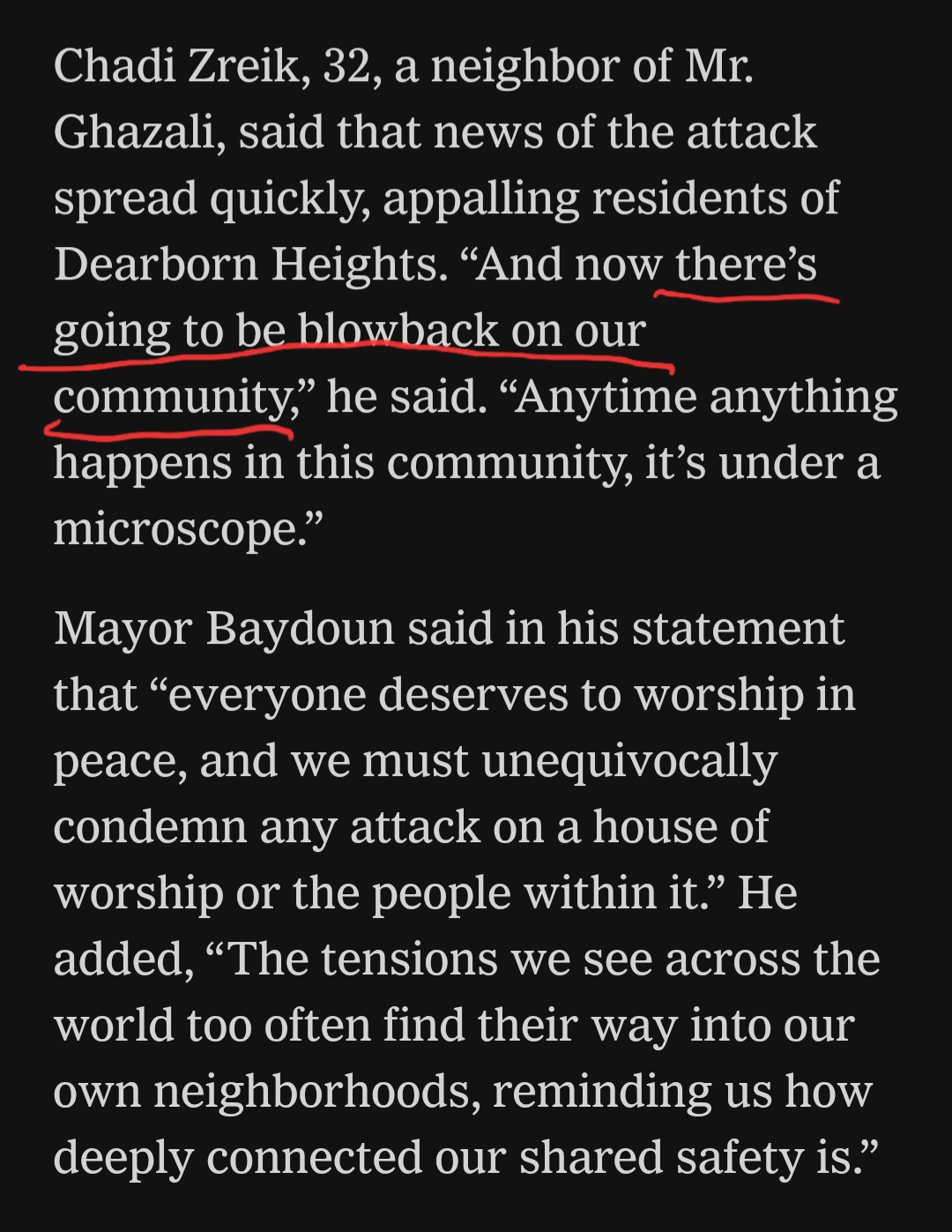
To give credence to her theory, Goldberg quotes Jeremy Ben-Ami of the left-wing group J Street, warning of “blowback” when antisemitism is invoked in political disputes:

“You’re going to get some blowback against the people doing that.”

Again, antisemitism is framed as backlash. The focus shifts from the existence of anti-Jewish hostility to whether Jews and Israel are provoking it.

Layer these claims together and the pattern emerges:

Israel behaves badly.
Antisemitism claims are overused.
Blowback follows.
Conspiracies flourish.
There is “a grain of truth.”

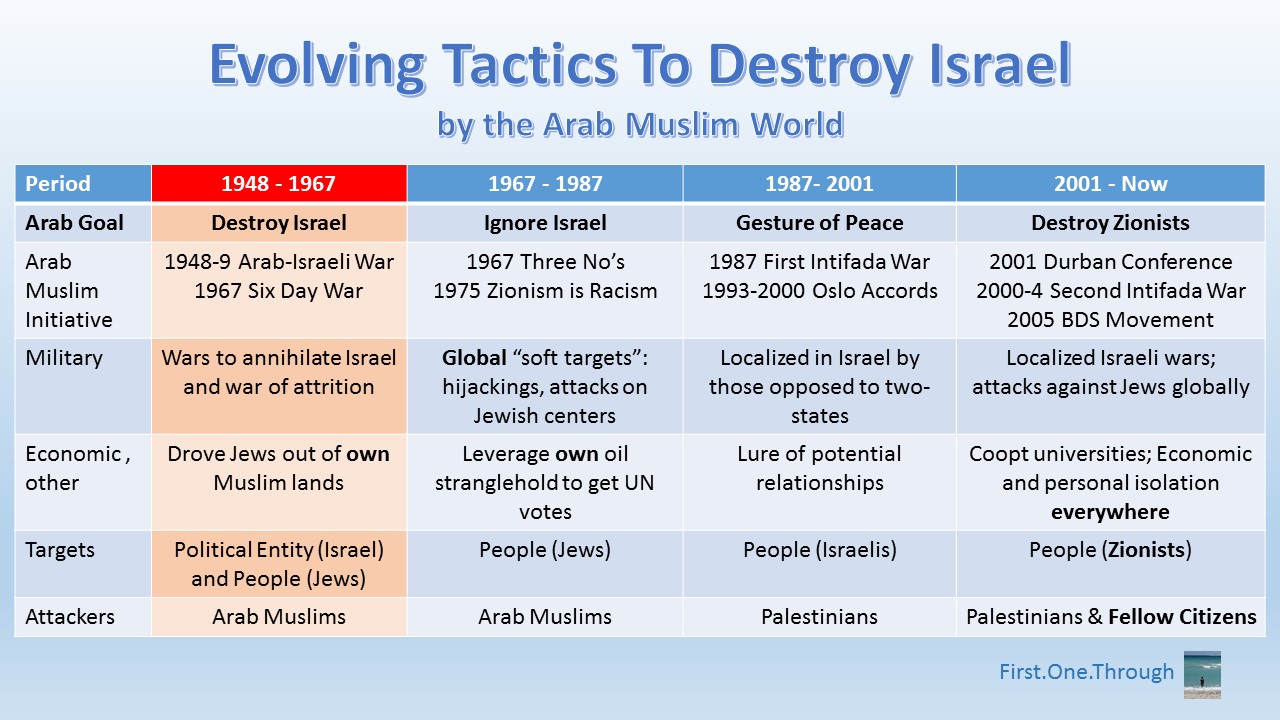
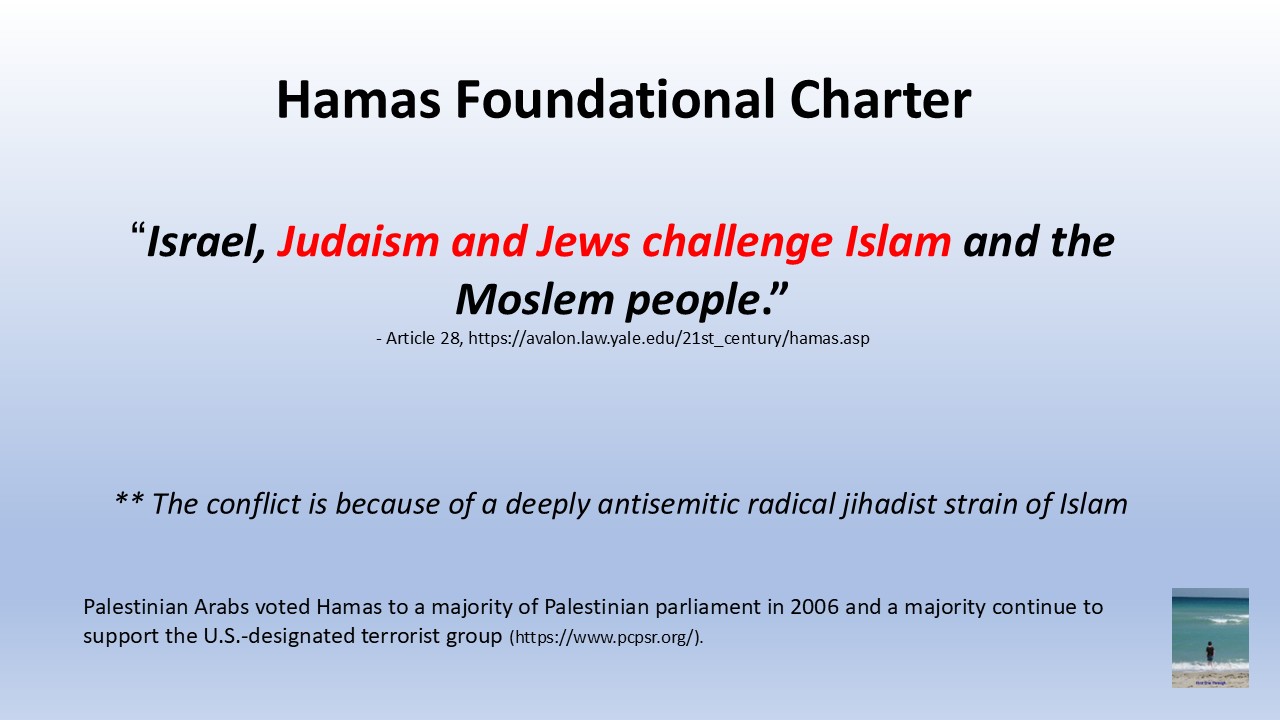
The article never touches upon the truth of Gazans slaughtering Jews. The column doesn’t write about the antisemitic genocidal Hamas Charter. Goldberg doesn’t discuss the anti-Israel mobs in America celebrating the slaughter of elderly Jews, raping of Jewish women, and the burning of Jewish families alive. Other than to validate their feelings.

But the most consequential move in the column is quieter.

Israelis are discussed in ways readers instinctively map onto Jews. Israeli Arabs are transformed into “Israel’s Palestinian citizenry”, separating them rhetorically from the category of “Israelis.” Roughly a quarter of Israel’s citizens are not Jewish, yet that demographic fact disappears from the frame. Israeli Arabs are no longer part of the “Israel” that is “losing America” because they are really part of the counterparty in the war. That means that only Israeli Jews are the problem. The contrast is especially stark as the world cannot conceive of a “Palestinian Jew.”

The result is a subtle transformation. The conflict shifts from a dispute between a sovereign state (Israel) and a national movement (Stateless Arabs from Palestine, SAPs, seeking a new state) into something older and more volatile: Jews versus non-Jews in the Middle East.

Once that transformation occurs, every Israeli policy becomes Jewish policy. Every American alignment becomes Jewish influence. The state and the people fuse.

Now return to the “grain of truth.”

If Israel has already been rhetorically collapsed into Jews, then the suggestion that conspiracies about Israeli manipulation contain truth does not land on a neutral government. It lands on a people historically accused of secret power.

This is how respectable language normalizes ancient suspicions. The words are measured. The tone is analytic. The effect is corrosive.


Criticizing Netanyahu is legitimate. Opposing war is legitimate. Debating American foreign policy is legitimate. People do it all of the time about leaders and policy for all countries all over the world.

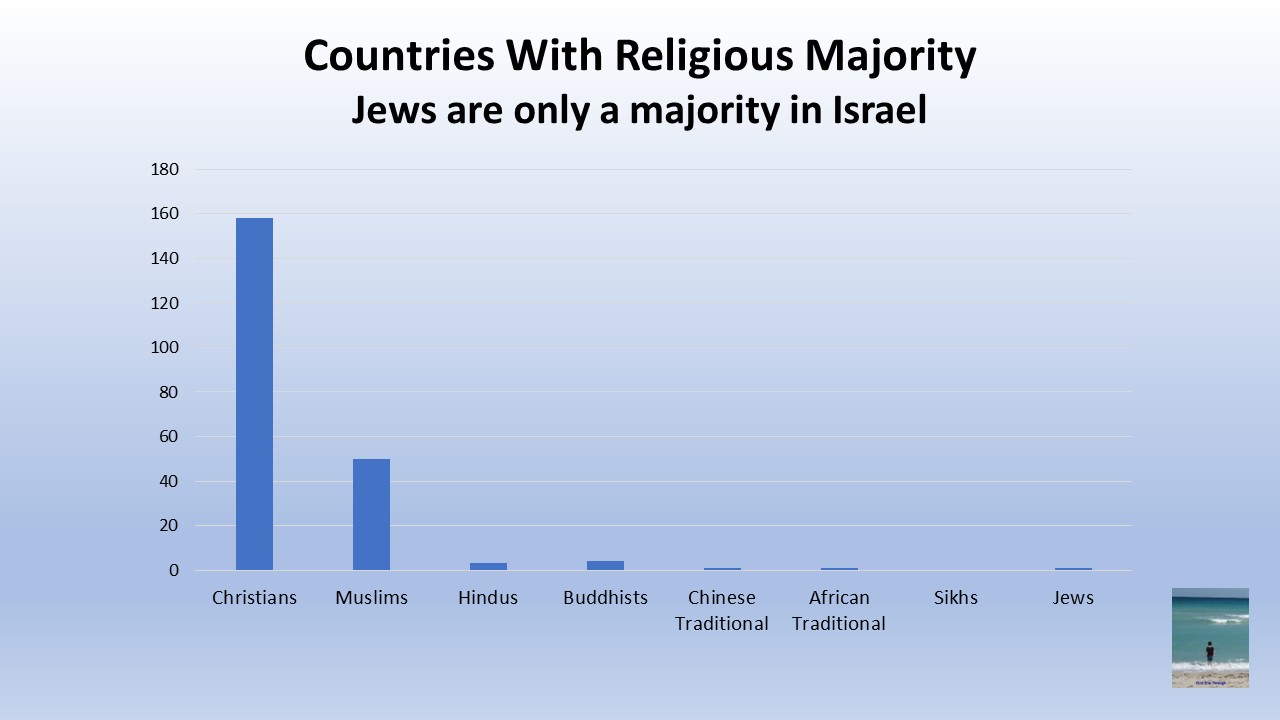
Yet people don’t turn the vile behavior of Iran into criticism of all Muslims. People don’t say Catholics run the drug cartels of Colombia, where a greater percentage of the country is Catholic than Israel is Jewish. People do not make people of faith the subject, unless it’s Jews.

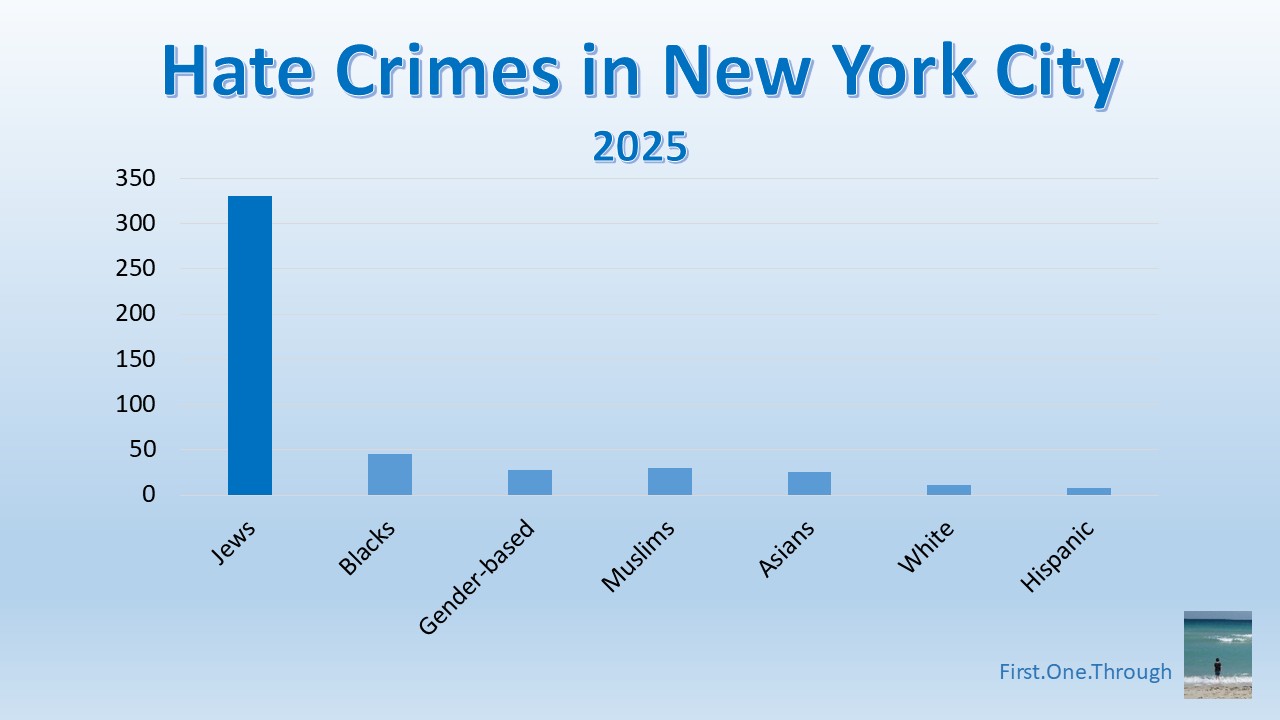
Framing antisemitism as a foreseeable reaction to Israel’s – which we are informed should be read as “Jews'” – conduct while granting partial legitimacy to manipulation conspiracies crosses a line. And it leads to a public that no longer wants to combat antisemitism, as it has become conditioned to rationalize the ancient hatred.

Seventy Five Jeffrey Epsteins in Rhode Island and No One Cares

The United States is transfixed by the ghost of Jeffrey Epstein.

Television panels speculate endlessly about “the list.” Politicians demand the release of files. Commentators hint darkly that powerful businessmen, politicians, and celebrities visited Epstein’s island. Careers tremble under suspicion. Executives resign after their names appear in documents that often contain little more than travel records or social introductions.

Whether many of those people committed any crime remains uncertain. Allegation alone is enough to ignite a media inferno.

Yet at the very same moment, a report in Rhode Island revealed something far more concrete and horrifying.

Over seventy five yearsseventy five Catholic priests abused more than three hundred boys.

The pattern was systematic.
Church leaders knew.
The archdiocese moved priests from parish to parish.
The abuse continued.

And the national reaction?

A shrug.

Cathedral of Saints Peter and Paul, which serves as the home church of the Roman Catholic Diocese of Providence, is seen Tuesday Feb. 24, 2026, in Providence, R.I. (AP Photo/Charles Krupa)

The report appeared in the news cycle and disappeared almost immediately. No nightly television countdown. No congressional hearings. No endless speculation panels demanding accountability from the powerful institutions involved.

Three hundred boys were abused. Seventy five priests participated. And church officials helped conceal it.

Yet the story barely registers in a culture obsessed with Epstein.

Why?

The contrast is staggering. The Epstein saga revolves largely around possible connections between elites and a predator. In Rhode Island, the perpetrators are known. The victims are documented. The institutional cover up is described in detail.

Still, outrage seems muted.

Perhaps the victims being boys rather than girls dulls the reaction. Society speaks often about protecting girls from predators. The suffering of boys receives far less attention. Their trauma rarely becomes a political cause.

Perhaps the alleged villains also matter.

Epstein’s story offers the intoxicating possibility of bringing down the rich and powerful. Gossip channels thrive on the suggestion that celebrities, billionaires, or politicians might be implicated. It carries the thrill of scandal and the promise of humiliation for elites.

The Rhode Island report offers none of that entertainment. The perpetrators are priests in small parishes. The victims were children in pews and classrooms decades ago. The institution involved is uncomfortable to confront directly.

So the response becomes a quiet “tsk tsk.”

In a functioning moral order, the consequences would be seismic.

An organization that knowingly allowed dozens of predators to operate for decades would face institutional collapse. Civil authorities would pursue accountability not just for the abusers but for the officials who enabled them. Legislators would demand sweeping reforms to protect children.

Instead, the archdiocese continues its work much as before.

The silence extends to politics as well. Members of Congress regularly hold press conferences about Epstein and demand investigations into wealthy acquaintances who might have attended a party or taken a flight.

Where are the congressional speeches about protecting boys from predatory clergy?

Where are the national commissions examining institutional abuse in religious organizations when 1,000 boys were found to have been abused by 300 priests in Pennsylvania a few years ago?

They do not exist.

The indictment therefore extends beyond the church. It reaches into the culture itself.

Our society claims to be obsessed with protecting children. Yet when hundreds of boys are abused inside “respected” institutions over generations, the outrage fades quickly.

The spectacle of scandal against powerful figures excites us, while the slow, ugly reality of abused children at the hands of clergy demands difficult moral confrontation.

So the culture chooses spectacle.

Three hundred boys in Rhode Island testify to something deeply uncomfortable: the nation is less interested in protecting children than in watching powerful people fall.

Seventy five Jeffrey Epsteins operated in plain sight and almost no one seems to care.

The Long Shadow of 1492

In a sharp escalation of transatlantic tensions, U.S. President Donald Trump announced that the United States will “cut off all trade with Spain, publicly castigating the Spanish government for refusing to allow U.S. military bases on its soil to be used in operations linked to strikes against the Islamic Republic of Iran and for what he termed Spain’s failure to contribute sufficiently to NATO defense spending. Trump declared that he “doesn’t want anything to do with Spain,” framing the dispute as a response to Madrid’s resistance to what he described as confronting evil in the Middle East and paying its fair share for collective defense. 

What follows is not about this immediate crisis. It’s about deeper historical currents that help explain some of the underlying dynamics in Spanish public life that stretch back to the fifteenth century and still matter today.


In Western Europe outside Scandinavia and the United Kingdom, the two countries with the smallest Jewish presence relative to population are Spain and Portugal (about 0.02% of each countries’ overall populations).

That is not a statistical curiosity. It is a civilizational fact.

Five centuries ago, the Iberian Peninsula expelled its Jews. What had been one of the great centers of Jewish life vanished over a five and a half year short window. The Alhambra Decree in 1492 ordered practicing Jews out of Spain. Portugal followed with forced conversions and the Inquisition. Open Jewish life disappeared. What had been woven into the intellectual, commercial, and spiritual fabric of the peninsula was purged.

And it stayed removed.

Unlike other parts of Western Europe where Jewish communities, even after catastrophe, remained visible and rebuilt, Iberia entered the modern era with almost no Jews at all. Medieval synagogues became churches, then museums. Sephardic music became heritage. Jewish quarters became tourist sites. The living community remained tiny.

Fast forward to the present.

In Spain, large protests erupt over the Israeli-Stateless Arabs from Palestine (SAPs) conflict. Municipal councils pass symbolic measures aligned with boycotts. Parliament debates recognition of Palestine. Streets fill with Palestinian flags while graffiti targets Israel.

Anti-Israel graffiti on Barcelona street in March 2026 (photo: First One Through)

In Portugal, while public demonstrations are generally smaller, political and diplomatic critiques of Israeli policy align with broader European debates.

And yet.

There are no comparable national protest cultures around Sudan. No sustained marches over Somalia. No municipal votes over Afghanistan. Iran’s repression and mass slaughter of its citizens cannot find a sympathetic voice in Iberian plazas, and the Rohingya tragedy never became a regular mobilizing cause.

The difference is not just geopolitical proximity or media cycles. It is structural.

Germany, by contrast, carries the Holocaust in living memory. Its leaders speak of Israel’s security as part of state responsibility. Jewish life is visible, rebuilt, acknowledged. The past is recent enough to shape policy language. The moral vocabulary is immediate.

Spain does not carry that twentieth-century reckoning. Its rupture with Jewish life occurred in 1492, so there is no generational memory of deportation trains. The story of Jews is medieval, not modern.

When a society has lived five hundred years without Jews, when Jewish presence is primarily historical exhibit rather than daily reality, does Israel become easier to turn into abstraction? Does outrage attach more easily to a distant Jewish state when there is little lived Jewish experience at home?

Or is it even worse than detachment?

A peninsula that removed its Jews in the fifteenth century now hosts some of the smallest Jewish communities in Western Europe, public squares with the most intensely anti-Israel protests, and a government unwilling to mobilize in the slightest manner to defang the leading state sponsor of terror, especially against Jews.

Five centuries is not only long enough for history to fade; it is long enough for it to harden into culture.

The Distant Hum at Mobile World Congress

At Mobile World Congress in Barcelona, the dominant sound is usually ambition. Deals over espresso. AI demos on loop. Spectrum, towers, IoT, eSIM. The future negotiated in glass rooms.

This year there was noise at the gates.

Protesters in keffiyehs waved Palestinian flags and tried to slow the river of attendees entering Fira Gran Via. They demanded the conference bar “genocide supporters.” They blocked traffic briefly. They filmed themselves and shouted.

The doors stayed open. The show went on.

Inside, the tone was very different.

Because of the escalating confrontation between the United States and Israel, and the Islamic State of Iran, many executives from the Middle East never made it to Barcelona due to flight cancelations. The Israeli Pavilion, usually one of the most kinetic and crowded zones on the floor, felt restrained. A few local Jews stood behind booths helping scan QR codes and explain products for companies whose teams were grounded thousands of miles away.

There was no dramatic security ring. No spectacle. Just visible absence.

Attendees still came by. Investors still asked questions and carriers still wanted meetings. The international community, in practice, wants to do business with Israel. It wants the cybersecurity, the silicon, the network optimization, the AI driven infrastructure. The appetite for innovation did not vanish because activists shouted outside.

As in past years, there was no Iranian Pavilion, because there was no demand for that country’s technology despite the billions of dollars poured into nuclear weapons programs and ballistic missiles. There were also no street protests outside the hall condemning Tehran, even as reports attribute tens of thousands of civilian murders at the hands of Iranian police.

Barcelona offered no blockades over ballistic missile programs nor chants about enrichment levels.

The inversion was hard to miss. Accusations of genocide delivered by activists wrapped in the imagery of the very movements whose leaders openly call for the destruction of a state. Silence about a regime long designated by the United States as the leading state sponsor of terrorism.

Anti-Israel graffiti on Barcelona streets, March 2026 (photo: First One Through)

The true backdrop to this year’s MWC was not the shouting. It was the distant hum of war shaping travel and corporate decision making. It thinned a pavilion and changed calendars.

The protesters created friction. The war created gravity.

And Barcelona, for all its global brand and history of hosting the world’s premier telecom gathering, showed something troubling. Instead of projecting confidence as a neutral convening ground for global commerce, it allowed a small group of activists to frame the city’s welcome with hostility toward one delegation in particular, as more of the city streets became unsafe for visitors.

Neighborhoods in Barcelona have become havens for dozens of Muslim men, looking for pickpocketing opportunities

The international industry kept meeting. Deals kept forming. Business cards were still exchanged as the angry chants didn’t cross the convention hall doors.

But the hum of geopolitics settled inside, and the world, watching closely, saw which noise mattered and which one merely embarrassed the host.

The New Model of a Modern Major General

Gilbert and Sullivan once mocked a Major General who knew everything except how to wage war. He dazzled with recitations while sidestepping reality. The humor lived in the gap between words and consequences.

That song has inverted.

With the coordinated U.S. and Israeli strikes that killed Iran’s Supreme Leader, Ayatollah Ali Khamenei, the model shifted. Fleets were moved. Air defenses aligned. Hardened targets were hit. Decades of negotiation, sanction cycles, enrichment disputes, and proxy escalation culminated in direct consequence.

For forty years, the Islamic Republic built power through Hezbollah, Hamas, Iraqi militias, and the Houthis while advancing missile capability and nuclear enrichment. Diplomacy stretched. Deadlines slipped. Centrifuges continued spinning.

At some point deterrence must be visible.

The modern major general is no longer measured by speeches about red lines but by whether adversaries recalculate. Does sponsorship of terror slow. Does enrichment reverse.

Does escalation pause.

Khamenei’s death marks a rupture. It introduces instability, succession uncertainty, and the risk of retaliation. It also forces Tehran to confront survival in ways it has avoided for decades.

The nineteenth century satire mocked leaders who substituted knowledge for action. The twenty first century test asks whether action, applied decisively, can alter the behavior of a regime that fused revolutionary ideology with missile technology.

This is not opera. There is no chorus to soften it.

The new model of a modern major general does not sing about military matters.
He imposes them.

Rep. Rashida Tlaib (D-MI) tried to cast America and Israel as racist, and invert the reality of the fight against genocidal jihadists

From Defanging to Beheading Islamic Extremism

The primary goal of a defensive war is to end the fighting for good. The goal is not to conquer land or take spoils but to stop the bloodshed. This objective can be realized with not just defeating the foe but having them relinquish their weapons for good.

Sometimes this happens with the enemy losing much of its army while occasionally it is with the elimination of the leadership. This is mostly true with secular nations who concede the battlefield when any chance to victory has been squashed.

Yet religious wars seem to seep into the future. It is difficult for the faithful to abandon the battle if such effort forces a challenge to faith.

We see that today with radical Islam. Hamas, the popular leaders of Gaza, waged their version of a holy war to annihilate the Jews in what they consider a “waqf”, Islamic land. Even when the fighters were vanquished and the leaders killed, the remaining zealots continue to hold onto weapons and refuse to allow calm to take root. The jihadists’ deeply radical and religious orientation obliterate the chance for coexistence with non-believers.

So the defensive war carries on much longer than required in a secular war. The destruction is more widespread because the jihadists refuse to relent.

The same front is now in the Islamic Republic of Iran. Its leadership is not as popular locally as Hamas is in Gaza. Months ago, the United States and Israel were able to take out the country’s nuclear weapons program in a 12 day war. The Iranian people did not rally to its leaders and press for war as they did in Gaza and the “West Bank”/ east of the 1949 Armistice lines “E49AL” against Israel, but took to the streets to challenge their own leadership.

But the jihadi leaders took aim at their people. Iranian soldiers mowed their own citizens down by the tens of thousands. The radical clerics would not abandon their plans for intercontinental ballistic missiles nor weapons of mass destruction, to be used to threaten and wage war against the “Big Satan” and “Little Satan” of the United States and Israel, respectively.

So the U.S. and Israel have reluctantly returned to Iran. The defanging of the regime escalated to beheading the rulers. On the first day of this next iteration of battle, Khamenei was killed as were other leaders.

Unlike the Stateless Arabs from Palestine (SAPs), the Iranian people are more secular. They want to live a quality life and are not obsessed with killing Jews hundreds of miles away. One therefore hopes that this war will end quickly.

The past two years has pushed back radical Islam significantly in the Middle East, which may pave a path for peace. It is incumbent on the world to encourage a form of humble faith which channels devotion towards personal humility rather than asserting supremacy, as the course towards coexistence.

Islamic supremacy is being both defanged and beheaded in the Middle East. There will likely be victories in the secular states, while the West will need to develop a different gameplan for the religious zealots, like those in Gaza.