What Will France’s “Concrete” Steps Be To Advance A “Two State Solution”?

On May 23, 2025, France said it is “determined to advance the implementation of the two state solution.” The June conference in New York that it will chair with Saudi Arabia titled “the International Conference for the Peaceful Settlement of the Palestinian Question and the Implementation of the Two-State Solution” is designed to focus on IMPLEMENTATION. France made clear that it expects “Irreversible steps and concrete measures for its implementation” to make the future a reality.

The combined effort of a western country and the dominant force in the Arab world to spearhead the effort, might lead to a balanced consensus that can help the parties forward. To be successful, the team must be realistic about the goals and constraints of both Israel and Palestinian society, and move on a realistic timeframe. Most importantly, it must work on an ENDURING peace that will last, not simply getting to an agreement.

Here are seven constructive steps that could lead to a stable two-state solution:


1. Disarm All Palestinian Militias

Peace starts with law and order. The Palestinian Authority has no monopoly on violence in the territories it claims to govern. Hamas and Islamic Jihad still run Gaza. In the West Bank, terrorist groups like Lion’s Den and the Jenin Brigades run wild with guns and explosives.

France needs to lead an international push to fully disarm all terrorist militias, not just generic phrases of “condemning violence.” All arms must be placed under the control of the Palestinian Authority (PA), or there’s no point in talking about sovereignty. No state — and certainly not Israel — can accept a terror enclave as its neighbor, as has existed in Gaza since 2007.


2. Elections With Rules

The last Palestinian elections were held when Justin Beiber became legally allowed to drink alcohol. Mahmoud Abbas was elected in 2005… for a 4-year term. He’s now on year 20.

New elections must be held, but not every group gets to play. Hamas — a terrorist organization by U.S., EU, and Israeli designations — should not be allowed to run, just like Nazis weren’t allowed to run in post-war Germany. The party should be outlawed.

France and Saudi Arabia should insist on clear criteria: no party that promotes violence, antisemitism, or the destruction of Israel gets a seat at the table. There is no pathway to an enduring peace if there is an underlying state of war.


3. Reform Education — Stop Teaching Hate

An Enduring Peace isn’t signed on paper; it’s taught in classrooms and instilled in society.

As part of de-Hamasification of Palestinian society, schools — especially and including those run by UNRWA — a complete overhaul of Palestinian education, with international oversight to remove antisemitic and violent content. IMPACT-SE has written about this problem for years, and concrete steps must be taken to allow a future of coexistence.


4. Stop Treating Jews Like Foreigners in Their Homeland

Palestinian schools aren’t the only problem. The United Nations is rank with Jew-hatred and one cannot expect Palestinians to be less anti-Israeli Jews than the global body.

UN Security Council Resolution 2334 outrageously declared that Jews living in eastern Jerusalem and east of the 1949 Armistice Lines with Jordan (E49AL) are somehow illegal — a modern form of antisemitism dressed up in legalese. UNSC 2334 should be renounced and rescinded as part of the steps towards an enduring peace.

France must reject the idea that Jews should be banned from parts of their ancestral homeland. At the same time, to facilitate compromise, a cap on Jewish residents east of the 1949 lines — say 15% of the overall population — could be introduced to avoid major demographic shifts in a future Palestinian state.


5. End the So-Called “Right of Return”

The Palestinian demand that millions of descendants of refugees be allowed into Israel is not about peace — it’s about destroying Israel demographically. It’s a fantasy rooted in grievance, not reality.

France must take the lead in declaring the Palestinian “right of return” over. In its place, a compensation fund should be set up — funded by Israel, Arab countries that started the 1948 war, and international donors. A similar fund should be set up for the descendants of Jews from Arab countries which were expelled in the decades after 1948. Work should begin now to compile a list of the properties which were lost and the related descendants who will collect associated reparations.


6. tighten the border framework, including jerusalem

The Saudi Peace Plan of 2002 suggested that Israel retreat to the 1949 Armistice Lines — a temporary ceasefire line, not a border. That’s not a starting point. That’s a non-starter.

France and its partners should endorse a realistic territorial framework: borders will fall somewhere between the current Israeli security barrier and the 1949 lines, through mutual negotiations. Land swaps are fine — as long as they reflect demographic realities and security needs.

In regards to Jerusalem, no country divides its capital city and no country places its capital on a border. Jerusalem should remain the capital of Israel, as it has uniquely afforded freedoms for all religions. Saudi Arabia should take over the administration of the Temple Mount from the Jordanian Waqf as part of advancing peace in the Middle East.


7. Shut Down UNRWA — Gradually, Responsibly

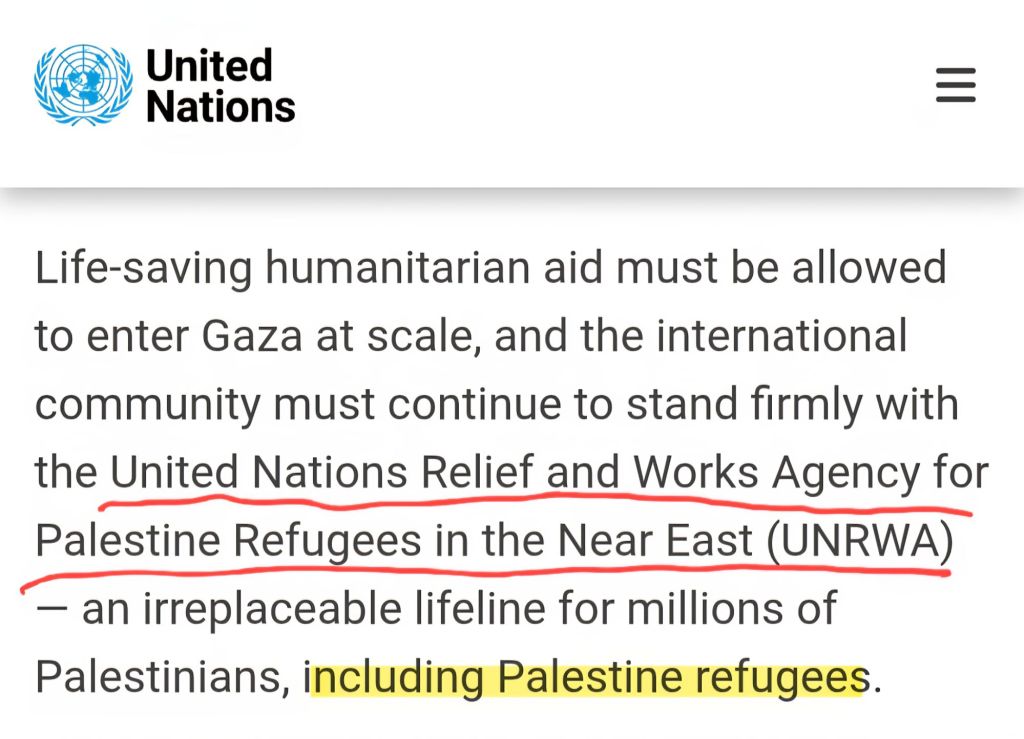
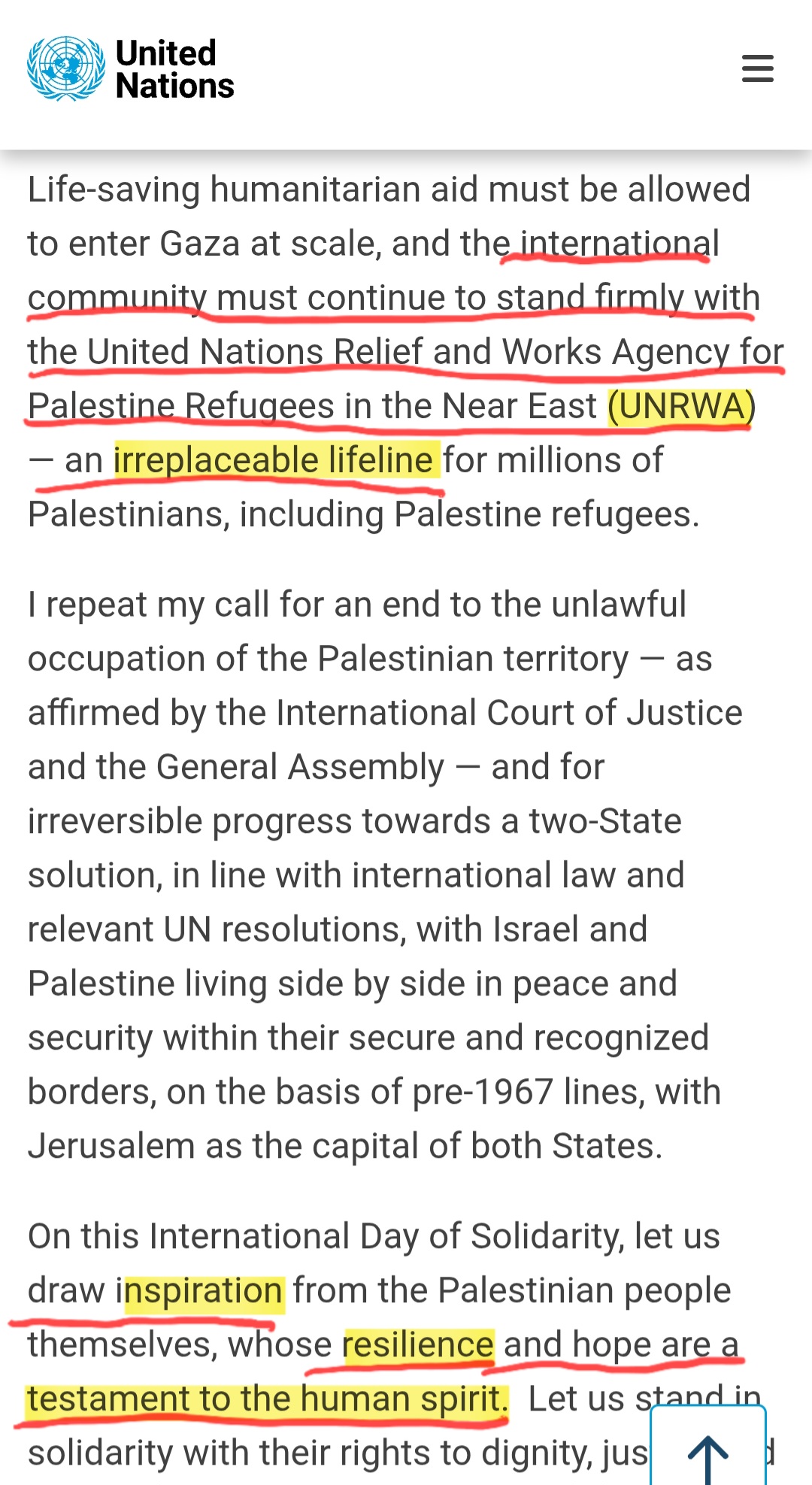
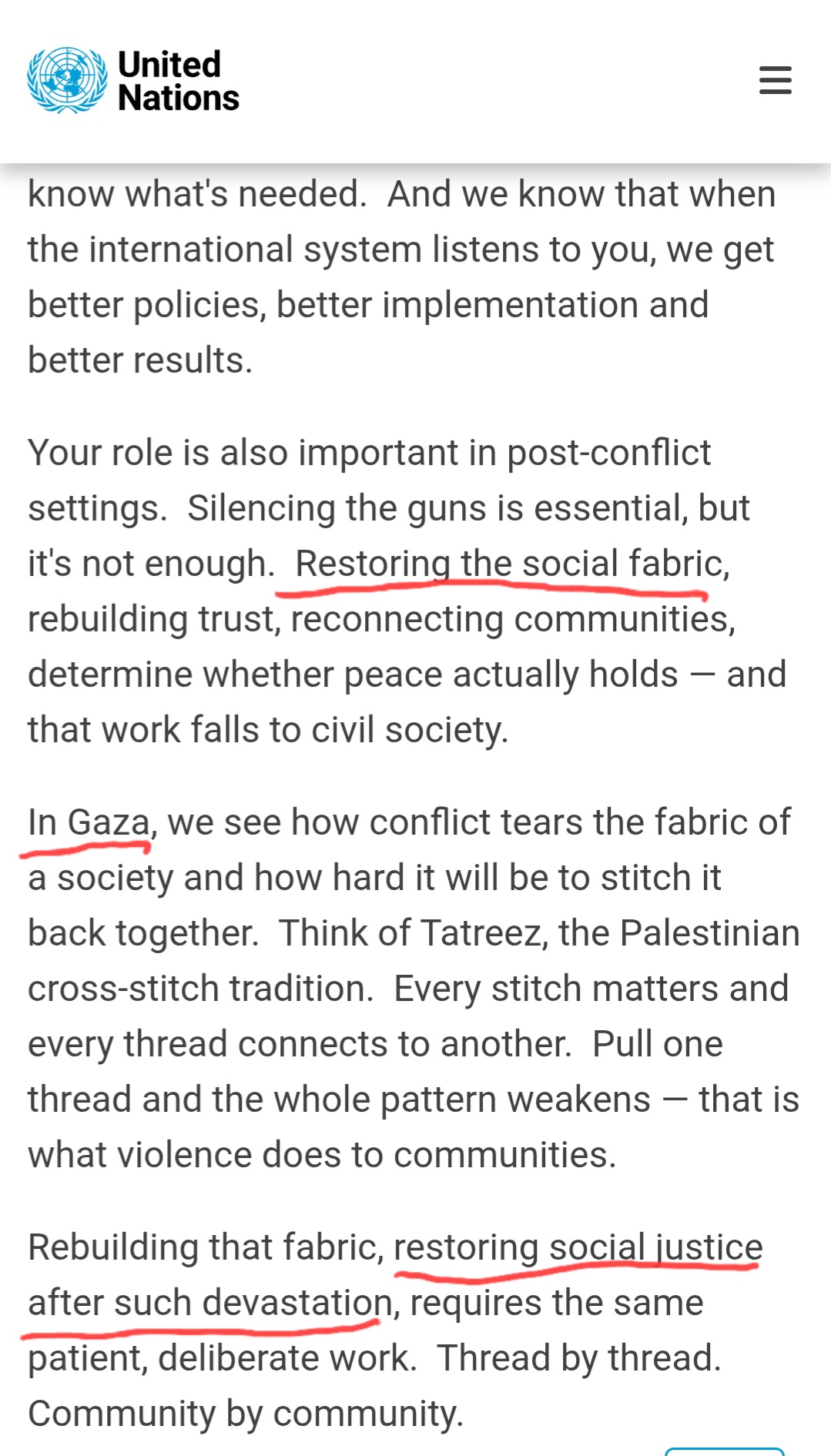
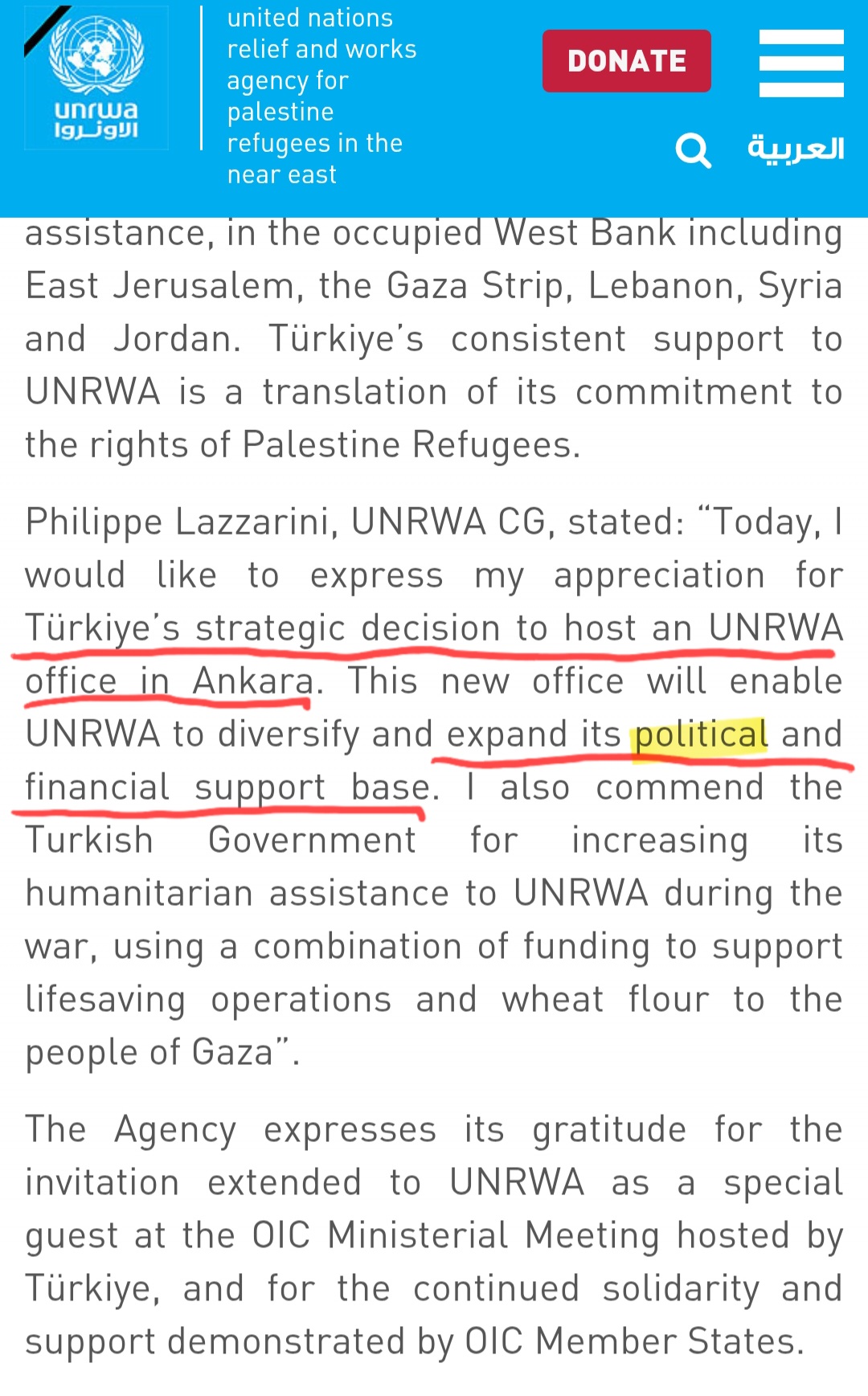
UNRWA, the UN agency that was supposed to help refugees, has become a sprawling, corrupt bureaucracy that perpetuates dependency and fuels incitement. Its existence undermines the Palestinian Authority and entrenches the myth of perpetual refugee status.

France and Saudi Arabia should lead the call for a phased shutdown of UNRWA, starting in Gaza and the West Bank. Services should be handed over to the PA — and resettlement should begin for Palestinians in Lebanon, Syria, and Jordan, with annual caps to avoid regional overload.

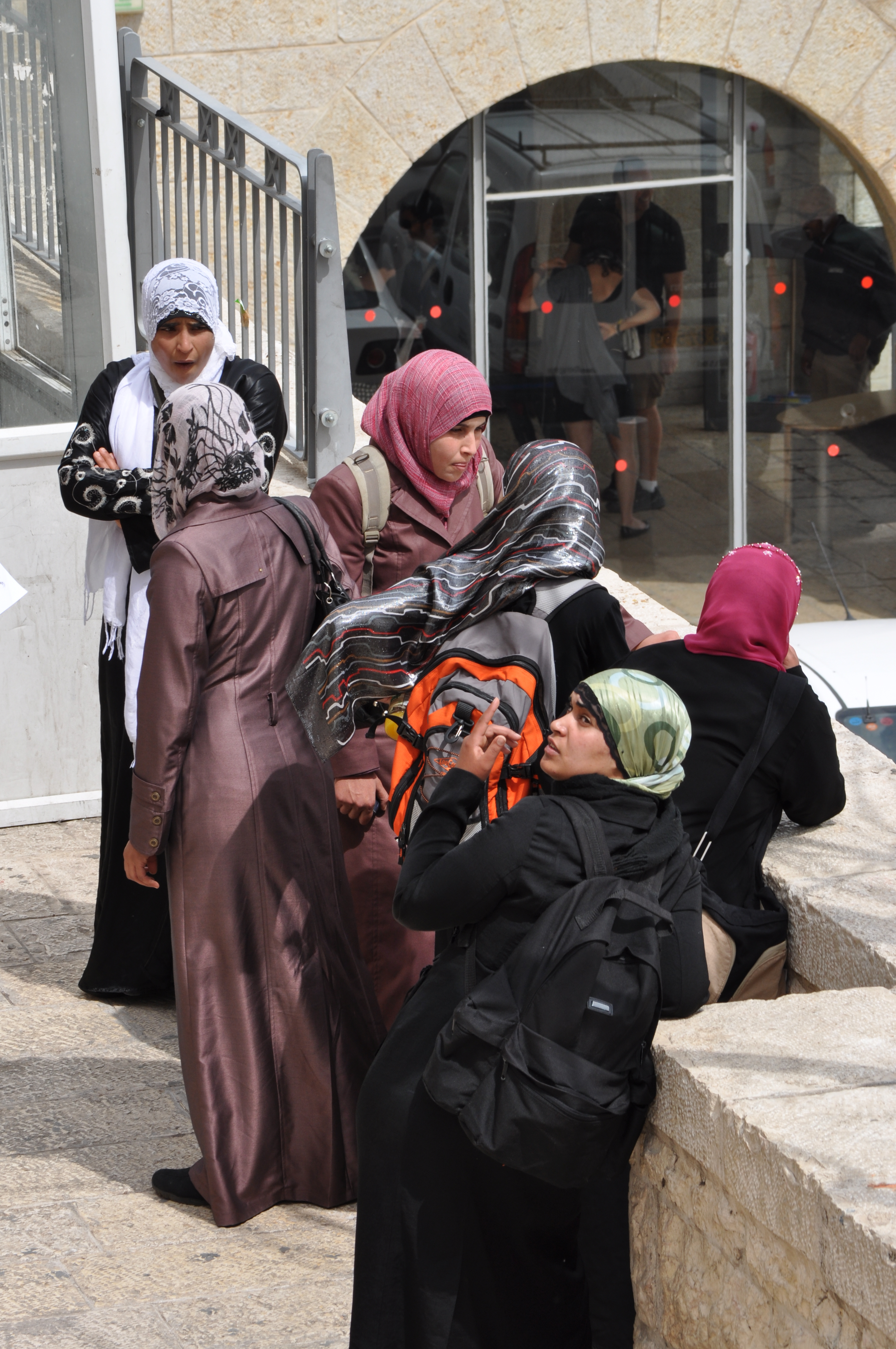
UNRWA offices in Jerusalem (photo: First One Through)

Bottom Line

France says it wants permanent changes on the ground. Good. The Middle East has had enough of circular negotiations, terrorism-as-usual, and international hypocrisy.

If France is ready to be honest, clear-eyed, and courageous, it can help move the region toward peace. But if it sticks to the same old script — blaming Israel, indulging Palestinian rejectionism, and hiding behind the UN — then we’ll just keep getting the same instability, bloodshed, and failure.

Peace will not be achieved overnight and “concrete” steps must be phased with reality. France and Germany gradually became allies after World War II with the benefit of the deNazification of Germany. Germany even made peace with the Jewish State over time once it was committed to avoid the hatred of its past. An overhaul of the Palestinian mindset and rejection of radical jihadism and goal of eliminating the Jewish State, under the sheepherding of Saudi Arabia can help map a better course for the region.

France must internalize the needed overhaul of the “deformity in Palestinian culture,” to quote James Zogby, President of the Arab American Institute who spoke to the UN in June 2023. Saudi Arabia must overlay the Abraham Accords on top of its 2002 Peace Plan to refine it to account for the reality of the last several years.

The emphasis of the France-Saudi chaired conference must be on the direction, not on the permanence of “concrete” and “irreversible” steps, to find a less violent and just future for the region.

Related articles:

There Is No Basis For A Palestinian “Right of Return” (July 2024)

The Three “Two-State Solution”s (December 2023)

Jerusalem Population Facts (May 2021)

When You Understand Israel’s May 1948 Borders, You Understand There is No “Occupation” (July 2019)

Ending Apartheid in Jerusalem (June 2018)

Arabs in Jerusalem (January 2016)

The Israeli Peace Process versus the Palestinian Divorce Proceedings (June 2015)

The Arguments over Jerusalem (May 2015)

Every Year a Refugee

How many generations should someone be called a “refugee?” Two? Ten? My parents were refugees and I consider myself the son of refugees. But not a refugee. To do so would be a mockery of millions of people fleeing homes to faraway lands where they have no family, infrastructure or knowledge of the local language.

Alas, while every year the world adds and removes refugees from the global tally, there is a permanent exception.

There are roughly 122 million displaced people worldwide (68 million internally displaced, 38 million refugees and millions of others seeking protection), and the United Nations High Commissioner for Refugees (UNHCR) is tasked with helping them. Its mission is clear: assist people fleeing conflict or persecution to either return home when it’s safe, or resettle in a new country where they can rebuild their lives and become citizens. Refugee status, according to UNHCR, is meant to be temporary. A tragic but manageable step toward normalcy.

But for one group of people, the rules were rewritten.

In 1949, the United Nations created a separate agency: the United Nations Relief and Works Agency (UNRWA). Its job was not to help all refugees, but a specific set—Arabs who left or were displaced from what became the State of Israel during the 1948 war.

Unlike the UNHCR, UNRWA never intended to help these refugees resettle or gain citizenship elsewhere. In fact, when Jordan annexed the to be named “West Bank” in 1950 and granted full Jordanian citizenship to the Arabs living there in 1954 (Jews were specifically excluded from Jordanian citizenship) —including the so-called refugees—UNRWA still kept them on its refugee rolls. Why? They were no longer stateless, no longer displaced from their community, and in most cases, were living just miles from where they or their families once resided.

No other refugee population in the world is treated this way.

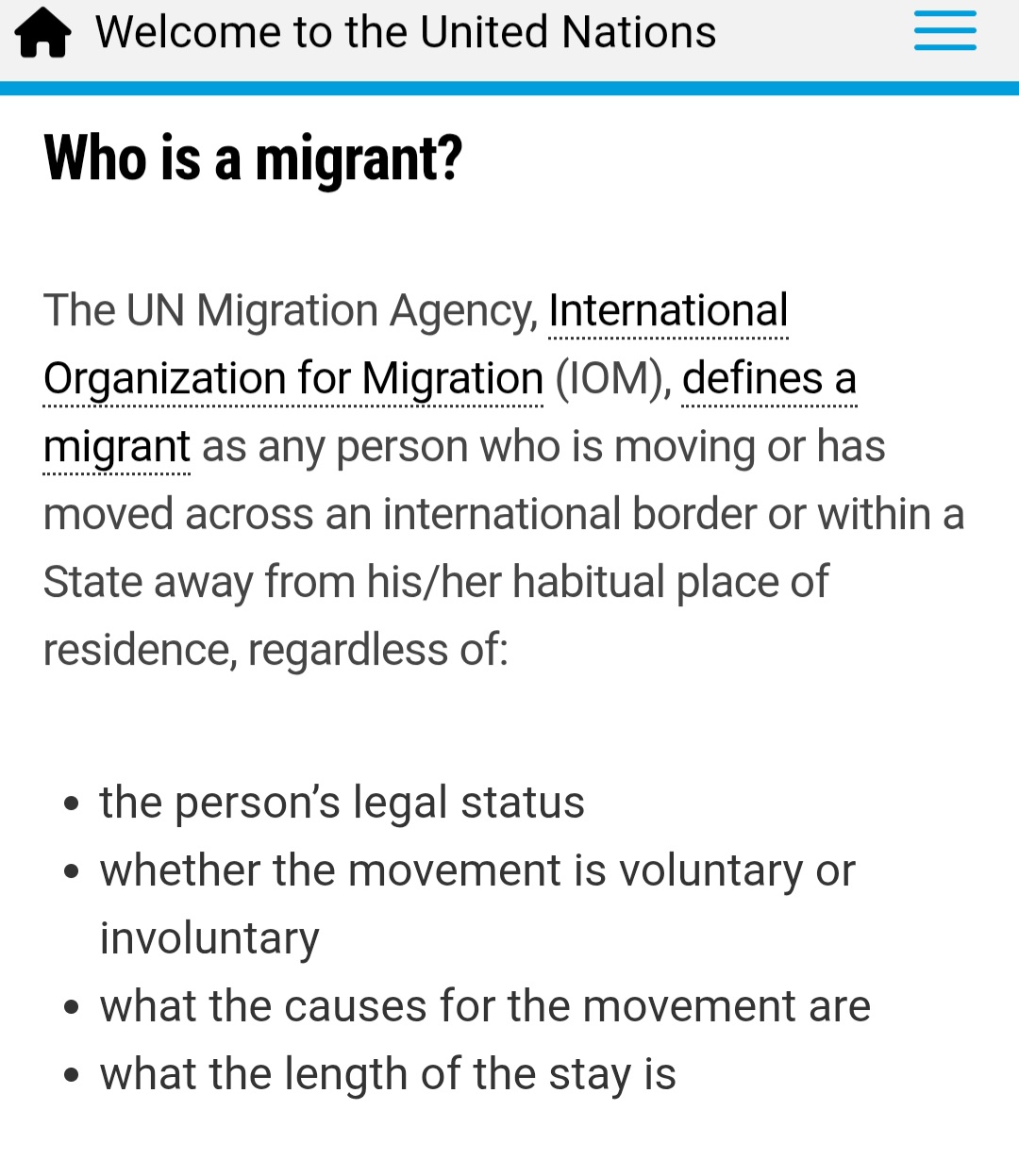
The Palestinians under UNRWA are not counted based on where they live or whether they’ve rebuilt their lives. They’re counted based on ancestry—any descendant of someone who lived in Mandatory Palestine in 1946 and left during the war is considered a “refugee.” That includes people who are now citizens of Jordan who have never set foot in Israel, and those who live under Palestinian rule in the West Bank and Gaza.

This isn’t about resettlement. It isn’t about a “two-state solution.” It’s about return. Not return to a country they fled—but to homes where their grandparents once lived, in a country that has since fought multiple wars for its survival and established itself as a sovereign nation.

This has locked the Middle East into a perpetual state of conflict. UNRWA doesn’t just preserve the status of Palestinian refugees—it amplifies it, funds it, and builds an international bureaucracy around it. It has denied Israel’s right to control its own immigration, and basic principle of sovereignty.

Worse, the UN’s actions have turned a situation normally considered a humanitarian issue into a real estate dispute. By insisting that people return to a house—not a country, as outlined in international human rights law—the global political body has exceeded its own mandate. This isn’t a question of national self-determination, but one of personal property claims. UNRWA isn’t so much a champion of the creation of a state beside Israel; it champions individual return to specific homes, decades abandoned or destroyed, now occupied by others in a sovereign country.

Meanwhile, the descendants of every other refugee group in the world—from Sudan to Ukraine—are helped by the UN to find a path forward. Only the Palestinians are encouraged to walk backward, into the houses of their grandparents.

UNHCR helps refugees stop being refugees. UNRWA helps them stay that way.

Every year, new wars create new displaced people. But only one group stays on the list year after year, generation after generation.

For Palestinian Arabs, the 1948 war is still being fought. Generations of people haven’t been birthed into refugee status as much as the region is in a 100 years war. While the world may use political terminology of an UNRWA ward who has never been to Israel as a descendant of a “refugee,” Palestinians simply see a permanent property right which will never be forfeited. The UN simply provides cover under the “refugee” monicker.

Every year, a refugee. By design. In partnership.

Related articles:

Palestinian Authority Demands That UN Come Clean On UNRWA (November 2024)

‘Right Of Return’ Must Be Integral To Negotiations (September 2024)

There Is No Basis For A Palestinian “Right of Return” (July 2024)

After UNRWA (February 2024)

“Two States For Two People” And An Arab “Right Of Return” Are Mutually Exclusive (September 2023)

There Is No Backing For A Palestinian “Right Of Return” (December 2022)

When the Democrats Opposed the Palestinian “Right of Return” (August 2018)

What The World Sees In Gaza

The world sees Gaza through the lens of curated sympathy – smoke trails from missile strikes, wounded children, crumbled buildings – rendered by the media and United Nations. The headlines scream “siege” and “occupation,” and the images are carefully framed to elicit tears, not questions. For them, Gaza is a tragedy.

But Israelis? They see something very different.

They see a terrorist enclave. A society ruled by Hamas – not just tolerated but elected – with a charter calling for genocide against Jews. They see neighbors who have fired over 30,000 rockets at them since Israel left Gaza in 2005, and who used humanitarian aid to dig terror tunnels and stockpile weapons.

Israelis are haunted by October 7, 2023 – the day when 1,200 of their people were butchered. Burned alive. Shot in their homes. Raped in front of their families. And they remember what came next: polls showing 75% of Gazans supported the massacre. The popularity of other Palestinian Arab terrorist groups skyrocketed as well, including Islamic Jihad, al Aqsa Brigade and al Qassam. This wasn’t some fringe radical cell that commited the vile pogrom – this was public approval for mass murder. It was the fulfillment of their long-standing desire to attack Jewish civilians inside of Israel since 2000.

They also see something deeper: three-quarters of Gazans consider themselves “refugees” living in temporary homes. Not because of displacement from this war but because they believe they’re entitled to homes inside Israel. They don’t see Gaza as their future – they see Tel Aviv.

To the United Nations, Gaza is a moral play where Israel is always cast as the villain. They see Gaza not as a failure of Palestinian leadership, not as a society hijacked by jihad, but as a tragedy authored entirely by Israel. Why? Because Israel won’t allow these “refugees” to move into the homes of Israeli Jews – the very homes where grandparents fled in 1948 after five Arab armies attacked the new Jewish state.

The world has condemned Israel for responding “disproportionately” to the October 7 massacre. The UN saw Israeli counterstrikes as war crimes, not defense. They ignored the slaughter of Israeli children and focused on fuel shortages in Gaza. They accused Israel of starvation, ignoring the trucks of aid Israel itself let in, even while its soldiers were under fire. They paid scant lip service to Israeli hostages kept in tunnels by Hamas, viewing them as collateral to Israel’s ongoing “Nakba”.

The Arab and Muslim world is not fooled but is not helping. They don’t see Gazans as brothers and sisters in need of refuge. They see them as Palestinians – a distinct, useful political weapon. If Gazans were Syrians, they would’ve been taken in by now. But they’re not. They’re left to fester – a long-term tool to weaken and delegitimize the Jewish state.

Even in America, Gaza has become a kind of geopolitical Rorschach test. Leaders like Donald Trump and Jared Kushner see opportunity: beachfront real estate with the potential to be the Singapore of the Middle East. A future riviera. But that future depends on changing a mentality – one that for decades has been more obsessed with destroying Israel than building Gaza.

Because this is the reality: Gaza could have been Dubai. It had the backing of the international community, billions in aid, and a chance to chart its own path. Instead, it chose jihad. It chose hate. It chose martyrdom over medicine, tunnels over technology, indoctrination over innovation.

The world sees rubble. Death. Tragedy. Not on both sides; for Palestinians.

They can’t see the Israeli hostages through their clouded moral lenses. They don’t see the Jewish parents still waiting for their children. They don’t see the decades of restraint Israel exercised before finally saying “enough”. They are caught in an empathy swamp and have mentally baptised Gazans as martyrs instead of genocidal jihadists.

The Global South sees Gaza not just as another flashpoint – but as a pawn in a bigger game. The narrative is not just about “liberation” but “redistribution.” From peace talks to class war. Israel, to them, is just the first domino in toppling the Western-led world order.

Gaza isn’t just a local issue anymore. It’s global. It’s ideological. And for Israelis, the stakes couldn’t be higher.

In this backdrop of viewpoints, an international conference at the U.N. headquarters in New York will take place from June 17 to 20 co-chaired by France and Saudi Arabia. The Global North will join the Global South in trying to find near-term and longer-term solutions to the 100-year Arab-Israeli conflict.

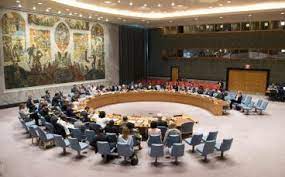
In this Coliseum, the General Assembly serves as the unruly crowd seeking the torture of the Jewish State, while the Security Council acts as caesar empowered with the pen to draft international law. Will the United States protect Israel in such forum on the heels of Trump’s visit to the Gulf? Will Trump seek to trade an unwinding of U.N. Security Council Resolution 2334 to get Israel to agree to short-term and longer term movements towards a permanent divorce between local Jews and Arabs?

Israel was blind to the October 7 attack. Does it see what the world sees in Gaza now and the positions being orchestrated for the June U.N. conference? Will the modern blind Samson bring down the house if it only hears calls for its demise and cannot see a path to live in peace?

Related articles:

The Distant Fantasy Of Two States Living Side By Side In Today’s Reality (August 2024)

The Three “Two-State Solution”s (December 2023)

The Asynchronous Audience At Jihadists’ Auto-da-Fe (November 2023)

Palestinians Utterly Fail Two Tests: Oslo Accords And Gaza Disengagement (August 2023)

Nine American Socialists And The UN Mock Israel’s Independence Day

On Friday, May 14, 1948, Israel declared its independence—one day before the British ended their Palestine Mandate and left the region. The timing wasn’t accidental. Israel’s founding leaders wanted the moment to be marked with reverence, not paperwork, so the declaration was made in advance of the Jewish Sabbath, allowing the entire Jewish people to enter its rebirth with dignity and joy.

The joy wasn’t shared. Within hours, neighboring Arab armies invaded the nascent state, launching a war to crush Jews in the shadow of the European Holocaust. That contempt hasn’t faded. It echoes today in the halls of foreign governments, NGOs, and the mouths of extremist politicians thousands of miles from the region.

To “commemorate” Israel’s 77th birthday, the United Nations hosted a session dedicated not to peace or coexistence—but to “the Inalienable Rights of the Palestinian People.” One speaker after another vilified Israel, slandering its conduct in defending itself in a war it never wanted. Accusations of “racism,” “genocide” and “ethnic cleansing” flowed freely—from China, South Africa, Guyana, and others eager to hijack human rights rhetoric for anti-Israel theater.

Not to be outdone, U.S. Congresswoman Rashida Tlaib (D-MI) introduced a resolution to formally mark Israel’s independence as Nakba Day—”the catastrophe.” The language mirrored the UN’s smear campaign, ignoring context, facts, and Israel’s right to exist as a sovereign nation. The resolution outrageously called on Israel to accept seven million Arab descendants of refugees and internally displaced people—almost all of whom have never set foot in Israel—negating a fundamental right of statehood by erasing Israel’s right to control its own borders. It called for the United States to withhold all diplomatic and military support from Israel as it defends itself in the midst of a multi-front war, to facilitate a genocide of Jews.

As Israel marked its 75th year in 2023, Jewish civilians were massacred by genocidal jihadi Arab terror groups on the Sabbath and Simchat Torah, a holiday celebrating the Jewish Bible. Rockets, kidnappings, and slaughter were launched from Gaza, with terrorists using Palestinians as human shields and Jewish hostages as bargaining chips—while cheering voices thousands of miles away offered rhetorical cover.

Today’s political war against Israel is led by the unholy alliance of far-left ideologues and Islamist extremists. They’ve inherited the mantle of the Arab armies defeated in 1948—and continue their campaign, not for coexistence, but for the erasure of the Jewish homeland. This is a Global Intifada dressed in human rights language but aimed at ethnic cleansing. In 1948, the horde successfully removed all Jews from eastern Jerusalem, the “West Bank” and Gaza. They strive to finish the job.

For them, Jewish sovereignty in the ancestral Jewish homeland remains a “catastrophe,” and Israel’s Independence Day is a day for revolutionaries to perpetuate the war. Not just for the 30 countries which continue to refuse to recognize Israel—but for shrill voices in the U.S. Congress who speak as if the past 77 years never happened.

After Arab armies failed to destroy Israel in 1967, the Arab League produced its “Three No’s“: no peace with Israel; no negotiations with Israel; and no recognition of Israel. It has an underlying three principles which continue to drive Jew haters: Jews have too much; Jews enjoying fundamental human rights is a provocation; and Jewish joy is triggering.

The trifecta of Israel’s Independence Day is too rich for global antisemites to ignore.

Related articles:

The Toxicity of The Latest “Nakba” Resolution (May 2023)

The Disgraceful Promotion of Refugee-Washing ‘Nakba’ In The U.S. Congress (May 2022)

Does the UN Only Grant Inalienable Rights to Palestinians? (May 2021)

Time to Dissolve Key Principles of the “Inalienable Rights of Palestinians” (December 2017)

The Original Nakba: The Division of “TransJordan” (August 2017)

Killing 26 Hindus in Kashmir Is Much Worse Than Butchering 1,200 Jews In Israel. For The UN.

A terrible attack unfolded in the disputed Kashmir region on April 22, 2025, in which 26 Hindu tourists were killed by radical Muslims. The region is disputed between Hindu-majority India and Muslim-majority Pakistan, where religious tensions and nationalist ones are intertwined.

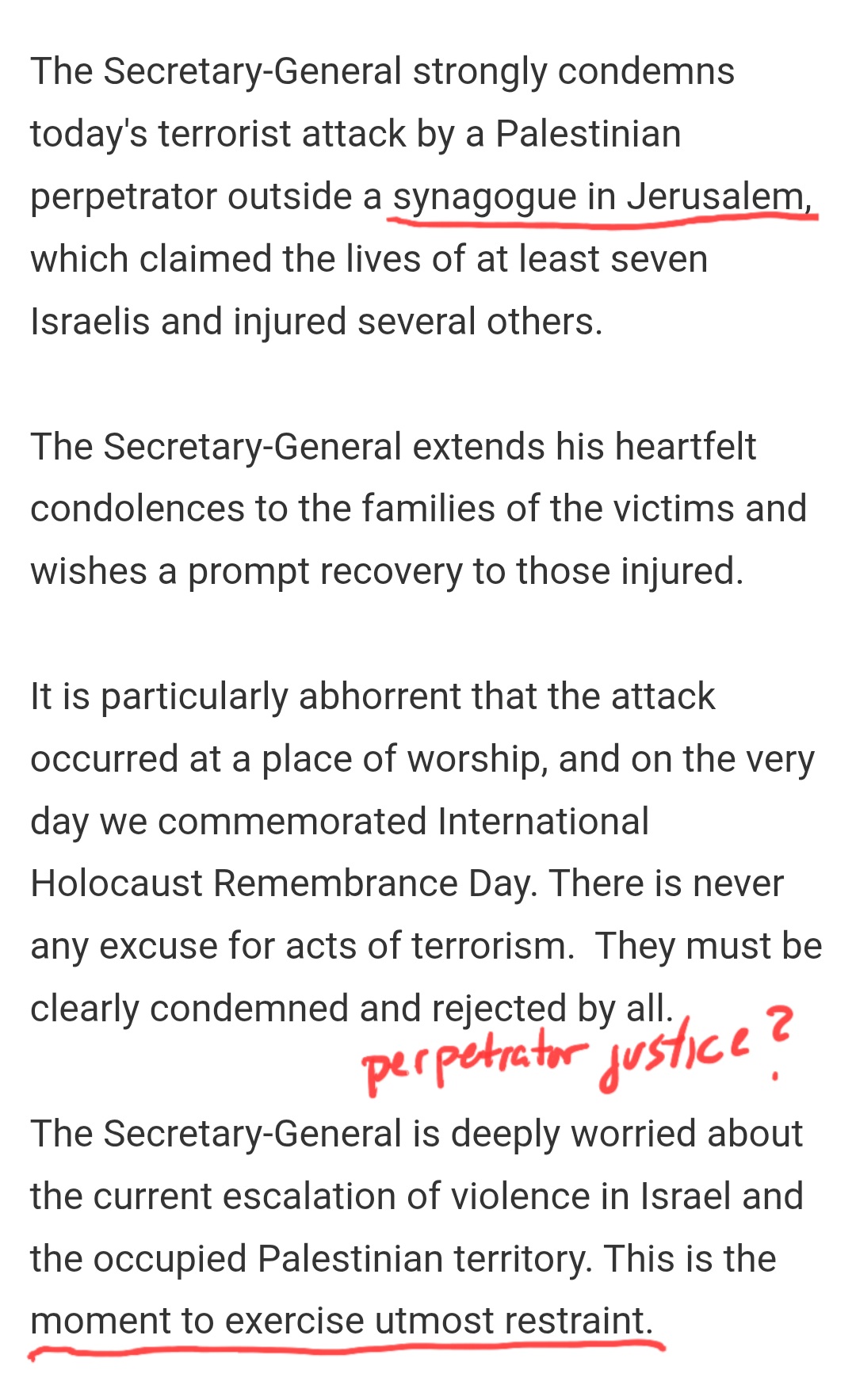
The United Nations Security Council issued its typical condemnation about the attack, even for the highly contested Kashmir region. It called the attack “terrorism” and for the perpetrators and their supporters to “be held accountable and brought to justice.” It urged all countries to “combat [the scourge] by all means” while also expressing condolences to the “Governments of India and Nepal” who suffered in the attack.

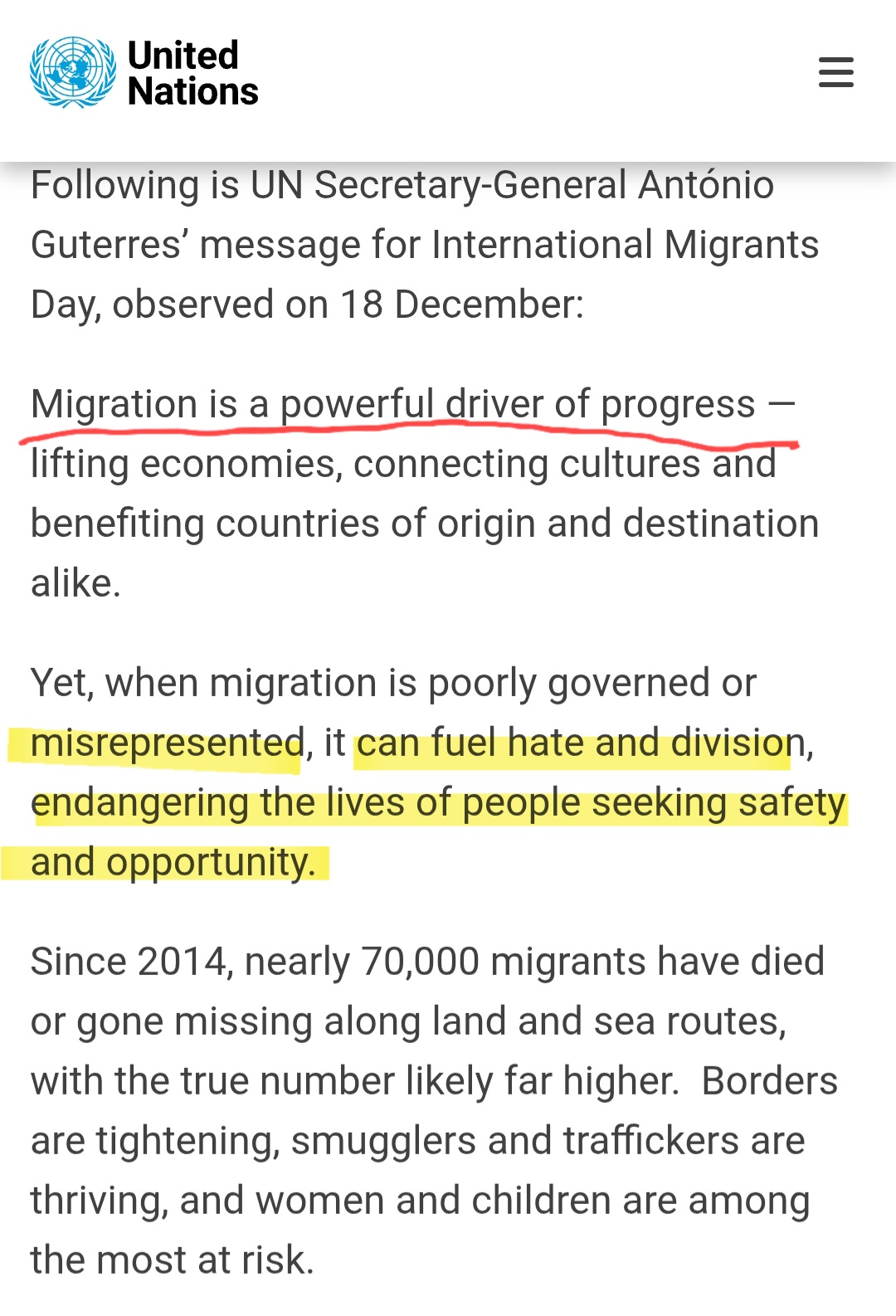
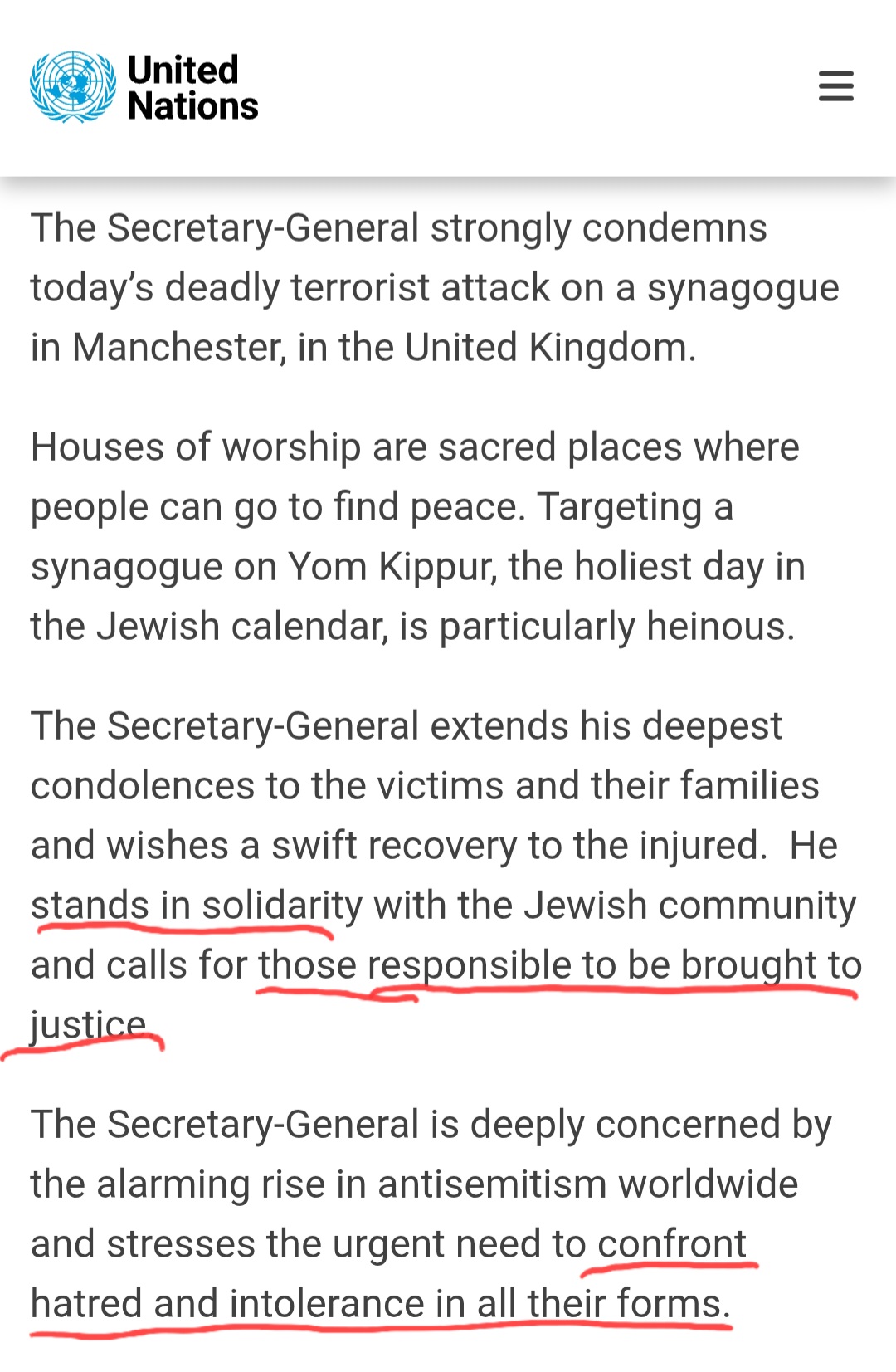
None of those sentiments were shared by UN Secretary General Antonio Guterres on October 7, 2023 when 1,200 people in Israel were killed, 251 abducted and hundreds injured by radical Islamists from Gaza. Guterres didn’t label the attack “terrorism” and call for perpetrators to be held accountable. He didn’t urge countries to join the fight. He didn’t express any condolences for the government of Israel.

UN Secretary General offers tepid response to the worst case of terrorism in decades

The United Nations adopted the Stateless Arabs from Palestine (SAPs) as forever wards and will protect them even when they commit mass atrocities.

It is time for countries of good conscience to withhold all funding and personnel from the global agency until a major revamping takes place. Key items include firing the Secretary General, dismantling UNRWA, the temporary agency uniquely for descendants of displaced SAPs, and removing permanent item 7 about Israel in the UN Human Rights Council.

It is time to financially bankrupt the morally bankrupt and biased United Nations.

Related articles:

The Deep Flaws In The UN’s “Peace” Coordinator (August 2024)

UN Secretary General Accuses Israel Of “Islamophobia War” (March 2024)

Sue The United Nations For Supporting Terrorism (February 2024)

Fire United Nations Secretary General Antonio Guterres (January 2024)

The UN Reminds The World That Palestinian Terrorists And Enablers Are To Be Excused (August 2023)

The Reasons Behind The Spike In Palestinian Terrorism (June 2023)

There’s Nothing Worse Than Terrorism in France (August 2019)

The Start Of The Overdue Cancelation Of UN Immunity

At its founding after World War II, the United Nations was declared a bold and righteous institution designed to bring about world peace. To accomplish its mission, it granted itself certain powers under the presumption that the agency’s role and workers were impartial and noble.

Alas, people are people, and the UN’s corruption and partiality grew over the years. It has made the UN not only a deformed shadow of its mission but a deeply dangerous and immoral tool cloaked in nobility.

When United Nations “peacekeepers” were deployed in Africa and Haiti, their role was to stop fighting between warring groups. However, during the deployment, many soldiers raped local women and some young boys. Investigations of the incidents confirmed multiple accounts of sexual assault, and noted that the UN’s shield of immunity protected the rapists, putting the local population at further risk.

Many UN “peacekeepers” have been accused of rape and shielded from prosecution by the UN’s cloak of immunity.

Over the past decades in Gaza, thousands of local Arabs join UNRWA, the UN’s “temporary” agency to house and educate the descendants of internally displaced Arabs who left homes a few miles away. It pays well and provides protection to carry out rapes and massacres like the one they perpetrated on October 7, 2023 in Israel.

Or so the UN terrorists hoped.

After many UNRWA workers were proved to have taken part in the barbaric massacre and provided material support to the U.S.-designated foreign terrorist group Hamas, victims of the atrocities and their families sued the UN. The UN claimed “immunity” from prosecution and the U.S.’s Biden administration agreed, stating “Because the U.N. has not waived immunity in this case, its subsidiary, UNRWA, retains full immunity, and the lawsuit against UNRWA should be dismissed due to lack of subject matter jurisdiction.”

In a pathetic attempt to mask its complicity, the UN fired some of the UNRWA workers, several of whom were already dead. It would not prosecute the fired living workers and left such matter of justice to local Gazans and Hamas to manage. UNRWA Commissioner-General Philippe Lazzarini said he fired the workers “in the interest of the Agency,” not as a matter of justice for thousands of butchered, raped and injured civilians in Israel.

It was a despicable display of inhumanity cloaked in virtue.

UNRWA’s Philippe Lazzarini

Sen. Ted Cruz (R-TX) had enough. On April 14, 2025, he introduced legislation called the LIABLE Act to strip immunity from toxic bodies like UNRWA. Upon introducing the legislation, Cruz said “The United Nations Relief and Works Agency officials have for decades knowingly provided support to Hamas terrorists, including salaries and materials. That support facilitated Hamas’s terrorist attack on October 7th, which was the worst one-day massacre of Jews since the Holocaust and included the murder and kidnapping of dozens of Americans. Those victims and their families deserve the ability to hold UNRWA accountable, and the LIABLE Act would give them that opportunity.

Sen. Ted Cruz (R-TX)

The United Nations has morphed into something deeply corrupt and unjust long shielded from prosecution, even for heinous actions. Perhaps the LIABLE ACT is the first domino to end the invincibility of barbarism under cover of white hats.

Related article:

Impunity Of Immunity Will Always Come For The Jews (November 2024)

The United Nations’ Adoption of Palestinians, Enables It to Only Find Fault With Israel (March 2016)

Malawi, Israel’s New Friend

Israel has long stood with few allies at the United Nations. As the Iranian Proxies War against Israel has continued and brought new anti-Israel resolutions, it is a strange and welcome relief to see a new name appear alongside Israel and the United States in votes to support Israel: the east African country of Malawi.

United Nations Votes

UN Watch has a database which tracks how countries vote on matters related to Israel. Whether at the General Assembly, Human Rights Council or World Health Organization, Malawi has started to break from the Global South and is abstaining from condemning Israel and sometimes providing outright support for the Jewish State.

Examples include a UNGA vote on the International Court of Justice condemning Israel in September 2024. With an overall vote tally of Yes (124), No (14), Abstain (43), and Absent (12), Malawi was one of the No votes. In a December 2024 vote condemning Israel for not signing onto the Middle East nuclear non-proliferation treaty, Malawi abstained, even as 153 countries voted yes. When the UN Human Rights Council voted in April 2024 to condemn Israeli “settlements,” Malawi was one of only three countries to vote against the measure.

It is therefore worth understanding the country more and appreciating why it is siding up to Israel while much of Africa has not.

Demographics

Malawi is a country of roughly 20 million people and very poor, with a GDP per capita of only $1,590 in 2020. The total fertility rate is relatively high compared to the world at 3.4, but half the country’s figure in 1982 (7.7). It has one of the highest population densities of Africa and among the youngest average populations. Sadly, the country has one of the highest incidents of AIDS and child orphans.

While agriculture represents 30 percent of Malawi’s GDP, and 90% of the population is employed in primary production agriculture, the country is vulnerable to extreme weather including cyclones and flooding. Only 15% of the country had electricity and the same percentage had access to a computer.

Around 77% of the country is Christian and slightly less than 14% are Muslim. This is a more Christian country than neighboring Mozambique and Tanzania, while less Christian than Zambia.

Agricultural Workers

Malawi’s strong understanding of agriculture and low GDP per capita make the country a good source of workers to replace Gazans who are no longer allowed into Israel because of the war it initiated. According to Statistica, there were 165,000 Stateless Arabs from Palestine (SAPs) working in Israel before October 7, 2023 in a variety of fields, of which 35,000 were illegal. Today, there are only 15,000 Arab workers from Gaza and E49AL/West Bank. That’s a lot of workers to replace.

In April 2024, Malawi opened an embassy in Tel Aviv. Minister of Foreign Affairs, Nancy Tembo said at that time that there was an effort to bring as many as 3,0000 agricultural workers to Israel.

When asked to discuss the war, Tembo said, “They [Israel] helped us get where we are now. We can’t, therefore, cut our ties with them today because there is a war in Gaza. Much as we regret the loss of lives, we reaffirm our firm solidarity to Israel.” The “help” provided by Israel included in areas of agriculture over the years.

Israeli Foreign Minister Israel Katz and Malawi Minister of Foreign Affairs, Nancy Tembo at the opening of an embassy in Tel Aviv on April 18, 2024 (photo: Yossi Zeliger/TPS )

The first batch of 3,000 agricultural workers is a good start but nowhere near enough, as the number of Arab workers has declined by 150,000, with tens of thousands attending to farms.

Today, the vast majority of foreign farm laborers in Israel are from Thailand, estimated to have been around 30,000 before October 7, 2023, reaching around 38,000 now. Israel has become a top four destination for Thai workers. Expectations are that a similar dynamic may play out for Malawi’s agricultural workers.

However, it is not that linear. According to recent reports, many Malawians over the past year used agricultural visas to enter Israel and then abandon the fields for employment in Israeli cities. For their part, Malawians protested that they were not paid according to the contracted rates. Israel is, therefore, also turning to India and Sri Lanka to supplement the depleted number of foreign workers.

Yet Malawi is still considered a strong source for workers, especially in farms. Earlier this week, Israeli Deputy Foreign Minister Sharren Haskel visited Malawi to ink a new bilateral labor agreement with Tembo. The agreement will facilitate Malawians placement and training in Israel with good quality and stable jobs, and likely cut the illegal migration of Malawians into South Africa looking for work.

In the 1970s, Israel’s agriculture accounted for over 10% of its economy but that has shrunk to around 2% as the country developed a thriving position in technology. Still, the country has a strong food business and has invested significantly in food technology, so is focused on protecting its farm production. Malawi workers may be a growing part of that labor force, with complementary votes for Israel at the United Nations.

Related articles:

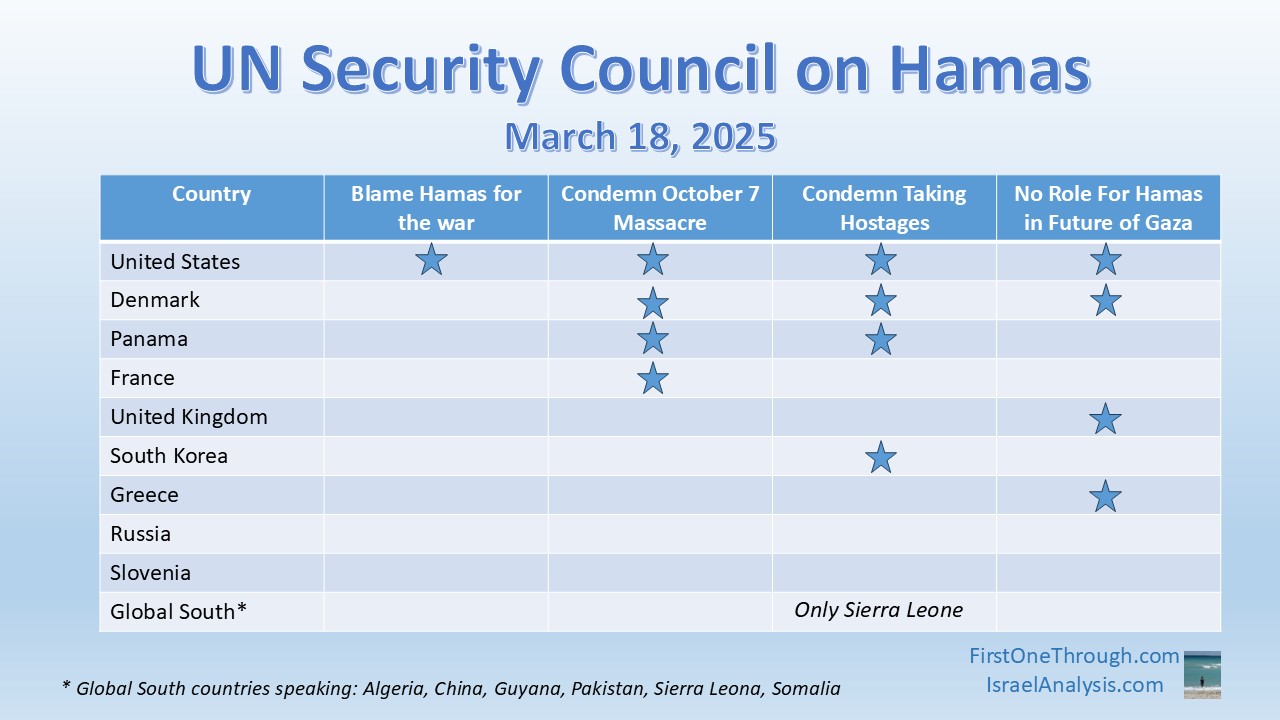
The Global South Is Coming For The UN Security Council (March 2025)

The Other October 7 Timeline

Israel is conducting a thorough review of what internal failures led to the massacre on October 7, 2023. The inquiries and analyses are designed to both assure accountability for mistakes, as well as to prevent future tragedies. The primary focus is on Israel’s military deployment and readiness, which will likely conclude with several changes inside the military.

Another analysis is needed externally – focused on Hamas and Gaza. The timeline below is meant as a framework to better consider how to address the conflict going forward.

Timeline of Key Moments in Gaza That Set October 7 Massacre

1948-9: There are two principle differences between the area east of the 1949 Armistice Lines (E49AL/ West Bank) and Gaza:

  • The majority of E49AL/WB Arabs are locals, whereas the majority of Gazans used to live in Israeli towns and villages;
  • E49AL/West Bank was annexed by Transjordan and all Arabs were given Jordanian citizenship; Gaza was only administered by Egypt

The Arabs in the much larger E49AL had citizenship and sovereignty. While most of the world considered Jordan’s annexation illegal, the local Arabs had pride in their Muslim Arab country. They also had control of Jerusalem/al Quds, the third holiest site for Muslims.

Not so for Gazans, who were in a much more confined space without citizenship, sovereignty or holy sites. Instead, they were wards of the United Nations which promised them that they would move into the Israeli towns in which they once lived.

1967: The 1967 war was a much bigger loss for West Bank Arabs than Gazans, as the Gazans already had less. Still, being under the rule of the Jewish State made the lack of sovereignty much more bitter.

2000: The Second Intifada started at the collapse of the Oslo Accords. While pundits point to a Temple Mount visit by Israeli Ariel Sharon as the trigger for the multi-year Arab riots, it was the failure of Palestinian leader Yasser Arafat to secure all of Arab demands in the negotiations, including moving millions of descendants of refugees and internally displaced people into Israel. This was especially true for Gazans.

2004: As Israel put down the Second Intifada, Israeli Prime Minister Ariel Sharon secured a letter from U.S. President George W Bush on April 14 that in exchange for pulling all Israelis out of Gaza, the United States would back Israel in assuring that all Stateless Arabs from Palestine (SAPs) would move to a new Palestinian State and not into Israel, and that new borders of Israel would account for new major Jewish population centers to be incorporated into Israel.

President George W Bush 2004 letter to Israeli Prime Minister Ariel Sharon

2005-7: Israel pulled out of Gaza in 2005 and the Palestinians elected Hamas to 58% of its parliament in 2006. In 2007, Hamas took over full control of Gaza, outsing its rival political group Fatah. In response to the antisemitic genocidal group sworn to its destruction taking over Gaza, Israel imposed a blockade of strip to halt the flow of arms. Gaza, now with self-determination, opted for radical Islam.

2008-14: Under the banner of jihad, independent Gaza did not focus on building up its economy and society but instead focused on destroying Israel. It launched wars against the Jewish State in 2008-9, 2012 and 2014, each put down by Israel. Meanwhile Hamas began to heavily invest in its underground infrastructure inside of Gaza, which in the past was principally used outside of Gaza for raids into Israel (like kidnapping Israeli soldier Gilad Shalit in 2006) and smuggling goods from Egypt.

2018-2022: Under the banner of the “Great March of Return,” Hamas led Gazan society to prepare to invade Israel. With United Nations support, thousands of students from UNRWA schools would march to the fence with Israel, familiarizing themselves with the terrain and normalizing their presence for Israelis watching their movement.

Teasing a Gazan crowd about the October 7 massacre to come, Hamas Political Bureau member Fathi Hammad, former Hamas minister of the interior, leader speaks in July 2018 that within four years – by 2022 – Hamas will be prepared to rid Palestine of Jews

2021: When Israeli courts approved the eviction of Arab squatters from Jewish owned homes in the Sheik Jarrah section of Jerusalem, Hamas launched missiles into Israel. The action caused Israel to put the evictions on hold, educating Hamas that terror pays.

2023: By this time, Hamas’ underground infrastructure was in place and it had stockpiled thousands of missiles. It had gotten Israel accustomed to “peaceful” protests along the Gaza border fence. Better, it watched Israeli society fight amongst itself about judicial reform, and for the first time ever, a majority of Democrats favored SAPs over Israelis. With Iran on the verge of nuclear weaponry breakout and Hezbollah in Lebanon well armed with roughly 150,000 missiles, Hamas was poised for an all-out war, well beyond the limited skirmishes of prior years.

Gazans are more religious than West Bank Arabs and many more consider themselves entitled to move into Israel as UNRWA wards (81% vs. 49%). Those supporting Hamas were much more likely to understand the “Great Marches of Return” were about external political matters than those from Fatah (59% to 24%, according to a September 2023 PCPSR poll).

While the devastation to Israel on October 7 happened over a single day, it took years of planning. Just as importantly, there was societal buy in for the attack.

Key Takeaways

Israel – and the world – should consider the events that led to Hamas’ genocidal invasion of Israel and formulate strategies beyond eliminating Hamas and its military infrastructure.

  • The UN and Saudi Arabia must adopt the contours of the 2004 Bush letter. Over 80% of Gazans believe that the world supports their moving into Israel, validating their storming the fence. There will not be peace until the UN and Saudi Arabia make clear that a two state solution means SAPs move into a new Palestinian State, not Israel.
  • Dismantle UNRWA in Gaza and the West Bank. The United Nations has encouraged generations of students that Israel is not really a sovereign entity and that the UN will dictate that Israel will be forced to accept millions of Arabs. With clarity that Arabs will be settled in Gaza and the West Bank, there is no reason for UNRWA to exist in those territories.
  • Decimation and Vilification of Hamas. As Gazans suffered more over the course of the war, a greater percentage became interested in forging peace with Israel. Additionally, people who supported Hamas were more likely to have not seen any of the footage of the October 7 massacre and did not believe that Hamas conducted rapes. Therefore, Hamas should not only be defeated militarily, but vilified clearly so it will be abandoned by Gazans and West Bank Arabs.
  • Reroute funding. Gaza’s principal backers have been from Qatar, Iran and Turkey. All of these countries have hostile or tense relationships with Israel and foment anti-Israel hatred. Future funding for Gaza should principally come from countries with good relationships with the Jewish State.
  • No immediate plans for a Palestinian State. Gazans had internalized that terror pays, as the Second Intifada made Israel abandon Gaza, and the 2021 war stopped the evictions in Sheik Jarrah. The devastation of Gaza must terminate that notion. The only immediate plans for Gaza should be how to rebuild. Engaging in a discussion now about statehood would once again make local Arabs believe that there is nothing beyond the pale in pursuit of self-determination.

The timeline of how Gazans got to October 7 should inform the world about future actions, just as Israel’s inquiries into its military failures will change its practices.

Related articles:

Which Gazans Deserve Assistance? (January 2025)

The Hamas – Gazans Partnership (May 2024)

Destroying Hamas Convinces Gazans To Support Two State Solution. Why Doesn’t The UN Get It? (March 2024)

After UNRWA (February 2024)

When Founding Fathers Are Psychopaths And Cowards (January 2024)

Quantifying the Values of Gazans (May 2019)

The United Nations Can Hear the Songs of Gazans, but Cannot See Their Rockets (December 2017)

On “Accountability and Justice:” Fifteen Democratic Senators And The UN Human Rights Council

Nothing sounds so lofty as the United Nations Human Rights Council (HRC), a global organization that should theoretically be at the vanguard of protecting civilians around the world. Alas, it made itself into a highly biased joke by having ten standing items during each session to cover broad matters, with an exception for a single region – Item 7 – being dedicated to the “Human rights situation in Palestine and other occupied Arab territories.”

On April 5, 2024, amid the Gazan-initiated war on Israel, the UNHRC went to town on Israel, passing the outrageously biased Resolution 55/28 with a vote of 28 in favor, 6 opposed, and 13 abstentions. The Global South was joined in voting for the resolution by Belgium, Finland and Luxembourg from Europe. The chickens which abstained were: Albania, Benin, Cameron, Costa Rica, Dominican Republic, France, Georgia, India, Japan, Lithuania, Montenegro, Netherlands, and Romania.

The eight pages of vitriol went well beyond actions during the war. It went beyond settlements. It went beyond withholding taxes.

It implicitly backed Gazans’ genocidal war against Israel stating that the council “reaffirm[s] the legitimacy of the struggle of peoples for independence, territorial integrity, national unity and liberation from colonial and foreign domination and foreign occupation in accordance with international law.” This statement labeled the State of Israel as a “colonial” power, stripping it of rights of defense and designating it a rightful target for attacks.

The antisemitic text even decried Jews living in their holiest and capital city of Jerusalem. It criticized Israel for archeological excavations near the Temple Mount.

Only in three spots (marked in light blue) in the long list condemning Israel was there any expression that Gazans were doing anything wrong. Each related to the immediate situation of war and none condemned the thousands of Gazans who initiated the war killing 1,200 people, raping women and abducting 251 people, nor the Gazan leaders who threatened to commit the barbaric attacks again and again.

In multiple locations (highlighted in orange), the UNHRC demanded that countries withhold supplying arms to Israel and not take any actions against groups around the world which support the Hamas-led war against Israel. It urged countries to not supply Israel with “dual use” items like jet fuel or facial recognition software which could have both civilian and military purposes.

The text is a sickening farce, especially considering the heading of the resolution which highlighted “the obligation to ensure accountability and justice.” The text of the resolution clearly showed the HRC’s belief that only Israel should be held accountable, while Gazans should be absolved of their actions under the UN’s ode for the Stateless Arabs of Palestine (SAPs)‘ “legitimacy of the struggle of peoples for independence.”

In April 2025, one year after this shameful resolution passed, Sen. Bernie Sanders (I-VT) tried to pass two resolutions in the U.S. Senate to block America’s sale of arms to Israel. His introduction to the vote lambasted AIPAC as a nefarious organization, and then called the Israeli government “racist and extremist” engaged in a “barbaric war against the Palestinian people,” even though the Israeli military constantly warns civilians to move out of battlefields and has the lowest civilian-to-combatant death toll of any modern urban war.

Fourteen senators joined Sanders in voting to block the arms sale to Israel in the middle of the multi-front war, including Sens. Richard Durbin (D-IL), Martin Heinrich (D-NM), Mazie Hirono (D-HI), Ben Ray Luján (D-NM), Tim Kaine (D-VA), Andy Kim (D-NJ), Ed Markey (D-MA), Jeff Merkley (D-OR), Chris Murphy (D-CT), Brian Schatz (D-HI), Tina Smith (D-MN), Chris Van Hollen (D-MD), Elizabeth Warren (D-MA), and Peter Welch (D-VT).

The fact that all fifteen senators voting against supplying Israel weapons during the war were Democrats should not be a surprise. According to a March 2025 Gallup poll, Republicans favor Israel over SAPs by 75% to 10%, while Democrats favor SAPs over Israelis by 59% to 21%. This is a continuation of a trend that started BEFORE Gazans’ October 7 atrocities, as highlighted in Gallups’ February 2023 poll.

It begs us to answer the framework of “the obligation to ensure accountability and justice” in general, even before applied to war. What is the baseline that the UNHRC and Democrats (HRC & D) see the Arab-Israeli conflict?

The HRC&D seemingly believe that Israel is a colonial power and SAPs have a legitimate fight for “liberation.” In such framework, even leaders of Hamas’ “political bureau” are regular “civilians entitled to protection,” (as stated by HRC). HRC&D prioritize imposing sanctions on Israeli Jewish “settlers” in the immediate aftermath of October 7 (as urged by Sen. Van Hollen in November 2023).

The HRC&D baseline for considering “accountability and justice” is that Arabs are justified in fighting Israel, while Israeli Jews are wrong for just living.

Anyone and everyone should be upset with the loss of so much civilian life in the war which started eighteen months ago. But the number of dead on each side obscures the fundamental issue in the conflict is the competing views that Israel is a legitimate sovereign state or a colonial outpost which should be combated by “any means necessary.”

Masked anti-Israel agitators at Columbia University call for the destruction of Israel

While the UN Human Rights Council and fifteen Democratic senators have not gone so far to endorse a genocide of Jews in Israel, they are actively seeking to shield Hamas and other Palestinian terrorist groups and their supporters which seek the destruction of Israel from proper measures of justice.

Related articles:

The Deep Flaws In The UN’s “Peace” Coordinator (August 2024)

The Only Way The Conflict Can End (November 2023)

Hamas Should Face ‘Maximum Justice’ (October 2023)

The Collective Punishment Of Terrorism (June 2023)

Terrifying Trifecta Of Anti-Zionism (April 2023)

The Noxious Anti-Semitism Of “European Settler Colonialism” (September 2022)

Gaza, The Terrorist Enclave (February 2021)

The United Nations’ Adoption of Palestinians, Enables It to Only Find Fault With Israel (March 2016)

“The Day After” The Hamas War, For Israel

Many countries have pressured Israel to develop a plan for “the day after” the war for Gazans. It is a curious question, as many of those same countries have condemned Israel for operating in Gaza and demand that it leave immediately. Furthermore, they all know that any plan developed by Israel will likely be viewed with hostility and rejected outright by Gazans.

A more relevant question for Israel is what the day after will look like for Israel.

There are many aspects to that question.

  • What is the plan for rebuilding Israeli towns near Gaza? Will there be new codes for security, safe rooms, layouts of the streets and homes, etc.?
  • How will Israel manage security with Gaza? Will it construct a different type of fence and monitoring system to better protect Israelis? Arm the military bases there differently?
  • Will it allow work permits for Gazans, and if so, how will it manage it?
  • How will it monitor materials flowing into Gaza as part of a rebuilding operation?
Gazans smash through security fence into Israel on October 7, 2023

As it relates to what the world most wants to hear, a restart of a political process with the Stateless Arabs from Palestine (SAPs) in Gaza and East of the 1949 Armistice Lines (E49AL), much depends on reforms made by the counterparty.

It will also depend on the United Nations.

First, the UN must clearly state that the future of their so-named “Palestinian Refugees” who never lived in Israel will not move into Israel. Their future is in a future state of Palestine, which the UN claims already exists and is “occupied.” As part of crystalizing that, it must announce plans to close all UNRWA operations in Gaza and the West Bank.

Second, to bring Israel to the table and engage with the UN as part of the process, the UN Security Council should revoke UNSC 2334, a blatantly antisemitic resolution. That resolution demands an ethnic cleansing of all Jews from E49AL, including Judaism’s holiest location, the Old City of Jerusalem.

Samantha Power, US ambassador to the UN (left) and US Secretary of State, John Kerry (right) enabled the antisemitic UNSC 2334 to pass in the waning days of the Obama administration

There is precedent for such action. In 1991, the UN rescinded UNGA 3379, which declared that Zionism was a form of racism, to get Israel to participate in the Madrid Conference, which ultimately yielded the Oslo Accords. Such action ended the First Intifada and could help end the Iranian Proxies Intifada of today.

The UN has long been the biggest instigator of the regional conflict by making promises to local Arabs on behalf of Israel, and then pressuring Israel to meet those demands. It is time for the UN to either shift course and be constructive with each party, or desist from the matter.

Israel is engaged in a war in Gaza it didn’t start or want, and will end immediately if Hamas surrenders and returns all of the hostages. Israel doesn’t need a plan for “the day after” in Gaza but should be consulted to ensure that a new regime will bring stability in the region and be a counterpart with whom to coordinate the transfer of goods and people.

Israel should be focused on its own “day after” plans. To the extent that the world wants to encourage a path to an eventual “peace process,” the UN needs to make significant reforms, including rescinding UNSC 2334.

Related articles:

The Three “Two-State Solution”s (December 2023)

UN “Peace Coordinator” Before And During Hamas Massacre (October 2023)

The UN Has No Interest in Mid-East Peace, Just a Palestinian State (October 2021)

The Only Precondition for MidEast Peace Talks (June 2016)

The Israeli Peace Process versus the Palestinian Divorce Proceedings (June 2015)