When the UN Handed the Gavel to Failure

A funny thing happened as Somalia assumed the rotating presidency of the United Nations Security Council in January 2026: Israel recognized a breakaway republic, Somaliland. The timing was rich.

Somalia’s presidency of the most powerful UN body exposed rank hypocrisy: formal recognition divorced from reality. Somalia is treated as a sovereign authority – one given prestige – while it has spent nearly twenty years losing a war to Al-Shabab, an Al-Qaeda–aligned movement that taxes civilians, runs courts, controls territory, and carries out mass-casualty attacks with impunity. International troops prop the state up while Somalia’s sovereignty is tenuous.

The failure is not abstract. Somalia’s collapse has repeatedly spilled beyond its borders—most visibly through maritime piracy in the Gulf of Aden, which for years threatened global shipping lanes, energy supply chains, and food security. Still, a state unable to police its own coastline now presides over the world’s security council. That alone tells you how hollow the United Nations has become.

Somaliland, by contrast, has done the unglamorous work of statehood since 1991: defined borders, elections, peaceful transfers of power, its own currency, police, and a monopoly on force. It meets the Montevideo criteria in substance, not just in name. Yet it remains unrecognized—because recognition at the UN is political, not factual.

Now layer “Palestine” onto this picture—and the farce deepens.

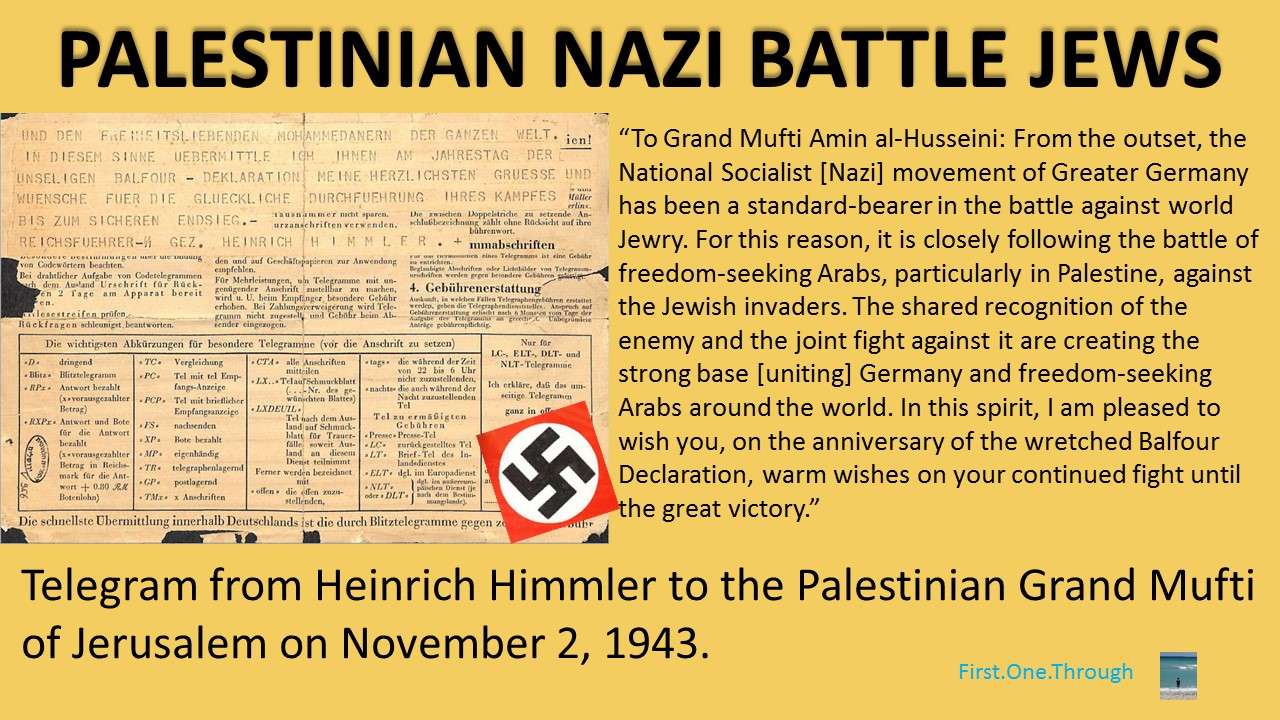
Somalia is a failed state struggling against jihadists. Gaza is a jihadist state in its own right. Since 2007, Hamas has governed Gaza fully and openly. Hamas controls schools, mosques, courts, welfare, media, police, and an army fused into one ideological machine. International aid does not shore up weakness; it subsidizes jihadist rule—tunnels instead of homes, rockets instead of infrastructure, civilians embedded into military doctrine.

Here is the moral inversion the UN refuses to confront:

  • Somalia fails to defeat Al-Shabab and is pitied. Gaza chooses Hamas and is excused.
  • Somaliland governs itself responsibly and is ignored. Israel defends itself against a jihadist regime and is condemned.

The recognition asymmetry makes this starker still. In September 2025, the United Kingdom, Canada, and Australia moved decisively toward recognizing “Palestine”—despite the absence of defined borders, unified governance, or a monopoly on violence, and despite Gaza being ruled by a designated terrorist organization. Meanwhile, Somaliland—stable, democratic, and self-policing for more than three decades—remains outside the diplomatic club. The message is unmistakable: symbolism is rewarded; governance is not.

When that contradiction became too visible to ignore, the talking points shift. Accusations – by Somalia, amplified by Qatar (Hamas’s principle sponsor) – are being made that Israel intends to “relocate Gazans to Somaliland.” The claim is complete fabrication, an attempt at damage control—a smear designed to redirect attention away from the exposed hypocrisy. By turning Somaliland into a prop in an imaginary Israeli scheme, critics attempt to avoid the harder question: why a functioning African democracy is denied recognition while jihadist-run entities are indulged.

That reality was never lost on U.S. President Donald Trump. His view of Somalia is blunt: a failed state exporting instability, relevant to the United States only as a counter-terrorism battlefield. His administration treats Somalia as territory unable to govern itself or suppress Al-Shabab. In that sense, Trump is more honest than the UN: he acknowledges failure, while the UN performs credibility rituals by handing Somalia the gavel of global security.

No one claims Al-Shabab represents Somali aspirations. Yet Hamas—whose antisemitic charter sanctifies genocide and whose strategy relies on civilian death—is routinely separated from the consequences of its rule and reframed as “resistance.” Somalia’s inability to secure a monopoly on violence is acknowledged as a defect. Gaza’s total jihadist capture is rebranded as national self-determination.

This is why Israel’s recognition of Somaliland at this time matters. It is not merely diplomatic; it is diagnostic. It forces a comparison the UN would rather avoid:

  • What actually constitutes a state?
  • Who governs responsibly?
  • Who controls violence—and who glorifies it?

The Security Council gavel in Somalia’s hand reveals the emptiness of UN moral authority. Gaza’s treatment—shielded from accountability despite being run by a designated terrorist organization—exposes complicity. Somaliland’s exclusion, despite three decades of stability, exposes cowardice.

Israel’s move did not break international norms. It exposed the rot.

Recognition, the episode made clear, is not about peace, governance, or security. It is about politics—and the willingness to look away when jihadist rule is useful to the narrative.

A Less Anti-Israel UN Security Council in 2026?

The United Nations rarely changes. But sometimes the composition changes just enough that the temperature drops—even if the structure stays broken.

That is what January 1, 2026 quietly delivered at the United Nations Security Council.

Five countries rotated off. Five rotated on. No grand reform. No moral awakening. Just personnel. And yet, for Israel, the difference matters.

The Council Israel Had to Endure

For much of 2024–2025, the Security Council was not merely critical of Israel. It was performative. Ideological. Repetitive. Certain members treated the Council less as a forum for conflict resolution and more as a theater for delegitimization.
None more so than Algeria.

Algeria did not argue policy. Israel, it insisted—again and again—was an illegitimate colonial outpost of Europe, no different from French rule in North Africa. History, geography, and Jewish continuity were irrelevant. This framing was injected into draft resolutions, press statements, and emergency sessions with missionary zeal. The goal was not peace. It was erasure.

Then there was Guyana, a country which bonded with the terrorist Palestinian Liberation Organization in the 1970s, which spoke with confidence and without knowledge—accusing Israel, rather than Arab states, of rejecting partition since 1948. One did not need to agree with Israel to recognize the historical absurdity. But the UN often rewards certainty over accuracy.

And Slovenia—a country with no meaningful role in the conflict—seemed to relish its moment on the moral stage. During Israel’s defensive war, it never called out Hamas. Slovenia repeatedly accused Israel of genocide. The charge was not legal analysis; it was rhetoric. And rhetoric, once introduced, metastasizes.

These countries rotated off quietly. No ceremony. No reckoning. Just gone.

The Council Israel Is Getting Instead

Their replacements are not “pro-Israel.” That bar is too high. But they are something rarer: less ideological.

Bahrain now occupies Algeria’s Arab Muslim chair. Bahrain is a signatory to the Abraham Accords and has diplomatic relations with Israel. It understands that shouting “colonialism” does not feed people, build ports, or stabilize regions. Bahrain may not defend Israel loudly—but it will not poison the well reflexively.

Colombia replaces Guyana in South America. Colombia is a serious country with a serious economy. It trades. It fights insurgencies. It understands security dilemmas. Domestic politics fluctuate, but Colombia does not need Israel as a symbolic enemy to feel virtuous on the world stage.

Latvia replaces Slovenia. Latvia knows what occupation actually looks like. It is cautious with language. It aligns more naturally with Western security frameworks and is unlikely to indulge in genocide rhetoric as a form of diplomatic performance art.

Liberia and Democratic Republic of the Congo round out the new entrants. Neither is a champion of Israel. But neither is an ideological crusader. Silence, at the UN, is often an upgrade.

This is not a transformed Security Council. The structural bias remains intact. Russia and China still exploit Israel as a pressure point. France still oscillates. The General Assembly still manufactures moral majorities untethered from reality.

But something important does change: the agenda-setters.

Algeria’s absence means fewer resolutions laced with colonial mythology. Slovenia’s departure means fewer genocide accusations casually flung like slogans. Guyana’s exit means fewer history-free lectures delivered with confidence.

In their place are countries – hopefully – that calculate before they accuse. That lowers the volume. It slows the cycle and gives diplomacy—especially American diplomacy—more room to maneuver.

Conclusion

Israel does not need the UN to love it. It needs the UN to stop lying about it.
The 2026 Security Council will not be fair. But it may be less dishonest. Less theatrical. Less obsessed with turning a regional war into a morality play with a prewritten villain.

Sometimes history doesn’t turn with a speech or a vote—but with who quietly leaves the room.

The Jewish Golden Years, 1991-2016

People tend to both forget and exaggerate. Today, many Americans speak as if antisemitism vanished for decades and only resurfaced after the October 7, 2023 massacre of Israelis by the Arabs of Gaza. The narrative goes: everything was fine, and then suddenly the world turned against Jews.

That is simply false.

Jews have always been the most targeted group for hate crimes in the United States on a per-capita basis. Jews were assaulted, synagogues were attacked, and Jewish centers were bombed long before social media existed to broadcast the hate. The 1970s alone saw a litany of terror: Jewish places targeted, flights to Israel hijacked, hostages separated by religion, and Jewish children born into a world where the UN itself declared Zionism—a core component of Jewish identity—to be racism. That infamous 1975 UN General Assembly Resolution 3379 did not merely insult Jews; it institutionalized antisemitism on a global stage.

But something remarkable happened in 1991. U.S. Ambassador Daniel Patrick Moynihan’s crusade finally came to fruition, and the UN revoked its poisonous declaration. For the first time in modern history, the Jewish story—people, land, and identity—was not officially stigmatized by the world’s central diplomatic body. Israel was no longer framed as a racist project; Zionism was permitted to exist as a normal national movement. With that reversal, Jews in the diaspora experienced something astonishing: a geopolitical tailwind.

Begin Center hosts event in Jerusalem about 50th anniversary of UNGA Resolution 3379, in December 2025a condemnation of the United Nations

The Jewish Golden Years had begun.

From 1991 through 2016, Jewish life flourished across the West. Israel integrated into global markets, made peace with former enemies, and became a hub of innovation admired even by countries without diplomatic ties. Antisemitic incidents did not disappear, but they lost their ideological legitimacy. The world’s leading institutions were no longer branding Jewish self-determination as a crime. Jews could breathe—never fully secure, but broadly accepted.

That period ended with a vote.

In December 2016, the Obama administration allowed UN Security Council Resolution 2334 to pass—a measure far more extreme than the 1975 resolution it resembled. The 1975 General Assembly resolution slandered Zionism; UNSC 2334 criminalized Jewish presence. It declared that Jews living anywhere east of the 1949 Armistice Lines—including the Jewish Quarter of Jerusalem’s Old City, the holiest ground in Judaism—are in violation of international law. Jewish prayer at the Western Wall was, according to the world’s most powerful diplomatic forum, an offense.

Hasidic Jews at the Kotel in Jerusalem’s Old City, learning, praying, and inserting wishes into cracks in the wall (photo: First One Through)

It was not merely a political resolution. It was the legalization of antisemitism.

Once the UN stamped Jewish presence in Judaism’s holiest places as illicit, the global tide shifted quickly. The Jewish Golden Years began to collapse.

By 2018, Jews were being murdered in Pittsburgh and Poway. On college campuses, BDS campaigns metastasized into doctrinal dogma. In public schools, students were taught that Jews are not indigenous to the Land of Israel but “white Europeans” with no ancestral claim—a complete inversion of historical fact. Jews were physically beaten in the streets of New York and Los Angeles during the May 2021 Gaza conflict, years before the post–October 7 mobs marched with chants to “globalize the intifada.”

By the time American cities filled with crowds celebrating Hamas’s massacre, the unraveling was already underway.

The Golden Years—the 25 years of relative acceptance—were gone.

For generations, Jews believed that Israel’s existence itself guaranteed Jewish safety. The 1970s proved that was untrue. The present moment proves it again. A Jewish state cannot protect its people if the world delegitimizes it, demonizes it, or criminalizes Jewish presence in Judaism’s holiest places.

The real guarantor of Jewish safety is not Israel’s strength, but the world’s willingness to accept the basic history and human rights of Jews. That legitimacy existed only in a narrow window: from the UN’s repudiation of its Zionism-is-racism libel in 1991 to Obama’s decision to let UNSC Resolution 2334 pass in final days of 2016.

Those twenty-five years were an intermission in a much longer historical pattern. A rare pause in which Jews were not told by the world that their existence—national, historical, spiritual—was a crime.

Since 2016, the message has returned with force: Jews may live, but not there. Jews may pray, but not here. Jews may exist, but only on someone else’s terms.

The Golden Years did not end because Israel faltered, but because the world revoked its permission. Without it, the old hatreds rushed back as if they had never left.

Jews are not witnessing a sudden outbreak of antisemitism. They are living through the collapse of the only era in modern history when the world briefly pretended to accept the Jewish story.

The UN Celebrates Migrants Except Jewish Ones

Every December, the United Nations devotes a day to praising migrants.
It insists no human is illegal, that borders shouldn’t limit dignity, that newcomers must be protected regardless of how they arrived. It speaks in sweeping universalism: every migrant deserves acceptance, integration, and respect.

Every migrant — except the Jewish ones.

Because when a Jew moves to Jerusalem’s eastern neighborhoods or the hills of Judea, the UN suddenly abandons its sermon. The same institution that blesses migration everywhere else snaps into punitive mode: label, restrict, sanction, boycott.

The world’s great defender of human mobility becomes the world’s loudest opponent of Jewish mobility.

Migrants crossing seas and borders are embraced. Their stories honored. Their identities protected. But Jewish migrants returning to the land that shaped their peoplehood are told they are criminals. The UN proclaims them a threat, inventing a special category — “illegal settlers” — that exists for no other people on earth.

This is not inconsistency. It is intentional. A universal rule with a single carve-out: Jews.

United Nations says that migrants – even illegal one’s – deserve respect and safety

The UN Doesn’t Just Oppose Policy — It Delegitimizes Jewish Presence Itself

Despite the UN protesting the importance of protecting migrants, it passes resolutions specifically delegitimizing Jewish ones. It routinely asserts that Jews must not live in the very heartland of Jewish history. It passes resolutions declaring Jewish homes illegitimate, Jewish neighborhoods unacceptable, Jewish movement intolerable.

Every other people is encouraged to preserve identity and build community. Only Jews are told their presence in their ancestral homeland is an international crime. That their businesses should be labeled in specific lists, targeted for boycott and sanction.

This Isn’t Hypocrisy. It’s Anti-Jewish Discrimination.


Hypocrisy would imply the UN is failing its principles. But the UN applies its principles perfectly — just not to Jews.

It welcomes migrants when they are African, Asian, Latin American, European. It defends them when they are persecuted or undocumented.

But when they are Jewish, the vocabulary changes instantly and the moral umbrella snaps shut.

The world’s most ancient migrant people — the “wandering Jew” expelled, dispersed, and wandering for centuries — is the only group the UN insists may not migrate back home.

That is not flawed idealism. That is targeted exclusion.

Jews praying at the Western Wall, an act considered “illegal” by the United Nations, trespassing on lands it considers “occupied Palestine.” (photo: First One Through)


UNRWA Now is For ALL Arabs

The United Nations has now openly confirmed what critics long understood: UNRWA isn’t an agency for a specific class of 1948 refugees—it exists for ALL Palestinian Arabs.

In a recent statement, the UN described UNRWA as essential for “millions of Palestinians, including Palestine refugees,” collapsing even the agency’s own elastic definition. The distinction has vanished. The entire population is the constituency.

UN admits that UNRWA is “irreplaceable lifeline” for every single Palestinian Arab.

This is a fundamental admission.
UNRWA was created in 1949 as temporary relief for Arabs – and only Arabs – displaced in a particular conflict. Twisted at its start, it has evolved into a hereditary, permanent system—unlike any refugee regime in the world—preserving grievance rather than enabling the “two state solution” the same UN purports to advance. Now the UN goes further, implying UNRWA’s mandate covers every Palestinian Arab regardless of any manufactured refugee criteria.

That is not humanitarian work. It is political infrastructure.

By broadening its mission to one entire group, the UN reveals UNRWA’s true function: a nation-building institution for Palestinians, not a neutral welfare agency. The “refugee” label is just a cudgel to wage war against the Jewish State.

The UN’s own wording now confirms that UNRWA is not designed to end a refugee situation; it is designed to expand it—to serve all Palestinian Arabs whether they fit the already-distorted definition or not.

A system once justified as emergency relief is a highly partisan political project.
And the UN has finally said so out loud.

Guterres Sickening “Inspiration”

United Nations Secretary-General António Guterres crossed a moral line when he called Palestinian Arabs an “inspiration” and a model of “resilience” this week. Inspiring how? By the crowds who celebrated the October 7 massacre? By polls showing majorities still glorifying the murders of Israeli civilians? By a culture whose media, schools, and leaders reject coexistence and sanctify violence?

Statement by UNSG Guterres about Palestinian Arabs on November 18, 2025

Guterres didn’t qualify his praise. He erased the difference between the paltry few who seek peace and the dominant culture that cheers attacks on Jews. He took a society steeped in martyrdom worship and Jew-hatred — a culture that teaches children to dream of a land without Jews — and wrapped it in moral language.

That isn’t nuance. It’s whitewashing.

And the moral preening about UNRWA, the “irreplaceable lifeline for millions of Palestinians, including Palestine refugees“, which by his own admission is not just about an agency for descendants of displaced people from 75 years ago, but for ALL ARABS? That agency which was intimately engaged in fighting a war against Israel? He insists that the international “stand firmly” with the agency which fosters the violence and perpetual state of war?

Guterres has dignified the ideology that drives repeated attacks on Israeli families. He has signaled to the world that Jewish suffering is incidental, and Palestinian rejectionism is to be emulated.

If the Secretary-General looks at a society that celebrates slaughter and sees “a testament to the human spirit”, what won’t he excuse next?

It’s time for moral clarity. If Hamas supporters chant, “There is only one solution! Intifada Revolution!’— then outside the UN, people should gather in front of the campus with the truth:

“There is only one response — eradication of Hamas!”

Peace will never come from praising a culture of violence. Only from defeating it.

Inclusive, Except For Infidels

Antonio Guterres, the United Nations’ Secretary-General, flew to Saudi Arabia last week to praise tourism as a “force for peace” and “inclusive development.”  He told the UN Tourism Assembly that travel “brings humanity closer together.”  The speech glowed with globalist virtue.

Except for one problem: it was delivered in a country that bans people of certain religions from entering its holiest city. Non-Muslims can tour the malls of Riyadh, but not take a single step inside Mecca. “Inclusive,” Saudi style, comes with a checkpoint.

The hypocrisy is so thick you could pave a runway with it. The leader of the United Nations extolling openness from a podium in a state that literally posts “Muslims Only” signs on highways. Tourism for peace—so long as you’re the right faith.

Saudi Arabia’s Vision 2030 invites the world’s money while keeping its spiritual gates locked. And the UN, a tool of Islamic Supremacy, pretends not to notice. It’s hard to bring humanity closer together when half of humanity is forbidden to enter.

UN Secretary General Antonio Guterres extols Saudi Arabia as a force of inclusion and equality

UN Rot Festers In Noxious Framing of Social Justice

The latest United Nations conference on “social justice” met in Qatar – that same Qatar that supports the antisemitic genocidal terrorists of Hamas and instills their narrative into the United States and the world.

UN Deputy Secretary-General Amina Mohammed pretended to reach for the moral high ground, invoking the Copenhagen Declaration and the Doha Development Agenda as the guiding stars of global fairness. She spoke of social justice, inclusion, development, and the duty to “leave no one behind.”  And then, inevitably, she cited Gaza – and only Gaza – not as a lesson in hypocrisy, but as a tragedy of war that, in her telling, derailed those noble promises.

But the fact is that Gaza did not collapse because the UN’s social programs failed to reach it or from war. Gaza was the UN’s social program. For decades, the UN built and funded the schools, administered the food aid, managed the clinics, and drafted the talking points. Generations were raised under their flag of humanitarian idealism. Yet what was taught was not coexistence, tolerance, or equality. It was grievance, entitlement, and the dream of a land without Israel.

If Copenhagen promised inclusion, Gaza delivered indoctrination. If Doha promised shared prosperity, Gaza institutionalized dependency. The UN’s own agencies became the state’s scaffolding—without the accountability of a state or the moral compass of true social justice.  There was never any “leaving no one behind”; there was only teaching millions that history owed them everything and responsibility was optional.

The United Nations Deputy Secretary-General mourns Gaza as proof that war has undone the UN’s human-development vision. Alas, Gaza is proof that the vision itself was hollow, or at least deeply corrupted when it came to the Stateless Arabs from Palestine (SAPs). The declarations were printed on fine paper, but the values were never applied where it mattered most. No education for coexistence. No curriculum of compromise. No inclusion for those outside the narrative.

The Copenhagen and Doha declarations were supposed to represent the conscience of human values. In Gaza, they became the cover for a project that replaced human rights with perpetual resentment. That is not social justice. That is social decay, dressed up in UN language and called compassion.

Jews More Than Understand

Stateless Arabs from Palestine (SAPs) — in Gaza and the West Bank — often cry out that they cannot go wherever they wish in Israel. They protest that they cannot move to the towns where their grandparents once lived. They label Israel as racist for preventing them from settling there, even though their Muslim Arab cousins live peacefully in those very same towns.

Arab women sitting in the shade in Akko, Israel (photo: First One Through)

They point to United Nations resolutions declaring they have a “right of return.” They frame their displacement as an “ongoing Nakba,” a catastrophe that Israel continues to impose.

I hear their complaint. I hear their anger. I more than understand — I live it.

Because Jews have lived that same nightmare — and worse. The very same United Nations that claims SAPs have a “right of return” decreed that Jews should be banned from living in half of their homeland. It told us we could not live in our own capital, Jerusalem. It told us we could not pray on our own holy mountain. It called it a “status quo” and the world nodded in approval.

And the Stateless Arabs from Palestine have the gall to try to deny Jews that very same right — to live freely in their homeland — while complaining that Jews are denying them theirs. They scream of injustice while vilifying “Yahoods.” The hypocrisy is obscene.

The Palestinian Arabs know it, and rather than confront it through accommodation and compromise, they wage war like Highlander, shouting “there can be only one.” They elected Hamas. They supported the October 7 barbarism. They continue to support Hamas, all in the hope of taking over the entire land from a small country.

Israeli Arabs make up 21% of the Israeli population, while Jews make up 0% of Gaza’s population and about 18% of the land east of the 1949 Armistice Lines (E49AL). The world ignores the Israeli Arabs with full citizenship rights, and obsesses and smears the Jews in the “West Bank” as illegal “settlers.” It seeks to ethnically cleanse that region of Jews while simultaneously claiming Israel has no true sovereignty to determine who to allow into its country to push the Israeli Arab population to 50%. It’s absurd.

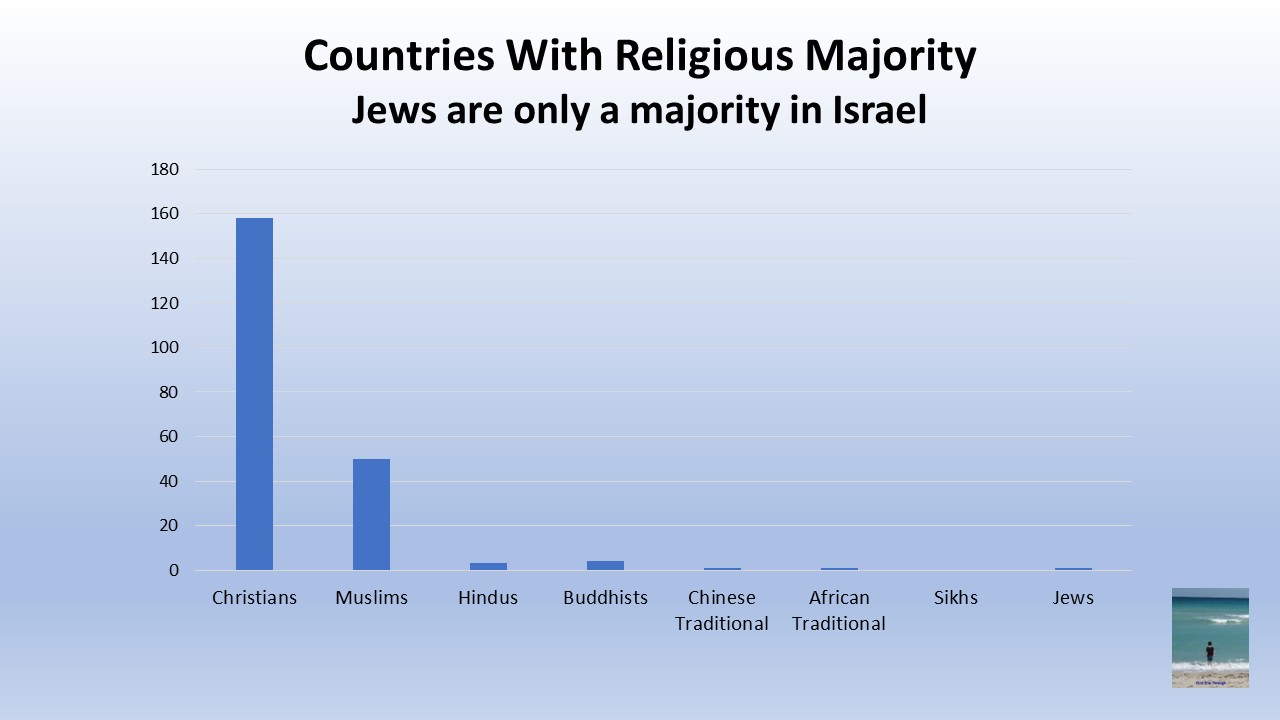
Muslim Arabs have global support backed by 2 billion Muslims in their complaint against Israel. The small number of Israeli Jews receive global contempt for seeking the same right to live and travel freely in their homeland.

Israeli Arab women in Jerusalem (photo: First One Through)

UNRWA: The Antithesis of Its Mission

The United Nations Relief and Works Agency, UNRWA, declares that it operates on four humanitarian principles — humanity, neutrality, impartiality, and independence.
It is none of those things.

UNRWA is unlike any other UN agency. It is not the UNHCR, which manages refugees from every nation and conflict on earth. UNRWA is a creature of exception — created for a particular people, in a particular region, in a particular war.

The agency claims it was established to address the plight of refugees from Palestine following the 1948–49 Arab-Israeli War. But was that truly its purpose?
When the fighting ended, thousands of Jews were also expelled from their homes east of the 1949 Armistice Lines (E49AL) — from Jerusalem’s Old City, from Hebron, and across Transjordan’s illegally occupied territory. They, too, were refugees from Palestine. Did UNRWA help any of them? No.

Jews expelled from the Old City of Jerusalem via the Zion Gate by the army of Transjordan

From its inception, UNRWA was built to serve Arabs alone. Even when those same Arabs became full Jordanian citizens, the agency continued to provide them with housing, food, education, and medical care — benefits that by any logical standard should have ended once citizenship was granted. Instead, UNRWA preserved refugeehood as an inheritance, not a temporary condition.

Over time, UNRWA’s mission has morphed from relief to perpetuation.
It has shown itself highly partisan, politically entangled, and morally compromised. Its schools and clinics may operate under the UN flag, but the agency’s allegiance is often indistinguishable from the politics of rejectionism that dominate its host territories.

The entrance to UNRWA’s Aida “Refugee” Camp, near Bethlehem, with a key atop a keyhole, to demonstrate that the pathway to moving to Israel is via UNRWA

During the 2023 Gaza war, UNRWA boasted that only it had the infrastructure to provide food, education, and healthcare to the Gazan population.
Yet when 250 Israelis were dragged into Gaza as hostages, where was this agency of “humanity”? Did it deliver a single bandage or calorie to the kidnapped Israelis held underground? Did it condemn their abduction, or even acknowledge their suffering?
It did not.
UNRWA’s humanity proved selective, its independence nonexistent.

Its operations in Gaza function only through integration with Hamas, the political-terrorist organization that rules the territory. Schools double as weapons depots; employees have been implicated in massacres; aid is distributed by political loyalty, not human need. Leaders at the OCHA, another UN “humanitarian” group, are not shy to say they view Hamas a legitimate political representatives of Palestinians, not as a terrorist group.

UNRWA now has additional offices outside of its field operations. It opened an office in Turkey to “expand its political and financial support base,” backed by the Organization of Islamic Cooperation (OIC), a political group. Very political. Neither independent nor neutral.

UNRWA is not a neutral humanitarian actor. It is a political instrument masquerading as one.
It fails every principle it proclaims.

It should be closed permanently.
Its essential services — food, healthcare, and education — can be absorbed either by host countries where these so-called “refugees” have lived for generations, or by the UNHCR, the global refugee agency that serves all peoples without prejudice.

So long as UNRWA exists, it will preserve resentment, dependency and hatred.
That agency founded in the shadow of war is the leading obstacle to peace.