The Little Drummer Boys of Terror

President Obama once derided those who warned of Iran’s nuclear ambitions as promoting a “drumbeat of war.” It was a curious charge, especially as his negotiated JCPOA deal paved Iran’s legal pathway to nuclear weapons within a decade—despite Tehran’s unabashed calls to utterly destroy an American ally, and referred to the United States as “Satan.”

The phrase “drumbeat of war” is worth pausing over, because its imagery is meant to point a damning finger at generals and war profiteers, when in fact it refers to a beating passion that comes from a variety of sources.

Music itself teaches us the power of the drumbeat. Maurice Ravel’s “Bolero” begins as a whisper—a single snare tapping a faint rhythm—but its relentless pattern swells, layer by layer, into a rapturous explosion. Nothing changes except the intensity. It is a master class in how a simple beat, repeated without interruption, can inflame emotion, tighten resolve, and propel an entire orchestra toward an inevitable climax. Passion grows not from complexity but from persistence.

Cinema took that lesson to the battlefield. Ennio Morricone’s “L’Arena,” born from spaghetti-western duels and later carried into modern war films, shows how percussion can elevate tension into confrontation. Its pounding drums accompanied by trumpets push characters toward conflict; the beat does not merely accompany battle—it summons it. Morricone understood that rhythm can be a weapon, a psychological drumroll that makes violence feel fated long before the first shot is fired.

In American history, drummers were not symbolic ornaments—they were battlefield communicators. The famous “Spirit of ’76” painting captures a young boy and an old man beating time through the fog of revolution. In both the Revolutionary War and the Civil War, the drummer corps relayed commands, kept formation, and lifted morale. Soldiers needed to be adults to enlist, but drummer boys could be barely in their teens. They were not the policymakers of war; they were the ones whose youthful energy pushed men forward into battle.

“The Spirit of ’76” (1875) by Archibald Willard (1836-1918)

It is an uncomfortable truth: the drumbeat of war is often carried not by governments or generals but by the young.

We like to imagine youth as the innocent bystanders of conflict—swept up, exploited, or victimized by forces beyond their control. That is often tragically correct. But not always. In the Middle East, teenage Palestinian Arabs have repeatedly been at the center of anti-Jewish violence. During the knife intifada of 2015–2016, most of the attackers were adolescents. Arabic media even gave them a romanticized nickname: Ashbāl al-Quds—the lion cubs of Jerusalem.

On October 12, 2015, two Palestinian boys, 15-year-old Hassan Khalid Manasra and his cousin 13-year-old Ahmad Manasra, stabbed two Israeli civilians in Jerusalem

They were not pawns in someone else’s narrative. They were active participants in it.

While they were stabbing Israelis in the streets, new legions of drummer boys was forming. The Lions’ Den was inaugurated in the West Bank to unleash dozens of attacks. The United Arab Emirates named a school for children for these young murderers. In the United States, a group calling itself the Palestinian Youth Movement openly glorifies the murderers of October 7 and calls for an intifada on American soil. They harass Jews at universities, shut down bridges, disrupt traffic, and chant for “uprisings”—all under the pretext of activism, and often shielded by tax-exempt organizations like WESPAC.

In the immediate aftermath of the October 7, 2023 massacre by Gazans of Israelis, Cornel West marches with PYM calling for an “Intifada revolution”. West has taught at Princeton, Harvard and Yale, indoctrinating the next generation of American leaders on intifada.

The drumbeat is steady. It is disciplined. And it is aimed squarely at Jews.

Where does this beat begin? It is not in the Israeli cabinet rooms the media delights in blaming. It begins at UNRWA schools, where generations of children are taught that Jews are colonial invaders with no history in their homeland. It echoes through activist teacher unions in the United States, where “decolonization” rhetoric is repackaged into lesson plans that erase Jewish indigeneity. It thunders at the United Nations, where Muslim-majority blocs and their allies advance resolutions asserting that Jews must be removed from Judea, Samaria, and even parts of Jerusalem “by any means necessary.” The young Palestinian Arab terrorist are then shielded from blame and prosecution by the poorly named “UN Coordinator for Middle East Peace.” Laughable if not such a tragedy.

The young listen. And they march.

At Christmastime, the world hears “The Little Drummer Boy”—a melody of humility. A child with nothing to give but a simple rhythm of devotion for a newborn Jewish baby in Bethlehem. A beat based on innocence and purity.

But the modern Middle East and its Western echo chambers have perverted that image.

Today’s little drummer boys are not offering gentle hymns. They are being raised, trained, and celebrated for a beat of hatred—an indoctrinated cadence that valorizes “martyrs,” delegitimizes Jews, romanticizes violence, and promises glory for those who shed blood.

The world should hear the drumbeat. And it should finally ask: Who handed these children the drums? Who taught them that murder is heroism, that Jews are prey, that violence is virtue?

These teenagers did not invent the rhythm—they are marching to a score composed by UN agencies, radicalized teachers, political opportunists, and ideological arsonists who hide behind the language of “justice” while grooming minors for war.

UN Watch’s Hillel Neuer presents new report, “Schools in the Grip of Terror: How UNRWA Allowed Hamas Chiefs to Control its Education System,” to the Italian Senate in September 2025

At Christmas, we think of a young drummer offering a humble gift to a Jewish child in Bethlehem. Alas, today too many young drummers are taught to offer not devotion, but destruction—and the world nods along as if the rhythm were unavoidable. It isn’t.

The beat continues only because we refuse to silence the conductors who train the next generation of drummers to hate.

Guterres Sickening “Inspiration”

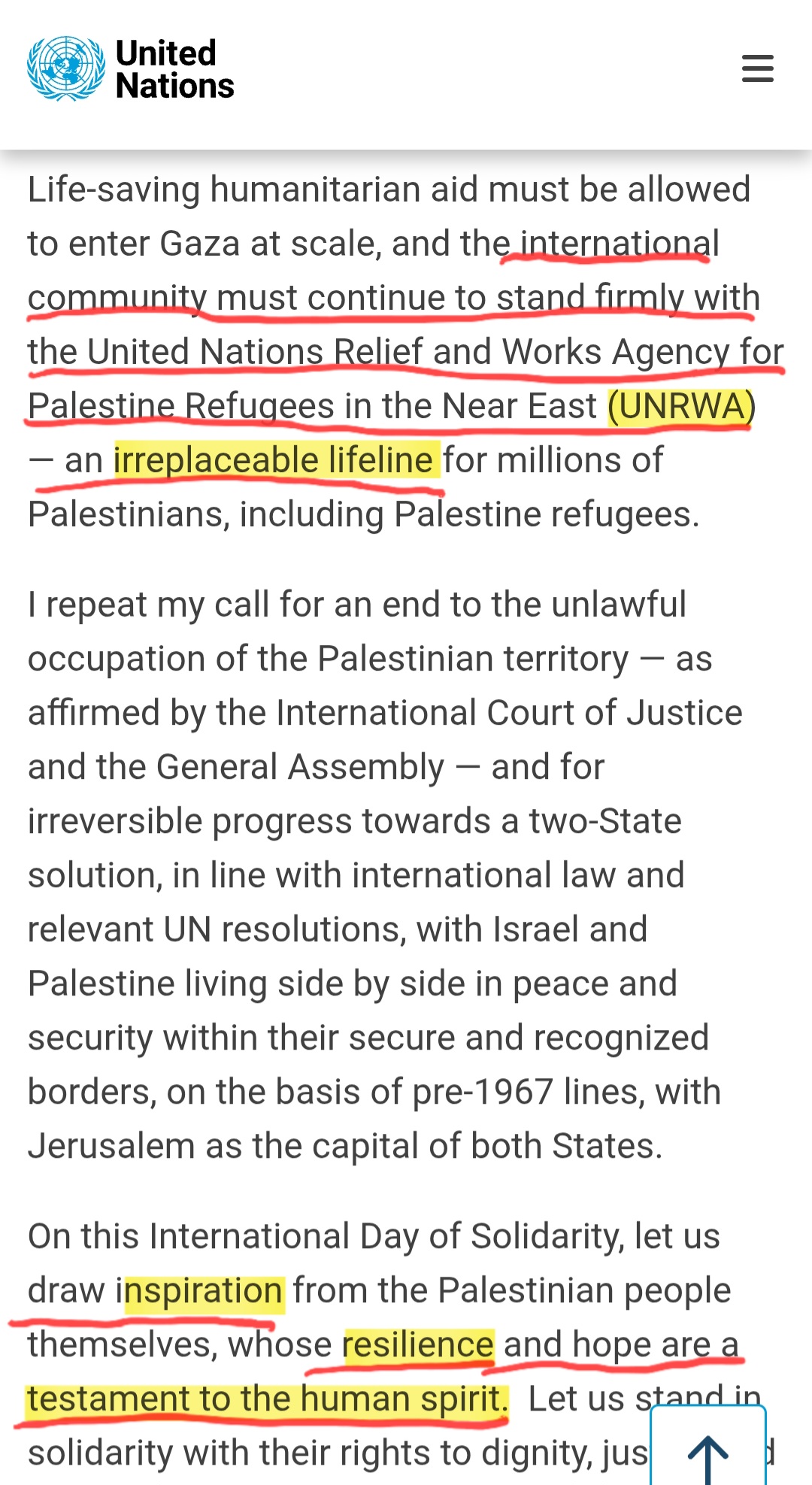
United Nations Secretary-General António Guterres crossed a moral line when he called Palestinian Arabs an “inspiration” and a model of “resilience” this week. Inspiring how? By the crowds who celebrated the October 7 massacre? By polls showing majorities still glorifying the murders of Israeli civilians? By a culture whose media, schools, and leaders reject coexistence and sanctify violence?

Statement by UNSG Guterres about Palestinian Arabs on November 18, 2025

Guterres didn’t qualify his praise. He erased the difference between the paltry few who seek peace and the dominant culture that cheers attacks on Jews. He took a society steeped in martyrdom worship and Jew-hatred — a culture that teaches children to dream of a land without Jews — and wrapped it in moral language.

That isn’t nuance. It’s whitewashing.

And the moral preening about UNRWA, the “irreplaceable lifeline for millions of Palestinians, including Palestine refugees“, which by his own admission is not just about an agency for descendants of displaced people from 75 years ago, but for ALL ARABS? That agency which was intimately engaged in fighting a war against Israel? He insists that the international “stand firmly” with the agency which fosters the violence and perpetual state of war?

Guterres has dignified the ideology that drives repeated attacks on Israeli families. He has signaled to the world that Jewish suffering is incidental, and Palestinian rejectionism is to be emulated.

If the Secretary-General looks at a society that celebrates slaughter and sees “a testament to the human spirit”, what won’t he excuse next?

It’s time for moral clarity. If Hamas supporters chant, “There is only one solution! Intifada Revolution!’— then outside the UN, people should gather in front of the campus with the truth:

“There is only one response — eradication of Hamas!”

Peace will never come from praising a culture of violence. Only from defeating it.

The Palestinian Authority Still Shields Extremism

To read the Western press, one might believe that the Stateless Arabs from Palestine (SAPs) in Gaza and the West Bank are reluctantly resigned to the idea that Hamas must go. Headlines routinely imply a growing consensus that Hamas is the past and some renewed Palestinian Authority is the future.

It could not be further from the truth.

The October 2025 PCPSR poll shows — unambiguously — that the Palestinian public has not turned away from Hamas. The majority would elect Hamas. The majority still supports the October 7 massacre. The majority wants Hamas to never disarm. This isn’t a fringe view or a warped reading of the data; it is the mainstream sentiment of Palestinian society two years after the massacre. Western analysts may avert their eyes, but the numbers do not.

And the Palestinian Authority knows this. That is why it continues to shield Hamas — not confront it.

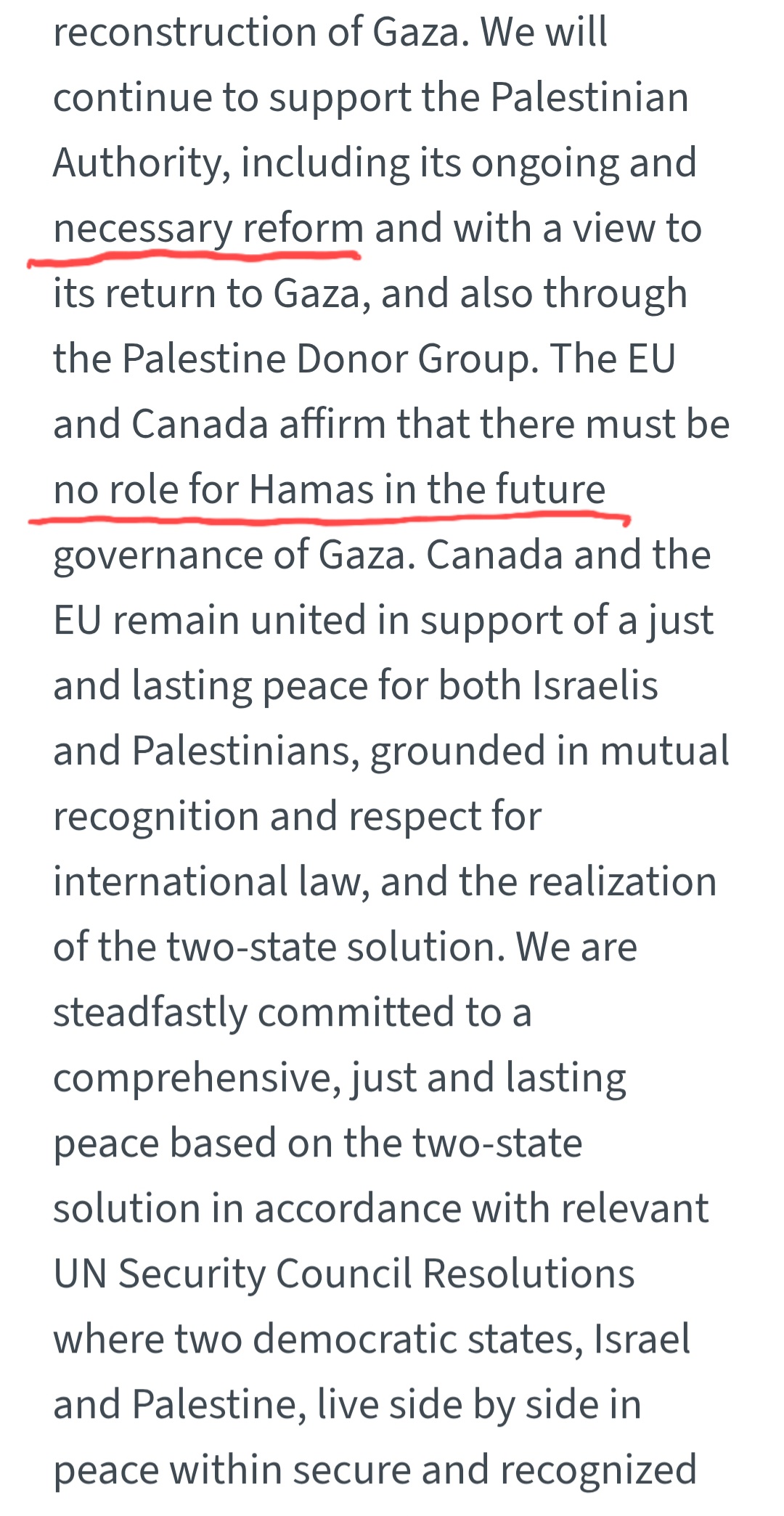
A perfect illustration can be found in WAFA, the PA’s official news agency. In reporting on a session held by Canada and the European Union calling for a renewed diplomatic push, WAFA framed the story as a call for a “two-state solution,” “Gaza reconstruction,” and vague Western support for Palestinian aspirations and condemnation of Israeli actions.

What it didn’t report is the crucial part: those same governments insisted that the Palestinian Authority must undergo significant “necessary reform” and that Hamas must have absolutely “no role” in the future of Gaza. This was not an afterthought in the meeting; it was a headline demand. Yet WAFA hid it from the Palestinian public.

Joint declaration from EU- Canada on November 12, 2025

Why? Because telling the truth would expose the central problem: Palestinian society is not being prepared for peace. It is being insulated from accountability.

A healthy political culture would confront the society’s own extremism. It would publish the poll numbers honestly and begin the painful process of restructuring education, media, and institutions. The PA instead chooses the opposite — suppressing outside criticism of Hamas and pretending that international actors want a Palestinian state under current conditions.

Deradicalization and re-education are not optional. They are essential.
And it is unmistakably clear that Palestinian society is incapable of doing so on its own.

For decades the PA has relied on a strategy of deflection — blaming Israel, minimizing internal dysfunction, and shielding extremist factions to avoid backlash from the street. That strategy has produced a generation that celebrates massacre, rejects coexistence, and sees disarmament as betrayal.

The Western world may cling to the comforting fiction that Hamas is isolated and universally rejected by Palestinians. The data say otherwise. The PA’s deliberate omissions say otherwise. The very architecture of Palestinian political life says otherwise.

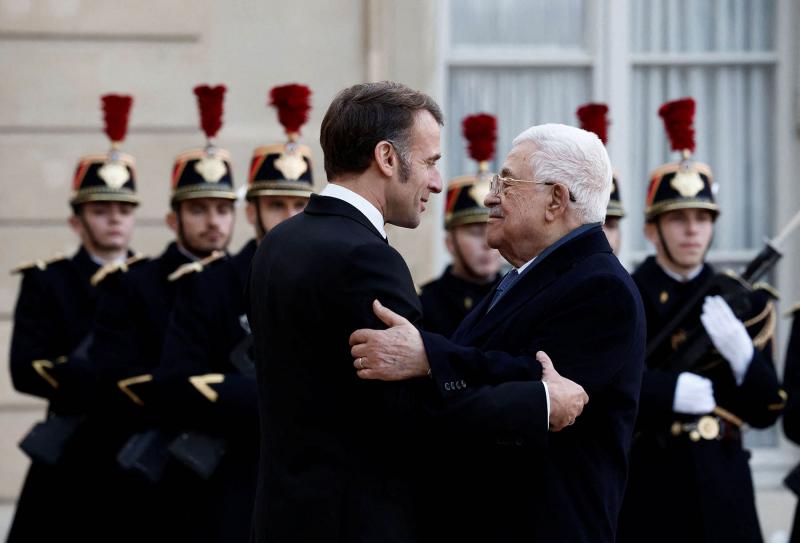
France may assuage the Muslim street when its Prime Minister has meetings and posts photos with PA President Mahmoud Abbas, but those actions make it complicit in promoting not only a fiction, but affirmatively dressing the wolf in sheep’s clothing.

French President Emmanuel Macron welcomes Palestinian President Mahmoud Abbas at the Elysée Palace in Paris, France November 11, 2025. Abbas told the west “We are committed to a culture of dialogue and peace, and we want a democratic, unarmed state committed to the rule of law, transparency, justice, pluralism and the rotation of power.” No such statement appeared about the meeting in Wafa.

Until the international community confronts this reality — and insists on genuine deradicalization rather than polite diplomatic euphemisms — there will be no meaningful change in Gaza, the West Bank, or the prospects for peace.

The Other Part of the Balfour Declaration Detested by Antisemites

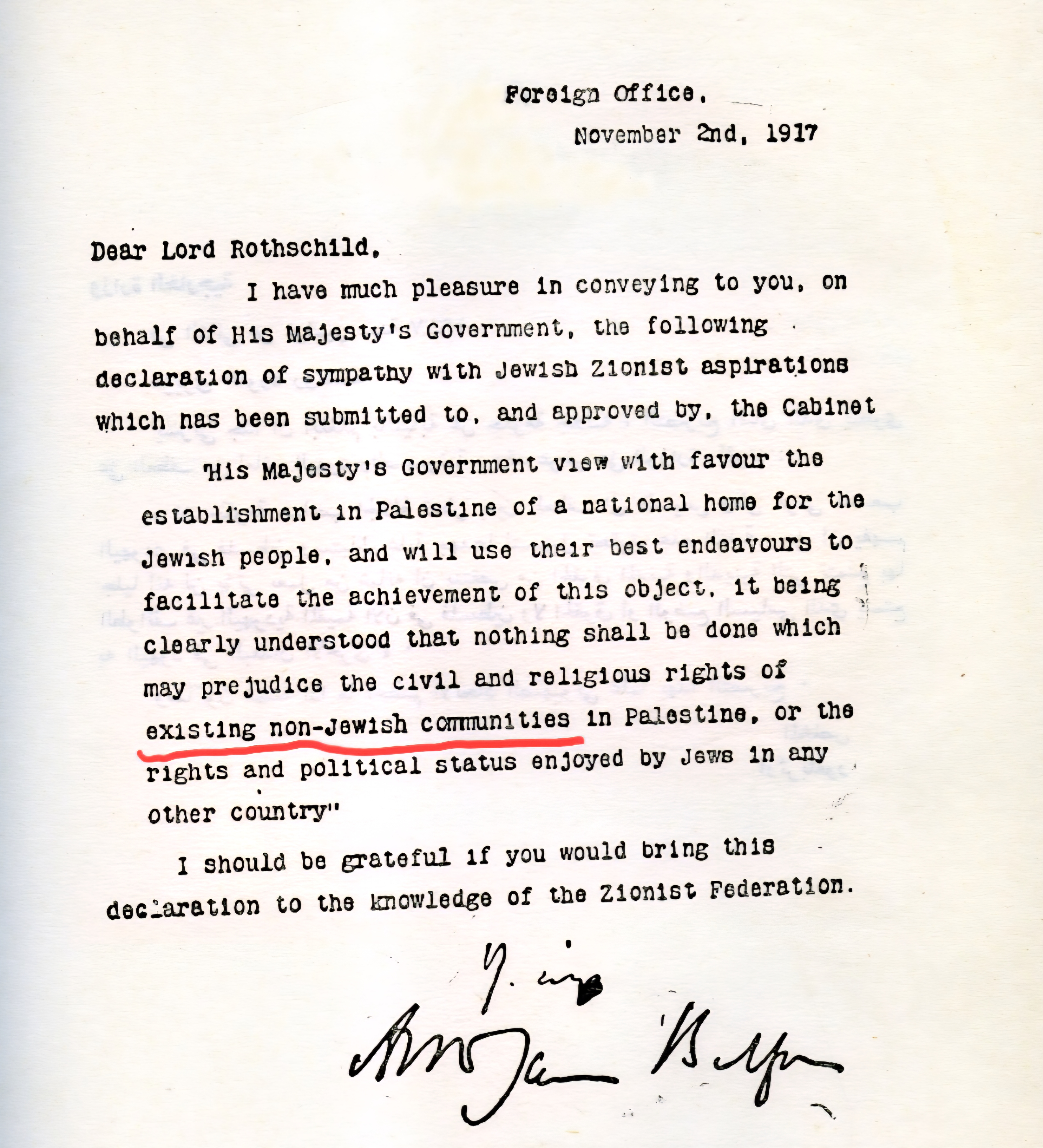
Much of the attention on the Balfour Declaration—issued on November 2, 1917—focuses on the United Kingdom’s pledge to “facilitate” “the establishment in Palestine of a national home for the Jewish people.” Israel-haters rage at this clause, claiming that Jews had no historical connection to their ancestral homeland and that Britain had no right to “hand over” immigration rights from local Arabs to Jews.

Balfour Declaration

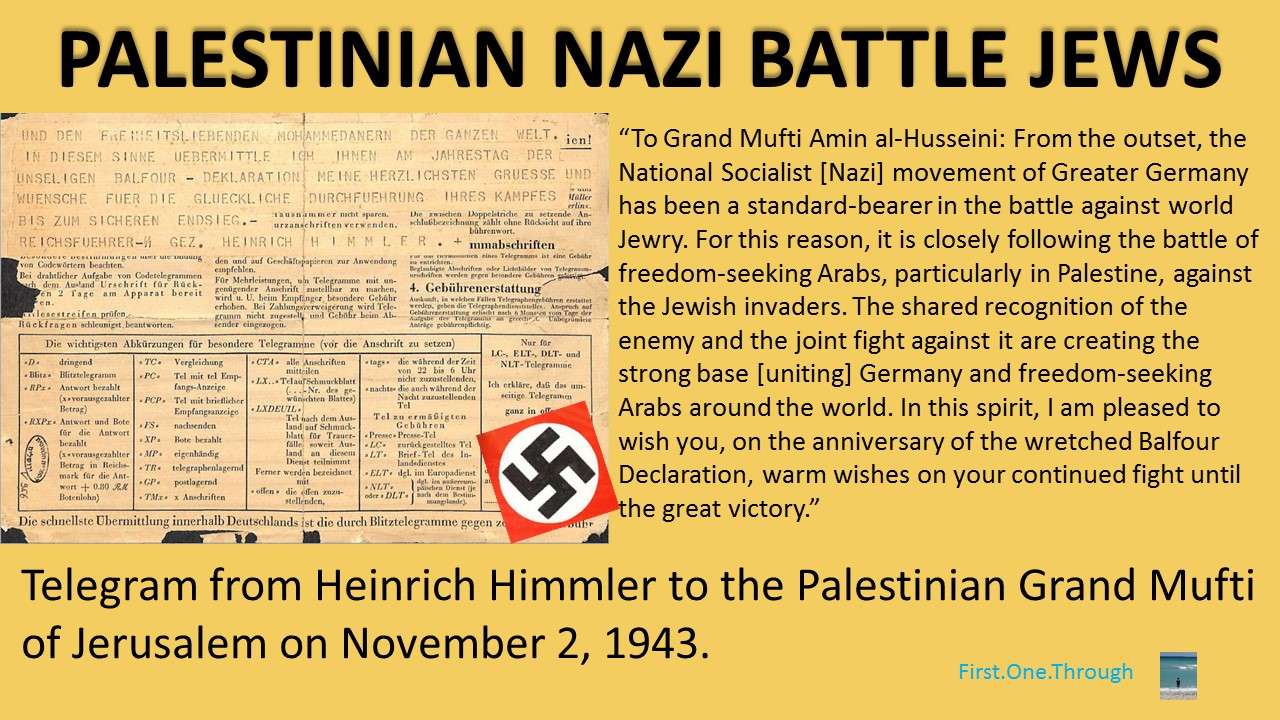
On the anniversary of the Declaration in 1943, Heinrich Himmler of Nazi Germany sent a telegram to the “Grand Mufti” of Jerusalem that Nazis and Arabs had the same enemies – Jewish invaders. In 2016, the President of the Palestinian Authority, Mahmoud Abbas demanded an apology and reparations from Britain for issuing the Balfour Declaration, having repeatedly failed to destroy the Jewish State.

Telegram from Heinrich Himmler to Amin al-Husseini on November 2, 1943

But there’s another part of that same document that antisemites also detest. The closing line reads:

“…nothing shall be done which may prejudice the civil and religious rights of existing non-Jewish communities in Palestine, or the rights and political status enjoyed by Jews in any other country.”

That final clause—protecting Jews’ rights around the world—is precisely what modern antisemitic movements are trying to undermine. Groups like Within Our Lifetime, CAIR, and the Democratic Socialists of America openly campaign to dismantle what they deride as “Jewish power” in America.

They smear Jews as self-serving “capitalists,” accuse them of exploiting “Black and Brown bodies” for profit (as Rep. Rashida Tlaib has said), and seek to push Jews to the margins of public life—all because Jews affirm that the land of Israel is their homeland.

A century after the Balfour Declaration, its promise remains under attack—not only in the Jewish homeland but wherever Jews dare to live proud and free.

UNRWA: The Antithesis of Its Mission

The United Nations Relief and Works Agency, UNRWA, declares that it operates on four humanitarian principles — humanity, neutrality, impartiality, and independence.
It is none of those things.

UNRWA is unlike any other UN agency. It is not the UNHCR, which manages refugees from every nation and conflict on earth. UNRWA is a creature of exception — created for a particular people, in a particular region, in a particular war.

The agency claims it was established to address the plight of refugees from Palestine following the 1948–49 Arab-Israeli War. But was that truly its purpose?
When the fighting ended, thousands of Jews were also expelled from their homes east of the 1949 Armistice Lines (E49AL) — from Jerusalem’s Old City, from Hebron, and across Transjordan’s illegally occupied territory. They, too, were refugees from Palestine. Did UNRWA help any of them? No.

Jews expelled from the Old City of Jerusalem via the Zion Gate by the army of Transjordan

From its inception, UNRWA was built to serve Arabs alone. Even when those same Arabs became full Jordanian citizens, the agency continued to provide them with housing, food, education, and medical care — benefits that by any logical standard should have ended once citizenship was granted. Instead, UNRWA preserved refugeehood as an inheritance, not a temporary condition.

Over time, UNRWA’s mission has morphed from relief to perpetuation.
It has shown itself highly partisan, politically entangled, and morally compromised. Its schools and clinics may operate under the UN flag, but the agency’s allegiance is often indistinguishable from the politics of rejectionism that dominate its host territories.

The entrance to UNRWA’s Aida “Refugee” Camp, near Bethlehem, with a key atop a keyhole, to demonstrate that the pathway to moving to Israel is via UNRWA

During the 2023 Gaza war, UNRWA boasted that only it had the infrastructure to provide food, education, and healthcare to the Gazan population.
Yet when 250 Israelis were dragged into Gaza as hostages, where was this agency of “humanity”? Did it deliver a single bandage or calorie to the kidnapped Israelis held underground? Did it condemn their abduction, or even acknowledge their suffering?
It did not.
UNRWA’s humanity proved selective, its independence nonexistent.

Its operations in Gaza function only through integration with Hamas, the political-terrorist organization that rules the territory. Schools double as weapons depots; employees have been implicated in massacres; aid is distributed by political loyalty, not human need. Leaders at the OCHA, another UN “humanitarian” group, are not shy to say they view Hamas a legitimate political representatives of Palestinians, not as a terrorist group.

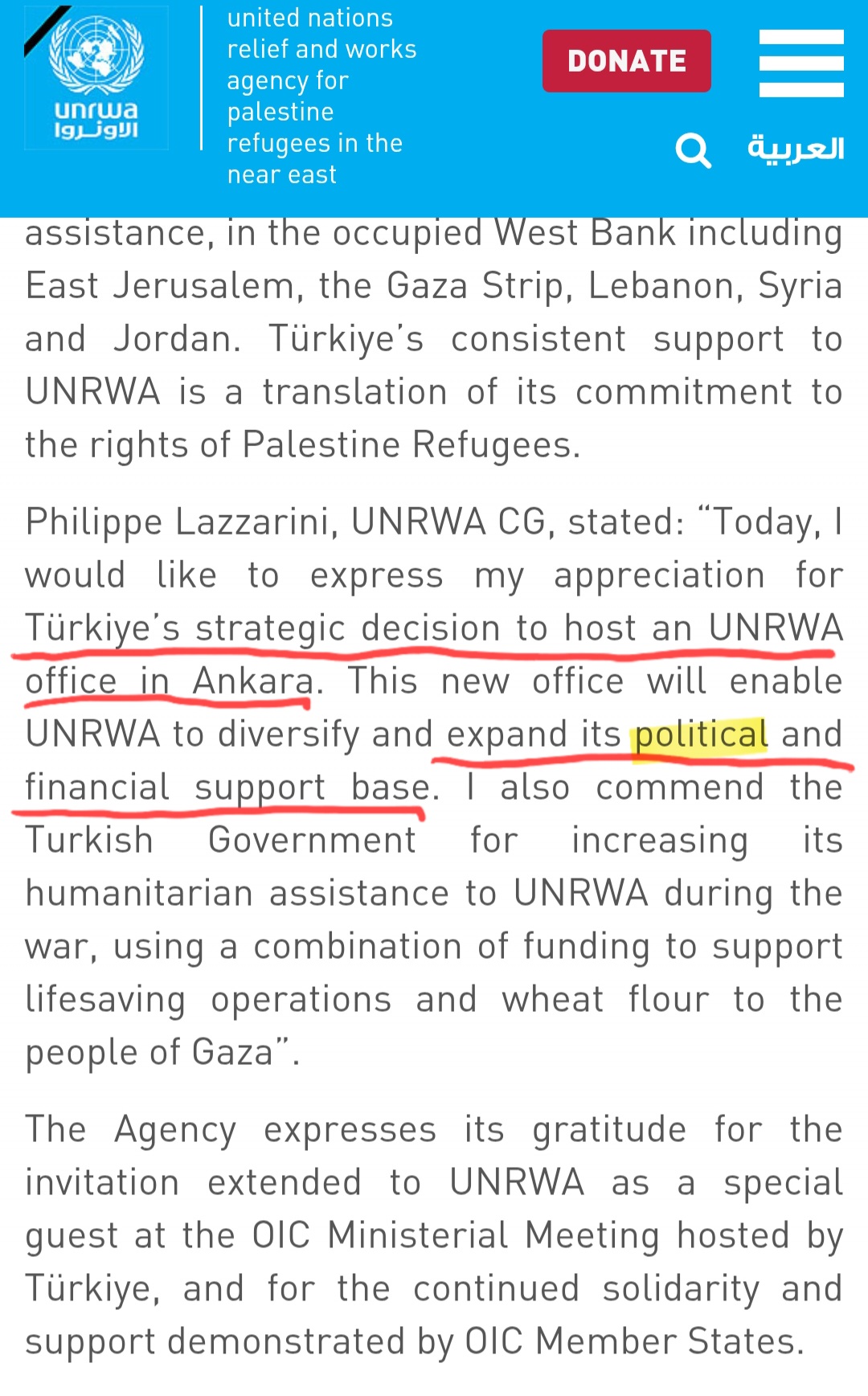
UNRWA now has additional offices outside of its field operations. It opened an office in Turkey to “expand its political and financial support base,” backed by the Organization of Islamic Cooperation (OIC), a political group. Very political. Neither independent nor neutral.

UNRWA is not a neutral humanitarian actor. It is a political instrument masquerading as one.
It fails every principle it proclaims.

It should be closed permanently.
Its essential services — food, healthcare, and education — can be absorbed either by host countries where these so-called “refugees” have lived for generations, or by the UNHCR, the global refugee agency that serves all peoples without prejudice.

So long as UNRWA exists, it will preserve resentment, dependency and hatred.
That agency founded in the shadow of war is the leading obstacle to peace.

The Next Part of the “20-Point Plan”: Drop Charges At The ICJ

The headline deal which everyone pretends is a simple human-rights triumph — hostages home in exchange for prisoners and a ceasefire — is, on its face, a moral imperative. Families and politicians, of course want the war to end and hostages back home. But if we treat this swap as merely a humanitarian ledger without thinking about incentives, strategy and deterrence, we invite a replay of October 7 — not because anyone wants it, but because the arithmetic of the deal makes another mass-carnage payoff seem rational to those who plan such crimes.

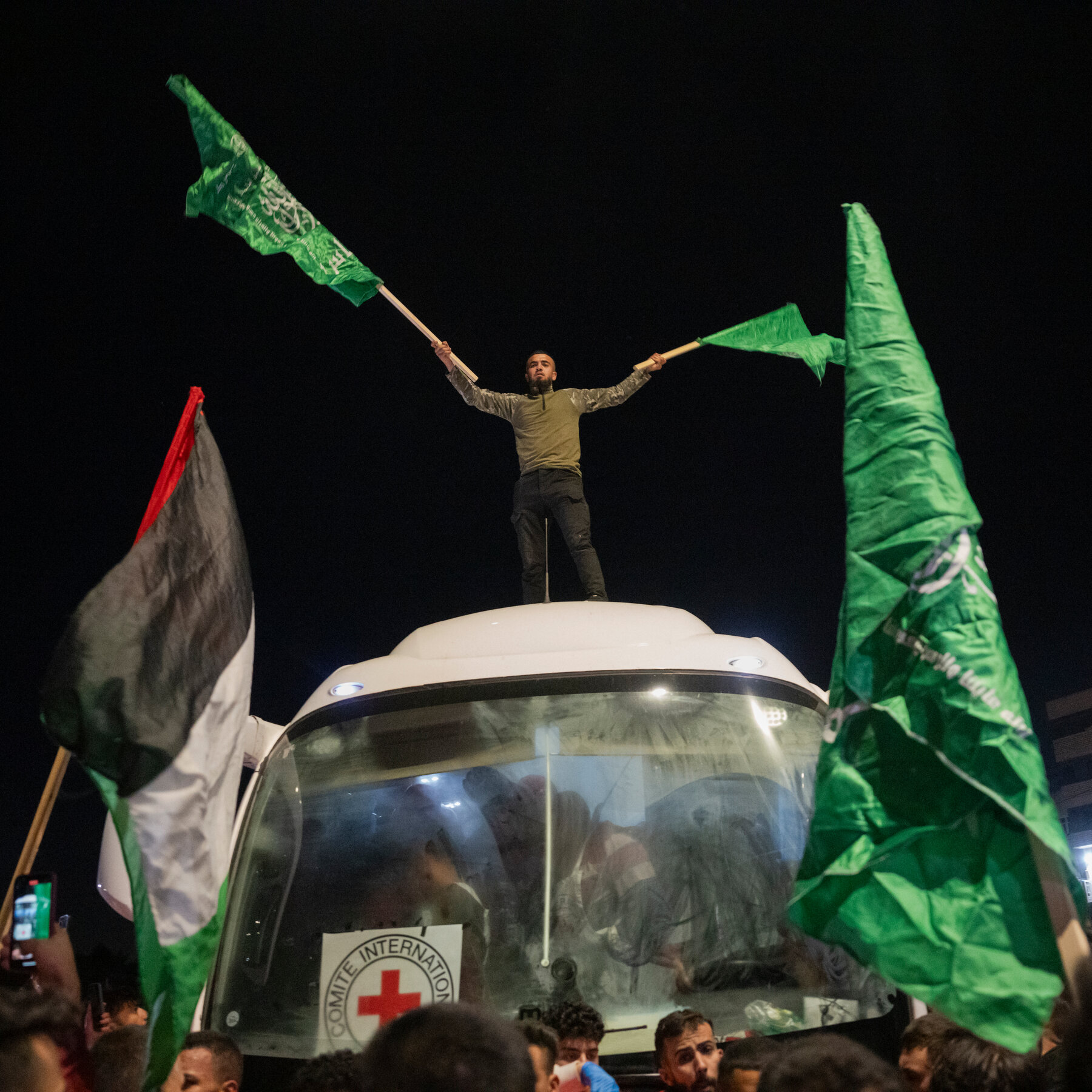
Palestinian Arabs wave Hamas flags atop the Red Cross truck bringing releases terrorists to the West Bank in November 2024

Here’s the cold calculus the bland statements miss.

Hostages for prisoners. Civilians for killers. A handful for hundreds. These trades have an immediate human relief value. The cost, however, is structural: they reset the reward function for terrorism. If a violent raid can reliably purchase the release of leadership, fighters, and political capital — and if the international response includes legal actions that delegitimize the responding state — then the net effect is to make mass atrocity an instrument of statecraft.

Celebrations for released Palestinian Arab terrorists in 2014

But the mathematics isn’t just – and must not be viewed as – the prisoner-to-hostage ratio. It includes the defensive response: the likely military, political, and territorial consequences of the assault. Hamas should be forced to accept that math too. If it contemplates another October 7-style operation as it has promised to do repeatedly, it must understand that the outcome will not be a tidy prisoner exchange and a televised victory lap. It will be the destruction of leadership and the decimation of military infrastructure, with broad international support for the defensive measures taken to prevent a repeat.

Which brings us to the international legal theater now playing out: the ICJ’s “genocide” accusations, the vociferous statements from states threatening arrest of Israeli officials, and the diplomatic embrace of Palestinian statehood in some quarters. These actions, however well intended by their proponents, have immediate strategic effects. They amplify Hamas’s narrative of global validation and, crucially, complicate the deterrent effect of defensive operations. If a state in self-defense risks being publicly criminalized or its leaders subject to arrest, the calculus of deterrence is altered – for the entire world.

So, what should sensible governments do if they insist on both protecting Palestinian rights and preventing another October 7? Two practical propositions:

  1. If regional governments want backing for Palestinian statehood and avoid terrorism in their own countries, they should drop the ICJ case. the Arab and Muslim countries which backed the U.S. ceasefire plan should pressure South Africa and other countries which brought the case to drop the charges and let diplomacy take center stage. Law and diplomacy should be tools of stability, not absolution for terror strategies.
  2. If the desired outcome is that populations on both sides live within range of cross-border terror and reprisals, then investing in defensive infrastructure as a bridge to a political solution is a rational step. The United Nations and donor states should be pressed to fund a replacement barrier between Gaza and Israel — walls and surveillance that reduce the risk of mass infiltrations, so that the question of where futures lie for Palestinians becomes a matter of state-building and safety inside Gaza, not a perpetual recruitment slogan for militancy.
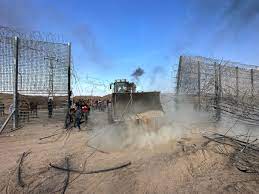
Hamas breaks through security fence between Gaza and Israel on October 7, 2023, on way for mass murder and abductions

This is not a call to abandon human rights oversight or to whitewash abuses. Accountability and adherence to international law matter. But timing and incentives matter too. Legal actions taken in the heat of war — unmoored from a strategy to prevent recurrence — can harden positions and diminish the tools of deterrence. If the objective is to keep people alive and build a durable peace that allows Stateless Arabs from Palestine (SAPs) self-determination without repeated massacres, then international actors must think like engineers of stability, not moral prosecutors on a press release timetable.

If we are serious about both ending the war and preventing future acts of mass terrorism and barbarity, we must stop evaluating deals by immediate feel-good optics alone. The right measure of a deal includes whether it reduces the incentive to perpetrate mass atrocities, strengthens deterrence against their planners, and clears a path toward political arrangements that give civilians on all sides a future. Anything less is not a solution — it is an invitation.

Palestinian Pride in Death

Imagine someone telling the Jews of Europe in 1935: accept the butchering and burning of six million of your people, and in exchange, you will once more gain sovereignty in your promised land. Would world Jewry have accepted such a bargain? Unlikely. In Judaism, the value of life as supreme trumps all—perhaps even over the divine inheritance of the Land of Israel itself.

That is why Jews do not take pride in the defenseless millions murdered in the Holocaust. They mourn them, honor their memory, and vow “never again.” The lesson is not that Jewish blood must be spilled for redemption, but that Jewish life is sacred and must be protected at all costs.

This moral foundation has been a hallmark of Jewish thought for millennia. The Talmud (Sanhedrin 4:5) teaches that “whoever saves a life saves the world.” Zionism, too, was never about blood sacrifice but about safeguarding Jewish existence and ensuring dignity, freedom, and self-determination. The rebirth of Israel is framed as a triumph of survival, not of slaughter.

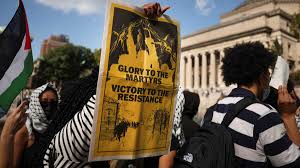
Yet for Palestinian Arabs, the moral calculus is inverted. Martyrdom is not mourned but celebrated. “Glory to the martyrs,” they shout, glorifying not only the dead but the genocidal jihadists of Hamas who carried out the October 7 massacre of unarmed Jews. Streets, schools, and summer camps are named for suicide bombers and killers. Death in the service of destroying Jews is not a tragedy but an achievement.

Columbia University placard of “Glory to the Martyrs”

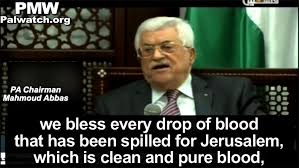
This glorification of death is not limited to fringe radicals. The majority of Gazans have always supported slaughtering Jewish civilians in Israel. Yasser Arafat, the father of the Palestinian national movement, repeatedly praised the “martyrs” who died attacking Israelis, insisting that “our blood is cheap compared to the goal [Jerusalem].” His successor, Mahmoud Abbas, continues the same practice. He honors terrorists killed while attacking Israelis, declaring that “we bless every drop of blood that has been spilled for Jerusalem.” The Palestinian Authority, under Abbas, even pays stipends to the families of those who die murdering Jews—the so-called “martyrs’ fund.”

Palestinian Authority President Mahmoud Abbas blesses blood “spilled for Jerusalem”

The same ethos echoed recently in the United States. At the People’s Conference for Palestine in Detroit, Michigan in August 2025, the crowd erupted in cheers for Gaza. Lameess Mahanna, sporting a shirt of the Palestine Youth Movement—employed at Columbia University—declared that the end of Israel would be “justice.” (1:35:00) She closed her remarks by leading the audience in a chant: “Say it clear and say it loud: Gaza, you make us proud!

If Gaza, in her telling, is suffering a “genocide,” how can its dead make her and the thousands who echoed her cry, “proud?” The answer is chilling: because human life is secondary. For her, for Hamas, for the Palestinian leadership stretching from Arafat to Abbas, and from Gaza to Detroit, “justice” is not measured in lives saved, but in Israel’s disappearance. Every dead body is not a tragedy but a step toward their perverted form of “justice:” erasing the Jewish state and replacing it with Arab Muslim rule.

This is the precise inverse of the Jewish ideal. Jews mourn their murdered; Palestinians exalt theirs. Jews sanctify life; Hamas sanctifies death. Jews seek peace with dignity; Palestinian leaders glorify death as the path to victory. The Jewish lesson of the Holocaust is the necessity of Jewish strength to prevent further massacres. The Palestinian lesson of their own history is that more massacres are required for them to have “dignity.”

Which brings us to the central question: can two peoples animated by such irreconcilable values ever truly coexist? One side views life as sacred above all else. The other views life as expendable, even desirable, when spent in the service of destroying its cohabitants.

Coexistence demands a shared commitment to life. Without that, “peace” is a dangerous mirage—a prelude to slaughter, the ultimate source of perverted pride.

When Dignity Becomes a Death Sentence

In many societies around the world, the concepts of honor and dignity are considered sacred. They are meant to reflect integrity, courage, and the moral fabric of individuals and communities. But in some cultures, the language of honor has been twisted into a tool of control, oppression, and even justification for murder—particularly against women.

“Honor killings” represent one of the most brutal manifestations of this warped morality. These acts of violence—often carried out by family members—are meant to “restore” honor allegedly tarnished by a relative’s behavior. In this framework, dignity is no longer something inherent in the individual, but something projected onto them by a society steeped in twisted religious patriarchy and fear of shame.

Honor killing by West Bank Muslim man

Across the world, honor killings persist, especially in parts of Southeast Asia, the Middle East, and North Africa. Pakistan, Afghanistan, and Gaza regularly report killings tied to perceived slights like refusing an arranged marriage, or even being a victim of rape. In such societies, a woman’s body and choices are not her own. They are just tools in a selfish calculus.

It is especially revolting to note that some societies legally protect these “honor killings.” The Palestinian Authority still has the Jordanian Penal Code No. (16) of 1960, and the Palestinian Penal Code No. (74) of 1936 in the Gaza Strip which provide reduced sentences for such family murders of girls.

Unsurprisingly, societies that bless the murder of women and girls for “honor,” have no compunction about sacrificing them for the dignity of everyone. Gaza’s leaders send women and children into harm’s way while they hide underground. They have even less regard for female enemies: Gazan soldiers and civilians marched into Israel on October 7, 2023 and raped women in front of their families and burned girls alive.

The radical jihadists in Gaza have a vastly different definition about honor than people in the Global North. Insisting that a solution to the Arab-Israeli conflict meet Gazan’s measure of dignity is a death sentence for women, girls and Jews in the Middle East.

Killing 26 Hindus in Kashmir Is Much Worse Than Butchering 1,200 Jews In Israel. For The UN.

A terrible attack unfolded in the disputed Kashmir region on April 22, 2025, in which 26 Hindu tourists were killed by radical Muslims. The region is disputed between Hindu-majority India and Muslim-majority Pakistan, where religious tensions and nationalist ones are intertwined.

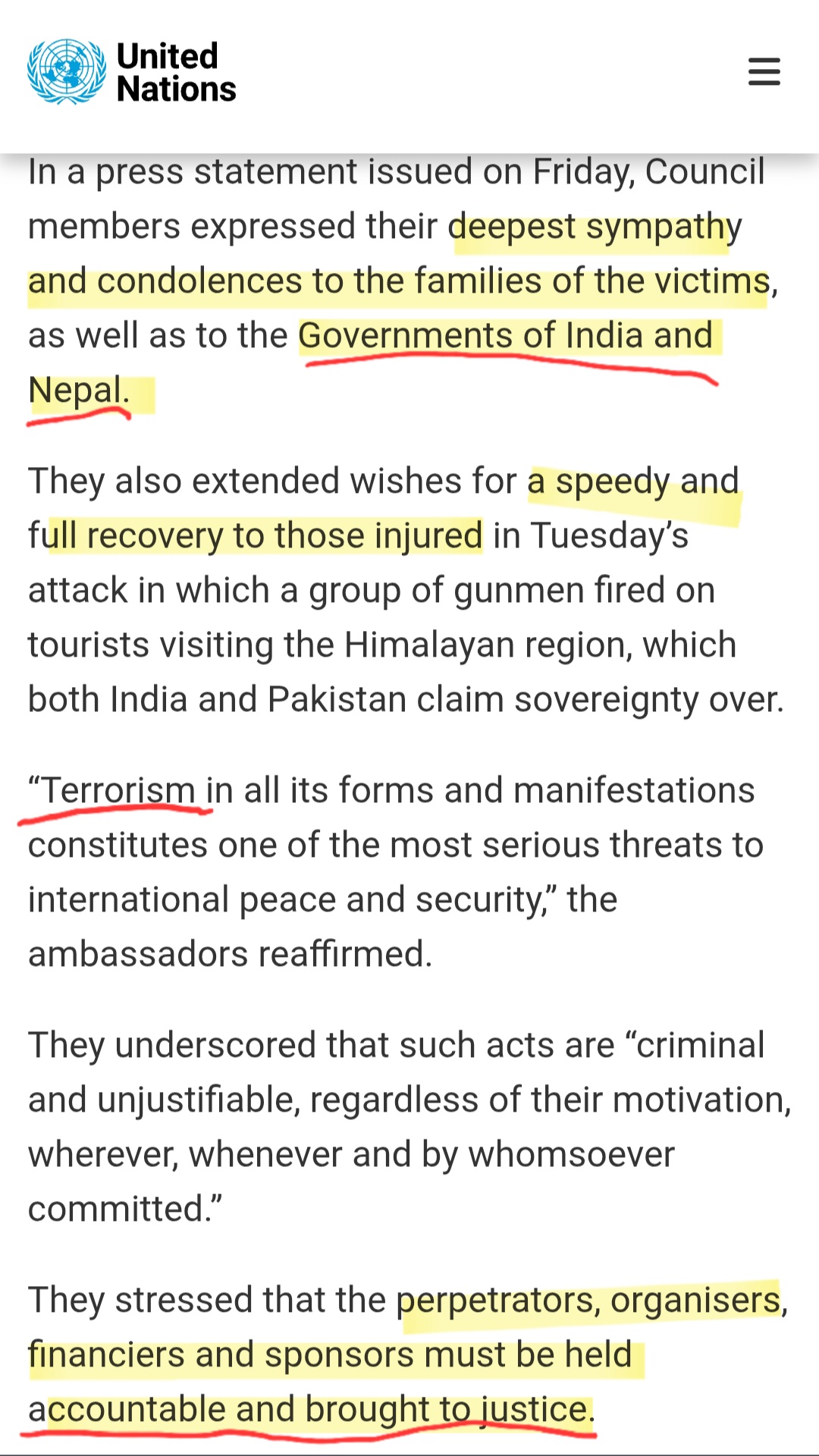
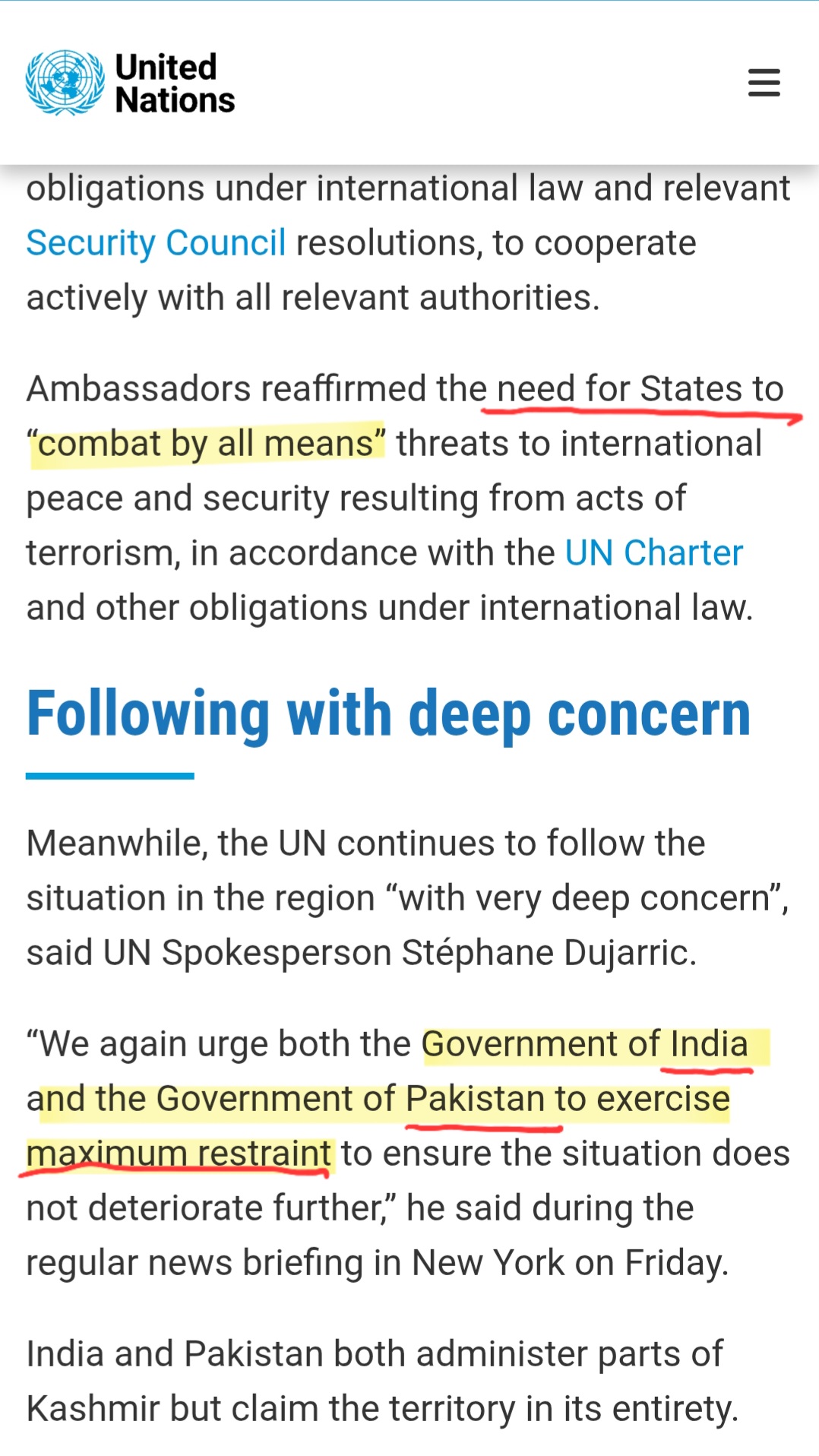
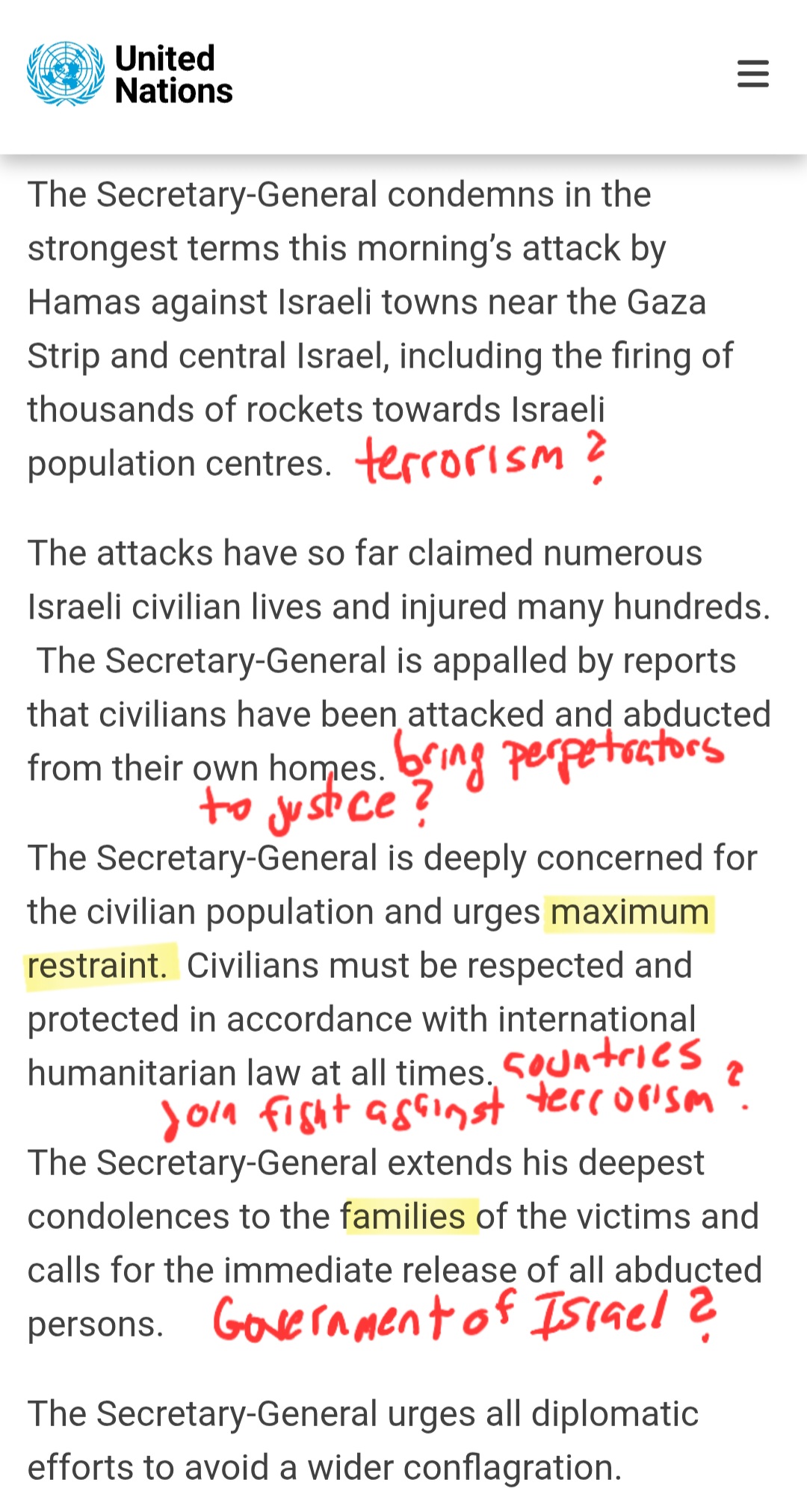
The United Nations Security Council issued its typical condemnation about the attack, even for the highly contested Kashmir region. It called the attack “terrorism” and for the perpetrators and their supporters to “be held accountable and brought to justice.” It urged all countries to “combat [the scourge] by all means” while also expressing condolences to the “Governments of India and Nepal” who suffered in the attack.

None of those sentiments were shared by UN Secretary General Antonio Guterres on October 7, 2023 when 1,200 people in Israel were killed, 251 abducted and hundreds injured by radical Islamists from Gaza. Guterres didn’t label the attack “terrorism” and call for perpetrators to be held accountable. He didn’t urge countries to join the fight. He didn’t express any condolences for the government of Israel.

UN Secretary General offers tepid response to the worst case of terrorism in decades

The United Nations adopted the Stateless Arabs from Palestine (SAPs) as forever wards and will protect them even when they commit mass atrocities.

It is time for countries of good conscience to withhold all funding and personnel from the global agency until a major revamping takes place. Key items include firing the Secretary General, dismantling UNRWA, the temporary agency uniquely for descendants of displaced SAPs, and removing permanent item 7 about Israel in the UN Human Rights Council.

It is time to financially bankrupt the morally bankrupt and biased United Nations.

Related articles:

The Deep Flaws In The UN’s “Peace” Coordinator (August 2024)

UN Secretary General Accuses Israel Of “Islamophobia War” (March 2024)

Sue The United Nations For Supporting Terrorism (February 2024)

Fire United Nations Secretary General Antonio Guterres (January 2024)

The UN Reminds The World That Palestinian Terrorists And Enablers Are To Be Excused (August 2023)

The Reasons Behind The Spike In Palestinian Terrorism (June 2023)

There’s Nothing Worse Than Terrorism in France (August 2019)

The Civilian-Terrorist Exchange Is Emblematic Of The Conflict

On January 19, 2025, three young Israeli women who were held in captivity in Gaza for 471 days were released in exchange for 90 Palestinian Arabs held in Israel. Among those Arabs were Khalida Jarrar, a convicted member of the Palestinian terrorist group, Popular Front for the Liberation of Palestine (PFLP) who was involved in several plane hijackings; Nawal Abed Fatiha, who stabbed a 70-year-old Israeli man in a 2020 attack in Jerusalem; and Ibrahim Zamar, who shot two people near the Sheikh Jarrah neighborhood in 2023.

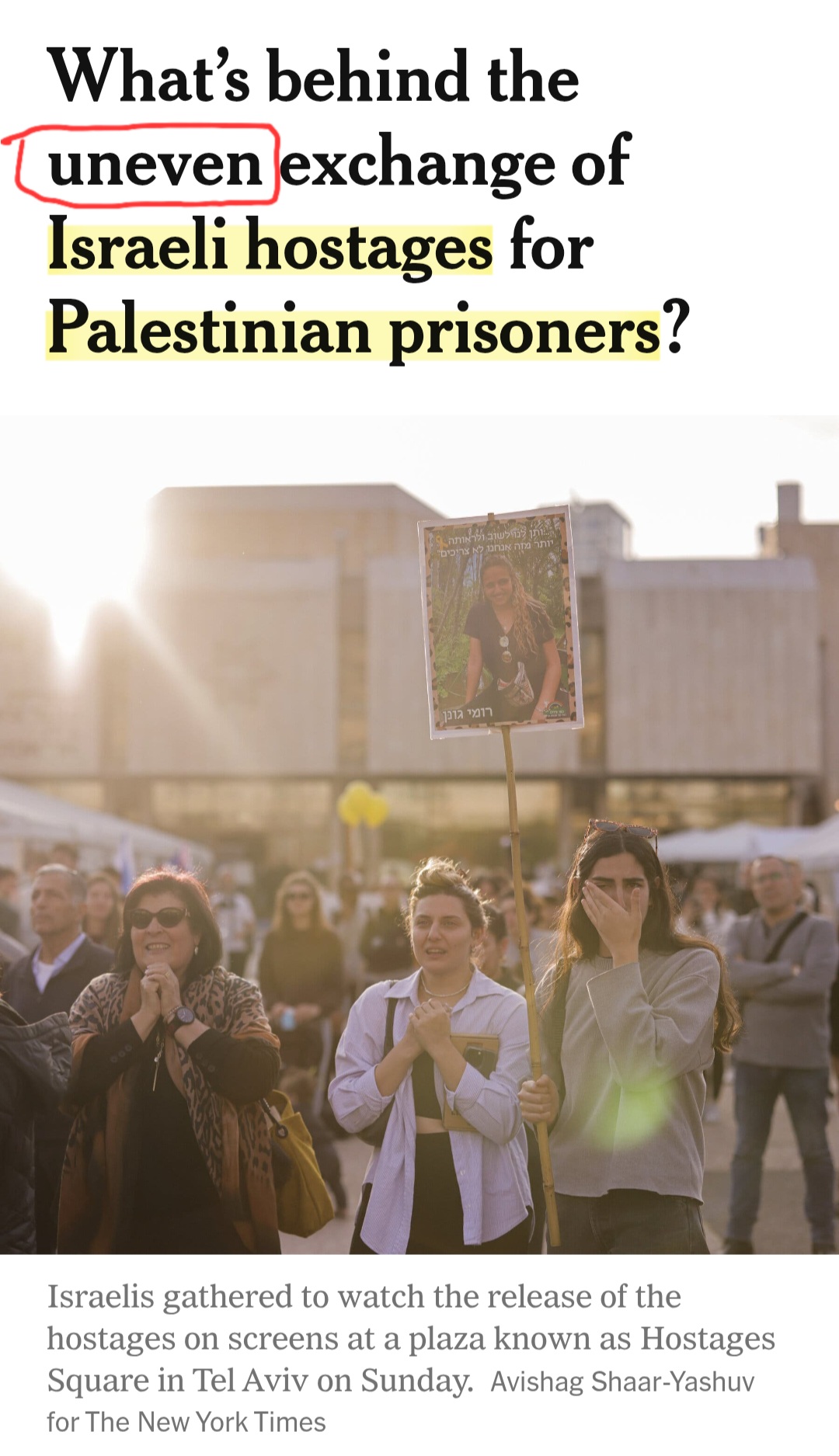
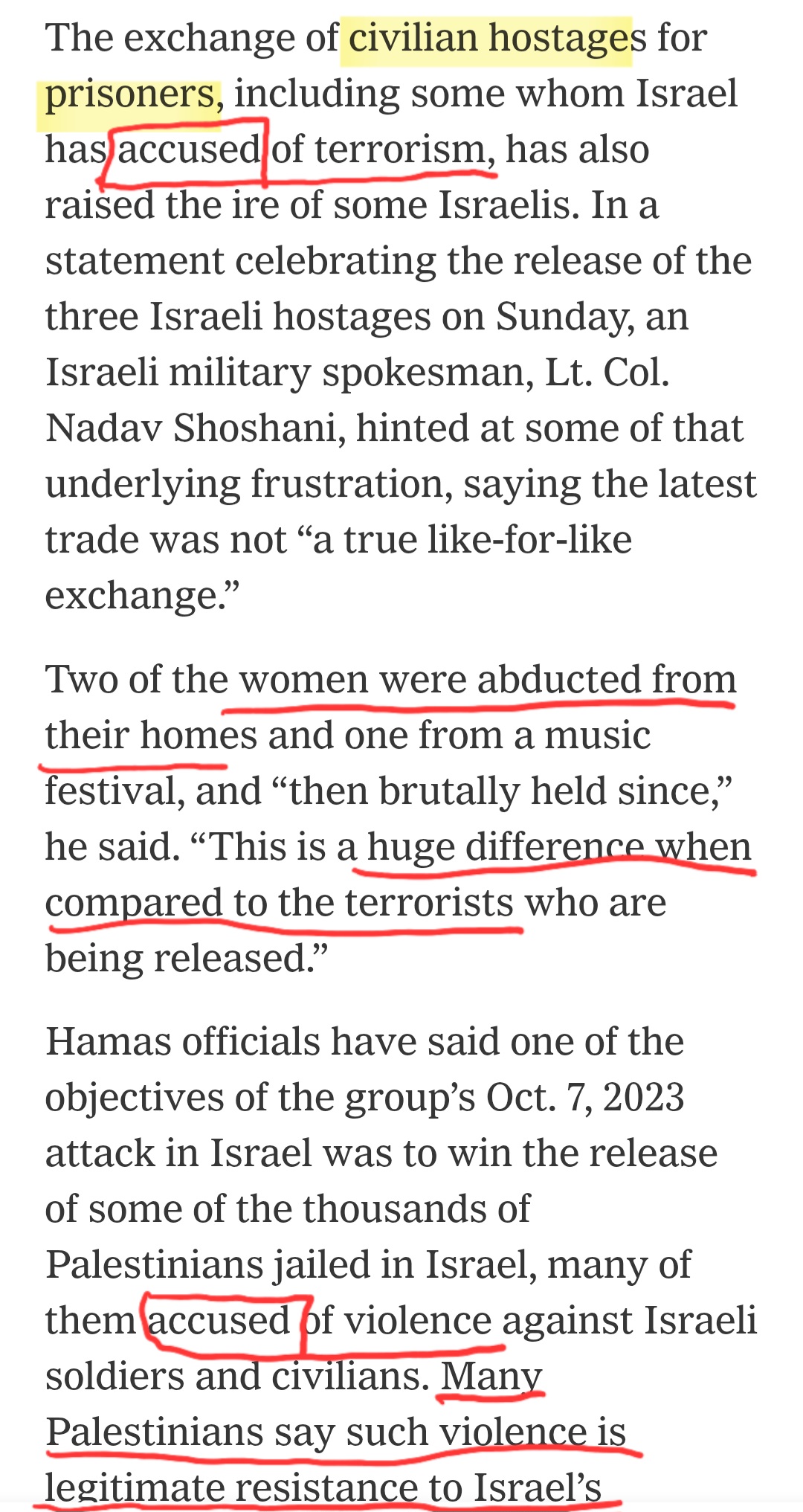
The gross inequality of the exchange in QUANTITY (but not quality) raised the eyebrows of the media, questioning the thirty-to-one ratio of people, while ignoring the equivalization of civilian women torn from their homes to convicted terrorists.

New York Times noting the “uneven exchange” of numbers while minimizing the qualitative difference of civilians for terrorists

But that is the story of the Middle East.

The Jewish State, is a liberal democracy which is roughly 76% Jewish, with 7.2 million Jews. It sits amongst 450 million Muslims in its immediate vicinity (about 62 times as many Muslims as Jews), in countries which are autocracies and almost completely Islamic. Just past those neighbors are another 500 million Muslims, some of whom have called Israel a “cancer” which must be removed from the planet.

The Israeli women who were freed – Romi Gonen (24), Doron Steinbrecher (31) and Emily Damari (28) – were simply living their lives when an estimated 3,000 Palestinian Arabs from Gaza stormed into Israel, killing their friends, family and pets, and then abducted them. That is in sharp contrast to the Palestinian Arab terrorists released by Israel who were waging a war of ethnic cleansing to rid the region of Jews when they were taken prisoners.

The media’s framing of the story whitewashes the difference in the nature of the exchange of innocents for criminals, asserting that they were just “accused of terrorism.” It calls out the numerical difference as rational, even while it vilifies Israel for the difference in the number of dead in the Hamas-initiated war.

New York Times describing Palestinian prisoners as simply “accused of terrorism”

The qualitative symbol of the Israeli-Palestinian Conflict is Neta Sorek, a Jewish feminist peace activist slaughtered by Palestinian terrorists as she walked in a forest in 2010. The quantitative symbol of the broader Jewish-Muslim Conflict in the Middle East is the grossly uneven exchange of 2025.

Related articles:

Palestinians Publicly Go Full Genocidal Jihadi (August 2024)

The Quantitative Shield For A Qualitative Problem (March 2024)

The Parameters of Palestinian Dignity (August 2016)