Trust is a curious thing. It can be so natural when it comes in small, unassuming packages. A neighbor offering a hand with the groceries. A stranger holding open a door. The innocent gaze of a child. These gestures, light as feathers, weigh more than they seem because they carry no hidden agenda.
Reading Sarah Tuttle-Singer on trust is like reading poetry. She writes with the hope that trust can bridge divides, that shared humanity can soothe ancient wounds. It’s tempting. It’s comforting. It makes us want to exhale and believe that the world really can turn softer, kinder, lighter.
But trust, in the realm of politics and war, is a word misused. Bus drivers and merchants may indeed know the art of coexistence, but their goodwill cannot stand against the fury of those consumed by hatred. History has shown this cruelly and clearly.
On October 7, Israel’s dreamers were shown what happens when trust meets rage. Peace-loving families along the Gaza envelope, who had spent years helping Gazans reach Israeli hospitals, were burned alive. Young people who came only for music and joy at the Nova festival were hunted, raped, and gunned down. Trust did not save them.
Leaders at war do not have the luxury of extending trust to enemies sworn to their destruction. Their duty is to protect their people, not to tell their adversaries where the defenses are weak or where to buy stronger weapons. In war, misplaced trust is not a virtue—it is a death sentence.
I like dreams. I enjoy Tuttle-Singer’s writings. But her kind of pre–October 7 dreaming feels like a dangerous nostalgia while Hamas still rules Gaza, while Israelis are still captives in tunnels, while so many Palestinian Arabs still celebrate the massacre and fantasize about taking over Israel itself.
Even more, I understand that I might have the luxury of fantasy, but the people in charge of keeping people safe do not.
Dreams belong in the safety of bed, not while driving a highway. Trust has a time and a place. For now, in the waking hours of the Middle East, those in charge with ensuring survival must act with clarity with dollops of charity.
It is better to trust in wartime leaders who are wide awake to reality than to believe in poets dreaming on the frontlines.
Israeli Prime Minister Benjamin Netanyahu has vowed that Israel will retake Gaza, dismantle Hamas, and free the hostages still held there. In response, the UK and France have rushed to apply diplomatic pressure — not on Hamas, but on Israel — pledging to recognize a Palestinian state in September. This move will only embolden Hamas to fight on, convinced it is winning a historic victory.
British Foreign Secretary David Lammy embraces Palestinian Prime Minister Mohammad MustafaCHARLY TRIBALLEAU
The flaw in this strategy is glaring: it’s not Israel that needs pressure — it’s Hamas, and that pressure must come from the Arab world, not just Europe. On July 30, 2025, Arab states took an overdue but welcome step, publicly calling on Hamas to disarm and hand authority over to the Palestinian Authority. This was a first in regional unity against Hamas.
Now Europe must pivot and press Arab states to go further: formally designate Hamas as a terrorist organization. This is not a radical suggestion. Egypt, Saudi Arabia, Bahrain, Jordan, Syria and the UAE already classify the Muslim Brotherhood as a terrorist group (the United States is on the cusp of doing so). Hamas is the Brotherhood’s Palestinian branch — extending the label is logical and overdue.
Such a declaration would signal to Hamas and to Stateless Arabs from Palestine (SAPs) that terrorism against Israel has no future and no backing in the Arab world, and that the region is moving towards normalization. It would also make it easier for the United States to advance pushing the United Nations Security Council to list Hamas alongside al-Qaeda and ISIS as a global pariah. To date, UN officials have described Hamas as a legitimate representative of the Palestinian people, keeping the terrorist group’s hopes alive.
Only then could Netanyahu ease military pressure, creating space for serious negotiations to dismantle Hamas and secure the return of the hostages.
From nowhere they came — and now they’re everywhere. The spotted lanternfly, with its colorful delicate wings and destructive path, has infested the American landscape. It’s believed to have originated from China and, in just a few years, has spread across states, devastating crops and trees like the “tree of heaven,” its favorite host. The government seems incapable of containing it. Few natural predators exist. The infestation has become a symbol of bureaucratic failure and public resignation.
Spotted lanternfly
But some wonder: does this pestilence reflect something deeper, more corrosive — a cultural infestation?
Many point again to China, not just for the lanternfly, but for feeding antisemitism into western culture, especially through TikTok — a powerful delivery system for ideological poison. Others blame Qatar, which has poured billions into American universities that now shelter hatred under the guise of “free speech.” The Gaza war may have triggered the firestorm, but the kindling was laid long ago — through foreign influence, academic corruption, legal systems reluctant to confront hate when it wears the right colors and intersectional culture intent on vanishing Jews.
The response has been toothless. Protesters shut down airports and bridges with impunity. Cities release vandals hours after they’re arrested. Politicians decry antisemitism in speeches while voting to defund the very police tasked with protecting vulnerable communities. Universities who once claimed to be safe spaces now protect the mob instead of the beleaguered minority.
Like the lanternfly, antisemitism has become endemic. And just as officials tell us to stomp on the bugs as a civic duty, people now post videos taking down “protest” signs and washing off graffiti — not to eradicate the hate, but to vent helplessness.
We’ve reached a tipping point. Many have chosen to watch the wave rather than swim against it.
But Jews are not trees. Unlike the “tree of heaven,” the Jews have a history of moving, surviving, rebuilding. As America shrugs at the firebombs and broken windows, and as elected leaders dismiss Jewish fear as overreaction, a quiet migration begins. New York, Toronto, and Melbourne may look the same in ten years — but they will feel different. Not because the skyline will change, but because of the absence. The absence of a people whose presence once animated these places with faith, culture, and conscience.
Vienna was no longer Vienna after the Jews were rounded up and slaughtered, and French leaders know that France will no longer really be French if Jewish frustration and fear makes them move. But America has no such institutional memory. And as Americans elect younger and more inexperienced radical politicians, the destruction will accelerate.
Jews were forced to wear distinctive clothing in the Middle Ages and in Nazi Germany, and were tattooed in concentration camps before the annihilation was manifest. But it’s the moral corruption of the cities themselves that marks Jews for extinction; black sooty mold as the lanternflies feast and kill.
The last Jews will be those who see fellow Jews’ fears as fantasies, constellations drawn from a few distinct points like ancient mariners and pagans lost in heavenly thoughts. Perhaps those survivors will be the only Jews the West wants anyway: hearty crops which withstood the plague may have more in common with the new natural order.
In a recent speech at the United Nations, UK Foreign Secretary David Lammy declared his country was “determined to protect the viability of the two-state solution.” At first glance, this appears to be a standard diplomatic statement. But in elaborating on Britain’s historical role in the region, Lammy offered a revisionist take on the Balfour Declaration that reveals a deep and dangerous misunderstanding of Middle Eastern history—and raises questions about the UK’s current policy stance toward Israel and the Jewish people.
Lammy said the Balfour Declaration came with the “solemn promise that nothing shall be done which may prejudice the civil and religious rights of the Palestinian people.” This phrasing might sound accurate to the uninformed, but in fact, it fundamentally distorts the language and intent of the original 1917 Declaration. The actual text stated that “nothing shall be done which may prejudice the civil and religious rights of existing non-Jewish communities in Palestine.” That is a significant difference—not a matter of semantics, but of historical and political accuracy.
UK Foreign Minister David Lammy brings up the Balfour Declaration which he doesn’t comprehend
1. The Myth of a “Palestinian People” in 1917
In 1917, there was no recognized Palestinian national identity. The population of the region known as “Palestine” was a mix of Jews, Arabs, Druze, Bedouins, and others. They lived across a geographic region that included modern-day Israel, Jordan, Gaza, and what is now termed the West Bank. The idea of a distinct Palestinian Arab national identity only began to emerge decades later, especially in reaction to the creation of the State of Israel.
By 1948, the demographics had shifted dramatically, in part due to waves of Arab migration into the British Mandate territories from Syria, Lebanon, Iraq, and Egypt. Lammy’s reference to “the Palestinian people” as the subject of the Balfour Declaration imposes a modern nationalist narrative on a time when none existed. Balfour’s “existing non-Jewish communities in Palestine” would exclude millions of Arabs who moved into Palestine after the 1917 declaration, whom Lammy probably considers “Palestinian people” today.
Balfour Declaration
2. A Jewish State That Did Not Prejudice Others
When Israel declared independence in 1948, it offered full citizenship to the roughly 160,000 non-Jews residing in its territory. Today, over 20% of Israel’s citizens are Arab, enjoying rights and protections that are absent in many neighboring states. Far from violating the civil and religious rights of non-Jewish communities, Israel has ensured freedom of worship, speech, and assembly for all its citizens.
So when Lammy said, “this has not been upheld and it is a historical injustice which continues to unfold,” he is lying. Completely. Israeli Arabs today enjoy far greater civil liberties than Arabs in Syria, Egypt, Jordan, or in Palestinian Authority- and Hamas-ruled territories. The “historical injustice” is not Israel’s creation, it exists beyond Israel’s internationally recognized borders.
3. Britain’s Role in Enabling Discrimination—Against Jews
Ironically, it was the UK itself—through the Mandate for Palestine—that laid the legal foundation for a Jewish homeland. And for ongoing antisemitism.
Britain unilaterally partitioned off nearly 80% of that territory in 1921 to create Transjordan (now Jordan), and stood by as the Hashemite Kingdom banned Jews from citizenship and ownership of land. When Jordan illegally seized the area later known as the “West Bank” in 1948, Britain was the only three countries (Pakistan and Iraq, which was also a British mandate) to formally recognize that annexation—a striking contradiction to the Balfour Declaration’s supposed promise of equal rights.
The Hashemite Kingdom, with Britain’s backing, quickly turned its part of Palestine into a Jewish-free zone, passing a citizenship law in 1954 that specifically excluded Jews. This glaring double standard—permitting discrimination against Jews while demanding protections for Arabs—is a historical stain that remains unacknowledged in Lammy’s telling.
Worse, it continues.
4. Britain’s Ongoing Endorsement of a Jew-Free Palestine
In 2016, the UK voted in favor of United Nations Security Council Resolution 2334, which declared Israeli presence in the West Bank—including Jewish neighborhoods in the Old City of Jerusalem—to be illegal under international law. Then, in a joint statement with France and Canada last week, the UK reiterated this view, calling for Israel to “halt [Jewish] settlements,” and warning of potential sanctions.
In effect, the UK is advocating for a future Palestinian state that is entirely Jew-free—while curiously condemning Israel for allowing non-Jews to live freely within its own borders. How is this consistent with the principle of equal civil and religious rights? How can Lammy demand protections for non-Jews – who have rights – while simultaneously supporting policies that trample the rights of Jews to live in their ancestral homeland?
5. A “Two-State” Solution That Isn’t Two Equal States
The fact that millions of non-Jews can live in Israel while Jews are prohibited from living in the proposed Palestinian state is not a path to peace. It is the codification of apartheid, not its cure. Can any reasonable person believe that a state founded on the exclusion of Jews will live peacefully beside the world’s only Jewish state?
6. A Dangerous Historical Amnesia
Lammy’s casual misquote of the Balfour Declaration isn’t just historically inaccurate—it betrays a worldview that has forgotten the lessons of Britain’s own policy failures. Britain once promised the Jews a national home, but reneged repeatedly, prioritizing Arab appeasement and imperial interests. It didn’t vote for a Jewish State in the November 1947 UN resolution and walked away from Palestine in May 1948, leaving the warring parties to fight it out. At war’s end, it blessed Jordan’s illegal seizure and ethnic cleansing of Jews.
Today, that legacy lives on in the UK’s refusal to recognize Israel’s legitimate rights while whitewashing Palestinian maximalist demands—whether from the Palestinian Authority (Jew-free Gaza and West Bank) or Hamas (Jew-free “from the river to the sea.”)
The Foreign Secretary’s focus on providing the Stateless Arabs from Palestine (SAPs) self-determination, has blinded him to history and the basic human rights of Jews. A vision of peace that requires the ethnic cleansing of Jews from Judea and Samaria and demanding that Israeli Arabs with full citizenship rights get somehow even more rights, is not a peace worth supporting.
In Parshat Devarim, Moses begins his final speech to the Israelites. He does not begin with the Creation of the world or the stories of the Jewish patriarchs and matriarchs. The Book of Genesis — with its grand universal themes and personal family journeys — is set aside. Instead, Moses focuses on the collective journeyhe himself witnessed: the liberation from Egypt, the giving of the Ten Commandments, the rebellions and reckonings in the wilderness. It is as though this is where the Jewish people’s national story truly begins.
Rabbi Jonathan Sacks observed that Deuteronomy is not just a repetition of laws — it is Moses’ personal testimony, his urgent effort to pass on memory, meaning, and mission. As the Israelites stand poised to enter the Land, Moses knows he will not go with them. What he offers instead is the one thing only he can give: the lived truth of experience.
This resonates today more than ever. We are witnessing the passing of another generation of eyewitnesses: the survivors of the Holocaust and the founders of the modern State of Israel. Like Moses, they saw the journey with their own eyes — from slavery and destruction to sovereignty and rebuilding. They walked from Auschwitz to Jerusalem. They built a state out of the ashes, defended it in war, and gave it the infrastructure of a living, breathing nation.
Their stories — of suffering and survival, of faith and fortitude — are not just history lessons. They are testaments. And they come with a charge: to remember, to be vigilant, to defend our people and our land, and to carry forward the values of Torah and the reality of Jewish nationhood.
Just as Moses recounted the past to prepare the people for the future, so too must we internalize the legacy of those who came before us. Their firsthand accounts are not simply about what was, but about what must be. A people grounded in memory is a people prepared for destiny.
If we listen to their voices — and not merely archive them — we gain strength to resist the deniers, the revisionists, and the haters. We reaffirm that we are not just a people with a past, but a people with a purpose — a covenantal mission that stretches from Sinai to today.
United Nations Secretary-General António Guterres has once again proven himself to be a reckless ideologue, dangerously detached from reality. In his latest remarks on July 28, 2025 regarding the Israeli-Palestinian conflict, Guterres declared that Palestinians have a “right” to a state. This is not only false, but dangerously misleading at a time when thousands of lives hang in the balance.
No group of people has an entitlement to a state. International law does not guarantee statehood to any specific ethnic or religious population. What people have is the right to self-determination, which can be fulfilled through various frameworks — including autonomy, federation, or integration with existing states. The assumption that this must culminate in Palestinian sovereignty from the river to the sea is not a legal imperative; it is a political preference, and a deadly one at that.
Guterres framed the issue as a false binary: either Palestinians get a state, or they will be condemned to expulsion or second-class status. This is a silly strawman, ignoring the obvious alternatives. Palestinians could become citizens of Jordan or Egypt — both of which administered the West Bank and Gaza, respectively, before 1967. Or they could establish a state in Gaza and in Area A of the West Bank, which is already under Palestinian control under the Oslo Accords. But they have no right to demand Israeli land, nor a capital in Jerusalem.
His reference to “East Jerusalem” as if it were a legitimate, independent entity is equally misleading. “East Jerusalem” was never a recognized capital or separate city — it was a temporary result of Transjordan’s illegal occupation between 1949 and 1967. The 1947 UN Partition Plan, which Arabs rejected with violence, never designated it for an Arab state. There is no legal basis to call Israel’s presence there “occupation.”
The most disturbing part of Guterres’ statement is his call for Hamas to be included in a unity government with fantasy notions of “we must support Palestinian unity around a peaceful, democratic and inclusive vision for statehood.” Let’s be clear: these are the same Hamas terrorists who committed mass rape, torture, and murder on October 7. This is a group with the most antisemitic and genocidal foundational charter ever written. To reward their atrocities with political power is not peacebuilding — it is moral depravity. It is the very definition of appeasement, sanitizing evil and encouraging further violence.
What kind of values is Guterres promoting when he elevates genocidal psychopaths into prospective leaders of a future state? It is not peace. It is not justice. It is not coexistence.
UNSG Antonio Guterres
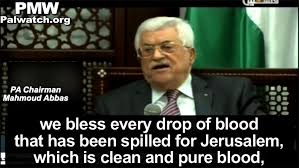
Time and again, Palestinian leadership — whether Fatah or Hamas — has made its goals clear: no Israel, and no Jews. From school curricula to charters to chants in the streets, the obsession is not with borders, but with obliteration. The Secretary-General’s repeated attempts to whitewash this reality reveal either staggering ignorance or something much more nefarious.
Guterres is not a neutral peacemaker. He is actively endangering Israeli lives by proposing that Israel close its eyes to reality and pretend Hamas is a peace partner. He is fueling conflict under the guise of diplomacy and exposing the rot at the heart of the UN system.
They came for the Yazidis. They came for the Druze. They came for the Kurds. We came for the Jews.
Across the Middle East, ethnic and religious minorities have been hunted, uprooted, and erased. Yazidi women were rounded up and sold like cattle. The Druze were betrayed by neighbors and hunted in the streets. The Kurds—called terrorists for seeking sovereignty—were chased by Turkey with Western silence as a shield.
Thousands of Yazidi women sold as sex slaves in Iraq
We watched. We said nothing. We let them disappear, acknowledging—without saying it—that the Islamic Middle East had no place for ethnic and religious minorities. In our United Nations chairs, we shook hands with their butchers and waited for the news cycle to move on.
But not for the Jews.
The one minority whose return to sovereignty we supported—however begrudgingly many decades ago—was the Jews. We recognized their state, and in doing so, we made demands. MAKE demands. Demands no other people are burdened with.
We demand that Israel allow its citizens to be slaughtered and call for restraint. That it accept that others dictate its borders and immigration policy. That Jews be barred from praying at their holiest site. That any territory not clearly within historic armistice lines be judenrein, Jew-free.
And when Israel resists these demands – no, conditions we now apply for its existence – we condemn it. Not just at the UN, but in our schools, in our media, and on our streets—training citizens to treat diaspora Jews the same way: that they are alive only due to our grace. We are not equals; they owe us for everything.
We did not protect the Kurds. We abandoned the Yazidis. The Druze are being rounded up and killed. But we took action to help the Jews defy their extinction after the Holocaust. And for that, we believe they owe us—debtors with no right to complain. We pretend that Israel is a peer at the UN but we know the reality: it’s a vassal state and will be commanded by the order of the day.
Druze hunted in Syria
We don’t ask anything of the Gazans. Their genocidal rage toward Jews is seen as instinct, not ideology. Understandable. Natural. That’s why global protests erupt only when Jews defend themselves—not when they’re killed. Dog bites man, not the other way round.
To help Jews survive, we crafted Israel as a dam. It may shield its people inside from the massive jihadi flood—but only within walls we design.
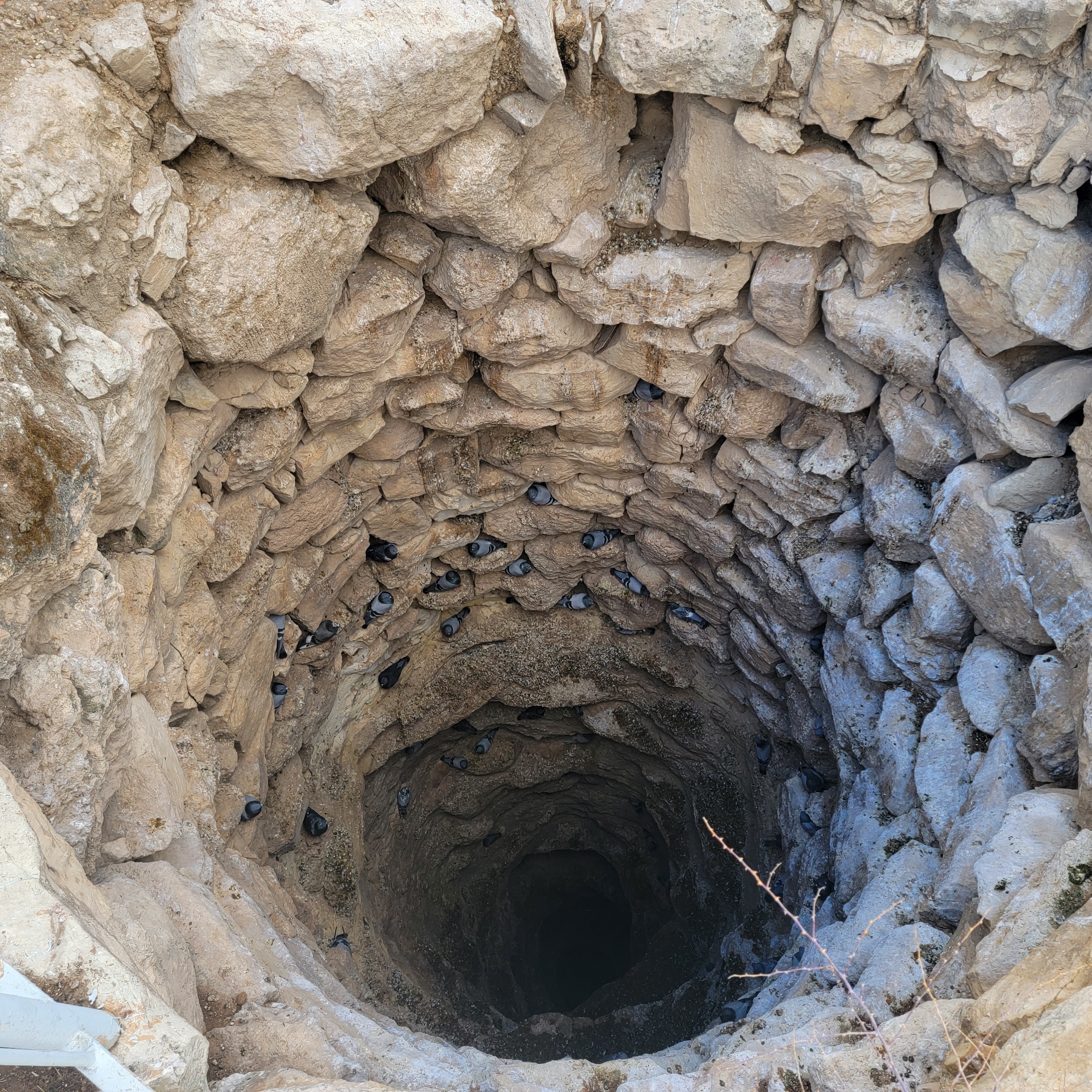
However, once built, we insist that the floodwaters be let in. Millions of Muslim “refugees” must be allowed to “return” to the spring. The saltwater ocean that surrounds and crashes against the well’s walls, will mix with the spring water inside to become undrinkable.
We know it makes no sense. But we know we can’t contain the ocean, so we poison the well. It will happen eventually anyway, we reason.
The entrance to the United Nations’ Aida Refugee Camp, near Bethlehem, with a key on top showing that the doorway to get into homes inside Israel is via the UN
The world is watching—and learning. There is no future for Druze, Yazidis and Kurds. We silently move our lips, and our streets at home are silent. Yet when Jews retaliate when massacred, we rage and our people echo the screams.
Collectively we wonder whether maintaining the Jewish State is too hard.
Whether under dictatorship or democracy, religious zealotry or secular law, the story repeats: minorities are tolerated in the Global South only as long as they are passive, picturesque, and dying. The moment they survive and carve out self-determination, they are a threat to those with seats in the august UN chambers. Will these little tribes demand rights and sequester land too?
Yet another vote against Israel at the UN General Assembly
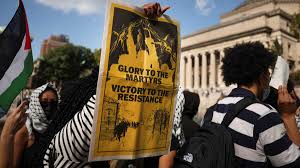
“Globalize the intifada” is not just a slogan; it is already in motion. Those floodwaters have breached the shores. The jihad is mowing down non-Muslims in the Middle East. It is teaching the Global North the chorus courtesy of Qatar, and dance moves via TikTok from China.
Marchers in the Global North demand an end to the Jewish State and persecution of Jews everywhere
The Global South – 42% Muslim outside of China and Latin America – will soon control the UN and is preparing to erase the exception of the Jewish state. Once America is convinced to step aside, the protective walls will surely collapse and the Jews will be slaughtered like other minority groups.
Druze mowed down outside hospital in Syria
Jews wonder why the streets are empty of protestors when various nations of the Middle East slaughter ethnic minorities, but are packed when Israel fights terrorists. It’s because Jews have still not internalized that the world views them as a minority which will ultimately be erased by the tide of the Islamic jihad, and it regrets making an exception for the most persecuted people on earth.
In 2020, the Israel Religious Action Center (IRAC), the legal arm of the Reform Movement in Israel, filed a lawsuit against Gett, a popular Israeli taxi-hailing service. The offense was offering a “Mehadrin” option for riders who wanted drivers who observed Shabbat. The IRAC said the offering discriminated against Arab drivers who didn’t qualify under that label, and ultimately, the case was settled in June 2023. Gett paid out $1.6 million (NIS 6 million) in compensation to Arab drivers and to two NGOs that promote Jewish-Arab coexistence.
The clear message was that religious preferences in ride-hailing services are a form of discrimination. No special preferences would be tolerated.
Yet, here we are, in the United States.
Uber, the global ride-hailing behemoth, has quietly introduced a service in various markets that allows female drivers to opt into picking up only female passengers. It’s being billed as a safety measure—one that empowers women to feel more comfortable driving and riding in liberal cities of Los Angeles, San Francisco and Detroit. But let’s not miss the forest for the trees: this is gender-based discrimination, plain and simple. A man hailing a ride and seeing it canceled because the driver opted for a woman-only ride is, quite literally, being excluded based on sex.
How is allowing female drivers to exclude picking up male riders making life “better for everyone?”
Where is the outrage from liberal groups? Where is the Jewish Reform Movement? Why hasn’t a lawsuit been filed on behalf of male riders who must be put in the back of the line to get home? Why no amicus brief filed in solidarity with equality under the law?
The silence is telling. Discrimination only seems to bother rights advocacy groups when it’s associated with religious practice or victims of preference. If Arab drivers are excluded from rides, liberal groups in Israel convinced the courts that it’s discrimination. But if male passengers in the United States are excluded to create a woman-only safe space? That’s empowerment.
The hypocrisy is glaring. If the principle is equality, then apply it. If the standard is fairness, then be consistent. And if the cause is justice, then justice should not be contingent on whom it implicates.
Is there a red line of equality under the law that differentiates between religion and sex? Or is Israel more progressive regarding equality than the United States?
The word “context” has been given a lot of play since university professors made a point of using the term to answer questions at congressional testimonies as to whether they would enforce discipline on students engaged in antisemitic activities. They claimed those actions needed to be “targeted and persistent” to cross the line into Jew hatred deemed unacceptable.
One has to imagine whether a mirror needs to be held up to media operations – whose job it is top provide context to stories – when they fail to do so when writing stories. If they refuse to provide basic background to stories that could make Israel or Jews appear in a favorable light and do not do so, is that an indication of rank antisemitism?
Another Gaza “Flotilla”
In yet another attempt at seeking publicity, a ship set sail for Gaza in the middle of Hamas’s current war on Israel. The boat was picked up and brought to the Israeli port city of Ashdod for processing without incident.
To read the New York Times’ story, one would imagine that this was an aid boat desperate to bring life saving aid to the people of Gaza amid an illegal blockade of the region, and crushing war that is not popular amongst Gazans.
That’s a complete lie. So let’s unpack the story shared without background, and insert some relevant facts which were omitted.
For starters, Israel’s land-based blockade started in June 2007 after Hamas, a group whose antisemitic foundational charter is sworn to the killing of Jews and destruction of Israel, took over the Gaza Strip. The naval blockade started over a year later, in January 2009, after Hamas started a war with Israel using imported missiles.
In July 2011, the UN released the Palmer Report which attested to the legal nature of Israel’s blockade. Specifically it wrote:
“As this report has already indicated, we are satisfied that the naval blockade was based on the need to preserve Israel’s security. Stopping the importation of rockets and other weapons to Gaza by sea helps alleviate Israel’s situation as it finds itself the target of countless attacks, which at the time of writing have once again become more extensive and intensive… We have reached the view that the naval blockade was proportionate in the circumstances… The Panel therefore concludes that Israel’s naval blockade was legal… Israel faces a real threat to its security from militant groups in Gaza. The naval blockade was imposed as a legitimate security measure in order to prevent weapons from entering Gaza by sea and its implementation complied with the requirements of international law.“
This is never mentioned in the article.
The article – over-and-again – states that the boat’s mission is to bring aid to “a population in Gaza facing rising starvation.” If that was the goal, it could have easily set sail directly to Ashdod where the aid would have been processed and thereafter sent by trucks into Gaza. However, the actual aim of the ship was to break Israel’s legal blockade during a war via a publicity stunt. If the world pressured Israel to remove the blockade, more weaponry would be able to flow into the terrorist enclave to continue the genocidal war against Israel.
Maritime closure on Gaza has caught weapons bound for Hamas, this video from 2011
Yet the Times preferred to write a propaganda piece on behalf of Gaza’s supporters. It continued on “the activist group” narrative:
It was no accident that the article led with “baby formula, diapers” to make the mission appear to be about innocent babies. This was raw propaganda. The blockade isn’t about baby food but weapons used to slaughter Israelis. In 2010, a ship called the Mavi Marmara prepared weapons to kill Israelis when they boarded the boat to escort it to Ashdod. The “activists” had gas masks at the ready with iron bars and knives.
“Activists” on the Mavi Marmara in May 2010
When the article chose to give context to the “flotilla,” it only mentioned the ships which sailed over the past year, making them appear to be in reaction to Hamas’s current war. The various European “aid ships” are marketed as concerned about the situation of civilians during the current battles.
The reality is that these boats have been going on for years. Europeans have constantly tried to end Israel’s blockade of the terrorist enclave, which would open the door for Hamas and the other terrorist groups to stockpile even more weaponry to wage war against Israel.
European “Flotilla” bound for Gaza in 2015
As described above, the blockade is legal and Israel enforces it with the minimum use of force necessary under the circumstances. Still, the Times only quoted these “activists” saying that Israel was acting in an illegal manner without any background. Zero. Just a quote without explaining the history of the blockade or its legal nature.
The Hamas fluff piece went on to quote “Adalah, an Israeli human rights group,” which advocates for Israeli Arabs. It did not share that the group is funded by Europeans and George Soros’s Open Society Foundation. For years – well before the latest Hamas war – the group called Israel “an apartheid state committing genocide,” which should be boycotted. It has even held events with groups affiliated with terrorist groups like the Popular Front for the Liberation of Palestine.
But the Times didn’t write any of that. A reader is left to believe that an Israeli human rights group wanted to provide legal services to aid activists and was blocked by the Israeli army. A scripted anti-Israel narrative
With so much fluff, perhaps the editors may have wanted at least a little background for the episode, so in the ninth paragraph (out of twelve) a smidgen of color was given. Just a drop, still never adding that Israel has let in tons of non-military aid to Gaza, and forwards whatever non-military aid the ships bring.
The article states that the blockade started in 2007 which is only partially accurate. as mentioned above, the land blockade began in 2007 while the naval blockade started in 2009.
Remarkably, the most famous of these flotillas, the Mavi Marmara in May 2010, was never mentioned. The nature of the political boat stunts – in this case deadly – was never flagged.
Instead, the legal naval blockade was wrongfully portrayed as an “Israeli military” war against “rights groups.”
Europeans attempting to facilitate the flow of weaponry into the hands of Gazans during a genocidal war is appalling. That it is provided cover by the media is disgraceful.
Antisemitism in universities is punishable when it is “targeted and persistent.” Jew-hatred in the media should be punishable when the basic context of the situation is consistently omitted.
In 1967, just days after Israel’s miraculous victory in the Six-Day War — a war it neither started nor wanted — French President Charles de Gaulle publicly rebuked Jews:
the Jewish State was “war-like state bent on expansion”
impugned the Jewish people “throughout the ages” as “an elite people, sure of themselves and domineering,” who had “created ill will in various countries at various times.”
The accusation wasn’t merely tone-deaf — it was malicious in intent. Israel had just repelled a coordinated Arab onslaught aimed at its annihilation. In response, rather than offering admiration or even neutrality, de Gaulle reached for the language of old European antisemitism: that Jews are too proud, too successful, too capable — and therefore must be cut down to size.
Historian Bernard Lewis noted how this framing, after 1967, became a tool not just of European elites but of Arab leaders humiliated by defeat. The Jews had survived — worse, they had won — and for that, they were to be condemned as arrogant victors. He quoted one writer who said “It was bad enough to be conquered and occupied by the mighty empires of the West, the British Empire, the French Empire, but to suffer this fate at the hands of a few hundred thousand Jews was intolerable.”
Fast forward to today.
French President Emmanuel Macron repeats the posture of his predecessor, albeit with 21st-century polish. After Hamas butchered Israeli civilians in their homes on October 7, 2023, Macron offered sympathies — but quickly shifted blame back to Israel.
In the first weeks after Israel struck back at Hamas, Macron accused Israel of collective punishment, while never applying the same outrage to Hamas’s use of civilians as human shields, or to its decades-long charter of antisemitic terror.
And now, Macron leads calls for France to unilaterally recognize a Palestinian state — not as a reward for peace, but as a diplomatic slap to the Jewish state for defending itself too well.
French President Emmanuel Macron and Israeli Prime Minister Benjamin Netanyahu
Like de Gaulle, Macron cloaks condescension in the language of law and balance. But the message is unchanged:
When Jews are victims, they earn pity. When Jews resist, they invite suspicion. When Jews win — they must be reprimanded.
To call Jews “domineering” after a war of self-defense is to rewrite the story of Jewish survival into one of guilt. France did it in 1967. It is doing it again today.