Palestinian Pride in Death

Imagine someone telling the Jews of Europe in 1935: accept the butchering and burning of six million of your people, and in exchange, you will once more gain sovereignty in your promised land. Would world Jewry have accepted such a bargain? Unlikely. In Judaism, the value of life as supreme trumps all—perhaps even over the divine inheritance of the Land of Israel itself.

That is why Jews do not take pride in the defenseless millions murdered in the Holocaust. They mourn them, honor their memory, and vow “never again.” The lesson is not that Jewish blood must be spilled for redemption, but that Jewish life is sacred and must be protected at all costs.

This moral foundation has been a hallmark of Jewish thought for millennia. The Talmud (Sanhedrin 4:5) teaches that “whoever saves a life saves the world.” Zionism, too, was never about blood sacrifice but about safeguarding Jewish existence and ensuring dignity, freedom, and self-determination. The rebirth of Israel is framed as a triumph of survival, not of slaughter.

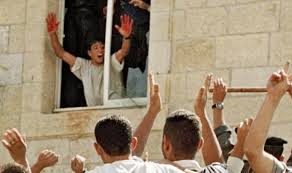
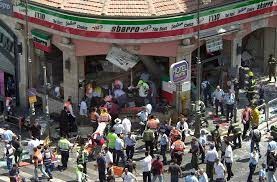
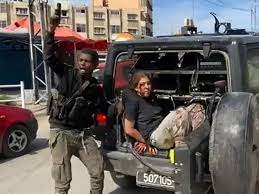
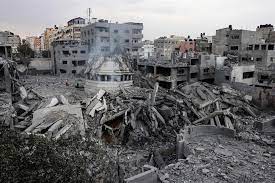
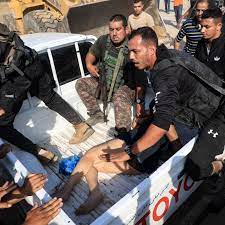
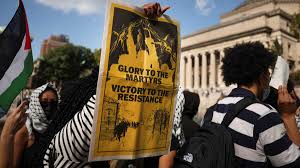
Yet for Palestinian Arabs, the moral calculus is inverted. Martyrdom is not mourned but celebrated. “Glory to the martyrs,” they shout, glorifying not only the dead but the genocidal jihadists of Hamas who carried out the October 7 massacre of unarmed Jews. Streets, schools, and summer camps are named for suicide bombers and killers. Death in the service of destroying Jews is not a tragedy but an achievement.

Columbia University placard of “Glory to the Martyrs”

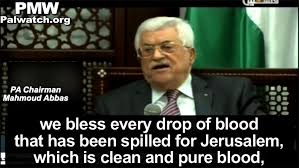
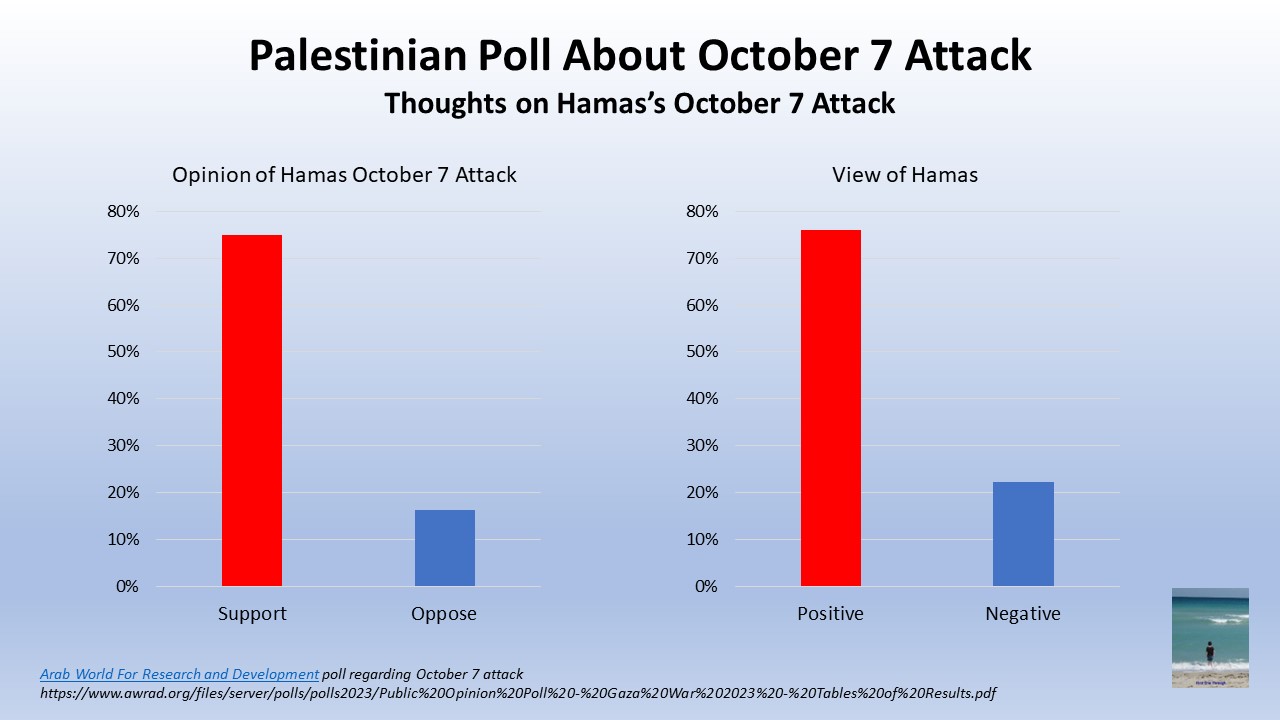
This glorification of death is not limited to fringe radicals. The majority of Gazans have always supported slaughtering Jewish civilians in Israel. Yasser Arafat, the father of the Palestinian national movement, repeatedly praised the “martyrs” who died attacking Israelis, insisting that “our blood is cheap compared to the goal [Jerusalem].” His successor, Mahmoud Abbas, continues the same practice. He honors terrorists killed while attacking Israelis, declaring that “we bless every drop of blood that has been spilled for Jerusalem.” The Palestinian Authority, under Abbas, even pays stipends to the families of those who die murdering Jews—the so-called “martyrs’ fund.”

Palestinian Authority President Mahmoud Abbas blesses blood “spilled for Jerusalem”

The same ethos echoed recently in the United States. At the People’s Conference for Palestine in Detroit, Michigan in August 2025, the crowd erupted in cheers for Gaza. Lameess Mahanna, sporting a shirt of the Palestine Youth Movement—employed at Columbia University—declared that the end of Israel would be “justice.” (1:35:00) She closed her remarks by leading the audience in a chant: “Say it clear and say it loud: Gaza, you make us proud!

If Gaza, in her telling, is suffering a “genocide,” how can its dead make her and the thousands who echoed her cry, “proud?” The answer is chilling: because human life is secondary. For her, for Hamas, for the Palestinian leadership stretching from Arafat to Abbas, and from Gaza to Detroit, “justice” is not measured in lives saved, but in Israel’s disappearance. Every dead body is not a tragedy but a step toward their perverted form of “justice:” erasing the Jewish state and replacing it with Arab Muslim rule.

This is the precise inverse of the Jewish ideal. Jews mourn their murdered; Palestinians exalt theirs. Jews sanctify life; Hamas sanctifies death. Jews seek peace with dignity; Palestinian leaders glorify death as the path to victory. The Jewish lesson of the Holocaust is the necessity of Jewish strength to prevent further massacres. The Palestinian lesson of their own history is that more massacres are required for them to have “dignity.”

Which brings us to the central question: can two peoples animated by such irreconcilable values ever truly coexist? One side views life as sacred above all else. The other views life as expendable, even desirable, when spent in the service of destroying its cohabitants.

Coexistence demands a shared commitment to life. Without that, “peace” is a dangerous mirage—a prelude to slaughter, the ultimate source of perverted pride.

Racism or Antisemitism: Sudan Burns While The World Screams at Israel

“The recent fighting and grave risk of further aggravation in an already brutal and deadly conflict raise severe protection concerns, amid a pervasive culture of impunity for human rights violations.” – Volker Türk, UN High Commissioner for Human Rights, June 2024

“The RSF and its allied militias have also committed other war crimes and crimes against humanity. These include widespread sexual and gender-based violence, rape, sexual slavery, abduction, and recruitment and use of children in hostilities. The RSF and its allied militias have also systematically engaged in pillage and looting. They have further committed large-scale attacks based on intersecting ethnicity and gender grounds, especially against the Masalit community in El Geneina, including killings, torture, rape, and other forms of sexual violence, amounting to persecution.” – Independent International Fact-Finding Mission for the Sudan, October 2024

Famine is present in Darfur. Conflict is increasing. Children are targeted. Girls and women are subject to rape. And the whole landscape is one of destruction, and, we say, criminality. ” – ICC Prosecutor Karim A.A. Khan, January 2025

” I have now concluded that members of the RSF and allied militias have committed genocide in Sudan.” – US Secretary of State, Antony Blinken, January 2025

With an estimated 150,000 people dead and some 12 million displaced, the conflict has paralysed Africa’s third-largest country. A catastrophic famine is ravaging the more remote areas, while a nightmare of sexual violence persists for women and girls across the country. – OCHA, April 2025

The numbers are staggering: as many as 150,000 people killed, millions displaced, thousands of women and children raped, villages in Darfur wiped off the map. It has been called “ethnic cleansing,” “genocide” in a land beset with “rape and sexual slavery” and “famine.” Children are dying daily, with half of El Fasher’s trapped population under five.

And yet — the streets of London, Paris, New York are quiet. No bridges are blocked. No university campuses are occupied. No faculty letters demand boycotts of Sudanese products.

Destruction in Sudan, captured by Giles Clarke for OCHA

The UN and Campus Activists Save Their Fury for Israel

When the UN convenes emergency sessions, it is rarely for Sudan. In 2024, the UN General Assembly passed 15 resolutions against Israel — and only seven against all other countries combined. The Human Rights Council maintains a permanent agenda item (Item 7) targeting only Israel.

On campus, Students for Justice in Palestine (SJP) calls for “globalizing the intifada” and promotes BDS campaigns to cut economic, cultural, and academic ties with Israel. Faculty petitions accuse Israel of “genocide” while ignoring the UN’s own genocide determinations in Sudan.

The fake narrative is fixed: Israel is a “settler-colonial outpost,” a European implant, a Western beachhead in the Middle East. This is not merely bad history — it is a deliberate attempt to erase Jewish indigeneity and delegitimize Israel’s right to exist.

Limited travel and lack of burial space has led to burials expanding from existing graveyard perimeters to the city roads. (photo: Giles Clarke for OCHA)

Erasing History as Antisemitic Strategy

“Israel’s pattern of practice of dispossession and expansion of settlements dating back to its establishment as a settler colonial state in 1948 has been found to be illegal under international law.” – NY CUNY vote on BDS Divestment, June 2024 (Passed)

This framing is an antisemitic dog whistle: it rebrands Jews as foreign European invaders in their ancestral homeland, turning their self-defense into imperial conquest. It ignores that more than half of Israeli Jews are Mizrahi expelled from Arab and Muslim lands. It recasts Israel’s rebirth — championed by the same UN that voted for partition in 1947 — as a sin that must be repented by dismantling the Jewish state.

The Institute for the Critical Study of Zionism is attempting to move Israel Studies in universities out of the Jewish Studies department and into Colonial Studies, both attempting to sever Jews from the land of Israel, as well as mark Zionism as a point of European imperialism.

This helps explain why so many are silent about Sudan or Syria. Those wars do not serve the European imperialism narrative, a war between the Global South and Global North. They do not produce graffiti that says “globalize the intifada” or “river to the sea.”

Israel is Vulnerable

“They can crush the flowers, but they cannot delay the springtime.” MIT vote on BDS, September 2024 (passed)

Israel is a small democracy, one that can be pressured and condemned without risk. Many seem to feel the UN’s vote to create Israel in 1947 was a mistake that must be corrected. The endless parade of UN resolutions, the obsessive focus of NGOs, and the boycotts pushed by activists reveal a not-so-hidden goal: not to protect Gazans, but to destroy Israel.

When Hamas butchered 1,200 Israelis on October 7 — burning families alive, gang-raping women, kidnapping children — the global street roared. Not in sympathy, but in accusation. The protests called Israel “the real terrorist” and demanded its isolation. When Israel finally defended itself, the outrage multiplied.

Meanwhile, Sudan burns — and the world yawns.

Mohamed Maysara, 2, cries at the Al-Buluk Hospital in Omdurman. He was there to receive treatment for malnourishment (photo: Giles Clarke)

A Moral Compass Pointed the Wrong Way

The world has turned its outrage into a weapon, aimed squarely at the one Jewish state. Genocide in Sudan, mustard gas in Syria, mass killings in Yemen — they elicit murmurs. But Israel’s attempt to dismantle a terror army that openly calls for its annihilation provokes riots, boycotts, and international tribunals.

This is not human rights activism but a global campaign to strip Jews of sovereignty. And it is why the contrast between Sudan’s silence and Gaza’s deafening clamor is not just hypocrisy — it is proof of a deeper animus that cannot be explained by compassion. It is the validation and desired implementation of Hamas’s genocidal charter.


Shoftim Inside the Gates vs. Judges Outside The Hague

Parshat Shoftim begins with a straightforward command:

“Judges and officers you shall appoint in all your gates … and they shall judge the people with righteous judgment.” (Devarim 16:18)

Rashi explains that every town needed both judges to rule fairly and officers to enforce those rulings. Justice could not be a distant idea — it had to be rooted locally, available to every community. That is the Torah’s formula for a moral society: equal justice, applied where people live.

Justice Where You Live

The genius of Shoftim is its insistence that justice must be accessible and equal. Not some imperial tribunal deciding cases in faraway capitals, but local courts where every person could seek fairness and truth.

It is inside the gates where justice takes hold. That’s what builds trust, stability, and morality in a society.

The ICJ’s Distant Spectacle

Contrast this with the International Court of Justice in The Hague. It claims universal authority, yet its judgments fall unevenly. Brutal regimes that slaughter their own citizens often escape its scrutiny. But Israel, a country with one of the most independent and activist judiciaries in the world, is hauled before it repeatedly.

This is an inversion of the Bible’s call for justice: a court far removed from the people, applying rules unevenly, more performance than principle.

Israel hauled before ICJ

Israel’s Local Justice vs. International Bias

Inside Israel, anyone can petition the Supreme Court — Arabs, NGOs, critics of the army. Judges regularly check government policy and military decisions. That is exactly what the Torah envisioned: justice dispensed locally, equally, and consistently.

The ICJ, by contrast, applies law selectively and from a distance. It does not strengthen justice; it hollows it out.

Conclusion

The United Nations had the opportunity for courts in its gates — with its agency UNRWA on the ground in Gaza, running schools, hospital and providing loans. It could have confronted Hamas’ crimes. Instead, it chose silence. It abandoned justice, allowed Hamas to fester, and turned Gaza into a terrorist enclave for Israel to face.

Now the same UN condemns Israel in The Hague. A body that ignored justice locally dares to preach it globally.

But the Torah is clear: a land cannot be moral when evil is allowed to sit at its gates. Hamas must be expelled. And the UN — which empowered terror and continues to undermine justice — has no rightful place in the Holy Land either.

UNESCO Protects the Hamas Charter as Endangered Cultural Artifact

A satire.

In a bold step to preserve humanity’s “most fragile treasures,” UNESCO voted to add the Hamas Charter to its list of endangered cultural artifacts. The decision came during the organization’s annual heritage summit, which initially convened to safeguard vanishing African oral traditions, disappearing tribal instruments, and lost languages. But the spotlight quickly shifted after the State of Palestine—recognized as a full UNESCO member—submitted the 1988 Hamas Charter as a candidate for protection.

Delegates debated the proposal with solemn reverence, as though they were discussing ancient scrolls or fragile clay tablets. “This is not merely a document,” intoned one UNESCO official, “it is a vibrant example of humanity’s enduring talent for mixing medieval theology, paranoid conspiracy, and genocidal intent into a single cultural artifact.”

Hamas founder, Sheik Ahmed Yassin, standing before children

Hamas, which currently holds 58% of the Palestinian parliament and continues to govern Gaza with an iron fist wrapped in a prayer shawl, celebrated the recognition. “We thank UNESCO for finally appreciating the poetic quality of our prose,” said one Hamas spokesperson, pointing to passages citing Jews as orchestrators of every global evil, from wars to stock market crashes. “It is art. Dark, sinister art, but art nonetheless.”

The Islamic Republic of Iran, a member of UNESCO with a keen eye for heritage preservation, reportedly helped prepare the submission. Delegates noted the Persian calligraphy used in the cover page of the proposal as “an exquisite touch of cultural diplomacy.”

Critics, however, were less charitable. Human rights groups asked why UNESCO would protect a text calling for the eradication of an entire people while ignoring actual endangered communities being eradicated in real time. UNESCO officials brushed off such concerns. “Our mission is not to judge,” said one diplomat. “If we can safeguard Stonehenge, we can safeguard Stone Age thinking.”

The vote passed overwhelmingly, though with several European countries abstaining in embarrassment. The document will now be digitally preserved and inscribed on UNESCO’s Memory of the World Register, alongside such treasures as the Magna Carta, Beethoven’s Ninth Symphony, and the forgery Protocols of the Elders of Zion.

As the session closed, one delegate mused: “Perhaps one day humanity will look back on this charter the way it looks at medieval torture devices—an artifact of cruelty, once revered, now displayed in a museum of shame.”

For now, however, UNESCO has declared the Hamas Charter an endangered cultural jewel which must be preserved. Its continued existence may be a threat to peace, but, as the organization reminded the world, “heritage must be protected, even when it is heritage of hate.”

On Trust

Trust is a curious thing. It can be so natural when it comes in small, unassuming packages. A neighbor offering a hand with the groceries. A stranger holding open a door. The innocent gaze of a child. These gestures, light as feathers, weigh more than they seem because they carry no hidden agenda.

Reading Sarah Tuttle-Singer on trust is like reading poetry. She writes with the hope that trust can bridge divides, that shared humanity can soothe ancient wounds. It’s tempting. It’s comforting. It makes us want to exhale and believe that the world really can turn softer, kinder, lighter.

But trust, in the realm of politics and war, is a word misused. Bus drivers and merchants may indeed know the art of coexistence, but their goodwill cannot stand against the fury of those consumed by hatred. History has shown this cruelly and clearly.

On October 7, Israel’s dreamers were shown what happens when trust meets rage. Peace-loving families along the Gaza envelope, who had spent years helping Gazans reach Israeli hospitals, were burned alive. Young people who came only for music and joy at the Nova festival were hunted, raped, and gunned down. Trust did not save them.

Leaders at war do not have the luxury of extending trust to enemies sworn to their destruction. Their duty is to protect their people, not to tell their adversaries where the defenses are weak or where to buy stronger weapons. In war, misplaced trust is not a virtue—it is a death sentence.

I like dreams. I enjoy Tuttle-Singer’s writings. But her kind of pre–October 7 dreaming feels like a dangerous nostalgia while Hamas still rules Gaza, while Israelis are still captives in tunnels, while so many Palestinian Arabs still celebrate the massacre and fantasize about taking over Israel itself.

Even more, I understand that I might have the luxury of fantasy, but the people in charge of keeping people safe do not.

Dreams belong in the safety of bed, not while driving a highway. Trust has a time and a place. For now, in the waking hours of the Middle East, those in charge with ensuring survival must act with clarity with dollops of charity.

It is better to trust in wartime leaders who are wide awake to reality than to believe in poets dreaming on the frontlines.

And to thank them for their service.

Al Jazeera’s Select And Distorted Concern For Children

Nothing so captures the European mindset like soccer. It’s a global sport with scant appreciation in North America, but Europeans are glued to it. Consequently, soccer (“football”) matches become backdrops for activists to shout their causes, knowing that it will attract millions – or perhaps billions – of eyeballs.

UEFA, the Union of European Football Associations, held its Super Cup in Udine, Italy on August 13, 2025. It was a match between Paris Saint-Germain of the Champions League and Tottenham Hotspur of the Premier League. It was quite a moment for Tottenham fans to be up against the big boys of soccer, especially for a club associated with Jews while the Jewish State is being besieged on all sides in its wars with Hamas, Hezbollah, Iran, Syria, Yemen and political foes.

It was a moment anti-Israel advocates would not pass up.

UEFA had been criticized by pro-Gazan agitators for not coming out against Israel during this war. On August 12, the day before the match, UEFA announced an expansion of its existing “support for the humanitarian efforts for children in conflict zones,” to include Gaza. The wording was careful to not criticize either Israel or Hamas, and just focused on children.

Whatever the adults waging wars think they are doing, the children are innocent. 

Aleksander Čeferin, UEFA President

UEFA took an added step during the match and had nine children from conflict zones where it supports humanitarian efforts – Afghanistan, Lebanon, Sudan, Syria and Yemen, and now Gaza – unfurl a banner on the field that read “stop killing children. stop killing civilians.”

Qatar-owned Al Jazeera would use the UEFA actions to generate its own anti-Israel story.

In an article titled “UEFA unfurls Gaza-related plea banner after Palestinian tribute fallout,” the pro-Hamas media site said that the banner was all about Gaza, even when children from multiple countries participated. The article pushed a Gaza narrative with “in the wake of heavy fallout over its meek tribute to a Palestinian player killed by Israel,” it mentioned Liverpool forward Mohamed Salah who condemned UEFA on August 10 for not calling out Israel in its statement.

Al Jazeera would then manufacture history, writing “Nine children refugees from Palestine, Afghanistan, Ukraine, and Iraq carried the banner onto the field of play before the game began.” But Afghanistan, Ukraine, and Iraq are actual countries, Palestine is not. The two children from Gaza who took part in the ceremony were in Milan receiving medical treatment, not fleeing persecution “owing to well-founded fear of being persecuted for reasons of race, religion, nationality, membership of a particular social group or political opinion,” which is the definition of a refugee according to the 1951 Convention on the Status of Refugees. Unless Al Jazeera believes these children are being targeted by Hamas.

Just days before this incident, on August 10, Al Jazeera had some of its journalists in Gaza killed by an Israeli strike. Israel said they were legitimate targets, as they were terrorists paid by Hamas. It was shocking to all that the media company which is owned by the wealthiest regime in the world needed its journalists to make some extra coin from an antisemitic genocidal organization that is supposedly “starving,” not that the journalists were terrorists, which was common knowledge.

The Qatari propaganda company has long accused Israel of committing a “genocide” in Gaza. It claims that “Israel kills an average 28 Palestinian children daily in Gaza,” attempting to make the Arab youth the primary victims and focus of the war, and portray Israel as a bloodthirsty monstrosity. It did not inform its readers that children under 18 account for 47% of the population of Gaza, but a much lower 31% of the fatalities according to OCHA, which gets its information from the Hamas run Ministry of Health (MoH) in Gaza.

When further considering that many of the children between 15 and 18 years old are part of the Hamas war machine, the much lower percentage of child fatalities points to Israel’s efforts to target Gazan fighters, not children. Even Hamas admits that nearly half of all fatalities in Gaza have been fighting-aged males (49%), even though they account for just one-quarter of the population (26%).

As for the 6,000 Gazans who invaded Israel on October 7, 2023, Al Jazeera had no concern for how they treated Jewish children. The Gazans killed 38 Israeli children in front of their parents. They took the same number as hostages to Gaza. What kind of people take babies as hostages as a matter of policy?

Bibas children Kfir and Ariel, with mother, Shiri, all taken as hostages by Gazans, later returned dead in an exchange for Gazan terrorists

Don’t kill children. Don’t kill civilians,” should be the understood motto of all civilized people and organizations. That Qatar and Al Jazeera continue to stand by Hamas after all they have done – and then attempt to misdirect the world towards Israel – makes them deeply complicit in the deaths of thousands.

Desire Doué and Ousmane Dembélé of France St. Germain lift the UEFA Super Cup Trophy, sporting jerseys embossed by their sponsor, Qatar Airways

To Remember: Antisemitism to Inflame or Moderate Islam

Trieste’s Piazza Unità d’Italia is one of Europe’s great open-air salons, its grand architecture framing a breathtaking view of the Adriatic. On a sweltering August afternoon, only a handful of tourists dared cross the blazing expanse, hugging the shadowed strips along the colonnades for relief.

There, in the quiet underbelly of the central building’s portico, a plaque catches the eye. In large Hebrew letters: “Zachor”—Remember. A verse from the Torah commands the Jewish people for all generations to recall what Amalek did—attacking the weak and stragglers as the Israelites left Egypt. Beneath the Hebrew, the Italian inscription explains: this was the site where Benito Mussolini, in September 1938, delivered his edict of the “Racial Laws.” In his speech, Mussolini declared Jews “incompatible” with Fascist Italy and announced their expulsion from national life.

It was no accident he chose Trieste. The city’s 6,700 Jews—around 2.7% of the population—were prosperous, visible, and in his eyes, a perfect stage. Within five years, over 90% would be deported, murdered, or scattered to exile, never to return.

At the time, Time magazine cynically suggested Mussolini might be “bluffing,” seeking to please Hitler and “curry favor with Islam” in Palestine. Antisemitism, in this view, was not only about Jews—it was also geopolitical currency, among his people and traded to win influence with the Muslim world.

Time magazine, September 26, 1938

The plaque was installed in 2018, on the 80th anniversary of the Racial Laws. But memory is fickle. Five years later, in 2023, after Hamas terrorists and thousands of Gazans crossed into Israel to massacre 1,200 civilians in the most brutal ways imaginable, Italy’s leaders declared Hamas—not the Palestinian cause itself—the obstacle to peace. They argued that a two-state solution, minus Hamas, could integrate Israel into a broader Muslim world via expanded Abraham Accords. In their words, peace could “moderate Islam.”

Antonio Tajani, Deputy Italian Prime Minister, Foreign Minister in October 2023 about Hamas massacre

It’s a striking inversion of Trieste’s history: in 1938, antisemitism was weaponized to build a bridge to Germany and court the Muslim world; in 2023, peace with Israel is pitched as the tool to temper Jew-hatred. At the dawn of the Holocaust, ridding the Jews bound Europe and the Muslim world, while today, removing antisemitic genocidal Muslims and ensuring the permanence of the Jewish State could unite Europe and the Arab Middle East.

In each case, Jews are pawns, tossed on the Mediterranean Sea, to be submerged or floated in the grander political game. And there we must therefore ask, what are we remembering?

Dueling stickers in Trieste, Italy, fighting the Gaza War in 2025

Gazans “are like locusts”

In April 2004, U.S. President George W. Bush sent a letter to Israeli Prime Minister Ariel Sharon essentially blessing Sharon’s proposed withdrawal from the Gaza Strip in exchange for the US backing Israel’s positions that the future contours of Israel would account for “new realities on the ground” and not follow “the armistice lines of 1949,” as well as ending the Palestinian so-called right-of-return by “settling of Palestinian refugees there [in a new Palestinian State], rather than in Israel.” In response to the letter, Israel withdrew all Jewish civilians from Gaza and its military in September 2005.

Gaza has ravaged itself since then.

As a charitable generous gesture, several Jewish and Israeli businessmen purchased Israeli greenhouses and related equipment, and gifted them to the Palestinian Authority (PA) which had elected Mahmoud Abbas as president in January 2005. The PA never was able to secure any of it. Palestinian security officials were overrun, saying that the Gazans looted it completely, leaving nothing behind “like locusts,” as soon as Israel pulled out.

News reports at the time were prescient regarding “concerns about Gaza’s future.”

Abbas made grand and empty proclamations. The PA did not have the respect of Gazans and the region would not be controlled by its leader from the Fatah party.

A few months later, Palestinians elected Hamas to 58% of parliament. Then, in 2007, a mini civil war broke out it Gaza which routed the PA and gave Hamas exclusive control of the strip. Amid the public failure of Abbas, United Nations Secretary General Ban Ki Moon stressed his full support for Abbas and the PA, while he worried about food and aid getting to Gaza’s civilian population.

Does any of this ring familiar? Gazans overrun the Palestinian Authority; PA makes grand and empty declarations; Gazans saddle up with Hamas; UN worries about food and aid.

In 2025, twenty years after Israel left the Gaza Strip, the situation repeats. Gazans loot food and aid trucks; the UN decries the situation; Abbas reads statements as though anyone respects and listens to him; and Hamas – or whatever is left of it – still has the support of the local population.

Gazans looting aid trucks

The underlying reality in Gaza is that the western-backed Palestinian Authority has never had a presence in the strip. The region has never truly been part of “Palestine” as envisaged by the many conferences over the last decades. How can there be a “two state solution” of Israel and Palestine, when the dreamed up “Palestine” is two distinct entities itself? What are countries “recognizing” when they cannot see reality?

The Greenhouses Swarm of 2005. The Fatah Swarm of 2007. The Israel Swarm of 2023. The Aid Swarm of 2025.

Gaza devours charity, donors, neighbors and itself so completely, that the request for ever more attention and aid is either completely nonsensical or understandable. Or both.

The Wrong Pressure

Israeli Prime Minister Benjamin Netanyahu has vowed that Israel will retake Gaza, dismantle Hamas, and free the hostages still held there. In response, the UK and France have rushed to apply diplomatic pressure — not on Hamas, but on Israel — pledging to recognize a Palestinian state in September. This move will only embolden Hamas to fight on, convinced it is winning a historic victory.

The flaw in this strategy is glaring: it’s not Israel that needs pressure — it’s Hamas, and that pressure must come from the Arab world, not just Europe. On July 30, 2025, Arab states took an overdue but welcome step, publicly calling on Hamas to disarm and hand authority over to the Palestinian Authority. This was a first in regional unity against Hamas.

Now Europe must pivot and press Arab states to go further: formally designate Hamas as a terrorist organization. This is not a radical suggestion. Egypt, Saudi Arabia, Bahrain, Jordan, Syria and the UAE already classify the Muslim Brotherhood as a terrorist group (the United States is on the cusp of doing so). Hamas is the Brotherhood’s Palestinian branch — extending the label is logical and overdue.

Such a declaration would signal to Hamas and to Stateless Arabs from Palestine (SAPs) that terrorism against Israel has no future and no backing in the Arab world, and that the region is moving towards normalization. It would also make it easier for the United States to advance pushing the United Nations Security Council to list Hamas alongside al-Qaeda and ISIS as a global pariah. To date, UN officials have described Hamas as a legitimate representative of the Palestinian people, keeping the terrorist group’s hopes alive.

Only then could Netanyahu ease military pressure, creating space for serious negotiations to dismantle Hamas and secure the return of the hostages.

Palestinian Terrorist Groups (July 2021)

UNRWA, Hamas, and Genocide: A Lesson in Propaganda Over Truth

As accusations of genocide in Gaza dominate global headlines, it’s important to revisit a revealing episode that exposes the deeper priorities of Palestinian political culture—from Hamas to institutions like UNRWA and even the Palestinian Authority.

Starting in 2009, the United Nations Relief and Works Agency (UNRWA) made multiple attempts to introduce Holocaust education into its school curriculum. Hamas, which governs Gaza, unequivocally rejected the idea. Its officials declared that teaching about the Holocaust would “poison the minds of Palestinian children.”

  • Yunes al-Astal, member of the Hamas faction in the Palestinian Legislative Council said teaching the Holocaust in UNRWA schools would lead to “marketing and spreading a lie.” He said that adding the subject to the curriculum was “a war crime” and “support and service of the Zionists” (Filastin al-Yawm, August 30, 2009).
  • Sami Abu Zuhri, Hamas spokesman in the Gaza Strip, said that Hamas opposed adding Holocaust to the curriculum because its objective was to justify the “Israeli the occupation” of the land of the Palestinian territories (Reuters, August 30, 2009).
  • Abd al-Rahman al-Jamal, head of the Palestinian Legislative Council’s education committee for Hamas, told a BBC correspondent that the Holocaust was “a big lie.”
  •  Mustafa Sawaf, editor of Hamas’ Felesteen, wrote an editorial (September 1) entitled slamming UNRWA’s intention to teach the Holocaust an attempt to brainwash the younger generation in the Gaza Strip and to “prettify the image of the murderous, criminal Jews.”
  • Jamila Al-Shanti, Hamas Minister of Education, said that “Talk about the Holocaust and the execution of the Jews contradicts and is against our culture, our principles, our traditions, values, heritage and religion.” (Washington Post, September 2, 2009).
  • The Hamas-affiliated Popular Committees for Refugee Affairs denounced UNRWA, claiming that the Holocaust had not yet been scientifically proven and that teaching it was liable to cause students to identify with the Jews. Members of the committee absolute refused to have their children “learn the lie invented by the Zionists” (Filastin al-‘An website, August 30, 2009). According to the Committees, “the Holocaust was not real and outstanding Western scholars have proved that.” (PalToday website, August 30, 2009). It added “Holocaust studies in refugee camps is a contemptible plot and serves the Zionist entity with a goal of creating a reality and telling stories in order to justify acts of slaughter against the Palestinian people.”

UNRWA teachers in Jordan also refused to teach about the Holocaust, saying “teaching UNRWA students about the so-called ‘Holocaust’ as part of human rights harms the Palestinian cause… and changes the students’ views regarding their main enemy, namely the Israeli occupation.”

The Palestinian Authority remained silent or dismissive about Holocaust education in the West Bank.

Consequently, UNRWA held back from pushing the issue, as its mantra is to work within the framework of the “host countries” in which it operates.

This episode illustrates three key realities:

  1. UNRWA and Hamas are not the same—but not separate either. UNRWA claims neutrality, but its own documents state that it must work with the local authorities—in Gaza, that’s Hamas. This means Hamas effectively vetoes what UNRWA can teach and what it can do, no matter what UN policy says.

2. Antisemitic attitudes aren’t limited to Hamas. The resistance to teaching the Holocaust spans Palestinian political and educational institutions well beyond Gaza.

3. Propaganda overrides fact. From Holocaust denial to blood libel-style rhetoric, the dominant trend has been the elevation of anti-Israel and antisemitic narratives over historical truth. Even Columbia professor Edward Said – who vilified the State of Israel – acknowledged the antisemitic and conspiratorial discourse in Palestinian circles regarding Holocaust denial. James Zogby went so far as to call the violent antisemitic obsession, a “tragic deformity in Palestinian political culture,” when speaking at the United Nations in June 2023.

Whether or not what is happening in Gaza today constitutes a genocide is a matter of intense debate. But what is beyond dispute is the long-standing, systemic preference in Palestinian political culture to weaponized falsehoods to spread propaganda to destroy the Jewish State.