The Many Lies of Jimmy Carter

It is not particularly surprising that Jimmy Carter, former US president and author of “Palestine: Peace not Apartheid,” chose to commemorate the UN’s official Day of Solidarity with the Palestinian People (November 29), to launch another attack on Israel. Carter did this through lies and half-truths in a New York Times Op-Ed (printed below).

Here are some lying lowlights:

Lie: Israel cannot take control of any of the “West Bank” which it seized during a war. Carter wrote that Israel and Egypt concluded a peace deal because it was based on UN resolution 242 which included the clause “the inadmissibility of the acquisition of territory by war.” The peace agreement with Egypt has nothing to do with the Palestinian Arabs.

  • The “West Bank” was taken during a DEFENSIVE war. While it is a matter of debate whether Israel’s 1967 preemptive attack on Egypt which was ready to attack Israel was offensive or defensive, there is no debate that the Jordanians (and Palestinian Arabs who had taken Jordanian citizenship) attacked Israel first. The laws about the inadmissibility of taking land have to do with a “belligerent party,” not the defensive party.
  • The international community recognizes Israel’s taking land in a defensive war. After the Arab armies attacked Israel in 1948-9, Israel seized much more land than was granted to it under UN Resolution 181, known as the 1947 Partition Plan. The dynamic of taking more of the “West Bank” in yet another defensive war follows the same principle.
  • The Sinai peninsula was never part of the Palestine Mandate.  Israel returned land to Egypt that it took in the 1967 war, land that was never part of the Palestine Mandate which sought to reestablish a Jewish homeland. However, the “West Bank” is part-and-parcel of the Palestine Mandate, just as the land west of the 1949 Green Line was part of the Jewish homeland.

Lie: The Palestinians seek “a just and lasting peace in the Middle East in which every state in the area can live in security.” Carter continued to recite language from UN resolution 242, but failed to connect Palestinians to the clause.

  • The Palestinian Arabs have voted for war, not peace. The Palestinian Arabs voted Hamas, a recognized terrorist group that seeks the destruction of Israel, to 58% of the parliament in 2006. Palestinian polls show Palestinian Arabs favoring the group in every poll. This is a group that has the most anti-Semitic charter in the world, which specifically calls for killing Jews and destroying all of Israel. The Hamas leadership continues to incite violence against Israelis.

Lie: Carter implied that “withdrawal of Israel armed forces from territories occupied in the recent conflict,” meant withdrawal from the West Bank. It does not.

  • A withdrawal from “territories” but not “all of the territories.”  The language in the UN resolution was approved with specific amendments in the final text. It specifically did not call for Israel to remove troops from all of the new lands, as the 1949 Armistice Agreements with Egypt and with Jordan specifically stated that the Armistice Lines / the Green Line was NOT to be considered a new border.

Lie: Carter stated that Jewish homes in the West Bank were “constructed illegally by Israel on Palestinian territory.” Carter has adopted the anti-Israel United Nations language in describing “settlements” as illegal. He might as well also state that “Zionism is racism,” as stated in UN Resolution 3379 which was passed in 1975 under his watch.

  • Jews living throughout the West Bank is LEGAL. International law in 1920 (San Remo Agreement) and 1922 (Mandate of Palestine) specifically stated that Jewish immigration was to be encouraged throughout Palestine and that “No person shall be excluded from Palestine on the sole ground of his religious belief” (Mandate Article 15). You cannot bar Jews from living in the West Bank as a matter of moral and legal principle.

Lie: Carter wrote that Obama declared that the border between Israel and Palestine “should be based on the 1967 lines.”   This is a half-truth that is a complete lie.

  • Obama stated that borders should be negotiated between the two parties and include land swaps to account for current realities. Carter deliberately misled his liberal fans and Israel-bashers by only using half of Obama’s suggested course to peace. Obama stated that the borders would NOT look like the 1967 borders, but Carter piecemealed Obama’s quote into a distortion, a lie.  It should be further noted that Obama’s language was much softer than the assurances that President George W. Bush gave Israeli Prime Minister Ariel Sharon in 2004 that “it is unrealistic to expect that the outcome of final status negotiations between Israel and the Palestinians will be a full and complete return to the armistice lines of 1949.”

Lie: Carter implied that the Israelis’ “commitment to peace is in danger of abrogation,” and said nothing about Palestinian Arabs lack of desire for peace.

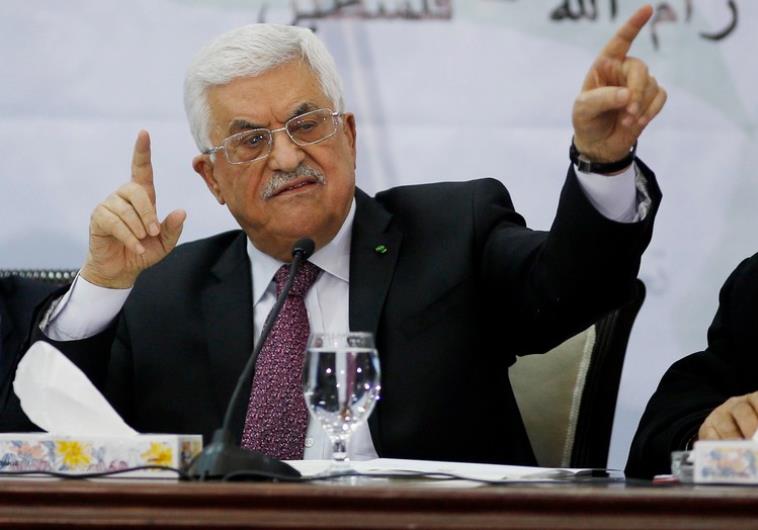
  • Israeli Prime Minister Benjamin Netanyahu has stated repeatedly he seeks to commence negotiations immediately to resolve the conflict. It is Palestinian Authority Mahmoud Abbas that refuses to engage with Israel. It is Mahmoud Abbas that incites terror against Israelis and seeks to deny Jewish rights and history in Jerusalem. Only Israeli leadership has declared the goal of two states for two peoples, while Abbas has called for an Arab state of Palestine devoid of Jews, and Israel, which should be a bi-national state.

Lie: Carter calls all of the West Bank “Palestinian Land,” which are “occupied.”

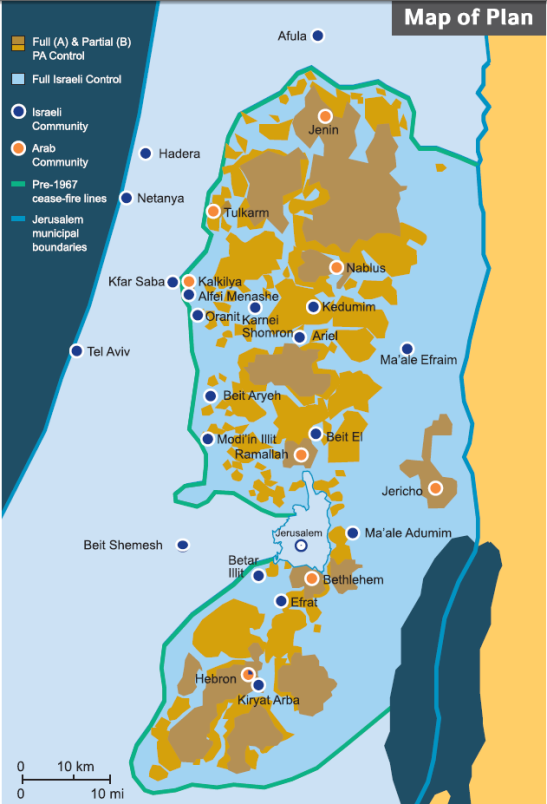
  • The West Bank includes “Palestinian Authority territory” which is administered by the PA, and Israeli territory, administered by Israel – according to the Oslo Accords, agreed to by both parties. The Oslo I and Oslo II Accords signed in 1993 and 1995 by the Israeli government and the Palestinian Authority handed over certain lands to the PA. Those areas, known as Area A, are where the vast majority of Arabs in the West Bank live. They are not under Israeli military control. Area C, which is under Israeli military control, is where the vast majority of Israelis live in the West Bank, and include a minimal number of Arabs.

Lie: Carter claims that the world condemns Israel since Arabs east of the Green Line cannot vote, while Israeli Jews living in EGL can. That is wild distortion of reality.

  • Arabs in Jerusalem can become citizens and vote in Israeli elections. Israel reunited the city of Jerusalem in 1967, and expanded the borders of the city in 1980. Israel gave ALL people living in the city the option to become Israeli citizens, just as the other million-plus non-Jews in Israel enjoy Israeli citizenship. Thousands of Arabs from Jerusalem have become citizens of Israel.
  • People in territories around the world don’t vote. Puerto Ricans, Guam and other US territories, are not eligible to vote in US elections. Does the world condemn the US for this structure? No. Citizens are entitled to vote – regardless of where they live. An American living in Germany for 20 years still gets to vote in US elections, while a Puerto Rican will not. Similar for Israeli citizens that opt to live in EGL/ the West Bank.

Lie: Carter calls the Palestinian Authority a “moderate Palestinian leadership.”

After laying out a package of outright lies and half-truths, Carter calls on President Obama to act quickly and: 1) recognize a Palestinian State; and 2) passing a UN Security Council Resolution that all Israeli “settlements” are illegal.  He added “Recognition of Palestine and a new Security Council resolution are not radical new measures, but a natural outgrowth of America’s support for a two-state solution.”

It is beyond “radical.” It is wrong and dangerous.

To this day, Carter remains the only US president to call Israelis living in EGL/West Bank “illegal.” Obama, Bush and others used terms like “illegitimate” (Obama) or “unhelpful” (Bush) or even an “obstacle to peace,” but no other president claimed that settlements in disputed territory are “illegal.” Such a declaration is radical, and the left-wing extremist was the only president to use such terminology.

Further, recognizing a Palestinian State completely ends the Oslo Accords and a negotiated solution. It doesn’t “restart” talks, but puts both parties on the course for unilateral actions, such as annexation of additional lands. It will most likely lead to war.

Carter (like the anti-Israel UN Secretary General Ban Ki Moon) has urged Hamas and Fatah to reconcile. They seek to insert a genocidal Nazi party into the Palestinian government as a pathway to peace. These are the same people that recommend these two radical actions.

While Carter and Ban are correct in recognizing that it is unsustainable to have a Palestinian state with distinct governments controlling different parts of the country, that just underscores why there cannot be recognition of a Palestinian state today. It doesn’t mean rewarding a dysfunctional and anti-Semitic government with recognition.

 20161130_070230
Jimmy Carter New York Times Op-Ed November 29, 2016

Seeing Jimmy Carter write again is a reminder of the far left fringe’s inability to see or grasp the truth of the Middle East.  Carter’s adoration of Hamas, underlines his insanity. He imagines and hopes for a world that doesn’t exist, and makes suggestions that are dangerous for civil society.


Here is Carter’s Op-Ed of lies in full. The boldface is meant as reference for the notes above.

ATLANTA — We do not yet know the policy of the next administration toward Israel and Palestine, but we do know the policy of this administration. It has been President Obama’s aim to support a negotiated end to the conflict based on two states, living side by side in peace.

That prospect is now in grave doubt. I am convinced that the United States can still shape the future of the Israeli-Palestinian conflict before a change in presidents, but time is very short. The simple but vital step this administration must take before its term expires on Jan. 20 is to grant American diplomatic recognition to the state of Palestine, as 137 countries have already done, and help it achieve full United Nations membership.

Back in 1978, during my administration, Israel’s prime minister, Menachem Begin, and Egypt’s president, Anwar Sadat, signed the Camp David Accords. That agreement was based on the United Nations Security Council Resolution 242, which was passed in the aftermath of the 1967 war. The key words of that resolution were “the inadmissibility of the acquisition of territory by war and the need to work for a just and lasting peace in the Middle East in which every state in the area can live in security,” and the “withdrawal of Israel armed forces from territories occupied in the recent conflict.”

The agreement was ratified overwhelmingly by the Parliaments of Egypt and Israel. And those two foundational concepts have been the basis for the policy of the United States government and the international community ever since.

This was why, in 2009, at the beginning of his first administration, Mr. Obama reaffirmed the crucial elements of the Camp David agreement and Resolution 242 by calling for a complete freeze on the building of settlements, constructed illegally by Israel on Palestinian territory. Later, in 2011, the president made clear that “the borders of Israel and Palestine should be based on the 1967 lines,” and added, “negotiations should result in two states, with permanent Palestinian borders with Israel, Jordan and Egypt, and permanent Israeli borders with Palestine.”

Today, however, 38 years after Camp David, the commitment to peace is in danger of abrogation. Israel is building more and more settlements, displacing Palestinians and entrenching its occupation of Palestinian lands. Over 4.5 million Palestinians live in these occupied territories, but are not citizens of Israel. Most live largely under Israeli military rule, and do not vote in Israel’s national elections.

Meanwhile, about 600,000 Israeli settlers in Palestine enjoy the benefits of Israeli citizenship and laws. This process is hastening a one-state reality that could destroy Israeli democracy and will result in intensifying international condemnation of Israel.

The Carter Center has continued to support a two-state solution by hosting discussions this month with Israeli and Palestinian representatives, searching for an avenue toward peace. Based on the positive feedback from those talks, I am certain that United States recognition of a Palestinian state would make it easier for other countries that have not recognized Palestine to do so, and would clear the way for a Security Council resolution on the future of the Israeli-Palestinian conflict.

The Security Council should pass a resolution laying out the parameters for resolving the conflict. It should reaffirm the illegality of all Israeli settlements beyond the 1967 borders, while leaving open the possibility that the parties could negotiate modifications. Security guarantees for both Israel and Palestine are imperative, and the resolution must acknowledge the right of both the states of Israel and Palestine to live in peace and security. Further measures should include the demilitarization of the Palestinian state, and a possible peacekeeping force under the auspices of the United Nations.

A strong Security Council resolution would underscore that the Geneva Conventions and other human rights protections apply to all parties at all times. It would also support any agreement reached by the parties regarding Palestinian refugees.

The combined weight of United States recognition, United Nations membership and a Security Council resolution solidly grounded in international law would lay the foundation for future diplomacy. These steps would bolster moderate Palestinian leadership, while sending a clear assurance to the Israeli public of the worldwide recognition of Israel and its security.

This is the best — now, perhaps, the only — means of countering the one-state reality that Israel is imposing on itself and the Palestinian people. Recognition of Palestine and a new Security Council resolution are not radical new measures, but a natural outgrowth of America’s support for a two-state solution.

The primary foreign policy goal of my life has been to help bring peace to Israel and its neighbors. That September in 1978, I was proud to say to a joint session of Congress, “Blessed are the peacemakers, for they shall be called the children of God.” As Mr. Begin and Mr. Sadat sat in the balcony above us, the members of Congress stood and applauded the two heroic peacemakers.

I fear for the spirit of Camp David. We must not squander this chance.


Related First.One.Through articles:

Palestinians are “Desperate” for…

Real and Imagined Laws of Living in Silwan

Liberals’ Biggest Enemies of 2015

Social Media’s “Fake News” and Mainstream Media’s Half-Truths

The Impossible Liberal Standard

The New York Times Refuses to Label Hamas a Terrorist Group

Educating the New York Times: Hamas is the Muslim Brotherhood

CNN’s Embrace of Hamas

Squeezing Zionism

Subscribe YouTube channel: FirstOneThrough

Join Facebook group: FirstOne Through  Israel Analysis

Obama’s “Palestinian Land”

On September 20, 2016, US President Barack Obama spoke at the United Nations General Assembly in New York City. His passing comment on Palestinian Arab-Israel conflict underscored why peace did not advance, and his relationship with Israel worsened over his term.

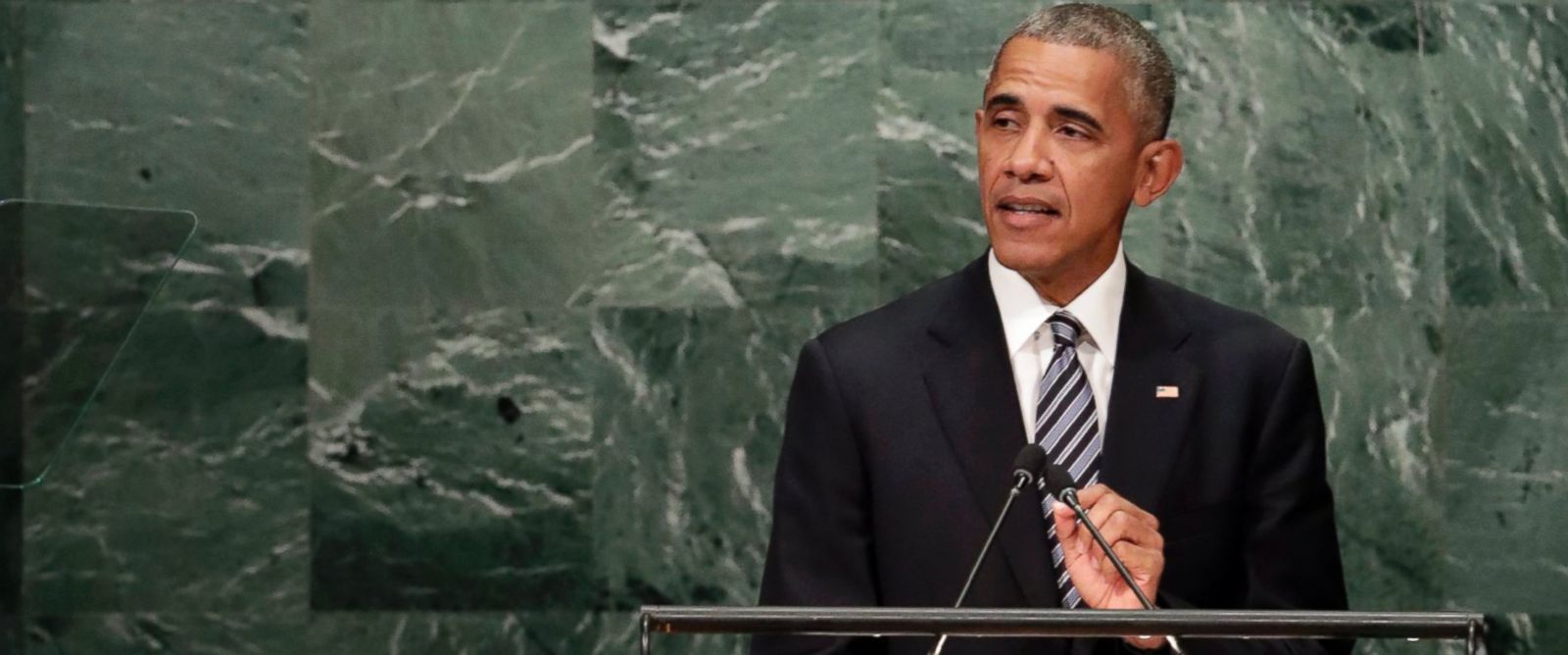
obama-un2016
US President Barack Obama addressing the United Nations
September 20, 2016

Obama’s UN remarks covered a lot of activities during his eight years in office, including the Iranian nuclear deal; opening relations with Cuba; and tackling climate change. He spoke about the Arab-Israeli conflict very briefly, but the remark was telling:

“…surely, Israelis and Palestinians will be better off if Palestinians reject incitement and recognize the legitimacy of Israel, but Israel recognizes that it cannot permanently occupy and settle Palestinian land.  We all have to do better as leaders in tamping down, rather than encouraging, a notion of identity that leads us to diminish others.”

“Palestinian land.”  What exactly is Palestinian land, according to the parties themselves? According to the United States? According to Obama?

Oslo Agreements

Since 1993, successive US governments have stood behind the Oslo Accords signed by both the Palestinian Authority (PA) and Israel, and its successor document, Oslo II signed in 1995.  That document was the last agreement signed by the two parties to settle the “Question of Palestine.”

Oslo II clearly spelled out what was “Palestinian land” to be fully governed by the Palestinian Authority in regards to military and civil administration.  That area is known as “Area A” in EGL (east of the Green Line) and the Gaza Strip.  Israel handed over all of that land to the Palestinians over a decade ago.

“Area B” in EGL/west bank of the Jordan River, is a mixed territory, in which the Palestinian Authority has responsibilities for civil matters, and military matters are coordinated jointly.  That land is neither “Palestinian Authority” nor “Israeli” exclusively.

“Area C” makes up the majority of EGL, and is “Israeli Territory,” in which Israel administers all matters, including civil and security responsibilities.

egl
Map showing Areas A, B and C, east of the Green Line

The Israelis and Palestinians negotiated and agreed to the contours of these three blocks.  The parties also worked on a plan for additional land to be transferred from “Israeli Territory” to “Palestinian Authority Territory” over the years 1995 to 2000.  However, Yasser Arafat (fungus be upon him) rejected those negotiations at the last moment, and launched the Second Intifada in September 2000, as the interim Oslo II Accord was due to become permanent.  As such, no additional transfer from Israeli Territory to Palestinian Authority Territory has occurred.

As every US administration has pushed for the two parties to negotiate a two-state agreement on the basis of the Oslo Accords, there is NO BASIS for Obama to refer to Area C as “Palestinian Land.”  That land will continue to be Israeli land until such time as they agree to transfer parts of it to the PA.

As there is no Israeli “occupation” or “settlement” activity in the Israeli territory of Area C, Obama’s mischaracterization of Israeli actions in that land that they legally administer explains his comments and treatment of Israel since he took office in 2009.

Mandate of Palestine

It is also worth noting that international law, established in the 1920 San Remo agreement and the 1922 Mandate of Palestine, specifically gave Jews the legal rights to live and settle throughout Judea and Samaria (the entity known as EGL/West Bank did not even exist when five Arab armies illegally attacked Israel (1948-9) and Jordan annexed the region in 1950.)

The Palestine Mandate stated:

“secure the establishment of the Jewish national home, as laid down in the preamble, and the development of self-governing institutions, and also for safeguarding the civil and religious rights of all the inhabitants of Palestine, irrespective of race and religion” (Article 1) Jews were to have full civil rights throughout Palestine, such as buying and building homes.

“The Mandatory shall be responsible for seeing that no Palestine territory shall be ceded or leased to, or in any way placed under the control of the Government of any foreign Power.” (Article 5) which Britain did anyway when it separated the east bank of the Jordan River to the Hashemite Kingdom, but which wasn’t a foreign power.

“The Administration of Palestine, while ensuring that the rights and position of other sections of the population are not prejudiced, shall facilitate Jewish immigration under suitable conditions and shall encourage, in co-operation with the Jewish agency referred to in Article 4, close settlement by Jews on the land, including State lands and waste lands not required for public purposes.” (Article 6) specifically stating that Jews were to settle throughout Palestine, including lands that Obama believes Jews “occupy”.

“The Administration of Palestine shall be responsible for enacting a nationality law. There shall be included in this law provisions framed so as to facilitate the acquisition of Palestinian citizenship by Jews who take up their permanent residence in Palestine.” (Article 7) in which Jews do not only move and settle the land, but become citizens of the country if they live ANYWHERE in the land, including Judea and Samaria.

“No discrimination of any kind shall be made between the inhabitants of Palestine on the ground of race, religion or language. No person shall be excluded from Palestine on the sole ground of his religious belief.” (Article 15) clearly states that no person should be barred from living anywhere in the land just because they are Jewish – as if human rights law wasn’t enough.

International law – and human rights law – clearly allow Jews to live throughout EGL/the West Bank. The Oslo Accords signed between the parties specifically state that Israel controls all of Area C until such time as the parties negotiate the transfer of more lands.

The notion that Jews living in houses that they have every legal and moral right to live in, is somehow connected to Obama’s belief of a “permanent occupation of Palestinian land” is false, misleading and arguably anti-Semitic on every level.


Related First.One.Through articles:

Palestinians agree that Israel rules all of Jerusalem, but the World Treats the City as Divided

The Illogic of Land Swaps

The Legal Israeli Settlements

Names and Narrative: Palestinian Territories/ Israeli Territories

Names and Narrative: The West Bank / Judea and Samaria

The Left-Wing’s Two State Solution: 1.5 States for Arabs, 0.5 for Jews

Nicholas Kristof’s “Arab Land”

New York Times’ Tales of Israeli Messianic War-Mongering

The Long History of Dictating Where Jews Can Live Continues

Recognition of Acquiring Disputed Land in a Defensive War

Subscribe YouTube channel: FirstOneThrough

Join Facebook group: FirstOne Through  Israel Analysis
The Only Precondition for MidEast Peace Talks

Acting President of the Palestinian Authority Mahmoud Abbas has long argued that he needed many preconditions satisfied before he would sit down with Israeli Prime Minister Benjamin Netanyahu for peace talks. Those requirements included settlement freezes and releasing Palestinian Arab prisoners from Israeli jails. Netanyahu begrudgingly did both of those things, and Abbas slowly showed up to talks, but didn’t actively engage to negotiate a solution.

Instead, during the last talks in 2014, Abbas shuttered the talks by forming a unity government with the terrorist group Hamas. Within a week, Hamas loyalists kidnapped and murdered three Israeli teenagers, leading to the 2014 Gaza War.

More recently, Abbas argued for a new set of preconditions, including that peace talks must continue for at least one year, and that Israeli withdrawal from the West Bank would be concluded by 2017. His preconditions seemingly now include demanding that his end goals (a new Palestinian State without Jews) be met before he even sits at the table.

Abbas sounds like a very serious man seeking peace.

For his part, Netanyahu continues to state that he is willing to sit down with Abbas without any preconditions and that he is open to discuss any matter. In doing so, he hoped to start bilateral talks and resolve the Israeli-Palestinian Arab conflict.

Netanyahu is wrong too.

benjamin-netanyahu-valls-france-israel
Israeli Prime Minister Benjamin Netanyahu (R) holds a joint press conference with Prime Minister of France Manuel Valls, May 23, 2016. (Photo: Kobi Gideon / GPO)

GOALS and PRECONDITIONS

There is nothing wrong with the parties stating the goals they hope to achieve in the talks, whether they be the establishment of an independent Palestinian State with every Jew evicted from the land (PA position), or that such Palestinian state needs to officially recognize Israel as a Jewish State (Israeli position). The desires may be non-starters for the counter-parties, and whether those goals are ultimately achieved will be a matter of negotiations and compromise. However, they are not, nor should they be treated as, preconditions.

Preconditions had historically been viewed as items which the parties required to initiate and sustain the peace talks. In the past, Abbas argued that he needed those tangible results to gain popular support for the talks, and Netanyahu gave in (due to pressure from the USA) with a settlement freeze and releasing prisoners. More recently, Netanyahu banned any member of the Israeli parliament from going to the Temple Mount, to calm the killing spree launched by Palestinian Arabs against Jews in the Holy Land.

Asking for and satisfying these preconditions is flawed and counter-productive.

If peace talks will ultimately put both parties on a path to a better course, why beg the parties to show up?  The Palestinians demand preconditions and use the complaint “show me that you’re serious” to obtain slices of their ultimate goal, while never publicly making a single concession.  They continue to extract items from the Israelis while conceding nothing, as they wait to see what the French proposal will produce for them, before taking any steps towards the Israelis.

The French, while likely well-meaning, have destroyed the basic parameters for peace talks: they have pushed aside bilateral negotiations.  In doing so, there is no chance of bringing the Palestinians to the table.

For the Israelis, satisfying slices of Palestinian goals without any mutual action by the Palestinians before talks commence has two negative consequences: it continues to demonstrate to the Palestinians that they can forever delay publicly stating any compromise position, undermining the Israeli public’s confidence in the talks; and it obfuscates the vital parameter of the peace process, which is not whether the parties can sustain the talks, but whether they have the ability to deliver on the outcome.

THE ONLY PRECONDITION

If the parties negotiating the peace talks have no legitimacy, and no ability to deliver on whatever is negotiated, the talks are a complete waste of time and effort.

Which leads to the only real practical precondition to peace talks: the Palestinians must hold elections.

The Palestinians last voted for president in 2005, and for parliament in 2006. They have held no elections for either president or parliament since that time.

Acting President of the PA Abbas’s term expired in January 2009. He has continued in that post for many years, but has neither mandate nor support of the Palestinian people. The March 2016 Palestinian poll concluded “If new presidential elections are held today in the West Bank and the Gaza Strip, Hamas’ candidate Ismail Haniyeh would win against Mahmud Abbas with a margin of 11 percentage points.”  Further, “a majority in both the West Bank and the Gaza Strip continues to demand his [Abbas’s] resignation.”

Abbas plo council
Acting President of the Palestinian Authority Mahmoud Abbas at the
Central Council of the PLO in Ramallah

(photo: Reuters)

Hamas won 58% of the seats of parliament in the 2006 elections and subsequently routed the rival Fatah party out of Gaza. Abbas and his Fatah party have almost zero influence in the coastal strip.  That coastal strip has launched three wars against Israel since Abbas took power, in 2008, 2012 and 2014.

So Abbas has no legitimate authority, no popular support, and no ability to deliver peace.

Yet the world wants the Israelis to negotiate with a straw man.  Why should they?  For photo ops?

The only precondition for peace talks are for the Palestinian to hold new elections and for that winner to control both Palestinian Authority territories in Gaza and Area A in Judea and Samaria.

PALESTINIAN ELECTIONS AND RAMIFICATIONS

One of the fears in the global community about holding Palestinian elections is that Hamas would win the presidential contest. Almost every poll of Palestinian Arabs over the past ten years shows Hamas winning, particularly against Abbas. As such, world leaders have been reluctant to force an election as a Hamas victory would destroy any peace process, as Hamas states clearly in its charter (Article 13), “so-called peaceful solutions and international conferences, are in contradiction to the principles of the Islamic Resistance Movement…There is no solution for the Palestinian question except through Jihad. Initiatives, proposals and international conferences are all a waste of time and vain endeavors.”

As such, the world must be clear about the elections: Hamas, in its current configuration, with its current charter cannot participate in the elections. Should the Palestinians allow Hamas to run, the world will view such action as a rejection of any peace with the Jewish State.  The ramifications would be severe:

  • Nations would begin to cut off all Palestinian aid
  • From the United Nations perspective, the UNRWA relief agency which was initially designed as a short-term agency almost 70 years ago, will cut its staff and funding in half (and move those resources to help actual refugees at the UNHCR)
  • The global community would not put forward any international peace process, nor consider permitting a Palestinian admission into any UN agency for a decade

However, should the Palestinians have elections which exclude the Hamas terrorist group, the Palestinians would be represented by a leadership with a mandate, authority and capability of delivering on peace.  Such a leadership would be an actual counterparty that could deliver on the necessary compromises with Israel.


It is well past time to stop calling international conferences that exclude the Palestinians and Israelis, and forcing Israelis to negotiate with a straw man.  Begin the process of holding genuine Palestinian elections now.


Related First.One.Through articles:

The Disappointing 4+6 Abbas Anniversary

The United Nations Applauds Abbas’ Narrative

The Undemocratic Nature of Fire and Water in the Middle East

The Israeli Peace Process versus the Palestinian Divorce Proceedings

Subscribe YouTube channel: FirstOneThrough

Join Facebook group: FirstOne Through  Israel Analysis
The Arab Middle East Makes Refugees, They Don’t Help Them

The Middle East is producing refugees in great numbers, as the civil wars in Syria and Sudan drag on, ISIS takes over large swathes of Iraq, and Libya and Yemen deteriorate into failed states.

The refugees are being welcomed into various western countries including Germany, Sweden and Canada. Just recently, Canada changed its laws under its new Prime Minister Justin Trudeau, to facilitate refugees becoming citizens.

In the Arab Middle East, only Jordan has opened its doors to fellow Muslim Arabs. The Islamic country of Turkey is not Arab, and prefers to act as a way station to refugees in transit to Europe.  The vast Kingdom of Saudi Arabia has not opened its doors. The rich states of Oman, Qatar and Kuwait have done nothing.

syrain refugees jordan
Syrian refugees in Jordan

There is a long history of the Muslim Arab Middle East creating refugees, but not welcoming them.

  • In 1991, after the Palestinians supported Iraq’s Saddam Hussein in his takeover of Kuwait, the Kuwaitis expelled over 300,000 Palestinians. Goodbye.
  • In 1967, after the Egyptians and Syrians threatened to destroy Israel, but ended up losing the war, the countries did not welcome any Arabs from the region into their countries as new citizens.
  • In 1948-9, when the Arab countries surrounding Israel launched an attack to destroy the Jewish State, but failed to do so and consequently helped create 711,000 Arab refugees, they let the people suffer.  While the Syrian government allowed the United Nations to establish refugee camps for the Palestinian Arab refugees inside Syria, it never allowed those refugees or their descendants to obtain work permits to get professional jobs.

And so it continues to this day. While the Islamic State dreams of building a unified caliphate to unite the Muslims of the Middle East, the established monarchies continue to do their utmost to cement divisions.

The Muslim Middle East today is divided between the genocidal jihadists of ISIS who seek Muslim unity by killing anyone not like themselves, and the corrupt, racist monarchies that do nothing to promote unity.

Will the Muslims that flee the insanity of the region adopt western values of tolerance, or will they bring one of these brands of barbarism to the western world?


Related First.One.Through articles:

Help Refugees: Shut the UNRWA, Fund the UNHCR

Palestinian “Refugees” or “SAPs”?

Considering a Failed Palestinian State

The United States Joins the Silent Chorus

A Flower in Terra Barbarus

Subscribe YouTube channel: https://www.youtube.com/user/FirstOneThrough

Join Facebook group: Israel Analysis

The Color Coded Lexicon of Israel’s Bigotry: It’s not Just PinkWashing

Opponents of Israel have come up with a variety of terms to portray the Jewish State in a negative light. Terms like “Zionist Entity” and “Apartheid Wall” are meant to show the country as a transient racist place.

Over the past years, a new term arose which doesn’t paint Israel in negative colors, but begrudgingly acknowledges the country as a liberal democracy, and does so as it calls out the actions as a flimsy veneer to an otherwise disgraceful country.

“Pink Washing” is when entities promote themselves as gay-friendly. The anti-Israel community considers Israel’s actions in this regard a “cynical use of gay rights to distract from and normalize Israeli occupation, settler colonialism and apartheid.”

pinkwashing

Below, I offer the rest of the color-coded lexicon of Israel’s “bigotry” against Palestinian Arabs.

PinkWashing– touting Israel’s rights for the LGBT community, in the face of surrounding Muslim countries that execute homosexuals.

GreenWashing– touting Israel’s leadership role in environmental projects and technology, as a mockery of Arab world dropping chemical weapons on its own civilian populace in places like Syria.

OrangeWashing – mentioning leaving Jewish homes in Gaza in 2005, while Gaza voted for Hamas in 2006, let that terrorist group take over in 2007 and then launch three wars against Israel with over 10,000 missiles fired since 2008.

RedWashing – mentioning that Arabs and Muslims are responsible for over 90% of Muslim deaths in wars, while Israel accounts for less than 1% of Muslim deaths, even though the country is surrounded by 8% of the Muslim world.

BlackWashing – noting that Israel is the only country in the region that does not have capital punishment, while the other Arab countries execute people for reasons including adultery, apostasy and withcraft.

SilverWashing – pointing out that Arabs in Israel have the longest life expectancy of Arabs in the region. The second-longest life expectancy for Arabs is in Judea & Samaria/ the West Bank.

WhiteWashing – constantly calling Israel the only democracy in the region, next to the various dictatorships and monarchies nearby. Beyond Syria and Saudi Arabia, even the Palestinian Authority is inept at democracy: it held elections for Prime Minister to a four-year term in 2005, and hasn’t had another election since; they voted in parliamentary elections in 2006, and the terrorist group Hamas got the most seats.

BuffWashing – a slightly off-white/ taupe color has been used to describe Israel’s discussing that Arab population in Israel and its territories have gone up more than the Arab population in any of the surrounding countries.

BrownWashing – the insulting practice of describing the long history of Jews throughout the holy land, dating back over 3700 years, while also noting that Arabs only came to the region en masse in the 7th century, and that more Arabs than Jews moved to Israel during the British Mandate.

BlueWashing – pointing out that Jews were the only people to ever have distinct self-governing governments in the holy land – three times.

PurpleWashing – is relaying that Jews have been the majority in Jerusalem since 1870, and are the only people who made Jerusalem its capital.

YellowWashing – is the rude process of pointing out that Palestinian Arabs are the most anti-Semitic people in the world, that has a leader that wrote his doctoral paper on Holocaust denial, and that United Nations-run schools in areas controlled by Palestinian Arabs, are the only UN schools in the world that are prohibited from teaching the Holocaust.

GoldWashing – is the terrible tendency of Israelis to point out that they are the only country in the Middle East that built a thriving economy without relying on commodities, that survived the market meltdown in 2008-9, and continues to excel as the oil economy plunges its neighbors into distress.

A few terms have also been introduced beyond the rainbow, as Israel’s “bigotry” and “racism” is quite extensive.

SiliconWashing – is the annoying situation of Israel touting itself as a “Start-Up Nation” and a huge technology powerhouse, while the rest of the region struggles with obtaining broadband.

XXWashing – is the insulting tendency of Israelis to note that they have more women in Parliament than the United States, while the Palestinian Authority territories lead the world in “honor killings” of women per capita.

LegalWashing – mentioning Israel’s rights for living and buying land throughout the holy land as established in international law in 1920 and 1922, while also noting the illegal annexation of Jordanian Arabs seizure of the “West Bank” in 1949, and its expulsion of Jews counter to the Fourth Geneva Convention.

PluralismWashing – is the noxious narrative of noting that Israel granted over 100,000 non-Jews citizenship when it declared statehood in 1948, offered citizenship to non-Jews in the eastern part of Jerusalem when it reunified the city in 1967, and has over 25% non-Jewish population today.  This is done to only highlight that when Jordan illegally attacked Israel in 1948, it granted citizenship to everyone EXCEPT JEWS, passed laws prohibiting the sale of any land to Jews punishable by death – which was later adopted into law by the Palestinian Authority. Of course, there is the Palestinian Authority’s publicly-stated goal of having a new State of Palestine devoid of any Jews at all.


The list of affronts to global sensibilities does not stop at “PinkWashing.”  Israel has a multi-color rainbow of insults that discredits the Palestinian Arabs’ quest for self-determination, while highlighting the anti-Semitic, misogynistic, racism of Palestinian Arabs themselves.


Related First.One.Through articles:

Israel, the Liberal Country of the Middle East

A Flower in Terra Barbarus

Israel’s Peers and Neighbors

Subscribe YouTube channel: FirstOneThrough

Join Facebook group: FirstOne Through  Israel Analysis

Civil Death and Terrorism

Many governments are trying to develop legal structures to prevent and punish acts of terrorism. Their proposals and actions would extend to those who have not (yet) committed terrorism in their countries, to those who join terrorist groups such as the Islamic State/ ISIS.

France has considered stripping a person of their French citizenship if they engage in terrorist acts, if they were not born in France and held a second passport. The United Kingdom is considering a law of stripping British citizenship for naturalized Britons (those not born in the country).

While western European governments consider different ways of inhibiting terrorism and would-be terrorists, rights groups have argued that these steps infringe on an individual’s freedoms.  The groups contend that a government should not take punitive actions against a person before they actually commit a wrongful deed.

The governments are seeking a middle ground: not incarcerating a person if they are not found liable of committing a crime, yet still punishing them from embarking on a path towards terrorism.  Indeed, prison takes away a person’s freedoms, while withdrawing citizenship removes a person’s rights. Placing a person in jail removes a potential threat; the softer stance of removing citizenship inhibits dangerous associations.

The governments’ course of actions are not without precedent.

Civil Death

The United States has a legal concept called “Civil Death.” A “civil death” essentially strips a person of their rights that are connected to the government. For example, a violent felon would lose:

  • The right to vote
  • The ability to hold public office
  • The ability to be licensed for a business (many businesses require licenses to operate)
  • Ability to enter contracts or sue in court
  • The right to obtain insurance or pension
  • Any and all property

These are no small matters. Such person would not be in prison, but remain very limited in the ability to live, work and function freely in society. The courts effectively rule that if a person has shown a willful intolerance and disdain for society’s rules and laws, they will no longer be protected by those same laws.

Israel has used a similar approach in its ongoing war against terror.

Israel

Israel has long struggled with how to deter terrorists.  The military reduces acts of terrorism through roadblocks, checkpoints, and barriers, but they do not inhibit a person from considering such action.  The difference is significant, particularly for people who are willing to kill themselves in the act of terrorism.  There is no jail sentence for a suicide bomber.

Israel has ruled that people who aid and abet violent acts can be found liable, or at least partially liable, for the criminal behavior.  Israel has used home demolitions of suicide bombers as a means of punishing the murderer’s family who knowingly enabled the act of terrorism.

demolition
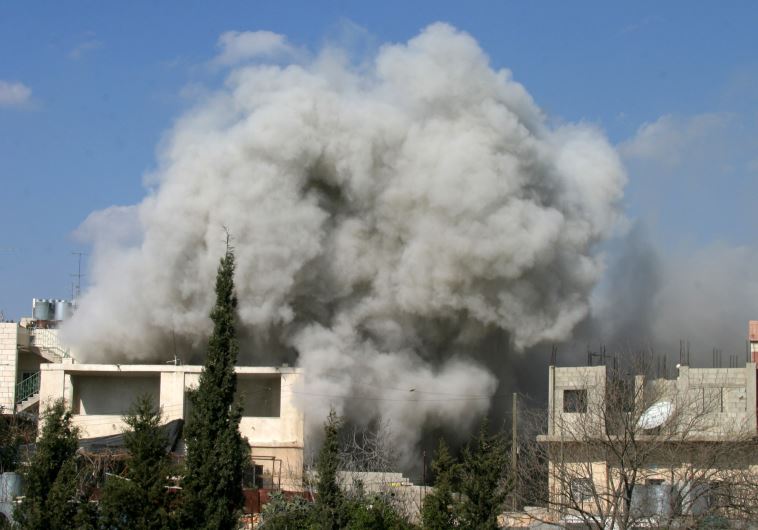
IDF demolishing home of Palestinian Arab terrorist
(photo: Reuters)

Rights groups have condemned the Israeli policy.  They claim that such actions amount to collective punishment against ordinary civilians who did not participate in any crime.  That position, while used by B’Tselem broadly, is actually unclear.  Not only may the family members be aware of the planned attack, but if the terrorist was the owner of the house, then the government could claim that all such rights to property ownership were null and void the moment the owner committed the terrorist act.  As such, the home became government property, which it can handle as it sees fit.

The Israeli government is exploring other punitive acts that are similar to the actions taken by European governments, such as revoking work papers or residency rights for terrorists and those that assist them. Other penalties could be handed down for the “civil dead” should they be found guilty of crimes in the future:

  • Forfeit any chance for parole
  • Never be exchanged in a prisoner swap


Governments around the world are investigating ways to slow the tide of would be terrorists.  As they do, the various punishments of a civil death will likely be explored in the future.


Related First.One.Through articles:

Collective Guilt / Collective Punishment

UN’s Confusion on the Legality of Israel’s Blockade of Gaza

Alternatives for Punishing Dead Terrorists

Subscribe YouTube channel: FirstOneThrough

Join Facebook group: FirstOne Through  Israel Analysis

Israel’s Peers and Neighbors

Observers of Israel often consider the appropriate benchmark for the country. To whom should Israel be compared? Against the Western world or its neighbors in the Middle East?

Western World Peers

The arguments to compare Israel to western countries such as in Western Europe and North America are plentiful.

Democracy: Israel is a democracy in which all citizens of the country elect its leadership, similar to the western world. That is in stark contrast to its neighbors that have monarchies and dictatorships.

Freedoms: Israel believes in various freedoms, including of religion, assembly and press. Such freedoms are cornerstones of western values, but difficult to find elsewhere in the Middle East.

Economy: Israel’s economy is based on capitalism. It has been termed the “start-up nation” due to the tremendous number of companies that are launched by ordinary Israelis. This compares to the economies dominated by oil money controlled by governments among Israel’s neighbors.

The long list of commonalities is detailed in “Israel, the Liberal Country of the Middle East.”  The peer group for Israel according to its principles and values is indeed the western world, not the MENA region.

Neighbors in MENA
(Middle East and North Africa)
israel_surrounded_sm
Arab World

Israel resides in a predominantly Arab neighborhood.  The people of the Arabian Peninsula spread en masse from the region shortly after the founding of Islam, during the 6th and 7th centuries.  In some locations, like Turkey, the Arab invasion was repelled, even while the Islamic religion still took hold in the area.  There are now 22 Arab countries and 57 Muslim countries, most of which surround Israel.

muslim_distribution
Muslim World

While Israel is unique in being the only Jewish State in the world, it’s uniqueness is magnified within its neighborhood that is almost uniformly Arab and Muslim.  Many of these Muslim countries are governed by Sharia, Islamic law, while others have laws that are Sharia-inspired.  These laws have little in common with laws found in western countries.  This is even true where the British held Mandates after World War I, such as in Jordan and Iraq.

Judging Peers

English Common Law has a concept that a person should be judged by a group of one’s peers.  The rationale for this provision was to afford context and humanity to the cold rule of law.  As peers should know a defendant better than a judge, those individuals in the jury could fine-tune the rule of law for the specific case and party.

In the United States, the concept of “peers” has been adjusted to “neighbors.”  The jury pool in the US courts system pulls in people from an entire region.  The individuals in such neighborhood likely have a wide range of backgrounds, including: race; religion; occupation; wealth; political views, to name a few.  US law requires that any party that knows the defendant – presumably who are more likely to be “peers” – to be excluded from the jury so as to avoid favoritism.  As such, the US system has moved from a court of peers to one of neighbors.

What happens when one’s peer group and one’s neighbors have nothing in common?  An extreme example happens every day in the court of world opinion regarding Israel.

Judging Israel

Neighbors: Israel’s neighbors have opposed the very existence of the Jewish homeland since such concept became international law in the 1920 San Remo Conference and the 1922 British Mandate for Palestine.  Sporadic riots in the 1920s became a multi-year war 1936-9, when the Arabs convinced the British to roll back the essence of the laws to curtail Jewish immigration and cap the number of Jews in Palestine, as well as to limit where Jews could live.  When Israel declared independence in 1948, Arab armies from that surrounded Israel fought to destroy the country.

The parties have been at war ever since, with the exceptions of Egypt and Jordan which made peace with Israel in 1979 and 1994, respectively.

Today, the 57 Muslim nations that comprise the Organization of Islamic Cooperation (OIC), vote as a bloc at the United Nations, and consistently condemn Israel for anything and everything, as they view the “Zionist entity” as illegal and unjust.

Clearly, this is not a group of neighbors that can be used as a “jury of one’s peers” to assess whether Israel is acting appropriately in any given matter.

oic_11
Representatives of the OIC

Peers: Israel cares about the opinions of its peer group in western Europe, North America and Australia.  These countries share Israel’s values and have ongoing trading and commercial relationships with Israel.

Much of the criticism against Israel from its peer group relates to Israel’s activities in the disputed territories east of the Green Line (EGL/West Bank). Some governments claim that Israel “occupies” the Palestinian people and takes over “Arab land.” Those critics call out Israel for its use of its military and point to lopsided casualty figures in Israeli-Arab wars. They protest Israel’s use of roadblocks, the security barrier, and of house demolitions of terrorists.

The flaw of such commentary is that it inherently assumes that Israel’s peer group exists – or could exist – in the same environment as Israel.

A Mile in Their Shoes

As detailed in “Israel: Security in a Small Country,” Israel is almost 1/500th of the size of the United States, but has three times as many neighbors. It is half of the size of the Netherlands, but no Dutch neighbor refuses to recognize its right to exist. Israel may have a similar number of countries bordering it as Argentina, but none of Argentina’s neighbors have launched numerous wars against it over the past decades.  The United Kingdom may have knowledge of the region from managing the Palestine Mandate from 1924 to 1948, but when was the last time England had foreign tanks and fighters on its home soil?  France may have experienced terrorism, but is there a country working to obtain nuclear weapons that threatens to wipe it off the map?

In short, Israel’s values’ peers do not have comparable security issues.

conflict map
Israel’s values’ peer group of western Europe, North America and Australia
are peaceful relative to the raging conflicts in MENA

When countries in the western world do have moments of inflamed security concern, such as when France suffered from terrorist attacks in November 2015, that country quickly went on the offensive. It instituted curfews. It performed raids on apartments. It curtailed a range of freedoms…. much as Israel does when it confronts security concerns on a continual basis.

Members of French special police forces of the Research and Intervention Brigade (BRI) and forensic experts are seen near a raid zone in Saint-Denis, near Paris, France, November 18, 2015 during an operation to catch fugitives from Friday night's deadly attacks in the French capital. REUTERS/Christian Hartmann - RTS7R5L

Members of French special police forces of the Research and Intervention Brigade (BRI) and forensic experts are seen near a raid zone in Saint-Denis, near Paris, France, November 18, 2015 during an operation to catch fugitives from Friday night’s deadly attacks in the French capital. REUTERS/Christian Hartmann – RTS7R5L

After the United States was attacked on September 11, 2001, it went on a multi-year, multi-country war, which is still ongoing in Afghanistan.  Many more people have been killed in the US wars on terror, than were killed on 9/11.

Israel has faced more than a terrible day of violence; it has daily assaults.  Israel has faced more than just terrorism; it has existential threats.  And it has continued to confront these security concerns, ever since the country was reconstituted in the 20th century.

Israel’s peers have not walked a mile in Israel’s shoes.  They have simply put them on and taken an uncomfortable first step.  And as they have done so, they have shown their determination to protect their civilian population and way of life.


Israel shares the democratic values of much of the western world. The critics from Israel’s peer group should recognize and celebrate the society that Israel has been able to create inside the illiberal Middle East. Those peers must also come to recognize and differentiate between the peaceful environment in which they live and the hostile environment in which Israel resides.


Related First.One.Through articles:

A Flower in Terra Barbarus

Murderous Governments of the Middle East

Seeing Security through a Screen

Obama’s “Values” Red Herring

The Disproportionate Defenses of Israel and the Palestinian Authority

Subscribe YouTube channel: FirstOneThrough

Join Facebook group: FirstOne Through  Israel Analysis
Israel is Found and Lost in Barcelona

Mobile World Congress (MWC) is the largest conference dedicated to the enormous mobile ecosystem, and is, by far, the largest conference hosted in the beautiful city of Barcelona, Spain each year. The conference in February 2016 drew about 100,000 people from around the world. Israel was both well very well and very poorly represented.

Israel’s Ministry of Economy and Industry had a section of Hall 5 with 65 companies presenting, including Audiocodes and Alvarion. In Hall 2, the Israel Marketing Association had meeting spaces for over 20 companies including Kaltura and Radware. Other Israeli companies had large stand-alone booths in various halls including Allot Communication and Amdocs. And there was yet additional Israeli representation that was only observable to the observant, where Israeli technologies (as opposed to the companies) were featured within large non-Israeli companies that had acquired Israeli firms, such as Red Bend Software within Harman.

20160222_122258
Israeli companies at MWC in Barcelona, Spain, February 2016
(photo: First.One.Through)

The various Israeli companies attested to the enormous technology leadership that the small country had at the show. Thousands of people came to the Israeli booths to meet with their existing business partners and to learn about emerging technologies such as those from StoreDot and Insert.

Despite the significant Israeli presence, the MWC decided not to highlight Israel among the flags of the world at the show.

At the inside courtyard at the show’s southern entrance, and outside at the northern entrance, the MWC hoisted the flags of dozens of countries. They included countries that were prominent at the show including the United States, the United Kingdom, South Korea, Japan, China, India, Germany and Spain. Yet there were also flags of countries with little presence at the show, including: Mexico; Ukraine; and Argentina. Remarkably, the flags of Saudi Arabia and Iran were also flying high in the air.

But Israel’s flag was absent.

20160223_191710
30 flags from around the world inside the entrance at MWC in Barcelona, Spain
(photo: First.One.Through)

A little over 500 years ago, Spain expelled its 200,000 Jews, but recently, the country made efforts to mend ties with Jews. It finally recognized Israel as the homeland of the Jewish people in 2011, and in 2012, the country stated that it would grant Spanish citizenship to those Jews who could demonstrate that they were descended from Jews expelled in 1492. The same day that the Barcelona conference began, another city in Spain announced that it would not participate in any BDS (boycott, divestment and sanctions) against Israel.

For its part, the Mobile World Congress clearly did not participate in any BDS activity in allowing over 140 Israeli companies to present at the show. They did not block over 1000 Israelis from attending the event. Yet why did the blue and white Israeli flag with the Star of David get snubbed?

MWC published an article that was broadly distributed on the first day of the show about a study completed by the large Spanish Telecom phone company, Telefonica, about the state of the digital ecosystem among 34 countries. Among the findings highlighted in the MWC article, was that Saudi Arabia was, by far, the country with the worst digital ecosystem relative to the country’s wealth.  Yet MWC chose to fly the flag of the Kingdom of Saudi Arabia (KSA) outside the convention center, alongside the Spanish flag.

20160224_121018
Country flags outside northern entrance of Barcelona convention center.
KSA flag on right between South Korea and Spain.

(photo: First.One.Through)

What do you think could have been the thinking of flying the flag of Saudi Arabia, but not flying the Israeli flag?


Related First.One.Through articles:

The EU’s Choice of Labels: “Made in West Bank” and “Anti-Semite”

European Narrative over Facts

Subscribe YouTube channel: FirstOneThrough

Join Facebook group: FirstOne Through  Israel Analysis


The Illogic of Land Swaps

The argument that using the “1967 lines” as the basis for the borders of Israel and Palestine in a two-state solution is flawed at the outset.  “Land swaps” simply underscore that absurdity of the argument.

Obama on Israel-Palestine Borders

In May 2011, US President Barack Obama shared his thoughts on the contours of the ultimate borders of Israel and Palestine in a two-state solution: “We believe the borders of Israel and Palestine should be based on the 1967 lines with mutually agreed swaps, so that secure and recognized borders are established for both states.”

The comment infuriated Israeli Prime Minister Benjamin Netanyahu and pro-Israel advocates. Obama clarified his comments before a pro-Israel group a few days later: “By definition, it means that the parties themselves, Israelis and Palestinians will negotiate a border that is different than the one that existed on June 4, 1967… it allows the parties themselves to account for the changes that have taken place over the last 44 years…. Including the new demographic realities on the ground, and the needs of both sides.”

Obama’s second statement moved away from his comments about “1967 lines.” By stating that the border would be arrived at through mutual negotiations and look “different than the one that existed on June 4, 1967,” Obama made the comment about the 1967 lines moot.  If the parties agree to an entirely new construct for borders, than that would be acceptable too.  There is no reason to even mention the “1967 lines” or land swaps.

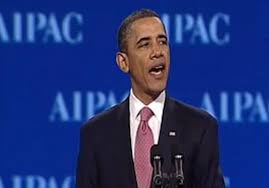
obama aipac
President Barack Obama at AIPAC May 2011

But the left-wing group J Street was much more aggressive than Obama on the contours of Israel, and lobbied the US government about the 1967 lines and land swaps.

J Street on Israel-Palestine Borders

J Street clearly calls for a two-state solution to be based on the 1967 lines with land swaps as detailed on its site: “This border will be based on the pre-1967 Green Line, with equivalent swaps of land…  land of equivalent quantity and quality will be swapped from within the pre-1967 Green Line.”

The group also urged the US government and Jewish groups to strongly condemn any Jews living east of the Green Line (EGL/West Bank).  More specificaly, J Street stated:

“J Street is deeply concerned that the pre-1967 Green Line separating Israel and the occupied territory is being effectively erased both on the ground and in the consciousness of Israelis, Jews and others around the world.

The resolution of the Israeli-Palestinian conflict will require establishing a border through negotiations between Israel and the new state of Palestine – based, as noted previously, on the pre-1967 Green Line with adjustments. Until that border is negotiated, the Green Line remains the internationally-recognized separation between the state of Israel and the territory won in the Six Day War in 1967.

A disturbing and growing lack of awareness of the Green Line is partially responsible for the 47-year occupation fading from the consciousness of the Israeli and international Jewish publics. Efforts to erase the Green Line from maps and from public awareness serve the interests only of those who seek to establish control over all the territory to the Jordan River.

One step American community groups, businesses, schools and governments could take to foster memory of the distinction between pre-1967 Israel and the subsequently occupied territory would be to use only maps that include the pre-1967 Green Line – a visual reminder of the Green Line and its significance.”

j street bookmark

All of J Street’s arguments: negotiations based on 1967 lines; equivalent swaps of land; and using equivalent “quality” are all illogical.  The desire to push the US government to punish Israel was demonic.

The Illogic of “Land Swaps”

There are a number of issues regarding using the 1967 lines and subsequent land swaps as envisioned by J Street.

The 1967 Lines Rewards Aggression.  Using the 1967 lines as a starting point for negotiations rewards aggression.  When Israel declared itself as an independent state in 1948, it was immediately attacked by five Arab armies from Egypt; Jordan; Syria; Lebanon; and Iraq.  The 1967 lines were the Armistice Lines where the warring parties stopped fighting in 1949.

Imagine that in 1948-9, Egypt conquered the entire southern part of Israel, all of the way up until Bethlehem, and Jordan conquered the entire eastern part of the country, leaving Israel as a narrow sliver of coastline from Tel Aviv to Rosh Hanikra. Consequently, imagine that it is this small state that becomes recognized by the United Nations in 1949, within Armistice Lines with Egypt and Jordan.

Further consider that history played out precisely as it did: in 1967 the Arab armies once again threatened to destroy Israel, so Israel pre-emptively attacked Egypt and Syria and then Jordan attacked Israel. Egypt and Jordan lost all of the territory that it took from the 1922 Palestine Mandate for a Jewish homeland in the war.

How would the world react?  Would the world demand that Israel needs to return to a stub of a state and give Egypt and Jordan all of the land past the 1949 Armistice Lines? Even if Egypt and Jordan ultimately relinquished their claims to the lands they seized in favor of Palestinian Arabs, would those borders somehow be considered the appropriate borders for Israel and Palestine?

Of course not.

Pushing Israel to accept the borders that the UN endorsed in 1949 would be rewarding the five Arab armies assault on Israel. The areas within the Jewish homeland mandate that are some refer to as “Arab land,” are simply lands that were seized by Arab aggression.  Using such 1967 lines/ the 1949 Armistice Lines, is a direct reward to an aggressive war to destroy the Jewish State.

Land Swaps Acknowledges that 1967 Lines are not Borders.  Those parties that suggest that land swaps between Israel and a future Palestinian state, inherently admit that the 1967 lines have no merit.  How could anyone suggest that a sovereign nation (Israel) give up some of its own land?  How could a country annex land of another country (Palestine)?  It can do so, if the two parties both acknowledge that the lines are not borders.

This was clearly spelled out in the Armistice Agreement with Egypt that stated “[t]he Armistice Demarcation Line is not to be construed in any sense as a political or territorial boundary.” Similarly, the Armistice Agreement between Israel and Jordan which stated “The Armistice Demarcation Lines defined in articles V and VI of this Agreement are agreed upon by the Parties without prejudice to future territorial settlements or boundary lines or to claims of either Party relating thereto.”

While J Street urges Israel and Jewish groups to “know its boundaries,” the actual suggestion to engage in land swaps undermines the J Street argument that the 1967 lines have any real significance.  If there is any doubt, the Armistice Agreements that created those specific Armistice Lines stated those lines were not borders.

Land Swaps Undermine a call to limit Jewish “Settlements.” J Street and other groups that suggest that no Jewish Israelis should be allowed to live east of the Green Line (EGL/ West Bank), undermine their own argument when they suggest that there should be land swaps.  If Israel should give over some of its land west of the Green Line to a future Palestinian State, that would mean that Jews should also be prohibited from living in those border areas in Israel too.  Swapping land means that those Jewish communities in Israel would be considered a similar threat towards peace as the “settlements” in EGL/West Bank.

If people really believe that Jewish communities threaten the viability of a Palestinian State, the same parties that argue for banning Israelis in EGL/West Bank should argue similarly argue against Jewish communities in Israel that threaten the ability to effectively conclude land swaps.

That suggestion is clearly absurd.

Therefore if it is not a problem for Jews to move into communities that are west of the Green Line, than it is not an issue for Jews to move east of the Green Line.

Phantom Size.  The suggestion that the exact number of square kilometers of the “West Bank” and Gaza that were created by the 1949 Armistice Lines is somehow a sacred amount is ridiculuous.  As described above, the “West Bank” was an artifice created by a war of Arab aggression against Israel in 1948.  There is/was nothing inherently special about where the warring parties stopped fighting.

It is therefore non-sensical to suggest that the “equivalent quantity”of land be exchanged between the parties.  The Armistice Lines were arbitrary, non-permanent lines, and therefore the amount of land on either side of those lines are also arbitrary.

Further Absurdity of “Equivalent Quality.” J Street outdid itself in promoting a concept that went beyond the illogical suggestions of the 1967 lines land swaps.  It proposed that the land swaps between Israel and the Palestinian Authority should be based on land of “equivalent quality.”  In other words, J Street did not only propose that there be a swap of 50 square km on one side of the Green Line for 50km on the other side.  J Street introduced the concept of “quality.”  The far left-wing group argued that desert land would not be equivalent to an aquifer.  Holy land would not be equivalent to non-Holy land.

What is the conversion factor between the different types of land? Who knows!  Just add some subjective requirements to simplify negotiations that are already going nowhere for decades and are illogical at the start.  That should speed things up!

 benami-J Street
J Street leader Jeremy Ben Ami

When people pick on Obama for being anti-Israel, they should consider his rather moderate stance compared to the advice he receives from J Street.


Related First.One.Through articles:

J Street: Going Bigger and Bolder than BDS

The Legal Israeli Settlements

The Left-Wing’s Two State Solution: 1.5 States for Arabs, 0.5 for Jews

The Long History of Dictating Where Jews Can Live Continues

Subscribe YouTube channel: FirstOneThrough

Join Facebook group: FirstOne Through  Israel Analysis


Arabs in Jerusalem

Listening to the United Nations, one might fear that Palestinian Arabs are being “ethnically cleansed” in Jerusalem due to Israeli “occupation.” Here are some facts (statistics as of 2011 as compiled by the Jerusalem Institute for Israel Studies).

Fastest Growing Group in Jerusalem
and Most of the Middle East

The Arab population in Jerusalem has not only grown, it has grown faster than the Jewish population in Jerusalem, faster than Arabs around Israel, and faster than Arabs in the surrounding countries.

  • The annual growth rate in 2011 of Arabs in Jerusalem was 3.2%, higher than Jews who only grew by 2.1%.
  • Arabs now account for 36% of the population of Jerusalem, up from 26% when the city was reunited in 1967.
  • From 1967 to 2011, Arabs grew by 5.7 times, while Jews only grew by 3.4 times.
  • The Arabs of Jerusalem now account for 18% of the Arabs in Israel.
  • The mortality rate of Arabs in Jerusalem (2.7 per 1000) is lower than Jews (5.2 per 1000).
  • Jerusalem leads the country in the number of births, and the Arab births account for the same percentage (36%) as in the city. Jews had 27.8 births per 1000 and Arabs had 27.9 births per 1000. Both of those rates are extremely high, and are rates typically found in Africa, not in developed nations.
  • Arab students make up 38% of the school system in Jerusalem, more than the 36% Arab population.

OldCity (14)
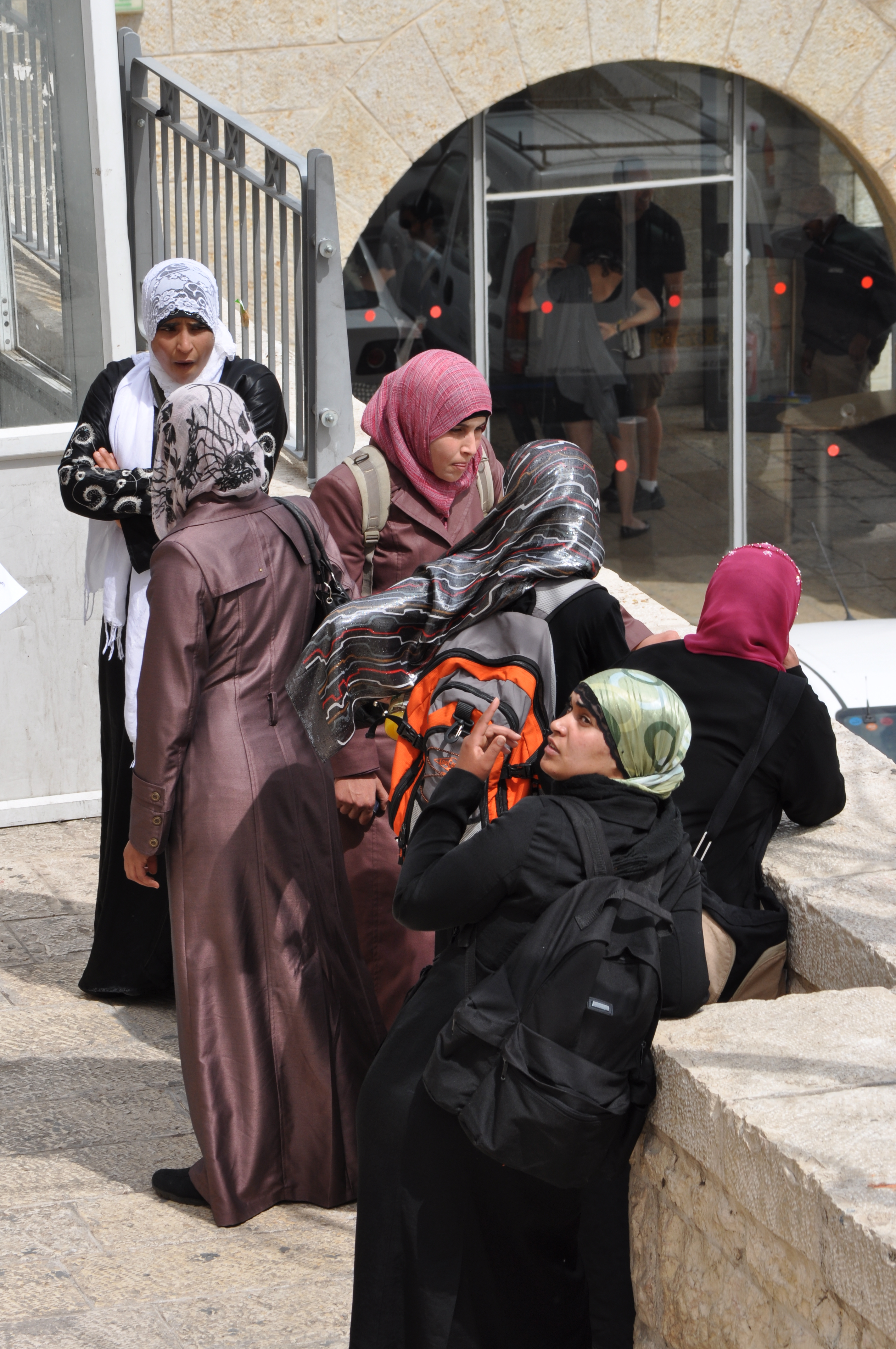
Arab Women in Jerusalem entering the Western Wall Plaza
(photo: First.One.Through)

Muslim Arabs are Similar to Charedi Jews

The demographics of the Muslim Arabs in Jerusalem is very similar to that of the Ultra-Orthodox (Charedi) Jews in Jerusalem. Consider the following:

JERUSALEM Children (0-14) Seniors (65+) Media Age
Charedi Jews 42% 6% 18
Muslim Arabs 40% 3% 20
Rest of Jews 26% 14% 31

Christian Arabs

23% 13%

33

The poverty rate among the Muslim Arabs is also similar to Charedi Jews. Each community tends to have much larger families than the rest of the population (Arabs have 5.7 people per household and Jews have 3.4, but skews much higher in the Charedi community). This typically leads to much poorer living conditions for both groups than the rest of the city.

Approximately 23% of the city considers itself Charedi and 36% Arab. These two groups account for the reason that 51% of all of Jerusalem’s residents are considered to live in the lowest socio-economic category. All of the Arab-majority neighborhoods and 24% of the Jewish neighborhoods (basically the Charedi ones) are ranked the lowest in terms of socio-economics.

Charedi Jews had a 20% lower participation rate (44%) in the workforce than other Jews (65%). Religious Arabs had an even worse workforce participation rate (13%) compared to less religious Arabs (59%), which is more comparable to secular Jews.

In Jerusalem overall, the Arab community is more religious than the Jewish community. Approximately 51% of Jews consider themselves either Charedi (30%) or Observant. This compares to 75% of the Arab population that considers themselves very religious. Both of these figures are much higher than found in other cities in Israel.

As the more religiously fervent have more children and are poor, they live in more crowded living conditions. The average Jewish household in Jerusalem has 1.0 people per room, while the average is much higher at 1.9 Arabs per room in Arab households. Due to this poverty and crowded living conditions, many Arabs take advantage of services from UNRWA: in 2011, the Shuafat Refugee Camp had the biggest gain (+690 people), while the Shuafat neighborhood outside of the UNRWA facility declined by 360 people.

Summary

Religious Arabs in Jerusalem are very similar to Jerusalem’s Charedi population, and they constitute a much larger percentage of the Arab community than the strictly observant Jewish community does in theirs. Both of these groups are growing very rapidly. The size and growth of the families, together with poor workforce participation rates have left both groups in poverty.

The unvarnished reality is that both Jews and Arabs in Jerusalem are caught in a similar trap: religious fervor often leads to poverty and crowded living conditions. Curiously, the satisfaction rate of the quality of life and place of work among Jerusalem residents was higher than elsewhere in Israel, while the frustration over income was highest in Jerusalem. It would appear that both the Arab and Jewish residents of Jerusalem are well aware of the trade-offs in life of being extremely religious.


It is unsurprising that the holy city of Jerusalem attracts many religious people – Jews, Muslims and Christians alike. The religiously fervent Jews and Muslims have spurred the city’s population growth (many religious Christians do not marry or have children), and have also increased the city’s poverty levels.

Religious Jews are easy to identify: men by their black hats and black yarmulkes, and women by their dress. Religious Arabs are harder to visually segment, but they are in Jerusalem in much greater proportion than Jews, and account for the rapid growth in the number of Arabs as well as the poorer living standards.

Contrary to the UN reports and Jerusalem “experts” like left-wing radical Danny Seidemann that the New York Times chooses to quote in articles like “Evictions in Walled Old City Stir Up a ‘Hornet’s Nest’“, Arabs in Jerusalem may apply for Israeli citizenship anytime and many do. However, just like the Charedi Jews of Jerusalem, becoming an Israeli citizen is not a ticket out of poverty.

Whether poor or rich, the Arabs in Jerusalem are the fastest growing group of any capital in the Middle East.


Related First.One.Through articles:

An Inconvenient Truth: Population Statistics in Israel/Palestine

The Populations statistics in Israel/Palestine do not support the Arab narrative

Palestinians agree that Israel rules all of Jerusalem, but the World Treats the City as Divided

The Battle for Jerusalem

Are you trying to understand Ethnic Cleansing in Israel?

Subscribe YouTube channel: FirstOneThrough

Join Facebook group: FirstOne Through  Israel Analysis