The Torah opens in a world where inheritance belongs to the firstborn — where privilege is order, and order is destiny. Yet from its very first stories, the Bible breaks that rule.
Cain, humanity’s firstborn, murders his brother and loses everything. Abel, the second, dies without heirs. Humanity continues through Seth, the third son. The pattern is set. Abraham, father of monotheism, is not his father’s eldest. His younger son Isaac inherits the covenant, and Isaac’s younger son Jacob inherits it again.
By the time Israel becomes a nation, the inversion is complete. The Jewish people today descend from Levi and Judah — the third and fourth sons — not from Reuben, the firstborn. A book born in a culture of primogeniture systematically overturns it.
Why?
The Bible begins by showing the cost of bad choices. Adam and Eve possess everything, yet choose wrongly. The Fall from Eden inaugurates the central lesson of Scripture: that moral choice determines inheritance. Paradise is not lost by fate but forfeiture.
Michelangelo, The Fall of Man (1509-10), Sistine Chapel, Rome
Rabbi Lord Jonathan Sacks wrote that this pattern is not incidental but revolutionary.
“The Torah is not a chronicle of power. It is a critique of power.” — Covenant & Conversation: Genesis
The Bible’s rejection of firstborn privilege is a moral protest against the idea that greatness is inherited. Sacks called it “the divine displacement of power” — God’s way of declaring that leadership is not a birthright but a calling.
Each time the younger supplants the elder, it signals that the future is not fixed. The world may honor the order of birth, yet God honors the order of the heart. Greatness is not bestowed by lineage but achieved through moral courage.
This inversion gives agency to every person. The Torah’s message is that destiny is not preordained. We are not bound by family rank or societal hierarchy. Cain’s fall was not inevitable. Abraham could have ignored God’s call. Jacob could have reconciled instead of wrestled. Every figure in Genesis acts — and through action, alters the story of the world.
Sacks extends the idea to Israel itself:
“God’s chosen people are not the privileged people; they are the choosing people — those who freely choose to live by the call of holiness.”
We are all born into someone else’s order. Or disorder. The question is whether we accept it, or, like our forefathers, we choose holiness — and through that choice, earn that inheritance.
The final Torah reading before the festival of Sukkot, Haazinu, is a song of warning. Moses, nearing his death, calls heaven and earth as witnesses to the covenant — and then lays bare the consequences if Israel abandons its moral anchor. When the nation becomes “fat,” reveling in abundance and forgetting the source of its blessings, punishment will follow. Prosperity, once unmoored from gratitude and purpose, becomes the seed of ruin.
Just a few days later, on Shabbat Chol HaMoed Sukkot, Jews read Kohelet (Ecclesiastes). Its message mirrors Haazinu but turns inward: even the individual who possesses everything — wisdom, power, wealth, prestige, pleasure — finds himself hollow. “I made great works… I built houses and planted vineyards for myself,” writes King Solomon in Chapter 2. Yet he concludes, “It was all futile and a pursuit of wind; there was no real value under the sun.”
The parallel between Haazinu and Kohelet is striking and the proximity of their readings is seemingly deliberate. One warns the nation about collective moral decay born of excess and God’s punishment; the other exposes the personal emptiness that comes when abundance replaces meaning. Together they form a spiritual counterpoint on Sukkot — the holiday when Jews leave their sturdy homes to dwell in fragile huts, to remember that joy comes not from walls or wealth but from faith, family, and divine connection.
A life disconnected from those simple pleasures — from loving one’s spouse, nurturing one’s family, and walking humbly with God — cannot sustain happiness. Unmoored excess may glitter for a moment, but like Solomon’s “pursuit of wind,” it slips through fingers, leaving behind only the passing echo of what might have been joy.
And so, we sit beneath the s’chach of the sukkah, exposed to wind and light, reminded of the temporary nature of all possessions. The walls sway, the roof leaks, yet the heart is full. In simplicity, vulnerability, gratitude and “connectedness,” we rediscover the only abundance that truly endures — the shelter of faith and the warmth of those we love.
There is a reason the Bible lingers on grapes. They are rich, sweet, bursting with promise — a fruit that invites you in.
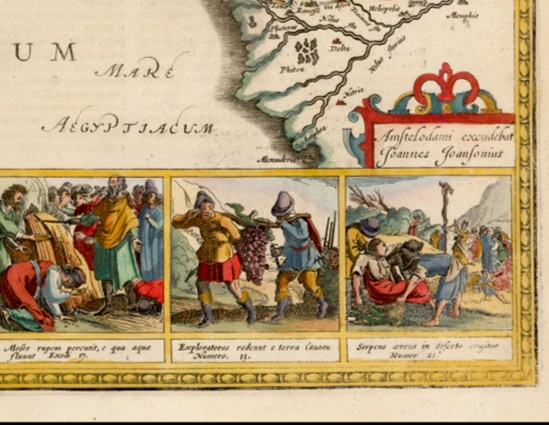
When the spies returned from scouting the Promised Land, they brought back a single cluster so heavy it had to be carried on a pole. That image has endured for millennia: the land was good, overflowing, generous. The fruit drew the Israelites forward, a taste of the future God promised.
Yet that same cluster became a stumbling block. The spies’ report turned the promise into fear. Instead of trusting that the God who brought them out of Egypt would also give them this land, they shrank back. The grapes that should have stirred hope instead fed doubt about the size and power of the land. The draw of abundance proved to be no guarantee of holiness.
Grapes in the Song of Moses
Forty years later, as Moses prepared the people to finally enter the land, he again reached for the image of the grape and the vine, which must have still captured the imaginations of the generation that wandered the desert. In the Song of Ha’azinu he sang of the bounty to come:
“Honey from the rock,… milk of the flock,… and the blood of the grape you drank as wine.” (Deuteronomy 32:13-14)
The land’s fruit would not be a passing token or aspiration as it was in the wilderness — it would be a daily reality. The vine was not only a sign of blessing but also of permanence.
And Moses warned that the very blessing could corrupt:
“Yeshurun grew fat and kicked… then he forsook the God who made him.” (Deuteronomy 32:15)
When abundance becomes self-indulgence, the sweetness sours. The gift is no longer an offering; it becomes an idol.
The Poisoned Vintage
The Song of Moses added a different reference to wine – not of over abundance but used for immoral purposes:
“Their vine is from the vine of Sodom, their grapes are grapes of poison, their wine is the venom of serpents.” (Deuteronomy 32:32-33)
The same fruit, when cultivated for injustice and oppression, becomes toxic. The vine can yield joy or venom depending on the heart of the grower.
The Test of Blessing
The Bible’s teaching is that grapes themselves are neither holy nor unholy. They are a draw — a gift meant to be enjoyed in gratitude and moderation.
When abundance is hoarded, flaunted, or wielded for harm, it ceases to be a blessing. The line between the vineyard of the Lord and the vineyard of Sodom lies not in the soil but in the soul.
The cluster carried by the spies, the wine of the Song of Moses, and the poisonous vintage of the nations all point to the same truth: the fruits of the earth reveal the heart of the one who gathers them.
It is our message as we leave the Fast of Yom Kippur and ready for the joyous and communal holiday of Sukkot: wine in moderation and with purpose, gladdens and sanctifies. In excess or in service of corruption, intoxicates and destroys.
On Shabbat Shuva, the Sabbath between Rosh Hashanah and Yom Kippur, the haftarah proclaims:
“You will again have compassion on us; you will tread our sins underfoot and hurl all our iniquities into the depths of the sea..” — Micah 7:19
That verse frames the season. At the start of the Ten Days of Repentance, we gather by a river or lake for Tashlich, casting crumbs into the current as a sign of casting off our wrongs. It is not superstition but a declaration of hope: the sinner is not the sin; the two can be parted.
Jonah’s Descent
At the other end of the Ten Days, on Yom Kippur afternoon, we read the story of Jonah — the counter-story.
Jonah fled from God’s call aboard a ship. A storm raged over the ship until the sailors, reluctantly, cast him overboard, and suddenly the sea grew calm. By all natural expectation, Jonah should have floated. Instead, he sank. He recounts:
“The waters closed in over me; the deep engulfed me; weeds were wrapped around my head.” — Jonah 2:5
Jonah could not separate from his defiance; he was dragged to the bottom with it.
Then God sent the great fish — not as a punishment but as a chamber of mercy, a hollow where Jonah could face his failing, pray, and be restored to life. The fish shows that even in the depths, repentance is still possible.
“Jonah Thrown to the Whale” by Johannes Sadeler I, circa 1582. In the background, another ship can be seen sailing in calm waters, showing that the boat with Jonah was targeted for punishment. Jonah’s head faces the roaring sea, accepting his fate.
Two Fish, One Lesson
Many have the custom to recite Tashlich at a stream that has living fish. Some suggest it is a symbol of good luck while others suggest that the fish “consume” the symbolic sins, carrying them away like a scapegoat.
Placed against the story of Jonah, the image deepens: the fish in the stream greet us at the gates of the Ten Days; the great fish of Jonah meets us at their close. The small fish beneath the ripples hint at an easy parting from our minor failings; the great fish is the last-chance refuge for those who waited too long.
The High Holiday season sets the choice before us:
At the opening, we can cast our sins away and watch them sink while we stand free on the shore. At the closing, if we still cling to them, we risk being dragged under — yet even then there is mercy, a chance to pray and rise again.
The waters of Micah and Jonah teach the same truth: our sins can drown without dragging us under — if we will let them go.
Let us all attempt to separate ourselves from sin, and cast them into the depths of the water and be blessed with a new year of health and opportunity.
“Jonah Spat up by the Whale” by Johannes Sadeler I, circa 1582, with the sun seemingly rising in the background to highlight Jonah living to see a new day. Jonah stares at the heavens seeing that the storm has passed.
In Vayelech, as Moses nears the end of his life, he does not leave the Israelites with swords, maps, or battle plans. He leaves them two witnesses.
“…so that this song may be for Me a witness against the children of Israel.” (Deut. 31:19)
“Take this Book of the Torah… and place it beside the Ark… and it shall be there as a witness against you.” (Deut. 31:26)
Two witnesses. One to sing. One to see.
The Private Witness: A Song to Internalize
The first witness is the Song of Moses. It is not carved in stone or locked in a chest. It is taught to the people, meant to be recited, memorized, carried in the heart and on the lips.
A song reaches places that statutes cannot. It does not merely command; it shapes the soul. It reminds each individual of the covenant — in good times and in hardship — and demands that a person take responsibility for his or her own faithfulness.
This witness lives in the quiet spaces of life, where no physical judge or priest is watching. It whispers: “You know what is right. Act accordingly.”
The Public Witness: A Testament to See
The second witness is the Torah scroll. It is set beside the Ark, in the very center of the national camp. It is the visible, enduring reference point — the community’s constitution.
While the song stirs the conscience, the scroll sets the standard. It unites the people under a single covenantal banner, a guide to which the entire nation can point and say: “This is who we are. This is what we have pledged together.”
Two Responsibilities, One Blessing
Vayelech teaches that the covenant’s blessing flows only when both witnesses are honored:
The private witness — internalizing the principle, carrying it daily.
The public witness — keeping the community anchored to the same course.
A society that prizes the public witness alone risks becoming a hollow bureaucracy. A society that trusts only the private witness descends into scattered individualism.
Blessing comes from both: each person singing the song of covenantal responsibility, and all together respecting the scroll that binds the nation.
The Enduring Lesson — and a Voice from Rabbi Sacks
Rabbi Lord Jonathan Sacks captured this dual dimension of covenant beautifully:
“Covenant is more than law. It is law internalized, turned into song. We need the public voice of law and the private voice of conscience, for only together do they sustain a free society.” — Rabbi Lord Jonathan Sacks, Covenant & Conversation: Deuteronomy, Parashat Vayelech (2008)
On the eve of entering the Land, Moses anchored Israel’s future not in military tactics but in responsibility. The first step toward national blessing was not conquest but character — personal and collective.
The Song calls us to self-discipline. The Scroll calls us to shared fidelity.
When we heed both — the witness in the heart and the witness before the eyes — we walk the road of blessing. Ignore either, and the covenant frays.
That is the enduring message of Vayelech: A people’s future depends on individuals taking responsibility for themselves and on the community staying the course together.
When Winnie-the-Pooh entered the public domain in 2022, the cultural floodgates opened. A once-beloved children’s character, wrapped in honey jars and innocent nostalgia, was immediately remade into a monster. “Blood and Honey” turned Pooh into a savage killer. Games, parodies, and dark pastiches flooded the market. The comforting bear was no longer safe; he had been transformed into a canvas for other people’s fears, cynicism, and jokes.
It feels eerily familiar.
For two thousand years, Jews have been cast into the public domain. Stripped of the right to define their own story, they became available for anyone’s use. And abuse. Once known as the people of the Book, bearers of commandments, prophets, and a covenant, their identity was seized and rewritten. Medieval Christians branded them Christ-killers. Islamic empires reduced them to dhimmis. The Enlightenment caricatured them as rootless and ruthless bankers. In the modern age, they became “colonizers,” “supremacists,” and the avatars of “genocide.”
The Jews never sold the copyright to their name or history, but the world took it anyway. Just as horror producers found amusement in twisting Pooh into a monster, antisemites—left, right, secular, religious—have scribbled their darkest nightmares onto Jewish bodies. Pogroms, expulsions, inquisitions, and now, boycotts and campus rallies all stem from a warped creativity that insists Jews cannot own their own narrative.
Israel’s rebirth was supposed to end this. After all, if you reclaim your home, revive your language, rebuild your state, surely you also reassert your identity. But even here, the appropriation continues. Israel was smeared as “apartheid,” “genocide,” “ethnic cleansing,” “racist,” and “colonial” decades before Hamas launched its latest genocidal war. “Jewish self-determination” is rewritten as oppression. “Defending children” is recast as war crimes. The oldest continuous nation on earth is treated as a villain in someone else’s morality play.
The difference between Winnie-the-Pooh and the Jews is stark. The fictitious character Pooh was released into the public domain by the natural passage of time, his copyright protection simply expiring. The Jews were thrust into the public domain by malice—by the unwillingness of societies to allow them ownership of their story. The Jewish Bible was rebranded as the Old Testament, out of copyright protection. Blood libels took hold on the bleached pages of Jewish foundational documents.
The current Jewish year is 5786. Traditionally, Jews write the date in Hebrew letters like Roman numerals and drop the 5 as being well understood. The letters for 86 spell “Pooh” in Hebrew, so now is as good a time as any to attempt a change that the 1948 reestablishment of the Jewish State did not provide.
One simple action is for everyone to write a large ‘5’ before the date, making clear to themselves and others that their faith predates all others, and continues still.
Challenge every use of the phrase “Promised Land” as a vicious varietal of cultural appropriation, which strips Jewish indigenous people from their divine heritage.
More dramatic is to reclaim Jewish rights on the Temple Mount. Why should the world care about Jewish faith and feelings if the majority of Jews treat the center of its religious devotion as a vestigial organ instead of the beating heart? Are we a living people or a hollow chamber for others to draw upon?
We must not countenance the free license for others to slander, parody, or profit off the Jewish name. The Jewish people are not public property. They are the authors and owners of their own identity—and it is time for them to act as such.
For the last several parshas, Moses has been addressing the children of Israel with a constant refrain: follow the commandments in the land, and you will be blessed; stray from them, and you will lose your inheritance. To us today, these verses are about mitzvot — the commandments that define Jewish life. But to the Israelites standing on the banks of the Jordan, the charge must have sounded different.
They had just watched an entire generation die in the desert. The memory of the spies still lingered — those men who declared that the land was too difficult to conquer, that the people within were too mighty to destroy. Could such whispers have been forgotten? Surely the children had heard rumors of what their parents had repeated around campfires for forty years. And now, standing on the edge of the land, they might have expected Moses to lay out the strategy, the order of battle, the plan of conquest.
Instead, Moses did something else entirely. He skipped the war. He jumped straight to what life would look like after. The rules of worship, the rhythms of daily life, the blessings and curses of obedience. It was as if the battles ahead — Jericho’s walls, Ai’s ambush, the wars against mighty kings — would be non-events.
Imagine a coach gathering his team before kickoff and skipping the playbook. Instead, he passes out dinner menus for the victory banquet to follow. No Xs and Os. No defensive schemes. Only a vision of celebration after the game.
Why? Perhaps it was Joshua’s role to direct the war, the next chapter of the Tanach already waiting to be written. Perhaps Moses, who knew he would not enter the land, wanted to leave the people with principles for the future. Or perhaps Moses was teaching something deeper: that the wars were only one part of securing a peaceful future. That the real challenge was not in winning the land, but in living faithfully within it.
The truth is, the dream of the land was already realized — even if the Israelites didn’t know it. Hundreds of years of diaspora were ending. The promise was being fulfilled before their eyes, not through a war plan but through divine decree. The land would be theirs. The victory was guaranteed. What remained in doubt was whether they would keep it.
Moses understood: the conquest would be won by God’s hand, but the inheritance would be maintained only through God’s law. The spies had feared giants and fortified cities, but the true danger was disobedience and forgetfulness once the land was secured. That is why Moses spoke not of how to conquer, but of how to live.
The people knew that Joshua would lead them to battle, just as he had over Amalek. And they had seen that Moses was their intermediary with God, who prayed for their success (Exodus 17:10-13). Now Moses was telling the people: you no longer need me as your agent; you are they keys to victory. Prayers during battle to secure victory; obedience thereafter to keep the peace.
Aaron and Hur hold up the hands of Moses in prayer as he grew tired, asking God’s help for Joshua to lead the people to victory in battle
And so it is today. The battles of our time are real, but they are only part of the threat. We must not be complacent. We must not assume that everything is on the battlefield. Beyond the battle plans lies our own responsibilities in living a meaningful life and knowing the source of our strength.
ACTION PLAN
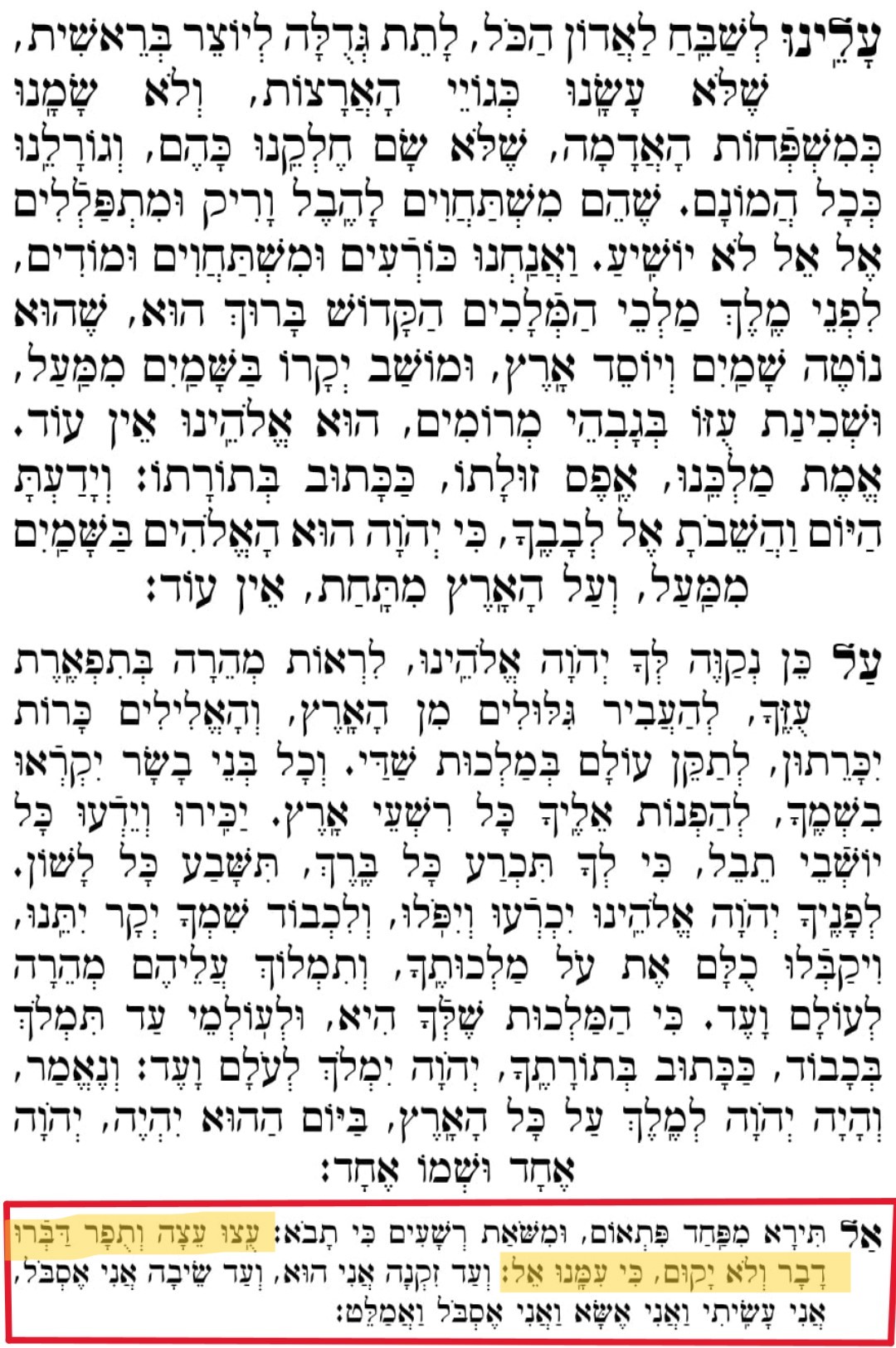
Go to the United Nations and sing outside the line from Al Tira, “Utzu Etza”: “Take counsel together, and it shall come to nought; speak the word, and it shall not stand: for God is with us.”
In biblical times, after the Great Flood destroyed the known world, mankind responded not with humility but with defiance. They sought to raise themselves above God’s wrath, building the Tower of Babel as a monument to their own power, reaching for the heavens.
Centuries later, as the Great Depression ransacked America, another tower began to climb skyward. John D. Rockefeller, the oil titan turned philanthropist, commissioned an audacious complex in the heart of Manhattan. Out of the rubble of despair rose Rockefeller Center, a collection of soaring structures anchored by “30 Rock,” a 70-story monument of steel and stone.
Construction workers having lunch as they build the RCA Building in 1932
At its entrance, the vision was chiseled into eternity: “Wisdom and Knowledge shall be the stability of thy times” — the words of Isaiah engraved above the door. Flanked by sculptures representing Light and Sound, the building proclaimed its purpose: to be the voice of news and entertainment for the world, a modern temple to information and culture.
Sculptures atop the main entrances of 30 Rockefeller Plaza(photo: First One Through)
Yet curiosity lingers when one gazes up at that famous inscription. The line from Isaiah 33:6 was never meant to stand alone. The full verse concludes: “…and the fear of the Lord is his treasure.” But that final clause was deliberately omitted. The builders sanctified wisdom and knowledge, but excised God. The omission transformed Rockefeller Center into secular scripture, elevating man’s wisdom over divine truth. For nearly a century, the complex stood representing a modern Tower of Babel: a singular voice beaming news, culture, and entertainment to a world tuned to one frequency.
Sculpture above doorway of 30 Rockefeller Plaza (photo: First One Through)
But the world has shifted. The authority of a single edifice has collapsed. The pandemic pulled workers from office towers into spare bedrooms and kitchen tables. The internet, social media, and ubiquitous cell phones scattered the once-unified audience into billions of isolated “my-truthers.” The great tower that once declared itself master of wisdom and knowledge no longer reigns over truth — or even news. Instead, we have a digital cacophony, a post-Babel of infinite voices, each one clamoring for relevancy.
In the ancient tale, God looked down upon Babel, saw mankind united in defiance, and scattered the people with a confusion of tongues. It was divine intervention that broke apart the human project. The modern incarnation lacks lightning bolts from the heavens with thunderous judgment. The fracture came from within. By sanctifying ourselves over the divine, the builders enshrined wisdom and knowledge as supreme — and in so doing, they planted the seeds of our undoing.
Even in scattering, the ancient world retained stability. Though tongues differed, mankind still clung to faith. Out of the dispersion of dialects came hundreds of religions, with Abraham’s radical monotheism, affirming that there was one God who bound the human family together, at its heart. In contrast, modern society’s disdain for God has left us truly unstable. We do not scatter into tribes of belief but dissolve into atomized individuals, each enthroning himself as arbiter of truth, each rejecting the notion of any higher authority.
There is no “stability of thy times.”
As Lord Jonathan Sacks once observed, “If you want to take this diverse, fractured culture and turn it into a united nation, you have to get them to build something together.” Culture is not born of proximity but of purpose. Yet even that is not enough. For building without faith leads only to another Babel — a project that may rise high but will ultimately fracture under the weight of its own pride.
Our ancestors knew this instinctively. They struggled, they questioned, they even quarreled with God — but they never erased Him from the story. Faith provided the mortar that held their collective together. In contrast, our age has celebrated knowledge while amputating belief, enthroning technology while dismissing transcendence. We build networks instead of communities, platforms instead of sanctuaries. And without faith, what we construct collapses into confusion, as surely as Babel once did.
A Way Forward
The modern Tower has already cracked. Today’s Titans do not build skyscrapers broadcasting monoliths of truth but platforms and algorithms addicting both tweeter and tweeterdom. We live in a splintered archipelago of isolated truths. To endure, we must restore the missing half of Isaiah’s wisdom. It is time to harken to Isaiah’s full words and engage with humble faith together with wisdom and knowledge, so that we may yet build a more perfect union.
Perhaps an answer for us today is not chiseling new words above our heads into the stone of Rockefeller Center to amend the verse. The real task is closer to home. Each of us can sanctify our own entrances with God’s presence. A mezuzah affixed to the doorpost — of a house, an apartment, and our workplaces — serves as the quiet reminder that wisdom and knowledge alone are not enough. It is God’s presence within that provides the stability of our times. Where the tower excised Him, the mezuzah restores Him. And if enough doorways bear that mark, perhaps our fractured society can yet rediscover a shared foundation.
30 Rockefeller Plaza at night, September 2025 (photo: First One Through)
The sound of the shofar is meant to pierce the heavens. Sometimes the shofar’s story pierces the heart.
I remember coming home one day to find my son in tears. His beloved shofar — a gift from his grandfather — had been chewed by his dear dog. The horn was mangled beyond salvation. I carried it to the rabbi in desperation, asking if it could be saved. Perhaps the mouthpiece could be trimmed…. Alas, it could not, and I never saw it again.
My father had given it to him not long before, teaching his grandson how to coax sound from its ancient curves in preparation for his bar mitzvah. That shofar, which transitioned from a smooth polished mouthpiece to a rough and natural opening, was more than bone and horn — it was a link between generations.
My father bought my son a new shofar and continued to teach him how to blow. He was there on the bimah as my son blew it proudly in Jerusalem on the first day of Elul for his bar mitzvah. I took in the special moment, and also considered my son’s previous shofar that was not there. Even more, the profound emotion of a young boy torn at losing his grandparent’s bar mitzvah gift – to a dog whom he also loved, who was just being a dog. The gathered family and milestone in Jerusalem were the key celebrations of the day, but recalling my son’s well of tears months earlier over this moment which may not have happened, enriched it.
My father’s own shofar has a different story. He blew it for decades in his shul, year after year, his steady blasts calling our community to repentance. Eventually the horn began to crack, to dry, to lose its voice. He gifted the treasure to me some years ago, and I have placed it on my living room mantle, its curves still beautiful though its sound has fallen silent.
This year, my father — approaching 90 — will not blow the shofar. While he’s strong enough to walk to synagogue, some health issues will keep him from the bimah as he has done for as long as I can remember. The body ages. The shofar ages.
There are shofars that pass through the generations, blown by grandparents and great-grandparents a hundred years ago and still blown today. They carry not just sound but touch — the hands that held them, the lips that pressed them, the prayers that filled them. In many ways, these shofars still live.
We think of the shofar as the instrument through which we hear God’s call on Rosh Hashanah. It is the vehicle – and the subject. The shofar itself has its own biography. Some are placed on mantles, mute witnesses to decades of service. Some are destroyed, leaving only the memory of their sound. Some are retired to museums as quiet curiosities.
As we enter a new year, I think of two particular shofars in my life — one that I can no longer see, one that I can no longer hear — and of the special people who breathed life through them whom I am blessed to still hold and cherish. These horns, like us, are finite. But their stories resound forever, calling us to remember, to connect, and to pray for many more years of holding them and each other as a family and community.
When the Torah commands the farmer to bring his first fruits, it does not let him talk about his soil or his labor. Instead, the ritual begins: “My father was a wandering Aramean…” (Deuteronomy 26:5) The commentators note that gratitude is not complete without memory. To thank God for the harvest, one must first recall that the Jewish story began in exile and slavery. Only against that backdrop does the basket of figs become miraculous.
Later in the same parsha (Deuteronomy 28:4), the Torah turns to blessings and curses. If Israel listens to God, “Blessed shall be the fruit of your womb, the fruit of your soil, and the fruit of your livestock.” If not, those very fruits will wither. Here too, fruit is not agricultural output — it is covenantal currency.
Put together, the two passages form a cycle. The first fruits ceremony roots gratitude in memory: remember that you were once landless and fruitless. The blessings and curses tie the future of fertility to obedience: remember that your continued abundance is not guaranteed.
And notice where this all happens: Jerusalem. The farmer did not simply thank God in his vineyard or whisper gratitude in his kitchen. He carried his produce up to the city, presented it at the Temple, and declared his history publicly. Jerusalem was not just a capital; it was the beating heart of Jewish memory and faith. The fruits gained meaning when they were placed before God in the city chosen for His name.
The Old City of Jerusalem including the Jewish Temple Mount
This is why the prophets, the rabbis, and Jewish history itself encircle Jerusalem. The city is not peripheral to Judaism — it is central. It is where private labor becomes national testimony, where agriculture becomes covenant, where the wandering Jew becomes rooted in a people’s eternal home.
To this very day, Jews sing at their wedding the verses of Psalms 137:5-6: “If I forget you, O Jerusalem, let my right hand wither; let my tongue stick to my palate if I cease to think of you, if I do not keep Jerusalem in memory even at my happiest hour.” Jerusalem is bound in memory, that same memory that reminds us of our history, our promise, our obligations.
Today, too, the Jewish people encircle Jerusalem. Jews bring their “first fruits” to the city not only in the form of produce, but through aliyah, prayer, innovation, and sovereignty. Just as in ancient days, the city transforms personal blessings into collective covenant.
And yet, the world still questions that rootedness. Governments refuse to recognize Jerusalem as Israel’s capital. Diplomats condemn the building of homes in areas like E1 — the very corridor that links Jerusalem to the rest of the land, enabling Jews from north, south, east, and west to come to their eternal city.
Ki Tavo reminds us that Jerusalem cannot be negotiable. To encircle it, to build in it and around it, is not a matter of politics but of foundational principle. Without Jerusalem at the center, our fruits risk becoming mere produce, and the people risk becoming wanderers once more.