
The death of Qatari Sheikh Hamad bin Khalifa Al Thani on July 12 marks the passing of one of the most consequential – and controversial – strategists of the modern Middle East.
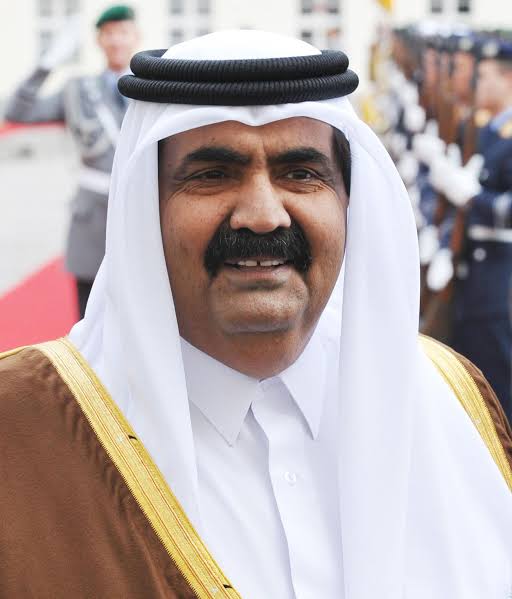
When he took power in Qatar in 1995, he inherited a tiny Gulf monarchy with enormous natural-gas reserves but limited international influence. By the time he abdicated in 2013 in favor of his son, Qatar had become a global financial center, media power, diplomatic broker and investor deeply embedded in the institutions of the West.
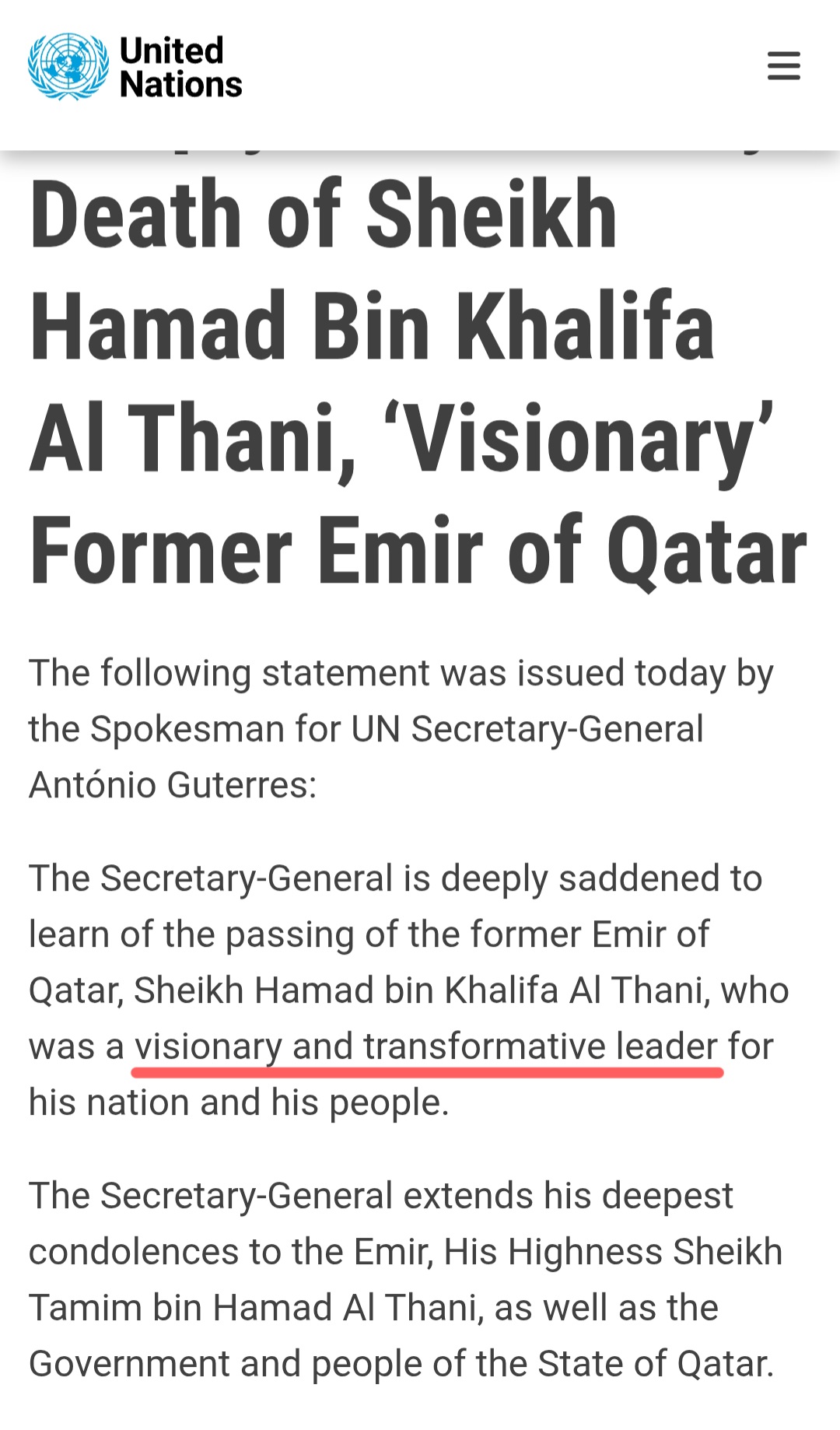
United Nations Secretary-General António Guterres mourned him as a “visionary and transformative leader.” The question is what he transformed and toward what end.
For most Americans, the War on Terror was fought in Afghanistan and Iraq. The enemy was imagined as something external: terrorists hiding in caves, regimes sheltering them and armies that could be defeated on a battlefield.
Sheikh Hamad developed a different model. Qatar did not physically confront the West. It enmeshed itself.
That strategy began with security. The United States and Qatar signed a defense cooperation agreement in 1992, but the relationship expanded dramatically after Sheikh Hamad took power. Qatar financed the development of Al Udeid Air Base beginning in the 1990s. After September 11, the base became central to American operations in Afghanistan and Iraq, and in 2003 the United States moved its regional air-operations command center there from Saudi Arabia.
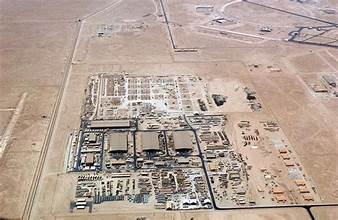
Thus, during Sheikh Hamad’s reign, Qatar became essential to America’s military posture even as Doha cultivated relationships with Hamas, the Taliban and leading Muslim Brotherhood figures. That contradiction was core to the strategy: become so useful to Washington that Qatar’s other alliances would be tolerated.

At the same time, Sheikh Hamad built Qatar’s machinery of influence.
In 1996, he launched Al Jazeera, which transformed Arabic-language media and gave Qatar a powerful instrument for shaping political narratives across the region.
Beginning in 1998, Qatar also imported elite American universities into Education City: Virginia Commonwealth in 1998, Weill Cornell in 2001, Texas A&M in 2003, Carnegie Mellon in 2004, Georgetown in 2005 and Northwestern in 2008. Qatar was not merely sending students to America. It was paying prestigious American institutions to plant their flags in Doha and bind their faculty, administrators and reputations to the Qatari national project. Simultaneously, it began pouring billions of dollars into American schools and think tanks in America.

Then came direct entry into the American media market. In January 2013, Al Jazeera purchased Current TV from former Vice President Al Gore and his partners in a deal reportedly valued at $500 million. The real asset was distribution: the purchase offered access to approximately 40 million American homes, compared with fewer than five million previously.
This was not a collection of unrelated investments. It was a coherent doctrine.
Qatar hosted America’s military command structure, funded American universities, purchased Western media distribution, invested in landmark properties, supported think tanks and lobbyists, and cultivated Western political relationships. At the same time, it provided sanctuary and legitimacy to movements hostile to the West.
In 2012, Sheikh Hamad became the first head of state to visit Hamas-led Gaza and pledged hundreds of millions of dollars to the terrorist enclave. Qatar also became a home for Hamas political leaders and a major platform for Muslim Brotherhood figures.
Saudi Arabia’s role in the rise of jihadism was more direct and more visible, as fifteen of the nineteen September 11 hijackers were Saudi nationals. The West responded with armies, invasions, intelligence operations and trillions of dollars in military spending.
Qatar’s jihadism arrived differently. Not as a bare bomb but wrapped in prestige, access and partnership.
It was a velvet bomb.
Its instruments were television studios rather than training camps, endowed programs rather than militias, lobbying firms rather than armies, and investment funds rather than explosives. Qatar learned that it did not need to defeat Western institutions. It could finance them, partner with them and make them dependent, while corroding their values from the inside.
That is why Guterres’s tribute is so revealing. To the United Nations, Sheikh Hamad was the visionary builder of a modern state. To his critics, he helped perfect a model in which a small authoritarian monarchy could use money, military protection and institutional legitimacy to amplify movements fundamentally hostile to the West’s own political order.
During Guterres’s tenure, the United Nations itself has increasingly appeared less like the guardian of the postwar liberal system and more like an arena in which the grievances and ideological priorities of the Global South are directed against the countries that built and financed that system.
Sheikh Hamad set that groundwork. He understood that changing the world did not require conquering it.
It required gaining access to its command centers, universities, media platforms, political networks and international institutions—and persuading the West to welcome the process as partnership.
That is his most consequential and controversial legacy.


Pingback: The Iran War Reveals The Two Jihadi Wars On America | First One Through