New York Governor Kathy Hochul delivered her State of the State address on January 13, 2026. In her prepared remarks, she condemned antisemitism and Islamophobia in the same breath, as if they were parallel crises in New York. They are not.
“In 2026, we’ll take new steps to protect our houses of worship against the rising tide of Antisemitism and Islamophobia.” – NY Gov. Kathy Hochul
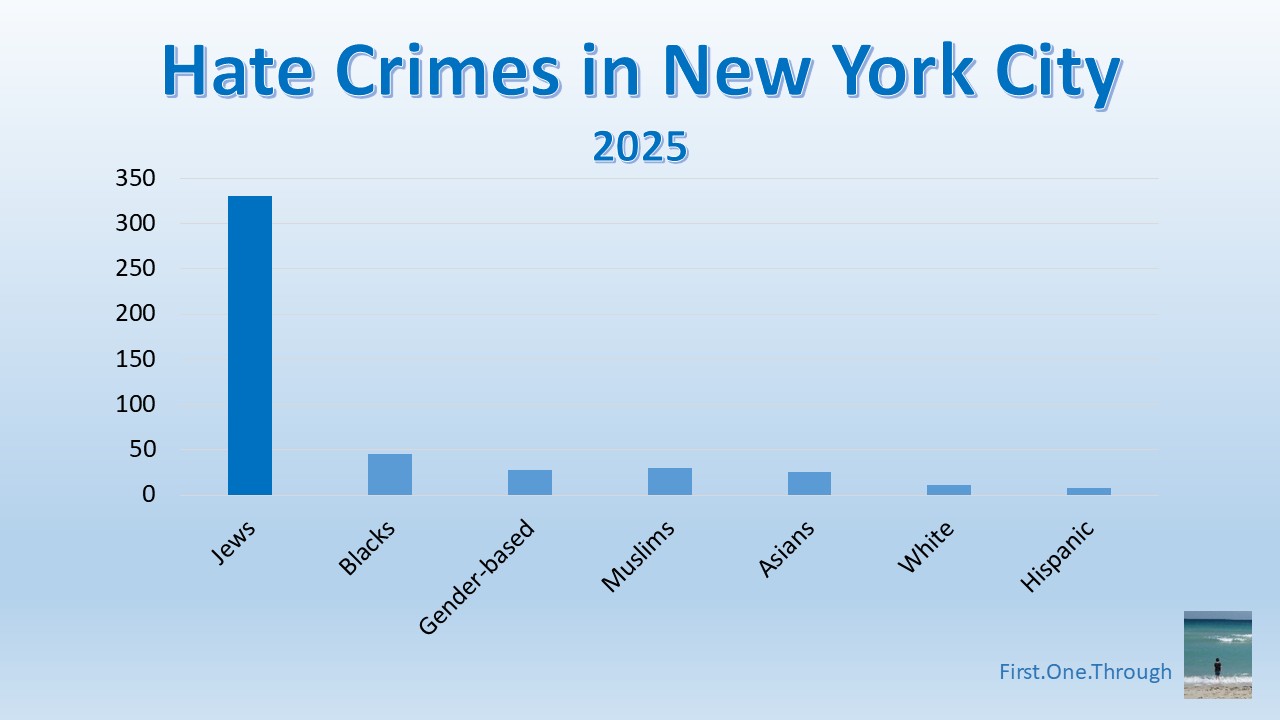
In 2025, antisemitic attacks in New York City were over ten times more frequent than attacks against Muslims. That is not a nuance. It is the entire story. When one form of hatred overwhelms all others by orders of magnitude, collapsing them into a single moral gesture is not fairness—it is evasion.
Worse, “Islamophobia” is now routinely invoked as a political shield, not a measured diagnosis. It is wheeled out whenever radical Islamic antisemitism becomes too obvious to ignore, functioning as a way to halt scrutiny. Name the attackers. Name the ideology. Name the chants. The response is immediate: Islamophobia.
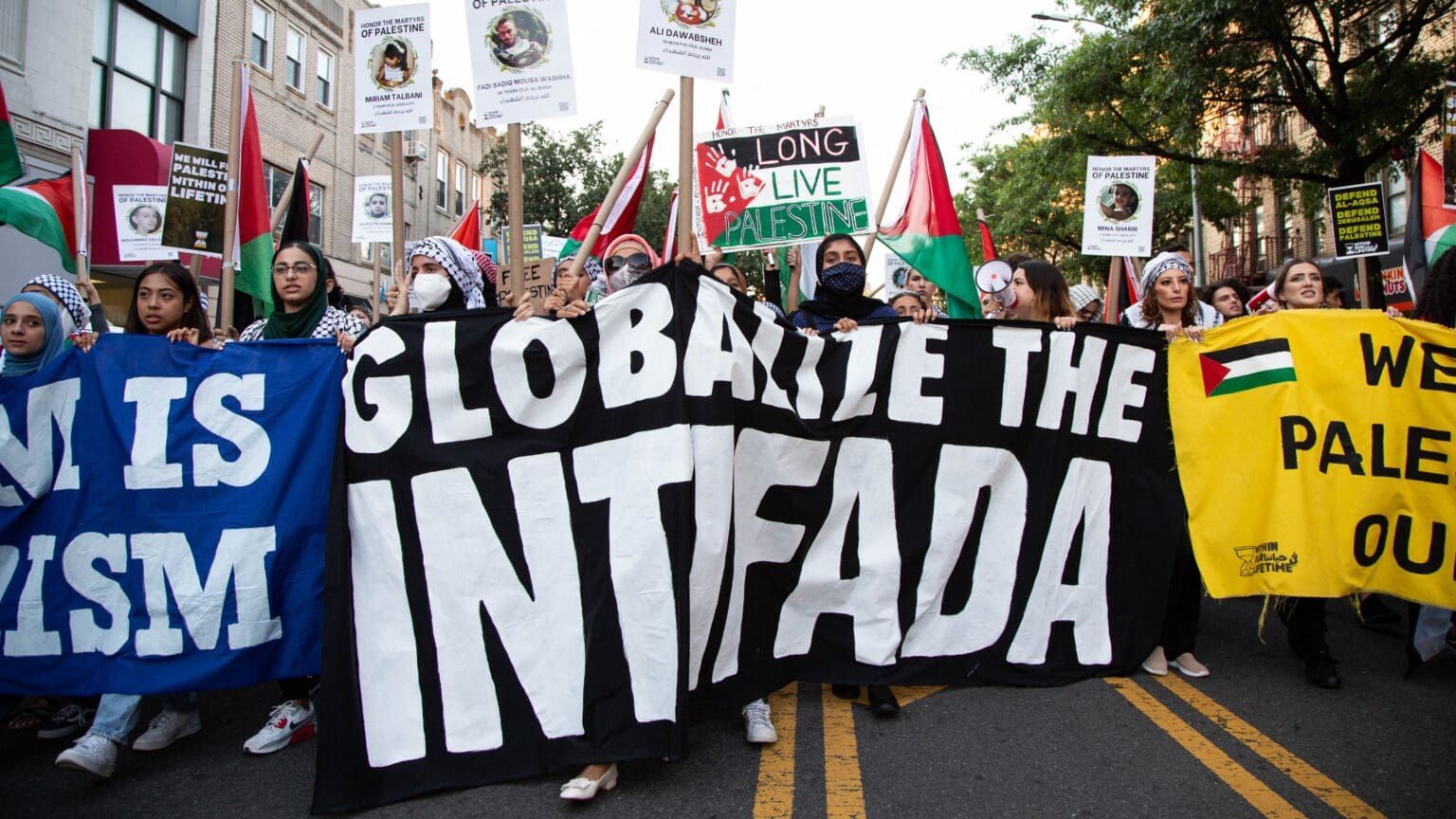
Today’s antisemitism is not abstract, historical, or evenly distributed across society. It is being driven openly and energetically by Islamist movements and their Western enablers, celebrated in the streets and sanitized as “anti-Zionism.”
Leadership requires prioritization. Data requires honesty. And moral clarity requires the courage to say that when Jews are being attacked ten times more than anyone else, they do not need their suffering balanced away.
False symmetry is not inclusion. It is worse than cowardice. It is vulgar absolution.
The near-term ramifications of Hamas’s war against Israel are being crystalized. Hamas’s leadership is decimated and Gaza is in ruins. The political-terrorist group’s allies in Lebanon, Syria, Iran and Yemen have been dealt severe blows, perhaps fatal for some. Hamas’s cheerleaders in the Global North are the only ones to have gathered momentum, particularly in Australia and the United States where hunting season for Jews has a seemingly open permit.
To gain insight for the next tactical steps, world leaders are looking at the current situation and polls since October 7, 2023 and have drafted proposals and taken initial actions: The United Kingdom and Canada recognized a Palestinian State. The U.S.’s Trump administration put forward a plan for Gaza which would include a new governing entity. The West hopes that the targeted assaults and murder of Jews will peter out along with the end of war. And the United Nations keeps playing the same tune about supporting UNRWA.
These are bad decisions and conclusions, made on faulty assumptions.
There is an organization that has been polling Palestinian Arabs for decades, called the Palestinian Center for POLICY and SURVEY RESEARCH (PCPSR). It conducted a poll of Arabs in Gaza and the West Bank, just before the Hamas-led war, from September 28 to October 8, 2023. Because of the war, the results did not get published until June 26, 2024, and the world was too focused on the war to pay it any attention. It is deeply unfortunate, and it is required reading to help chart a better future for the region.
To start with the poll’s conclusions:
A large percentage of Palestinian Arabs have wanted to leave Gaza and the West Bank for years, not from the current destruction
Arabs are fed up with their own government – Hamas and the Palestinian Authority – much more than Israeli “occupation”
Canada is viewed much like Qatar for Gazans, a sympathetic haven
Palestinian Arabs Wanted to Emigrate Before the War
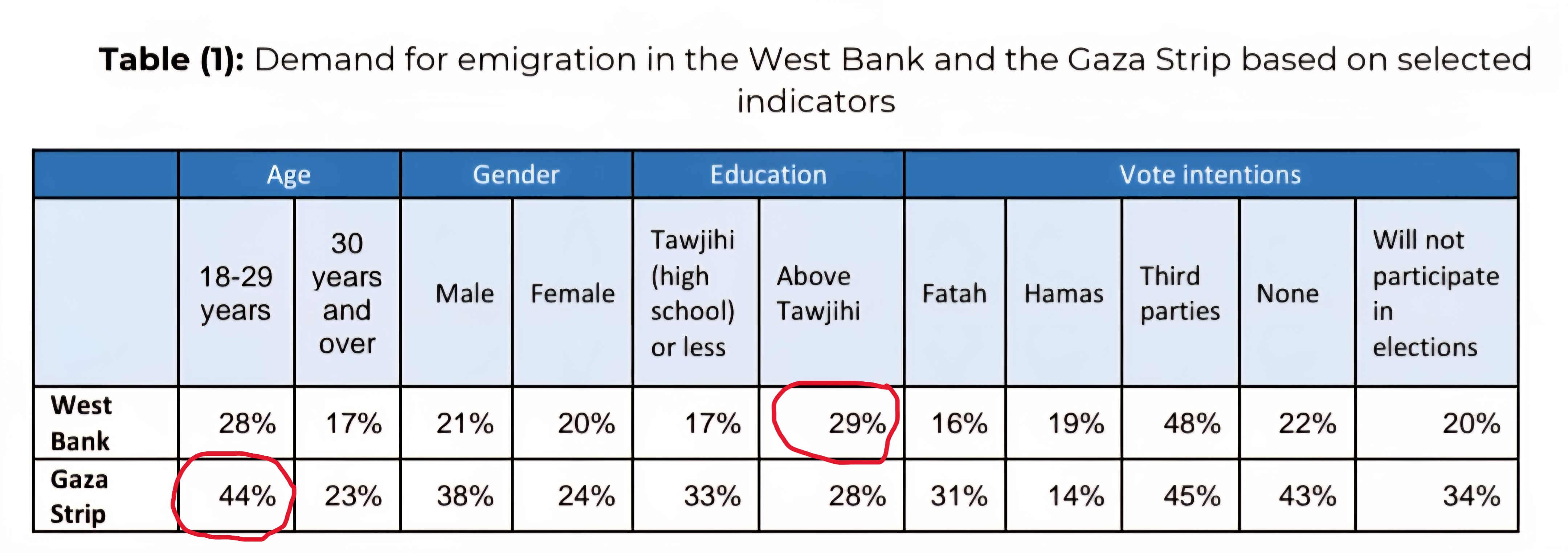
According to PCPSR, whether in October 2023 or November 2021, roughly 33% of Gazans and 20% of West Bank Arabs wanted to leave the region.
Men below age 30 make up the vast majority of those seeking to emigrate. As opposed to Gaza where both educated and uneducated people want to leave, it is the educated West Bank population that wants to move away. Among those wishing to leave, many would not vote in Palestinian elections, or if they would, they would sooner vote for third parties over Fatah or Hamas.
Palestinian Leadership is the Curse, More than Israel
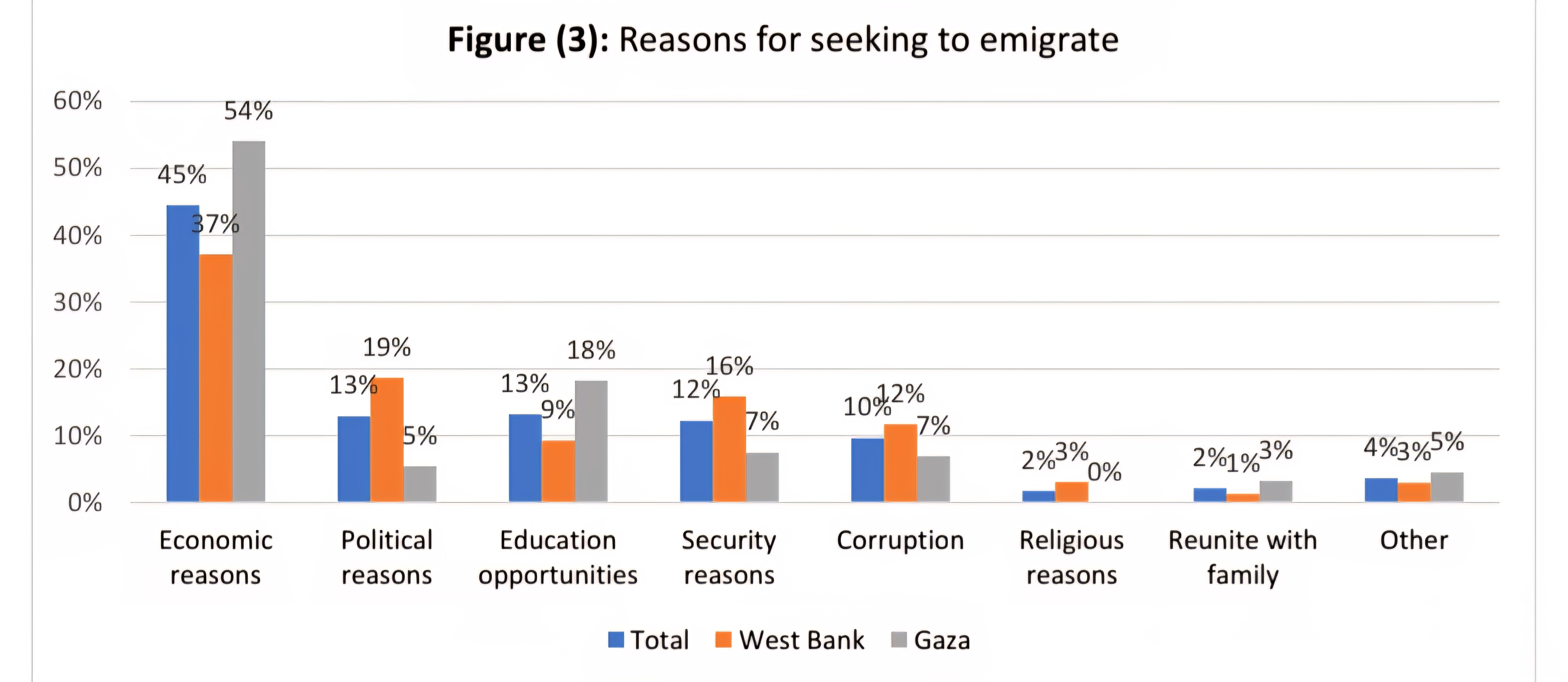
The number one reason for wanting to leave was economic conditions by a far margin. Reasons two and three were political reasons and educational opportunities. “Security reasons” came in fourth, with only 7% of Gazans focused on security; 12% overall. Corruption, religious reasons and to reunite with family rounded out the poll.
Canada as a Beacon
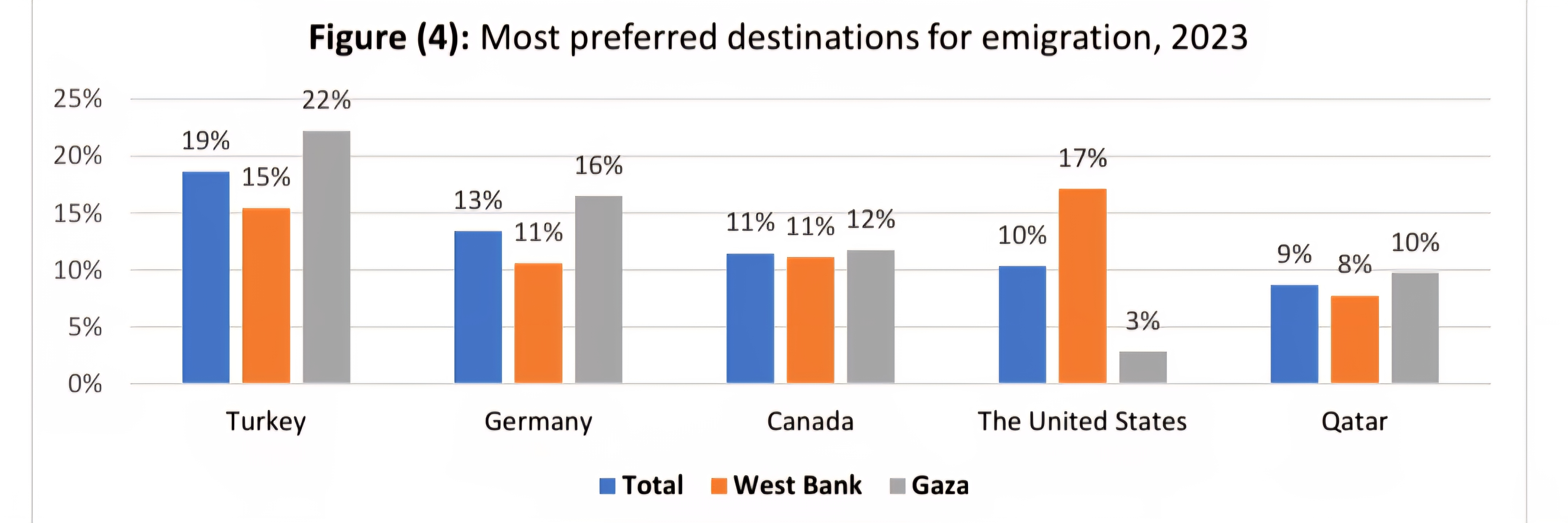
Turkey and Germany were the two most favorite destinations, especially for Gazans. Very few Gazans (3%) considered the United States, while West Bank Arabs put it as the number one choice (17%), likely seeking advanced degrees at left-wing universities. What is remarkable, is more of the Stateless Arabs (SAPs) would prefer going to Canada (11%) than Qatar (9%), the wealthy Muslim Arab nation that is a main sponsor of Hamas.
Honest Takeaways
These pre-war results leads to some basic and critical conclusions.
Complete Overhaul of Palestinian leadership, not just in Gaza
The desire of Arabs to leave was evident across both Gaza and the West Bank for many years. This was not a reaction to bombing or siege; it was a verdict on governance.
Hamas in Gaza rules through repression, diversion of aid, and religious militarism. The Palestinian Authority in the West Bank offers corruption, authoritarianism, and political stagnation. Together they have produced a society with no credible economic horizon, no accountable leadership, and no peaceful mechanism for change.
While a new entity is needed to administer Gaza, that role should be akin to a Chief Operating Officer overseeing construction. The Palestinian Authority itself needs to be gutted and rebuilt as it is a corrupt, unpopular and ineffective entity.
The United Nations Must Withdraw from Gaza and the West Bank
In its desire to create a Palestinian state, the U.N. has stripped the titular heads of Palestine of any responsibility. The UN protects Hamas despite its savagery. It props up the Palestinian Authority despite its rampant corruption. Palestinian leadership is a bed of paper scorpions.
The UN must withdraw from Gaza and the West Bank and allow local authorities to build a functioning leadership team.
The West Should Rescind Recognition of Palestine
There is no functioning Palestinian government and therefore no basic standard to recognize a Palestinian State. The United Kingdom, Australia and others should withdraw their recognition and make it conditional on building governing institutions that can lead and make peace with the Jewish State next door.
Reeducation in the West
The massacre did not arise from a sudden spike in pressure. It emerged from long-standing internal failure. Hamas chose atrocity because it couldn’t commit a complete genocide of Jews so exploited its own population to be fodder for Israel.
Western audiences were then handed a familiar script, complete with pictures. But the data taken just before the massacre tells a different story—one far more consequential. What is being taught in western public schools is divorced from reality and feeds global and local antisemitism.
Oh No, Canada
While the fears of antisemitism are focused on the United States and Australia because of recent attacks on Jews, Canada is in the hearts and minds of Palestinian Arabs seeking a warm diaspora community. Perhaps it started a decade ago under Justin Trudeau who followed U.S.’s President Barack Obama to embrace the Palestinian cause and Iranian regime over Israel. Perhaps it is because of the welcome mat for extremists groups like Samidoun. Or perhaps it is the perception that the heckler’s veto is fair game, and can run Jewish families off Canadian streets.
Whatever the inspiration, Canada is widely perceived as permissive, ideologically indulgent, and administratively porous—an attractive environment for “political activism” untethered from civic responsibility. It is a ticking time bomb.
The poll of Palestinian Arabs on the eve of the October 7 war reveals deeper truths than surface shots of leveled homes. The PCPSR findings point to a single truth: the Palestinian problem is fundamentally internal.
Ending Israeli control over territory without dismantling corrupt and extremist institutions will not deliver prosperity or peace. Statehood layered on top of dysfunction will harden it. And exporting populations shaped by jihadist rule into permissive Western societies without serious screening and integration, risks importing instability rather than relieving it.
Modern political language compresses history into slogans. The United Nations speaks of “occupied Palestinian territory,” which it insists be Jew-free. The “pro-Palestinian” movements echo false claims of Jewish colonialism, as if Jews are newcomers.
Archaeology answers differently—through the infrastructure of everyday life.
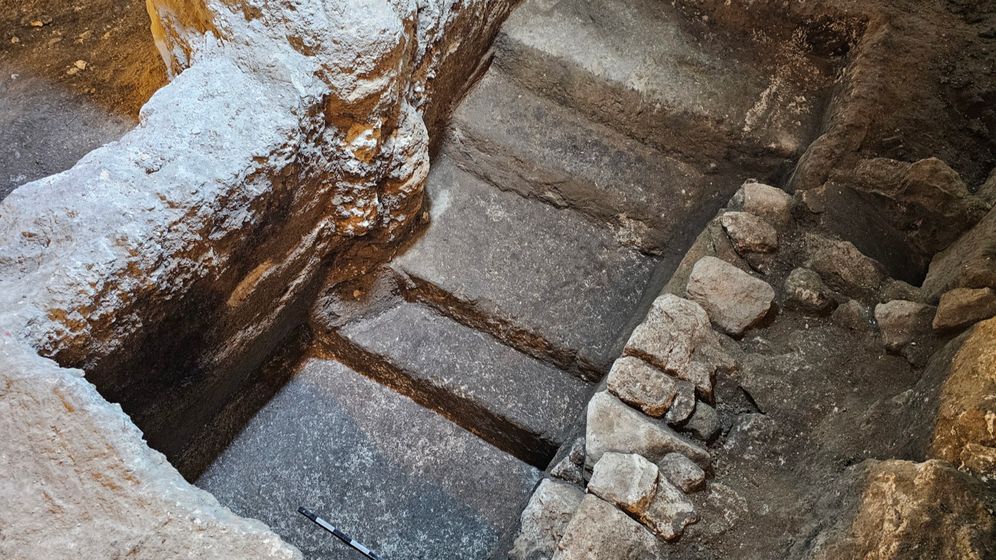
Across Jerusalem, Judea, Samaria, and the Galilee, ancient mikva’ot—Jewish ritual immersion baths—appear in homes, villages, farms, and neighborhoods. They date from the First Temple and Second Temple periods and into the Mishnaic era. Their construction follows strict Jewish law. Their distribution tracks permanent settlement. Their purpose is singular: Jews lived here as a rooted society, organizing life around inherited religious practice.
This is not an argument from ideology. It is a statement of fact.
Jerusalem—Including the East: A City Immersed
Jerusalem contains the highest concentration of ancient mikva’ot anywhere in the world, with hundreds surrounding the Jewish Temple Mount as people immersed themselves before entering. In the City of David—today known as Silwan, a village established by Yementite Jews in the 19th century—dozens of ritual baths are embedded in residential quarters dated from the 1st century BCE to 70 CE. North and east of the later city walls, mikva’ot appear in neighborhoods now called Shuafat and Sheikh Jarrah, including the Shimon HaTzadik complex. The ancient mikvahs are also found to the west and south.
Mikvah under the Western Wall in the Old City of Jerusalem
“The widespread distribution of ritual baths in and around Jerusalem reflects strict observance of Jewish purity laws as part of everyday life.”
These installations predate Islam by centuries. They show a city whose rhythm followed Jewish law across its full geographic footprint—west and east alike.
Judea: Bethlehem, Jericho, Hebron, and the Southern Hills
South of Jerusalem, the Judean Hills—now routinely labeled “occupied”—were a Jewish heartland in antiquity. Around Bethlehem, archaeological surveys identify rock-hewn mikva’ot associated with agricultural estates and villages from the Hasmonean and Herodian periods. Comparable installations appear near Hebron and Tekoa.
“Ritual baths, agricultural installations, and burial caves indicate dense Jewish settlement throughout the Judean Hills during the Second Temple period.”
These were family communities organized around Jewish practice, embedded in the land over generations.
Samaria: Villages of Law and Land
In Samaria—today’s northern “West Bank”—mikva’ot appear in rural villages and estates tied to farming and household life. Near Shiloh, stepped pools carved into limestone meet halakhic requirements and date to the late Second Temple period.
These finds demonstrate continuity between biblical Israelite centers and later Jewish communities. They record a population living according to inherited law, rooted to fields and seasons, long before later demographic changes.
What Mikva’ot Prove
Mikva’ot appear only where Jewish law structured daily behavior. They require permanence, planning, and communal norms. They cluster where families lived and expected their children to live.
Plotted together, they form a map that predates:
Arabic language in the region
Creation of Islam
Medieval and modern political boundaries
They belong to a Jewish civilization indigenous to the land for centuries before the Arab conquests of the seventh century.
Conclusion
International bodies can rename the land and activists can repeat slander but archaeology restores history to human scale. Mikva’ot record where Jews prepared for worship, marriage, birth, and community life. They mark neighborhoods, not narratives.
Across all of Jerusalem and through Judea and Samaria, these ritual baths establish a simple historical truth: Jews are indigenous to this land, and their daily life shaped it long before later conquests and long before modern politics.
Of the many classic lines from the TV sitcom Seinfeld, “it’s not you, it’s me,” is a great one, used as an excuse to get out of a relationship. It’s a phrase familiar to anyone who has ever been in a relationship which one party simply does not enjoy and wants to terminate gently.
There is no relationship so poorly constructed and toxic today as between Israel and the United Nations, harmonious at the start but broken bit by bit since that time. In an effort to complete it’s desire of completing the creation of two states, a Jewish one and Arab one as conceived in the General Assembly vote of partition in November 1947, the institution has fabricated lies and noxious resolutions against Israel and Jewish dignity everywhere.
Follow what the UN does, and what it says, and a stark pattern emerges: Palestinian Arabs are granted surplus political rights across the entire map, while Israel is denied the basic attributes of sovereignty. This is not mediation. It is architecture, scaffolding producing a permanent conflict.
1) Start with the most basic injustice: where Jews may live and pray
Begin where ideology becomes lived reality.
Across territory, the UN labels Palestinian Arab non-Jewish residence as inherently legitimate everywhere, while Jewish residence is declared subject in advance, legal where a Jewish State was once allotted but illegal everywhere else. Through instruments like United Nations Security Council Resolution 2334, Jewish civilians are criminalized simply for living beyond armistice lines—before borders are agreed, before negotiations conclude, before sovereignty is determined.
This is unprecedented. In every other territorial dispute on earth, civilian life is separated from sovereignty. Here, it is collapsed—selectively.
Then comes the religious core.
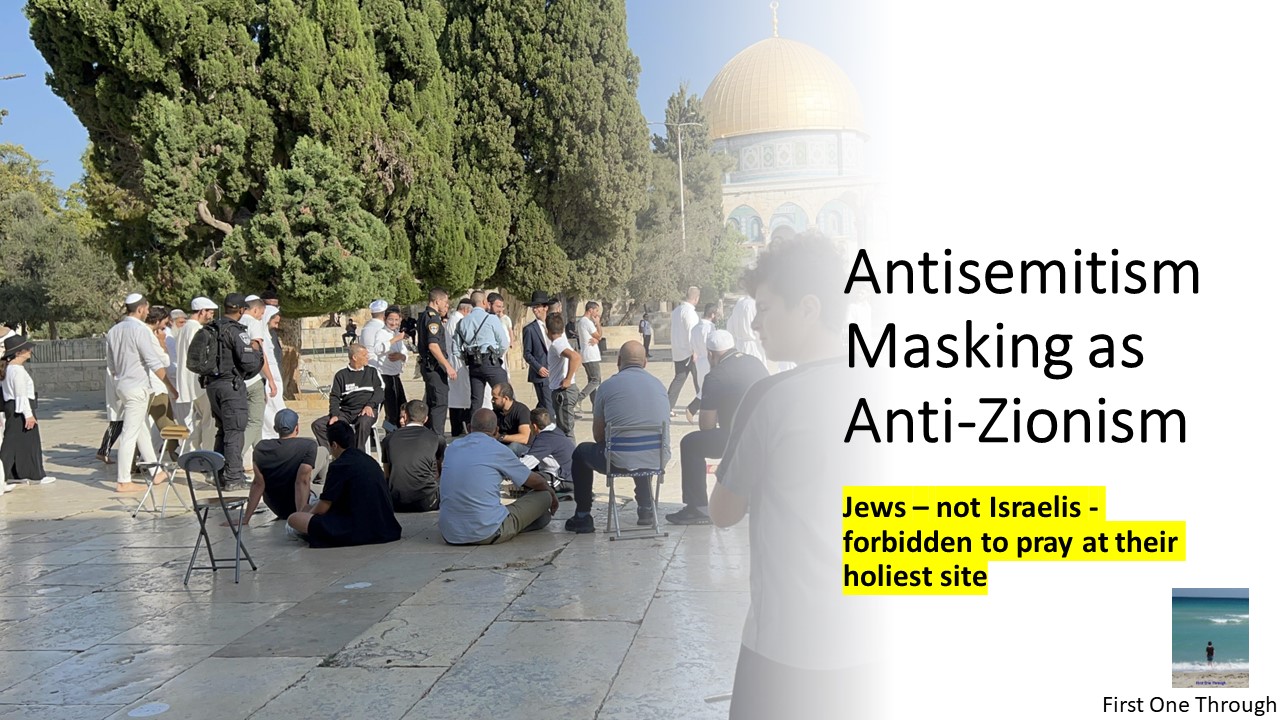
At Judaism’s holiest site—the Temple Mount / Al-Haram al-Sharif—the UN endorses a so-called “status quo” that allows Muslim prayer as a matter of course while forbidding Jewish prayer outright. Jews may visit in finite numbers. They may not worship.
No neutral body sanctifies a regime where one faith’s prayer is normal and another’s is treated as provocation. That is not stability. It is hierarchy—polished with diplomatic language.
2) Escalate to sovereignty itself: borders without control
Every sovereign state controls who enters and who becomes a citizen. Israel is uniquely told this right is negotiable.
Through endless reaffirmations of a mass “right of return,” the UN demands that Israel absorb millions of Palestinian Arabs who never lived there—descendants of a war launched to destroy the state—thereby erasing Jewish self-determination by arithmetic rather than war.
No other UN member is ordered to commit demographic self-nullification as a condition of legitimacy. Only Israel is told that survival itself is subject to international approval. International demand.
A state that cannot control entry is not sovereign. A state treated this way is not being mediated in a peace process—it is being managed.
3) Why this only happens here: permanent UN wardship
The cause is clear.
The UN did not simply sympathize with Palestinian Arabs; it adopted them as permanent wards, institutionalized most clearly through UNRWA—a bespoke agency unlike anything else in the world.
Refugee status became hereditary. Dependency became intergenerational. There is no sunset, no graduation, no expectation of resolution. Failure carries no cost because accountability is externalized.
A guardian cannot be an honest broker. An institution whose relevance depends on a client’s grievance cannot afford peace. This isn’t humanitarianism anymore. It’s custodianship—and custodianship is the enemy of compromise.
4) The doctrinal rupture: inventing a “right to a state”
Only after the machinery is in place does the UN supply its legal fiction.
The UN rewrote this rule only and specifically for Palestinian Arabs, treating sovereignty as a pre-awarded verdict because of a partition plan it voted upon in 1947 that the party refused to accept. Once the destination is guaranteed, compromise becomes optional. Negotiations become theater. Pressure flows in only one direction.
No other people receive this upgrade. Only here does the UN convert aspiration into entitlement—and then insist it is merely being neutral.
5) The smoking gun: December 1990 recasting the conflict and the legitimation of violence
Then the mask slips.
In December 1990, the UN General Assembly adopted Resolution 45/130, reaffirming “the legitimacy of the struggle of peoples … for liberation from colonial and foreign domination by all available means.” The resolution was designed to close the chapter of apartheid in South Africa, but took a heavy detour into the Israel-Palestine conflict, recasting the entire partition plan of 1947. It referenced “colonial” entities fifteen times, “Palestinians” twenty-five times, and made the establishment of an Arab state a matter of freedom from racist and external oppression, not a discussion about self-determination.
In UN practice, this language cast Israel as a colonial entity and Palestinian Arabs as a people entitled to armed struggle to dismantle it.
From that moment on, terror could be reframed as resistance, and compromise as collaboration. The UN crossed the line from mediator to moral endorser of one side’s maximalist narrative.
6) The arithmetic of the fraud
Add it up and the numbers don’t lie.
Under the UN framework, Palestinian Arabs receive:
A guaranteed future state
Political rights inside Israel
A trans-sovereign right of return into Israel
Permanent UN patronage and advocacy
International legitimation of “armed struggle” against Israel
Israel, meanwhile, is left with:
Provisional borders
Conditional legitimacy
Criminalized civilian residence in disputed territory
Restricted religious freedom
Denied control over immigration
Violence against it rhetorically excused
In this jaundiced framework, Jerusalem, which was NEVER designated to be a Palestinian city even under the 1947 partition plan, can be called “occupied Palestinian territory,” a complete fabrication even according to the UN itself.
The United Nations is not an honest broker; it is an interested architect whose rules ensure the conflict cannot end, and Jewish dignity remains conditional around the world.
By sanctifying exclusion, denying sovereignty, adopting one side as a permanent ward, inventing rights it had no authority to grant, and legitimizing violence as “anti-colonial,” the UN has guaranteed perpetual war—then blamed one of the parties for refusing peace.
In Seinfeld, one party is afforded the opportunity to end the relationship; one party has the option of providing a face-saving excuse to part ways quickly and smoothly. Not so for Israel and the United Nations, where the UN continues to manufacture obstacles and then gaslight the Jewish State that it is the root of the problem.
The UN speaks as if it is a “moral compass” in an “age of chaos.” Perhaps it once was, at least directionally. It is definitely not in the Middle East today, where its votes and actions have led to the death and misery of millions.
UN Secretary General Antonio Guterres speaks at the UN headquarters in New York in September 2025
The Torah’s first image of Moses is of a man split against himself. Born a Hebrew and raised in Pharaoh’s palace, he lives between worlds. When he kills an Egyptian beating a Hebrew slave, the act is instinctive. Yet when another Hebrew confronts him—“Who made you ruler and judge over us?” (Exodus 2:14)—Moses has no answer. He cannot say who he is or why he has the right to act.
So he runs.
The flight is explained as fear of Pharaoh because the attack was discovered. A deeper cause is identity fracture. Moses is caught between Egyptian and Jew, insider and outsider. When identity is unsettled, even a disgraceful question feels existential. Retreat becomes the reflex.
That pattern did not end in Egypt.
Today, for much of the diaspora, Jewish life has carried a similar split. Jews learned to survive by blending, qualifying, and softening. Identity became situational. Answers changed with the room. When questioned—about history, belonging, or the land of Israel—the instinct has often been Moses’ instinct: explain carefully, hedge, or leave the room. Running becomes habit when the self feels divided.
Israel changes that equation.
Israeli Jews do not experience Jewishness as a negotiation. It is civic, cultural, linguistic, and historical all at once. There is no internal argument to resolve before answering an external challenge. Questions that unsettle diaspora Jews rarely destabilize Israelis because the identity beneath them is settled.
Kotel Plaza with Israeli flag (photo: First One Through)
The philosophical approach even applies to non-Jews in Israel. Consider Quentin Tarantino, who married an Israeli, lives in Israel, and raises his children there without explanation or apology. His life models something diaspora Jews are rarely encouraged to try: resolve the split by living a whole integrated self rather than defending it. Belonging practiced instinctually requires no justification.
That clarity was shown clearly in Tarantino’s 2003 film Kill Bill: Vol. 1. In the film, O-Ren Ishii responds to an attack on her heritage immediately and violently. She recognizes the move as an attempt to diminish her and rejects the premise entirely. The table turns the instant she stops answering the charge and starts judging the judge.
For diaspora Jews—and for anyone of mixed heritage—the lesson is continuity. Identity settled internally removes the need for fleeing externally. When the self is whole, interrogation loses its force. Disgraceful questions do not deserve better answers; they deserve exposure and repudiation.
Moses ran because his identity was divided while modern Israelis do not. O-Ren stands because she knows exactly who she is and will not entertain accusers.
Diaspora Jews today should not need to relive Moses’ uncertainty of self. The work now is not to run, but firmer clarity. Better education and rootedness. Firmer responses.
Stop running. Stop defending. Condemn the question—and the room will follow.
Every time antisemitism is called out on the left, the same dodge appears on cue: “It’s just free speech.”
That response is not a defense. It is a red herring.
No one is arguing that anti-Israel speech is illegal. Under American law, almost nothing is. You can shout racist slogans. You can be misogynistic. You can mock religions. You can hold a Draw Muhammad contest outside a mosque. You can call for the destruction of a country. You can deny a people’s history.
All of that is protected speech. That has never been the question.
The question is what that speech is.
And much of what now passes as “anti-Israel discourse” is not political critique at all. It is hate speech, clearly, historically, and deliberately so.
Calling for the destruction of the Jewish State is not foreign policy analysis. Denying Jewish history in the Land of Israel is not academic debate. Declaring that Jews alone have no right to national self-determination is not progressive politics. Passing a law that Jews cannot live somewhere and cannot pray at their holiest location is not a free exchange of ideas.
It is the application of a single moral standard to one people — and only one people — that says: you do not belong anywhere.
It is naked antisemitism.
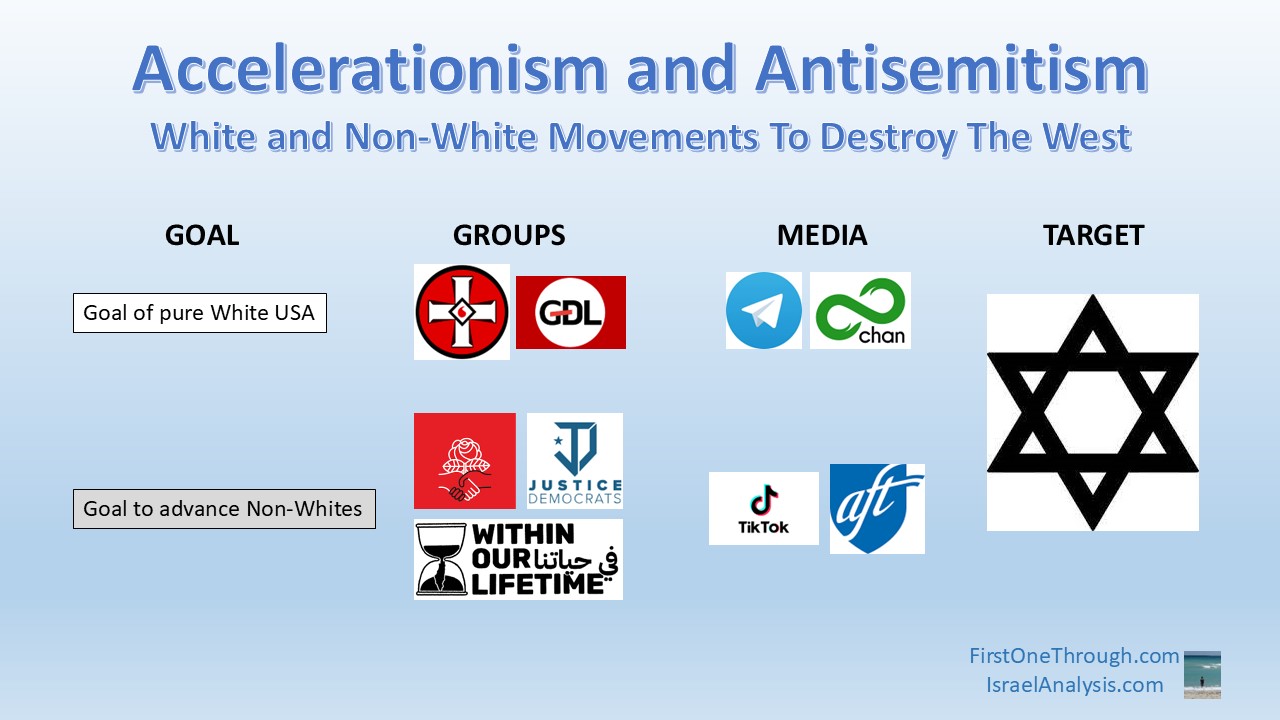
Organizations like Democratic Socialists of America, Students for Justice in Palestine, Within Our Lifetime and Palestine Youth Movement are not tolerating this rhetoric. They are chanting it,platforming it, amplifying it, and treating it as virtuous. They deny Jewish peoplehood, erase Jewish indigeneity, excuse violence against Jewish civilians, and then insist this is nothing more than robust debate.
It is not.
It is hate speech — even if the Constitution protects the right to utter it.
And then there is Zohran Mamdani, who embodies the selective blindness at the heart of this moment. No serious person believes he would tolerate a mass of protesters outside mosques depicting Muhammad as a terrorist, screaming at Muslims as they enter prayer. That would be — correctly — labeled Islamophobia, regardless of whether it was technically legal.
When Jewish institutions are targeted, when synagogues are surrounded, when Jewish national identity is declared illegitimate, the alt-left response suddenly becomes procedural: free speech.
Free speech does not launder bigotry. The First Amendment protects the right to speak; it does not cleanse the moral content of what is said. When people accuse Mamdani and the DSA of promoting Jew-hatred, they are not confused about constitutional law. They are describing the reality of ingrained Jew hatred.
“Most Americans are familiar with the classic Western flavors of anti-Semitism: the Christian, European, white-supremacist and Communist types. But little attention has been paid to the special case of Muslim anti-Semitism. That is a pity because today it is anti-Semitism’s most zealous, most potent and most underestimated form.” – Ayaan Hirsi Ali, July 2019
Invoking free speech is an evasion. A way to avoid responsibility while continuing to normalize ideas that would be instantly condemned if aimed at any other minority.
The tragedy – and fear – is that liberals understand this perfectly well in every other context. They simply refuse to apply it to Jews. Or at least, when uttered by a community of preference, Muslims.
Free speech is not on trial, do not be confused by the misdirection. Antisemitism is, and it is winning.
Political power is built when ideology is fused to daily life. Theory alone persuades few and charity alone commands none. Durable movements embed a worldview inside services people rely on, until dependence becomes loyalty.
That was the formula in Gaza. It is the same formula now visibly rising in New York.
Hamas entered Gaza with a rigid morally corrupt worldview long before it ruled. Its clinics, schools, mosques, and charities were never neutral. They delivered aid while teaching a doctrine that explained suffering, identified enemies, and promised redemption through allegiance. Service and ideology arrived together.
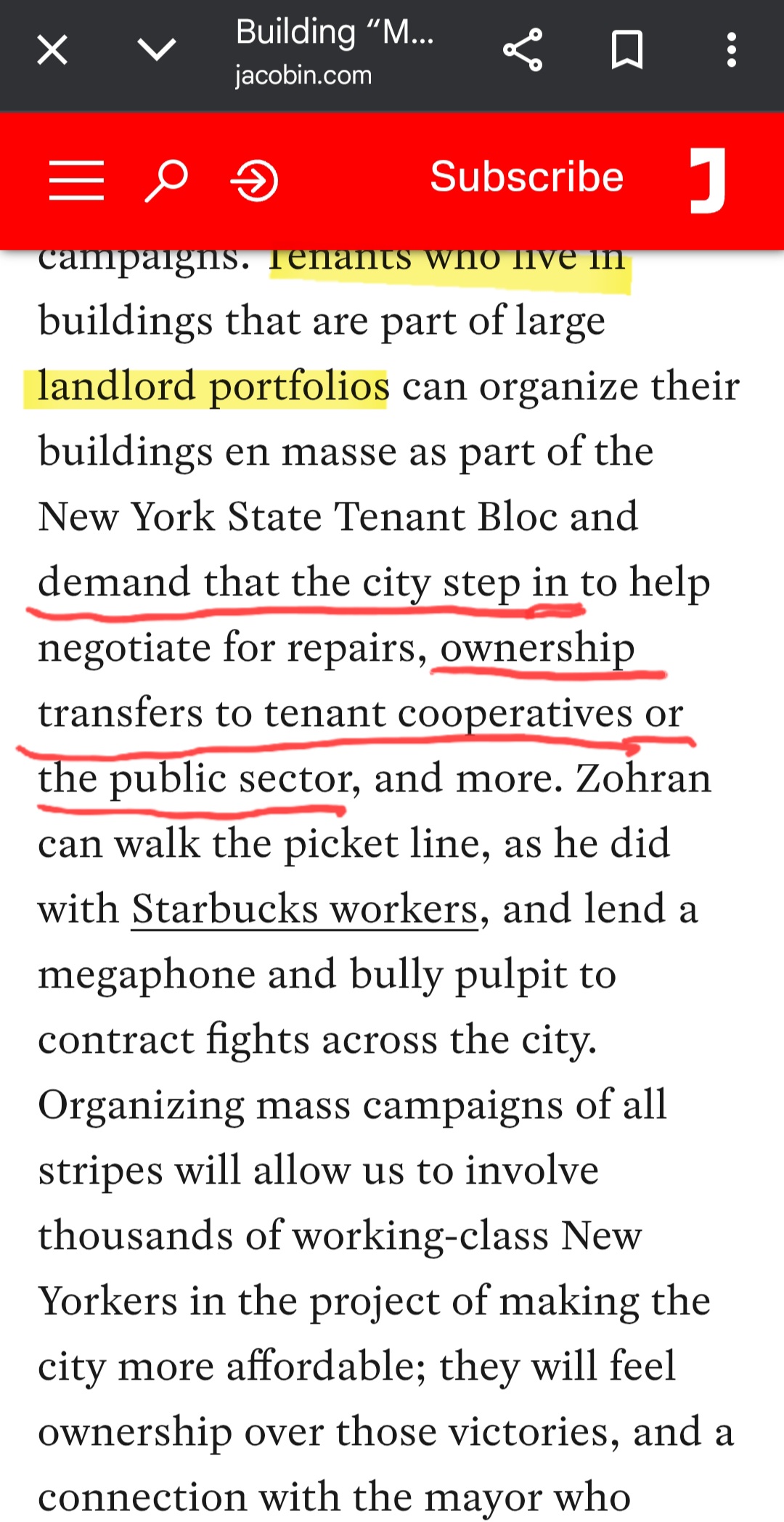
The Democratic Socialists of America advances along the same dual track in American cities. Mutual aid, tenant organizing, bail funds, and rent clinics function as delivery systems for a moral framework that divides society into oppressors and oppressed, treats ownership as suspect, and elevates redistribution as justice. Assistance arrives bundled with belief.
In both cases, aid becomes initiation and gratitude becomes allegiance.
The Manifesto: How Movements Legitimize Seizure
Grassroots legitimacy does not sustain power by itself. Movements require a manifesto—a moral architecture that explains why people suffer and who is to blame.
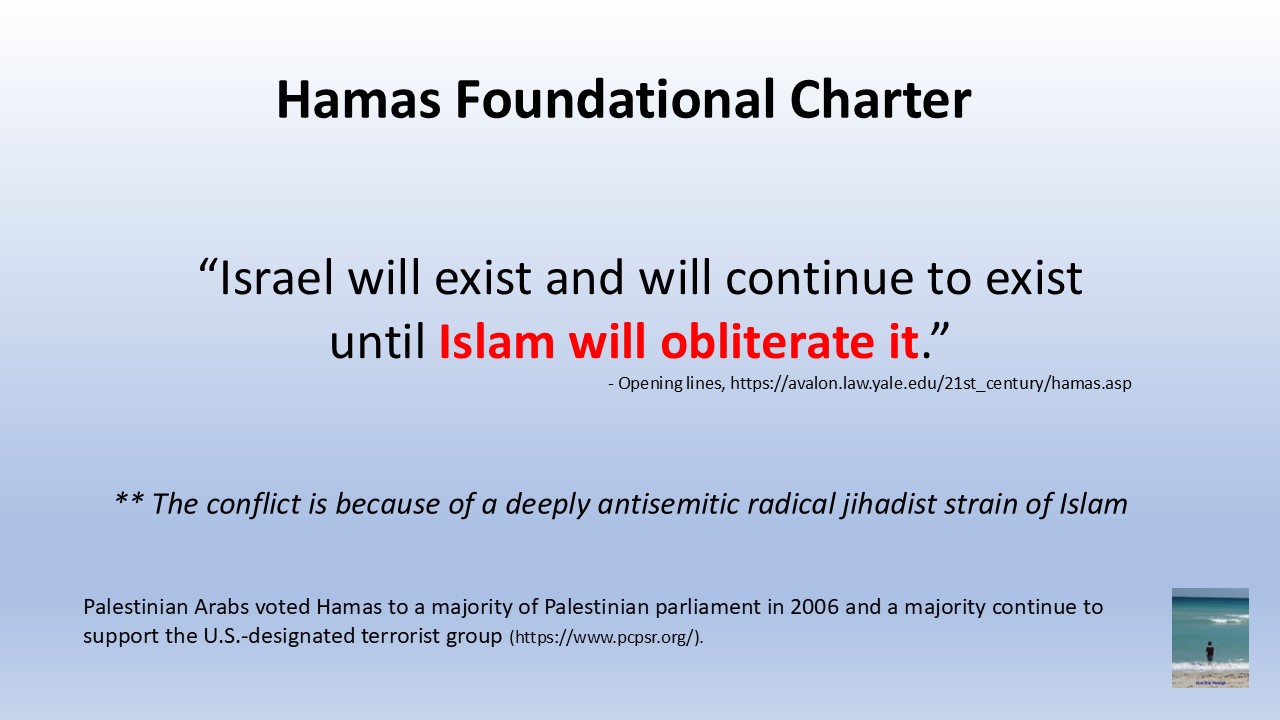
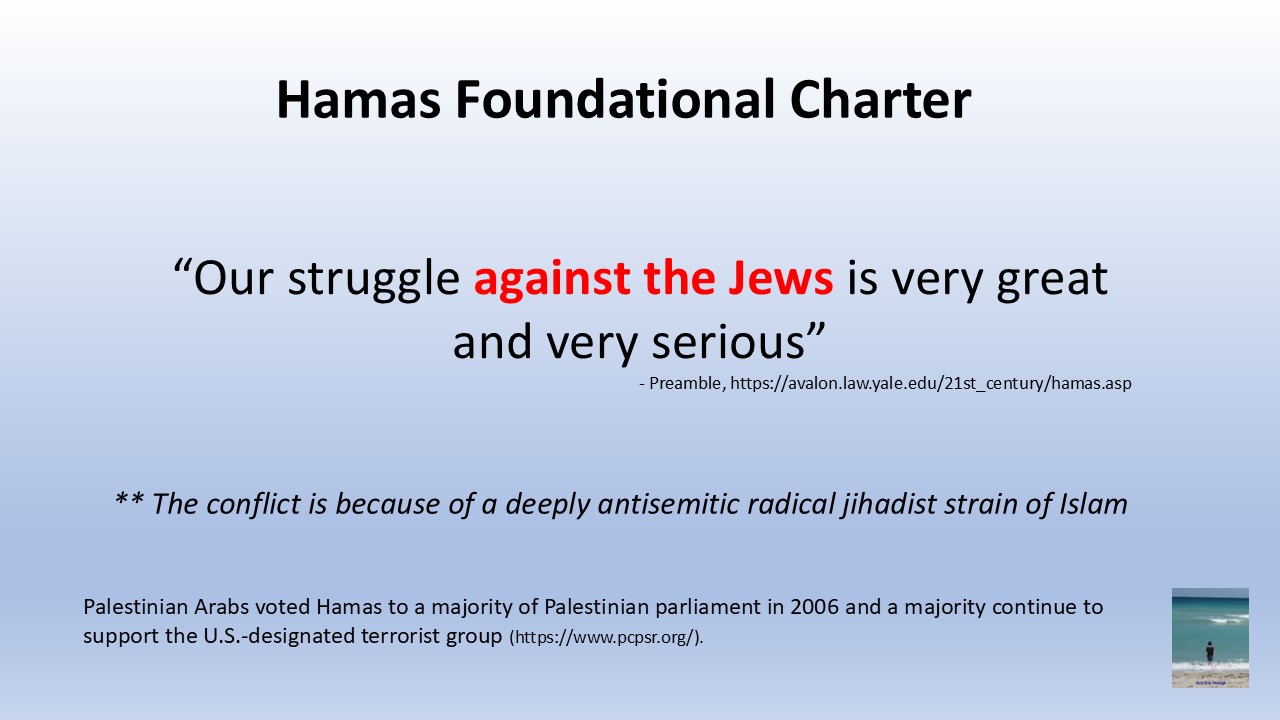
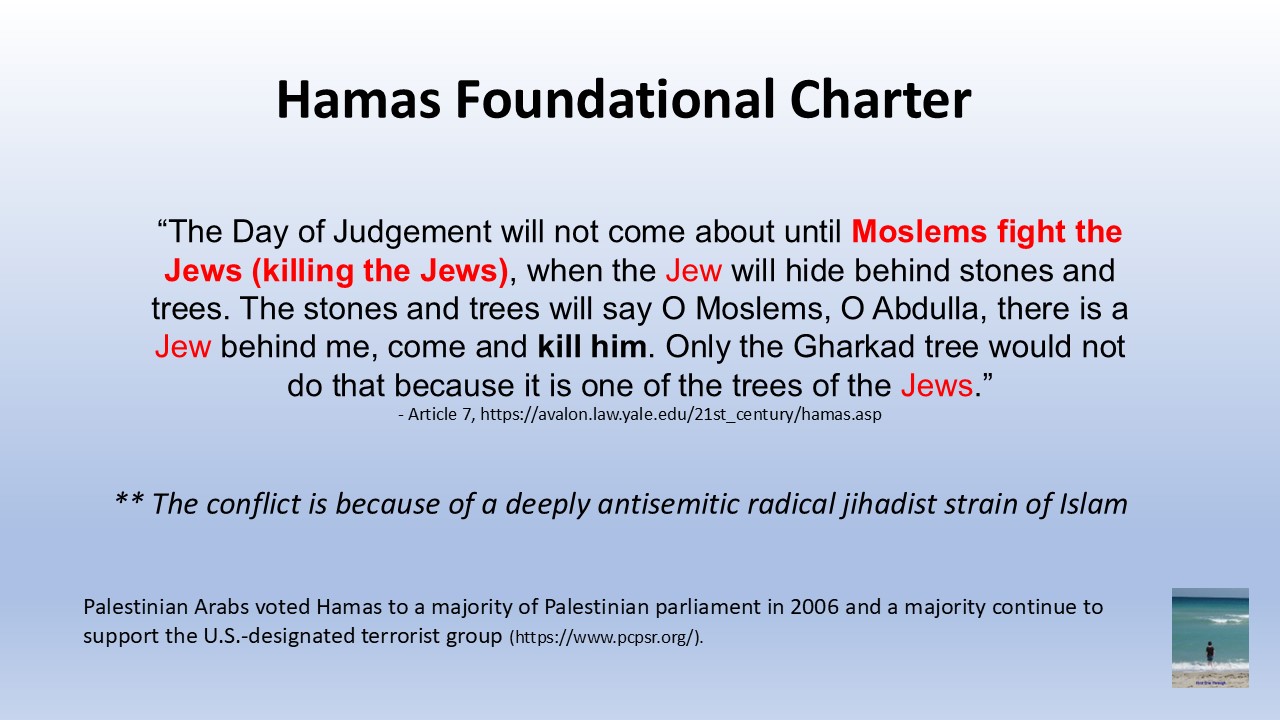
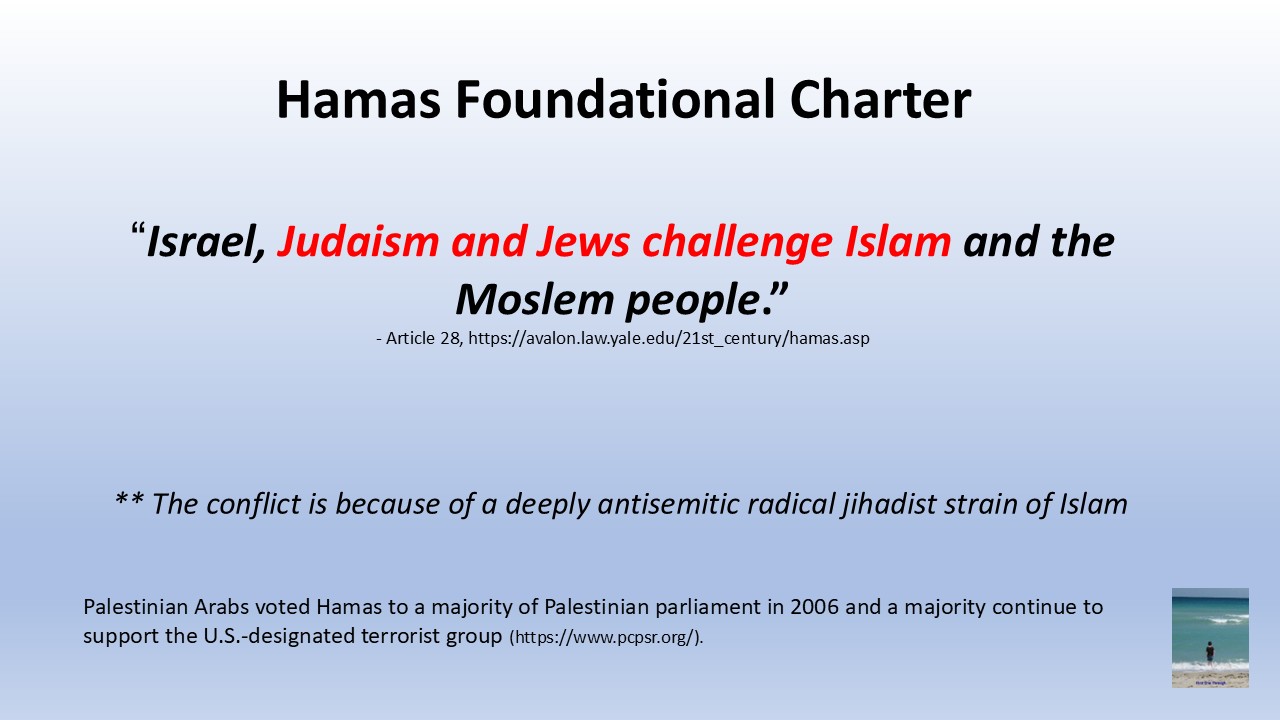
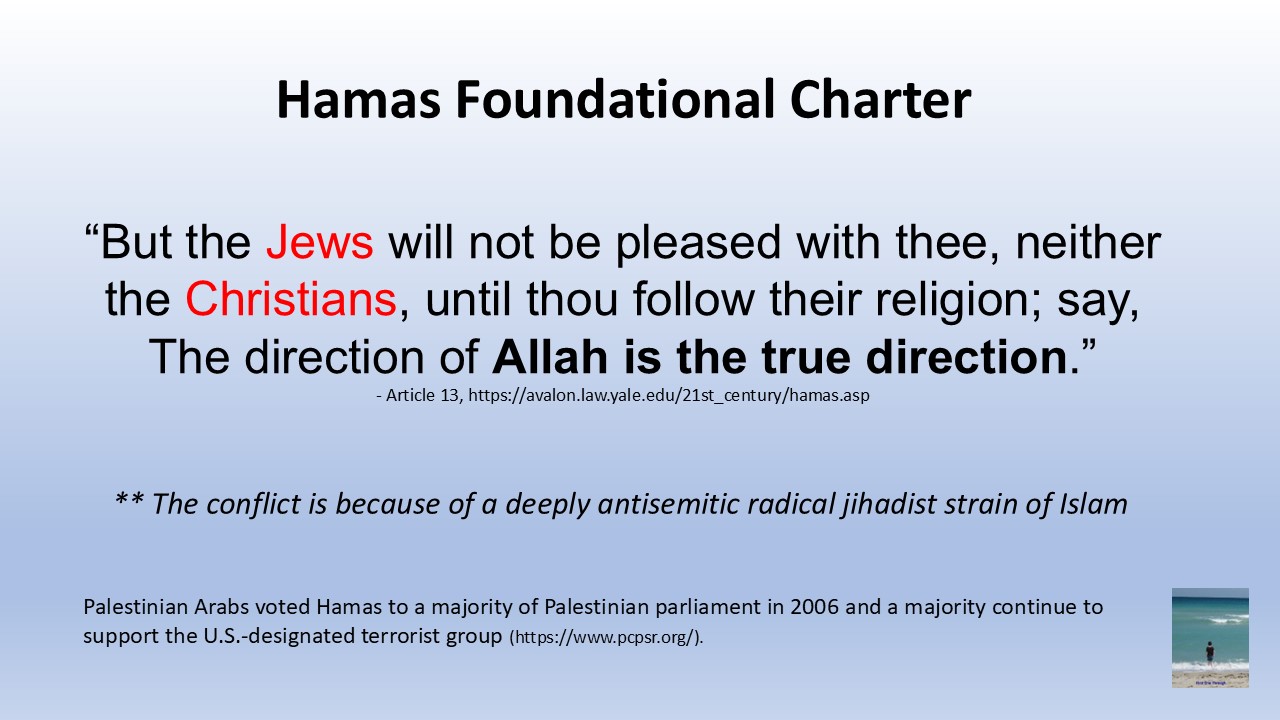
Hamas supplied that architecture in its 1988 foundational charter. The document framed politics as a total moral struggle, casting Jews collectively as illegitimate manipulators of capital and institutions, thieves of land and destiny. Jewish presence, ownership and sovereignty were criminalized. Seizure was the cure to restoration. Compromise vanished and was vilified. The charter’s function was clear: define an enemy class, strip legitimacy, and authorize permanent struggle.
The New York analogue operates through a different medium with the same effect. In the DSA ecosystem, capitalists and landlords are portrayed as extractive and illegitimate. Profit is framed as violence with ownership recast as theft. Confiscation is moralized as justice.
Jews are often implied rather than named—refigured as landlords, financiers, “Zionists,” or beneficiaries of immoral systems. Jewish capital becomes shorthand for illegitimate capital. The logic is identical: identify a moral contaminant and justify its removal.
Every mass movement needs a villain. The manifesto supplies one.
After Victory: Asset Capture as Governance
When Hamas seized Gaza in 2007, its parallel institutions fused into rule. Aid became leverage. Employment became conditional. Permits learned loyalty.
Then came Hamas’s most consequential real-estate empire: the tunnel network. A vast underground system ran beneath homes, schools, mosques, and hospitals—an invisible city binding the population into the movement’s infrastructure. Security, storage, command, and coercion converged below ground. Benefits flowed to the loyal. Dissent was isolated.
Governance became permanent: mobilization with infrastructure.
The governing theory now circulating in New York mirrors this logic. Mass governance insists movements never demobilize after elections.
Housing is the fulcrum. Advocates call for seizing or socializing rental property, transferring control to movement-aligned entities, and moralizing ownership itself. What cannot leave becomes the lever.
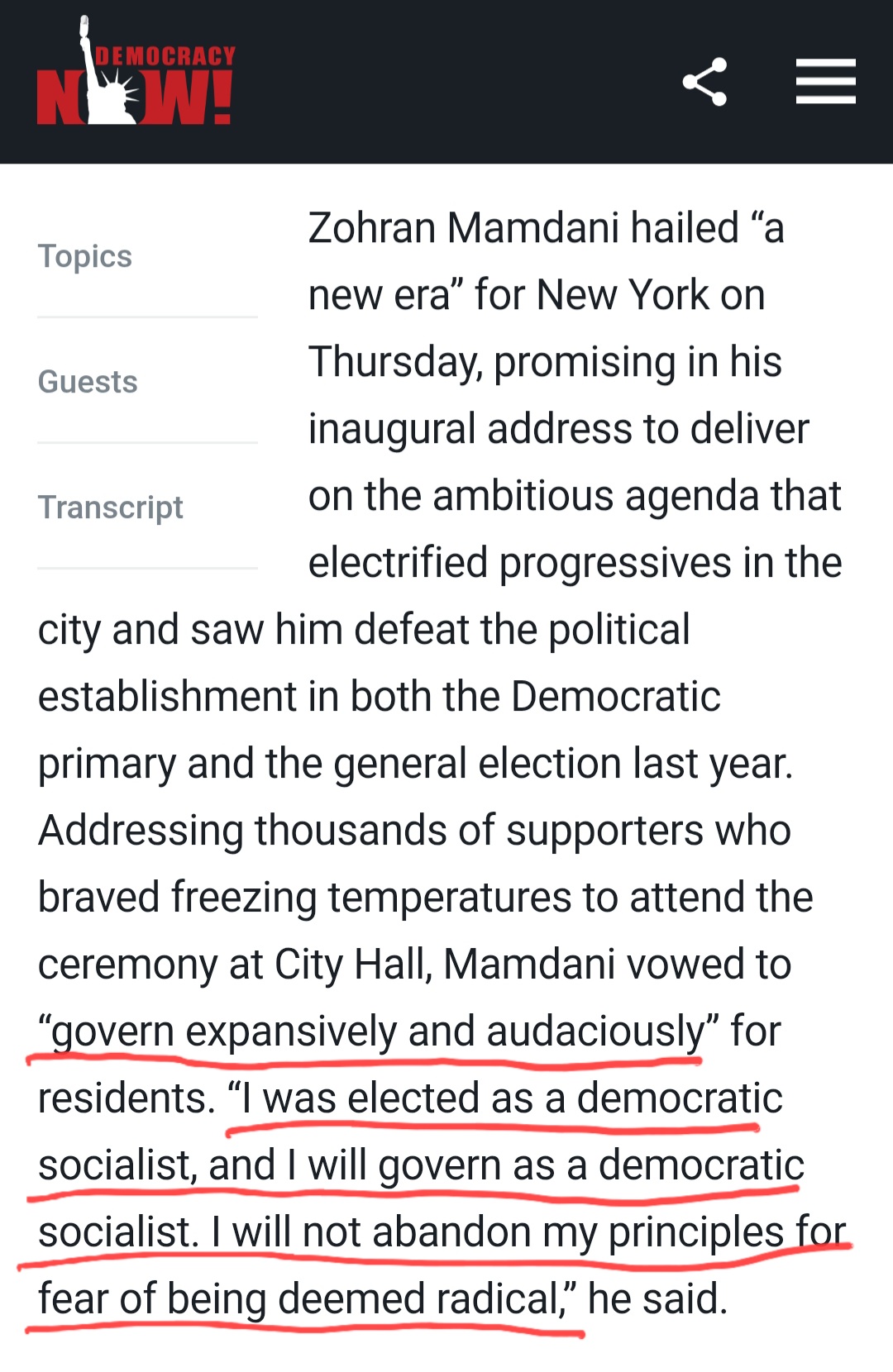
New York City Mayor Zohran Mamdani states openly that he will “govern expansively and audaciously” and not change course for being deemed too “radical.” What was once viewed as crazy is being normalized and soon to be implemented.
Redistribution Without Production
Hamas never built a productive economy in Gaza. It did not need to. External money—almost all of it routed through international “aid”—financed the broken economy. Governance ran on grievance and allocation. The system extracted and redistributed; it did not grow.
The same risk shadows New York’s mass-governance vision. There is no emphasis on productivity, investment, or growth. The emphasis is on free stuff and redistribution from outside: state transfers, federal dollars, and seizing capital from more wealthy citizens. When the mobile capital inevitably leaves, the focus will intensify on seizing what cannot leave: real estate. As jobs and taxpayers depart, redistribution turns inward. Assets are moralized, then absorbed.
The Bigger Warning: This Is Happening in New York
This is not unfolding in a peripheral city. It is unfolding in New York City—the capital of capitalism.
DSA-NYC backed Zohran Mamdani
A redistribution-first governing theology imposed here would not be contained. When growth is dismissed as immoral and allocation is elevated as virtue, capital leaves, talent migrates, and pressure turns inward.
The danger compounds because New York is also home to one of the largest Jewish populations in the world. History is unambiguous: when movements moralize capital and cast Jews—explicitly or implicitly—as its avatars, the outcome is rupture. Flight. Confrontation. Violence.
An antisemitic movement consolidating power beside Jewish life at this scale resulted in the deaths of tens of thousands in Israel and the terrorist enclave of Gaza. It is an impending disaster in New York.
Hamas showed the arc in Gaza: from grassroots mobilization plus ideology, to framing the enemy who causes despair, to asset confiscation and control, to an entrenched vicious philosophy financed by redistribution without production.
DSA-NYC is following the same arc, adapted to American law and language.
When the capital of capitalism abandons growth and sanctifies seizure, the city stops creating wealth and starts fighting over remnants.
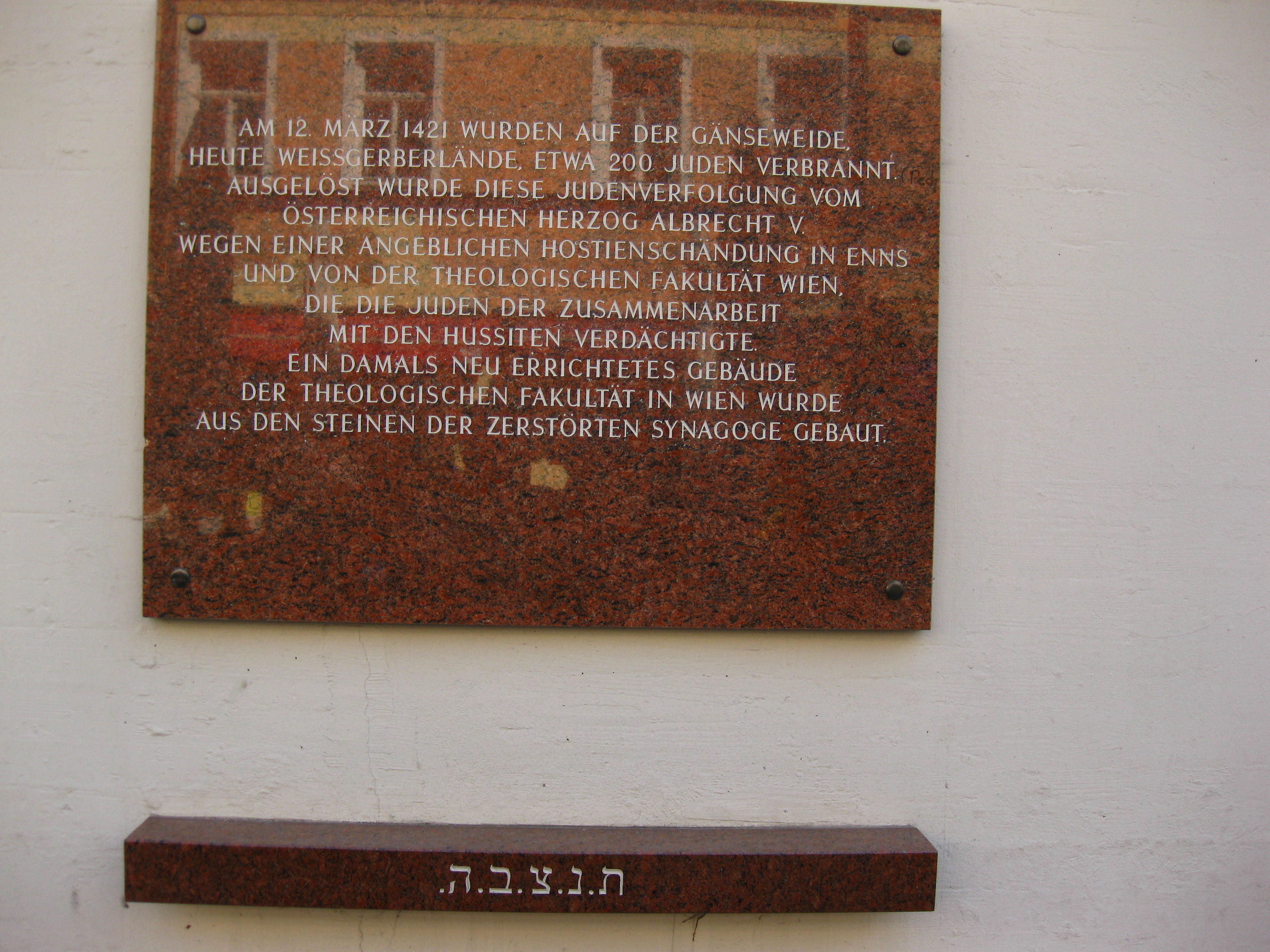
Memorial plaque in Vienna, Austria. In 1420, all Austrian Jews were arrested; 270 were burned at the stake, while the others were expelled and their property confiscated. The Vienna Gesera in 1421 brought the Jewish community in the Middle Ages to a truly bloody end. The root causes were antisemitism mixed with an economic desire to cancel debts.
Jewish tradition returns again and again to the image of the tree. Sometimes it appears strong and fruit-bearing. At other moments it is reduced, cut back, or left without water. The image endures because it carries history within it—growth shaped by interruption, life that continues through constraint.
The prophets reached for this language when ordinary description failed them.
“They shall be like a tree planted in the desert, that does not sense the coming of good.” – Jeremiah 17:6
“Let not the barren one say: ‘I am a dry tree.’” – Isaiah 56:3
The statement reframes the moment. What looks final and foreboding is often incomplete. The future has not yet spoken.
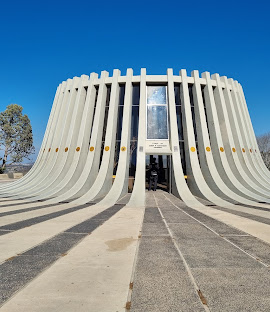
That tension—between appearance and essence—finds a physical echo in the hills west of Jerusalem, where Yad Kennedy rises from the forest. The memorial marks a life interrupted mid-growth. John F. Kennedy’s presidency and life ended before its natural arc could unfold, and the monument holds that sense of unrealized promise. Surrounded by trees planted in rocky soil, it resembles a tree stump, and invites reflection on lives cut short and on continuity carried forward by those who remain.
Yad Kennedy in Jerusalem Forest
Jewish history has unfolded along similar lines. After the destruction of the Second Temple, Judaism reorganized itself without sovereignty or familiar institutions. Across centuries of dispersion, it adapted under pressure, preserving learning and community in constrained forms. Growth did not disappear; it compressed, waiting for conditions that would allow it to expand again.
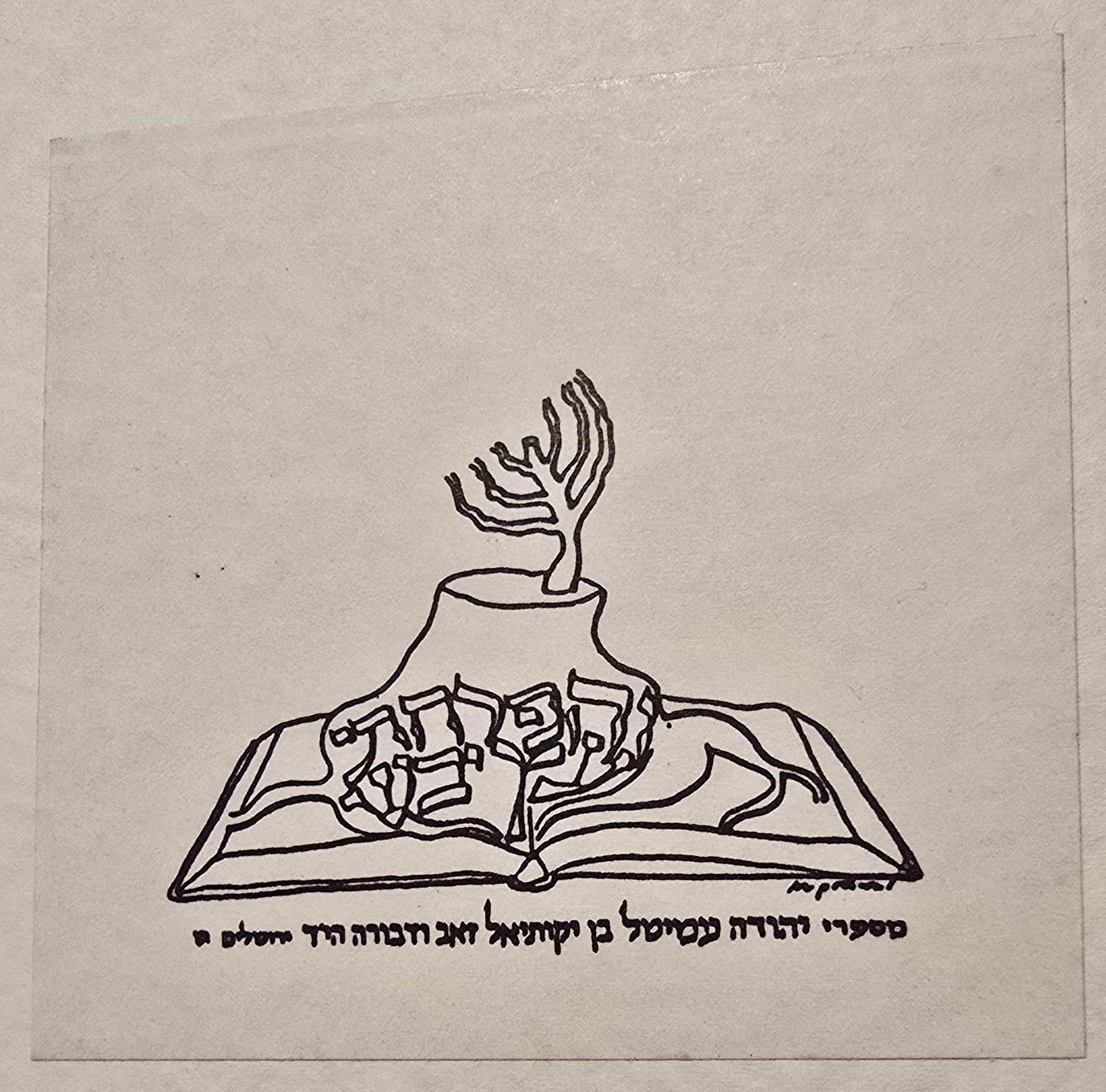
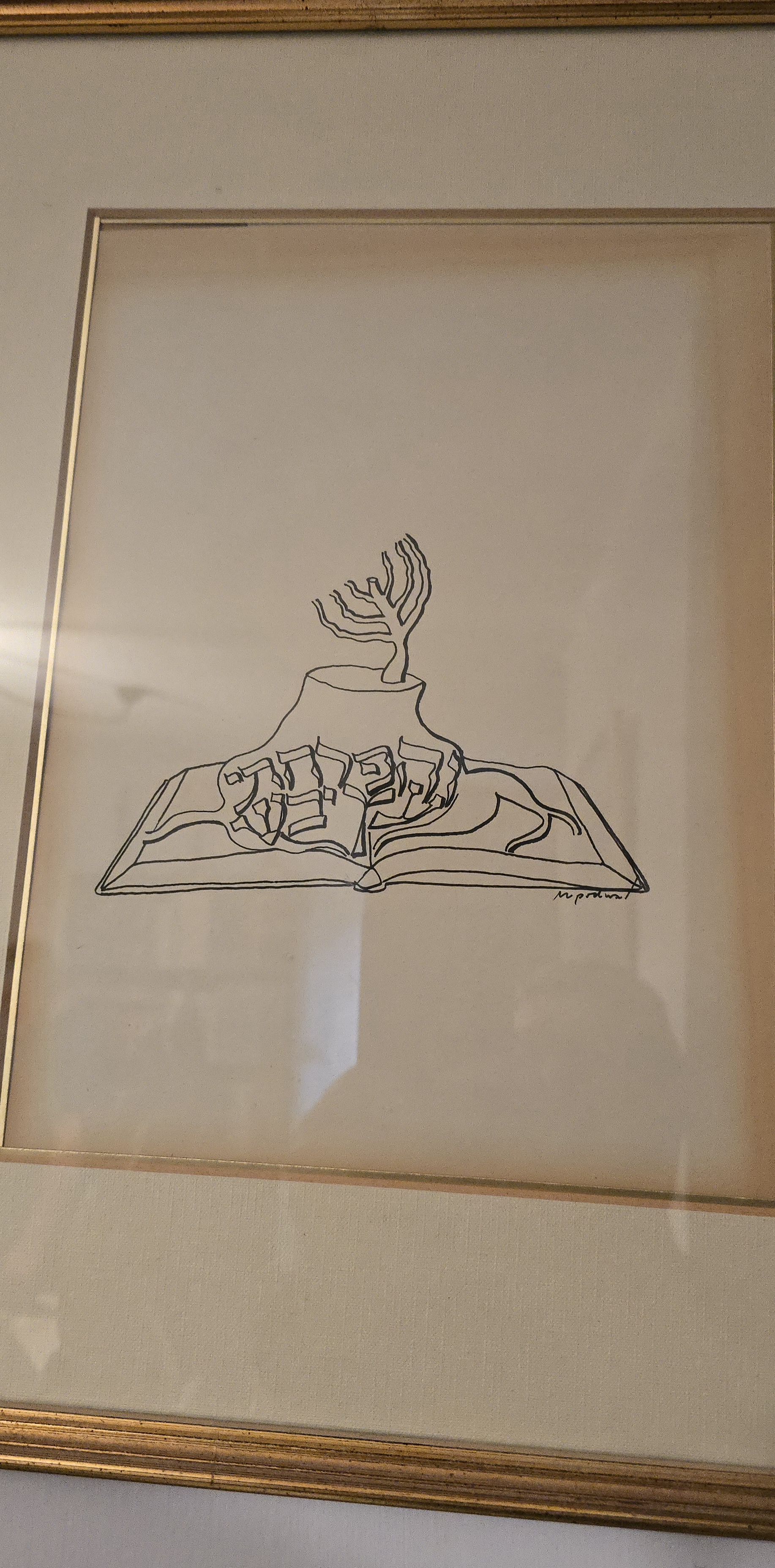
This persistence appears vividly in the work of Dr. Mark Podwal (1945-2024). His drawings return repeatedly to the Jewish tree—scarred, truncated, shaped by time. The branches rise unevenly, carrying memory in their grain. Life continues without erasing what came before. Growth is real precisely because it bears the marks of history.
That image resonated deeply with Rabbi Yehuda Amital (1924-2010), founding Rosh Yeshiva of Yeshiva Gush Etzion. A survivor of the Holocaust, Rav Amital rebuilt his world through Torah that could hold rupture and responsibility together. His leadership reflected patience, moral seriousness, and a belief that renewal emerges gradually from damaged ground.
Podwal once gave Rav Amital a drawing of a truncated Jewish tree—reduced in form, yet unmistakably alive, blooming with the promise of a renewed Judaism. The rabbi transformed the image into a small sticker and placed it inside the books of his personal library. Every volume bore the same mark.
Drawing by Mark Podwal about Jewish life springing forth from Jewish texts, used as a sticker in the library of Rav Yehuda Amital (photo: First One Through)
The image spoke directly to his life’s work. Rav Amital played a central role in rebuilding the Gush Etzion community after it was destroyed in the 1948–49 War of Independence, a war in which he fought shortly after moving to the land of Israel after his family was slaughtered in Auschwitz. In the hills south of Jerusalem, homes had been razed, residents killed or expelled, and the area left barren. The return after the 1967 Six Day War was careful and deliberate, rooted in learning, faith, and responsibility. A community grew again where one had been cut down.
Each time Rav Amital opened a book, the image reinforced that lesson. Torah study itself became an act of regrowth.
Rav Amital had the original Podwal drawing framed and placed on the wall of his home. (photo: First One Through)
That insight extends far beyond one community.
In the Land of Israel, Jewish roots run beneath history itself—through exile and return, ruin and rebuilding. Torah and Jewish presence were never uprooted from this land. They were compressed, covered, narrowed to fragments. Learning continued in small circles, in whispered prayers, in constrained spaces. At times the surface appeared barren. Beneath it, roots remained alive.
This is why Jewish life and learning in Israel carry a distinctive quality of reemergence. Yeshivot rise where silence once prevailed. Communities form on ground that held ruins. Torah is studied again in places where the chain of learning was abruptly broken. To the unobservant eye, it can appear improbable—as though life has emerged from wood long dried. To those who understand the depth of Jewish connection to this land, to the Jewish texts which form the basis of Judaism, it is recognition rather than surprise.
The dry tree was never dead. It was waiting.
Jewish continuity does not require ideal conditions. Where roots reach deep enough, water is eventually found. Growth resumes in forms shaped by everything that came before.
In the legends of Prague, the Golem came into being when civic order failed Jews in predictable ways. Blood libels circulated, crowds gathered, and authorities hesitated at the decisive moment. Rabbi Judah Loew, the Maharal (c.1512-1609), recognized the pattern. He shaped a human form from the mud of the Vltava River—from the city itself—and animated it with sacred words. The choice of material mattered. The defender of Jews was made from the ground beneath their feet. Even if the city’s leaders would not protect Jews, the city itself would.
The Golem patrolled the Jewish quarter, broke the rhythm of violence, and restored deterrence. When the danger passed, it was deactivated and laid to rest in the attic of the Old New Synagogue, the Altneuschul. The legend recorded a hard truth: when the state falters, protection is improvised; when the state recovers, emergency power sleeps.
Altneuschul in Prague (photo: First One Through)
That memory traveled.
The melody of Hatikvah, the national anthem of the Jewish State of Israel, traces back through the musical world of that same Prague river Vltava, famously shaped by Bedřich Smetana (1824-1884). Exile and return share a river. The Golem embodies survival within exile; Zionism embodies the resolve to end exile. One guards a community where it stands, the other builds sovereignty so guarding becomes policy.
Yet the Golem never disappears. It waits for the moment when trust in authority thins again.
New York, Upper East Side
New York City holds one of the world’s largest and most visible Jewish populations. Jewish life here is open and proud. Synagogues, schools, and community institutions operate in public view, anchored by the assumption that their protection is a foundational duty of government.
That assumption has been tested.
On the Upper East Side in November 2025, an anti-Israel crowd swarmed a synagogue hosting a pro–Land of Israel event. The scene echoed an old shape: shouting at the doors of a Jewish house of worship, intimidation in a public park, the expectation that Jews would need to justify gathering openly as Jews. Instead of drawing a clear perimeter around the synagogue and condemning the mob, Zohran Mamdani, the incoming mayor of New York City, scolded the shul for holding a Zionist event, shifting the burden of restraint onto the Jewish institution.
For Jews who carry history close, the signal was unmistakable. Cities fail their minorities first through language, then through hesitation, and only later through force. When the synagogue itself surrounded by an angry crowd is framed as the problem, safety has become conditional.
Conditional safety never endures.
How the Modern Golem Forms
The Golem of New York does not rise from clay. It forms from memory.
Private guards appear where confidence once lived. Volunteer patrols lengthen into the evening. Parents coordinate entrances and exits. Institutions harden quietly, without ceremony.
These are the incremental steps of adaptation. Communities organize when clarity blurs. Parallel systems take shape when weak reassurance yields to experience.
Other minority groups get municipal funding and public declarations of support while Jews are only lumped into a general “other” category, as in White Plains, the capital of Westchester County just north of New York City. Jews learn that they must fend for themselves, because their basic protection offends many. Frighteningly, even for local politicians.
On the Upper East Side, a growing and proudly Zionist congregation bears a name heavy with inheritance: Altneu Synagogue. Old–New. It is a spin-off of the Park East Synagogue where the anti-Israel mob harassed and intimidated Jews. The echo of Prague’s Altneuschul may also prove prescient. Old dangers return wearing contemporary language. Rivers change. Cities change. But the logic persists.
Natan Sharansky, a famous Russian “refusenik” who was jailed for years before being allowed to leave to Israel, knows the dangers of antisemitic regimes. He came to Washington, D.C. in November 2023 to address 300,000 people about the need to fight back: “We, together, will fight against those who try to give legitimacy to Hamas. We will fight for Israel. We will fight for every Jew. We will fight against antisemitism. We will fight for the values and against corruption of those values which are at the center of our Jewish identity and American identity.”
For the moment, things may be OK. Mamdani appointed Jessica Tisch as police commissioner, a role she has had for several years. She is Jewish and no-nonsense leader, widely supported by the city’s Jewish community. If she can do her job without anti-Zionist and antisemitic politicians limiting her mandate, Jews will be fine. Otherwise, a new golem will rise in the New World, hundreds of years after the Golem of Prague went to sleep in the attic of the Altneuschul.
The headlines are the same. Another plot uncovered. Another attacker radicalized online. Another manifesto stitched together from familiar phrases about vengeance, purity, and divine obligation.
Was it ISIS-inspired? Was it Hamas-aligned?
In practice, the distinction is collapsing.
From Manchester to Sydney and across Europe and North America, security services increasingly encounter the same ideological core animating different actors. Antisemitism framed as righteousness. Violence framed as duty. Death framed as meaning. The slogans vary, the flags change, but the belief system underneath remains remarkably consistent.
ISIS flag on the car of murderers in Sydney, Australia
These movements are not converging by accident. They are aligned by doctrine. They are the banners of jihad.
When stripped of geography, branding, and media strategy, Hamas and the Islamic State reveal the same worldview: a sanctified war against Jews, against pluralism, and against life itself.
They are branches of the same antisemitic death cult.
God Alone Rules
Both movements begin with a totalizing claim: sovereignty belongs exclusively to God. Political authority, democratic choice, civil law—all are illegitimate intrusions into divine rule. Religion is not guidance; it is command.
This theology leaves no room for coexistence. Difference becomes defiance. Dissent becomes apostasy. Submission is the only acceptable outcome.
Violence as Obedience
Violence is not an unfortunate consequence of struggle. It is the struggle. Jihad is framed as obligation, killing as faithfulness, death as fulfillment.
This is why attacks around the world feel interchangeable. Civilian targets are central because civilians matter symbolically. Children are drawn into the story because innocence amplifies impact. Suicide becomes virtue because it collapses the distance between belief and action.
When ideology outranks life, mass killing is not excess. It is alignment.
Jews as a Theological Obstacle
The conflict is often described in political or territorial terms, but the animating hostility is theological. Jews are cast as an enduring enemy embedded in sacred narrative, not as a community with whom disagreement might be resolved.
That framing explains the permanence of the war. Agreements become pauses. Ceasefires mere tactics. The goal is not compromise but eradication.
Scripture, once weaponized, does not negotiate.
Death as Currency
In societies shaped by this ideology, death is elevated and life is instrumentalized. Martyrdom replaces mourning. Sacrifice replaces survival. Civilian neighborhoods are folded deliberately into military design.
Homes, schools, mosques, hospitals become launchpads and shields. Suffering is curated for export. Images of devastation are not collateral damage; they are strategic output.
What the outside world experiences as tragedy, the ideology treats as leverage.
Power Without Freedom
The end state is always the same. Total control enforced by fear and sanctified by religion. No speech outside doctrine. No faith outside orthodoxy. No dignity outside obedience.
ISIS ruled this way openly. Hamas learned to cloak the same destination in the language of resistance and grievance. The structure beneath remains unchanged.
The Lesson Already Learned
When ISIS surged across Iraq and Syria, the West recognized the threat clearly. It did not argue for partial containment. It did not imagine ideological evolution. It organized, committed resources, and dismantled the movement.
And it succeeded. For a while.
Israel has carried that same burden. By Israel’s own assessments, roughly 95 percent of Hamas’s fighting capacity—its leadership, battalions, tunnels, and command infrastructure—has been destroyed.
Stopping here would not stabilize anything. Allowing the group to maintain its weapons – the way the majority of the Stateless Arabs from Palestine (SAPs) want – would preserve the conditions for revival. Ideologies built on sanctified violence do not soften when wounded. They metastasize.
The remaining fragments are not a political movement in transition. They are an ideology waiting to rearm, re-export, and re-infect—far beyond Gaza.
Yet the world is rearming and financing ISIS and Hamas. It is allowing the jihadi groups to gain strength.
The world once understood this when ISIS was the name on the banner. The jihadist doctrine of Hamas is the same and has not changed. Only the branding has.
Hamas leadership promises to continue war against Israel forever
ISIS in Africa in Somalia, recruiting from around the world














 First One Through