Vatican II – and the New Jew

On December 8, 1965, a crowd of 100,000 spectators assembled in St. Peter’s Square to mark the closing ceremony of Vatican II. The three years of work was orchestrated to bring about Christian unity, hoping to bring non-Catholics and Catholics together in a joint mission. The sixteen documents that the council enacted were designed on the theme of aggiornamento (Italian for bringing up to date) the Catholic church, which had started to be viewed by many as fading in relevance.

Pope Paul VI greets the faithful during the closure of the Second Vatican Council in St. Peter’s Square at the Vatican Dec. 8, 1965. (CNS/Catholic Press Photo)

The Second Vatican Council did not emerge in a Christian vacuum. It unfolded in the long shadow of Auschwitz, under the moral weight of a truth that could no longer be hidden: Christian Europe had stood by, silent or complicit, as the Jewish people were hunted, deported, and incinerated. The murderers were not pagan invaders; many were baptized Christians. The trains did not run through lands hostile to Christianity; they passed churches, crossed Catholic villages, glided along tracks laid in the heart of Christendom.

In 1961, the world could no longer avert its eyes. The Eichmann trial in Jerusalem forced every nation, every church, every conscience to watch. Survivors spoke in court with the clarity of witnesses resurrected from the grave: the collaborators, the bystanders, the bureaucrats, the bishops who said nothing, the priests who closed doors, the institutions that rationalized their silence. The trial tore away the last veil protecting Christian moral innocence. It was a moment when the Church had to confront not only the sins of individual Christians but the theological soil in which hatred had grown.

Trial of Adolph Eichmann in Jerusalem, Israel in 1961 (Photo: Bettmann / Getty)

Against this storm of reckoning, another seismic event had already taken place: the re-establishment of the Jewish state in 1948. For nearly two thousand years, Christianity had preserved an image of the Jew as the wandering witness, condemned by God to homelessness so Christians could inherit the promise. But suddenly, the wandering stopped. The Jewish people returned to their ancient homeland. Hebrew was resurrected from liturgy into daily speech. Jewish sovereignty reappeared as if history itself had refused to obey the theological script.

Israel’s rebirth shattered the Christian narrative of Jewish exile more forcefully than any sermon ever could. It reopened questions buried since the early Church Fathers: What does it mean if God’s covenant with the Jews never ended? What does it mean if the Jewish people still live, still dream, still return? What does it mean when prophecy looks suspiciously like news?

Israel declares itself a new country on May 14, 1948, to take place officially the following day May 15, which was Shabbat, coinciding with Britain ending its mandate.

By the time the Vatican convened, the Church was wrestling with two cataclysms: the moral collapse of Christian Europe during the Holocaust and the miraculous revival of the Jewish nation that Christian theology had relegated to the margins of history. These two realities — failure and fulfillment — created an impossible tension.

One of the sixteen Vatican II documents, Nostra Aetate (October 26, 1965) was not merely a doctrinal correction. It was a confession, an apology, a theological revolution. It declared the Jews not rejected but beloved, not guilty but enduring, not a fossil but a living partner in covenant. It rejected antisemitism “at any time and by anyone.” For Christians, it was liberation from a poisoned inheritance. For Jews, it was an unexpected invitation to be seen — perhaps for the first time — not as shadows in another people’s story, but as a people with a story of their own.

And something else began in the wake of Vatican II, something few would have predicted: the rise of Christian Zionism in its modern form. Many Christians, freed from the contempt of supersessionism, looked upon the Jewish state not as an accident of geopolitics but as a fulfillment of ancient promise. Some of Israel’s strongest supporters today come from Christian communities shaped by the theological revolution Vatican II inaugurated. They see Jewish sovereignty as evidence not of colonialism but of covenant, not of power but of destiny. They stand with Israel not out of political calculation but out of spiritual gratitude — an act of repentance and solidarity woven together.

Christian leaders assemble at the Western Wall in Jerusalem, observing Jewish prayer in November 2025 (photo: First One Through)

For Jews, this support has been both a blessing and a riddle. After centuries of persecution in Christian lands, how does one accept the embrace of former adversaries? How does a people long defined by suspicion learn to trust a hand that once struck but now extends in friendship? The Jewish story, once shaped by surviving Christian hostility, must now grapple with receiving Christian loyalty. The sting of history meets the strange balm of reconciliation.

These questions unfold in a nation — the United States — whose own identity has been shaped by Judeo-Christian roots from its earliest days. As the country approaches its 250th birthday, Americans are rediscovering that its foundational ideas — human dignity, moral law, liberty of conscience — flowed from a biblical inheritance shared by Jews and Christians alike. The Founders read the Hebrew Bible not as relic but as roadmap. The Exodus shaped the imagination of revolutionaries and abolitionists. The prophets shaped the conscience of Lincoln and King. The Jewish story is woven into the American one, even when America failed to honor it.

Rabbi Meir Soloviechik leads a tour of Christians and Jews at the Metropolitan Museum of Art in New York City, discussing the Judeo-Christian roots of America through art, in September 2025 (photo: First One Through)

Now, as antisemitism again rises and institutions fray, the old alliance becomes newly urgent. Jews and Christians are bound not by accident but by destiny: two peoples who share scripture, share moral vocabulary, and share responsibility for sustaining a civilization built on covenant rather than empire. Vatican II made it possible for this bond to be spoken aloud again, freed from the hostility that had once obscured it.

December 8, 1965 created a new Christian. But it also created a new Jew: a Jew who could stand in relationship not only to Jewish history but to Christian history, not only in resistance but in dialogue, not only as survivor but as partner. A Jew whose identity could be affirmed by the very institutions that once erased it.

And perhaps, as America steps toward its 250th year, this renewed bond is not merely theological or historical. It is a reminder that the future of Western freedom may depend on the same truth Vatican II finally proclaimed: that the Jewish people are not a footnote in someone else’s story, but the root from which so much of our shared moral world has grown.

The Expulsion of Jewish History, Heritage and Lived Experience from America’s Classrooms

A quiet purge is beginning in American education. For decades, public schools relied on the Anti-Defamation League (ADL) to teach students about antisemitism, bigotry, and the Holocaust. Now the largest teachers’ unions are trying to drive the ADL out — not because antisemitism has disappeared, but because a new ideological litmus test has replaced the old moral clarity.

July 10, 2025 statement that largest teachers union in USA recommends no longer using material from the ADL

At the same time as NEA’s push to oust the ADL, New York City’s largest teachers’ union, the UFT, endorsed Democratic Socialist Zohran Mamdani to become mayor. Mamdani’s acceptance of the chant to “globalize the Intifada!” on New York City’s streets threatening Jews, was not considering disqualifying.

CAIR (Council of American Islamic Relations) celebrated the moment. The organization issued statements praising the union’s rejection of ADL and urging school districts across the country to follow suit. In their telling, removing the leading Jewish civil-rights organization from American classrooms was not a loss — it was liberation.

But liberation for whom?

What fills the void when ADL’s anti-bias programs are stripped from schools is not neutrality. It is an ideological curriculum that recasts Jewish history through the false frame of colonial theory. The Jewish people’s 3,000-year connection to the Land of Israel — recorded in scripture, archaeology, language, and tradition — is brushed aside in favor of a political slogan: Jews are Europeans; Israel is a colony; Jewish identity is whiteness in disguise.

And this falsehood is taught with absolute confidence, even though it collapses under the simplest demographic truth: most Jews in Israel are not European at all. More than half of Israeli Jews are Mizrahi — descendants of families rooted for centuries in Baghdad, Aleppo, Casablanca, Sana’a, and Tehran. Many arrived as refugees expelled from Muslim countries after 1948. But because their existence breaks the colonial narrative, it is erased.

In this rewritten history, Jews did not return home. They invaded. And Jewish children sitting in American classrooms are told, implicitly and sometimes explicitly, that their people do not come from the place their prayers face, the place their ancestors named, the place their holidays commemorate.

It gets worse.

Qatar is helping fill the hole in American education course materials. That same Qatar that bankrolls and supports the political-terrorist group Hamas that is sworn to killing Jews. The Institute for the Study of Global Antisemitism and Policy (ISGAP) published a report that shows how Qatari materials are being mainstreamed in K-12 education.

Map of “Palestine” used by the NEA erases Israel

The shift is not academic. It is surgical.

When the ADL is expelled from the curriculum and radical Islamic materials are substituted, so is the understanding that antisemitism is a unique and ancient form of hatred. So is the recognition that Jews are a minority-minority. So is the historical memory that Jews have been indigenous to the Land of Israel since before Rome, before Islam, before Christianity. The frameworks that replace it reduce Jewish identity to a political position and Jewish history to a fabrication.

And Jewish students feel it instantly.

A seventh grader is told her family “isn’t really from Jerusalem.” A boy wearing a Star of David is treated as if he is declaring an ideology rather than a heritage. Mizrahi and Sephardi students — whose grandparents fled violence or expulsion in the Middle East — learn in school that Jews are “white Europeans.” A child is shamed for speaking Hebrew, as if language itself were an act of domination.

The classroom becomes a place where Jewish children learn that their story is not welcome. That they are frauds.

The unions pretend this is progress. They say they are freeing schools from “biased” Jewish organizations. Democratic senators circle around to defend the teachers’ unions and mock Jewish concerns. They hope no one knows that teacher unions only donate to Democratic candidates.

But the result is not balance — it is a world in which Jewish history is a political inconvenience, and Jewish identity is recast as oppression. The very institutions tasked with protecting vulnerable students are now erasing the vulnerabilities of one of the world’s smallest minorities.

A people is stripped of its past in front of its children. To its children, to create a new type of American: anti-Jewish.

This is not an argument about Israel. It is a warning about America. When unions push out the ADL and bring in organizations which openly provide material support to terrorists, they are not modernizing education. They are dismantling the guardrails that distinguished history from propaganda and identity from accusation.

This has an ugly echo.

On May 10, 1933, 40,000 people watched as students burned Jewish books in Berlin, Germany, part of the Nationalist Socialist (Nazi) Party’s campaign to eradicate Jewish thought and show its control of the intellectual and cultural landscape.

University students burn upwards of 25,000 “un-German” books in Berlin’s Opera Square. Some 40,000 people gather to hear Joseph Goebbels deliver a fiery address: “No to decadence and moral corruption!”

Today, it’s not Jewish opinions but Jewish history, heritage and lived experiences that are targeted for obliteration in America’s schools by the teachers unions. It must stop.

The UN Celebrates Migrants Except Jewish Ones

Every December, the United Nations devotes a day to praising migrants.
It insists no human is illegal, that borders shouldn’t limit dignity, that newcomers must be protected regardless of how they arrived. It speaks in sweeping universalism: every migrant deserves acceptance, integration, and respect.

Every migrant — except the Jewish ones.

Because when a Jew moves to Jerusalem’s eastern neighborhoods or the hills of Judea, the UN suddenly abandons its sermon. The same institution that blesses migration everywhere else snaps into punitive mode: label, restrict, sanction, boycott.

The world’s great defender of human mobility becomes the world’s loudest opponent of Jewish mobility.

Migrants crossing seas and borders are embraced. Their stories honored. Their identities protected. But Jewish migrants returning to the land that shaped their peoplehood are told they are criminals. The UN proclaims them a threat, inventing a special category — “illegal settlers” — that exists for no other people on earth.

This is not inconsistency. It is intentional. A universal rule with a single carve-out: Jews.

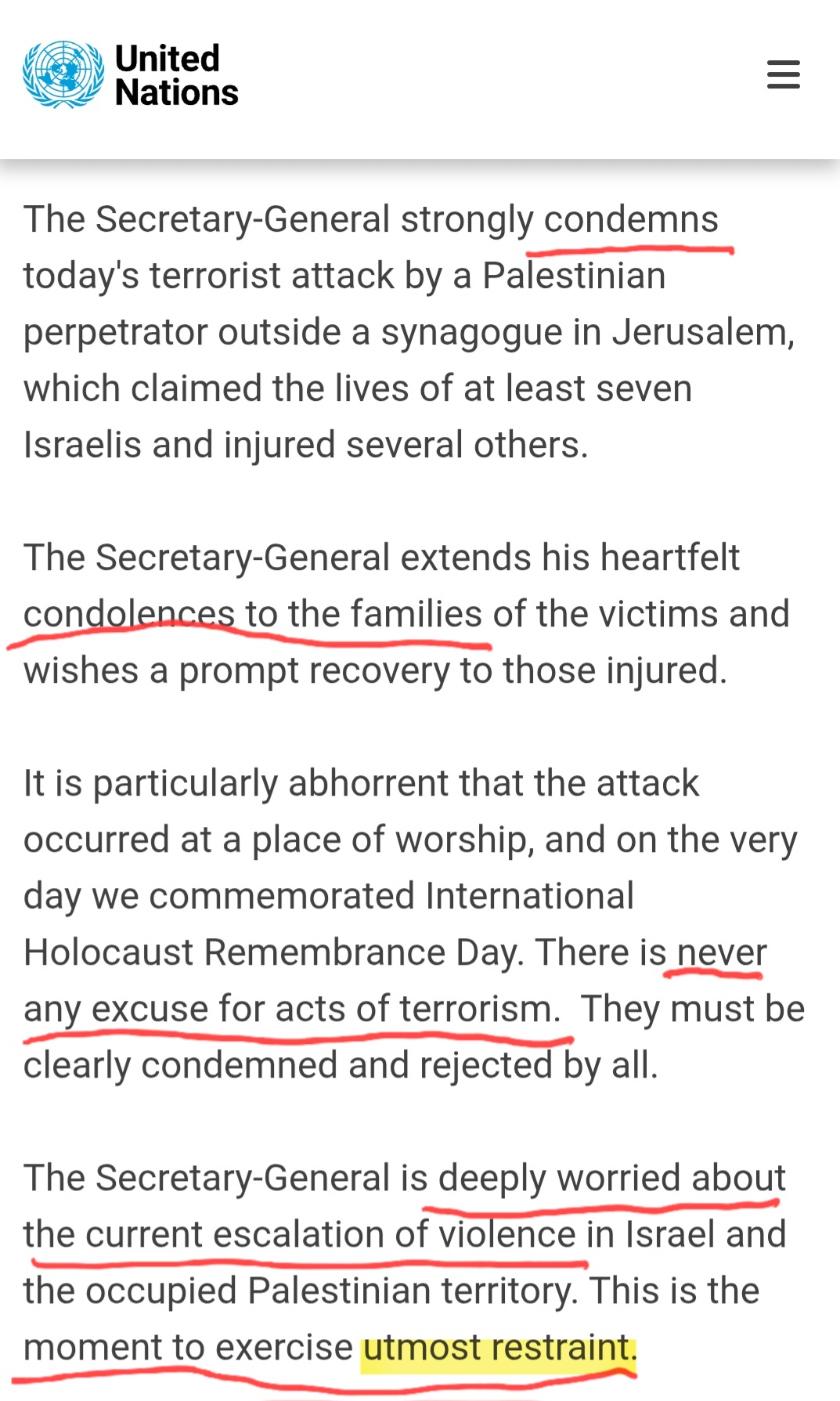
United Nations says that migrants – even illegal one’s – deserve respect and safety

The UN Doesn’t Just Oppose Policy — It Delegitimizes Jewish Presence Itself

Despite the UN protesting the importance of protecting migrants, it passes resolutions specifically delegitimizing Jewish ones. It routinely asserts that Jews must not live in the very heartland of Jewish history. It passes resolutions declaring Jewish homes illegitimate, Jewish neighborhoods unacceptable, Jewish movement intolerable.

Every other people is encouraged to preserve identity and build community. Only Jews are told their presence in their ancestral homeland is an international crime. That their businesses should be labeled in specific lists, targeted for boycott and sanction.

This Isn’t Hypocrisy. It’s Anti-Jewish Discrimination.


Hypocrisy would imply the UN is failing its principles. But the UN applies its principles perfectly — just not to Jews.

It welcomes migrants when they are African, Asian, Latin American, European. It defends them when they are persecuted or undocumented.

But when they are Jewish, the vocabulary changes instantly and the moral umbrella snaps shut.

The world’s most ancient migrant people — the “wandering Jew” expelled, dispersed, and wandering for centuries — is the only group the UN insists may not migrate back home.

That is not flawed idealism. That is targeted exclusion.

Jews praying at the Western Wall, an act considered “illegal” by the United Nations, trespassing on lands it considers “occupied Palestine.” (photo: First One Through)


Passings

To arrive in Israel is never just a landing. For millennia, Jews faced this land in hope and longing, turning toward Jerusalem even when the path was blocked by oceans, armies, or fate itself. Countless generations passed on without ever setting foot on the stones their ancestors walked.

The architects of Ben Gurion Airport understood this ache.

Between the terminal and passport control, travelers move through parallel glass corridors — one for those entering the land, one for those departing. You can watch them the entire way: people going home, people leaving home. From above, the scene resembles Jacob’s Ladder, angels ascending and descending, a ceaseless movement connecting heaven and earth. Biblical commentators taught that the angels Jacob saw were the guardians of the Land of Israel — one set departing when he left, and a new set arriving to accompany him in the diaspora. So too here: those making aliyah rising in spirit; those heading abroad descending from holiness for a time, yet still tethered by an invisible thread.

In the last two years, this modern ladder of the Land of Israel took on a painful weight. Along the railing, as every arriving passenger stepped into the corridor, 251 photos lined the wall — the faces of each hostage seized by Hamas on October 7. Every person entering the land confronted them. No one could step onto the soil of the Jewish homeland without understanding the national wound, the unfinished promise that Israel would bring every soul – living and dead – home.

Photos of the hostages hung from railings meeting every person arriving in Israel at Ben Gurion Airport in 2024 (photo: First One Through)

On my most recent trip, the first picture I met was that of Dror Or. I did not pass. I lingered. For two years, his body was held in Gaza — a grotesque bargaining chip in a war the captors refused to end. Israel kept searching, praying, fighting, refusing to abandon its dead. A week after my arrival, his body was finally returned to his family and to the state. When I walked back through the airport corridor to depart, his photo was gone. His picture had been removed, but his passing — and his dignity — stayed with me.

In Israel, passings are never casual. In this small land, every encounter feels like a reunion: bumping into someone you have not seen in years; meeting friends to celebrate a simcha; honoring the memory of someone who has passed on; meeting a stranger and then talking intimately for twenty minutes. Moments here are not ordinary. The land itself seems to insist that they matter.

To pass by someone, to pass through a hallway, to pass from life — in the Jewish homeland, is not trivial. This is a country stitched together by arrivals and departures, by longing and fulfillment, by angels ascending and descending in steady and deliberate devotion.

Where the Eagles Still Land

At Sinai, God tells the Israelites: “I carried you on eagles’ wings and brought you to Me” (Exodus 19:4). It is the Torah’s softest reassurance — that when the world turns crushingly heavy, something stronger will lift the Jewish people before they disappear beneath its weight.

Every generation reads the verse and wonders how such a thing could ever happen again.

The Yemenite Wings

In 1949–50, it did.

Yemenite Jews — who had kept Hebrew alive for centuries through chants in dim courtyards — found themselves suddenly gathered into airplanes they had never seen before. Operation Kanfei Nesharim lifted nearly 50,000 people from danger to home, a moment so surreal that many believed prophecy had slipped back into the world.

They came to Tel Aviv’s Kerem HaTeimanim, where the streets still hold their memory: Rechov Kanfei Nesharim, Rechov HaAliyah HaTeimanit, and alleys named after the poets and dreamers who carried Yemen’s Jewish soul through generations of exile. The neighborhood became a landing place for people who had lived so close to the dust of history that being lifted into the sky felt like God reaching down again.

A New Kind of Arrival

Today those same streets are welcoming new immigrants — Jewish artists from Paris, Berlin, Amsterdam, and London. They are not fleeing famine or forced conversion. They leave behind apartments, galleries, and studios, places where they once felt at home but now feel the room shifting beneath their feet.

They speak quietly of exhibitions canceled with careful wording, of colleagues who grow uncomfortable when they identify openly as Jews, of a cultural world that prides itself on openness yet signals, in subtle ways, that Jewish presence complicates the picture.

Or they just concluded it was time to move on.

Their departure is not dramatic. No riots, no decrees. Just a slow tightening — a sense that Europe’s warm lights are dimming for them. And so they come here, carrying sketchbooks, guitars, half-finished manuscripts, their beautiful voices, and the hope that Israel will give them what their former homes no longer can: the ability to be fully themselves.

They settle into Kerem HaTeimanim because it feels familiar: small homes, open doors, neighbors who still greet each other, a neighborhood built by people who also crossed deserts — literal or emotional — to find peace.

Actress and singer from London makes a new home in the “Yemenite Vineyard” section of Tel Aviv (photo: First One Through)

The Meeting of Journeys

In these narrow lanes, two different exoduses breathe the same air. Children run past synagogues founded by Yemenite families and new galleries opened by European artists. Hebrew floats from balconies in melodies that sound ancient and brand new at once.

The Yemenite grandparents who arrived barefoot on metal wings once prayed simply to reach Zion. The young European immigrants arriving today pray to belong — to a people, to a place, to their own identity without contortion.

Here, on Kanfei Nesharim Street, the verse from Sinai feels alive again. Not as a metaphor of miraculous rescue, but as a quiet truth: every Jew who finds their way home is carried by something — hope, fear, memory, longing — that lifts them just high enough to begin again.

In this little corner of Tel Aviv, you can almost feel the wings settling gently on the houses, as if history itself decided to rest for a moment before taking flight again.

Over three thousand years ago, God took the Jews of Egypt out from slavery and established the Jewish people. Nearly eighty years ago, just after the reestablishment of the Jewish State, the government of Israel rescued the Jews of Yemen from persecution and brought them to the holy land. Today, Jews from the West come on their own to the Jewish Promised Land.

We marvel at the notion of being taken to safety on “eagles’ wings.” Perhaps we should also marvel at the place to which we arrived.

What Is A Moon In Jerusalem?

People assume the moon is a universal constant. A simple shared celestial orb rising and falling across planet Earth.

At first glance, that seems right. The phases of the moon follow the same cycle for everyone. The waxing crescent in New York is the waxing crescent in Nairobi. The full moon bathing Buenos Aires is the same one brightening Beijing.

But the details betray the simplicity.

Because of Earth’s curvature and tilt, the angle of the moon changes depending on where you stand. In the northern hemisphere, the crescent opens to one side; in the southern hemisphere, it opens to the other. Near the equator, the crescent often lies on its back like a cup collecting light. The horizon line shifts the moon’s ascent and descent, making the same moon feel subtly unfamiliar across latitudes.

Phases of the moon in northern and southern hemispheres

So while the moon itself is constant, the human experience of it is not. Geography shapes perception.

Which brings us to a particular location: Jerusalem.

Why did ancient Jewish sages insist that the new month—the very heartbeat of the Jewish calendar—could only be declared there? Why could only witnesses standing in that one city testify that they had seen the first thin sliver of the new moon? It wasn’t because Jerusalem had the sharpest skies or the best astronomical vantage point. Other regions had clearer air, lower humidity, more favorable horizons.

The choice was not scientific. It was cultural.

The sages understood that if the Jewish calendar were anchored anywhere else—in Babylonia, in Alexandria, in Rome—it would become a local calendar. A diaspora calendar, and reflection of exile. Time would belong to the places where Jews merely lived, not the place where they belonged.

And so they declared: the Jewish month begins only where Jewish destiny begins.
In Jerusalem.

The moon in Jerusalem is not visually unique. It does not shine brighter, hang lower, or reveal a different pattern of craters. What is different is what it carries.

Elsewhere, the moon is a mechanism of light in the night. In Jerusalem, it is a messenger and message.

In the city, it rises over stones worn by millennia, over a city that has been destroyed and rebuilt and prayed toward more times than any other on earth. Outside of Jerusalem, generations of Jews looked to that moon to mark the days of their wandering. Prisoners in Soviet cells whispered its phases in the dark. Families in medieval Europe and North Africa opened their windows each month hoping for a sliver that someone in Jerusalem might already have seen.

For them, the new moon was a signal: Somewhere, in the city we lost, time is still ours.

The moon is the same everywhere, but meaning is not. For Jews, the appearance of the moon in Jerusalem was the moment when wanderers and exiles, merchants and mystics, shepherds and scholars all re-entered the same story, no matter how far they lived from its setting, regardless of their own particular vision of the moon.

The world sees a reflection of the sun’s light in the moon. Jews see a reflection of their unique common heritage, and permanent tie to Jerusalem.

Chagall’s Ladder and October 8 Jews

Marc Chagall (1887–1985) returned again and again to the image of Jacob’s Ladder throughout his long life. But his 1973 rendering, painted near the end of his days, stands apart. It is visually explosive—layered, dissonant, and urgent.

The moment one sees it, the eye is pulled upward to an orange sun burning at the top center. At that height, the sky should glow with daylight yellows. Instead, the sky is red, a communist-red firmament. And the town below, which should be illuminated by that sun, sits in unnatural midnight blue.

Something is wrong in this world. This is not a window into serenity; it is a scene of foreboding.

That imbalance is profoundly Chagall. Born in the Jewish shtetls of the Russian Empire, he fled early waves of antisemitism. He lived through the destruction of European Jewry and spent his career painting ghost-towns of a shattered civilization. But he also painted the biblical narratives that shaped Jewish imagination. In this canvas, he fuses those worlds—eternal story and fragile reality—into a single warning.

At the center of the darkened town rises a ladder stretching into the sky. Three white angels punctuate the blue shadows, announcing that this is Jacob’s dream. Yet Chagall departs from Genesis: the ladder doesn’t stretch into the heavens and all the angels are not identical. Instead, the ladder is held in place by a blue angel, while a second, yellow angel reaches for it from the red sky above.

This ladder has competing destinations.

The blue angel, painted in the same hues as the town, embodies the pull of entrapment—those who cannot or will not flee their circumstances. In 1973, when Chagall painted this work, Soviet Jews were locked inside a system that barred their departure and suppressed their identity. The blue angel is not hostile; it is immovable. It represents the status quo, the path of staying even as danger grows. It is the sleeping Jacob at the bottom of the painting pondering the outcome of fleeing while laying immobile.

The yellow angel, by contrast, belongs to the daylight that should have filled the sky. It symbolizes clarity and escape. Beneath it, at the bottom-left, a mother and child ride a yellow rooster—Chagall’s emblem of dawn, deliverance, and a new beginning. Above them, nearly hidden in the deep blue, a quiet procession of Jews slips toward a safer horizon.

This is Jacob’s dream retold by a man who watched Jews flee the Russian Empire, flee Europe, flee the infernos of the 20th century. It is a ladder that offers a way out—if one chooses the right direction. It is there on Jacob’s face, the yellow glow of peaceful escape.

The October 8 Jews

Today, a new group is dreaming of climbing Chagall’s ladder: the October 8 Jews.

These are the Jews who woke the day after the October 7 massacre not only to the horror in Israel, but to the celebrations of that horror across Western cities. They heard the chants of “Globalize the intifada!” and “There is only one solution—intifada revolution!” echoing at major universities, boulevards, and civic squares. They watched crowds revel in Jewish fear, justify kidnapping, rape, and murder as righteous “resistance,” and proclaim open season on Jews everywhere.

Suddenly, the Western Jew realized that the ground beneath his feet might no longer be stable.

He now lives between Chagall’s two angels. Does he cling to the familiar town—the blue angel of inertia, habit, and misplaced trust? Or does he follow the rooster, the yellow angel, toward a place where Jewish existence is not conditional, tolerated, or revocable?

In the early 20th century, Jews fled the USSR and Europe for the United States and the Land of Israel. Today the destinations remain, but the calculus has changed. The Jewish state is stronger than ever—and simultaneously the focal point of global vitriol. Safety and danger now sit braided together.

The Ladder Still Stands in the Center of Town

Chagall painted Jacob’s Ladder for those who knew safety can vanish overnight. His warning now belongs to us. On October 6, Jews believed they lived in stable towns; on October 8, they saw the sky had been red for years. The chants weren’t metaphors, the mobs weren’t marginal, and the threats weren’t theoretical. The blue angel of normalcy had held the ladder while danger gathered in plain sight.

So the question becomes stark:

Will Jews try to reclaim trust in places that celebrated their terror—or follow the mother and child on Chagall’s yellow rooster toward the only light that doesn’t depend on someone else’s tolerance?

For a century, Jewish survival has meant movement: away from the USSR, away from Europe, away from every place that insisted Jews stay quiet and endangered. The October 8 Jew must decide whether today is any different.

In Chagall’s vision, only one angel leads to dawn.

The ladder still stands. The choice is ours.

The Polite Jihadist

Zahra Billoo of CAIR once warned American Muslims to beware of “polite Zionists.” People who show up at interfaith events, bake challah with their neighbors, and fight for civil rights—but who, she insists, cannot be trusted because they believe Jews have a right to live and pray in their ancestral homeland. That was her definition of danger: Jews who smile, volunteer, and advocate for coexistence, but who also believe Israel has a right to exist. They are your “enemies.”

It was an extraordinary moment of inversion. The Jewish community—disproportionately involved in interfaith coalitions, civil-rights causes, racial-justice marches, refugee aid, and social-service work—was cast as a threat not for what it does, but for what it believes: that Jews, like any people, have the right to be sovereign in their own homeland. Billoo called that racism. And too many institutions nodded politely.

So it is fair to ask: Do Jews have to be wary of “polite jihadists”?

Smiling Zohran Mamdani

We are told by Muslim groups to fear polite Zionists, yet tiptoe around the reality of polite jihadists—individuals who wrap hard supremacist doctrines in soft rhetoric and a smile. People who reject violence in press releases but openly support ideologies that cast non-Muslims as infidels; who promote frameworks in which Jews and Christians may live only as tolerated second-class subjects (dhimmis) under Islamic rule; who embrace the idea that Islam should dominate the world, politically and spiritually; who speak of “justice,” but envision a future in which non-Muslims are either subordinate or erased.

These are not fringe concepts. They are hardwired into the foundational texts and invoked by extremists to justify their worldview. And while many American Muslims reject them entirely, groups like CAIR have repeatedly platformed leaders who traffic in these supremacist ideas—even while presenting themselves as civil-rights organizations.

If believing that Jews should be allowed to pray at their holiest site is “racist,” what is believing that Jews must never pray there at all?
If supporting Jewish sovereignty is “extremism,” what is supporting an ideology that grants Jews survival only as second-class subjects?

America has a long-standing standard for hate groups: organizations that demonize entire populations, promote supremacist ideologies, or justify violence or domination over others. The KKK fell into that category because it portrayed African Americans, Jews, and Catholics as existential threats who must be controlled, excluded, or eliminated.

What, then, do we do with organizations whose leaders insist that Jews who support Israel are untrustworthy; who describe the world in terms of Muslim purity versus Zionist contamination; who excuse jihadist violence as “resistance”; who call Jewish self-determination a racist ideology; who propagate doctrines in which non-Muslims must accept inferiority or die?

Is that not the definition of a hate ideology?

The United States is finally on the cusp of declaring the Muslim Brotherhood a terrorist group. It is long overdue, an action which many Muslim-majority countries have taken.

But what about CAIR?

CAIR is invited into coalitions, corporate trainings, universities, government initiatives, and interfaith events—despite leadership that routinely defames Jews and normalizes Islamist supremacy. If the KKK wrapped itself in the language of “civil rights,” it would still be disqualified. Supremacy does not become acceptable because it quotes scripture or wears a suit.

The polite jihadist is far more dangerous than the polite Zionist—because one seeks coexistence, while the other seeks dominance.

America needs to stop pretending it cannot tell the difference.

A Name That Never Changes

In Parshat Toldot, as the last of the forefathers is birthed and named, we are reminded that Isaac stands out for a quiet but powerful distinction. He is the only one of the forefathers whose name was never changed.

Abram became Abraham.
Jacob became Israel.

But Isaac remains Isaac — Yitzchak — from the moment God speaks his name before he is even conceived. His existence, his identity, and his destiny are declared in advance. Not earned, not negotiated, not revised.

God tells Abraham that Sarah will have a son in her old age (Genesis 17:19), and when he laughs at the impossibility of it, that laughter becomes his name. His very being is rooted in divine certainty: what looks impossible to humans is already written by God. Isaac’s name is fixed because the promise is fixed.

And so it is with the Land of Israel.

Israel is the only nation on earth whose name predates its people’s return, their sovereignty, their wars, their exiles, and their rebirth. The name was carved into Tanach, inscribed into prayer, whispered by exiles across continents, and sustained through millennia when Jews had no army, no state, no power — only a promise. [see more below]

The Romans tried to erase it, renaming Judea as Palestina to sever Jewish memory from Jewish land. Empires rose and fell, borders shifted, conquerors rewrote maps. But the name Israel endured, unchanged — the national parallel to Isaac himself. A people and a land whose identity was not invented but inherited, not imposed but foretold.

Just as Isaac’s name was spoken before his birth, the name “Eretz Yisrael” was spoken long before the modern state emerged. A name older than Rome, older than Islam, older than every foreign flag that temporarily claimed the soil. A name that outlived exile and humiliation, the Crusades and expulsions, pogroms and partitions.

You can conquer a territory.
You can redraw borders.
You can rename provinces.

But you cannot undo a promise.

The modern State of Israel is often framed as a political accident — a product of diplomacy, war, and the ashes of Europe. But its name tells a different truth. Like Isaac, its identity was scripted long before any diplomat voted or any soldier fought. It is not a modern label but an ancient declaration returning to life.

And Isaac’s life – the longest of all of the forefathers at 180 years – was only spent in Eretz Yisrael. While Abraham and Jacob both spent years outside, God told Isaac (Genesis 26:2) to not leave the land, even during famine. His presence, like his name, is fixed forever.

The world can debate policies, borders, governments. But the essence — the name — does not change. Isaac never needed a new one. And neither does Israel.

Young boy praying at the Kotel in the Old City of Jerusalem, Israel (photo: First One Through)

Eretz Yisrael, The Land of Israel

Biblical Origins
The phrase Eretz Yisrael (ארץ ישראל) already appears in Tanakh:
Shmuel I 13:19 – “No blacksmith could be found in Eretz Yisrael.”
Melachim II 5:4 – Naaman’s Israelite maid and the cessation of Aramean raids reference Eretz Yisrael.
Yechezkel 40:2; 47:18 – Ezekiel is shown visions “in the Land of Israel.”
Divrei HaYamim I 22:2; II 2:16; 34:7 – Solomon’s labor and Josiah’s reforms occur “throughout Eretz Yisrael.”

These uses establish the term over 2,500 years ago, well before the Roman exile.

Early Rabbinic Usage — Mishnah
The term becomes a formal halakhic category in the Mishnah:
Kelim 1:6 – “Eretz Yisrael is holier than all other lands,” the base level of the Ten Sanctities.

This is 2nd century CE — already treating Eretz Yisrael as a fixed legal reality.

Dead Sea Scroll known as 4QMMT (estimated written in 150BCE) is a halachic letter that refers to “Eretz Yisrael”

Talmudic Centrality
The Talmud Bavli expands the spiritual meaning:
Ketubot 110b – “Whoever dwells in Eretz Yisrael is as one who has a God; outside it, as one who has none.”
• Ketubot 111a – “Whoever lives in Eretz Yisrael dwells without sin.”

These sugyot codify the land’s religious centrality, not just its geography.

Halakhic Midrash — Sifrei
The Sifrei on Devarim states:
• “Dwelling in Eretz Yisrael is equal to all the commandments.”

An early, sweeping valuation of the Land as a spiritual axis.

Rishonim — Medieval Commentators
• Ramban teaches that mitzvot are fully binding only in Eretz Yisrael, and observed in exile merely to preserve them.
• Rambam (Beit HaBechirah 7:12) reiterates the Mishnah: “All of Eretz Yisrael is holier than all other lands.”

By the Middle Ages, the term is fully entrenched across halakhic, theological, and philosophical writing.

Bottom Line

“Eretz Yisrael” is not a modern, Zionist, or political invention. It is a halakhic and theological constant across 2,000+ years.

The Veil on Antisemitism is Gone

For years, defense lawyers tried to blur the lines in terrorism cases. When police uncovered jihadist plots, attorneys floated the well-worn argument of entrapment — that officers merely nudged vulnerable young men into thinking about violence. If not entrapped, then “mentally ill.” “Impressionable.” “Confused.” A haze of excuses meant to rehabilitate the indefensible.

But look at the landscape now.

The people calling for violence against Jews aren’t hiding behind whispers in back rooms or being lured by undercover officers. They’re shouting it from megaphones under the banner of “free speech.” They’re organizing through groups like CAIR, Within Our Lifetime, and the Palestine Youth Movement. They openly describe Jews as “enemies” who must be “confronted by any means necessary.” They praise “resistance” in every form, stripping the word of euphemism and revealing precisely what they endorse.

Unlike past defendants, they haven’t yet been charged with providing weapons, scheming attacks, or casing synagogues. Not yet. But they are building the moral scaffolding for others to do so — a permission structure wrapped in slogans about “justice,” “liberation,” and “decolonization.” It is ideological, deliberate, and public.

This is not entrapment.
This is not mental instability.
This is not marginal, confused fury.

This is ideology. Hardened, intentional, and proud of itself.

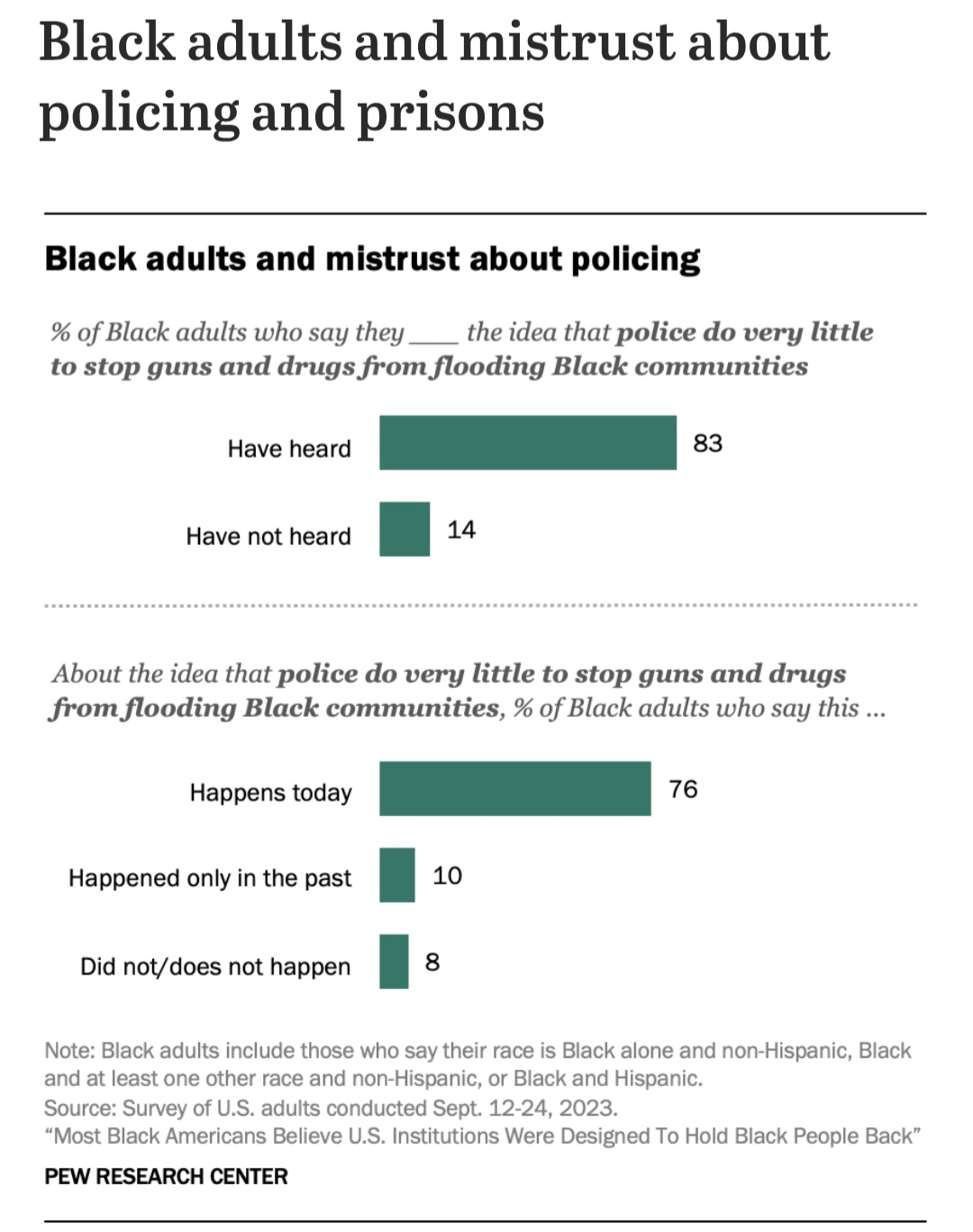
For decades, antisemitism coming from “majority minorities” — segments of the Black community and the Muslim community — was treated differently. Explained away. Softened. Excused as an understandable reaction to oppression, poverty, policing, or trauma. Jews were asked to tolerate it, contextualize it, empathize with it. The burden of understanding was always placed on the victim. So much so, that when Jews were killed by Black people in Jersey City, Jews asked the Black community for forgiveness.

But the past few years have blown apart the pretense.

Anti-Israel activists outside a Jewish day school in Westchester calling for “liberation by any means necessary” in 2024

The hatred is no longer whispered. It is validated in academic departments, amplified on social media, and wrapped in moral language to disguise its ugliness. The same voices that once insisted they were merely “pro-human rights” now chant openly for the erasure of the Jewish people and state. They’ve dropped the mask because they believe the cultural winds are at their backs.

The veil is gone.

What remains is the raw reality: A movement that celebrates violence, justifies terror, and cloaks explicit antisemitism in the robes of social justice — and an America increasingly unwilling, or unable, to call it what it is.

Because the scaffolding of antisemitism for the alt-left is that Jews are a threat. They are powerful. They steal what is not theirs. And Jews then have the temerity to complain of “antisemitism” as if they aren’t privileged, their veil of protection to rip the victim card from the truly marginalized communities of color. For the alt-right, the rightful owners of this land are White Christians, and Jews are undermining them too.

This is FOLO, Fear Of Losing Out. The trepidation that what should rightly be yours is being snatched away by nefarious forces. The Jews. Perhaps alone, perhaps with other allies, whether they be minority groups, PACs or a foreign country.

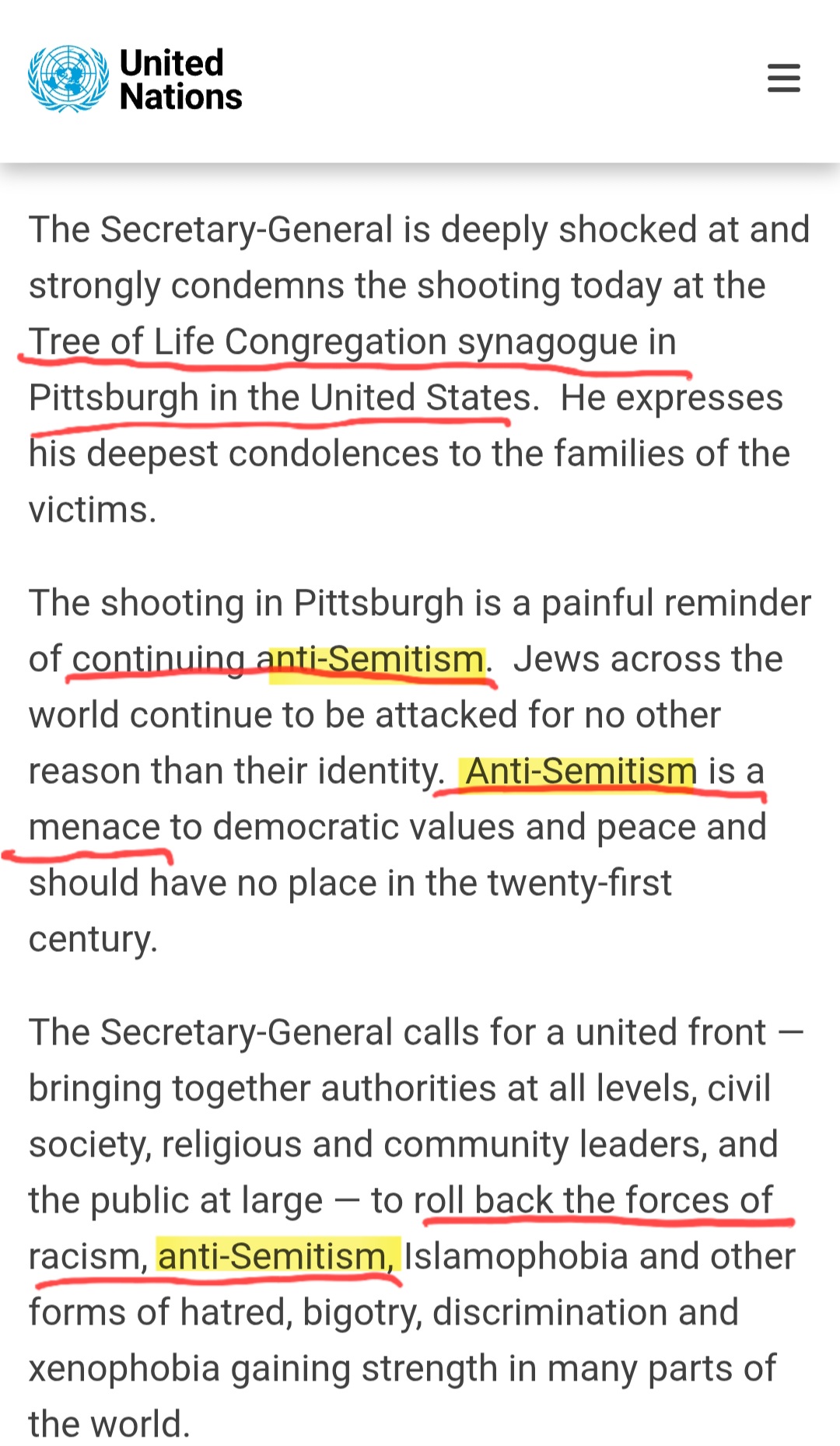
It’s old antisemitism, magnified by social media and chat groups to instigate and mobilize the masses against the most persecuted people of the past centuries. The media veil can no longer conceal the barbarians at the gates of synagogues.

Roughly 200 protestors outside of New York City’s Park East Synagogue shouting “There is only one solution! Intifada revolution!” on November 19, 2025