
Abraham had two sons. That is not only history; it is the underlying structure of the Middle East.
From Isaac came Jacob (Israel) and the Jews. From Ishmael came peoples that would become much of the Arab world. One father. Two lines. A separation that began in a household and expanded into history.
“And the thing was very grievous in Abraham’s sight… and he sent her [Hagar and Ishamael] away” (Genesis 21:11–14)
A rupture in youth. Ishmael into the wilderness. Isaac remaining with the covenant, inheritance, and land. Two trajectories set before either became a nation.
They meet again only once.
“And his sons Isaac and Ishmael buried him in the cave of Machpelah” (Genesis 25:9)
The text records a moment that refuses to disappear: the separated sons standing together over their father.
History widened the gap.
The descendants of Ishmael became many: spread across vast geographies, largely Muslim, with enduring Christian communities. The region became overwhelmingly Arab.
The descendants of Isaac became few. Driven out, dispersed, conquered repeatedly, yet carrying something that would not yield: memory, covenant, and a fixed orientation toward their promised land.
Eventually, they returned. A small people, back in a narrow strip of that land, surrounded by a region that traced itself, at least in part, to the other son.
That imbalance defines the present.
Then something shifted.
The Abraham Accords – named for their common forefather – introduced a different possibility. Arab states choosing open relationship with Israel, shaped by economics, technology, security, and a recognition that the region was already changing beneath older narratives.
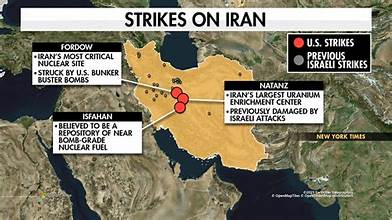
A shared pressure point sharpened that shift: Iran.
A Muslim non-Arab power, Persian in identity and imperial in ambition, projecting influence across Arab capitals and against Israel alike, forcing alignments that would have seemed implausible only years ago.
The Accords opened a door for a new future. Now widen it.
Bring the Abraham Accords to Hebron.
Bring them to the Cave of Machpelah, the burial place of Abraham, Isaac, and Jacob, and the Jewish matriarchs as well. The place where the text records Isaac and Ishmael standing together.
Let the leaders of Israel and the Arab world stand there.
Let it be an invitation – especially to Saudi Arabia – to step fully into this framework, not only as a strategic actor but as a central inheritor of the Abrahamic story.
Let it also be a reminder closer to the ground.
To Jews and Arabs living in the disputed lands east of the 1949 armistice lines (E49AL) that includes Hebron, that their conflict sits inside a much older relationship. They are not strangers placed side by side by accident. They are descendants of a shared origin, living out a divergence that began long before modernity created borders.
Ishmael did not return to neutral ground. He came back to the land understood to be Isaac’s inheritance. He stood with his brother there and buried their father.
That moment carries a clarity that history has often obscured: the land of Israel is the Jewish home.
The Arab world does not disappear in recognizing that. It becomes something stronger—anchored in reality, aligned with its own long-term interests, and reconnected to a shared origin that was never erased.

The Abraham Accords can move from alignment to acceptance.
Hebron is where that truth can be stated without abstraction.
The region has spent centuries replaying the separation.
Saudi Arabia and the Gulf States can choose, now, during their common battle against Iran, to stand again at the place where Isaac and Ishmael met thousands of years ago, and acknowledge what each brought with them when they arrived: a common bond and their own roots in the region.











 First One Through