Guterres Sickening “Inspiration”

United Nations Secretary-General António Guterres crossed a moral line when he called Palestinian Arabs an “inspiration” and a model of “resilience” this week. Inspiring how? By the crowds who celebrated the October 7 massacre? By polls showing majorities still glorifying the murders of Israeli civilians? By a culture whose media, schools, and leaders reject coexistence and sanctify violence?
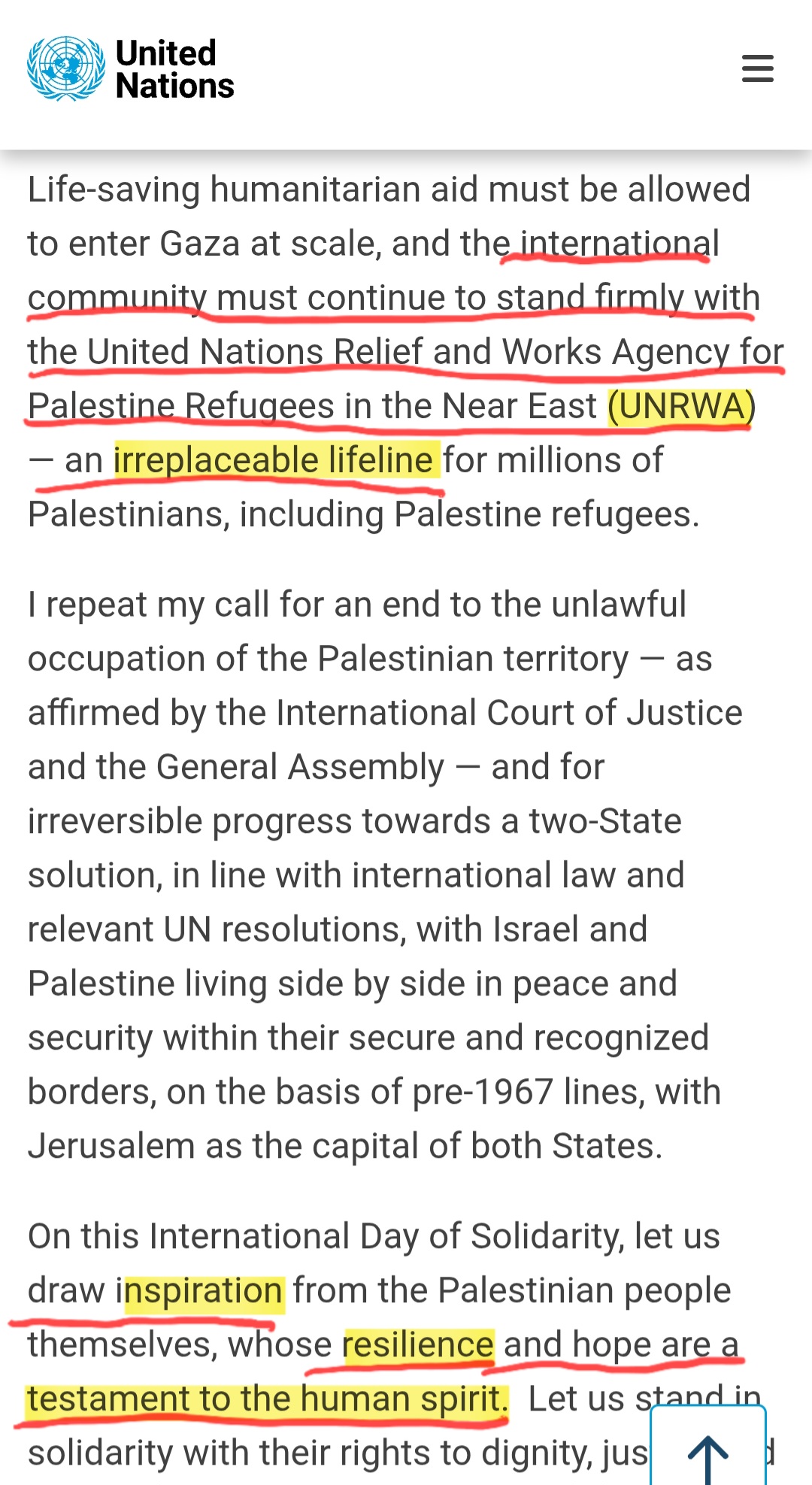
Statement by UNSG Guterres about Palestinian Arabs on November 18, 2025

Guterres didn’t qualify his praise. He erased the difference between the paltry few who seek peace and the dominant culture that cheers attacks on Jews. He took a society steeped in martyrdom worship and Jew-hatred — a culture that teaches children to dream of a land without Jews — and wrapped it in moral language.

That isn’t nuance. It’s whitewashing.

And the moral preening about UNRWA, the “irreplaceable lifeline for millions of Palestinians, including Palestine refugees“, which by his own admission is not just about an agency for descendants of displaced people from 75 years ago, but for ALL ARABS? That agency which was intimately engaged in fighting a war against Israel? He insists that the international “stand firmly” with the agency which fosters the violence and perpetual state of war?

Guterres has dignified the ideology that drives repeated attacks on Israeli families. He has signaled to the world that Jewish suffering is incidental, and Palestinian rejectionism is to be emulated.

If the Secretary-General looks at a society that celebrates slaughter and sees “a testament to the human spirit”, what won’t he excuse next?

It’s time for moral clarity. If Hamas supporters chant, “There is only one solution! Intifada Revolution!’— then outside the UN, people should gather in front of the campus with the truth:

“There is only one response — eradication of Hamas!”

Peace will never come from praising a culture of violence. Only from defeating it.

The Veil on Antisemitism is Gone

For years, defense lawyers tried to blur the lines in terrorism cases. When police uncovered jihadist plots, attorneys floated the well-worn argument of entrapment — that officers merely nudged vulnerable young men into thinking about violence. If not entrapped, then “mentally ill.” “Impressionable.” “Confused.” A haze of excuses meant to rehabilitate the indefensible.

But look at the landscape now.

The people calling for violence against Jews aren’t hiding behind whispers in back rooms or being lured by undercover officers. They’re shouting it from megaphones under the banner of “free speech.” They’re organizing through groups like CAIR, Within Our Lifetime, and the Palestine Youth Movement. They openly describe Jews as “enemies” who must be “confronted by any means necessary.” They praise “resistance” in every form, stripping the word of euphemism and revealing precisely what they endorse.

Unlike past defendants, they haven’t yet been charged with providing weapons, scheming attacks, or casing synagogues. Not yet. But they are building the moral scaffolding for others to do so — a permission structure wrapped in slogans about “justice,” “liberation,” and “decolonization.” It is ideological, deliberate, and public.

This is not entrapment.
This is not mental instability.
This is not marginal, confused fury.

This is ideology. Hardened, intentional, and proud of itself.

For decades, antisemitism coming from “majority minorities” — segments of the Black community and the Muslim community — was treated differently. Explained away. Softened. Excused as an understandable reaction to oppression, poverty, policing, or trauma. Jews were asked to tolerate it, contextualize it, empathize with it. The burden of understanding was always placed on the victim. So much so, that when Jews were killed by Black people in Jersey City, Jews asked the Black community for forgiveness.

But the past few years have blown apart the pretense.

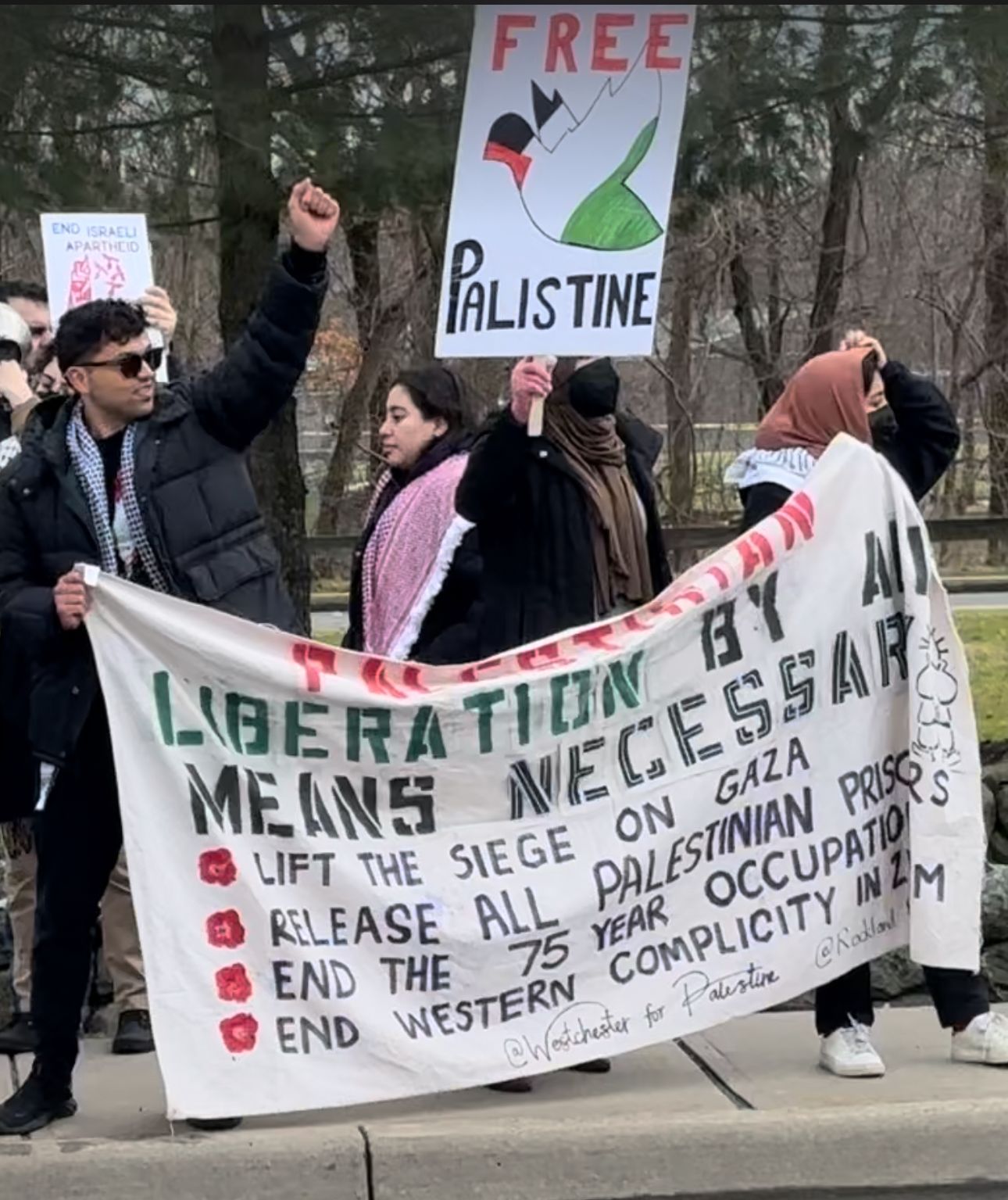
Anti-Israel activists outside a Jewish day school in Westchester calling for “liberation by any means necessary” in 2024

The hatred is no longer whispered. It is validated in academic departments, amplified on social media, and wrapped in moral language to disguise its ugliness. The same voices that once insisted they were merely “pro-human rights” now chant openly for the erasure of the Jewish people and state. They’ve dropped the mask because they believe the cultural winds are at their backs.

The veil is gone.

What remains is the raw reality: A movement that celebrates violence, justifies terror, and cloaks explicit antisemitism in the robes of social justice — and an America increasingly unwilling, or unable, to call it what it is.

Because the scaffolding of antisemitism for the alt-left is that Jews are a threat. They are powerful. They steal what is not theirs. And Jews then have the temerity to complain of “antisemitism” as if they aren’t privileged, their veil of protection to rip the victim card from the truly marginalized communities of color. For the alt-right, the rightful owners of this land are White Christians, and Jews are undermining them too.

This is FOLO, Fear Of Losing Out. The trepidation that what should rightly be yours is being snatched away by nefarious forces. The Jews. Perhaps alone, perhaps with other allies, whether they be minority groups, PACs or a foreign country.

It’s old antisemitism, magnified by social media and chat groups to instigate and mobilize the masses against the most persecuted people of the past centuries. The media veil can no longer conceal the barbarians at the gates of synagogues.

Roughly 200 protestors outside of New York City’s Park East Synagogue shouting “There is only one solution! Intifada revolution!” on November 19, 2025

Two Things To Do Now To Prevent October 7 From the West Bank

For twenty years, Israel relied on a security barrier to prevent the suicide bombings and shootings of the Second Intifada. It worked. While ninety percent of that barrier was not a concrete wall, but a high-tech fence—cameras, sensors, patrol roads, and layered detection system – it still reduced terror attacks from the West Bank by over 90 percent. Israelis and the Stateless Arabs from Palestine (SAPs) rebuilt their lives believing that a fence, not a fortress, was enough.

Then came October 7.

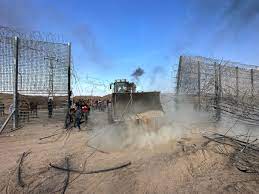
SAPs crashing through the fence between Gaza and Israel on October 7, 2023

Hamas gunmen bulldozed, exploded, and burned their way through what was—on paper—one of the most advanced border fences in the world. They murdered, raped, tortured, and kidnapped civilians in a genocidal assault that shattered the central premise of Israel’s security doctrine: that a fence and technology could stop an army of terrorists long enough for the IDF to respond.

That assumption is gone.

If a similar surprise assault were launched from the West Bank near the country’s major population centers—Tel Aviv, Jerusalem, the coastal cities—the casualties could be catastrophic. Israel is nine miles wide at its narrowest point. One breach is not a tactical event. It is an existential one.

The Barrier Must Change Because the Threat Has Changed

A fence can be cut, rammed, or climbed. A reinforced, multi-layered wall—physical, electronic, aerial, and subterranean—is a different proposition. The lesson of Gaza is not to abandon the idea of separation, but to upgrade it to match the enemy’s capabilities and intentions.

Israel does not have the luxury of guessing whether future attackers will try to slaughter dozens or thousands. The security architecture must assume the worst case—because the worst case already happened.

In Hashmonaim, Israeli backyards are a stone’s through away from the Security Barrier (photo: First One Through)

Disarming Militias Is Not Just for Gaza

The world is focused on disarming Hamas in Gaza. It must also confront a parallel obligation: militant groups in the West Bank cannot remain armed if there is to be any political horizon, for Palestinian Arabs or Israelis.

If Gaza is demilitarized but the West Bank is not, the threat simply shifts geography. The barrier is not a substitute for disarmament. It is a second line of defense, not the first.

Lasting security requires:

1️⃣ Complete disarmament of organized militant groups seeking Israel’s destruction.
2️⃣ Security control capable of preventing re-armament.
3️⃣ A barrier strong enough to make a surprise attack militarily unachievable.

Without those three components, diplomatic talk of a “future Palestinian state” is not a peace process—it is a gamble with tens of thousands of civilian lives.

A wall is not a symbol of failure. It is the price of survival when the alternative is the erasure of towns near the 1949 Armistice Lines with Jordan.

A move towards coexistence between Israelis and Palestinian Arabs cannot be limited to the threat from Gazans but from West Bank Arabs as well. Disarmament of West Bank Arabs and an upgrade of the security fence must happen now as well.

Peace requires trust. Trust requires time. Time requires security that cannot be breached in seven minutes by men with bulldozers and grenades and genocidal jihadi rage.

Until a day comes when coexistence is real—not chanted, not theorized, not negotiated—Israel must ensure that no armed faction can cross its border. The time to implement that plan is now.

Who Will Shoot Hamas?

The western world keeps repeating the same slogan: Gaza must be demilitarized. Every peace plan, every UN speech, every press conference insists that Hamas cannot continue to rule Gaza with guns in its hands. Billions of dollars for reconstruction are on hold until someone ensures those weapons are taken away.

There is only one problem: Hamas says it will never disarm. Not yesterday, not tomorrow, not for a state, not for the UN, not for Europe, not for the Americans, and certainly not for Israel. Hamas did not slaughter and rape Israelis on October 7 to abandon its quest to vanquish the Jewish State.

So a question hangs over every diplomat and every cabinet meeting from Cairo to Paris, a question no one wants to speak out loud: If Hamas refuses to disarm, who is going to shoot Hamas?

The West calls Hamas a terrorist organization responsible for massacres, rape, torture, kidnapping, and the deliberate targeting of civilians. But to many Palestinians, Hamas is not a rogue gang. It is the leadership they voted for, winning 58% of parliament in the last elections, and polling suggests they would win again today. To disarm Hamas is not to disarm a fringe—it is to confront their popular governmental leaders and legitimate military.

So who will go into Gaza, walk into the war tunnels, into the apartments, into the mosques used for rocket storage, and take those weapons away? Who will drag commanders from basements and seize the launchers hidden under family homes?

Hamas in Gaza war tunnels

Israel? The world says no. Israel may have destroyed Hamas battalions, but the same leaders who demand demilitarization say Israel must not stay in Gaza to enforce it.

The Palestinian Authority? Hamas threw them off rooftops in 2007. The PA’s authority barely extends through parts of the West Bank. They are not disarming anyone in Gaza without outside troops and a graveyard’s worth of casualties.

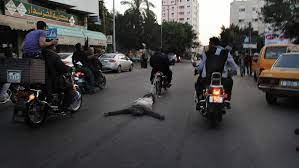
Members of Hamas drag the body of a “collaborator” through the streets of Gaza

Arab and Muslim states? This is the newest fantasy. An “International Security Force” of Egyptian, Jordanian, Saudi, Emirati, Moroccan or other troops is supposed to enter Gaza, secure the borders, keep the peace, and—if necessary—shoot Hamas fighters to take their weapons. Will Egyptian soldiers do that? Jordanians? Saudis? The UAE? And what of Qatar, which housed Hamas leaders in luxury hotels for years? Will Qatar now arrest the men it financed?

The UN? NATO? Peacekeepers do not storm bunkers or raid arms factories. It has never happened in the Middle East, and it will not start in Gaza.

Which leaves one final option, the one everyone pretends not to see: No one will disarm Hamas. The world will congratulate itself on a “post-war framework,” aid will pour in, cement will be shipped, tunnels will be rebuilt, rockets will reappear—and we will repeat this in two years, five years, ten years, with more dead children on both sides.

This is the part no diplomat wants quoted back to them: You cannot demand a demilitarized Gaza, forbid Israel from disarming Hamas, refuse to disarm Hamas yourself, and still pretend you are building peace. Those positions cannot coexist. Either someone will use force against Hamas, or Hamas remains armed, and Gaza remains a terrorist enclave.

Ask the diplomats, ask the presidents and prime ministers, ask the foreign ministers drafting communiqués they will never enforce: Who will shoot Hamas?

Peace is not built on Security Council resolutions. It is built on the willingness to confront those who would destroy it.

The New York Times Seeks To Inflame Antisemitism By Minority Groups

There are endless scams in New York City. People forge deeds, steal equity, and prey on desperation every week. Almost none of those crimes get elevated to a national morality tale.

So why did The New York Times choose a particular case and present it as it did?

A headline about home theft.
A photograph of a visibly Orthodox Jew in a courtroom to lead the story.
A description of victims “from minority communities.”

The message was unmistakable: A Jew stole from vulnerable minorities.

The Times could have reported the crime without turning it into a racial and religious showdown, yet it chose not to.

If his religion played no role in the scheme, then it had no business in the article. Yet the Times made sure every reader saw the kippah and beard, and read of his Orthodox clan coming to rally for the criminal: a greedy Jew stealing from the vulnerable.

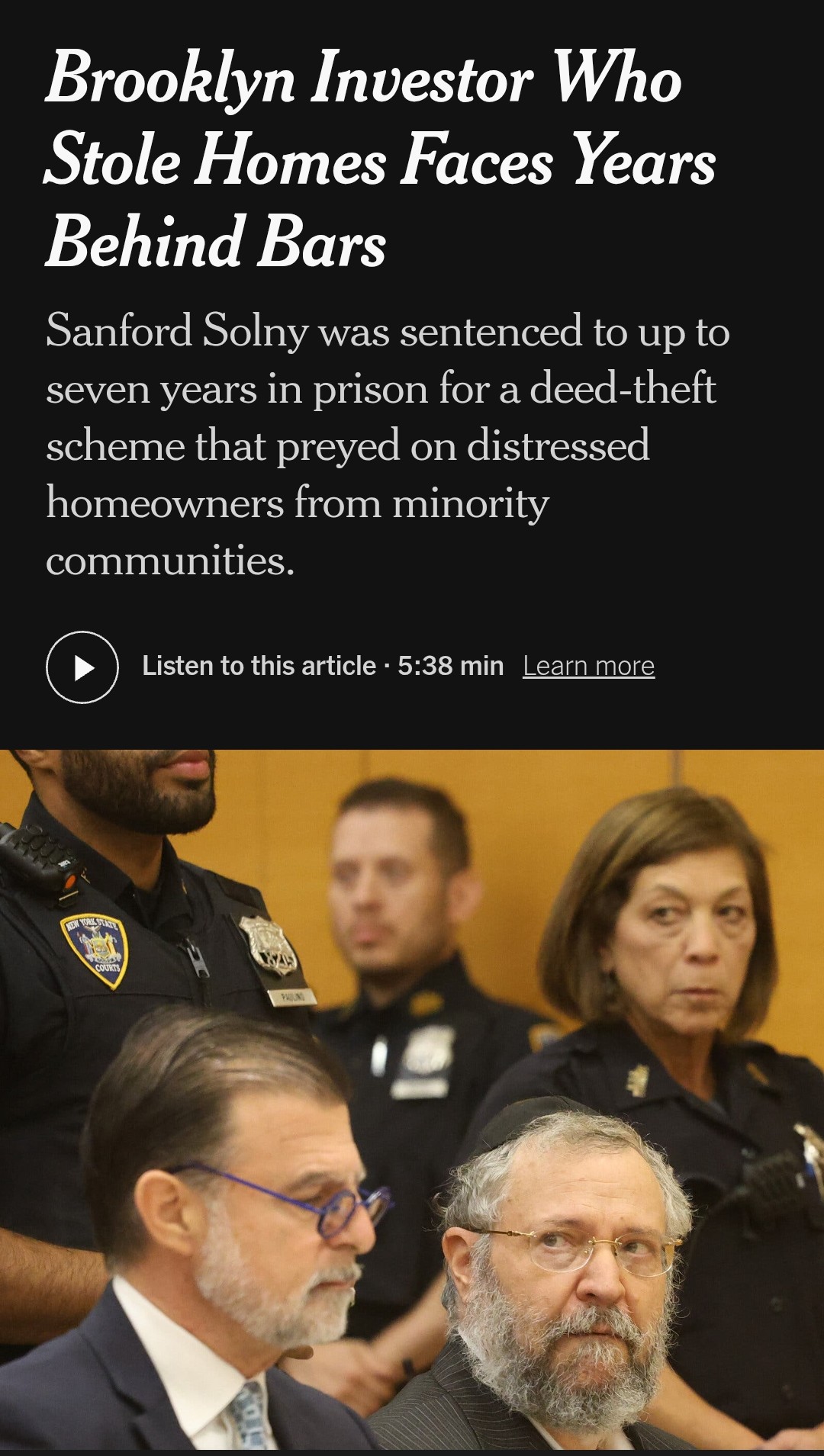
The New York Times made a point of discussing the perpetrator being from the “Orthodox Jewish community“, even though the case had nothing to do with religion.

This did not land in a vacuum. Jews are being attacked in New York at rates that should horrify any decent newsroom. Anti-Jewish tropes about Jews stealing land, homes, and resources are exploding across campuses and city streets. It is standard stump propaganda by Democratic Socialist politicians.

Rep. Rashida Tlaib (D-MI) at a Democratic Socialist conference said of Jews: “they do it from Gaza to Detroit, and it’s a way to control people, to oppress people. And it’s those structures that we continue to fight against. I know you all understand the structure we’ve been living under right now is designed by those who exploit the rest of us, for their own profit.

If the victims were Orthodox Jews and the offender was a member of another minority group – a majority-minority group like Blacks or Latinos – does anyone believe the Times would blast the offender’s ethnicity and splash a religiously identifiable photo across the top of the page?

Absolutely not. They would call that incitement.

This is a pattern. Mainstream media outlets have spent the last decade profiling Jews as:

They would never speak this way about any other minority group. But when the subject is Jews, especially Orthodox Jews, suddenly it’s acceptable to present them as predators and everyone else as their prey.

That is not journalism. It is character assassination dressed up as social justice.

And it does this in the backdrop of the election of a Ugandan immigrant, Zohran Mamdani who has trafficked in antisemitism, to be the new mayor of New York City. A man supported by the Black and Latino communities and opposed by the Orthodox Jewish one. A man who focused on the affordability crisis of living in New York City, with scaffolding provided by the Times about how corrupt Jews make it impossible for poor immigrants to live in the city.

The New York Times made a point of discussing the perpetrator being from the Orthodox Jewish community, even though the case had nothing to do with religion.

Propaganda does best when there are elements of truth. It does best when the fire has already been lit and the mob is seeking red meat to fuel the passion. The Times is feeding the beast and clearing an auto de fe for Jews to be marched through the streets.

Virality and Values

There was a time when respect was earned by learning. People who studied hard, accumulated degrees, mastered facts and logic were admired. They didn’t need followers; they had knowledge. They didn’t need virality; they had depth.

That world is gone.

Fame today is not built in libraries or laboratories but in the palm of a hand. A ring light replaces a classroom. A viral clip replaces a thesis. And the more lurid, outrageous, emotional, and dishonest the content is, the faster the fame spreads. The algorithms demand provocation, not proof. They reward outrage, not understanding.

And people are responding exactly as the system intends: they’re dropping degrees, skipping college, deciding that years of expensive education aren’t worth it in a world where clout is free and clicks are currency. AI will write the papers anyway. Tuition is a fortune. Morality is optional. Why struggle through years of learning when you can fabricate a persona, press “upload,” and watch the world react?

For the first time in history, the older generation will have far more education than the young. Degrees are becoming relics. Expertise is becoming an antique. And winning hearts and minds through argument — the old democratic ideal — is becoming a luxury.

Politics is drifting toward the young, the uninformed, the inflamed, the furious, the ones who know how to play the game of attention better than the game of truth.

Hasan Piker doesn’t win debates; he wins followers. Comedian David Smith isn’t famous for jokes; he’s famous for attacking fellow Jews, because tearing down your own people brings clicks in a sick digital economy.


And here is the crisis for the Jewish people: We are the People of the Book trying to survive in a world where books don’t matter. We are a civilization built on reason, argument, text, questioning — and we cannot comprehend why we’re losing the PR battle against influencers who deal only in emotion, rage, and spectacle.

We fight with facts. They fight with feelings.

The socialist-jihadi crowd celebrates Hasan Piker showing up at Zohran Mamdani’s victory party

We build logic. They build engagement.

We look for truth. They look for traction.

And so a terrifying question hangs in the air: Must Jews abandon their values to survive? Must we trade nuance for noise?
Must we jump into the sewer of social-media fabrication because that is the only battlefield the world seems to care about? Must we out-viral our enemies just to protect ourselves from the lies, the hatred, and the persecution that spread faster than any truth we offer?

Or is there a third way — a way to fight fiercely without becoming the thing we oppose? A way to compete in the digital arena without destroying the intellectual soul that has kept us alive for 3,000 years?

This is the defining challenge of the modern Jewish experience. Not whether we can win a debate — we always could.
But whether debate still matters.

And if it doesn’t, then the Jewish people must decide how to defend themselves in a world where vanities, not virtues, are the currency of influence.

The People of the Book didn’t choose this kind of world. But we must learn how to survive it — without losing who we are.

Palestine 2.0

The world keeps pretending we’re about to build something new when we talk about a “future Palestinian state.” As if Palestine 1.0 never happened. As if the first real test of Palestinian self-rule didn’t already give us a precise answer.

Because when Palestinians were first allowed to govern themselves, they told us exactly who they were politically:

  • They elected a Holocaust denier, Mahmoud Abbas, to be president.
  • They handed 58% of their parliament to Hamas — a terror group that doesn’t hide behind euphemisms. Hamas says openly that its mission is killing Jews and destroying the Jewish state, and Palestinians rewarded that platform with victory.
  • Then Hamas seized Gaza, and the public celebrated.
  • Then they launched war after war — 2008, 2012, 2014, 2021 — and Palestinians cheered again.
  • They spent their time and energy building a terrorist infrastructure under homes, mosques, schools and hospitals.
  • And then came the last two years, the worst carnage of all, and PCPSR polls showed overwhelming support in both Gaza and the West Bank.
Gazans celebrate the parade of dead Israeli Jews through the streets

This was Palestine 1.0. It wasn’t Israel running the show. It wasn’t occupation controlling the ballot box. This was Palestinian society expressing its political will.

And the result was catastrophic: a corrupt leadership, a terror government, zero investment in coexistence, zero preparation for statehood, and a culture built not on governance but on grievance.

Palestine 1.0 didn’t collapse because of logistics. It collapsed because of values.

Yet the world now wants to release Palestine 2.0 — a supposedly “upgraded” version where terrorists are kept out, Hamas is disarmed, and nicer leaders are installed. As if changing the packaging changes the product.

So the question becomes unavoidable: Was Palestine 1.0 a failure of government or a failure of the people?

If it was the government’s failure, then why did Europe rush to recognize it as a state? How do you crown a political project as a nation when its first attempt at self-rule ended in a terror dictatorship?

And if the failure was the people — if majorities truly wanted leaders who promised Israel’s destruction — then what confidence should anyone have that Palestine 2.0 will be any different?

You can replace leaders.
You can write new constitutions.
You can disarm militias.
But you cannot create a peaceful state when the foundational political culture rejects the existence of the neighbor it must live beside, one that even Palestinian advocates acknowledge is a profound “deformity.

The majority of Gazans have always supported killing Jewish civilians inside of Israel

Palestine 2.0 is being sold like a software update: “Bug fixes. Improved performance. No terrorism this time.” But the core virus — the ideology that Jewish sovereignty is unacceptable — has never been removed.

And until it is, every version will crash.

The world can fantasize about Palestine 2.0, but if the Stateless Arabs from Palestine (SAPs) still believe the destruction of Israel is their national purpose, then all we’re doing is reinstalling the same system and acting surprised when the outcome doesn’t change.

You don’t upgrade a failure by renaming it. You upgrade a failure by changing the values that made it fail.

And until that happens, no one should pretend Palestine 2.0 is a new future.
It’s the same code with the same flaws — and the same predictable ending.

Choosing Our People

In Chayei Sarah, Abraham does something brave. When it’s time to find a wife for his son Isaac, he refuses to choose from the neighbors around him. These were the people he did business with, lived among, interacted with every day — but they did not share his values. So he sends his servant far away to find someone who does.

Abraham teaches us something simple and powerful: proximity is not loyalty. Geography is not identity. Values matter more than convenience.

Rembrandt’s “The Jewish Bride,” (c. 1665) originally called “Isaac and Rebecca”

We are living this lesson now. In the last year, too many of us have watched people we assumed were “ours” turn their backs — classmates, coworkers, fellow Jews, even friends who share our politics. Being nearby doesn’t make someone trustworthy. Sharing a label doesn’t make them aligned. We’ve learned, painfully, that not everyone who sits next to us stands with us.

Abraham reminds us that it’s okay — even necessary — to choose our people carefully. To build relationships around courage and truth, not comfort or habit. To seek out the ones who show up for Jewish dignity when it’s hard, not only when it’s fashionable.

Isaac didn’t need a local partner; he needed the right partner. So do we.

The Palestinian Authority Still Shields Extremism

To read the Western press, one might believe that the Stateless Arabs from Palestine (SAPs) in Gaza and the West Bank are reluctantly resigned to the idea that Hamas must go. Headlines routinely imply a growing consensus that Hamas is the past and some renewed Palestinian Authority is the future.

It could not be further from the truth.

The October 2025 PCPSR poll shows — unambiguously — that the Palestinian public has not turned away from Hamas. The majority would elect Hamas. The majority still supports the October 7 massacre. The majority wants Hamas to never disarm. This isn’t a fringe view or a warped reading of the data; it is the mainstream sentiment of Palestinian society two years after the massacre. Western analysts may avert their eyes, but the numbers do not.

And the Palestinian Authority knows this. That is why it continues to shield Hamas — not confront it.

A perfect illustration can be found in WAFA, the PA’s official news agency. In reporting on a session held by Canada and the European Union calling for a renewed diplomatic push, WAFA framed the story as a call for a “two-state solution,” “Gaza reconstruction,” and vague Western support for Palestinian aspirations and condemnation of Israeli actions.

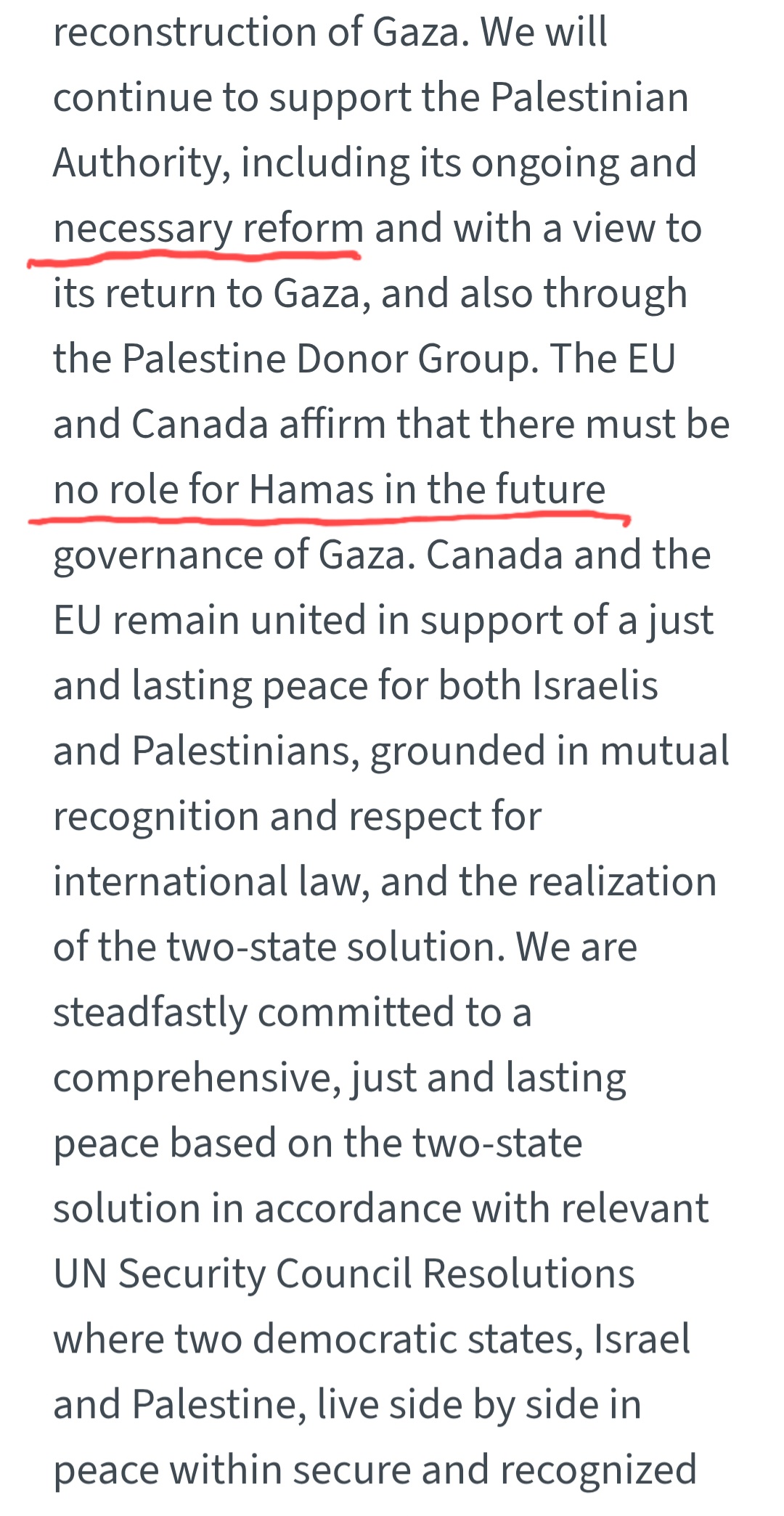
What it didn’t report is the crucial part: those same governments insisted that the Palestinian Authority must undergo significant “necessary reform” and that Hamas must have absolutely “no role” in the future of Gaza. This was not an afterthought in the meeting; it was a headline demand. Yet WAFA hid it from the Palestinian public.

Joint declaration from EU- Canada on November 12, 2025

Why? Because telling the truth would expose the central problem: Palestinian society is not being prepared for peace. It is being insulated from accountability.

A healthy political culture would confront the society’s own extremism. It would publish the poll numbers honestly and begin the painful process of restructuring education, media, and institutions. The PA instead chooses the opposite — suppressing outside criticism of Hamas and pretending that international actors want a Palestinian state under current conditions.

Deradicalization and re-education are not optional. They are essential.
And it is unmistakably clear that Palestinian society is incapable of doing so on its own.

For decades the PA has relied on a strategy of deflection — blaming Israel, minimizing internal dysfunction, and shielding extremist factions to avoid backlash from the street. That strategy has produced a generation that celebrates massacre, rejects coexistence, and sees disarmament as betrayal.

The Western world may cling to the comforting fiction that Hamas is isolated and universally rejected by Palestinians. The data say otherwise. The PA’s deliberate omissions say otherwise. The very architecture of Palestinian political life says otherwise.

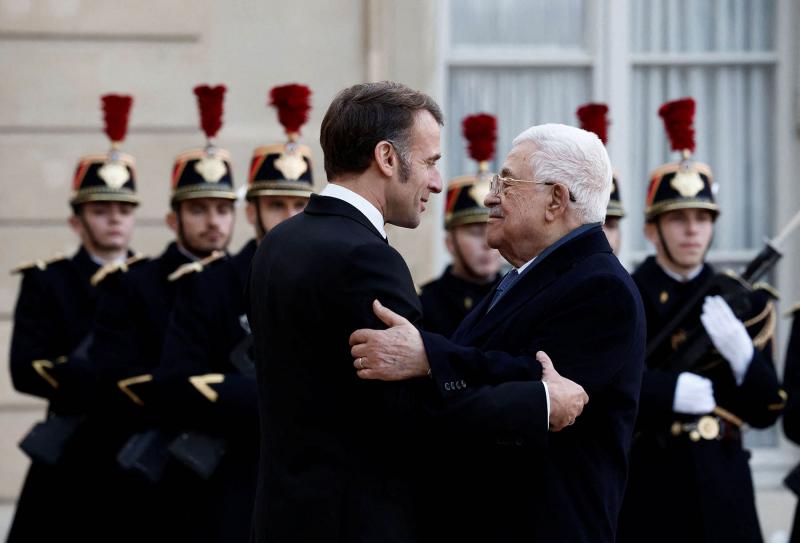
France may assuage the Muslim street when its Prime Minister has meetings and posts photos with PA President Mahmoud Abbas, but those actions make it complicit in promoting not only a fiction, but affirmatively dressing the wolf in sheep’s clothing.

French President Emmanuel Macron welcomes Palestinian President Mahmoud Abbas at the Elysée Palace in Paris, France November 11, 2025. Abbas told the west “We are committed to a culture of dialogue and peace, and we want a democratic, unarmed state committed to the rule of law, transparency, justice, pluralism and the rotation of power.” No such statement appeared about the meeting in Wafa.

Until the international community confronts this reality — and insists on genuine deradicalization rather than polite diplomatic euphemisms — there will be no meaningful change in Gaza, the West Bank, or the prospects for peace.

The Meteors And The Jews

Meteors streak through the night sky, lighting up for a brief second before vanishing into nothing. They burn because the Earth protects itself. Our planet’s atmosphere—thin but powerful—defends it from destruction. The meteors disintegrate, and the world goes on unharmed.

The Moon has no such shield. Every rock, every speck of space dust that comes its way slams straight into its surface. That’s why it’s pockmarked with craters—permanent scars of endless bombardment. Without protection, the Moon endures the full force of the universe’s hostility.

So it is with the Jewish people.

Across centuries, Jews have existed as the exposed body in a world of friction and fire. Without a “cultural atmosphere” to cushion them, they’ve absorbed the hits directly—pogroms, inquisitions, expulsions, boycotts, and genocides. The Jewish story is a catalogue of collisions that the rest of humanity barely felt.

Christians and Muslims, by contrast, have lived for centuries within the thick atmosphere of dominance. Their societies, their empires, their majority status wrapped them in protection and privilege. When hatred sparks, their vast numbers and institutions disperse the heat before it burns. They are Earth-like—shielded by mass and power.

The Jew, wherever he resides as a minority, has always been lunar—alone in orbit, lacking an atmospheric buffer. Every ideological meteor, every political upheaval, every cultural storm leaves its mark. From England in 1290 to Spain in 1492, from Kishinev in 1903 to Pittsburgh in 2018, the craters accumulate.

If Christianity and Islam represent the Earth—secure, dominant, cushioned by atmosphere—Judaism remains the Moon, enduring open space without defense, absorbing the hits and still shining back upon the world.

In that celestial backdrop, we are now in a major meteor shower. We look up at them pounding the Moon and lighting the Earthly skies. We see the Moon amassing more scars and pray the projectiles will be small enough to incinerate before hitting Earth.

Jews had learned to survive without a shielding atmosphere for two thousand years. And then, in 1948, it got one, in the very place where the Jewish forefathers lived. Now, when the meteor showers of Jew-hatred arrive, those in Israel feel the impacts when the projectiles are large, while their diaspora brothers on the Moon get pummeled by lighter fare.

The Earth and Moon Jews have been barraged these last two years. They are scarred but eternal, waiting for the wave of debris to pass by as quickly as possible.