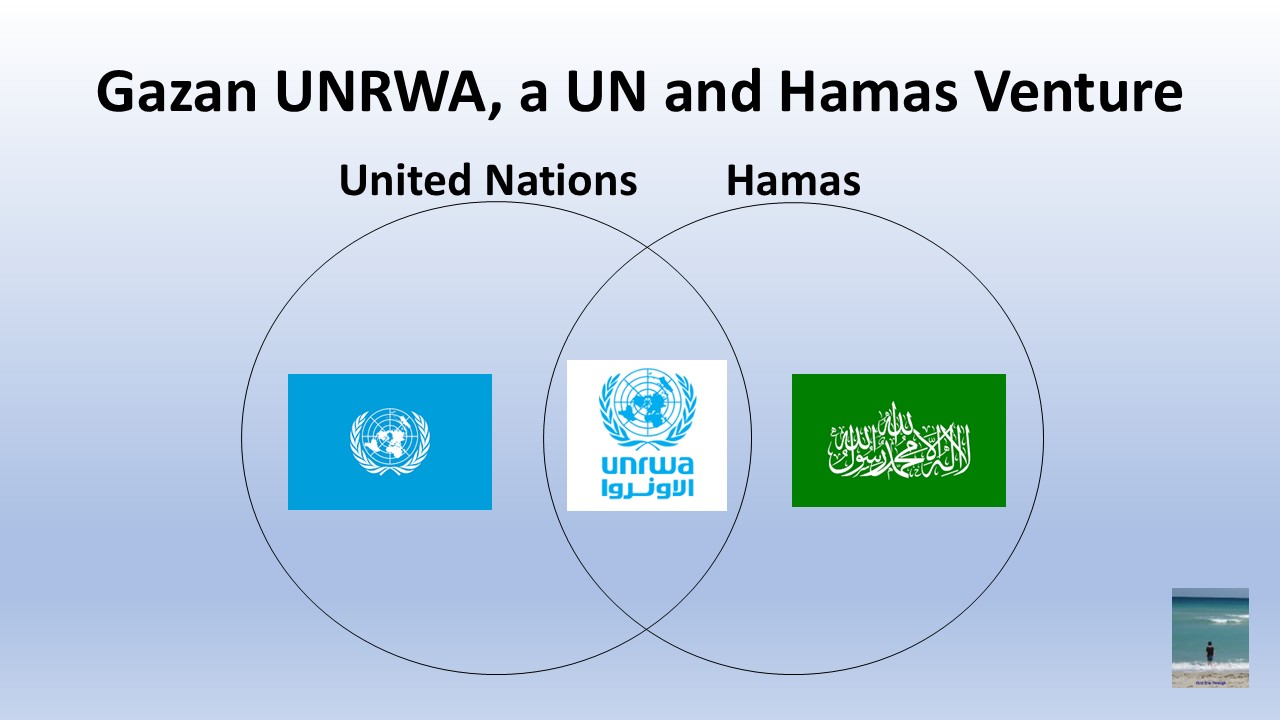
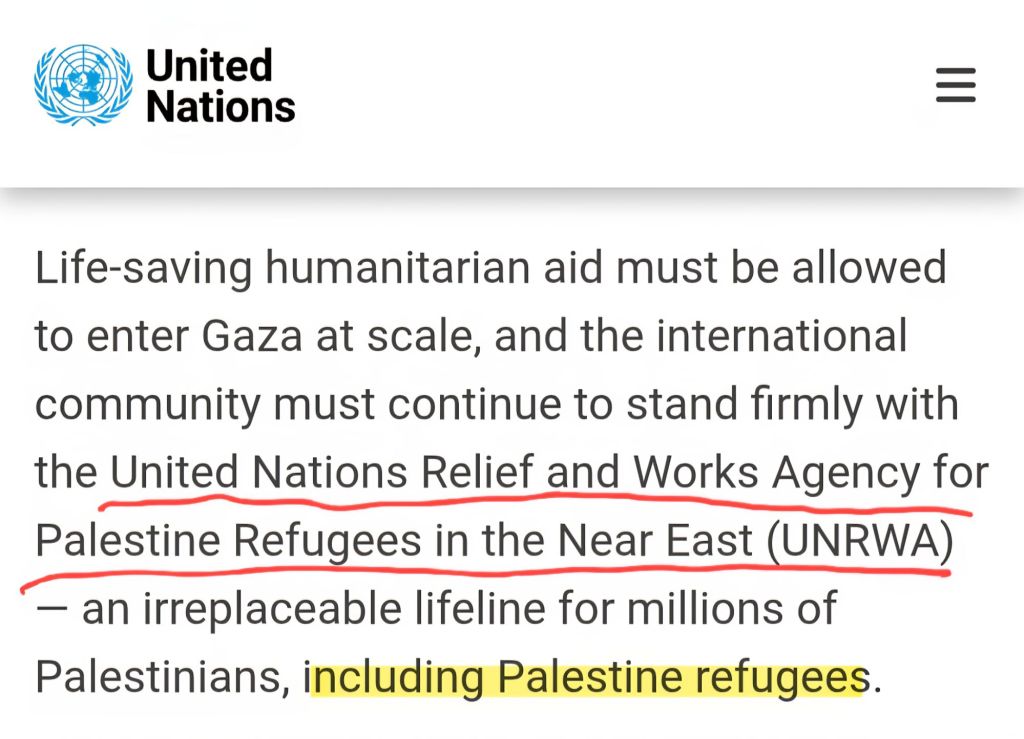
The United Nations has now openly confirmed what critics long understood: UNRWA isn’t an agency for a specific class of 1948 refugees—it exists for ALL Palestinian Arabs.
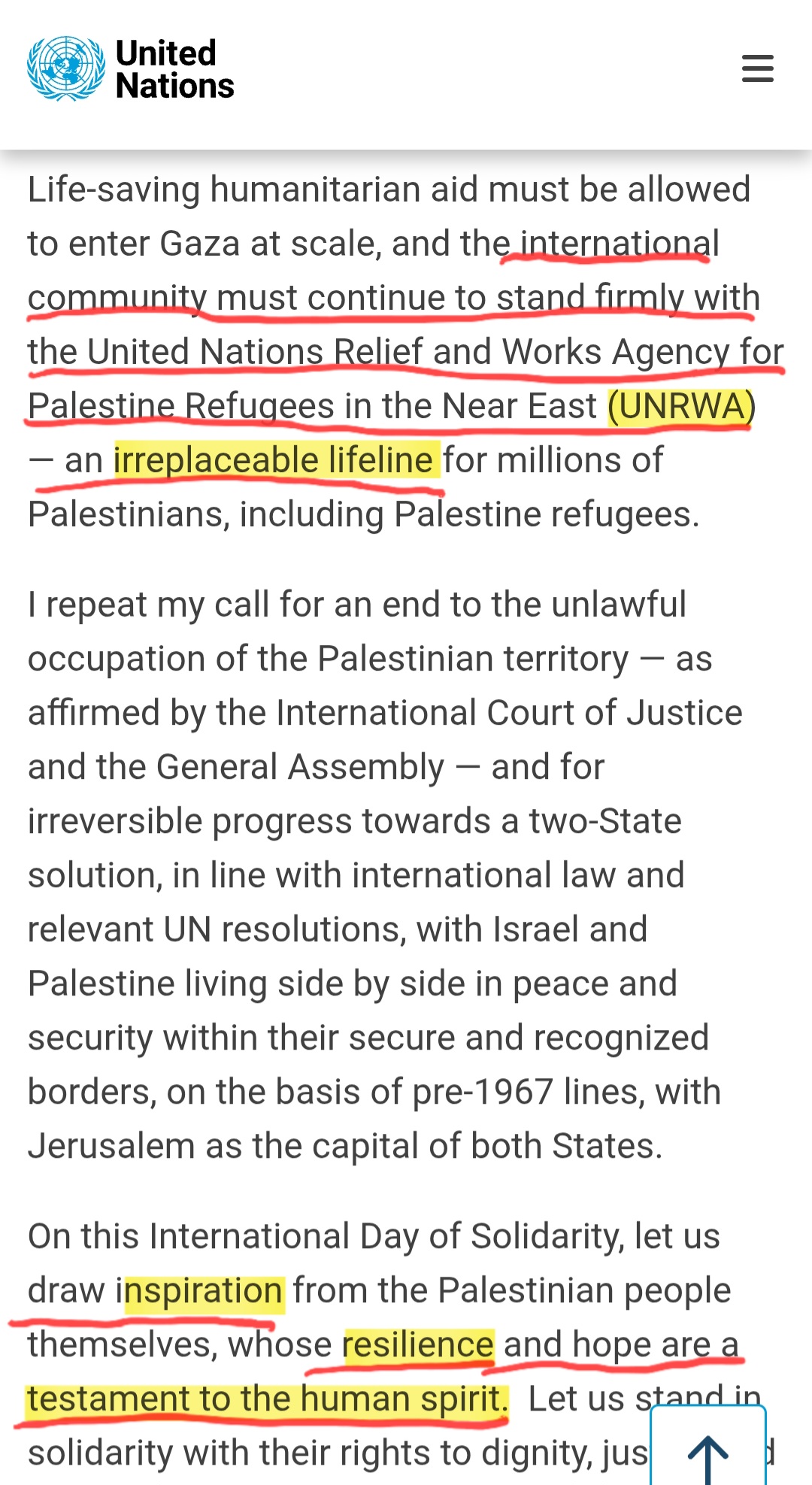
In a recent statement, the UN described UNRWA as essential for “millions of Palestinians, including Palestine refugees,” collapsing even the agency’s own elastic definition. The distinction has vanished. The entire population is the constituency.
UN admits that UNRWA is “irreplaceable lifeline” for every single Palestinian Arab.
This is a fundamental admission. UNRWA was created in 1949 as temporary relief for Arabs – and only Arabs – displaced in a particular conflict. Twisted at its start, it has evolved into a hereditary, permanent system—unlike any refugee regime in the world—preserving grievance rather than enabling the “two state solution” the same UN purports to advance. Now the UN goes further, implying UNRWA’s mandate covers every Palestinian Arab regardless of any manufactured refugee criteria.
That is not humanitarian work. It is political infrastructure.
By broadening its mission to one entire group, the UN reveals UNRWA’s true function: a nation-building institution for Palestinians, not a neutral welfare agency. The “refugee” label is just a cudgel to wage war against the Jewish State.
The UN’s own wording now confirms that UNRWA is not designed to end a refugee situation; it is designed to expand it—to serve all Palestinian Arabs whether they fit the already-distorted definition or not.
A system once justified as emergency relief is a highly partisan political project. And the UN has finally said so out loud.
United Nations Secretary-General António Guterres crossed a moral line when he called Palestinian Arabs an “inspiration” and a model of “resilience” this week. Inspiring how? By the crowds who celebrated the October 7 massacre? By polls showing majorities still glorifying the murders of Israeli civilians? By a culture whose media, schools, and leaders reject coexistence and sanctify violence?
Guterres didn’t qualify his praise. He erased the difference between the paltry few who seek peace and the dominant culture that cheers attacks on Jews. He took a society steeped in martyrdom worship and Jew-hatred — a culture that teaches children to dream of a land without Jews — and wrapped it in moral language.
That isn’t nuance. It’s whitewashing.
And the moral preening about UNRWA, the “irreplaceable lifeline for millions of Palestinians, including Palestine refugees“, which by his own admission is not just about an agency for descendants of displaced people from 75 years ago, but for ALL ARABS? That agency which was intimately engaged in fighting a war against Israel? He insists that the international “stand firmly” with the agency which fosters the violence and perpetual state of war?
Guterres has dignified the ideology that drives repeated attacks on Israeli families. He has signaled to the world that Jewish suffering is incidental, and Palestinian rejectionism is to be emulated.
If the Secretary-General looks at a society that celebrates slaughter and sees “a testament to the human spirit”, what won’t he excuse next?
It’s time for moral clarity. If Hamas supporters chant, “There is only one solution! Intifada Revolution!’— then outside the UN, people should gather in front of the campus with the truth:
“There is only one response — eradication of Hamas!”
Peace will never come from praising a culture of violence. Only from defeating it.
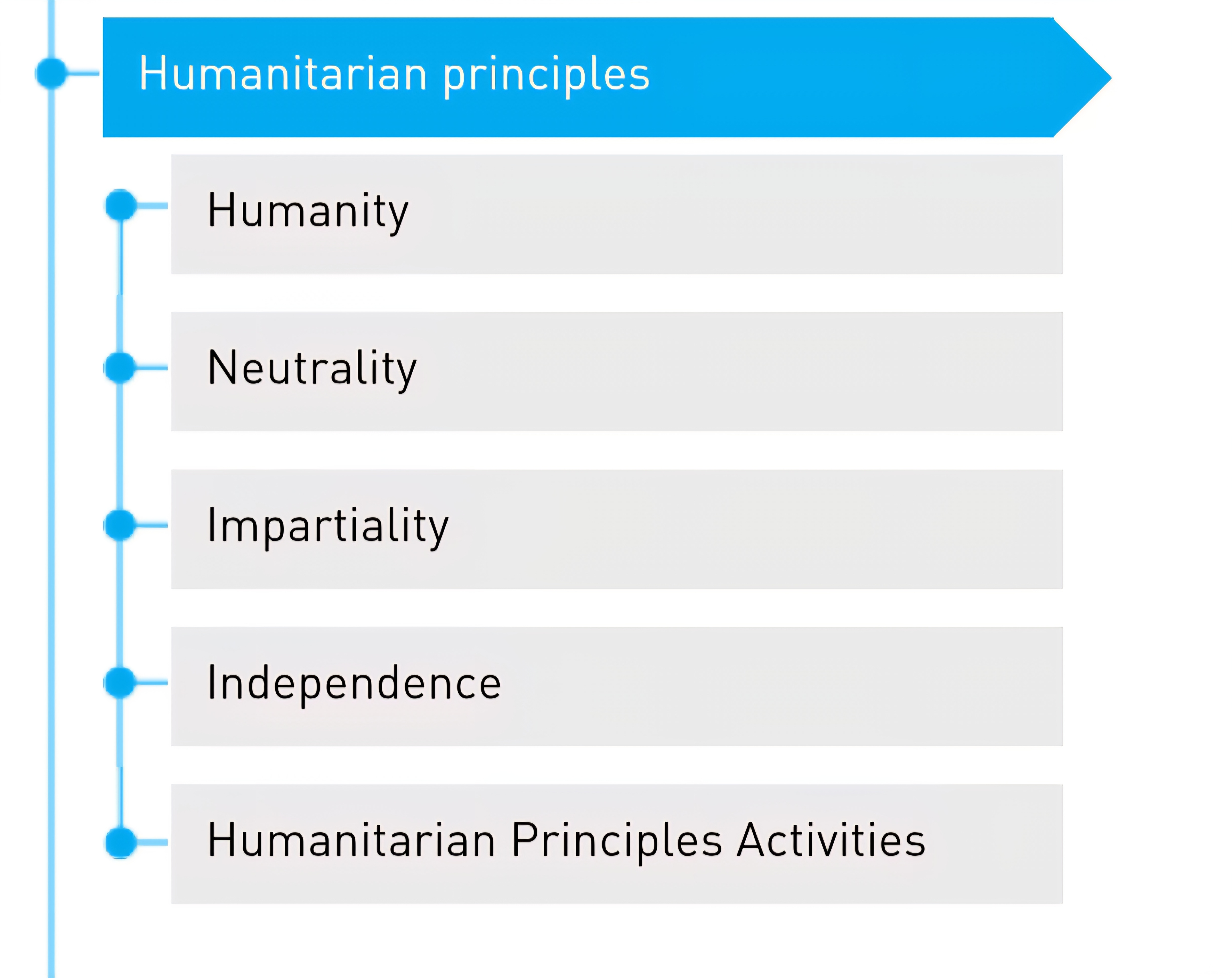
The United Nations Relief and Works Agency, UNRWA, declares that it operates on four humanitarian principles — humanity, neutrality, impartiality, and independence. It is none of those things.
UNRWA is unlike any other UN agency. It is not the UNHCR, which manages refugees from every nation and conflict on earth. UNRWA is a creature of exception — created for a particular people, in a particular region, in a particular war.
The agency claims it was established to address the plight of refugees from Palestine following the 1948–49 Arab-Israeli War. But was that truly its purpose? When the fighting ended, thousands of Jews were also expelled from their homes east of the 1949 Armistice Lines (E49AL) — from Jerusalem’s Old City, from Hebron, and across Transjordan’s illegally occupied territory. They, too, were refugees from Palestine. Did UNRWA help any of them? No.
Jews expelled from the Old City of Jerusalem via the Zion Gate by the army of Transjordan
From its inception, UNRWA was built to serve Arabs alone. Even when those same Arabs became full Jordanian citizens, the agency continued to provide them with housing, food, education, and medical care — benefits that by any logical standard should have ended once citizenship was granted. Instead, UNRWA preserved refugeehood as an inheritance, not a temporary condition.
Over time, UNRWA’s mission has morphed from relief to perpetuation. It has shown itself highly partisan, politically entangled, and morally compromised. Its schools and clinics may operate under the UN flag, but the agency’s allegiance is often indistinguishable from the politics of rejectionism that dominate its host territories.
During the 2023 Gaza war, UNRWA boasted that only it had the infrastructure to provide food, education, and healthcare to the Gazan population. Yet when 250 Israelis were dragged into Gaza as hostages, where was this agency of “humanity”? Did it deliver a single bandage or calorie to the kidnapped Israelis held underground? Did it condemn their abduction, or even acknowledge their suffering? It did not. UNRWA’s humanity proved selective, its independence nonexistent.
Its operations in Gaza function only through integration with Hamas, the political-terrorist organization that rules the territory. Schools double as weapons depots; employees have been implicated in massacres; aid is distributed by political loyalty, not human need. Leaders at the OCHA, another UN “humanitarian” group, are not shy to say they view Hamas a legitimate political representatives of Palestinians, not as a terrorist group.
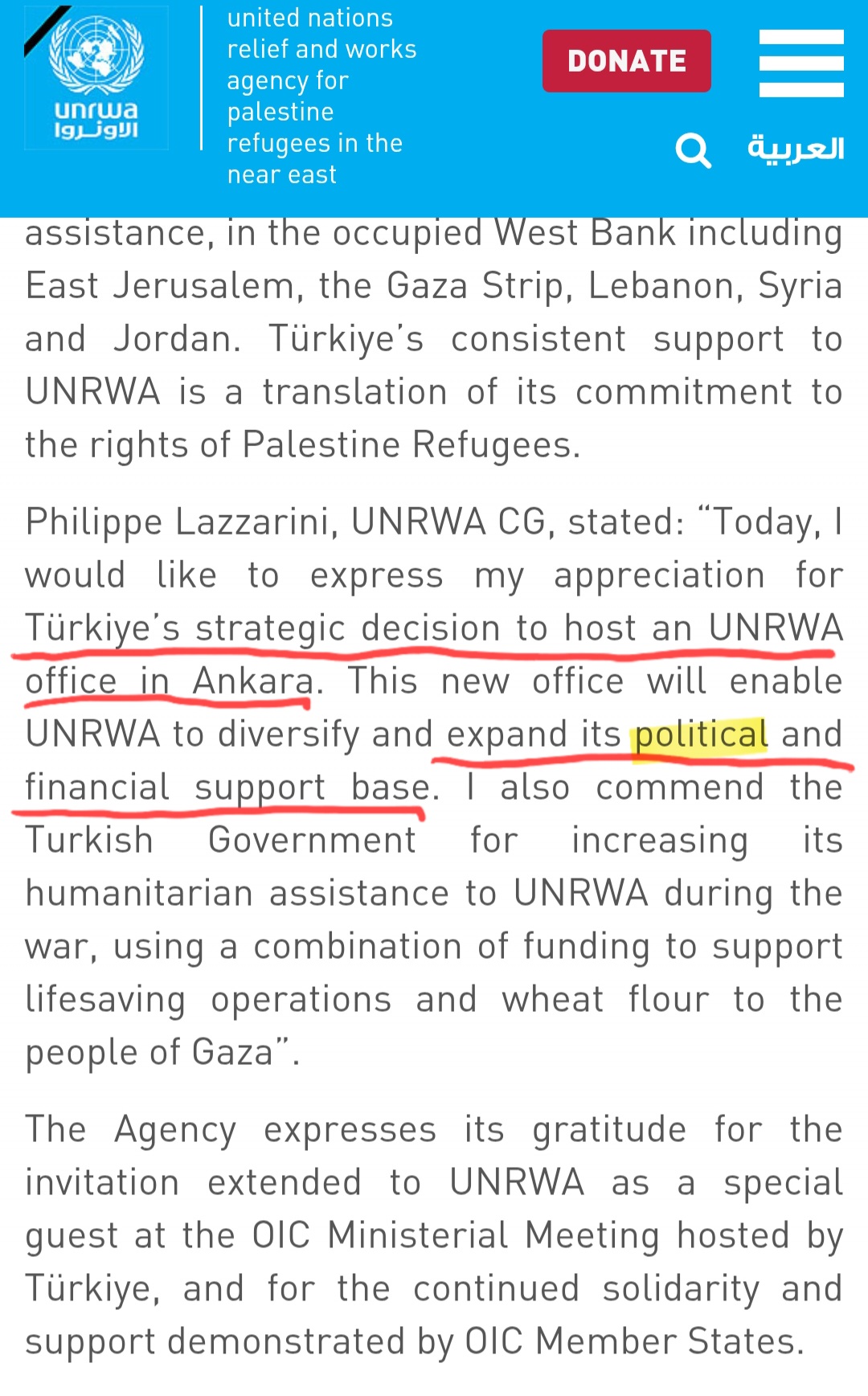
UNRWA now has additional offices outside of its field operations. It opened an office in Turkey to “expand its political and financial support base,” backed by the Organization of Islamic Cooperation (OIC), a political group. Very political. Neither independent nor neutral.
UNRWA is not a neutral humanitarian actor. It is a political instrument masquerading as one. It fails every principle it proclaims.
So long as UNRWA exists, it will preserve resentment, dependency and hatred. That agency founded in the shadow of war is the leading obstacle to peace.
As accusations of genocide in Gaza dominate global headlines, it’s important to revisit a revealing episode that exposes the deeper priorities of Palestinian political culture—from Hamas to institutions like UNRWA and even the Palestinian Authority.
Starting in 2009, the United Nations Relief and Works Agency (UNRWA) made multiple attempts to introduce Holocaust education into its school curriculum. Hamas, which governs Gaza, unequivocally rejected the idea. Its officials declared that teaching about the Holocaust would “poison the minds of Palestinian children.”
Yunes al-Astal, member of the Hamas faction in the Palestinian Legislative Council said teaching the Holocaust in UNRWA schools would lead to “marketing and spreading a lie.” He said that adding the subject to the curriculum was “a war crime” and “support and service of the Zionists” (Filastin al-Yawm, August 30, 2009).
Sami Abu Zuhri, Hamas spokesman in the Gaza Strip, said that Hamas opposed adding Holocaust to the curriculum because its objective was to justify the “Israeli the occupation” of the land of the Palestinian territories (Reuters, August 30, 2009).
Abd al-Rahman al-Jamal, head of the Palestinian Legislative Council’s education committee for Hamas, told a BBC correspondent that the Holocaust was “a big lie.”
Mustafa Sawaf, editor of Hamas’ Felesteen, wrote an editorial (September 1) entitled slamming UNRWA’s intention to teach the Holocaust an attempt to brainwash the younger generation in the Gaza Strip and to “prettify the image of the murderous, criminal Jews.”
Jamila Al-Shanti, Hamas Minister of Education,said that “Talk about the Holocaust and the execution of the Jews contradicts and is against our culture, our principles, our traditions, values, heritage and religion.” (Washington Post, September 2, 2009).
The Hamas-affiliated Popular Committees for Refugee Affairs denounced UNRWA, claiming that the Holocaust had not yet been scientifically proven and that teaching it was liable to cause students to identify with the Jews. Members of the committee absolute refused to have their children “learn the lie invented by the Zionists” (Filastin al-‘An website, August 30, 2009). According to the Committees, “the Holocaust was not real and outstanding Western scholars have proved that.” (PalToday website, August 30, 2009). It added “Holocaust studies in refugee camps is a contemptible plot and serves the Zionist entity with a goal of creating a reality and telling stories in order to justify acts of slaughter against the Palestinian people.”
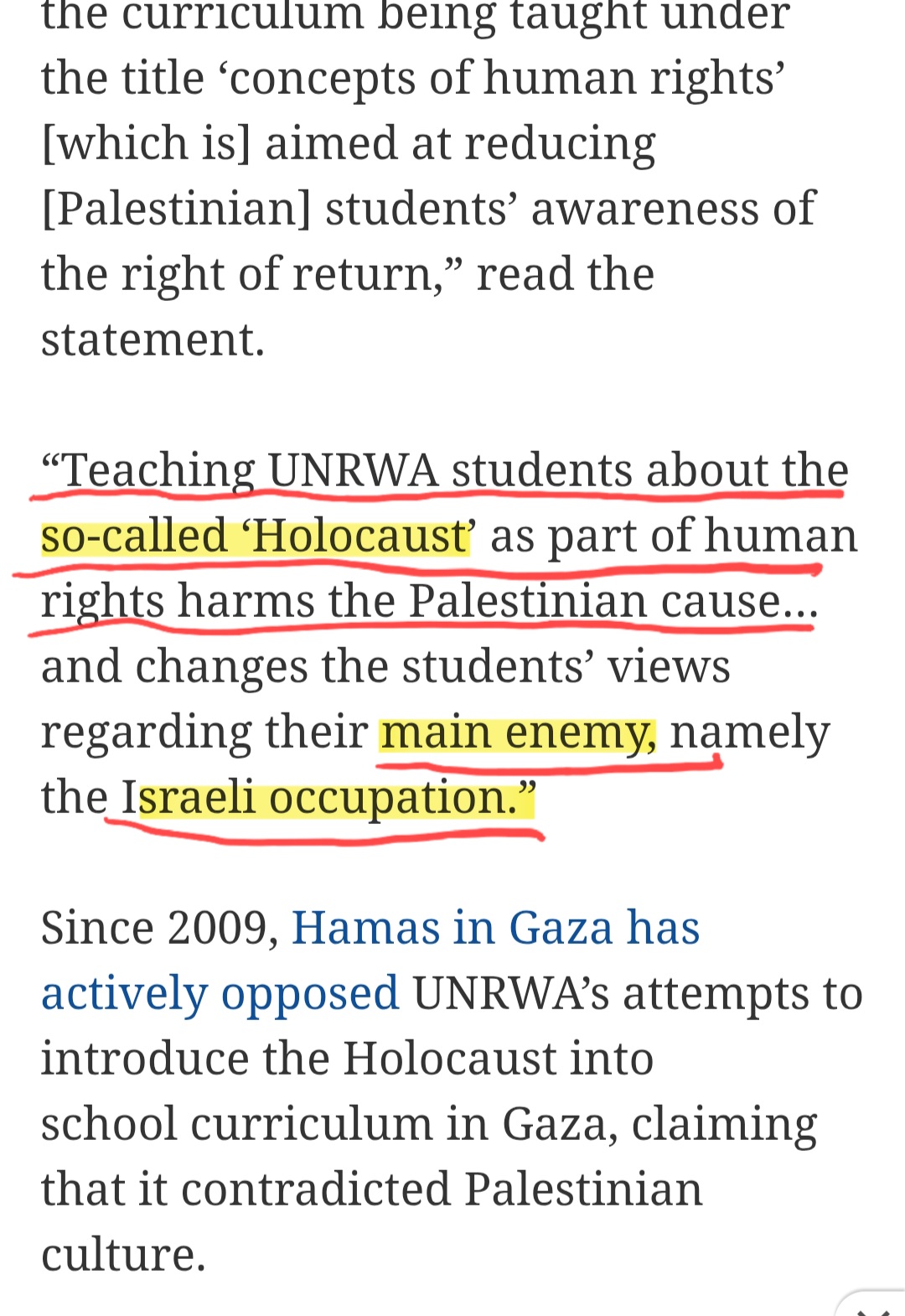
UNRWA teachers in Jordan also refused to teach about the Holocaust, saying “teaching UNRWA students about the so-called ‘Holocaust’ as part of human rights harms the Palestinian cause… and changes the students’ views regarding their main enemy, namely the Israeli occupation.”
The Palestinian Authority remained silent or dismissive about Holocaust education in the West Bank.
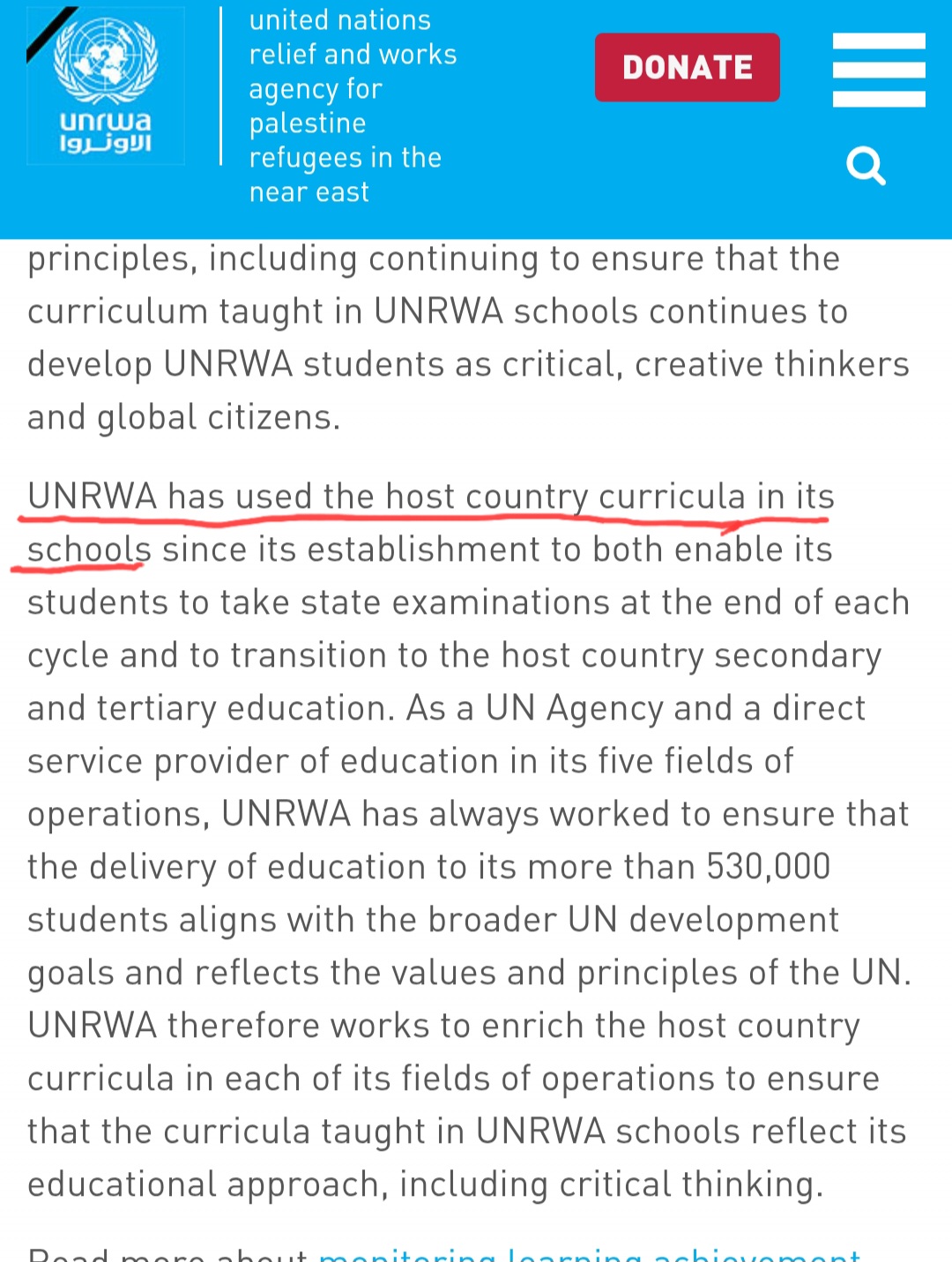
Consequently, UNRWA held back from pushing the issue, as its mantra is to work within the framework of the “host countries” in which it operates.
This episode illustrates three key realities:
UNRWA and Hamas are not the same—but not separate either. UNRWA claims neutrality, but its own documents state that it must work with the local authorities—in Gaza, that’s Hamas. This means Hamas effectively vetoes what UNRWA can teach and what it can do, no matter what UN policy says.
2. Antisemitic attitudes aren’t limited to Hamas. The resistance to teaching the Holocaust spans Palestinian political and educational institutions well beyond Gaza.
3. Propaganda overrides fact. From Holocaust denial to blood libel-style rhetoric, the dominant trend has been the elevation of anti-Israel and antisemitic narratives over historical truth. Even Columbia professor Edward Said – who vilified the State of Israel – acknowledged the antisemitic and conspiratorial discourse in Palestinian circles regarding Holocaust denial. James Zogby went so far as to call the violent antisemitic obsession, a “tragic deformity in Palestinian political culture,” when speaking at the United Nations in June 2023.
Whether or not what is happening in Gaza today constitutes a genocide is a matter of intense debate. But what is beyond dispute is the long-standing, systemic preference in Palestinian political culture to weaponized falsehoods to spread propaganda to destroy the Jewish State.
How many generations should someone be called a “refugee?” Two? Ten? My parents were refugees and I consider myself the son of refugees. But not a refugee. To do so would be a mockery of millions of people fleeing homes to faraway lands where they have no family, infrastructure or knowledge of the local language.
Alas, while every year the world adds and removes refugees from the global tally, there is a permanent exception.
There are roughly 122 million displaced people worldwide (68 million internally displaced, 38 million refugees and millions of others seeking protection), and the United Nations High Commissioner for Refugees (UNHCR) is tasked with helping them. Its mission is clear: assist people fleeing conflict or persecution to either return home when it’s safe, or resettle in a new country where they can rebuild their lives and become citizens. Refugee status, according to UNHCR, is meant to be temporary. A tragic but manageable step toward normalcy.
But for one group of people, the rules were rewritten.
In 1949, the United Nations created a separate agency: the United Nations Relief and Works Agency (UNRWA). Its job was not to help all refugees, but a specific set—Arabs who left or were displaced from what became the State of Israel during the 1948 war.
Unlike the UNHCR, UNRWA never intended to help these refugees resettle or gain citizenship elsewhere. In fact, when Jordan annexed the to be named “West Bank” in 1950 and granted full Jordanian citizenship to the Arabs living there in 1954 (Jews were specifically excluded from Jordanian citizenship) —including the so-called refugees—UNRWA still kept them on its refugee rolls. Why? They were no longer stateless, no longer displaced from their community, and in most cases, were living just miles from where they or their families once resided.
No other refugee population in the world is treated this way.
The Palestinians under UNRWA are not counted based on where they live or whether they’ve rebuilt their lives. They’re counted based on ancestry—any descendant of someone who lived in Mandatory Palestine in 1946 and left during the war is considered a “refugee.” That includes people who are now citizens of Jordan who have never set foot in Israel, and those who live under Palestinian rule in the West Bank and Gaza.
This isn’t about resettlement. It isn’t about a “two-state solution.” It’s about return. Not return to a country they fled—but to homes where their grandparents once lived, in a country that has since fought multiple wars for its survival and established itself as a sovereign nation.
This has locked the Middle East into a perpetual state of conflict. UNRWA doesn’t just preserve the status of Palestinian refugees—it amplifies it, funds it, and builds an international bureaucracy around it. It has denied Israel’s right to control its own immigration, and basic principle of sovereignty.
Worse, the UN’s actions have turned a situation normally considered a humanitarian issue into a real estate dispute. By insisting that people return to a house—not a country, as outlined in international human rights law—the global political body has exceeded its own mandate. This isn’t a question of national self-determination, but one of personal property claims. UNRWA isn’t so much a champion of the creation of a state beside Israel; it champions individual return to specific homes, decades abandoned or destroyed, now occupied by others in a sovereign country.
Meanwhile, the descendants of every other refugee group in the world—from Sudan to Ukraine—are helped by the UN to find a path forward. Only the Palestinians are encouraged to walk backward, into the houses of their grandparents.
UNHCR helps refugees stop being refugees. UNRWA helps them stay that way.
Every year, new wars create new displaced people. But only one group stays on the list year after year, generation after generation.
For Palestinian Arabs, the 1948 war is still being fought. Generations of people haven’t been birthed into refugee status as much as the region is in a 100 years war. While the world may use political terminology of an UNRWA ward who has never been to Israel as a descendant of a “refugee,” Palestinians simply see a permanent property right which will never be forfeited. The UN simply provides cover under the “refugee” monicker.
At its founding after World War II, the United Nations was declared a bold and righteous institution designed to bring about world peace. To accomplish its mission, it granted itself certain powers under the presumption that the agency’s role and workers were impartial and noble.
Alas, people are people, and the UN’s corruption and partiality grew over the years. It has made the UN not only a deformed shadow of its mission but a deeply dangerous and immoral tool cloaked in nobility.
When United Nations “peacekeepers” were deployed in Africa and Haiti, their role was to stop fighting between warring groups. However, during the deployment, many soldiers raped local women and some young boys. Investigations of the incidents confirmed multiple accounts of sexual assault, and noted that the UN’s shield of immunity protected the rapists, putting the local population at further risk.
Many UN “peacekeepers” have been accused of rape and shielded from prosecution by the UN’s cloak of immunity.
Over the past decades in Gaza, thousands of local Arabs join UNRWA, the UN’s “temporary” agency to house and educate the descendants of internally displaced Arabs who left homes a few miles away. It pays well and provides protection to carry out rapes and massacres like the one they perpetrated on October 7, 2023 in Israel.
Or so the UN terrorists hoped.
After many UNRWA workers were proved to have taken part in the barbaric massacre and provided material support to the U.S.-designated foreign terrorist group Hamas, victims of the atrocities and their families sued the UN. The UN claimed “immunity” from prosecution and the U.S.’s Biden administration agreed, stating “Because the U.N. has not waived immunity in this case, its subsidiary, UNRWA, retains full immunity, and the lawsuit against UNRWA should be dismissed due to lack of subject matter jurisdiction.”
In a pathetic attempt to mask its complicity, the UN fired some of the UNRWA workers, several of whom were already dead. It would not prosecute the fired living workers and left such matter of justice to local Gazans and Hamas to manage. UNRWA Commissioner-General Philippe Lazzarini said he fired the workers “in the interest of the Agency,” not as a matter of justice for thousands of butchered, raped and injured civilians in Israel.
It was a despicable display of inhumanity cloaked in virtue.
UNRWA’s Philippe Lazzarini
Sen. Ted Cruz (R-TX) had enough. On April 14, 2025, he introduced legislation called the LIABLE Act to strip immunity from toxic bodies like UNRWA. Upon introducing the legislation, Cruz said “The United Nations Relief and Works Agency officials have for decades knowingly provided support to Hamas terrorists, including salaries and materials. That support facilitated Hamas’s terrorist attack on October 7th, which was the worst one-day massacre of Jews since the Holocaust and included the murder and kidnapping of dozens of Americans. Those victims and their families deserve the ability to hold UNRWA accountable, and the LIABLE Act would give them that opportunity.“
Sen. Ted Cruz (R-TX)
The United Nations has morphed into something deeply corrupt and unjust long shielded from prosecution, even for heinous actions. Perhaps the LIABLE ACT is the first domino to end the invincibility of barbarism under cover of white hats.
Israel is conducting a thorough review of what internal failures led to the massacre on October 7, 2023. The inquiries and analyses are designed to both assure accountability for mistakes, as well as to prevent future tragedies. The primary focus is on Israel’s military deployment and readiness, which will likely conclude with several changes inside the military.
Another analysis is needed externally – focused on Hamas and Gaza. The timeline below is meant as a framework to better consider how to address the conflict going forward.
Timeline of Key Moments in Gaza That Set October 7 Massacre
1948-9: There are two principle differences between the area east of the 1949 Armistice Lines (E49AL/ West Bank) and Gaza:
The majority of E49AL/WB Arabs are locals, whereas the majority of Gazans used to live in Israeli towns and villages;
E49AL/West Bank was annexed by Transjordan and all Arabs were given Jordanian citizenship; Gaza was only administered by Egypt
The Arabs in the much larger E49AL had citizenship and sovereignty. While most of the world considered Jordan’s annexation illegal, the local Arabs had pride in their Muslim Arab country. They also had control of Jerusalem/al Quds, the third holiest site for Muslims.
Not so for Gazans, who were in a much more confined space without citizenship, sovereignty or holy sites. Instead, they were wards of the United Nations which promised them that they would move into the Israeli towns in which they once lived.
1967: The 1967 war was a much bigger loss for West Bank Arabs than Gazans, as the Gazans already had less. Still, being under the rule of the Jewish State made the lack of sovereignty much more bitter.
2000: The Second Intifada started at the collapse of the Oslo Accords. While pundits point to a Temple Mount visit by Israeli Ariel Sharon as the trigger for the multi-year Arab riots, it was the failure of Palestinian leader Yasser Arafat to secure all of Arab demands in the negotiations, including moving millions of descendants of refugees and internally displaced people into Israel. This was especially true for Gazans.
2004: As Israel put down the Second Intifada, Israeli Prime Minister Ariel Sharon secured a letter from U.S. President George W Bush on April 14 that in exchange for pulling all Israelis out of Gaza, the United States would back Israel in assuring that all Stateless Arabs from Palestine (SAPs) would move to a new Palestinian State and not into Israel, and that new borders of Israel would account for new major Jewish population centers to be incorporated into Israel.
President George W Bush 2004 letter to Israeli Prime Minister Ariel Sharon
2005-7: Israel pulled out of Gaza in 2005 and the Palestinians elected Hamas to 58% of its parliament in 2006. In 2007, Hamas took over full control of Gaza, outsing its rival political group Fatah. In response to the antisemitic genocidal group sworn to its destruction taking over Gaza, Israel imposed a blockade of strip to halt the flow of arms. Gaza, now with self-determination, opted for radical Islam.
2008-14: Under the banner of jihad, independent Gaza did not focus on building up its economy and society but instead focused on destroying Israel. It launched wars against the Jewish State in 2008-9, 2012 and 2014, each put down by Israel. Meanwhile Hamas began to heavily invest in its underground infrastructure inside of Gaza, which in the past was principally used outside of Gaza for raids into Israel (like kidnapping Israeli soldier Gilad Shalit in 2006) and smuggling goods from Egypt.
2018-2022: Under the banner of the “Great March of Return,” Hamas led Gazan society to prepare to invade Israel. With United Nations support, thousands of students from UNRWA schools would march to the fence with Israel, familiarizing themselves with the terrain and normalizing their presence for Israelis watching their movement.
2021: When Israeli courts approved the eviction of Arab squatters from Jewish owned homes in the Sheik Jarrah section of Jerusalem, Hamas launched missiles into Israel. The action caused Israel to put the evictions on hold, educating Hamas that terror pays.
2023: By this time, Hamas’ underground infrastructure was in place and it had stockpiled thousands of missiles. It had gotten Israel accustomed to “peaceful” protests along the Gaza border fence. Better, it watched Israeli society fight amongst itself about judicial reform, and for the first time ever, a majority of Democrats favored SAPs over Israelis. With Iran on the verge of nuclear weaponry breakout and Hezbollah in Lebanon well armed with roughly 150,000 missiles, Hamas was poised for an all-out war, well beyond the limited skirmishes of prior years.
Gazans are more religious than West Bank Arabs and many more consider themselves entitled to move into Israel as UNRWA wards (81% vs. 49%). Those supporting Hamas were much more likely to understand the “Great Marches of Return” were about external political matters than those from Fatah (59% to 24%, according to a September 2023 PCPSR poll).
While the devastation to Israel on October 7 happened over a single day, it took years of planning. Just as importantly, there was societal buy in for the attack.
Key Takeaways
Israel – and the world – should consider the events that led to Hamas’ genocidal invasion of Israel and formulate strategies beyond eliminating Hamas and its military infrastructure.
The UN and Saudi Arabia must adopt the contours of the 2004 Bush letter. Over 80% of Gazans believe that the world supports their moving into Israel, validating their storming the fence. There will not be peace until the UN and Saudi Arabia make clear that a two state solution means SAPs move into a new Palestinian State, not Israel.
Dismantle UNRWA in Gaza and the West Bank. The United Nations has encouraged generations of students that Israel is not really a sovereign entity and that the UN will dictate that Israel will be forced to accept millions of Arabs. With clarity that Arabs will be settled in Gaza and the West Bank, there is no reason for UNRWA to exist in those territories.
Decimation and Vilification of Hamas. As Gazans suffered more over the course of the war, a greater percentage became interested in forging peace with Israel. Additionally, people who supported Hamas were more likely to have not seen any of the footage of the October 7 massacre and did not believe that Hamas conducted rapes. Therefore, Hamas should not only be defeated militarily, but vilified clearly so it will be abandoned by Gazans and West Bank Arabs.
Reroute funding. Gaza’s principal backers have been from Qatar, Iran and Turkey. All of these countries have hostile or tense relationships with Israel and foment anti-Israel hatred. Future funding for Gaza should principally come from countries with good relationships with the Jewish State.
No immediate plans for a Palestinian State. Gazans had internalized that terror pays, as the Second Intifada made Israel abandon Gaza, and the 2021 war stopped the evictions in Sheik Jarrah. The devastation of Gaza must terminate that notion. The only immediate plans for Gaza should be how to rebuild. Engaging in a discussion now about statehood would once again make local Arabs believe that there is nothing beyond the pale in pursuit of self-determination.
The timeline of how Gazans got to October 7 should inform the world about future actions, just as Israel’s inquiries into its military failures will change its practices.
The United Nations created a temporary agency in 1949 to care for Palestinian Arabs who left Israel during Israel’s founding. It’s called UNRWA, the United Nations Work and Relief Agency. The staff of over 30,000 people are almost all descendants of those Palestinian Arab “refugees” with a few White Europeans sprinkled on the leadership to make the organization appear as an international aid group, rather than an employment agency.
UNRWA has long abused its mandate, extending services to hundreds of thousands of people who are not descendants of “refugees”, essentially becoming a bank in distributing loans to local Arabs, and teaching millions of its Arab wards to hate Israeli Jews and that they will get to move into Israel with UNRWA’s help.
After years of perpetuating the conflict, Israel decided to ban UNRWA from operating in Israel as of January 30, 2025, as many of its members took part in the October 7 massacre and others worked for terrorist groups outside of Gaza, including in Lebanon. As UNRWA only operates in conjunction with the host country of operations, keeping operations in Jerusalem open after Israel declared it illegal would not just make it operating against Israeli law but its own principles.
So UNRWA acts defiantly, even though in knows full well that it is doing so illegally.
It is reminiscent of UN Security Council Resolution 2334 which made it illegal for Israeli Jews to live east of the 1949 Armistice Lines with Jordan (E49AL), including the Old City of Jerusalem. It is a patently antisemitic law, enshrined after nearly three-quarters of a million Jews already live in the area, so Israel ignores it and allows Jews to continue to buy and build homes in the area.
The press often labels Jews who live in E49AL as “settlers,” whether they live in new settlements or large cities. The term “settlement” is a wandering noun which travels with antisemites who label Jews as illegal trespassers. Media compounds the narrative, often appending language “which most of the world considers illegal” whenever discussing a “settlement.”
Will that same media now label UNRWA’s operations in Gaza and the “West Bank” as illegal? Or will it prefer to mock Israeli law, quite the opposite of its christening antisemitic UNSC Res. 2334.
Will members of the UN Security Council consider trading Israel’s ban of UNRWA with rescinding the antisemitic UNSC Resolution 2334 to facilitate aid to Gaza and promote coexistence? It has never been the modus operandi of the United Nations, but the times, they are a changin’.
As the ceasefire between Palestinian terrorists and Israel begins today, the 2.2 million stateless Arabs (SAPs) in Gaza are clamoring for support. They seek to return to homes and rebuild neighborhoods. They seek food, clean water, and medications that were difficult to obtain when Arab gangs looted supplies during the war.
The United Nations has long maintained that its agency, UNRWA, is the sole group that can address the needs as a humanitarian organization with established operations in the strip for decades.
But UNRWA’s mission is NOT to care for Gazans but only a subset of them; those who are descendants of Arabs who left Israel in 1948. The SAPs who are descendants of people who have long-lived in Gaza (whose grandparents didn’t move there in 1948) are not entitled to UNRWA’s largess.
Do non-“refugees descendants” have to stay hungry? Do they have to pay to rebuild their homes while they watch their neighbors’ houses get rebuilt with global donations? Will aid organizations build houses only for “refugee descendants” and leave other Gaza residents to fend for themselves?
Around 73% of Gazans are entitled to services from UNRWA, according to UNRWA in December 2020. Is the United Nations planning on ignoring the needs of the other 27%? Had UNRWA’s Gazan wards only accounted for 10% of the population, would the situation be different whereby the UN would not profess unique capabilities and not attempt to swoop in to address all of Gaza?
The UN has deliberately deceived the world to imagining that all Gazans – indeed all Palestinians – are refugees, entitled to global support. It uses “Palestinians”, “refugees” and “Gazans” interchangeably, in an attempt to continue to expand and extend its mandate, even though it was always conceived as a temporary agency with finite tasks. At this moment in time, it is advancing a power grab despite its gross and institutionalized failures.
UNRWA has long abused its mandate, and this is a moment to allow a different organization to address the humanitarian needs of ALL Gazans, not just UNRWA wards, and permanently shut down UNRWA in Gaza. Whichever group assumes governance of Gaza – perhaps a Palestinian Authority stripped of all members of Hamas in its parliament – should assume control of reconstruction efforts.
President-elect Donald Trump issued a warning to the U.S.-designated terrorist group Hamas to release the 101 hostages it stole from Israel on October 7, 2023, or “all hell will break out” for them and the region. He would not comment further on what that meant for Hamas or its allies but reiterated that it would be severe.
Below are some thoughts on what actions the Trump administration might take, which fall into two principal categories: military and non-military.
Military
Trump’s first term in office did not see much activity in the way of American forces and action. While he did increase spending for the military over the Obama administration, his actual use of force was targeted and limited to particular strikes, such as the assassination of Iranian general Qasem Soleimani and missile strikes on Syria for using chemical weapons. It is possible that Trump would order targeted attacks on Hamas operatives as well.
The general argument against this is that Israel has already pulverized Hamas in Gaza and there is little else that the U.S. could do. That is not true.
The United States has several things that Israel doesn’t have: massive bombs; incremental intelligence; and global influence.
At various points of the Hamas-initiated war, the Biden administration withheld some armaments to Israel, fearing it would harm civilians. Those bombs and other tools of warfare could be used against Hamas and its allies. Hezbollah tunnels in Lebanon and Iran’s nuclear program could be eviscerated with advanced weaponry, whether given to and launched by Israel or used by American forces directly.
U.S. intelligence and reach spans beyond the immediate actors. One of Hamas’s leaders, Khaled Mashal lives openly in Qatar, where the US has its largest military base in the Middle East. The Trump administration may give Qatar the option of green-lighting the elimination of Mashal and his associates or watch the US move its over 10,000-person force to the Kingdom of Saudi Arabia as the administration advances the Abraham Accords with a normalization agreement between Israel and KSA.
Non-military
The United States power can bring the world to pressure Hamas through political, economic and judicial actions. This is the opposite approach of the Biden administration and the world which put pressure on Israel to the detriment of the hostages. US Secretary of State Antony Blinken admitted as much that “every time we put pressure on Israel, Hamas backed off from the hostage deal.”
The initiatives start with a simple order: label every government, agency, business or person associated with Hamas a terrorist entity.
The Palestinian Authority‘s parliament, the Palestinian Legislative Council, is led by Hamas. The PA would immediately become a designated terrorist group unless it fires every member of Hamas. All members of the PA would be subject to arrest and no organization would be permitted to send material support to the PA. Every US charity that sends money to the PA would lose tax-exempt status and/or be shut down.
The United Nations considers Hamas a legitimate political Palestinian party and its main agency in the region, UNRWA, closely coordinates with Hamas. UNRWA offices in the United States would be closed and the US would push allies to similarly halt funding to UNRWA and close its offices. UNRWA would not only lose all US funding and standing, but possibly the United Nations as well, if the organization continues to legitimize Hamas.
In addition to the “axis of resistance” of the Iranian proxies already on the terrorist list, Qatar and Turkey would be forced to chose between the United States and Hamas. Each would see its economies and regional aspirations quickly collapse should they side with terrorists. Ramifications could include not only moving all US assets out of Qatar to Saudi Arabia, but also supporting Israel and Cyprus to all energy claims in the Mediterranean Sea which Turkey covets.
In the United States, people who provide material support to not just Hamas, but the Palestinian Authority and UNRWA would be committing a criminal act. People would go to jail for up to 20 years or be deported. Entire groups, or perhaps just senior leadership of organizations like the Democratic Socialists of America, Students for Justice in Palestine and others could be impacted, depending on their level of support.
In April 2024, Congress enacted the Hamas and Other Palestinian Terrorist Groups International Financing Prevention Act which requires the executive branch to impose sanctions on foreign states or persons that provide certain types of support to Hamas, and other Palestinian terrorist groups. Trump’s version of “hell” for Hamas supporters will be to not only enforce the will of Congress but to expand its targets by capturing the Palestinian Authority and UNRWA as Hamas affiliates.