
Every political movement faces the same question: what do you do with the bad people in your camp?
Ezra Klein, writing in The New York Times, argues that Democrats should welcome everyone under their banner — no matter how extreme — because inclusion wins elections. He calls it the big tent: forget purity, just make sure they call themselves Democrats. It’s politics over principle, and power over conscience.
Republicans, by contrast, still try to draw a line. When groups like the Heritage Foundation flirt with extremists such as Tucker Carlson or Nick Fuentes — men who traffic in grievance and racism — many conservatives recoil. To them, the party label still carries moral weight. You can lose elections, but you shouldn’t lose your soul.
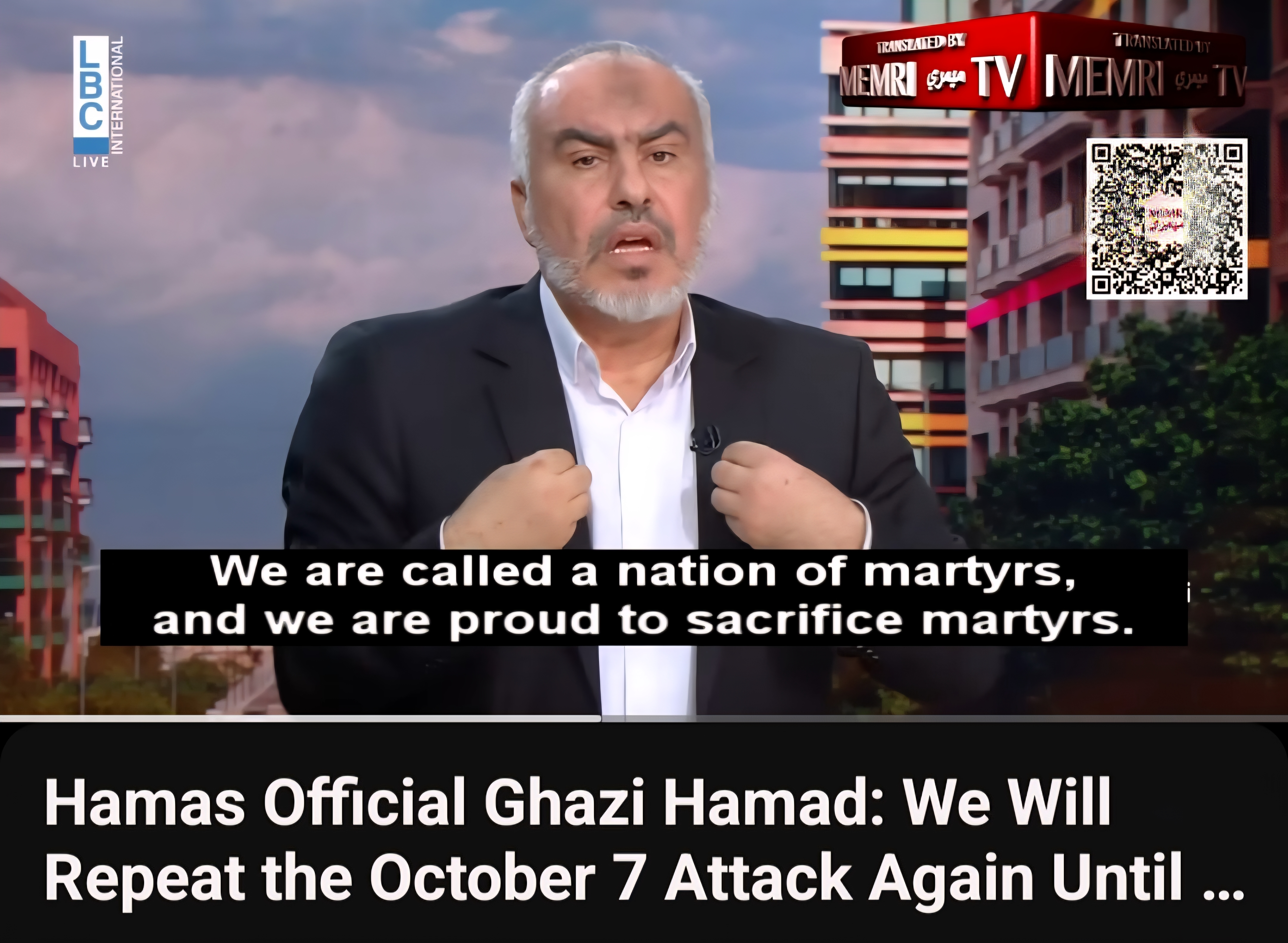
And then there’s Hamas — the third model. When Hamas decides someone in its own ranks isn’t loyal enough, it doesn’t debate inclusion or expulsion. It breaks their legs in the street. It executes them in public. For Hamas, politics is not persuasion or debate; it is terror enforced by fear. That’s how it keeps power — absolute, unchallenged, and bloodstained.
The Temptation of the Big Tent
Ezra Klein’s “big tent” philosophy played out in real time with Zohran Mamdani’s win in New York City. The Democratic Party opened its doors to a wholly different ideology and welcomed it inside to secure a victory. But at what cost?
The party platform now stretches so far that it’s unrecognizable — and to many, repulsive. In its desperation to confront unified Republican power in Washington, the Democrats chose to absorb the fringe rather than confront it. The price of inclusion was coherence.
For illustration, imagine a Jewish newspaper facing a business dilemma:
A group like Jews for Jesus wants to buy an ad. The editor must decide:
Do we take the money? Do we run it in the name of inclusion and open debate? Or do we reject it as off-brand, offensive, and disloyal to our readership?
Most would choose the last. They’d rather forgo the check than cheapen their identity.
But the Democrats have made a different calculation. The party tasted the fringe, saw no backlash, and convinced itself there’s no downside. It’s as though that Jewish paper ran the Jews for Jesus ad — and the subscribers applauded.
So what’s next?
An ad from the KKK?
Pork recipes for Passover?
How far can inclusion stretch before it becomes desecration?
Power, Principle, and the Price of Brand
Republicans have power so can afford to maintain their brand by shedding radicals. Hamas maintains power by shedding blood. Democrats, desperate to gain power, are willing to shed consistency.
Three models emerge to rule:
- The Democrat: inclusion for victory
- The Republican: exclusion for integrity
- The Islamist: execution for control
Each reveals a truth about how institutions face the corrupting pull of power.
Politics, like publishing, isn’t just about what you include — it’s defined by what you refuse to print. A brand without boundaries isn’t brave. It’s broken.
Of course the masses would like consistency and inclusion and integrity and peace on the streets. But they have come to realize that politics is power, and they want power. When Congress was a bell curve with little difference between Democrat and Republican, there was general ambivalence about elections and the impact on people’s daily lives regarding who was in power. Not so in today’s barbell society with extremists dominating politics.
The Jewish Community
What does the Jewish community do with groups like Neturei Karta that join the worst of the anti-Israel protests and fly to Iran for Holocaust denial conferences? With Jews who voted for a mayor who supports “globalize the Intifada”?

Neturei Karta is a small fringe group that mostly keeps themselves isolated, so in practice, there needn’t be an active response. But there were an estimated one-third of Jews in New York City that voted for Zohran Mamdani, including public officials and celebrities. There was a big turnout in younger Jews voting for Mamdani, estimated at two-thirds of those under 44 years old.
How does the Jewish community react when a majority of young Jews are viewed as putting the broader community at risk? Which model does it follow, or is the question more complicated as one’s Jewishness cannot be shed like political affiliation, and being a Jew is not about attaining power.
And is the conclusion in the observation? Politics is about power and people take actions depending on the environment to obtain or maintain power. However, Judaism shuns power, and seeks to live a religious life of one’s choosing without external influence.
Jews have never been a monolithic group, and include capitalists and socialists, conservatives and progressives. Some have power and influence, many are poor, and others seek to shed any power and influence and hand it to majority-minority groups.
Jews, while always small in number, have always had a very large and wide tent because they don’t get to decide who to include and exclude for their numbers. They only decide who should be included in their associations – in their shuls, schools, umbrella groups.
In May 2021, young anti-Israel Jews were calling Israeli engagement with Palestinian Arabs “apartheid” and “genocide’ (well before Hamas’s 2023 War on Israel), and some were thereby fired from teaching positions at Jewish schools. At Upper East Side Yeshivat Ramaz, alumni pressured the Principal Emeritus Haskel Lookstein to not speak at Donald Trump’s 2017 inauguration. Jews shut down other Jews for their comments and associations.
I do not believe that there is a single answer for what Jews should do with kinsmen who are regarded as beyond the pale. Historically, in a bell curve political dynamic with moderate antisemitism, the radical could be ignored as noise. However, in today’s barbell political reality, with heightened antisemitism, active measures need to be considered regarding the bad apples.
What will those actions be? Who has the power to enforce them? That is the critical question before the diaspora community today. The first step is to comprehend that the paradigm has shifted, and we can no longer ignore nor absolve the problematic actions of fellow Jews.









 First One Through