Palestinian terrorism has names when it is organized. Hamas. Palestinian Islamic Jihad. There is a long list of U.S.-designated foreign terrorist groups under the Palestinian banner. Yet the most persistent form of Palestinian terrorism over the last two decades carries no collective name at all.
More than a thousand Stateless Arabs from Palestine (SAPs) have carried out individual fatal terrorist attacks—stabbings, shootings, vehicle rammings, ambushes at bus stops and junctions. The numbers recur year after year. The pattern holds. The vast majority originate in the land east of the 1949 Armistice Lines (E49AL) / “West Bank”.
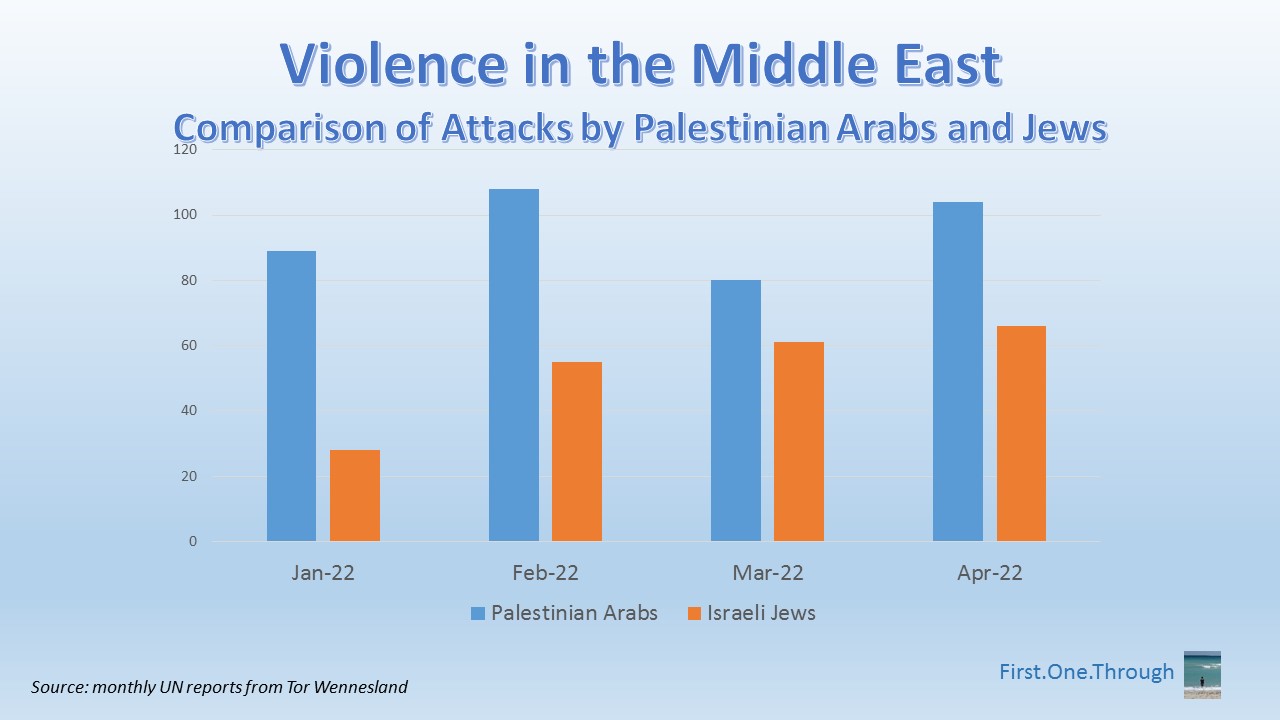
Monthly tally of attacks by SAPs and Jews in the first four months of 2022, according to the biased United Nations
Calling these attackers “Palestinian lone wolves” obscures reality. Calling them Palestinian residents either creates a country of Palestine or integrates them into a historic landscape. The term “lone wolves” suggests isolation, desperation, a last act. The record shows the opposite. These young attackers are recognized, rewarded, and revered. Their names and faces appear on posters. Schools and streets carry their memory. Their families receive honor and money. The murderers are beatified as “martyrs.”
Civil societies do not ritualize acts they consider shameful or marginal.
Now consider how language works in parallel. Jewish civilians beyond the Green Line are routinely grouped under a single brand: “settlers.” The word does not describe residence; it passes judgment. It frames their presence as inherently illegitimate before any act occurs. When they are attacked, their civilian identity is eclipsed by a political label.
Branding does the moral work in advance.
The empirical comparison is stark. Jewish extremist violence exists and must be prosecuted. Its character is overwhelmingly vandalism and property damage—graffiti, burned fields, slashed tires. Criminal acts that generate repairs, arrests, and charges.
By contrast, the murders committed by individual SAPs, dwarf Jewish extremist killings by orders of magnitude. Funerals versus invoices. Deaths versus damage. Yet language reverses scale: property crimes are collectivized and politicized, while a long ledger of killings is broken into nameless “incidents.”
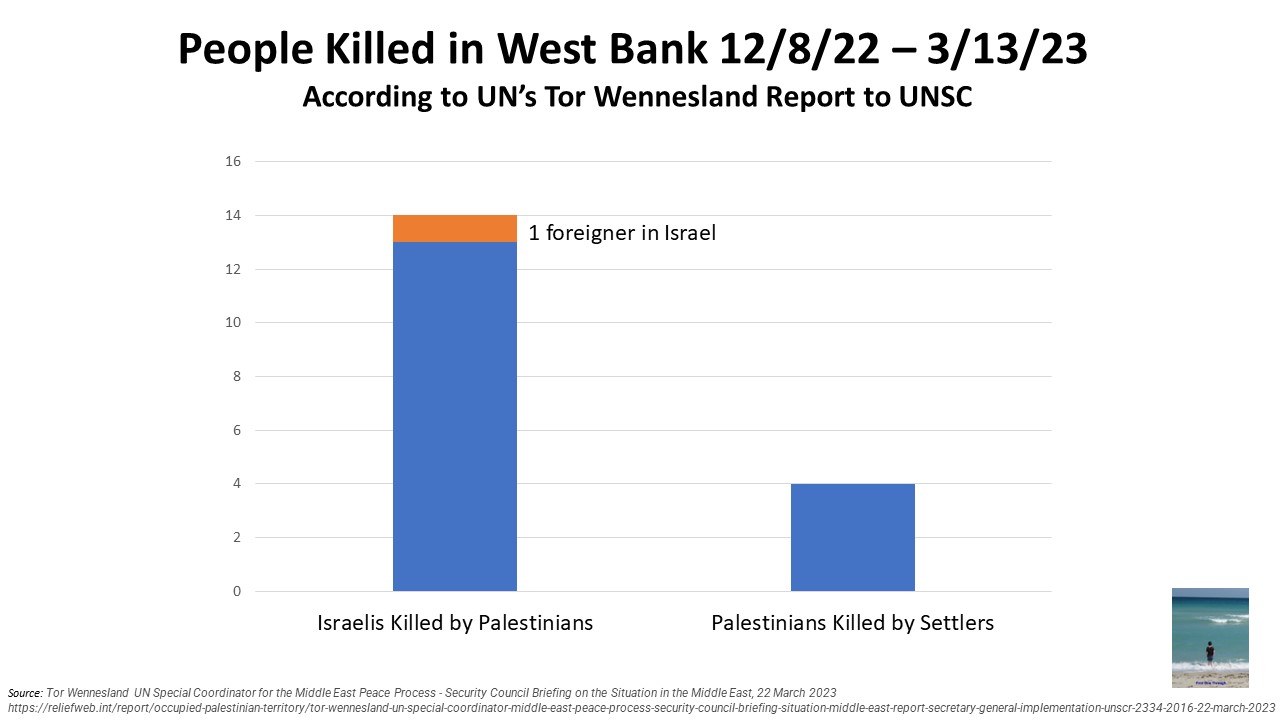
People killed in West Bank according to United Nations report, over end of 2022 and start of 2023 in which Tor Wennesland vilified Israel and the “settlements”
The cultural backdrop makes this impossible to dismiss as fringe behavior. Polling by Palestinian Center for Policy and Survey Research (PCPSR) consistently shows that SAPs in the West Bank express higher levels of support for violent attacks—including October 7—than Arabs in Gaza.
Polls by PCPSR show West Bank Arabs more in favor than Gazans of killing Jews, the October 7 massacre, and destroying the Jewish State
Repetition is evidence. Veneration is evidence. Polling is evidence. Together they point to a culture of violent jihad in the West Bank, sustained socially even when it is executed individually.
Terror does not require a logo to qualify. It requires intent, repetition, and outcome. What persists in the West Bank is a durable campaign of individual terrorism, encouraged by culture and rewarded by society, while its victims are linguistically transformed into abstractions called “settlers,” not innocent Jewish civilians.
This is absolution via euphemism. Turning Jewish civilians into perpetrators for existing, while shielding Arab murderers under a cloak of topography.
President Obama once derided those who warned of Iran’s nuclear ambitions as promoting a “drumbeat of war.” It was a curious charge, especially as his negotiated JCPOA deal paved Iran’s legal pathway to nuclear weapons within a decade—despite Tehran’s unabashed calls to utterly destroy an American ally, and referred to the United States as “Satan.”
The phrase “drumbeat of war” is worth pausing over, because its imagery is meant to point a damning finger at generals and war profiteers, when in fact it refers to a beating passion that comes from a variety of sources.
Music itself teaches us the power of the drumbeat. Maurice Ravel’s “Bolero” begins as a whisper—a single snare tapping a faint rhythm—but its relentless pattern swells, layer by layer, into a rapturous explosion. Nothing changes except the intensity. It is a master class in how a simple beat, repeated without interruption, can inflame emotion, tighten resolve, and propel an entire orchestra toward an inevitable climax. Passion grows not from complexity but from persistence.
Cinema took that lesson to the battlefield. Ennio Morricone’s “L’Arena,” born from spaghetti-western duels and later carried into modern war films, shows how percussion can elevate tension into confrontation. Its pounding drums accompanied by trumpets push characters toward conflict; the beat does not merely accompany battle—it summons it. Morricone understood that rhythm can be a weapon, a psychological drumroll that makes violence feel fated long before the first shot is fired.
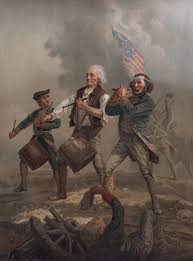
In American history, drummers were not symbolic ornaments—they were battlefield communicators. The famous “Spirit of ’76” painting captures a young boy and an old man beating time through the fog of revolution. In both the Revolutionary War and the Civil War, the drummer corps relayed commands, kept formation, and lifted morale. Soldiers needed to be adults to enlist, but drummer boys could be barely in their teens. They were not the policymakers of war; they were the ones whose youthful energy pushed men forward into battle.
“The Spirit of ’76” (1875) by Archibald Willard (1836-1918)
It is an uncomfortable truth: the drumbeat of war is often carried not by governments or generals but by the young.
We like to imagine youth as the innocent bystanders of conflict—swept up, exploited, or victimized by forces beyond their control. That is often tragically correct. But not always. In the Middle East, teenage Palestinian Arabs have repeatedly been at the center of anti-Jewish violence. During the knife intifada of 2015–2016, most of the attackers were adolescents. Arabic media even gave them a romanticized nickname: Ashbāl al-Quds—the lion cubs of Jerusalem.
On October 12, 2015, two Palestinian boys, 15-year-old Hassan Khalid Manasra and his cousin 13-year-old Ahmad Manasra, stabbed two Israeli civilians in Jerusalem
They were not pawns in someone else’s narrative. They were active participants in it.
While they were stabbing Israelis in the streets, new legions of drummer boys was forming. The Lions’ Den was inaugurated in the West Bank to unleash dozens of attacks. The United Arab Emirates named a school for children for these young murderers. In the United States, a group calling itself the Palestinian Youth Movement openly glorifies the murderers of October 7 and calls for an intifada on American soil. They harass Jews at universities, shut down bridges, disrupt traffic, and chant for “uprisings”—all under the pretext of activism, and often shielded by tax-exempt organizations like WESPAC.
In the immediate aftermath of the October 7, 2023 massacre by Gazans of Israelis, Cornel West marches with PYM calling for an “Intifada revolution”. West has taught at Princeton, Harvard and Yale, indoctrinating the next generation of American leaders on intifada.
The drumbeat is steady. It is disciplined. And it is aimed squarely at Jews.
Where does this beat begin? It is not in the Israeli cabinet rooms the media delights in blaming. It begins at UNRWA schools, where generations of children are taught that Jews are colonial invaders with no history in their homeland. It echoes through activist teacher unions in the United States, where “decolonization” rhetoric is repackaged into lesson plans that erase Jewish indigeneity. It thunders at the United Nations, where Muslim-majority blocs and their allies advance resolutions asserting that Jews must be removed from Judea, Samaria, and even parts of Jerusalem “by any means necessary.” The young Palestinian Arab terrorist are then shielded from blame and prosecution by the poorly named “UN Coordinator for Middle East Peace.” Laughable if not such a tragedy.
The young listen. And they march.
At Christmastime, the world hears “The Little Drummer Boy”—a melody of humility. A child with nothing to give but a simple rhythm of devotion for a newborn Jewish baby in Bethlehem. A beat based on innocence and purity.
But the modern Middle East and its Western echo chambers have perverted that image.
Today’s little drummer boys are not offering gentle hymns. They are being raised, trained, and celebrated for a beat of hatred—an indoctrinated cadence that valorizes “martyrs,” delegitimizes Jews, romanticizes violence, and promises glory for those who shed blood.
The world should hear the drumbeat. And it should finally ask: Who handed these children the drums? Who taught them that murder is heroism, that Jews are prey, that violence is virtue?
These teenagers did not invent the rhythm—they are marching to a score composed by UN agencies, radicalized teachers, political opportunists, and ideological arsonists who hide behind the language of “justice” while grooming minors for war.
UN Watch’s Hillel Neuer presents new report, “Schools in the Grip of Terror: How UNRWA Allowed Hamas Chiefs to Control its Education System,” to the Italian Senate in September 2025
At Christmas, we think of a young drummer offering a humble gift to a Jewish child in Bethlehem. Alas, today too many young drummers are taught to offer not devotion, but destruction—and the world nods along as if the rhythm were unavoidable. It isn’t.
The beat continues only because we refuse to silence the conductors who train the next generation of drummers to hate.
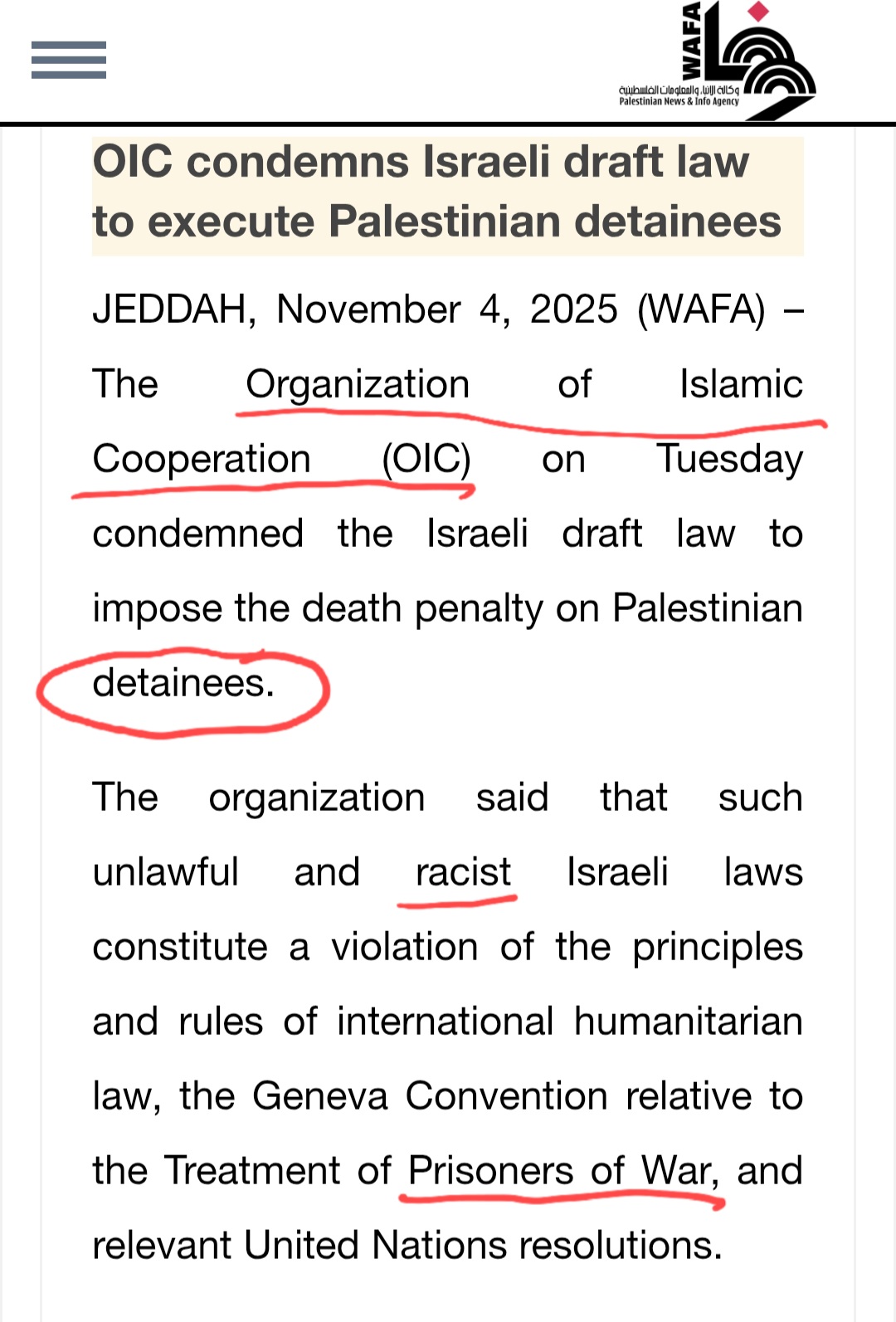
The Organisation of Islamic Cooperation (OIC) recently issued yet another condemnation of Israel — this time for considering the death penalty for terrorists who murder Israelis. The outrage was immediate and performative. For one, it claimed that the proposed law was “racist” and being solely for “Palestinian detainees,” as opposed to people who murder. It further argued that Arabs who slaughter Jews should simply be treated as “Prisoners of War,” erasing any and all lines between soldiers and civilians and thereby condemning coexistence.
Wafa report on OIC condemning Israel for considering death penalty for Palestinian “detainees”
Here’s another uncomfortable truth: more than half of the OIC’s 57 member states have the death penalty — and not just for murder.
In Saudi Arabia, people are executed for drug trafficking, sorcery, and “crimes against God.” In Iran, the gallows await not only murderers, but those guilty of “corruption on earth” — a charge so elastic it includes political dissent, homosexuality, and apostasy. In Pakistan, blasphemy can mean death. In Mauritania and Sudan, apostasy itself is a capital crime. In Nigeria, men have been sentenced to death under Sharia courts for same-sex relations.
Yet these same governments now gather in moral indignation because Israel — a democracy under relentless terrorist attack — dares to debate capital punishment for those who slit the throats of families in their beds.
The hypocrisy is staggering.
The OIC has nothing to say when Hamas executes Palestinians in Gaza’s public squares for “collaboration.” It looks away when Iran hangs protesters from cranes, or when Afghanistan’s Taliban conduct public stonings. But when Jews, after burying their children, consider the ultimate penalty for their killers, suddenly the OIC finds its moral voice.
If morality were truly the concern, the OIC would start at home. It would demand an end to hangings for prayer and firing squads for love. But this is theater. Raw antisemitism redressed in sanctimony.
Israel’s debate over the death penalty is about justice for the innocent. The OIC’s silence over its members’ executions is about control of the obedient.
And that’s the dividing line between civilizations: one values life enough to punish those who destroy it; the other kills in the name of piety and calls it peace.
To visit Poland is to walk among ghosts. The thriving Jewish civilization that once filled its towns and marketplaces was almost completely erased. Three million Jews were targeted for extermination — a number too vast to grasp by walking through silent cemeteries. The absence alone cannot speak the full horror.
To stand where synagogues were razed, where schools once taught Torah and arithmetic, where playgrounds once rang with Yiddish laughter, is to feel the emptiness press against your chest. It forces the imagination to repopulate the void — to summon the Jewish ghosts who linger, waiting for conscience to remember them.
It is easier to look at the living. Many Poles today are the grandchildren of those who watched as their Jewish neighbors were rounded up — and sometimes finished the work themselves when survivors returned seeking their homes. They became stand-ins for the killers of yesteryear, heirs to silence, envy, and complicity.
Now another people walks amid ruins. In Gaza, millions return to their shattered neighborhoods under a ceasefire, and we are told they have survived a “genocide” at the hands of Jews. Yet the number of Palestinian Arabs has grown, not diminished — a population larger than before the war they themselves began. They tread among the skeletons of broken buildings built atop their army’s tunnels, while ghosts — Israeli civilians burned alive in their kibbutzim and those taken hostage and murdered in Gaza — cry out from the ashes.
I ponder the ghosts of genocide: the murdered and the murderers; the societies that spawned the slaughter; the peaceful towns that became infernos.
Infrastructure shelters ghosts. Societies are haunted by the ones they create, both killer and killed. The unseen dead can no longer showcase their dancing on the one hand, or lust to murder, on the other.
There are scarcely any Jews left in Poland; their ghosts appear only to those who seek them. In Gaza, the ghosts are not gone. They walk the streets, armed and unrepentant — not spirits of victims, but kinsmen of murderers, now turning on one another.
Poland’s haunting is one of silence — an absence so total it chills the air. The ghosts there do not cry out; they wait to be remembered. Gaza’s haunting is the opposite: a cacophony of rage that refuses reflection. Its ghosts are not silent but screaming — not victims unburied, but hatreds unrepented.
Poland’s soil holds the murdered; Gaza’s streets still host the spirit of the murderers. One ghost asks to be mourned; the other demands to be judged.
The haunting does not end with time. It lingers wherever truth is buried, and it deepens each time the living deny the past that shaped them.
Only when a people can face its ghosts — naming both the murdered and the murderers — can it begin to live freely again.
If one were to build a museum chronicling how a people educated generations toward hatred and eradication, the Palestinian Arabs would tragically merit their own institution. The Museum of Genocidal Intent would not showcase armies, the tools of genocide. It would display ideas, laws, sermons, and schoolbooks that made destruction a virtue and coexistence a sin.
Entrance Hall – The Charter of Death
Visitors first encounter the founding documents: the Hamas Charter (1988) and early Fatah Constitution passages promising Israel’s annihilation. There are ballots underneath from the 2006 parliamentary elections with articles alongside showing the Stateless Arabs from Palestine (SAPs) electing Hamas to 58% of parliament as a first action of breathing self-determination. As one leaves the room, leaders—from Arafat to Abbas to Haniyeh—chant “From the River to the Sea” and “We love death more than you love life.“
Gallery I – Educating for Erasure
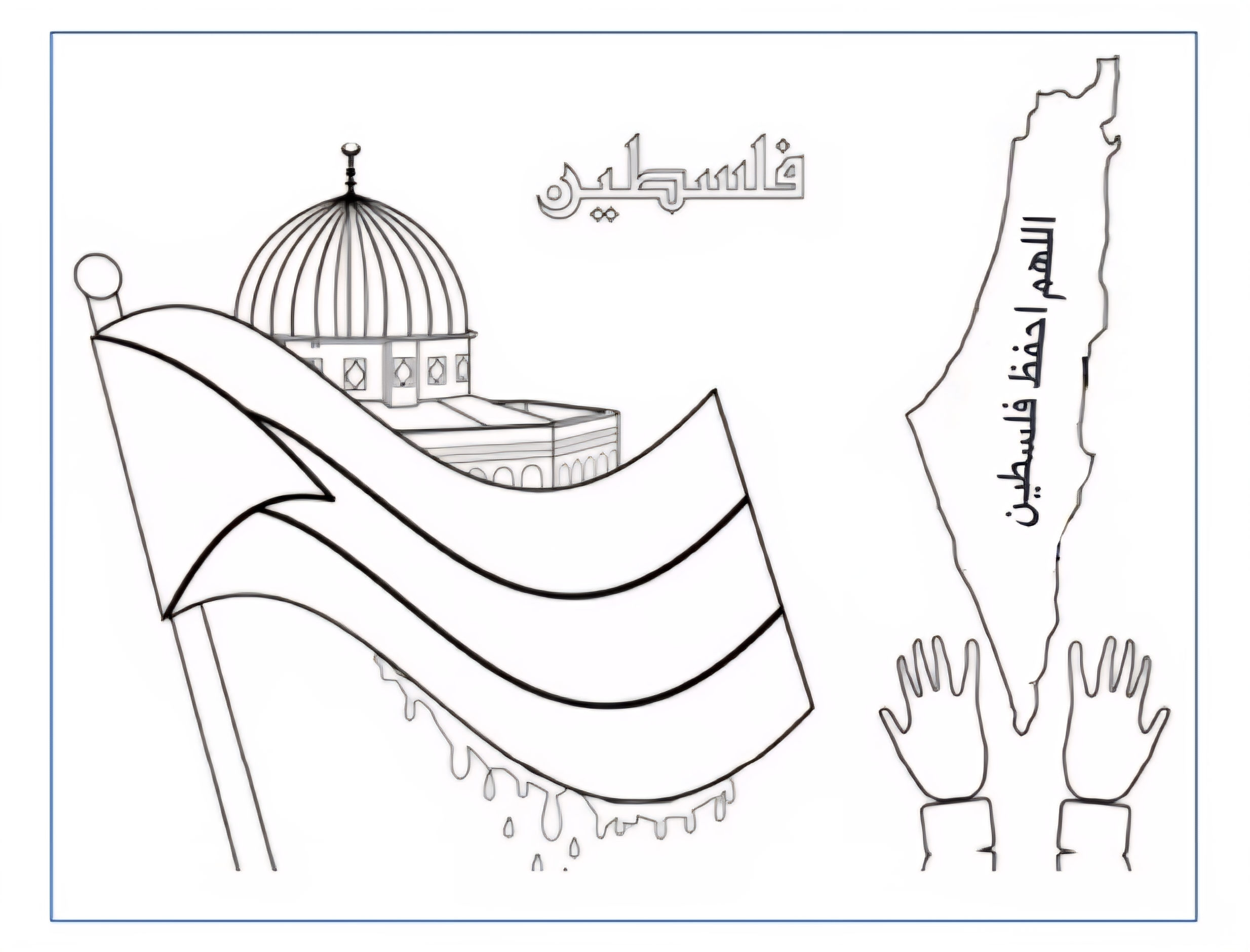
School desks and children’s cartoons line the room. In cases, textbooks from the Palestinian Authority show lessons which erase Israel from maps. UNRWA teachers like Afaf Talab have Facebook posts featuring wishes that God kills the Jews. A 9th grade lesson calls the firebombing of an Israeli bus a “barbeque party.” There is a coloring book hanging on the wall used in a fifth grade class in an UNRWA school which has a flag dripping in blood in front of the al Aqsa Mosque in Jerusalem, with a map of Israel alongside, erased into “Palestine.”
Coloring book from an UNRWA fifth grade class tying religion, prayer, death and destruction of the Jewish State
A television plays cartoons from Hamas TV shows, showing ultra-Orthodox Jews and Israeli soldiers digging under al Aqsa mocking Arabs and Muslims who are “asleep” as the crooked nosed-Jews threaten the mosque.
Interactive displays allow visitors to click on various videos from summer camps in Gaza and east of the 1949 Armistice Lines (E49AL/ “West Bank”). Young girls sing about “igniting an intifada,” encouraged “to shoot all the Jews” and taught if the Jews don’t leave Palestine, all of them should be “slaughtered.”
And the music. Popular Arabic songs play throughout the museum. They call for Jews to leave the land or be killed or kidnapped.
Gallery II – Icons of Murder
Here hang portraits of those celebrated for killing Jews: Dalal Mughrabi, Yahya Ayyash, and others. Under each image scroll the names of their victims—families, schoolchildren, passengers. Nearby, official “martyrs’ fund” ledgers show stipends paid to convicted attackers from the Palestinian government. In the center of the room are mock ups of the various schools, public squares and soccer tournaments named for the “martyrs.”
Gallery III – International Complicity
Painted UN blue, this hall traces how global institutions enabled indoctrination. Pictures of leaders of various European countries including Belgium and Norway that fund the schools and squares named after terrorists. Copies of numerous United Nations resolutions cover the walls, which condemn Israel but not Hamas, which make it illegal for Jews to live in the Old City of Jerusalem, and illegal to pray at their holiest site on the Temple Mount.
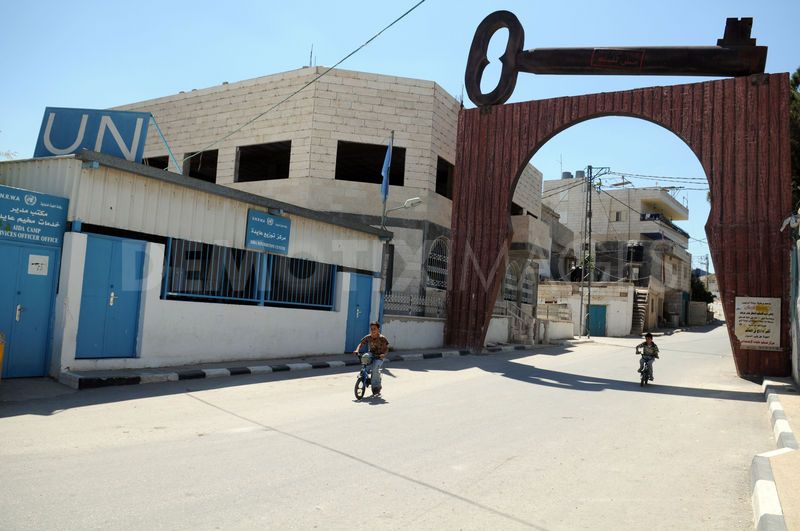
A large picture of the entrance to the UN-run “refugee” camp in Bethlehem with a key on top of a keyhole portal emphasizes that the international community is the vehicle for Arabs to eradicate the Jewish State.
Gallery IV – Blood Narratives
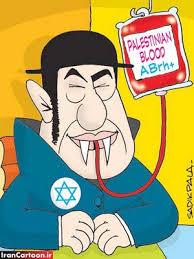
Walls of newspapers and posters accuse Jews of medieval crimes: poisoning wells, harvesting organs. Animated panels compare Nazi caricatures to modern Palestinian cartoons—the imagery identical. Loudspeakers replay sermons calling Jews “descendants of apes and pigs.”
Interactive charts present PCPSR and other surveys over time:
December 2023 – about three-quarters of Palestinians called the October 7 attack “correct.”
Majorities favored continued “armed struggle.”
Roughly two-thirds support killing Jewish civilians in Israel in every poll since 2000
Gallery VI – Jerusalem: The Theater of Denial
A model of the Al-Aqsa plaza plays footage of Murabitat women harassing Jewish visitors to the Temple Mount.
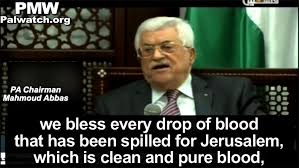
PA President Mahmoud Abbas and other PA officials can be seen on videos claiming “Jews have no history in Jerusalem.” Audio of chants—“With blood and soul we will redeem you O Aqsa”—fills the room. Hamas leaders promise to repeat the October 7 “al Aqsa flood” massacre “again and again.”
PA president Mahmoud Abbas glorifying death on behalf of Jerusalem
Gallery VII – The Forgotten Ethnic Cleansing of Jews
Artifacts from before 1967 tell the story before the story:
The massacre and expulsion of Jews from Hebron in 1929
Synagogues Destroyed: photos of Jerusalem’s Old City after Jordan’s takeover—58 synagogues razed.
Expulsion: maps marking every Jewish family removed from the Old City.
Jordan’s illegal annexation of part of Israel in 1950.
Gallery VIII – Lynching: Public Violence as Spectacle
The public spectacle of the killing for the crowds is highlighted in the last room of the permanent collection.
Hebron 1929 – photos and testimonies of the massacre where 67 Jews were murdered
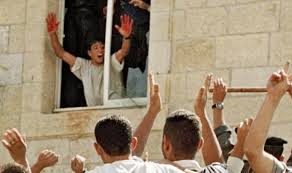
Ramallah 2000 – two Israeli reservists beaten to death by a mob; a photograph of a man showing blood-stained hands became an icon of the Second Intifada. The crowd cheers.
Gaza, 2023 – pictures of Gazans cheering as dead Israeli women are paraded through the streets.
The bloody hands of a Palestinian man after lynching an Israeli in Ramallah has become a symbol of the genocidal intent
Special Exhibit – The Sbarro Massacre: Innocence Targeted
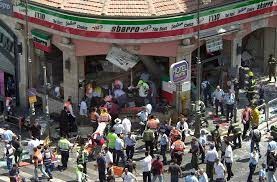
At the museum’s center stands a quiet, glass-walled room marking August 9, 2001, the bombing of the Sbarro pizzeria in Jerusalem.
Bombing at Sbarro restaurant in the Palestinian terrorist war on Israeli Jews
Artifacts include: fragments of the restaurant sign and surviving menu board; the broken guitar of 15-year-old victim Malki Roth; children’s shoes and schoolbooks retrieved from the site.
Chronology Panel: maps trace the attacker’s route and later trials of the planners.
Testimony Wall: written reflections from victims’ families—the Roths, Greenbaums, Schijveschuurders—describe loss and their ongoing quest for justice.
Media Archive: displays neutral summaries of press interviews and court transcripts noting the convicted organizer’s open lack of remorse, contrasted with international outrage and U.S. extradition efforts.
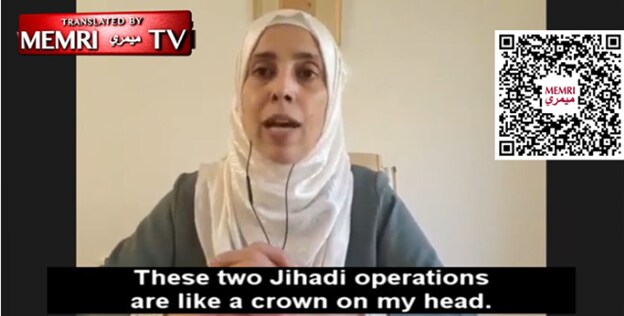
A video concludes with the terrorist Ahlam al-Tamimi stating how proud she was to have killed “religious Jews” and eight children.
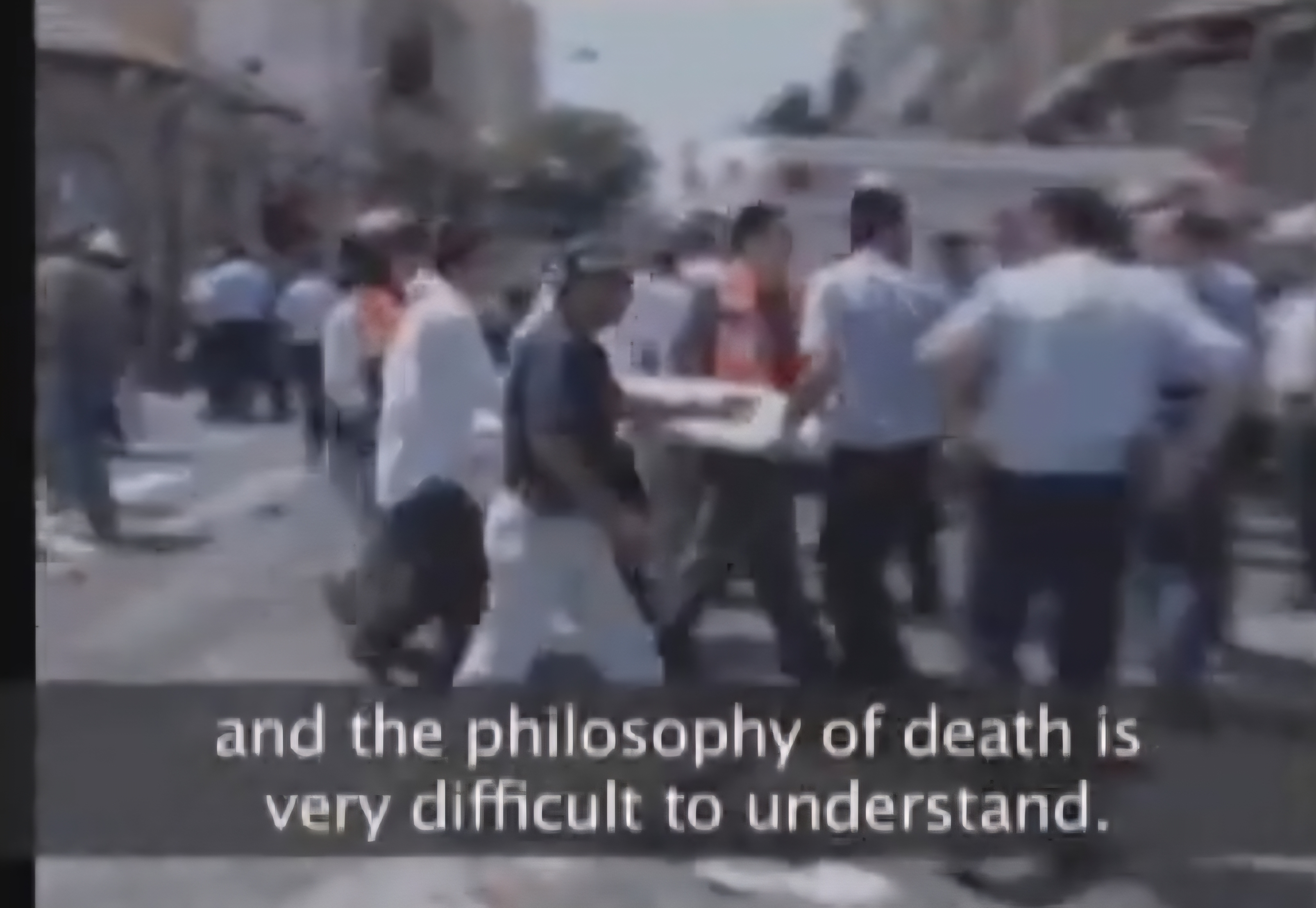
Her words hang over the door as one leaves the building: “the philosophy of death is very difficult to understand.” She lives as a free woman walking the streets of Jordan today, a hero to millions.
Interview with terrorist Ahlam al Tamimi who has no regrets for killing women and children at a pizzeria
Epilogue
The Museum of Genocidal Intent does not exist, yet its exhibits do—scattered through classrooms, speeches, and monuments. Each artifact documents a choice: to teach vengeance or to teach life. Only when the real-world versions of these exhibits are dismantled will the possibility of peace move from behind glass into the open air.
Six Jewish civilians were killed simply for being Jews. Surely, a world leader would stand firm, demand justice, and declare solidarity with the victims. Yet UN Secretary-General António Guterres offered only a perfunctory “strong condemnation” via his spokesperson—no mention of justice, no demand for the murderers to be brought to account, no affirmation of solidarity.
Because these murdered Jews were in Israel.
That’s the moral vacuum of the UN.
In Mali, after a terror attack on 17 September 2024, Guterres said he “strongly condemns the terrorist attack,” extended his “sincere condolences” to victims and the government, and—crucially—urged the Malian transitional government “to ensure that those responsible for this despicable attack are held to account.”
In Pakistan, following a deadly blast, he “strongly condemned the ‘abhorrent’ attack” and offering “solidarity” with the “Government and people of Pakistan in their efforts to address terrorism and violent extremism.“
Why does Guterres morph into a fierce defender of victims—and demand justice—when the targets are not Israelis, but merely issue a dry statement when Jews are murdered? Perhaps he is waiting to find out if this Palestinian Arab terrorist was also a UN employee?
This is not nuance. It’s deliberate abandonment. A moral inversion because the villains have long ago been beatified, and Guterres has internalized that 2 billion Muslims are his real clients.
The UN has become a place where Jewish lives are treated as collateral, while other victims are granted full moral and political recognition. Guterres’s pattern isn’t subtle—it’s a glaring indictment of the UN’s moral bankruptcy.
International humanitarian law (IHL) has been established for decades, and many are principally designed to protect civilians during armed conflict. In the case of the Gaza war against Israel, it is questionable whether the laws can be applied to Israel’s actions in the war, not whether Israel is abusing such laws.
Principle of Distinction
The driving themes of IHL surrounds mitigating the harm to non-combatants during hostilities. The first driver is, therefore, to distinguish between combatants and non-combatants. In most battles, this is easy to accomplish: during a clash on a battlefield, the only participants are soldiers. In urban warfare, this is much more difficult.
In the dense Gaza strip, this is virtually impossible.
The various military groups in Gaza are embedded and underneath almost every building and road. Hamas, the popular political-terrorist group that rules Gaza, built an entire infrastructure underneath the city with a maze of 500 kilometers of tunnels and storerooms. The hundreds of exit shafts for much of this infrastructure is located in houses and schools.
Hamas soldiers in Gaza tunnels
Additionally, Gazan combatants dress in civilian clothing and are members of groups which are touted to be neutral including the United Nations, the press and hospital staff.
UNRWA employees and Hamas militants
If civilians and related infrastructure are enmeshed by premeditated design with an active military, then the civilians have become integrated into the war effort and renounced protections of distinction.
Principles of Proportionality and Precaution
IHL’s Principle of Proportionality is designed to minimize collateral damage to civilians when attacking legitimate military targets. It calls for a review of the situation and reducing armaments to make any incidental civilian harm be aligned to the relative military gain achieved. The related Precaution principle is one step further, to try to prevent any military action, if possible.
Israel has taken many actions to limit the harm to civilians – which have been harshly criticized, nevertheless.
Withholding electricity and other aid. Israel has attempted to pressure Hamas and other militant groups – which seize all goods into Gaza – by withholding basic items like electricity so Israel would not have to use military force in the region. For those efforts, Israel is accused of causing a humanitarian catastrophe, rather than adhering to the Principles of Precaution
Move civilians out of the field of battle. Israel has moved and continues to urge civilians to leave “hot” areas, only to be accused of “ethnic cleansing”
Using ground forces. Israel could minimize its own casualties by only using air power against the terrorist enclave. Instead, it seeks a more targeted effort to eliminate combatants and protect civilians, for which it is criticized.
While Gazan authorities threaten to commit the October 7 barbarity over and again, Israel attempts to adhere to international law yet is criticized for it. Even though Israel left Gaza in 2005, and put in place a blockade only when Hamas took full control of the strip in 2007 to follow the Principle of Precaution, it is laughingly accused by international “human rights” groups of a “belligerent occupation.”
The terrorist enclave of Gaza has removed distinctions between civilians and militants, aid workers and terrorists, state and non-state actors, locals and international operators, and civilian infrastructure and military bases in a toxic brew. It defecates on all humanitarian norms while pointing both armaments and accusing fingers at Israel.
As the United Nations and Gazans have themselves destroyed all distinctions between combatants and non-combatants, and declared that Israel can never meet the standards of international humanitarian law, there is no basis to criticize Israel’s handling of its defensive war on such basis.
The United Nations Special Rapporteur on Torture, Alice Jill Edwards, delivered her latest thematic report on torture which defined hostage-taking as a “cruel game” and definitely a form of torture. The lengthy report highlighted several examples of the practice, and specifically called out a number of countries – China, North Korea, Iran, Russia, United Arab Emirates and Venezuela – as particularly notorious state offenders.
Edwards called out non-state actors as well, including those backed by Iran, such as the Houthis in Yemen “holding at least 30 humanitarians,” and “Hamas and other Palestinian armed groups” which abducted 251 people in Israel on October 7, 2023.
Calling out the obvious evil was controversial in the morally-bankrupt institution.
In a press conference after the release of the report to the Human Rights Council, Edwards said (5:55) that several countries and NGOs asked her to remove certain countries from the report and criticized the timing of the release, presumably because it is coming amidst the horrific reports emerging from captives held by the Palestinian Arab political-terrorist group, Hamas. Edwards was accused for bias for her actions but refused to be silenced as she believes that hostage-taking should be viewed as a critical component in discussing human rights.
Edwards criticized the draft document of international crimes against humanity for not including hostage-taking. She argued for the families of hostages to have a point person in governments and at the UN with whom to liaise.
Most significantly, Edwards called on those taking hostages, “and those that aid and abet them,” to be held accountable and punished severely, as hostage-taking has become a “low-risk high-reward crime” (15:20) on the global stage. She argued for compensation for survivors.
This seemed a bit much for the socialist-jihadi alliance which roams the halls of the UN. Almost no one attended the briefing and only two reporters asked questions of Edwards. Both featured whataboutery, asking about Israel’s treatment of captives, and whether the Jewish State was just as guilty as Hamas And Friends.
Edwards responded (24:19) that Gazans took hostages as negotiating leverage, while Israel took prisoners of war in the middle of the ongoing war. Those taken from Israel were done so for leverage and ransom, while those taken by Israel were placed in detention and removed from the war effort, and therefore could not be considered hostages.
This was all way too much for the Palestinian Authority.
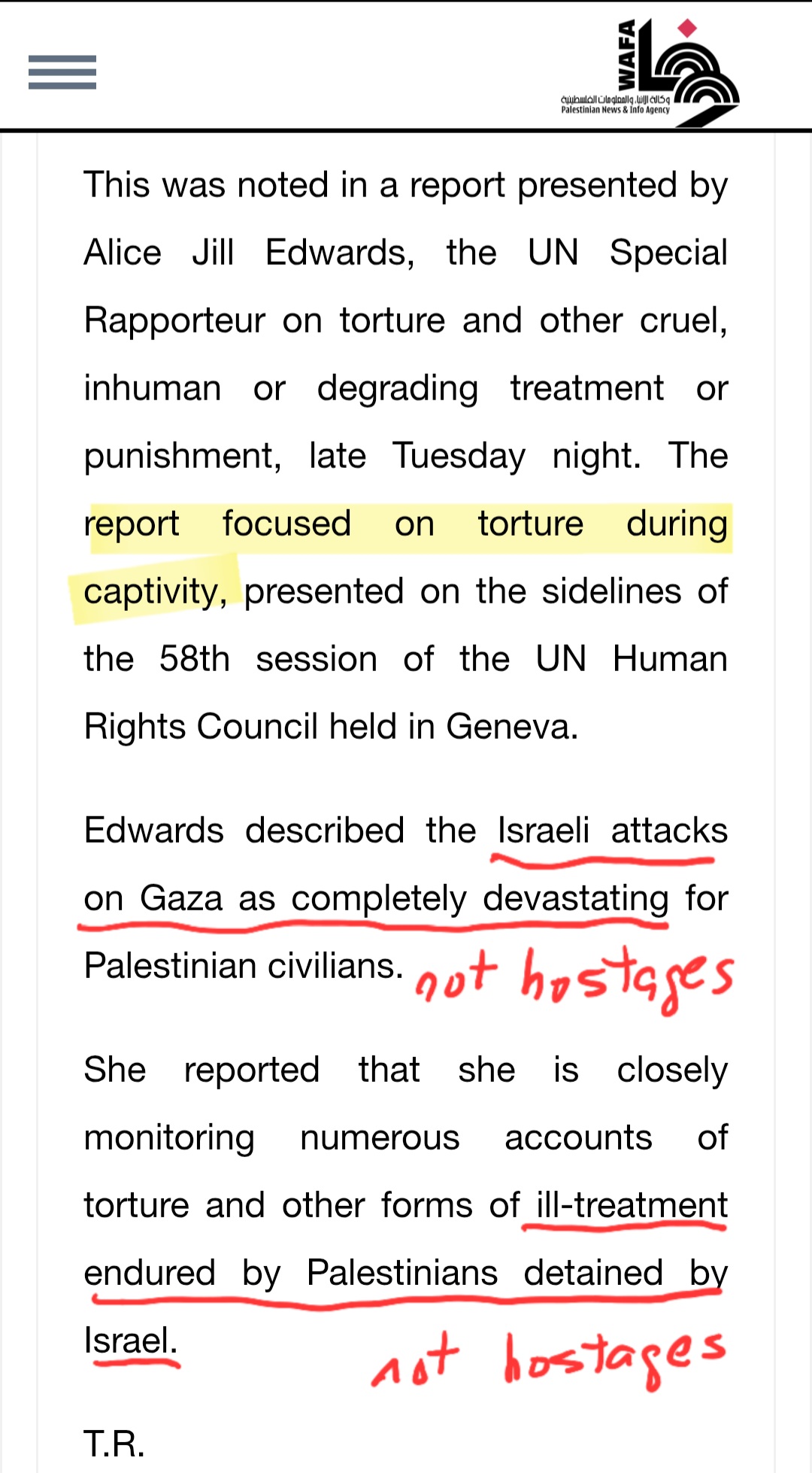
The PA’s official media arm, WAFA, produced its own reporting of the UN report on torture. It claimed that the special rapporteur “report focused on torture during captivity” which criticized the “Israeli attacks on Gaza” and “ill-treatment endures by Palestinians detained by Israel.” Nowhere does the PA’s account explain that Palestinian Arabs held by Israel are not hostages, the main theme of the report, nor does the “news” summary review the axis of evil which supports the Palestinian Arabs, as the worst offenders of hostage-taking.
The Palestinian Authority, propped up by the United Nations, tolerates the terrorist activities of local Arab terrorist groups – including the taking of civilian hostages and sexual violence -because the armed jihadi groups are much more popular amongst the Stateless Arabs from Palestine (SAPs). The puppet regime is either a worthless veneer or complicit, and should be held similarly accountable.
ACTION ITEM
Demand all officials condemn Hamas, Palestinian Islamic Jihad and the other terrorist groups which participated in the October 7 barbarity and demand that they face maximum justice.
The story of the Bibas children from October 7, 2023 until now has been horrific on every level, at every turn.
First, the four year-old and nine month old were ripped from their homes by the military of the ruling political-terrorist group Hamas in Gaza, along with the children’s terrified mother. They were abducted to the terrorist enclave of Gaza, murdered by Palestinian Arabs weeks later.
Their bodies were then held by the Palestinian Arabs without burial for over a year. They were not returned to Israel for proper, respectful burial.
Instead, they were held for ransom. The small Jewish corpses were ultimately paraded on stage before a crowd of hundreds of cheering Gazans – alongside their children – with a Gazan woman who was not their mother despite Hamas assurances, to be shipped to Israel.
The tiny innocent children were exchanged for dozens of Palestinian Arab terrorists convicted of murder, per Hamas demands. These released terrorists are alive and ready, willing and capable of slaughtering Jews once more.
The media falsely portrays this as a “prisoner exchange,” as though the two sides were swapping living adult prisoners of war. A blasphemy.
Every level of the story is a horror. Yet, there is only so much that Israel can do on its own to change the deep “deformity” in Gazan culture.
But it must try to dissuade at least some of the depraved actions.
Israel should commit to never holding onto any corpses of any Palestinian, whether soldiers, terrorists or anyone else UNLESS Palestinian Arabs are holding dead Israelis. As soon as Palestinians take a dead Israeli, every Palestinian killed should be retained by Israel. A future exchange will only have a single swap: all corpses for all corpses. It removes any bargaining power of killing people and holding the dead.
The Bibas story is pure torture. The Bibas Rule of only corpses for corpses might alleviate some death and pain in the years to come.
The United States passed the Taylor Force Act in March 2018 which prohibits the U.S. from giving funds to the Palestinian Authority as long as it continues its “Martyrs’ Payments” to terrorists who killed and injured Americans or Israelis. The PA flatly refused to stop the payments for years, with PA President Mahmoud Abbas saying that he would prioritize giving terrorists and their families money even if he had only one penny left.
In the aftermath of Palestinians’ loss against Israel in the war Gazans started on October 7, 2023, Palestinians are desperate for money. Still, US President Donald Trump is halting the generous flow of money and support to various Palestinian groups and is making it very difficult for the PA’s other sponsors like Iran and Qatar to continue to fund the decimated Palestinian Arabs as long as they support terror.
Rather than halt the extremely popular pay-to-slay program, Abbas announced on February 10 that he will transfer the responsibility of terrorist-tribute from his Ministry of Social Development to a separate agency, the Palestinian National Foundation for Economic Empowerment. Abbas thinks that this slight of hand to a foundation whose trustees are appointed by him, the PA president, will somehow confuse the United States to turn on the money spigot.
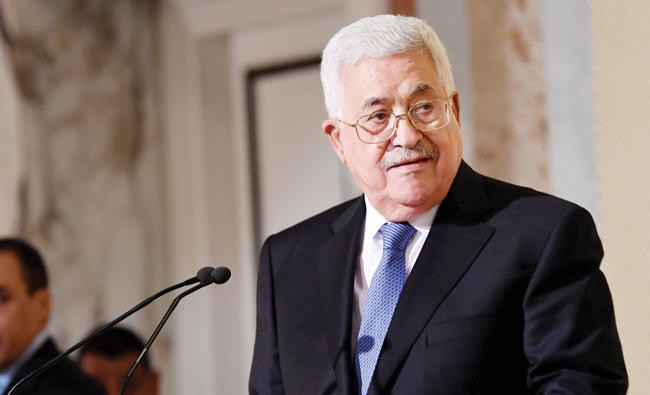
Palestinian Authority President Mahmoud Abbas
The unpopular PA president is caught between Palestinian Arabs who seek the destruction of Israel and murder of Israelis, and the United States which accounts for a majority of Palestinian aid, now headed by an administration which will not countenance genocidal jihad, especially on its dime. Abbas prays that this farcical shell game will confuse US President Donald Trump as if he were former Obama Secretary of State John Kerry.
The Palestinians are starting to get the message that they must stop supporting terror. The issue is that the masses would rather live in rubble with “dignity” than coexist with the Jewish State.













 First One Through
