Why Latin America’s Conservatives Are Choosing Jerusalem

Four Latin American countries have moved their embassies to Jerusalem, all headed by conservative presidents. Argentina’s Javier Milei wants to be next, and Brazil’s conservative opposition has promised to follow. A new political map of Latin America is emerging, and Jerusalem sits at its center.

Colombia became the latest country to join this movement in October 2026, following Guatemala, Honduras and Paraguay. The pattern is unmistakable: conservative governments are embracing Israel and recognizing Jerusalem as its capital, while much of the Latin American left increasingly identifies with the Palestinian cause and opposition to the Jewish state.
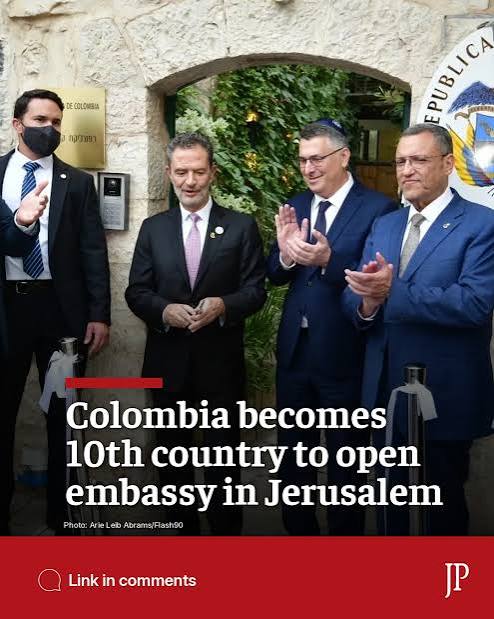
Colombia offers the clearest illustration of this ideological divide. Left-wing President Gustavo Petro severed diplomatic relations with Israel in 2024, halted coal exports and embraced international efforts to isolate the Jewish state. His conservative successor, Abelardo de la Espriella, reversed course, restored relations and opened an embassy in Jerusalem.

The same country, the same Israel, the same Jerusalem. A different president and an entirely different worldview.

For Latin America’s conservatives, Israel represents national sovereignty, religious heritage, technological achievement, military strength and partnership with the United States. For much of the Latin American left, Israel is viewed through the language of colonialism, Palestinian dispossession and opposition to American influence.

Religion reinforces this divide. Guatemala and Honduras have substantial evangelical Christian populations whose attachment to Israel is rooted in biblical belief. Conservative movements throughout Latin America increasingly draw support from these communities, for whom Jerusalem is central to Jewish history and Christian faith.
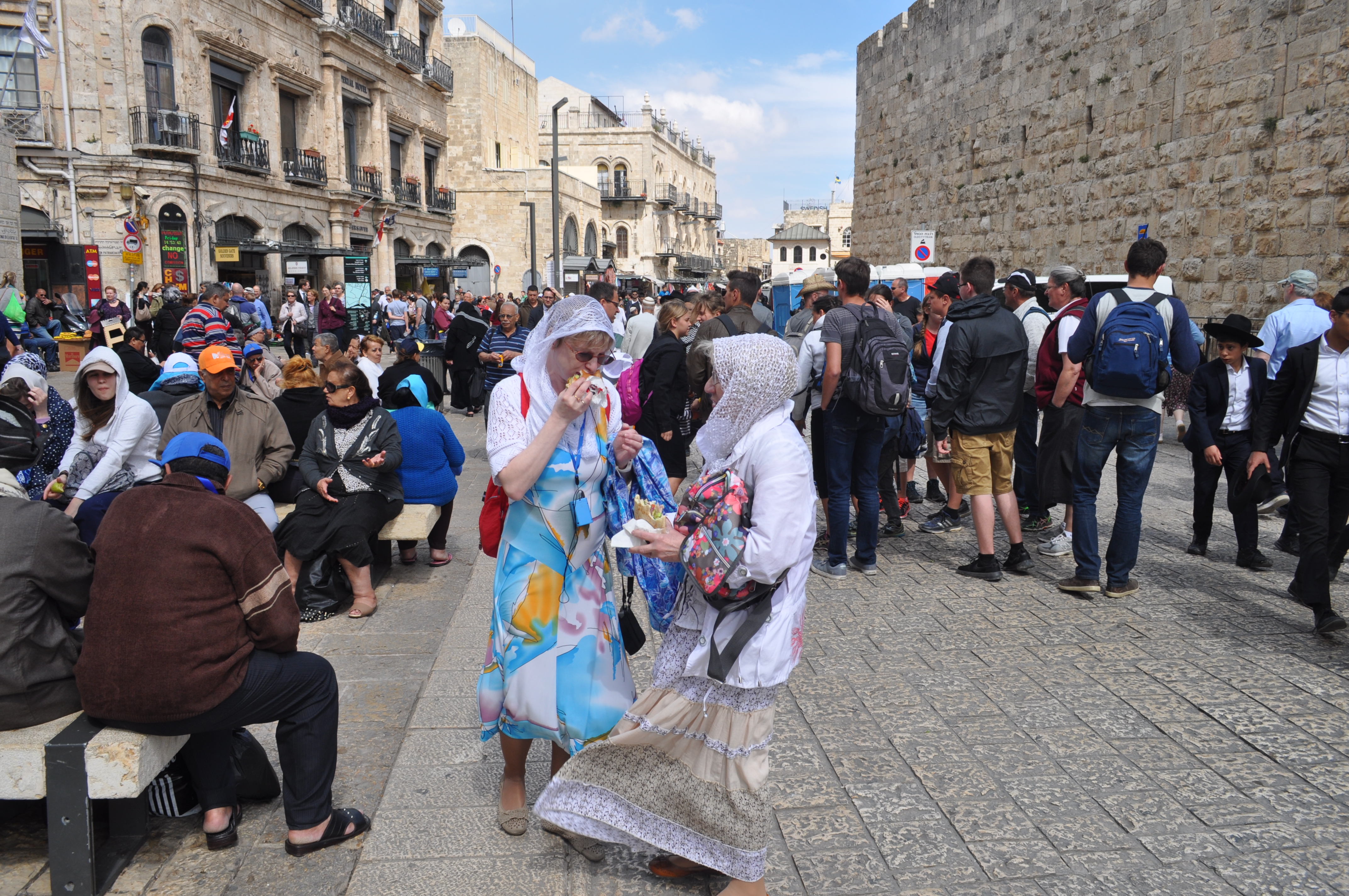
Christian pilgrims enter the Old City of Jerusalem through the Jaffa Gate during Easter, 2017 (photo: First One Through)

Argentina’s Javier Milei has become its most enthusiastic champion. In April 2026, Milei and Israeli Prime Minister Benjamin Netanyahu launched the Isaac Accords, a framework intended to strengthen Israel’s political, economic and security relationships across Latin America.

The name carries deliberate biblical symbolism. The Abraham Accords brought Israel together with Arab nations through the shared heritage of Abraham. Isaac, Abraham’s son, represents the continuation of God’s covenant through Jacob, whose name became Israel. Where the Abraham Accords emphasize common ancestry between Jews and Arabs, the Isaac Accords invoke the particular biblical heritage of Israel and its connection to nations identifying with Judeo-Christian civilization.

Milei has committed more than speeches to this vision, directing his $1 million Genesis Prize award toward establishing an organization to advance the initiative. Legislators from across Latin America have already gathered to promote stronger relations with Israel, combat antisemitism and encourage additional embassy relocations.

The movement also has a powerful strategic adversary: Iran.

Iranian-backed terrorism has already devastated Jewish communities in Latin America. Argentina suffered the 1992 bombing of the Israeli Embassy in Buenos Aires and the 1994 bombing of the AMIA Jewish community center, which killed 85 people. Argentine authorities have attributed both attacks to Hezbollah and Iran.

The Isaac Accords seek cooperation against Iranian terrorist networks, antisemitism, drug trafficking and transnational criminal organizations. Israel offers intelligence capabilities, cybersecurity expertise, military technology and experience confronting Iranian proxies. Latin American governments offer regional partnerships capable of disrupting hostile networks operating across the Western Hemisphere.

Jerusalem thus becomes both a declaration of political identity and the gateway to a broader security alliance.

The next major test comes in Brazil, Latin America’s largest country. President Luiz Inácio Lula da Silva has been among Israel’s harshest regional critics, while his conservative challenger, Flávio Bolsonaro, has promised to relocate Brazil’s embassy to Jerusalem. Their October 25 presidential runoff could determine whether the region’s largest economy joins this emerging alignment.

Flávio Bolsonaro, candidate for President of Brazil

There are vulnerabilities. Paraguay moved its embassy to Jerusalem in 2018, reversed the decision months later under a new president, and restored it in 2024. Diplomatic commitments can change with elections. The Isaac Accords seek to build deeper economic, security and institutional relationships capable of surviving those political shifts.

The Abraham Accords brought Israel closer to the Arab world. The Isaac Accords seek to bring Latin America closer to Israel. Conservative presidents are leading that transformation, turning recognition of Jerusalem into a declaration of political identity, shared heritage and strategic allegiance.

Jerusalem has become a dividing line in Latin America’s ideological struggle, and its conservatives are choosing sides.

The Explosion of Immigrants in the United States

Immigration has become a significant topic in the United States and Europe due to comments made by US presidential hopefuls about illegal immigrants and the flight of people from the Middle East due to turmoil in that region. Here is a review of some statistics from past decades and the recent unusual dramatic increase in immigrants while the general population has slowed down.

United States 1880-1930s

The population of the United States grew dramatically over a 50 year-period from 1880 to about 1924 (a period of mass migration, “MM”), at which time the US passed the Immigration Act capping the number of people from any country. From 1880 until 1930, the population of the country grew from 50 million to over 123 million. In each decade over that time, the population grew between 15% and 26%.

Immigrants accounted for a large percentage of the growth. Over that MM time period, foreign born-residents accounted for anywhere from 12% to 15% of the US population. Almost all of these immigrants came from Europe (over 83% in each decade) and a smaller portion from Latin America (from 1 to 6%) and Asia (1 to 2%). While the 1880s had immigrants principally from Germany, United Kingdom, Scandinavia and Ireland, the following decades had immigrants principally from Italy, Russia and the Austria-Hungarian Empire.

Security: The 1880s and the 1900-1909 decade witnessed particularly large number of immigrants. In those decades, immigrants accounted for 20% of the growth in the country’s population (with natural growth accounting for 80%). However, with the outbreak of World War I and enactment of the Immigration Act, the number of immigrants was curtailed, with only 3% and 2% of the population growth stemming from immigrants in the 1910s and 1920s, respectively. Interestingly, while the war raged in Europe, the percentage of immigrants from Europe declined over this period by 4% while the percentage from Latin America grew by 4%.

One would imagine that the number of people trying to emigrate from Europe to the US would have increased during WWI, and the percentage of immigrants would have spiked above the historic 87% European figure. Instead, there was a drop-off. Were Americans concerned about the safety and security of the US? Was it fearful of importing a conflict to its shores? The severe drop-off in immigration and coinciding change of place of origin suggest that may be a factor. Another was the economy.

Economy: The decades of the 1910s and 1920s saw relatively weak average GDP per capita growth rates compared to prior decades: 1.28% and 1.27% for 1910s and 1920s, respectively. These anemic figures compared to prior decades of 1.65%, 2.04% and 2.13% in the 1880s, 1890s and 1900s, respectively. The subsequent stock market crash of 1929 and depression of the 1930s severely hurt the economy. This was probably the principle factor in the US population only growing at 7% compared to prior decades of 15% to 26% growth. Fewer jobs and a weaker economy led to fewer births and a stricter immigration policy set in place in 1924.

Decade Total Population Growth Immigrants % of Growth % Foreign-Born Americans
1880s 26% 20% 15%
1890s 21 8 14
1900s 21 20 15
1910s 15 3 13
1920s 16 2 12
1930s 7%


 United States 1960 – 2010

The 50 years from 1960 to 2010 saw an inversion of some of the immigration and population trends from the 1880-1930 period.

With the exception of the 1950s, every decade had a population growth that was less than from the MM period (10%-14% growth versus 15-26% in MM). Foreign-born people in the US became a rarity from the 1950s through the 1970s when they accounted for only 5-6% of the population (compared to 12-15% during the MM period).

The Immigration and Naturalization Act of 1965 removed the former quota system that capped immigration from each country.  As such the 1970s and 1980s started to see a dramatic change in the make-up of the US population. While very few immigrants came to the US in the 1960s, the 1970s and 1980s had 17% and 26% of the total population growth come from immigrants, respectively.  The 1965 Act also resulted in a dramatic change in the ethnic origins of new immigrants: they were no longer coming from Europe, but from Latin America and Asia.

Source of US Immigrants (from US Census Bureau)

Decade Europe Asia Latin America
1950s 75% 5% 9%
1960s 62 9 19
1970s 39 19 33
1980s 23 26 44

Economy: The economy in the 1960s and 1980s were the best in US history. The average per capita GDP grew 2.88% and 2.26% each year, on average, during the 1960s and 1980s, respectively. As such, the growth in the immigrant population and the changing origin of those people did not generate considerable debate or concern from Americans or politicians.

That situation changed dramatically in the 2000-2009 decade.

Security and Economy: The US population growth in the 2000-2009 decade was the slowest in American history, growing by only 6% (even lower than the 1930s). That decade witnessed the attacks of September 11, 2001, stock market internet bubble collapse of 2000, and a large scale economic meltdown and financial crisis in 2008.

Decade Total Population Growth Immigrants % of Growth % Foreign-Born Americans
1950s 19% 5%
1960s 13 5
1970s 11 17% 6
1980s 10 26 8
1990s 13 37 11
2000s 6 41 13


Yet, against this backdrop, the foreign-born population in the United States in 2010 grew to 13% – the same percentage as existed during the peaceful growth mode of the mass migration.  This percentage is over twice the level that existed in the country just 30 years earlier, in 1980. Astonishingly, almost half of the growth in the US is now from immigrants – a rate not realized since the founding of the country hundreds of years ago.

Consider further, that most of the new immigrants are coming from Latin America that principally speaks a single language (Spanish) in comparison to immigration from Europe or Asia that brought a diverse number of languages. Such an enormous influx of a single language could create a bilingual country.

Conclusion

In the 50 years of the mass migration 1880-1930, the country took steps to curtail immigration as the economy slowed and from World War I. Today, the US has an aggressive immigration policy during a weak economy and has significant security concerns.

It is natural for a country that focuses on its quality-of-life and feels insecure about its safety and economy to see the population have fewer children and urge for curtailing immigration.

While the US economy improved from the 2008 financial meltdown to 2015, consumer sentiment remained weak, as many Americans remained unemployed and under-employed. In addition to the weak economy, Americans watched the collapse of the Middle East through videos of the horror on their smartphones. The fear of terror coming back to the US is real.

One could argue that America had the “benefit” of slowing GDP growth in the 1910s and 1920s which pushed the country to accept many fewer immigrants. By the time the depression of the 1930s hit, there was already a 1924 immigration law in place and the reality of a slowdown in accepting new “foreigners” for a couple of decades. However, in the US today, the number of foreigners are growing at an accelerated rate for the last few decades, just as the country experienced incredible turmoil.


When a person sees the plight of refugees in the Middle East, the human and moral reaction is to extend a hand. Indeed, President Obama decided to increase the quota of Syrian immigrants from that region to 10,000 in 2016. On top of humanitarian concerns, the Democratic president scored big with Hispanics (71% to 27% in the 2012 presidential election). These facts make Obama look very in favor of accelerating immigration.

However, it is unfair to paint all people who argue for a limit on refugees and immigrants at this time as xenophobic and racist. There is a natural ebb-and-flow to immigration, which often follows the status of the economy and perceived safety concerns. Considering the current double-impact of the economy and security, and the dramatic increase in immigration over the past three decades, a review of immigration policy would appear warranted.