Westchester’s Forgotten Minority: Jews

When Government Champions Some, and Leaves Jews to Defend Themselves

Westchester County, NY, like much of America, has learned the vocabulary of inclusion. It now boasts a tapestry of advisory boards, task forces, and community liaisons — each designed to protect and empower those who have known prejudice.

There is a Westchester County Asian American Advisory Board, formed after a surge of anti-Asian hate crimes during COVID. It partners with the District Attorney’s office on the #SpeakUpWestchester campaign, translating safety materials into Korean, Mandarin, and Japanese so that no one’s fear goes unheard.

There is also an LGBTQ+ Advisory Board, formally empowered to advise the County Executive, coordinate events, and oversee inclusivity training. The county even facilitated an LGBTQ+-affirming senior housing complex in downtown White Plains with The LOFT Community Center at its core — an unprecedented public-private partnership to create safe spaces for queer residents.

But there is one group that still has to do it all on its own: Jews.

There is no County Jewish Advisory Board.
No county liaison for antisemitism.
No government program translating “Never Again” into action.

While Asian and LGBTQ+ residents have been given official seats inside government, Jews have been told — quietly, politely — to use their own.

Even the collection of antisemitic incident data — which rose 22 percent in Westchester in 2024 — is largely managed by private watchdogs, not public offices.

The disparity is not just institutional; it is measurable.

Westchester County has 1 million residents, including about 137,000 Jews (14% of the population) and about 65,000 Asian Americans (7%).

According to state hate-crime data and ADL monitoring, there were about 40 antisemitic incidents and 8 anti-Asian incidents reported in Westchester in 2024. That translates to an estimated 29 antisemitic incidents per 100,000 Jewish residents versus roughly 12 per 100,000 Asian residents — a per-capita rate more than twice as high.

Rather than address the antisemitism squarely, Westchester District Attorney Susan Cacace made an inclusive Hate Crimes Advisory Board which had its inaugural meeting on September 29. Cacace was proud of the giant tent and said “the communities represented on this board are broad and diverse, and board members will be able to provide me with direct input from their constituents so that my office may more readily address their concerns.”

The Westchester County District Attorney’s Office’s new Hate Crimes Advisory Board

The all-Democratic Westchester establishment seemed to echo the Democratically-led House of Representatives which refused to condemn antisemitism without adding language about Islamophobia in 2019. Jew protection cannot exist in isolation for some reason for the Blue Team. It seemingly repulses them so much, that when Republicans target antisemitism, they argue that President Trump is “weaponizing antisemitism” and not really concerned about Jews at all.

No one begrudges others their protection. Jews, more than anyone, know the cost of silence. But the imbalance is glaring.

When the Asian community faced hate during COVID, Westchester created a formal board within months. When LGBTQ+ residents sought recognition, government became a partner in building physical spaces of affirmation. But when antisemitic assaults, harassment, and vandalism spiked across campuses, streets, and synagogues, the government offered sympathy — not structure.

Graffiti on Jewish stores in Scarsdale, NY, January 2024

The Jewish paradox

Jews are trapped in a paradox. Their success is cited as proof they don’t need help; their vulnerability dismissed as self-inflicted.
They are “white” enough to be privileged, but “Jewish” enough to be blamed.

And so, when antisemitism surges, the reflex of government is not to protect but to delegate — to community partners, to philanthropists, to the victims themselves. Or to give the general feeling of blanket protection alongside others, masking the fact that they are persecuted more frequently than every other minority group.

Dozens of anti-Israel protestors outside a Jewish day school in Westchester with banners “Palestinian liberation by any means necessary” had virtually no police presence

For centuries, Jews have thrived where societies upheld justice and faltered where governments outsourced their duty.

Antisemites have no issue singling out Jews for attack, yet government officials are loathe to single out Jews for protection which they do so for every other group. It begs the question as to why: are current government leaders antisemitic, or are Jewish leaders telling the government that Jews don’t want special treatment, just to be like everybody else.

If so, what does that mean when “everybody else” gets special treatment?

Why can California, with its Democratic super-majority, advance a mandatory ethnic studies curriculum which empowers Black, Brown, Latin, Asian and Native American communities but disparages Jews?

While Democrats are correct, that Jews would rather be treated the same as everyone else, they cannot sit on the side when special privileges and protections are afforded to every group except Jews, especially while they are under attack. To exclude Jews in favor of victims of preference – or just constituents of preference – is deeply antisemitic.

#DemocraticConstituentsOfPreference

Names and Narrative: “Pro-Palestinian” and “Anti-Jews”

Words aren’t decoration.  They frame a story. They tilt the field before the debate even begins.

No paper knows this better than The New York Times and no example shows it more clearly than how it writes about two of the most polarizing issues of our time—abortion and the Israeli-Palestinian conflict.

On abortion, the Times refuses the label protestors with their preferred title of “pro-life” and insists on “anti-abortion.” The paper’s label defines the movement by what it resists, not what it values. It subtly paints millions of people as opponents instead of advocates.

But when protests are aimed at Jews, the Times flips its rule. It happily uses the demonstrators’ own term: “pro-Palestinian,” even when the protestors’ behavior has nothing to do with seeking coexistence or statehood—and everything to do with targeting Jews.

The case in Teaneck, New Jersey laid the hypocrisy bare. A synagogue held a program for diaspora Jews interested in buying homes in the land of Israel—an act tied to faith and heritage, not to any government or war. Demonstrators showed up to block them.
They shrieked through vuvuzelas inches from people’s ears.
They set off stink bombs.
They mocked their religion.
They shoved and harassed them at the very doors of a house of prayer.

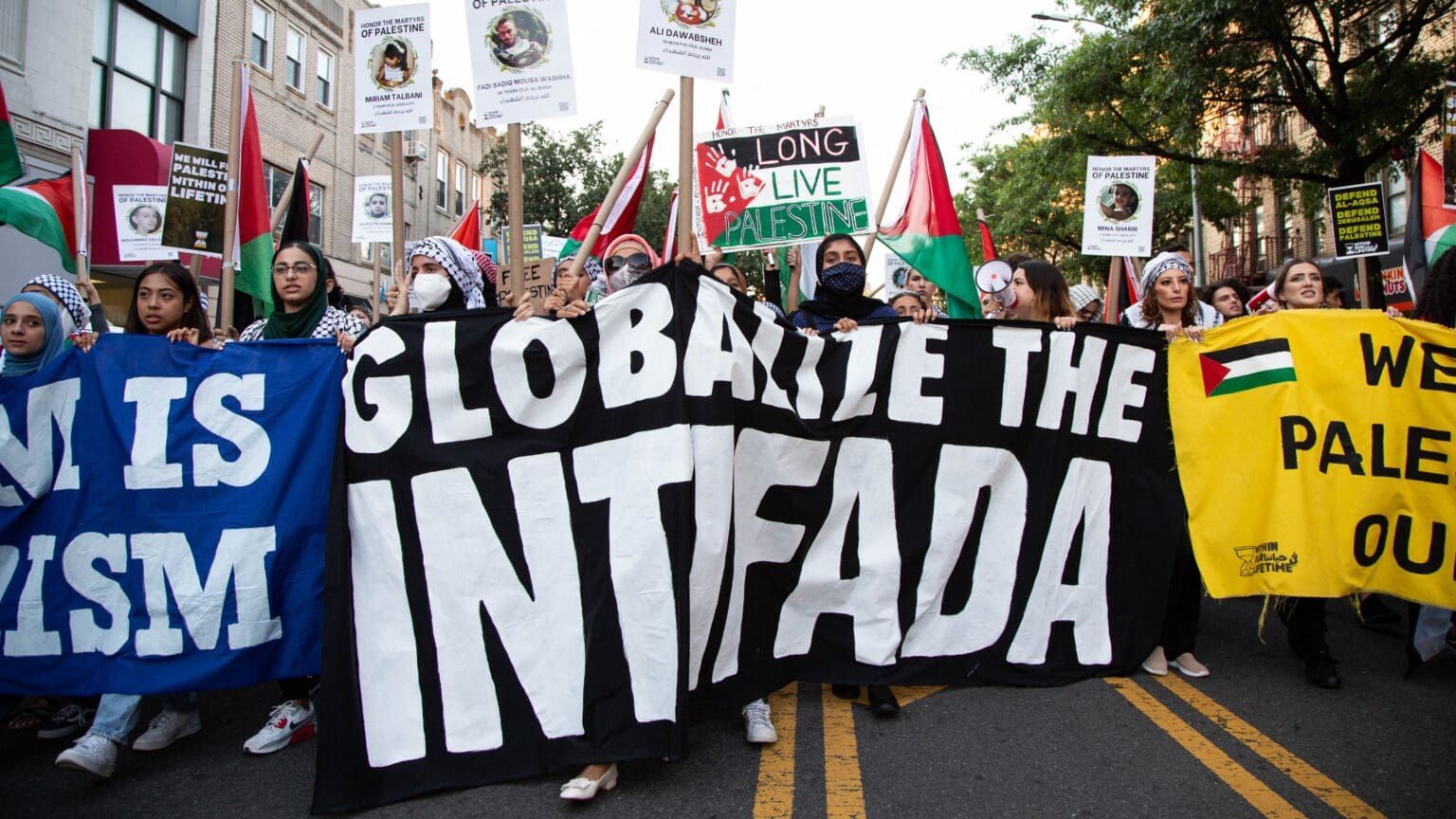
“Protestors” including leaders from Within Our Lifetime come to harass Jews at New Jersey synagogue, screaming “long live the intifada!”

The Justice Department sued under the Freedom of Access to Clinic Entrances (FACE) Act—a law that protects people entering both abortion clinics and houses of worship. The law exists to defend basic civil rights: to seek medical care, to pray, to gather without harassment.

Yet the Times reported the incident as a “pro-Palestinian protest,” not “anti-Jewish intimidation.”

It claimed that the law was being “repurposed” by the Trump administration which as “taking a side” in a “dispute” against “advocacy groups.”

The New York Times on September 29, 2025

For the far left media, one group—pro-life advocates—is defined by opposition; the other—those harassing Jews at worship—is defined by aspiration.

That is not journalism. That is narrative management.

Language molds the story before the facts are even heard. By choosing which side’s self-description to honor, the Times signals which side it wants readers to sympathize with. It is the Times that has taken sides, not the Trump administration. The U.S. is simply enforcing a law written to protect houses of worship which are increasingly under attack.

Police surround St. Patrick’s Cathedral in New York City, including a SWAT team with machine guns at the entrance, on September 29, 2025

A standard worth trusting would be consistent. Either call both movements by their chosen names, or describe both by their actions. But don’t dignify harassment with the protestors’ preferred brand while stripping advocacy of its own.

In the case of the NJ synagogue, the hypocrisy is worse and laid out as evil. Pro-life demonstrators don’t want ANYONE to have an abortion; the “pro-Palestinian” protestors only want JEWS to be banned from buying homes in the land of Israel. They would happily promote Arabs buying every apartment unit that was showcased at the event. They are clearly “anti-Jews” and should labeled as such.

Yet the Times rewrites the story as one about “pro-Palestinian speech” and “First amendment rights.” It pretends that the FACE law isn’t specifically about religious freedom.

The NY Times wrote that FACE was about exercising First Amendment rights at a place of worship – leading a reader to think it was about Free Speech – but FACE is about “right of religious freedom at a place of religious worship.” A sinister misdirection.

The power of the press lies not just in what it reports but in how it names things.
A double standard in language is a double standard in truth.

The left-wing media is lying to its readers that people who harass Jews are simply “pro-Palestinian” and not “Anti-Jews.” The New York Times is complicit in antisemitism.

The Copyrights of Winnie the Pooh and Jews

When Winnie-the-Pooh entered the public domain in 2022, the cultural floodgates opened. A once-beloved children’s character, wrapped in honey jars and innocent nostalgia, was immediately remade into a monster. “Blood and Honey” turned Pooh into a savage killer. Games, parodies, and dark pastiches flooded the market. The comforting bear was no longer safe; he had been transformed into a canvas for other people’s fears, cynicism, and jokes.

It feels eerily familiar.

For two thousand years, Jews have been cast into the public domain. Stripped of the right to define their own story, they became available for anyone’s use. And abuse. Once known as the people of the Book, bearers of commandments, prophets, and a covenant, their identity was seized and rewritten. Medieval Christians branded them Christ-killers. Islamic empires reduced them to dhimmis. The Enlightenment caricatured them as rootless and ruthless bankers. In the modern age, they became “colonizers,” “supremacists,” and the avatars of “genocide.”

The Jews never sold the copyright to their name or history, but the world took it anyway. Just as horror producers found amusement in twisting Pooh into a monster, antisemites—left, right, secular, religious—have scribbled their darkest nightmares onto Jewish bodies. Pogroms, expulsions, inquisitions, and now, boycotts and campus rallies all stem from a warped creativity that insists Jews cannot own their own narrative.

Israel’s rebirth was supposed to end this. After all, if you reclaim your home, revive your language, rebuild your state, surely you also reassert your identity. But even here, the appropriation continues. Israel was smeared as “apartheid,” “genocide,” “ethnic cleansing,” “racist,” and “colonial” decades before Hamas launched its latest genocidal war. “Jewish self-determination” is rewritten as oppression. “Defending children” is recast as war crimes. The oldest continuous nation on earth is treated as a villain in someone else’s morality play.

The difference between Winnie-the-Pooh and the Jews is stark. The fictitious character Pooh was released into the public domain by the natural passage of time, his copyright protection simply expiring. The Jews were thrust into the public domain by malice—by the unwillingness of societies to allow them ownership of their story. The Jewish Bible was rebranded as the Old Testament, out of copyright protection. Blood libels took hold on the bleached pages of Jewish foundational documents.

The current Jewish year is 5786. Traditionally, Jews write the date in Hebrew letters like Roman numerals and drop the 5 as being well understood. The letters for 86 spell “Pooh” in Hebrew, so now is as good a time as any to attempt a change that the 1948 reestablishment of the Jewish State did not provide.

One simple action is for everyone to write a large ‘5’ before the date, making clear to themselves and others that their faith predates all others, and continues still.

Challenge every use of the phrase “Promised Land” as a vicious varietal of cultural appropriation, which strips Jewish indigenous people from their divine heritage.

More dramatic is to reclaim Jewish rights on the Temple Mount. Why should the world care about Jewish faith and feelings if the majority of Jews treat the center of its religious devotion as a vestigial organ instead of the beating heart? Are we a living people or a hollow chamber for others to draw upon?

We must not countenance the free license for others to slander, parody, or profit off the Jewish name. The Jewish people are not public property. They are the authors and owners of their own identity—and it is time for them to act as such.

Beyond The Battle Plan

For the last several parshas, Moses has been addressing the children of Israel with a constant refrain: follow the commandments in the land, and you will be blessed; stray from them, and you will lose your inheritance. To us today, these verses are about mitzvot — the commandments that define Jewish life. But to the Israelites standing on the banks of the Jordan, the charge must have sounded different.

They had just watched an entire generation die in the desert. The memory of the spies still lingered — those men who declared that the land was too difficult to conquer, that the people within were too mighty to destroy. Could such whispers have been forgotten? Surely the children had heard rumors of what their parents had repeated around campfires for forty years. And now, standing on the edge of the land, they might have expected Moses to lay out the strategy, the order of battle, the plan of conquest.

Instead, Moses did something else entirely. He skipped the war. He jumped straight to what life would look like after. The rules of worship, the rhythms of daily life, the blessings and curses of obedience. It was as if the battles ahead — Jericho’s walls, Ai’s ambush, the wars against mighty kings — would be non-events.

Imagine a coach gathering his team before kickoff and skipping the playbook. Instead, he passes out dinner menus for the victory banquet to follow. No Xs and Os. No defensive schemes. Only a vision of celebration after the game.

Why? Perhaps it was Joshua’s role to direct the war, the next chapter of the Tanach already waiting to be written. Perhaps Moses, who knew he would not enter the land, wanted to leave the people with principles for the future. Or perhaps Moses was teaching something deeper: that the wars were only one part of securing a peaceful future. That the real challenge was not in winning the land, but in living faithfully within it.

The truth is, the dream of the land was already realized — even if the Israelites didn’t know it. Hundreds of years of diaspora were ending. The promise was being fulfilled before their eyes, not through a war plan but through divine decree. The land would be theirs. The victory was guaranteed. What remained in doubt was whether they would keep it.

Moses understood: the conquest would be won by God’s hand, but the inheritance would be maintained only through God’s law. The spies had feared giants and fortified cities, but the true danger was disobedience and forgetfulness once the land was secured. That is why Moses spoke not of how to conquer, but of how to live.

The people knew that Joshua would lead them to battle, just as he had over Amalek. And they had seen that Moses was their intermediary with God, who prayed for their success (Exodus 17:10-13). Now Moses was telling the people: you no longer need me as your agent; you are they keys to victory. Prayers during battle to secure victory; obedience thereafter to keep the peace.

Aaron and Hur hold up the hands of Moses in prayer as he grew tired, asking God’s help for Joshua to lead the people to victory in battle

And so it is today. The battles of our time are real, but they are only part of the threat. We must not be complacent. We must not assume that everything is on the battlefield. Beyond the battle plans lies our own responsibilities in living a meaningful life and knowing the source of our strength.

ACTION PLAN

Go to the United Nations and sing outside the line from Al Tira, “Utzu Etza”: “Take counsel together, and it shall come to nought; speak the word, and it shall not stand: for God is with us.”

Pilgrims or Provocateurs?

A Muslim who visits Mecca is called a Hajji. It is one of the highest honors in Islam, the completion of the Hajj pilgrimage, celebrated by family and community as a sacred accomplishment.

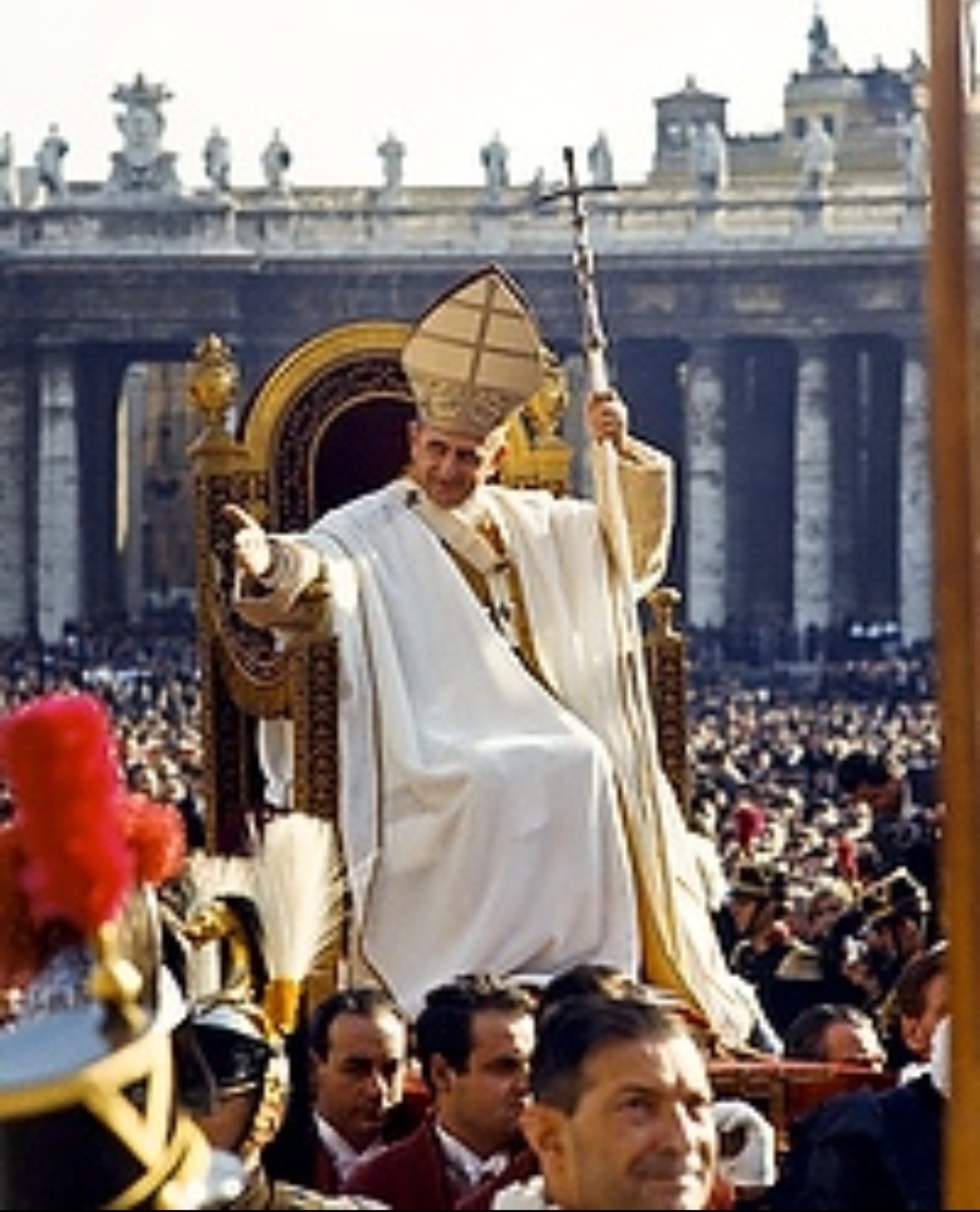
A Catholic who travels to the Vatican is a pilgrim. For centuries, the faithful have journeyed to Rome, walking into St. Peter’s Square with reverence, greeted with blessing and legitimacy.

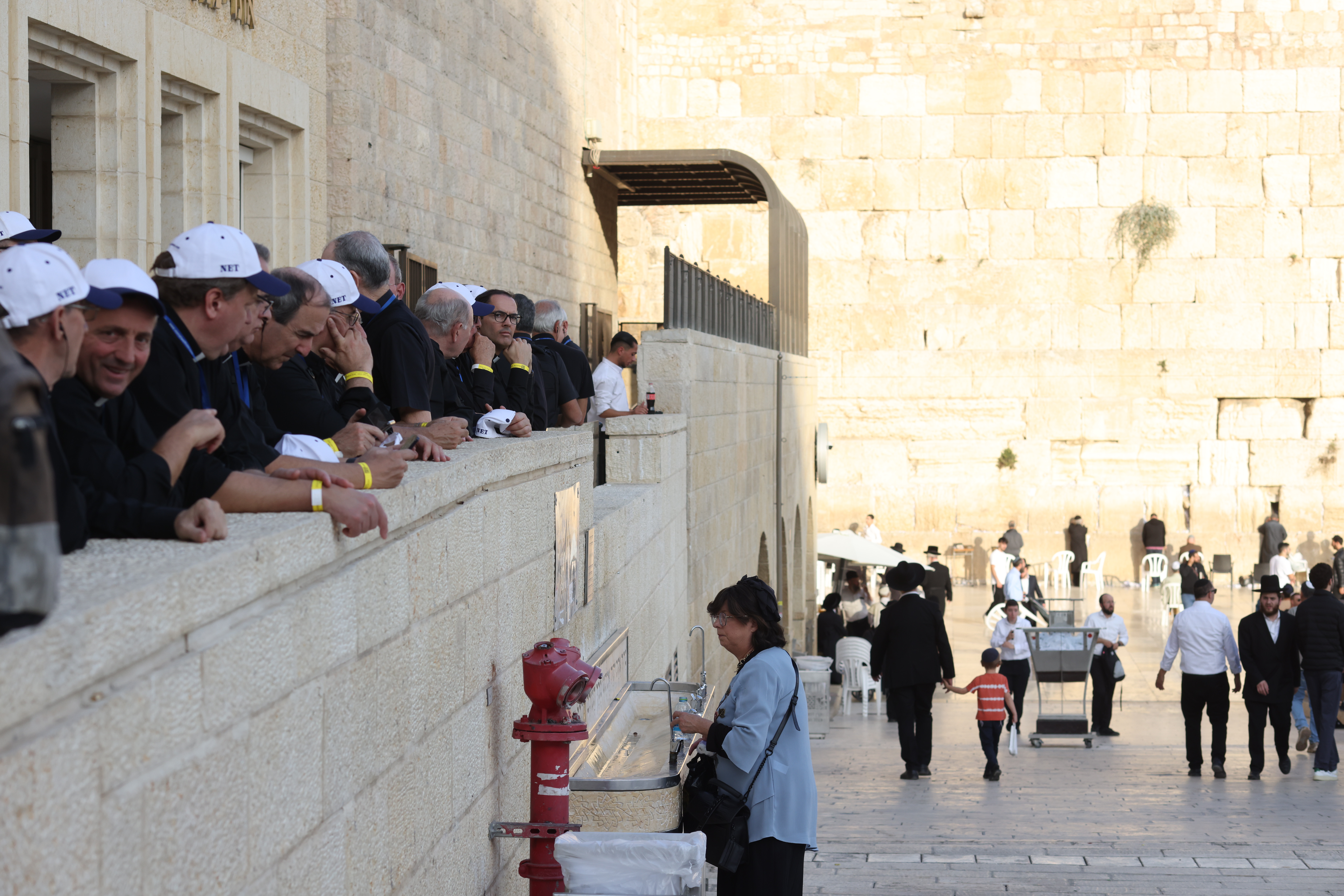
And a Jew who goes to the Temple Mount in Jerusalem — the very place where the First and Second Temples once stood, the holiest site in Judaism? That Jew is branded a provocateur. Not a pilgrim, not a worshiper, not a faithful soul ascending to pray — but an instigator, an agitator, an accused trespasser, a “settler” on their own sacred ground.

The disparity could not be starker. What is celebrated as devotion for others is condemned as incitement for Jews. For Muslims, the Hajj is a right; for Catholics, Vatican pilgrimage is honored; but for Jews, even quiet prayer on the Temple Mount is labeled an offense — by the United Nations, NGOs, and international bodies.

It is not only hypocrisy; it is erasure. To deny Jews the name of pilgrim is to deny Jewish history, Jewish identity, and Jewish legitimacy. It casts the holiest place in Judaism as alien to Jews themselves, a desecration of memory turned into policy.

And why? Because the world has normalized the jihad. It has allowed Islamic Supremacy to dictate permissible behavior, even in the Jewish holy land.

The truth is simple: a Jew ascending the Temple Mount is not incitement. It is the most ancient pilgrimage of them all — the echo of three millennia of devotion, commanded in Torah, rooted in covenant, and carried in every prayer whispered toward Jerusalem, before Islam was even created.

The real provocation is not the Jew who prays on the Temple Mount but a world that dares to tell Jews they don’t belong at the center of their faith.

ACTION ITEM

Come to the United Nations in New York City and demand Jewish rights and freedom of religious assembly in Jerusalem.

Judging the Judges of Psychopaths

A suicidal antisemite walked into a church school in Minnesota and opened fire. He left behind rants of depression and hate. He idolized the mass murderers who came before him — Hitler, Columbine, Christchurch, Pittsburgh — and fantasized about joining their ranks in death.

It is a sad story. Sad for the victims, whose lives were cut short. Sad for the shooter’s family, who must live with the legacy of his murders. Sad for society, which must add another notch to the ledger of preventable carnage.

But I pause on the judges. Not the judges in robes who preside over courts of law — this menace took his own life and will only face a real judge in the afterlife, if you believe in one. The judges I mean are the self-appointed arbiters of truth on social media, the pundits with millions of followers who rush to craft a narrative before the blood on the church floor has dried.

Narratives Over Facts

Cenk Uygur, founder of The Young Turks, quickly posted on X that the killer “hates Israel and Muslims.” Two deliberate misdirections.

First misdirection: He didn’t hate Israel in the abstract. He hated Jews — which is precisely why he hated Israel. On his weapon magazine he scrawled, “6 million wasn’t enough.” That wasn’t about Israel. That was about Jews. In his journal he wrote “If I carry out a racially motivated attack, it would be most likely against filthy Zionist jews,” before calling Jewish people “entitled” and “penny-sniffing” and adding “FREE PALESTINE!”

writings on the Minneapolis killer’s weaponry

He even called for destroying HIAS, the Hebrew Immigrant Aid Society that helps resettle refugees in the U.S. His antisemitism and anti-Israel animus were inseparable. He loved Nazis and he loved Palestinian Arabs who killed Jews. Cenk only loves the latter, because it allows him to hang his “anti-Zionist, not antisemitic” credentials where he cannot with the former.

Second misdirection: The shooter never expressed hatred of Muslims. He praised mass murderers — including some who targeted mosques — but not because he despised Islam. His adoration was for the act of mass killing as a pathway to glory. He wanted to die a martyr in the suicide-mass murder cult, to etch his name in the pantheon of psychopaths and inspire the next one, just as he inscribed their names on his gun, as well as “mashallah,” meaning “Gd has willed it” in Arabic.

The Sanitizers

So why did Cenk say what he said? To refit the crime into his own comfortable narrative. To launder the reality that this shooter’s rants — about Jews, Israel, HIAS — were fueled by the same demonization that Cenk himself mainstreams daily.

Cenk published this rant about Israel controlling the US government around the same time as misdirecting people about the Minnesota killer

This is how today’s judges operate. They aren’t rendering justice to take the wicked off the streets. They are sanitizing their own crimes by placing their incitement onto a scapegoat and pushing it off a cliff. They hope you will move on, and not notice their bloody handprints on the crime scene of young children dead on a church floor.

But be clear, Cenk and others like him are inciting the next mass shooter. They just hope the murderers come for Israel supporters.

Conclusion

There are no winners in these tragedies. The dead are buried, the families are broken, the shooter is gone.

But the lies linger. The venom feels less poisonous once imbibed and cleansed by the antisemitic judges.

When influencers and media stars twist a killer’s words into their preferred stories, they are not exposing truth — they are covering their own complicity.

The Minneapolis shooter’s manifesto was clear enough. It will likely be on the DSA (Democratic Socialists of America) book-of-the-month club reading. The world is sad and unjust and we must burn it down. Ideally, start with the Jews. If you can’t, make sure your manifesto reads like a modern day Mein Kampf that would make Rep. Rashida Tlaib (D-MI) proud.

The killer’s sphere of desecration was relatively small. Tragic, but limited. But the shrill antisemitic rants atop social media and infiltrating politics grossly widen the diameter of the damage.

The lingering tragedy is that the loudest voices have become the judges, and that will mark our entire society for collapse.

Parshat Re’eh and E1: Gathering the Nation Around Jerusalem Then and Now

Parshat Re’eh commands the Jewish people:

“Three times a year all your males shall appear before Hashem your God in the place He will choose—on the Festival of Matzot [Pesach], on the Festival of Weeks [Shavuot], and on the Festival of Booths. [Sukkot]” (Deuteronomy 16:16).

At a time when the tribes of Israel were destined to live across a wide and varied land—from the Galilee to the Negev, from the Mediterranean to the Jordan Valley and beyond—this commandment ensured that all Jews, regardless of tribe or geography, would remain bound to a single center: the place “He will choose:” Jerusalem.


Then: One City for One People

The pilgrimage festivals were not simply religious obligations; they were national glue.

  • Unity in Diversity: Each tribe had its own territory, customs, and leadership. But Jerusalem reminded them that they were not twelve separate entities—they were one nation.
  • Physical Connection: The journey itself—families traveling for days from north, south, east, and west, THREE TIMES A YEAR—kept every Jew intimately connected to the city at the nation’s core.
  • Spiritual Focus: No matter how far they lived, Jews oriented their lives toward Jerusalem.

Without this ritual of convergence, the tribes might have drifted apart, their shared purpose diluted by distance and difference.


Now: Re-Centering Around Jerusalem

Fast forward over three millennia. Jerusalem is once again the capital of a sovereign Jewish state. But the modern challenge is becoming increasingly less about tribal dispersion, with Jews in the holy land making up a plurality of Jews – it is geopolitical pressure and strategic vulnerability.

Recent government plans to develop the area known as E1, just east of Jerusalem, have sparked international controversy. Critics claim the project is “obstructive to peace.” It’s an absurd claim. Supporters see it differently: as an essential step to connect Jewish communities around the capital, ensuring that Jerusalem remains safe and accessible and central to Jews from north, south, east, and west.

The parallels to Re’eh are striking:

  • Geographic Cohesion: Just as ancient pilgrimage routes tied the tribes together, modern infrastructure links surrounding communities to Jerusalem.
  • National Identity: Building around Jerusalem reinforces its role not just as a city, but as the beating heart of Jewish life.
  • Defying Fragmentation: Where outside forces seek to carve up and isolate Jerusalem, development ensures continuity and connection.

Jerusalem: The Eternal Center

Parshat Re’eh’s vision was never merely about geography—it was about survival through unity. When Jews journeyed to Jerusalem three times a year, they reaffirmed their covenant and their peoplehood. One God, one people.

Today, as Israel strengthens the areas around Jerusalem, it is engaged in the same mission: to keep the Jewish people close to their capital, secure in their homeland, and united across generations.

Then as now, Jerusalem is not just a place—it is the center of a people.

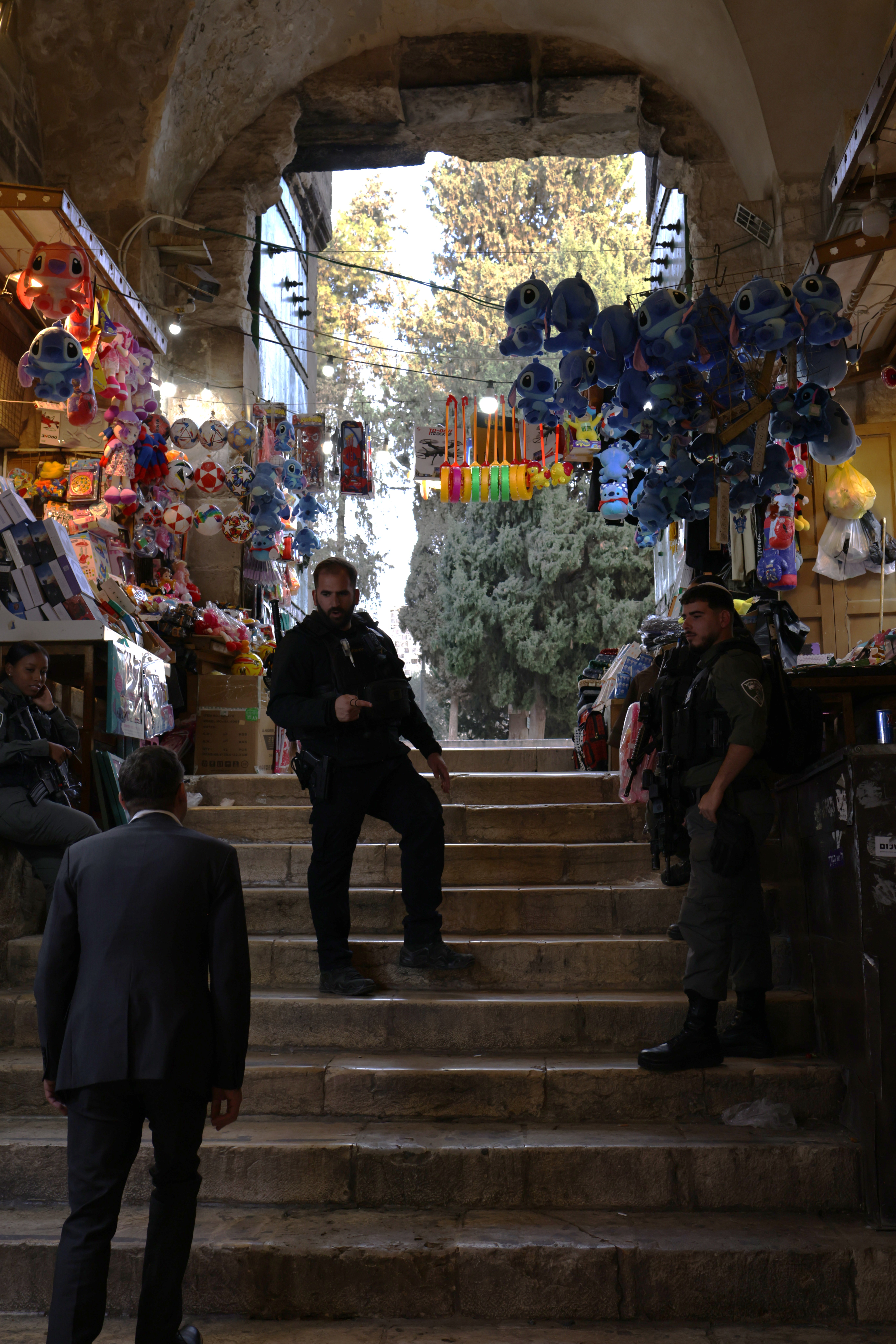
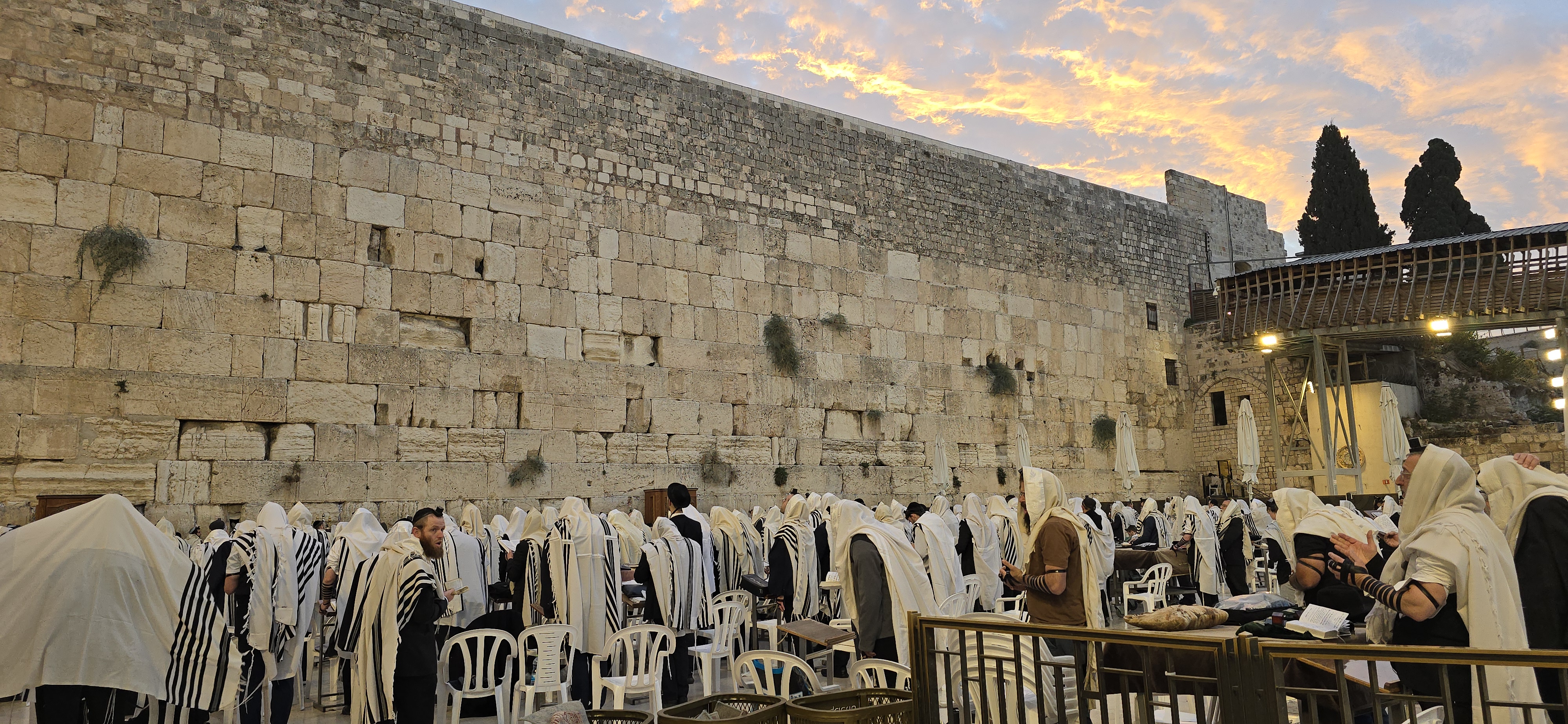
The Old City of Jerusalem including the Jewish Temple Mount on the holiday of Sukkot

To Remember: Antisemitism to Inflame or Moderate Islam

Trieste’s Piazza Unità d’Italia is one of Europe’s great open-air salons, its grand architecture framing a breathtaking view of the Adriatic. On a sweltering August afternoon, only a handful of tourists dared cross the blazing expanse, hugging the shadowed strips along the colonnades for relief.

There, in the quiet underbelly of the central building’s portico, a plaque catches the eye. In large Hebrew letters: “Zachor”—Remember. A verse from the Torah commands the Jewish people for all generations to recall what Amalek did—attacking the weak and stragglers as the Israelites left Egypt. Beneath the Hebrew, the Italian inscription explains: this was the site where Benito Mussolini, in September 1938, delivered his edict of the “Racial Laws.” In his speech, Mussolini declared Jews “incompatible” with Fascist Italy and announced their expulsion from national life.

It was no accident he chose Trieste. The city’s 6,700 Jews—around 2.7% of the population—were prosperous, visible, and in his eyes, a perfect stage. Within five years, over 90% would be deported, murdered, or scattered to exile, never to return.

At the time, Time magazine cynically suggested Mussolini might be “bluffing,” seeking to please Hitler and “curry favor with Islam” in Palestine. Antisemitism, in this view, was not only about Jews—it was also geopolitical currency, among his people and traded to win influence with the Muslim world.

Time magazine, September 26, 1938

The plaque was installed in 2018, on the 80th anniversary of the Racial Laws. But memory is fickle. Five years later, in 2023, after Hamas terrorists and thousands of Gazans crossed into Israel to massacre 1,200 civilians in the most brutal ways imaginable, Italy’s leaders declared Hamas—not the Palestinian cause itself—the obstacle to peace. They argued that a two-state solution, minus Hamas, could integrate Israel into a broader Muslim world via expanded Abraham Accords. In their words, peace could “moderate Islam.”

Antonio Tajani, Deputy Italian Prime Minister, Foreign Minister in October 2023 about Hamas massacre

It’s a striking inversion of Trieste’s history: in 1938, antisemitism was weaponized to build a bridge to Germany and court the Muslim world; in 2023, peace with Israel is pitched as the tool to temper Jew-hatred. At the dawn of the Holocaust, ridding the Jews bound Europe and the Muslim world, while today, removing antisemitic genocidal Muslims and ensuring the permanence of the Jewish State could unite Europe and the Arab Middle East.

In each case, Jews are pawns, tossed on the Mediterranean Sea, to be submerged or floated in the grander political game. And there we must therefore ask, what are we remembering?

Dueling stickers in Trieste, Italy, fighting the Gaza War in 2025

A Million for Gaza While Jewish Life In America Burns

The United States is experiencing the worst wave of antisemitism in modern memory. Jews are attacked in the streets of New York, vilified on college campuses, and shunned in social circles simply for being Jewish or supporting Israel. Synagogues and community centers are fortifying themselves like military outposts, while families weigh whether their children are safe wearing a Star of David in public.

In the middle of this siege on Jewish life, the UJA-Federation of New York proudly announced it would send $1 million in aid to Gaza as a “Jewish imperative.” The money will be funneled through an Israeli rescue nonprofit, ostensibly to provide humanitarian relief.

The federation’s leadership points to precedent: they’ve sent funds abroad before—to Turkey after an earthquake, to Ukraine after the Russian invasion. But this is not Turkey. It is not Ukraine. It’s also not Canada and Australia undergoing horrible antisemitism.

Gaza is not a neutral disaster zone. Its people have elected and support leaders who openly call for the murder of Israeli Jews. Its ruling terror group, Hamas, slaughtered 1,200 people in Israel on October 7, 2023, and still holds hostages. Polling has long shown majority support among Gazans for killing Jewish Israeli civilians and to destroy Israel. This is not a passive bystander to tragedy; it is a society that has gone to war against the Jewish state again and again.

The difference matters. When the federation sends aid to a country struck by natural disaster, it’s an act of humanity. When it sends aid to a population whose political and militant factions seek Jewish extermination – while in the middle of a war – it’s an act freighted with moral confusion.

The leadership may believe that giving to Gazans proves Jewish compassion “even to our enemies,” or helps with global optics. But for Jews watching their own safety erode daily in the United States and in other communities around the world, it looks like a failure to stand with their own community. It risks alienating the very donors who built the federation in the first place.

Charity is not limitless. Every dollar has an opportunity cost. And while Jewish students are harassed on campus, Jewish businesses vandalized, and Jewish institutions desperate for security funding, this million-dollar gesture to Gaza sends a clear message: in our hour of greatest vulnerability, the suffering of those sworn to kill us will be prioritized alongside, or even above, our own survival.

The empathy swamp is drowning us, blessed by community leaders.

American Jewry had managed with peacetime leadership for decades but it is time to replace them as the environment has shifted, and leaders have proven that they are not up to the moment.

Diaspora Jews and the Promised Land

In the Book of Numbers, chapters 32 and 34, we find a powerful and enduring lesson for Jews living outside the land of Israel. The tribes of Reuben and Gad, later joined by half of the tribe of Manasseh, approached Moses with a bold request. They asked to settle on the east side of the Jordan River, outside the boundaries of the Promised Land, because the land there was suitable for their abundant livestock. Moses was skeptical: was this another rebellion, like the spies who had refused to enter the land decades earlier?

But the tribes made a solemn vow. They would not only join the conquest of the Land of Israel—they would be on the front lines. Only after the land was secured for their brethren would they return to their homes across the Jordan. They could live outside the Promised Land, but they could not abandon their people or their mission.

Wallis’s New map of The Holy Land (1815)

Fast forward thousands of years, and the question still echoes: Do Jews living in the diaspora bear a similar responsibility toward Israel today?

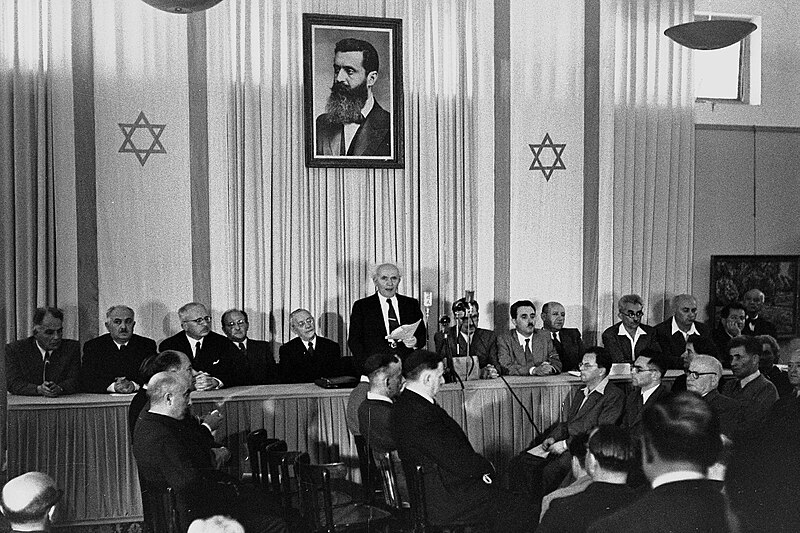
The modern State of Israel, reborn in 1948, has been under near-constant threat. From surrounding Arab nations launching wars to terrorist regimes like Hamas slaughtering civilians, Israel’s security is never guaranteed. The battlefield has expanded beyond the physical: anti-Israelism masquerades as social justice in Western institutions, and Jewish students face intimidation on campuses from New York to London to Sydney.

And yet, many diaspora Jews seem detached from the fight. Some claim that Israel’s policies are the cause of antisemitism. Others go further, actively criticizing the Jewish State in public forums – leading with “AsAJew” credentials – hoping that distancing themselves will spare them from scorn.

The lesson of Reuben and Gad was clear: you can live outside the land, but not outside the mission.

Reuben and Gad did not ask to be exempt from the battle. In fact, they pledged to be the vanguard. Likewise, Jews living in the diaspora, particularly those in free and prosperous nations, must recognize their role. They may not carry rifles in the IDF, but they must arm themselves with truth, courage, and commitment.

They should defend Israel in public discourse. They must call out antisemitism cloaked as “anti-Zionism,” a calling card demanding the destruction of Israel. They ought to support accurate Israel education, advocate with elected officials, and give generously to causes that strengthen Israel’s security and society. It is the price of living across the river.

Moses demanded a commitment from the tribes outside the land. Jewish history demands one now.