There are endless scams in New York City. People forge deeds, steal equity, and prey on desperation every week. Almost none of those crimes get elevated to a national morality tale.
So why did The New York Times choose a particular case and present it as it did?
A headline about home theft. A photograph of a visibly Orthodox Jew in a courtroom to lead the story. A description of victims “from minority communities.”
The message was unmistakable: A Jew stole from vulnerable minorities.
The Times could have reported the crime without turning it into a racial and religious showdown, yet it chose not to.
If his religion played no role in the scheme, then it had no business in the article. Yet the Times made sure every reader saw the kippah and beard, and read of his Orthodox clan coming to rally for the criminal: a greedy Jew stealing from the vulnerable.
The New York Times made a point of discussing the perpetrator being from the “Orthodox Jewish community“, even though the case had nothing to do with religion.
This did not land in a vacuum. Jews are being attacked in New York at rates that should horrify any decent newsroom. Anti-Jewish tropes about Jews stealing land, homes, and resources are exploding across campuses and city streets. It is standard stump propaganda by Democratic Socialist politicians.
Rep. Rashida Tlaib (D-MI) at a Democratic Socialist conference said of Jews: “they do it from Gaza to Detroit, and it’s a way to control people, to oppress people. And it’s those structures that we continue to fight against. I know you all understand the structure we’ve been living under right now is designed by those who exploit the rest of us, for their own profit.“
If the victims were Orthodox Jews and the offender was a member of another minority group – a majority-minority group like Blacks or Latinos – does anyone believe the Times would blast the offender’s ethnicity and splash a religiously identifiable photo across the top of the page?
Absolutely not. They would call that incitement.
This is a pattern. Mainstream media outlets have spent the last decade profiling Jews as:
They would never speak this way about any other minority group. But when the subject is Jews, especially Orthodox Jews, suddenly it’s acceptable to present them as predators and everyone else as their prey.
That is not journalism. It is character assassination dressed up as social justice.
And it does this in the backdrop of the election of a Ugandan immigrant, Zohran Mamdani who has trafficked in antisemitism, to be the new mayor of New York City. A man supported by the Black and Latino communities and opposed by the Orthodox Jewish one. A man who focused on the affordability crisis of living in New York City, with scaffolding provided by the Times about how corrupt Jews make it impossible for poor immigrants to live in the city.
The New York Times made a point of discussing the perpetrator being from the Orthodox Jewish community, even though the case had nothing to do with religion.
Propaganda does best when there are elements of truth. It does best when the fire has already been lit and the mob is seeking red meat to fuel the passion. The Times is feeding the beast and clearing an auto de fe for Jews to be marched through the streets.
There was a time when respect was earned by learning. People who studied hard, accumulated degrees, mastered facts and logic were admired. They didn’t need followers; they had knowledge. They didn’t need virality; they had depth.
That world is gone.
Fame today is not built in libraries or laboratories but in the palm of a hand. A ring light replaces a classroom. A viral clip replaces a thesis. And the more lurid, outrageous, emotional, and dishonest the content is, the faster the fame spreads. The algorithms demand provocation, not proof. They reward outrage, not understanding.
And people are responding exactly as the system intends: they’re dropping degrees, skipping college, deciding that years of expensive education aren’t worth it in a world where clout is free and clicks are currency. AI will write the papers anyway. Tuition is a fortune. Morality is optional. Why struggle through years of learning when you can fabricate a persona, press “upload,” and watch the world react?
For the first time in history, the older generation will have far more education than the young. Degrees are becoming relics. Expertise is becoming an antique. And winning hearts and minds through argument — the old democratic ideal — is becoming a luxury.
Politics is drifting toward the young, the uninformed, the inflamed, the furious, the ones who know how to play the game of attention better than the game of truth.
Hasan Piker doesn’t win debates; he wins followers. Comedian David Smith isn’t famous for jokes; he’s famous for attacking fellow Jews, because tearing down your own people brings clicks in a sick digital economy.
And here is the crisis for the Jewish people: We are the People of the Book trying to survive in a world where books don’t matter. We are a civilization built on reason, argument, text, questioning — and we cannot comprehend why we’re losing the PR battle against influencers who deal only in emotion, rage, and spectacle.
We fight with facts. They fight with feelings.
The socialist-jihadi crowd celebrates Hasan Piker showing up at Zohran Mamdani’s victory party
We build logic. They build engagement.
We look for truth. They look for traction.
And so a terrifying question hangs in the air: Must Jews abandon their values to survive? Must we trade nuance for noise? Must we jump into the sewer of social-media fabrication because that is the only battlefield the world seems to care about? Must we out-viral our enemies just to protect ourselves from the lies, the hatred, and the persecution that spread faster than any truth we offer?
Or is there a third way — a way to fight fiercely without becoming the thing we oppose? A way to compete in the digital arena without destroying the intellectual soul that has kept us alive for 3,000 years?
This is the defining challenge of the modern Jewish experience. Not whether we can win a debate — we always could. But whether debate still matters.
And if it doesn’t, then the Jewish people must decide how to defend themselves in a world where vanities, not virtues, are the currency of influence.
The People of the Book didn’t choose this kind of world. But we must learn how to survive it — without losing who we are.
Every political movement faces the same question: what do you do with the bad people in your camp?
Ezra Klein, writing in The New York Times, argues that Democrats should welcome everyone under their banner — no matter how extreme — because inclusion wins elections. He calls it the big tent: forget purity, just make sure they call themselves Democrats. It’s politics over principle, and power over conscience.
Republicans, by contrast, still try to draw a line. When groups like the Heritage Foundation flirt with extremists such as Tucker Carlson or Nick Fuentes — men who traffic in grievance and racism — many conservatives recoil. To them, the party label still carries moral weight. You can lose elections, but you shouldn’t lose your soul.
And then there’s Hamas — the third model. When Hamas decides someone in its own ranks isn’t loyal enough, it doesn’t debate inclusion or expulsion. It breaks their legs in the street. It executes them in public. For Hamas, politics is not persuasion or debate; it is terror enforced by fear. That’s how it keeps power — absolute, unchallenged, and bloodstained.
The Temptation of the Big Tent
Ezra Klein’s “big tent” philosophy played out in real time with Zohran Mamdani’s win in New York City. The Democratic Party opened its doors to a wholly different ideology and welcomed it inside to secure a victory. But at what cost?
The party platform now stretches so far that it’s unrecognizable — and to many, repulsive. In its desperation to confront unified Republican power in Washington, the Democrats chose to absorb the fringe rather than confront it. The price of inclusion was coherence.
For illustration, imagine a Jewish newspaper facing a business dilemma:
A group like Jews for Jesus wants to buy an ad. The editor must decide: Do we take the money? Do we run it in the name of inclusion and open debate? Or do we reject it as off-brand, offensive, and disloyal to our readership?
Most would choose the last. They’d rather forgo the check than cheapen their identity.
But the Democrats have made a different calculation. The party tasted the fringe, saw no backlash, and convinced itself there’s no downside. It’s as though that Jewish paper ran the Jews for Jesus ad — and the subscribers applauded. So what’s next? An ad from the KKK? Pork recipes for Passover? How far can inclusion stretch before it becomes desecration?
Power, Principle, and the Price of Brand
Republicans have power so can afford to maintain their brand by shedding radicals. Hamas maintains power by shedding blood. Democrats, desperate to gain power, are willing to shed consistency.
Three models emerge to rule:
The Democrat: inclusion for victory
The Republican: exclusion for integrity
The Islamist: execution for control
Each reveals a truth about how institutions face the corrupting pull of power.
Politics, like publishing, isn’t just about what you include — it’s defined by what you refuse to print. A brand without boundaries isn’t brave. It’s broken.
Of course the masses would like consistency and inclusion and integrity and peace on the streets. But they have come to realize that politics is power, and they want power. When Congress was a bell curve with little difference between Democrat and Republican, there was general ambivalence about elections and the impact on people’s daily lives regarding who was in power. Not so in today’s barbell society with extremists dominating politics.
The Jewish Community
What does the Jewish community do with groups like Neturei Karta that join the worst of the anti-Israel protests and fly to Iran for Holocaust denial conferences? With Jews who voted for a mayor who supports “globalize the Intifada”?
Neturei Karta protesting a march against antisemitism in New York City, January 2020 (photo: First One Through)
Neturei Karta is a small fringe group that mostly keeps themselves isolated, so in practice, there needn’t be an active response. But there were an estimated one-third of Jews in New York City that voted for Zohran Mamdani, including public officials and celebrities. There was a big turnout in younger Jews voting for Mamdani, estimated at two-thirds of those under 44 years old.
How does the Jewish community react when a majority of young Jews are viewed as putting the broader community at risk? Which model does it follow, or is the question more complicated as one’s Jewishness cannot be shed like political affiliation, and being a Jew is not about attaining power.
And is the conclusion in the observation? Politics is about power and people take actions depending on the environment to obtain or maintain power. However, Judaism shuns power, and seeks to live a religious life of one’s choosing without external influence.
Mandy Patinkin endorsing Zohran Mamdani for mayor, president and emperor
Jews, while always small in number, have always had a very large and wide tent because they don’t get to decide who to include and exclude for their numbers. They only decide who should be included in their associations – in their shuls, schools, umbrella groups.
In May 2021, young anti-Israel Jews were calling Israeli engagement with Palestinian Arabs “apartheid” and “genocide’ (well before Hamas’s 2023 War on Israel), and some were thereby fired from teaching positions at Jewish schools. At Upper East Side Yeshivat Ramaz, alumni pressured the Principal Emeritus Haskel Lookstein to not speak at Donald Trump’s 2017 inauguration. Jews shut down other Jews for their comments and associations.
I do not believe that there is a single answer for what Jews should do with kinsmen who are regarded as beyond the pale. Historically, in a bell curve political dynamic with moderate antisemitism, the radical could be ignored as noise. However, in today’s barbell political reality, with heightened antisemitism, active measures need to be considered regarding the bad apples.
Much of the attention on the Balfour Declaration—issued on November 2, 1917—focuses on the United Kingdom’s pledge to “facilitate” “the establishment in Palestine of a national home for the Jewish people.” Israel-haters rage at this clause, claiming that Jews had no historical connection to their ancestral homeland and that Britain had no right to “hand over” immigration rights from local Arabs to Jews.
Balfour Declaration
On the anniversary of the Declaration in 1943, Heinrich Himmler of Nazi Germany sent a telegram to the “Grand Mufti” of Jerusalem that Nazis and Arabs had the same enemies – Jewish invaders. In 2016, the President of the Palestinian Authority, Mahmoud Abbas demanded an apology and reparations from Britain for issuing the Balfour Declaration, having repeatedly failed to destroy the Jewish State.
Telegram from Heinrich Himmler to Amin al-Husseini on November 2, 1943
But there’s another part of that same document that antisemites also detest. The closing line reads:
“…nothing shall be done which may prejudice the civil and religious rights of existing non-Jewish communities in Palestine, or the rights and political status enjoyed by Jews in any other country.”
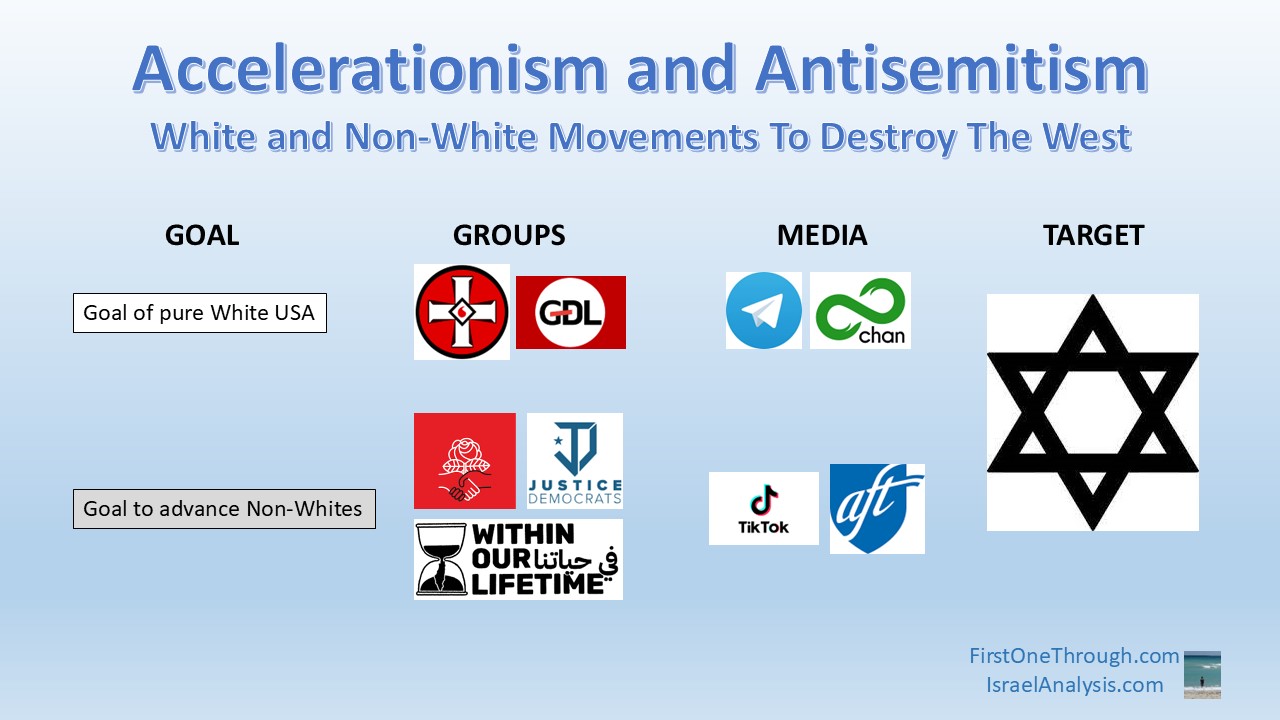
That final clause—protecting Jews’ rights around the world—is precisely what modern antisemitic movements are trying to undermine. Groups like Within Our Lifetime, CAIR, and the Democratic Socialists of America openly campaign to dismantle what they deride as “Jewish power” in America.
They smear Jews as self-serving “capitalists,” accuse them of exploiting “Black and Brown bodies” for profit (as Rep. Rashida Tlaib has said), and seek to push Jews to the margins of public life—all because Jews affirm that the land of Israel is their homeland.
A century after the Balfour Declaration, its promise remains under attack—not only in the Jewish homeland but wherever Jews dare to live proud and free.
There are signs on the streets of London that read “LOOK RIGHT.” They are painted boldly on the pavement to protect visitors—especially Americans—who are used to glancing left before stepping into the street. In the U.K., traffic comes from the opposite direction, and those who rely on old instincts can find themselves in sudden danger.
So it is now with American Jews.
For generations, they have turned instinctively to the Democratic Party—to the left—out of habit, heritage, and a deep belief that liberal ideals best protected minorities. But the political landscape has shifted beneath their feet. The party that once championed freedom, tolerance, and support for Israel has been co-opted by radicals: anti-Israel voices, socialists, and anarchists who now wield growing influence in its ranks.
These are not the Democrats of old. They are activists who view capitalism as oppression, who denounce Israel as colonial, and who see Jews not as a vulnerable minority but as part of a power structure to be dismantled. They are coming for capitalism—and for the Jews who helped build and sustain it.
This election, American Jews must recognize that the public square is not what it used to be. The political traffic now comes from the right direction—but the danger comes from the left.
When Government Champions Some, and Leaves Jews to Defend Themselves
Westchester County, NY, like much of America, has learned the vocabulary of inclusion. It now boasts a tapestry of advisory boards, task forces, and community liaisons — each designed to protect and empower those who have known prejudice.
There is a Westchester County Asian American Advisory Board, formed after a surge of anti-Asian hate crimes during COVID. It partners with the District Attorney’s office on the #SpeakUpWestchester campaign, translating safety materials into Korean, Mandarin, and Japanese so that no one’s fear goes unheard.
There is also an LGBTQ+ Advisory Board, formally empowered to advise the County Executive, coordinate events, and oversee inclusivity training. The county even facilitated an LGBTQ+-affirming senior housing complex in downtown White Plains with The LOFT Community Center at its core — an unprecedented public-private partnership to create safe spaces for queer residents.
But there is one group that still has to do it all on its own: Jews.
There is no County Jewish Advisory Board. No county liaison for antisemitism. No government program translating “Never Again” into action.
While Asian and LGBTQ+ residents have been given official seats inside government, Jews have been told — quietly, politely — to use their own.
Even the collection of antisemitic incident data — which rose 22 percent in Westchester in 2024 — is largely managed by private watchdogs, not public offices.
The disparity is not just institutional; it is measurable.
Westchester County has 1 million residents, including about 137,000 Jews (14% of the population) and about 65,000 Asian Americans (7%).
According to state hate-crime data and ADL monitoring, there were about 40 antisemitic incidents and 8 anti-Asian incidents reported in Westchester in 2024. That translates to an estimated 29 antisemitic incidents per 100,000 Jewish residents versus roughly 12 per 100,000 Asian residents — a per-capita rate more than twice as high.
Rather than address the antisemitism squarely, Westchester District Attorney Susan Cacace made an inclusive Hate Crimes Advisory Board which had its inaugural meeting on September 29. Cacace was proud of the giant tent and said “the communities represented on this board are broad and diverse, and board members will be able to provide me with direct input from their constituents so that my office may more readily address their concerns.”
The Westchester County District Attorney’s Office’s new Hate Crimes Advisory Board
The all-Democratic Westchester establishment seemed to echo the Democratically-led House of Representatives which refused to condemn antisemitism without adding language about Islamophobia in 2019. Jew protection cannot exist in isolation for some reason for the Blue Team. It seemingly repulses them so much, that when Republicans target antisemitism, they argue that President Trump is “weaponizing antisemitism” and not really concerned about Jews at all.
No one begrudges others their protection. Jews, more than anyone, know the cost of silence. But the imbalance is glaring.
When the Asian community faced hate during COVID, Westchester created a formal board within months. When LGBTQ+ residents sought recognition, government became a partner in building physical spaces of affirmation. But when antisemitic assaults, harassment, and vandalism spiked across campuses, streets, and synagogues, the government offered sympathy — not structure.
Graffiti on Jewish stores in Scarsdale, NY, January 2024
The Jewish paradox
Jews are trapped in a paradox. Their success is cited as proof they don’t need help; their vulnerability dismissed as self-inflicted. They are “white” enough to be privileged, but “Jewish” enough to be blamed.
And so, when antisemitism surges, the reflex of government is not to protect but to delegate — to community partners, to philanthropists, to the victims themselves. Or to give the general feeling of blanket protection alongside others, masking the fact that they are persecuted more frequently than every other minority group.
For centuries, Jews have thrived where societies upheld justice and faltered where governments outsourced their duty.
Antisemites have no issue singling out Jews for attack, yet government officials are loathe to single out Jews for protection which they do so for every other group. It begs the question as to why: are current government leaders antisemitic, or are Jewish leaders telling the government that Jews don’t want special treatment, just to be like everybody else.
If so, what does that mean when “everybody else” gets special treatment?
Why can California, with its Democratic super-majority, advance a mandatory ethnic studies curriculum which empowers Black, Brown, Latin, Asian and Native American communities but disparages Jews?
While Democrats are correct, that Jews would rather be treated the same as everyone else, they cannot sit on the side when special privileges and protections are afforded to every group except Jews, especially while they are under attack. To exclude Jews in favor of victims of preference – or just constituents of preference – is deeply antisemitic.
Words aren’t decoration. They frame a story. They tilt the field before the debate even begins.
No paper knows this better than The New York Times and no example shows it more clearly than how it writes about two of the most polarizing issues of our time—abortion and the Israeli-Palestinian conflict.
On abortion, the Times refuses the label protestors with their preferred title of “pro-life” and insists on “anti-abortion.” The paper’s label defines the movement by what it resists, not what it values. It subtly paints millions of people as opponents instead of advocates.
But when protests are aimed at Jews, the Times flips its rule. It happily uses the demonstrators’ own term: “pro-Palestinian,” even when the protestors’ behavior has nothing to do with seeking coexistence or statehood—and everything to do with targeting Jews.
The case in Teaneck, New Jersey laid the hypocrisy bare. A synagogue held a program for diaspora Jews interested in buying homes in the land of Israel—an act tied to faith and heritage, not to any government or war. Demonstrators showed up to block them. They shrieked through vuvuzelas inches from people’s ears. They set off stink bombs. They mocked their religion. They shoved and harassed them at the very doors of a house of prayer.
“Protestors” including leaders from Within Our Lifetime come to harass Jews at New Jersey synagogue, screaming “long live the intifada!”
The Justice Department sued under the Freedom of Access to Clinic Entrances (FACE) Act—a law that protects people entering both abortion clinics and houses of worship. The law exists to defend basic civil rights: to seek medical care, to pray, to gather without harassment.
Yet the Times reported the incident as a “pro-Palestinian protest,” not “anti-Jewish intimidation.”
It claimed that the law was being “repurposed” by the Trump administration which as “taking a side” in a “dispute” against “advocacy groups.”
For the far left media, one group—pro-life advocates—is defined by opposition; the other—those harassing Jews at worship—is defined by aspiration.
That is not journalism. That is narrative management.
Language molds the story before the facts are even heard. By choosing which side’s self-description to honor, the Times signals which side it wants readers to sympathize with. It is the Times that has taken sides, not the Trump administration. The U.S. is simply enforcing a law written to protect houses of worship which are increasingly under attack.
Police surround St. Patrick’s Cathedral in New York City, including a SWAT team with machine guns at the entrance, on September 29, 2025
A standard worth trusting would be consistent. Either call both movements by their chosen names, or describe both by their actions. But don’t dignify harassment with the protestors’ preferred brand while stripping advocacy of its own.
In the case of the NJ synagogue, the hypocrisy is worse and laid out as evil. Pro-life demonstrators don’t want ANYONE to have an abortion; the “pro-Palestinian” protestors only want JEWS to be banned from buying homes in the land of Israel. They would happily promote Arabs buying every apartment unit that was showcased at the event. They are clearly “anti-Jews” and should labeled as such.
Yet the Times rewrites the story as one about “pro-Palestinian speech” and “First amendment rights.” It pretends that the FACE law isn’t specifically about religious freedom.
The NY Times wrote that FACE was about exercising First Amendment rights at a place of worship – leading a reader to think it was about Free Speech – but FACE is about “right of religious freedom at a place of religious worship.” A sinister misdirection.
The power of the press lies not just in what it reports but in how it names things. A double standard in language is a double standard in truth.
The left-wing media is lying to its readers that people who harass Jews are simply “pro-Palestinian” and not “Anti-Jews.” The New York Times is complicit in antisemitism.
When Winnie-the-Pooh entered the public domain in 2022, the cultural floodgates opened. A once-beloved children’s character, wrapped in honey jars and innocent nostalgia, was immediately remade into a monster. “Blood and Honey” turned Pooh into a savage killer. Games, parodies, and dark pastiches flooded the market. The comforting bear was no longer safe; he had been transformed into a canvas for other people’s fears, cynicism, and jokes.
It feels eerily familiar.
For two thousand years, Jews have been cast into the public domain. Stripped of the right to define their own story, they became available for anyone’s use. And abuse. Once known as the people of the Book, bearers of commandments, prophets, and a covenant, their identity was seized and rewritten. Medieval Christians branded them Christ-killers. Islamic empires reduced them to dhimmis. The Enlightenment caricatured them as rootless and ruthless bankers. In the modern age, they became “colonizers,” “supremacists,” and the avatars of “genocide.”
The Jews never sold the copyright to their name or history, but the world took it anyway. Just as horror producers found amusement in twisting Pooh into a monster, antisemites—left, right, secular, religious—have scribbled their darkest nightmares onto Jewish bodies. Pogroms, expulsions, inquisitions, and now, boycotts and campus rallies all stem from a warped creativity that insists Jews cannot own their own narrative.
Israel’s rebirth was supposed to end this. After all, if you reclaim your home, revive your language, rebuild your state, surely you also reassert your identity. But even here, the appropriation continues. Israel was smeared as “apartheid,” “genocide,” “ethnic cleansing,” “racist,” and “colonial” decades before Hamas launched its latest genocidal war. “Jewish self-determination” is rewritten as oppression. “Defending children” is recast as war crimes. The oldest continuous nation on earth is treated as a villain in someone else’s morality play.
The difference between Winnie-the-Pooh and the Jews is stark. The fictitious character Pooh was released into the public domain by the natural passage of time, his copyright protection simply expiring. The Jews were thrust into the public domain by malice—by the unwillingness of societies to allow them ownership of their story. The Jewish Bible was rebranded as the Old Testament, out of copyright protection. Blood libels took hold on the bleached pages of Jewish foundational documents.
The current Jewish year is 5786. Traditionally, Jews write the date in Hebrew letters like Roman numerals and drop the 5 as being well understood. The letters for 86 spell “Pooh” in Hebrew, so now is as good a time as any to attempt a change that the 1948 reestablishment of the Jewish State did not provide.
One simple action is for everyone to write a large ‘5’ before the date, making clear to themselves and others that their faith predates all others, and continues still.
Challenge every use of the phrase “Promised Land” as a vicious varietal of cultural appropriation, which strips Jewish indigenous people from their divine heritage.
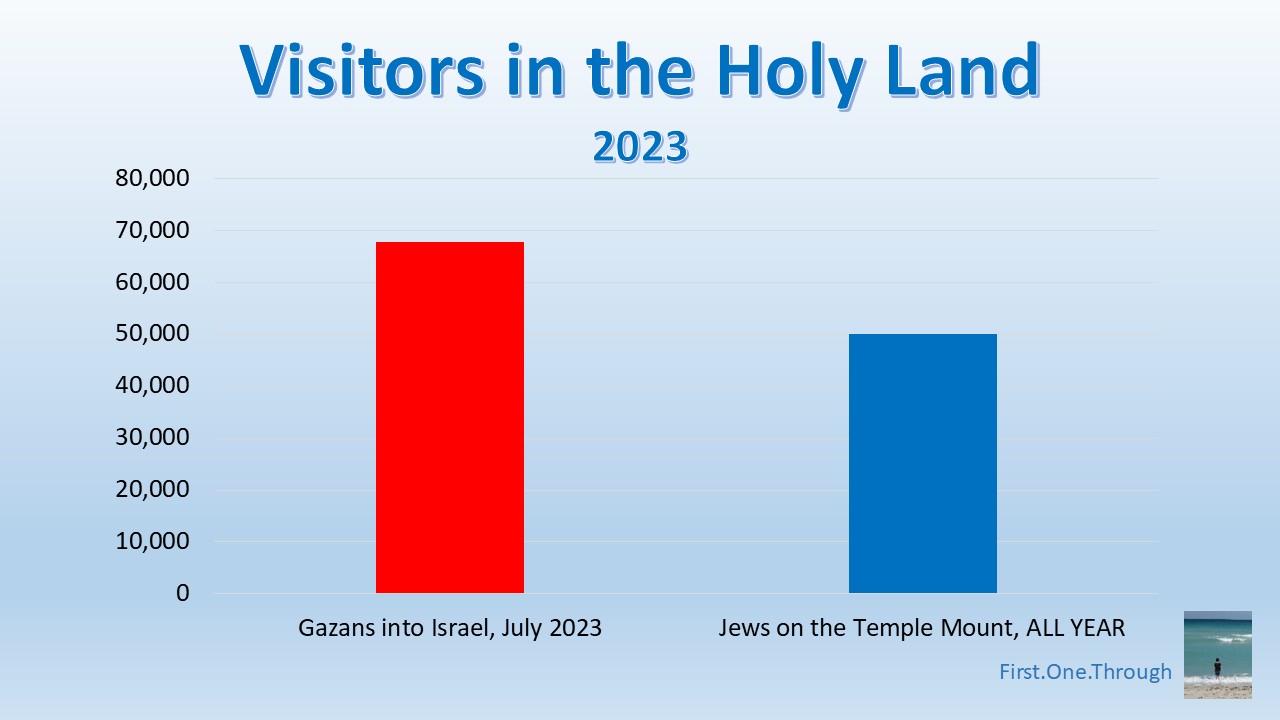
More dramatic is to reclaim Jewish rights on the Temple Mount. Why should the world care about Jewish faith and feelings if the majority of Jews treat the center of its religious devotion as a vestigial organ instead of the beating heart? Are we a living people or a hollow chamber for others to draw upon?
We must not countenance the free license for others to slander, parody, or profit off the Jewish name. The Jewish people are not public property. They are the authors and owners of their own identity—and it is time for them to act as such.
For the last several parshas, Moses has been addressing the children of Israel with a constant refrain: follow the commandments in the land, and you will be blessed; stray from them, and you will lose your inheritance. To us today, these verses are about mitzvot — the commandments that define Jewish life. But to the Israelites standing on the banks of the Jordan, the charge must have sounded different.
They had just watched an entire generation die in the desert. The memory of the spies still lingered — those men who declared that the land was too difficult to conquer, that the people within were too mighty to destroy. Could such whispers have been forgotten? Surely the children had heard rumors of what their parents had repeated around campfires for forty years. And now, standing on the edge of the land, they might have expected Moses to lay out the strategy, the order of battle, the plan of conquest.
Instead, Moses did something else entirely. He skipped the war. He jumped straight to what life would look like after. The rules of worship, the rhythms of daily life, the blessings and curses of obedience. It was as if the battles ahead — Jericho’s walls, Ai’s ambush, the wars against mighty kings — would be non-events.
Imagine a coach gathering his team before kickoff and skipping the playbook. Instead, he passes out dinner menus for the victory banquet to follow. No Xs and Os. No defensive schemes. Only a vision of celebration after the game.
Why? Perhaps it was Joshua’s role to direct the war, the next chapter of the Tanach already waiting to be written. Perhaps Moses, who knew he would not enter the land, wanted to leave the people with principles for the future. Or perhaps Moses was teaching something deeper: that the wars were only one part of securing a peaceful future. That the real challenge was not in winning the land, but in living faithfully within it.
The truth is, the dream of the land was already realized — even if the Israelites didn’t know it. Hundreds of years of diaspora were ending. The promise was being fulfilled before their eyes, not through a war plan but through divine decree. The land would be theirs. The victory was guaranteed. What remained in doubt was whether they would keep it.
Moses understood: the conquest would be won by God’s hand, but the inheritance would be maintained only through God’s law. The spies had feared giants and fortified cities, but the true danger was disobedience and forgetfulness once the land was secured. That is why Moses spoke not of how to conquer, but of how to live.
The people knew that Joshua would lead them to battle, just as he had over Amalek. And they had seen that Moses was their intermediary with God, who prayed for their success (Exodus 17:10-13). Now Moses was telling the people: you no longer need me as your agent; you are they keys to victory. Prayers during battle to secure victory; obedience thereafter to keep the peace.
Aaron and Hur hold up the hands of Moses in prayer as he grew tired, asking God’s help for Joshua to lead the people to victory in battle
And so it is today. The battles of our time are real, but they are only part of the threat. We must not be complacent. We must not assume that everything is on the battlefield. Beyond the battle plans lies our own responsibilities in living a meaningful life and knowing the source of our strength.
ACTION PLAN
Go to the United Nations and sing outside the line from Al Tira, “Utzu Etza”: “Take counsel together, and it shall come to nought; speak the word, and it shall not stand: for God is with us.”
A Muslim who visits Mecca is called a Hajji. It is one of the highest honors in Islam, the completion of the Hajj pilgrimage, celebrated by family and community as a sacred accomplishment.
A Catholic who travels to the Vatican is a pilgrim. For centuries, the faithful have journeyed to Rome, walking into St. Peter’s Square with reverence, greeted with blessing and legitimacy.
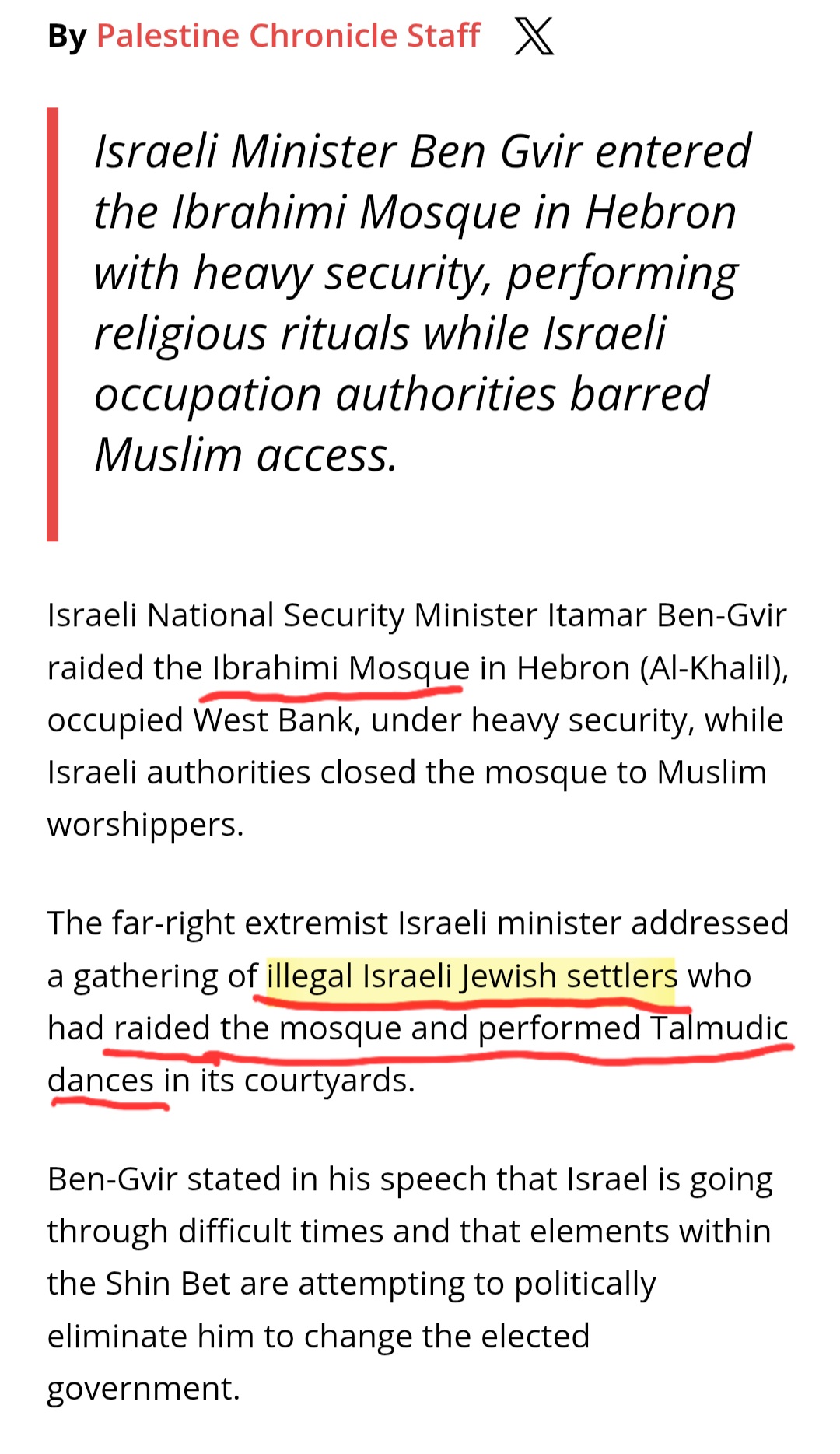
And a Jew who goes to the Temple Mount in Jerusalem — the very place where the First and Second Temples once stood, the holiest site in Judaism? That Jew is branded a provocateur. Not a pilgrim, not a worshiper, not a faithful soul ascending to pray — but an instigator, an agitator, an accused trespasser, a “settler” on their own sacred ground.
The disparity could not be starker. What is celebrated as devotion for others is condemned as incitement for Jews. For Muslims, the Hajj is a right; for Catholics, Vatican pilgrimage is honored; but for Jews, even quiet prayer on the Temple Mount is labeled an offense — by the United Nations, NGOs, and international bodies.
It is not only hypocrisy; it is erasure. To deny Jews the name of pilgrim is to deny Jewish history, Jewish identity, and Jewish legitimacy. It casts the holiest place in Judaism as alien to Jews themselves, a desecration of memory turned into policy.
And why? Because the world has normalized the jihad. It has allowed Islamic Supremacy to dictate permissible behavior, even in the Jewish holy land.
The truth is simple: a Jew ascending the Temple Mount is not incitement. It is the most ancient pilgrimage of them all — the echo of three millennia of devotion, commanded in Torah, rooted in covenant, and carried in every prayer whispered toward Jerusalem, before Islam was even created.
The real provocation is not the Jew who prays on the Temple Mount but a world that dares to tell Jews they don’t belong at the center of their faith.
ACTION ITEM
Come to the United Nations in New York City and demand Jewish rights and freedom of religious assembly in Jerusalem.