UK Parties Countermeasure on Israel

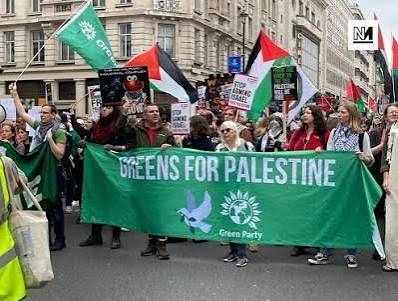
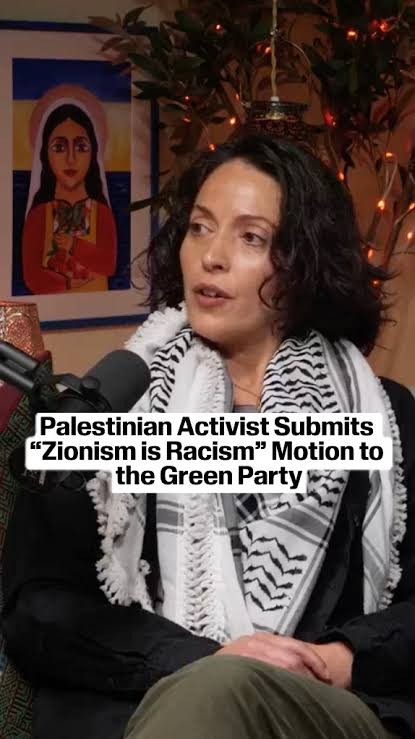
The Green Party charted a new course in British politics, calling for an end of the Jewish State of Israel and demanding a boycott of the country until it allows millions of Arabs into the territory and become a binational state. The alt-left group was immediately rebuked by members of the other British political parties.

Labour’s Bridget Phillipson, the equalities minister said the Green vote “crosses a line” and was “fundamentally wrong.” She explicitly connected her objection to the two-state solution saying “It is shameful to vote against a two-state solution for Israel and Palestine.”
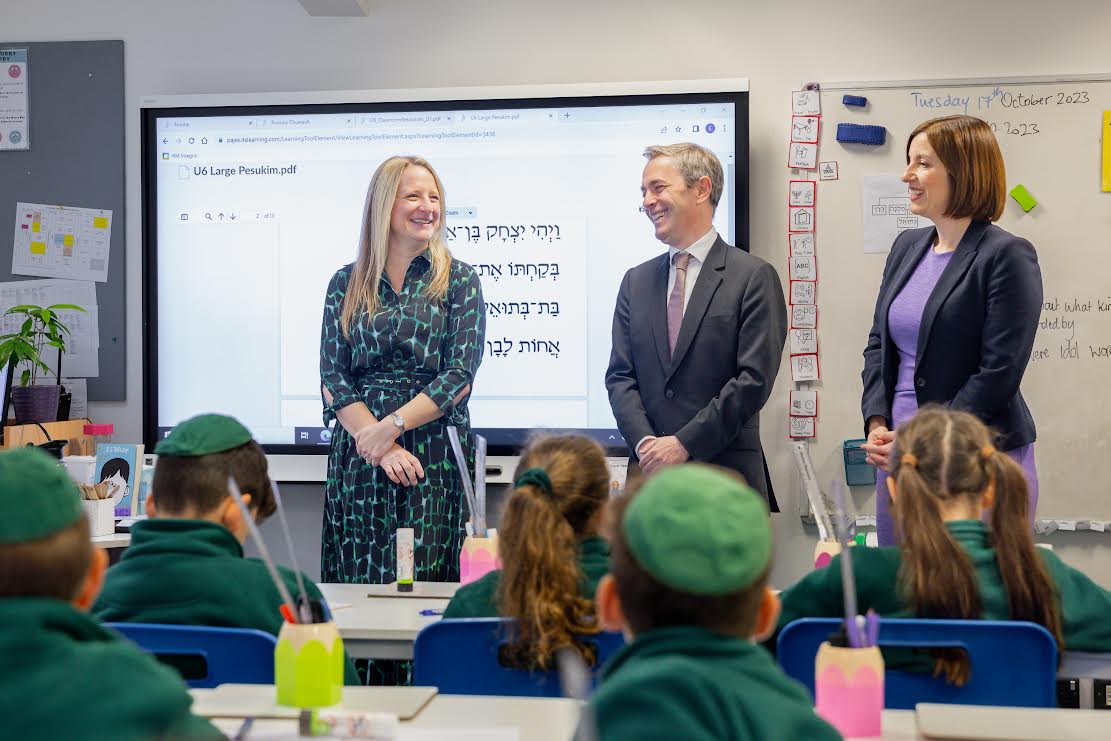
David Pinto-Duschinsky, centre, and Bridget Phillipson, right, meet with Jewish school in London with the school’s headteacher

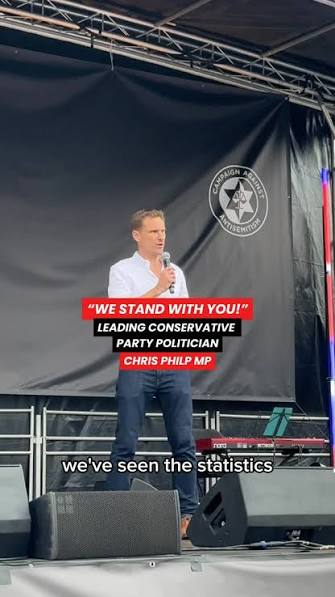
Conservatives shadow home secretary Chris Philp said of the Green vote “I think that’s completely wrong.” He called the resolution a “stereotypical and potentially antisemitic characterisation” and said the Greens needed to do more to combat antisemitism in their ranks. The Conservative Party subsequently issued an even more directly relevant statement through Philp: “British Jews should not have to disclaim a belief in Jewish self-determination and the existence of Israel.”
Liberal Democrats MP Luke Taylor MP said “This is a divisive motion that pours fuel on the fire of tensions in the UK,” and said it would leave many British Jews feeling less safe. Lib Dem foreign-affairs spokesman Calum Miller called the Green vote “deeply wrong” and a “deeply harmful failure of judgement.” Former leader Tim Farron said the Greens had been “captured.”
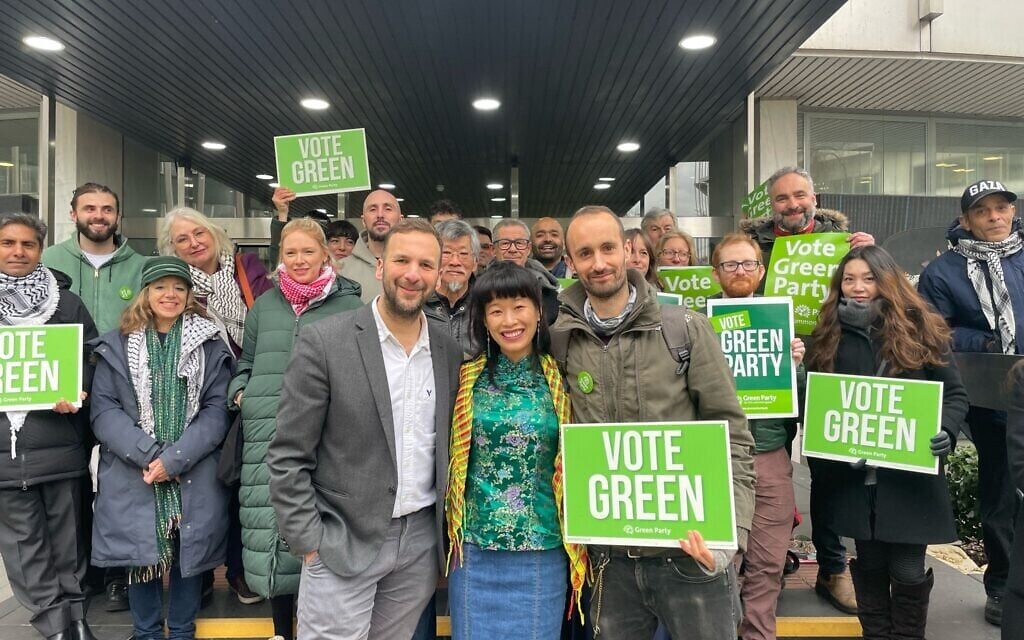
Green councillor Hau-Yu Tam (centre) pictured alongside Green Party deputy leader Zack Polanski (left). Photo Credit: London Green Party

“Zionism is pure evil and must be abolished.”
“Zionism was undoubtedly and unquestionably the Nazism of our time.” – Green Party’s Hau-Yu Tam

Perhaps it is therefore time to move beyond making statements about the Green Party vote and push forward clear countering platforms: one that unequivocally expresses support for British Jews and their heritage and history in the Jewish Promised Land. And a second that declares that every country – including Israel – has an unambiguous right to decide who to permit into its country and to admit as citizens. As such, there is absolutely no so-called “right of return” of descendants of Arabs who once lived in the territory of Israel.

The Greens put their position to a vote. Now Labour, the Conservatives and Liberal Democrats should do the same. At their next party conferences, each should introduce resolutions affirming these two simple principles.

Condemning the Greens is easy. Put the alternative on the ballot and let British political parties tell the country – and British Jews – where they actually stand.

Who Will Protect Britain’s Zionist Jews?

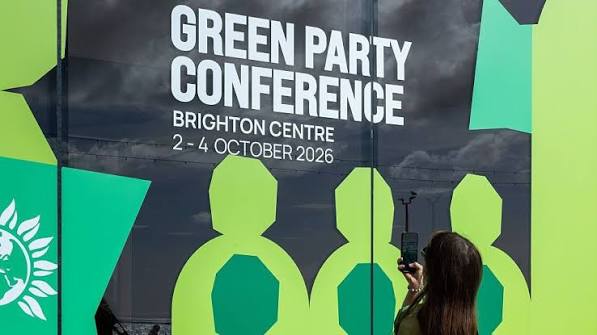
On October 4, 2026, as Jews marked Simchat Torah and the third Jewish-calendar anniversary of the Hamas-led massacre that killed about 1,200 people and saw 251 taken hostage, Britain’s Green Party voted to declare Zionism a form of racism.

By 1,022 votes to 813, the party formally declared itself anti-Zionist and endorsed replacing Israel with a single Palestinian state throughout the pre-1948 region of Palestine.

An earlier vote at the same conference was even more revealing about the party’s attitude towards Jews.

Jewish Green member Sam Alston proposed an amendment protecting Jewish members from being pressured or disciplined because they belonged to synagogues and other Jewish institutions associated with Zionism. He warned that without such protection the policy could result in “indirect religious discrimination.”

The Greens rejected his safeguard, 1,026 to 684.

So at this same conference, Jewish members were provided a safe room because some feared for their safety during the debate about Jews and the Jewish State, while rejecting their proposed protection from its new racism policy.

“We continue to see antisemitic sentiment appearing with increasing frequency,” – Laurence Taylor, the head of counter-terrorism policing

There may also be a legal problem.

Adam Wagner KC, a prominent British human-rights barrister, has warned of a “strong risk” that the resolution contravenes the Equality Act 2010. British law protects qualifying philosophical beliefs, and Wagner argues that Zionism is likely capable of qualifying for that protection.

There is already precedent from the other direction. David Miller, the former University of Bristol professor, successfully established before an employment tribunal that his anti-Zionism qualified as a protected philosophical belief under the Equality Act. Greens for Palestine cited the Miller case in defending anti-Zionist beliefs before the conference.

British law may already protect both the anti-Zionist and the Zionist.

The Green Party is no longer a fringe environmental entity. Membership has surged above 200,000, tripling its total in a single year.

Their electorate also looks markedly different from Britain as a whole. Analysis of the 2024 Green vote found an average age of 42 compared with 49 across the electorate. Green voters were more female, much more likely to be university graduates and less likely to own their homes. They were also twice as likely to be Muslim – 6 percent versus 3 percent nationally – and considerably more likely to have no religion.

The two conference votes reveal something more troubling.

While the voters against Zionism and protection for Jews stayed roughly the same – 1,022 and 1,026, respectively – 16 percent of those supporting Israel did not vote on protections for Britain’s Jewish community.

That leaves a question extending well beyond this conference: As hostility to Zionism moves deeper into the politics of the alt-left, who will insist on protecting Jews whose religious and communal lives remain connected to it?

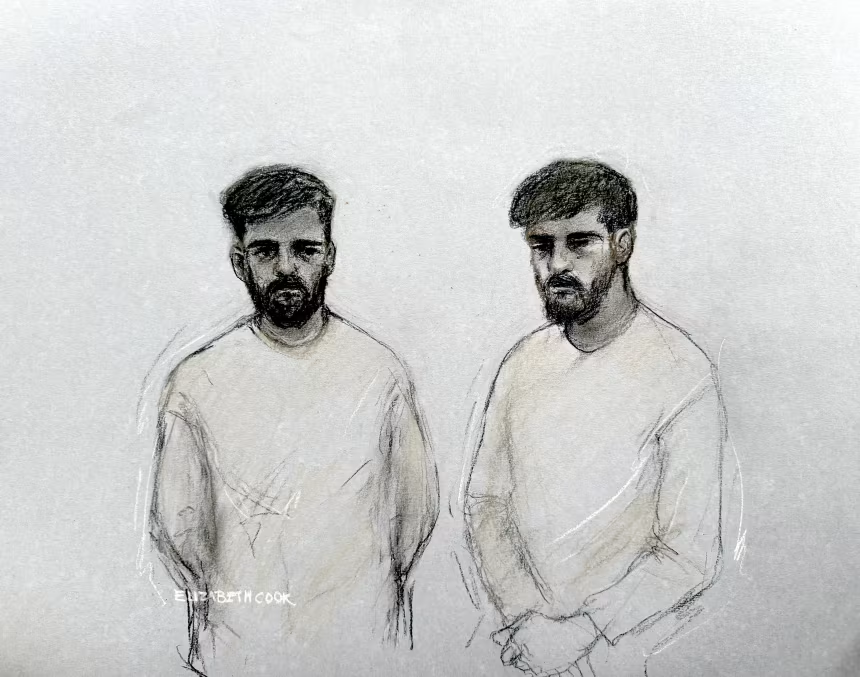
Two Iranian men – Salam Ahmadyan, 36, and Rahman Salehi, 34 – charged with attempting to bomb a synagogue in Manchester on Yom Kippur 2026, one year after other Jews were stabbed to death in the city