To read the Western press, one might believe that the Stateless Arabs from Palestine (SAPs) in Gaza and the West Bank are reluctantly resigned to the idea that Hamas must go. Headlines routinely imply a growing consensus that Hamas is the past and some renewed Palestinian Authority is the future.
It could not be further from the truth.
The October 2025 PCPSR poll shows — unambiguously — that the Palestinian public has not turned away from Hamas. The majority would elect Hamas. The majority still supports the October 7 massacre. The majority wants Hamas to never disarm. This isn’t a fringe view or a warped reading of the data; it is the mainstream sentiment of Palestinian society two years after the massacre. Western analysts may avert their eyes, but the numbers do not.
And the Palestinian Authority knows this. That is why it continues to shield Hamas — not confront it.
A perfect illustration can be found in WAFA, the PA’s official news agency. In reporting on a session held by Canada and the European Union calling for a renewed diplomatic push, WAFA framed the story as a call for a “two-state solution,” “Gaza reconstruction,” and vague Western support for Palestinian aspirations and condemnation of Israeli actions.
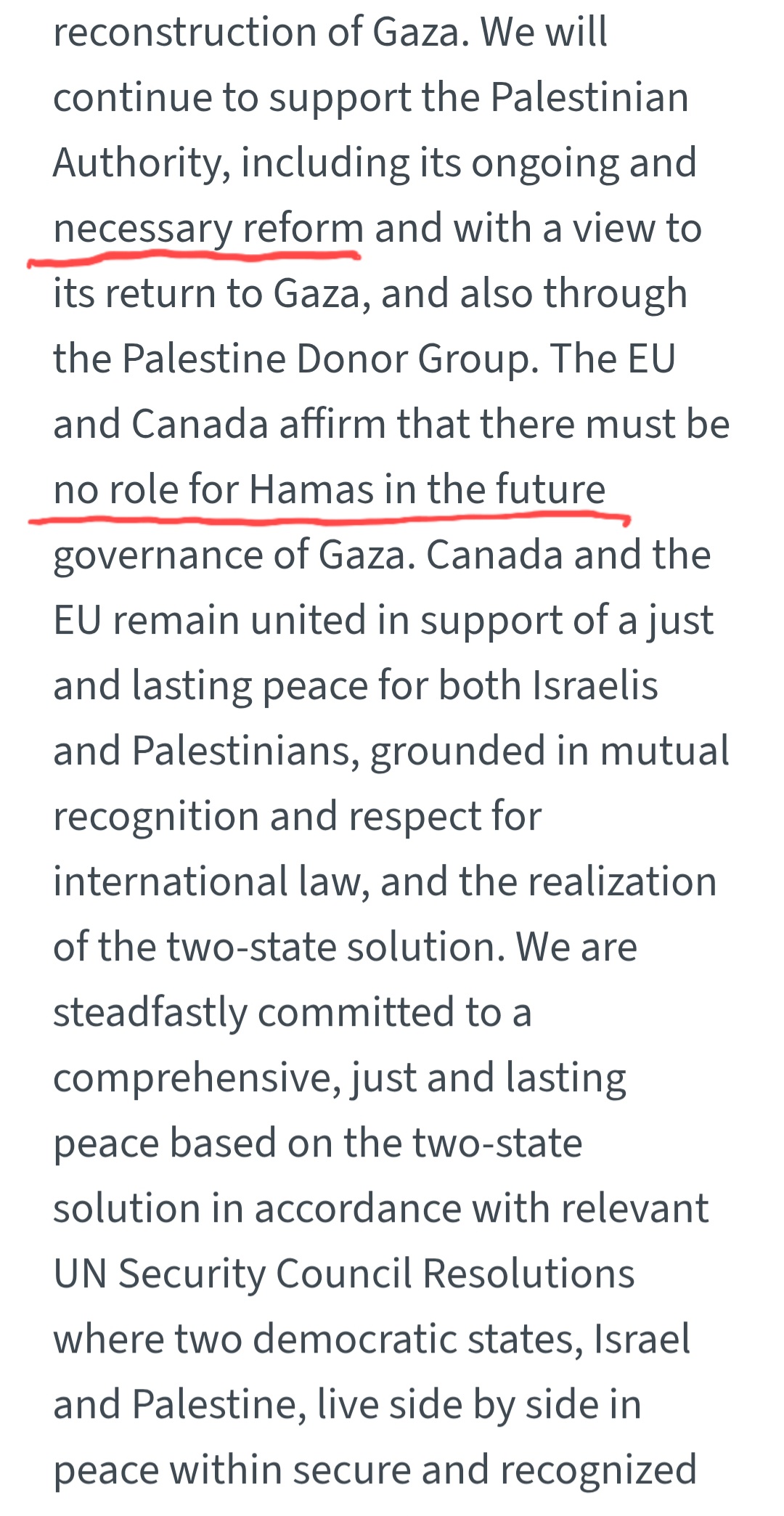
What it didn’t report is the crucial part: those same governments insisted that the Palestinian Authority must undergo significant “necessary reform” and that Hamas must have absolutely “no role” in the future of Gaza. This was not an afterthought in the meeting; it was a headline demand. Yet WAFA hid it from the Palestinian public.
Joint declaration from EU- Canada on November 12, 2025
Why? Because telling the truth would expose the central problem: Palestinian society is not being prepared for peace. It is being insulated from accountability.
A healthy political culture would confront the society’s own extremism. It would publish the poll numbers honestly and begin the painful process of restructuring education, media, and institutions. The PA instead chooses the opposite — suppressing outside criticism of Hamas and pretending that international actors want a Palestinian state under current conditions.
Deradicalization and re-education are not optional. They are essential. And it is unmistakably clear that Palestinian society is incapable of doing so on its own.
For decades the PA has relied on a strategy of deflection — blaming Israel, minimizing internal dysfunction, and shielding extremist factions to avoid backlash from the street. That strategy has produced a generation that celebrates massacre, rejects coexistence, and sees disarmament as betrayal.
The Western world may cling to the comforting fiction that Hamas is isolated and universally rejected by Palestinians. The data say otherwise. The PA’s deliberate omissions say otherwise. The very architecture of Palestinian political life says otherwise.
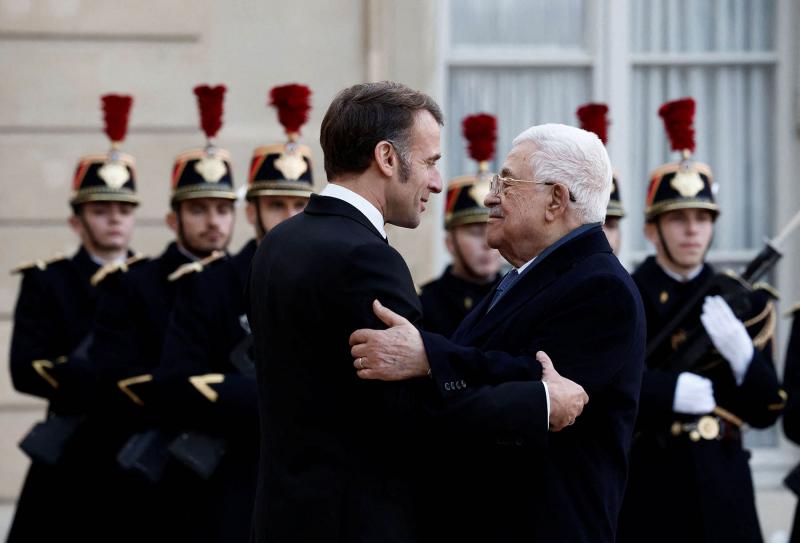
France may assuage the Muslim street when its Prime Minister has meetings and posts photos with PA President Mahmoud Abbas, but those actions make it complicit in promoting not only a fiction, but affirmatively dressing the wolf in sheep’s clothing.
French President Emmanuel Macron welcomes Palestinian President Mahmoud Abbas at the Elysée Palace in Paris, France November 11, 2025. Abbas told the west “We are committed to a culture of dialogue and peace, and we want a democratic, unarmed state committed to the rule of law, transparency, justice, pluralism and the rotation of power.” No such statement appeared about the meeting in Wafa.
Until the international community confronts this reality — and insists on genuine deradicalization rather than polite diplomatic euphemisms — there will be no meaningful change in Gaza, the West Bank, or the prospects for peace.
In an astonishing development, a majority of U.S. Senate Democrats voted to withhold “offensive weapons” from Israel. It was a symbolic vote — the measure failed with Republicans opposing the bill — but the message is clear: Israel may block rockets but not destroy the launchers. Defense in this new moral order means absorbing blows gracefully, not ending the threat.
At the same time, France — home to the third-largest Jewish population in the world — announced it will recognize a State of Palestine without requiring demilitarization. Paris is prepared to bless a future Palestine that could legally import tanks, rockets, and drones — even as its largest faction, Hamas, wages a genocidal war.
The Illusion of Morality
This is not a call for peace but a demand that Israel remain permanently in the center of the bullseye. Washington Democrats and European leaders want to look moral by limiting “excessive force,” but they are scripting a world where Jews may bleed — just not too much at once.
Recognizing a Palestinian state without disarming it legitimizes Hamas’s war aim. It signals that mass murder, hostage-taking, and open calls for Israel’s destruction do not block your path to statehood — they accelerate it. That is appeasement, not diplomacy.
Hamas kidnapping Israeli women on October 7, 2023
The Right to Finish the Fight
Israel was built on thousands of years of history, and the vow “never again.” That means more than survival — it means the right to end the threat. Defensive weapons stop today’s rockets; offensive weapons prevent tomorrow’s.
If Democrats in Washington vote to deny Israel offensive weapons, and if Paris recognizes an armed Palestine, the message is the same: the Jewish state must fight forever.
True peace will not come from tying Israel’s hands — it will come from removing those committed to its destruction and extinguishing their dream.
ACTION ITEM
Contact the Democratic senators who voted to block weapons to Israel in the middle of its multi-front war and share this article.
In 1967, just days after Israel’s miraculous victory in the Six-Day War — a war it neither started nor wanted — French President Charles de Gaulle publicly rebuked Jews:
the Jewish State was “war-like state bent on expansion”
impugned the Jewish people “throughout the ages” as “an elite people, sure of themselves and domineering,” who had “created ill will in various countries at various times.”
The accusation wasn’t merely tone-deaf — it was malicious in intent. Israel had just repelled a coordinated Arab onslaught aimed at its annihilation. In response, rather than offering admiration or even neutrality, de Gaulle reached for the language of old European antisemitism: that Jews are too proud, too successful, too capable — and therefore must be cut down to size.
Historian Bernard Lewis noted how this framing, after 1967, became a tool not just of European elites but of Arab leaders humiliated by defeat. The Jews had survived — worse, they had won — and for that, they were to be condemned as arrogant victors. He quoted one writer who said “It was bad enough to be conquered and occupied by the mighty empires of the West, the British Empire, the French Empire, but to suffer this fate at the hands of a few hundred thousand Jews was intolerable.”
Fast forward to today.
French President Emmanuel Macron repeats the posture of his predecessor, albeit with 21st-century polish. After Hamas butchered Israeli civilians in their homes on October 7, 2023, Macron offered sympathies — but quickly shifted blame back to Israel.
In the first weeks after Israel struck back at Hamas, Macron accused Israel of collective punishment, while never applying the same outrage to Hamas’s use of civilians as human shields, or to its decades-long charter of antisemitic terror.
And now, Macron leads calls for France to unilaterally recognize a Palestinian state — not as a reward for peace, but as a diplomatic slap to the Jewish state for defending itself too well.
French President Emmanuel Macron and Israeli Prime Minister Benjamin Netanyahu
Like de Gaulle, Macron cloaks condescension in the language of law and balance. But the message is unchanged:
When Jews are victims, they earn pity. When Jews resist, they invite suspicion. When Jews win — they must be reprimanded.
To call Jews “domineering” after a war of self-defense is to rewrite the story of Jewish survival into one of guilt. France did it in 1967. It is doing it again today.
In November 2023, the French Parliamentary Delegation for Intelligence (DPR) identified Russia, China, Turkey and Iran as the primary countries involved in “omnipresent and lasting threat[s]” of foreign interference in France and Europe. The committee pointed to “fake news is a weapon of war against the West,” and noted that China has about 250,000 agents on the ground.
The DPR report chastised French society for not doing more, noting “the first vulnerability is naivety, which stems from a lack of awareness of the danger. This concerns public decision-makers (elected representatives and senior civil servants) as well as businesses and academic circles…. These foreign powers are also taking advantage of a form of naivety and denial that has long prevailed in Europe.”
The threat is more than “fake news.” Russia was accused of paying three Serbian nationals of anti-Jewish vandalism in France last week. This is similar to the October 2023 situation of Russians accused of paying Moldovan nationals of antisemitic vandalism.
The French government has not been unaware. In January 2023, France forced Russian-owned media RT to shut down to curtail its negative influence on French society. In October 2020, President Emmanuel Macron announced plans to deport 231 foreigners who held radical Islamic beliefs, two days after a Russian-born Islamist beheaded a teacher in France. The country has continued the policy, expelling a Tunisian imam in February 2024 who had “backward, intolerant, and violent conception of Islam, likely to encourage behaviors contrary to the values of the Republic, discrimination against women, identity retreat, tensions with the Jewish community, and jihadist radicalization.”
Macron announced plans to fight radical Islamism after beheading of a teacher who showed a picture of the Islamic prophet Mohammed, a year after calling Islam a “religion in crisis.”
In May 2025, the French government declassified a report titled “The Muslim Brotherhood and Political Islam in France.” The 73-page document describes how the organization is destabilizing French society through schools, mosques and community centers. The group is funded by foreign governments and has an estimated 100,000 members in France (about 0.15% of the population).
The French government knows of the dangers of radical Islam outside of the country as well. Hamas, the Palestinian arm of the Muslim Brotherhood, is a designated terrorist group by the European Union, and France stated in December 2023 that it would work with the EU to dry up the terrorist group’s funding. Yet France encourages “inter-Palestinian reconciliation” which would include Hamas in the Palestinian Authority government. France also backs UNRWA, the agency that seeks to move millions of Stateless Arabs from Palestine (SAPs) into Israel, despite them seeking the end of the Jewish State.
So despite France fighting the dangers of radical Islam and foreign influence inside France (which make up a miniscule percentage of the population), it seeks to use the June 2025 United Nations conference it will co-chair, to have several nations pressure Israel to embed radical jihadism inside the Jewish State.
According to Jewish Insider, French conservative intellectual Michel Gurfinkiel said that “the main point of the [French Muslim Brotherhood] report is not what it says about the Muslim Brotherhood. The real point is the conclusion that the French government should make efforts to bring French Muslims into the French fold, and that means … to recognize a state of Palestine. There is a kind of interplay here: the interior minister wanted to publish the report in order to give legitimacy to his own policy against Islamism in France. But it was published with the approval of President Macron … and obviously, the real goal of the president was to tell everybody, ‘I must recognize a State of Palestine because it is the only way for us to fight the Muslim Brotherhood.‘”
French President Emmanuel Macron and Israeli Prime Minister Benjamin Netanyahu strained relationship over the Hamas war
Macron’s “France First” policy will attempt to sacrifice Israel to radical Islamism in an effort to buy a few years of peace with the small but growing Muslim Brotherhood in France. He may believe that such move will curtail attacks against the 450,000 Jews in the country as well, despite such maneuvers forcing Israel to continue to battle Hamas, yielding more global attacks against Jews.
There are constructive things that France can do with Saudi Arabia to fight foreign influence and radical jihadism, and it is not to recognize a Palestinian state:
France and Saudi Arabia should clearly state that they define all aspects of Hamas and the Muslim Brotherhood to be terrorist organizations. It would be banned and a criminal offense for anyone to voice or express support or solidarity with those entities. Consequently, any Palestinian government that included Hamas would be isolated and not receive any funding or support. Both countries will encourage other countries to do the same.
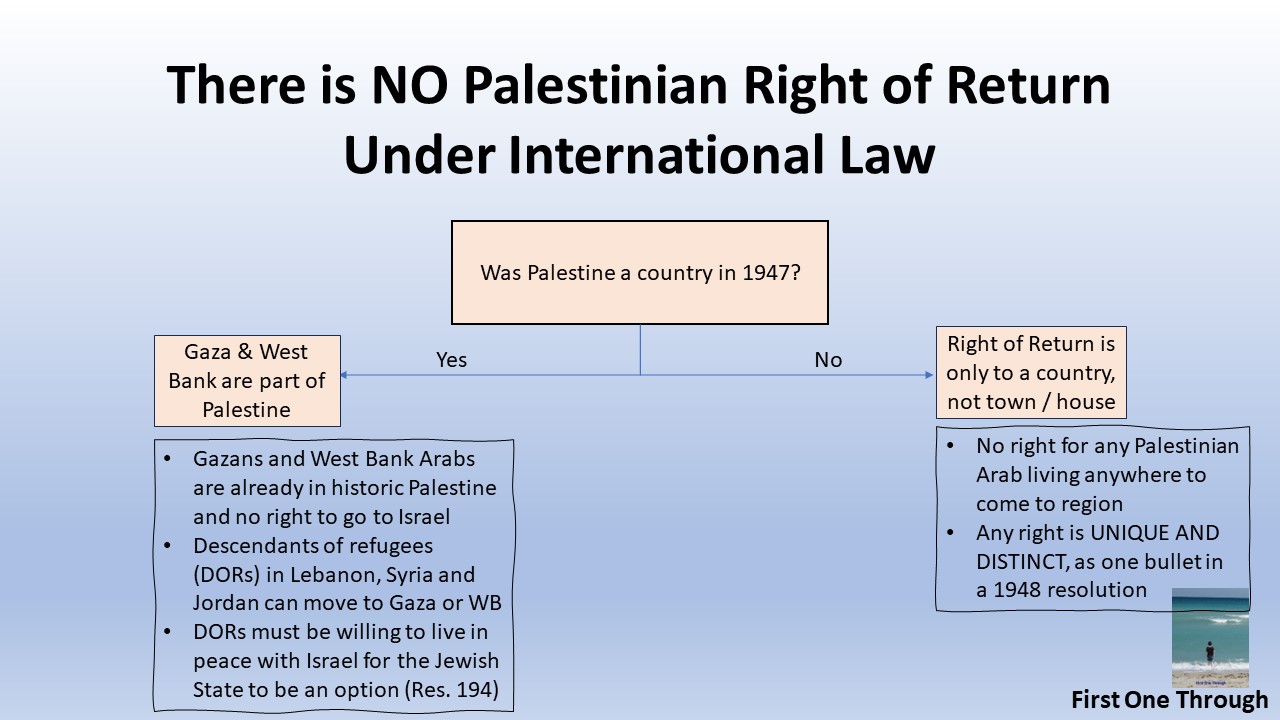
The SAPs so-called “Right of Return” to homes where grandparents lived will only be settled via financial mechanisms, and no SAPs will have an “inalienable right” to move to Israel. Israel will be the sole party which decides who enters its borders, as every sovereign nation does.
These two steps lay the groundwork for SAPs to reorient their culture from the destruction of Israel towards building a new country. It would be the correct and consistent path for France to combat foreign influence and extremist Islamism, both in France and in Israel.
On May 23, 2025, France said it is “determined to advance the implementation of the two state solution.” The June conference in New York that it will chair with Saudi Arabia titled “the International Conference for the Peaceful Settlement of the Palestinian Question and the Implementation of the Two-State Solution” is designed to focus on IMPLEMENTATION. France made clear that it expects “Irreversible steps and concrete measures for its implementation” to make the future a reality.
The combined effort of a western country and the dominant force in the Arab world to spearhead the effort, might lead to a balanced consensus that can help the parties forward. To be successful, the team must be realistic about the goals and constraints of both Israel and Palestinian society, and move on a realistic timeframe. Most importantly, it must work on an ENDURING peace that will last, not simply getting to an agreement.
Here are seven constructive steps that could lead to a stable two-state solution:
1. Disarm All Palestinian Militias
Peace starts with law and order. The Palestinian Authority has no monopoly on violence in the territories it claims to govern. Hamas and Islamic Jihad still run Gaza. In the West Bank, terrorist groups like Lion’s Den and the Jenin Brigades run wild with guns and explosives.
France needs to lead an international push to fully disarm all terrorist militias, not just generic phrases of “condemning violence.” All arms must be placed under the control of the Palestinian Authority (PA), or there’s no point in talking about sovereignty. No state — and certainly not Israel — can accept a terror enclave as its neighbor, as has existed in Gaza since 2007.
2. Elections With Rules
The last Palestinian elections were held when Justin Beiber became legally allowed to drink alcohol. Mahmoud Abbas was elected in 2005… for a 4-year term. He’s now on year 20.
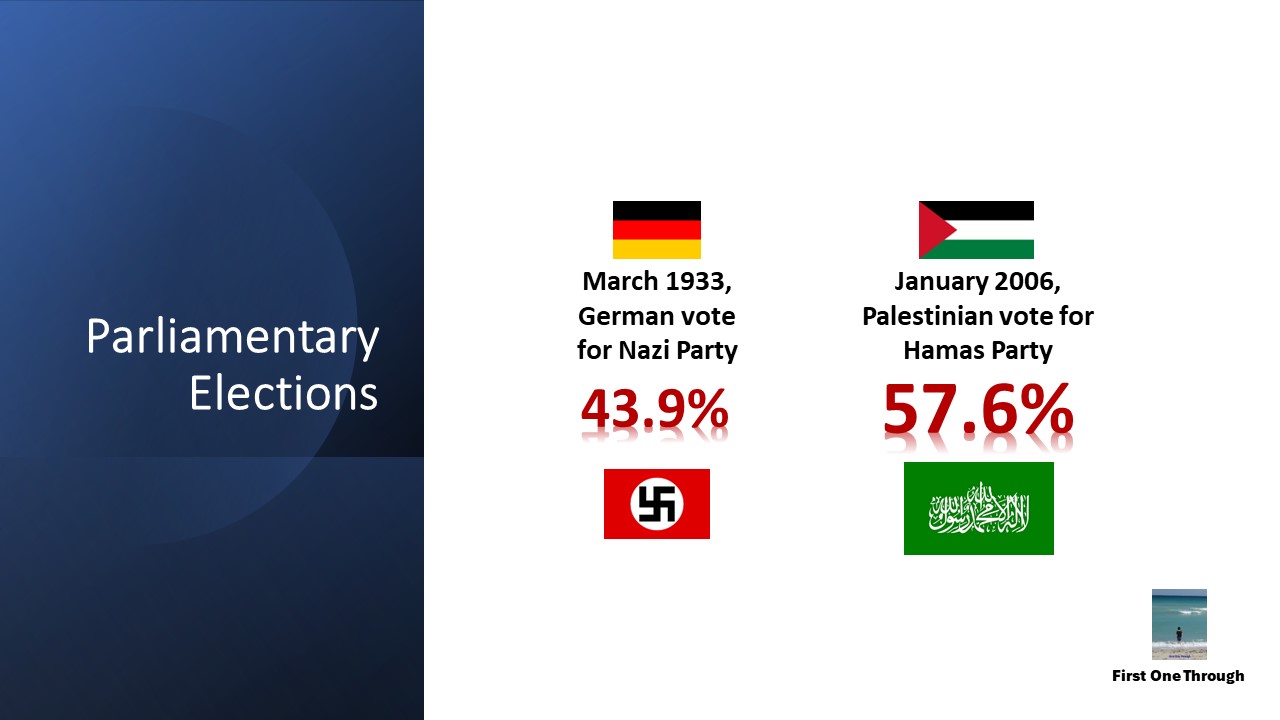
New elections must be held, but not every group gets to play. Hamas — a terrorist organization by U.S., EU, and Israeli designations — should not be allowed to run, just like Nazis weren’t allowed to run in post-war Germany. The party should be outlawed.
France and Saudi Arabia should insist on clear criteria: no party that promotes violence, antisemitism, or the destruction of Israel gets a seat at the table. There is no pathway to an enduring peace if there is an underlying state of war.
3. Reform Education — Stop Teaching Hate
An Enduring Peace isn’t signed on paper; it’s taught in classrooms and instilled in society.
As part of de-Hamasification of Palestinian society, schools — especially and including those run by UNRWA — a complete overhaul of Palestinian education, with international oversight to remove antisemitic and violent content. IMPACT-SE has written about this problem for years, and concrete steps must be taken to allow a future of coexistence.
4. Stop Treating Jews Like Foreigners in Their Homeland
Palestinian schools aren’t the only problem. The United Nations is rank with Jew-hatred and one cannot expect Palestinians to be less anti-Israeli Jews than the global body.
UN Security Council Resolution 2334 outrageously declared that Jews living in eastern Jerusalem and east of the 1949 Armistice Lines with Jordan (E49AL) are somehow illegal — a modern form of antisemitism dressed up in legalese. UNSC 2334 should be renounced and rescinded as part of the steps towards an enduring peace.
France must reject the idea that Jews should be banned from parts of their ancestral homeland. At the same time, to facilitate compromise, a cap on Jewish residents east of the 1949 lines — say 15% of the overall population — could be introduced to avoid major demographic shifts in a future Palestinian state.
5. End the So-Called “Right of Return”
The Palestinian demand that millions of descendants of refugees be allowed into Israel is not about peace — it’s about destroying Israel demographically. It’s a fantasy rooted in grievance, not reality.
France must take the lead in declaring the Palestinian “right of return” over. In its place, a compensation fund should be set up — funded by Israel, Arab countries that started the 1948 war, and international donors. A similar fund should be set up for the descendants of Jews from Arab countries which were expelled in the decades after 1948. Work should begin now to compile a list of the properties which were lost and the related descendants who will collect associated reparations.
6. tighten the border framework, including jerusalem
The Saudi Peace Plan of 2002 suggested that Israel retreat to the 1949 Armistice Lines — a temporary ceasefire line, not a border. That’s not a starting point. That’s a non-starter.
France and its partners should endorse a realistic territorial framework: borders will fall somewhere between the current Israeli security barrier and the 1949 lines, through mutual negotiations. Land swaps are fine — as long as they reflect demographic realities and security needs.
UNRWA, the UN agency that was supposed to help refugees, has become a sprawling, corrupt bureaucracy that perpetuates dependency and fuels incitement. Its existence undermines the Palestinian Authority and entrenches the myth of perpetual refugee status.
France and Saudi Arabia should lead the call for a phased shutdown of UNRWA, starting in Gaza and the West Bank. Services should be handed over to the PA — and resettlement should begin for Palestinians in Lebanon, Syria, and Jordan, with annual caps to avoid regional overload.
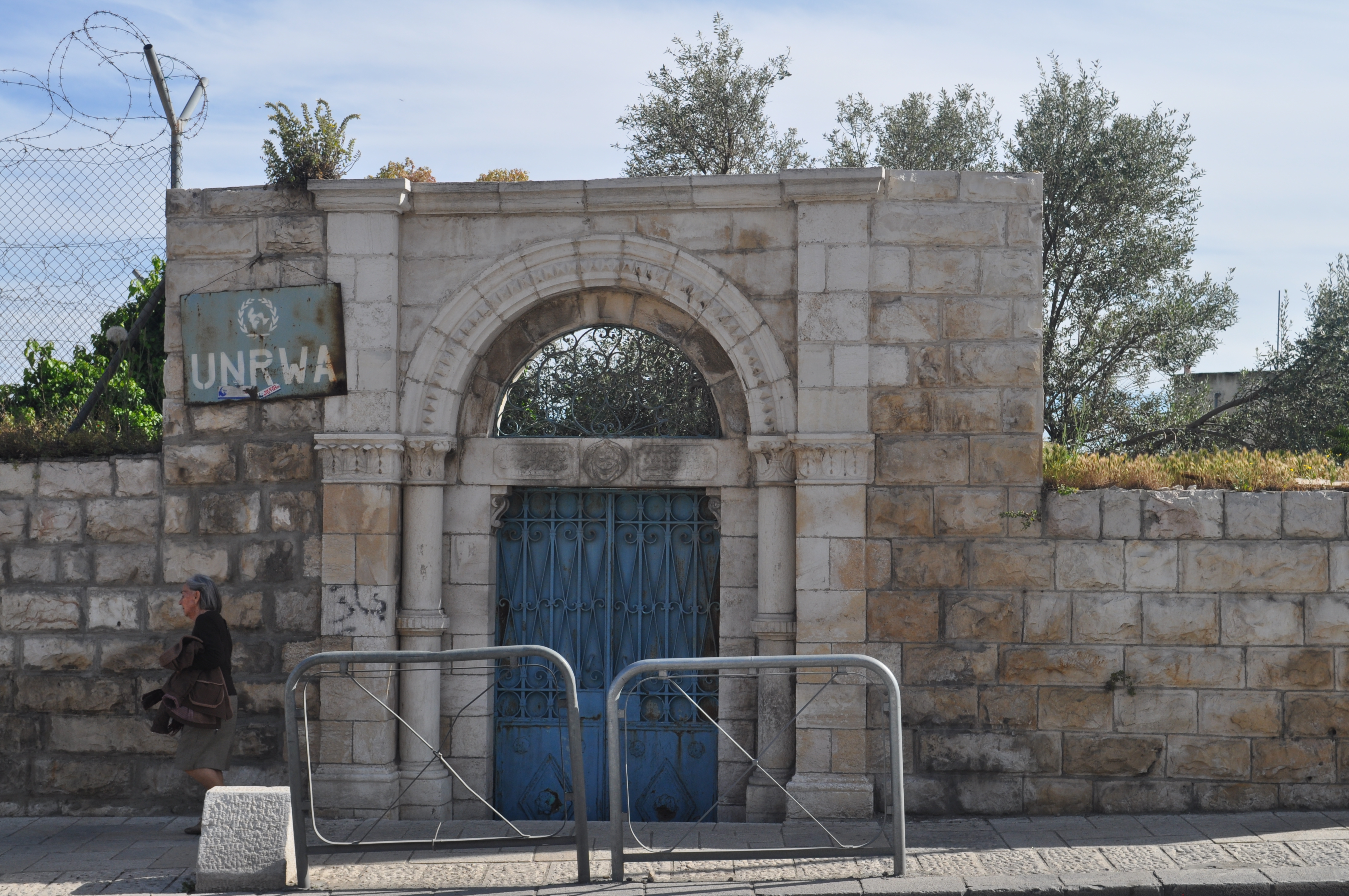
UNRWA offices in Jerusalem (photo: First One Through)
Bottom Line
France says it wants permanent changes on the ground. Good. The Middle East has had enough of circular negotiations, terrorism-as-usual, and international hypocrisy.
If France is ready to be honest, clear-eyed, and courageous, it can help move the region toward peace. But if it sticks to the same old script — blaming Israel, indulging Palestinian rejectionism, and hiding behind the UN — then we’ll just keep getting the same instability, bloodshed, and failure.
Peace will not be achieved overnight and “concrete” steps must be phased with reality. France and Germany gradually became allies after World War II with the benefit of the deNazification of Germany. Germany even made peace with the Jewish State over time once it was committed to avoid the hatred of its past. An overhaul of the Palestinian mindset and rejection of radical jihadism and goal of eliminating the Jewish State, under the sheepherding of Saudi Arabia can help map a better course for the region.
France must internalize the needed overhaul of the “deformity in Palestinian culture,” to quote James Zogby, President of the Arab American Institute who spoke to the UN in June 2023. Saudi Arabia must overlay the Abraham Accords on top of its 2002 Peace Plan to refine it to account for the reality of the last several years.
The emphasis of the France-Saudi chaired conference must be on the direction, not on the permanence of “concrete” and “irreversible” steps, to find a less violent and just future for the region.
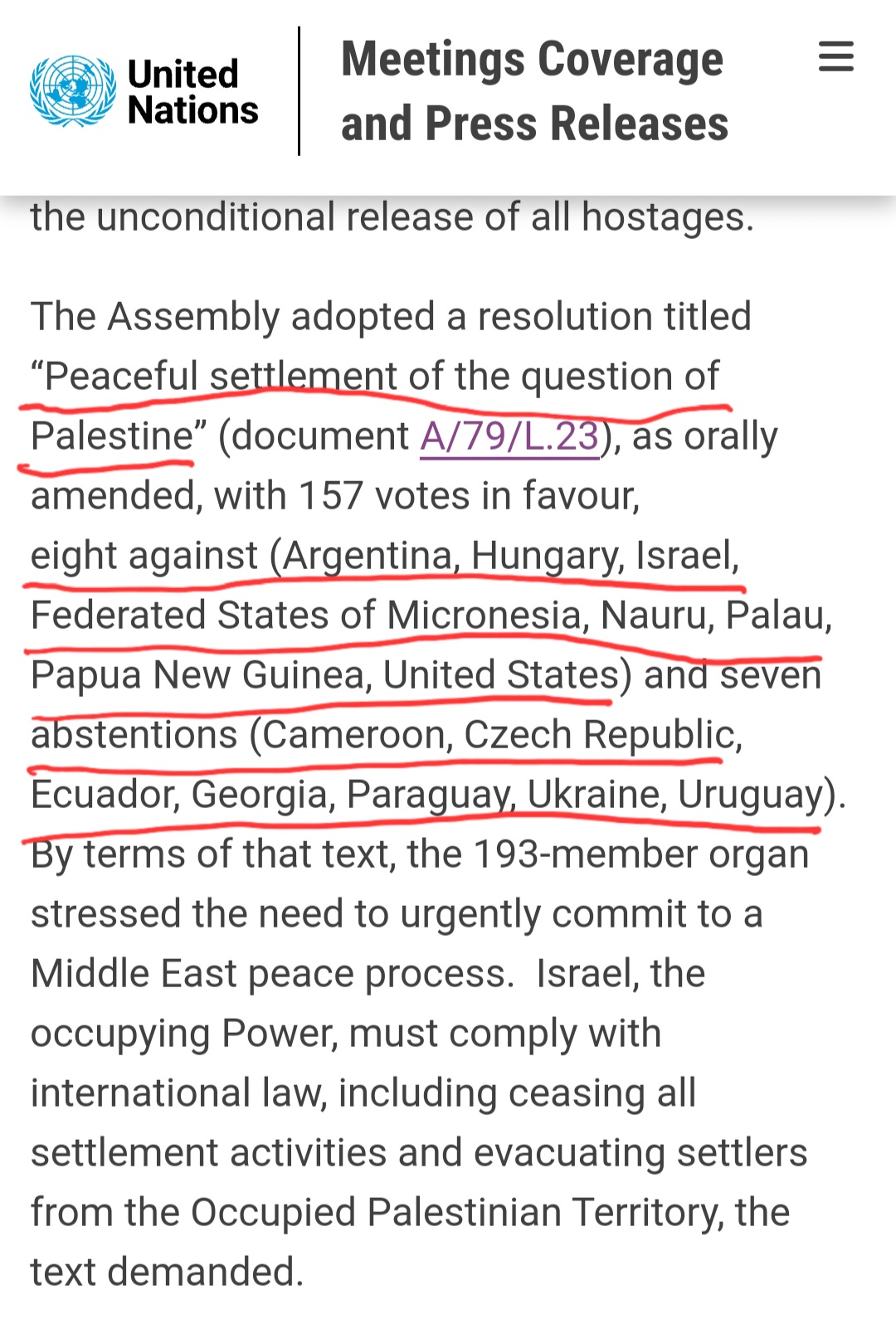
The United Nations General Assembly passed one of the most anti-Israel resolutions in its history on December 3, 2024. Titled “Peaceful settlement of the Question of Palestine,” drafted on November 25, it demands that Israel surrender to every Palestinian Arab demand, including giving up every inch of land that Israel recaptured in its defensive June 1967 war, removing all Jews from those lands to recreate the ethnically-cleansed situation advanced by the Jordanian army in the 1948/9 war, and to settle millions of Palestinian Arabs who never lived in Israel, into Israel.
The resolution passed with 157 states in favor, eight against (Argentina, Hungary, Israel, Micronesia, Nauru, Palau, Papua New Guinea and the U.S.) and seven abstentions (Cameroon, Czech Republic, Ecuador, Georgia, Paraguay, Ukraine and Uruguay).
Where was Australia, Canada, France, Germany and the United Kingdom in rejecting this horribly biased resolution? Even though votes at the General Assembly hold no legal weight, the antisemitic vote amidst the global wave of antisemitism is both revolting and frightening.
And the resolution IS ANTI-JEWISH.
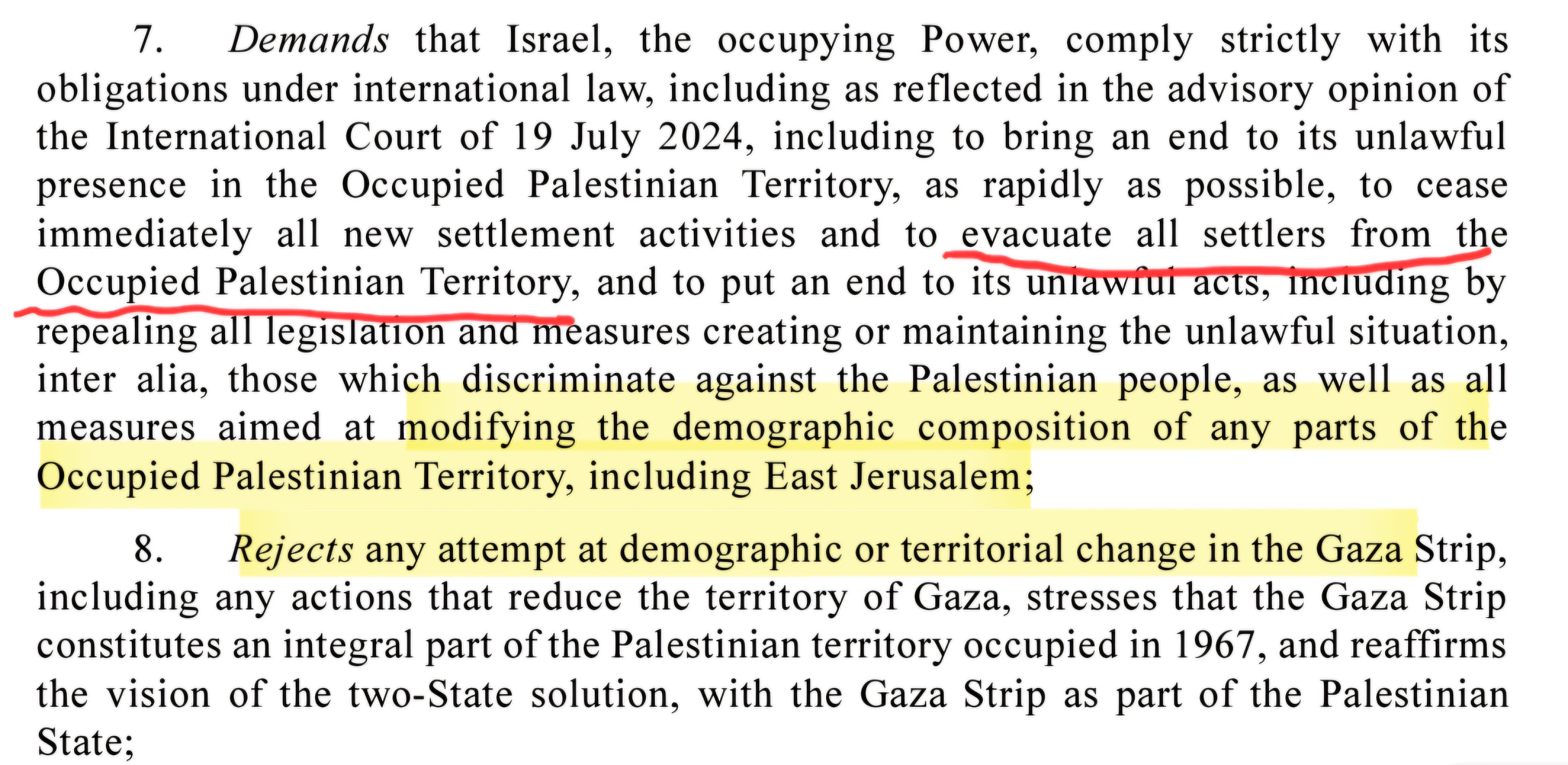
Section 7 demands that Israel “evacuate all settlers from the Occupied Palestinian territory” and stop “modifying the demographic composition of any parts of the Occupied Palestinian Territory, including East Jerusalem.” That’s a direct call to remove Jews – and only Jews – from all lands east of the 1949 Armistice Lines (E49AL) including Judaism’s holiest location of the Old City of Jerusalem.
“Settlers” means Jews – and only Jews – at the UN.
“Demographic composition” means the presence of Jews – and only Jews – at the UN.
The paltry number of Jews in the world are concentrated in a handful of countries today. Israel and the United States account for roughly 85% of global Jewry, but significant numbers live in France (453,000), Canada (391,000), UK (290,000), Germany (116,000) and Australia (113,000). These countries are seeing a toxic tsunami of Jew hatred run through the streets over the past year, and the governments are now blessing the idea that Jews should be banned from certain lands and stripped of basic human rights, even in their holy land.
The UN has moved passed the “Zionism is racism” resolution of the 1970s and sanctioned Jew hatred. If Jews can be confined to certain locations and banned from others in the Jewish holy land, it stands to reason that they can easily be placed into ghettoes and denied rights everywhere else.
Israel may be winning the regional war militarily, but global Jewry is losing basic human rights in the process.
The French Riviera has much to offer in addition to beautiful beaches and towns, including numerous kosher restaurants and museums. Alas, the quality varies which I share honestly here. Note that this review is ground covered over nine days, so many locations are not reviewed. Below I recap the food, museums and towns.
FOOD
There are three main centers for kosher bakeries, stores and restaurants between Saint Tropez and Menton, on the border of Italy. Those are Cannes, Juan-les-Pins and Nice. Overall, Cannes has the best food of the three.
Cannes
It may only have half the size Jewish population of Nice but the food is better and the attitude of the people running the restaurants is much friendlier.
Moye. Moye is the finest of the restaurants in the region. Located on the eastern end of the main beach street of La Croisette, one can eat either outside (which can be a little noisy) or inside in a finely decorated establishment. The food is very good with a wide selection of meat main dishes, sides, wines and desserts. Try the nougat for dessert; it originated in the region and Moye makes an excellent version which doesn’t have the sticky, taffy-like consistency found in packaged varieties, but softer and more cake like. Nougat somewhat resembles macaroons in taste as it is made of egg whites, honey, sugar and almonds. The staff here is very friendly and accommodating.
Nougat dessert at Moye, Cannes, France
Le Tovel. On a quiet side street not a far walk from La Croisette is a small meat kosher restaurant. While not fancy, it had a decent menu. The steak and risotto were ready in minutes and pretty good, while the fries were oily.
Dr. Sandwich. A relatively new locale, the meat sandwich shop does not have seating. The street food is very tasty, with the sandwiches essentially made from a giant piece of challah with a slit instead of a pita pouch. Like a traditional shwarma place, you pick the salads and fillings to accompany the protein.
Bekef 26. The restaurant is attached to a makolet where one can buy a range of items including cold cuts, wine and candles. One can eat inside as we did for lunch, and the salmon dish was pretty good. Take-away cold cut sandwiches for a day trip. The staff is very friendly.
OKLM. A meat restaurant just a block from Dr. Sandwich with seating indoors and out. While not as quiet as the street with Le Tovel, it is pleasant enough outside and the food was good with large portions.
[Bakery]. There’s a small kosher bakery right next to Rouvi on Rue Louis Nouveau which has a very modest selection of items. They are fine but a far cry from the taste and appearance one finds in Paris.
Juan-les-Pins
Further east from Cannes is Juan-les-Pins, a community mostly made up of Tunisian Jews who fled in the 1960s and 1970s. There are many kosher establishments located very close to each other. Knowledge of English here is not as good as the major tourist towns of Nice and Cannes.
Kozy. A dairy café and bakery. The food is fine with a small selection of brunch food such as pancakes, eggs and sandwiches. The pastries and sweet rolls were OK.
Le Carmel. Next to Kozy is a kosher bakery that has long hours for a bakery with many locales hanging outside. Alas, the baked goods are very dry and not tasty.
Tunisian kosher bakery in Juan-les-Pins
Besbeche Azur. Just a street away from many of the kosher places is a fairly nice-looking meat restaurant called Berbeche. The meat is not very good, either lacking taste or very spicy/ salty. Foie gras was in many of the dishes, a locale favorite but not for me.
Nice
Nice is the major city in the region with a sizable Jewish community, so the kosher restaurants are a bit more spread out than in the other towns. Most are located on Rue Georges Clemenceau, and some further away. Most of the stores have the Lubavitcher Rebbe on the wall and have ties to Chabad.
Meat Bar. Near the major cluster of kosher restaurants is a small meat restaurant called Meat Bar. The menu is very limited but the dishes like lamb chops and shnitzel are very tasty. The servers are very friendly, and one is inclined to return, especially in light of the weak competition.
Falafel Sahara. Away from the cluster is a clean store selling shwarma, schnitzel and falafel. Ordering is done on a screen and eat either inside or out. Food was very fresh and tasty. Note: “green peppers” in France means jalapeno, not bell peppers.
Falafel Sahara in Nice, France
Keter. Among the cluster of restaurants is Keter, a dairy restaurant serving fish, pasta and gratin. The food is not very tasty and the staff is cold. While there is seating inside, there is no air conditioning and felt dirty.
Le Kineret. The meat restaurant has take-away options which one should consider as the store is not very clean, had no air conditioning and the staff was unfriendly. The tuna and salmon sandwiches are fine as are the baked good like meringue and biscotti. The chocolate cookies seemed weeks old. While a link to the website is included here, it is as deceiving as a dating app photo. Generally, an unremarkable B- which beats being hungry but you wouldn’t regularly visit.
Le Leviathan. While a much friendlier place than Keter and Kineret, and much cleaner, it is located on a seedy street. Don’t go there at night. The dairy food is fine (also B-) with good selection of pizza, pasta and fish.
Chabad. The shul hosts dozens of people on Friday night and has a small restaurant which we didn’t visit. While the Americans seem to reserve and pay in advance, many stragglers fill the outdoor courtyard in a classic Chabad way. Definitely enough food, with most filling up on the challah.
Try the 123cacher app to find the various restaurants.
MUSEUMS
While the region has many museums, I was advised to skip several including Renoir, Leger and the archeological museums. Outside of the first three listed below, all could be skipped. Note that the current wave of protestors throwing liquids on famous works of art sometimes produces a very long waiting line as security pours through each visitor’s bag.
Picasso. Museo Picasso in Antibes is right on the water in a bright, beautiful old building where the artist worked after World War II for about 18 months. He left most of the art he produced over this period to the location, so a great place to see unique paintings, pottery and sculpture.
Chagall. Chagall is a favorite in Nice. His museum is up the hill but very worth the visit. His enormous works about biblical scenes can be seen up close with great commentary from audio guides accessed via QR codes on your phone. There are gardens on the premises as well. Surprisingly few visitors were there when we visited.
Prince of Monaco Auto Collection. The prince of Monaco donated his car collection which includes antiques from the 1920s all the way up to cars from 2000, as well as a number of Formula 1 race cars. Located at the Monaco port on two floors, the description of the cars is a bit light but the air conditioning is very welcome after the intense Monaco sun.
Palais Lecaris. In the middle of Old Town Nice is an old mansion that now houses an amazing collection of antique musical instruments. Harps, harpsicords and lutes from hundreds of years ago are arranged in cases in the non-air conditioned building.
Matisse. Do not come here if you want to see the artist’s famous works. The best things here are a series of sketches which show how Matisse conceived of a subject before getting to the final painting, and some cut outs that were assembled to be used in future artworks. Regrettably, the museum is mostly obsessed about the building itself and how great it is (and it’s not). Further, it is far away from most other interesting destinations in Nice.
Photography. Near the flower market in Old Town Nice is a small photography museum which rotates its exhibits. Fortunately the current ones are good. Both locations (next to each other) can be viewed in 15 minutes.
MAMAC. The modern art museum of Nice is pretty large but the best art work is the white space between the installations. The museum features contemporary works of “art” which are mostly physical manifestations meant to educate the viewer about the evils of global warming and colonization.
CITIES
The French Riviera is known as Cote d’Azur because of the beautiful blue water that wraps the various coves. The beaches are mostly pebbles and rocks, collateral from the soaring cliffs above the sea. The towns on the coast are basically sized against the length of the beach, with Nice having the largest beach, promenade and city.
Going around the region by car to each town offers three main options: a single lane road along the coast, wrapping the mountains with hairpin turns, or driving inland to the highway (A8) to zoom east/west and then descending to the towns. In other words, don’t look at a map to see how close the towns are but use a driving app like Waze.
Going from most western to eastern:
Saint Tropez. The town has a big flashy name and the tourists to prove it. It features a large marina with enormous yachts, a cute old town for walking around and small boutique hotels. Parking is difficult as tourists dwarf the number of spots on the beach and things to see. Many high end clothing brands are here, and Dior has a beautiful building with courtyard for drinks and food.
Gassin. Up in the mountains above St. Tropez is a very small mountain town called Gassin. There’s not much to do but the drive through the vineyard to get there and views from the mountaintop are very nice. It claims to have the narrowest street in the world, about 15 inches across.
The vineyards near Gassin
St. Raphael. A charming beach town. While it doesn’t have the big name shopping brands like Cannes and St. Tropez, the beach and marina are inviting and very manageable as tourists seem to ignore this hidden gem.
St. Maxime. A very small town with a modest beach and a quaint old town with just a few streets with shopping for clothing, bags and home items. There is a decent sized antiques/ bric a brac market near the beach as well.
Cannes. This is the big money town. Every fancy car one could imagine dot the roads including Lambourginis, Mclarens, Aston Martins, Ferraris, Bentleys, Maserattis, antique Rolls Royces and Porsches, and many more. The botox and “enhancement” surgery is ubiquitous, with old and young women trying to compete with the curves of the cars. The old town is nice and shopping streets have a fun liveliness beyond the stores. The promenade of La Croisette is lined with palm trees and beautiful hotels like The Carlton Hotel. Hotel Martinez recaptures the Art Deco feel found in Miami hotels but with fantastic service. Stop by Palais des Festivals where people like to have their pictures taken on the red carpet where the Cannes Film Festival takes place. Bring a mat to the public beach as the rocks are hard. Renting a chair – even if you are staying at a hotel – can costs hundreds of dollars for the day. If you’re lucky, crash a wedding at the beach.
Carlton Hotel exteriorCarlton Hotel lobby
Juan-les-Pins. The town has a nice beach, cute stores and some boutique hotels and parks. Overall, it feels much poorer than Cannes, with many store fronts vacant once leaving the main beach street.
Cap d’Antibes. Between Juan-les-Pins and Antibes, a small peninsula juts out into the Mediterraean Sea. The area is mostly reserved for the wealthy homeowners behind high walls but there is a pathway towards a public beach with pretty sunsets and a place to swim.
Antibes. Not far from Juan-les-Pins is the major marina of Antibes with hundreds of boats, a charming old town which includes Museo Picasso and a beach tucked behind some breakers.
St. Paul de Vence. Driving inland is a small town on a hill. The site is basically a single street dotted with art galleries and many tourists. Chagall is buried in the cemetery.
Tourettes-sur-Loup. While St. Paul de Vence is teeming with visitors, no one comes to Touretts-sur-Loup. It is also an old city built on a hill but with many more streets but very few shops. The town offers half hour of free parking to lure visitors, seemingly unsuccessfully.
Nice. The major city which houses the airport, there is a huge old town with frequent markets which change daily – sometimes flowers, food or antiques. There are many shuls including the Grand Synagogue, mostly Sephardi, and restaurants and museums mentioned above. Also grab drinks at the Le Negresco hotel at the main promenade.
Villefranche-sur-Mer. A charming beach front town with marina, beach and places to grab a drink. It has a nice balance between the size of the town and quantity of visitors.
St. Jean Cap Ferrat. Between Villefranche and Beauleiu, Cap Ferrat juts out into the sea much like Cap d’Antibes. The water somehow seems more blue and visitors more mature than the younger Cap d’Antibes beaches. The walk around the tip from the forest to Paloma Beach is beautiful. At the beach, models of all sizes are in bikinis for professional photo shoots. Try to grab a free shuttle at the end of the day to take you to your car parked far away!
St. Jean Cap Ferrat
Beaulieu. A small marina and beach seemingly for the very wealthy and few tourists. The main draw is the beautiful La Reserve hotel. The outdoor market with high end furniture and eclectic art was empty.
Eze Village. Better than St. Paul de Vence and Tourettes-sur-Loup, Eze is an extensive town-on-a-hill with grand views of the coast. Large perfumeries like Galimard and Fragonard have tours of how perfume is made and the restaurants allow you to buy a drink and soak in the incredible views. Go to the Exquisite Jardins at the very top to see amazing succulent plants and appreciate the dramatic views of Cap Ferrat.
Views of Cap Ferrat from Eze Village
Monaco. Like Cannes, a major focus is on money, including cars, fancy hotels and shopping. The Grimaldi Forum rotates its shows (I got to see Monet) and the Prince’s Antique Car collection is worth a stop along with the grand hotels such as Hermitage. The grand Casino de Monte Carlo is beautiful and opens at 2pm for gambling but one can see the entry at any time.
Menton. Right before the Italian border is another beach town called Menton. It has a long stretch of beach and a small old town. Few tourists relative to the size of the beach.
Hopefully a useful guide for people planning a trip to the French Riviera.
Antisemitism, already the most common form of racism, is sadly becoming more commonplace. France, the third most populous Jewish country, is turning into a killing ground for Jews, and the media and government have been slow to take action.
The New York Times has noticed. To a degree.
On April 6, 2022, the paper wrote about a Jewish man killed when he was hit by a train, now being investigated as a hate crime, as video emerged of him fleeing a beating by a mob. His white kippah was found at the scene.
New York Times article on April 6, 2022 noted that French society is fed up with media and politicians inaction regarding anti-Semitic attacks.
The Times wrote about the anger in the French Jewish community about the media and police not properly identifying, investigating and prosecuting hate crimes against Jews such as this.
"But the case also echoed long-standing frustration in the French Jewish community that antisemitism and attacks against Jews are often minimized or mishandled by France's media and authorities."
It’s an amazing statement – not for being true (sometimes an oddity for the Times) – but that the Times did the exact thing which angered French Jewry, in minimizing antisemitism in the same article!
Six paragraphs after calling out French media, the Times wrote about the 2017 murder of an elderly French Jew, Sarah Halimi. It wrote that she “was thrown out of her window by a man who had smoked cannabis. But it took until 2021 for France’s highest court to rule that the man couldn’t stand trial for her death because it determined he was in a state of acute mental delirium brought by his consumption, prompting widespread outrage.” Such a retelling of the story is a travesty on many fronts as it portrays the Jewish community as frustrated by the slow wheels of justice. The Times opted to not share some very important facts about the murder in an article about antisemitism and attacks against Jews:
The killer, Kobili Traore, was a 27-old Muslim of Mali descent
Traore crushed Halimi’s skull with repeated blows – likely with a telephone – and then dragged her blood-soaked unconscious body to the balcony where he flung her to the street
He then yelled from the balcony “I killed the sheitan! (devil in Arabic)”
The neighbors also heard him repeated yell “Allahu Akbar!”
This was the eleventh murder of a Jew by a Muslim man in France since 2006
None of this was covered – not the antisemitic chant, not that the murderer was Muslim and part of a terrible trend of radical Islamists attacking Jews.
Attacks against Jews are often minimized and mishandled by France’s media
The New York Times pot-calling-the-kettle-black
The Times similarly minimized antisemitism in Jersey City, NJ where Black residents were angered by Orthodox Jews moving into the neighborhood. In August 2017, the Times wrote that the Jews were receiving an “uneasy welcome” because – as the Times would characterize the story – the Jews were “pushy.” The paper omitted writing about the vile online petition in the town of Mahwah, NJ going on at the time as well as the police investigation about the destruction of the Jewish eruv, in a series of New Jersey antisemitic activities. Just two years later, Blacks in Jersey City killed Jews in a kosher supermarket, not because they were anti-Semites but because they didn’t want pushy people moving into the neighborhood. See the difference?
When multiple antisemitic riots were raging across Europe in the summer of 2014, three articles by different Times writers described the mayhem as having an “anti-Semitic tinge,” in a disgusting attempt to minimize the blatant Jew-hatred.
The New York Times is the disgusting standard bearer of media minimizing and mishandling attacks against Jews. Perhaps that makes it well qualified to discuss the French media engaging in their favorite activity.
The people of France suffered two terrible attacks in a short period of time. On October 16, 2020, a French schoolteacher was beheaded by an 18-year old Muslim refugee from Russia who was offended by the teacher’s display of a cartoon of the Islamic Prophet Mohammed. Then on October 29th, another Muslim man stabbed three people to death in a church in Nice.
These were not the first attacks on French soil by Islamic radicals. On July 26, 2016 two Muslim men who affiliated with ISIS attacked people in a church in Normandy, slitting the throat of the priest. Two weeks earlier, during Bastille Day celebrations, a truck driven by a Tunisian Muslim man killed 86 people and injured hundreds.
In response to the attacks, French President Emmanuel Macron announced a decision to expel 231 foreigners who are believed to hold extremist religious beliefs. According to Reuters, France defines extremists as “people who, engaged in a process of radicalisation, are likely to want to go abroad to join terrorist groups or take part in terrorist activities.”
While several Muslim countries condemned the stated intentions and related comments by Macron, most of the world remained silent. UAE’s Minister of Foreign Affairs actually said he agreed with him.
The hypocrisy is a bit rich as France had just protested the planned expulsion by Israel of a French-Palestinian who is an active member a terrorist group.
Salah Hamouri is an active member of the Popular Front for the Liberation of Palestine, a designated terrorist group by Israel, the United States and the European Union. The group has killed scores of people through the decades, including 17-year old Rina Shnerb who was on a peaceful hike with her family in August 2019.
Rina Shnerb, 17, killed while hiking with her family by members of the terrorist group, PFLP
Hamouri had already served time in prison for trying to kill the Chief Rabbi of Israel, Ovadyah Yosef some years before. After being released from prison as part of the prisoner exchange for Israeli soldier Gilad Schalit, Hamouri continued his involvement with the PFLP terrorist group. In light of those activities, in early September 2020, Anna Azari, Israel’s Foreign Ministry Deputy Director-General for Europe, told French Ambassador to Israel Eric Danon that Hamuri’s residency was being revoked, adding “Israel is committed to fighting terror[sic] and is acting against the terrorists among us.“
The stench of French hypocrisy now evicting 231 foreigners it views as radicals while simultaneously protesting Israel’s expulsion of a single active member of a terrorist group cannot be masked by fancy perfumes. The true intention must be made clear: France isn’t standing in solidarity with Palestinian Arabs; it doesn’t want to take in another radical Muslim, even a French-Palestinian from Jerusalem.
Summary: The western world will really have to worry about home-grown terrorism when the local community proudly honors the terrorists.
The Terrorists
On May 22, 2017, Salman Abedi detonated a bomb that killed 22 people attending an Ariana Grande concert in Machester England. The dead included children who went out for a fun evening to enjoy some live music.
On July 14, 2016, Mohamed Lahouaiej Bouhlel drove a truck through a crowd in Nice, France, killing 84 people. The dead included children and families out enjoying fireworks on Bastille Day.
On March 27, 2002, Abdel-Basset Odeh detonated a bomb in the middle of a Passover seder in Netanya, Israel, killing 30 people. The victims included Holocaust survivors enjoying a festive Passover dinner.
On March 11, 1978, Dalal Mughrabi shot and killed an American photographer taking nature pictures on a beach; then fired on a taxi killing all of the passengers; and then ultimately blew up a school bus full of kids on the way to school along a coastal road in Israel.
Dalal Mughrabi led a squad of Fatah fighters in her attack, the same political party as Yasser Arafat (fungus be upon him) and Mahmoud Abbas. She was celebrated at the time by Palestinian leadership and continues to be venerated by Palestinian Arab society today which names public squares and schools in her memory.
Palestinian students honoring Dalal Mughrabi
(Photo: Rina Castelnuovo for The New York Times)
One would imagine that ISIS is naming public squares and buildings after Salman Abedi and Mohamed Lahouaiej Bouhlel in Syria and Iraq in a similar fashion.
Many countries are fighting against ISIS, the backers of global terrorism. It is quite a different story for the backers of terrorists against Israel.
The UN did not hold moments of silence for Israeli victims. The global community did not seek to isolate Fatah or condemn its celebration of terrorists. Quite to the contrary. The UN Secretary General said that it stood with the Palestinians and not with Israel.
The UK, France and other western countries look at terrorism as a foreign transplant. It emerges from the Middle East as a distorted form of Islam that lands on their shores.
Investigators of attacks quickly delve into whether the terrorist was an immigrant or native. Something foreign may seem distant. The chance of another attack is remote. However, a locally born radical might portend a future full of terrorism.
It is an understandable fear, but one still in the distant future.
When the local Muslim community of Manchester creates the Salman Abedi High School for Boys, or the city of Marseille, France names a large public square or soccer tournament after Mohamed Lahouaiej Bouhlel, the period of daily terrorism will be at hand. That is the present day in Israel that deals with an anti-Semitic Arab population that seeks a land free of Jews.
Will the UN and global community stand in solidarity with the innocent victims of terrorism then?









 First One Through