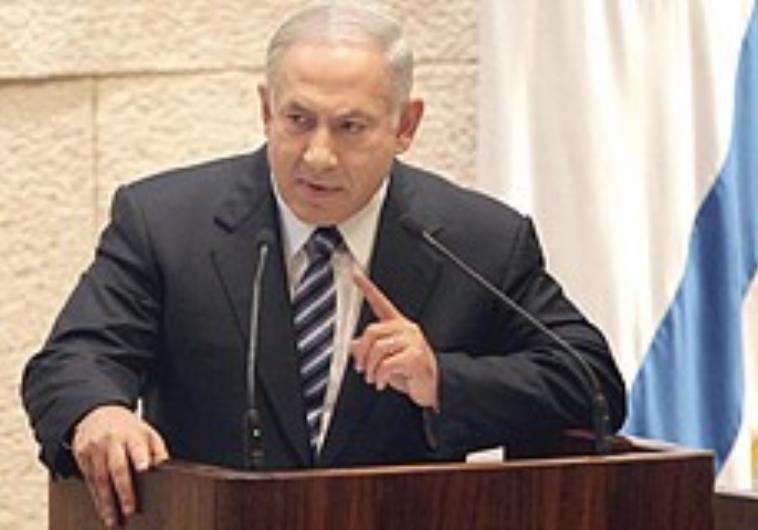
Visitor Rights on the Temple Mount

The cries coming from the acting-President of the Palestinian Authority and his rival political party, the terrorist group Hamas, to “defend al-Aqsa” stem from their claim that they are concerned that Jews are coming to destroy and/or defile the al Aqsa mosque, the third holiest site in Islam. To generate such fear, one would imagine that Jews are coming to the Temple Mount (on which al Aqsa sits on the southeastern most tip) illegally, and are bringing with them weapons and shouting threats against the mosque.

All of those assumptions would be completely false.

temple mt visit

To placate the outrageous claims from the PA, Hamas and the king of Jordan, on October 7, 2015, Israeli Prime Minister Benjamin Netanyahu announced a ban on Israeli members of Knesset from visiting the Temple Mount.

Here is a review of the completely legal, internationally approved and natural rights associated with Jews visiting the Temple Mount and today’s sad reality that none of it seems to matter.

Visiting Hours

Facts: The Temple Mount has regular visiting hours for people of all faiths. As mentioned by the popular tourist guidebook, Frommers:

There is no charge to enter the Temple Mount compound. You must not, however, wear shorts or immodest dress in the compound. (If your outfit is too revealing, guards may be willing to provide you with long cotton wraps, or they may ask you to return another time with more modest clothing.) Visitors are allowed on the Temple Mount
by permission of the Islamic religious authorities, and are asked
to obey instructions given by the guards.

There is an admission fee of NIS 38 ($9.50/£4.75) to go inside the two mosques and the Islamic Museum. If the buildings are again open to foreign visitors, I highly recommend that you invest in the combined admission ticket, which may be purchased from a stone kiosk between Al Aqsa and the Dome of the Rock. If visiting hours
are lengthened, you may usually remain on the Temple Mount, but cannot enter
the Dome of the Rock or the Al Aqsa Mosque during the midday prayers.”

The World Travel Guide site lists the specific visiting hours and ways of accessing the Mount:

Only one of the 10 gates to the complex, Al-Mughradi Gate, allows entry for non-worshippers. This is located to the right of the Western Wall and is accessed from
the Western Wall Plaza.

Opening Times: Closed during all prayer times (variable); otherwise Sun-Thurs 0730-1130 and 1330-1430 (summer); Sun-Thurs 0730-1030 and 1330-1430 (winter); Sun-Thurs 0730-1030 (during Ramadan); closed to non-Muslims Fri and Muslim holidays. During periods of tension, the site may be closed.

Admission Fees: No (for Temple Mount; charge for Dome of the Rock, Al Aqsa Mosque and Islamic Museum combined ticket).

Disabled Access: No

Unesco: Yes“

Reality today: Despite the publicized openness of the site, visiting this holy site and famous tourist location can be anything but pleasant. Hamas pays for Murabitun, Islamic extremists who shout and taunt Jewish visitors on the Temple Mount. Arabs have also hurled rocks at non-Muslim visitors.

Due to the various attacks, Israeli police escorts typically accompany non-Muslim visitors. The military has also occasionally restricted access to the Temple Mount for Muslims under 50 years old due to security concerns.

International Treaty

Facts: In 1994, Israel and Jordan signed a Peace Treaty. In that treaty was language that specifically gave special recognition of Jordan’s historic role at the Temple Mount site, while also cementing Israel’s responsibility for security.

The 1994 treaty discussed the Temple Mount, because Jordan had secured custodian rights to the site.  Jordan attacked Israel and illegally seized the entire Old City of Jerusalem (and Judea and Samaria) in 1948 and thereupon occupied the Old City. The Jordanians then expelled all of the Jews from the city and granted Jordanian citizenship to the Palestinians in the city. When Jordan attacked Israel again in 1967, it lost the Old City, but Israel allowed the Islamic Waqf controlled by Jordan to continue to administer the Temple Mount.

The Jordan-Israel treaty clearly gave rights to all people to visit holy sites in Jerusalem.  Article 9.1: Each Party will provide freedom of access to places of religious and historical significance.

And Article 9.3: “The Parties will act together to promote interfaith relations among the three monotheistic religions, with the aim of working towards religious understanding, moral commitment, freedom of religious worship, and tolerance and peace.”

Reality today: The kingdom of Jordan signed a treaty with Israel that assured the “freedom of access to places of religious and historical significance,” and to “promote interfaith relations… with the aim of working towards religious understanding.”  The words in that agreement seem empty today as the Jordanian king claims the Temple Mount only has an “Arab character,” as he threatens to destroy the relationship with Israel because Jews are visiting the Temple Mount.

Israeli Law

Facts: When Israel reunified the city of Jerusalem in 1967, the Israeli Prime Minister Levi Eshkol handed administrative control of the Temple Mount back to Jordan, the country that had just attacked his country for the second time in 20 years. He then enshrined “The Protection of Holy Places” law that all people would have access to the holy sites in Jerusalem.

” 1. The Holy Places shall be protected from desecration and any other violation and from anything likely to violate the freedom of access of the members of the different religions to the places sacred to them or their feelings with regard to those places.

  1. Whosoever desecrates or otherwise violates a Holy Place shall be liable to imprisonment for a term of seven years.

  2. Whosoever does anything likely to violate the freedom of access of the members of the different religions to the places sacred to them or their feelings with regard to those places shall be liable to imprisonment for a term of five years.”

The 1967 Israeli Law was complemented by the 1994 Jordanian-Israeli Treaty which not only promised Israeli support for universal access to the holy sites, but Jordan’s support as well.

Reality today: However, the current Prime Minister of Israel Benjamin Netanyahu is trampling on Jewish rights of access and “feelings with regard to those places” as he bans their visitation rights even though they bring no weapons and threaten no one.

United Nations on Access

Facts: The United Nations often claims that it is concerned with providing access to people of all faiths to their holy sites and that it would prefer to see a “universal” approach to sites that are holy to many religions.  For example, UNESCO on March 19, 2010 published a piece about Palestinian rights to the Cave of the Patriarchs in Hebron and the Tomb of Rachel in Bethlehem, among the holiest sites in Judaism.  UNESCO wrote:

  • that Israel was “endangering Palestinian cultural heritage and denying Palestinians their cultural patrimony, as well as denying development and access to heritage sites and historic places of worship.”
  • Israel has publicly begun to use these sacred and universal sites to provoke unnecessary religious conflict by promoting control and access on the exclusive basis of one faith while denying the rights and views of other faiths.”

By these statement, it would appear that the UN is very concerned:

  • that people of all faiths be allowed access its holy places;
  • that such holy places not be under the exclusive control of a single faith; and
  • that people should not be cut-off from their “cultural patrimony.”

A person would naturally assume from these UN comments about Hebron and Bethlehem, that the UN must strongly endorse Jewish rights of access to their holiest site in the world, and it must strongly condemn any group or country that sought to deny Jews those rights.

Reality today: But this is the United Nations that specializes in inversion when it comes to Israel. Secretary General Ban Ki-Moon described the basic Jewish desire and action of accessing its Temple Mount as a “provocation.”


Access is Not a Provocation

As detailed above, people of all faiths visiting the Temple Mount is legal by Israeli law, enshrined in an international treaty with Jordan, and follows a blueprint for co-existence as stated by the United Nations. Indeed, visiting hours exist for everyone.

For Jews, visiting their holiest spot in the world is a natural desire. They seek to do so in peace and quiet.  They do not seek to instigate a fight with anyone on the Mount.  Even Rabbi Yehuda Glick who was shot by Palestinian Arabs for advocating for Jewish prayer rights on the Temple Mount, did not seek to harm al Aqsa Mosque in any way.

No Temple = No Rights

If Jewish access to their holy sites is guaranteed and no one urged harming the site in any way, on what basis have Palestinian Arabs and Jordanians sought to deny Jews those basic rights of access?

The Palestinian Arabs have put forth a narrative that the Jewish Temple never existed on the Temple Mount. Their rationale is that if the Temple never existed there, Jews can claim no special visitation rights.

Consider that in addition to Mahmoud Abbas never mentioning Judaism in any of his speeches at the United Nations, there have been these quotes:

  • Mahmoud Abbas: “The leaders of Israel are making a grave mistake by thinking that history can move backward and that they could impose facts on the ground by dividing the Aksa Mosque in time and space, as they did with the Ibrahimi Mosque [Cave of the Patriarchs] in Hebron.
  • The Islamic Waqf on the discovery of ancient Jewish artifacts near the Temple Mount: “an attempt to support Israeli claims about Jewish rights in the holy city and to impose Israeli sovereignty on the occupied holy compound through the use of fake evidence….An immediate Arab and Muslim campaign is needed to stop the Israeli attempts to Judaise the holy city of Jerusalem,”
  • Israeli Arab MK Masoud Ganaim said the Temple never existed. “The site has always been holy to Islam, never to any other religion.”
  • Hamas’ Khaled Mashaal on the opening of the Hurva synagogue in the Old City: “It is part of a project to destroy the al-Aqsa Mosque” and replace it with Israel’s so-called “Solomon’s Temple.” It is a “falsification of history and Jerusalem’s religious and historic monuments.

Never mind that even Atheists have rights of access.

Never mind that denying a core belief of Judaism spits in the face of a treaty that sought to promote interfaith relationships.

The argument itself is nonsensical by the Arabs’ own beliefs.  The Christian story of Jesus is specifically placed at Jerusalem’s Jewish Temple. How can Abbas or Jordanian king Abdullah claim special rights over the Church of the Holy Sepulchre, if they deny the story of Jesus in Jerusalem?

The Insanity of Today

Regardless, logic and rights fall flat in the face of Islamic fundamentalism: The UN condemns Israel for managing security, for which it has responsibility. It attacks Israel for the “provocation” of enabling Jews to have access to its holy sites. And the United States urges Israel to maintain the status quo, even though Netanyahu has stated over-and-again that he has and will.

So to appeal to the crazies, Netanyahu is banning members of the Knesset from access to Judaism’s holiest site.

It would appear that the left-wing radicals and racists are slowly winning the battle against human decency.


Related FirstOne Through articles:

The Waqf and the Temple Mount

Tolerance at the Temple Mount

The United Nations and Holy Sites in the Holy Land

The UN’s Disinterest in Jewish Rights at Jewish Holy Places

Jordan’s Deceit and Hunger for Control of Jerusalem

Extremist” or “Courageous”

Subscribe YouTube channel: FirstOneThrough

Join Facebook group: FirstOne Through  Israel Analysis

The Narrative that Prevents Peace in the Arab-Israeli Conflict

Everyone has a perspective.

Marcus Aurelius, the Roman emperor, was credited with saying “Everything we hear is an opinion, not a fact. Everything we see is a perspective, not the truth.

Our opinions and perspectives are shaped by many things including our backgrounds and biases. When two people look at the same incident at the same time, it is quite possible that they take away very different stories. When two people do not see things first-hand, but hear histories second and third-hand, the narratives of each could appear to describe two different events and worlds.

Yet, those strange worlds can coexist and the parties with alternative truths can get along. The reason is not solely because some events in question are not in direct conflict, but because those events do not define each party.

Many histories remain in the past and do not touch the present. Other narratives reach out from history and impact decisions and views of people in the present. The deepest – and potentially most dangerous – narratives are those that are embedded in a person’s psyche, which can distort history, make people act against their own interests and mar the future.

Arab-Israeli “Neutral” Narratives

There are many narratives that contradict each other in the Middle East. Some are conflicting perspectives and some have alternative facts. Here is just a small sample of events from pivotal moments in 1948, 1967 and 2000 from an Arab perspective, followed by an Israeli view:

  • The creation of Israel in 1948 was a “Nakba” (catastrophe) // the founding of the state was a celebration
  • During the “Nakba”, 711,000 Palestinian Arabs were expelled by Israeli forces from their homes // Palestinian Arabs were encouraged to leave where they lived by their leaders, as the armies of five neighboring Arab states invaded Israel
  • Five Arab armies came into Palestine to defend the Palestinians from Israeli attacks // five Arab armies invaded Israel in an effort to destroy the nascent state
  • In 1967, Israel attacked Egypt, Syria and Jordan // Israel preemptively attacked Egypt and Syria after the parties made clear their intentions to attack and destroy Israel; Jordan then attacked Israel and Israel responded in self-defense
  • The West Bank has always been Palestinian land and cannot be settled by Israelis // Judea and Samaria (the “West Bank”) were always home to Jews and mandated under international law to be a homeland for Jews in 1922; only under the Jordanian expulsion were Jews barred from the land. International laws related to taking land in a defensive war is not the same as taking land in an offensive war
  • In 2000, Israeli Prime Minister Ariel Sharon went to the Al Aqsa Mosque in an attempt to claim control over Islam’s third holiest site, which brought about the Second Intifada // Sharon visited the Temple Mount, Judaism’s holiest site during regular visiting hours; the Palestinian leader Yasser Arafat launched the Second Intifada because he was unhappy with the “near-final” peace agreement with Israel

Consider the opposing narratives. Some can reside comfortably in history books, while others actively influence each party’s actions today.

abbas reuters
Acting-President of the Palestinian Authority Mahmoud Abbas
(photo: Reuters)

PAST: Some of these points may be found in either an Arab or Israeli history book. Palestinian textbooks may write about forced expulsions from Palestine during the “Nakba”, while Israeli textbooks may write about Palestinian Arabs being encouraged to leave their homes by their leadership while the armies from five supportive Arab countries attacked Israel in an effort to destroy the country and drive the Jews into the Mediterranean Sea. The arguments are not subtle differences of opinions, and each side holds onto their account of history with examples of stories of a family here, a village there, or quotes from Israeli and Palestinian leadership at that time to underscore their version of history.

Arguably, this is something for historians to debate and a thoughtful person would probably conclude that there are elements of truth to both sides. Whether it is 80/20% or 20/80% for the parties is beyond the point of this discussion. The thrust is that their narratives are stories of the past. While Arabs and Israelis will invariably bring up their point of view in a debate, it need not dictate the debates nor compromise the conversations of the future of the region. A “starting point” of the here-and-now can be established to find a solution for the future.

A second example is the conflict between Egypt and Israel. Each side’s view of who was the belligerent party in 1967 did not impede a path forward to a different future leading to a peace treaty.

PAST AND PRESENT: Some splits in narratives run throughout time. The past can consume the present and the versions of history touch daily dialogue.

Many Arabs argue that a state of Palestine has always existed, but has been occupied by various parties including Israelis, Jordanians, Egyptians and British. They carry placards to “Free Palestine” from current Israeli occupation. For their part, Israelis note that Palestine never existed as an independent country. It was never ruled by a local Palestinian Arab government. The parties are in negotiations to potentially “Create Palestine,” while dismissing the Arab narrative as factually incorrect. The competing narratives are in conflict, but needn’t prevent the parties from moving towards a future that is in alignment.

PRESENT: A last example of a “neutral” clash of each side’s take on history is current history. Israelis and Palestinian Arabs argue forcefully about who started the Gaza war in 2014 and which party is responsible for many civilian deaths. Politicians and people will argue their points forcefully and recommend actions to punish the other side and improve their own position. Ultimately, the war and responses will become part of the past. The parties could opt to move forward with plans for a future OR they could use the war as an excuse to undermine a future peace.

 Bibi -Ariel Jerozolimski)
Israeli Prime Minister Benjamin Netanyahu
(photo credit: Ariel Jerozolimski)

Arab-Israeli “Toxic” Narratives

The term “Toxic Narrative” is meant to describe the inability of the two sides to ever establish a true peace; it is not intended to suggest that a narrative is inherently evil.

PAST, PRESENT and FUTURE: The best example of competing viewpoints of the past that stretch into the future, is the Balfour Declaration (1917) and its incorporation into the San Remo conference (1920) and then the international law established by the League of Nations in the British Mandate of Palestine (1922). The two sides’ competing opinions impact the ability of the parties to establish peace for the future.

International Law: The Palestinian Arabs argue that the League of Nations had no right to declare a homeland for the Jews in Palestine. They contend such international decision was made without the approval of the local Arab population in Palestine, and as such, the law itself should be null and void. They further argue that the imposition of such mandate was an effort to colonialize Palestine. The Palestinian Arabs took many steps to halt the implementation of that mandate for “the establishment in Palestine of a national home for the Jewish people…and facilitate Jewish immigration…and close settlement by Jews on the land.” The most significant actions were the riots of 1936-9 which enabled the Arabs to get the British to issue the 1939 “White Paper” which would limit the Jewish population in Palestine to one-third of the country, leaving an Arab majority population and facilitate Arab rule.

The Israeli perspective is that the League of Nations (precursor to the United Nations) made a law specifically recognizing the Jewish right to a national homeland in Palestine. They do not believe that such international law was illegal in 1922, and when the United Nations voted in 1947 to only grant a small portion of the Mandated land as a Jewish State, the Jews were disappointed but voted in favor of the proposal anyway.  The Arabs rejected the 1947 proposal, just as they rejected the 1922 Mandate.

Historical Connection: As part of the League of Nations Mandate for Palestine, the international community recognized the “historical connection of the Jewish people with Palestine.” The history of the Jews in the land goes back 3700 years and the Jews were the only people to ever be self-governing in the land. They were also the only people to make Jerusalem its capital, which they did for the third time in 1950.

The history of the Jews has also been challenged by the Palestinian Arabs who continually deny Jewish history in the region and insist that Israelis are attempting to “Judaize” the country, and that Jewish presence in the region is a recent phenomenon. (They have even advanced that Jesus was a Palestinian, not a Jew, even though Arabs did not come to the holy land en masse until the Muslim invasions hundreds of years later).

In short, the two conflicting narratives relate to the RIGHTS of Jews to REestablish a Jewish majority in the land and be self-governing again.

The Palestinian contention is that the entire Zionist enterprise was illegal from the start: The call for Israel’s creation in 1922 was illegal; the declaration of the state in 1948 was illegal; and the assumption of additional land in 1967 was illegal. They view the entire region as “Arab land” and Jewish presence and rule is illegitimate and directly undermines the Arab rights in the land.

The Roadblock to Peace

The Future:  Some argue that despite such widely held opinion by Palestinian Arabs, acting-President of the Palestinian Authority Mahmoud Abbas has stated that he would recognize a state of Israel as part of a peace agreement. As such, the debate of narratives and facts is not truly “toxic” as the Arabs are willing to look past their past.

Israeli Prime Minister Benjamin Netanyahu maintains that is not so.

Netanyahu claims that a de facto recognition of Israel as a country that exists today will not prevent a war tomorrow.  A de facto peace treaty that does not recognize Israel’s RIGHT to exist is a flimsy veneer.  Over time the veneer will come off, and the underlying Palestinian Arab contention that Jews have no rights to live and rule on Arab land will lead to further war and bloodshed.  Without a break from the storyline that Jews have no history, no legal authority, nor basic rights to live and pray and be self-governing in Israel, there will never be peace.  No amount of land-for-peace swap could resolve an illegal Jewish claim until the entire state of Israel is under Arab rule.

The Palestinians have not been able to accept such a break with their narrative of the rights of Jews in Palestine.  They could not accept such vision of Jewish rights in 1922 and have been unable to accept it today, as Abbas has repeatedly stated he will never recognize Israel as a “Jewish State”.

As such, the seemingly innocuous request for Palestinians to recognize Israel as the Jewish State has potentially become a roadblock to final settlement talks. A statement that would have no practical impact (compared to tangible matters such as borders or “right of return”), has touched a key nerve in the Palestinian psyche.  They would rather forgo a brighter future than negate their narrative as the sole rightful owners of the land.


People typically speak of the Arab-Israeli conflict and refer to events at important time periods like 1948, 1967 and 2000.  While those events helped shape the present, they need not dictate the future.  Each side can maintain many narratives without destroying the prospects for peace.

The toxic narrative that prevents peace revolves around the rights of Jews to their historic homeland established in international law in 1922.  It is that narrative that must be addressed for the parties to arrive at a long-term peaceful future together.  It has been almost a century, and well past time for Arabs to recognize the legal and legitimate rights of Jews to live in the holy land and to be self-governing.


Related First One Through articles:

Names and Narrative: Palestinian Territories/ Israeli Territories

Names and Narrative: The West Bank / Judea and Samaria


Missing Netanyahu’s Speech: Those not Listening and Those Not Speaking

Summary: The media highlighted the Democrats that snubbed the Israeli Prime Minister’s address to Congress. They failed to mention the coalition of countries that Bibi represented. Will the world’s safety rest with those that party-with-their-party or those that bomb-the-bomb?

US President Obama made a deliberate attempt to marginalize Israeli Prime Minister Benjamin Netanyahu and his address to Congress in March 2015. Obama aired a number of complaints about the nature of the invitation and later said that Netanyahu didn’t offer any new ideas in dealing with Iran. His efforts to turn public attention away from the incredibly important topic to a sideshow of partisanship was sad on many levels.

Obama no
Obama and Biden skipped Netanyahu’s Address to Congress,
March 2015

There were many people who were not at Congress on March 3rd: Democrats that didn’t listen, and Arab States that echoed Netanyahu’s message.

Those not Listening: Democrats Partying with their Party

The Obama administration managed to convince 58 members of Congress to skip Netanyahu’s speech. All were his fellow Democrats. They were:

SENATE – 8 members

  • Sen. Al Franken (Minn.)
  • Sen. Martin Heinrich (N.M.)
  • Sen. Tim Kaine (Va.)
  • Sen. Patrick Leahy (Vt.)
  • Sen. Bernie Sanders (I-Vt.)
  • Sen. Brian Schatz (Hawaii)
  • Sen. Elizabeth Warren (Mass.)
  • Sen. Sheldon Whitehouse (R.I.)

HOUSE – 50 members

  • Rep. Karen Bass (Calif.)
  • Rep. Earl Blumenauer (Ore.)
  • Rep. Corrine Brown (Fla.)
  • Rep. G.K. Butterfield (N.C.)
  • Rep. Lois Capps (Calif.)
  • Rep. Andre Carson (Ind.)
  • Rep. Joaquin Castro (Texas)
  • Rep. Katherine Clark (Mass.)
  • Rep. William Lacy Clay (Mo.)
  • Rep. James Clyburn (S.C.)
  • Rep. Emanuel Cleaver (Mo.)
  • Rep. Steve Cohen (Tenn.)
  • Rep. Bonnie Watson Coleman (N.J.)
  • Rep. John Conyers (Mich.)
  • Rep. Elijah Cummings (Md.)
  • Rep. Danny Davis (Ill.)
  • Rep. Peter DeFazio (Ore.)
  • Rep. Diana DeGette (Colo.)
  • Rep. Lloyd Doggett (Texas)
  • Rep. Rosa DeLauro (Conn.)
  • Rep. Donna Edwards (Md.)
  • Rep. Chaka Fattah (Pa.)
  • Rep. Keith Ellison (Minn.)
  • Rep. Marcia Fudge (Ohio)
  • Rep. Raúl Grijalva (Ariz.)
  • Rep. Luis Gutiérrez (Ill.)
  • Del. Eleanor Holmes Norton (D.C.)
  • Rep. Eddie Bernice Johnson (Texas)
  • Rep. Marcy Kaptur (Ohio)
  • Rep. Rick Larsen (Wash.)
  • Rep. Barbara Lee (Calif.)
  • Rep. John Lewis (Ga.)
  • Rep. Dave Loebsack (Iowa)
  • Rep. Zoe Lofgren (Calif.)
  • Rep. Betty McCollum (Minn.)
  • Rep. Jim McDermott (Wash.)
  • Rep. Jim McGovern (Mass.)
  • Rep. Jerry McNerney (Calif.)
  • Rep. Gregory Meeks (N.Y.)
  • Rep. Gwen Moore (Wis.)
  • Rep. Beto O’Rourke (Texas)
  • Rep. Donald Payne (N.J.)
  • Rep. Chellie Pingree (Maine)
  • Rep. David Price (N.C.)
  • Rep. Cedric Richmond (La.)
  • Rep. Jan Schakowsky (Ill.)
  • Rep. Adam Smith (Wash.)
  • Rep. Bennie Thompson (Miss.)
  • Rep. Mike Thompson (Calif.)
  • Rep. John Yarmuth (Ky.)

 Holmes
Eleanor Holmes Norton (D, DC)

It is wrong to say that these Democratic Congressmen are anti-Semites for skipping Netanyahu’s speech. They are just small-minded, petty, partisan politicians.

Those who were seen not Speaking: Arab States agree with Netanyahu

While Israel is in the crosshairs of the Iranian regime which has singled out the country for annihilation, several Arab countries are also very against Iran obtaining nuclear weapons.  They supported Netanyahu’s position and address.

el sisi
Egyptian President Fatah El-Sisi calling to reform Islam,
January 2015

The difference between the absent deaf audience (Democrats) and the silent approving chorus (Arab states) is a contrast between politics and policy. The difference between Obama and Netanyahu regarding Iran is between hope and action.

Those Talking and Hoping: Obama and Kerry

Obama has essentially articulated that US intelligence is flawed, so the best solution for managing the Iranian nuclear program would be to rely on the Iranians’ openness. His negotiation tack will conclude with faith that the Iranians:

  • will disclose the entirety of their nuclear program;
  • will provide full access to all of the facilities; and
  • will not covertly move towards nuclear weapons.

It can best be called a policy of “hope”.

Kerry Iran
US Secretary of State John Kerry negotiating with Iran,
March 2015

Those Acting: Israel Bombing the Bomb

If Israel is convinced that the Iranians are good on their word, than they have reason to be concerned as Iran has threatened to destroy Israel.

Israel has long taken the approach that hope is not a policy.  It sits in too volatile a region to believe in the good faith of its neighbors that have declared war on the country. Peace is something that is fought for and defended.

Decisive action has led to extended windows of peace for Israel. In 1981, Israel destroyed the Iraqi nuclear reactor that was due to go live.  In 2007, Israel bombed the Syrian nuclear reactor that was being constructed with the help of North Korea. In 1967, Israel acted preemptively to thwart the attacks of Egypt and Syria which enabled a very quick victory.  When Israel decided to remain passive, such as the Yom Kippur War of 1973, the country was almost overrun.

Netanyahu has pleaded for very tough sanctions against Iran. It has used malware and cyber-attacks against Iran. Israel has reportedly assassinated Iranian nuclear scientists (to the chagrin of the United States). It has advocated for putting all options on the table, including military force as it used against the facilities in Syria and Iraq.


The way forward with Iran has two very different paths:

  • Obama has advocated a policy of hope and has enlisted a quorum of party loyalists who will not listen to alternatives.
  • Israel has deployed policies of actions and has an eclectic group of Arab neighbors that support its position.

Will the future safety of the world belong to those that party-with-their-party or those willing to bomb-the-bomb?


Related First.One.Through articles:

Fairness versus Safety: https://firstonethrough.wordpress.com/2015/03/01/the-gap-between-fairness-and-ramifications-wmds-in-iraq-and-iran/

Obama’s Iranian Red Line: https://firstonethrough.wordpress.com/2014/11/24/obamas-iranian-red-line/