“These are people who went overseas supporting Islamic State and went there to provide support for people who basically want a caliphate.” – Australian Prime Minister Anthony Albanese
That is how states function.
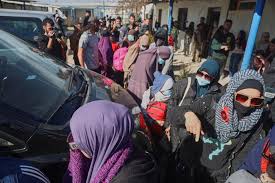
Family members of suspected Islamic State militants who are Australian nationals walk toward a van bound for the airport in Damascus during the first repatriation operation of the year at Roj Camp in eastern Syria, Monday, Feb. 16, 2026. Thirty-four Australian citizens from 11 families departed the camp. (AP Photo/Baderkhan Ahmad)
Then the rule changes.
The United Nations insists Israel must accept the DESCENDANTS of people who were NEVER ISRAELI CITIZENS, who NEVER LIVED IN ISRAEL, and whose political movement LAUNCHED A WAR TO DESTROY ISRAEL. Entry is framed as a permanent right. Citizenship becomes an instrument of conflict.
This is not mere hypocrisy. It is a flawed and fatal doctrine.
The standard for Australia preserves states. The other pressures a single state to absorb a demographic outcome tied directly to a war against its existence.
“They are terrible situations. But they have been brought on entirely by horrific decisions that their parents made.” – Australia Home Affairs Minister Tony Burke, about banning the children of Australian “ISIS brides” from being allowed into Australia
The refugee framework applied to Palestinians is unique in modern history. It has its own bloated organization in which “refugee” (not even “internally displaced” for Arabs in Gaza and the “West Bank”) passes through generations indefinitely. International institutions reinforce it. Political leadership is incentivized to promise return rather than build final compromise.
That incentive has consequences.
If millions are told the conflict ends inside Israel rather than beside it, negotiations stall. If international bodies validate that expectation, maximalism becomes rational. If maximalism is rational, violence remains politically useful. Understood. Blessed.
This mindset has cost tens of thousands of lives because it keeps the central dispute unresolved. Each cycle of violence is fueled by the belief that time, pressure, and international legitimacy will deliver what negotiation has not.
States everywhere are allowed to defend sovereignty and security. Israel is told sovereignty and security is a matter for international bodies to determine.
I was sitting in the audience at an Andrea Bocelli concert at Madison Square Garden in New York City, the lights dimmed, the hall hushed in anticipation for the encore “Con Te Partiro,” (Time to Say Goodbye), his most iconic song. He teased the audience with “New York, New York” and headed for the exit once more. The crowd cheered and he came back to sing the song they craved.
Andrea Bocelli at Madison Square Garden (photo: First One Through)
Beside me sat a close Jewish friend who grew up in Australia. We had come for the music, for the beauty of a voice that carries memory as much as sound. Yet, as the first familiar notes rose, I saw her mind was in another world.
She was thinking of her parents and brother’s family back in Melbourne.
Only days earlier, they had been at a Chabad Chanukah party—children, candles, singing, the ordinary holiness of Jewish joy. Then the news broke of the shooting in Sydney. Phones buzzed. Conversations stopped. Parents gathered children closer. And out. What had begun as celebration turned into a flight of urgency. They left with the unmistakable instinct that something precious had become fragile. Perhaps lost.
As Bocelli sang of leaving—of standing alone and dreaming of the horizon—the words landed differently. “It’s time to say goodbye,” he sings, not with bitterness, but with ache. He sings of departing lands once fully lived in, of moving forward while carrying love along. The song understands that some goodbyes are spoken precisely because the bonds mattered.
Time to say goodbye Countries I have never Seen and experienced with you
Australia has been such a land for Jews. Around 115,000 strong, the community was built in large part by Holocaust survivors and their children, who arrived determined to create lives of dignity and contribution. They succeeded. Jewish schools flourished. Synagogues filled. Jewish families felt Australian in the fullest sense—rooted, confident, woven into the national fabric. It was a beloved home.
That is why this moment feels so melancholy.
When antisemitism intrudes into Jewish life—when Chanukah gatherings require calculation, when news of violence travels faster than reassurance—something internal shifts. Families begin to think not only about safety today, but about continuity tomorrow. They listen closely for the voice of government, for the firmness of protection, for the sense that Jewish life is fully defended. When that reassurance feels thin – no, absent – dark history whispers.
Yes, I know there is no light in a room when there is no sun If you’re not there with me, with me
For two years my friend had been speaking to her parents and brother about leaving Australia as antisemitic incidents surged and the government seemed unwilling to do anything. Now, the threats had crossed to violence. Murder. On a mass scale.
At the concert, Bocelli sang on. “With you I will leave,” he promises. The line felt written for this generation of Jews. Leaving does not mean erasing. It means carrying Australia forward: the beaches, the friendships, the generosity, the years of building a good life. Love will not dissolve at the airport gate.
For children, aliyah after moments like these is not politics. It is the air they breathe. It is the desire to grow where Jewishness fills the public calendar, where holidays are shared rather than guarded, where identity settles into the background instead of standing on alert. Israel becomes the horizon the song gestures toward—not as fantasy, but as alignment.
But they know some parents – many Holocaust survivors – will not be able to make the journey. They will stay behind in a land they thought of as home while their children and grandchildren head to their homeland.
When you’re far away I dream of the horizon and words fail And I, yes, I know that you are with me, with me
As the music swelled, my friend wiped away tears. They were for her brother’s children, who should have stayed longer at a Chanukah party. They were for her parents’ generation, who believed Australia was the final chapter. They were also for something enduring: the knowledge that the Jewish story includes movement, discernment, and the courage to know when it is time.
I will leave with you On ships at sea Which, I know No, no, they don’t exist anymore
The concert ended. The applause lingered. We walked out quietly, in a world darkly distinct from the thousands of other concert-goers heading to their homes.
Somewhere between Melbourne and Jerusalem, between a beloved home and a homeland, the song kept playing, softly affirming the discussions of long goodbyes that were taking place in Jewish homes throughout Australia.
There are moments when a headline tells you everything by what it refuses to say.
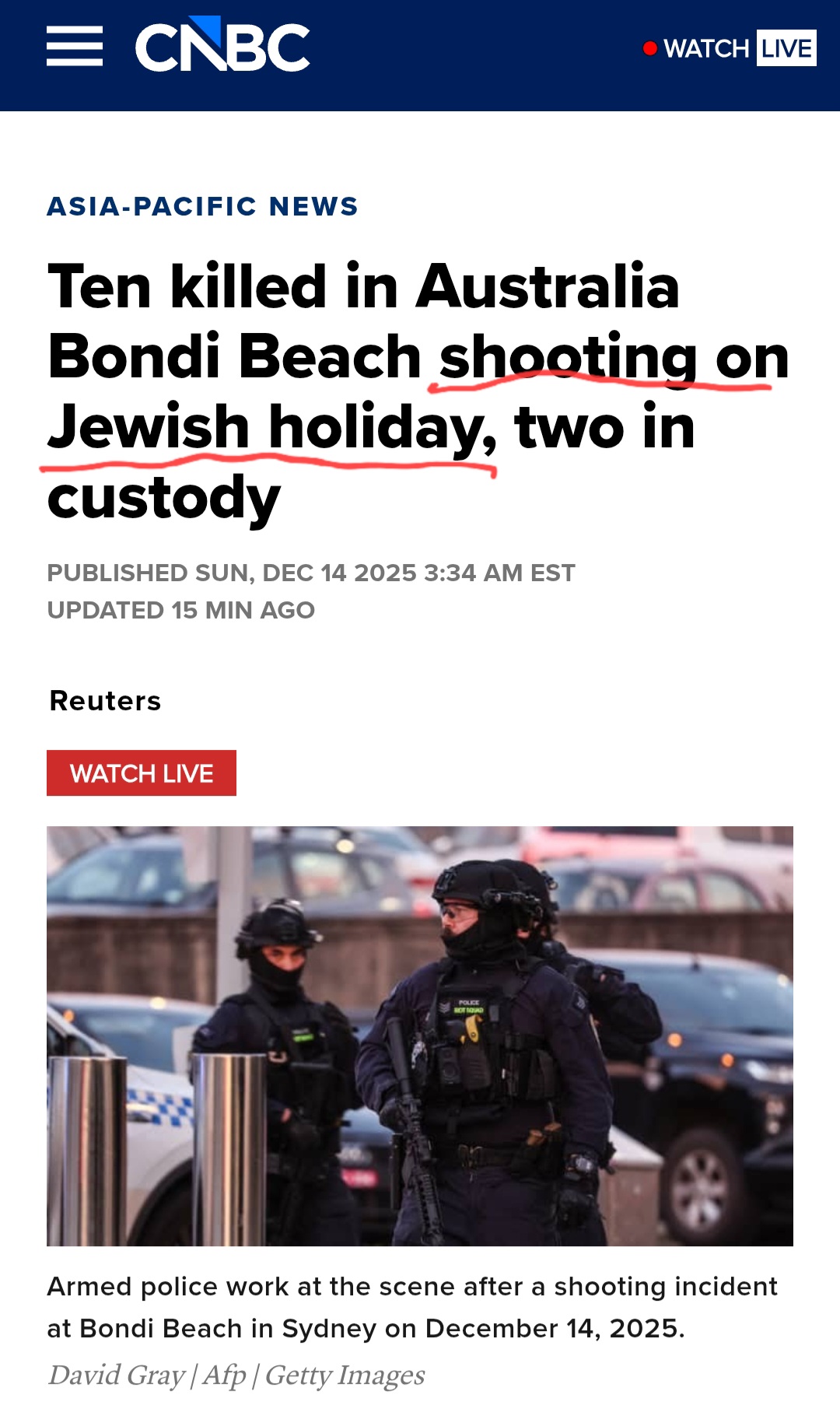
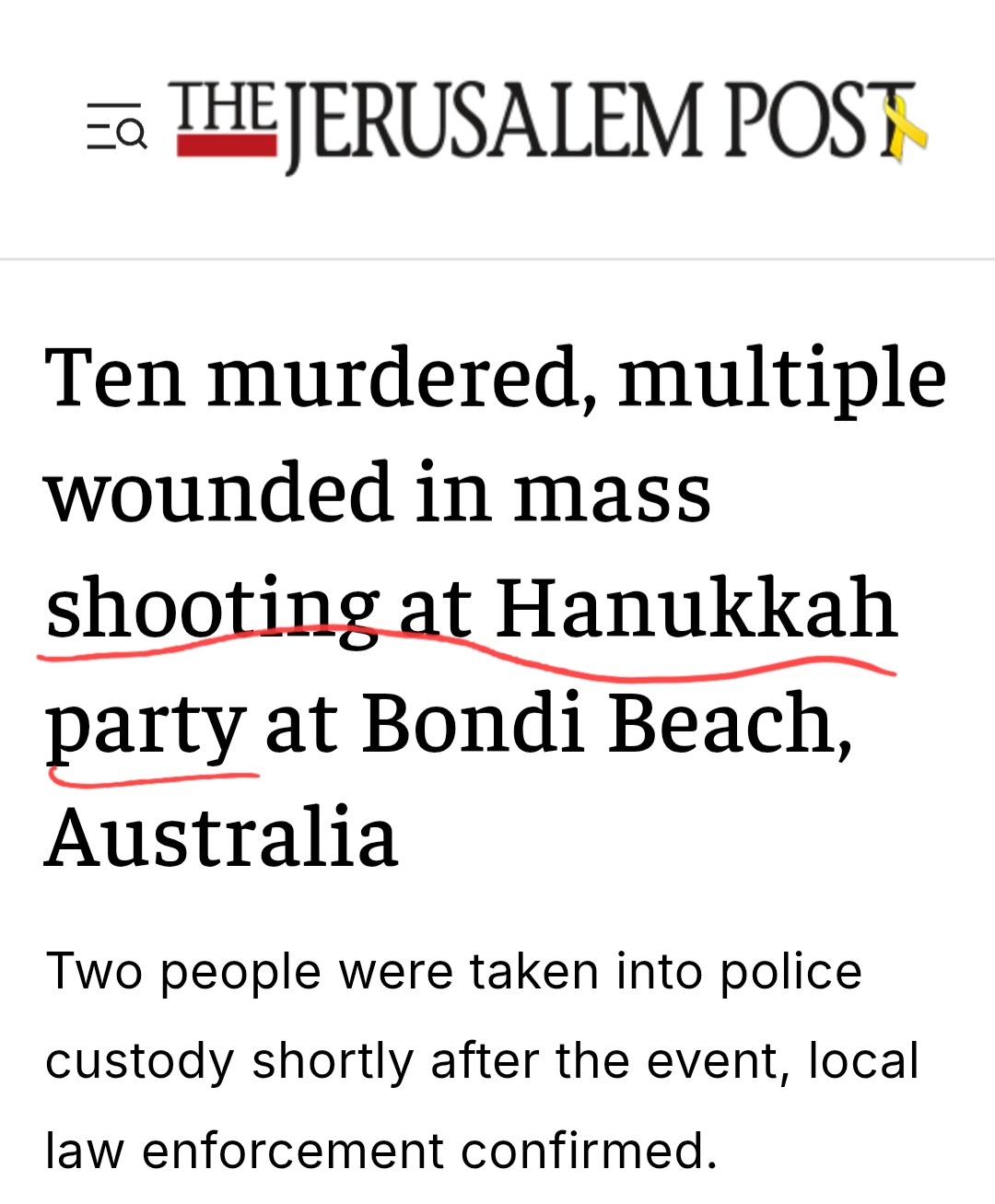
A mass shooting took place at a Hanukkah party in Sydney, Australia. A Jewish holiday. A Jewish gathering.
Yet when major global outlets reported the story, something curious happened.
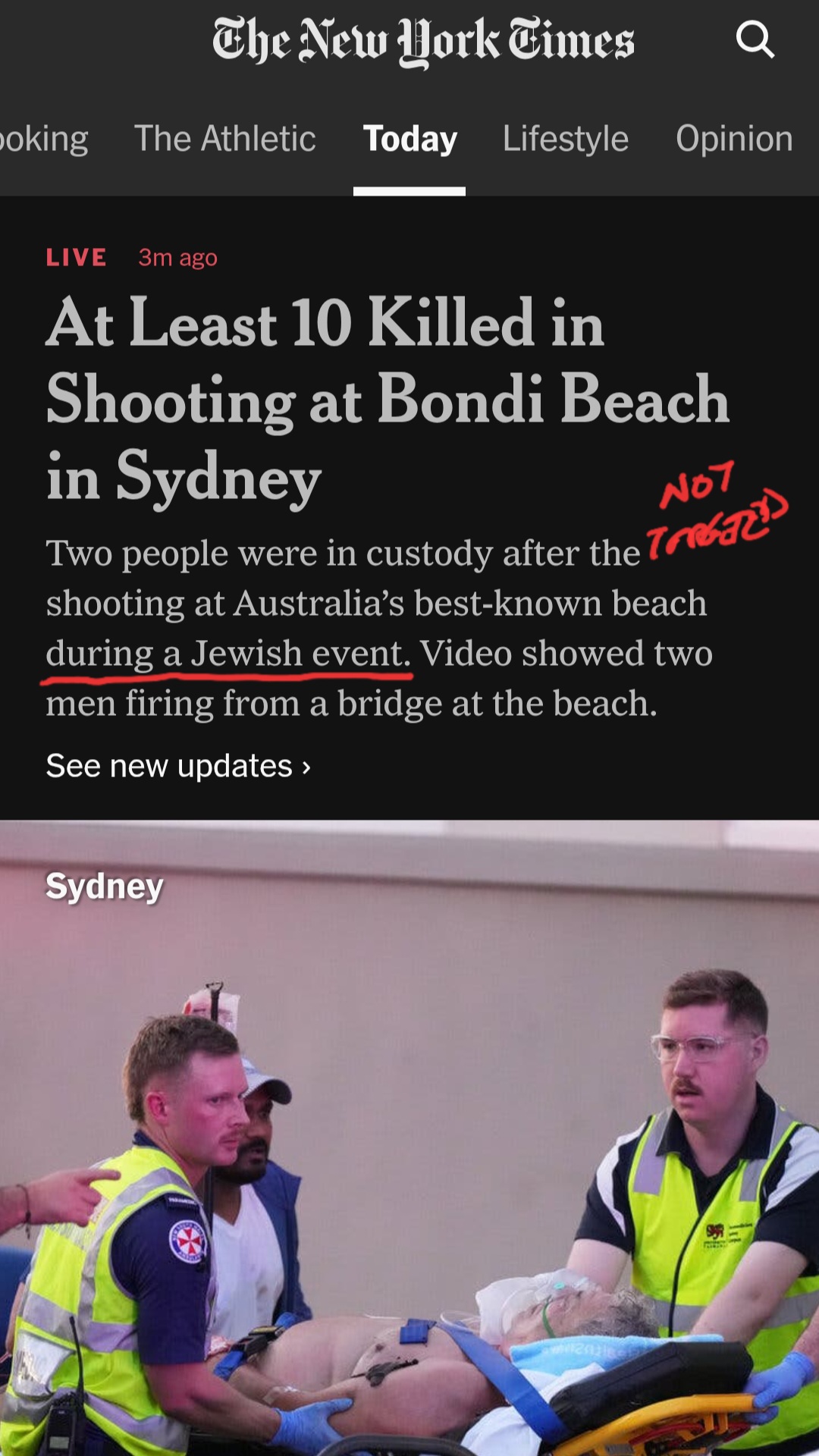
The New York Times headline did not mention Jews. Only the sub-header caught the significance of the attack, but did not say Jews were targeted.
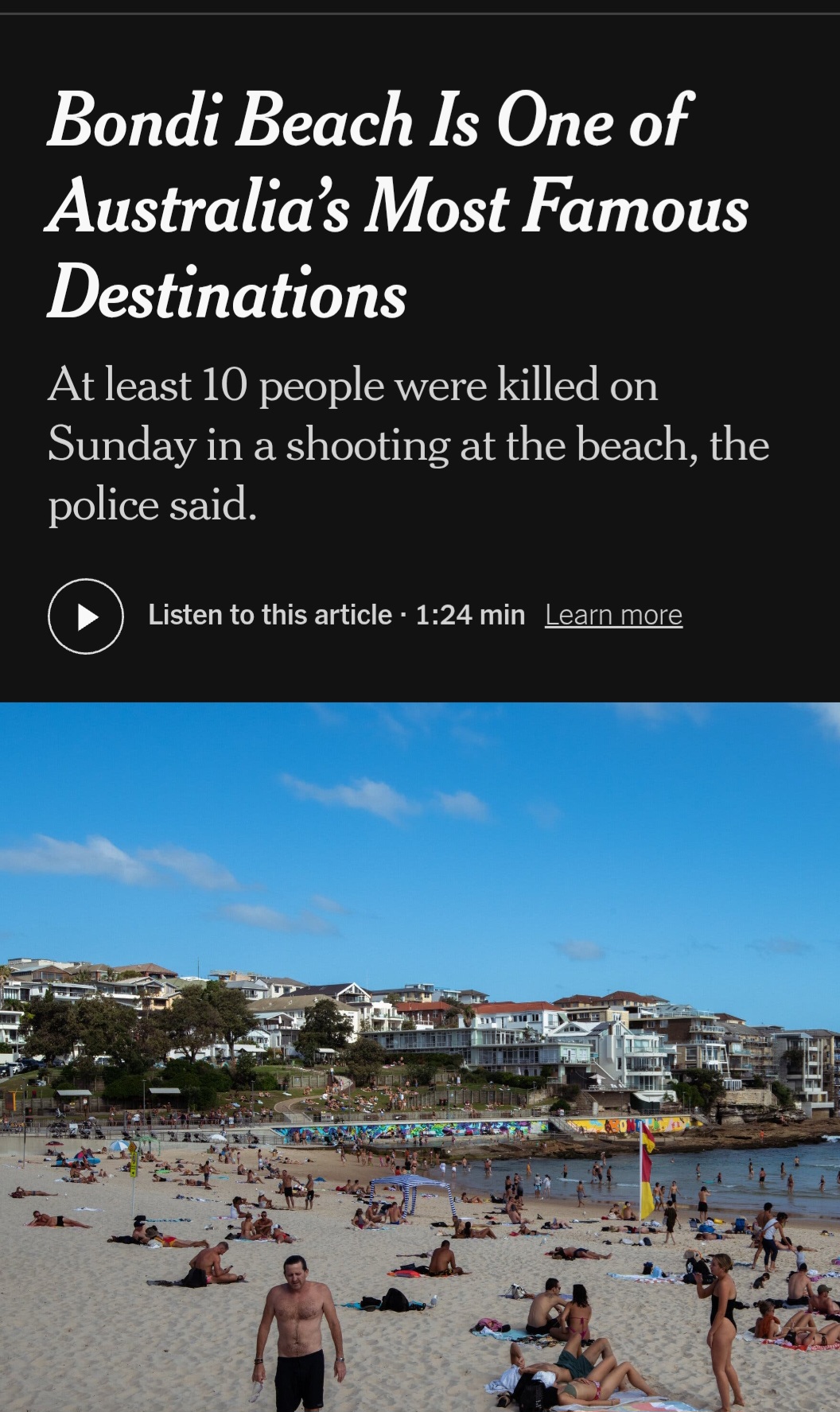
More disturbing, follow-up articles did not focus on the horrific spike in antisemitism in Australia these past two years. Instead, the Times posted an article about… Bondi Beach, and how beautiful and popular it is.
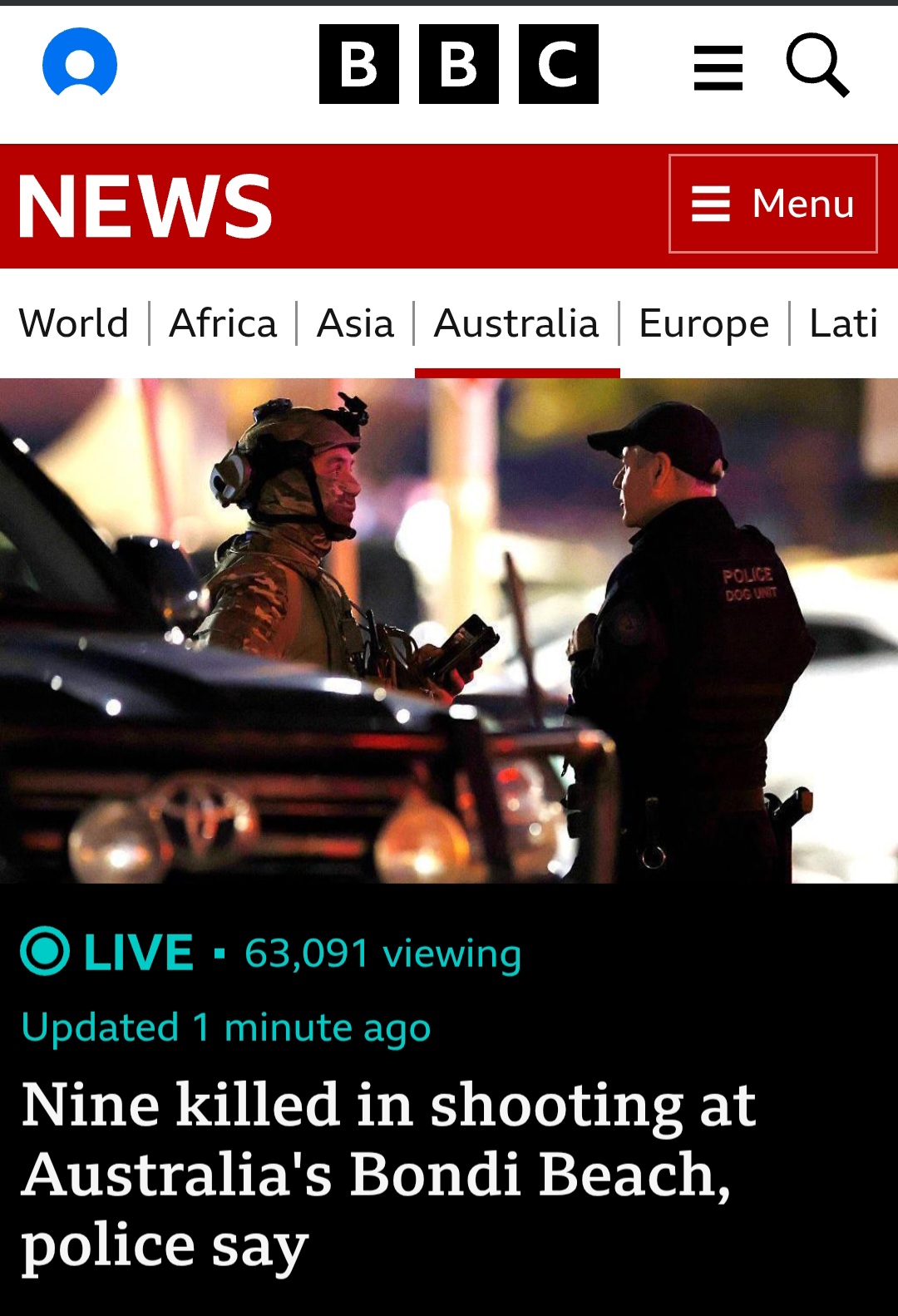
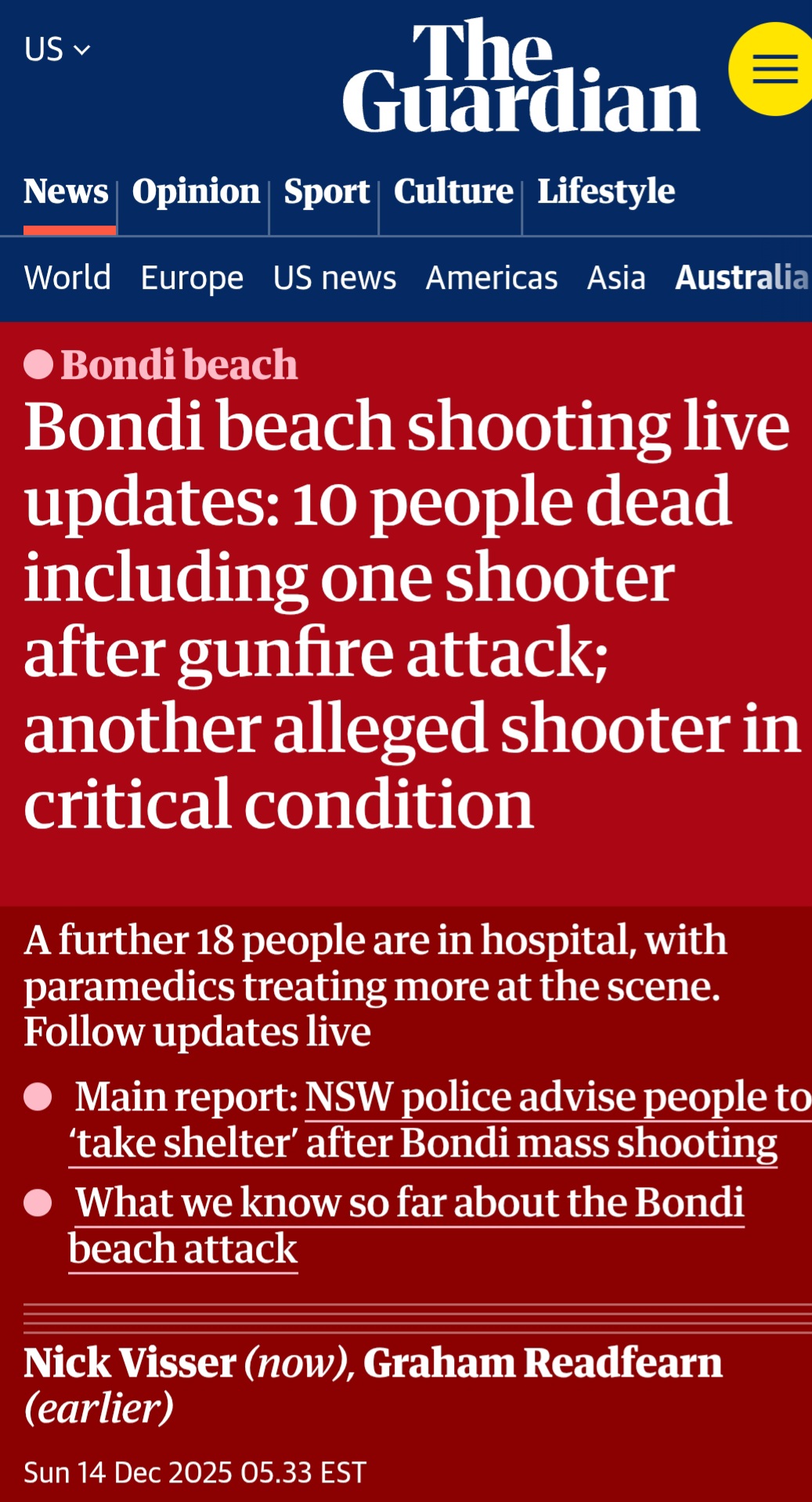
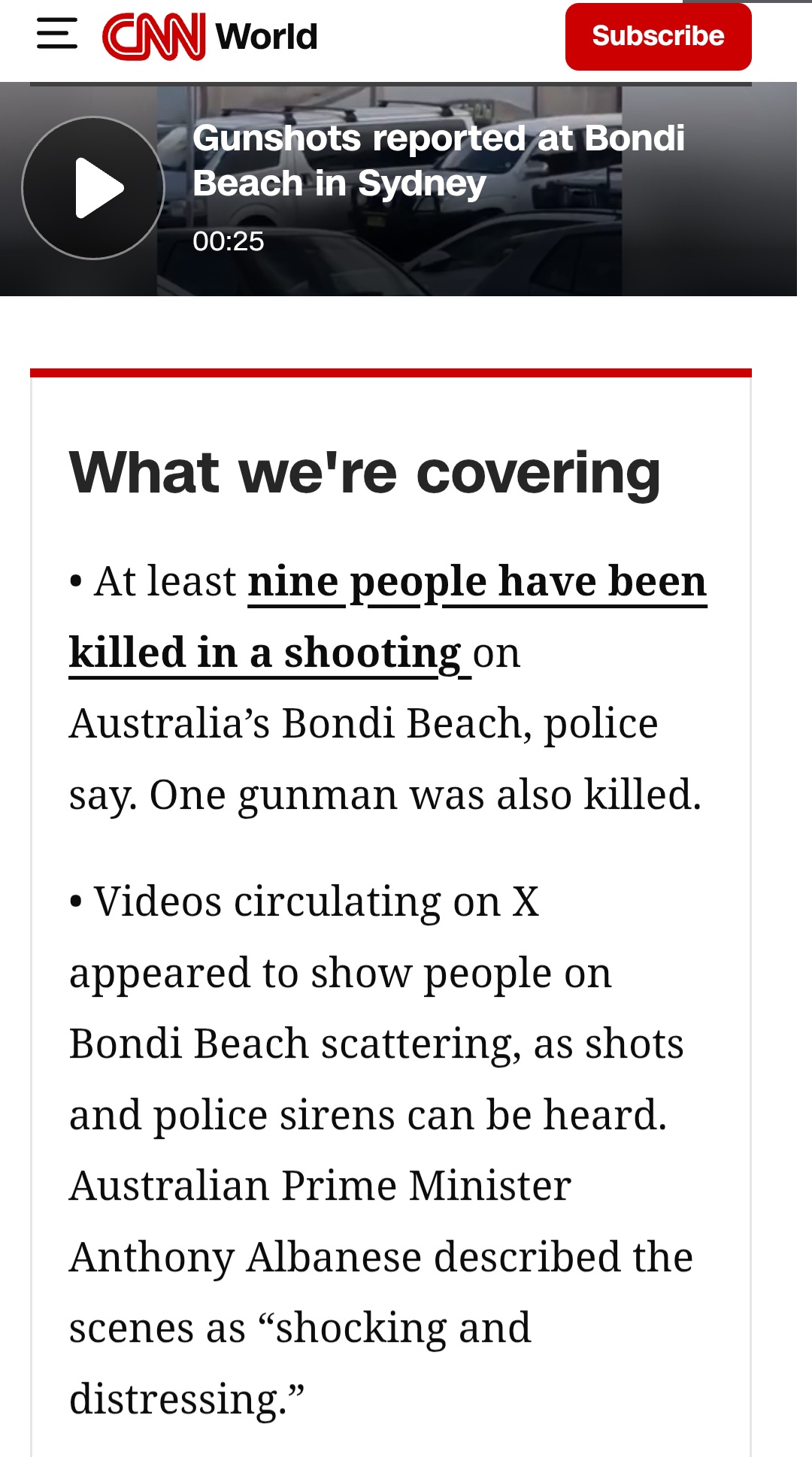
The BBC followed a similar path. So did The Guardian. So did others like CNN. The event was flattened into abstraction: a “shooting,” a “disturbance,” a “tragedy,” untethered from identity.
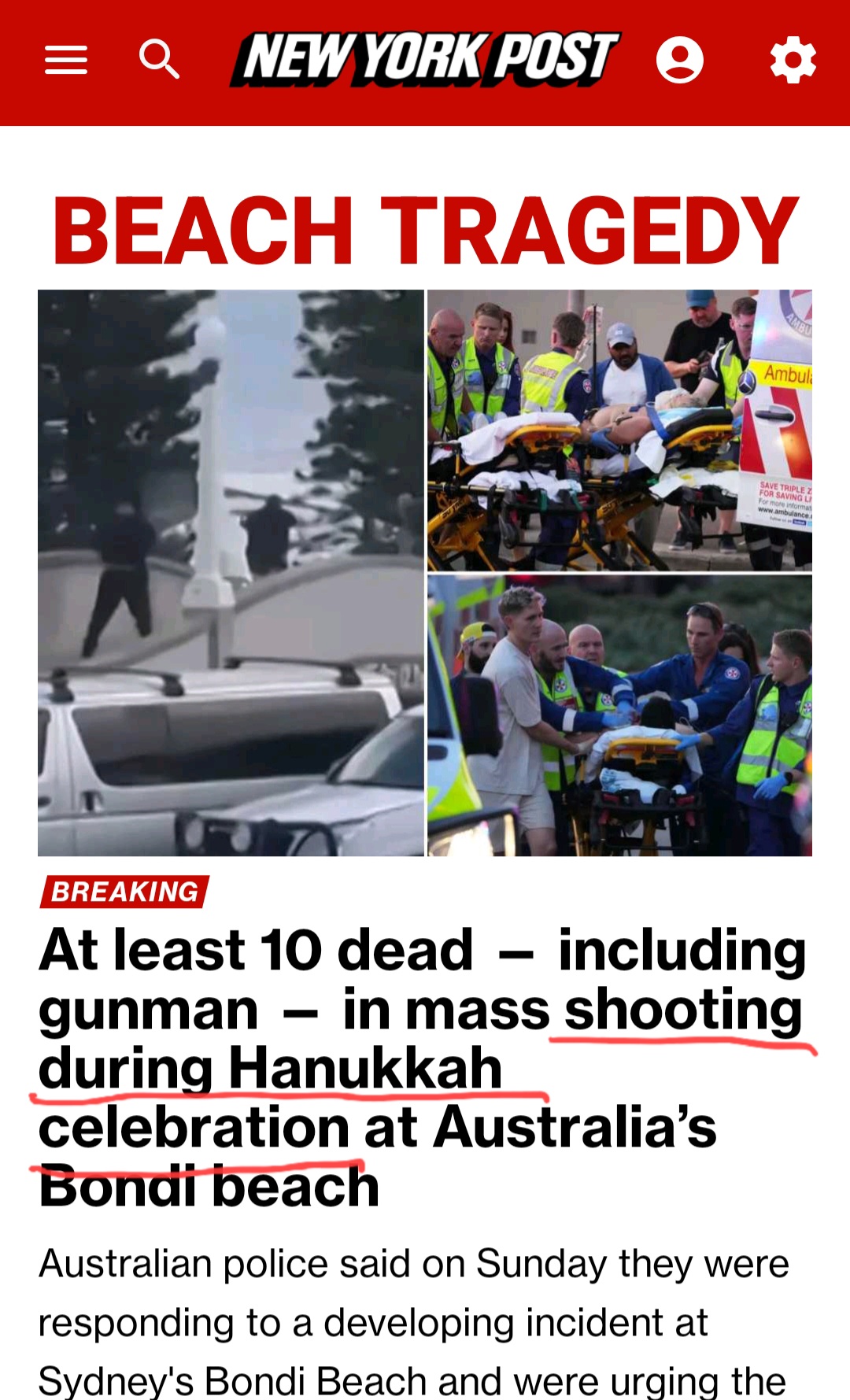
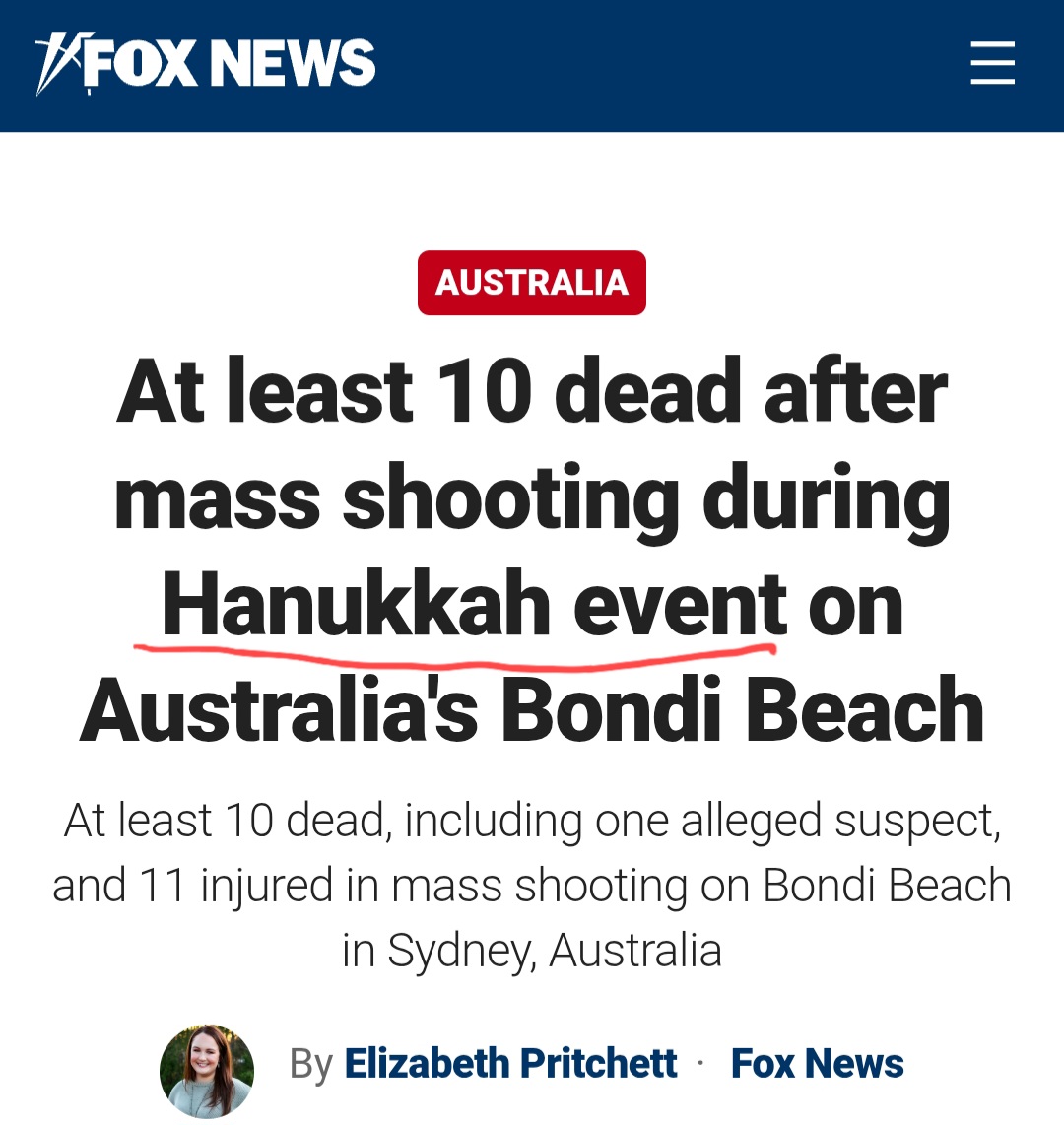
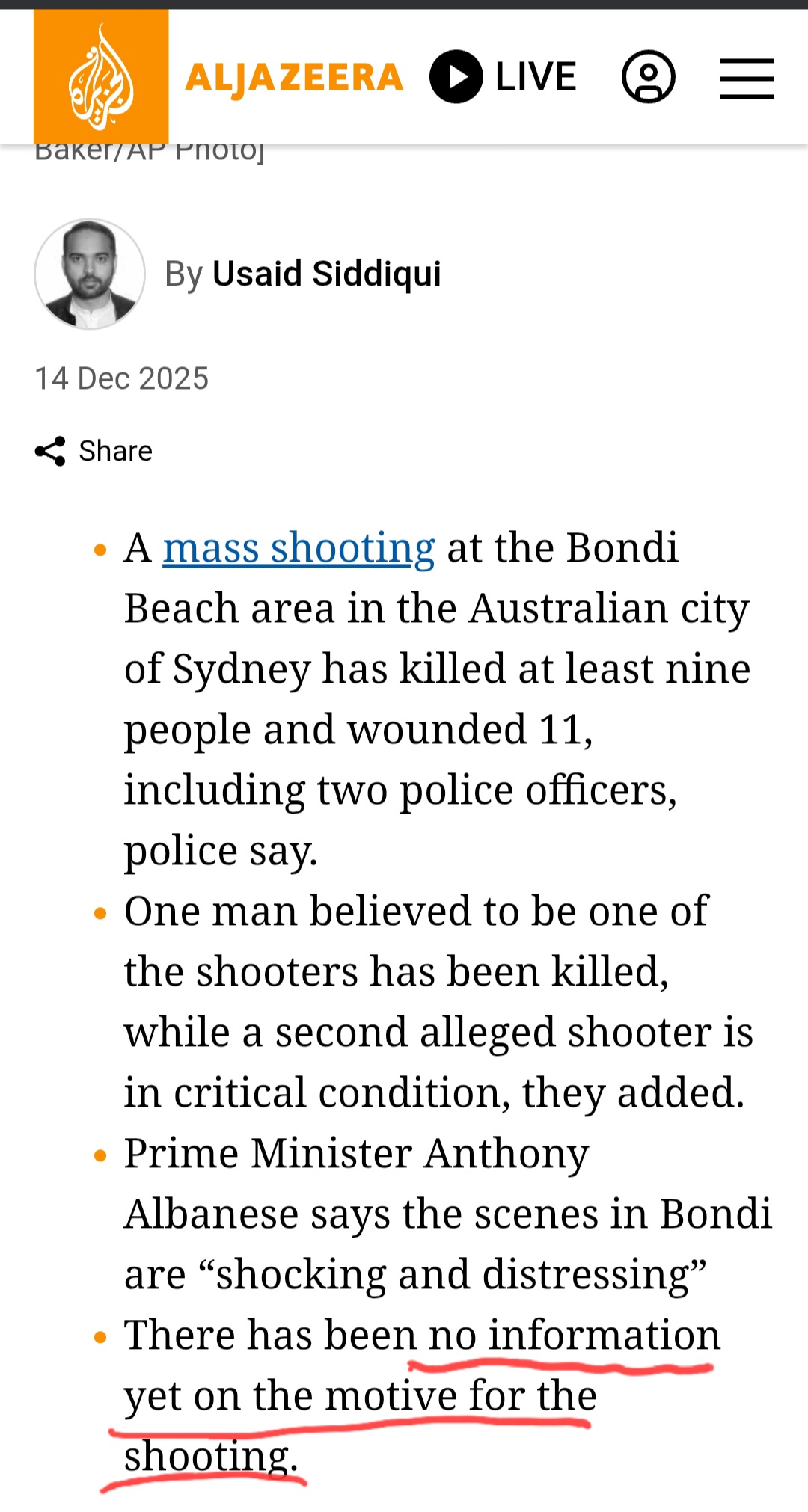
By contrast, The Telegraph named Jews. The Jerusalem Post did as well. The New York Post and CNBC, too. Al Jazeera did not. Actually, Qatari-owned Al Jazeera attempted to whitewash the entire incident that there was “no information.”
This divide is not accidental. It reflects something deeper and more uncomfortable.
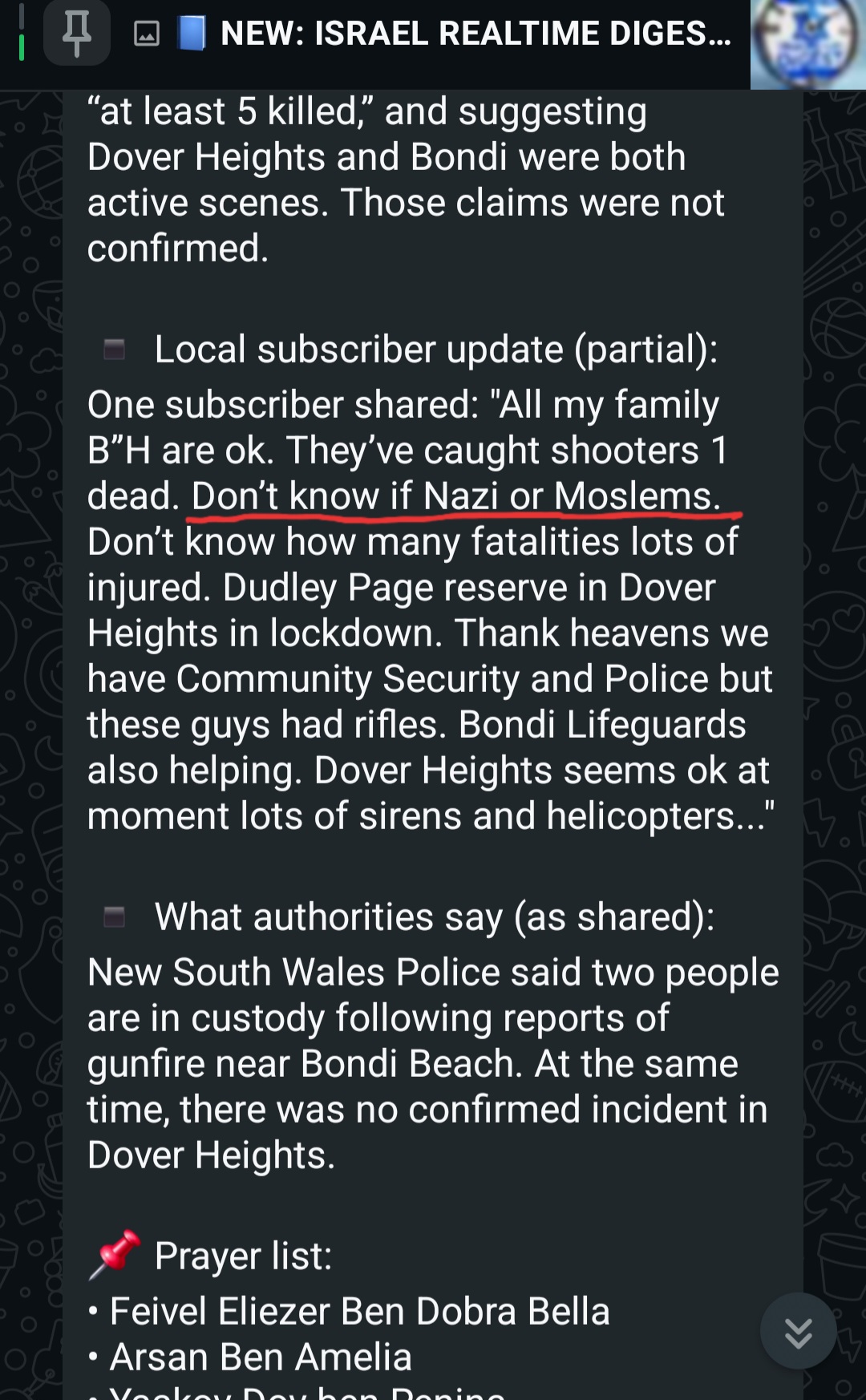
Because at the same moment that major Western media hesitated to name Jewish victimhood, the global Jewish community had no such confusion. WhatsApp groups lit up within minutes. Videos circulated—not to sensationalize, but to bear witness. The injured were named, not as statistics but as people. Hebrew names were shared so strangers across continents could pray for them.
No one asked whether Jews had been targeted. They knew.
The only uncertainty discussed privately was not if the attack was antisemitic, but which strain of antisemitism it represented. Neo-Nazis? Radical Islamists? A lone actor steeped in online hate? Jews have learned, painfully, to recognize the pattern even before the authorities finish their press conference.
So why the hesitation in public framing?
Why is Jewish identity often erased precisely when Jews are attacked?
Part of the answer lies in a narrative trap the modern media has built for itself. Jews, especially Israeli Jews, are increasingly cast in a single role: power holders, enforcers, aggressors. In that framework, Jews are permitted to be actors—but not victims. Agents—but not targets. Perpetrators—but not innocents.
Victimhood, in today’s moral economy, is rationed. And Jews often find themselves disqualified from it in favor of victims of preference.
Naming Jews as victims complicates the preferred storyline. It disrupts the binary of oppressor and oppressed. It forces an uncomfortable reckoning: that a people portrayed relentlessly as powerful are still being hunted in synagogues, homes, and holiday celebrations—from Pittsburgh to Poway, from Paris to Copenhagen, from Jerusalem to Sydney.
And so the language softens. The identity disappears. The motive is delayed, blurred, or left unexplored. The story becomes about the setting, not the target. About the neighborhood, not the people. About ambience, not intent.
The question is not whether Jews are under attack. That is beyond dispute.
The question is whether the world’s most influential media institutions are willing to say so plainly—or whether Jews may only appear in headlines when they are accused, never when they are wounded.
Part of the answer to the disgraceful shrug to the barbaric October 7 massacre in Israel is the systemic brainwashing that has been going on, that Jews cannot be viewed as innocent victims. Even when they plainly are, half a world away.
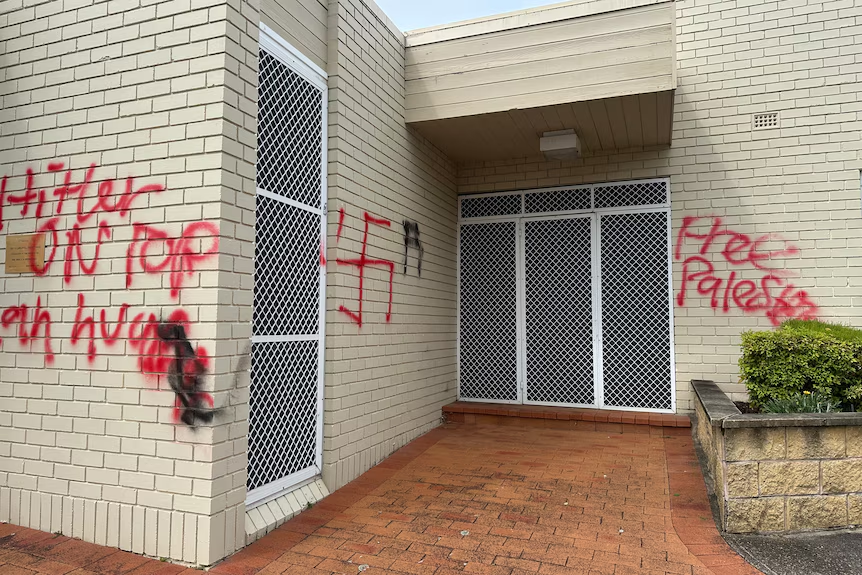
The situation for Jews in Australia is rapidly becoming intolerable. Much of it is because of violence directed at Jews. And much of it because of the reactions that rally to the attackers.
In the immediate aftermath of the genocidal jihad of Gazans against Israelis in October 2023, a mob assembled at Australia’s Sydney Opera House shouting what sounded like “Gas the Jews”, “F*ck the Jews”, and “Allahu Akhbar.” The local police concluded that the mob only wanted to know where the Jews were and did not pursue charges against anyone.
Riot of people in Australia carrying Palestinian, Lebanese and ISIS flags calling for a jihad in the aftermath of the October 7, 2023 massacre in Israel by thousands of Gazans.
In response, the Muslim community said the incident “caused significant damage and distress to Arab and Muslim communities in Australia,” inverting victims and perpetrators.
This week, Australians looked to England for new inspiration.
After a music festival in England featured a band leading the audience in chants of “death, death to the I.D.F.,” the Israeli Defense Forces, scores of people echoed the call on the streets of Melbourne, Australia. A few days later, as Jews began their Sabbath, a man set fire to the front door of a synagogue in Melbourne with people inside. At the same time, around 20 people ransacked an Israeli restaurant, throwing tables and food while screaming the death chant and that they don’t want Zionists in Australia.
Australian news reports discussed the Jew hatred… while adding that Muslims have also faced hate lately.
Australian news reporting on antisemitic attacks from July4, adding comment that “anti-Arab hate” (3:25) also has spiked
The New York Times also felt compelled to add several paragraphs about “Islamophobia” in an article about the two antisemitic attacks. As it did, it recharacterized the antisemitic chants of the mob after the October 7 attack at the Sydney Opera House as simply “accusations of hate speech” and “new laws restricting protestors rights and criminalizing certain types of statements,” seemingly rallying around the haters.
Jews are under direct attack yet the public is attempting to misdirect and rationalize the situation to their Victims of Preference. Somehow, concerns for 2 billion Muslims who market themselves as “minorities” in the West, overshadow 15 million Jews under violent assault.
In February 1998, Osama Bin Laden called for a “Jihad Against Jews And Crusaders.” In it, he issued a ruling to “kill the Americans and their allies — civilians and military — is an individual duty for every Muslim who can do it in any country in which it is possible to do it.” It is an echo of Hamas’s 1988 foundational charter which calls to “raise the banner of Jihad in the face of the oppressors, so that they would rid the land and the people of their uncleanliness, vileness and evils, (Article 3)” and “It is necessary to instill the spirit of Jihad in the heart of the nation so that they would confront the enemies and join the ranks of the fighters. (Article 15)” Hamas doesn’t demand that everyone kill Jews; fostering fertile ground is also a key part of the jihad: “Jihad is not confined to the carrying of arms and the confrontation of the enemy. The effective word, the good article, the useful book, support and solidarity – together with the presence of sincere purpose for the hoisting of Allah’s banner higher and higher – all these are elements of the Jihad for Allah’s sake. (Article 30)”
Yes, the news is part of the jihad.
Years after his death, Bin Laden – together with Hamas – are conducting western music festivals and choirs outside opera houses to come for “the Jews and Crusaders.” The infidels love the energy and are screaming the chorus as they incinerate their own societies.
The West has enlisted in the jihad upon itself, starting with Jews.
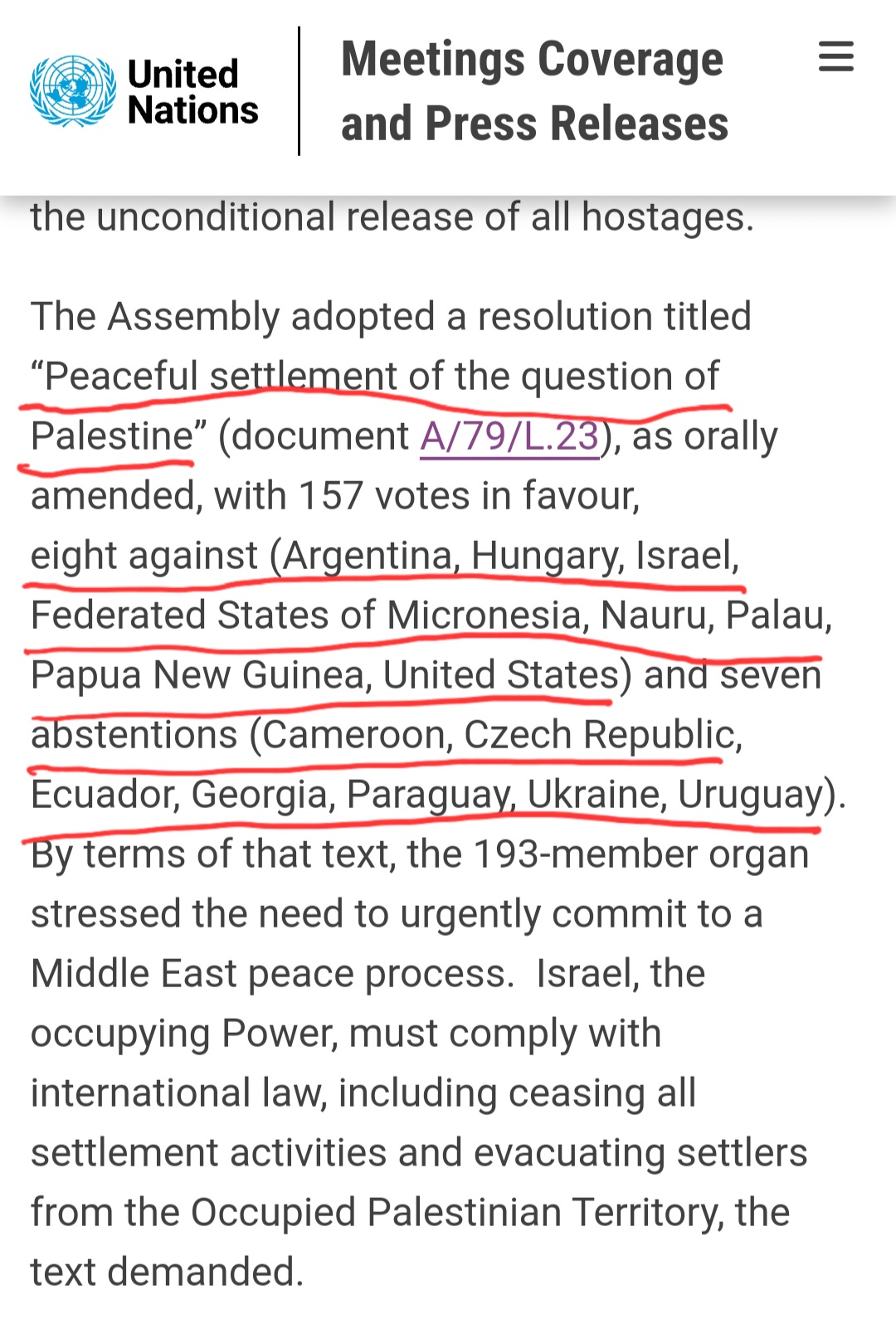
The United Nations General Assembly passed one of the most anti-Israel resolutions in its history on December 3, 2024. Titled “Peaceful settlement of the Question of Palestine,” drafted on November 25, it demands that Israel surrender to every Palestinian Arab demand, including giving up every inch of land that Israel recaptured in its defensive June 1967 war, removing all Jews from those lands to recreate the ethnically-cleansed situation advanced by the Jordanian army in the 1948/9 war, and to settle millions of Palestinian Arabs who never lived in Israel, into Israel.
The resolution passed with 157 states in favor, eight against (Argentina, Hungary, Israel, Micronesia, Nauru, Palau, Papua New Guinea and the U.S.) and seven abstentions (Cameroon, Czech Republic, Ecuador, Georgia, Paraguay, Ukraine and Uruguay).
Where was Australia, Canada, France, Germany and the United Kingdom in rejecting this horribly biased resolution? Even though votes at the General Assembly hold no legal weight, the antisemitic vote amidst the global wave of antisemitism is both revolting and frightening.
And the resolution IS ANTI-JEWISH.
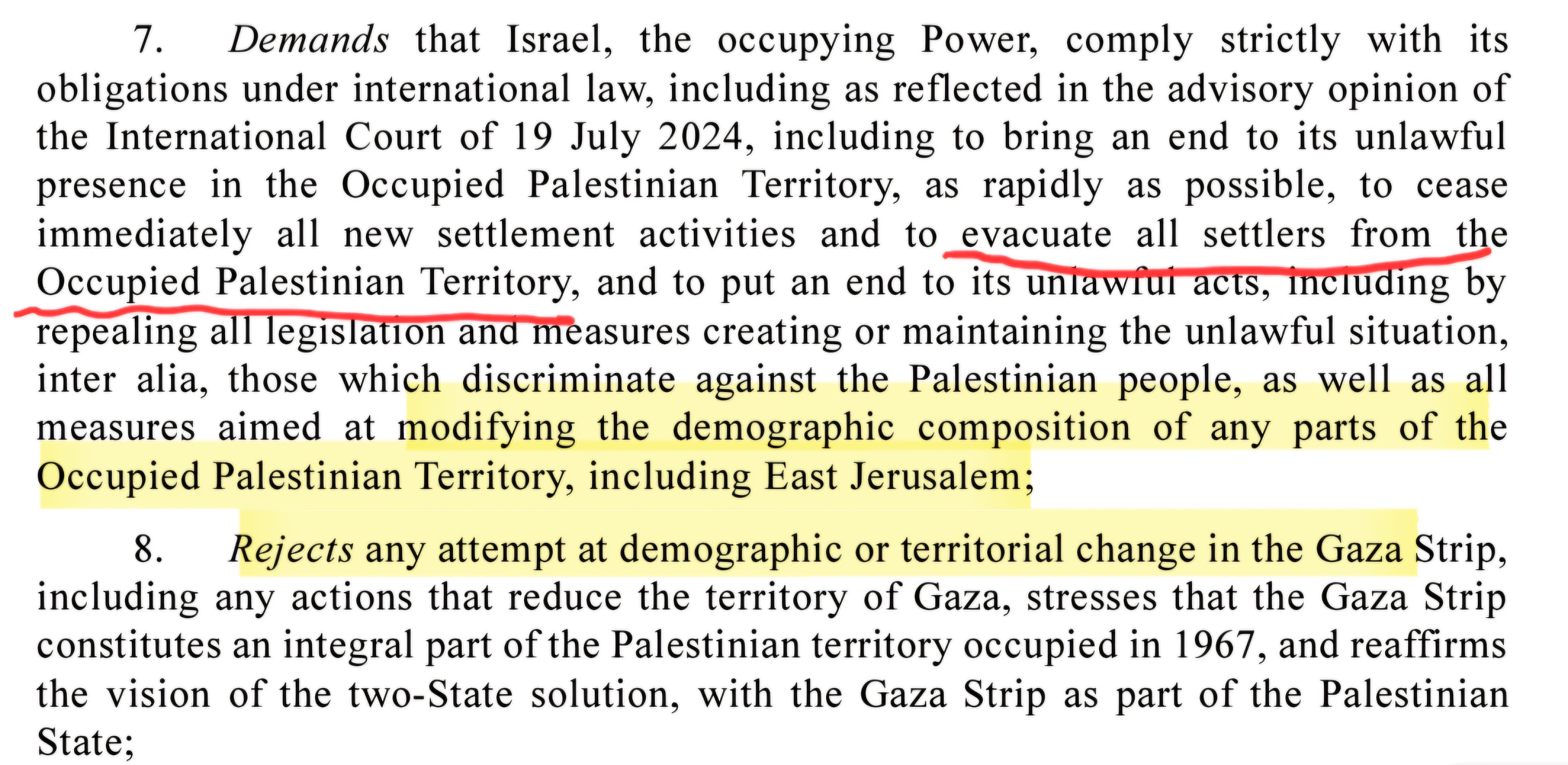
Section 7 demands that Israel “evacuate all settlers from the Occupied Palestinian territory” and stop “modifying the demographic composition of any parts of the Occupied Palestinian Territory, including East Jerusalem.” That’s a direct call to remove Jews – and only Jews – from all lands east of the 1949 Armistice Lines (E49AL) including Judaism’s holiest location of the Old City of Jerusalem.
“Settlers” means Jews – and only Jews – at the UN.
“Demographic composition” means the presence of Jews – and only Jews – at the UN.
The paltry number of Jews in the world are concentrated in a handful of countries today. Israel and the United States account for roughly 85% of global Jewry, but significant numbers live in France (453,000), Canada (391,000), UK (290,000), Germany (116,000) and Australia (113,000). These countries are seeing a toxic tsunami of Jew hatred run through the streets over the past year, and the governments are now blessing the idea that Jews should be banned from certain lands and stripped of basic human rights, even in their holy land.
The UN has moved passed the “Zionism is racism” resolution of the 1970s and sanctioned Jew hatred. If Jews can be confined to certain locations and banned from others in the Jewish holy land, it stands to reason that they can easily be placed into ghettoes and denied rights everywhere else.
Israel may be winning the regional war militarily, but global Jewry is losing basic human rights in the process.
In just a single week, two governments took long overdue steps to label all branches of terrorist groups as part of the same poisonous tree. It was not without reason.
On November 19, 2021, the United Kingdom announced that it would add the political wing of Hamas onto the list of terrorist groups, joining the military branch which already had the designation. On November 24th, the government of Australia announced that it was adding all branches of Hezbollah to its terrorist list. They joined many countries in recognizing that the entirety of these organizations mobilized forces of hatred and terror, and facilitated the actual attacks of its military wings.
The propaganda arms of the two groups – al Aqsa and al Manar – are no longer fringe sources of extremism. They have been growing in popularity and are now at parity with more mainstream Muslim Arab media.
Al Manar is the media arm of Hezbollah in Lebanon. It routinely puts out the statements of Hezbollah Secretary General Sayyed Hasan Nasrallah demonizing the United States and Israel. The group defines itself as the official Islamic resistance of Lebanon to combat the atrocities and invasions of western powers.
Al Aqsa is the media arm of Hamas. It also defines itself as the official Islamic resistance of the Palestinian people against western and Jewish forces, advocating violence in its various programming.
Date
al Arabia & Al Jazeera
al Manar & Al Aqsa
Sept 2005
72.5%
4.8%
Sept 2010
60.7%
16.8%
Sept 2015
36.2%
25.4%
Sept 2021
27.3%
25.5%
Media viewership in Gaza over time.Gazans preferences for terrorist sources has grown according to Palestinian polls
As the table above shows, the preference for the programming of mainstream media like al Arabia from Dubai and al Jazeera from Qatar has dropped dramatically, even though those media outlets also demonize the west. The Gazans have become drawn to more radical calls for terrorism.
The spike in West Bankers watching Hamas media has a lot to do with Palestinians dislike of PA President Mahmoud Abbas from the rival Fatah party, his cancelling elections earlier this year and Hamas’s missile attacks against Israel in May, a war crime celebrated by West Bankers as a defense for Jerusalem. But the overall trends are much the same as in Gaza: Palestinians are now watching terrorist television at the same rates as mainstream Arabic media.
The United Nations long ago realized that terrorist propaganda fuels violence, but it primarily focused attention on ISIS and al Qaeda and their usage of social media. Hopefully the recent actions of Australia and the UK in labelling the political and media arms of Hezbollah and Hamas as terrorist organizations will help reduce the vile calls to violence.
A picture taken on November 12, 2018, shows a ball of fire above the building housing the Hamas-run television station al-Aqsa TV in the Gaza Strip during an Israeli air strike after a barrage of rocket fire from the enclave. Israeli security group Shin Bet accused al Aqsa journalists of using codes and being agents in attacks on Israel (Photo by MAHMUD HAMS / AFP)










 First One Through