The Concealment of Jihadi Terrorism

A horrific antisemitic attack happened on the holiest day of the Jewish year at a synagogue in Manchester, England. The killer was a Muslim man named “Jihad.” The parents tattooed his fate at his birth.

After the killing of Jews on Yom Kippur in Manchester, England, October 2025

Yet the press – The New York Times, BBC, Wall Street Journal – would not identify the man by his religion. Rather than state he was a Muslim, they all wrote he was “Syrian-born.”

The New York Times would not state that the antisemitic killer was a Muslim

This was clearly a hate crime based on religion – one that even former US President Obama could not excuse as a madman out to “randomly shoot a bunch of folks.” So why not identify the religion of the killer?

This seems to harken back to the British grooming gangs which sexually assaulted and traded 1,400 girls in Rotherham, 40 miles from Manchester. The police kept mum on the story for years. As for the press, they twisted themselves every which way that the gangs were “Asian” or “Pakistani,” avoiding saying they were Muslim.

Is this silencing of the media due to the influence of Qatari money? Is this the Islamic Privilege that is writ large at the United Nations where all must bend the knee? Has Islamic terrorism become so mainstreamed that it needn’t be mentioned, or are people too worried to call it out because the fear of reprisals feels so close?

Obama said that he refused to use the phrase “radical Islam” because the religion was twisted by extremists. “They are not religious leaders; they are terrorists. We are not at war with Islam. We are at war with people who have perverted Islam.” Yet members of Obama’s party use the phrase “white supremacy” liberally, and liberal colleges teach/ accuse all White people of “privilege” and racism, even though many are obviously not racist.

Everyone knows that not all 2 billion Muslims are terrorists. And many countries took a particular action on March 15, 2022, when the United Nations General Assembly passed a resolution introduced by Pakistan on the International Day to Combat Islamophobia that “terrorism and violent extremism as and when conducive to terrorism, in all its forms and manifestations, cannot and should not be associated with any religion, nationality, civilization or ethnic group.”

So perhaps that is the simple answer: the media doesn’t want to conflate extremism and religion – for Muslims. It is de rigueur for the media to do it for Jews.

Islamic terrorism is real. Whether from ISIS, al Qaeda, Boko Haram, Hamas or the local zealot next door. Pretending it doesn’t exist will not save the West. It certainly won’t protect Jews, especially when the media miseducates the world that they are the real threat.

For The UN Secretary General, Killing Jews At Synagogue Is Only Terrorism Outside of Israel

Islamic radicals came for Jews again. This time, on Yom Kippur, the holiest day on the Jewish calendar.

In Manchester, England, Jihad Al-Shamie, a 35-year-old British man of Syrian descent, rammed his car into a synagogue and then started stabbing people. Two were killed and three injured. The press would not say that the man was Muslim (his name was Jihad) nor what the motive was.

But it was clear to everyone – even the United Nations – that this was not a casual madman but a force of evil. The UN Secretary General Antonio Guterres issued a statement the same day that he “stands in solidarity with the Jewish community and calls for those responsible to be brought to justice.”

This is a completely normal and appropriate reaction.

Yet compare it to Guterres’s statement when seven Jews were killed outside a synagogue in Jerusalem in January 2023: there was no statement of standing in solidarity with the Jewish community. There was no call to “confront hatred and intolerance.” There was no demand that the perpetrators be brought to justice.

Quite the contrary: he demanded that Israel “exercise utmost restraint.”

Because the United Nations has long blessed the Palestinian Arab war to kill Jews.

The Allure of Holy Land Grapes

There is a reason the Bible lingers on grapes. They are rich, sweet, bursting with promise — a fruit that invites you in.

When the spies returned from scouting the Promised Land, they brought back a single cluster so heavy it had to be carried on a pole. That image has endured for millennia: the land was good, overflowing, generous. The fruit drew the Israelites forward, a taste of the future God promised.

Jan Jansson (1588-1664) 1630 map, Palestina Sive Terrae Sanctae Descriptio

Yet that same cluster became a stumbling block. The spies’ report turned the promise into fear. Instead of trusting that the God who brought them out of Egypt would also give them this land, they shrank back. The grapes that should have stirred hope instead fed doubt about the size and power of the land. The draw of abundance proved to be no guarantee of holiness.

Grapes in the Song of Moses

Forty years later, as Moses prepared the people to finally enter the land, he again reached for the image of the grape and the vine, which must have still captured the imaginations of the generation that wandered the desert. In the Song of Ha’azinu he sang of the bounty to come:

“Honey from the rock,…
milk of the flock,…
and the blood of the grape you drank as wine.” (Deuteronomy 32:13-14)

The land’s fruit would not be a passing token or aspiration as it was in the wilderness — it would be a daily reality. The vine was not only a sign of blessing but also of permanence.

And Moses warned that the very blessing could corrupt:

“Yeshurun grew fat and kicked…
then he forsook the God who made him.” (Deuteronomy 32:15)

When abundance becomes self-indulgence, the sweetness sours. The gift is no longer an offering; it becomes an idol.

The Poisoned Vintage

The Song of Moses added a different reference to wine – not of over abundance but used for immoral purposes:

“Their vine is from the vine of Sodom,
their grapes are grapes of poison,
their wine is the venom of serpents.” (Deuteronomy 32:32-33)

The same fruit, when cultivated for injustice and oppression, becomes toxic. The vine can yield joy or venom depending on the heart of the grower.

The Test of Blessing

The Bible’s teaching is that grapes themselves are neither holy nor unholy. They are a draw — a gift meant to be enjoyed in gratitude and moderation.

When abundance is hoarded, flaunted, or wielded for harm, it ceases to be a blessing. The line between the vineyard of the Lord and the vineyard of Sodom lies not in the soil but in the soul.

The cluster carried by the spies, the wine of the Song of Moses, and the poisonous vintage of the nations all point to the same truth: the fruits of the earth reveal the heart of the one who gathers them.

It is our message as we leave the Fast of Yom Kippur and ready for the joyous and communal holiday of Sukkot: wine in moderation and with purpose, gladdens and sanctifies. In excess or in service of corruption, intoxicates and destroys.

Israel Has Returned Excellent Wine Making Back to the Middle East (August 2016)

For the Sins of 5785

Against the Jewish People

  • For the sin of hating each other more than our enemies.
  • For the sin of forgetting Jerusalem while remembering Paris.
  • For the sin of treating exile as destiny instead of tragedy.
  • For the sin of chanting “Never Again” but adding a question mark.
  • For the sin of excusing antisemitism when it comes from our political side.
  • For the sin of making Holocaust comparisons cheap.
  • For the sin of watching thousands of Jewish Instagram and YouTube posts but never subscribing.
  • For the sin of praying for unity and voting for division.
  • For the sin of mistaking Jewish Twitter for Jewish life.
  • For the sin of writing more about falafel than faith.

Against the State of Israel

  • For the sin of normalizing insane charges like “genocide.”
  • For the sin of inviting murderers to parades of diplomacy.
  • For the sin of forgetting about hostages.
  • For the sin of bowing to the UN as if it were Sinai.
  • For the sin of letting the Temple Mount be ruled by fear.
  • For the sin of not buying Israeli products.
  • For the sin of treating Israel as a vestigial organ.
  • For the sin of confusing moral clarity with extremism.
  • For the sin of excusing “Free Palestine” as anything other than a call for dead Jews.
  • For the sin of treating Jewish sovereignty as negotiable.

Against the Nations

  • For the sin of mourning terrorists more than their victims.
  • For the sin of pretending the war from the Global South is only about the land of Israel when they make clear they are coming for America and Europe..
  • For the sin of classrooms that celebrate “resistance” with blood.
  • For the sin of treating the ICC as holy writ.
  • For the sin of UN resolutions drafted by dictators.
  • For the sin of excusing antisemitism as “anti-Zionism.”
  • For the sin of universities that protect bullies and shame Jews.
  • For the sin of liberal values that vanish when Jews need them.
  • For the sin of making free speech absolute — except for Jews.
  • For the sin of confusing neutrality with cowardice.

Against America

  • For the sin of laughing at assassination because of party labels.
  • For the sin of mobs deciding what is taught and what is erased.
  • For the sin of canceling decent teachers while tenuring radicals.
  • For the sin of treating violence as speech and speech as violence.
  • For the sin of replacing education with indoctrination.
  • For the sin of praising diversity while excluding Jews.
  • For the sin of thinking collapse only happens elsewhere.
  • For the sin of dividing every citizen into tribes.
  • For the sin of confusing patriotism with partisanship.
  • For the sin of handing microphones to those who despise us.

Against Ourselves Personally

  • For the sin of thinking binge-watching counts as Torah study.
  • For the sin of pretending podcasts make us learned.
  • For the sin of putting my dog on my lap at the Shabbat table.
  • For the sin of descending into a pursuit of immediate gratification.
  • For the sin of not prioritizing time with friends and family.
  • For the sin of still not calling our in-laws “Ma” and “Pa.”
  • For the sin of calling it a fast while sneaking coffee.
  • For the sin of turning Kiddush into a buffet strategy.
  • For the sin of watching dog videos in bed rather than talking to our spouses.
  • For the sin of leaving my sprinkler on over Shabbat.

And the Truly Absurd

  • For the sin of blowing the shofar as if it were a car alarm.
  • For the sin of fasting — but only until lunch.
  • For the sin of turning “Ashamnu” into a group karaoke session.
  • For the sin of posting “G’mar Chatimah Tovah” memes.
  • For the sin of making break-fast more important than the fast.
  • For the sin of asking if lox counts as repentance.
  • For the sin of using “teshuvah” as an excuse for procrastination.
  • For the sin of making this list too long — again.

For all these things, please pardon us

Names and Narrative: “Pro-Palestinian” and “Anti-Jews”

Words aren’t decoration.  They frame a story. They tilt the field before the debate even begins.

No paper knows this better than The New York Times and no example shows it more clearly than how it writes about two of the most polarizing issues of our time—abortion and the Israeli-Palestinian conflict.

On abortion, the Times refuses the label protestors with their preferred title of “pro-life” and insists on “anti-abortion.” The paper’s label defines the movement by what it resists, not what it values. It subtly paints millions of people as opponents instead of advocates.

But when protests are aimed at Jews, the Times flips its rule. It happily uses the demonstrators’ own term: “pro-Palestinian,” even when the protestors’ behavior has nothing to do with seeking coexistence or statehood—and everything to do with targeting Jews.

The case in Teaneck, New Jersey laid the hypocrisy bare. A synagogue held a program for diaspora Jews interested in buying homes in the land of Israel—an act tied to faith and heritage, not to any government or war. Demonstrators showed up to block them.
They shrieked through vuvuzelas inches from people’s ears.
They set off stink bombs.
They mocked their religion.
They shoved and harassed them at the very doors of a house of prayer.

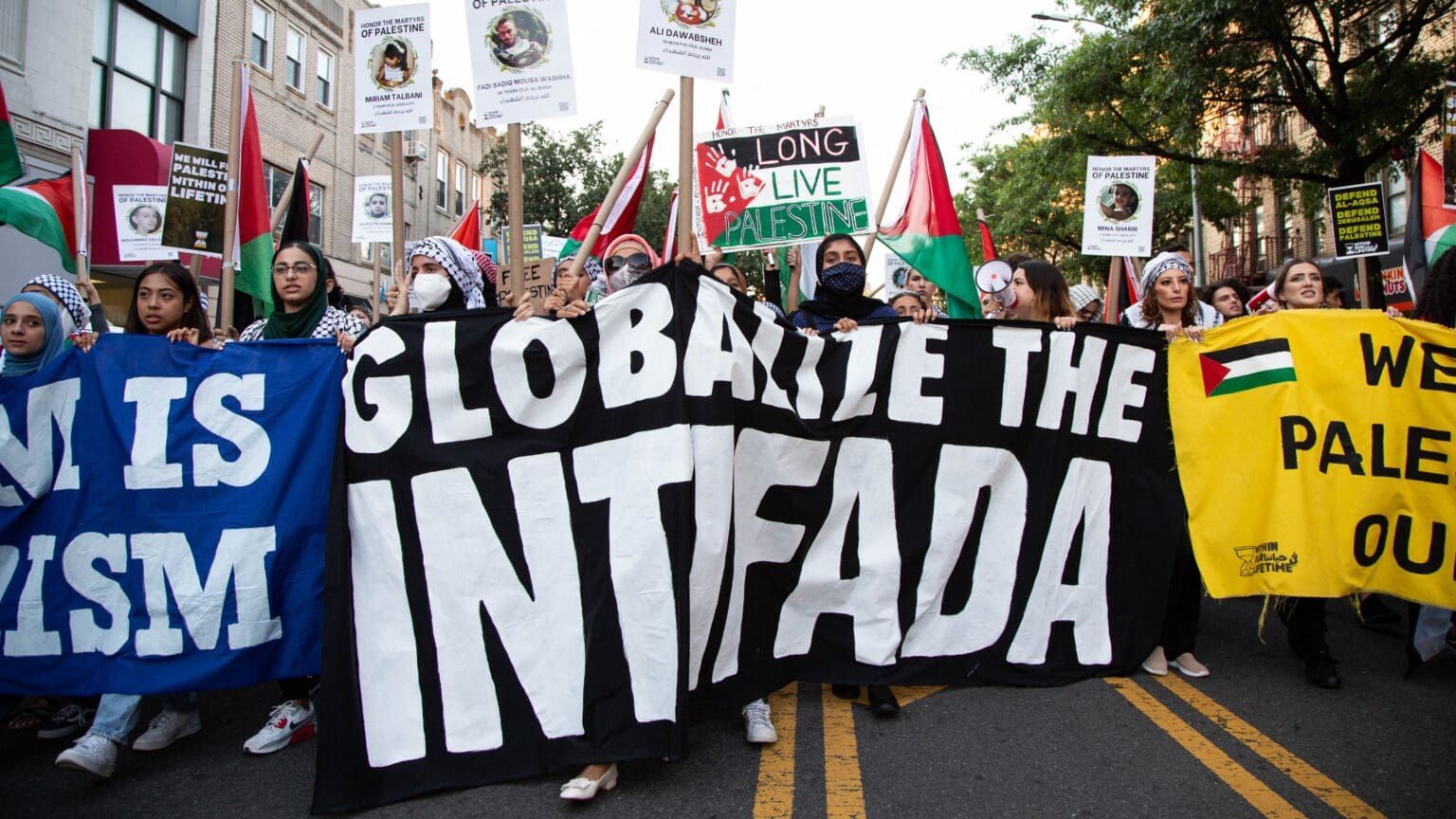
“Protestors” including leaders from Within Our Lifetime come to harass Jews at New Jersey synagogue, screaming “long live the intifada!”

The Justice Department sued under the Freedom of Access to Clinic Entrances (FACE) Act—a law that protects people entering both abortion clinics and houses of worship. The law exists to defend basic civil rights: to seek medical care, to pray, to gather without harassment.

Yet the Times reported the incident as a “pro-Palestinian protest,” not “anti-Jewish intimidation.”

It claimed that the law was being “repurposed” by the Trump administration which as “taking a side” in a “dispute” against “advocacy groups.”

The New York Times on September 29, 2025

For the far left media, one group—pro-life advocates—is defined by opposition; the other—those harassing Jews at worship—is defined by aspiration.

That is not journalism. That is narrative management.

Language molds the story before the facts are even heard. By choosing which side’s self-description to honor, the Times signals which side it wants readers to sympathize with. It is the Times that has taken sides, not the Trump administration. The U.S. is simply enforcing a law written to protect houses of worship which are increasingly under attack.

Police surround St. Patrick’s Cathedral in New York City, including a SWAT team with machine guns at the entrance, on September 29, 2025

A standard worth trusting would be consistent. Either call both movements by their chosen names, or describe both by their actions. But don’t dignify harassment with the protestors’ preferred brand while stripping advocacy of its own.

In the case of the NJ synagogue, the hypocrisy is worse and laid out as evil. Pro-life demonstrators don’t want ANYONE to have an abortion; the “pro-Palestinian” protestors only want JEWS to be banned from buying homes in the land of Israel. They would happily promote Arabs buying every apartment unit that was showcased at the event. They are clearly “anti-Jews” and should labeled as such.

Yet the Times rewrites the story as one about “pro-Palestinian speech” and “First amendment rights.” It pretends that the FACE law isn’t specifically about religious freedom.

The NY Times wrote that FACE was about exercising First Amendment rights at a place of worship – leading a reader to think it was about Free Speech – but FACE is about “right of religious freedom at a place of religious worship.” A sinister misdirection.

The power of the press lies not just in what it reports but in how it names things.
A double standard in language is a double standard in truth.

The left-wing media is lying to its readers that people who harass Jews are simply “pro-Palestinian” and not “Anti-Jews.” The New York Times is complicit in antisemitism.

The Sins That Sink

On Shabbat Shuva, the Sabbath between Rosh Hashanah and Yom Kippur, the haftarah proclaims:

“You will again have compassion on us;
    you will tread our sins underfoot
    and hurl all our iniquities into the depths of the sea..”
— Micah 7:19

That verse frames the season. At the start of the Ten Days of Repentance, we gather by a river or lake for Tashlich, casting crumbs into the current as a sign of casting off our wrongs.
It is not superstition but a declaration of hope: the sinner is not the sin; the two can be parted.

Jonah’s Descent

At the other end of the Ten Days, on Yom Kippur afternoon, we read the story of Jonah — the counter-story.

Jonah fled from God’s call aboard a ship. A storm raged over the ship until the sailors, reluctantly, cast him overboard, and suddenly the sea grew calm. By all natural expectation, Jonah should have floated. Instead, he sank. He recounts:

“The waters closed in over me;
the deep engulfed me;
weeds were wrapped around my head.”
— Jonah 2:5

Jonah could not separate from his defiance; he was dragged to the bottom with it.

Then God sent the great fish — not as a punishment but as a chamber of mercy, a hollow where Jonah could face his failing, pray, and be restored to life. The fish shows that even in the depths, repentance is still possible.

“Jonah Thrown to the Whale” by Johannes Sadeler I, circa 1582. In the background, another ship can be seen sailing in calm waters, showing that the boat with Jonah was targeted for punishment. Jonah’s head faces the roaring sea, accepting his fate.

Two Fish, One Lesson

Many have the custom to recite Tashlich at a stream that has living fish. Some suggest it is a symbol of good luck while others suggest that the fish “consume” the symbolic sins, carrying them away like a scapegoat.

Placed against the story of Jonah, the image deepens: the fish in the stream greet us at the gates of the Ten Days; the great fish of Jonah meets us at their close. The small fish beneath the ripples hint at an easy parting from our minor failings; the great fish is the last-chance refuge for those who waited too long.

The High Holiday season sets the choice before us:

At the opening, we can cast our sins away and watch them sink while we stand free on the shore. At the closing, if we still cling to them, we risk being dragged under — yet even then there is mercy, a chance to pray and rise again.

The waters of Micah and Jonah teach the same truth: our sins can drown without dragging us under — if we will let them go.

Let us all attempt to separate ourselves from sin, and cast them into the depths of the water and be blessed with a new year of health and opportunity.

“Jonah Spat up by the Whale” by Johannes Sadeler I, circa 1582, with the sun seemingly rising in the background to highlight Jonah living to see a new day. Jonah stares at the heavens seeing that the storm has passed.

The Two Witnesses of Vayelech

In Vayelech, as Moses nears the end of his life, he does not leave the Israelites with swords, maps, or battle plans.
He leaves them two witnesses.

“…so that this song may be for Me a witness against the children of Israel.” (Deut. 31:19)

“Take this Book of the Torah… and place it beside the Ark… and it shall be there as a witness against you.” (Deut. 31:26)

Two witnesses. One to sing. One to see.

The Private Witness: A Song to Internalize

The first witness is the Song of Moses.
It is not carved in stone or locked in a chest.
It is taught to the people, meant to be recited, memorized, carried in the heart and on the lips.

A song reaches places that statutes cannot.
It does not merely command; it shapes the soul.
It reminds each individual of the covenant — in good times and in hardship — and demands that a person take responsibility for his or her own faithfulness.

This witness lives in the quiet spaces of life, where no physical judge or priest is watching.
It whispers: “You know what is right. Act accordingly.”

The Public Witness: A Testament to See

The second witness is the Torah scroll.
It is set beside the Ark, in the very center of the national camp.
It is the visible, enduring reference point — the community’s constitution.

While the song stirs the conscience, the scroll sets the standard.
It unites the people under a single covenantal banner, a guide to which the entire nation can point and say:
“This is who we are. This is what we have pledged together.”

Two Responsibilities, One Blessing

Vayelech teaches that the covenant’s blessing flows only when both witnesses are honored:

  • The private witness — internalizing the principle, carrying it daily.
  • The public witness — keeping the community anchored to the same course.

A society that prizes the public witness alone risks becoming a hollow bureaucracy.
A society that trusts only the private witness descends into scattered individualism.

Blessing comes from both: each person singing the song of covenantal responsibility,
and all together respecting the scroll that binds the nation.

The Enduring Lesson — and a Voice from Rabbi Sacks

Rabbi Lord Jonathan Sacks captured this dual dimension of covenant beautifully:

“Covenant is more than law. It is law internalized, turned into song.
We need the public voice of law and the private voice of conscience, for only together do they sustain a free society.”
— Rabbi Lord Jonathan Sacks, Covenant & Conversation: Deuteronomy, Parashat Vayelech (2008)

On the eve of entering the Land, Moses anchored Israel’s future not in military tactics but in responsibility.
The first step toward national blessing was not conquest but character — personal and collective.

The Song calls us to self-discipline.
The Scroll calls us to shared fidelity.

When we heed both — the witness in the heart and the witness before the eyes — we walk the road of blessing.
Ignore either, and the covenant frays.

That is the enduring message of Vayelech: A people’s future depends on individuals taking responsibility for themselves and on the community staying the course together.

Peter Paul Rubens (1577 – 1640), “King David Playing the harp”

The Copyrights of Winnie the Pooh and Jews

When Winnie-the-Pooh entered the public domain in 2022, the cultural floodgates opened. A once-beloved children’s character, wrapped in honey jars and innocent nostalgia, was immediately remade into a monster. “Blood and Honey” turned Pooh into a savage killer. Games, parodies, and dark pastiches flooded the market. The comforting bear was no longer safe; he had been transformed into a canvas for other people’s fears, cynicism, and jokes.

It feels eerily familiar.

For two thousand years, Jews have been cast into the public domain. Stripped of the right to define their own story, they became available for anyone’s use. And abuse. Once known as the people of the Book, bearers of commandments, prophets, and a covenant, their identity was seized and rewritten. Medieval Christians branded them Christ-killers. Islamic empires reduced them to dhimmis. The Enlightenment caricatured them as rootless and ruthless bankers. In the modern age, they became “colonizers,” “supremacists,” and the avatars of “genocide.”

The Jews never sold the copyright to their name or history, but the world took it anyway. Just as horror producers found amusement in twisting Pooh into a monster, antisemites—left, right, secular, religious—have scribbled their darkest nightmares onto Jewish bodies. Pogroms, expulsions, inquisitions, and now, boycotts and campus rallies all stem from a warped creativity that insists Jews cannot own their own narrative.

Israel’s rebirth was supposed to end this. After all, if you reclaim your home, revive your language, rebuild your state, surely you also reassert your identity. But even here, the appropriation continues. Israel was smeared as “apartheid,” “genocide,” “ethnic cleansing,” “racist,” and “colonial” decades before Hamas launched its latest genocidal war. “Jewish self-determination” is rewritten as oppression. “Defending children” is recast as war crimes. The oldest continuous nation on earth is treated as a villain in someone else’s morality play.

The difference between Winnie-the-Pooh and the Jews is stark. The fictitious character Pooh was released into the public domain by the natural passage of time, his copyright protection simply expiring. The Jews were thrust into the public domain by malice—by the unwillingness of societies to allow them ownership of their story. The Jewish Bible was rebranded as the Old Testament, out of copyright protection. Blood libels took hold on the bleached pages of Jewish foundational documents.

The current Jewish year is 5786. Traditionally, Jews write the date in Hebrew letters like Roman numerals and drop the 5 as being well understood. The letters for 86 spell “Pooh” in Hebrew, so now is as good a time as any to attempt a change that the 1948 reestablishment of the Jewish State did not provide.

One simple action is for everyone to write a large ‘5’ before the date, making clear to themselves and others that their faith predates all others, and continues still.

Challenge every use of the phrase “Promised Land” as a vicious varietal of cultural appropriation, which strips Jewish indigenous people from their divine heritage.

More dramatic is to reclaim Jewish rights on the Temple Mount. Why should the world care about Jewish faith and feelings if the majority of Jews treat the center of its religious devotion as a vestigial organ instead of the beating heart? Are we a living people or a hollow chamber for others to draw upon?

We must not countenance the free license for others to slander, parody, or profit off the Jewish name. The Jewish people are not public property. They are the authors and owners of their own identity—and it is time for them to act as such.

Children of a Lesser God, on the Temple Mount

Mark Medoff titled his play Children of a Lesser God to expose the way society infantilized the deaf, treating them as incomplete people. The phrase still burns because it names the humiliation: being allowed to exist but denied equal dignity.

That is precisely the status of Jews on the Temple Mount. The holiest place in Judaism, the very ground of the First and Second Temples, the site of the binding of Isaac. Yet Jews are barred from uttering a prayer there. Visitors, reluctantly and barely; worshipers, never. The “status quo” enforced by the Jordanian Waqf with United Nations’ support dictates that Jews must keep their mouths shut.

It is a civic cruelty disguised as compromise. Jews are told they may stand in the place of their ancestors, but only as tourists in a museum, not as children before God. Muslims pray freely on the Mount by the millions, but Jews are gagged at their own holiest site. That is not neutrality — it is Islamic Imperialism.

The excuses are familiar: security, stability, avoiding unrest. But those words simply sanctify discrimination as pragmatism. As every Jew is expelled for moving lips in silent prayer, the world is reminded: some children are still treated as children of a “lesser” god.

At the very moment Jews prayed in synagogues over Rosh Hashanah 5786 in September 2025, reading the story of Abraham binding Isaac on the Temple Mount and repeatedly praying for a complete Jerusalem, the Islamic world – from as far away as Pakistan and Indonesia – made demands of the United States that it would ensure that Israel maintains the “status quo” on the Mount. The despicable continued humiliation of Jews was essential for them even under the guise of stopping the Hamas war. Even above “humanitarian aid to Gaza.”

Islamic world makes demands on the United States to stop the war – and Jews attempting to pray at their holiest location

International diplomacy has institutionalized the humiliation of Jews. The so-called status quo is nothing but a permanent statement of inequality.

Medoff’s play forced audiences to confront a society that silenced the deaf. The Temple Mount forces us to confront a world that silences Jews. While both are intolerable, the latter is demanded at the anti-Jewish United Nations.

“Free Palestine” Means Dead Jews

Words earn their meaning in how they are used. When a slogan is repeatedly screamed as an incitement to burn, stab, gun down, and terrorize people because of who they are or whom they support, it ceases to be mere rhetoric. It becomes a battle cry — and its meaning is what the battle cry does.

We have painful, recent proof of the sickness. In several separate, well-documented attacks in the United States, suspects shouted “Free Palestine” while carrying out murderous attacks. Investigations and prosecutions have treated these shouts not as abstract political slogans but as part of a violent intent to harm people identified as Jewish, Zionist, or supporters of Israel.

Man shoots people, killing one in New Hampshire yelling “Free Palestine”

When the slogan is used repeatedly for arson, firebombs, knives and bullets, its practical meaning is indisputable: it is a call for violence against Jews and Israel supporters. Institutions that track antisemitic violence warn that normalizing chants tied to violence contributes directly to more attacks. We see that “Free Palestine” is a call to murder.

Man burns people alive, killing one in Boulder, CO, shouting “Free Palestine”

That ugly truth cannot be dressed up in euphemisms or by pleading free-speech. “Free Palestine” is the current moment’s “Allahu Akbar,” the chant of radical jihadists intent on killing “infidels.” For the assailants, today’s infidels are Jews and Israel supporters.

Couple killed in Washington, DC by man yelling “Free Palestine”

It begs the question of what a “Free Palestine” means when used so frequently in murderous rampages. Are there zealots killing because they want a peaceful Palestine, or is it more likely that they seek a Palestine that is free to kill Jews the way thousands of Gazans did on October 7, 2023?

Man tries to kill Pennsylvania Governor Josh Shapiro and his family on Passover over “Palestine”

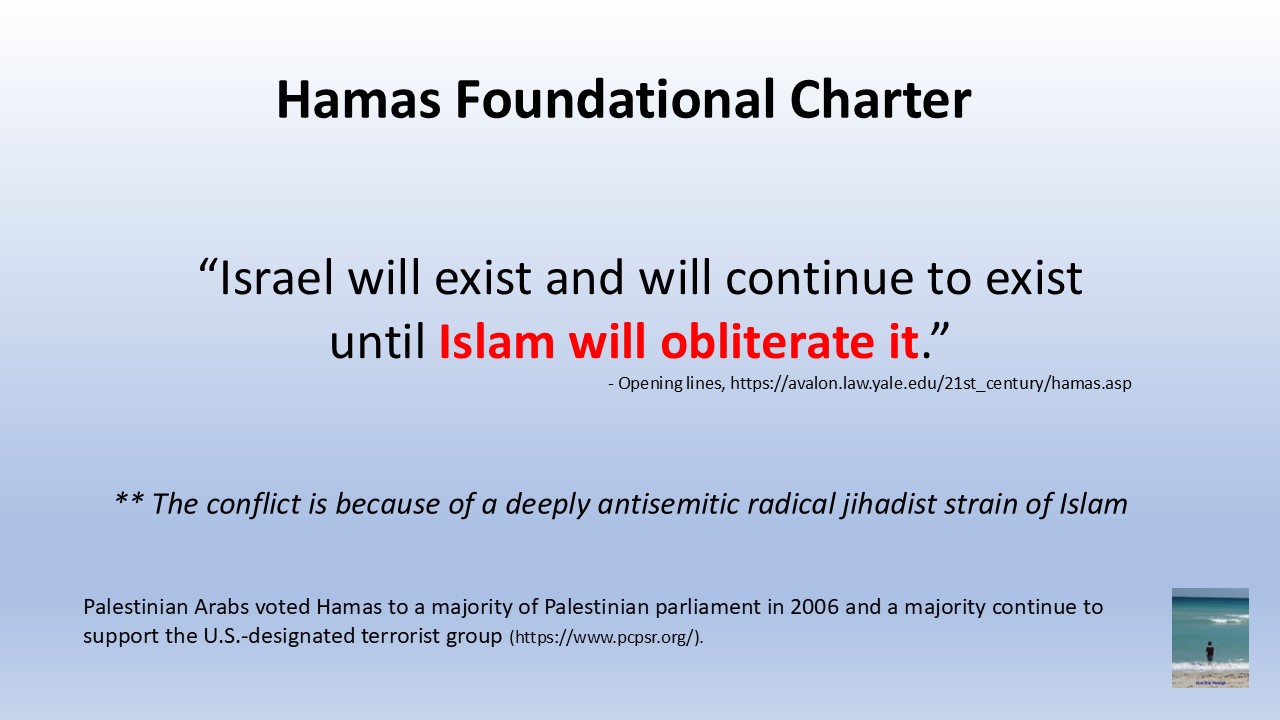
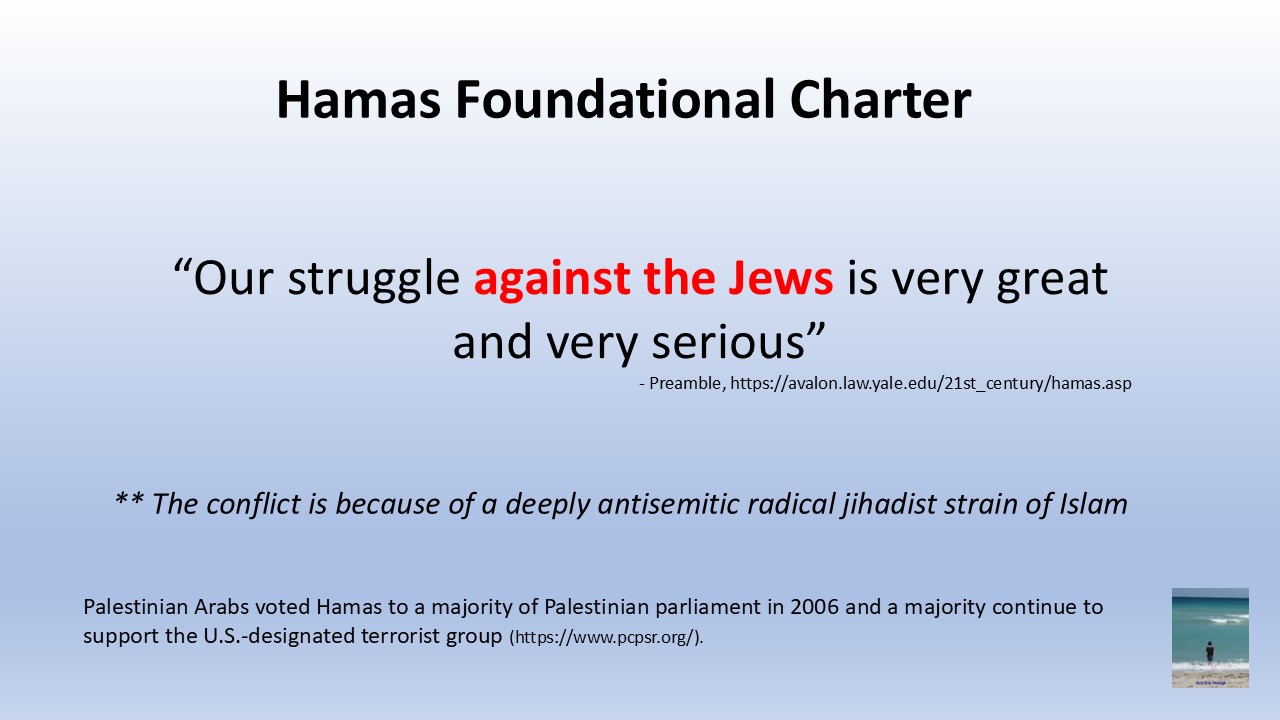
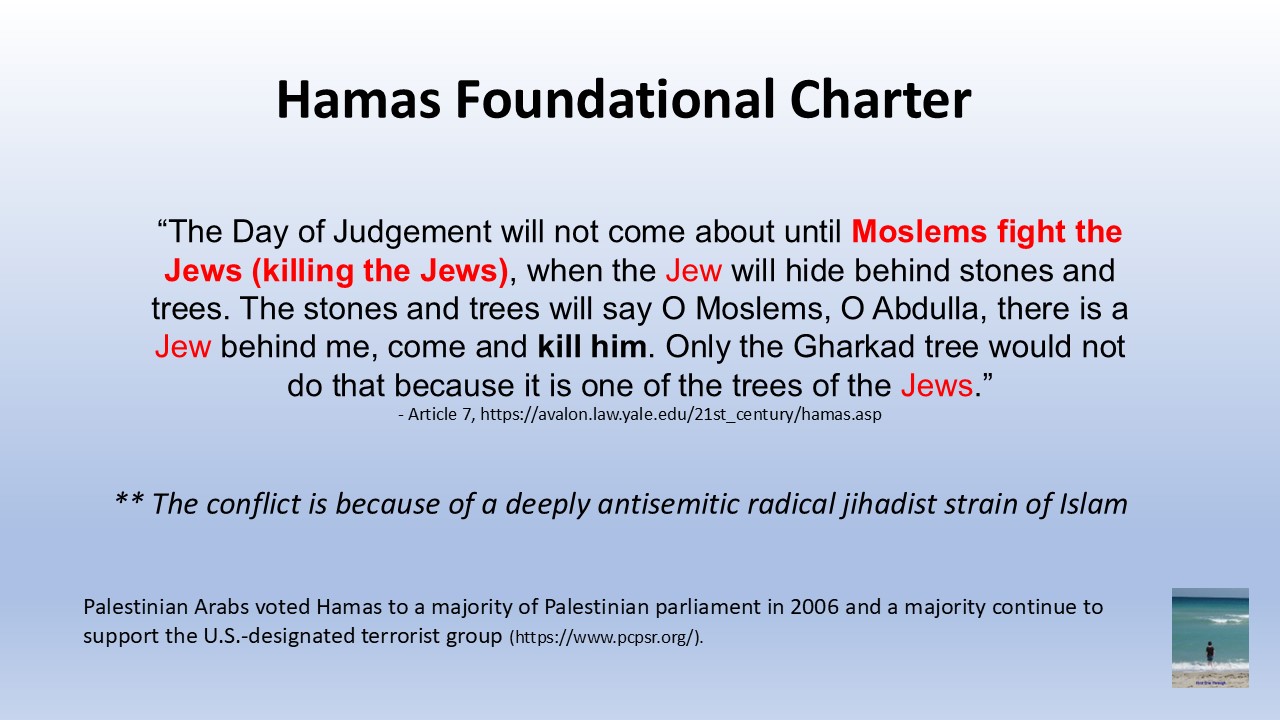
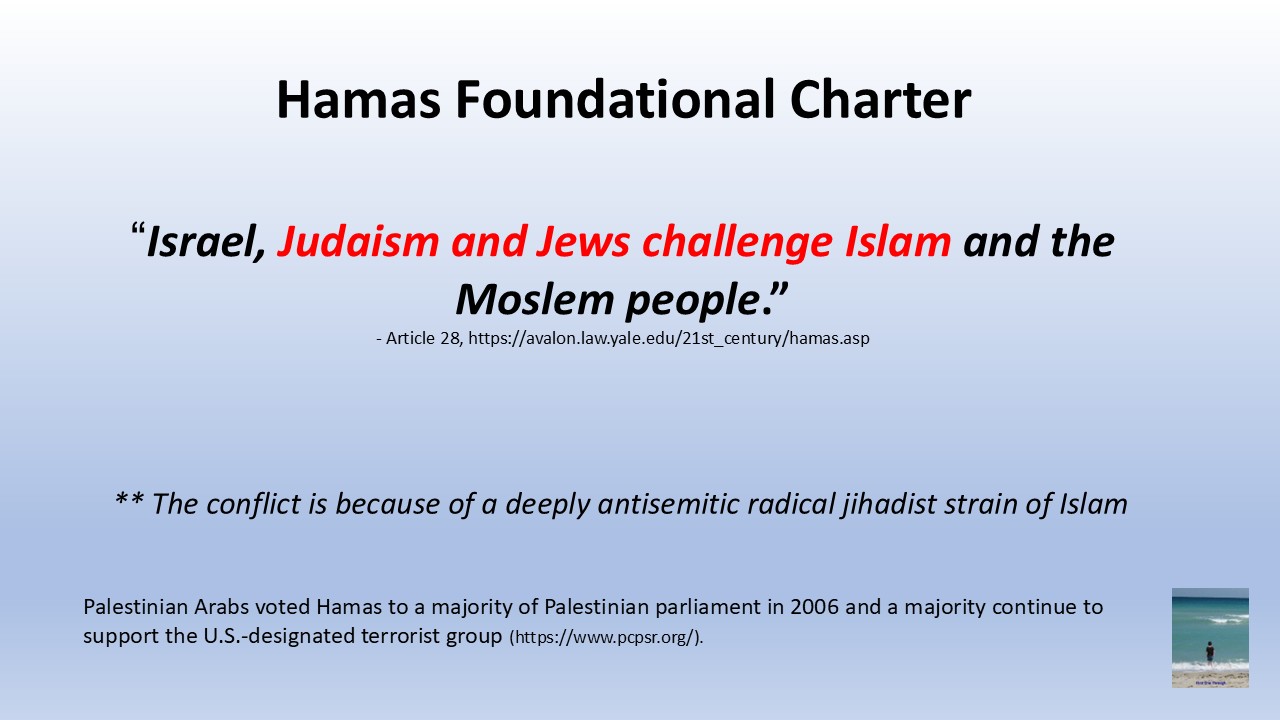
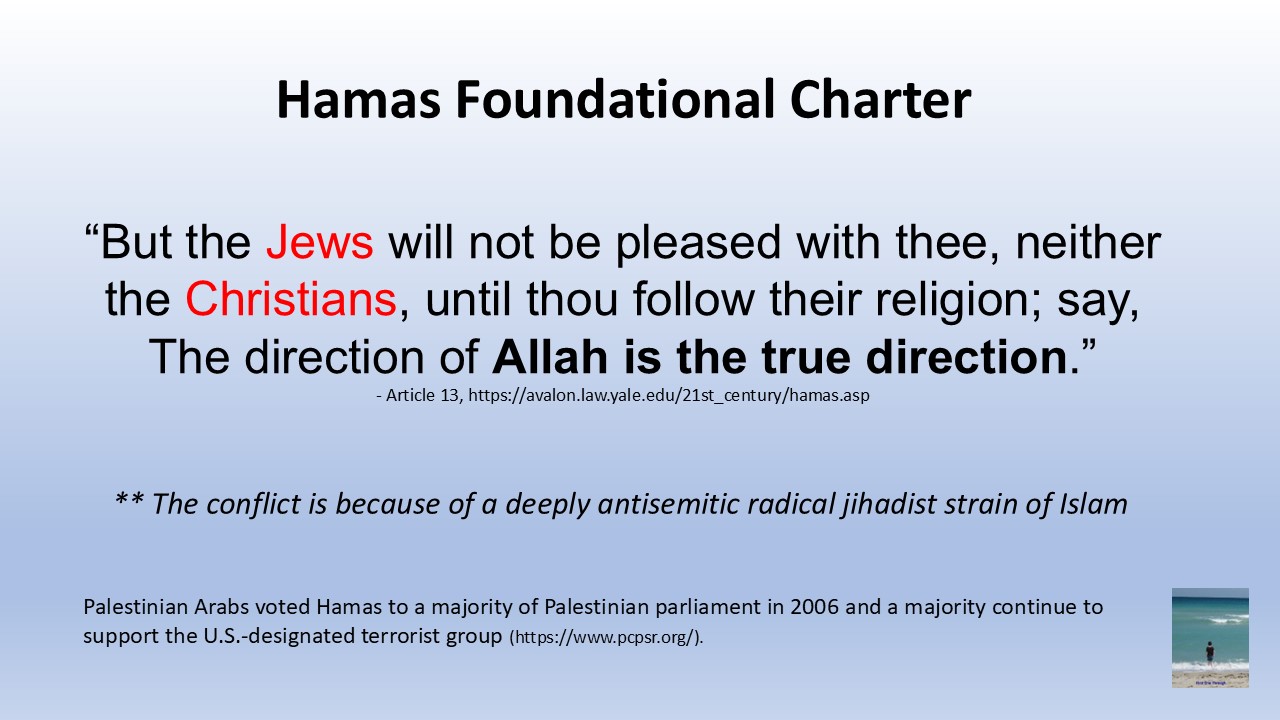
The one area that became a “Free Palestine” was Gaza when Israel left the region in 2005. Within a year, the political-terrorist group Hamas won 58% of the Palestinian parliament election and a year later took over Gaza. In the aftermath of the October 7 massacre in Israel, 72% of Palestinian Arabs supported the attack and the majority still want Hamas to rule according to Palestinian polls.

“Free Palestine” means death to Israel supporters outside of Israel, and death to Jews inside of Israel. Knowing this, are western countries recognizing a Palestinian State to both get a more proportionate death toll in the war and to kill more Jews in their own countries?

Palestinian terrorism has gone global. The question is whether the Palestinian Authority’s “Martyr’s Fund” start to pay killers of Israel supporters globally (as predicted on these pages in August 2023).