Purim 2024: Fighting

This Purim in Gaza
Jews seek a calm plaza
To recite the lengthy Megilat Esther.

An evil plot spun
By the antisemite Haman
Who would eventually become Jews’ jester.

The IDF’s mishloach manot
Would break from historic rote
And include foods each had on hand.

Each soldier had the same
And laugh at the passe game;
Exchanging foods which for months had become bland.

Tuna MREs,*
A bunch of chickpeas,
And a ripe, military-green avocado,

American Kind bars,
Often delivered with greeting cards
Would cement each gever’s bravado.

Classic sunflower seeds
Top off the good deed
Of gifts among Jewish friends.

In the Jewish Promised Land
And beyond, hand-to-hand
This holiday is seen through a new lens.

Many Jews are now scared
As our neighbors declared
That we are enemies for supporting Israel.

They are ready to pounce
Unless we renounce
The Jewish State and declare it vestigial.

This Purim 2024
We cautiously open the door
Now monitored by a Ring alarm.

Cautious of antisemites
Who deny Jewish rights
And mean to do us physical harm.

Recalling Mordecai did not bend
And Esther did ascend
To flip that historic situation.

Persian Jews defeated
An evil ideology, deep-seated
And avoided a mass annihilation.

We will also stand proud –
Zionists unbowed,
Sporting American and Israeli flags.

We yell “Happy Purim!”
As we munch our gar’inim
Handing IDF foods in olive green bags.

We will celebrate victory
Current and from history
And salute everyone involved in the fight.

That includes G-d
As well as the Mossad
And do it all over a bite.

Make sure IDF soldiers have a bit more to eat for Purim and throughout the war: https://my.israelgives.org/en/fundme/Hoffman_PURIM24

*MRE: military term for “meals ready to eat”

Mishloach Manot 2024, tribute to the IDF

Related articles:

Purim 2023: Non-Conformity Before The Drunken Purity Crusade

Passport Purim 2022

Purim 2020, Jewish Haikus

Purim 2019, The Progressive Megillah

Purim 5776/ 2016 Poem

First One Through music video:

Queen Esther Saves A Life (music by The Fray)

Brooklyn Chanukah Donut Crawl 2023

The riders of the sugar storm went to Brooklyn again this year, focused on Flatbush. We started at Schreiber’s which is usually at the end of the trip, because we picked up an important taster who had just flown in from Israel into JFK Airport after ten days of volunteering after the horrible October 7 massacre. We hoped the sugar would alleviate the jet lag and stress.

All of the bakeries we tried were good, as this was our fifth year going to Brooklyn, and have eliminated those bakeries which did not score at least a “6” in the overall ranking in the past. We were sugared out after five locations, so did not make it to some favorites like Ostrovitsky’s.

Schreiber’s Homestyle Bakery, 3008 Avenue M

Per tradition, we immediately picked up Schreiber’s lace cookies which are amazing. We grabbed dairy cheese sufganiyot from the back of the store to bring to a niece who said they were amazing. We sampled the pareve selection which were just mediocre. The pistachio one only had pistachios on the outside but no pistachio flavor inside. The dough was too heavy without a lot of flavor. Overall a 6.

Pistachio donut from Schreiber’s

As we debated our scores outside of the bakery (note the filling flavor started as a ‘3’ and settled on a ‘5’ after everyone’s input), a local came over and asked our thoughts on the top bakeries in the neighborhood. It seems that other people are also doing the crawl.

Schreiber’s bakery kicked off the scoring for Hanukkah 2023

Kaff Bakery 1906 Avenue M

Kaff was a new addition to the crawl. We were impressed that several sefaradi people were picking up jelly donuts, as their bakeries do not have a tradition of making the holiday treats. Each one said that Kaff was a favorite but we were disappointed. While the lotus donut was packed with filling, it was not smooth and creamy, and was overly sweet (for me). Fellow travelers loved them which gave a more balanced overall score of ‘7’.

Kaff Bakery had a nice selection of donuts

Presser’s Kosher Bagels and Bakery, 1720 Ave. M

Presser’s donuts candidly did not look at all appetizing and we didn’t purchase any. Instead we tried the chocolate horn which had tasty chocolate but the dough was not as flaky as Weiss’s bakery.

Patis Bakery, 1716 Ave. M

Patis was almost completely sold out by the time we arrived around 11:00am. They had one variety – almond hazelnut – which was fantastic. Very buttery soft dough, good hazelnut filling and tasty toasted almonds on top. An ‘8.5’.

Almond hazelnut donut from Patis, Hanukkah 2023

Taste of Israel, 1322 Avenue M

Taste of Israel requires a pre-order some days in advance at (347) 554-8133. We highly recommend it. It was a new addition to the crawl and tied for top marks with Sesame. The dough is actually better than Sesame in terms of fluffiness and flavor, which is not always easy because it needs to contain the heavy filling. TOI mastered it. While the presentation is not as pretty as some of the other bakeries, the overall taste was terrific even when we ate them later at night. We went for Oreo and Halva; they also have lotus, caramel, custard, jelly and rosemary. A ‘9’.

Taste of Israel donuts ranked highest for dough, and also good flavor

Sesame – Flatbush, 1540 Coney Island Ave

Sesame did not disappoint. Unfortunately, the store has developed a reputation for excellence so is a bit packed but perhaps that’s sharing the joy of the holiday. We heard that the dairy varieties (marked with blue labels) were out of this world but mostly purchased pareve to bring to people for dinner. The pareve (marked with green labels) peanut butter was outstanding – a 10. White chocolate, which I do not usually like was very tasty. Pistachio, as always, was terrific as was the lemon. Sesame puts flavor into the fondant on top of the donut for a doubly amazing experience. We bought dozens to bring back to share with people. A solid ‘9’.

Below is the overall scorecard for each bakery. We hope you enjoy them and Happy Chanuka!

Related articles:

Brooklyn Chanukah Donut Crawl 2022

Jerusalem Donut Crawl 2021

Brooklyn Chanukah Donut Crawl 2020

Chanukah Donuts: Brooklyn 2019

Brooklyn’s Holiday Donuts

French Riviera Crawl

The Last of the Mo’Kichels

Jacob’s Many Angels and Vayetze Jews

The weekly parshas read from the Torah normally begin at the start of a chapter and conclude at the end of another chapter. It is extremely rare for any parsha to both start and end in the middle of chapters, which happens for the weekly reading of Vayetze (Genesis 28:10 – 32:3).

The reason for doing so has very much to do with the story told in Vayetze, as well as the stories which the rabbis wanted to separate at the start of Genesis chapter 28:1-9 in Parshat Toldot, and the story told afterward in Parshat Vayishlach, chapter 32:4-33.

Vayetze relays the story of Jacob leaving the land of Canaan to find a wife at Lavan, his mother’s brother’s house. When embarking, Jacob dreamt of a ladder going to the heavens with angels going up and coming down. God informed Jacob that he will be blessed with many children and that God would protect Jacob on his journey and bring him safely back to his land. At the end of the parsha, Jacob headed back to the land of Canaan with wives and eleven children, and met angels once again (Genesis 32:2-3). Angels are bookends of Vayetze, telling the story of Jacob marrying, and having many children and accumulating much cattle in his uncle’s house.

If one were to read Genesis straight through the chapters instead of with the breaks of the weekly portions, that story is less clear.

At the beginning of Genesis chapter 28 (1-5), Isaac instructed Jacob to not marry a local woman from Canaan and to visit his uncle’s house, seemingly consistent with the overall theme of Vayetze. However, 28:6-9 describes Esav’s overhearing Isaac’s command who subsequently embarked to marry his father’s brother’s daughter. Esav’s actions interrupted the focus on Jacob.

At the end of the parsha, the narrative also breaks around Esav. While Vayetze’s Genesis 32:2-3 has Jacob encountering angels and naming the location due to the holiness of the event as he did after his ladder dream, Vayishlach’s Genesis 32:4-7 has Jacob sending the angels off as mere messengers to scout out Esav’s intentions as he journeyed to return to Canaan. In one sentence, from 32:3 to 32:4, Jacob treated the malachim as holy people and then errand boys, which does not happen with the weekly parsha pause separating the sentences.

The neat angel bookends of Vayetze act as separators from Esav. While Jacob got married and returned with eleven children and a large flock, the difficult years were none-the-less realized as blessings. However, the stress of the world he left and to which he returned made the blessings harder to recognize, and maybe even finite.

Esav married Ishmael’s daughter and came to meet Jacob with an army of 400 men (32:7). While Jacob had been promised by God that his progeny would be numerous as he left Canaan, his brother Esav seemed to become even greater over that same time.

Upon learning of the large gap in power with his brother, Jacob became very frightened and prayed to God (32:8-13) seemingly thinking that his heavenly protection had ended. When Jacob next sends out messengers to meet Esav, they are no longer described as malachim, angels, but avadim, servants (32:17).

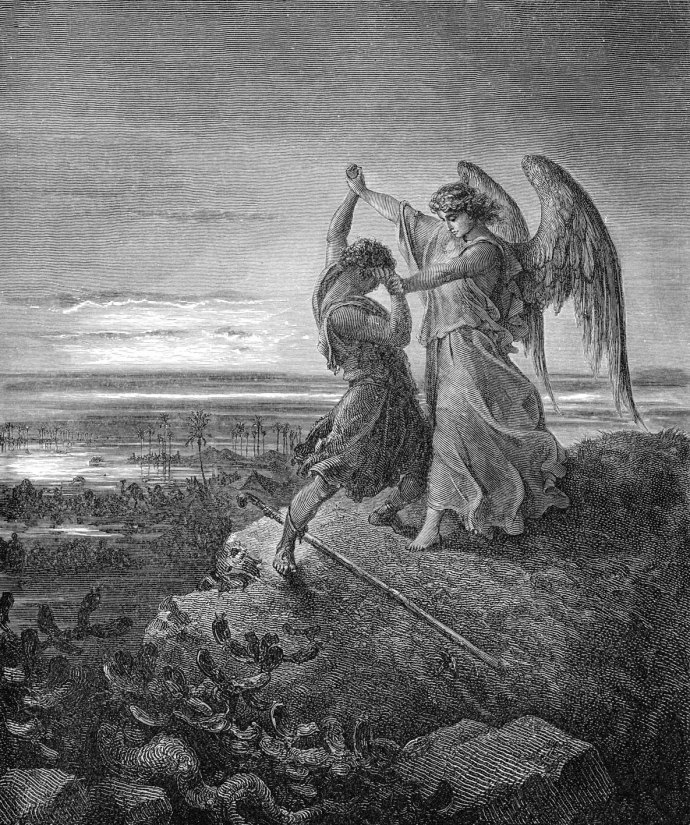
Jacob lost the ability to recognize angels as he approached his brother. When Jacob was next alone at night, he didn’t dream of angels on a ladder but wrestled with an ish, a man who is described by biblical commentators as an angel who renamed Jacob ‘Israel’ for prevailing in his fight with man and God. While Jacob should not have been scared of Esav as he had angels with him, he could no longer recognize them and fought them.

Jews today see their homes like Jacob as Vayetze Jews. Even in the face of family difficulties, a home is nevertheless a sanctuary in which we count our blessings and feel protected. It is when we compare ourselves to others and see their wealth and fear what they might do to us that we forget those blessings. We no longer see the angels and blessings they provide. So we demand that they serve our needs, and fight them thinking that they are strangers meant to do us harm.

And then we question the blessings we once enjoyed. Esav had no angels and yet prospered even more than Jacob. An unblessed life seemingly yielded greater rewards if one focuses purely on numbers.

Jacob produced a family which became a holy nation while Esav’s actions netted a massive army. During peace, it is easy to understand why Jacob’s descendants reach heights of thought and purity but in times of conflict, Esav’s army appears ready to conquer those achievements.

In a pre-October 7 world, Vayetze Jews imagined themselves blessed and protected in their home of homes, in their houses in Israel. The neat angel bookends of the parsha were the protective layer of building a home and family, and Vayetze Jews felt God’s blessings.

In the aftermath of the October 7 slaughter in which Arabs killed Jews in their homes in Israel, the Vayetze Jews were vanquished. We became Vayishlach Jews ready to fight man and God for the inhumanity inflicted on us.

Gustave DoréJacob Wrestling with the Angel (1855)

Is that our fate? Can the Jewish community become more?

Jews must internalize the text in the chapters and not just the parshas.

Esav DOES interfere with the story-telling of Jacob finding a wife. Esav does continue to build a family and army outside of Jacob’s Vayetze bubble. Jacob and the Vayetze Jew fail to internalize the outside world as they were self-absorbed which led to complacency. Jacob only saw angels’ blessings as partners for his activities in his home but did not use the gift for the fight to come outside.

We are both the Children of Jacob (Vayetze Jews) and the Children of Israel (Vayishlach Jews), and need to live lives focused internally and externally. Partnering with angels must extend beyond the bounds of angelic bookends and touch activities in everything we do. That is the pathway to true blessing and success inside and outside of our home and communities.

Related articles:

The Nation of Israel Prevails

The First Dreamer Foreshadowed The Life Of Joseph

3 1 4, Hebrew Pi

The Karma of the Children of Israel

The Descendants of Noah

The Place and People for the Bible

The Shrinking Modern Jewish Homeland

Even In The End, You Must Ensure The Future

Genesis chapter 23 describes the death of the Jewish matriarch Sarah and her burial. It is immediately followed by a peculiar opening in chapter 24:

וְאַבְרָהָ֣ם זָקֵ֔ן בָּ֖א בַּיָּמִ֑ים וַֽיהֹוָ֛ה בֵּרַ֥ךְ אֶת־אַבְרָהָ֖ם בַּכֹּֽל׃

Abraham was now old, advanced in years, and ‘ה blessed Abraham in all things.

Abraham had just buried his wife and the Torah says that Abraham had everything. A strange phrase, as he just lost his spouse!

The Bible would then describe that Abraham sent out one of his trusted attendants to make sure that his son Isaac got a suitable spouse. The biblical commentator Rashi noted that the numerical value of the Hebrew word for with everything, בַּכֹּֽל, is the same as the numerical value in Hebrew of son, בֵּן. Rashi said that because God blessed Abraham with a son, Abraham needed to find him a wife.

Looking at the Haftorah section for the weekly portion of Chayei Sarah when this portion is read, could lead to a broader interpretation of this sentence.

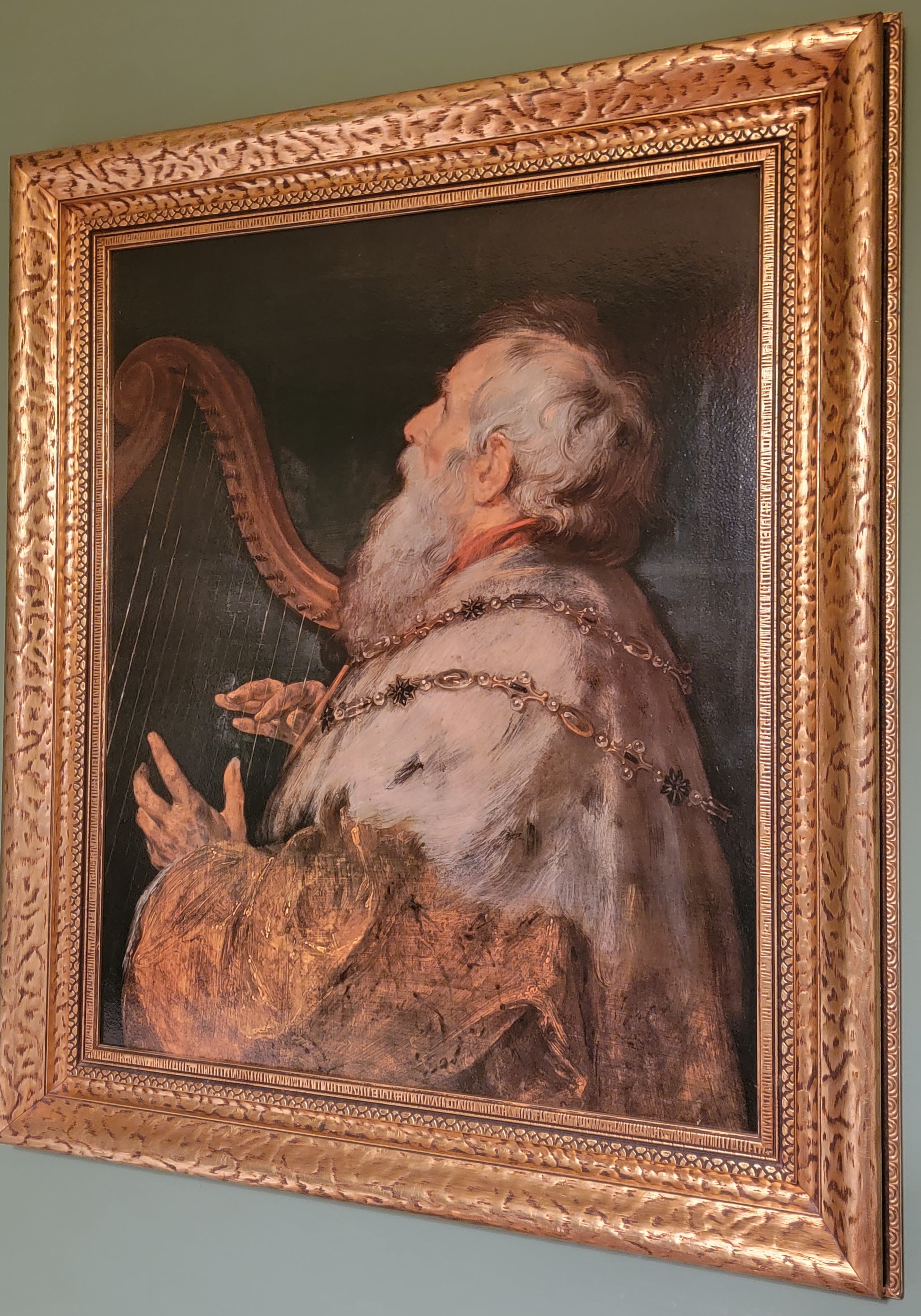
The rabbis decided to match Chayeh Sarah with Kings 1, which starts with King David being very old. Sentences 1 to 4 describe David as being so old that he could not retain heat, so he was brought a young virgin who stayed with him to warm him. The passages were clear that the king was not intimate with her. A lot of detail to share that the king was very old and mostly stayed in bed.

The rest of the reading would describe King David setting Solomon to be his heir, instead of sons who competed for the role of king.

King David playing the Harp, by Peter Paul Rubens ca. 1616

The two biblical stories convey a message to be taken together.

As Abraham and King David approached the end of their lives, they had seemingly accomplished everything. They had finished having children and building their fortune. It was time to retire peacefully.

But they did not.

Abraham made sure that his son would marry an appropriate woman and be able to carry on the family’s good name. King David made sure the appropriate son would lead the kingdom.

The bible relates that each man did this when they were old and without an active companion. While they would have no more children – hence the bible making clear that the virgin brought to David remained a virgin – they still had an active role to play in directing their children and the course of Jewish history.

Rashi’s comment that Abraham had a son could be reread that Abraham was not going to have any more sons. He needed to focus on the future of the son he had.

It is a lesson for older people even today: you are more then just a link in a chain. The next generation continues to need your guidance to make sure important values and traditions are imparted.

Related articles:

The Place and People for the Bible

The Year 2023: Entry To The Holy Land

The Journeys of Abraham and Ownership of the Holy Land

Abraham’s Hospitality: Lessons for Jews and Arabs

The First Dreamer Foreshadowed The Life Of Joseph

3 1 4, Hebrew Pi

The Karma of the Children of Israel

Kohelet, An Ode to Abel

Antisemitism Is A Tool For Ethnic Cleansing

The last book of the Jewish Bible, Deuteronomy, is both a recap of the origin story of Jews and a lesson plan for the Jewish nation as they readied to return to their promised land.

Chapters 27 and 28 of Deuteronomy lay out the positive blessings that God will ensure to the Jews if they listen to His commandments, and the curses should they abandon Him. Deuteronomy 28:25 speaks of a particular curse:

יִתֶּנְךָ֨ יְהֹוָ֥ה ׀ נִגָּף֮ לִפְנֵ֣י אֹיְבֶ֒יךָ֒ בְּדֶ֤רֶךְ אֶחָד֙ תֵּצֵ֣א אֵלָ֔יו וּבְשִׁבְעָ֥ה דְרָכִ֖ים תָּנ֣וּס לְפָנָ֑יו וְהָיִ֣יתָ לְזַֽעֲוָ֔ה לְכֹ֖ל מַמְלְכ֥וֹת הָאָֽרֶץ׃

יהוה will put you to rout before your enemies; you shall march out against them by a single road, but flee from them by many roads; and you shall become a horror to all the kingdoms of the earth.

This is the foundation of a cursed diaspora. While Jews had been slaves in Egypt and wandered the desert for hundreds of years, that situation was circumstantial. The Jewish forefathers of Jacob and his sons came to Egypt to avoid a famine and became trapped – together – in the land. As they were ending their time away from their promised land, God warned that they could be banished from the land of Israel, scattered and hated around the world, if they abandoned His charge.

This happened over thousands of years. While Jews had initially established their sovereignty and self-determination in the holy land, over time, invaders came and took the Jews to far away lands. As described in the Bible, they were often hated and persecuted in those lands, with many antisemites validating their persecution with verses from the Old Testament.

The middle of the 20th century brought change.

The Holocaust forced the Catholic Church to revisit their dogma. The horrors inflicted on European Jews with tacit or active support of many, caused the church to rewrite its rulings on the hated wandering Jews in the Second Vatican Council. Twenty years after the Holocaust, on October 28, 1965, the Church issued Nostra Aetate in which it reexamined its relationships with non-Christian faiths.

As it related to Jews, the declaration stated its “rejection of every persecution against any man, the Church, mindful of the patrimony she shares with the Jews and moved not by political reasons but by the Gospel’s spiritual love, decries hatred, persecutions, displays of anti-Semitism, directed against Jews at any time and by anyone…. The Church reproves, as foreign to the mind of Christ, any discrimination against men or harassment of them because of their race, color, condition of life, or religion.”

The Church abandoned the inflamed zeal which served as a driving force against non-Christians in the Crusades and Inquisition – and front row spectator in the Holocaust – and replaced it with a foundation of love for people of other faiths. The Holocaust – the “horror to all the kingdoms of the earth” as described in Deuteronomy – compelled the largest faith group in the world to reverse course and begin anew with an attitude of love towards all people.

The Church was able to do this by focusing on the texts of the Old and New Testaments and facts of history. It did not rewrite history that Jesus and the apostles weren’t Jews. It did not pretend that the Holocaust did not happen. It did not deny that the land of Israel is that exact piece of land that God promised to the Jewish people.

The Catholic Church considered facts and extracted new meaning, especially in light of Jews returning to their homeland after nearly 2,000 years, inspired and directed by love and peace.

Alas, as the years 1936 to 1967 which brought the horrors of the Holocaust, the rebirth of the Jewish State, the Second Vatican Council and the reunification of Jerusalem under Jewish control, directed the Islamic world to turn to noxious antisemitism.

While Nazi Germany gained power from 1936 to 1939, the Muslim Arabs in Palestine waged a war against Jews. They killed hundreds and successfully petitioned the British who were administering Palestine to block the entry of Jews back to their homeland, just as hundreds of thousands were fleeing the Holocaust.

During World War II, Palestinian leaders conspired with the Nazis as they had a “shared recognition of the enemy,” as Heinrich Himmler wrote to the Palestinian Grand Mufti in Jerusalem about the Jews. In the immediate aftermath of the Holocaust, Arab Muslims from Palestine and the surrounding countries invaded the new Jewish State in the hopes of a second Holocaust, to destroy the country and wipe out the Jews.

Palestinian Arabs are the most antisemitic people in the world according to polls. They are the center of Muslim antisemitism as noted in the same ADL poll that “while Muslims are more likely to hold antisemitic views than members of any other religion (49% Index Score), geography makes a big difference in their views. Muslims in the Middle East and North Africa (75% Index Score) are much more likely to harbor antisemitic attitudes than Muslims in Asia (37% Index Score), Western Europe (29% Index Score), Eastern Europe (20% Index Score), and Sub-Saharan Africa (18% Index Score).”

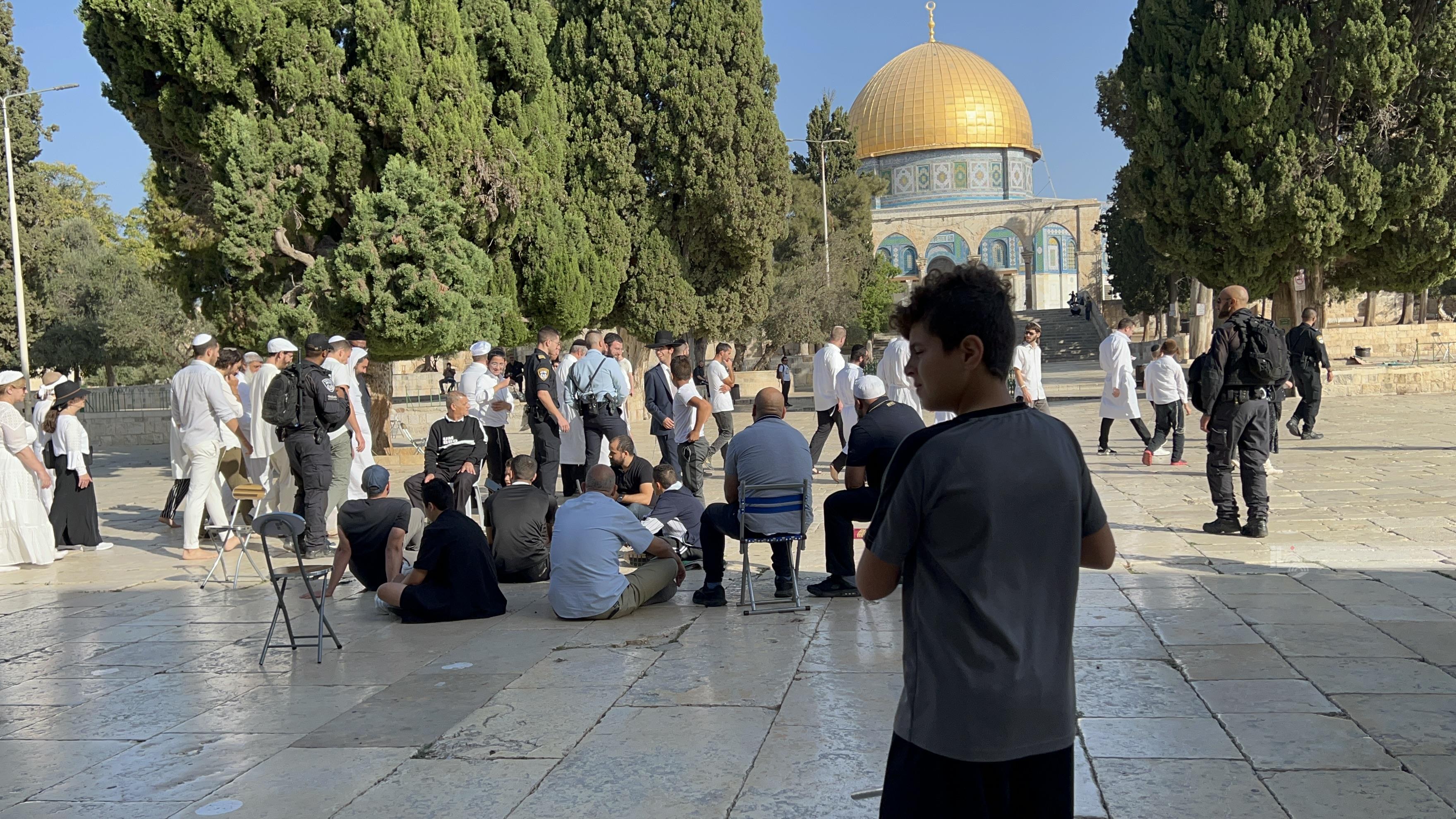
Ultra Orthodox Jews in the Me’a She’arim section of Jerusalem (photo: First One Through)

While Christians looked at the text of the Old Testament and saw the rebirth of the Jewish State as an affirmation of Jews being good and blessed by God’s love, Muslims were compelled to cast the Jews as evil and unworthy of the land and God’s love.

The conclusion of the Jewish Bible has stories of blessings and curses for Jews as it relates to their behavior and presence in the land of Israel. Over the last few decades, Christian Zionists have come to view the Jews as good and worthy of the promised land, while Muslims attempt to portray Jews as irredeemably evil and unworthy of of the holy land. Muslim Arabs then also fabricate stories that Jews don’t even have history in the land to further undermine any potential Jewish claim.

Muslim vilification of Jews is not simply antisemitism; it is a tool for ethnic cleansing.

Related articles:

Criticizing Muslim Antisemitism is Not Islamophobia

Examining Ilhan Omar’s Point About Muslim Antisemitism

Missing Items In IHRA Antisemitism Definition Related To Israel

Kanye’s And Palestinian Arabs’ Antisemitism

New York Times’ Muslim Anti-Semitism Washing

80 Years After Wannsee Conference, Arab/Muslim Anti-Semitism Dominates

Muslim Women Debate Anti-Semitism

For The NY Times, Antisemitism Exists Because the Alt-Right is Racist and Israel is Racist

Abbas’s Speech and the Window into Antisemitism and Anti-Zionism

Most Palestinians Are For Hamas. Most Israelis Are Not European Jews.

Anti-Semitism Spikes Because Israel-Palestine is a Religious Battle

The UN Cannot See Palestinian ‘Lies and Loathing’

The Nerve of ‘Judaizing’ Neighborhoods

Palestineism is Toxic Racism

The Antisemitic Youth

NY Times Dislikes ‘Judaizing’ Israel

For The Sins Of 5783…

For the sin of negotiating with terrorists;

For the sin of not criticizing an ally because I was desperate for their support on other matters;

For the sin of staying in organizations that despise me and my values;

For the sin of not clearly condemning Holocaust deniers;

For the sin of not doing more to oust radical anti-Zionist politicians

For the sin of not doing more to oust radical anti-Semitic politicians;

For the sin of ignoring vile of antisemitism fostered by minority groups

For the sin of allowing a noxious political party to grow and gain power;

For the sin of not writing Congress to condemn the United Nations ignoring the use of children as soldiers

For the sin of not writing to the media which falsely portrays Palestinians as seeking peace rather than the fact they are longing to murder Jews;

For the sin of donating to groups that foster terrorism against Jews;

For the sin of not lobbying to shut down UNRWA;

For the sin of not internalizing the ‘Settler Intifada‘ resisting Arab terrorism in the proportionate manner suggested by the UN;

For the sin of not speaking truthfully about counter-terrorism;

For the sin of ignoring the growing threat from a ‘Global Intifada’;

For the sin of giving platforms to anti-Semites;

For the sin of visiting countries that continue to vote against Israel;

For the sin of equating Muslims and al Aqsa Mosque with Jews and the Jewish Temple Mount;

For the sin of not loudly calling out antisemitism in all of its manifestations;

For the sin of paying for antisemitic media;

For the sin of not protesting the ban on Jews praying on the Temple Mount; 

For the sin of excluding Jews from diversity programs and victims of preference;

For the sin of fratricide, killing and excommunicating a fellow Jew;

For the sin of ignoring the horrible spike of Palestinians killing Israelis;

For the sin of allowing violence to reap rewards;

For the sin of treating racism and antisemitism differently;

For the sin of not putting oneself in Israel’s shoes;

For the sin of ignoring the ties between antisemitism and anti-Zionism;

For the sin of fumbling activities of Israel and the diaspora;

For the sin of collaborating with The New York Times in attacking Hasidic schools;

For the sin of equating Jewish connection with Israel to migrants entering the U.S.;

For the sin of equating the fear of Jews going to pray and Muslims going to pray;

For these things related to the Jewish world, please pardon us

For letting my shaymos pile up unceremoniously;

For swiping a machzor from the shul and not returning it on time;

For missing tashlich because of the rain;

For enjoying warm vacation weather and beach, instead of feeling like I left Egypt on Passover;

For eating in a non-kosher restaurant with clients eating only lettuce and telling them I wasn’t hungry, rather than state I only eat kosher;

For swearing off any additional COVID shots without a bli neder, when I have no idea about the future

For these sins related to my faith, please pardon us

For being so slow in Whatsapp tehillim groups, and repeating a chapter already claimed, disrupting the flow;

For comparing my state-of-hair to those my age;

For telling people I no longer drink alcohol, while they are enjoying a drink;

For the sin of posting too many pictures on vacation;

For rubber necking transgender people;

For abruptly ceasing casual shabbat shalom kisses in synagogue without explaining the reason;

For taking off extra days from the office when getting covid the third time;

For not helping enough people in their job searches;

For speculating why a couple I only know casually filed for divorce;

For not including everyone, especially the younger people, in shabbat lunch conversations;

For these sins related to community, please pardon us

For typing @everyone on Facebook;

For connecting to people I don’t know on LinkedIn;

For trolling people whose political views I disagree with;

For posting pictures on Instagram with a fish face;

For these sins related to social media, please pardon us

For lying to my spouse about my weight;

For checking out my ex’s social media;

For never kissing my mother-in-law;

For spending time in bed on my cellphone rather than with my spouse;

For these sins related to family, please pardon us

For playing with the latest AI in a non-PG way;

For putting halavah in the refrigerator;

For binge-snacking when the spouse leaves the room;

For not exercising enough;

For wasting money buying the latest iPhone;

For standing in a line outside to buy… anything;

For talking to too many people, for talking to too few;

For doing too much, for doing too little;

For all these things, please pardon us

Related articles:

For The Sins Of 5782…

For the Sins of 5780…

For the Sins of 5777 of…

Notable Quotes:

In this world so distrustful of information, lesson plans are built on emotions, and nothing rings the register and feels so familiar as the touchstone of Jew bashing.

The Past, Present and Future in Elul

Each month, as I turn a new page of the calendar, I consider what needs to
be done over the coming weeks. I plan my meetings, insert calls into my Outlook
calendar and worry about my schedule.

When it comes to New Years Day, I have a different approach. I map what I
want to accomplish in the coming year. I jot a big wish list and hope that my
macro goals will be achieved over the course of the coming months.

Conversely, on my birthday I look backwards rather than forward.
While I mark a new year of life I reflect upon my past year and where I am. I
incorporate decisions that I made and whether those need to be reaffirmed or
corrected in the year ahead.

Of course, I try to celebrate each milestone. The birthday, the new year,
and yes, even the new month. Each is a cause for celebration in its own way.

The Hebrew month of Elul brings these thoughts together like no other. While
it’s not yet the Jewish New Year, the countdown clock commences with its arrival.
These days affords us the time to plan for the holidays and to reflect upon our
actions as we ready ourselves to celebrate the upcoming month of holy days in
Tishrei.

Elul binds the personal and spiritual. It is a month when we truly
internalize that the success of our man-made plans and goals will be decided by
Gd. We prepare for a month of intense prayers and celebration with mindful contemplation.

Jews normally wish people a “meaningful fast” during solemn fast days but
it seems appropriate to wish people “a meaningful month” as we forge
our past, present and future together – the very meaning of prayer to Gd.


Related articles:

The Touch of the Sound of the Shofar

Anniversaries of Thanksgiving

Kohelet, An Ode to Abel

Ruth, The Completed Jew

The Hidden Side of the Moon

The Year 2023: Entry To The Holy Land

There are millions of religious Christians who look at the founding of the State of Israel as a matter of divine will. One of the points of evidence they use is that the year of the founding of the state was 1948 in the Gregorian Calendar, commonly referred to as the Common Era. It was in that year in the Jewish Calendar – 1948 – that Abraham was born according to the Old Testament. Remarkably, after two thousand years of persecution and wandering, that the Jews would reestablish their homeland in that common year is considered too much of a coincidence. It is a sign from G-d.

It is therefore important to note this moment in time, 2023CE. As Israel celebrates its 75th anniversary milestone, it was in that year of the Jewish calendar, that Abraham entered the land of Canaan and G-d promised him and his descendants blessings and the land.

Genesis 12:1-4:

“יהוה said to Abram, “Go forth from your native land and from your father’s house to the land that I will show you. I will make of you a great nation, And I will bless you; I will make your name great, And you shall be a blessing. I will bless those who bless you, And curse the one who curses you; And all the families of the earth; Shall bless themselves by you. Abram went forth as יהוה had commanded him, and Lot went with him. Abram was seventy-five years old when he left Haran.”

Seventy-five years since the rebirth of the Jewish State, the country thrives while it continues to have challenges. It has remained stable and economically sound despite the mayhem in the surrounding countries. It has defeated its foes in battles repeatedly, and has forged peace treaties with several former enemies. It has managed to ingather millions of Jewish exiles from around the world, as it rekindled Hebrew into a common spoken language. It granted citizenship to non-Jews living in the land, in a unique forum of coexistence in the Middle East.

Abram was 48 years old at the time of the Great Dispersion from the Tower of Babel. He witnessed firsthand the ill effects of unanimity, and was part of G-d’s global directive towards particularism – in both language and place. At 75 years old, he was told to relocate, to a place already inhabited by others, to become the source of blessing for the entire world.

In 2023 of the Jewish calendar, the father of monotheism was not directed to conquer or convert the slightly more “indigenous” people (by 27 years) in the holy land, even as the land was soon to be promised to him, his son Isaac and the generations after him. Abram was to be an inspiration and a talisman for everyone. In that generation which broke the embraced orthodoxy of universalism, he embodied G-d’s will of particularism.

Today, in 2023 of the Common Era we live in a very tense world. People are divided, in part, because of technology that has enabled microtargeting of people with customized news and advertisements, couple with social media algorithms which keep people hyper-engaged. While fifty years ago everyone was basically fed the same media and news, now billions of people can consume and transmit whatever they want. While more satisfied with being fed unique content whenever they want, the hyper-particularism has left many isolated, angry and distrustful.

In considering the year 2023 both in the Jewish calendar and the Gregorian one, it is time to reset our thoughts on universalism and tribalism.

We don’t all need to think, dress or worship the same way. We must break with the notion of unanimity of position, and embrace a society of tolerance. That mean stop canceling, firing and unfriending people if they don’t share your opinions on critical race theory and transgenderism, or dislike the people you follow on Instagram. Allow space for unique attitudes, as long as they are not harmful.

The Bible tells us that Abraham left his “native land” to a land where he would become a focus of not just the local inhabitants but “all the families of the earth.” In today’s world of billions of isolated people, Jews and the Jewish State continue to demand global attention. It is an opportunity for a universalistic approach towards the particular: for the world to bless the Jews and receive G-d’s blessing in return.

A pretty simple formula for a better and happier world.

The Israeli flag at the Western Wall in Jerusalem

Related articles:

The Place and People for the Bible

The Jews of Jerusalem In Situ

The Journeys of Abraham and Ownership of the Holy Land

Abraham’s Hospitality: Lessons for Jews and Arabs

Israel, the Liberal Country of the Middle East

Judaism’s Particularism Protects Al Aqsa

Related music videos:

God is a Zionist (music by Joan Osborne)

Aliyah to Israel (music by The Maccabeats)

The Anthem of Israel is JERUSALEM

Ethiopian Jews Come Home (music by Phillip Phillips)

My Big Fat Passover Program

A satire.

I was excited to head out to the Passover program with my family this year. I had done extensive research on six WhatsApp and Facebook groups devoted to the subject with thousands of nit-picky Jews from around the world just like me over the prior five months. My choice was carefully balanced between nice hotel and physical facilities, good food, and whether I cared more about talented speakers, mixed swimming or a relatively cheap price.

Programs can generally be lumped into three groups: those under 250 people; 250 to 600 people; and a bazillion people. The tinier programs tend to get small families and Europeans, while the enormous programs get the nouveau riche who bring twenty-seven kinsman and a nanny. We opted for the middle one, assuming a Goldilocks outcome.

My cheap (prefers “frugal”) spouse insisted on taking two flights to get to our destination, to save a total of $400 for a family of five, on a program that cost in excess of $80,000. While he said the extra four hours of travel time were about principle, I’m sure he figured it would keep my mother from joining us, who could never manage the transfer in a large airport, thus avoiding both needing to pay for her and having her company for ten days.

Fortunately, only one suitcase went missing on our arrival, with all of one son’s yom tov clothing. He managed to get by with loaners from a friend on the program, who was only two sizes larger than my 20-year-old. He’s “in the freezer” and not dating yet anyway, so looking shlumpy wasn’t a big deal.

We arrived at the hotel to have a young snotty woman wearing a Vasser shirt tell my other son that she was triggered by his “NYPD” T-shirt, and demanded that he change it immediately. He laughed at her and told her to “go to a woke non-Orthodox program next time.”

Not a great start.

Our rooms were pretty nice with ocean views, but our three adult children with nine large pieces of luggage could barely fit into their shared room. We had opted to not splurge for a third room, in a ridiculous approach of pretending we weren’t spoiling our kids rotten.

By the time everyone unpacked and showered, there was very little time to call family members at other programs around the world. I opted to just post a quick family pic on the broader family’s WhatsApp. Everyone else did the same, including my brother who was unhappily at home with his in-laws, who posted a GIF of a young boy crying.

The boys ran off to minyan while the women followed a comfortable 30 minutes later to not appear too frum. The boys used the opposite approach, tucking four sefarim under each arm to “frum signal” to other bochrim on the program. Personally, I thought the white shirt, dark suit and 4-foot long tzisit dragging behind them was sufficient but I’m old school.

The Ashkenazi and Sefardi minyanim both started at the same time, with about the same number of people, however the Ashkenazis got the ballroom while the Mizrahis only got to pray in the hallway. Quite a strike in a program hosted in an Arab country, native to many of the yet-again-abused Jews.

The men looked for someone to talk to about the minyan situation, only to discover that there was no one from the program operator on premise for the first days of yom tov, presumably attempting to avoid yenching Jews. In any event, it sorted itself out, as both groups were ultimately placed in small windowless rooms, and the Sefardi minyan shrank in size as many people abandoned the long atonal davening of their Mizrahi brothers and joined the Ashki crowd. Little did they know that the Ashkenazi minyan had been taken over by a group of Five Towns’ guys who only gave aliyahs to friends and family. Worse still, the American and French families who had made aliyah let their small kids run around like lunatics, seemingly preparing them for a future of hooliganism.

The food on the program was great. If only the people treated the seder and meals with a modicum of respect.

We entered the dining room to see a woman throwing a fit, tossing platters of food to the ground when she found out that the program wasn’t gebrochts. Men stalked the buffet with full plates of lamb and steak in each hand, and then asked the Muslim waiters – who had fasted all day for Ramadan – to bring them burgers and fries without a second thought. Concurrently, two American mothers stormed the kitchen demanding that their kids are the most special, and needed white meat chicken without salt, and dessert that contained no chocolate, nuts or gluten. ASAP.

We made the mistake of taking our food before finding our table. Carrying full plates, we had to walk back to the entrance to look up our table number, an astonishing #86. The high number wasn’t the issue; we were trying to figure out the logic as the prior highest number was 44, a bizarre gap. Worse, the table numbers in the dining room were completely random with absolutely no order or logic. Even more curious, table #86 didn’t exist. We ended up grabbing an empty table next to the kitchen entrance to enjoy the incessant flow of dozens of waiters shuttling back-and-forth with plates and food, overwhelmed by the hungry Jews who remarkably ate every two hours.

Things slowed down to a normal pace after the first day, with relatively few outbursts. The “Vasser woman” switched to a PETA shirt for the remainder of the chag, alternately yelling about the 200-pound tuna flopped near the barbeque which was carved up each meal, and the seventy foot-long buffet of charred animal meat. One girl complained to management that she saw a swastika design in one of the carpets, while a few boys got into a mild fight about whether Shraga is a real yeshiva. Yet no one complained about the small children who kept playing in the lobby fountain, kicking the spotlights to squeals of delight, waiting to get electrocuted.

Two hundred pound tuna to be carved up for barbeque

The Israelis celebrated a single day of yom tov even though they left the holy land at precisely the time they are supposed to be there. One Israeli woman with fake breasts that looked like goiters if her gigantic botoxed lips had not lowered them into correct orbit, brought her kids horseback riding, not pondering the strange small gold hamsa hand dangling between her legs from a chain around her waist. I wasn’t sure if she was proclaiming abstinence or complaining about the effects of the ride.

The prayers were short and unmelodious. While the large programs hire talented chazanim, the smaller ones get men who claim they have yorzeit for their mothers-in-law and torture the prayers in their memory. Shir HaShirim was completed in 300 seconds to a round of high fives. Even at breakneck speed, davening always seemed to end five minutes after breakfast closed down. For the evening services, the self-anointed gabbaim, who showed up to every minyan twenty minutes late, shouted with the authority of geonim about the right time to recite the omer, seemingly based on nothing more than it was a few minutes later than the last screamer.

While the Facebook groups had daily photos of program dinners from around the world, my spouse kvetched about breakfast which no Jews seemed to care about. One complaint was regarding the lack of the ultimate yin yang Pesach food, something which is both the opposite and complementary at the same time: chocolate covered matzah, which reenacts the battle scenes of the movie “300” in Jewish intestines. The hotel must have been familiar with the dietary ramifications of the holiday, as every room attendant had a toilet plunger in a holster.

One group of guys took no chances on the program’s kiddush and shlepped their own to the resort: tequila and foie gras from Europe. As they sliced the gelatinous mound onto Pesadic crackers, I didn’t have the heart to tell them that the expiration date on the goose liver was 18 months earlier. Perhaps I secretly wanted the Vasser girl to claim a small victory.

A friend on the program let me in on an observation both too early and too late: the busboys were only rubbing the dirt off the cutlery and not washing it. I found myself drinking soup straight out of the bowls and eating fruit by hand during the second days.

During chol hamoed, some people went on group tours while others hired their own guides – to do the exact same tours as the rest of the group at five times the price. Still others stayed on premises and attempted to poach workers to bring back to the United States for new help.

In all, we had a great trip that cost roughly five percent of the country’s GDP. My family around the world also enjoyed their programs seemingly more than people’s posts on WhatsApp and Facebook groups would suggest. My sibling who stayed home with in laws was glad it was over and that no one fell down (or needed medical attention!)

While the tradition of saying “Next year in Jerusalem” concludes each seder, I wonder whether people ended the holidays saying “next year I’ll find a program where I can do something to get a Passover trip for free.”

Related article:

Chag Kasher v. Sa’meach

Related videos:

Choosing a Pesach Program

Passover in the Office

Purim 2023: Non-Conformity Before The Drunken Purity Crusade

Ahasuerus’s banquet for his kingdom’s courtiers
Made absolutely no mention of armed warriors.
A curious start to a tale of genocide
With elaborate feasts instead emphasized.

The king’s big party for the fortress Shushan
Was a show of unity and included everyone.
Ahasuerus’s generosity focused on wine
With a specific order that no request be declined.

But amidst the partying and perceived unity
Queen Vashti refused a summons; a perceived mutiny.
The king’s advisers worried her refusal would be echoed
By women throughout the kingdom; misandry bellowed.

“An affront to the king is a rebellion to the kingdom,”
So his advisers pushed broad laws of questionable wisdom.
Unanimity amongst the ruler’s dozen for the unity of provinces,
Feasts and flowing wine blinding and bribing all grievances.

So begins the story of Purim, with feasts and a refusal
A forum for opportunist Haman to gain power through an accusal.
The non-conformity of a solitary person condemned all of Mordecai’s kind
Since collective guilt disorder was heretofore enshrined.

While the story continues, this poem’s lesson is made:
Individual actions can be judged harshly during a drunken purity crusade.
Unity and non-conformity can coexist best
When the people who surround you are kind and beloved guests.

Feasts and banquets which are made as a show of wealth,
Including parading one’s spouse is not a picture of mental health.
Instead, make your meals with friends; mix up your chocolate bark,
Welcome beloved guests and the off-color remarks.

Related articles:

Passport Purim 2022

Purim 2020, Jewish Haikus

Purim 2019, The Progressive Megillah

Purim 5776/ 2016 Poem