As the Israelites were about to enter their Promised Land, the Bible relays stories of a series of conflicts.
After the spies delivered a bad report on the land in Parshat Shlach, we read the story of Korach who tried to launch a mutiny against Moses and Aaron. Then Chukat describes a war with Amorites, and Balak shares the story of a prophet trying to curse the Jewish people. At the end of Balak (Numbers 25:1-9), we read about Moabite women engaged in profanities with Jewish men. Pinchas, son of Elazar son of Aaron, took a spear and impaled the couple having sex in front of the Ohel Mo’ed, the tent Moses used to communicate with God.
Illuminated manuscript miniature from the 15th-century Alba Bible
And that is where Parshat Balak and the story seemingly end. With the murder of the couple and 24,000 others engaged in similar acts.
But it doesn’t really.
Parshat Pinchas continues the story with a pivot. Rather than highlighting the sins and the deaths, Numbers 25:10 begins with God appreciating the defense of holiness and His blessing Pinchas and his descendants. While the story may appear as a single episode, the Torah divides the parshas – and the narrative – between the violent and the holy, even when the violence was in the name of the holy.
The theme of separation can similarly be seen immediately after this in chapter 26, where God calls for another census of the tribes. Here, God counts the tribes and their families to allocate land for their inheritance. This is in contrast to the census of Numbers chapter 1 in which God wanted to account for how people would assemble in their journey and combat enemy forces. In the case of the journey and battle-readiness, there was a single head of each tribe; when they entered the land, each tribe’s family was specified.
It is a metaphor for how Jews assemble and coordinate today: there are wars that are fought in Israel and the diaspora against those who want to harm Jews and the Jewish State. Global Jewry understands the us-versus-them dynamic and the role for every Jew in the battle. It is related yet distinct from the interaction amongst Jews regarding our common heritage. We each have a part to play living together as a community.
Individuals fight with a common purpose. Families live under a societal umbrella.
We have tribes and borders and homes. We coexist with each other while understanding our peaceful lines. The separations today may be between synagogues or religious denominations. Between schools and political affiliations. Each aspiring for peace and holiness.
Those lines are very different than the battle lines between us and “them,” those who mean to harm us physically, morally and spiritually.
Upon entry into the Jewish holy land, Jews migrated from an army with legions to a people with property. While there were still wars to be fought inside the Jewish Promised Land, the muscle memory of understanding who is within the holy communal tent and those outside forces, was taught over the trials in the desert.
It is a lesson for our time as well: to clearly identify our allies and foes, and wage war and peace accordingly.
In the book of Numbers, the Moabite king Balak summons the non-Jewish prophet Bilaam to curse the Israelite nation which was traveling near Moab. What unfolds, is one of the most mysterious blessings in the Bible.
As Bilaam gazes upon the people of Israel, he declares:
“How can I damn whom God has not damned, How doom when God has not doomed? As I see them from the mountain tops, Gaze on them from the heights, There is a people that dwells apart, Not reckoned among the nations,” “הֶן־עָם֙ לְבָדָ֣ד יִשְׁכֹּ֔ן וּבַגּוֹיִ֖ם לֹ֥א יִתְחַשָּֽׁב“(Numbers 23:8–9)
The statement is peculiar – a nation which dwells alone – has befuddled rabbis for centuries. Is it a curse? A blessing? A prophecy?
At first glance, the idea of being alone evokes discomfort. In Genesis, God explicitly declares, “It is not good for man to be alone” “לֹא־ט֛וֹב הֱי֥וֹת הָֽאָדָ֖ם לְבַדּ֑וֹ” (Genesis 2:18). From this verse, Jewish tradition emphasizes the centrality of community, companionship, and connection. So why would Bilaam say something seemingly negative—and continue with a positive blessing in Numbers 23:10 “Who can count the dust of Jacob, Number the dust-cloud of Israel? May I die the death of the upright, May my fate be like theirs!”
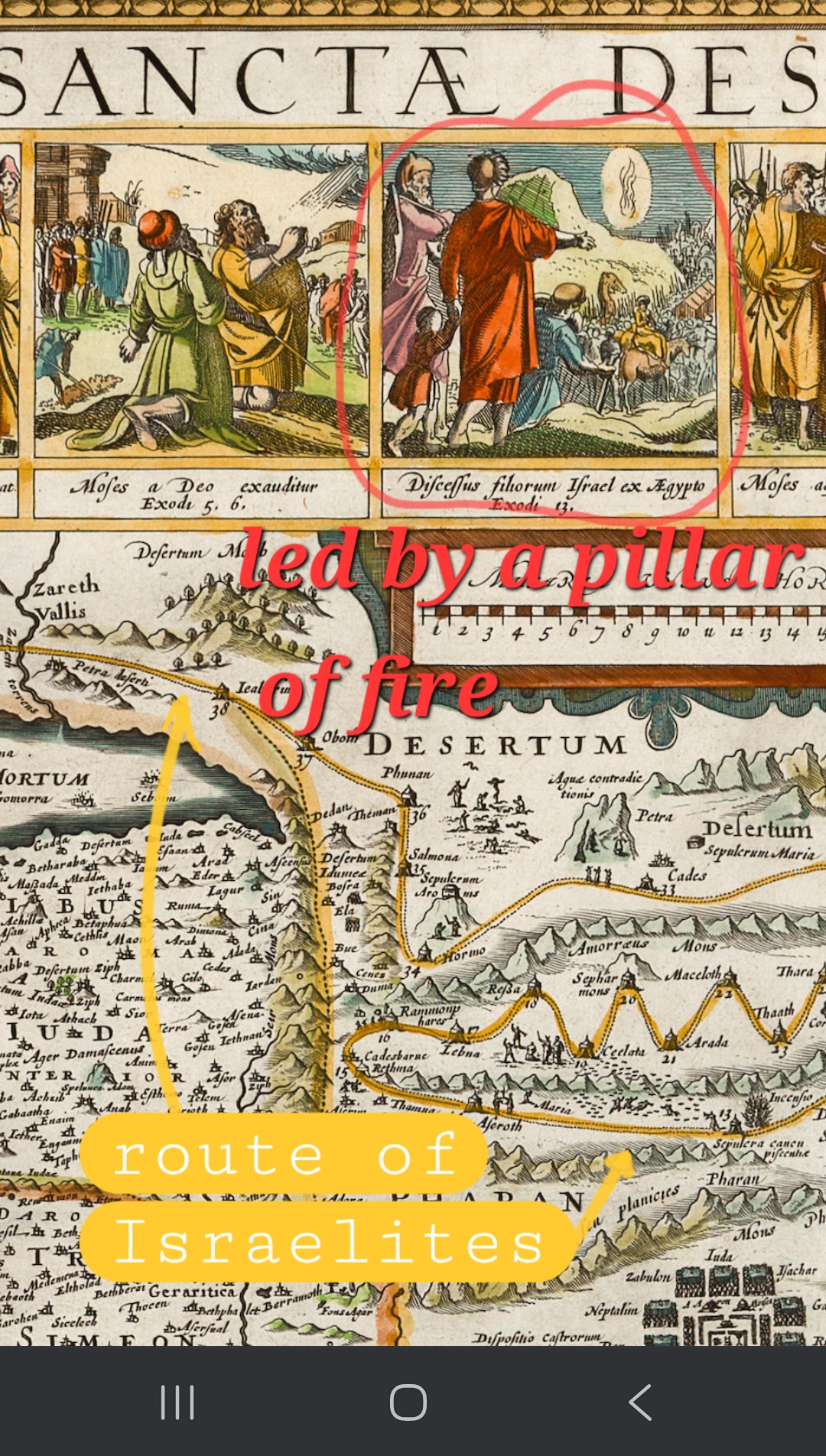
Jan Jansson (1588-1664) map of the Holy Land (c. 1630) showing the life of Moses in vignettes and the organization and route of the Israelites through the desert and then Moab above the Dead Sea on the map on their way to the Promised Land
The answer may lie in context of the event and the deeper meaning of distinctiveness. Bilaam was not commenting on mere social isolation. He was marveling at the singularity of an entire people traveling together through the desert, in unison, yet set apart in character and destiny. He was struck by the sight of an entire nation—young and old, rich and poor—not scattered as refugees or as imperial conquerors, but moving as one, under a divine mission. This was a nation on a journey, and yet already a people. They were not defined by geography, wealth, or military might—but by a relationship with God.
close up of Jansson map
In Jewish tradition, blessings are tied to recognition and distinction. Consider the rules of berachot (blessings): when a person eats an apple, it receives the blessing “borei pri ha’etz”—a specific blessing for fruit of the tree. If the apple is altered, like mashed into applesauce or mixed with other foods, the blessing remains the same ONLY if the fruit can still be identified. But if the fruit is so blended or processed that its original form can no longer be distinguished, it receives the general blessing of “shehakol“. The highest form of blessing is given to that which is most clearly recognizable.
In this light, Bilaam’s words take on added meaning. The Jewish people, by dwelling alone, are not to be pitied but admired. They are not a mashed mixture indistinguishable from general society but a clearly defined people, worthy of the highest blessing. Their uniqueness—religiously, culturally, and morally—is their spiritual signature.
Moreover, Bilaam wasn’t simply remarking on ethnic isolation. He noted the nation’s relationship with the Divine. Even when they seemed to be isolated, they were never truly alone—they were accompanied by God. The camp of Israel may have appeared vulnerable in the wilderness, but it was surrounded by divine presence, protected by a covenant older and stronger than any human alliance. As a prophet, he could not help but shout “How can I damn whom God has not damned” and “May my fate be like theirs!”
close up of Jansson map
This point is emphasized by commentators like Rashi (1040-1105), who notes that Bilaam’s phrase can be read as prophetic: “They do not come under the same reckoning (לא יתחשב) with other nations. — Another explanation is: When they rejoice, no other nation rejoices with them.”
This is certainly the case today, as Israel defeats one enemy after another. Each – Hamas, Hezbollah, Iran – armed with both weaponry and genocidal intent, have been neutralized. The Jewish world is relieved and gives thanks, while the United Nations runs to condemn the Jewish State for its defensive war.
The aloneness feels like isolation but is it? Is the success – and “aloneness” – to be read as a glory to God? Bilaam’s blessing isn’t merely poetic—it is theological. He sees a people whose separation from other nations isn’t a curse but a connection to God – for those, like him, who can appreciate the holy tie.
For those who recognize this divine connection, the Jewish people become a source of blessing. As Bilaam says later, “Blessed are those who bless you, and cursed are those who curse you” (Numbers 24:9). But for those who fail to see the holiness of that distinction and connection to God—who seek to blend, suppress, or erase it—the reading is a curse. The uniqueness is condemned as outside societal standards.
In the end, Bilaam’s words are not a curse in disguise. They are a prophetic blessing that reveals a truth that many overlook: there is holiness in standing apart when one stands with God. The Jewish people, though often alone among the nations, are never alone in essence. They are accompanied by the Divine, distinguished by faith, memory, and mission.
Since the horrific attacks on Israel on October 7, 2023, Jews around the world have recited Tehillim, Psalms. These were composed by King David as prayers to God which continue to be read by people around the world. People have recited them in WhatsApp groups on behalf of injured soldiers and civilians. They have said them in synagogues on behalf of the hostages.
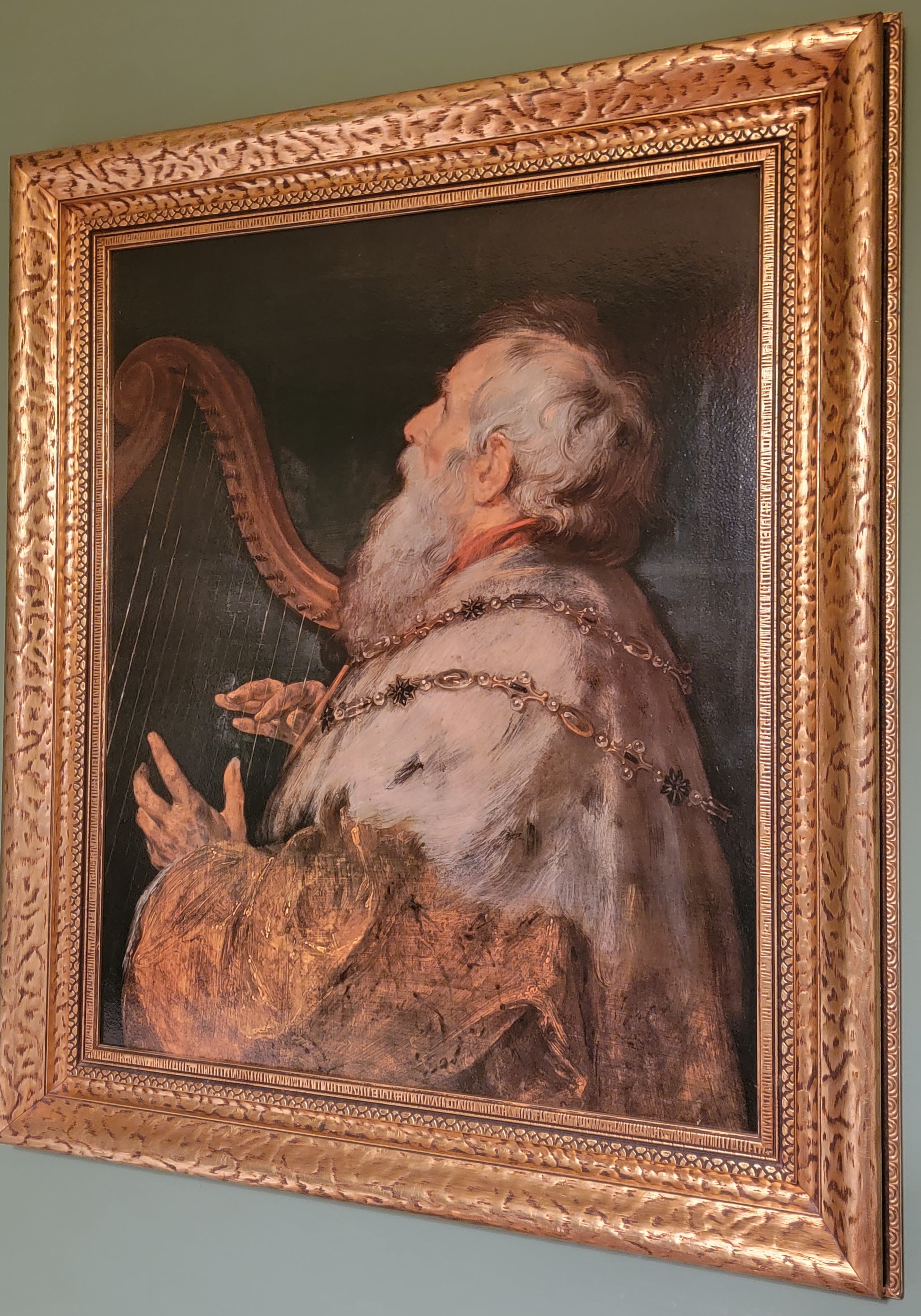
King David Playing the Harp, ca. 1616 by Peter Paul Rubens
The WhatsApp groups tend to say all of the 150 psalms, with people volunteering to say one or a couple of chapters before another person steps in to read the next ones.
In synagogues, the congregations typically recite Psalm 121 and Psalm 130 which pray for salvation and redemption.
With the recent victories over Hezbollah in Lebanon, in Iran and soon over Hamas in Gaza, it is time for synagogues to recite songs of celebration during or at the end of services. Consider:
no exchange with passersby: “The blessing of the LORD be upon you.” “We bless you by the name of the LORD.”
And then recite sections of Psalm 118: 5-21, which are well known as they feature prominently during Jewish festivals in Hallel and the Passover Haggadah:
I praise You, for You have answered me, and have become my deliverance.
The Jewish people are securing great victories over genocidal antisemitic foes. The world should include Psalms of thanks alongside prayers for the hostages and injured.
In a time when smooth talking politicians win elections despite questionable morals and policies, it is an appropriate time to consider the greatest Jewish prophet, Moses, whose life was a constant struggle of public speaking.
At The Burning Bush: Fear of the Task
In Moses’ first encounter with God, Moses pushes back on taking the mission that God has commanded to lead the Israelites out of Egypt. His protest is not about the scale or danger of the mission but his own inadequacy – as a speaker:
“Please, my Lord, I have never been a man of words… I am slow of speech and slow of tongue.” (Exodus 4:10)
God responds with reassurance, promising divine assistance:
“Who gives man speech?… Now go, and I will be with your mouth and teach you what you shall say.” (Exodus 4:11-12)
Still, Moses persists in his reluctance, and God tells Moses that he should partner with his brother Aaron to be joint spokespeople before Pharaoh. From that moment on, Aaron is often the mouthpiece, and Moses leads more through presence. This foundational moment sets the reader considering the role of Moses for the rest of the Torah: if Aaron is doing the talking and God is providing the words, what exactly is Moses doing?
With The Spies: Adding Words, Shaping Minds
Years later, after the Jews receive the Ten Commandments on Mount Sinai, Moses gives instructions to twelve tribal leaders to inspect the land of Israel. God’s original command was simple:
“Send men to scout the land of Canaan, which I am giving to the Israelites.” (Numbers 13:2)
But when Moses relays the mission, he adds additional language which was not stated by God:
“See what the land is like. Are the people who dwell in it strong or weak? Few or many? Is the land good or bad?” (Numbers 13:18-19)
These added questions introduce the possibility of negative reports. Moses frames the land not as a divine gift to be received with confidence, but as an object of evaluation and skepticism. This subtle addition tilts the mission toward doubt. The spies return not with faith but fear, and the people’s panic results in a devastating punishment of forty years of wandering.
The Rock: Silence When Only Words are Needed
Fast forward to Parshat Chukat. The Israelites are again without water and God instructs Moses and Aaron:
“take the rod and assemble the community, and before their very eyes order the rock to yield its water.” (Numbers 20:8)
But Moses, perhaps frustrated and weary with his flock, or not understanding why he was tasked with talking to an inanimate object, or confused with the purpose of taking his staff, strikes the rock instead—twice. Crucially, he does not speak. He bypasses the command and replaces it with physical action:
“And Moses raised his hand and struck the rock twice with his rod.” (Numbers 20:11)
The water comes forth, but God is displeased and informs Moses that he will not get to go to the Promised Land:
“Because you did not trust Me enough to affirm My sanctity in the sight of the Israelite people, therefore you shall not lead this congregation into the land that I have given them.” (Numbers 20:12)
After years of faithful service, it is this moment of silence—a refusal to speak as commanded—that costs Moses entry into the Promised Land.
Symbols and Sanctity
At the rock, Moses used the staff as a TOOL in which he was the active agent in bringing forth the water. The Jews were thereby given the impression that Moses delivered the outcome they sought. Moses did not appreciate that the staff was a SYMBOL and that Moses was only a vehicle for God’s actions.
From the very beginning, God used Moses as his emissary, “I will be your mouth.” Ignoring the speech that God gave to Moses to bring forth water, denigrated words in favor of action. God created the world and separated water and land on the third day with words; He could certainly make water come from a rock with a few words.
The episode of Moses hitting the rock recalls when the Jews were trapped at the sea when Pharaoh’s chariots were descending upon them. Without prompting from God, Moses offered that God will battle the Egyptians:
“But Moses said to the people, “Have no fear! Stand by, and witness the deliverance which יהוה will work for you today; for the Egyptians whom you see today you will never see again. God will battle for you; you hold your peace!” (Exodus 14:12-13)
But God never told Moses to say any of those things. He is upset and tells Moses:
““Why do you cry out to Me? Tell the Israelites to go forward. And you lift up your rod and hold out your arm over the sea and split it, so that the Israelites may march into the sea on dry ground. And I will stiffen the hearts of the Egyptians so that they go in after them; and I will gain glory through Pharaoh and all his warriors, his chariots, and his riders. Let the Egyptians know that I am God, when I gain glory through Pharaoh, his chariots, and his riders.” (Exodus 14: 15-18)
The stories are a mirrored echo of each other:
In Exodus, God doesn’t instruct Moses to say anything, just to act; in Numbers, God asks Moses to speak and not act
In Exodus, God has Moses lift his staff and splits the sea to reveal dry land; in Numbers, God tasks Moses with lifting his rod to split the rock to deliver water
In Exodus, God gains glory through the obstinance of the defeated Egyptians; in Numbers, God seeks to attain sanctification in the sight of Jews
In Exodus, Moses listens, the Jewish people are saved, and the story of the splitting of the sea is recited daily by Jews to this very day; in Numbers, Moses doesn’t listen, he is condemned to never make it to the Promised Land and have a burial spot which remains unknown
The staff is a symbol, not a tool. It conveys that Moses is God’s conduit for words and action. Through them, God becomes sanctified and holy to Jews, while glorified by the world.
Understanding this, it is worth considering why Moses was chosen to lead the Jewish people: his lack of confidence in speaking would make him more likely to stay close to his brother and not speak extemporaneously. An overly confident person might not follow direction or the script God has for saving the Jewish people.
Moses’ speech journey is a case study of people’s personal struggles. At first, he doesn’t trust his voice. Then he misuses it. Then he avoids it entirely. People who are unsure of certain skills might go through a similar lifecycle. And that’s without God talking in your ear.
Conclusion: A Prophet’s Voice and a People’s Path
Moses’ fear of speech is central to his leadership story. It colors his interaction with God, with the people, and with destiny. His silence at the rock seals his fate just as his earlier distortions redirected Israel’s path.
God’s desire wasn’t just for obedience, but for faith expressed in words. The gift of speech—of prophecy, persuasion, prayer—was not to be avoided or altered. Moses’ story reminds us that voice is sacred. To lead is not just to act, but to speak with clarity, fidelity, and trust in the One who gives speech.
The Jewish people have succeeded when speech was measured and divinely inspired. It is a lesson in the power of words – that the right words – can have a longer and more sustainable impact than even repetitive actions.
“Let us go up at once and possess it, for we are certainly able to overcome it.” — Calev ben Jephunneh, Numbers 13:30
With these words, Calev silenced the people who had just heard a fearful and pessimistic report from the other spies about the Promised Land. Ten of the twelve tribal representatives had returned from their tour of the Promised Land with tales of giants, fortified cities, and certain defeat. But Calev stepped forward — not merely with courage, but with conviction. “Let us go up at once,” he said. His words were not rash; they were rooted in faith.
Calev’s words “a’lo na‘aleh” were directional with spiritual intent. He was ready to ascend — not just to a higher elevation from the low points of the Jordan Valley, but to a higher calling. He didn’t deny the physical challenges highlighted by his fellow leaders, but he refused to let it override the spiritual promise of God’s gift.
God later singles out Calev, saying:
“But My servant Calev, because he had a different spirit with him and followed Me fully, I will bring him into the land to which he came, and his descendants shall inherit it.” — Numbers 14:24
A different spirit. God didn’t simply praise Calev’s bravery or loyalty. He pointed to Calev’s spirit — a divine quality within him that was distinct from the others. The Hebrew “ruach acheret,” suggests that Calev’s soul orientation was unique. It wasn’t just that he had faith — it’s that his spirit was attuned to God’s gifts and was willing to challenge the majority. That spirit led his body, not the other way around.
The contrast with Korach in a later story could not be starker. Korach, who led a rebellion against Moses and Aaron, was driven by status, jealousy, and material concerns. The Torah notes that “the earth opened its mouth and swallowed him, his household, and all their possessions” (Numbers 16:32). His physical attachments — both metaphorically and literally — dragged him into the ground.
In Judaism, man is not a duality of body versus spirit. The two are in dialogue, and one always leads. When the spirit leads and is drawn toward God’s gifts, it lifts the body with it. When the spirit is enticed by the physical, the body becomes dominant — and man falls.
God gave the Jewish people two primary gifts: the Land of Israel and the Torah — one is sanctified space, the other divine wisdom. Both require spiritual alignment to appreciate and receive. That’s why moving to Israel is still called aliyah, literally “going up.” It is not a political migration but a spiritual elevation. Studying Torah is described not as absorbing information but as learning — an intellectual and moral ascent, a rising above the mundane.
This understanding helps explain one of the most paradoxical modern realities: Israel is one of the happiest countries in the world. Despite being under near-constant threat, despite global condemnation and internal conflict, Israelis report remarkably high life satisfaction. Even more remarkable, Haredi Jews — who often live below the poverty line and avoid modern comforts — report even higher levels of happiness.
Why? Because they are immersed in both of God’s gifts: the land and the Torah. They are not simply physically located in Israel; their spirits are aligned with its divine purpose. Their joy is not circumstantial — it is directional. It flows from a life where the spirit leads, where God’s gifts are not just received but cherished.
Kotel after the rain (photo: First One Through)
Calev’s legacy is not just a historical footnote. It is a call to action. It is a message to challenge the masses who want to abandon God’s gifts, and both elevate and be elevated by God’s special blessings.
“God is love,” says the Christian scripture (1 John 4:8). In Judaism, Ahavat Hashem — love of God — is commanded and cultivated with blessing: “Love the Lord your God with all your heart, all your soul, and all your might” (Deuteronomy 6:5). The love of God is a bond between man and heaven built on compassion, holiness, and peace.
But in far too many places across the Global South, another phrase is being taught: “The love of Jihad.”
It’s neither metaphorical nor poetic. It is proudly literal — sung by schoolchildren, broadcast on TV, etched into educational curricula, printed on flags held by terrorists. “We love death like our enemies love life” was a chilling Hamas slogan even before October 7, 2023. It isn’t a chant of a lone errant radical but a core tenet of Islamist extremism: to define one’s identity by war, death, and the annihilation of the other.
Two Loves. Two Worlds.
There is a love that sanctifies hospitals, schools, and synagogues. There is another love that sanctifies suicide belts and the murderers of civilians.
In the Judeo-Christian tradition, love flows downward from a Creator who gives life and asks for holiness in return. Morality is measured by how one treats the stranger, the widow, the orphan. The spiritual path is about elevating the self — resisting the urge to dominate, to hate, to take vengeance. I call it “Humble Faith.”
But in radical Islamist ideology, compassion is redirected from the divine to the destructive. Martyrdom is romanticized. The afterlife is promised not to those who love their neighbor, but to those who murder them. Jihad isn’t just war — it’s the highest expression of spiritual devotion.
Columbia University students call “Glory to the martyrs. Victory to the Resistance” supporting the Hamas war in October 2024 (photo: Mike Segar, Reuters, Redux)
People have attempted to sanitize “jihad” and “intifada” in Western media. We are told jihad means “inner struggle” and intifada means “shake off.” Perhaps it does for some Muslims. But the jihad of Hamas, Al Qaeda, Hezbollah, and Iran’s Revolutionary Guards is unmistakably violent. It’s the jihad of Kalashnikovs, tunnels under kindergartens, and paragliders into music festivals. It’s identical to Adolf Hitler’s “Mein Kampf” which similarly means “My Struggle.”
"Jihad means the fighting of the unbelievers and involves all possible efforts that are necessary to dismantle the power of the enemies of Islam, including beating them, plundering their wealth, destroying their places of worship, and smashing their idols."
- Hassan al-Banna, founder of the Muslim Brotherhood
And yet, around the world, there is a growing refusal to admit this unvarnished truth.
The West’s Romanticization of Jihad
Academics and activists in the West have twisted themselves into knots to justify the “rage” of jihadists. Excuses of “occupation,” “imperialism” and “colonialism” are concocted. New definition of “apartheid” and “genocide” are contrived. The love of jihad is recast as a legitimate cry for justice, while Israel’s efforts to protect its citizens is painted as cruel, racist, even genocidal.
When Hamas terrorists butchered entire Israeli families, raped women, and burned children alive, some depraved people in the West saw “resistance.” When Israel responded, the cries of “Ceasefire now!” emerged to protect Hamas, but not for Israel, which had been dragged into battle.
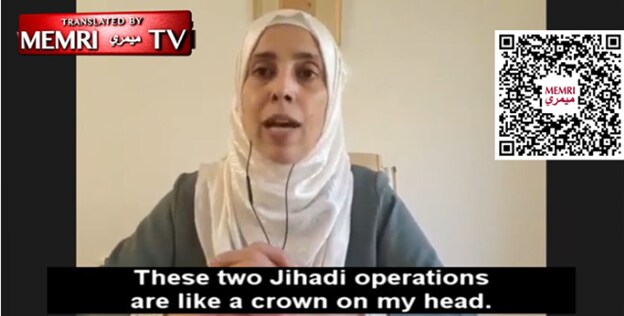
Hamas terrorist Ahlam Tamimi, who abetted the killing of 15 people and injuring of 122 – almost all women and children, celebrated her jihadi murders. She walks free in Jordan.
A World Turned Upside Down
Imagine a child in Gaza, raised on songs about martyrdom and vengeance, told that killing Jews is a way to please Allah. Compare him to a Jewish child reciting “Oseh shalom bimromav” — “May He who makes peace in His heavens bring peace upon us.”
Imagine a Christian child learning to “turn the other cheek,” and then hearing protesters on Western campuses chant “Intifada until victory” — a call for permanent war.
There are two radically different spiritual trajectories here. One aims upward, toward love, life, and sanctity. The other plunges downward into hatred, death, and hell.
It is no coincidence that the Islamic Republic of Iran calls Israel “Little Satan” and the United States “Big Satan.” The philosophy of radical Islamism is not oriented towards love and God but directed to violence and the underworld.
Choose Your Love
The West must stop pretending. To love God is to abhor the love of jihad. To defend life is not to disrespect culture; it is to preserve culture that can sustain a free and peaceful society.
Jihadism — like Nazism before it — dresses hatred in the garb of purpose. It seduces the young, exploits the poor, and destroys the innocent. And like Nazism, it will not stop until it is confronted with clarity, courage, and conviction.
We must stop asking why terrorists hate and start asking why we excuse it.
In an ongoing insult to Jews around the world, Palestinian Authority President Mahmoud Abbas said at the 32nd Palestinian Liberation Organization (PLO) Central Council meeting on April 23, 2025 that the two Jewish “Temples were in Yemen.”
PA President Abbas claiming the Jewish Temples were in Yemen, April 23, 2025
Abbas falsified history in an attempt to deny Jews any rights or privileges at their holiest location. The fact that it was an insult to over 2 billion Christians who believe that Jesus was in Jerusalem and not Sanaa was a slight he was willing to make to claim the site as purely Islamic.
The United Nations adopted the same position. In a 1949 map of the holy places in Jerusalem, the Temple Mount was marked as only holy to Muslims, while the Western Wall was marked as holy to both Muslims and Jews.
1949 UN map of Jerusalem’s holy places
The United States should therefore adopt a resolution called “Status of the Temple Mount,” similar to the twisted United Nations resolutions called “Status of Jerusalem,” to correct the wrong. Its passage in Congress will serve as a template for other countries to adopt before being submitted to the United Nations General Assembly.
Key phrases should be included in the resolution, to combat the disgraceful UN remarks about Jewish rights:
The United States abhors the “aggressive and dangerous” comments made by the president of the Palestinian Authority which “could inflame tensions and lead to a religious war that has no boundaries.”
Comments made by the PA president “serve the forces of extremism around the world.”
Incendiary remarks that deny Jews their heritage and history “do absolutely nothing to improve the lives of Palestinian Arabs,” and simply “push back the Middle East peace process.”
“The Temple Mount built by King Herod two thousand years ago has been and will always be the holiest location of Judaism.”
On December 9, 2021, Rep. Paul Gosar (R-AZ) expressed his disgust with a December 3 UN General Assembly resolution about Jerusalem saying “The recent vote by the United Nations disavowing Jewish historical ties and exclusivity to the Temple Mount—the holiest and most sacred Temple in Judaism—is an outrageous act of religious persecution. This is a transparent effort, supported by 129 nations but opposed by the United States, to rewrite history, cleanse the holy area of its religious ties to the Jewish faith and deny that Israel has roots to the Middle East…. The Jewish Temple, located in the heart of Jerusalem’s Old City, is holy ground to Jews and it belongs solely to their faith. I object to any effort to ethnically cleanse the Jewish people from their sole historic claim to this land and temple.”
It is time for U.S. Congress to endorse a resolution to correct the shameful religious persecution and ethnic cleansing of Jews, by passing the “Status of the Temple Mount” resolution.
ACTION ITEM
Write Paul Gosar (if you are in his district), your representatives in Congress and the White House (comments@whitehouse.gov) to clearly stand by historic truth and correct the ongoing slander and religious persecution of Jews. “In light of the ongoing antisemitic insults by the Palestinian Authority and the United Nations, please pass a resolution which clearly states that the Jewish Temples stood on the Temple Mount in the Old City of Jerusalem and that the site has been the holiest site for Jews for 3,000 years. https://primarybowman.com/2025/04/29/resolution-recognizing-the-jewish-temples-stood-on-the-temple-mount-in-jerusalem/“
This year’s Passover excursion kept us in the United States. American programs tend to be much larger and more expensive since the law of large numbers doesn’t seem to apply to matzah. This one was the same: 1,300 people spending $25 million, while complaining about the yeshiva tuition and shidduch crises.
Despite the price tag for a single room which could have purchased a small car (pre-tariffs), my family couldn’t pass up the opportunity to spend ten days with 33 extended family members, including 14 children under 10 years old. The challenge of migraines versus memories was too enticing to pass over.
Our small tribe descended on the destination “resort” nestled 47 minutes from civilization in desert foothills with panoramic views of ugly sand and rocks. The 99 degree heat baked every living thing except for snakes which blended into the brown landscape. We ran inside to escape the sun and scenery.
The hotel “lobby” had a couch and two chairs, insufficient for my immediate family let alone 1,300 other guests. It appeared that we were going to be left with few choices for hanging out together: either in the dining room, tea room, shul or our own rooms.
We grabbed keys and programs and headed to our rooms to unpack 75 outfits.
All of the rooms were essentially “suites” with a small living room which looked great for late night reading. However, the bathroom was so small that the door bumped into the toilet seat, so one needed to shimmy around the door and place a foot in the bathtub to enter. As I extended my hand to grab the shower door for balance, I actually grabbed a fistful of curtain. I let out a small shriek and heard someone next door do the same. A chorus of “a shower curtain?!” could be heard echoing through the halls.
Our horde unpacked and changed for the first of forty meals. On American programs, people seemed extra intent on getting their money’s worth by gorging non-stop. It was especially true at this location, as rooms normally go for $109 per night.
The first dinner was set up as a barbeque outside. The pieces of steak were larger than our plates to make us forget that the program lacked vegetables. It was delicious and set the stage for a carnivorous vacation theoretically focused on small tasteless pieces of flatbread.
We awoke early the next day and rapidly learned who was going to attend prayer services and who was tasked with looking over small tykes while their wives slept. We created a mini-WhatsApp group apart from the broader family chat to notify each other about minyan times and where to grab a nosh. There was a short back-and-forth about whether to label our chat “The Minyan 7” or “Tallis Toters” and settled on The “XYs” as none of the women attended other than for yizkor.
The conference room turned shul could seat 500 people, so the 70 men and 3 young women who came home from seminary in Israel had plenty of room, if not heat or decent lighting. The first ba’al tefillah launched prayers with “she asani aved” thanking God for making him a slave, dropping the important “not” in the blessing, making people wonder whether he had sold a kidney to pay for the program or was trying to set the mood for the Passover story of liberation.
The hashkama minyan flew by quickly, allowing people to enjoy another four hours of breakfast. It was our chance to see our family’s designated table for the holiday which occupied one-third of the dining room, a behemoth square of 28 feet a side. We had the staff reconfigure the table for the other meals so we could hear each other, but the reality of eating in a room with 1,000 other people including screaming children made a conversation beyond five feet impossible anyway.
The buffet in the center of the large hall was arranged as follows: wine table, omelet or carving station depending on the meal, various hot dishes, omelet/carving, hot dishes, omelet/carving, hot dishes, omelet/carving, hot dishes, and at the very back of the room, a small salad table with hearts of palm and shredded carrots. Perhaps the caterer didn’t want to check vegetables or wanted all-brown meals like the desert outside.
On rare occasion, there was plated food when we arrived, once consisting of gefilte fish with horseradish together with seared tuna and wasabi. If it was intended to placate both the Ashkenazi and Sephardi crowds it didn’t work as my Syrian niece threw up at the sight.
For some reason, despite the enormous quantity of cooked animal flesh at lunch and dinner, the dessert table only had 20 cookies. Everyone assumed we were being encouraged to head to the tea room for sweets so the staff could set up for the next meal.
We obliged and ran over to see what was in store.
Regrettably, it seemed that some guests had paid off staff to seize all the Bisli for their entourage. The rest of the attendees made due with “tropical” ices that tasted like antifreeze and various chocolate snacks that varied more in shape than flavor.
When snack time was over we were at a loss for what to do. We went to one of the pools to watch the water evaporate before our eyes. We then hunted for shade and were informed that the indoor cabanas were already reserved by guests for $12,000 for the week, a pretty penny to watch White Jews combust but many seemed content to do so.
My wife went looking for one of the shadchanim “matchmakers” to discuss our boys and various single friends. The boys refused to engage in the “meat market” and opted to sit at the poolside barbeque and talk to girls there.
People were kvetching that the program last year in the Caribbean was much nicer in terms of hotel and food quality. As one person voiced her disagreement, she was cut off by a loud thump of an older couple tripping on the broken cobblestone pathway, crashing to the ground. It would be the first of seven hospital calls during the holiday. By the last day of chag, thirteen orange cones dotted the heavily-trafficked walkway.
For shabbat, we were handed a few velcro strips to disable the electronic door locks. Later in the week, I saw some men using them to extend their belts to accommodate their bulging waists.
During shabbat and yomtov prayers, the program auctioned off aliyahs for different charities. It got more people to attend the earlier hashkama minyan in hope for a better deal. Az Yashir went for $5,000 at hashkama, but the winner didn’t realize he had to hand the aliyah over to the program’s rabbi. It crushed the fundraise for the next much larger minyan and people wouldn’t go above $100. I suggested bridging the tzedakah gap by bidding out the right to be the sole person to yell “ka’eleh” during the second torah reading, as the masses cannot keep themselves from drowning out the ba’al koreh.
The night activities alternated during shabbat and yomtov on talks about Israel at war, antisemitism and rabbis put into herem for heresy. Very uplifting and spiritual. During chol hamoed, the nights alternated between unfunny young comedians ripping off older comics’ material, to a couple of Sephardic singers singing the same popular four songs that they didn’t write. The band behind them pretended to play various instruments while their prepared music mix blared for the stablehands six miles away. It was the Israeli version of Milli Vanilli.
And the kids loved it. They cheered their Instagram star despite his lack of stage presence and joined the 45 year old bearded male singer when he asked for girls under 14 years old to join him on stage.
For some reason, I think I was the only one to find the spectacle creepy.
As the three-day shabbat-yomtov continued, people bemoaned their Wordle streaks ending. The various right-wing speakers suggested to all that it was a perfect time to terminate their New York Times subscriptions.
People slowly became aware that the entire hotel was not reserved for the Passover guests. Loaves of bread were in the hallways and a Christian wedding party which booked the second weekend created a stir. A ruckus broke out when the hotel insisted that all Jews leave the pool area for the wedding. Fewer men complained the following day when tall blonde women came out in their bikinis.
The Latin staff seemed nonplussed by everything and kept smiling. The Jewish staff looked perpetually perturbed by the incessant demands of one thousand over-entitled kvetches from friends and neighbors.
Overall, the holiday was a win. Getting so many family members together for a week is an accomplishment in itself, and there were no major blowouts. We had a chance to meet some nice new people and collectively discover why Jews left the desert over 3,300 years ago.
Well before the brutal October 7 massacre of 1,200 people in Israel, antisemitism in the United States had reached horrific levels. Jews were shot in synagogues and supermarkets. Held hostage and hacked with machetes. Vilified by famous athletes and entertainers. Accused of being too powerful in the news and told by the leading powers in the country to hide their Jewishness.
“Experts” said that the antidote was to teach people about the Holocaust. If only potential Jew-haters saw what results from “big” antisemitism they would avoid smaller antisemitic acts.
The author Dara Horn scoffed at the idea in April 2023 and now in April 2025. She argues that a narrow focus on the Holocaust limits people to thinking that Jews were wiped out as a people in the past. Israel is framed as a consolation prize awarded by Europe to appease their guilt in the genocide. Lost is the rich history of Jews.
In fact, Jewish history is not passively lost but actively obliterated and vilified. To attend universities in America about “Palestinian Studies” is not a review of any positive history of Arabs in the small slice of the Middle East that Jews view as holy, rather a demonization of Jews.
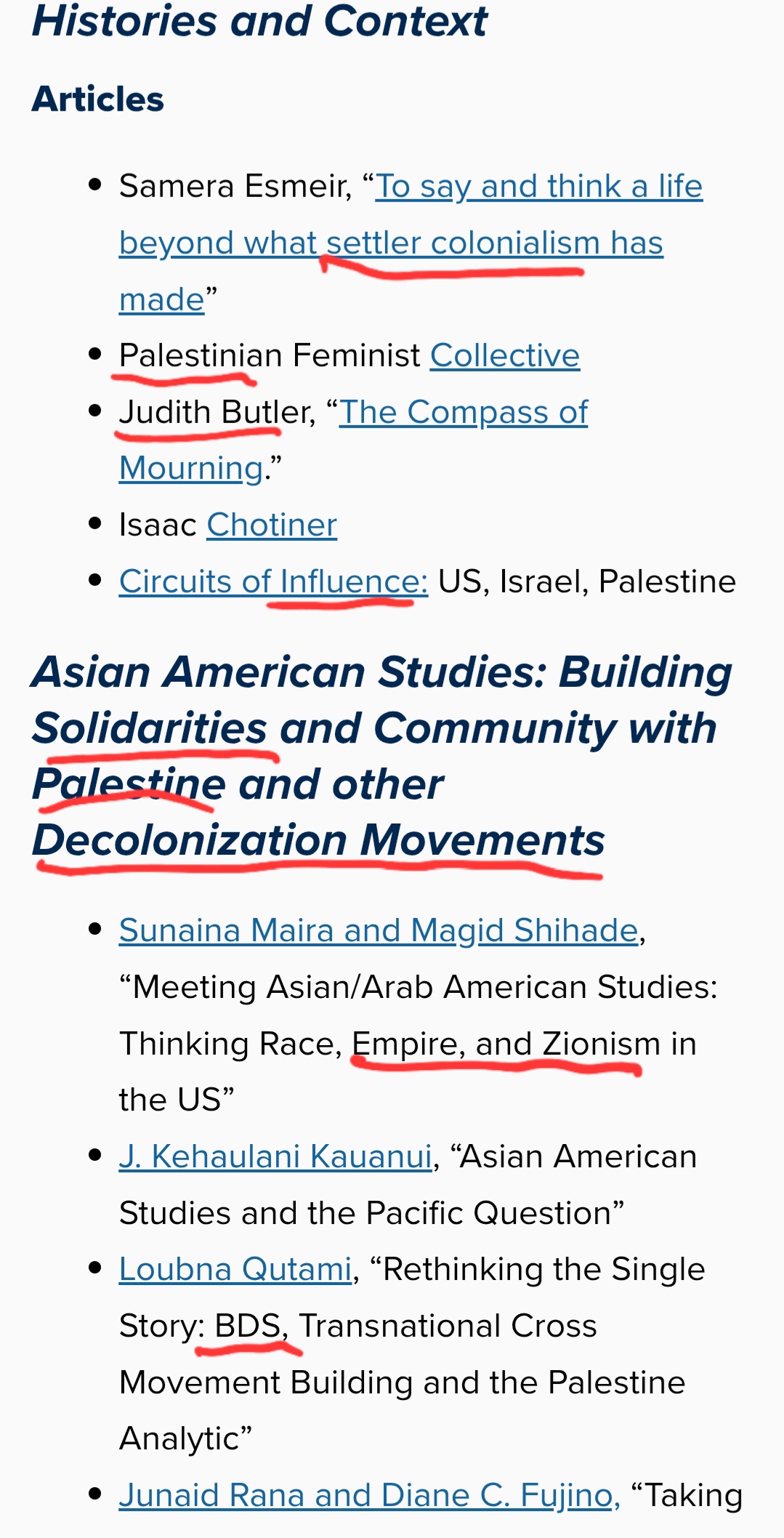
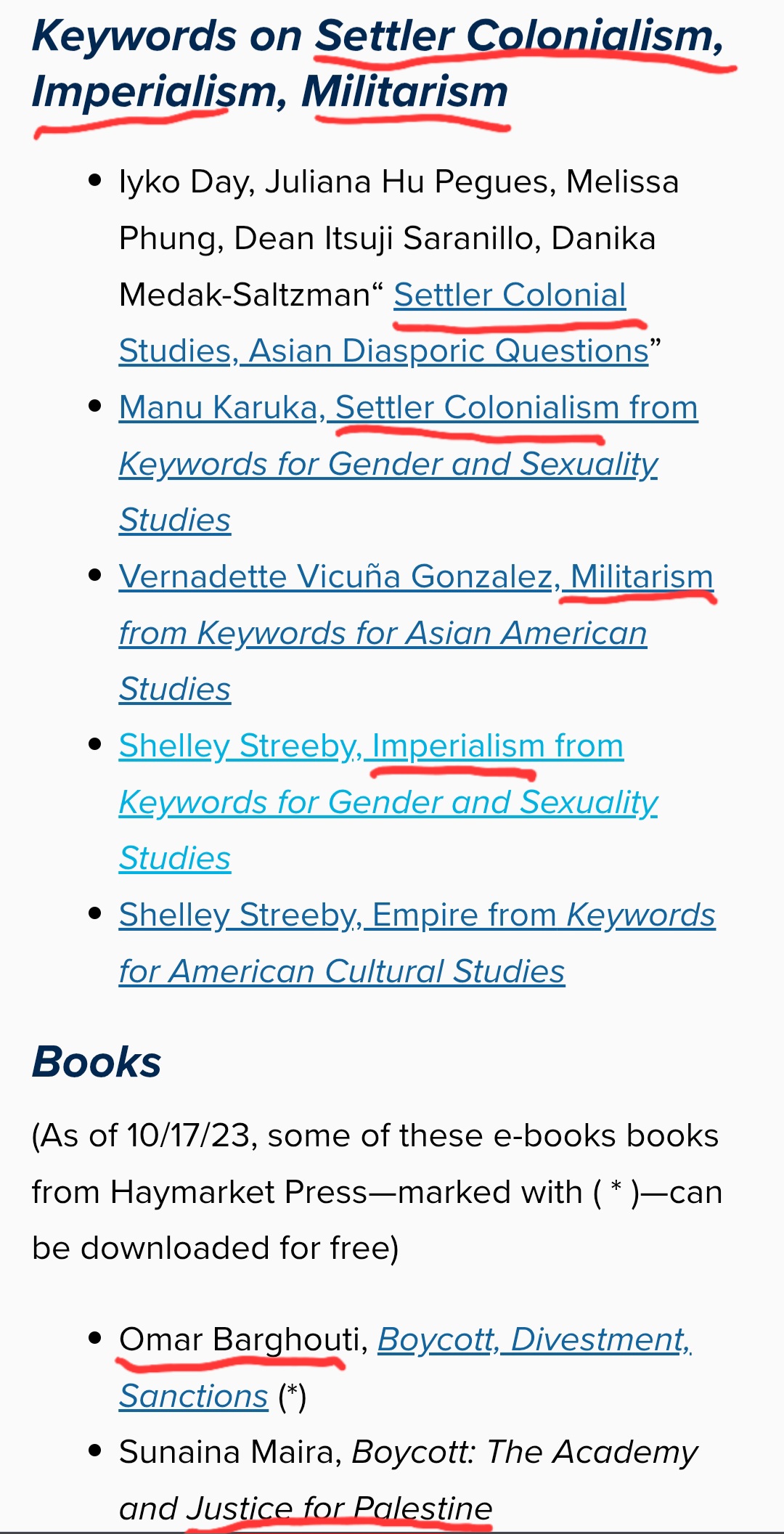
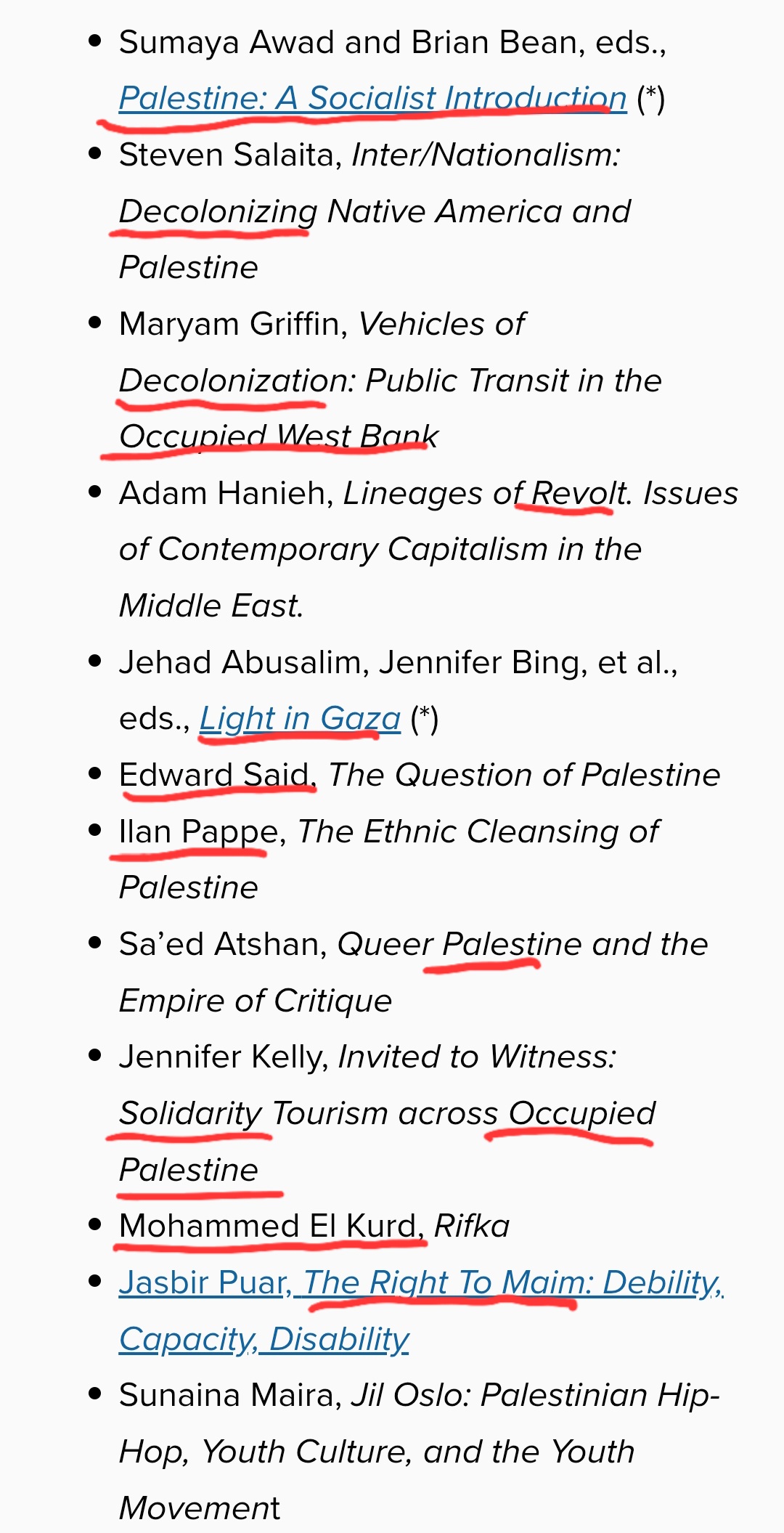
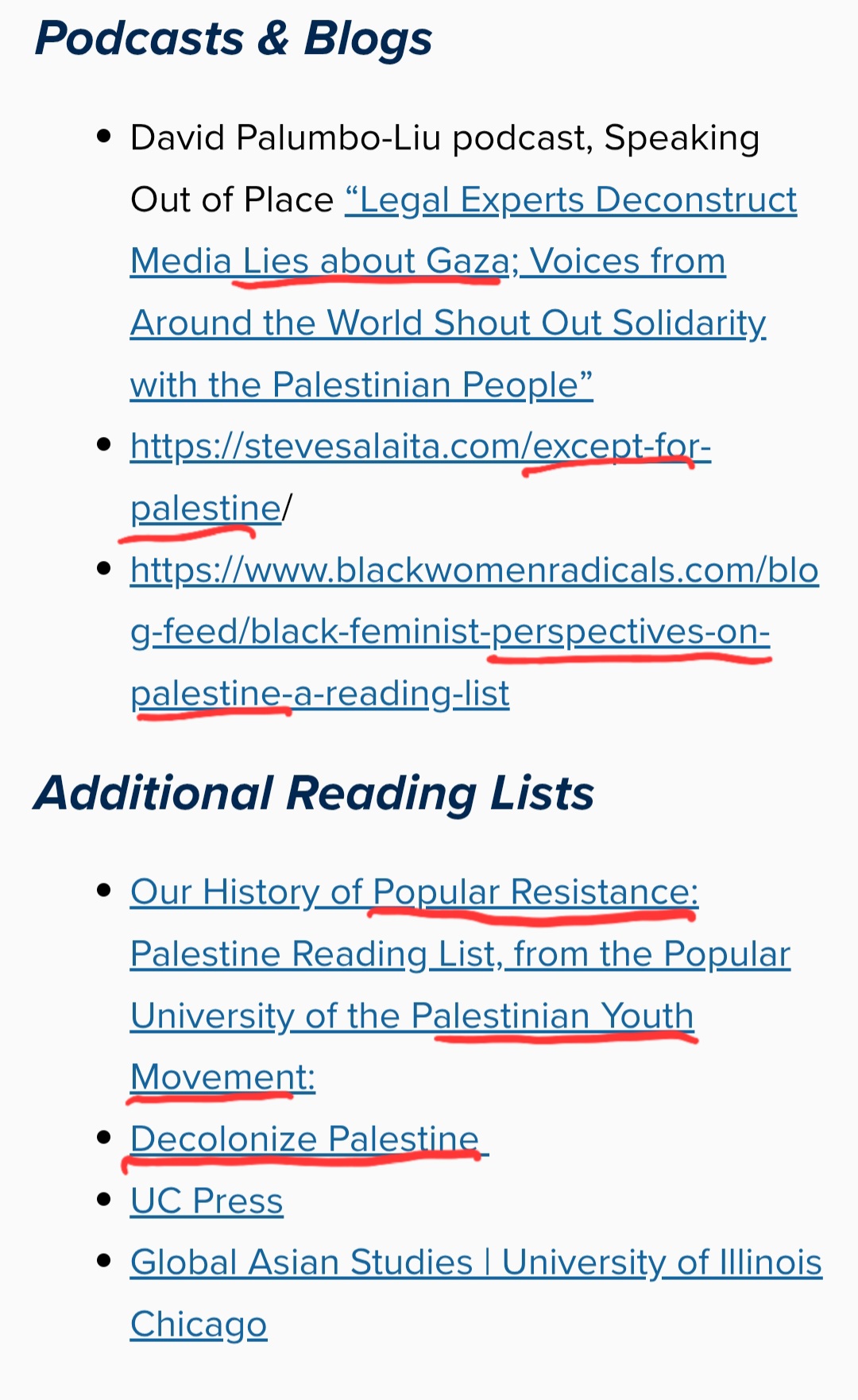
Visit the University of California, Davis website regarding reading materials on “the Situation in Palestine and Israel,” last updated on October 18, 2023, right after thousands of Gazans massacred people in Israel. The materials are completely anti-Israel, whether books, blogs or articles. Israel is condemned as a “colonial project” over again, tied to “imperialism” and “militarism.” The boycott, divest and sanctions (BDS movement) is advanced everywhere. People are urged to “revolt” against Zionism and Zionists.
Nowhere is there an iota about the thousands of years of Jewish history in the land, nor about the centrality of Jerusalem in Judaism. Rather, it includes links to articles by groups like Palestinian Youth Movement which the Israeli government has tied to U.S.-designated terrorist group, the Popular Front for the Liberation of Palestine (PFLP).
Palestineism is not a study about Arab culture or history but a rank course in antisemitism, denying thousands of years of Jewish history and the centrality of the land – and Jerusalem in particular – in Judaism.
Jewish History In Israel and Judaism
There is over 3,000 years of history of Jews in the land of Israel. Well before the modern idea of countries was formulated, Jews lived throughout their holy land. They had kings and kingdoms. They had holy temples which Jews would visit at least three times every year, ensuring they remained close to Jerusalem.
Jews have been a majority of Jerusalem since the 1860s, before the advent of modern Zionism. For hundred of years, Jews have ended their passover seder with a call “Next year in Jerusalem!” The Israeli national anthem, Hatikvah, was written in 1878, well before the First Zionist Congress, in a song about Jews being in Jerusalem and Zion. Israel is the only country in the world whose national anthem is all about its capital city.
There are certain religious Jewish practices that can only be observed in the land of Israel. Jews are the only religious group with a diaspora, defined as those Jews living outside of the land of Israel, because it is the only religion tied to a specific land.
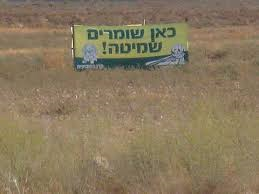
A field in Israel with a sign that it observes “shmita,” meaning the land is resting, a Jewish tradition only observed in Israel in keeping with laws in the bible (photo: First One Through)
Whether one likes the current government of Israel and its policies is irrelevant. The LAND of Israel is the Jewish homeland. That fundamental fact is not only omitted but deliberately erased in socialist-jihadi schools like UC Davis.
It is time to rethink education and focus more on the land of Israel and its centrality to Jews and Judaism, than Holocaust studies. We need to prevent anti-Jewish lessons and teach Jewish education. To prevent another genocide of Jews, start with thousands of years of Jewish history and culture in the holy land, instead of classes about the European Holocaust.
The Book of Esther has several primary and secondary characters. One of the seemingly minor players is Hatach, the eunuch who appears in four sentences in chapter 4:4-11:
When Esther’s maidens and eunuchs came and informed her, the queen was greatly agitated. She sent clothing for Mordecai to wear, so that he might take off his sackcloth; but he refused.
Thereupon Esther summoned Hathach, one of the eunuchs whom the king had appointed to serve her, and sent him to Mordecai to learn the why and wherefore of it all.
and Mordecai told him all that had happened to him, and all about the money that Haman had offered to pay into the royal treasury for the destruction of the Jews.
He also gave him the written text of the law that had been proclaimed in Shushan for their destruction. [He bade him] show it to Esther and inform her, and charge her to go to the king and to appeal to him and to plead with him for her people.
“All the king’s courtiers and the people of the king’s provinces know that if any person, man or woman, enters the king’s presence in the inner court without having been summoned, there is but one law for him—that he be put to death. Only if the king extends the golden scepter to him may he live. Now I have not been summoned to visit the king for the last thirty days.”
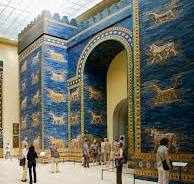
The Ishtar Gate from Babylon, now in the Pergamon Museum in Berlin
In the plain reading of the text, we see that Hatach is one of several eunuchs and attendants that the king had assigned to Queen Esther. Esther uses Hatach as a messenger to find out what so distressed Mordecai that he sits in mourning at the city gate. Mordecai must have recognized Hatach as one of Esther’s attendants, as he not only shares everything that he knows about Haman’s plan, but hands Hatach the written order to show Esther. He further tells Hatach to direct Esther to intervene for the Jewish people. Esther sends Hatach back with a reply to Mordecai that she cannot intervene, lest she be put to death.
The text then stops using Hatach’s name. Perhaps he continues to be the trusted messenger between Esther and Mordecai or perhaps another messenger takes his place. See Esther 4:12-17:
On the contrary, if you keep silent in this crisis, relief and deliverance will come to the Jews from another quarter, while you and your father’s house will perish. And who knows, perhaps you have attained to royal position for just such a crisis.”
“Go, assemble all the Jews who live in Shushan, and fast in my behalf; do not eat or drink for three days, night or day. I and my maidens will observe the same fast. Then I shall go to the king, though it is contrary to the law; and if I am to perish, I shall perish!”
So Mordecai went about [the city] and did just as Esther had commanded him.
The back-and-forth language switches to a passive verb. Hatach no longer delivers the messages but messages were somehow delivered. What is the text trying to teach the reader?
Hatach was fine following Esther’s order to find out what was troubling Mordecai and return with such information. He also accepted the queen’s order to respond back to Mordecai with a message that she couldn’t go against the king’s rules to simply show up at the palace.
And that is when Hatach disappears.
Perhaps Hatach felt that his role had ended. He was not Mordecai’s servant and only brought back his initial message because Esther specifically asked to find out what was happening with Mordecai. Without the expressed order to hear what Mordecai had to say, he was done at delivering Esther’s message.
Or maybe he never delivered the message.
Sentence 12 reads that Mordecai “was told” the message from Esther. It is possible that when Hatach heard about the possible penalty of death for showing up at the palace unannounced, he became frightened. Perhaps he felt that a plot was unfolding of which he wanted no part.
There may be more. The assumption that eunuchs are safe to have around the queen typically relates to the inability to have sex. But the point is deeper.
Voluntary castration is a sign of profound loyalty to the king. To give up so much to be in the king’s graces must mean that the eunuchs have completely aligned with everything the king desires. Eunuchs are safe to have around the queen not only because they cannot have sex but because they have proven that they will do anything for the king and never harm the king.
When Hatach heard the back-and-forth between Mordecai and Esther, his loyalty to the king came into play. While he was a trusted messenger between Esther and Mordecai, his true allegiance was with King Acheshverus.
While sentences 11 and 12 are in sequence, it is possible that there is a significant gap in the story. Did Hatach just not deliver the message and Esther found a new messenger? Did Hatach find another way to get the message to Mordecai without delivering it personally?
Sentences 12 to 17 are the start of the plan which put either Esther or all Jews in the kingdom at risk of death. It is possible that Esther and Mordecai used multiple messengers and did everything in writing to make the scheme difficult to comprehend if a messenger only had one part of the story and thereby not risk the plan with people loyal first and foremost to the king.
Queen Esther likely viewed Hatach as HER trusted messenger when this communication began but came to realize that “the king had appointed” him and his loyalty was actually with king. It likely made her feel even more isolated and vulnerable in the palace, questioning even those attendants whom surrounded her.
A deeper review of the text and minor characters adds more color to the terrifying story of 2,500 years ago that we continue to celebrate today.











 First One Through