New York Times: “Throw the Jew Down the Well”

Sacha Baron Cohen, a comedian from the United Kingdom, developed some fascinating characters as part of his comedic routine. One of them was Borat, a tall, awkward man who hailed from Kazakhstan.

borat
Sacha Baron Cohen as Borat

Cohen used Borat as a tool on unsuspecting Americans to elicit responses which may be funny or frightful in his movie, “Borat: Cultural Learnings of America for Make Benefit Glorious Nation of Kazakhstan.” Cohen counter-balanced Borat’s large 6’3″ frame with a friendly, simple and naïve demeanor, such that ordinary people responded to him in a more open manner than they would have for another large adult male stranger. Once within their sphere of hospitality, he engaged people in various outrageous actions.  Cohen captured those bizarre interactions for the public to witness.

Borat was introduced as a foreigner, unfamiliar with the social norms of the USA. As people interacted with him, they quickly saw evidence of his primitive, racist, homophobic, misogynistic and anti-Semitic side. For example, when he attended a dinner party in the South, his lack of etiquette was so extreme he did not know how to use the bathroom.  As the American hosts viewed themselves as extremely enlightened, they excused his outrageous behavior.  The comedy of Baron Cohen/Borat was specifically about revealing people in such awkward and “dark” moments.

Throw the Jew down the Well

Another scene from the movie placed Borat in a cowboy bar in Tucson, Arizona. Borat was invited to sing a song from his home country to the crowd. The audience of men and women were at first unsure of this foreigner in a cowboy hat, as he started his song “In my Country there is a Problem.” It was clear from the first verse that Borat could not really sing, play the guitar or rhyme. But the crowd wanted to be hospitable and welcomed this stranger who was trying to fit in.

By the second verse, the song became rabidly anti-Semitic. Jews were blamed for taking everyone’s money and causing problems in his country. Imagery of Jews being wild animals with claws, gnashing teeth and horns were sung aloud, and the crowd joined in louder with each verse. The women – much more than the men – loudly clapped and sung along to the anti-Semitic verses with free abandon. One would imagine a scene from the Hofbrahaus in Munich 1920 more than Tucson 2006.

Sacha Baron Cohen is himself a Jew who is likely not an anti-Semite nor a racist nor a homophobe.  He used the Borat character to force people to confront their own biases in unconventional ways. His use of a big fish-out-of-water persona made people want to embrace this gentle giant. The American-way of hospitality placed people in a situation where they were closely engaged with little room to maneuver. They were left with a choice of either being astonished and sickened (as were the southerners at the dinner party) or engaged, as were the anti-Semites in the Tucson cowboy bar.  However, the Southerners took the effort to correct Borat, while the cowboys embraced his foul behavior and language.

The New York Times embrace of the Primitive

The New York Times has long looked on the Arab world with sympathetic eyes. Whether in advocacy for Arabs in urging the Obama administration to welcome thousands of Arab refugees, and pushing for building of a mosque at ground zero, or in ignoring Arab crimes through the use of double standards for people from a “primitive” culture, the NYT embraced the Arab world.

Like Borat, Arabs are from a different culture and unfamiliar with America’s progressive ways.  As enlightened people, the writers for the Times have sought to engage and embrace these people. For example, Saudi Arabia is rarely called out as one of the most repressive regime in the world which decapitates minors in the streets; it is just an American ally.

No where is the treatment more apparent than in the warmth shown to the acting President of the Palestinian Authority, Mahmoud Abbas.  The soft-faced nearly 80 year old man is repeatedly described as a “moderate,” who seeks “non-violent” means to achieve “independence” for Palestinian Arabs. In the Times desire to see Abbas succeed, they turned deaf to his various statements and actions:

  • Abbas’s inability to govern the Palestinian Authority territories is never blamed on his ineffectual leadership.
  • The Times rarely mentions that Abbas is so unpopular among Palestinians that he would have lost any election since 2007 according to every poll (if he ever had the ability to have an election).
  • Abbas’s phd paper on Holocaust denial is almost never discussed.  When it is, the Times makes an effort to say that he now respects the history of the Holocaust, even though he explicitly said the opposite
  • When polls show that the Palestinians are the most anti-Semitic people on the planet, the Times just brushed over the fact as “not particularly surprising
  • The Hamas Charter call for the destruction of Israel and death of Jews is rarely mentioned, and Hamas is almost never labeled a terrorist group
  • Palestinians engaged in the most honor killings per capita is ignored and blame assigned to Israel
  • Abbas’s calls to “defend al Aqsa by all means possible” is never described as an incitement to violence

The Times opted to not take a constructive approach like the Southern lady who taught Borat how to use the bathroom. It never sought to educate its readers about the misstatements and outright lies of the Palestinian Arabs. Instead, the Times just ignored that Abbas or the Palestinians were incompetent or said and did anything wrong.

However, on October 8, 2015, the Times decided to move past being deaf and joined the Palestinians’ anti-Semitic chants.

Throw the Jew from the Temple Mount

In an article entitled “Historical Certainty Proves Elusive at Jerusalem’s Holiest Place” Rick Gladstone wrote that there is little evidence that Jewish Temples existed on the Temple Mount.

20151009_065901New York Times article Refuting the Existence of the Jewish Temples
October 8, 2015

As if echoing the Palestinian Arab and Jordanian Arab narrative that Jews have no history in Israel or Jerusalem, that they are trying to “Judaize” the city and “falsify history,” the Times wrote a piece that completely misrepresented archaeological findings.  Indeed, the only religion that has archaeological proof of being on the Temple Mount is Judaism (there are no structures to show where Jesus walked or Mohammed’s night journey).

The Times’ echoed the calls of anti-Semites who seek to deny Jews of their history and basic rights.  The Times effectively moved from the back of the Tucson cowboy bar to the front row singing and clapping along with Abbas:

Throw the Jew from the Temple Mount
so my country can be free!
You must grab him by his horns
and we will have a big party!”

Now that the Times has more openly embraced its anti-Semitic Borat persona, perhaps we will soon see articles that Jews are really from Khazar and have no connection to the bible at all.


Related First.One.Through articles:

Visitor Rights on the Temple Mount

Educating the New York Times: Hamas is the Muslim Brotherhood

New York Times Finds Racism When it Wants

The New York Times wants the military to defeat terrorists (but not Hamas)

Every Picture Tells a Story- Whitewashing the World (except Israel)

Subscribe YouTube channel: FirstOneThrough

Join Facebook group: FirstOne Through  Israel Analysis

The Relationship of Man and Beast

18 The Lord God said, “It is not good for the man to be alone.
I will make a helper suitable for him.”

19 Now the Lord God had formed out of the ground all the wild animals and all the birds in the sky. He brought them to the man to see what he would name them; and whatever the man called each living creature, that was its name. 20 So the man gave names to all the livestock, the birds in the sky and all the wild animals.

But for Adam no suitable helper was found.”  (Genesis 2:18-20)


Biblical Review:
Man’s Superiority over Animals

Humans believe they are the smartest animals on Earth. While our three pound brain is not the largest in the animal kingdom (sperm whales have 17 pound brains), we humans tend to commend ourselves for our ability to walk upright, develop sophisticated machines, consider things beyond our senses and create the selfie stick.

Religion has cemented this bias. The Old Testament unveiled the story of the creation of the world with plants and animals arriving first and then man – Adam – being the final ultimate act of creation.  Man’s creation was preceded with a statement:

26 Then God said, “Let us make mankind in our image, in our likeness, so that they may rule over the fish in the sea and the birds in the sky, over the livestock and all the wild animals, and over all the creatures that move along the ground.” (Genesis 1:26)

Man was the only creature “made in God’s image” and the only creation which was specifically tasked with “ruling” over other species. The superiority of Man over animals could not be more clearly laid out.

The Quran similarly detailed man’s dominion over beasts: “And the cattle, He has created them for you.  You have in them warm clothing and (other) advantages, and of them you eat.  And therein is beauty for you, when you drive them back (home) and when you send them out (to pasture).  And they carry your heavy loads to regions which you could not reach but with great distress to yourselves.  Surely your Lord is Compassionate, Merciful.  And (He made) horses and mules and asses that you might ride upon them and as an ornament.  And He creates what you know not.” (Quran 16:5-8)

OLYMPUS DIGITAL CAMERA

Adam and Eve in the Garden of Eden, by Wenzel Peter

Man’s Relationship with Animals

Interestingly, the story in the Old Testament quickly moved past man’s supremacy over beasts. We soon read about a lonely man needing companionship so God brings the animals to man to ease the pain of solitude.  While the Quran relayed some benefits of ruling over animals (food, clothing, beasts of burden), the Old Testament relayed that animals could be a source of company and intimacy.

The bible pivots from man’s dominant position quickly.  When a snake tricked man into eating the forbidden fruit in the Garden of Eden (maybe it was mad at being passed over by Adam?), man lost his place in paradise. Suddenly, man understood that he was not only naked, but had reason to fear animals as well.

Despite this more complicated relationship between man and beast, during the story of Noah and the flood, man was given the responsibility for saving all of the animals.  God could have instructed Noah to build a small boat to save only himself and his family, but instead tasked man with helping animals as well. Superiority and fear yielded to responsibility and care.

Later generations in the bible would principally treat animals as inferior life forms for man to enjoy, whether by eating them, dressing with their skin, using them to work the fields, and offering them for sacrifices.  The bible principally describes helping animals only to keep the animals alive for future service; there was no discussion of them as companions.

Overall, the Pentateuch discussed plant life in a much more gentle fashion than animals.  Consider Deuteronomy 20 which discussed going to war:  All living things – including animals – were to be killed when fighting people with detestable belief systems.  The animals belonging to those people were considered corrupted by the actions of the people and therefore worthy of annihilation.  However, the fruit trees that belonged to those same people were spared.

All items from the ground are kosher and permissible to eat, but animals are more complicated: they are innately kosher or non-kosher. But even kosher animals can become corrupted.

Pets Today:
Companions Again

Americans have grown very close to their pets and have begun to “humanize” them. People are now more inclined to give their pets human names (Bo) versus “pet names” like “Rover” a generation ago. Approximately 76% of pet owners consider their pets to be full members of the family and they treat their pets accordingly.

Pet ownership in the United States rises every year. There are an estimated 78 million dogs and 86 million cats in the US in 2015 (APPA). That figure compares to 74 million children under the age of 18 in the country. Yes, there are more cats and dogs than kids. Consider further that the US pet industry is about $60 billion. That is more than the entire planet spends on babies.

Entirely new industries have sprung up around pets over the past several years: pet insurance; pet day care, pet-friendly hotels and restaurants. There is even a special TV channel, DogTV, just for dogs to watch.

We have taken animals from the fields into our homes and call them members of the family.


The biblical story of superiority over animals evolved over time. The power of creation imbued man with power over animals. Stories of destruction were coupled with man’s responsibilities.  But the biblical discussion of animal companionship was very fleeting. Man rejected animals right at the beginning of history, so God created woman to be his partner.  Thereafter, the role of animals became utilitarian.

Today, animals give us comfort.  We have added pets to our families in even greater numbers than children. We read stories of the flood to our children and skim the vileness of man and their annihilation, and celebrate the many animals in the world’s first zoo.

Darwin’s Theory of Evolution is that all living things had a common ancestor. Beyond considering man’s physical evolution, it is worth noting mankind’s emotional evolution in its relationship with his fellow creations.

Related First One Through article:

Israel, Mother Nature’s Son

Subscribe YouTube channel: FirstOneThrough

Join Facebook group: FirstOne Through  Israel Analysis

Visitor Rights on the Temple Mount

The cries coming from the acting-President of the Palestinian Authority and his rival political party, the terrorist group Hamas, to “defend al-Aqsa” stem from their claim that they are concerned that Jews are coming to destroy and/or defile the al Aqsa mosque, the third holiest site in Islam. To generate such fear, one would imagine that Jews are coming to the Temple Mount (on which al Aqsa sits on the southeastern most tip) illegally, and are bringing with them weapons and shouting threats against the mosque.

All of those assumptions would be completely false.

temple mt visit

To placate the outrageous claims from the PA, Hamas and the king of Jordan, on October 7, 2015, Israeli Prime Minister Benjamin Netanyahu announced a ban on Israeli members of Knesset from visiting the Temple Mount.

Here is a review of the completely legal, internationally approved and natural rights associated with Jews visiting the Temple Mount and today’s sad reality that none of it seems to matter.

Visiting Hours

Facts: The Temple Mount has regular visiting hours for people of all faiths. As mentioned by the popular tourist guidebook, Frommers:

There is no charge to enter the Temple Mount compound. You must not, however, wear shorts or immodest dress in the compound. (If your outfit is too revealing, guards may be willing to provide you with long cotton wraps, or they may ask you to return another time with more modest clothing.) Visitors are allowed on the Temple Mount
by permission of the Islamic religious authorities, and are asked
to obey instructions given by the guards.

There is an admission fee of NIS 38 ($9.50/£4.75) to go inside the two mosques and the Islamic Museum. If the buildings are again open to foreign visitors, I highly recommend that you invest in the combined admission ticket, which may be purchased from a stone kiosk between Al Aqsa and the Dome of the Rock. If visiting hours
are lengthened, you may usually remain on the Temple Mount, but cannot enter
the Dome of the Rock or the Al Aqsa Mosque during the midday prayers.”

The World Travel Guide site lists the specific visiting hours and ways of accessing the Mount:

Only one of the 10 gates to the complex, Al-Mughradi Gate, allows entry for non-worshippers. This is located to the right of the Western Wall and is accessed from
the Western Wall Plaza.

Opening Times: Closed during all prayer times (variable); otherwise Sun-Thurs 0730-1130 and 1330-1430 (summer); Sun-Thurs 0730-1030 and 1330-1430 (winter); Sun-Thurs 0730-1030 (during Ramadan); closed to non-Muslims Fri and Muslim holidays. During periods of tension, the site may be closed.

Admission Fees: No (for Temple Mount; charge for Dome of the Rock, Al Aqsa Mosque and Islamic Museum combined ticket).

Disabled Access: No

Unesco: Yes“

Reality today: Despite the publicized openness of the site, visiting this holy site and famous tourist location can be anything but pleasant. Hamas pays for Murabitun, Islamic extremists who shout and taunt Jewish visitors on the Temple Mount. Arabs have also hurled rocks at non-Muslim visitors.

Due to the various attacks, Israeli police escorts typically accompany non-Muslim visitors. The military has also occasionally restricted access to the Temple Mount for Muslims under 50 years old due to security concerns.

International Treaty

Facts: In 1994, Israel and Jordan signed a Peace Treaty. In that treaty was language that specifically gave special recognition of Jordan’s historic role at the Temple Mount site, while also cementing Israel’s responsibility for security.

The 1994 treaty discussed the Temple Mount, because Jordan had secured custodian rights to the site.  Jordan attacked Israel and illegally seized the entire Old City of Jerusalem (and Judea and Samaria) in 1948 and thereupon occupied the Old City. The Jordanians then expelled all of the Jews from the city and granted Jordanian citizenship to the Palestinians in the city. When Jordan attacked Israel again in 1967, it lost the Old City, but Israel allowed the Islamic Waqf controlled by Jordan to continue to administer the Temple Mount.

The Jordan-Israel treaty clearly gave rights to all people to visit holy sites in Jerusalem.  Article 9.1: Each Party will provide freedom of access to places of religious and historical significance.

And Article 9.3: “The Parties will act together to promote interfaith relations among the three monotheistic religions, with the aim of working towards religious understanding, moral commitment, freedom of religious worship, and tolerance and peace.”

Reality today: The kingdom of Jordan signed a treaty with Israel that assured the “freedom of access to places of religious and historical significance,” and to “promote interfaith relations… with the aim of working towards religious understanding.”  The words in that agreement seem empty today as the Jordanian king claims the Temple Mount only has an “Arab character,” as he threatens to destroy the relationship with Israel because Jews are visiting the Temple Mount.

Israeli Law

Facts: When Israel reunified the city of Jerusalem in 1967, the Israeli Prime Minister Levi Eshkol handed administrative control of the Temple Mount back to Jordan, the country that had just attacked his country for the second time in 20 years. He then enshrined “The Protection of Holy Places” law that all people would have access to the holy sites in Jerusalem.

” 1. The Holy Places shall be protected from desecration and any other violation and from anything likely to violate the freedom of access of the members of the different religions to the places sacred to them or their feelings with regard to those places.

  1. Whosoever desecrates or otherwise violates a Holy Place shall be liable to imprisonment for a term of seven years.

  2. Whosoever does anything likely to violate the freedom of access of the members of the different religions to the places sacred to them or their feelings with regard to those places shall be liable to imprisonment for a term of five years.”

The 1967 Israeli Law was complemented by the 1994 Jordanian-Israeli Treaty which not only promised Israeli support for universal access to the holy sites, but Jordan’s support as well.

Reality today: However, the current Prime Minister of Israel Benjamin Netanyahu is trampling on Jewish rights of access and “feelings with regard to those places” as he bans their visitation rights even though they bring no weapons and threaten no one.

United Nations on Access

Facts: The United Nations often claims that it is concerned with providing access to people of all faiths to their holy sites and that it would prefer to see a “universal” approach to sites that are holy to many religions.  For example, UNESCO on March 19, 2010 published a piece about Palestinian rights to the Cave of the Patriarchs in Hebron and the Tomb of Rachel in Bethlehem, among the holiest sites in Judaism.  UNESCO wrote:

  • that Israel was “endangering Palestinian cultural heritage and denying Palestinians their cultural patrimony, as well as denying development and access to heritage sites and historic places of worship.”
  • Israel has publicly begun to use these sacred and universal sites to provoke unnecessary religious conflict by promoting control and access on the exclusive basis of one faith while denying the rights and views of other faiths.”

By these statement, it would appear that the UN is very concerned:

  • that people of all faiths be allowed access its holy places;
  • that such holy places not be under the exclusive control of a single faith; and
  • that people should not be cut-off from their “cultural patrimony.”

A person would naturally assume from these UN comments about Hebron and Bethlehem, that the UN must strongly endorse Jewish rights of access to their holiest site in the world, and it must strongly condemn any group or country that sought to deny Jews those rights.

Reality today: But this is the United Nations that specializes in inversion when it comes to Israel. Secretary General Ban Ki-Moon described the basic Jewish desire and action of accessing its Temple Mount as a “provocation.”


Access is Not a Provocation

As detailed above, people of all faiths visiting the Temple Mount is legal by Israeli law, enshrined in an international treaty with Jordan, and follows a blueprint for co-existence as stated by the United Nations. Indeed, visiting hours exist for everyone.

For Jews, visiting their holiest spot in the world is a natural desire. They seek to do so in peace and quiet.  They do not seek to instigate a fight with anyone on the Mount.  Even Rabbi Yehuda Glick who was shot by Palestinian Arabs for advocating for Jewish prayer rights on the Temple Mount, did not seek to harm al Aqsa Mosque in any way.

No Temple = No Rights

If Jewish access to their holy sites is guaranteed and no one urged harming the site in any way, on what basis have Palestinian Arabs and Jordanians sought to deny Jews those basic rights of access?

The Palestinian Arabs have put forth a narrative that the Jewish Temple never existed on the Temple Mount. Their rationale is that if the Temple never existed there, Jews can claim no special visitation rights.

Consider that in addition to Mahmoud Abbas never mentioning Judaism in any of his speeches at the United Nations, there have been these quotes:

  • Mahmoud Abbas: “The leaders of Israel are making a grave mistake by thinking that history can move backward and that they could impose facts on the ground by dividing the Aksa Mosque in time and space, as they did with the Ibrahimi Mosque [Cave of the Patriarchs] in Hebron.
  • The Islamic Waqf on the discovery of ancient Jewish artifacts near the Temple Mount: “an attempt to support Israeli claims about Jewish rights in the holy city and to impose Israeli sovereignty on the occupied holy compound through the use of fake evidence….An immediate Arab and Muslim campaign is needed to stop the Israeli attempts to Judaise the holy city of Jerusalem,”
  • Israeli Arab MK Masoud Ganaim said the Temple never existed. “The site has always been holy to Islam, never to any other religion.”
  • Hamas’ Khaled Mashaal on the opening of the Hurva synagogue in the Old City: “It is part of a project to destroy the al-Aqsa Mosque” and replace it with Israel’s so-called “Solomon’s Temple.” It is a “falsification of history and Jerusalem’s religious and historic monuments.

Never mind that even Atheists have rights of access.

Never mind that denying a core belief of Judaism spits in the face of a treaty that sought to promote interfaith relationships.

The argument itself is nonsensical by the Arabs’ own beliefs.  The Christian story of Jesus is specifically placed at Jerusalem’s Jewish Temple. How can Abbas or Jordanian king Abdullah claim special rights over the Church of the Holy Sepulchre, if they deny the story of Jesus in Jerusalem?

The Insanity of Today

Regardless, logic and rights fall flat in the face of Islamic fundamentalism: The UN condemns Israel for managing security, for which it has responsibility. It attacks Israel for the “provocation” of enabling Jews to have access to its holy sites. And the United States urges Israel to maintain the status quo, even though Netanyahu has stated over-and-again that he has and will.

So to appeal to the crazies, Netanyahu is banning members of the Knesset from access to Judaism’s holiest site.

It would appear that the left-wing radicals and racists are slowly winning the battle against human decency.


Related FirstOne Through articles:

The Waqf and the Temple Mount

Tolerance at the Temple Mount

The United Nations and Holy Sites in the Holy Land

The UN’s Disinterest in Jewish Rights at Jewish Holy Places

Jordan’s Deceit and Hunger for Control of Jerusalem

Extremist” or “Courageous”

Subscribe YouTube channel: FirstOneThrough

Join Facebook group: FirstOne Through  Israel Analysis

Jordan’s Deceit and Hunger for Control of Jerusalem

Jordan’s King Abdullah gave a flowery speech to the United Nations General Assembly in September 2015. To the casual listener, his words sounded progressive in his call for “loving our neighbour, showing respect to those different from us,” and to “amplify the voice of moderation,” especially from a region so caught up in violent Islamic extremism.

abdullah jordan
Jordanian King Abdullah addressed the 70th session of the United Nations
General Assembly on September 28, 2015. (Photo: Richard Drew/AP)

To a listener who was more familiar with Jordan’s history in the region, some of the king’s comments appeared as a welcome change from the actions of his late father. Others could question whether Abdullah harkens to his own voice. Consider Abdullah’s call:

let us recognise deceit. When we examine the motives of these outlaws, the khawarej – and indeed, the motives of extremists on all sides – we find hunger for power and control: of people, of money, of land. They use religion as a mask. Is there a worse crime than twisting God’s word to promote your own interests?”

“nothing can be more important and can have more impact in framing this respect and coexistence than Jerusalem. The Hashemite Custodianship of Jerusalem’s Islamic and Christian Holy Sites is a sacred duty, and we join Muslims and Christians everywhere in rejecting threats to the Holy Places
and the Arab character of this Holy City.”

When it comes to “respect and coexistence in Jerusalem,” let’s remind the Jordanian king of some plain facts:

  1. Jordan attacked Israel in 1948, together with four Arab armies in an attempt to completely destroy the new Jewish State, and then Jordan illegally seized the eastern half of Jerusalem.
  2. Jordan evicted all Jews from the Old City of Jerusalem and Judea and Samaria in 1949, counter to the Fourth Geneva Convention.
  3. Jordan explicitly denied Jews citizenship when it granted Arabs in its conquered territory citizenship in 1954.
  4. Jordan barred any Jews from even visiting their holy sites when they controlled Jerusalem from 1949-1967.
  5. Jordan attacked Israel again in 1967 and lost the area it had illegally annexed.
  6. Jordan condemned the 2010 rebuilding of a prominent synagogue in Jerusalem that Jordan itself had destroyed in 1949.

Despite Jordan’s complete lack of religious tolerance for Jews and hostility towards Israel, Israel has always sought to maintain religious freedom and coexistence in the holy city:

  1. Israel granted the Jordanian Islamic Waqf custodian rights to the Temple Mount when it reunified Jerusalem in 1967.
  2. Israel enshrined the religious protections of all religions in its laws and safeguarded access to holy sites for all religions.
  3. Israel reiterated the special role that Jordan plays on the Temple Mount in the Israel-Jordan Peace Treaty in 1994.
  4. Today, Israeli Prime Minister Netanyahu repeatedly reiterates that Israel will maintain the “status quo” of the Jordanian Waqf’s anti-Semitic edict of barring Jewish prayer at the Temple Mount.

When the Jordanian king spoke of “rejecting threats to the Holy Places and the Arab character of this Holy City [Jerusalem]” in a speech that was theoretically about tolerance, did he once mention Judaism? Did he make a passing reference to the Jerusalem being the holiest city to only one religion – Judaism? Did he mention that Jerusalem has had a Jewish majority since the 1860s? A passing comment about the Jewish Temples or Western Wall? Or did he define the holy city as solely having an “Arab character”?

In his choice of the phrase “threats to the Holy Places,” was Abdullah suggesting that Jews should no longer be permitted to visit the Temple Mount, or that Israeli police should be prevented from protecting Jewish visitors from Arab harassment and stone throwers, even though the Jordanian peace treaty with Israel specifically gave Jews and Israel both of those rights?

To Abdullah’s comment of gathering “Muslims and Christians everywhere,” was he suggesting gathering 2 billion people against Israel on a trumped up non-existent threat to Islamic holy places? Was Abdullah calling for a global jihad in “twisting” facts to create a religious battle to promote a greater role for himself? Was that his idea of “amplify[ing] the voice of moderation”?

It is Abdullah that must “recognize his own deceit” and “hunger for power and control” of Judaism’s holiest spot in the capital of Israel. His opening line taken from the Jewish bible of “love thy neighbor as thyself” and “showing respect to those different” was a red herring in his call to cast himself as a loving moderate while calling for a global jihad against Israel on a non-existent cause.

The “progressive” voices attacking Jews and the Jewish State are becoming more numerous and growing louder.  Beware of the velvet tongue as much as the iron fist.


Related First One Through articles:

The Arguments over Jerusalem

The Waqf and the Temple Mount

The UN’s Disinterest in Jewish Rights at Jewish Holy Places

The United Nations “Provocation”

Nicholas Kristof’s “Arab Land”

Subscribe YouTube channel: FirstOneThrough

Join Facebook group: FirstOne Through  Israel Analysis

The UN’s Disinterest in Jewish Rights at Jewish Holy Places

On September 17, 2015, acting-President of the Palestinian Authority Mahmoud Abbas called out to Arabs who were fighting against Jews visiting the Temple Mount, the holiest place for Judaism, on Rosh Hashanah, one of the holiest days in the Jewish calendar:

We bless you, we bless the Murabitin (those who carry out religious war for land declared to be Islamic), we bless every drop of blood that has been spilled for Jerusalem, which is clean and pure blood, blood spilled for Allah.  Allah willing, every martyr will reach paradise, and everyone wounded will be rewarded by Allah.

The Al Aqsa is ours, the Church of the Holy Sepulchre is ours, and they have no right to defile them with their filthy feet.  We will not allow them to, and we will do everything in our power to protect Jerusalem.”

abbas video
Acting PA President Abbas called for Arabs to defend Jerusalem
September 17, 2015

These Arabs that Abbas was referring to, had brought stones to protest Jews visiting the Temple Mount and the ban on religious extremist who taunted and prevented Jews from visiting their holy sites.

The United Nations Response

The UN Security Council (UNSC) issued the following statement about the situation:

The members of the Security Council expressed their grave concern regarding escalating tensions in Jerusalem, especially surrounding the Haram al-Sharif compound, including recent clashes in and around the site.

The members of the Security Council called for the exercise of restraint, refraining from provocative actions and rhetoric and upholding unchanged the historic status quo at the Haram al-Sharif — in word and in practice.  The members of the Security Council called for full respect for international law, including international human rights law and international humanitarian law, as may be applicable in Jerusalem.

The members of the Security Council urged all sides to work cooperatively together to lower tensions and discourage violence at holy sites in Jerusalem.

The members of the Security Council appealed for the restoration of calm and called for full respect for the sanctity of the Haram al-Sharif, noting the importance of the special role of Jordan, as confirmed in the 1994 peace treaty between Jordan and Israel, and encouraged increased coordination between Israel and Jordan’s Awqaf department.  The members of the Security Council underscored that Muslim worshippers at the Haram al-Sharif must be allowed to worship in peace, free from violence, threats and provocations.  The members of the Security Council further underscored that visitors and worshippers must demonstrate restraint and respect for the sanctity of the area and for maintaining the historic status quo at the holy sites.  The members of the Security Council urged that the status quo of the Haram al-Sharif should be maintained and visitors should be without fear of violence or intimidation.

The members of the Security Council called for the immediate cessation of violence and for all appropriate steps to be taken to ensure that violence ceases, that provocative actions are avoided and that the situation returns to normality in a way which promotes the prospects for Middle East peace between the Israelis and the Palestinians.”

The response is outrageous and emblematic of Israel’s treatment at the United Nations:

  1. “Haram al-Sharif”, not Temple Mount.  The UNSC claims that it cares about the sanctity of the “holy sites in Jerusalem”, but it does not even mention the name of the platform, built 2000 years ago to ease access to Jews at the Temple. The platform is the “Temple Mount”- not mentioned once – while the Muslim name for the location is mentioned four times.
  2. Ignoring Arab incitement and Israel’s calls for peace. As noted above, PA’s Abbas called for Arabs to fight for Al Aqsa, while Israeli Prime Minister Benjamin Netanyahu called for maintained the status quo of banning Jewish prayer on the Mount. Yet no specific UNSC rebuke of Abbas’s rhetoric was made in their call for calm, nor appreciation for Netanyahu’s call for calm.
  3. Special role of Jordan” mentioned, but what of the role of Israel? The 1994 Peace Treaty between Israel and Jordan called for the Jordanian Waqf to be the trustee of the Temple Mount, but security remained with Israel.  Why did the UNSC deliberately omit that Israel is in control of the security of the site and was deploying troops to stop Muslim extremists from attacking visiting Jews?
  4. “Muslim worshippers”, but not Jews. In case any of the language was not clear, the UNSC is solely concerned with Muslims on the Temple Mount. The constant attack on Jewish visitors gets no mention at all, even after mentioning the Jordanian-Israel 1994 Peace Treaty which specifically states that “Each party (Jordan and Israel) will provide freedom of access to places of religious and historical significance.

The UNSC voice of concern for: only Muslims and not Jews; using the Islamic name for the holy site, not Jewish; and referring to Jordan’s role at the site and not Israel’s, was clearly and specifically meant as a rebuke and warning to Israel and Jews. The most powerful global body told Israel on the Jewish New Year: do not mess with this Islamic site. Judaism is foreign. Jews are intruders.

Jews may protest that: the Temple Mount is its holiest site; that international law and treaties state that Jews have complete access to the site; and that Israel controls security on the site. Those facts are irrelevant to the UNSC.

The inversion of history past and present; provocation and reaction; rights and absence of rights has always been rife at the United Nations when it comes to Israel.  These days, as the world watches extremist Islam rampage throughout the Middle East, the UN will seemingly further prioritize placating Iran, Syria, Saudi Arabia and other Islamic extremists over the fundamental rights of Jews in Israel.

One can expect to see much more in the coming weeks when the UN circus comes to town.


Related First One Through articles:

The United Nations “Provocation”

The United Nations and Holy Sites in the Holy Land

Names and Narrative: CNN’s Temple Mount/ Al Aqsa Complex Inversion

The Waqf and the Temple Mount

Joint Prayer: The Cave of the Patriarchs and the Temple Mount

The Arguments over Jerusalem

Subscribe YouTube channel: FirstOneThrough

Join Facebook group: FirstOne Through  Israel Analysis

Names and Narrative: CNN’s Temple Mount/ Al Aqsa Complex Inversion

temple mount protest
(Muslim and Israeli police confront each other at The Temple Mount,
September 13, 2015. Source: AFP Photo/Ahmad Gharabli)

On September 13, 2015, CNN reported on a confrontation between “Arab youths and Israeli police” in the Old City of Jerusalem using language that inverted the facts. The news discussed:

  • Palestinian protestors,” but of what? Jews visiting the Temple Mount which they had every legal and moral right to do? Perhaps they were protesting new Israeli laws meant to keep Muslim groups from attacking Jewish visitors to the Temple Mount. The report made it appear that the “protestors” were just seeking a right to pray.
  • The “Al Aqsa Complex” that CNN mentioned gives an Islamic name to the entire 35 acre compound, even though the Al Aqsa Mosque is located on just the southern tip of the platform. This entire platform was built for the Second Jewish Temple and is therefore historically known as the Temple Mount. Using an Islamic name as the official name and only stating that “Jews… call it the Temple Mount” divorces history, reality and Jews from the site. It is more accurate to use the default name “The Temple Mount” to the entire location and state that ‘Muslims call it the Al Aqsa Complex”.
  • “…Is one of the holiest sites in the world for Muslims” The mosque itself is the third holiest site, not the entire Temple Mount platform. The story does not clarify that Jews had no interest in visiting the mosque itself, but the other parts of the platform.
  • Stating that “the clashes ended when Muslim worshippers were allowed in the complex for prayers” makes the entire event seem like all the Arab protestors sought was a right to pray (which they had already completed doing), as oppose to stopping Jews from visiting the Temple Mount on their Jewish New Year. This was another inversion of the narrative.
  • CNN’s report that “Jordan, which is in charge of the complex” is incomplete. Jordan’s Islamic Waqf has religious oversight of the Temple Mount, but it is Israel that is in charge of security on the Mount. Article 9 of the 1994 Jordan-Israel Peace Treaty clearly states that “Each party will provide freedom of access to places of religious and historical significance.” That is why the Israeli police legally deployed personnel to prevent Arab rock-throwers from attacking visiting Jews on the Mount.

Overall, CNN failed to report that Israel was legally trying to protect Jews visiting the Temple Mount, their holiest spot on one of their holiest days of the year. Instead they painted a picture of Israeli police blocking Arab youths from praying at the Al Aqsa Complex, one of their holiest places.

DSC00357
Al Aqsa Mosque at the very southern tip of the Temple Mount Platform
(Source: First One Through)


Related First One Through articles:

The Waqf and the Temple Mount

The Cave of the Patriarchs and the Temple Mount

The Arguments over Jerusalem

Tolerance at the Temple Mount

“Extremist” or “Courageous”

Names and Narrative: The West Bank / Judea and Samaria

Nicholas Kristof’s “Arab Land”

Subscribe YouTube channel: FirstOneThrough

Join Facebook group: FirstOne Through  Israel Analysis

Gimme that Old-Time Religion

Two of the three main monotheistic faiths had amazing historical revelations in July 2015. If you read the New York Times, you only learned about one of them.

Quran

On a front page story with a large accompanying color picture, the New York Times relayed an incredible discovery: an old Quran that had been sitting on the shelves of the University of Birmingham, England for a century, was dated to around the year 600CE plus or minus 50 years.  That would make this version of the Quran the oldest manuscript in Islam.

20150724_072357
New York Times Front Page Story on Quran,
July 23, 2015

According to Islamic tradition, their prophet Mohammed received divine revelations and compiled the Quran sometime between 610 to 632CE. Religious scholars had debated whether the Quran was passed down in oral form for many generations after Mohammed’s death before ultimately being written down. If the text indeed was written down on the parchment when it was prepared (sometimes parchments were washed and reused, and carbon-dating only relates to the parchment but not the actual ink and text), it would answer that outstanding question.

The Hebrew Bible

Three days before the world heard about the dating of the oldest Quran, researchers uncovered one of the oldest texts of the Hebrew Bible, dating from around 500CE.

EinGediscroll1
Charred scroll from synagogue in Ein Gedi
(photo: Shay Halevi/Israel Antiquities Authority)

In the 1970s, the piece of a charred scroll was discovered in Ein Gedi in the Judean Desert. Only in July 2015 were researchers able to use the latest technology to decipher the damaged text to reveal sentences from the book of Leviticus. While older documents (by 500+ years) of the Hebrew Bible had been discovered not far from Ein Gedi, those documents were found hidden in jars within caves.  This scroll was found in the ancient synagogue of Ein Gedi, revealing the earliest discovery of a Torah scroll housed in a synagogue.

scroll-800x936
Text from the Ein Gedi scrolls
(photo: University of Kentucky)

Both of these stories are amazing in terms of history, religion and science.  It brings to mind an old gospel song: “Give Me that Old Time Religion!”

Yet the part “that’s NOT good enough for me” (to paraphrase the song) is the nagging question why the New York Times never misses an opportunity to slight Israel.  The discovery of one old religious treasure received front page attention (for Islam) but a text from 100 years earlier didn’t even get a passing mention (for Judaism).  Was it because the scrolls were found in the Judean Desert which further underscores the long history of Jews in the contentious Jordan Valley?

Why do you think the NYT mentioned only one of these stories?


Related FirstOneThrough articles:

When were Jews barred from living in Judea & Samaria?

Names and Narrative: The West Bank / Judea and Samaria

The Subtle Discoloration of History: Shuafat

Subscribe YouTube channel: FirstOneThrough

Join Facebook group: FirstOne Through  Israel Analysis

Losing the Temples, Knowledge and Caring

In modern times, the “Western Wall” or the Kotel has become the center of Jewish prayers.  As it has done so, it has replaced the Temple and Temple Mount in the minds of many Jews, so much so, that people have forgotten and misrepresent what the Kotel actually is or have stopped caring at all.

IMG_2052
Young and Old pray at the Kotel

Non-Orthodox Jews “Don’t Care”

The Jewish Week, a popular weekly newspaper for Jews in the metropolitan New York City area, published a piece called “Mourning the Temples’ Losses” on July 24, 2015. The article was written about the holiday of Tisha b’Av, the ninth day of the Hebrew month of Av, which is when tradition states that each of the two Jewish Temples were destroyed.  The article claims that the holiday has become only meaningful to Orthodox Jews, and for “secular Jews, ‘Tisha b’Av seems a vestigial organ,’ writes Don Futterman, program director in Israel for the Moriah Fund, wrote in Haaretz [a left-wing Israeli paper].” 

The secular anti-Orthodox newspaper quoted a left-wing charity in Israel which describes itself as “Promoting Civil Rights, Social Justice and Democracy in Israel and “Protecting and advancing human rights” which it feels it can achieve by funding movies questioning Israel such as “Breaking the Silence” and the anti-Israel 972 magazine.  These are indeed the views of many secular and liberal Israelis who feel that Judaism has evolved from Temple service to prayer, and from prayer to “social justice”. Together with such evolution was an abandonment of historic places and forms of worship to a modern emphasis only on people.  Those “vestigial organs” are there as part of history, but serve no function (and can and should be removed if they prove dangerous to the body as a whole).

Orthodox Jews “Don’t Know”

The Jewish Week continued that “for many Orthodox Israelis, the center of their Tisha b’Av observance is the plaza of the Western Wall, the last remnant of the Second Temple.” The statement repeats an often repeated falsehood about the nature of the Western Wall. The Temples were completely destroyed and no walls of the Temples stand today. Aish.com, which claims to be “the leading Jewish content website” posts on its website that “The Western Wall is a surviving remnant of the Temple Mount in Jerusalem,”  .

The Kotel is the western wall of the TEMPLE MOUNT, not of the Temple.  The Temple Mount was built by King Herod between 19BCE and 63CE to extend the size of the platform southward to both enable more people and traffic flow to the Second Temple. As the Temple was built atop a hill, extending the platform at the same height as the Temple required “filling in” the slopes of the hill.  The Kotel is the western wall of that supporting structure.

The Kotel gained significance in Judaism (say compared to the southern Temple Mount wall which is similarly a retaining wall), around the year 1550.  Prior to that year, many Jews visited and prayed on the Temple Mount itself including Rabbi Menachem Meiri (1249-1316) and Rabbi David ben Shlomo Ibn Zimra, (known as the Radbaz, 1479–1573), the Chief Rabbi of Jerusalem.  However, around 1550, while Ottoman leader Suleiman I made various structural improvements to the city of Jerusalem, he set aside the Western Wall area as a designated area for the Jews to pray.

After the 1967 Six Day War, Israel reunited Jerusalem including the Old City, the Temple Mount and the Kotel. After 18 years of being banned from the city by the Jordanians (1949-67), Israelis celebrated their return to the Old City.  To maintain calm after the war with the Muslim world, Israel handed administrative control of the Temple Mount to the Islamic Waqf. Israel then demolished the Mughrabi Quarter which abutted the Kotel to create the Western Wall Plaza that many know today. This plaza enables thousands of Jews to visit the Kotel at one time.

DSC_0087
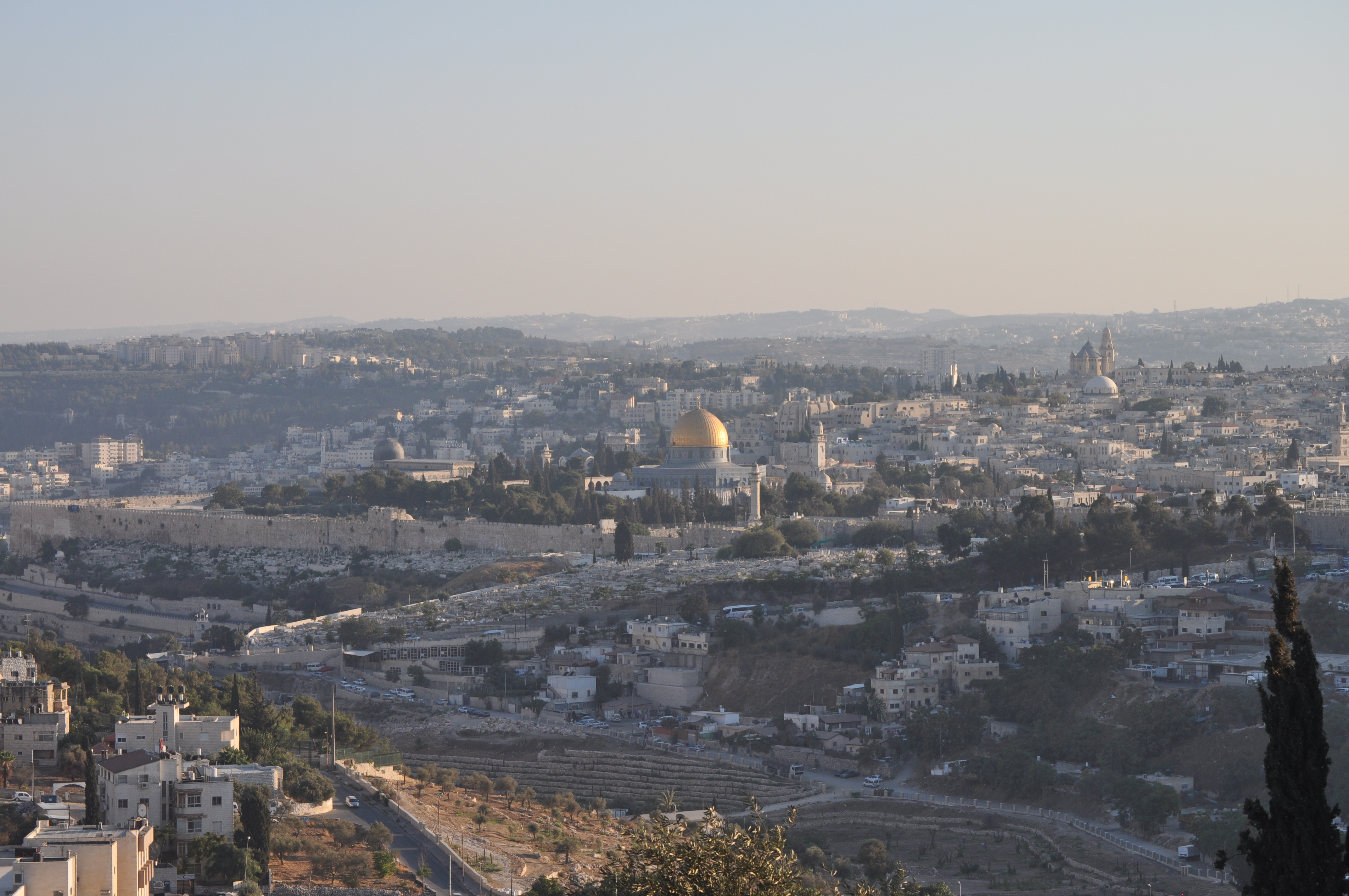
The Kotel with the Dome of the Rock,
location of the Jewish Temples

Tisha b’Av

Every year the Jews mark a day on the calendar to remember the destruction of the Temples. Over time, the Tisha b’Av holiday incorporated other tragic events such as the expulsion of 200,000 Jews from Spain in 1492.  Perhaps today Jews should also mourn a newer tragedy in their history: their apathy and ignorance.


Related First.One.Through articles:

The United Nations and Holy Sites in the Holy Land

Joint Prayer: The Cave of the Patriarchs and the Temple Mount

Tolerance at the Temple Mount

The Waqf and the Temple Mount

Subscribe YouTube channel: FirstOneThrough

Join Facebook group: FirstOne Through  Israel Analysis


The Narrative that Prevents Peace in the Arab-Israeli Conflict

Everyone has a perspective.

Marcus Aurelius, the Roman emperor, was credited with saying “Everything we hear is an opinion, not a fact. Everything we see is a perspective, not the truth.

Our opinions and perspectives are shaped by many things including our backgrounds and biases. When two people look at the same incident at the same time, it is quite possible that they take away very different stories. When two people do not see things first-hand, but hear histories second and third-hand, the narratives of each could appear to describe two different events and worlds.

Yet, those strange worlds can coexist and the parties with alternative truths can get along. The reason is not solely because some events in question are not in direct conflict, but because those events do not define each party.

Many histories remain in the past and do not touch the present. Other narratives reach out from history and impact decisions and views of people in the present. The deepest – and potentially most dangerous – narratives are those that are embedded in a person’s psyche, which can distort history, make people act against their own interests and mar the future.

Arab-Israeli “Neutral” Narratives

There are many narratives that contradict each other in the Middle East. Some are conflicting perspectives and some have alternative facts. Here is just a small sample of events from pivotal moments in 1948, 1967 and 2000 from an Arab perspective, followed by an Israeli view:

  • The creation of Israel in 1948 was a “Nakba” (catastrophe) // the founding of the state was a celebration
  • During the “Nakba”, 711,000 Palestinian Arabs were expelled by Israeli forces from their homes // Palestinian Arabs were encouraged to leave where they lived by their leaders, as the armies of five neighboring Arab states invaded Israel
  • Five Arab armies came into Palestine to defend the Palestinians from Israeli attacks // five Arab armies invaded Israel in an effort to destroy the nascent state
  • In 1967, Israel attacked Egypt, Syria and Jordan // Israel preemptively attacked Egypt and Syria after the parties made clear their intentions to attack and destroy Israel; Jordan then attacked Israel and Israel responded in self-defense
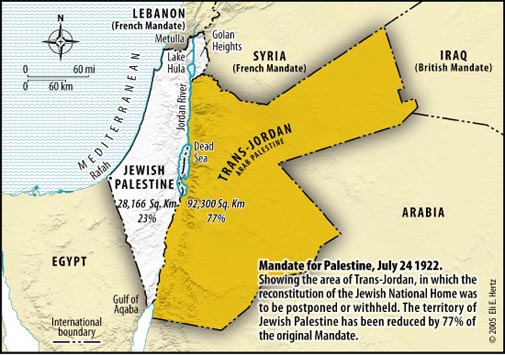
  • The West Bank has always been Palestinian land and cannot be settled by Israelis // Judea and Samaria (the “West Bank”) were always home to Jews and mandated under international law to be a homeland for Jews in 1922; only under the Jordanian expulsion were Jews barred from the land. International laws related to taking land in a defensive war is not the same as taking land in an offensive war
  • In 2000, Israeli Prime Minister Ariel Sharon went to the Al Aqsa Mosque in an attempt to claim control over Islam’s third holiest site, which brought about the Second Intifada // Sharon visited the Temple Mount, Judaism’s holiest site during regular visiting hours; the Palestinian leader Yasser Arafat launched the Second Intifada because he was unhappy with the “near-final” peace agreement with Israel

Consider the opposing narratives. Some can reside comfortably in history books, while others actively influence each party’s actions today.

abbas reuters
Acting-President of the Palestinian Authority Mahmoud Abbas
(photo: Reuters)

PAST: Some of these points may be found in either an Arab or Israeli history book. Palestinian textbooks may write about forced expulsions from Palestine during the “Nakba”, while Israeli textbooks may write about Palestinian Arabs being encouraged to leave their homes by their leadership while the armies from five supportive Arab countries attacked Israel in an effort to destroy the country and drive the Jews into the Mediterranean Sea. The arguments are not subtle differences of opinions, and each side holds onto their account of history with examples of stories of a family here, a village there, or quotes from Israeli and Palestinian leadership at that time to underscore their version of history.

Arguably, this is something for historians to debate and a thoughtful person would probably conclude that there are elements of truth to both sides. Whether it is 80/20% or 20/80% for the parties is beyond the point of this discussion. The thrust is that their narratives are stories of the past. While Arabs and Israelis will invariably bring up their point of view in a debate, it need not dictate the debates nor compromise the conversations of the future of the region. A “starting point” of the here-and-now can be established to find a solution for the future.

A second example is the conflict between Egypt and Israel. Each side’s view of who was the belligerent party in 1967 did not impede a path forward to a different future leading to a peace treaty.

PAST AND PRESENT: Some splits in narratives run throughout time. The past can consume the present and the versions of history touch daily dialogue.

Many Arabs argue that a state of Palestine has always existed, but has been occupied by various parties including Israelis, Jordanians, Egyptians and British. They carry placards to “Free Palestine” from current Israeli occupation. For their part, Israelis note that Palestine never existed as an independent country. It was never ruled by a local Palestinian Arab government. The parties are in negotiations to potentially “Create Palestine,” while dismissing the Arab narrative as factually incorrect. The competing narratives are in conflict, but needn’t prevent the parties from moving towards a future that is in alignment.

PRESENT: A last example of a “neutral” clash of each side’s take on history is current history. Israelis and Palestinian Arabs argue forcefully about who started the Gaza war in 2014 and which party is responsible for many civilian deaths. Politicians and people will argue their points forcefully and recommend actions to punish the other side and improve their own position. Ultimately, the war and responses will become part of the past. The parties could opt to move forward with plans for a future OR they could use the war as an excuse to undermine a future peace.

 Bibi -Ariel Jerozolimski)
Israeli Prime Minister Benjamin Netanyahu
(photo credit: Ariel Jerozolimski)

Arab-Israeli “Toxic” Narratives

The term “Toxic Narrative” is meant to describe the inability of the two sides to ever establish a true peace; it is not intended to suggest that a narrative is inherently evil.

PAST, PRESENT and FUTURE: The best example of competing viewpoints of the past that stretch into the future, is the Balfour Declaration (1917) and its incorporation into the San Remo conference (1920) and then the international law established by the League of Nations in the British Mandate of Palestine (1922). The two sides’ competing opinions impact the ability of the parties to establish peace for the future.

International Law: The Palestinian Arabs argue that the League of Nations had no right to declare a homeland for the Jews in Palestine. They contend such international decision was made without the approval of the local Arab population in Palestine, and as such, the law itself should be null and void. They further argue that the imposition of such mandate was an effort to colonialize Palestine. The Palestinian Arabs took many steps to halt the implementation of that mandate for “the establishment in Palestine of a national home for the Jewish people…and facilitate Jewish immigration…and close settlement by Jews on the land.” The most significant actions were the riots of 1936-9 which enabled the Arabs to get the British to issue the 1939 “White Paper” which would limit the Jewish population in Palestine to one-third of the country, leaving an Arab majority population and facilitate Arab rule.

The Israeli perspective is that the League of Nations (precursor to the United Nations) made a law specifically recognizing the Jewish right to a national homeland in Palestine. They do not believe that such international law was illegal in 1922, and when the United Nations voted in 1947 to only grant a small portion of the Mandated land as a Jewish State, the Jews were disappointed but voted in favor of the proposal anyway.  The Arabs rejected the 1947 proposal, just as they rejected the 1922 Mandate.

Historical Connection: As part of the League of Nations Mandate for Palestine, the international community recognized the “historical connection of the Jewish people with Palestine.” The history of the Jews in the land goes back 3700 years and the Jews were the only people to ever be self-governing in the land. They were also the only people to make Jerusalem its capital, which they did for the third time in 1950.

The history of the Jews has also been challenged by the Palestinian Arabs who continually deny Jewish history in the region and insist that Israelis are attempting to “Judaize” the country, and that Jewish presence in the region is a recent phenomenon. (They have even advanced that Jesus was a Palestinian, not a Jew, even though Arabs did not come to the holy land en masse until the Muslim invasions hundreds of years later).

In short, the two conflicting narratives relate to the RIGHTS of Jews to REestablish a Jewish majority in the land and be self-governing again.

The Palestinian contention is that the entire Zionist enterprise was illegal from the start: The call for Israel’s creation in 1922 was illegal; the declaration of the state in 1948 was illegal; and the assumption of additional land in 1967 was illegal. They view the entire region as “Arab land” and Jewish presence and rule is illegitimate and directly undermines the Arab rights in the land.

The Roadblock to Peace

The Future:  Some argue that despite such widely held opinion by Palestinian Arabs, acting-President of the Palestinian Authority Mahmoud Abbas has stated that he would recognize a state of Israel as part of a peace agreement. As such, the debate of narratives and facts is not truly “toxic” as the Arabs are willing to look past their past.

Israeli Prime Minister Benjamin Netanyahu maintains that is not so.

Netanyahu claims that a de facto recognition of Israel as a country that exists today will not prevent a war tomorrow.  A de facto peace treaty that does not recognize Israel’s RIGHT to exist is a flimsy veneer.  Over time the veneer will come off, and the underlying Palestinian Arab contention that Jews have no rights to live and rule on Arab land will lead to further war and bloodshed.  Without a break from the storyline that Jews have no history, no legal authority, nor basic rights to live and pray and be self-governing in Israel, there will never be peace.  No amount of land-for-peace swap could resolve an illegal Jewish claim until the entire state of Israel is under Arab rule.

The Palestinians have not been able to accept such a break with their narrative of the rights of Jews in Palestine.  They could not accept such vision of Jewish rights in 1922 and have been unable to accept it today, as Abbas has repeatedly stated he will never recognize Israel as a “Jewish State”.

As such, the seemingly innocuous request for Palestinians to recognize Israel as the Jewish State has potentially become a roadblock to final settlement talks. A statement that would have no practical impact (compared to tangible matters such as borders or “right of return”), has touched a key nerve in the Palestinian psyche.  They would rather forgo a brighter future than negate their narrative as the sole rightful owners of the land.


People typically speak of the Arab-Israeli conflict and refer to events at important time periods like 1948, 1967 and 2000.  While those events helped shape the present, they need not dictate the future.  Each side can maintain many narratives without destroying the prospects for peace.

The toxic narrative that prevents peace revolves around the rights of Jews to their historic homeland established in international law in 1922.  It is that narrative that must be addressed for the parties to arrive at a long-term peaceful future together.  It has been almost a century, and well past time for Arabs to recognize the legal and legitimate rights of Jews to live in the holy land and to be self-governing.


Related First One Through articles:

Names and Narrative: Palestinian Territories/ Israeli Territories

Names and Narrative: The West Bank / Judea and Samaria


The Israeli Peace Process versus the Palestinian Divorce Proceedings

Summary: The gap in resolving the long running Israel-Palestinian Question has to do with the goals of each party: the Israelis believe they have been engaged in a peace process between peoples while the Palestinians are negotiating a divorce settlement between countries.

Politicians and the media – both well-meaning and otherwise – have blamed various parties for the failures to resolve the Israeli-Palestinian conflict. When they are not directly pointing accusing fingers, they still use language which conveys their biases. A person needn’t look past the language used in discussions about Jewish homes beyond the Green Line/ 1949 Armistice Lines – the “settlements”.

“Settlements”

“Viability”: As detailed in “A Viable Palestinian State”, various parties have described the “settlements” as a hindrance to a viable Palestinian state. The statement is meant as a direct attack on Israel, and is absurd. If a Palestinian state cannot exist with a 5% Jewish population, then surely Israel cannot exist with a 20% Muslim population. Are the people that make such a comment looking for Israel to expel a million Israeli Arabs?

Similarly, if a viable Palestine is compromised because such new country would be only 15km across at a single point, surely Israel cannot exist in its current configuration with a 15km narrow corridor for a dozen kilometers. Are these politicians and media pundits suggesting that Israel must annex the entire spine of the land?

“Complication” and “Provocation”: Another sentiment that is expressed is that settlements “complicate the peace process.” As conveyed in June 2015 by the New York Times in an article called “Israel’s work on a West Bank Site Gives Rise to New Suspicion,” even existing homes purchased by private individuals (as opposed to new communities established by the Israeli government) hurt the peace process. The article described a man who purchased an abandoned building and surrounding property: “Leftist Israeli politicians and advocacy groups have reacted with alarm, suspecting a new settlement in the occupied West Bank [a NYT term] that would further complicate the peace process.

This statement is similar to the rebuke of the Obama administration to Jews buying and moving into homes they own in Silwan, in the eastern part of Jerusalem. As detailed in the FirstOneThrough article “Obama supports Anti-Semitic Palestinian Agenda of Jew-Free State,” the Obama administration condemned Jews for legally buying homes and becoming neighbors in an Arab neighborhood east of the Green Line, referring to such basic act of living as a provocation.

And therein lies the basic gap in understanding the actions, intentions and goals of the two sides.

20150610_080707
New York Times article quoting “leftists” that claim that individual Jews owning land east of the Green Line “complicates peace”

Israeli Peace Process

The primary stated goals of the negotiations were to get to a peace based on two states:

  • The peace agreements with Egypt and Jordan are vital. But they’re not enough. We must also find a way to forge a lasting peace with the Palestinians. Two years ago, I publicly committed to a solution of two states for two peoples: A Palestinian state alongside the Jewish state. I am willing to make painful compromises to achieve this historic peace. As the leader of Israel, it is my responsibility to lead my people to peace.” Israeli Prime Minister Benjamin Netanyahu May 2011
  • Our goal is two states, Israel and Palestine, living side by side in peace and security. The process is the one of direct negotiations to end the Israeli-Palestinian conflict and to resolve all the permanent status issues and end the occupation that began in 1967 under which Palestinians have suffered so much.” Prime Minister of the Palestinian National Authority Mahmoud Abbas June 2003

As part of making peace with Palestinian Arabs, Israel has stated it will enable a new state of Palestine to be created.  For their part, the Palestinian Arabs are interested in their new state to be self-governing and to not deal with Israeli Jews. Israel has focused on peace with the people; Palestinians have focused on separation of the people. Two states living side-by-side in peace is not the same as two people living side-by-side in peace.

A peace process is best established with various personal, commercial and governmental relationships and dealings. Such interactions would enable the parties to navigate ongoing thorny issues like water rights and security.  It would enable partnerships to develop tourism and the economy.

Israel understands the importance of establishing relationships with its Arab neighbors.  As soon as the country was founded in 1948, the country granted 160,000 non-Jews citizenship and extended an offer and desire for peace with the neighboring Arab countries.  When Israel annexed Jerusalem, it offered all of the people there citizenship.  As of 2015, non-Jews account for 25% of Israel and have full rights in the most liberal country in the region, and one of the most liberal in the world. In the 2015 Israeli election, the Arab party placed third among the dozen parties seeking seats in the Knesset.

Over the decades, Israel forged peace agreements with neighboring Arab countries Egypt and Jordan.  It has stated that it is ready to so with Palestinian Arabs and the other neighboring countries as well.

Palestinian Divorce Proceedings

When Israel captured the area east of the Green Line in 1967 after it was attacked by the Jordanian and Palestinian Arabs, it rescinded the Jordanian ban on Jews living in the area (from 1949-67).  Israel allowed Jews to live and establish themselves in the region once again where they bought existing houses next to Arabs, built new houses, and created new companies.

All of which, made the Palestinian Arabs angry.

The Palestinians do not want Jewish neighbors in a new state.  Acting President Abbas made very clear his intention when he declared “we will not see the presence of a single Israeli – soldier or civilian – on our lands.”

The Palestinians do not want any Jewish businesses in a new state.  Despite the extraordinary efforts that some companies like Sodastream went through to hire Palestinian Arabs in its plant east of the Green Line (EGL) to work alongside Israeli Arabs and Jews, Palestinians put pressure on the company to abandon the area – which it did. Palestinians promote a BDS (boycott, divestment and sanctions) of all businesses established by Jews in the EGL.

Palestinians think Jews have no rights to buy or live anywhere in the land. They think the entire region – including Israel – is Arab land and that Jews have no history in the region. One can often hear Abbas and other Palestinians refer to the “Judaization” of the land, as if the holy land never had Jews.

The Palestinians reject the legitimacy of Israel itself. While the Palestinians will acknowledge the fact that Israel exists and will negotiate with it, they do not view the existence of the Jewish state as legitimate. They consider Jews colonialists and Israel a foreign colonial enterprise.  As such, they will not recognize Israel as a Jewish State.

The Palestinians are not looking for peace with Israel, nor are they seeking peace with Jews. They view the presence of both in the entire holy land as illegitimate. Their goals are to completely separate themselves from Israel and Jews in their own state, and to reestablish a majority Arab presence inside of Israel. Within their new country, the Palestinians do not want a single Israeli person or business.  Inside of Israel, they want millions of Arabs that are second and third generation removed from Arabs that once lived in the land, to specifically move to Israel because they feel that such land is also Arab land which Jews took illegally.


That is why Jewish “settlements” east of the Green Line are inaccurately called obstacles to a “peace process.” Jewish homes and businesses east of the Green Line do NOT “complicate the peace process”, they complicate the divorce proceedings that the Palestinians desire. A Jewish presence can only be called a “provocation” to a people that want to be rid of Jews.

It is not inaccurate to state that Jewish homes in EGL complicate permanent status negotiations, but it is an inversion of the truth to claim that they hurt the “peace process.”


Related First One Through articles:

Nicholas Kristof’s “Arab Land”

Delivery of the Fictional Palestinian Keys

Names and Narrative: The West Bank / Judea and Samaria