Names and Narrative: CNN’s Temple Mount/ Al Aqsa Complex Inversion

temple mount protest
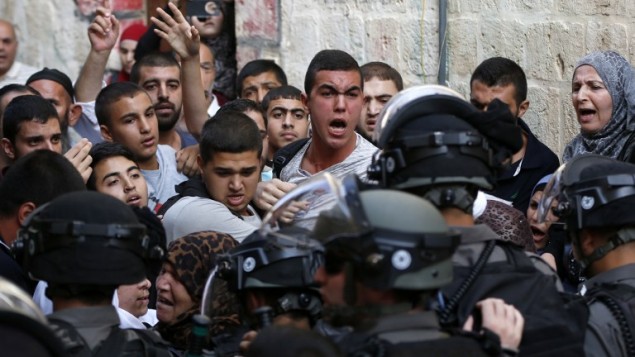
(Muslim and Israeli police confront each other at The Temple Mount,
September 13, 2015. Source: AFP Photo/Ahmad Gharabli)

On September 13, 2015, CNN reported on a confrontation between “Arab youths and Israeli police” in the Old City of Jerusalem using language that inverted the facts. The news discussed:

  • Palestinian protestors,” but of what? Jews visiting the Temple Mount which they had every legal and moral right to do? Perhaps they were protesting new Israeli laws meant to keep Muslim groups from attacking Jewish visitors to the Temple Mount. The report made it appear that the “protestors” were just seeking a right to pray.
  • The “Al Aqsa Complex” that CNN mentioned gives an Islamic name to the entire 35 acre compound, even though the Al Aqsa Mosque is located on just the southern tip of the platform. This entire platform was built for the Second Jewish Temple and is therefore historically known as the Temple Mount. Using an Islamic name as the official name and only stating that “Jews… call it the Temple Mount” divorces history, reality and Jews from the site. It is more accurate to use the default name “The Temple Mount” to the entire location and state that ‘Muslims call it the Al Aqsa Complex”.
  • “…Is one of the holiest sites in the world for Muslims” The mosque itself is the third holiest site, not the entire Temple Mount platform. The story does not clarify that Jews had no interest in visiting the mosque itself, but the other parts of the platform.
  • Stating that “the clashes ended when Muslim worshippers were allowed in the complex for prayers” makes the entire event seem like all the Arab protestors sought was a right to pray (which they had already completed doing), as oppose to stopping Jews from visiting the Temple Mount on their Jewish New Year. This was another inversion of the narrative.
  • CNN’s report that “Jordan, which is in charge of the complex” is incomplete. Jordan’s Islamic Waqf has religious oversight of the Temple Mount, but it is Israel that is in charge of security on the Mount. Article 9 of the 1994 Jordan-Israel Peace Treaty clearly states that “Each party will provide freedom of access to places of religious and historical significance.” That is why the Israeli police legally deployed personnel to prevent Arab rock-throwers from attacking visiting Jews on the Mount.

Overall, CNN failed to report that Israel was legally trying to protect Jews visiting the Temple Mount, their holiest spot on one of their holiest days of the year. Instead they painted a picture of Israeli police blocking Arab youths from praying at the Al Aqsa Complex, one of their holiest places.

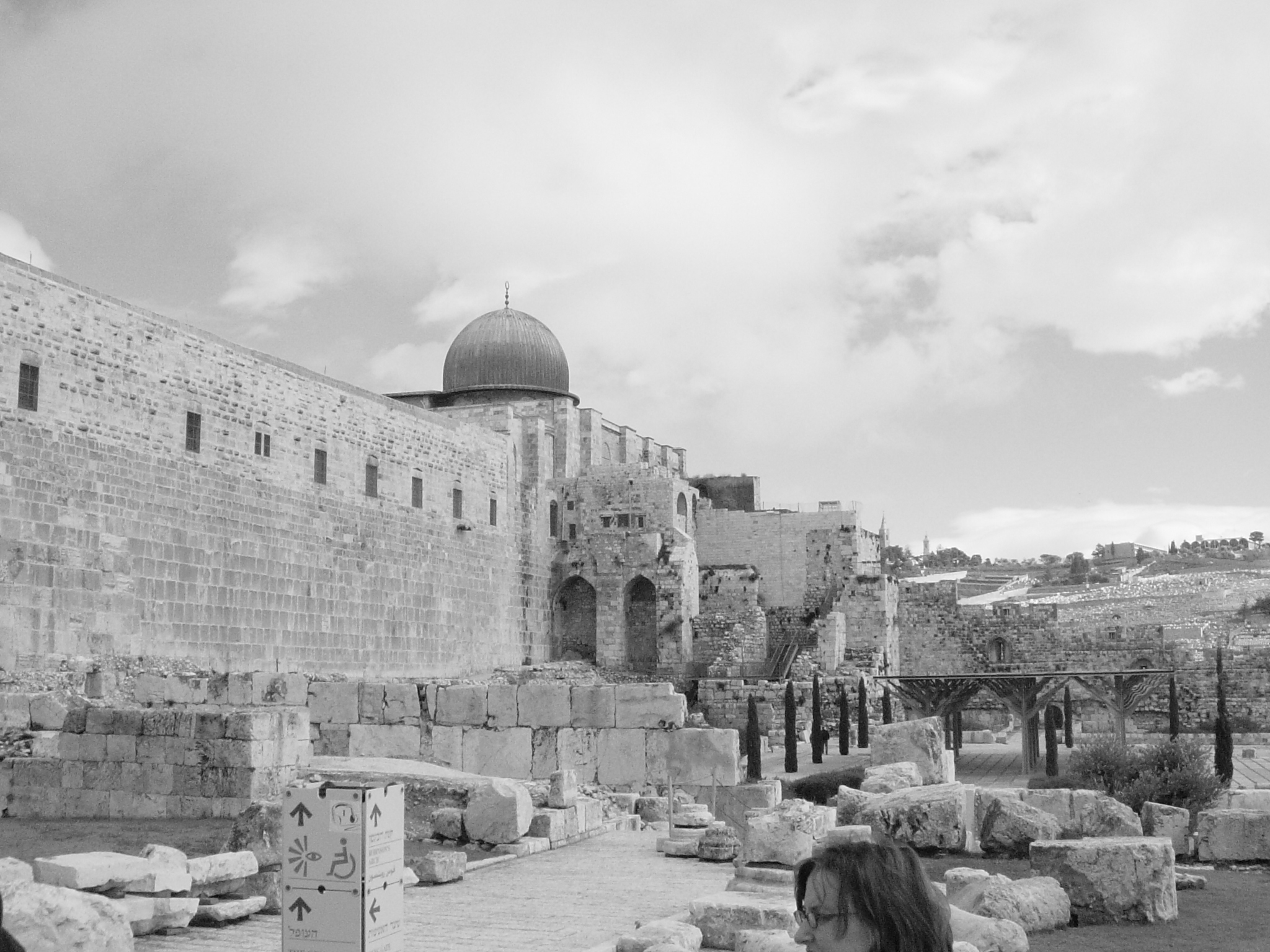
DSC00357
Al Aqsa Mosque at the very southern tip of the Temple Mount Platform
(Source: First One Through)


Related First One Through articles:

The Waqf and the Temple Mount

The Cave of the Patriarchs and the Temple Mount

The Arguments over Jerusalem

Tolerance at the Temple Mount

“Extremist” or “Courageous”

Names and Narrative: The West Bank / Judea and Samaria

Nicholas Kristof’s “Arab Land”

Subscribe YouTube channel: FirstOneThrough

Join Facebook group: FirstOne Through  Israel Analysis

The Obama Administration Lays Foundation of Blame at Israel for a Potential War with Iran

President Obama has not only begun to lobby aggressively to win support for the P5+1 deal on the Iranian nuclear program, he has begun to lay the foundation of blame for a potential war squarely on Israel.

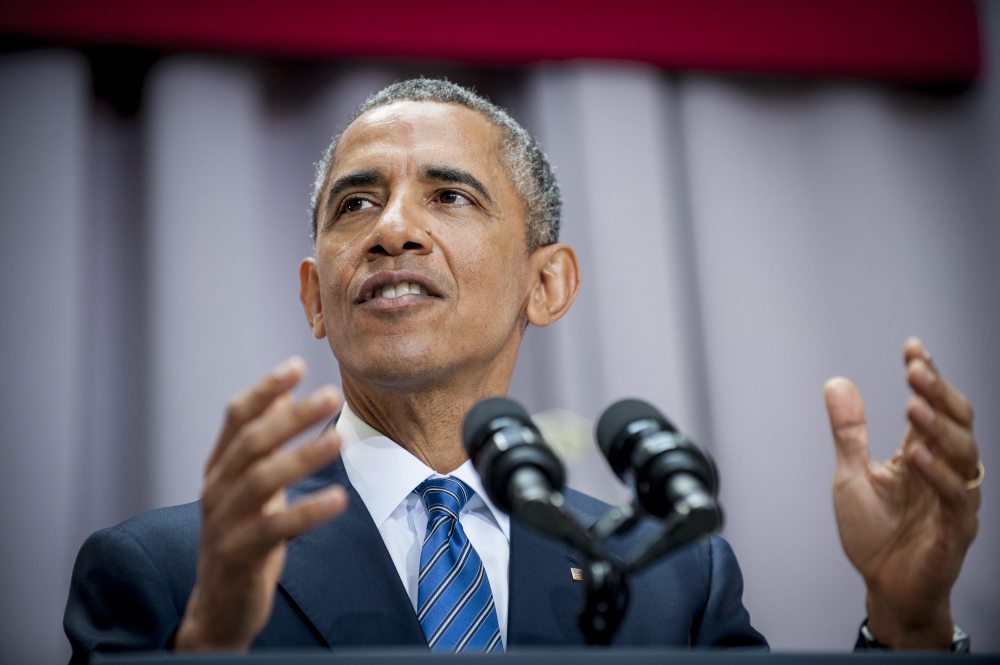
epa04873202 US President Barack Obama delivers a speech on the nuclear deal with Iran, at American University's School of International Service, in Washington DC, USA, 05 August 2015. Obama urged Americans to accept a controversial nuclear deal with Iran in spite of criticism from Republican lawmakers. The speech evoked late US President John F. Kennedy's 1963 USSR speech at American University during the height of the Cold War.  EPA/PETE MAROVICH / POOL ORG XMIT: MHR02

US President Barack Obama delivers a speech on the nuclear deal with Iran, at American University’s School of International Service, in Washington DC, USA, 05 August 2015. (photo: EPA/PETE MAROVICH / POOL ORG XMIT: MHR02)

Diplomacy or War?

  • US President Barack Obama: “Let’s not mince words: The choice we face is ultimately between diplomacy and some sort of war — maybe not tomorrow, maybe not three months from now, but soon… How can we in good conscience justify war before we’ve tested a diplomatic agreement that achieves our objectives?August 5, 2015

What does the world want?

  • US President Barack Obama: this deal is not just the best choice among alternatives, this is the strongest nonproliferation agreement ever negotiated, and because this is such a strong deal, every nation in the world that has commented publicly, with the exception of the Israeli government, has expressed support.” August 5, 2015

If war happened, who is to blame?

  • US Secretary of State John Kerry: “I fear that what could happen is if Congress were to overturn it, our friends in Israel could actually wind up being more isolated and more blamed, and we would lose Europe and China and Russia with respect to whatever military action we might have to take because we will have turned our backs on a very legitimate program that allows us to put their program to the test over these next years.” July 24, 2015

Is there anyone in the United States – including the Obama administration – that believes this is a great deal? Does anyone deny that Iran’s nuclear infrastructure will remain largely intact with this signing? Honest people can arrive at different conclusions about whether to endorse or reject this agreement. So why state that a negative outcome of the vote would be the fault of Israel, “money” and “lobbyists“?

Obama has framed his opponents in a familiar anti-Semitic canard that Jews are responsible for wars around the world.  Here is a section of Article 22 from the anti-Semitic terrorist group Hamas in its foundation Hamas Charter:

“The enemies have been scheming for a long time, and they have consolidated their schemes, in order to achieve what they have achieved. They took advantage of key elements in unfolding events, and accumulated a huge and influential material wealth which they put to the service of implementing their dream. This wealth [permitted them to] take over control of the world media such as news agencies, the press, publication houses, broadcasting and the like. [They also used this] wealth to stir revolutions in various parts of the globe in order to fulfill their interests and pick the fruits. They stood behind the French and the Communist Revolutions and behind most of the revolutions we hear about here and there. They also used the money to establish clandestine organizations which are spreading around the world, in order to destroy societies and carry out Zionist interests. Such organizations are: the Freemasons, Rotary Clubs, Lions Clubs, B’nai B’rith and the like. All of them are destructive spying organizations. They also used the money to take over control of the Imperialist states and made them colonize many countries in order to exploit the wealth of those countries and spread their corruption therein. As regards local and world wars, it has come to pass and no one objects, that they stood behind World War I, so as to wipe out the Islamic Caliphate. They collected material gains and took control of many sources of wealth. They obtained the Balfour Declaration and established the League of Nations in order to rule the world by means of that organization. They also stood behind World War II, where they collected immense benefits from trading with war materials and prepared for the establishment of their state. They inspired the establishment of the United Nations and the Security Council to replace the League of Nations, in order to rule the world by their intermediary. There was no war that broke out anywhere without their fingerprints on it

Obama and Kerry have dismissed anyone who disagrees with the agreement they helped craft.  They have announced that members of Congress must fall into one of two camps: agree with Obama OR be a pawn in the Israeli scheme of lobbyists.

Now, if the US goes to war, any casualties and ramifications would be the fault of Israel and its lobbyists. Not Iran. Not the poorly negotiated deal. But Israel.

There is a long history of anti-Semites blaming Israel for wars in the world. It is shocking to see the administration of the Unites States – which purports to be a strong ally of Israel – use a blood libel to lay blame for another Middle East war on Israel.


Related FirstOneThrough article:

Israel and Wars

Has the “Left-Wing” Joined the UN in Protecting Iran and the Palestinians from a “Right-Wing” Israel?

The New Blood Libel

The EU’s Choice of Labels: “Made in West Bank” and “Anti-Semite”

The European Union has taken upon itself to challenge the labelling of products that are made east of the Green Line as “Made in Israel”.   They should consider international norms and the Oslo Accords between Israel and the Palestinians before doing so.

“Made in USA” in US Territories

It is common practice for countries that have territories that are not incorporated into the country, to label products produced in those locations as being made in the country. For example, products produced in American Samoa (say for Sears Department stores) sport the “Made in USA” label even though the products were produced thousands of miles away from US shores on an island that was never part of the country by non-US citizens.

“Made in Israel” in Israeli Territory

Similarly, Israeli law allows products made in Israeli territory to carry the “Made in Israel” label.  The differences between the US and Israeli polices are that the products made in Area C of the West Bank are made by Israeli citizens, and many countries consider the Israeli territory to not be Israeli at all.

The claim that Area C is not Israeli is peculiar, since the land is specifically designated as Israeli territory by the 1993 Oslo II Accords that were agreed to and signed by Israel and the Palestinian Authority. That agreement laid out that Israel continues to have both civil and security control of Area C.  The final determination of control of the area will be decided in a final status agreement, which has not yet occurred. Until that time, the area remains Israeli territory (as opposed to Area A which is Palestinian Authority Territory).

Reasons behind Labelling

The labeling of products is meant to do two main things: inform a consumer about the origins of a product; and distinguish items as they relate to taxes and tariffs.

In the United States, labelling a product from American Samoa as being “Made in USA” may be misleading to consumers about the true origin of the item, but it is consistent as it relates to tariffs. The same holds true for Israeli policy towards items from Area C.

From the EU’s perspective, not only does it seek to inform European consumers about the precise location of origin of foreign products, it wishes to uniquely harm Israel as it disputes the Israeli claim over Area C (despite the Israel-Palestinian Authority agreement noted above). It is therefore requiring a change of labels from “Made in Israel” to “Made in the West Bank” for items produced east of the Green Line.

Date-box-label-1-e1375886179109-350x379
Dates in London, England labelled “West Bank”
(photo: Friends of Al Aqsa London)

Israel has attempted to stop the European Union from embarking on this policy. It fears that the Boycott, Divestment and Sanctions (BDS) movement will hurt its economy by not only not purchasing Israeli products, but by trying to ban the items from store shelves. Some argue that providing a distinct label for products from the settlements would actually help Israel as there are people in Europe who only seek to avoid products from the settlements, but would gladly purchase items from within Israel’s 1949 Armistice Lines. The reality is that many organizations that are promoting the EU policy for distinct labelling of Israel vs. “West Bank” seek to boycott and harm all of Israel. For example, Friends of Al Aqsa (FOA) prints advertisements that call for boycotting all products from anywhere in Israel and its territory.

label Israel
Ad by FOA calling for Boycott of products from “Israel, West Bank (Settlements) & Jordan Valley”

As it relates to taxes and tariffs, the European Union established a framework of trading with Israel in the EU-Israel Association Agreement (1995) which took effect in June 2000. The language in the agreement repeatedly refers to “countries and territories” which can be interpreted broadly to include territories of both European member states as well as Israel.

EU Action Only for Israel

The European Union distinction of strictly labelling products to exclude Israeli territory is unique for Israel.  The EU makes no distinctions for countries where it does not challenge the legal authority (like the US with American Samoa), AND for other countries where it disagrees with the claim on disputed land. Some examples:

  • In 1974, Turkey illegally seized one-third of the Cyprus and declared the Turkish Republic of Northern Cyprus, an entity which is not recognized by any country in the world other than Turkey. Yet the EU avoids heated discussions with Turkey over the labelling of products from TRNC such as its famous halloumi cheese.
  • When it comes to China, the EU trips over itself to facilitate trade. As stated on the EU website on trade: “China is the EU’s biggest source of imports by far, and has also become one of the EU’s fastest growing export markets. The EU has also become China’s biggest source of imports. China and Europe now trade well over €1 billion a day.” Trade includes items made in Tibet, and the EU has not addressed any specific “Made in Tibet” labelling. This is despite China occupying Tibet and transferring 7.5 million Chinese into the territory, counter to the Fourth Geneva Convention.
  • India has a long running dispute with Pakistan over Kashmir. The EU stated that it is “committed to further increase their trade flows in both goods and services as well as bilateral investment and access to public procurement through the Free Trade Agreement negotiations that were launched in 2007.” No specific labelling program has been discussed for items coming from Kashmir.

The European Union has shown a unique fascination with Israeli territories.

  • It makes no labelling distinction for other disputed territories such as Tibet and Kashmir to assist consumers
  • It does not dispute the tariff system that countries use for its territories like the United States with American Samoa
  • The EU ignores the Oslo II agreements between Israel and the Palestinian Authority which specifically segment the Israeli settlements in Area C as Israeli territory
  • It ignores its own trade agreement with Israel

And the EU does all of these things knowing full well of the intention of the BDS movement to leverage their actions to harm the Jewish State.

Double standards and unique critical attention for Israel is considered anti-Semitism, even by US President Barack Obama who said “[if] you acknowledge the active presence of anti-Semitism—that it’s not just something in the past, but it is current—if you acknowledge that there are people and nations that, if convenient, would do the Jewish people harm because of a warped ideology… you should be able to align yourself with Israel when it comes to making sure that it is not held to a double standard in international fora, you should align yourself with Israel when it comes to making sure that it is not isolated.”

It would appear that many Europeans would choose to wear the “Anti-Semitism” label with honor.


Related FirstOneThrough articles:

Names and Narrative: Palestinian Territories/ Israeli Territories

Palestinians agree that Israel rules all of Jerusalem, but the World Treats the City as Divided

Subscribe YouTube channel: FirstOneThrough

Join Facebook group: FirstOne Through  Israel Analysis

UN Comments on the Murder of Innocents: Itamar and Duma

The Middle East is unfortunately no stranger to attacks on innocent people. In July 2015, an arson attack on the home of Palestinian Arabs in the town of Duma killed an 18-month old baby. Just 15 miles away, in the town of Itamar, two Palestinian Arabs stabbed to death five members of a Jewish family in their beds in March 2011.

The taking of innocent lives is a terrible thing. It is also sad to watch completely different reactions from world bodies to the two events. Here is the UN news release of the 2011 deliberate murders of five Israeli Jews and the news release of July 2015 on the arson attack that claimed one Palestinian Arab. A short comparison:

Deliberate Murder of 5 Israeli Jews Arson Attack which Claimed Life of 1 Palestinian Arab
Words in article 220 422
Attack called “terrorism” None Three times
Blame placed Not placed on Arabs or Muslims Placed on “Jewish extremists
Other Attacks Mentioned No mention of repeated attacks by Palestinians on Israelis Discussed “repeated acts of settler violence
Comment on leadership Welcomes the strong condemnation… by President Abbas No welcome of condemnation by Netanyahu. Blamed Netanyahu for variety of items including demolishing Palestinian homes and settlement policy.
Cause for Attack Not discussed Blamed on “Israel’s illegal settlement policy

#JewishLivesMatter

The continued disproportionate attacks by the United Nations on only one party in the Israeli-Palestinian conflict will marginalize the UN as a factor in arriving at a long-term solution in the region.

Ban Ki Moon
UN Secretary-General Ban Ki-Moon
(photo: AP/Gary Cameron)


Sources:

Text of UN March 2011: “12 March 2011 – Secretary-General Ban Ki-moon and the United Nations diplomatic partners in the search for peace in the Middle East today condemned the shocking murder of an Israeli family of five, including three children, in a West Bank settlement overnight and called for the prosecution of the perpetrators of the crime.

Mr. Ban also urged all concerned to act with restraint.

The diplomatic Quartet of the UN, European Union, Russia and United States, which seeks a two-State solution to the Israeli-Palestinian conflict, condemned the killings “in the strongest possible terms.”

“The Quartet offers their condolences to the loved ones of the victims and to the Israeli people. Attacks on any civilians are completely unacceptable in any circumstance,” the Quartet said in a statement.

“The Quartet calls on those responsible to be brought to justice and welcomes the strong condemnation of this attack by [Palestinian] President [Mahmoud] Abbas and the Palestinian leadership.”

It stressed the need to expedite efforts to achieve Israeli-Palestinian and comprehensive Arab-Israeli peace.

Media reports said the killings occurred in the settlement of Itamar, near the city of near Nablus. The victims were reportedly stabbed to death by an intruder who broke into their home.

The Israeli army radio said the killer had spared two other children, and that the murder was discovered by another one when she came home.”

Text of UN July 2015: “31 July 2015 – United Nations Secretary-General Ban Ki-moon and the UN special envoy on the Middle East have strongly condemned today’s arson attack in the West Bank that killed a Palestinian child and left the child’s parents severely injured.

The Secretary-General strongly condemns today’s murder of a Palestinian child in the West Bank and calls for the perpetrators of this terrorist act to be promptly brought to justice,” reads a statement issued by his spokesperson in New York.

Continued failures to effectively address impunity for repeated acts of settler violence have led to another horrific incident involving the death of an innocent life, adds the statement. “This must end.”

The absence of a political process and Israel’s illegal settlement policy, as well as the harsh and unnecessary practice of demolishing Palestinian houses, have given rise to violent extremism on both sides, the statement continues.

“This [situation] presents a further threat to the legitimate aspirations of the Palestinian people for statehood, as well as to the security of the people of Israel. The Secretary-General urges both sides to take bold steps to return to the path of peace.”

Mr. Ban reiterates his call on all parties to ensure that tensions do not escalate further, leading to more loss of life, the statement concludes.

Earlier today, the United Nations special envoy on the Middle East today expressed his outrage over what he called a “heinous murder” and a “terrorist crime.”

“I am outraged by today’s vicious arson attack by suspected Jewish extremists in the Occupied West Bank village of Duma, near Nablus, which killed Palestinian toddler Ali, critically injured his mother and father, and injured his four-year old sibling,” the Special Coordinator for the Middle East Peace Process, Nickolay Mladenov, said.

Joining in the “strong condemnations” issued by Israeli and Palestinian Governments and political leaders, the Special Coordinator also called for a “full and prompt investigation” to bring the perpetrators to justice.

“This heinous murder was carried out for a political objective. We must not permit such acts to allow hate and violence to bring more personal tragedies and to bury any prospect of peace. This reinforces the need for an immediate resolution of the conflict and an end to the occupation.”

Later today, the Security Council issued a statement to the press, condemning “in the strongest terms” the “vicious terrorist attack,” and underlining the need to bring the perpetrators of this “deplorable act” to justice.

Council members encouraged all sides to work to lower tension, reject violence, avoid all provocations, and seek a path toward peace.”


Related FirstOneThrough articles:

The United Nations Audit of Israel

Double Standards: Assassinations

Every Picture Tells a Story: The Invisible Murdered Israelis

The Legal Israeli Settlements

The Death of Civilians; the Three Shades of Sorrow

Eyal Gilad Naftali Klinghoffer. The new Blood Libel.

Cause and Effect: Making Gaza

Subscribe YouTube channel: FirstOneThrough

Join Facebook group: FirstOne Through  Israel Analysis

John Kerry’s Hypocrisy: “Can You Deliver?”

Listening to US Secretary of State John Kerry try to explain and defend the P5+1 Iranian nuclear deal to various audiences is a spectacle to behold, regardless of one’s position on the best course of action.  One of the people who might want to watch the sessions and learn something from John Kerry is John Kerry.

Kerry CFR
John Kerry speaking at the Council of Foreign Relations
July 2015

Secretary Kerry argued at the Council for Foreign Relations (CFR) that Congress must support the deal or it would undermine his ability to negotiate any treaty with any government in the future. At 29:55 of the CFR talk, Kerry said: “Other people in the world are going to sit there and say ‘hey, let’s negotiate with the United States, they have 535 Secretaries of State. I mean, please! I would be embarrassed to try to go out… I mean, what am I going to say to people after this as Secretary of State? ‘Come negotiate with us?’ ‘Can you deliver?’ Please!

Kerry made the point that when two parties sit down to negotiate, it is critical for the sides to know that the negotiating parties are both authorized to negotiate and have the ability to fulfill their sides of the deal. If no such authority or ability exists, the discussions are an irrelevant waste of time.

Despite Kerry being quite clear about his logic, he has nevertheless insisted that Israeli Prime Minister Benjamin Netanyahu sit down and negotiate with Acting-President of the Palestinian Authority Mahmoud Abbas, even though it is clearly understood that Abbas can deliver nothing.

  • No Mandate: Abbas’s four-year term as president ran out in 2009. No presidential elections have been held since then.
  • No Authority: Abbas’s Fatah party lost legislative elections in 2006, winning only 33% of the parliament. No legislative elections have been held since then.
  • No Support: Abbas lags in every Palestinian poll held since 2006.
  • No Control: Abbas has no control of Gaza since his Fatah party was kicked out in 2007.
  • No Track Record: Abbas has shown zero credibility in being able to strike compromises to govern his own people, let alone deliver compromises with Israel.

Despite the glaringly obvious impotence of Abbas, the Obama administration continued to pressure Israel to negotiate with this straw man.

The Obama administration publicly acknowledged that the Palestinian Authority has absolutely no ability to deliver peace a few years ago. During the Gaza war on Israel in 2012, then US Secretary of State Hillary Clinton tried to broker a cease-fire. She made a dozen calls to various world leaders to halt the war- but not ONCE called the Abbas and the Palestinian Authority.

Compounding the inherent flaws in Abbas and the Palestinian Authority is Abbas’s insistence on bringing terms of any deal with Israel to a referendum. Abbas stated that he cannot decide on the “Right of Return” for all Palestinians, but that each of the 5 million Palestinian Arab “refugees” must make a decision for themselves. Hey Kerry- 535 “second-guessers” looks pretty good compared to 5 million! In terms of the rest of the components of a final agreement, Abbas stated that he “would go to a referendum everywhere because the agreement represents Palestinians everywhere.”  That’s impressive – he seeks the approval of 11 million “Palestinian” Arabs from all around the world!


Kerry’s comments regarding Iran are both on- and off-the-mark.  Iran and all of the parties in the negotiations know that the United States is a democracy and the political process must run its course.  Once the American people’s representatives in Congress make a decision, the government will deliver on its commitments.

However, Abbas – a complete straw man if ever there was one – with no authority or control whatsoever, openly states that millions of individuals will ultimately not only decide the fate of an Israeli-PA deal overall, but even on certain components on an individual basis.


Kerry fully appreciates that before negotiators start a process that they want to know the answer to the fundamental question: “Can you deliver“? However, he doesn’t care when he forces Israel to do exactly that with Abbas and the Palestinian Authority.


Related FirstOneThrough video and articles:

Abbas demands R-E-S-P-E-C-T

The Disappointing 4+6 Abbas Anniversary

Palestinian “Refugees” or “SAPs”?

Subscribe YouTube channel: FirstOneThrough

Join Facebook group: FirstOne Through  Israel Analysis

The Fault in Our Tent: The Limit of Acceptable Speech

 Some passionate and eloquent liberals have bemoaned the state of inclusiveness among Jews today. Leon Wieseltier, editor of the New Republic, penned an angry piece “J Street’s Rejection Is a Scandal” about the exclusion in 2014 of J Street from the Conference of Presidents of Major American Jewish Organizations. Angry voices are again being heard about J Street due to their position in favor of the Iranian nuclear deal promoted by the Obama administration. Is Wieseltier correct in that we only seek to hear our own voices and that “the orthodoxies and the bubbles and the closed loops and the echo chambers are everywhere?” Is there a “red line” that J Street and others have crossed and therefore deserve to be excluded from the broad tent of acceptable conversation?

Individual Hate Speech

Many countries have laws that ban hate speech. Sometimes the exact language is clearly spelled out about what cannot be said publicly and sometimes it is more general in nature.

For example, several European countries, including Germany, have laws that prohibit Holocaust denial. Those countries took such steps not simply because such expressions offend Jews, but because of the continent’s failure to step in and protect Jews which led to their slaughter. Silence became complicity which must never be allowed to happen again.

For its part, the United Nations Human Rights Council adopted Resolution 16/18 whose goal is “Combating Intolerance, Negative Stereotyping and Stigmatization of, and Discrimination, Incitement to Violence and Violence Against, Persons Based on Religion or Belief.” The resolution was drafted principally at the behest of Islamic countries who were worried about the spread of “Islamophobia.”

The various laws against hate speech all seek to curtail an incitement to violence and harm. The banned speech relates to a specific group of people (ie. Muslims) and not a concept (for example, a religion like Islam).  While a person can legally say disparaging remarks about a concept (“Communism is evil”), one risks breaking the law by attacking a group of people (“All Communists should be beaten up”).

Banned Groups

Hate Speech laws are typically drafted against individuals. However, laws are also drafted against groups that incite violence.  Israel banned two political parties, Kach and Kahane Chai in 1994 as they were defined as terrorist organizations.  The groups’ ideology was based on the teachings of Rabbi Meir Kahane who called for expelling Arabs from Israel, thereby running afoul of the premise of calling for negative actions against people.  Israel has also banned some Arab parties from running in elections which supported terrorism.

BDS, Hamas and Iran

Liberals and J Street supporters feel that BDS (Boycott, Divestment and Sanctions), Hamas and the Iranian nuclear deal should be rightly within civil discourse.  However, do these topics and groups support violence against people, or are they just broad discussions about policies and ideas?

BDS: Reasonable people can arrive at different conclusions about Jewish settlements in Judea and Samaria. Some feel that all the settlements are completely legal as called for in international law in 1922, while others feel that Jews living east of the Green Line is against international law as recently stated by the UN Secretary General. Those competing viewpoints would fall within legal and acceptable conversation, both in public society and in an open-minded pro-Israel community.

However, inciting hatred against settlers is inciting violence.  Calling on the economic strangulation of Jews who legally purchased homes and businesses is akin to hate speech.  As such, new laws are being passed which specifically outlaw supporting BDS.

Hamas: Hamas is a rabidly anti-Semitic organization that calls for the complete destruction of Israel. It has fired well over 10,000 rockets into Israel, killed thousands of people in hundreds of attacks. Since completely taking over Gaza in 2007, Hamas has engaged in three wars against Israel.

Supporting Hamas in any way is supporting terror.  It should be banned completely in public society and in the pro-Israel tent.

Iranian nuclear deal: The Iranian nuclear agreement took various turns over the past several years. As Iran openly calls for the destruction of Israel, any group supporting Iran or helping Iran obtain weaponry would be supporting violence against Israel.

While the Iranian deal may arguably slow down Iran’s pathway to nuclear weapons, it certainly gives Iran tremendous financing and weaponry.  As such, 78% of Israelis oppose the Iran deal in its current format.

J Street Views

J Street has taken provocative stances on these three issues.

  • On BDS, the group technically states that it opposes the BDS movement, while it supports efforts that do call for BDS, particularly of communities east of the Green Line.
  • On Hamas, the group’s own website states that “Hamas is a political movement with an important and significant base of support within Palestinian society… and we support efforts by third parties to achieve reconciliation [between Fatah and Hamas which Israel opposes] and a unity government.”  One could similarly say that the Nazi party was a political party.
  • On Iran, the group launched a major campaign to support the deal, in direct opposition to pro-Israel groups such as AIPAC and the government of Israel itself. J Street was even against Iranian sanctions in 2009.

20150724_072448
 Full page J Street Advertisement supporting Iran Deal
New York Times July 25, 2015

On these issues which directly harm Israelis and the state of Israel, J Street has sided against the stated desires of the government of Israel.  Each time, they have taken stances which closely align with Israel’s enemies which seek to harm the country and its citizens.

Further, and most alarmingly, J Street has urged the Obama administration to vote against Israel at the United Nations Security Council, which is the sole voice of support in many instances. That action was so reprehensible, that even devout liberal politician Gary Ackerman (D-NY) said I’ve come to the conclusion that J-Street is not an organization with which I wish to be associated….America really does need a smart, credible, politically active organization that is as aggressively pro-peace as it is pro-Israel. Unfortunately, J-Street ain’t it.

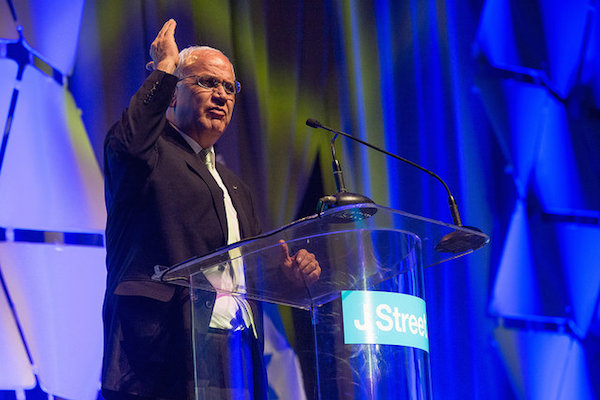
Erekat
PLO negotiator Saeb Erekat at J Street Conference
March 2015 (photo: J Street)

A Related View from Tisha b’Av

The Talmud relates a story about the reason the Second Temple in Jerusalem was destroyed:

In Gittin 56ab the Talmud tells the story of zealots who wanted to fight the Romans as they got ready to attack Jerusalem. These zealots burned decades worth of food that had been stored in Jerusalem in order to force the residents of the city to confront the Romans.

These zealots undoubtedly considered themselves pro-Jewish. They thought that by destroying all safeguards and alternative options, they could force the rest of the Jewish people to adopt their position in the battle against Rome.

J Street, like the zealots 2000 years ago, view themselves as pro-Israel. While some parts of the Arab and Muslim world (f/k/a Romans) may seek to attack and destroy Israel, J Street views their approach to the conflict as the only logical course of action.  As such, they have engaged in co-opting the US government to take positions against those sought by the government of Israel.  Like the zealots who burned all of Jerusalem’s food supplies (now known as US support), they feel that Israel stripped of all of the territories won in 1967, without a Gaza blockade, and with a nuclear pact in place with Iran will secure Israel’s future. J Street is pursuing global and US pressure to make that happen, rather than seeking to convince the Israeli government.
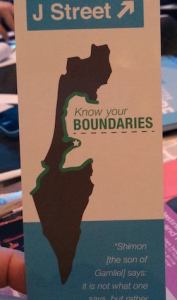
JStreet-Map
Bookmark designed for J Street Conference
(Photo: Lisa Goldman)

 In the minds of many, the J Street positions have made them the a modern-looking version of Neturei Karta, the anti-Zionist Chasidic sect, similar to the clean-shaven Jewish outreach people who market a more modern version of Chabad outreach.


Debating the merits of different approaches for how Israel deals with hostile neighbors is within constructive debate.  Consistently arguing in favor of Israel’s enemies that seek to destroy the country and kill its people is akin to inciting violence.

Review the statements and positions of J Street here and consider whether such voices deserve to be heard in your community.


Related First One Through articles:

New York Times Confusion on Free Speech

Selective Speech

A Disservice to Jewish Community

Subscribe YouTube channel: FirstOneThrough

Join Facebook group: FirstOne Through  Israel Analysis

Losing the Temples, Knowledge and Caring

In modern times, the “Western Wall” or the Kotel has become the center of Jewish prayers.  As it has done so, it has replaced the Temple and Temple Mount in the minds of many Jews, so much so, that people have forgotten and misrepresent what the Kotel actually is or have stopped caring at all.

IMG_2052
Young and Old pray at the Kotel

Non-Orthodox Jews “Don’t Care”

The Jewish Week, a popular weekly newspaper for Jews in the metropolitan New York City area, published a piece called “Mourning the Temples’ Losses” on July 24, 2015. The article was written about the holiday of Tisha b’Av, the ninth day of the Hebrew month of Av, which is when tradition states that each of the two Jewish Temples were destroyed.  The article claims that the holiday has become only meaningful to Orthodox Jews, and for “secular Jews, ‘Tisha b’Av seems a vestigial organ,’ writes Don Futterman, program director in Israel for the Moriah Fund, wrote in Haaretz [a left-wing Israeli paper].” 

The secular anti-Orthodox newspaper quoted a left-wing charity in Israel which describes itself as “Promoting Civil Rights, Social Justice and Democracy in Israel and “Protecting and advancing human rights” which it feels it can achieve by funding movies questioning Israel such as “Breaking the Silence” and the anti-Israel 972 magazine.  These are indeed the views of many secular and liberal Israelis who feel that Judaism has evolved from Temple service to prayer, and from prayer to “social justice”. Together with such evolution was an abandonment of historic places and forms of worship to a modern emphasis only on people.  Those “vestigial organs” are there as part of history, but serve no function (and can and should be removed if they prove dangerous to the body as a whole).

Orthodox Jews “Don’t Know”

The Jewish Week continued that “for many Orthodox Israelis, the center of their Tisha b’Av observance is the plaza of the Western Wall, the last remnant of the Second Temple.” The statement repeats an often repeated falsehood about the nature of the Western Wall. The Temples were completely destroyed and no walls of the Temples stand today. Aish.com, which claims to be “the leading Jewish content website” posts on its website that “The Western Wall is a surviving remnant of the Temple Mount in Jerusalem,”  .

The Kotel is the western wall of the TEMPLE MOUNT, not of the Temple.  The Temple Mount was built by King Herod between 19BCE and 63CE to extend the size of the platform southward to both enable more people and traffic flow to the Second Temple. As the Temple was built atop a hill, extending the platform at the same height as the Temple required “filling in” the slopes of the hill.  The Kotel is the western wall of that supporting structure.

The Kotel gained significance in Judaism (say compared to the southern Temple Mount wall which is similarly a retaining wall), around the year 1550.  Prior to that year, many Jews visited and prayed on the Temple Mount itself including Rabbi Menachem Meiri (1249-1316) and Rabbi David ben Shlomo Ibn Zimra, (known as the Radbaz, 1479–1573), the Chief Rabbi of Jerusalem.  However, around 1550, while Ottoman leader Suleiman I made various structural improvements to the city of Jerusalem, he set aside the Western Wall area as a designated area for the Jews to pray.

After the 1967 Six Day War, Israel reunited Jerusalem including the Old City, the Temple Mount and the Kotel. After 18 years of being banned from the city by the Jordanians (1949-67), Israelis celebrated their return to the Old City.  To maintain calm after the war with the Muslim world, Israel handed administrative control of the Temple Mount to the Islamic Waqf. Israel then demolished the Mughrabi Quarter which abutted the Kotel to create the Western Wall Plaza that many know today. This plaza enables thousands of Jews to visit the Kotel at one time.

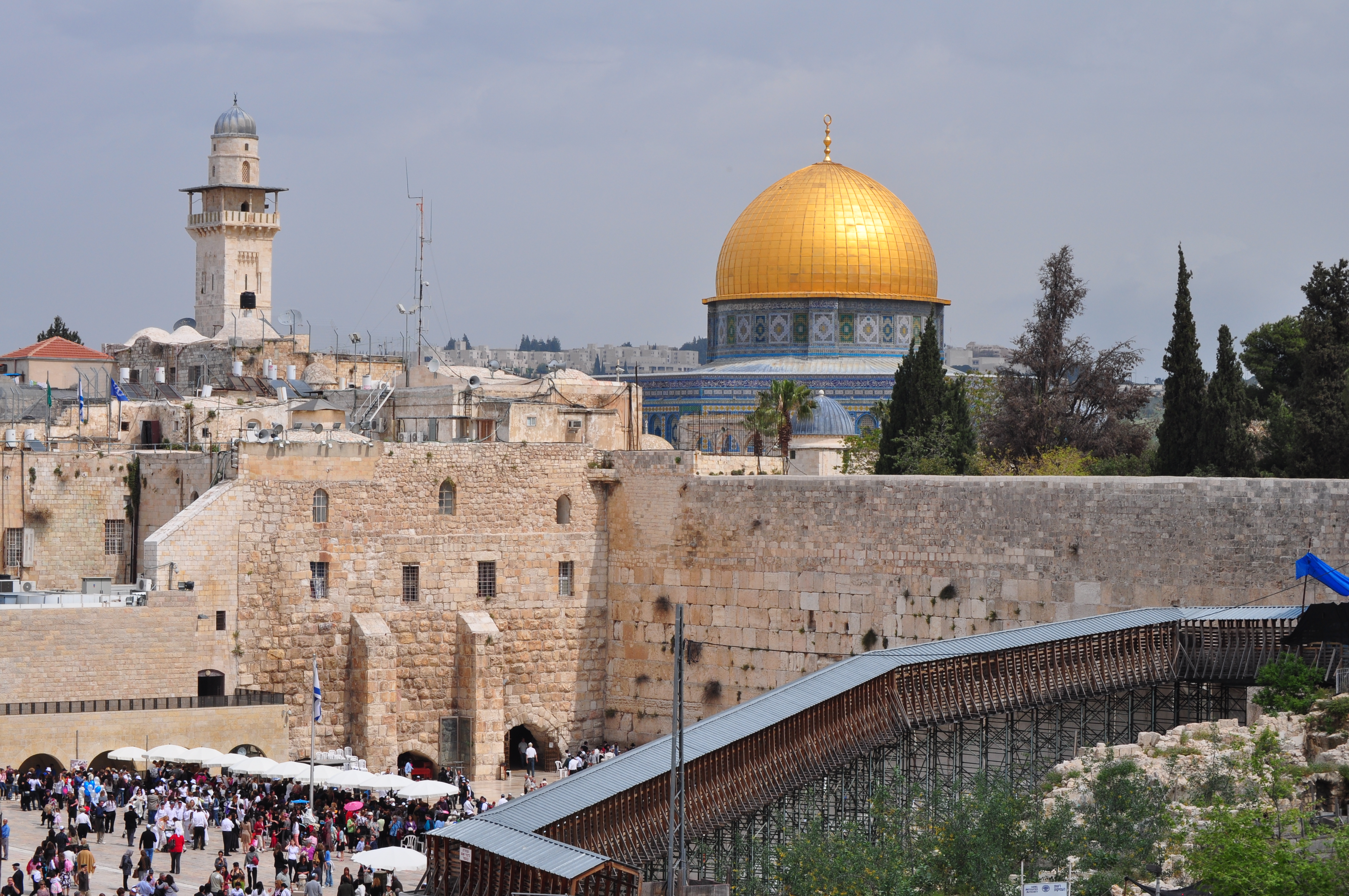
DSC_0087
The Kotel with the Dome of the Rock,
location of the Jewish Temples

Tisha b’Av

Every year the Jews mark a day on the calendar to remember the destruction of the Temples. Over time, the Tisha b’Av holiday incorporated other tragic events such as the expulsion of 200,000 Jews from Spain in 1492.  Perhaps today Jews should also mourn a newer tragedy in their history: their apathy and ignorance.


Related First.One.Through articles:

The United Nations and Holy Sites in the Holy Land

Joint Prayer: The Cave of the Patriarchs and the Temple Mount

Tolerance at the Temple Mount

The Waqf and the Temple Mount

Subscribe YouTube channel: FirstOneThrough

Join Facebook group: FirstOne Through  Israel Analysis
 

UN’s Confusion on the Legality of Israel’s Blockade of Gaza

In June 2015, the United Nations issued a report highly critical of Israel’s handling of its war against Palestinian attacks. Throughout the report, the committee suggested that the Israeli blockade of Gaza was a major cause for suffering of Palestinians, rather than a result of Palestinian actions, and helped precipitate the war.

Member of the Commission of Inquiry on the 2014 Gaza conflict Doudou Diene (L) gestures next to Chairperson of the Commission Mary McGowan Davis during a press conference to present their report on June 22, 2015 at the United Nations Office in Geneva. Both Israel and Palestinian militants may have committed war crimes during last year's Gaza war, a widely anticipated United Nations report said on June 22, decrying "unprecedented" devastation and human suffering.   AFP PHOTO / FABRICE COFFRINI

Member of the Commission of Inquiry on the 2014 Gaza conflict Doudou Diene (L) gestures next to Chairperson of the Commission Mary McGowan Davis during a press conference to present their report on June 22, 2015 at the United Nations Office in Geneva.  AFP PHOTO / FABRICE COFFRINI

2015 UN Assertion that
Blockade was Cause for Conflict

In the section of the report that reviewed the background to the 2014 conflict, the report stated that “In the preceding months, there were few, if any, political prospects for reaching a solution to the conflict that would achieve peace and security for Palestinians and Israelis and realize the right to self-determination of the Palestinian people. The blockade of Gaza by Israel, fully implemented since 2007 and described by the Secretary-General as “a continuing collective penalty against the population in Gaza” (A/HRC/28/45, para. 70), was strangling the economy in Gaza and imposed severe restrictions on the rights of the Palestinians.” By way of correction and education to the reader, the naval blockade of Gaza only began in January 2009 (not 2007). The land blockade of Gaza began in 2007 after Hamas routed Fatah from Gaza and took complete control of the region.

It is important and significant to point out that this 2015 report suggested that there were “few POLITICAL PROSPECTS for reaching a solution” and that the “blockade of Gaza.. was strangling the economy” and “imposed severe restrictions” on Palestinians. This directly implied that the Palestinians were seeking a political solution and rightfully frustrated with a blockade that was imposed on them (presumably for no reason).  Therefore, since a political solution was not available, they were forced to pursue a military response.

That is outrageous on many levels.

  1. Hamas has stated clearly in its charter and in addresses by its leaders that it seeks the complete destruction of Israel and that it will never enter peace negotiations. (A fact that was never mentioned in the UN report)
  2. Hamas clearly stated that it would not pursue any “peaceful solutions and international conferences” as seen in its charter, below.
  3. Hamas’s takeover of Gaza in 2007 is never mentioned in the UN report.

Hamas Charter Article 13: “Initiatives, and so-called peaceful solutions and international conferences, are in contradiction to the principles of the Islamic Resistance Movement…. These conferences are only ways of setting the infidels in the land of the Moslems as arbitraters… There is no solution for the Palestinian question except through Jihad. Initiatives, proposals and international conferences are all a waste of time and vain endeavors.

The UN report inverted reality and ignored that the blockade of Gaza was in response to Hamas’s taking over of Gaza and firing thousands of missiles at Israeli civilians.

 2015 UN Report
Call to Remove the Blockade

The UN report concluded with several suggestions which clearly placed the blame for the conflict on Israel’s actions: “The commission calls upon the Government of Israel… to address structural issues that fuel the conflict and have a negative impact on a wide range of human rights, including the right to self-determination; in particular, to lift, immediately and unconditionally, the blockade on Gaza.

This conclusion and suggestion are in stark contrast to the September 2011 UN “Palmer Commission Report” which clearly spoke of the legal nature of Israel’s blockade of Gaza and spoke to the harm and evil intent of Hamas which necessitated the blockade.


2011 UN Report
on LEGAL NATURE of Blockade of Gaza

To start, the Palmer Report correctly identified the different blockades of Gaza and the reason for them: “the tightening of border controls between Gaza and Israel came about after the take-over of Hamas in Gaza in June 2007.  On the other hand, the naval blockade was imposed more than a year later, in January 2009.”

The report continued that “the naval blockade as a distinct legal measure was imposed primarily to enable a legally sound basis for Israel to exert control over ships attempting to reach Gaza with weapons and related goods.  This was in reaction to certain incidents when vessels had reached Gaza via sea.”

The report then continued in greater detail on the “structural issues that fuel the conflict” with specific history (as opposed to simply echoing the Palestinian narrative as it did in the 2015 report): “Israel has faced and continues to face a real threat to its security from militant groups in Gaza.  Rockets, missiles and mortar bombs have been launched from Gaza towards Israel since 2001.  More than 5,000 were fired between 2005 and January 2009, when the naval blockade was imposed.  Hundreds of thousands of Israeli civilians live in the range of these attacks.  As their effectiveness has increased some rockets are now capable of reaching Tel Aviv. Since 2001 such attacks have caused more than 25 deaths and hundreds of injuries.  The enormity of the psychological toll on the affected population cannot be underestimated.  In addition, there have been substantial material losses.  The purpose of these acts of violence, which have been repeatedly condemned by the international community, has been to do damage to the population of Israel.  It seems obvious enough that stopping these violent acts was a necessary step for Israel to take in order to protect its people and to defend itself.

In regard for using a naval blockade to prevent the assault from Gaza on Israel, the report stated “The Israeli report to the Panel makes it clear that the naval blockade as a measure of the use of force was adopted for the purpose of defending its territory and population, and the Panel accepts that was the case.  It was designed as one way to prevent weapons reaching Gaza by sea and to prevent such attacks to be launched from the sea.  Indeed there have been various incidents in which ships carrying weapons were intercepted by the Israeli authorities on their way to Gaza.”

In sharp contrast to the 2015 report which cited the UN Secretary General’s comment that the blockade was a “collective penalty against the population in Gaza“, the 2011 Palmer Report concluded that “Although a blockade by definition imposes a restriction on all maritime traffic, given the relatively small size of the blockade zone and the practical difficulties associated with other methods of monitoring vessels (such as by search and visit), the Panel is not persuaded that the naval blockade was a disproportionate measure for Israel to have taken in response to the threat it faced.

The report concluded with clarity: “Israel was entitled to take reasonable steps to prevent the influx of weapons into Gaza.  With that objective, Israel established a series of restrictions on vessels entering the waters of Gaza.  These measures culminated in the declaration of the naval blockade on 3 January 2009… There is nothing before the Panel that would suggest that Israel did not maintain an effective and impartial blockade….  it is evident that Israel had a military objective.  The stated primary objective of the naval blockade was for security.  It was to prevent weapons, ammunition, military supplies and people from entering Gaza and to stop Hamas operatives sailing away from Gaza with vessels filled with explosives… It is also noteworthy that the earliest maritime interception operations to prevent weapons smuggling to Gaza predated the 2007 take-over of Hamas in Gaza.  The actual naval blockade was imposed more than one year after that event. These factors alone indicate it was not imposed to punish its citizens for the election of Hamas….  As this report has already indicated, we are satisfied that the naval blockade was based on the need to preserve Israel’s security.  Stopping the importation of rockets and other weapons to Gaza by sea helps alleviate Israel’s situation as it finds itself the target of countless attacks, which at the time of writing have once again become more extensive and intensive…  We have reached the view that the naval blockade was proportionate in the circumstances… The Panel therefore concludes that Israel’s naval blockade was legal… Israel faces a real threat to its security from militant groups in Gaza.  The naval blockade was imposed as a legitimate security measure in order to prevent weapons from entering Gaza by sea and its implementation complied with the requirements of international law.

Quite a different narrative and conclusion than the UN wrote up in 2015.


Related FirstOneThrough article:

Cause and Effect: Making Gaza

Gaza Blockade versus Cuban Blockade

Considering a Failed Palestinian State

Failed Countries
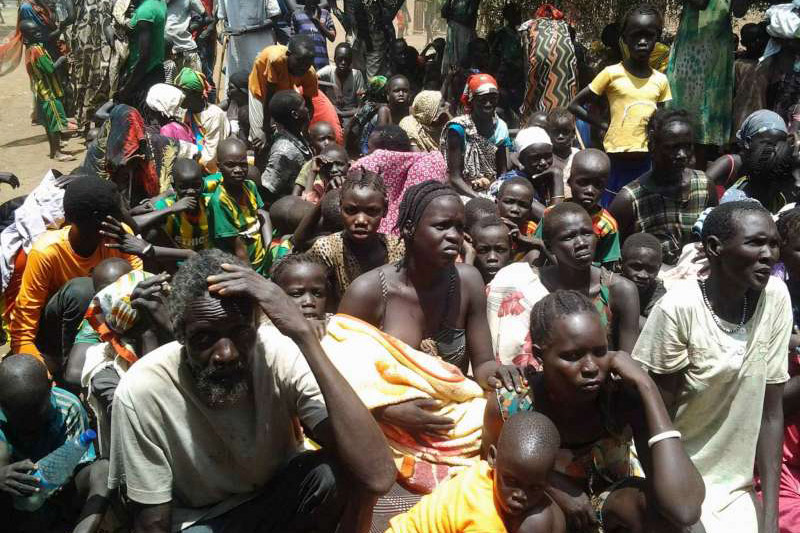
On July 9, 2011, the world welcomed a new country, South Sudan, which separated from Sudan. South Sudan rapidly became a failed state, one in which the central government lost the ability to control the security and economy of the country.
Failed states suffer from many terrible and unstable features: lack of governmental control; factional militias and armies; lack of border integrity and gross poverty. These societies often see rampant human rights abuses as various parties assert control over parts of the country and seek vengeance and control over minorities and local populations.
Consider some reports from South Sudan over the past year:
Ten thousand people have been killed and more than 1.6 million have been internally displaced since civil war broke out in South Sudan in December 2013.
June 2015: South Sudanese army may have caused widespread human rights abuses according to the UN
May 2015: At least 129 children killed, boys castrated and girls raped
July 2014: Food crisis declared worst in the world by UN Security Council
According to Business Insider, the worst failed states include: South Sudan; Sudan; Somalia; Congo; Chad and Yemen. The populations of these countries are forced to flee, suffer or die.

South Sudanese refugees wait to be registered at a crossing into Ethiopia earlier in 2015. (Photo: UNHCR/R. Riek)
Considering a Palestinian State
Many countries in the United Nations would like to see the Palestinian Arabs gain self-determination and have their own country. However, many of the ingredients for a failed state currently reside in the political structure of the Palestinian Authority:
The Palestinian territories have various stand-alone armies and militias including Hamas and Islamic Jihad
No central government, as the west bank of the Jordan River and Gaza strip are administered independently
Internal fighting as witnessed in the 2007 rout of Fatah by Hamas forces in Gaza, and various extrajudicial killings between those parties that continued since then
No border integrity as bedlam prevails in Gaza, Sinai and Israeli towns near the border of Gaza
Lack of functioning economy and widespread unemployment due: to the extremely high percentage of people under 25 years old; and constant war to destroy Israel
No presidential or legislative elections, as they were suspended due to the splits mentioned above. The presidential election was last held in 2005 and the president’s term expired a long time ago.
A country built on this framework would likely deteriorate. Factional fighting to dictate the future of the country would exacerbate. Unemployment would further skyrocket. Cross-border battles with Israel would escalate and also include the area east of the Green Line, EGL/ west bank of the Jordan River. This region, which already leads the world in the “honor killings” of women, would likely continue to see such murders increase.
It would be a country built in chaos, with people’s dreams dying alongside their lives.
Concrete Steps to Avoid a Failed Palestinian State
Should the Palestinian Arabs hope to achieve a functioning state after self-determination, important steps need to be instituted before the state is formed:
Remove all weaponry from Hamas and other groups. A functioning government must only have a single army. There cannot be a society in which various entities wage internal and external wars.
Ban Hamas. No entity which advocates for murder of minorities should be allowed to sit in any elected office, and no country should have any dealings with any country that seeks destruction of another country. As Hamas advocates for the killing of Jews and calls for the complete destruction of Israel, the party should be banned in its entirety until it renounces both positions completely.
Form new Political Parties and Hold Elections. The Palestinian Arabs have not held presidential elections since 2005 and legislative elections since 2006. As Hamas won legislative elections in 2006 and have polled to win future elections, new parties should be organized that can compete in new elections.
These are the basic steps that must occur for the Palestinian Authority to have a functioning government. Once the central authority rests in a representative body, that entity can negotiate a final status agreement with Israel to create a new state. To minimize the chances that it slip into a failed state, the Palestinian government should further consider the following:
Peace Agreement with Israel. A viable government should have a strong economy, including a flow of people and goods. Due to the separation of the Palestinian territories, it would be most efficient for the government to have a good working relationship with Israel to facilitate commerce.
Minimize Incoming Youth. A Palestinian state would likely want to welcome Arabs whose families once lived in the region. As a large population below age 25 often leads to rampant unemployment and instability, the emphasis on incoming people should be on professionally-trained adults.
Transitional control from UNRWA. UNRWA has kept infant mortality, immunizations, life expectancy and literacy of Palestinian Arabs at among the best rates in the world. Over a period of years, the UN should cede control of the schools and hospitals to Palestinian control.
While the world celebrated the founding of a new country four years ago in South Sudan, the declaration proved a hollow victory for the people. It would be a mistake to push forward another declaration for Palestinian Arabs at this time which would ultimately lead to further suffering. Mayhem with a flag benefits no one.

Related First.One.Through article:
A “Viable” Palestinian State